I am stunned by what is happening in the world: the blocking of essential fertilisers in the Hormuz Strait, and the harm that ultra-processed food is causing to global health.
But I am just one person and can do nothing about this.
Yet I have a feeling that I am not the only person in the world who is alarmed as they watch the world go crazy. It may also be that if we worked together, we could bring a little common sense and practicality into the world.
So I thought I would write this somewhat lengthy homepage on my website and see if anyone reads to the end and says, “Yes, I will be in this too”.
If this is not for you, then why not forward the web address gbiota.com, or the PDF version, to a contact who may be interested. It is published under the Creative Commons system for easy distribution.
Crazy World
We live in a sophisticated but fragile and crazy world. A political problem in the Hormuz Strait and our fuel and fertiliser supplies are under siege, threatening our food supply.
Is it sensible to ship a third of the fertilisers needed for food production through such a sensitive region?
But we can use this as an opportunity to overhaul our failing food system. We need a food system that provides all the nutrients and microbes our bodies need and is sustainable. Let me explain.
2.5 to 8 Billion
At the end of the last world war, the global population was 2.5 billion; it is now 8 billion. This dramatic increase in population was only made possible by a total, yet silent, revamp of the food system.
At the end of the war, many large factories producing munitions and explosives based on nitrogen were converted to making nitrogen fertilisers.
This needed a large amount of energy and so became linked to fossil fuels.
Simultaneously, the Green Revolution, pioneered by Norman Borlaug, enabled the exploitation of nitrogen-based fertilisers, resulting in a dramatic increase in food production to feed the exploding population.
It was hailed as one of the great advances in food technology.
Major advances typically come with a side effect that needs correcting, and this is true of the Green Revolution.
Energy and Metabolic Food
The bulk of the food we eat is burned to provide energy. We can call this energy food.
A much smaller amount of food is used to build and replace our body parts as they wear and age. I would prefer to call this bodybuilding food, but bodybuilding conjures up images of super-strong muscular people. However, this applies to everyone, so I call it metabolic food.
The ratio of energy to metabolic food is very important for health.
Over the hundreds of thousands of years when we were evolving, metabolic food was abundant, but energy food was in short supply, so we evolved a natural craving for energy foods, primarily sugars and fats. There is a certain balance of sugars and fats that we humans just love and is called the bliss point.
Throughout human history, we have sought foods that provide energy close to this bliss point, and it has worked incredibly well.
Our natural foods were high in metabolic foods and low in energy foods, so our craving for energy foods worked very well for us.
But the Green Revolution changed that. There was a dramatic increase in energy foods, which fed the world, but there was only a minor increase in metabolic foods that looked after our bodies. The natural ratio of energy to metabolic foods had been shifted to a surplus of energy foods and a shortage of metabolic foods.
Consequences
As they say, there have been consequences. We have what is commonly called a mind, but is more accurately labelled our subconscious brain. In lay terms, our bodies have a mind of their own, and this mind fully understands that there is a shortage of metabolic foods entering our bodies and leaps into action to protect us.
It sends messages down to our gut saying there is a shortage of metabolic food, get busy and make those hormones which will make our body, where we both live, crave more food, so I can send yet more instructions to build up a store of metabolic foods.
Or in lay language, get fat.
Getting Fat – Good or Bad?
Our mind is a survival machine; its job is to keep us alive and well for as long as possible, so it thinks that storing fat is good, and generally it is.
But our mind has not evolved to learn to cope with this excess amount of energy food, so it often gets it wrong, storing far too much fat, so we can end up not just a bit podgy but grossly obese, or simply storing this excess fat in places where it should not be stored.
It may store some in our arteries, leading to a heart attack, or some in our pancreas and muscles, so we become insulin resistant and then fully diabetic, or even worse, in our brains, where we become senile, wondering who those funny kids are who keep calling you granddad.
This is the underlying cause of chronic disease, and apart from causing a great deal of misery and overloading our health system, currently, three out of four people will die from a chronic disease.
So What Can We Do About It?
All that sounds pretty miserable, so what can we do about it?
The answer is surprisingly simple and inexpensive: just fix our food system to restore the balance of energy to metabolic food.
Let us not fool ourselves that there is some magic pill from the fake pill brigade or even a genuine pill from our sophisticated biochemistry industry. The first thing we have to do is fix our food so it has the right ratio of energy to metabolic food.
And that is a lot easier done than said, to twist the old phrase around.
What We Do
That is what this website is all about: how to create this energy-to-metabolic ratio.
The chemistry of energy food is very simple; all you need is some combination of carbon and hydrogen that your body can digest and then burn to form energy, carbon dioxide and water.
The chemistry of metabolic food is more complex but still very doable.
We need a combination of minerals, vitamins, phytonutrients and microbes.
Minerals, Vitamins, Phytonutrients and Microbes
Minerals
We need a number of critical minerals. Many, such as magnesium, iron and zinc, are well recognised. Others, such as selenium and iodine, are still essential but only needed in very small quantities.
All we have to do is look to the mountains, yes literally, I am not joking, where they are in volcanic rocks. We just need microbes, particularly fungi, to break them down so they are available.
Microbes are very obliging as they breed like crazy; all you need is the right conditions.
Currently, our fertilisers are based on petrochemicals or mining-specific minerals, in particular phosphorus, which is rapidly running out.
If we carry on as we are, we will run out of phosphorus in fifty years, and then, as they say on TV, we will have a situation.
The World is Finite
But there is an even greater threat: the supply is finite and will eventually be exhausted. Phosphorus is the critical mineral with only a fifty-year known supply. What happens when that is exhausted?
Fifty years may seem a long time, but should we be concerned right now? Let us look at the case of Nauru, which seemed at one time to have an almost inexhaustible supply of guano, seabird droppings rich in phosphorus.
Nauru was one of the richest per-capita countries in the world with what seemed an inexhaustible supply. After all, seabirds keep on producing more.
But it wasn’t that they ran out gradually; it was the way they ran out. One day there was a plentiful supply, the next day the excavators hit rock, and there was none. It was abrupt, like the closure of the Hormuz Strait, and now Nauru is one of the poorest countries in the Pacific, and the world lost access to a valuable resource.
Sustainability is such an important topic; I will be coming back to that in force later.
Vitamins
We have a good understanding of vitamins and can make many of them ourselves, for example Vitamin D, with a bit of help from sunlight.
Most others we can get from plants. The most famous of all is Vitamin C, which we can get from many fruits.
When the British discovered that limes would last a long time, they started adding them to ships’ stores, hence the nickname “limeys”.
One vitamin in particular is B12, which we cannot make ourselves and is made by fungi. Some animals eat fungi, so when we eat their meat, we may get an adequate supply of B12, but otherwise it tends to rank high on the list of deficient nutrients.
Phytonutrients
Sadly, we have a poor understanding of phytonutrients, despite their widespread occurrence.
For example, a single tomato may have a thousand different phytonutrients. Apart from making tomatoes taste nice, we have little understanding of what they do and how they work.
The only advice I can offer is: if the plant tastes good, then eat it. Many plants taste very different, and much better, when just picked than even a short time later. It is sad that so many people have never tasted plants immediately after picking, as they taste so much better.
We can only assume that they are also much healthier.
Microbes
We have long known that microbes are essential for digesting our food and making it available to us. It is only in the last few decades that we have begun to understand the important role they play in health.
This was first discovered in experiments with mice, where fat mice could be made skinny and skinny mice could be made fat simply by swapping their pooh.
This was later found to also be true in humans, with the delightful medical procedure of faecal transplants.
Knowing how concerned some people are about looking slim, I would have expected that pooh-swapping parties would have become fashionable in trendy neighbourhoods, but apparently not.
But it does raise the question of where we get our gut microbes.
We know that at the beginning of life, we get them from mum, both at birth and from breast milk. But that is just the start.
Thereafter, we mainly get them from food, but it seems that close personal contact also transfers microbes. A good excuse for young couples snogging away.
Microbes are particularly important as they regulate our bodies. That means making the change from a linear to a circular food system. This website shows how, but first, why we have to make the change.
Complex Problem, Simple Solution
There is the old saying that for every complex problem, there is a simple solution that does not work. But there are solutions, and that is what this website examines, so why aren’t we working towards a solution?
Let us see what we can learn from history. Modern humans, like us today, lived sustainably for two hundred thousand years. We can see from the remains that they were large, fit and healthy. They lived in tribal communities, but arrowheads in bodies showed that they were also aggressive toward other tribes.
They lived in their territory until they had exhausted the natural resources, then moved on, allowing the land to recover. This may have been sustainable, but it limited the maximum population to under a million.
Agriculture Changed the World
Then we invented agriculture, but not the toilet, and mostly died young from disease.
Plagues, like the Black Death, could wipe out half the population. But we learned to store food, and that tempted other tribes. City warfare started, and only a few cities lasted more than a couple of centuries.
We learned about hygiene, the population increased, and the social unit increased from the city-state to the nation, and modern warfare started, not because the people wanted war, but because of psychopathic leaders.
But two world wars and the invention of the atomic bomb were enough to curb the ambition of the psychopaths.
The Green Revolution and the Anthropocene
Technology, particularly the Green Revolution, gave us an ample food supply, and the population exploded from 1.5 billion to 8 billion.
All those mouths had to be fed, but with technology, we increased food production faster than the population. But it came at a cost; we entered a new era, the Anthropocene, in which humans began to recognise that they were having a major impact on the world.
The word “sustainable” became widely used and understood, and it seemed the world was heading toward a long, peaceful future.
The Disinformation Age
Then humans came up with another innovation that, at first, looked like it would be the greatest and most beneficial innovation of all time. It is represented by what we now call a mobile phone, but in reality it is an extremely sophisticated computer system that connects to the world.
It just happens to look small and simple.
And let us face it, an innovation that lets people watch cute cat videos while sitting on the bus must be one of the greatest and most beneficial innovations of all time.
But it turns out that it does have a nasty side. It allows all those psychopaths who would otherwise be leading us to war for the industrial killing of other humans to devise something even more damaging to society: the wonder of disinformation.
Disinformation may lack the blood and gore of earlier tyrants, and they may be wearing tailored business suits rather than army fatigues, but their effect is equally damaging.
The convincing of the masses that the extract of some weird plant from a remote corner of the world is going to solve the global health problem is in no way progress. It leads to the slow but insidious destruction of our food system.
We do not need a disinformation campaign saying that everything is fine as long as we take some magic pill. We need to face the harsh reality that the way we manage our current food system is, in the short term, making us fat and sick, and in the long term is unsustainable.
In short, that means changing from a linear food system of mining, growing, harvesting, eating and disposal to a circular food system in which waste is recycled.
The reason there has been so much resistance to the change from linear to circular is that linear is seen as profitable in the short term, while circular is seen as expensive.
As you can see from the following article, I built up Australia’s leading exporter of technical software and was recognised as one of our leading innovators, but I saw that developing a food system that satisfied all our nutritional needs and was sustainable was the major challenge facing us all.
Changing the Food System
I decided to sell my company and use the resources to see if I could develop the needed technology. When I talk to people about this technology, I see they anticipate it will be complex and expensive.
The reverse is true. Any competent nutritionist can tell you exactly what types of food you should be eating. We know what we should eat. But what matters is how that food is grown. The prevailing view is that the only way we can feed the eight billion people on Earth is by industrial chemical farming.
That is wrong; we can grow the needed nutrient-rich food more cheaply and effectively locally.
I understand you may not believe me, so let me introduce you to my friends: easily grown high-nutrient foods.
Some of My Nutrient-Rich Food Friends
Now let me introduce you to a few tough characters who are my friends: spinach, flax, winter melon, purple amaranth and passionfruit. They have tough roots, are either long-lived or readily seed, grow in poor soil, and have a natural defence against insects.
They do not need any expensive fertiliser; they just need you to bury kitchen waste nearby and a bit of water. They will provide you with food with minimal work, through the political chaos we live in, and for free.
But do not think that being free means they are not good. My wife Xiulan, a medical doctor, is diabetic. Despite taking sophisticated modern drugs, her foot started to turn black, and the doctors were recommending that her foot needed amputation.
Instead, she started eating these plants, particularly winter melon, which has huge fruits that are a meal in themselves, and she still has both feet.
Just because things are free and simple does not mean they are of no value, and we must not assume we can only live in a world of fragile, high-tech systems and AI.
If it is simple, free and works, then that is better.
But face the facts, there is only one word to describe the situation where one third of the world’s fertiliser, on which our food supply depends, should be dependent on a politically unstable part of the world: crazy.
So what can we do about it? Some people think they can adopt a lifestyle of total self-reliance. I have tried that, and it is not viable.
Recycle or Perish
Throughout history, there has been a distinct pattern.
A state would become productive and wealthy. It used its prosperity to build a military and would then subjugate other states by threat or force.
It would gradually transfer its production to its subjugated states while increasing its military capability until its soil was degraded and its productive capacity diminished.
Then, after several centuries of power, it would collapse. Time and time again, this has happened.
Read The Shortest History of the World by David Baker or Goliath’s Curse by Luke Kemp, both enlightening reading on the troubles of the modern world.
We survive, long term, by recycling. Over twenty years ago I was using a system of collecting all the toilet waste, trenching it, then growing fast-growing legumes such as acacia, then letting the creatures of the soil recycle the toxic waste, probably full of pathogens, into nutrient-rich, highly productive soil.
Intelligent and Naturally Cooperative
So let us ask what has allowed us to become the dominant creature on the planet? We are intelligent and naturally cooperative; we form tribes, and when led by a wise and committed elder, it works incredibly well. When a nation is led by a psychopath, disaster follows.
So how can we assure a safe and healthy food system? If we live in a high-rise apartment, we cannot have a wheat or rice field and keep a cow, a pig, and a chicken on our balcony.
Energy from the Supermarket, Nutrients from Home
We can certainly buy energy food from the local supermarket and supplement this with highly nutritious fresh food we grow in boxes. That certainly works and is how I currently live.
But there is an even better way I learned as a kid in the war: Victory Gardens. Yes, I am very old.
These may not have provided us with delicious Wagyu beef, but they did provide us with a basic food supply that was both fresh and healthy.
A feature of these Victory Gardens is the way people cooperated as part of a working community, contributing what they did best. Some people had land, others labour; some grew plants with specific skills, but they all cooperated, sharing their skills and facilities so the community benefited as a whole.
Food was being used as a weapon of war, and we survived. We can do it again to survive the combined threat of political aggression and the damage we are inflicting on our natural resources.
So why not join the Gbiota social movement here?
How Food Works
But first, we need to understand the basics of how food works and why our modern food system is a threat.
Your mind, your subconscious brain, is a highly sophisticated survival machine, the result of a billion years of evolution, with one objective: to keep you alive, fit and healthy so you can successfully pass on your genes to the next generations.
From the very first suck it is learning what foods you need. It sends signals to your gut, the gut-brain connection, to generate hormones so you want to eat the foods that will ensure you stay alive, fit and healthy.
If you do not eat the right amount of the right foods, it will send signals to the gut to produce yet more hormones, so you eat yet more food and then store it as an emergency supply.
Modern food is lacking critical nutrients. These deficiencies are why there is an epidemic of chronic diseases with the common cause of the wrong fat in the wrong place: in the arteries leading to heart attack, in the pancreas leading to diabetes, and in the brain leading to strokes and a more general problem of lower health and lifestyle from being overweight.
Widely Reported Deficits in a Modern Diet
Category
Details
Elements needed by plants
Elements available from the air or water
Carbon, Oxygen, Hydrogen
Primary elements from the soil
N, P, K
Secondary elements
Ca, Mg, S
Trace elements
Mn, Fe, B, Zn, Cu, Mo, Cl, Co
Widely reported dietary deficits
Elements needed by plants but we may need higher doses
Ca, Mg, Zn, Fe, Cu
Essential extra elements needed for health
Selenium, Iodine, Vanadium, Chromium
Vitamins humans are generally short of
Omega 3, B12, B6, E, K
The reason for these deficiencies is that modern agriculture relies on chemical fertilisers, which are carefully formulated to provide all the nutrients plants need. But we have more complex needs than plants, which can be readily resolved if you know how.
On this website, you can learn how to resolve these deficiencies and train your mind how to generate the hormones that will keep you alive, fit and healthy.
You can start by reading the 6-page article, “Understanding Food,” for free here.
You can then buy our e-books, particularly The Survival Machine, here.
You can then join the Gbiota social movement to learn how to grow and eat foods that provide the nutrients our modern diet lacks here.
But right now, I am particularly anxious to hear from people who understand the importance of food security and the role it plays in health and would be prepared to consider becoming local tribal leaders in this movement.
The Gbiota philosophy grew from practical experience rather than theory. Faced with severely degraded soil on an old goat farm, Colin Austin set out to regenerate soil faster than conventional thinking allowed. Years of failed experiments revealed that no single additive or method worked reliably. Instead, the breakthrough came from understanding water, soil moisture stability, and microbial life. This chapter explains how soil regeneration depends on managing water to support living soil.
Introduction — The Beginning of the Gbiota Philosophy
In the early 1970s, I was looking for a lifestyle change and bought a small holding that had previously been used as a goat farm. I wanted to grow my own food. I had been brought up growing food, and as I often say, I was born when Hitler declared war — a case of gross exaggeration, but it makes the point.
The reality of the land was confronting. The goats had completely destroyed the topsoil. When wet, the soil became a sticky, gluey mess. When dry, it set as hard as concrete. There was no structure, no life, and no resilience. I was immediately faced with a problem that would shape the rest of my work: how do you regenerate soil that has effectively collapsed?
Soil Regeneration Becomes the Focus
This period coincided with the era of giant dust storms, when millions of tonnes of topsoil were being lost. At the time, farmers were still learning the value of protecting topsoil, and widespread changes in farming practice were yet to come. I did not know then that agriculture would eventually respond, but I could see a looming calamity if the world continued to lose its soil.
Soil regeneration became my serious out-of-work interest. Fortunately, my main business — writing computer simulation software — was becoming successful. Over time it became an international leader in its field and one of Australia’s major exporters of technical software.
That success gave me freedom. I did not need a financial return from my soil research. I could treat it as a long-term research project driven by belief rather than profit. I believed soil regeneration was critical to the future of humanity.
Speculative Research and the Cost of Innovation
The success of my company was based on what I called speculative research. There is a common belief, especially among those who fund research, that science must move cautiously, carefully checking every detail before progressing. That discipline is important, but major breakthroughs often come from experiments that appear ridiculous at first.
The cost of innovation is the willingness to make many mistakes and to feel foolish in front of your peers. This was the same philosophy I brought to my soil regeneration experiments.
When I read the existing literature on soil regeneration, it was deeply discouraging. Regeneration rates were often measured in millimetres per century. I have always been an impatient person, and I wanted a system that could regenerate soil in years, not lifetimes.
Early Experiments and Growing Confusion
I tried everything. Local garden stores must have loved me. I bought every product that claimed to improve soil: clay breakers in bottles, bags, and trailer loads, along with strange plants that were supposed to be ploughed back into the soil as green manure.
I divided the block into small squares in what I believed was a scientific approach. There were control squares, duplicates, and combinations of different treatments. On paper, it looked sound.
In reality, it was a disaster. Some squares showed real regeneration. Others stayed gluey when wet and concrete-hard when dry. Single-variable experiments were a failure. It became clear that regeneration required combinations of processes — green manures, additives, and soil management together.
The results were confusing and inconsistent. I attempted to analyse them using the Taguchi method, a mathematical approach used in Japanese industry to analyse multi-variable systems. Even that failed to make sense of the data.
Why the Experiments Failed
The cruel reality was this: a combination that worked in one area could fail completely in another. After years of effort, the experiments were a shambles. There were no clear rules, no reliable recipes, and no repeatable outcomes.
At this point, my background in computer simulation became relevant. In simulation work, the goal is to write code that behaves like the real world. You create an algorithm, test it, and adjust it using tuning factors until it produces realistic results.
There is a fundamental rule in simulation: if you need endless correction factors and millions of lines of code, the base algorithm is wrong. When that happens, the only sensible option is to start again with a better model.
A Change in Thinking
This was exactly what was happening with my soil experiments. I was trying to create complex formulas involving specific amounts of ingredients, crops, and cultivation methods. The system had become far too complicated to ever be reliable.
I realised I had to stop chasing formulas and start understanding the underlying mechanics. I needed a generic rule — something that could be applied in most situations.
I went back and re-examined my experiments, not looking at what I had controlled, but at what I had ignored.
The Role of Water
The answer was obvious once I saw it: water was playing a critical role. A paddock may look uniform, but nature rarely is. My land certainly was not uniform. It sloped down towards a creek.
I irrigated using the creek, a small dam, and a pump. When I examined soil samples from different squares, it became clear that moisture levels varied far more than I had assumed.
The subsoil contained fissures that created underground flow paths. These were not creeks, but they were enough to channel water preferentially. Some areas dried out badly during hot months, while others became waterlogged in wet periods.
The Key Observation
Only the areas where moisture levels remained moderate and reasonably uniform throughout the year showed real soil regeneration. Areas that were too wet or too dry showed little improvement.
This was a crucial observation, but it was not the full answer. Water alone does not regenerate soil. Water is inert.
The missing piece was biology.
Microbiology and Living Soil
The regenerating areas had something else in common: biological activity. This was obvious from the number of worms present. Worms cannot eat organic matter directly; microbes must process it first.
As I began to explore soil microbiology, I quickly realised how complex the field is. There are countless species, many still unidentified. Scientists seek full understanding, but I am an engineer.
Engineers often build useful systems without fully understanding every underlying detail. History is full of examples where engineering intuition led, and science followed later with explanation.
Conditions, Not Complexity
I did not need to understand every microbe. I only needed to understand the conditions that allow microbial life to flourish. Microbes need food, which is usually available. More critically, they need stable moisture.
This is difficult in Australia, where evaporation exceeds rainfall across most of the continent. In many areas, evaporation is several times higher than rainfall.
At first glance, maintaining soil moisture under such conditions seems impossible. However, soil behaves in a useful way. The surface dries quickly and forms an insulating crust that reduces further evaporation. Beneath this crust, subsoil moisture can remain stable.
Rethinking Water Management
To take advantage of this effect requires a complete rethink of how water is managed. Instead of constantly wetting the surface, the goal becomes protecting subsoil moisture.
This realisation led me into irrigation scheduling, subsurface irrigation, water harvesting, and eventually the wicking worm bed. Of all the methods I explored, the wicking worm bed proved the most successful.
These systems are described in later chapters.
Carbon and the Bigger Picture
At the time of these experiments — now more than thirty years ago — I had no awareness of global warming. With hindsight, it is clear that this work had major implications for carbon capture.
Regenerating soil through biology and moisture stability also rebuilds soil carbon. What began as a personal food-growing problem turned out to be part of a much larger solution.
Looking Ahead
In the next chapter, I will describe my experiments with irrigation scheduling and how they led directly to practical water-efficient growing systems.
Colin Austin is an engineer, inventor, and founder of Moldflow, a software company that helped shift plastics mould design from “gut feel” to science-based engineering. After building one of Australia’s most successful technical software exporters, his focus moved to fresh water, irrigation efficiency, and sustainable growing systems. His work includes micro-flood irrigation, scheduling software that supports precise irrigation, and the wicking bed system—developed after work in Ethiopia—aimed at enabling reliable food production through drought cycles.
Overview
Colin Austin has had a varied career spanning engineering, process control, software innovation, irrigation systems, and practical sustainability. After graduating in engineering from Sheffield University in 1963, he worked across industry and academia, then built a globally recognised software business. Later, he applied that same “scientific approach” mindset to irrigation and water management, aiming to improve how water is delivered and how crops are scheduled in real conditions.
A key theme through Colin’s work is moving from guesswork to measurement and clear decision-making. In plastics, that meant modelling complex flow patterns. In water and irrigation, it meant designing simple but effective delivery systems, and creating software tools that help growers apply the right amount of water based on plant demand and soil conditions.
Early Career And Engineering Foundations
Colin began his career in process control and developed expertise in plastics processing equipment. He worked as the R&D Manager of Johns Hydraulics, building practical experience in how complex systems behave in real production settings. He later spent time in academia as a lecturer at RMIT in Melbourne, where he continued developing and refining engineering approaches to difficult problems.
These early years shaped a pattern that shows up later in his water and soil work: identify the real constraint, measure what matters, and build tools that make complex systems easier for people to operate.
Moldflow And A Shift From “Gut Feel” To Science
Colin wrote software that transformed international plastics mould design by applying scientific principles rather than relying on intuition alone. This approach proved highly successful. The company he founded, Moldflow, became the largest exporter of technical software in Australia, growing into a multi-million-dollar business selling into more than 48 countries.
The Moldflow story matters because it demonstrates the method: take a hard, real-world engineering problem, build practical modelling and decision tools, then help an entire industry operate with more certainty and less waste.
Why Water Became The Focus
Over time, Colin became increasingly concerned about environmental issues—especially the management of fresh water, which he viewed as the world’s most critical resource. In his view, irrigation and water delivery had many of the same weaknesses that plastics design once had: too much reliance on habit, rules of thumb, and tradition, and not enough measurement-based decision-making.
Just as he helped move plastics processing from a “hunch based” approach to a science-based approach, he believed irrigation technology could also be transformed. The goal was practical: use water better, reduce losses, and help growers apply water precisely to match plant needs and the soil’s capacity to hold that water.
Micro-Flood Irrigation: A Practical Delivery System
A key development was micro-flood irrigation. This system uses thin wall blown film to transport and deliver water under gravity. The intent is to replace traditional open channels that can suffer major losses through evaporation and leakage.
A central element of the system is a simple sequencing valve that squeezes the plastic pipe to control water distribution. This enables precise application of water, even when working with gravity-fed systems. The emphasis is on low complexity and practical deployment—solutions that can be installed and operated without requiring expensive infrastructure.
Scheduling Software: Applying The Right Water At The Right Time
Alongside delivery systems, Colin continued software development in irrigation scheduling. The purpose of this software is to enable precise water application by calculating plant water usage and the water holding capacity of the soil.
The approach relies on measurements from soil and plant sensors, turning raw readings into decisions that a grower can act on. In simple terms: understand what the plant is using, understand what the soil can hold, and match irrigation to those realities. The outcome is better control—less under-watering, less over-watering, and less loss beyond what the plant can use.
Ethiopia, World Vision, And The Origin Of Wicking Beds
Colin’s work in Ethiopia added a practical, high-stakes dimension to these ideas. After returning from Ethiopia—where he worked with World Vision to train local farmers to install and operate simple but effective irrigation technology—he developed the wicking bed system.
He believed this system could save thousands of lives by enabling local farmers to grow food under cyclic drought conditions. The context is important: drought cycles can destabilise food supply rapidly, and systems that hold moisture and support stable plant growth can make the difference between harvest and failure.
Wicking beds, in this framing, are not “just a garden method.” They are part of a broader idea: redesign growing systems so they can cope with variable rain, improve water efficiency, and support reliable food production where conventional irrigation is difficult or unreliable.
Awards And Recognition
Colin has received numerous awards over many years. These include recognition for technical innovation, export achievement, engineering excellence, environmental contributions, and water-saving outcomes.
Year
Award
1980
John Derham Award For Technical Innovation (awarded to Colin Austin)
1982
National Small Business Award
1983
Governor Of Victoria, Export Award
1984
Governor Of Victoria, Export Award
1984
Dept Of Trade (With Confederation Of Australian Industry) Export Award For Outstanding Achievement
1985
AITA, Cad Software Solution Of The Year Award
1988
Australian Bicentennial Export Award, Services Category
1989
Australian British Chamber Of Commerce Federal Award For Small Business Export Initiative And Innovation
1990
Governor Of Victoria Export Award (Individual Significant Export Achievement)
1990
Government Of Victoria Export Award Certificate Of Commendation, Services Category
1990
Business Bulletin Small Business Achievement Award
1990
Business Bulletin Small Business Achievement Award
1991
The John Hart Technology Award
1991
Rolls Royce/Qantas Award And Warren Centre Award For Engineering Excellence
1991
Governor Of Victoria Export Award (Significant Achievement By An Export Product)
1993
AITA Exporter Of The Year Award
1993
ANTEC (USA) Best Technical Paper Award For Lean Plastics Manufacture
1994
Southern Cross Award For Excellence (Technology In Government Committee)
1997
Fred O. Conley Award For Outstanding Achievement In Plastics Engineering & Technology
2002
Triannual Plastics Industry Award For Contributions To The Plastics Industry
2002
SPE Environmental Award
2002
SaveWater Award Winner, Agricultural Section
2003
SaveWater Award, Regional Sustainability
Publications
Colin’s publications cover irrigation control, scheduling, water policy, and practical guides. They reflect a consistent focus on making water use more precise, more sustainable, and easier to manage in real-world settings.
Publication
Date
Theme
Intelligent Irrigation
1996
Closed Loop Control Of Irrigation
The Murray Darling Basin — A Technological Solution
1997
Replacing Flood Irrigation
Soil Moisture Interpretation Made Easy
1997
Guide To Soil Moisture
Agriflow Making Water Go Further
1999
Replacing Flood Irrigation
Vision For The Bush
2000
Managing Our Natural Resources
Irrigation Scheduling
2000
Guide To Scheduling
Water Right — The New Thinking On Irrigation Scheduling
2001
Adaptive Scheduling
Sensor Based Irrigation Scheduling
2002
Training Course
Reaping The Benefits Of Water Saving Technology
2002
Implementation Of Water Saving Technology
Water, Technology And Policy Interactions
2002
Water Policy
Myths And Fantasies Of Sustainable Food Production In Australia
2003
Critique Of DNRE
Irrigation Scheduling
2003
Scheduling Manual
Making The Most Of Water — Micro Flood Operating Manual
2003
Micro Flood User Guide
Water, Wit And Wisdom — The Search For The Solution To The Water Crisis
2004
Book (ISBN 06463814-X)
Solving The Water Crisis
2005
DVD
What This Means For Growers And Communities
Colin’s work sits at the intersection of technology and everyday practice. The intention is not complexity for its own sake. It is about designing systems that work under pressure: scarce water, variable rainfall, high evaporation, limited budgets, and real operational constraints.
Micro-flood focuses on low-cost transport and controlled delivery under gravity. Scheduling software focuses on precision—linking plant demand and soil capacity to irrigation decisions. Wicking beds focus on resilience—keeping plants productive when rainfall is unreliable and drought cycles are unavoidable.
Taken together, these projects reflect a consistent aim: support practical, measurable improvements in water use, soil performance, and food production, while keeping solutions accessible enough to be adopted in the real world.
This article tells the story of Colin Austin, an Australian engineer and innovator whose work spans advanced computer modelling, irrigation reform, soil regeneration, and water sustainability. From founding a world-leading software company to developing practical solutions for drought, irrigation efficiency, and food security, his journey shows how speculative thinking and real-world experience can reshape how societies manage their most critical resources.
Early Engineering Insights
In the early 1970s, Colin Austin recognised that computers would fundamentally change how complex engineering systems were designed. At the time, most industrial design relied heavily on experience and intuition rather than scientific modelling. Colin saw an opportunity to replace this “gut feel” approach with accurate mathematical simulation.
He developed software that could predict how molten plastic flowed into cold moulds. This was a technically demanding problem involving moving fluid fronts, heat transfer, and three-dimensional geometry. Many believed it was impossible to solve in a practical way. Colin proved otherwise.
The Rise of Moldflow
The software Colin developed became the foundation of Moldflow, the company he founded. Moldflow transformed plastics manufacturing by allowing designers to predict defects, reduce waste, and improve quality before physical moulds were made.
Moldflow grew into Australia’s most successful exporter of technical software, selling into more than 48 countries. Its customers included global leaders in automotive, electronics, aerospace, and appliance manufacturing. Colin became internationally recognised as a leader in computational fluid flow, and the company became known for its constant stream of innovation.
Speculative Research As A Philosophy
One of the defining features of Moldflow’s success was Colin’s approach to research. He described it as “speculative research”. Rather than following rigid plans and milestones, projects were started with no guarantee of success.
Many ideas failed. That was expected. The aim was not efficiency in the short term but breakthrough results in the long term. Colin believed that highly structured “competence research”, common in government-funded programs, often suppressed creative, high-risk ideas. Speculative research embraced uncertainty as a necessary condition for innovation.
A Shift Toward Environmental Challenges
As Moldflow succeeded commercially, Colin became increasingly concerned about environmental issues, particularly fresh water. He examined water research programs around the world and found that most focused on incremental improvements rather than fundamental change.
Water, he concluded, was becoming the most critical limiting resource for modern societies. Armed with expertise in fluid flow modelling and speculative research, he believed he could help change how water was managed.
Selling Success To Fund New Thinking
Colin sold his multi-million-dollar company to fund a new research group dedicated to solving water problems. He assembled a small team of highly creative researchers to explore unconventional ideas that were largely ignored by bureaucratic systems.
Early work focused on irrigated agriculture. Innovations included micro flood irrigation, a system that could deliver precise amounts of water while replacing open channels that lose large volumes to evaporation and leakage.
Precision Irrigation And Scheduling
Alongside irrigation hardware, Colin continued software development. He created scheduling tools that calculated plant water use more accurately, enabling growers to apply only what crops actually needed.
Despite technical success, he became frustrated. Government policies often encouraged wasteful water use by keeping prices artificially low. Efficient systems struggled to gain adoption in environments shaped by outdated incentives.
A Turning Point In Africa
Colin’s perspective changed dramatically when World Vision invited him to Africa. He was asked to find ways for communities to grow sustenance food during periodic droughts.
Before arriving, he assumed the problem was simply lack of rain. On the ground, he learned the reality was erratic rainfall. Communities could survive average conditions but collapsed when rains failed for just a few weeks at critical crop stages. This phenomenon was known as a “green drought”.
The Birth Of Wicking Beds
To address erratic rain, Colin developed the wicking bed system. A wicking bed is essentially an underground water reservoir. When rain occurs, water is stored below the soil surface, where it is protected from evaporation.
Plants draw water upward as needed, allowing them to continue growing even when rainfall stops. This simple idea proved highly effective in enabling crops to reach maturity during dry spells.
Seeing Australia Through New Eyes
Returning to Australia after Africa was a second shock. Colin saw how poorly water was managed in a country where large volumes of rain fall but are rarely captured. He found it astonishing that high-quality potable water was used for toilets and gardens while rainwater flowed unused from roofs and landscapes.
From his perspective, Australia relied excessively on large dams that only filled under rare conditions, then wasted that valuable water through inefficient distribution and use.
Resistance From Bureaucracy
Colin encountered strong resistance from established institutions. Large infrastructure projects continued to be promoted while small-scale, local water harvesting solutions were ignored. He became deeply sceptical of government monopolies over water distribution.
Concluding that institutional change would be slow, he decided the most effective path forward was public education. By sharing practical ideas directly with communities, he hoped adoption would grow from the ground up.
Living The Solution
Colin eventually moved into an eco-village, where his ideas could be fully implemented. There, wicking beds, rainwater harvesting, and local water reuse were adopted at scale, demonstrating that his concepts worked not only in theory but in everyday life.
This environment provided proof that decentralised, low-cost systems could meet water needs while reducing dependence on centralised infrastructure.
Recognition And Awards
Throughout his career, Colin received numerous awards for innovation, export achievement, engineering excellence, and environmental contribution. These honours reflect both his technical skill and his willingness to challenge conventional thinking.
A Continuing Legacy
Colin Austin’s work spans software engineering, irrigation science, soil regeneration, and water policy. The unifying theme is a belief that real progress comes from questioning assumptions, observing reality closely, and being willing to fail in pursuit of better systems.
His story shows that solutions to complex problems like water scarcity do not always require massive infrastructure. Often, they require better thinking, local action, and respect for natural processes.
This project is not an abstract health theory for me – it began with watching my wife battle diabetes, face possible amputation, and being told there was no hope of reversing it.
Why Diabetes Became Personal
We are all aware of the damage caused by non-infectious diseases such as diabetes, heart attacks and strokes. They destroy lives, families, and swallow health budgets. For me, this is not just a statistic – it is my wife’s story.
My wife developed diabetes. Her eyesight began to fail. She fell down a flight of stairs and broke multiple bones in her foot. After surgery, her foot started to turn black and we genuinely feared amputation.
The diabetes specialist gave us the standard message: diabetes is a chronic disease, it is not curable, it will get worse over time. We were told she would need stronger and stronger medication, move on to insulin injections, and probably die young. We were sceptical. So we began our own long search to understand what was really going on.
Questioning the Standard Approach
We discovered there are many qualified doctors who strongly disagree with the “progressively worse, nothing you can do” view. One of the most vocal is Dr Jason Fung (search him on YouTube), who argues that treating diabetes with ever more insulin may help in the short term, but actually makes insulin resistance worse in the long term.
We also learned that diabetes is dominated by diet – but not in the simplistic “eat less, exercise more” way. That approach has failed millions of people over decades, yet it is still handed out as the default prescription along with a stronger pill.
We don’t get fat just because we overeat – our hormones make our bodies store fat, which then makes us hungry and drives us to overeat.
This process is automatic. Willpower has very little to do with it. If we want to change the way our bodies handle insulin and fat, we have to change the hormones running the show.
Hormones, Gut Biology and Appetite
That led us to the next layer: hormones are largely controlled by our gut biology. The microbes in our intestines act as a kind of gut brain. They influence which hormones are released, how hungry we feel, what we crave, and how we store or burn energy.
So the chain looks like this:
Change your gut biology → you change your hormones.
Change your hormones → you change how your body handles insulin and fat.
Change that system → you change your risk of diabetes and other chronic diseases.
If you want to change your hormones, you have to change your gut biology – and the most powerful way to do that is through the food you grow and eat.
Fortunately, in our case, we were able to turn things around. My wife’s health improved, and she has been able to cut back on her diabetes medication instead of endlessly increasing it. That experience convinced us that other people should have the chance to benefit from what we learned.
Why I Started Developing the Gbiota System
We were lucky. My wife, Xiulan, is a qualified doctor and respected surgeon. I am an engineer who spent much of my life as a technical entrepreneur, building Moldflow – at one time Australia’s leading exporter of technical software. Between us we had the skills and stubbornness to question the standard story and dig deeper.
It became clear that simply telling people to “eat healthy” was not enough. Our desire for food is controlled by the gut biome. If we want to help people stay healthy, we have to focus on improving gut biology, not lecturing them about willpower.
So I began developing a growing system aimed specifically at improving gut biology: Gbiota beds. These beds are designed to grow plants in a highly biologically active environment, with the right microbes, minerals and phytonutrients to support a healthier gut.
The Role of the Gbiota Club
The first practical step was to form the Gbiota Club. This is a citizen science project where people – completely independent of me – can set up their own growing beds, eat the food, and monitor the effects on their health.
This independent experience is essential. It is not enough for me to say “it works for us.” We need many people, in different places and circumstances, to try the system and report what happens. Only then will the idea earn real credibility.
The long-term goal is for commercial growers to offer plants grown with the Gbiota system. Home gardeners and small growers can start the movement, but to reach the huge number of people suffering from diabetes and other chronic diseases we need commercial-scale production. That means making it practical and profitable for growers to supply biologically active “gut-friendly” food.
Why I Am Sharing This
My motive is simple. I have seen what happens when the standard story about diabetes is accepted without question. I have also seen what can happen when we change diet, improve gut biology, and challenge the idea that decline is inevitable.
I cannot promise miracles, and I do not offer medical treatment. What I can offer is a system for growing better food, a community of people testing it, and a different way of thinking about diabetes and chronic disease – from the gut up.
If this resonates with you, I invite you to learn more about the Gbiota system and consider joining the Gbiota Club.
This is the preface to the dynamic E-book which is about solving the food crisis. It is about how to get the adoption of the new technology we need.
A dynamic E-book is made up of multiple stand alone articles. If you are not interested in the process of innovation you can jump to the next article which explains why we have a food crisis. Just click below.
The first is too often overlooked and is not easy, developing a clear understanding of what the problem is.
The second stage can be surprisingly easy, developing the technical solution.
The third stage is the most difficult - adoption, effectively applying the known technology.
Understanding the problem
There are two problems.
The short-term problem is that our current food system is deficient in the microbes which form our gut biome and essential minerals which have led to an epidemic of chronic or non-infectious diseases, obesity, diabetes, heart attacks and dementia.
The longer-term problem is our current food system relies on the exploitation of finite resources, particularly water, which is aggravated by climate change and shortages of key minerals which are being exhausted. Phosphorous is the most urgent.
The technology
We already have the technology, it is changing the way we grow our food using organic waste as a key input and controlling the conditions to breed the beneficial microbes so they out-compete the harmful microbes which make us fat and sick and kill us - a process of Eco-balance which has been going on for millions of years if we care to look.
Adoption
The real problem is how to get these known solutions adopted.
I have been innovating for much of my life with a spectacular array of failures and a few successes for which I was recognised by the Institute of Engineers as one of Australia's leading innovators.
But failures are not a waste, they are the way we learn so I want to devote this article to extracting the lessons from my failures (and the successes).
Learning from failures
The high-speed dolls pram
My first innovation dates back to the late 1940’s (yes I am very old).
I made a powered doll pram for my sister and it was a fantastic success, at least technically. It went so fast she could not keep up with it so it would result in spectacular crashes.
But the lesson is that this innovation, however good technically did not fill a real need. My sister was perfectly happy pushing her old dolls pram along and Mum was certainly not happy about this high-speed doll pram crashing into the furniture.
The road junction ramps
My next, not-so-brilliant idea, was in the 1950s when I proposed the idea that we could make road crossing safer by raising the intersection so cars would slow down before the intersection and speed up automatically as they left.
I remember explaining this to the local council who were very diplomatic to an over-enthusiastic teenager who had just learned about potential and kinetic energy at school.
They explained that this was not practical. The disappointment would have been less had they pointed out that if a hung around for a few decades there would be electric cars with regenerative braking which would do exactly what I was trying to do - capture the kinetic energy for reuse later.
Lesson - theory may be fine but it has to be practical.
The automotive crash absorber
Next was after I graduated in the 1960s when I was working for a Research Institute on the mechanical properties of plastics. I realised that while plastics had reasonable strengths they were very flexible, which is why they are called plastic and this meant they could absorb large amounts of energy.
So I designed a plastic shock absorber that could be fitted between a car’s chassis and the bumper bar (or fender in the US) which would absorb a large amount of energy.
Now, give my bosses their due, they thought this idea had merit and no doubt wishing to encourage a young graduate approached the car industry, on my behalf.
Their response was unenthusiastic saying there was no public demand.
This is a bitter learning experience because we made and tested some energy absorbers and they really worked.
The technology was sound and economic but the social conditions were not ready for acceptance.
It was years later when Ralph Nader became the champion for more safe cars and changed the public attitude.
But more than changing the public attitude, it changed the Government’s attitude, they introduced legislation on safety but even more importantly they introduced a star safety rating.
This meant that car buyers had a way of judging the safty of competing models and it turned out that the public cared and bought the safer cars so there was money for the car companies.
The lessons are that the social conditions must be right for innovations to be accepted and Governments can play a role in creating the right social conditions for the adoption of new technology.
The centrifuge
My most spectacular failure was in the late 1960s when I had this theoretically great but impractical idea of using a giant centrifuge to produce reinforced plastics.
It worked on simple shapes but there was no way of producing the preforms to make complicated shapes.
As the major benefit of plastics is the way they can be formed into complex shapes this was a total failure.
The lesson is that a simple but essential defect in an otherwise sound idea can lead to total failure.
Moldflow
That is enough of failures, lets have a story that started as a failure but ended up a major success.
I mortgaged my house to buy what I believe was the second mini-computer to come to Australia. It is now unbelievable that it cost one-third the value of my house but this was in the day of mainframes and punched cards.
I wrote a computer simulation of hot plastics flowing into a cold mould which was quite a technical challenge involving solving coupled non-linear partial differential equations. Fortunately, Newton had done all the hard work for me.
This simulation gave me a much better understanding of the mechanism of flow and I developed design principles such as flow balancing, which meant using the flow channels to control flow.
This meant that often the flow channels were much smaller than conventional flow channels.
Having spent all my money on buying this primitive computer I bought an around-the-world ticket, on credit on my American Express card, to tell the world about what I thought was a major innovation.
This meant leaving my long-suffering wife to work out how to feed our two kids which had magically appeared from nowhere, as kids do.
Innovators are generally too busy and preoccupied to have time to have kids but apparently not in my house.
Lesson - being an innovator is rugged, being an innovator’s wife is worse.
Changing the paradigm
So I went around the world giving lectures on flow balancing expecting to receive a warm welcome.
But what people heard was not what I said.
I was trying to explain a rather complex concept that you could use the computer simulation to redesign the flow path so it filled uniformly.
What they heard was if the mould does not fill make the flow channels smaller.
I actually said some flow channels but they missed the ‘some’.
The conventional wisdom and common sense say if the mould does not fill make the flow channels larger - obvious right?
Let me tell you that is not a pleasant experience standing up in front of a crowd who think you are some sort of nutter from down under where Kangaroos hop down the main street.
The important bit
There were some free-thinking entrepreneurial thinkers (actually I should use the correct term intrapreneurial as these were free thinkers inside large organisations).
I won’t say they believed me but they were adequately free thinking that I may have a point so they went away and tried it and it worked, and this is the important bit for them.
And they told other people that it worked for them and Moldflow just took off and was eventually a company worth over $500million. (I didn’t get $500million that went to the vulture capitalist.)
The lesson here is that you can’t change a paradigm by spending a fortune on promotion and advertising. (Particularly if you don’t have a fortune which is the norm for innovators.)
You need to find those free thinkers who have standing and let them try it for themselves.
Faster, better cheaper
I wrote a book, ‘Faster better cheaper’ which was about how to make plastics parts, you guessed it faster better and cheaper.
As soon as I had written it I asked myself if that was what I wanted to do with the rest of my life, make plastics parts Faster, Better and Cheaper.
The answer was a resounding no, so I asked myself what is the biggest challenge facing humanity.
I don’t think that humans are so stupid that we are going to annihilate our species in an atomic war so I decided the answer is how are we going to feed billions of people healthy food in a sustainable way.
So that is when I sold the company and took a new direction in life.
Broad-acre subsurface irrigation
Time for some more lessons from failure.
I became very concerned about the supply of fresh water. We are draining aquifers that have taken millions of years to fill at an alarming rate. We needed a more efficient way of irrigating large areas like cow pastures.
So I developed a very low-cost subsurface irrigation tape which could be ploughed into the ground. Sounded good.
But when I saw the cows digging up the irrigation tape and eating it I knew I had got it wrong again. Why cows should dig up irrigation tape and eat it was unanticipated but that is the life of an innovator.
Project scrapped.
Lesson - prepare for the unexpected.
Adaptive irrigation control
For my next project, I thought I would develop what I called adaptive irrigation control but we now may put into the Artificial Intelligence bracket.
The idea was simple, collect all the information on how much rain falls and water is supplied from irrigation, measure the evaporation and soil moisture to learn how much water the plants are using, look at the predicted evaporation and then estimate how much water to apply at the next irrigation.
This is all in a continuous loop so the system is continuously refining its predictions.
Great idea (or so I thought) but this was way back in the late 1990’s and there was not the computer power available at that time so it failed. Good idea but no supporting technology.
Lesson - innovation does not occur in isolation and depends on the available technologies at the time.
Wicking beds
My next project arose from a trip to Ethiopia to see if I could find a way of providing sustenance food in times of drought.
The idea was very simple. Collect up a bunch of weeds because they are very efficient at extracting nutrients from the soil, much better than food plants.
Dig a trench, line it with a plastic film (there is an abundant supply of waste plastic bags available for free throughout Africa), fill it with weeds. Use more plastic bags to create catchments to feed any rain that falls into the beds.
It worked great but here comes the crunch.
The idea caught on, not in Africa but in wealthy Western countries. It was featured in TV gardening shows so received maximum publicity.
But they didn’t understand the basic principles so instead of using weeds they replaced these with dead inert rocks with no nutrients.
This has the advantage of increasing the time between watering which is popular and seems important in our modern high-pressure life, but does not feed us the nutrients we need.
Lessons I have learned
There is a very important lesson to be learned from these projects.
Innovators are rarely in a position to promote their own innovations, and anyway, they are biased so why should anyone believe them?
Adoption occurs because an independent source, preferably someone widely respected, hears about the idea, may be not convinced it will work but thinks it may have a chance of working, has some benefit, so tests it for themselves, finds it works then tells other people and the idea catches on and bingo - you have a paradigm shift.
Whatever the business textbook tells you about the way that innovations occur this is the way they occur in the real world.
The new hobby - leg chopping
My life took a major turn when my wife, a medical doctor, became diabetic her foot turned black and they wanted to amputate her leg.
I was not keen on the idea as she had nice legs and it seemed that she was not too keen on the idea either.
Eight million people a year have a limb amputated from diabetes.
As I am getting on in years I am continuously amazed by what I see on Social Media like TikTok, I just cannot believe the weird things that people get up to.
But after serious thought, I have concluded that there is not some craze going around initiated by some video that has gone viral promoting the idea that it is a great hobby to eat the wrong food, get diabetes and have a leg chopped off.
Given the right information, at the right time (that is before sitting in the waiting room to have your leg chopped off) most people would think that two legs are better than one.
The question is how to get that message out when the world is saturated with billions of dollars of very clever, but manipulative advertising that our modern food system is healthy????
Maybe not TikTok
If it is not some craze on TikTok what is it that is causing eight million people a year to eat food that will lead to them having their leg chopped off, then what is it?
The answer lies in why we are the most successful creature on the planet. We are a magic combination of intelligent and cooperative.
To understand that we have to go back in time, I don’t mean to when I was born which may be a long time ago but much further.
Even further back in time when there were no Wheaties for breakfast but when we caught and ate Mastodons.
Let me tell you a bit about Mastodons, they are big, bigger than an elephant and they have two massive tusks.
If one human tried to kill a Mastodon the score would very quickly be Mastodon 1 human 0 with the human ending up skewered on the Mastodon tusks like a sausage on a stick.
Yet we ended up with Mastodon steaks in our figurative serial bowl for breakfast.
How did we do it? Because we are intelligent and cooperative.
If you have never been on a Mastodon hunt let me assure you that you don’t hang around thinking through every step using a process of logic, unless you want to end up skewered on a Mastodon trunk.
You are part of a team, you know what is expected of you and you do it (and quickly).
That is the way we work (or at least most of us). That is how we live together in cities of millions of people without too much trouble.
So what is the action plan?
We already have the technology of how to grow healthy food sustainably.
We just have to get people to adopt the technology.
We can’t do that by some scattergun internet marketing campaign.
We have to locate free-thinking intrapreneurs in the health profession, preferably some in Government responsible for community health in the prevention area.
We have to provide them with all the information they need so they can independently test it for themselves and decide whether this is marketing bullshit or the real world.
If they are convinced that this is for real they will then promote this to other health professionals who in turn will promote it to the wider public.
That is how ideas spread exponentially.
Keep reading, the rest of this dynamic E-book gets down to the nitty gritties.
Look around the world and back over time and you will see the great riddle of three communities.
Low tech communities
We see low-tech communities with a poor food system, lack of hygiene and a sophisticated medical infrastructure where people die before their natural life from infectious diseases.
Life is struggle, this is clearly bad.
High tech communities
We see rich high-tech communities with a sophisticated food system, good hygiene and medical support and where people die before their natural life from non-infectious or chronic diseases obesity, diabetes, heart attacks and dementia..
Their high-tech medical infrastructure keeps many people alive, but maybe not healthy.
But what about the quality of life let alone the great expense to the Government and the community?
The blue zones
We see the blue zones where people live to a ripe old age, well into their nineties or hundreds and are fit and healthy.
What is it about these blues zones that people live not just long lives but long and healthy lives?
You have got to admit it is a puzzle.
We all need to eat
I can tell you the answer but before I do there is something I must warn you about.
I was a toddler in WW2 I was used as child labour to help grow food in this terrible war where starvation was used as a weapon of war. I am a bit obsessed with having a healthy food system.
No drongo
I am no drongo, I wrote a simulation of hot plastics flowing into a cold mould which involves solving coupled non-linear partial differential equations. I set up a company Moldlfow from my back bedroom which became the leading exporter of technical software from Australia - a multi-million dollar international company and I was recognised by the Institute of Engineers as one of Australia’s leading innovators.
But I was still obsessed with having a viable and sustainable food system, I could see that the ability to sustainably produce healthy food was going to be the critical issue for the future of humanity - everybody has to eat and all people should have access to healthy food.
Thirty years of slog and experimentation
So thirty years ago I sold my company and used the money for speculative research, the sort of high-risk research that no self-respecting research funder would support. I took the view that it was my money and if I wanted to blow it on something I thought important then I should and could do it. Who else would?
Challenging the current paradigms
What did I find? Many of the ideas that we accept as gospel are flawed. For example, the current epidemic of non-infectious or chronic diseases is caused because we are little piggies and stuff ourselves. Not true!
No instant gratification
We live in a world of instant gratification but you can’t cram thirty years of experimentation and thinking into a three-word slogan like ‘eat less exercise more’.
The E-book that may save us
This web is an E-book if you want to know why people in the blue zones live such a long and healthy life, or want to avoid having your leg chopped off from diabetes, you will need to spend a bit of time and having your existing views on food challenged and that may not be a pleasant experience.
I won’t say it will save the world, that has survived for over four billion years and will be spinning around the sun for another few billion years - but it may just save us from the looming food crisis.
The Calorie trap
But let me get to the biggest problem of all. FAT
We are all told that the underlying cause of the epidemic of chronic diseases is the wrong fat in the wrong place.
No argument from me on that one.
But if you have been to University and studied to become a dietitian you will have had it drummed into you that you get fat because of a calorie balance.
If you consume more calories than you burn you will get fat. We see that slogan eat less exercise more all the time.
If I was to say that this is wrong I would be met with an uproar. I would be told that it is just basic physics and can’t be wrong.
Sixty years ago I was at University studying engineering and I had the basic laws of conservation of mass and conservation drummed into me in the way the calorie balance is drummed into student nutritionists so don’t get me wrong when I say that the fundamental laws of conservation of mass and energy are valid (unless you are letting of atomic bombs) this is not the underlying cause of why we store excess fat.
The calorie theory is an enabling factor, to go on in must go in. But it is not the cause.
The underlying reason is that we have an intelligent control system that regulates our bodies.
My first job after University was with a company making control systems for power stations, in later life I found myself writing intelligent control software where the computer would learn the characteristics of the system and by a process we called predictor-corrector, which is upmarket trial and error the computer was able to control the system within very fine tolerances.
That is how our body works, we have a highly sophisticated intelligent control system which is learning from the first suck on Mum’s breast to when we die and it works incredibly well - until it doesn’t.
There are three times when it does not work.
If we have the wrong microbes in our gut biome (which is an integral part of this intelligent control system) it won’t work, if it senses a deficiency in some trace mineral it will send out signals for us to eat more and if we are exposed to a period just lacking food (as happens in some diets) it again decides we should store more fat.
The basis of the Gbiota technology is fixing these problems and is a very different way of thinking to the calorie in calorie out approach.
And I do know it is a challenge to change an established paradigm and it is very difficult to persuade people to make that shift.
But I have learned over my life as an innovator that the solution is simple - don’t tell them show them. That is what this web is all about, getting people to try it and see it for themselves.
With all our modern technology and automated production capacity, we should only need to work a couple of days a week to have everything we need and live a healthy life right to the end of our natural life.
But we are not so what went wrong? There is nothing wrong with the technology - we just don’t know how to apply it for the benefit of the community.
That is where I come in. I am 84 years old, fit and healthy, and spend my time reading a range of scientific papers and conducting speculative research to find better ways of growing food - the sort of experiments that no self-respecting funding agencies would support so I pay for myself.
Most of my experiments fail, that is what is meant by speculative, I just hide them so no one sees but occasionally one works or at least leads to a new way of thinking. That is the prize.
It is a formula that has worked well for me and has led to me being recognised as one of Australia’s leading innovators.
The aim is simple, to find a way to feed the eight million (and growing) people on Earth sustainably so they live a long and healthy life.
I do this for my great-grandkids and I am happy for the rest of the world to come along for the ride.
I try to integrate all this expertise into a simple system, which I call the Gbiota system because the focus is on breeding a healthy gut biota. This could help all people live a long and healthy life, maybe your great-grandkids.
I invite you to join me in this journey, just sign up to join the Gbiota movement, it is free, or better still join as a paying member, set up your own Gbiota beds and demonstrate that this is a technology that really works. We live in a world of disinformation so no one believes anything so show them for real that this works.
There are a lot of very clever and dedicated people working in this area writing many sophisticated articles, I try to explain these in the hundreds of articles on my web. You are welcome to study these but let me try and break it down into the basics which you can apply if you don’t have the time.
I am going to keep this as simple as I can but there are two concepts I really have to explain, and you need to understand if you are going t live a long and healthy life.
Firstly why infectious and non-infectious diseases are so very different and
secondly the important difference between static and dynamic equilibrium in living communities.
I made this diagram to illustrate a concept, it is based on real data, as far as it is available.
As you can see there are two lines, the red one for infectious diseases, which we know a lot about and are right, and the green one for non-infectious diseases which we think we know a lot about but sadly are wrong.
What I have done is looked at global data and which vary throughout the world so I have picked out the region where the epidemic is most severe and looked for information on the percentage of people who were affected, eg seriously ill or died.
I go back a million years when humanoid creatures first appeared on Earth. I have no actual data, and the batteries on my time machine are flat, but I can look at modern members of the ape family to take a guess - not very scientific but until the batteries are charged the best I can do.
Some two hundred thousand years ago the first humans appeared as hunter-gatherers. There are still modern day hunter-gatherers we can study and we know they are intelligent and take care of their health by eating a broad spectrum of healthy food and not contaminating the soil with sewage so were a pretty healthy bunch.
Ten thousand years ago we started to grow much of our food from agriculture, largely growing grains which provided us with a lot of energy food but was low in the essential trace minerals and vitamins needed to replace our body parts as they wear and age.
But we still collected wild herbs so at first it was not too bad but there was a gradual decline in health with the combination of increased population density and poor sanitation led to a steady decline in health and ever-increasing cases of infectious diseases.
This reached a peak with the black death in 1347 which wiped out 50% of the population in seriously affected areas and even higher is some cases.
After that, we gradually improved sanitation and medical science but there were still serious outbreaks of cholera and flu. The worst case (not shown as it was highly localised) was the construction of the Panama Canal where up to 80% of the imported labourers died.
We all know about the modern epidemics but with modern medical science and hygiene, they are not as damaging as previous epidemics.
But all those years suffering from these horrendous infections have given us an instilled fear which has led to even worse consequences - non-infectious diseases.
Non-infectious diseases
The main non-infectious diseases are obesity, diabetes, heart attacks and dementia.
Let me put this in perspective, these non-infectious diseases are a far bigger cause of ill health and death than any infectious disease. The biggest killer is heart attacks but diabetes is the fastest growing. The half a billion people with diabetes dwarfs the 7 million people who have died from Covid. Every year 8 million people have a limb amputated from diabetes.
They are largely man-made (yes meaning that man’s failure to properly understand the issues has resulted in the best part of 8 million people having a limb amputated). This must be the biggest failure in the global health system and the biggest failure of Governments to educate their populations on the simple steps that can be taken to avoid this catastrophe.
I cannot find words to describe this failure (actually I can but I can put them into print)
How we screwed up so badly
Ask any medical doctor what is the cause of these non-infectious diseases and they may say the wrong fat in the wrong place, they may talk about adipose tissue but that is what they mean - and there is no issue - they are right.
Now go along to a dietitian to learn what causes us to store fat and they may well explain that it is an imbalance between calories in and calories consumed.
You could argue that this is technically correct, there is truth in the old saying to go on it must go in but it is completely missing the difference between cause and enabling.
Absolutely true you have to eat enough to enable your body to store excess fat but it is not the cause.
The frustration is that this was described over seventy years ago in the scientific literature (this is not me telling you this) and has been dutifully ignored as an inconvenient truth. This is all covered in the body of the web which you can read at your leisure, for now I want to stick to the main theme.
Good bugs and bad bugs
For very good reason we do not like bad bugs that make us sick and kill us.
It is totally understandable that we should want to kill them but we don’t want to kill the good bugs.
So let me talk about the good bugs that live in our gut.
We understand what they do from the viewpoint of biochemistry.
We understand how they digest our food making the nutrients available to our bodies, we understand how our gut bugs form a powerful chemical factory manufacturing a range of essential chemicals essential for life.
We understand how they train much of our immune system to inspect and sort out any unwelcome visitors. This is not a rarity, every time we breath in we inhale on average some four fungal spores and a host of microbes which our immune system quietly taps on their shoulder and says sorry no admittance.
We know from direct observation these bugs provide all the beneficial services but we really have no idea how it does this.
We do know about swarm intelligence which we see widely in nature and can only assume that it works in a similar way.
One individual cell has very little intelligence in isolation, but if can communicate, even at a basic level with a neighbouring cell it can create a bit more intelligence than the two cells combined.
But we have trillions of cells in our gut biome which all communicate together and with our head brain creates a powerful control system.
We can observe to see how this works but to explain this I need to diverge and talk about our conscious and subconscious intelligence.
Our conscious brain, the one you are using right now, is very slow and clunky compared to our subconscious brain.
Just think about any simple action, walking, riding a bike, catching a ball, we go through a training period as we grow and learn to do these actions automatically and at high speed.
Think about eating, every time we eat something our subconscious brain learns that food and the effects it has on our bodies.
If a particular food provides us with a mineral that our bodies need it will associate that food with that mineral so if we are short of that mineral our control system will send out signals, in the form of hormones and electrical signals so we have a desire to eat that particular food.
It is a remarkable system the result of millions of years of evolution.
If our intelligent control system detects that we are short of certain types of food it will decide that we need to store more food. This is why we get fat.
We can prevent getting fat by restricting our food intake, the very opposite of enabling - disenabling. This is training our intelligent control system to store yet more fat.
Our modern food system
There is a widespread view that our modern food system of ultra-processed food is at the core of the epidemic of noninfectious diseases, with good reason.
But it is not simply because it is full of sugars and fats which overload us with calories. It is because there are deficiencies in our diet, deficiencies in the beneficial microbes in the soil make essential minerals bio-available which our intelligent control system senses and in the beneficial microbes which form part of our intelligent control system.
Gut-brain food and the community benefit movement
I realised that this was more than growing food, what mattered was the type of food. We all have an intelligent control system which regulates our bodies, particularly our appetite so we want to eat the right sort of food in the right amount.
But to work this control system needs to be fed gut-brain food which means eating fresh plants grown in living soil full of beneficial microbes.
Our modern food system does not feed our gut-brain which is the underlying reason for our modern health epidemic of non-infectious diseases, obesity, diabetes, heart attacks and dementia. The result is that 75% of people are dying before their natural life from non-infectious diseases.
This led me to spend the last thirty years developing the Gbiota system so virtually anyone can grow gut-brain food in Gbiota beds of boxes, at home, even if they live in an apartment.
The technology is described in this web but right now the issue is to create a social benefit movement of people who believe that it is in their and the community’s interest for all people to have access to healthy food that will feed their gut-brain.
This web is about the global food crisis. It is not a pretty-pretty web but neither is the global food crisis – the biggest threat facing humanity.
Here and now
The global food crisis is not some threat for the future, it is here right now, it is not just about poor people starving in some remote country it is about people in rich countries suffering from chronic diseases, such as obesity, diabetes, heart attacks and dementia.
It is man-man made, if you face having a leg amputated it is a direct result of the food crisis – the wrong sort of food from our modern food system.
Balance of foods
It is not a simple shortage of food, it is about the wrong balance of foods and that is not what you may expect so it takes quite a bit of explaining.
I understand that everyone is busy these days but I hope that everyone who visits the site will at least read the front page, but more important we need a few people to really understand the issues and become ambassadors for change. If you think you could be a food ambassador and say hi just email me.
Become a food ambassador
We can’t expect big business or even Governments to initiate action, we need a groundswell from the public to create the social pressure for change and that will be led by these ambassadors.
It is a question of what sort of world do we want to live in. Should food be purely about maximising wealth for a small number of people or should it be for the health and benefits of the community as a whole.
Food for energy
The basic facts are simple but unexpected. We need food for energy and that comes mainly from the sun. The amount of energy coming from the sun is vast in comparison with all man’s use of energy. There is no absolute shortage of energy.
Plants are brilliant converters of the suns energy into food energy, they just need water, carbon dioxide from the air and a few minerals which act as catalyst.
Food for replacement
We may think we are the same person that we were a few months ago but we are not, we are continuously replacing our body parts as they age and wear and that requires a complex array of chemicals which largely comes from the soil via plants.
There is truth in the saying that ‘Health Starts in the Soil’
But even this replacement food is not a crisis. We have a very sophisticated science of biochemistry. We know exactly what chemicals we need and how to produce them, preferably in our food which give a better balance but if all else fails, from pills which are readily available – even if at a high price.
Intelligent control system
Our bodies are very different to a jelly fish, aimlessly swimming around hoping to find food. We have a highly sophisticated intelligent control system which automatically regulates what we want to eat, among all our other bodily requirements.
It is like having a supercomputer in our gut and brain which working away in our subconscious regulates our bodies.
Unlike the mature sciences of biochemistry and microbiology, we really have no idea of the coding that drives this supercomputer but we know that it starts learning from the first suck on Mum’s breast until when we die.
We know that we have to feed it gut-brain food, if it senses deficiencies it will send out signals in the form of hormones so we overeat and get fat and sick.
But we also know that our gut brain is like a city, the city lives on over the centuries but the individuals are continuously breeding and dying, but the microbes have a life span measured in days rather than decades.
If we don’t create the right conditions for these microbes to breed we will end up with the wrong sort of microbes in our gut and our gut brain will not work properly at all.
This is the biggest threat in the global food crisis.
So, if you want a stable world for you and your grand kids, become a health food ambassador.
Getting started
I know, from bitter experience, that if I started by saying that Gbiota is about growing bugs that will live in your gut, and have swarm intelligence that controls what and how much you want to eat you would probably find the whole idea repulsive and click away.
So let me start by telling you what I do every day, that I am 84, fit and healthy and there is a whole tribe of us doing the same thing.
It is in three stages
Stage 1 breeding beneficial bugs
I do breed beneficial bugs, I do this in a Gbiota bed or box. I fill just the base with any organic waste I can lay my hands on, mostly kitchen scraps and grass clippings. The upper layer is filled with Wickimix, a really nice soil where I grow my plants.
I flood just the base of the box with soil blood which is what I call the fluid in the base of the box as it does the same job as our blood, distribute nutrients and air throughout the soil.
When I flood I expel all the stale air, I wait and let the soil blood wick up to the root zone of the plants growing in the Wickimix. Then I drain the base of the box which sucks fresh air into the box.
I store the soil blood I catch ready for the next flood and flush cycle.
I eat the plants that I grow, and every morning I make a green smoothie which is full of beneficial bugs which end up in my gut to power my gut-brain.
Stage 2 training my gut-brain
Now I train my gut-brain by eating all sorts of different foods so it learns what foods work for me and what don’t.
Even though I am 84 I will still listen to a 24-year-old nutritionist just out of University and if they tell me I need to get some more Vitamin K or B12, or zinc or whatever I will start to eat food that contains that possibly missing nutrient.
Stage 3 listening to my gut-brain
Now I learn to listen to my gut-brain. I don’t go on any restrictive diet, I think about that famous Wodehouse saying ‘Giving up wine, women and song’ does not make you live longer, it just makes it seem longer.
If I go to a party and a pretty girl comes around in a low-cut dress offering me a piece or two of cheesecake she has made for the party then sure as eggs are eggs I am going to stuff myself.
But the next morning my gut-brain is going to tell me ‘Colin, you had a bit of a wild party last night, so it is just your green smoothie and one slice of toast for breakfast for you.
That way I keep myself fit and healthy and also enjoy life, which seems to me to be the point of living.
What I do in life
So what do I do in life? I show people, anyone who is interested in keeping fit and healthy, how to grow this gut-brain food, train and listen to their gut-brain and hopefully have a life in which they enjoy one of the great pleasures of life - eating.
One tribe
The Earth has been spinning around the sun for four and a half billion years and we can expect it to be still spinning for a few more billion years.
Modern humans have only been here for a blink of an eye - 200,000 years and an agricultural society for a mere 10,000 years, and industrial society for 200 years and an information society for fifty.
Humans - we are all part of a teratribe
In our modern world we are all part of a teratribe. Part of this tribe can cut down forest in Brazil and that may lead to flooding in New York or Delhi.
We produce enough food to feed everyone on the planet yet millions go hungry, we know that an all-out nuclear war would destroy us all yet we continue to stockpile deadly weaponry, we know that the planet is heating up, sea levels are rising and finite resources are running out yet we continue to emit greenhouse gases at an unsustainable rate.
With our understanding of food and nutrition most of us should be fit and healthy into old age yet we have mega global corporations spending billions of dollars on very clever manipulative advertising so we buy their products and end up fat and sick and maybe having our legs chopped of from diabetes.
The easy bit-last
In the second half of this web I describe the technology of growing food so most people can expect a long and healthy life, that is the easy bit.
I became involved with how to grow food when I was recruited by my Mum as non-optional child labour to grow food in WW2. It is not difficult to grow healthy food sustainably, it is difficult to condense 84 years of learning into a three world acronym, even Eat, Fresh Food Grown in Living Soil takes six words.
There is no doubt that if we want to live long and healthy lives we have to change out food system, we know how to do that - the difficult bit is convincing people that living solely of a diet of chicken wings and chips followed by a double portion of cheese cakes is not the way.
But how to convince people there is a better way is the difficult bit that comes first.
Learning my lesson
But I did learn a very valuable lesson in my era as a pioneer of computer aided engineering, in the early days of computers when they were seriously clunky machines.
I developed software which solved coupled non-linear partial differential equations using an iterative predictor corrector scheme. Sounds boring and it was, but I ploughed on giving lectures on the technology with as much success as trying to stop teenagers thinking about sex.
Does it work?
But then I learned my lesson, people were just not interested in the mechanics of how it worked, there were a few people, the pioneering types, who just wanted to know how to operate the software well enough so they can go away and test it for themselves.
Does it work?
There was no reason why they should believe me but they were happy to run the risk of testing it to see if it worked as I predicted.
Fortunately for me it did and what came next is the interesting bit.
The interesting bit
These early pioneers became really excited about this new technology and with no help from me, I am an engineer not a marketing person, they showed their results to other people and soon this technology, which was at first seen as a bit weird became the norm.
A paradigm shift had occurred right before my eyes.
Feeding 8 billion people
I know that if we are going to feed 8 billion people so they have a long and healthy life that there needs to be a paradigm shift in our food.
I also know that I cannot bring about the paradigm shift myself but I know what I have to do. Find those enterprising early adopters, just a few of them, persuade them to set up Gbiota beds, eat the food and see if this improves their health.
They will then become enthusiastic and they will create the paradigm shift.
So if you find this web dull and boring, not to worry, just hang around and watch what other people are doing.
But if you are one of those early adopters who see the need for a food paradigm shift then I have created this web site for you and I am more than happy to meet up with you, this is my email address and I look forward to chatting with you.
Food security - real or hype?
Is food security real or hype? This is what I examine here first and later and more importantly what to do about it.
The Supermarkets are bulging with food so maybe we can just relax. Reliable figures for total food production are difficult to come by but is seems that we can identify production of at least 4 billion tonnes of food a year but the actual figure is probably much higher. Enough to feed the entire world for now and years to come. All seems good.
But let us start breaking this down. We are a thermodynamic machine and we need fuel for energy. That comes largely from the sun. The amount of energy falling on the earth from the sun is huge, far greater than all the energy used by mankind in all ways. No need to worry?
Plants are very effective solar panels, using the energy from the sun to break down water molecules and combining this with carbon dioxide from the atmosphere to produce carbohydrates for energy.
If we were to adopt a plant-based diet there would be more than enough energy food, the biggest threat would be fresh water. We are already draining global aquifers for irrigation which are running dry while climate change will increase total rainfall but clump the rains together causing flooding and periods of drought with no usable water.
Then we have fires which are a serious concern.
But food does more than supply energy. We may not seem to change much year to year but our cells are dying and being replaced on a short time scale.
This requires a whole range of complex chemicals which originate from minerals, which we mine, but are processed so they are bio-available by a complex array of microbes, fungi and plants which we eat as phyto-chemicals.
We are rapidly exhausting some of these basic minerals, particularly phosphorous which is serious but even worse our system of modern agriculture is destroying the microbes and fungi which process these basic minerals into nutrients into the food chain.
This is a genuine threat to our food security but we can still manage on a reasonable time scale.
But there is a third function of food, to power the intelligent control system which regulates our bodies. This may be only a very small proportion of our food intake but is critical, in the way the pilot of a plane is only a minute proportion of the energy used by a modern airliner but it is absolutely vital for the smooth and safe operation of the plane.
Lack of the right food to power our intelligent control system is not some distant threat, it is here and now. The modern epidemic of chronic or non-infectious disease, which causes three out of four deaths is the result of deficiencies in our food system.
This is a problem demanding immediate attention, fortunately we know how to resolve this, at least technically, the solution is simple and saves money.
The challenge is to gain attention in the world of hype and disinformation in which we live.
Recycle not exploit
Gbiota technology allows virtually all people to breed beneficial microbes at home in organic waste.
For the best part of a million years humanoid creatures have eaten plants grown in living soil teaming with microbes , both good and bad, but many died from infectious diseases from the bad bugs. In the Gbiota technology we engineer the conditions so the good bugs out breed and out compete the bad bugs.
Our gut biome is part of our intelligent control system which regulates our bodies. If it has the wrong microbes or senses deficiencies it will send out hormones to make us feel hungry so we overeat and get fat.
Fat in the wrong place is the underlying cause of the modern epidemic of chronic diseases.
But there are more important but longer-term implications. We are exhausting the natural resources that feed our food system such as phosphorous but most important is fresh water on which all life depends, and which will be grossly affected by climate change.
The Gbiota technology is based on recycling rather than exploitation of the earth’s natural resources and is particularly efficient in its use of water based on the principles of flood, flush and recycle.
It is hoped that this is appreciated by those concerned about climate change and who are prepared to set up demonstration sites to convince the general public of the importance of recycling.
The web has become so saturated with disinformation that there is widespread scepticism. People will only be convinced by practical demonstration.
Both industry and Governments are under short-term pressure to act, but regular people have a great concern for the lives of their future children and grandchildren.
Who will win the Great Food War? Will the power of mega-corporations that control our food system reign supreme leaving the community fat and sick and destroying civilisation as we know it as the supply of essential minerals is exhausted or will the community rise up and unite so common sense prevails?Let me start with the story of the mouse and the elephant.
The mouse
I sat down to eat my breakfast, a bowl of muesli and there was a cute little mouse on the table watching me. Actually, a virtual mouse rather than a real mouse, but still cute.
I am very fond of this little mouse, it is what I do, working out how to grow food that will make us healthy. That is a bit different to knowing what food will make us healthy. Take that wonder vegetable that some people swoon over, Kale.
Kale can actually be what the trendies call a super-food but if you don’t grow it the right way in the right soil it is pretty useless.
The selfish gene
I know from Richard Dawkins and The Selfish Gene that I, like everyone else want to keep our human Genes going long after we die and that needs males and females doing what they do - a bit of the good old hanky-panky.
Females have a problem with lack of iron but they can’t just go down to the local scrap yard and start munching on a wrecked car, apart from breaking their teeth that iron is not what we like to call bio-available which means it can get into her bloodstream.
Now that is my day job, finding some microscopic bugs which can convert the iron in a wrecked car to make it bio-available so it can go into a plant which she can eat, or maybe an animal that she can eat, so she gets a good dose of iron into her blood.
Males have a different problem, zinc. One good night of hanky-panky and there goes his supply of zinc. Again no use munching into a pile of zinc-coated roofing sheets, instead find some rock that contains zinc and the appropriate bugs, create some soil with bio-available zinc, grow some plants and bingo he is ready for another night of hanky-panky.
All good fun and I am really quite happy messing around with what some people may think is just yukky soil full of rotting stuff to feed a few bugs and grow healthy food and telling people stories about what I learn.
The elephant
But then I went to go outside and there was this huge elephant, a really big one that was just too big to come inside so could not be the elephant in the room but is seemed quite happy to be the elephant just outside the room.
It has a big label on its trunk saying ‘Modern food system’.
Anyone with experience with elephants knows they are vegetarian which means they shit a lot, big steamy piles, so I was concerned that this elephant, although virtual, might still dump piles of shit in my patio.
And my fears were justified which is the point of this story.
Just in case you think I am making this all up just to spin a yarn can I recommend a couple of really good books.
Eating the Earth by Justyn Walsh
Food for Life The New Science of Eating Well by Tim Spector
What a magnificent creature!
Of course, the elephant is just an avatar for our food system but what a magnificent creature.
Let us look at it in reality.
We can go to the supermarket which is stacked high with foods from all over the world.
It may be a national pass time moaning about the cost of living, but that is because the increase in wealth from our ever-developing technologies goes into the pockets of a few ultra-rich people.
Compared with times past food is incredibly cheap and is a much smaller fraction of our weekly budget than not so long ago.
Households now spend only around a tenth of their disposable income on food compared to a third before 1950.
Food needs to be cheap or else we would not be able to afford tickets to the world’s favourite billionaire songstress, Taylor Swift. Let’s get our priorities right (or wrong).
But are we on the edge of a Titanic moment, nothing can go wrong until it does.
People who predict disaster with our food system do not have a good record.
Malthus the one-time predictor of food disaster became the butt of jokes. Paul Ehrlich did not do much better. So it seems that the best way of predicting the future is just to wait until it happens.
But predictions would make a really good disaster film with millions of starving people, hungry and angry (they even invented a word for it hangry) crossing the globe causing mayhem and disaster.
We can say that that won’t happen with the same assurance that people said the Titanic was unsinkable.
So forget about predicting the future, it is too unpredictable, and instead, look at what is happening right now and look for the trends. A lot safer.
Overfed and undernourished
There is a very nice phrase, overfed and undernourished and if you want to see that in action just go to your local shopping centre and count the number of overweight people with wobbly bums and tums and the people in wheelchairs or hobbling about on crutches with a leg chopped off.
It is what the experts like to call an epidemic of chronic diseases but to me that does not seem a good term, these are not infectious diseases they are a condition.
You can’t cure being overweight but as sure anything is in this world you can change your diet and not be overweight. But not by eating less and exercising more, we have been trying that for decades and it has not worked so we try eating even less and exercising more and it still doesn’t work.
Reminds me of the story of the farmer who was training his donkey to eat less. He got it down to one bean a day when the darned animal died.
This is where the current paradigm on weight is just so wrong. The common paradigm is that we get fat and sick because we are little piggies and overeat and that is just not the way it works.
The man on the bridge
Our bodies are smart and detect there is a deficiency in our diet, either of beneficial microbes or critical nutrients. The captain, the man on the ships bridge bangs his bell shouting emergency, emergency store any food you can lay your paws on.
Then the man on the bridge bangs his bell again and tells the gut down below to make up some of those hormones that make us hungry and squirt them out into our bloodstream so we end up just craving food, then the other crewmen pick up all this food that is streaming in and poke it neatly away in our bums and tums so we end up looking like a circus doll.
The not-so-free market
The number of people who claim to be religious has dropped but there is one religion that is doing extremely well.
This religion says that the free market will solve all the world’s problems and we don’t have to do anything, the invisible hand of the free market will fix everything, just go out and spend money on whatever we fancy (and if we can’t afford it then just borrow).
That may have been a workable religion many years ago when people lived in villages with a Saturday market and the power of the buyers and sellers was balanced and there was a good range of both suppliers and customers and there was no internet to spread disinformation.
What actually happens
But that is not the way the modern food system works. The food industry is riddled with Neo-monopolies.
Let us just talk about what a Neo-monopoly actually is. Governments don’t like monopolies, they are so clearly bad that they get spurred into action and do something about it.
In nature species become extinct (it could happen to us). But nature is smart so a new creature may evolve which is pretty much the same as before but does not get killed off.
That is exactly how Neo-monopolies evolved. Instead of one single company becoming a genuine monopoly which would attract the attention of the Government a new system has evolved.
Several companies maybe with one or possibly two lead companies with a handful of followers so they escape the actions of the marauding Government out to kill off monopolies but this little group know the rules.
There is no need for clandestine meetings in dark parks after night or popping secret messages into holes in the wall like in spy films, just follow the well-understood but unpublished rules, and watch the money pour in.
Eating the Earth (a must read)
Let me give you a few quotes from Eating the Earth.
Volume, efficiency and profits, rather than the health or needs of the local population tend to be the drivers of the industrial food economy.
Industrialised agriculture favours quantity over quality.
The food Fordism of gigantic farms and processing plants has been complemented by increasing monopolisation at both ends of the agricultural supply chain.
At the pre-farmgate stage, 40% of the world’s commercial seed market, four companies account for more than 60% of global pesticide sales and just four corporations comprise a third of global nitrogen fertiliser production.
At the other end of the supply chain, the purchase of international bulk commodities is dominated by just four privately owned companies who together control around 90% of the global grain trade.
Big agriculture has defeated the competitive dynamics with a contrivance to raise prices while leveraging overwhelming bargaining power to drive down payments to the far more fragmented production sector, the actual farmers, squeezed in between.
Industrial agriculture’s high input, high output business model requires more fossil fuel-based fertilisers, pesticides and pumped water.
Thanks, Justyn Walsh for your revealing book
Sounds bad? Well, it is nothing compared to the damage done to the soils which are degenerating to little more than dirt to hold up the plants which are fed chemical input.
Whoops, I almost left out climate change. Sorry Greta. What a combination, climate change and destruction of our soils. Is there something wrong with our species that we have a death wish?
How is it that there are such amazing people like Zomi Frankcom, who worked for World Central Kitchen, risked her life, and was killed, trying to get food to starving people in Gaza, yet we have such atrocities as the deception in the Tobacco industry, copied by the oil and food industries.
Woke green nutter
The executives at these mega food companies, on their multi-million dollars-a-year salaries, and whose decision lead to 8 million people a year having a limb amputated from diabetes are regarded as pillars of the community.
Why are we so fixated with money? It is obvious that on a finite planet, we cannot continue to grow at an exponential rate and that at some point in time we must move from exploitation to recycling, a clever creature like us humans should be able to understand that simple message.
All these terrible things and people don’t even seem to care.
I care, I care about the life my two great-granddaughters will have, and all the terrible things I talk about that will happen in their lifetime, yet I get classified as a woke green nutter.
There have been times in my life when I have been poor and others rich. I have no delusions that being rich is more pleasant but money should not so dominate our thinking that we do things that make people fat, sick and have their legs chopped off from diabetes.
I can’t quite find the word, at least a polite word to describe that but there is no word for destroying the planet on which human life depends just for the sake of money.
What is wrong with us as a species, how are some people so dedicated to helping society while other seems intent on destroying us as a species? If you know the answer please email me colin@gbiota.com
It keeps on getting worse
But it gets worse, this reliance on chemicals results in food which is deficient in the beneficial microbes needed to replenish our gut biome and critical trace elements that are essential for our bodies but not essential for plants to grow into what looks like but isn’t healthy food.
The net result is the epidemic of non-infectious diseases which are here right now.
But what happens when we have used up all those minerals that power modern industrial agriculture? We only have some fifty years of phosphorous left.
Prediction is a dangerous business
If we don’t change from a society based on the exploitation of natural resources to one based on recycling then life is going to get real shitty, and I mean really shitty.
Malthus and Paul Ehrlich may have got their timing wrong but were spot on in predicting oncoming chaos.
Shit Happens
Human beings are weird creatures. We are the most successful creature on the planet yet, in war, we kill each other with gay abandon, but also in peace with food that is equally effective as an AK-47 in killing people.
Why do we do that?
The answer to that lies in another great book. Facts and Other lies, Welcome to the disinformation Age by Ed Coper.
Let me give you my version.
Human beings are not physically well equipped for life in the wild, being a bit challenged in the claw, teeth and beak departments.
True an adult human can survive in the wild for several episodes of Alone, cheered on by a television crew with a backup helicopter and support vehicles.
Species survive by breeding
But that is not really survival, for the species to survive we have to be able to breed.
The hanky-panky part of breeding we do incredibly well, any aircraft toilet, dark alley, back of the bike shed or if we are boring a bed will allow the job to be done.
But then 9 months later appears this totally useless baby whose only survival apparatus seems to be a good pair of lungs to attract attention and a powerful suck when mum wakes up.
But it takes a couple of decades before this baby can enter the Alone competition.
It takes a village to raise a child
So we have that nice African phrase ‘it takes a village to raise a child’ which neatly says that if we are to survive we need the support of a village, our tribe or group - we just have to belong to survive.
To belong we have to conform which means adopting the views or our group. This is really the essence of ‘Facts and other lies’ we think what our group thinks regardless of what the science of the real facts tell us.
If our group thinks that we should all go out and massacre the next tribe along because they have adopted a silly hairstyle or wear their headgear back to front we will happily go out and massacre them, and maybe even get a medal from our tribe.
Think for yourself
Thinking for yourself seems an incredibly difficult operation which is of course discouraged by our education system.
The kid who repeats the conventional wisdom is rewarded with an A while the kid who thinks for herself and gets it wrong gets punished with an F.
And the ‘Fact’ yes real fact, is that if you think for yourself the odds are that you will be wrong.
Failure
Failure should be a curriculum item in our education system, first session every Wednesday. I don’t mean we should be teaching our kids to fail, but that failure is an integral part of life and we should learn to learn from failures.
I know this well from my day job of experimental growing of plants. My experiments rarely work - they fall into that category of ‘it seemed a good idea at the time’.
Now let me tell you the secret, as long as you don’t tell anyone. When an experiment fails, as is statistically probable, then just put it in the back of the shed and don’t tell anyone.
If you tell them about the failures they will think you are some dumb clot.
When something actually works, like my development of Wicking beds, then you tell the world and everyone thinks you are really smart.
Rubbish theory
I experiment to find out how well food works, using my body. I was getting a bit of a tum so I thought I would try a calorie-reduced diet. It did not have much effect on my tum but I was thoroughly miserable and grumpy.
But when I caught sight of my face in a mirror and saw an intern from a World War Two concentration camp I decided the calorie theory was total rubbish and what really mattered was the quality not the quantity of food.
Am I right? Well for me yes, I am 84 and fit and healthy. But I am not your fairy god mother so try for yourself and find out. Life is on big experiment.
Eating a diet deficient in key elements, such as living microbes, and trace minerals just does not work so it is time to admit failure and try a new approach.
But when the experts are all saying reduce calories this is not so easy which is why we have this epidemic of chronic diseases.
We must learn from failures, failures are a necessary part of life.
Failures of societies
Within any particular society, there is generally a feeling that this society cannot fail.
Yet the facts show otherwise. Just look at the history of civilisations. European societies think they were the pioneers of civilisation but for some reason I don’t understand, civilisations sprung up across the globe in Asia, India and the Americas at roughly the same time.
Some of these had a long history. Another really good book is Farmers of Forty Centuries which examined why civilisations in China, Korea and Japan had been stable for over four thousand years while so many other civilisations collapsed.
The picture is clear, the civilisations that had long-term survival were based on recycling their waste to provide nutrients in their soils.
The civilisations that failed did it in two stages. They degraded their soils (and sometimes water systems) which weakened their civilisations but did not lead to their final collapse. That happened when they were overrun by other military-aggressive nations.
Change what you are smoking
If you think that our modern-day civilisations, with the combination of climate change and degradation of our soils and water supply, are immune to collapse there are two possible explanations.
That general view among the majority of the people is that our civilisation is immune to collapse (despite history saying that no civilisation is immune) so we just follow along
or
What you are smoking is leading you to a state of delusion.
Failure of our modern civilisation is a real threat, we just don’t know when. But it is likely to be in the lifetime of my two great-granddaughters who have just joined us.
So what to do?
So what can you and I do? And we must be realistic about what we can do.
Let’s face reality, you and I are powerless against the might of billion-dollar international companies.
We should be able to look to our Governments, after all, it is their job to protect the interests of the people. But again we have to face reality and their track record in taking on these mega corporations who can afford the very best public relations companies is not a story of success.
I, and probably you, have no access to our Minister for Health. At best I may get a ChatGPT generated letter saying how concerned the Government is about the end of civilised society. The wonders of AI, it should have been called GS genuine stupidity.
But these mega-corporations with a bag of gold in donations have an open door.
But we should at least expect our Government to run educational programs so people have ready information on how food works.
Information is power.
But that is not enough. We must recognise there is a war on.
Back to The Great Food War
On one side of the war is the mega-corporations. Large well resourced and ruthless for short-term profit and on the other side the community is placid, looking for a quiet life and a bit naive.
The mega-corporations are willing to use the power of the disinformation age to convince us their food is healthy for us when in reality it lacks critical components which make us fat and sick and run the risk of having a leg chopped off from diabetes.
But worse, it is destroying the planet on which we all depend, exploiting the finite natural resources which will eventually lead to the collapse of the food system and civilised society as we know it.
This is a war the community must win, but right now we are in the battle of the gut-brain which is the intelligent control system which regulates our bodies, particularly what and how much we eat.
This is a battle we must win or we will lose the war - but how?
There are eight billion warriors on our side and we have the ultimate weapon, the power of the wallet, (well lots of wallets) but we are disorganised and therefore ineffective.
A few gallant individuals will fight on, growing some of their own food and we need them, they are the commandos in this war paving the war for the bigger battle to follow.
But we need the full power of the community to win this battle.
That is what the Gbiota club is all about, it brings together the local growers, who have the capacity to grow gut-brain food with the community as a whole who have the numbers.
And how can it work? The growers can produce Wickimix, that magical growing medium teaming with beneficial life and critical nutrients which feed the plants which we eat to feed our gut.
They can supply this in boxes, as clean skins, ready for the more adventurous members of the community who want to take charge of growing some of their own food or they can supply boxes, with plants ready to be picked and eaten genuinely fresh before the beneficial microbes die.
At this moment Gbiota is used by a pretty determined bunch who are prepared to the bother of making their own Gbiota beds and boxes. However, it is now clear that while there are many people who want to have the health benefits of eating Gbiota food the majority of people just want to have a box delivered to their home.
So now I am on a campaign of setting up a network of local growers, independent businesses using the Gbiota technology to produce Wickimix the specialist growing media) and Gbiota boxes.
This is described below, this is not a legal document just a lay description of what will be the basis for a formal agreement.
Background
The human body has an intelligent control system, of which the gut is an integral part. This regulated bodily functions, particularly how much and what food we want to eat.
This is referred to as the gut-brain which needs to be fed gut-brain food made up of beneficial microbes and phytonutrients.
Modern food, particularly, highly processed foods lacks these microbes and phytonutrients which traditionally occurr naturally in the soil.
Modern food relying heavily on chemicals does not contain these essential beneficial microbes and phytonutrients. This deficiency is sensed by the gut-brain which produces hormones which create food cravings resulting in overeating that leads to excess fat storage.
The wrong fat in the wrong place is the underlying cause of the modern epidemic of chronic diseases such as diabetes, heart attacks and dementia.
While the food and pharmaceutical industries have tried to develop various pills to resolve this epidemic these have not provided an effective solution, certainly at an affordable price.
There is no real viable alternative but to eat natural food which contains beneficial microbes and phytonutrients.
However food grown in the traditional process, largely relying on natural fertilisers, like manure and compost can contain both the beneficial microbes but also pathogens which lead to infectious diseases.
Cohort International Pty Ltd is a company focused on intellectual property, rather than the manufacture of products.
They have developed a system of breeding beneficial microbes in the soil with careful control of the moisture and air levels in the soil, to breed the beneficial microbes while the breeding of harmful microbes of pathogens are controlled.
This is a two-stage process with the beneficial microbes being bred in Gbiota™ beds to produce a growing medium called Wickimix.
This Wickimix is then loaded in a container, called Gbiota™ boxes which can be used to grow plants, which contain the beneficial microbes, in homes and apartments.
This home growing is important as the beneficial microbes have a short life so it is important the plants are eaten shortly after picking, hence the name of the website www.pickandeat.shop.
These boxes can be supplied as clean skins, eg just the boxes and Wickimix ready-to-grow plants or as part of a swap over system where boxes with plants grown to the stage of being ready to eat and the boxes swapped over on an exchange basis.
Typically these boxes would be ordered online and delivered by the growing company.
Cohort International wishes to enter into a licensing arrangement with companies who can undertake all or part of the process. In many cases, these companies would already be in the business of supplying conventional vegetable fruit and vegetable boxes and the supply of Gbiota boxes would be in addition to their normal business.
For its part, Cohort International Pty Ltd would provide expertise and training in setting up and managing Gbiota bed and boxes. It would also undertake the promotion of the Gbiota system and the grower as an approved and licensed grower.
The grower would recognise the intellectual property of Cohort International, have the right to use the trade name Gbiota™ and would sell products under the Gbiota name.
For its part, the grower would agree to conform to set quality standards and to sell through the multi-vendor web site www.pickandeat.shop
A sales margin which is currently set at 15% would be charged on all sales.
In addition, the grower would register on the subscription site as a grower, which currently has an annual fee of $40 per annum which allows them to access the technology site www.gbiota.com.
They would also be invited to join the social media site www.gbiota.club a social media site which is free and can be used to communicate directly with customers.
For most of my life I worked on making plastic products faster, better and cheaper — but the real breakthrough came when I turned those same innovative skills toward growing food that feeds the gut brain and prevents diseases like diabetes.
In and Out of Plastics
I moved into plastics when I left university, back when new engineering plastics were just coming onto the market. They were an exciting challenge for a young engineer to learn, and in my defence, this was long before a five-cent battery had to be wrapped in fifteen layers of blister packs.
But the world kept changing. The population grew, the food system changed, and people became fatter and less healthy. I began to worry, not just about having enough energy food, but about food that would actually keep us healthy over the long term.
At the same time, I was getting older. I had written a book about plastics production called Faster, Better, Cheaper, and I started to question whether I really wanted to spend the rest of my life helping to make plastic bits faster, better and cheaper.
Into Food to Keep Us Healthy
I felt an urge to do something that genuinely benefited the community.
I decided to see whether my innovative skills could be used to find better ways of growing food that keeps people healthy and is truly sustainable. I sold the company, which gave me enough money to undertake speculative research – the kind of research governments rarely fund.
Speculative research is just a posh name for doing daft things and hoping you stumble upon a significant breakthrough.
Looking at the world, it was clear to me that one of the biggest threats from climate change is to food production. That is where I decided to focus.
I no longer wanted to make plastic parts cheaper; I wanted to make it easier for people to grow food that prevents them losing their health — and their legs — to diabetes.
Innovation – Paradigm Busting
Real breakthroughs in research usually come from doing off-the-chart experiments that are almost certain to fail but lead to new ways of thinking.
Now I had the financial freedom to do totally stupid experiments that might, just might, lead to a big breakthrough. I wasted a lot of money, but it was my money – no grant committee to impress.
I burned through millions of dollars hoping that something good would turn up, and eventually it did. Every year, over four thousand Australians have a leg amputated because of diabetes. I now know how much of that can be avoided. I reckon that is worth blowing a few million.
Steps in Innovation – Ask “Why?” Like a Four-Year-Old
The first step in innovation is to study everything that is known in an area without jumping to solutions. You immerse yourself in the problem and keep asking “why, why, why” like a four-year-old.
Freed from the need to earn a living, I set off on multiple world trips to study how people grow food, especially in remote areas of Asia, Africa, the Americas and the Middle East.
In some places, particularly mountainous regions of China, people remained fit and healthy into old age, with no sign of our modern chronic diseases like diabetes. They had been farming the same land for thousands of years and the soil was still healthy and fertile. In other areas, especially in parts of Africa, the soil was depleted and people were less healthy.
Again, the question was: why, why, why?
Diabetes Strikes Close to Home
Then diabetes hit close to home. My wife, Xiulan – a medical doctor and gynaecologist – became diabetic. Her foot started to turn black and doctors began talking about amputating her foot.
The medical experts explained that diabetes was a progressive chronic disease. She would need steadily stronger drugs, then insulin injections, and would likely die young from complications such as kidney failure.
That assessment might have been reasonable twenty years ago, but it no longer matches the latest science. The fact that we were being given advice based on outdated information was an ominous warning of trouble to come.
No Chop – We Will Do It Our Way
I was not happy with the idea of seeing her lose a foot. She has nice legs, and I felt I owed her more than passive acceptance. So I did what innovators do: I kept asking “why, why, why”.
Experts can provide a very detailed technical explanation of diabetes. First, fat starts to block the entry of sugar into muscles. This is called insulin resistance, and many people do not know they have a problem because the pancreas simply produces more insulin.
Then the pancreas itself becomes clogged with fat and can no longer produce enough insulin. The situation becomes critical and medications are required to control blood sugar levels. These drugs are very good at fixing the immediate problem, but they do not address the underlying cause.
Homeostasis – The Body’s Intelligent Control System
So again the question was: why? Why does the body start storing fat in the wrong places? Why does it happen so often in Western societies but not in those mountain communities in China where diabetes is almost unknown?
The obvious answer is that we eat too much sugary, fatty food. But that just raises another question: why do we eat too much sugary, fatty food?
Because we are hungry, you might say. But again: why are we hungry in that particular way?
To understand that, we must look back to World War II. In the Netherlands, the people endured extreme starvation and became thin and scrawny. After the war, when food became available again, obesity became a major problem.
The reason is homeostasis – the body’s intelligent control system that regulates temperature, breathing, heart rate, appetite and how much, and where, we store fat.
Our Bodies Are Smarter Than We Think
This control system is incredibly smart and has a memory. The period of starvation trained it to store fat aggressively. We still see this today in extreme dieting: people slash their caloric intake, lose weight, and then later become fatter than ever. They have trained their control system to store fat – the exact opposite of what they wanted.
Diabetes is not just a medical issue; it is a systems-control problem. If we do not feed the gut brain properly, it reprograms our bodies to store fat and crave the wrong foods.
Innovation Step 2 – Test, Test, Test
After the review and “why” phase, the next innovation step is testing whether the ideas actually work.
I set my wife up with continuous blood sugar monitoring so I could compare food intake with blood sugar levels in real time.
My first engineering job had been with a company that made control systems for power stations. What I saw on the blood sugar graphs looked identical to unstable control systems I had seen on industrial equipment.
She would eat, and her blood sugar would rocket up. Then it would crash to dangerously low levels as the insulin surge kicked in. Then it would climb again as the body hunted for sugar from wherever it could. It was a classic unstable control loop.
Diabetes: A Control Problem, Not Just a Medical One
This convinced me that diabetes is not just a simple medical condition; it is a control-system failure.
From my time in the remote mountains of China, I already knew what a stable system looked like: people eating food grown in living soil, full of diverse microbes, and staying lean and healthy into old age.
We get fat and diabetic because the control system is broken – because we are not feeding our gut brain. When the gut brain is starved of the right signals, it makes us feel hungry so we overeat.
If we want to be healthy, we must feed our gut brain the food that gut brains need.
“Sorry – No Yaks in This Apartment Block”
The catch is that we need a solution suited to modern life. It is not practical to have a yak wandering around an apartment block, dropping manure on the carpet.
So we substitute the yak with worms and create a two-pot growing system. In one pot, people grow their own living soil; in the other, they grow fresh vegetables in that living soil.
The pots cost only about 40 cents. The main inputs are organic waste, volcanic rock dust and an inoculant. It is incredibly cheap and almost anyone can use it, even in a flat.
It is actually cheaper and more reliable than buying from the supermarket.
I call this the Gbiota system because it is all about feeding the gut biome – the gut brain.
Saving Thousands of People from the Chop
I believe this is a major innovation that could save thousands of people from losing their legs to diabetes.
The next challenge is getting this innovation into public awareness. I have built a multi-million-dollar multinational company before; I know how to create paradigm shifts and change an industry.
I also know that pouring money into advertising is largely a waste. The internet is already saturated with companies trying to sell pills that will not fix your health but might inflate their bank balance.
Create a Social Movement
What we need is a social movement: people using the system themselves, seeing that it works, and becoming ambassadors for it.
This is not just about diabetes, though that is the most visible outcome. It is about building communities where people are genuinely fit and healthy.
Our health system is in crisis. Yes, we need more GPs and more funding, but the top priority should be prevention, not patching people up after they are already sick.
Prevention as the Priority
The most effective way to tackle the health crisis is to run programs that help people become naturally fit and healthy, so they rarely need to see a doctor.
Governments spend millions on drugs, especially for diabetes, where pharmaceutical companies enjoy a lifelong captive market.
They would save a fortune by focusing on prevention and building a population so healthy that doctor visits become the exception, not the rule.
Victory Gardens – A Proven Model
We need ambassadors for prevention. I think back to the Victory Gardens of my childhood. During wartime, a simple government scheme led to some 40% of fresh food being grown by amateur home gardeners. It cost the government almost nothing – just a few posters and speeches – because it had the support and energy of the people.
The government provided leadership, but it was the public’s participation that made it a success.
Social Action – Good People Doing Something
I cannot do this alone. I am just one person, with no power against the machinery of government.
People have different skills. I happen to be good at innovation and speculative research, but I have no idea how to organise a protest movement or national campaign.
What I do know is that we need one. There is a saying: bad things happen when good men stand by and do nothing.
To my mind, having your leg chopped off because of a do-nothing government department is a “bad thing,” and good people need to act.
While you have been reading this, two Australians will have had a limb amputated because of diabetes. At least one, and possibly both, might have been spared if they had heard about homeostasis and followed the simple idea: grow gut brain food.
We Live in a Community
Humans are the most successful species on the planet for two reasons: we are intelligent, and we cooperate to form communities.
The price of living in a vibrant community is that we each contribute to its wellbeing according to our skills and capacity.
I do not have diabetes, and now that my wife is on a grow-gut-brain-food diet, there is little danger she will lose her foot.
I have not blown all my money on daft ideas, and I could easily live a quiet life. There is no logical need for me to spend my time and energy helping people avoid diabetes.
But I want to feel that I am contributing to my society according to my abilities.
Right now, the community needs to know that they can, if they wish, stay fit and healthy and reduce their risk of amputation simply by growing gut brain food. Whether they choose to act is up to them – but they deserve to know it is an option.
So I ask you, whatever your skills or capacity, to help raise awareness. That might mean telling a friend, posting on social media, or joining a movement that presses governments to inform the public.
It feels good to contribute to your community. It is far more satisfying than sitting back and playing bingo.
Who Has the Skills to Run a Movement?
We need people with the skills to organise a health movement and breathe life into do-nothing bureaucracies.
If you want to live a long, healthy life in a society that values fitness and wellbeing — and if you would rather avoid losing a leg to diabetes — then do something useful for the community. Form or join a health movement, or contact your local MP.
We Need a Strong, Proactive Public Service
We need a strong, active public service that genuinely serves the public and protects us from mega-corporations driven solely by profit.
We need a public service that puts people first. That is the essence of a functioning democracy, and it is currently under threat.
I am 83 years old, still fit and healthy, but it is up to younger people to build this movement. I feel I have done my bit.
If you agree with this theme and have relevant skills — even if it is simply sharing on social media — please contact me at colin@gbiota.com.
In May 2006, Malcolm Turnbull MP replied to Colin Austin’s letter about Australia’s water policy and new technologies to harvest more rain. The reply outlines the Australian Government’s commitment to national water reform through the National Water Initiative, alongside funding support via the $2 billion Australian Government Water Fund and the Water Smart Australia program. It explains how project proposals were assessed through the National Water Commission and where guidelines could be found.
Context and Purpose
This page preserves a formal response from the Australian Government to a citizen’s submission on water policy and practical technologies that could help Australia harvest and manage water more effectively. The letter is addressed to Mr Colin Austin at Kookaburra Park Eco Village (Gin Gin, Queensland) and acknowledges his earlier correspondence about “water policy and new technologies to harvest more rain in Australia.” The purpose of this post is to present the content in a clear, readable format while keeping the original meaning intact.
Letter Details
From: The Hon. Malcolm Turnbull MP, Parliamentary Secretary to the Prime Minister To: Mr Colin Austin, Lot 55, Elzards Way, Kookaburra Park Eco Village, Gin Gin QLD 4671 Date: 11 May 2006 Subject: Water policy and new technologies to harvest more rain in Australia
Acknowledgement of the Original Letter
The letter opens by thanking Mr Austin for his letter dated 27 March 2006. It notes that the topic raised concerned “water policy and new technologies to harvest more rain in Australia.” This acknowledgement matters because it places innovation and practical technology inside a broader national policy discussion, rather than treating it as a purely local or private issue.
National Water Initiative as the Core Reform Framework
The reply states that the Australian Government is committed to improved water management in Australia and “led the development of the National Water Initiative (NWI).” The NWI is described as having been considered by the Council of Australian Governments and signed by the Australian Government and the governments of all states and territories. In the letter’s wording, the NWI is presented as the “blueprint for water reform in Australia over the next decade.”
The letter further explains the intended direction of the reform: when implemented “fully and effectively,” the NWI would result in a “nationally-compatible market, regulatory and planning-based system” for managing both surface and groundwater resources across rural and urban use. In other words, it frames reform as a whole-of-system change—markets, regulation, and planning working together—rather than a single policy lever.
Funding Support Through the Water Fund
Beyond policy architecture, the response refers to direct financial support. It states that the government established the “$2 billion Australian Government Water Fund” to support the NWI and to help fund practical water solutions. The letter highlights that this funding support would be delivered “primarily through the Water Smart Australia programme.”
Water Smart Australia and Practical Projects
The Water Smart Australia programme is described as a large project programme that supports “on-the-ground water resource projects.” The intended outcomes are spelled out clearly: projects that make a significant contribution to sustainable and efficient management of Australia’s water resources, and that promote the uptake of new technologies and practices. The letter also includes an important boundary: the programme was “not intended as a substitute” for the existing water supply responsibilities of states, but it is positioned as a meaningful national commitment to innovation and best practice.
How Proposals Were Assessed
The letter explains that administration of the Water Smart Australia programme was undertaken by the National Water Commission (NWC). It states that all project proposals put forward for funding would be given careful consideration by the NWC against the programme guidelines, and that proposals would be considered on a competitive basis before advice was provided to the government for final decision. This section clarifies that funding was not automatic: it was structured, criteria-based, and competitive.
Where to Find the Guidelines
Finally, the reply notes that the guidelines for the programme could be found on the National Water Commission’s website, listed in the letter as www.nwc.gov.au. The letter closes by thanking Mr Austin again for writing about the issue and expressing trust that the information would be of interest. It is signed “Yours sincerely” by Malcolm Turnbull.
This article is a practical travel reflection written from Shenzhen after a trip to Yunnan. The “official” reason for the visit is to look at how traditional farming and soil might relate to human health. The real reason is simpler: Yunnan is stunning. Along the way the author uses a deliberately unscientific method called “gawking” (staring at real life until it starts making sense). The story expands into how China builds, plans, and lifts rural areas—then circles back to food, weight, diabetes, and the uncomfortable surprises that don’t fit neat theories.
Why Yunnan
I’m writing this back at my base in Shenzhen after a trip to Yunnan. Why Yunnan? My official explanation is that my interest is in how soil affects our health, and Yunnan still has areas of traditional agriculture that have not been fully “modernised”. I wanted to see what that looks like in the real world, and what it might mean for health.
The real reason is that Yunnan is an absolutely fantastic place, with some of the world’s best scenery. If you have done the classic tourist trail of Hong Kong, Shanghai, Beijing, the Great Wall and Xi’an, and you are looking for something more rugged and more authentic, then Yunnan may be the place for you.
Scientific Methodology (and Why Mine Is “Gawking”)
Because this trip was supposed to have scientific underpinning, I should describe the methodology. There are double-blind randomised trials, statistical observational studies, mechanistic methods… while the method I used is known in scientific circles as gawking, defined as “to stare or gape stupidly”.
You may ask why I selected this particular methodology. I used to do a lot of business in Hong Kong. When Deng Xiaoping opened up China, I hopped across the border to Shenzhen—then a rather poor and primitive village. Now Shenzhen has a population the size of Australia, is loaded with high-tech companies, and overloaded with cars, including more than enough Bentleys and Lamborghinis fighting for the last parking spot.
That was over thirty years ago. Since then I married into a Chinese family and visit China typically twice a year. I have reconciled myself to the fact that it is impossible for a Laowai (foreigner) to truly understand China. The only possible action is to gawk and try to make sense of the complex mystery that is China—sometimes with a dash of fantasy.
In conventional science, you choose what you will study. Gawking is different. It guides you to what to study. It can be erratic, but it forces you to look at what is happening in the real world.
The Impossible Task: Understanding China
Let me give one example. Take the Great Wall. Western logic says it was built to keep out invading hordes. But that is not Chinese logic (at least not in my distorted telling). The gates get thrown open, the hordes overthrow the emperor, and the Wall becomes an advertisement: “Look how rich this place is—worth attacking.”
China has been running for the best part of five thousand years, with dynasties rising and falling. In my simplified version, each new dynasty starts with good intentions, then later emperors get distracted by palaces, feasts, and concubines, while the running of the country is left to the great Chinese invention: the Mandarins (civil servants).
The Mandarin system is, to my mind, one of the ultimate Chinese inventions: tough exams, long training, and a belief that if you manage roads and bridges it might help to know something about engineering. The Mandarins keep things working until excess and instability become too much, and then—eventually—out with the old.
Mongols, Gunpowder, and the Lesson of Technology
Another lesson comes from the Mongols. For years they were a collection of warring tribes. Then Genghis Khan unified them around a world-beating technology: the reverse tension bow, combined with synchronised horsemanship and stirrups.
China had invented gunpowder, but initially used it like fireworks. The Mongols, not famous for subtlety, captured Chinese engineers and persuaded them to use gunpowder to fire high-velocity stones and knock down walls. The Mongols became unstoppable—so unstoppable that Europe only avoided conquest because the Khan died and the armies returned to elect a new leader.
The deeper point is that China learned: technology matters, and the smart move is to adopt and use it effectively—yours or anyone else’s.
So What Does Any of This Have to Do With Yunnan?
Here is the link. Political stability requires rising living standards across the population. Shenzhen’s success is obvious. But Yunnan is one of the poorer provinces and has many minority groups. The living standards of Yunnan have to rise—there is no option.
This is where you see “modern China at work” (again, in my exaggerated telling). China has an obsession with building bridges. Bridges mean employment. Spectacular gorges mean spectacular bridge sites. Build bridges, and you bring work and money into Yunnan.
Then someone points out a bridge is better if it has roads. But roads down steep gorges are hard, so you build tunnels. Soon there is a network of roads, bridges, and tunnels so dramatic that you go from “high speed rabbit in a tunnel” to “eagle flying over a massive gorge” in seconds.
Governments, Infrastructure, and the Private Sector
In the West there is a common view that governments can’t do anything, so everything should be outsourced. China’s infrastructure achievements suggest that belief is, at best, incomplete. The Mandarins can plan bigger and longer than private enterprise—when they decide to.
But roads alone don’t create prosperity. You also need traffic: tourists, hotels, restaurants, shops, hire cars. The government can build the infrastructure, but they do not want to spend their lives changing hotel bed sheets. So the private sector needs to build and run the tourism layer.
The puzzle is obvious: early on, there are no tourists, so there is no profit. Yet I saw hundreds of empty hotels—modern and luxurious. How did they get built? I was not given the secret, so I resort to make-believe explanations (white envelopes, brown envelopes, and polite “encouragement”).
The real point is not the story. The point is the result: government planning plus private execution, operating in a way that delivers long-term national goals.
Innovation: The Third Wave (and a Warning)
My professional life was innovation, so when my “gawking” suggested China was moving into high-tech and innovation, I paid attention. Innovation does not come from nowhere. It is usually built on years of skill, an environment to experiment, and then risk, timing, and luck.
I also developed a suspicion of the Western financial model, where short-term capital often ends up steering companies away from deep technical innovation and toward acquisitions and quick returns. In technology, integration creates power: a “technopoly”. Gates did not invent the mouse. Jobs did not invent every phone component. They integrated technologies into systems people could use.
My worry (and you can treat this as a provocation) is that China may quietly prepare to buy useful innovations, while countries like Australia talk loudly about innovation but struggle to reform the capital structures that support it long term.
Back to Food (The Real Reason I Was There)
While I have spent time talking about software and national strategy, the bigger industry is food. China can adopt external technology brilliantly, but agriculture is one area where imported “best practice” can be deeply harmful. In some regions I see productive soil being degraded by heavy chemical fertilisers (especially acidic, nitrogen-rich inputs) and rotary tillers that destroy soil biology.
Add factory farming and processed food, and you get a health crisis. China already suffers a major diabetes crisis. You only have to look at the podgy kids coming out of school to see it may get worse before it gets better. That is why I went to Yunnan—to look at places where traditional farming still exists.
Chinese Food, Eating Habits, and a Mystery
China has top-class restaurants like anywhere else, but most people eat at home or at what I call street restaurants. As we moved away from cities, we found “farmer’s restaurants”, where you select produce from a display and it is cooked in front of you. In the mountains, we found “forest food”: wild edible plants collected from areas too steep to cultivate.
We flew into Kunming, hired a car, and headed south toward the Vietnamese border. Often meals involved large groups (family, cousins, “cousins”, and friends of cousins). This gave me a chance to watch eating habits and body types up close.
When I first came to China over thirty years ago, most people were short and slim. Now there is an enormous range: some kids are tall and well built, some still slim, some plainly overweight. Older people remain short and slim. Middle-aged people often fall into two groups: slim, or with a pot belly.
The fat pattern is not always like the Western “fat everywhere” look.
And then the shock: I could not believe how much food people ate at these meals. The table would be piled with food, topped up with new dishes—and yet it all disappeared. At one meal, three middle-aged women ate similar amounts. Two had figures Western women would kill for. The third was plump. Same food, same beer, and sometimes the dreaded rice wine.
Despite the outrageous eating and drinking, a large proportion of people remain slim. So how does this sit alongside the fact that China has one of the world’s worst diabetes crises? The story was not lining up neatly.
Up the Mountain: The Surprise That Broke My Assumptions
At last, we went up the mountain. The navigator led us through a back street, then onto a road carved into the mountain side: vertigo on one side, crumbling cliffs on the other. After what felt like four hundred years we reached a poor, old town on a flatter summit, said to be a minority area.
This was what I had come to see: people working the land with picks and shovels, no rotary tillers. The soil looked beautiful, full of organic matter. I could not measure nutrients, but I had no doubt it was rich. The mountains themselves, constantly dropping rocks, were like a slow-release mineral supplement.
So now, I thought, I would see fit and healthy people.
Instead, I saw people who were noticeably fatter than on the plains below. Not necessarily “obese” by Australian standards, but clearly heavier. And the only person I saw who I would call obese (fat all over, not just tummy fat) was in this remote mountain town with what could be some of the most fertile soil and natural food around.
For someone who has been writing about minerals, soil, and health for years, this felt like a public contradiction. Time for a rethink.
“This Is China”: The Missing Piece Appears
In China there is a saying: “This is China.” It sounds like nonsense, but it really means: never be surprised, because reality will not match your neat expectations.
A friend of a cousin of a friend invited us for a home-cooked dinner. The food was local and natural—even down to the chicken’s head in the soup, a tradition I am still learning to accept. I was studying the food, trying to find the hidden cause, when the answer appeared in front of me: a sweet fizzy drink (not Coca-Cola, but a local equivalent with a banana on the label), and then ice cream.
The pattern was familiar. Back home near Bundaberg—good climate, good soil, lots of produce—there are many seriously overweight people. In wet and windy Melbourne, people are generally slimmer. Here I was seeing a similar contrast: beautiful food conditions, yet extra weight.
The puzzle deepened: why do many Chinese people eat huge meals and stay relatively slim, yet diabetes numbers are massive?
The Sad History of Diet Advice (and Why It Keeps Changing)
Diet science has swung like a pendulum. First fat was the enemy. Then we were told to avoid butter and use margarine and vegetable oils, only to later discover trans fats were a major problem. Then sugar became the villain, then carbohydrates, then the glycaemic index. Then attention turned to fructose and liver overload, then to minerals and vitamins, then to calories and thermodynamics, then to hormones, and now to gut biology.
Gut biology seems the most promising line of research because it explains why people vary so much. Some thinkers add stress and psychology into the mix, and there is evidence stress can drive weight gain.
Self-Experimentation and a Practical Direction
Hopping between Australia and China gives me a chance to observe and experiment on myself. With hindsight, I have been too focused on the chemistry of soil and food—micro nutrients, trace elements, and soil biology. My “gawking” suggests those things are necessary, but not sufficient.
The missing piece is the gut biology itself: what gets into the gut, what survives, and what changes appetite and metabolism.
I also became suspicious of “one size fits all” theories. Walk two minutes in Shenzhen and you see a wide range of body shapes. Genetics is part of the story, but it is often used as a cover for missing understanding.
During this trip I ate a broad range of foods, with very little control (China has a strong social food culture). The results surprised me. For the first few days I ate like a glutton and put on several kilograms. Then I hit a wall: I simply could not eat more, and my weight dropped back toward normal.
Appetite regulation is real—and it is not just willpower.
Ending Notes: The Cost of Diabetes and a Real Opportunity
Whatever the exact numbers, the diabetes burden in China is enormous, and rising. The personal and financial costs are staggering. China is already proactive: I was surprised to see a street clinic in a small town doing random diabetes tests for passers-by. Food is close to a national religion, and there is a strong concern for clean and healthy food.
Australia has a reputation for clean agriculture that is valued in China. That creates an opportunity for socially responsible innovation and cooperation—especially in practical approaches that move beyond slogans and into what actually changes health outcomes in the real world.
This article is a summary of Colin Austin’s 2014 Shanghai–Wuhan talk on wicking beds and why “more food” is not the same as “better food.” Modern agriculture can supply abundant calories, yet many diets remain short of minerals, vitamins, and plant compounds that support long-term health. The result is “hidden hunger” and the rise of obesity, diabetes, heart disease, and stroke. The practical response is simple: grow a small but steady stream of mineral- and biology-rich plants at home, even in high-density cities, using wicking-bed style systems adapted for balconies and rooftops.
What this talk is really about
This was presented as a talk about wicking beds, but the deeper point is diet and health. Many people think wicking beds are just a convenience: less watering, fewer failures, better growth. That is true, but it is not the main story here. The main story is that our food system now produces a surplus of energy (calories), yet is often short of essential micronutrients: minerals, trace elements, vitamins, and plant-produced chemicals (phytochemicals). This imbalance can drive the “diseases of affluence” such as obesity, type 2 diabetes, heart disease, strokes, and related chronic problems.
The talk also recognises a modern constraint: more people live in cities, often in apartments, with limited space to grow food. The practical question becomes: how can urban families create a reliable stream of nutrient-dense, biologically active plants without needing a farm, a large garden, or specialist tools?
The “three sorts of people” opening
The talk begins with a light warm-up, then a simple framework: there are people who think everything is heading to disaster (the “Armageddonists”), people who believe we have never had it so good (the naïve optimists), and a third group who says both are partly right. The threats are real, but humans can be clever enough to respond—if we focus on practical solutions rather than despair or denial.
This practical mindset runs through the whole talk: avoid magical thinking, avoid expensive “silver bullets”, and look for systems people can actually adopt.
Is water the key problem?
Colin explains he once believed water was the most critical resource, especially irrigation water for food production. That work led to wicking beds: a way to reduce water loss and prevent nutrients washing below the root zone. But he later concluded that water, while often mismanaged, is still a renewable resource. The technology to use water better exists. The deeper problem is not just whether we can grow plants—it is whether the plants we grow (and the foods we buy) contain what humans need for health.
Hidden hunger and the diseases of affluence
The key claim is blunt: we do not have a global shortage of food energy. Modern agriculture can produce enormous quantities of calories. The crisis is quality. Diets can be “ample in calories but insufficient in nutrients and micronutrients”. This is what is meant by “hidden hunger”. It is closely linked to the modern rise in chronic diseases.
The talk points out that China, like many countries undergoing rapid lifestyle change, has experienced a sharp rise in diabetes. Colin describes visiting China decades earlier and remembering widespread bicycle use and slim, fit people. Later visits showed more motor transport, more convenience foods, and more metabolic disease. The pattern is familiar: prosperity increases calories, but often reduces food diversity and micronutrient density.
How do we make sense of diet advice?
One of the most frustrating things about nutrition is the noise: experts disagree, diets conflict, and marketing fills the gaps with claims, pills, and “miracles”. The talk describes using ongoing reading (including daily updates) and trying to find mechanisms, not just statistics. People are not identical machines. A diet that helps one person may fail another. So broad averages can mislead individuals who want clear, personal outcomes.
The most important shift in this section is the rejection of the “dumb machine” model. The body is not a simple engine where you pour in fuel and get energy out. The body produces neurochemicals and signals that shape appetite and cravings. In other words, humans are controlled by an internal system that tries to protect us, and it reacts strongly when it senses deficiency.
Agriculture, the green revolution, and the calorie surplus
Agriculture transformed human life, and the green revolution transformed agriculture again. Our staple food supply now comes from a limited range of highly productive crops—especially grains—and modern systems can produce huge quantities of energy food. The talk notes that hunger still exists, but much of it is driven by politics, conflict, and distribution problems rather than a pure inability to produce calories.
Modern production is also tied to fertilisers and irrigation. We have become very good at supplying the nutrients plants need in bulk: primary nutrients (like nitrogen, phosphorus, potassium) and secondary elements (like calcium, magnesium, sulphur). This raises yields. But humans need more than “healthy plants”. We need a wider range of micronutrients—some of which plants do not require in large amounts.
We need more than plants: micronutrients and bioavailability
The talk presents a simple but powerful point: farmers have strong incentives to add what improves yield, not necessarily what improves human health. A plant can look healthy even when certain trace elements in the soil are low. But humans may still be short of those elements. Examples mentioned include selenium and iodine, and other trace minerals that matter for human biology.
There is also a warning about simplistic supplement thinking. Nutrition is interactive. “Bioavailability” matters: absorption depends on context, combinations, and overall diet diversity. You cannot always fix a complex deficiency by adding a single pill. Variety supports internal complexity. This is why the talk keeps coming back to “real food” grown in mineral- and biology-rich conditions.
The “hungry beast”: why diets often fail
The core behavioural mechanism described is this: the body senses deficiency and sends strong signals—eat more, eat more, eat more. But modern food often provides more of the same (more calories) without supplying the missing micronutrients. So appetite can remain high, cravings persist, and “willpower” loses over time. This is presented as a major reason why many diets work briefly, then collapse.
In this framing, the goal is not simply to reduce calories. The goal is to satisfy the body’s true requirements with mineral- and nutrient-dense foods so the internal signals calm down. When that happens, overeating becomes less compulsive because the body is no longer “chasing” what it cannot find.
“Holy Grail” cures vs practical food solutions
The talk is sceptical of miracle cures. It describes encountering plants and pills promoted as magic answers. Some claims work by “fooling” the body’s signalling system—creating a sense of fullness without actually fixing the deficiency problem. The critique is direct: treating symptoms without addressing mineral and nutrient balance is not a true solution.
In contrast, there are many real plants that act as “converters”: they take up minerals and participate in producing beneficial plant compounds. But there is no shortcut. Minerals must exist in the soil. Soil biology (fungi, bacteria, worms) must help make those minerals available to plants. Then plants feed us. It is a chain: minerals feed biology, biology feeds plants, plants feed humans.
Several common responses are assessed. Supplements are widely used but can be expensive, can be poorly balanced, and may not replicate the complex interactions of nutrients in food. Organic produce can reduce certain chemical exposures, but “organic” does not automatically mean mineral-rich. Unless the grower manages minerals and soil biology, the nutrient density may still be limited.
Permaculture and self-sufficiency are admirable, but the talk argues they are difficult to scale to the majority of people. Most people want variety and year-round access, and modern food supply chains dominate. Rather than trying to overthrow the entire system, the talk proposes a “work with the system” strategy: keep the convenience of modern calories, but supplement with a steady stream of high-quality, nutrient-dense plants grown locally.
Finding a practical solution: minerals, biology, plants, and a small space
The practical recipe is described in plain steps. First, ensure a supply of required minerals (in small quantities). Second, ensure soil biology capable of making those minerals available (mycorrhizal fungi, worms, and other soil life). Third, grow a range of vegetables and herbs that can contribute to dietary diversity and plant compounds. None of this requires fantasy. It requires a simple growing system that is reliable and low-effort in small spaces.
This is where wicking beds come in. In Australia, wicking beds helped many people grow food, partly because they reduce watering demands. In cities, communal gardens can also support this, but the talk recognises that China’s population density changes the design constraints. Many people live in apartments, but still have balconies (Yangtai), rooftops, or access to small shared areas.
Wicking bed technology: the basic idea
The wicking bed principle is simple: a waterproof base stores water, a distribution pipe helps spread moisture, and a soil layer supports plant roots. Water moves upward by capillary action (wicking), keeping the root zone consistently moist. The talk compares it to a flood-and-drain breathing effect: when water levels cycle down, air is drawn back into the soil. Drainage holes are critical to prevent saturation and keep the system healthy.
Wicking beds can be very simple (even made from basic containers). Larger beds can be built in-ground by trenching, lining, adding distribution, filling with organic material, and backfilling with soil—while ensuring final soil level supports drainage.
Soils: porosity, moisture-holding, nutrients, and worms
Soil is treated as a core technology, not an afterthought. The talk emphasises a soil that is porous, moisture-holding (hydroscopic), and contains a broad range of nutrients including trace elements. Worms are described as integral because they help release nutrients and create channels that improve structure and water storage. Soil biology, including fungi, is part of the mechanism that makes minerals available to plants.
A specific warning is included: some designs use stones or sand separated by porous film, but if you use the right soil you can store plenty of water and allow roots to occupy the full volume of the bed. In that view, soil choice can outperform “clever” structural tricks.
The YingYang He “fertility box” idea for China
To adapt the concept for apartment life, the talk proposes a very simple container-based system: essentially a large bucket paired with a simple household sieve or internal bucket concept (as an experiment to separate water and nutrient zones for added storage). The key operational warning is repeated: drainage holes are essential. The system starts simple, with the intention of later adding the minerals, worms, and biology as the design matures.
Social reality: appearance, sprays, compost, and trust
The talk does not pretend this is only technical. It raises a practical marketing problem: if you reduce spraying and focus on soil health, your vegetables may look less “perfect” than heavily protected produce. How do you convince people that less photogenic food can be healthier? A comparison is made with wine: appearance alone does not explain value, yet people will pay more when they believe quality is higher.
Compost is also raised as a social barrier. Soil biology needs feeding, and compost is a natural input, but some households may resist composting due to smell, mess, or space. The talk includes an anecdote: attempts to assemble a system on a family balcony were rejected and moved to the roof. This is treated as a real design constraint: successful adoption must fit the culture and the home.
Production in tiny spaces: “chop and chew” and “swap and go”
A key challenge in apartment growing is production volume. The talk proposes growing methods that maximise output in limited area. One idea is “chop and chew”: harvest outer leaves and allow plants to regrow, keeping plants productive for longer and maintaining a “young plant” character in the regrowth. Another idea is a distribution model: instead of every family raising plants from seed, professional growers can mature baskets or containers of ready-to-harvest plants, then deliver them to apartments or local stalls.
The customer swaps the used basket for a fresh one (a “swap and go” cycle). This increases productivity and reduces complexity for households. It may also reduce the compost barrier if growing media and inputs are managed upstream by the grower. The talk notes that many consumers strongly prefer vegetables that are extremely fresh, sometimes sold with roots attached, which fits well with a live-plant distribution model.
Conclusion: what an adoption system would need
The talk ends with a practical list of what would be required to support adoption at scale. The system is not just containers and soil. It would likely require an organisation (or network) that can: provide education on diet and micronutrients; teach people how to build and manage a simple wicking-style system; locate and distribute specialist minerals in small quantities; propagate and distribute key soil biology (including fungi and appropriate worms); and coordinate growers who can raise “ready baskets” for distribution through retail outlets or direct delivery.
The overall position is pragmatic: chronic disease is rising, and waiting for perfect understanding or perfect institutions is not a plan. Urban agriculture, done intelligently, can be a practical supplement to modern diets by restoring some of what has been lost: mineral density, plant diversity, and the living biology that supports both soil function and human health.
Type 2 diabetes is now so common that the standard medical system is overloaded. A farm-stay retreat model can help by teaching people practical routines for food, movement, and stress reduction that support long-term remission. The retreat does not “fix diabetes in two weeks”. Instead, it provides the right environment, skilled support, and measurement tools so guests can learn what works for their own bodies and keep improving at home. This model can also strengthen local farming, reduce inequality, and build healthier communities.
Purpose of this operating plan
This document sets out a suggested operating procedure for a village-based farm stay program designed to help people with type 2 diabetes. The core idea is simple: provide a supportive place where guests can learn and practise the daily habits that move them toward long-term remission.
The model can also assist people with other chronic diseases that often share similar root drivers, including overweight linked to excess insulin and insulin resistance. These include (but are not limited to) heart attacks, strokes, gout, and dementia. The program focuses on practical habit change and an improved food system rather than relying on pills as the main strategy.
Objectives
The key objectives are:
Help large numbers of people with type 2 diabetes by providing a farm stay system based on diet, physical activity,
and emotional tranquillity.
Provide a model that can be widely adopted in China and also adapted for other countries.
Demonstrate an improved farming and food system that focuses on community health rather than profit for a few.
Improve rural living standards, reduce social inequality, and reduce the drift of population from rural to urban areas.
Ensure the project is fair: people will contribute time and effort because the health crisis matters, but the scale is so huge that goodwill alone is not enough. Everyone involved should receive meaningful rewards for their work (past and current).
Why diabetes is so hard to solve with “normal care”
The scale of diabetes defeats the standard model of short consultations and symptom control. When the numbers are extremely high, health professionals naturally prioritise urgent problems like dangerously high blood sugar because high glucose is linked to blindness and amputations. That short-term focus is understandable, but it does not reverse diabetes. It largely manages symptoms.
In contrast, the farm-stay model is built around time, support, education, and measurement. It gives guests a chance to learn what changes reduce insulin resistance, improve recovery after meals, and lower baseline glucose levels overtime.
Main contributors to the diabetes epidemic
Diabetes does not come from one single cause. The key contributors include:
Disruption of the controlling hormone system (largely located in the gut), which influences digestion, appetite, and activity levels. When this control system is disrupted, excess fat is stored throughout the body and especially in vital organs like the liver and pancreas.
Insulin resistance caused by excess fat blocking normal transfer of glucose into the muscles and liver.
Psychological stress leading to excess cortisol, which can drive higher blood glucose levels.
Genes and epigenetics matter, but they do not “cause” diabetes by themselves. They mainly affect how susceptible a person is when exposed to the modern risk environment.
Can diabetes be reversed?
Diabetes is not an infectious disease, so “cure” is not the best word. However, many people can reach remission: blood sugar returns to a non-diabetic range and medication may no longer be needed. There is a range of vulnerability. A few people seem highly resistant, most people become diabetic with long exposure to poor diet and low activity, and a minority are very susceptible and may find reversal difficult.
A short farm stay of two weeks does not reverse diabetes by itself. The retreat is designed to deliver education and a workable routine so guests can continue long-term changes after they leave. The vast majority of people can improve substantially, but ongoing management of diet, exercise, and stress is needed to reduce the chance of relapse.
Understanding the two-stage process
Diabetes often develops in two stages. In the early stage, muscle and organs become clogged with fat, which shows up as insulin resistance. The pancreas can compensate by producing more insulin, so blood glucose may look “not too bad” and symptoms may be mild or absent.
Over time, insulin’s job is to move glucose into cells and organs where it can be stored (often as fat). If that fat is not burned off, insulin resistance increases. Eventually fat clogs the pancreas itself, so it can no longer produce enough insulin. That later stage is where severe problems accelerate.
If food intake is restricted, the body should burn fat and insulin resistance should reduce. The hard part is that the body is designed to survive food shortage, so it may fight back by reducing activity and increasing hunger signals. Helping people through that phase is one of the most important jobs of the retreat.
How the retreat works: food is the primary tool
Step 1 — Restore gut biology
The first priority is to restore gut biology that may be compromised by toxic chemicals and poor food patterns. Healthy gut biology supports the production and balance of many hormones that control appetite, digestion, and energy use. This is not “one pill fixes it”. It is a process of rebuilding a healthier internal ecosystem.
A key part of the model is growing plants that are free of toxic chemicals and rich in biological activity. Companion planting and diversity-based growing methods can help reduce reliance on chemicals while maintaining production. Local expertise matters, and it is expected that local farmers have valuable knowledge of beneficial plants, both wild and cultivated, that can support better metabolic health. The goal is to refine growing techniques and align them to produce consistent, high-quality food for guests.
The Gbiota growing approach centres on subsurface irrigation through which a compost tea rich in biological activity flows. The original system was developed for dry Australian conditions, so wetter climates may require fine tuning, but the underlying principles remain the same.
Step 2 — Food counselling and burning off blocking fat
Diabetes is driven by bad diet and low activity, so good diet and exercise are the path to reversal. But fear-based messaging (“you will go blind”) often fails. People tune out. The message has to be positive, realistic, and achievable. That requires support, not just information.
A trained, empathetic carer can make a major difference by helping guests through the first week, when dietary change can feel hardest. A partner or “buddy” system is strongly encouraged for practical and emotional support. Being part of a small group going through the same process also helps motivation and compliance.
The early diet focus is to severely reduce fast-acting carbohydrates (high glycaemic foods), sugars, and processed carbohydrates. Sugar can be addictive, but with the right support it often improves in a relatively short time. Rather than forcing a single rigid diet, a practical approach is to build a plan that the guest can sustain.
Different guests will tolerate different strategies. Total fasting can be effective but is extreme. Intermittent fasting, especially a daily eating-window approach, can be highly effective and more practical. Keto is popular but some people find it too extreme. A more practical middle path for many guests is a diet based mainly on low glycaemic vegetables, with optional inclusion of foods like eggs and fish and some meat if needed for sustainability and adherence.
Continuous blood sugar monitoring: the key feedback tool
Continuous blood sugar monitoring (CGM) is a powerful tool for personal learning. It shows, in near real time, which foods cause spikes. The pattern of spike height and recovery rate helps indicate insulin resistance. Base levels across the day also provide useful information.
Carers can be trained to apply sensors and interpret patterns, but a strong approach is to help guests discover their own patterns. Learning from your own data builds understanding and commitment.
A buffet-style service supports this learning. Guests can choose what they want to eat, then see the effect on their CGM trace. To reduce “sneaky picking” and improve accuracy, guests can be asked to photograph all food with a time stamp. The carer then reviews the trace and supports the guest to refine their choices.
Exercise and activity
Exercise has a profound effect on blood sugar and insulin resistance, even if the direct calorie burn seems modest. It also helps mood, sleep, and stress. The retreat model combines movement with a practical daily rhythm so guests can tolerate the natural hunger that comes with fat loss.
A starting schedule can look like this (and can be adjusted to suit the person):
Wake up and go for a walk soon after rising.
Group activity around 8 am (for example, coordinated dancing with music) to shift attention away from hunger.
Breakfast around 9 am.
Farm work and learning sessions for practical activity and skills.
Main meal around 12 pm, followed by free time (including rest).
Light snack around 4 pm if needed, then more walking or group activity.
This can align with an 8:16 eating-window approach, where the evening is easier (less hunger) and the morning is
occupied with movement and structure.
Stress control: the overlooked driver
Stress can push glucose up sharply through cortisol, and CGM makes that visible. Relaxation options can include yoga, meditation, and similar practices. For many people, group movement and synchronised activities can also reduce stress and improve mood. The key is to offer multiple options so guests can find what actually works for them.
Safety and medical linkage
If guests are on medication, the retreat needs clear safety procedures and an emergency link to medical help, especially to manage the risk of hypoglycaemia as diet and activity change. The buddy system also helps by watching for warning signs when glucose drops too low.
Business structure and roles
A clear operating structure is needed. One overall manager should welcome new guests and be immediately available if issues arise. Under that leadership, the main functional areas typically need their own leads:
Farming and food growing (chemical-free, biology-rich production, consistent supply).
Food preparation and cooking (food must taste good or people won’t stick to it).
Carers (support, education, review of CGM patterns, habit coaching).
Activity organisers (walking, group movement, relaxation options, daily rhythm).
Conclusion
This farm-stay operating model is designed to meet a hard reality: diabetes is now so widespread that short clinical appointments cannot deliver the time, measurement, and support needed for long-term change. A retreat can act as a practical bridge between what is known (diet, activity, stress) and what is doable (routine, support, education, feedback). It also demonstrates a healthier local food system built around biology-rich growing, good cooking, and community wellbeing.
This announcement is a call to regenerative farmers who want to grow food that supports real human health while restoring soil and ecosystems. It explains why modern industrial food systems create poor health outcomes, how traditional biologically rich farming avoided many chronic diseases, and how modern technology can now combine the best of both worlds. By connecting growers directly with consumers, regenerative farming can be fair, profitable, and beneficial for society.
Important Announcement
Wanted — Regenerative Farmers
We are seeking to connect with regenerative farmers who are willing to grow food for health-conscious people using what could be described as a modernised traditional farming approach. This approach blends the biological wisdom of traditional agriculture with modern tools and distribution systems, creating food that supports human health while restoring the land.
To understand why this matters, it is useful to compare modern industrial food production with traditional growing systems that sustained human populations for thousands of years.
Modern Food and Modern Disease
Much of today’s food is produced using chemical-intensive industrial agriculture. While this system is highly productive in terms of calories, it produces food that is often high in sugars and fats but low in essential minerals, fibre, and phytonutrients. These missing elements are critical for long-term health.
The human body has evolved an intelligent regulatory system centred around the gut–brain axis. This system senses deficiencies in essential nutrients. When those nutrients are missing, it drives powerful food cravings. People then consume what is readily available, which is usually highly processed, sugary, and fatty food.
The result is predictable. Weight gain, chronic inflammation, and a growing epidemic of diseases such as type 2 diabetes, heart disease, strokes, and dementia. The scale of this crisis is sobering. Every twenty minutes, somewhere in the world, a person loses a limb due to complications from diabetes.
Despite these outcomes, this food system is cheap at the checkout and highly profitable for large corporations and their financial backers. The true costs are simply transferred to health systems, families, and future generations.
Traditional Growing and Human Health
Traditional farming systems were very different. Soils were rich in biological life and minerals, and food contained a wide range of nutrients. Traditional societies did not experience the same epidemic of chronic disease that we see today.
It is true that without modern medicine, infectious diseases took many lives. However, those who survived often lived long, active lives well into old age. Chronic degenerative diseases were far less common.
Traditional agriculture was labour intensive and more vulnerable to weather, making it relatively expensive and unreliable compared with modern industrial systems. This is one of the main reasons it was replaced.
Modernised Traditional Agriculture
The key question is this: what would happen if we used modern technology not to maximise short-term profit, but to improve human health and restore ecosystems?
This is the idea behind modernised traditional agriculture. It uses advanced knowledge of soil biology, regenerative practices, and nutrient cycling, combined with modern logistics, data, and communication systems.
This approach does cost more to produce than chemical industrial agriculture. However, the economics change completely when growers are no longer forced to sell into long, extractive supply chains.
Direct Connection Between Grower and Consumer
Modern e-commerce platforms, such as the Pickandeat.shop website, allow consumers to buy directly from growers. This removes many layers of middlemen and allows the grower to receive the majority of the retail price.
This direct connection more than compensates for the higher costs of regenerative production. It creates a system where the grower, the consumer, and society all benefit.
Benefits for the Consumer
Consumers gain access to fresh, nutrient-dense food that forms the foundation of good health. This food is richer in minerals, fibre, and phytonutrients, supporting the gut microbiome and reducing harmful cravings.
Consumers also gain access to a much wider range of plant species, many of which offer specific health benefits. Taste improves as well, because nutrient-rich food simply tastes better.
Benefits for the Grower
Growers receive a fair price for their work. They are no longer forced to maximise yields at the expense of soil health just to survive financially.
Regenerative practices improve soil structure, fertility, and water-holding capacity over time. This makes farms more resilient to droughts and floods, reduces input costs, and protects long-term productivity.
Benefits for Society
Society benefits immediately through reduced healthcare costs associated with chronic disease. In the longer term, regenerative farming systems recycle food waste back into the soil, reducing pollution and preserving finite resources.
These systems also capture carbon in the soil, contributing to climate change mitigation while improving food security. This makes regenerative agriculture one of the few solutions that addresses health, environment, and climate together.
A Better System
This approach represents a better food system. It aligns economic incentives with human health and environmental restoration rather than working against them.
We invite concerned growers to display their products on the Pickandeat.shop website. Participation is completely free and can create a new business stream while helping improve public health and environmental outcomes.
If you are interested in learning more, please contact us at colinaustin@bigpond.com.
Looking for a slower, healthier way to live (even if only for a week)? Kookaburra Park Eco Village offers a calm heritage stay in the Queensland bush, just minutes from Gin Gin and under an hour to Bundaberg and the coast. You get your own private accommodation, while still being close to village life—organic food, shared meals, music, and community activities. It’s a simple way to rest, reset, and experience an eco-village lifestyle without giving up comfort.
Interested In An Eco-Village Lifestyle?
Tranquillity exists at our heritage property. If you have ever wondered what eco-village life feels like in practice—real people, real food, real quiet—this is an easy way to experience it for yourself.
Now Available For Rental
Kookaburra Park Eco Village is now offering heritage eco-village accommodation in Queensland. This is a comfortable, practical stay designed for people who want to relax in nature, enjoy fresh organic food, and optionally take part in village life.
Ecovillage Accommodation
Experience the charm of our 3 bedroom, air-conditioned 1880s’ house, updated with modern and eco-friendly comforts. It is a heritage home with a warm, lived-in feel—set up so you can settle in quickly and actually rest.
Location And Surroundings
The property is situated 3 km from the friendly town of Gin Gin, and about 48 km to Bundaberg and the coast, giving you plenty of holiday options—beaches, markets, local food, and day trips—while still returning to the peace of a bushland setting.
You can share the environment with native wildlife and friendly locals, and enjoy the calm that comes from being surrounded by open space and natural bush. It is the kind of place where you notice the birds, the light, and the weather again.
Life At The House
Many guests tell us the best moments are the simplest ones: sitting on the veranda, watching the garden mature, and feeling the pace of life change. In season you may see produce ripening, including grapes, citrus, paw paw, bananas, asparagus, and more.
Comforts And Facilities
Fully equipped kitchen for self-catering or simple family meals.
Comfortable living room for reading, relaxing, and quiet evenings.
Bedrooms designed for rest, including a bedroom with French doors to a sunny, private veranda.
Air-conditioning for comfort in warmer weather.
Optional Village Activities
You can keep your stay private and quiet, or you can step into village life as much as you choose. Activities vary depending on the season and who is on site, but can include:
Organic veggie growing and garden time
Shared meals and seasonal festivals
Music making and informal gatherings
Fitness groups and gentle movement activities
Craft, sharing groups, and practical skills
Men’s nights
Kids activities
Plenty of opportunities to share life experience (or simply listen)
The key idea is simple: you get the benefits of community around you, while still having your own private accommodation haven to return to.
Rates
$45 per person per night (shared accommodation).
Kids in parents’ room: $10.
Meals, Tours, And Activities
Freshly cooked meals or salads can be provided from the organic kitchen. You can choose:
Fully catered (meals prepared for you), or
Self-cater (use the kitchen and enjoy local produce).
Tours and activities are available by arrangement, depending on what you are interested in and what is happening in the village at the time.
[vdo id=”7f8017f7c29a4d13b114af559d15189c”]
This article explains why this site exists and what it is trying to achieve. Colin Austin reflects on his personal motivations, his background in engineering and innovation, and his concern for future generations. The focus is on soil, water, food security, and soil carbon as practical tools to improve resilience in a world of growing population and resource pressure. The site exists to share knowledge freely, encourage action, and support long-term thinking.
My Mission — Colin Austin, 4 June 2013
Thanks for the Prompt
Thanks Marianne for the jog. I recently received an email from Marianne Kambouridis in Ballarat telling me about the great work she is doing on sustainability in her school. That message prompted me to sit down and write clearly about what I believe, what I am trying to achieve, and how others can support these aims.
From time to time it is useful to stop and reflect. Why run a website? Why write articles? Why keep pushing ideas that often sit outside mainstream thinking? This article is my attempt to answer those questions honestly.
Grandfather’s Syndrome
I suffer from what I jokingly call a medical condition known as “grandfather’s syndrome”. Instead of going out, spending the last of my money, and generally having a good time like a normal, sensible person, I find myself thinking about the sort of life my grandchildren will have, and in turn the lives of their grandchildren.
The current population of the world is around seven billion. By the time my grandchildren are mature, it will likely be closer to nine billion. More important than the numbers, however, is how the world will change. At present, the bulk of the world’s population lives in developing countries with modest lifestyles. In my grandchildren’s lifetime, many of these people will enjoy greater purchasing power and wealth than we currently do in the affluent West.
Wealth, Progress, and Hidden Costs
Our capitalist system has proven remarkably effective at increasing wealth and material comfort. In that sense it has been a great success. However, it focuses almost entirely on short-term profit and largely ignores long-term effects, particularly the cost imposed on the natural environment.
Yet the natural environment underpins everything we depend on: our food, clothing, shelter, and our ability to enjoy the world around us. When these systems are damaged, the cost is not immediately obvious on a balance sheet, but it is very real for future generations.
What Can You and I Actually Do?
It is easy to feel powerless. Wars, conflicts, inequality, and extremism are enormous problems, and I can do very little directly about them. But responsibility for the future does not lie only with governments or institutions. It lies with people — you, me, and everyone else — taking responsibility where they can.
I am an engineer. For many years I had a successful career in science, technology, and innovation. I understand how the innovation process works. I no longer work to create products for profit or commercial gain, but that does not mean the skills and experience disappear.
Growing Food Is Normal to Me
All my life I have had an interest in growing plants, and in the essential roles that soil and water play. Perhaps this comes from my early life experiences — when Hitler tried to bomb me and missed, he then tried to starve me into submission. Growing food became normal.
To me, food production is not an abstract concept. It is practical, essential, and deeply connected to human dignity and survival.
Soil and Water as Foundations
I have therefore used my experience in science and innovation to focus on better technologies for soil and water. For decades I have worked on ways to regenerate degraded soils and to use water more effectively.
Wicking beds, and more recently my biopacks for soil regeneration, are the latest outcomes of this work. These developments are not a hobby for an old man, nor are they a business in the usual sense. In fact, they cost money rather than generate it, at least for me. The hope is that they deliver wider benefits for people around the world.
The Problem With Worshipping Money
In my lifetime, our ability to produce goods has increased beyond belief. This has been driven by science, technology, and capitalism working together. Compared with my childhood, living standards have improved enormously.
We are now seeing a dramatic global shift as technology spreads through developing countries. This is, in many ways, a good thing. It raises living standards and reduces suffering. However, it also places unprecedented pressure on natural resources — soil, water, and ecosystems — on which all of us depend.
Limits of the Profit-Only Mindset
Many Western governments operate on the belief that the profit motive alone will solve environmental challenges. The idea is that governments can sit back and simply manipulate financial systems from a distance.
A quick look at the economic situations in Europe and the United States shows the limits of this philosophy. Whatever your political views, it is difficult to deny that China’s more pragmatic approach — actively interacting with the private sector rather than relying on it blindly — has delivered stronger results in many areas.
Soil Carbon and Time
Soil carbon is the second largest carbon sink after the oceans. Properly managed, soil could absorb around fifty years of man-made carbon emissions. This would buy us time — time to develop and implement new energy technologies — while also improving food security.
This will not happen automatically. It requires governments to become actively involved, and it requires practical, scalable systems that farmers and communities can adopt.
Why This Matters to Future Generations
Because I suffer from grandfather’s syndrome, I genuinely believe that technologies based on soil and water can play an important role in creating a better future. That belief is why I run this website, publish newsletters, write help columns, and try to spread information as widely as possible.
I also spend time trying to persuade governments of the importance of soil carbon. This is often slow, frustrating work, but it matters.
How You Can Help
You can help by spreading the word. Talk to friends. Share information in person or through the internet. The internet has extraordinary power to spread ideas that once would have remained local.
Access to Healthy Food Is a Right
I believe everyone has a right to a healthy diet. There is no moral justification for me making money from people — or from those trying to help people — who lack financial resources. Any technology or information I develop is made available to them freely, with no suggestion of payment.
Voluntary Support
From time to time, I write articles or booklets describing my work. I invite those who enjoy an affluent lifestyle to make a small contribution, typically around five dollars per item.
This will never make me rich, but it does help cover the costs of research, experimentation, and education. It also provides encouragement. I am a human being with normal emotions, and it helps to know that others value what I am trying to do, particularly when dealing with the frustrations of government processes around soil carbon.
In Closing
This site exists because I believe that soil, water, and food systems matter deeply for the future of humanity. I believe knowledge should be shared freely, innovation should serve people rather than profits alone, and long-term thinking is not optional.
If this site helps even a small number of people think differently, grow food more effectively, or take soil and water seriously, then it has served its purpose.
This page lists Colin Austin’s publications across water, irrigation scheduling, salinity, soil, climate change, and practical farm innovation. It includes books, manuals, training material, and a DVD series, covering both technical methods (like adaptive scheduling and micro-flood) and wider policy themes. Use the table to scan by year and topic, and to see how the work developed from irrigation control through to broader water systems thinking.
Publications Table
Publication
Date
Theme
Resolving The Water Crisis Vol 1
2012
—
Resolving The Water Crisis Vol 2
2012
—
Resolving The Water Crisis Vol 3
2012
—
00 And The Soil Princess
2012
James Bond Type Thriller About Soil
Water And The Whistle Blower
2007
Water And Global Warming
Katie Keeps Her Cool
2007
Wicking Beds And Global Warming
Anticipatory Irrigation By Adaptive Scheduling
2006
Scheduling
Solving The Water Crisis
2005
DVD
Water, Wit And Wisdom – The Search For The Solution To The Water Crisis (Book ISBN 06463814-X)
2004
—
Myths And Fantasies Of Sustainable Food Production In Australia
2003
Critique Of DNRE
Irrigation Scheduling
2003
Scheduling Manual
Making The Most Of Water – Micro Flood Operating Manual
2003
Micro Flood User Guide
Sensor Based Irrigation Scheduling
2002
Training Course
Reaping The Benefits Of Water Saving Technology
2002
Implementation Of Water Saving Technology
Water, Technology And Policy Interactions
2002
Water Policy
Water Right – The New Thinking On Irrigation Scheduling
2001
Adaptive Scheduling
Vision For The Bush
2000
Managing Our Natural Resources
Irrigation Scheduling
2000
Guide To Scheduling
Agriflow Making Water Go Further
1999
Replacing Flood Irrigation
The Murray Darling Basin – A Technological Solution
This page brings together key references that shaped the WaterRight and soil regeneration thinking, plus a large set of web links collected over time. The books focus on water systems, river decline, Australian water policy, and land repair. The links cover soil regeneration, mycorrhizal fungi, carbon, climate change, farming practice, and wicking bed examples. Some links were time-sensitive even when first collected, so expect that a portion may no longer work.
Book References
The following books were used as background reading and reference material. They range from broad environmental science through to Australian water management and practical land repair.
Gabriel Walker — An Ocean of Air — Harcourt — ISBN 978-0-15-101124-7
Fred Pearce — When the Rivers Run Dry — Beacon Press — ISBN-13: 978-0-8070-8573-8
Peter Andrews — Back from the Brink — ABC Books — ISBN-13: 978 0 7333 1962 4
Karen Hussey and Stephen Dovers — Managing Water for Australia — CSIRO — ISBN 9780643093928
Robert Kandel — Water from Heaven — Columbia University Press — ISBN 0 231 12244 6
John Pigram — Australian Water Resources — CSIRO — ISBN 978 0 6430393 379
Notes On Web Links
Many of the links below were valid at the time of compilation, but some news sites, email tracking links, and older pages are temporary.
In other cases, the content may have moved behind paywalls, changed domain, or been removed.
Even when a specific link no longer works, the topic label next to it can still be useful. It can help you search for an updated version of the same idea, article, or study.
Web Links: Water, Climate, Soil Biology, And Regeneration
This section is a direct list of web sources collected for topics such as water scarcity narratives, irrigation reform, soil carbon, climate impacts, mycorrhizal fungi, and practical regenerative methods.
CBS News (skeptics): http://www.cbsnews.com/8301-205_162-57329755/why-climate-change-skeptics-remain-skeptical/
Forbes (IPCC and business impacts): http://www.forbes.com/sites/mindylubber/2011/11/23/ipcc-report-confirms-what-businesses-already-know-extreme-weather-climate-change-has-economic-impacts/
The Land (success keys): http://theland.farmonline.com.au/news/state/agribusiness-and-general/general/nutting-out-keys-to-success/2368380.aspx?storypage=1
The Conversation (Green Climate Fund): http://theconversation.edu.au/planning-the-green-climate-fund-so-it-works-for-african-farmers-4731?utm_medium=email&utm_campaign=Latest+from+The+Conversation+for+December+15+2011&utm_content=Latest+from+The+Conversation+for+December+15+2011+CID_ce05e599c625b42f55263199a6b26fb2&utm_source=campaign_monitor&utm_term=Planning+the+Green+Climate+Fund+so+it+works+for+African+farmers
The Conversation (Australian agriculture): http://theconversation.edu.au/is-australian-agriculture-up-against-it-3794?utm_medium=email&utm_campaign=Latest+from+The+Conversation+for+December+21+2011&utm_content=Latest+from+The+Conversation+for+December+21+2011+CID_df12160c627237eff92b31a0e432b8cd&utm_source=campaign_monitor&utm_term=Is+Australian+agriculture+up+against+it
UN News (water and sanitation): http://www.un.org/apps/news/story.asp?NewsID=41513&Cr=Water&Cr1=Sanitation
State of the climate 2012 (Conversation): http://theconversation.edu.au/state-of-the-climate-2012-5831?utm_medium=email&utm_campaign=Latest+from+The+Conversation+for+March+14+2012&utm_content=Latest+from+The+Conversation+for+March+14+2012+CID_49ccd82c110b36f13a091f488bf9afb5&utm_source=campaign_monitor&utm_term=State+of+the+Climate+2012
Fixing saline and sodic soils (PDF): http://treesthatplease.us/wp-content/uploads/2012/05/Fixing-Saline-and-Sodic-Soil.pdf
Web Links: Wicking Beds And Practical Examples
The following links relate more directly to wicking bed builds, community discussion, and practical garden examples.
Some are older blog posts and forums that may have moved.
Moo I Made It: http://mooimadeit.com/2008/11/20/wickerwomanpart1/
Inside Urban Green (raised bed rooftop): http://www.insideurbangreen.org/2009/02/raised-bed-rooftop-garden-with-rainwater-harvesting-.html
SGA forum topic: http://www.sgaonline.org.au/phpbb/viewtopic.php?f=19&t=671
Other Useful Links
This final list includes a mix of organisations, sustainability references, and general-purpose resources that were included in the original compilation.
This story blends fiction, politics, soil science, and water management into a single narrative that challenges how the world values its most critical resource: soil. Through a fast-paced and sometimes confronting storyline, it explores how soil health underpins food, water security, human health, and climate resilience. Beneath the drama lies a serious message about regeneration, power, and the urgent need to rethink how civilisation manages land and water.
00 and the Soil Princess
The battle for control of the world’s most valuable resource
By Colin Austin
This story follows a familiar figure — a “00” agent — drawn into an unexpected conflict. He is tasked with overseeing the capture of a brilliant and elusive strategist, known as Ono, a Euro-Asian woman with a reputation as a master planner. What begins as a routine operation quickly turns into a reversal of power, forcing the agent to confront ideas that challenge everything he believes about control, security, and value.
Although presented as fiction, the technologies, ecological principles, and political dynamics beneath the story are grounded in real-world systems. The exaggeration, drama, and sensuality serve as narrative tools to hold attention while exposing uncomfortable truths about how modern societies exploit resources without understanding long-term consequences.
Soil as the Hidden Resource
The central idea of the story is simple but confronting: soil, not oil or minerals, is the most valuable resource on Earth. All food depends on it. Human health depends on it. Climate stability depends on it. Yet soil is treated as an expendable input rather than a living system.
Modern agriculture focuses on yield and short-term output, often supported by chemical fertilisers. While this produces calories, it strips soils of structure, minerals, biology, and resilience. The story contrasts this with ancient agricultural systems that actively build soil rather than consume it.
Healthy soils contain complex networks of fungi, bacteria, worms, plant roots, and organic matter. Together, these systems dissolve minerals from rock, concentrate trace elements, retain water, and buffer crops against drought and flood. When soil is destroyed, food quality declines, disease increases, and ecosystems unravel.
The Valley Lesson
In the mountainous valleys described in the story, farming is not extractive. It is regenerative. Plants are grown not for direct consumption, but to build soil. Deep-rooted species mine minerals from far below the surface. Mycorrhizal fungi dissolve these minerals and transport them into plant tissue. When plant material decomposes, those nutrients become available to future crops.
Worms play a critical role, creating tunnels that aerate the soil, improve structure, and distribute fungi through the profile. Organic matter acts as both food and sponge, holding moisture without waterlogging. Water is managed carefully — not too much, not too little — ensuring continuous biological activity.
This system produces people who are strong, healthy, and active well into old age. Their diet contains not just energy, but the trace elements required for DNA repair, immune function, and metabolic health. These are invisible to economic metrics but essential to human wellbeing.
Water, Soil, and Climate
The story makes clear that soil and water cannot be separated. Soil biology depends on stable moisture. Too dry, and life shuts down. Too wet, and oxygen is excluded. The challenge is maintaining moisture without saturation — a principle central to wicking systems and contour-based water management.
When soil is healthy, it absorbs rainfall rather than shedding it. Floods are reduced. Drought resilience improves. Carbon is stored underground instead of released into the atmosphere. Regenerative farming therefore becomes one of the most powerful climate tools available.
The narrative argues that farmers, if properly supported, could remove billions of tonnes of carbon dioxide from the air while increasing food security. Yet farmers are trapped between input suppliers, commodity traders, and supermarket chains that capture most of the value.
Power and Exploitation
Between farmers and consumers sit multinational corporations whose primary obligation is short-term profit. These organisations are not necessarily run by malicious individuals, but by systems that reward extraction and punish restraint. Governments, dependent on corporate donations and economic growth, rarely challenge this structure.
The story draws parallels between resource extraction industries — oil, mining, agriculture — and highlights how soil has remained invisible simply because it was once abundant. As soil becomes scarce, its true value emerges, and with it the risk of exploitation.
Unlike minerals, soil cannot be relocated or replaced. Once destroyed, it may take centuries to recover. This makes control of soil knowledge and regeneration techniques a matter of global importance.
The Role of Culture and Belief
A central question posed is how such knowledge can be protected and shared without being captured by powerful interests. The answer explored in the story is cultural rather than technological. A decentralised, non-hierarchical system — symbolised by Buddhist teaching traditions — offers a model that resists consolidation of power.
The idea of a “Roshi” or teacher is not about authority, but responsibility. Knowledge is shared openly, guided by ethics rather than profit. Anyone may teach, anyone may learn, and no single organisation can claim ownership of the system.
This contrasts sharply with corporate models that rely on patents, secrecy, and control. By embedding soil regeneration within culture rather than commerce, the system becomes harder to exploit.
Fiction as a Warning
The provocative elements of the story are deliberate. They force the reader to confront discomfort, power imbalance, and manipulation — not just between characters, but within global systems. The exaggerated control exercised over the protagonist mirrors the lack of agency experienced by farmers worldwide.
The narrative ultimately asks whether humanity will continue to destroy the foundations of its own survival, or whether it can relearn how to cooperate with natural systems. Soil regeneration is presented not as a technical fix, but as a cultural shift.
Underlying Message
The core message is clear: there is no single magic solution. Healthy soil arises from cooperation between plants, microbes, animals, water, and people. Remove one element and the system collapses. Restore them together and regeneration accelerates.
Soil is not dirt. It is a living system that connects food, water, climate, and health. Ignoring this truth has led to many of the crises we face today. Recognising it may offer one of the few viable paths forward.
What appears at first as a fictional thriller ultimately functions as a warning — and an invitation — to rethink what we value, how we farm, and how we measure success.
This page brings together a chronological overview of publications that document a long-term exploration of water, soil, irrigation, and sustainability. Spanning more than two decades, these works trace the development of practical ideas, experimental technologies, and policy critiques aimed at solving water scarcity, improving food production, and managing natural resources more intelligently. Together, they show an evolving journey from technical irrigation scheduling through to broader systems thinking about water, soil, climate, and society.
Publications Overview
The following publications reflect a sustained effort to understand and respond to Australia’s water challenges. They include books, manuals, training materials, policy papers, DVDs, and experimental works that combine engineering, agriculture, and systems thinking. While the themes vary, a common thread runs through all of them: water must be managed as a finite, living resource, closely linked to soil health, food production, and long-term environmental stability.
Major Water Crisis Volumes
Resolving the Water Crisis Vol 1 (2012)
This volume introduces the core ideas behind rethinking water management. It challenges conventional assumptions about scarcity and focuses on evaporation, inefficiency, and system design rather than rainfall alone.
Resolving the Water Crisis Vol 2 (2012)
Building on the first volume, this work explores practical technologies and management strategies, with particular attention to irrigation, storage, and local water harvesting.
Resolving the Water Crisis Vol 3 (2012)
The third volume expands the discussion to include policy, adoption barriers, and the social and institutional challenges that prevent effective solutions from being widely implemented.
Creative and Narrative Works
00 and the Soil Princess (2012)
A James Bond–style thriller that uses fiction to communicate serious ideas about soil health and sustainability. The story format allows complex environmental themes to reach a broader audience.
Water, Climate, and Public Awareness
Water and the Whistle Blower (2007)
This publication examines water management in the context of global warming, highlighting uncomfortable truths and overlooked data.
Katie Keeps Her Cool (2007)
A more accessible work that links wicking beds with global warming, using simple language to explain how better soil and water systems can help communities adapt.
Irrigation Scheduling and Technology
Anticipatory Irrigation by Adaptive Scheduling (2006)
Focuses on scheduling irrigation based on plant needs and soil behaviour rather than fixed calendars, reducing waste and improving efficiency.
Solving the Water Crisis (DVD, 2005)
A visual series designed to challenge how people think about water, combining explanation, case studies, and practical demonstrations.
Water, Wit and Wisdom – The Search for the Solution to the Water Crisis (2004)
A book that blends technical insight with broader reflection on how societies approach water problems. ISBN 06463814-X.
Food, Soil, and Sustainability
Myths and Fantasies of Sustainable Food Production in Australia (2003)
A critical examination of popular sustainability claims, questioning whether current practices truly protect soil and water in the long term.
Manuals, Guides, and Training Materials
Irrigation Scheduling (2003)
A practical scheduling manual aimed at farmers and water managers.
Making the Most of Water – Micro Flood Operating Manual (2003)
A user guide explaining how micro-flood systems can improve efficiency while reducing losses.
Sensor Based Irrigation Scheduling (2002)
A training course introducing the use of sensors to guide irrigation decisions.
Reaping the Benefits of Water Saving Technology (2002)
Focuses on the implementation of water-saving technologies and the real-world challenges of adoption.
Policy and Systems Thinking
Water, Technology and Policy Interactions (2002)
Explores how technology choices are shaped by policy, and how policy can either enable or block innovation.
Water Right – The New Thinking on Irrigation Scheduling (2001)
Introduces adaptive scheduling concepts that respond to changing conditions rather than fixed rules.
Vision for the Bush (2000)
Addresses broader natural resource management issues affecting rural Australia.
Earlier Foundational Works
Irrigation Scheduling (2000)
A guide focused on practical scheduling methods for irrigators.
Agriflow – Making Water Go Further (1999)
Examines alternatives to traditional flood irrigation and the potential for more efficient systems.
The Murray Darling Basin – A Technological Solution (1997)
Proposes technical approaches to addressing water problems in one of Australia’s most important river systems.
Soil Moisture Interpretation Made Easy (1997)
A guide designed to help farmers understand and use soil moisture data effectively.
Intelligent Irrigation (1996)
One of the earliest works in this collection, focusing on closed-loop control of irrigation systems and laying the groundwork for later developments.
Closing Perspective
Taken together, these publications document a long and evolving effort to rethink how water is managed. They show a progression from technical problem-solving toward a more integrated view that connects water, soil, food, policy, and human behaviour. Rather than offering a single solution, the body of work encourages ongoing learning, adaptation, and a willingness to question established practices.
Australia is often described as “the driest inhabited continent”, yet the raw facts point to a different problem: we receive substantial rainfall per person, but we harvest only a tiny fraction of it. This article explains why water shortages persist, not just through technical limits like evaporation and runoff, but through the way our water institutions are organised. The key message is simple: better technology exists, but without “lean” systems and integrated leadership, it will stay stuck on the shelf.
Introduction: Plenty Of Water, Yet A “Crisis”
This is an extract from a talk titled “Solving the Water Crisis” (Part 1: the effect of organisational structure on water management), delivered by Colin Austin in March 2006. The central claim is deliberately provocative: Australia is not short of water in absolute terms. On average, the rainfall per person approaches a million litres per day. Compared with many countries, Australia has a high level of water availability per head. Yet we hear constant stories of water restrictions, towns facing severe cutbacks, reduced farmers’ entitlements, and the familiar headline phrase: “Australia, the driest inhabited continent”.
We like myths. We respond to slogans. But if the numbers suggest there is ample water, then the practical question is unavoidable: why does the lived experience feel like shortage? What is actually going on?
Why We Have Water Shortages
The simplest answer is that out of every 2,000 litres of rain, we only harvest about 1 litre in our system of catchments and dams. That sounds like a neat explanation, but simple answers rarely tell the full truth. If we are harvesting so little of what falls as rain, we need to understand the real reasons, not just repeat the headline ratio.
The talk frames the explanation at two levels. The first is technical. Australia has high evaporation across large areas, and over much of the continent evaporation exceeds rainfall. After only a few days of hot, drying conditions, the top layer of soil becomes dry. When small rain arrives, it is absorbed and disappears into that dry surface layer. There is no runoff. It takes either heavy rain, or a long enough period of follow-up rains, to wet the soil profile and create runoff that can be captured by dams.
That brings us to the practical limitation of our current approach: large dams. Large dams work best when you have high rainfall and terrain that suits big catchments and storage. As a result, our water capture is concentrated in mountainous, high rainfall areas. Catchment areas are a small percentage of the total land area, and even within catchments we mostly capture only the heavy and prolonged rains that generate runoff.
But much of Australia is relatively flat, and much of our rainfall arrives as small rains. These small rains do not generate runoff, yet they add up over time. In our current system, they are largely lost to evaporation and do “no useful work” for water supply, not because the water is absent, but because we fail to capture it.
Rainfall, Evaporation, And The Drought Illusion
The talk makes an important point about the fine balance between rainfall and evaporation. A small drop in rainfall (often paired with increased evaporation) can have a disproportionate effect on runoff and dam inflows. In a marginal dam system, a 10% reduction in rainfall might cut runoff by 20%. A further 10% reduction may cut runoff to 50%. Another 10% may mean no runoff at all. This is why dam-dependent systems can swing from “fine” to “crisis” quickly.
It also reframes what a drought really means. A drought is not necessarily “no rain”. It is a lack of useful rain in the sense of rainfall patterns that generate runoff: typically a heavy rain followed by enough follow-up rains to keep the soil wet and maintain runoff. In drought conditions, there may be adequate rainfall to supply needs, but because it arrives in small events and evaporative demand is high, it is not captured. The water falls, but the system fails to use it.
The talk is split into two parts. Part 2 is technical, focusing on technologies designed to make use of small rains. The claim is that there is no real debate about whether these technologies can work: many have been around for years, they are effective, and they can be remarkably cheap compared to the capital and operating costs of large recycling or desalination plants.
So Why Aren’t These Technologies Adopted?
This is where Part 1 turns away from hardware and into the uncomfortable territory of institutions. The argument is direct: the organisations responsible for water have not adopted the small-rain harvesting technologies. In some cases, when they have been aware of them, they have even been opposed. That suggests the barrier is not technical performance, but the way decisions are made, responsibilities are allocated, and incentives are structured.
To explain this, the talk uses a simple “John and Jane” story. A laundry tap is leaking. The technical answer is obvious: it needs a new washer. But that is not the real reason the tap is still leaking. John fixes taps quickly when he sees them. The problem is that John has been banned from the laundry because he does a terrible job with washing (pink underwear, shredded tissues, and so on). John never sees the laundry tap. Jane expects John to fix it because that is “his job”, but she never tells him it is leaking because, in her mind, he should already know. The problem is not the washer. The problem is the system.
This is how water management failures arise. Most people do their assigned job reasonably well. If something sits outside their job description, they assume someone else is taking care of it. The water world is full of “over the wall” behaviour: issues are passed to another department, another authority, another level of government, until nothing is done.
Water Delivery Is A Complex System
Water delivery is not managed by one clean chain of command. It involves federal, state, and local government. It involves water authorities that theoretically answer to state governments, but also hold the technical expertise that governments may lack, which makes control “nominal” rather than practical. It includes a spread of research bodies: CSIRO, government departments, CRCs, and universities, each pursuing specialities, often without a single integrating mechanism.
So where do we look for guidance on fixing system-level problems? The talk points to an unexpected teacher: the automotive industry, because it has gone through major shifts in how it designs and integrates systems.
From Hand Production To Lean Production
The talk references the book The Machine That Changed the World, which describes three generations of manufacturing. First was hand-built production. Second was what we loosely call mass production. Third is “lean” production. The claim is bold but clear: our water shortage problems are linked to the failure of the water sector to move from second-generation thinking to third-generation “lean” thinking.
Mass production was enabled by interchangeability: parts made accurately enough that any combination could be assembled without custom fitting. That, in turn, enabled reductionism: breaking a complex task into smaller tasks so specialists can become efficient at their piece. Reductionism is not “bad”; it is the basis of modern science and modern wealth. The talk notes it is not new, either. From Adam Smith’s pin factory to early civilisations, societies have used specialisation to advance.
The failure comes when the process is no longer appropriate to changed circumstances. Large projects like the Chaffey brothers’ irrigation systems, and later the Snowy Scheme, were impressive and suited to their time. But as the need grows to manage water as a multi-faceted asset (economic, environmental, community, long-term security), institutions struggle to adapt. In that struggle, simplification and omission creep in: complex tasks are simplified so they can be subdivided, key areas get missed, and new tasks emerge without organisational redesign to handle them.
Diverted Loyalties And The Cost Of Speaking Up
The talk highlights a deeper problem: diverted loyalties. In a reductionist organisation, people are embedded in sections, departments, and hierarchies. Their day-to-day loyalties are focused on satisfying the immediate needs of their group. Those needs may not align with the national interest, especially when the original objectives were defined by older legislation and older assumptions.
A water authority, for example, may see its job as delivering water as cheaply and effectively as possible. That may have been a sensible objective when the system was built around a narrow definition of supply. But as priorities evolve (environmental flows, sustainability, resilience, decentralised harvesting), the old objective may no longer match what Australia needs. Even so, it is rare for individuals to speak against their immediate group. The life of a whistleblower has never been comfortable.
Integration: The Missing Discipline
Reductionism only works when there is integration across the whole operation, what people often call leadership. The talk illustrates integration through history. The Roman Empire combined specialists with an integrated system capable of functioning as a whole, even incorporating soldiers from captured territories. The empire of Genghis Khan had enabling technologies, but its greater strength was integrating previously warring tribes into a unified force. Civilisations can collapse when they fail to operate as an integrated whole.
The practical point is that water management needs the same discipline: integration, not just a collection of efficient sub-units.
What Lean Thinking Really Changed
After World War II, Japanese engineers studied American auto manufacturing in Detroit. They were overawed by the scale: huge presses, dedicated tooling, long production runs. Japan could not match that scale. But the Japanese then noticed the massive infrastructure required to manage parts: large warehouses, armies of clerks, inspection systems that allowed substandard parts to accumulate, and defects that were discovered late, causing scrap and rework.
They redesigned the system, not just the components, creating lean production. They introduced ideas like “Just in Time” and process-based quality control. Inspection shifted from sorting good parts from bad parts, to keeping the process itself in control. The insight was fundamental: making every part of a system “efficient” does not automatically make the overall system efficient. Sometimes you even sacrifice local efficiency to improve total performance.
“Lean” Water: The Direct Analogy
The talk argues the water industry is in the same place Detroit once was. Many players operate in their lanes. Each component may be efficient. Yet the system as a whole fails to capture the obvious opportunity: harvesting the water we currently lose.
And there is a warning embedded in the analogy. The American auto industry ignored Japanese lean methods until imports ravaged its home market. It adopted lean only when crisis forced change. The water sector, the talk suggests, is going through a similar transition. The hope is we do not wait for an equivalent crisis before we move to lean water thinking.
Key Points From Part 1
Adequate rainfall: Australia has substantial rainfall per person, but our dam-and-runoff model captures only about 1 litre in every 2,000 litres that fall.
Evaporation drives the loss: High evaporation dries the soil, suppresses runoff, and turns small rains into “lost” rain under current harvesting methods.
Technologies exist: Practical technologies can harvest small rains by catching and storing water locally, typically underground, protected from evaporation.
Mega-project bias blocks adoption: Water institutions are culturally and structurally aligned to large dams, desalination, recycling, and other mega projects, not many small local systems.
Threat to revenue streams: Local harvesting can be perceived as a threat to existing investments and the revenue that supports them.
“Over the wall” fragmentation: Because local harvesting does not sit neatly in one departmental box, responsibility is often passed along until nothing happens.
Weak private-sector incentive: If systems are cheap and components are locally available, there is less commercial incentive for a company to push adoption; the benefits flow mainly to the community.
So What Is The Solution?
It would be comforting to think the water bureaucracy will quickly absorb the lessons of lean production and restructure itself into an integrated, modern system. The talk acknowledges that this shift is already under way in some form, but argues that the time scale is too slow. The American car industry took decades to fully adapt to lean production. Australia cannot wait that long to start harvesting the water we currently lose.
So the talk proposes a faster path: a “fast track” model inspired by the personal computer revolution. IBM understood that a PC division embedded within existing bureaucracy would be smothered. Instead, it formed a small, independent, high-quality team with top management backing, a “ginger group” set free to make the new thing happen. It used open standards, and the result was one of the great success stories of modern technology adoption.
A Federal “Water Harvesting Group”
The talk argues the analogy to water is remarkable. Before the PC, computing was dominated by a few large organisations focused on grand schemes. The small end was left to hobbyists and small outfits. After the revolution, PCs dominated. In water, the current landscape is dominated by large institutions focused on grand scale projects, while the much greater potential of many smaller local harvesting projects is ignored.
The key question becomes: who can initiate the change? The talk’s answer is blunt: only the Federal Government has the capacity to lead the shift. Once started, existing resources can be integrated—research expertise (such as irrigation-focused CRCs), and local councils for trial projects.
Over time, local councils are likely to become major managers of local harvesting: promoting systems, providing technical advice, approving sites, and giving planning permission. But councils will need guidance, standards, and workable formats. The missing piece is a dedicated lead group to coordinate those elements into something that can scale.
The proposed “Water Harvesting Group” would act as pioneers and coordinators: refining and documenting technologies, setting standards, establishing demonstration projects, and pulling together the existing capabilities that already exist but are not integrated. The point is not that we lack knowledge. The point is that we lack the structure that makes knowledge deployable.


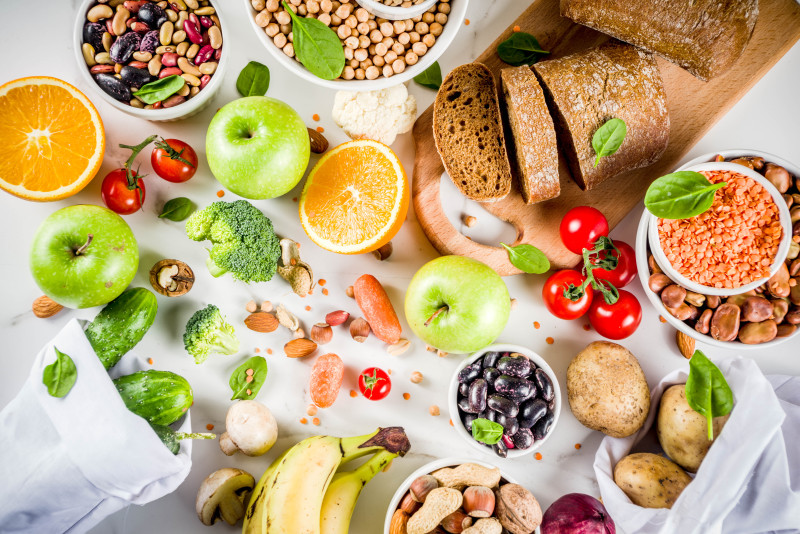 But the Green Revolution changed that. There was a dramatic increase in energy foods, which fed the world, but there was only a minor increase in metabolic foods that looked after our bodies. The natural ratio of energy to metabolic foods had been shifted to a surplus of energy foods and a shortage of metabolic foods.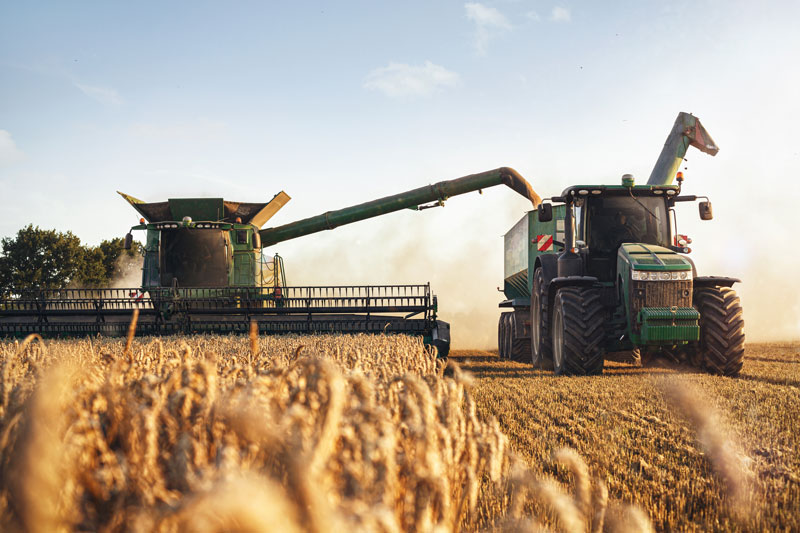
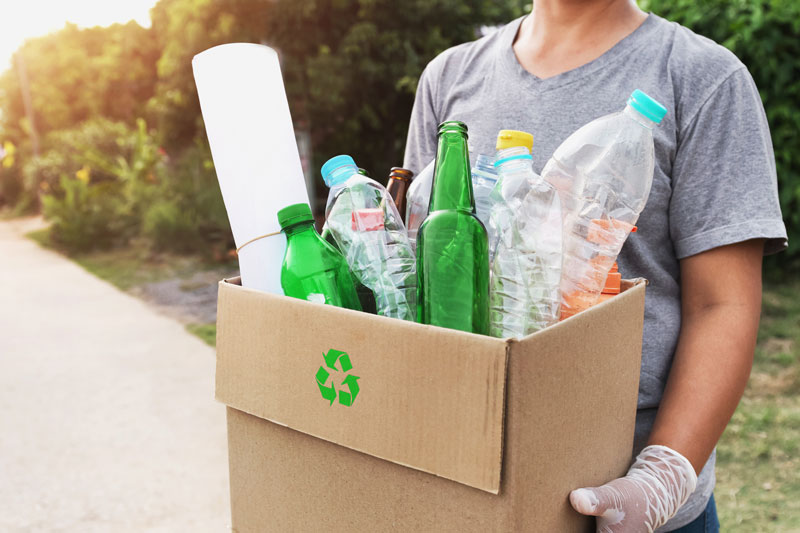






 We see the blue zones where people live to a ripe old age, well into their nineties or hundreds and are fit and healthy.
 I am no drongo, I wrote a simulation of hot plastics flowing into a cold mould which involves solving coupled non-linear partial differential equations. I set up a company Moldlfow from my back bedroom which became the leading exporter of technical software from Australia - a multi-million dollar international company and I was recognised by the Institute of Engineers as one of Australia’s leading innovators.
 We live in a world of instant gratification but you can’t cram thirty years of experimentation and thinking into a three-word slogan like ‘eat less exercise more’.
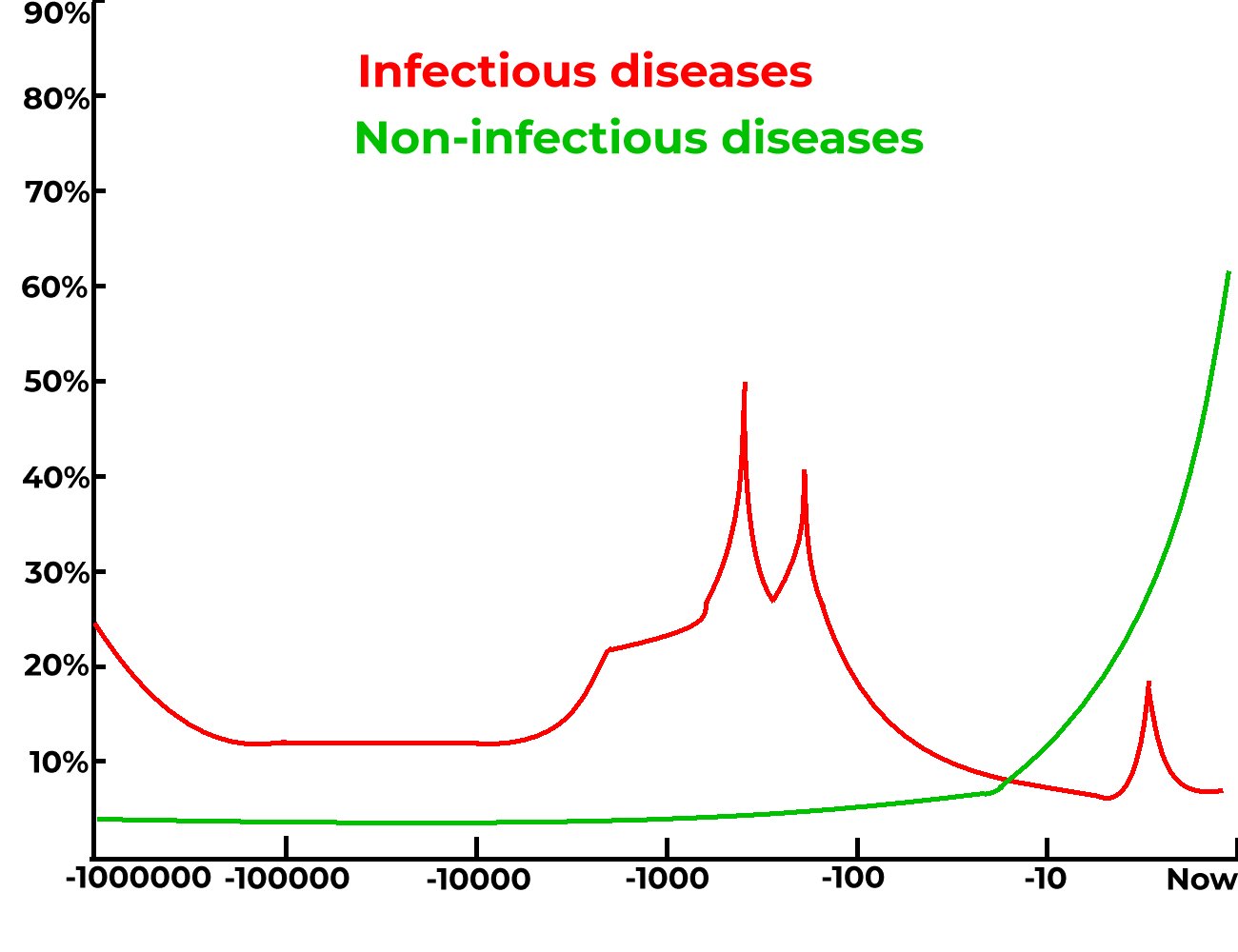
 I go back a million years when humanoid creatures first appeared on Earth. I have no actual data, and the batteries on my time machine are flat, but I can look at modern members of the ape family to take a guess - not very scientific but until the batteries are charged the best I can do.
 This reached a peak with the black death in 1347 which wiped out 50% of the population in seriously affected areas and even higher is some cases.
 The main non-infectious diseases are obesity, diabetes, heart attacks and dementia.
 Our modern food system does not feed our gut-brain which is the underlying reason for our modern health epidemic of non-infectious diseases, obesity, diabetes, heart attacks and dementia. The result is that 75% of people are dying before their natural life from non-infectious diseases.
 The global food crisis is not some threat for the future, it is here right now, it is not just about poor people starving in some remote country it is about people in rich countries suffering from chronic diseases, such as obesity, diabetes, heart attacks and dementia.
It is man-man made, if you face having a leg amputated it is a direct result of the food crisis – the wrong sort of food from our modern food system.
The global food crisis is not some threat for the future, it is here right now, it is not just about poor people starving in some remote country it is about people in rich countries suffering from chronic diseases, such as obesity, diabetes, heart attacks and dementia.
It is man-man made, if you face having a leg amputated it is a direct result of the food crisis – the wrong sort of food from our modern food system.
 We can’t expect big business or even Governments to initiate action, we need a groundswell from the public to create the social pressure for change and that will be led by these ambassadors.
It is a question of what sort of world do we want to live in. Should food be purely about maximising wealth for a small number of people or should it be for the health and benefits of the community as a whole.
We can’t expect big business or even Governments to initiate action, we need a groundswell from the public to create the social pressure for change and that will be led by these ambassadors.
It is a question of what sort of world do we want to live in. Should food be purely about maximising wealth for a small number of people or should it be for the health and benefits of the community as a whole.
 I know, from bitter experience, that if I started by saying that Gbiota is about growing bugs that will live in your gut, and have swarm intelligence that controls what and how much you want to eat you would probably find the whole idea repulsive and click away.
So let me start by telling you what I do every day, that I am 84, fit and healthy and there is a whole tribe of us doing the same thing.
It is in three stages
I know, from bitter experience, that if I started by saying that Gbiota is about growing bugs that will live in your gut, and have swarm intelligence that controls what and how much you want to eat you would probably find the whole idea repulsive and click away.
So let me start by telling you what I do every day, that I am 84, fit and healthy and there is a whole tribe of us doing the same thing.
It is in three stages
 I do breed beneficial bugs, I do this in a Gbiota bed or box. I fill just the base with any organic waste I can lay my hands on, mostly kitchen scraps and grass clippings. The upper layer is filled with Wickimix, a really nice soil where I grow my plants.
I flood just the base of the box with soil blood which is what I call the fluid in the base of the box as it does the same job as our blood, distribute nutrients and air throughout the soil.
I do breed beneficial bugs, I do this in a Gbiota bed or box. I fill just the base with any organic waste I can lay my hands on, mostly kitchen scraps and grass clippings. The upper layer is filled with Wickimix, a really nice soil where I grow my plants.
I flood just the base of the box with soil blood which is what I call the fluid in the base of the box as it does the same job as our blood, distribute nutrients and air throughout the soil.
 When I flood I expel all the stale air, I wait and let the soil blood wick up to the root zone of the plants growing in the Wickimix. Then I drain the base of the box which sucks fresh air into the box.
I store the soil blood I catch ready for the next flood and flush cycle.
I eat the plants that I grow, and every morning I make a green smoothie which is full of beneficial bugs which end up in my gut to power my gut-brain.
When I flood I expel all the stale air, I wait and let the soil blood wick up to the root zone of the plants growing in the Wickimix. Then I drain the base of the box which sucks fresh air into the box.
I store the soil blood I catch ready for the next flood and flush cycle.
I eat the plants that I grow, and every morning I make a green smoothie which is full of beneficial bugs which end up in my gut to power my gut-brain.
 Now I train my gut-brain by eating all sorts of different foods so it learns what foods work for me and what don’t.
Even though I am 84 I will still listen to a 24-year-old nutritionist just out of University and if they tell me I need to get some more Vitamin K or B12, or zinc or whatever I will start to eat food that contains that possibly missing nutrient.
Now I train my gut-brain by eating all sorts of different foods so it learns what foods work for me and what don’t.
Even though I am 84 I will still listen to a 24-year-old nutritionist just out of University and if they tell me I need to get some more Vitamin K or B12, or zinc or whatever I will start to eat food that contains that possibly missing nutrient.
 But I did learn a very valuable lesson in my era as a pioneer of computer aided engineering, in the early days of computers when they were seriously clunky machines.
I developed software which solved coupled non-linear partial differential equations using an iterative predictor corrector scheme. Sounds boring and it was, but I ploughed on giving lectures on the technology with as much success as trying to stop teenagers thinking about sex.
But I did learn a very valuable lesson in my era as a pioneer of computer aided engineering, in the early days of computers when they were seriously clunky machines.
I developed software which solved coupled non-linear partial differential equations using an iterative predictor corrector scheme. Sounds boring and it was, but I ploughed on giving lectures on the technology with as much success as trying to stop teenagers thinking about sex.
 I know that if we are going to feed 8 billion people so they have a long and healthy life that there needs to be a paradigm shift in our food.
I also know that I cannot bring about the paradigm shift myself but I know what I have to do. Find those enterprising early adopters, just a few of them, persuade them to set up Gbiota beds, eat the food and see if this improves their health.
They will then become enthusiastic and they will create the paradigm shift.
So if you find this web dull and boring, not to worry, just hang around and watch what other people are doing.
But if you are one of those early adopters who see the need for a food paradigm shift then I have created this web site for you and I am more than happy to meet up with you, this is my
I know that if we are going to feed 8 billion people so they have a long and healthy life that there needs to be a paradigm shift in our food.
I also know that I cannot bring about the paradigm shift myself but I know what I have to do. Find those enterprising early adopters, just a few of them, persuade them to set up Gbiota beds, eat the food and see if this improves their health.
They will then become enthusiastic and they will create the paradigm shift.
So if you find this web dull and boring, not to worry, just hang around and watch what other people are doing.
But if you are one of those early adopters who see the need for a food paradigm shift then I have created this web site for you and I am more than happy to meet up with you, this is my  Is food security real or hype? This is what I examine here first and later and more importantly what to do about it.
The Supermarkets are bulging with food so maybe we can just relax. Reliable figures for total food production are difficult to come by but is seems that we can identify production of at least 4 billion tonnes of food a year but the actual figure is probably much higher. Enough to feed the entire world for now and years to come. All seems good.
But let us start breaking this down. We are a thermodynamic machine and we need fuel for energy. That comes largely from the sun. The amount of energy falling on the earth from the sun is huge, far greater than all the energy used by mankind in all ways. No need to worry?
Plants are very effective solar panels, using the energy from the sun to break down water molecules and combining this with carbon dioxide from the atmosphere to produce carbohydrates for energy.
Is food security real or hype? This is what I examine here first and later and more importantly what to do about it.
The Supermarkets are bulging with food so maybe we can just relax. Reliable figures for total food production are difficult to come by but is seems that we can identify production of at least 4 billion tonnes of food a year but the actual figure is probably much higher. Enough to feed the entire world for now and years to come. All seems good.
But let us start breaking this down. We are a thermodynamic machine and we need fuel for energy. That comes largely from the sun. The amount of energy falling on the earth from the sun is huge, far greater than all the energy used by mankind in all ways. No need to worry?
Plants are very effective solar panels, using the energy from the sun to break down water molecules and combining this with carbon dioxide from the atmosphere to produce carbohydrates for energy.
 If we were to adopt a plant-based diet there would be more than enough energy food, the biggest threat would be fresh water. We are already draining global aquifers for irrigation which are running dry while climate change will increase total rainfall but clump the rains together causing flooding and periods of drought with no usable water.
Then we have fires which are a serious concern.
If we were to adopt a plant-based diet there would be more than enough energy food, the biggest threat would be fresh water. We are already draining global aquifers for irrigation which are running dry while climate change will increase total rainfall but clump the rains together causing flooding and periods of drought with no usable water.
Then we have fires which are a serious concern.
 But food does more than supply energy. We may not seem to change much year to year but our cells are dying and being replaced on a short time scale.
This requires a whole range of complex chemicals which originate from minerals, which we mine, but are processed so they are bio-available by a complex array of microbes, fungi and plants which we eat as phyto-chemicals.
We are rapidly exhausting some of these basic minerals, particularly phosphorous which is serious but even worse our system of modern agriculture is destroying the microbes and fungi which process these basic minerals into nutrients into the food chain.
This is a genuine threat to our food security but we can still manage on a reasonable time scale.
But there is a third function of food, to power the intelligent control system which regulates our bodies. This may be only a very small proportion of our food intake but is critical, in the way the pilot of a plane is only a minute proportion of the energy used by a modern airliner but it is absolutely vital for the smooth and safe operation of the plane.
Lack of the right food to power our intelligent control system is not some distant threat, it is here and now. The modern epidemic of chronic or non-infectious disease, which causes three out of four deaths is the result of deficiencies in our food system.
This is a problem demanding immediate attention, fortunately we know how to resolve this, at least technically, the solution is simple and saves money.
The challenge is to gain attention in the world of hype and disinformation in which we live.
But food does more than supply energy. We may not seem to change much year to year but our cells are dying and being replaced on a short time scale.
This requires a whole range of complex chemicals which originate from minerals, which we mine, but are processed so they are bio-available by a complex array of microbes, fungi and plants which we eat as phyto-chemicals.
We are rapidly exhausting some of these basic minerals, particularly phosphorous which is serious but even worse our system of modern agriculture is destroying the microbes and fungi which process these basic minerals into nutrients into the food chain.
This is a genuine threat to our food security but we can still manage on a reasonable time scale.
But there is a third function of food, to power the intelligent control system which regulates our bodies. This may be only a very small proportion of our food intake but is critical, in the way the pilot of a plane is only a minute proportion of the energy used by a modern airliner but it is absolutely vital for the smooth and safe operation of the plane.
Lack of the right food to power our intelligent control system is not some distant threat, it is here and now. The modern epidemic of chronic or non-infectious disease, which causes three out of four deaths is the result of deficiencies in our food system.
This is a problem demanding immediate attention, fortunately we know how to resolve this, at least technically, the solution is simple and saves money.
The challenge is to gain attention in the world of hype and disinformation in which we live.
 I sat down to eat my breakfast, a bowl of muesli and there was a cute little mouse on the table watching me. Actually, a virtual mouse rather than a real mouse, but still cute.
I am very fond of this little mouse, it is what I do, working out how to grow food that will make us healthy. That is a bit different to knowing what food will make us healthy. Take that wonder vegetable that some people swoon over, Kale.
Kale can actually be what the trendies call a super-food but if you don’t grow it the right way in the right soil it is pretty useless.
I sat down to eat my breakfast, a bowl of muesli and there was a cute little mouse on the table watching me. Actually, a virtual mouse rather than a real mouse, but still cute.
I am very fond of this little mouse, it is what I do, working out how to grow food that will make us healthy. That is a bit different to knowing what food will make us healthy. Take that wonder vegetable that some people swoon over, Kale.
Kale can actually be what the trendies call a super-food but if you don’t grow it the right way in the right soil it is pretty useless.
 I know from Richard Dawkins and The Selfish Gene that I, like everyone else want to keep our human Genes going long after we die and that needs males and females doing what they do - a bit of the good old hanky-panky.
Females have a problem with lack of iron but they can’t just go down to the local scrap yard and start munching on a wrecked car, apart from breaking their teeth that iron is not what we like to call bio-available which means it can get into her bloodstream.
I know from Richard Dawkins and The Selfish Gene that I, like everyone else want to keep our human Genes going long after we die and that needs males and females doing what they do - a bit of the good old hanky-panky.
Females have a problem with lack of iron but they can’t just go down to the local scrap yard and start munching on a wrecked car, apart from breaking their teeth that iron is not what we like to call bio-available which means it can get into her bloodstream.
 Now that is my day job, finding some microscopic bugs which can convert the iron in a wrecked car to make it bio-available so it can go into a plant which she can eat, or maybe an animal that she can eat, so she gets a good dose of iron into her blood.
Males have a different problem, zinc. One good night of hanky-panky and there goes his supply of zinc. Again no use munching into a pile of zinc-coated roofing sheets, instead find some rock that contains zinc and the appropriate bugs, create some soil with bio-available zinc, grow some plants and bingo he is ready for another night of hanky-panky.
All good fun and I am really quite happy messing around with what some people may think is just yukky soil full of rotting stuff to feed a few bugs and grow healthy food and telling people stories about what I learn.
Now that is my day job, finding some microscopic bugs which can convert the iron in a wrecked car to make it bio-available so it can go into a plant which she can eat, or maybe an animal that she can eat, so she gets a good dose of iron into her blood.
Males have a different problem, zinc. One good night of hanky-panky and there goes his supply of zinc. Again no use munching into a pile of zinc-coated roofing sheets, instead find some rock that contains zinc and the appropriate bugs, create some soil with bio-available zinc, grow some plants and bingo he is ready for another night of hanky-panky.
All good fun and I am really quite happy messing around with what some people may think is just yukky soil full of rotting stuff to feed a few bugs and grow healthy food and telling people stories about what I learn.
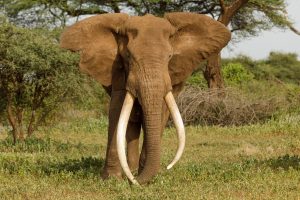 But then I went to go outside and there was this huge elephant, a really big one that was just too big to come inside so could not be the elephant in the room but is seemed quite happy to be the elephant just outside the room.
It has a big label on its trunk saying ‘Modern food system’.
Anyone with experience with elephants knows they are vegetarian which means they shit a lot, big steamy piles, so I was concerned that this elephant, although virtual, might still dump piles of shit in my patio.
But then I went to go outside and there was this huge elephant, a really big one that was just too big to come inside so could not be the elephant in the room but is seemed quite happy to be the elephant just outside the room.
It has a big label on its trunk saying ‘Modern food system’.
Anyone with experience with elephants knows they are vegetarian which means they shit a lot, big steamy piles, so I was concerned that this elephant, although virtual, might still dump piles of shit in my patio.
 And my fears were justified which is the point of this story.
Just in case you think I am making this all up just to spin a yarn can I recommend a couple of really good books.
Eating the Earth by Justyn Walsh
Food for Life The New Science of Eating Well by Tim Spector
And my fears were justified which is the point of this story.
Just in case you think I am making this all up just to spin a yarn can I recommend a couple of really good books.
Eating the Earth by Justyn Walsh
Food for Life The New Science of Eating Well by Tim Spector
 Of course, the elephant is just an avatar for our food system but what a magnificent creature.
Let us look at it in reality.
We can go to the supermarket which is stacked high with foods from all over the world.
It may be a national pass time moaning about the cost of living, but that is because the increase in wealth from our ever-developing technologies goes into the pockets of a few ultra-rich people.
Compared with times past food is incredibly cheap and is a much smaller fraction of our weekly budget than not so long ago.
Households now spend only around a tenth of their disposable income on food compared to a third before 1950.
Food needs to be cheap or else we would not be able to afford tickets to the world’s favourite billionaire songstress, Taylor Swift. Let’s get our priorities right (or wrong).
But are we on the edge of a Titanic moment, nothing can go wrong until it does.
People who predict disaster with our food system do not have a good record.
Malthus the one-time predictor of food disaster became the butt of jokes. Paul Ehrlich did not do much better. So it seems that the best way of predicting the future is just to wait until it happens.
But predictions would make a really good disaster film with millions of starving people, hungry and angry (they even invented a word for it hangry) crossing the globe causing mayhem and disaster.
We can say that that won’t happen with the same assurance that people said the Titanic was unsinkable.
So forget about predicting the future, it is too unpredictable, and instead, look at what is happening right now and look for the trends. A lot safer.
Of course, the elephant is just an avatar for our food system but what a magnificent creature.
Let us look at it in reality.
We can go to the supermarket which is stacked high with foods from all over the world.
It may be a national pass time moaning about the cost of living, but that is because the increase in wealth from our ever-developing technologies goes into the pockets of a few ultra-rich people.
Compared with times past food is incredibly cheap and is a much smaller fraction of our weekly budget than not so long ago.
Households now spend only around a tenth of their disposable income on food compared to a third before 1950.
Food needs to be cheap or else we would not be able to afford tickets to the world’s favourite billionaire songstress, Taylor Swift. Let’s get our priorities right (or wrong).
But are we on the edge of a Titanic moment, nothing can go wrong until it does.
People who predict disaster with our food system do not have a good record.
Malthus the one-time predictor of food disaster became the butt of jokes. Paul Ehrlich did not do much better. So it seems that the best way of predicting the future is just to wait until it happens.
But predictions would make a really good disaster film with millions of starving people, hungry and angry (they even invented a word for it hangry) crossing the globe causing mayhem and disaster.
We can say that that won’t happen with the same assurance that people said the Titanic was unsinkable.
So forget about predicting the future, it is too unpredictable, and instead, look at what is happening right now and look for the trends. A lot safer.
 There is a very nice phrase, overfed and undernourished and if you want to see that in action just go to your local shopping centre and count the number of overweight people with wobbly bums and tums and the people in wheelchairs or hobbling about on crutches with a leg chopped off.
It is what the experts like to call an epidemic of chronic diseases but to me that does not seem a good term, these are not infectious diseases they are a condition.
There is a very nice phrase, overfed and undernourished and if you want to see that in action just go to your local shopping centre and count the number of overweight people with wobbly bums and tums and the people in wheelchairs or hobbling about on crutches with a leg chopped off.
It is what the experts like to call an epidemic of chronic diseases but to me that does not seem a good term, these are not infectious diseases they are a condition.
 You can’t cure being overweight but as sure anything is in this world you can change your diet and not be overweight. But not by eating less and exercising more, we have been trying that for decades and it has not worked so we try eating even less and exercising more and it still doesn’t work.
Reminds me of the story of the farmer who was training his donkey to eat less. He got it down to one bean a day when the darned animal died.
This is where the current paradigm on weight is just so wrong. The common paradigm is that we get fat and sick because we are little piggies and overeat and that is just not the way it works.
You can’t cure being overweight but as sure anything is in this world you can change your diet and not be overweight. But not by eating less and exercising more, we have been trying that for decades and it has not worked so we try eating even less and exercising more and it still doesn’t work.
Reminds me of the story of the farmer who was training his donkey to eat less. He got it down to one bean a day when the darned animal died.
This is where the current paradigm on weight is just so wrong. The common paradigm is that we get fat and sick because we are little piggies and overeat and that is just not the way it works.
 Our bodies are smart and detect there is a deficiency in our diet, either of beneficial microbes or critical nutrients. The captain, the man on the ships bridge bangs his bell shouting emergency, emergency store any food you can lay your paws on.
Then the man on the bridge bangs his bell again and tells the gut down below to make up some of those hormones that make us hungry and squirt them out into our bloodstream so we end up just craving food, then the other crewmen pick up all this food that is streaming in and poke it neatly away in our bums and tums so we end up looking like a circus doll.
Our bodies are smart and detect there is a deficiency in our diet, either of beneficial microbes or critical nutrients. The captain, the man on the ships bridge bangs his bell shouting emergency, emergency store any food you can lay your paws on.
Then the man on the bridge bangs his bell again and tells the gut down below to make up some of those hormones that make us hungry and squirt them out into our bloodstream so we end up just craving food, then the other crewmen pick up all this food that is streaming in and poke it neatly away in our bums and tums so we end up looking like a circus doll.
 The number of people who claim to be religious has dropped but there is one religion that is doing extremely well.
This religion says that the free market will solve all the world’s problems and we don’t have to do anything, the invisible hand of the free market will fix everything, just go out and spend money on whatever we fancy (and if we can’t afford it then just borrow).
That may have been a workable religion many years ago when people lived in villages with a Saturday market and the power of the buyers and sellers was balanced and there was a good range of both suppliers and customers and there was no internet to spread disinformation.
The number of people who claim to be religious has dropped but there is one religion that is doing extremely well.
This religion says that the free market will solve all the world’s problems and we don’t have to do anything, the invisible hand of the free market will fix everything, just go out and spend money on whatever we fancy (and if we can’t afford it then just borrow).
That may have been a workable religion many years ago when people lived in villages with a Saturday market and the power of the buyers and sellers was balanced and there was a good range of both suppliers and customers and there was no internet to spread disinformation.
 But that is not the way the modern food system works. The food industry is riddled with Neo-monopolies.
Let us just talk about what a Neo-monopoly actually is. Governments don’t like monopolies, they are so clearly bad that they get spurred into action and do something about it.
In nature species become extinct (it could happen to us). But nature is smart so a new creature may evolve which is pretty much the same as before but does not get killed off.
That is exactly how Neo-monopolies evolved. Instead of one single company becoming a genuine monopoly which would attract the attention of the Government a new system has evolved.
Several companies maybe with one or possibly two lead companies with a handful of followers so they escape the actions of the marauding Government out to kill off monopolies but this little group know the rules.
There is no need for clandestine meetings in dark parks after night or popping secret messages into holes in the wall like in spy films, just follow the well-understood but unpublished rules, and watch the money pour in.
But that is not the way the modern food system works. The food industry is riddled with Neo-monopolies.
Let us just talk about what a Neo-monopoly actually is. Governments don’t like monopolies, they are so clearly bad that they get spurred into action and do something about it.
In nature species become extinct (it could happen to us). But nature is smart so a new creature may evolve which is pretty much the same as before but does not get killed off.
That is exactly how Neo-monopolies evolved. Instead of one single company becoming a genuine monopoly which would attract the attention of the Government a new system has evolved.
Several companies maybe with one or possibly two lead companies with a handful of followers so they escape the actions of the marauding Government out to kill off monopolies but this little group know the rules.
There is no need for clandestine meetings in dark parks after night or popping secret messages into holes in the wall like in spy films, just follow the well-understood but unpublished rules, and watch the money pour in.
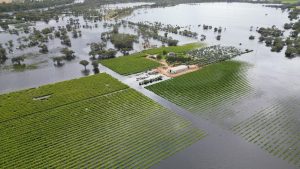 Sounds bad? Well, it is nothing compared to the damage done to the soils which are degenerating to little more than dirt to hold up the plants which are fed chemical input.
Whoops, I almost left out climate change. Sorry Greta. What a combination, climate change and destruction of our soils. Is there something wrong with our species that we have a death wish?
How is it that there are such amazing people like Zomi Frankcom, who worked for World Central Kitchen, risked her life, and was killed, trying to get food to starving people in Gaza, yet we have such atrocities as the deception in the Tobacco industry, copied by the oil and food industries.
Sounds bad? Well, it is nothing compared to the damage done to the soils which are degenerating to little more than dirt to hold up the plants which are fed chemical input.
Whoops, I almost left out climate change. Sorry Greta. What a combination, climate change and destruction of our soils. Is there something wrong with our species that we have a death wish?
How is it that there are such amazing people like Zomi Frankcom, who worked for World Central Kitchen, risked her life, and was killed, trying to get food to starving people in Gaza, yet we have such atrocities as the deception in the Tobacco industry, copied by the oil and food industries.
 The executives at these mega food companies, on their multi-million dollars-a-year salaries, and whose decision lead to 8 million people a year having a limb amputated from diabetes are regarded as pillars of the community.
Why are we so fixated with money? It is obvious that on a finite planet, we cannot continue to grow at an exponential rate and that at some point in time we must move from exploitation to recycling, a clever creature like us humans should be able to understand that simple message.
All these terrible things and people don’t even seem to care.
I care, I care about the life my two great-granddaughters will have, and all the terrible things I talk about that will happen in their lifetime, yet I get classified as a woke green nutter.
There have been times in my life when I have been poor and others rich. I have no delusions that being rich is more pleasant but money should not so dominate our thinking that we do things that make people fat, sick and have their legs chopped off from diabetes.
I can’t quite find the word, at least a polite word to describe that but there is no word for destroying the planet on which human life depends just for the sake of money.
What is wrong with us as a species, how are some people so dedicated to helping society while other seems intent on destroying us as a species? If you know the answer please email me
The executives at these mega food companies, on their multi-million dollars-a-year salaries, and whose decision lead to 8 million people a year having a limb amputated from diabetes are regarded as pillars of the community.
Why are we so fixated with money? It is obvious that on a finite planet, we cannot continue to grow at an exponential rate and that at some point in time we must move from exploitation to recycling, a clever creature like us humans should be able to understand that simple message.
All these terrible things and people don’t even seem to care.
I care, I care about the life my two great-granddaughters will have, and all the terrible things I talk about that will happen in their lifetime, yet I get classified as a woke green nutter.
There have been times in my life when I have been poor and others rich. I have no delusions that being rich is more pleasant but money should not so dominate our thinking that we do things that make people fat, sick and have their legs chopped off from diabetes.
I can’t quite find the word, at least a polite word to describe that but there is no word for destroying the planet on which human life depends just for the sake of money.
What is wrong with us as a species, how are some people so dedicated to helping society while other seems intent on destroying us as a species? If you know the answer please email me  But it gets worse, this reliance on chemicals results in food which is deficient in the beneficial microbes needed to replenish our gut biome and critical trace elements that are essential for our bodies but not essential for plants to grow into what looks like but isn’t healthy food.
The net result is the epidemic of non-infectious diseases which are here right now.
But what happens when we have used up all those minerals that power modern industrial agriculture? We only have some fifty years of phosphorous left.
But it gets worse, this reliance on chemicals results in food which is deficient in the beneficial microbes needed to replenish our gut biome and critical trace elements that are essential for our bodies but not essential for plants to grow into what looks like but isn’t healthy food.
The net result is the epidemic of non-infectious diseases which are here right now.
But what happens when we have used up all those minerals that power modern industrial agriculture? We only have some fifty years of phosphorous left.
 Let me give you my version.
Human beings are not physically well equipped for life in the wild, being a bit challenged in the claw, teeth and beak departments.
True an adult human can survive in the wild for several episodes of Alone, cheered on by a television crew with a backup helicopter and support vehicles.
Let me give you my version.
Human beings are not physically well equipped for life in the wild, being a bit challenged in the claw, teeth and beak departments.
True an adult human can survive in the wild for several episodes of Alone, cheered on by a television crew with a backup helicopter and support vehicles.
 Within any particular society, there is generally a feeling that this society cannot fail.
Yet the facts show otherwise. Just look at the history of civilisations. European societies think they were the pioneers of civilisation but for some reason I don’t understand, civilisations sprung up across the globe in Asia, India and the Americas at roughly the same time.
Some of these had a long history. Another really good book is Farmers of Forty Centuries which examined why civilisations in China, Korea and Japan had been stable for over four thousand years while so many other civilisations collapsed.
The picture is clear, the civilisations that had long-term survival were based on recycling their waste to provide nutrients in their soils.
The civilisations that failed did it in two stages. They degraded their soils (and sometimes water systems) which weakened their civilisations but did not lead to their final collapse. That happened when they were overrun by other military-aggressive nations.
Within any particular society, there is generally a feeling that this society cannot fail.
Yet the facts show otherwise. Just look at the history of civilisations. European societies think they were the pioneers of civilisation but for some reason I don’t understand, civilisations sprung up across the globe in Asia, India and the Americas at roughly the same time.
Some of these had a long history. Another really good book is Farmers of Forty Centuries which examined why civilisations in China, Korea and Japan had been stable for over four thousand years while so many other civilisations collapsed.
The picture is clear, the civilisations that had long-term survival were based on recycling their waste to provide nutrients in their soils.
The civilisations that failed did it in two stages. They degraded their soils (and sometimes water systems) which weakened their civilisations but did not lead to their final collapse. That happened when they were overrun by other military-aggressive nations.
 On one side of the war is the mega-corporations. Large well resourced and ruthless for short-term profit and on the other side the community is placid, looking for a quiet life and a bit naive.
The mega-corporations are willing to use the power of the disinformation age to convince us their food is healthy for us when in reality it lacks critical components which make us fat and sick and run the risk of having a leg chopped off from diabetes.
But worse, it is destroying the planet on which we all depend, exploiting the finite natural resources which will eventually lead to the collapse of the food system and civilised society as we know it.
This is a war the community must win, but right now we are in the battle of the gut-brain which is the intelligent control system which regulates our bodies, particularly what and how much we eat.
This is a battle we must win or we will lose the war - but how?
There are eight billion warriors on our side and we have the ultimate weapon, the power of the wallet, (well lots of wallets) but we are disorganised and therefore ineffective.
A few gallant individuals will fight on, growing some of their own food and we need them, they are the commandos in this war paving the war for the bigger battle to follow.
On one side of the war is the mega-corporations. Large well resourced and ruthless for short-term profit and on the other side the community is placid, looking for a quiet life and a bit naive.
The mega-corporations are willing to use the power of the disinformation age to convince us their food is healthy for us when in reality it lacks critical components which make us fat and sick and run the risk of having a leg chopped off from diabetes.
But worse, it is destroying the planet on which we all depend, exploiting the finite natural resources which will eventually lead to the collapse of the food system and civilised society as we know it.
This is a war the community must win, but right now we are in the battle of the gut-brain which is the intelligent control system which regulates our bodies, particularly what and how much we eat.
This is a battle we must win or we will lose the war - but how?
There are eight billion warriors on our side and we have the ultimate weapon, the power of the wallet, (well lots of wallets) but we are disorganised and therefore ineffective.
A few gallant individuals will fight on, growing some of their own food and we need them, they are the commandos in this war paving the war for the bigger battle to follow.
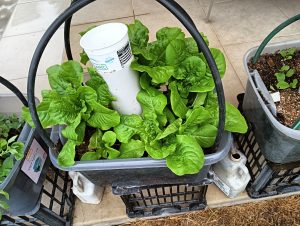 But we need the full power of the community to win this battle.
That is what the Gbiota club is all about, it brings together the local growers, who have the capacity to grow gut-brain food with the community as a whole who have the numbers.
And how can it work? The growers can produce Wickimix, that magical growing medium teaming with beneficial life and critical nutrients which feed the plants which we eat to feed our gut.
They can supply this in boxes, as clean skins, ready for the more adventurous members of the community who want to take charge of growing some of their own food or they can supply boxes, with plants ready to be picked and eaten genuinely fresh before the beneficial microbes die.
But we need the full power of the community to win this battle.
That is what the Gbiota club is all about, it brings together the local growers, who have the capacity to grow gut-brain food with the community as a whole who have the numbers.
And how can it work? The growers can produce Wickimix, that magical growing medium teaming with beneficial life and critical nutrients which feed the plants which we eat to feed our gut.
They can supply this in boxes, as clean skins, ready for the more adventurous members of the community who want to take charge of growing some of their own food or they can supply boxes, with plants ready to be picked and eaten genuinely fresh before the beneficial microbes die.