Health From Food Using Modernised Traditional Agriculture

Health From Food Using Modernised Traditional Agriculture

For thousands of years, people stayed healthy by eating food grown in living soil using traditional farming methods. While life was harder and infectious disease was common, those who survived often remained fit and active into old age. Modern agriculture produces more food than ever, yet chronic disease is now widespread. This article explains what was lost, how soil and food quality affect health, and how modernised traditional agriculture can restore health using today’s technology.


Four Thousand Years of Proven Agriculture

For over 4,000 years, farmers grew food using traditional methods based on recycling organic matter, maintaining soil fertility, and working with natural systems. Many people died young from infections or accidents, but those who survived often lived long, physically active lives. Elderly farmers regularly worked in the fields into their eighties and nineties.

This pattern is well documented in the classic book Farmers of Forty Centuries, written in 1910. Even today, it is still possible to visit remote areas of China and observe agriculture practiced much as it was centuries ago. These systems supported large populations without modern chronic disease epidemics.

The Post-War Agricultural Shift

After World War II, agriculture was transformed in the name of efficiency. Chemical fertilisers, pesticides, and herbicides dramatically increased yields. On the surface, this appeared to be a success. We now produce more food than at any point in history.

However, this increase in quantity has come with serious costs. Modern societies now experience unprecedented levels of chronic disease, including obesity, diabetes, heart disease, strokes, dementia, and other long-term illnesses. This widespread health crisis is new and did not exist on this scale in traditional food systems.

A system that worked for thousands of years must have had something fundamentally right. The question is not only what went wrong, but how it can be fixed.

A Personal Turning Point

The urgency of this question became clear when diabetes entered the household. Loss of eyesight followed, then a serious fall and broken bones. After surgery, circulation failed and the foot began to turn black. Doctors discussed amputation as the likely next step.

The prospect of blindness, disability, and early death from heart disease is powerful motivation to act. This experience made it impossible to ignore the deeper causes of modern disease.

Applying Technology to Health, Not Profit

A background in advanced computer simulation and software engineering shaped the approach to the problem. Decades were spent building complex systems with one clear goal: solving real-world problems efficiently.

Billions of dollars have been invested in agricultural research, largely by multinational corporations. The primary goal has been profitability, not human health. The outcome has been food that is high in sugars and fats, low in essential micronutrients, and often contaminated with toxic chemicals. At the same time, these chemicals damage the soil that future food production depends on.

A society that harms people and destroys soil so a small number of individuals can accumulate more wealth is not a smart society.

Why Modern Food Drives Cravings

The human gut is an intelligent system. It senses nutrient availability and helps regulate appetite. When food lacks essential trace minerals and phytonutrients, the gut signals that something is missing. The result is cravings.

People respond by eating more food, often rich in sugar and fat, because those foods are readily available and heavily promoted. This leads to weight gain, insulin resistance, and eventually diabetes.

The problem is made worse by toxic chemicals that directly damage gut biology. When this control system is disrupted, appetite regulation breaks down entirely.

Rethinking Food Production

The obvious question is what happens if the same level of technology used in advanced engineering is applied to food production, with the single goal of restoring health rather than maximising profit.

The result is a growing system that focuses on soil biology, mineral balance, and plant diversity. Essential trace minerals are incorporated into compost tea and circulated through the root zone of plants. This delivers nutrients and beneficial biology directly where plants can use them.

By growing mixed plant species, as occurs in nature, toxic chemicals can be avoided. Composting waste organics regenerates soil rather than depleting it. This approach supports both human health and long-term soil health.

Modernised Traditional Agriculture

This system takes the principles of traditional agriculture and combines them with modern automation and control. The aim is not to return to the past, but to modernise what worked while avoiding what failed.

Soil remains biologically active. Nutrients are recycled rather than mined and discarded. Water use is efficient. Plants grow in conditions that allow them to produce the complex compounds needed for human health.

A society that can regenerate its soils while feeding its population has a future. One that continues to mine soil fertility and human health does not.

Health Is Possible

With dietary change and access to better food, health can improve dramatically. Recovery is possible when the body receives what it actually needs. This raises a much bigger question: how can this technology reach the billions of people already suffering from chronic disease, and the many more who want to avoid becoming medical statistics?

The Distribution Problem

The technology exists, but access is blocked by a food system tightly controlled by large corporations with enormous financial power. Farmers receive only a small fraction of the retail price of food. Most of the cost is tied up in marketing, distribution, and corporate profit.

This structure makes it difficult for growers to adopt regenerative systems, even when they want to, and makes healthy food unnecessarily expensive for consumers.

Reconnecting Growers and People

A practical solution is to reconnect growers and consumers directly, much like traditional farmers markets. Modern internet platforms make this possible at scale.

People can commission growers to produce specific plants and herbs that have been valued for health benefits for centuries. Growers gain secure demand and fair prices. Consumers gain access to food grown specifically to support health.

Why Change Matters

No one wants to live with blindness, disability, or the constant fear of early death from preventable disease. The alternative is not complex. It begins with eating real food grown in living soil.

Modernised traditional agriculture offers a path forward: using today’s technology to restore what thousands of years of farming already proved works. Healthy people, healthy soil, and a food system designed to serve society rather than exploit it.

Loading

How Soil, Food Quality, and Lifestyle Shape Modern Health

How Soil, Food Quality, and Lifestyle Shape Modern Health

This newsletter explains why some wicking beds fail, why they may smell, and how soil biology, water balance, and nutrients affect plant health. It shares the story behind the development of wicking beds, the mistakes early users made, and the importance of living soil. It also highlights global food quality issues and introduces new plans to make wicking beds easier for everyone, including people in small homes or apartments.


Introduction — A Tough Morning With Wicking Beds

Some days just don’t go well. I started receiving a wave of emails from wicking bed users complaining that their beds were smelly or failing to keep plants well watered. If you have ever asked similar questions, don’t feel bad — your queries have helped highlight a critical issue and pushed me to rethink parts of how these systems work.

Wicking beds are wonderful when they work, but they can also go wrong — and when they go wrong they can seem “putrid” or disappointing. These problems have implications not just for individual gardeners, but for how the wicking bed idea is perceived globally. If the public sees beds fail, they won’t adopt the technology that can make food production more sustainable and nutritious.

The Birth of Wicking Beds

The original goal of developing wicking beds was practical and simple: how could I provide cheap, reliable water to grow sustenance food in drought-prone areas like rural Africa? Many subsistence farmers live on a few dollars a day and cannot afford expensive irrigation or fertilizers. The idea of using a reservoir beneath the soil to supply moisture directly to plant roots seemed ideal — cheap, simple, and adaptable to diverse conditions.

In the early days, I built wicking beds from whatever was available — old bathtubs, wheelbarrows, tyres lined with plastic bags, and other inexpensive containers. These simple systems worked surprisingly well. Once filled with soil and a bit of organic matter, they kept plants alive even when rainfall was minimal.

As the idea spread through the internet, I was taken aback by how many people adopted wicking beds. It was never intended to be a commercial product — I simply shared the concept online so others could benefit. However, rapid adoption led to both good and bad versions of the system floating around, and not all of them worked correctly.

Commercial Suppliers and Technical Support

Many people now buy ready-made wicking beds from commercial suppliers. Often these products come with little to no technical support. The manufacturers may build a bed, sell it, and leave the buyer to figure out how it works. This can be problematic because wicking bed success depends on understanding how water moves through soil, how roots breathe, and how soil biology functions. Without this knowledge, users may experience poor results and wrongly conclude that wicking beds don’t work at all.

There’s a real paradox here. When I first proposed the idea, many technical experts claimed wicking beds wouldn’t work because water stagnant at the base would become putrid. In principle, they were correct: plant roots need oxygen, and if they are submerged too long without air, they effectively “drown” just as humans would in similar conditions. A major part of early development was finding ways to ensure roots had access to both sufficient water and oxygen.

Stinky Beds – What’s Really Going On?

One common problem is that beds can go putrid. This happens when there’s too much stagnant water and not enough oxygen in the soil. Roots emit gases like ethylene, which can inhibit growth if trapped. If the water level in the soil stays high for too long, the environment becomes anaerobic (without oxygen), which creates unpleasant smells and poor growing conditions.

Another issue is the soil mix itself. If the soil is inert — for example, stones, sterile sand, or chemically sterilised potting mix — it won’t support soil biology. Without soil life, organic matter does not decompose properly, and nutrients do not become available for plants. You might avoid smells in a sterile mix, but the produce will likely be low in nutritional quality, similar to many supermarket vegetables.

Just adding a bit of compost to a bed can lead to smells not because compost is bad, but because the soil biology is not well balanced. If there’s not enough oxygen or the proper microbial population, decomposition becomes anaerobic and odorous.

Nutrition and the Global Food Crisis

My focus has shifted from just water to a broader issue: nutrition. My wife Xiulan’s diagnosis of diabetes highlighted the real health consequences of modern diets — diets high in sugar, fats, and calories but low in essential vitamins, minerals, and phytonutrients. Diabetes is not just about sugar; it is a hormonal malfunction that leads to serious diseases and complications, including blindness and amputations.

The modern industrial food system produces large quantities of energy-dense foods that are nutrient-poor. Although pills and supplements are marketed as solutions, they cannot replicate the complex balance of nutrients, vitamins, and phytonutrients that natural, biologically grown food provides. Growing nutrient-dense food locally, in biologically active soil, is a practical way to improve diet quality.

Around the world, people are suffering from chronic diseases linked to poor diet. For example, Australia has millions living with diabetes, the United States has tens of millions, and China’s numbers are rapidly rising. Most people could benefit from growing at least some of their own food to reduce dependence on processed, nutrient-deficient products.

Growing Your Own Food

The most practical solution is to grow a portion of your own food in nutrient-rich soil. This doesn’t require joining a complex movement or becoming an expert gardener — even a few tomatoes, spinach, or herbs grown in well-managed soil can improve nutritional intake.

However, many people live in apartments or have limited garden space. To address this, I have been developing an upgraded design — the “wicking bed basket.” This is a compact, soil-rich container system designed to fit in apartments and small yards. It allows anyone, regardless of space, to grow nutritious food using minimal resources.

Learning from Mistakes

There’s an old saying: both fools and wise men make mistakes, but the wise learn from them. I recognise that I made mistakes in how I promoted and supported wicking beds. I shared all my information freely online, but not everyone understood the underlying principles. This led to misapplications of the technology and some failed beds.

These failures can harm the reputation of wicking beds. If the public associates them with bad results or foul smells, adoption will falter. Yet when used correctly and supported with some technical guidance, wicking beds have enormous potential to help people grow healthy food around the world.

Commercial and Community Support

To support wider adoption, simply sharing information is not enough. People need technical support to succeed with their beds. One idea is to create a formal structure — a wicking bed club — where members pay a small fee for access to support, updates, and expert guidance. This model does not rely on patents or heavy legal systems but rather on shared knowledge and collective improvement.

The club concept allows growers to access technology, training, and resources while contributing to a network of gardeners sharing ideas and improvements. Coaches could provide personalised help, and members could benefit from collective expertise on soil mixes, biological supplements (like BioPacks), minerals, trace elements, and plant choices.

Conclusion — Growing Healthy Soil and Food

The challenge is to make wicking beds both effective and widely adopted. Most current users see good results, but some do not because they lack understanding of how water, air, soil biology, and nutrients interact. The goal remains simple: enable as many people as possible to grow nutrient-rich, homegrown food using sustainable, low-cost methods. Ensuring proper technical support and education will help wicking beds reach millions globally, improving diet quality and community resilience.

Loading

Health Starts in the Soil Part 3

Health Starts in the Soil Part 3

The trillions of cells in our guts do more than digest food. They form part of an intelligent control system that manages how our bodies store fat.
We need to store fat; this is natural. But if the control system is not working correctly, fat is stored in the wrong places — in vital organs such as the pancreas (diabetes), in the brain (dementia), or throughout the body (obesity).

When the gut control system is damaged, the body stores fat where it harms rather than protects.

Science has not yet fully explained how this intelligent control system works. People exist on a spectrum: some can eat anything and remain slim; others struggle despite strict diets.

However, we can learn from the world’s “blue zones,” where people live long and stay healthy into old age. What these communities share is simple: they eat vegetables grown in nutrient-rich, biologically active soil, free from toxic chemicals.

Healthy soil produces healthy plants, which support a healthy gut, which supports a healthy body.

The Gbiota™ bed technology was developed based on observations from traditional societies to enhance gut biology. Eating food grown in a Gbiota™ bed does not guarantee the prevention of diabetes, dementia or obesity, but it may improve the odds. And results can be assessed personally by observing changes in gut function and appetite control.

I enjoy food and experience cravings. But every morning, I drink a green smoothie made from Gbiota™ food. I stop feeling hungry and my gut function improves. You can test this yourself.


Community Supported Agriculture

Community Supported Agriculture | Gbiota | Colin Austin

There is a growing movement worldwide where communities and farmers work together. You can read about this global movement here: https://en.wikipedia.org/wiki/Community-supported_agriculture.

The approach we support is straightforward. A local group forms from three roles:

  • Biofoodies – people who want food grown in living, nutrient-rich soil
  • Regenies – regenerative farmers who focus on soil health
  • Groupies – organisers who coordinate ordering and distribution

The process:

    • Groupies start and run the group
    • Biofoodies join to create buying power
    • Regenies grow the produce
    • The community decides which crops to grow
    • Regenies list produce online
    • Biofoodies place orders
    • Groupies arrange packing and delivery
  • A delivery van collects produce from farms and delivers directly to homes

Community food systems work when growers, eaters and organisers collaborate.


Loading

Health starts in the soil

Health starts in the soil

Health starts in the soil

Every day we here stories of doom and gloom about food, price hikes from floods and droughts, problems with the supply chain from Covid, lack of nutrients and beneficial biota leading to diabetes, heart attacks and dementia.

It all sounds pretty miserable so why not do something about it. Here we are focused on solutions.

You can read many articles analysing the food situation here.

price hikes

Before I start I just need to make the point that we are not facing a general shortage of food, we are producing more than enough energy food to feed the entire world now and into the future. While most of the food we eat is simply burned as fuel it is essential that we eat food that will feed our gut brain.

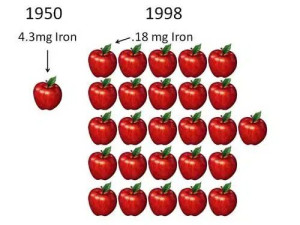
soil-depletion-apples-colin-austin-gbiota

Our gut brain is really important - there is simply no way to be healthy without a healthy gut. It is a real brain which talks to our head brain though the Vegas nerve to control our appetite so we don’t overeat on the wrong sort of food and start down the road to diabetes, it manages the complex chemicals needed to replace our body parts as they age and wear and host much of our immune system.

The Gbiota Biobox system allows people to have fresh vegetables which feed our gut brain growing in their home, even if they have no garden, time or gardening skills.

There are two groups of people in the scheme.gbiota-box-colin-austin-gbiota

Group 1 consumers or biofoodies

There are the people who just want to eat the food that will make them healthy. It is just a reality that the minute a plant is harvested that it starts to deteriorate. Within twenty four hours the level of some critical nutrients will have dropped by half so there is no real alternative but to grow gut food at home.

The Gbiota box system makes this very easy - really just watering, adding nutrients and harvesting.

It is a lot cheaper but above all the quality is just so much better - full of minerals, nutrients and beneficial biota which feeds our gut brain.

However the Gbiota Biobox needs soil, not just any old soil but soil which is full of nutrients and living biota such as microbes, fungi and worms.

This is where the second group comes in.

Group 2 community growers

Community growers are typically experienced growers with a garden who are prepared to grow the special soil - Wickimix - for their local community. Naturally they get paid for this service so it can be a nice paying hobby.

They agree to work to a protocol of adding the required minerals and inoculants to grow the Wickimix - supported of course by the Gbiota team.

How it works

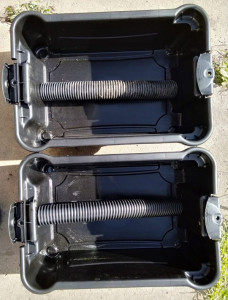
This is the way it works. It starts with a box, any box of any size that suits - just a small 20 litre box if you want just want to grow baby greens on your windowsill or a bigger one if you want to grow large plants.

A simple irrigation fitting is installed at one end to form the swivel drain and a piece of drainage pipe connected to distribute the water - and that is all there is to it.

Now we start with food scraps from the kitchen.


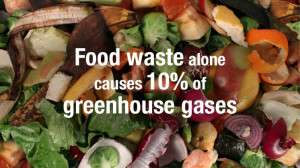
Food scraps are one of the crimes of the century, we just throw them into the bin where they end up as land fill decomposing to form the worst sort of green house gases.

Yet they are full of nutrients which can be recycled into fresh healthy food - future generations will just laugh at us.

Now there can be a bit of a problem with smells and flies if they are not handled right but if you do it yourself there is none of these problem that occur when food scraps are left lying about for any time.

food-waste-colin-austin-gbiota

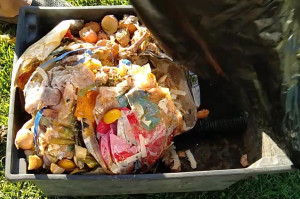
We just fill the base of the bed with fresh food scraps. It may seem that we are overwhelmed with food scraps but when we start to recycle them they become a valuable commodity which is in short supply so we may made need to add other organic waste like grass clippings.

waste-food-colin-austin-gbiota

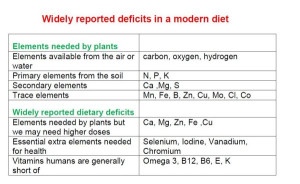
But that is not enough - we need minerals like magnesium, iron for the ladies, zinc for the men, copper, selenium, iodine, vanadium and chromium.

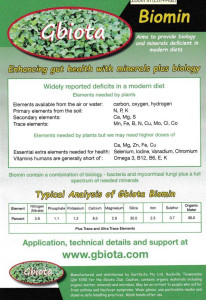
These are readily available in volcanic rock dust but they are still rocks that are insoluble so we cannot absorb the minerals - for that we need micro-biota, the bacteria and particularly the fungi that can dissolve the rocks.


So we add Wickimix which looks like and acts like soil but is actually made by breeding beneficial micro-organism in an in-ground Gbiota bed. This is a bit more complicated but you can buy Wickimix on line from a licensed local grower.

The bed can then be seeded and covered with a thin layer of Wickimix.

soil-in-wickimix-box-colin-austin-gbiota

 It is that easy.

Now that is fine when first setting up a Gbiota box - there will be plenty of nutrients and beneficial biota at the start.

But you will be taking these nutrients out of the bed so after a period the soil will become old and tired.

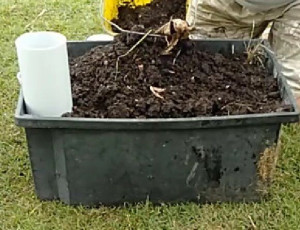
This is where the compost tube comes into play. It is simply a tube which is pushed into the soil, the soil is soft so just a bit of wriggling and the tube will go to the bottom of the bed.

The excess soil is simply cleaned out and used as a mulch then the tube filled with fresh food waste.

Food waste may be good stuff but it attracts the tiny vinegar flies and those pesky blowies. This is why you add extra Wickimix on top of the food waste so the worms and the microbes can get busy breaking the food waste down.

Some people like to save up their food waste in a separate container for a few days and then put into the Gbiota box but an alternative is to set the box up at a convenient place and just add the food waste as needed, a plug is needed to stop flies getting at the waste until they are covered with Wickimix.

Recycling food waste make economic and environmental sense, and cost little money and is easy.

The plants we grow acts as natural pre and pro biotics feeding our gut brain which is critical for our health.

biomin-label-colin-austin-gbiota

First step

First step is get your copy of food for health, it is free you just have to download.  Below is the official automated download system which like most over engineered computer systems works when it feels like it, don't go away just email me directly at colin@gbiota.com

Loading

Health starts in the soil Part 2

Health starts in the soil Part 2


Health starts in the soil

Every day we here stories of doom and gloom about food, price hikes from floods and droughts, problems with the supply chain from Covid, lack of nutrients and beneficial biota leading to diabetes, heart attacks and dementia.

It all sounds pretty miserable so why not do something about it. Here we are focused on solutions.

You can read many articles analysing the food situation here.

Before I start I just need to make the point that we are not facing a general shortage of food, we are producing more than enough energy food to feed the entire world now and into the future. While most of the food we eat is simply burned as fuel it is essential that we eat food that will feed our gut brain.

Our gut brain is really important – there is simply no way to be healthy without a healthy gut. It is a real brain which talks to our head brain though the Vegas nerve to control our appetite so we don’t overeat on the wrong sort of food and start down the road to diabetes, it manages the complex chemicals needed to replace our body parts as they age and wear and host much of our immune system.

The Gbiota Biobox system allows people to have fresh vegetables which feed our gut brain growing in their home, even if they have no garden, time or gardening skills.

There are two groups of people in the scheme.

Group 1 consumers or biofoodies

There are the people who just want to eat the food that will make them healthy. It is just a reality that the minute a plant is harvested that it starts to deteriorate. Within twenty four hours the level of some critical nutrients will have dropped by half so there is no real alternative but to grow gut food at home.

The Gbiota box system makes this very easy – really just watering, adding nutrients and harvesting.

It is a lot cheaper but above all the quality is just so much better – full of minerals, nutrients and beneficial biota which feeds our gut brain.

However the Gbiota Biobox needs soil, not just any old soil but soil which is full of nutrients and living biota such as microbes, fungi and worms.

This is where the second group comes in.

Group 2 community growers

Community growers are typically experienced growers with a garden who are prepared to grow the special soil – Wickimix – for their local community. Naturally they get paid for this service so it can be a nice paying hobby.

They agree to work to a protocol of adding the required minerals and inoculants to grow the Wickimix – supported of course by the Gbiota team.

How it works

This is the way it works. It starts with a box, any box of any size that suits – just a small 20 litre box if you want just want to grow baby greens on your windowsill or a bigger one if you want to grow large plants.

A simple irrigation fitting is installed at one end to form the swivel drain and a piece of drainage pipe connected to distribute the water – and that is all there is to it.

Now we start with food scraps from the kitchen.

Food scraps are one of the crimes of the century, we just throw them into the bin where they end up as land fill decomposing to form the worst sort of green house gases.

Yet they are full of nutrients which can be recycled into fresh healthy food – future generations will just laugh at us.

Now there can be a bit of a problem with smells and flies if they are not handled right but if you do it yourself there is none of these problem that occur when food scraps are left lying about for any time.

We just fill the base of the bed with fresh food scraps. It may seem that we are overwhelmed with food scraps but when we start to recycle them they become a valuable commodity which is in short supply so we may made need to add other organic waste like grass clippings.

But that is not enough – we need minerals like magnesium, iron for the ladies, zinc for the men, copper, selenium, iodine, vanadium and chromium.

These are readily available in volcanic rock dust but they are still rocks that are insoluble so we cannot absorb the minerals – for that we need micro-biota, the bacteria and particularly the fungi that can dissolve the rocks.

So we add Wickimix which looks like and acts like soil but is actually made by breeding beneficial micro-organism in an in-ground Gbiota bed. This is a bit more complicated but you can buy Wickimix on line from a licensed local grower.

The bed can then be seeded and covered with a thin layer of Wickimix.

It is that easy.

Now that is fine when first setting up a Gbiota box – there will be plenty of nutrients and beneficial biota at the start.

But you will be taking these nutrients out of the bed so after a period the soil will become old and tired.

This is where the compost tube comes into play. It is simply a tube which is pushed into the soil, the soil is soft so just a bit of wriggling and the tube will go to the bottom of the bed.

The excess soil is simply cleaned out and used as a mulch then the tube filled with fresh food waste.

Food waste may be good stuff but it attracts the tiny vinegar flies and those pesky blowies. This is why you add extra Wickimix on top of the food waste so the worms and the microbes can get busy breaking the food waste down.

Some people like to save up their food waste in a separate container for a few days and then put into the Gbiota box but an alternative is to set the box up at a convenient place and just add the food waste as needed, a plug is needed to stop flies getting at the waste until they are covered with Wickimix.

Recycling food waste make economic and environmental sense, and cost little money and is easy.

The plants we grow acts as natural pre and pro biotics feeding our gut brain which is critical for our health.

First step

First step is get your copy of food for health, it is free you just have to download. Below is the official automated download system which like most over engineered computer systems works when it feels like it, don’t go away just email me directly at colin@gbiota.com

Loading

Health Starts in the Soil Part 1

Health Starts in the Soil Part 1

Humans thrive because we build tools and cooperate. Today, rapid technological change and a highly processed food system mean we must use that same cooperation to reclaim our health—starting in the soil.


Cooperation and technology

Some million or so years ago, humanoid creatures survived by throwing stones at attacking lions. Throwing stones may not sound like advanced technology, but we’re the only animal that can do it effectively. (Chimps can throw, but not with the accuracy to hit a lion on the nose.)

One person throwing stones would be useless—it takes a coordinated group to create a barrage that makes lions back off.

How did we coordinate? Not top-down instructions or financial incentives, but a shared question each person asked: “What kind of society do I want to live in—one where I get eaten by lions or one where I don’t?”

Enough people chose the “no lions” option, worked together, and we survived. That cooperative nature hasn’t changed.

What has changed—dramatically—is technology. The pace is faster than ever, and society is struggling to adapt. Our advances don’t always serve the common good as they should.

cave-men-attacking-mammoth-colin-austin-gbiota

From engineering to food

My day job was technical innovation. I was selected by the Institute of Engineers as one of the top one hundred technical innovators for my work in computer-aided engineering. Innovators lucky enough to have the DNA for invention have a responsibility to ensure our work improves society.

I like to think my engineering work helped create better products. Today, I focus on food—specifically how growing methods affect our health. Health starts in the soil.

Manipulation of the truth

Modern food marketing often manipulates truth—just as the tobacco industry once did. Selective facts, man

ufactured doubt, andpaid “experts” cloud public understanding. We’ve seen similar tactics used to discredit climate science and in election disinformation.

Food misinformation is costing lives on an unprecedented scale. After decades of medical progress, chronic diseases are pushing lifespans down and suffering up. The “fat in the wrong place” conditions—diabetes, obesity, and dementia—aren’t just fatal; they erode quality of life for millions.

Every twelve seconds someone loses a limb to diabetes; it’s also the leading cause of blindness. Dementia is crueller still: a slow loss of self and relationships that nobody would choose as a final chapter.

These epidemics are largely man-made—driven by addictive ultra-processed foods and misinformation.


A better way: Gbiota beds

Complaining isn’t enough—we need solutions. As usual, that means technology and social change working together.

On the technology side, thousands of reputable studies show how diet improves health. My contribution is the Gbiota bed system: flood-and-drain cycles that periodically bathe roots in nutrient-rich compost tea—full of essential minerals and beneficial biology and free from toxic chemicals. It’s productive, simple, and designed to support healthy gut biology—the key to addressing modern chronic disease.

But technology alone isn’t enough. We need a social movement that changes how communities choose, grow, and prepare food.

How to create social change

Rallies and placards have their place, but they’re unlikely to out-muscle multinational corporations with refined persuasion machinery. The change that works is the power of the wallet—local groups deciding to eat real, living food and committing time to understand how food shapes health. It starts with accepting that health starts in the soil.


Three practical options

  • Grow it: If you have space, set up your own Gbiota bed.
  • Cook it: If you have kitchen skills, buy direct from commercial growers using Gbiota beds.
  • Order it: Support local cafés and restaurants that source from Gbiota growers and can make the food taste—and look—great.

Join the Biofoodies

After exploring these ideas, take the next step: join our community of “Biofoodies”—people who seek food grown in nutrient-rich, biologically active soil using Gbiota beds.

Join the Biofoodie group


Loading