

Getting Started
To grow metabolic food, we need real soil, water, air and seeds.
What do we mean by ‘real soil’?
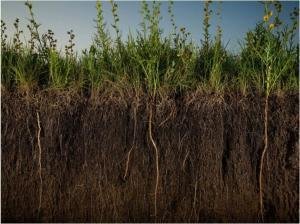 You don’t actually need soil to grow plants; you can grow them hydroponically or, more commonly, use soil to hold the plant upright and provide the nutrients it needs with fertilisers, and the plants will grow well. In fact, if you just want to create energy food, it works very well and is highly profitable.
The snag is that we humans are more complex than plants, so we need additional nutrients and vitamins, but more importantly, we need the microbes that live in our gut and are part of the system that regulates our bodies.
We would be very lucky if real soil were readily available without any effort on our part, so we have to make it, or rather grow it, ourselves.
Making soil.
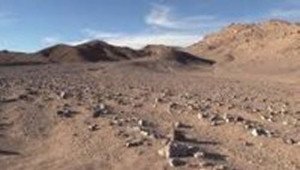 Does that sound highly technical? Well, it’s been happening for billions of years, so a good place to start is studying the natural process of producing soil.
It starts with what is available locally. Volcanic rock dust contains a broad spectrum of minerals, pretty much everything needed to make good soil. Chalk, on the other hand, forms from animal deposits in the sea and is full of calcium, an essential mineral, but it lacks a wide range of nutrients.
In fact, most soils lack some critical minerals.
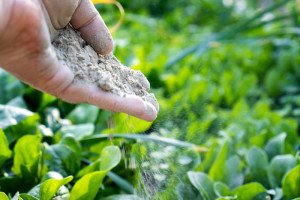 But this isn’t an issue for us; we have mountains of volcanic rock we can readily add to our local soil.
But volcanic rocks, even when converted to rock dust, are insoluble, but evolution has solved that problem for us.
Plants capture energy from the sun and combine it with carbon from the air to make sugars.
Soil microbes
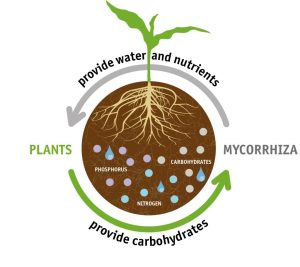 They exude these sugars from their roots, which attracts and feeds microbes. These microbes, particularly fungi, can break down minerals and make them bioavailable.
But, and this is a big but, these microbes enter the plants and then our gut if we eat the plant fresh. These microbes are part of our control system, which regulates our bodies. They are the driver in my previous car analogy.
 We need to eat the plants while fresh because Microbes have a short life. They may appear to be the same microbes, but they are descendants of the original microbes living in a state of neutral equilibrium, with the young replacing the old, like my grandkids will soon replace me.
This is a key component of the Gbiota technology.
Another key component is the balance between water and air.
Goldilocks water
It may seem easy enough to get the right balance between water and air; just add the right amount of water.
But water is a most peculiar substance.
 It is a liquid but has tensile strength like steel. People often think water reaches the top of big trees by surface tension, but that force is weak.
It is the tensile strength of water that pulls it to the top of the tree as it evaporates from the leaves.
Surface tension is the force that attracts water to the surface of the soil particles. Even if you apply exactly the right amount of water to the soil, it will not distribute itself uniformly throughout the soil.
We solve that problem by thoroughly wetting all the soil, then letting the excess water drain off, a process we call flood and flush.
This is a second key element of the Gbiota technology.
Aggregates
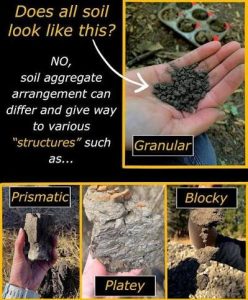 For this to work properly, we need soil that is porous and has a large grain size. Clay may be full of nutrients, but its particle size is so small that it doesn’t drain properly.
We solve this problem by using microbes in the soil to aggregate it into larger particles.
This is the third key component of the Gbiota technology.
Seeds
Next, we need seeds. Over 300,000 plant species exist, and at least 10% are edible, but we usually eat only a few: wheat, corn, rice, and soy, and, of course, the grass that feeds the animals we eat.
But most of our medicines were originally derived from plants, and numerous herbs and spices are widely used for health and flavour.
In the next article, I show how to make all this happen in the real world.
Sadly, at 86, I can no longer supply any hardware, but I have associates, like Seedmart Australia, that I work with who can supply you directly
Next read Growing soil in a Gbiota box
