
Under construction
A simple way of breeding beneficial gut microbes
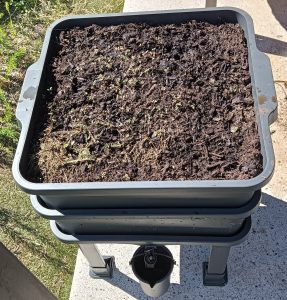 This is a Gbiota box for breeding beneficial microbes. It has 3 zones. The top zone is for growing plants that contain beneficial microbes, which we will eat, and the microbes will enter our gut.
The middle zone is where we breed the microbes.
The bottom zone is used to circulate the soil blood, which we will circulate throughout the box; it does the same job as our blood.
The sump
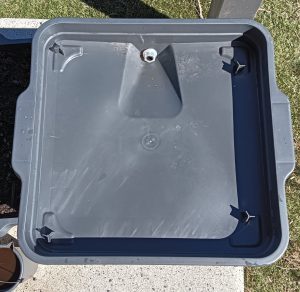 The sump is where we collect the soil blood. It is water that contains oxygen, nutrients and microbes just like our blood.
We will cycle the soil blood, first to the growing layer to feed the plants, then through the breeding layer to collect the microbes and nutrients.
The box breathes and pulses just like our heart and lungs.
Soil blood
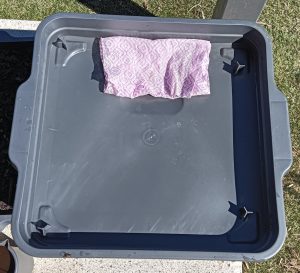 Soil blood can get a bit yukky, so it is a good idea to use a piece of dishcloth to keep the tap from blocking up.
If it does block up, then unscrew and flush it out with clean water.
The breeding layer
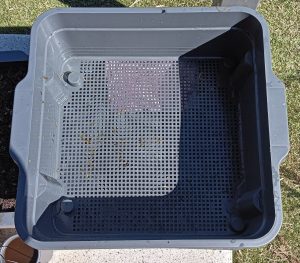 The breeding layer is where microbes breed. We will fill it with organic waste, minerals, and nature’s great recyclers, the worms, larvae, beetles and, of course, a dose of microbes to start the breeding process.
The box has holes in the base so the soil blood can rotate through the layers. But the holes will let particles drop through to the sump.
The Wicking bed
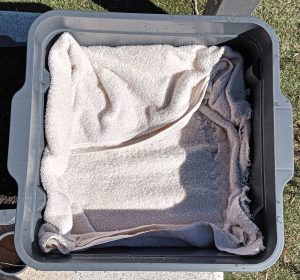 Gbiota boxes work on the same principle as Wicking beds.
You can use a piece of towel to stop the worms falling through.
But it is also absorbent, so water will evaporate from the sump and condense on the cloth, where it will wick up to the upper layers.
Once the seeds have germinated, we don’t have to be watering all the time, just a periodic top-up.
The breeding area
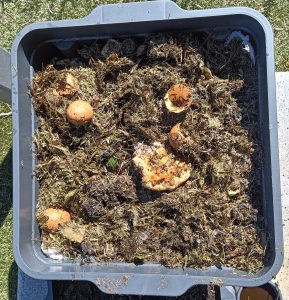 All living creatures need energy, which comes from the sun and is captured by photosynthesis by plants, algae, and plankton.
Humans don’t do photosynthesis, so we become part of an ecosystem.
We add organic waste as our energy source to power the breeding. This is where beneficial microbes breed, but we need to control the process so we breed beneficial microbes, not the harmful ones that make us sick or kill us.
Kitchen waste
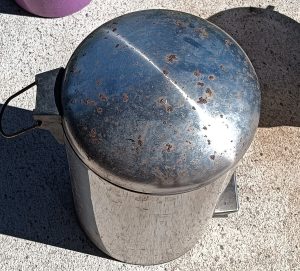 Kitchen waste is initially labile compost containing microbes we don’t want.
You can put waste straight into the Gbiota boxes, but if you can, it is better to collect the waste over time so you can fill the breeding layer in one go.
Even better is to have two bins (or polythene bags) to start the recycling process.
It will speed the process.
Wickimix
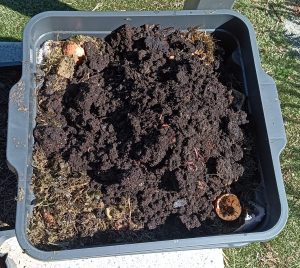 Wickimix obviously contains the initial beneficial microbes but it also contains natures great recyclers, worms larvae and beetles.
But it also contains a broad spectrum of nutrients in the form of volcanic rock.
These are not soluble, so we rely on the microbes, particularly fungi with their enzymes and ultra-fine hyphae, to break them down.
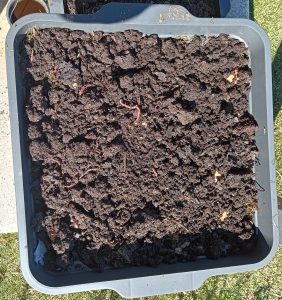 In the natural world, plants exude sugars to attract and feed these beneficial microbes, making these nutrients bioavailable to the plants and, eventually, us.
In our modern food system, we apply synthetic fertilisers to feed the plants.
This is cost-effective but does not attract the beneficial microbes we need for health.
Creatures of the soil
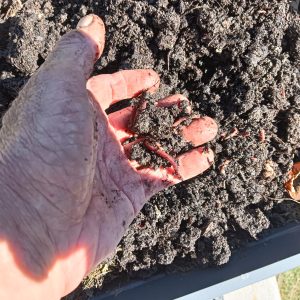 In a natural ecosystem, a complex array of creatures ensures an ongoing supply of beneficial microbes.
It’s no coincidence that we find the same microbes in our gut as in the soil.
It is normal; it is only since we stopped feeding the beneficial microbes in the soil that our gut health has declined and we now have an epidemic of chronic diseases.
Controlled conditions
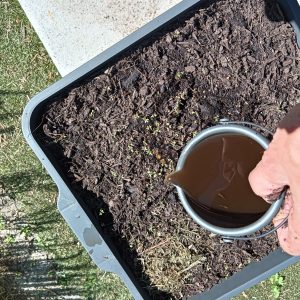 There is no known way to kill harmful microbes without harming beneficial microbes.
But we can create conditions that favour beneficial microbes, which will then outcompete harmful microbes.
These conditions are food, water and oxygen.
We start by surface-watering the initial seeds until they are established. We may even start seedlings in a separate box.
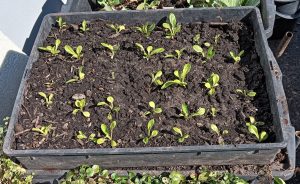 Or we even buy seedlings from a local grower.
But once the plants are established, we start the flood-and-flush process, which is at the core of the Gbiota process.
We apply enough soil blood (typically 5 litres) to saturate the soil. This expels stale air from the soil.
General guide
As a guide, I typically fill the 700cc bucket on a Gbiota box and irrigate the top surface. This keeps the topsoil moist for germination without making the soil below too wet.
When the seeds have germinated and reached a height of about 20cm (eg have developed a reasonable root system), I switch irrigation and drain the box into a bucket, top up with water to about halfway (about 5 litres), make sure the tap is turned off, then gently and uniformly apply the water to the surface.
This will soak down, and I can check I have not overwatered by looking for any overflow from the bottom (reservoir) layer.
I also check that there is enough organic waste in the middle (breeding) layer so the middle and upper layers stay in continuous contact.
The box now functions as a Wicking bed with water wicking (or evaporating and condensing) from the reservoir up to the upper surface.
I aim to irrigate with a complete flood and flush, at least once a week, more frequently in peak drying conditions.
After a time, soil blood will thoroughly wet out the soil and drain back into the sump.
As it drains out, it will suck in fresh air into the soil. Oxygen gives beneficial microbes the edge, allowing them to outcompete harmful microbes.
But we wait longer for the plants to use the soil blood. Just before the moisture level drops too low, we recycle the soil blood with a significant (5-litre) irrigation.
