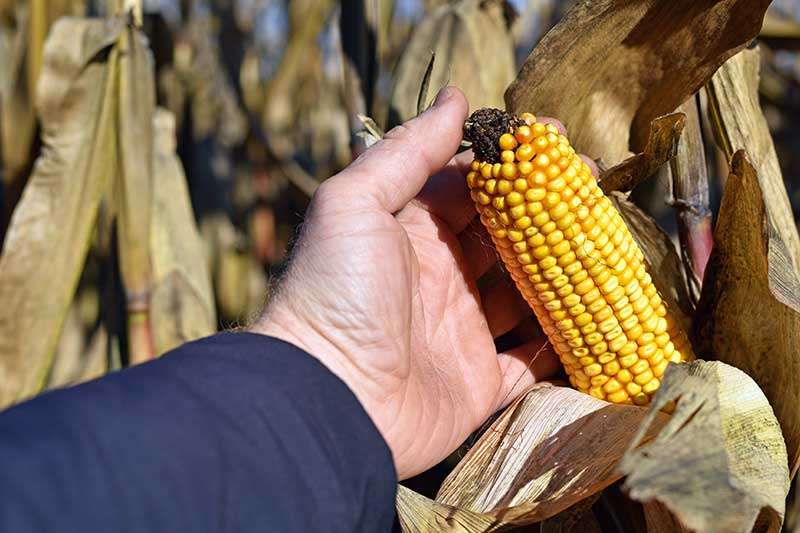
Food Production and Climate Change

Food Production and Climate Change

The global food system has been remarkably successful at producing large quantities of food, even as the world’s population continues to grow. However, this success has come at a hidden cost. Modern agricultural methods have placed increasing stress on soils, water, and ecological systems. This article explains why food abundance does not equal sustainability, how climate change amplifies existing weaknesses, and why soil-focused systems such as wicking beds offer a practical path forward.


The world’s population continues to grow at a rapid rate, and for many years this has raised fears of widespread food shortages. In practice, those fears have not been realised. On a global scale, food production has consistently outpaced population growth. Far from being scarce, food is produced in such abundance that wastage now amounts to billions of dollars every year.

This growth in food production has been driven by several key factors. The widespread use of synthetic fertilisers has increased yields dramatically. Advances in genetics and plant breeding have produced crop varieties that grow faster, resist disease, and tolerate a wider range of conditions. Irrigation has also played a major role, allowing food to be produced reliably in regions that would otherwise be limited by rainfall.

In the short term, these approaches have been extremely successful. They have allowed large populations to be fed and have reduced the risk of famine in many parts of the world. However, this success has masked a serious long-term problem. Many of these agricultural systems degrade the very ecological resources they depend on, particularly soil.

Repeated use of chemical fertilisers without rebuilding organic matter can damage soil structure. Heavy machinery compacts soil, reducing its ability to absorb and store water. Over time, soils lose biological activity, become less resilient, and require ever greater inputs to maintain yields. Climate change adds further pressure through more frequent droughts, floods, and unpredictable rainfall patterns.

Because of these trends, many growers and researchers have long been concerned that current food production systems are not sustainable in the long term. In response, efforts have been made to develop farming methods that work with natural processes rather than against them. These systems focus on improving soil quality, increasing organic matter, and restoring biological activity.

From a long-term perspective, sustainable practices based on healthy soils can be both productive and economic. Improved soil structure increases water retention, reduces erosion, and supports stable yields under variable weather conditions. However, there is a major obstacle to widespread adoption. In the short term, changing farming systems often involves additional costs.

Growers typically operate under intense price pressure. Markets demand low-cost food, leaving little room for experimentation or investment in practices that may take years to deliver full benefits. As a result, many farmers simply cannot afford the short-term cost of transition, even if the long-term benefits are clear.

This economic reality has meant that genuinely sustainable farming techniques have often been adopted only by growers who are both ecologically motivated and financially secure. While these early adopters demonstrate what is possible, their practices remain the exception rather than the rule.

One technology that offers practical advantages in both climate adaptation and resource efficiency is the wicking bed system. Wicking beds store significant quantities of water within the soil profile, reducing overall water use. In some cases, water consumption can be reduced by up to 50 percent compared to conventional irrigation methods.

By storing water below the soil surface, wicking beds reduce evaporation losses and extend the period during which plants can continue growing after rainfall. This is particularly valuable in a changing climate, where rain may fall less frequently but in more intense events. Stored moisture helps smooth out these extremes.

The consistently moist conditions within a wicking bed also support soil biology. They are particularly conducive to the growth of mycelium, the network of fine filaments formed by fungi. These fungal networks add physical structure to the soil, binding particles together and improving its ability to hold water.

Beyond improving structure, many fungi form symbiotic relationships with plant roots. Mycorrhizal fungi can penetrate or closely associate with root systems, effectively extending the reach of the plant. Through this partnership, plants gain improved access to water and nutrients that would otherwise be beyond their reach.

This biological cooperation reduces the need for external inputs while improving plant health and resilience. In the context of climate change, systems that strengthen soil biology and water efficiency are essential. They link food production and climate adaptation into a single, integrated solution.

Loading

News from China: Scaling Wicking Beds for Food Security and Climate Action

News from China: Scaling Wicking Beds for Food Security and Climate Action

This update explains the progress of international work to scale wicking bed technology as a practical response to food insecurity and climate change. It outlines collaboration with Australian and Chinese research institutions, early trial sites, and efforts to engage governments in funding large-scale solutions. While the work has been demanding, strong support from growers around the world continues to demonstrate that people-powered, soil-based solutions can address two of the most urgent challenges of our time.


Colin Austin — 8 November 2011

Dear Readers,

It may seem that all is quiet in the world of wicking beds, as I have not updated the website for some months. In reality, life has been anything but quiet. Much of this time has been spent working behind the scenes, attempting to convince those in positions of authority that the twin problems of food shortages and climate change can be addressed together, rather than treated as separate and competing issues.

My central argument is straightforward. Large areas of low-grade or underutilised land can be allocated to the growth of deep-rooted perennial plants. These plants have the ability to extract nutrients from deep within the soil profile, nutrients that are otherwise unavailable to conventional crops. By regularly pruning these plants and using the prunings as both a nutrient source and a carbon sink within wicking beds, we can simultaneously increase food production and embed carbon into the soil in a stable form.

This approach brings together several objectives that are often treated independently. It improves food security by enhancing soil fertility and productivity. It contributes to climate change mitigation by locking carbon into the soil. It also makes productive use of organic material that would otherwise be wasted or become an environmental hazard.

When considered on a global scale, this is not a small undertaking. It represents a massive project that requires advances not only in agricultural technology, but also in logistics, planning, and the development of effective international carbon trading mechanisms. The scale of the challenge places it well beyond the resources of any individual or small organisation.

Recognising these limits, the next logical step has been to seek strong institutional partners who can provide scientific credibility, organisational capacity, and access to government decision-makers. To this end, I have been working to recruit two key allies. The first is the Sydney University Department of Sustainable Agriculture, headed by Professor John Crawford. The second is the Farmland Irrigation Research Institute in Xinxiang, China, led by Professor Awang.

These institutions bring complementary strengths. The Sydney University group offers expertise in soil biology, sustainable farming systems, and long-term environmental research. The Farmland Irrigation Research Institute provides practical experience in large-scale irrigation, crop production, and the realities of feeding a rapidly growing population under water-limited conditions.

Fortunately, progress had already begun before formal cooperation was established. Trial wicking beds were installed in Xinxiang under the direction of Professor Xiubin Qi. These early trials demonstrated that the principles developed and tested in Australia could be adapted to different soils, climates, and farming systems. Seeing the system function successfully in a very different context was an important milestone.

I attended the Food Security Conference in Beijing, where representatives from both institutions came together. At this meeting, the Sydney University Department of Sustainable Agriculture and the Farmland Irrigation Research Institute formally signed a memorandum of understanding. This agreement committed both parties to joint cooperation on research, development, and demonstration of wicking bed systems and related soil regeneration technologies.

The signing of this memorandum marked a significant step forward. It transformed what had largely been an individual and grassroots effort into a structured international collaboration. It also created a pathway for engaging directly with government agencies that have the authority and resources to support large-scale implementation.

The next stage of the process is for these organisations to present a coordinated case to their respective governments, seeking funding and support for expanded trials and implementation. This stage is critical. Without government involvement, it is difficult to achieve the scale necessary to make a meaningful impact on global food security and carbon balance.

To support this effort, I have prepared a number of documents that outline the technical basis, social benefits, and economic rationale for the project. These documents are intended to provide clear and practical arguments that can be understood by policymakers as well as scientists. They address food security, the emerging global food crisis, recent technological developments, and the political dimensions of soil carbon.

Together, these papers aim to show that wicking beds and associated soil regeneration systems are not experimental curiosities, but practical tools that can be deployed at scale. They also highlight the importance of policy frameworks, particularly carbon trading, in enabling adoption by farmers who operate under tight financial constraints.

Alongside these institutional efforts, it is important to acknowledge the role of individual users of wicking bed technology. There are now hundreds of people using these systems, not only in Australia but in many other countries. Many have built their beds using information provided on the website, supported by email advice and shared experience.

I regularly receive reports from these users describing their successes, adaptations, and lessons learned. These accounts are invaluable. They provide real-world evidence that the principles work across a wide range of conditions. They also serve as a source of personal encouragement during periods when progress at the institutional level can seem slow and frustrating.

The determination and ingenuity of these growers reinforces my belief that meaningful change often begins with people power. While large-scale solutions require institutional backing, they are ultimately grounded in practical systems that individuals are willing and able to adopt.

I remain hopeful that the combined efforts of researchers, farmers, and informed citizens will succeed in moving wicking bed systems into the mainstream as a tool for addressing the two great challenges of our time: food security and climate change. With continued cooperation and persistence, I look forward to reporting further progress and, hopefully, clear signs of success.

Let us hope that this becomes a positive story of collaboration, innovation, and people working together to create a more secure and sustainable future.

Colin Austin

Colin Austin — © Creative Commons. Reproduction permitted for private use with source acknowledgment; commercial use requires a license.

Loading