The world is complex, and if we are honest, we only have a limited understanding of how we and our bodies really work.
But millions of years of evolution, with a brutal system of natural selection, can tell us what works and what does not. Gbiota has a strong foundation in studying how successful natural ecosystems work, and we know food is crucial to health.
But we need real-world experiments to test our ideas; many will fail right away, others will look successful, but the negatives will reveal themselves later, and a few will stand the test of time.
I’m running experiments continuously, and I think it is in Gbiota members’ interest to hear about my latest tests before the lengthy trial periods needed to grow food are over.
I am using this post to share these latest trials, and members can decide whether to try the latest technology or stick with the tried and proven.
What is new?
I currently have two key trials running: daughter beds and the leaky plug, both with major potential benefits. You can read the underlying theory in air and water and the practical application in daughter boxes
It has been over thirty years since I came up with the idea of Wicking Beds. The original idea was to use weeds’ amazing ability to extract nutrients from poor soil and create a layer beneath the root zone where a nutrient-rich solution would wick up to provide both water and nutrients to the plants.
The snag with this idea is that this nutrient-rich solution needs to be kept moving so it never becomes stagnant.
But the idea of watering the plants from below caught on and led to the widespread adoption of Wicking Beds using a subsurface reservoir of clean water.
But we are now suffering from a food system loaded with energy food, but low in nutrients and, most importantly, the microbes which form part of the intelligent system that regulates our bodies.
This makes supplying our bodies with nutrients and these beneficial microbes even more important, so I have been faced with the problem of how to develop a system, like my original Wicking beds, but solving the problem of avoiding stagnation and ensuring adequate aeration.
I solved that problem but hit a new snag – the concentration of all those nutrients led to the problem of reverse osmosis.
By good luck, the solution to reverse osmosis has led to a much more effective and lower-cost system, as I explain below.
Reverse osmosis.
In my previous articles, I have talked about how we use soil blood to supply nutrients and microbes for the next irrigation.
But if you don’t want your plants to suddenly die, there is an important fact I need to explain.
Plants take up water, nutrients, and microbes from the soil by osmosis, when the stronger solution absorbs fluid from the weaker one.
Normally, the solution in the plant root is stronger than in the soil, so the flow is into the plant, and all is well.
But the soil blood coming from the Gbiota boxes, with an abundance of reprocessed food waste, can be very strong, as we can see by a very dark, almost black colour.
If this soil blood is used directly for the next irrigation, it can be so strong that we get what is called reverse osmosis, where water is sucked out of the roots of the plants, and they die.
This can be very dramatic; one day the plants are growing vigorously in nutrient-rich soil, and the next morning they are all dead.
This may seem a major disadvantage, but we can turn it into a major advantage by creating a system of daughter boxes.
How daughter boxes work
I spend my life experimenting with Gbiota boxes, so it is a dynamic situation, but I will describe my current technique.
We have to think about this as an integrated system of mother boxes –
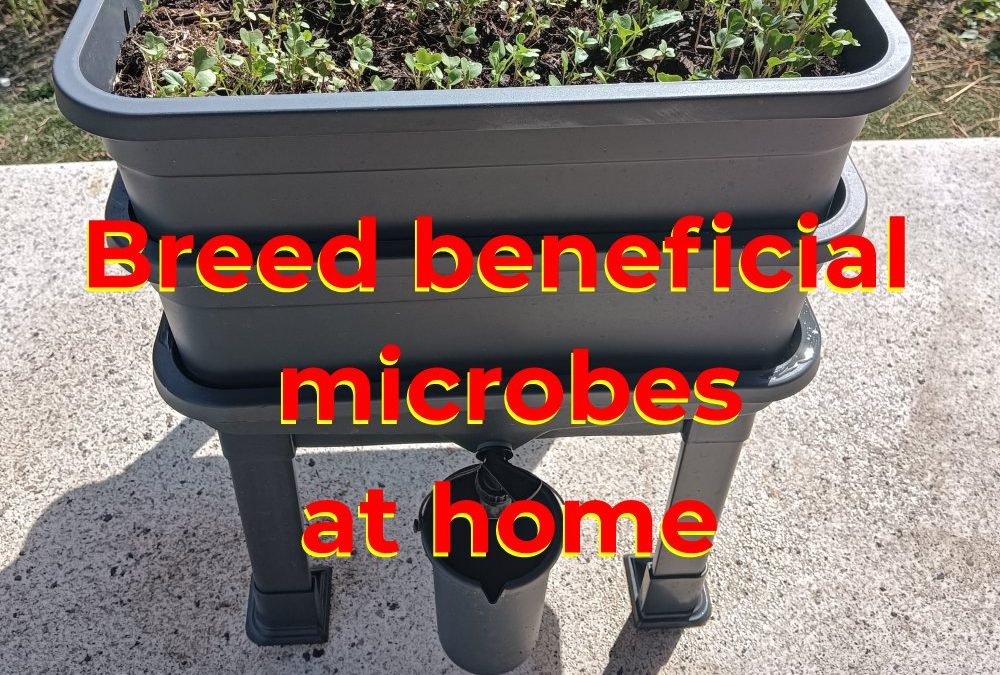
Gbiota worm boxes
the Gbiota worm boxes, which produce an excess of over-rich soil, soil blood, and beneficial microbes
Daughter boxes
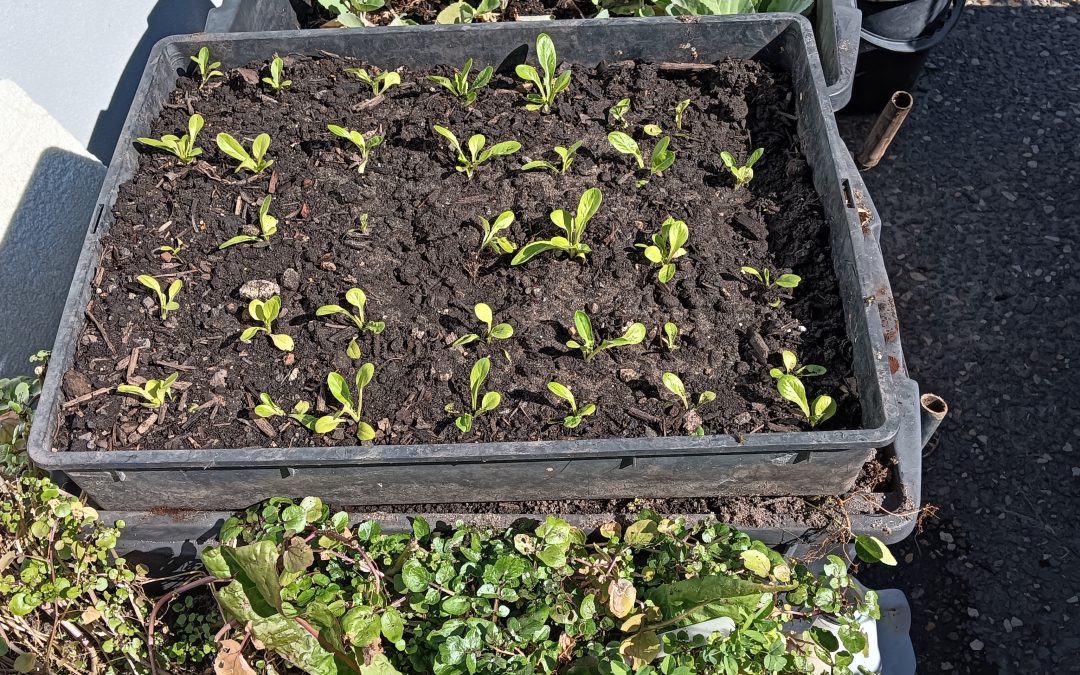
and the daughter boxes, which can be very simple: virtually any convenient, inexpensive box that fully utilises these excess inputs.
The leaky plug
I have been trying a new method I call the leaky plug which is based on the well tried method of leaky dams I have been using in garden beds.
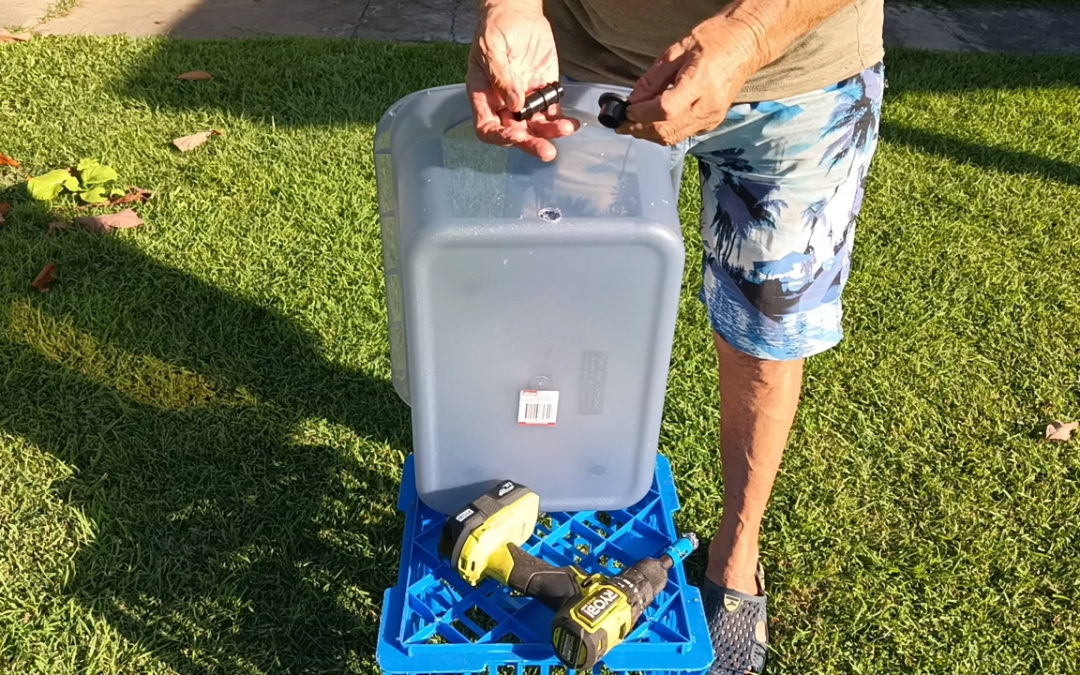
I drill a hole, about 20mm diameter in the side of the box near the bottom.
I partially block the hole with a piece of cloth, not too tight so it blocks the hole so it cannot drain but tight enough to hold in place.
I am trialling this against the well-proven method of swivel tubes I have been using for years to control the flow through the boxes, so they are well tried and tested.
The advantage of the swivel tube is that it gives manual control of the water level. The base of the box is saturated for a period while the water wicks throughout the box.
You set the saturated level by adjusting the swivel tube angle and the time the water remains in the box before draining.
This is fine for people from that fringe group like me who are a bit OCDish about growing their food, but everyone has to eat, and I want to develop a system that almost everybody can use.
My model is the nominally hypothetical single mum (but actually real) I call Mary, with two jobs and three kids, who is rushed off her feet.
She doesn’t have time for all this tech stuff, and the leaky plug may suit her. Just drill a hole in the bottom of the box, plug it with a piece of dishcloth and let the water slowly drip out over time.
These can be very simple, virtually any convenient, inexpensive box.
I spend my life experimenting with Gbiota boxes, so it is a dynamic situation, but I will describe my current technique.
I fill about one-third of the box with organic waste to act as the sponge layer. I fill the rest of the box with soil that has been well-aggregated so it stays porous.
If necessary, eg the soil is too dense, I will mix vermiculite in with the soil.
I partially block the hole with a piece of cloth, not too tight so it blocks the hole so it cannot drain but tight enough to hold in place.
I seed in the normal way.
Irrigation
Before daughter beds, I used to take my black-looking soil blood, dilute it until it was straw-coloured, and measure out enough to saturate the soil; then I watered the plants as usual with a watering can and rose.
Since daughter beds, I have changed my approach.
I use clean water to irrigate the worm beds, letting it flow through the bed to be caught in the drain.
Hopefully this is not too concentrated (shown by the dark rather than straw colour) and can be used directly on the daughter beds.
Since I adopted this full flow-through process, I haven’t had any problems with the soil blood being too strong, but if that ever happens, I would simply dilute it.
Soil
There is a similar issue with concentration in the soil. The centre box, where the worms are feeding on the organic waste, has very rich vermicast, which is too rich to use directly, so I mix it with available soil.
The much-despised clay can make really good soil if you have enough calcium ( I add dolomite and volcanic rock dust) and the microbes to aggregate the soil.
The mechanics of this may sound simple but are important.
When I water the surface, it wets the soil, with a flow front moving down the soil profile.
But soil is never perfectly uniform, and water will find a crack and flow down it without properly wetting the soil.
Eventually, it will reach the base of the box, but the cloth plug will restrict flow, so the base will become saturated.
The water will then, by a combination of wicking, evaporation and condensation, wet out the bulk of the soil.
Over time, the water will leak out from the leaky plug, and as the water leaks out, it will suck in fresh air.
The soil breathes, maintaining a balanced water-to-air ratio essential for breeding the right microbes.
There is a knack to packing the cloth plug just right. It should give a steady drip so the box fully drains.
Previously, I used taps to manually control the flow, but life being what it is, it is easy to forget and let the box stay saturated too long. The leaky plug system solves this human problem.
I am still learning, but it looks as though one Gbiota worm box can support up to 4 daughter boxes.
These daughter boxes can be stacked while the seeds germinate, so you can use more boxes in a restricted space, like a balcony. It looks like a very simple, effective, and inexpensive process.
However, in my experience with innovations, the good sides show up first (note AI), and the bad things show up later, so I am running a trial over time.
The future
Let me give you a picture of what this could mean for all those people who want to be food reformers eating metabolic food but only have a balcony.
They would need at least two Gbiota worm boxes. They need two so they can alternate, giving the worms time to produce Vermicast, which makes such nutritious soil.
This will be used in the daughter boxes, but it will likely be too rich, and we want Goldilock soil.
We take any suitable box for the daughter box; we dont want it too heavy unless your Tarzan so between 20 to 30 litres may be a good size. The depth depends on what plants we intend to grow, fast growing plants like baby Broccoli only need 200mm while hungry plants, like Tomatoes will need nearer 300mm.
We are going to make these into sponge beds which I better explain.
A wicking bed has a water reservoir that contains stationary liquid water. This water needs to be clean and free from nutrients so it does not go putrid.
In Gbiota boxes we want to include nutrients means that the water cannot be left stagnant and must be regularly recycled to incorporate oxygen from fresh air.
We may have dreams of living on acreage and being self-sufficient, but for most, that is just a dream. If it is any consolation, I did just that for many years, and let me tell you, it is really hard work.
Many people have a reasonably sized garden and can grow enough food to build a balanced diet, with careful trips to the Supermarket to buy the energy food we need, plus enough metabolic food to keep us healthy. (See following articles which explain metabolic food.)
But the reality is that most people now live in cities with either a very small garden or an apartment, hopefully with a balcony to enjoy a bit of fresh air, and limited space or time for growing any food.
But these city dwellers need healthy food just as much as people with large gardens in rural areas.
How can these people get the benefits of eating metabolic food while still expecting to live a long, healthy life? And let us add at a reasonable cost in terms of both time and money.
They will need at least two Gbiota worm boxes, but more is better.
In my home with four people, I have six worm boxes, but I am experimenting, so one Gbiota worm box per person may be a good starting point.
Next, we need to rethink food waste. We waste billions of tonnes of food each year, all containing valuable nutrients, most of which can be readily reprocessed back into fresh and healthy food.
We are the last generation that can live off ingredients extracted from synthetic fertilisers, most of which we get by processing oil.
But we can create a sustainable food supply with a three-stage strategy.
First, we can start by reprocessing the enormous quantity of waste food we send to the tip, which contains significant nutrients but ends up as greenhouse gases.
Secondly, we can change our attitudes to weeds. They may be a pain, but that is because they are highly efficient at extracting nutrients from the soil. They can grow in poor soils where our food plants cannot survive.
Instead of poisoning them, we can use them as a nutrient source in our Gbiota worm boxes. We just need to take advantage the natural recyclers – the worms, larvae and beetles who have been providing this service for free for millions of years – for free.
Thirdly, we can take advantage of volcanic rocks. They contain a wide range of nutrients; specifically, they are high in potassium, phosphorus, and magnesium. They contain useful quantities of magnesium, calcium, sodium and sulphur, plus trace amounts of manganese, zinc, copper and boron.
The two that are missing are nitrogen and iodine. We can capture nitrogen naturally from the air using legumes, and we can get iodine from seaweed.
The key point is that if we continue as we are, we will run out of essential nutrients within a generation, but if we change the way we grow our food by recycling and using the natural recyclers the fungi, bacteria, worms, larvae and beetles we will have a food system that is sustainable way into the future.
In the next article, ‘introduction’, I start to look at why our food is unhealthy.
It is fine to diagnose the problem but what matters is finding a solution to these twin problems of unhealthy and unsustainable food production. I explain my solution to these in the series of articles in the Why section in the menu.
Understanding Why Plants Are So Important for Our Health
Estimates suggest there are at least 30,000 edible plants.
Numerous large-scale studies by respected research institutions have shown, beyond any doubt, that people whose diets include a significant amount of plants are generally healthier and live longer.
But these are observational studies. They tell us that eating plants is beneficial, but they do not explain why.
The Importance of Understanding
In my younger years—and I am now 86—I learned a very important lesson: the importance of understanding.
My area of speciality was computational fluid flow. I wrote computer simulations of flow in pipes and could use them to run thousands of tests for next to nothing, allowing me to develop a genuine understanding of how these systems worked.
What I learned created a paradigm shift that changed an industry.
The conventional wisdom at the time was that if you wanted to increase flow, you should use a bigger pipe. It seemed obvious—but it was wrong.
I discovered that there is an optimum size for the pipe: what I called the Goldilocks size. Not too big and not too small—just right.
This created a furore in the industry. Many experts told me I was an idiot for suggesting that using a smaller pipe could improve filling—and yes, it did sound crazy.
Some people may not have believed me, but they were flexible enough in their thinking to say, “Let us conduct a trial and find out whether this idea really works.”
They set up their trials, and sure enough, it worked. The results proved the principle, and the paradigm shift followed.
Why This Became Personal
Let me share some personal information that I would not normally disclose.
My first wife died from a diabetic complication. My second wife, who is a qualified medical doctor and surgeon, also developed diabetes. Her foot turned black, and our medical advisers recommended amputating it.
You will understand that this was extremely traumatic for us both.
I read the scientific studies about plant-based diets, and we changed the way we ate. I am pleased to say that she still has both her feet.
It worked remarkably well, but I had no idea why eating Winter Melon, Broccoli sprouts, Passion fruit and other plants helped save her foot.
I therefore made it my purpose in life to understand why plants can be so beneficial for our health.
I knew the importance of understanding, so I made it my mission to investigate how a plant-based diet could improve health.
What I discovered often defied conventional wisdom and, at first, seemed ridiculous.
The Goldilocks Principle for Plant Nutrition
It seems obvious that we should apply fertilisers to plants so they grow as quickly as possible. How could that possibly be wrong?
But look at what happens when we develop a deeper understanding.
If there is a shortage of nutrients in the soil—like a pipe that is too small—the plants do not grow well.
If plants receive an abundance of nutrients from soluble fertilisers, they may explode in a flurry of growth. Surely that must be good?
But what happens if, instead of relying on expensive and increasingly scarce soluble fertilisers, we apply volcanic rock dust, which is inexpensive and available in enormous quantities?
The plants become short of readily available nutrients, so they respond by releasing some of the sugars produced through photosynthesis from their roots. These sugars attract and feed beneficial soil microbes.
The microbes help break down insoluble rocks, making nutrients bioavailable to the plants.
The plants can still grow well, but there may also be a hidden benefit. Some of these microbes enter the plants. When we eat those plants, the microbes may help enhance our gut biota.
These microbes display what we call crowd intelligence. They may help regulate our bodies so that we naturally want to eat the right amount of the right foods.
This is not about relying on harsh, self-imposed discipline. It is about naturally wanting to eat well.
Nor is it about starving plants or completely satisfying every need. It is about following the Goldilocks principle:
Not too much and not too little—just right.
Can Plant Pests Have a Purpose?
Consider another example: pests.
It seems obvious that pests are bad and should be eliminated at all costs. But is that always true?
Plants are masters of chemistry. They have to be because they cannot run away from predators. Instead, plants produce natural chemical compounds to deter pests.
In the right amounts, some of these compounds can be highly beneficial for our health.
Once again, the principle is not too little and not too much. It is the Goldilocks amount—just right.
Building a Healthier Food System
This is not a small issue. Producing healthy food for everyone is one of the greatest challenges facing humanity.
With climate change, soil degradation and the depletion of conventional fertiliser supplies, we are heading towards a serious food crisis.
If you do not believe me, look at the escalating price of fresh fruit and vegetables.
I cannot change the food system by myself.
That is what the Gbiota Club is all about. It is a place where we can continue developing our understanding of how a plant-based diet works, where people can test and verify these ideas independently of me and, above all, where we can build a social movement to help secure our future food supply.
You may think Gbiota is just about recycling your kitchen waste to grow vegetables and save a bit of money.
And yes, we do that, but it is a pea compared with a whale. It is about what sort of society we, and our grandchildren, want to live in.
So what is metabolic food, and why does it matter?
We can grow food in two ways: aim for maximum production, or produce metabolic food.
Most people aren’t really interested in how food works, but if they are, they will ask me to explain what Metabolic food is, why it matters, and how we grow it.
I will explain that, compared with other animals, we have a very small stomach and an excessively large brain, which takes a lot of energy; with our small stomach, we have little space to store energy, so we need to eat regularly.
How our bodies work
Think of our bodies like a car.
A car needs four things.
It needs fuel for energy. No energy – no go. Just like us.
We all need energy, and we get it from the sun. Right now, humans don’t do photosynthesis; in the future, we may evolve to replace our hair with leaves, but for now we depend on plants, algae, or plankton that can.
Secondly, it needs a structure. This comes initially from the car manufacturer, but later we will need to buy bits and pieces as they wear.
Our bodies are much more complicated than a car, and they have one very clever feature. When bits wear, we don’t have to take it to a garage; our bodies continuously replace body parts as they age and wear, and we don’t even have to think about it or ring up the garage to see if they have the needed parts in stock.
Our bodies regenerate even while we sleep.
Pretty neat, but we do have to feed it the right food to replace the parts; that is a job for metabolic foods.
Third, a car needs a mechanical way to control it: a steering wheel and at least two pedals, one to speed up and the other to slow down.
Our bodies have a similar arrangement, which we often call the gut-brain axis. We see this in our bodies producing both electrical signals, which stop us from touching a hot stove, and chemical signals, hormones, that make us feel hungry so we eat when needed and stop when full.
Fourth, a car needs a driver; even in the age of self-driving cars, they need a person in charge to say where to go.
This driver needs intelligence, even if it’s only to look at the fridge, see you are out of milk, and drive to the supermarket to buy more. The driver needs a learning period, even if it’s just to know we need milk and where the Supermarket is.
Our bodies need the equivalent of this driver that has to learn. Some people say this learning starts before birth, but certainly at birth learning begins, even if it’s only to find mum’s nipple.
And it continues throughout life. Even an older person like me is still learning, even if I need my granddaughter to show me how to use a mobile phone.
Why we need to feed our gut-brain
In our bodies, the equivalent of the driver is our brain, which continuously receives electrical signals from sensors throughout our bodies, processes them, learns from them, and sends signals back to the appropriate recipient.
A particularly important recipient is the intelligent microbes in our gut. When they receive the instruction, they manufacture hormones that make us feel hungry so we eat, and feel satisfied when we have enough food.
It may not seem like a particularly glamorous job, but if our bodies didn’t do it, the human race would have either starved to death because it didn’t know it needed to eat or got so fat that we couldn’t run away from a lion that understood it was hungry and needed to eat.
Energy and Metabolic food
Energy food is chemically very simple: just carbon and hydrogen we get from the air or rain without any difficulty, and it makes up the bulk of our food.
But the human body is actually very complicated, and we need Metabolic food.
It needs many minerals: magnesium, iron, zinc, manganese, selenium, iodine, etc. But we can’t just go and chew on an old wrecked car to get our iron. Apart from breaking our teeth, the iron, or whatever minerals we are interested in, has to be combined with other chemicals, free radicals, to become soluble and bioavailable.
Then we need a whole range of vitamins, maybe in very small quantities but still essential.
Next we need phytonutrients, specialised chemicals produced by plants. A single tomato has over a thousand separate phytonutrients. There are over thirty thousand edible plants. So I can be a boring sort of person, and I haven’t even got to the complicated bit.
We need microbes to form the intelligent control system that regulates our bodies; without them, we would be little more than jellyfish.
If I am going on a bit about phytonutrients, then wait until I get going on the intelligent control system which regulates our bodies. You see, I am an engineer, and I started my first job in 1958, most likely long before you were born, working for a company that made industrial control systems, and these can get pretty nifty.
Self-learning systems
Over time, they can learn how a particular machine works and fine-tune themselves to control complex machines to a fraction of a degree. Engineers have been developing these self-learning control systems for years, long before anyone had even heard the phrase Artificial Intelligence.
The human body is a remarkable self-learning system. Let me give you an example. When you were born, you had no idea how to ride a bicycle, yet not long after turning three, you could be zooming around with an apparent complete understanding of self-correcting gyroscopic forces.But the truth is that at three you have zero understanding of self-balancing gyroscopic forces. Still, your remarkable self-learning, intelligent control system learned by trial and error (yes, you had to fall off a few times) the operating characteristics of your bicycle, which baffles many engineering undergraduates.
But this all depends on you eating the right metabolic food.
Growing metabolic food
My job at Gbiota is to walk you through this complex area so you can grow your own metabolic food without me breaking any records for being the most boring person ever.
So if a few worms don’t put you off, and you don’t mind the other creepy crawlies that turn dirt into soil and grow metabolic food, then why not join the Gbiota club and enter the fascinating world of self-learning intelligent control systems that nature evolved to give us the edge over the jellyfish.
The Gbiota club is not a gardening club; it is a social movement to create a society worth living in, where food is grown for people’s health and sustainability.
Mention sustainability, and you are branded a green woke, but I reply: look at Nauru, which once had the highest income per capita in the world but, when the guano ran out, became one of the poorest. We cannot extract resources ad infinitum; we have to learn how to create a circular economy.
But health is the short-term goal.
So what am I asking you to do?
The world’s food industry is dominated by mega-corporations with immense resources, operating in a neo-monopoly.
Making grotty cardboard placards and marching in the street is pointless; it will have minimal impact.
We need to be smart and use the power of the wallet.
I realised many years ago that we needed technology to grow metabolic food. I was a pioneer of computer-aided engineering and was recognised as one of Australia’s leading innovators. I felt it was my role in life to develop technology to grow metabolic food sustainably.
Grow your own metabolic food
You don’t have to grow all your own food; that’s impractical, but it is practical to grow the metabolic food your body needs, which is only a fraction of your total food consumption.
The bulk of the food we eat is energy food, just fuel.
Right now, we have a viable technology that lets virtually anyone, even people living in an apartment, grow their own metabolic food.
That has been my project for the last thirty years.
But technology by itself is useless; it has to be applied, widely used, and proven viable. Then it develops a life of its own and grows naturally.
That is the point of the Gbiota club: have lots of people grow their own metabolic food, showing that food cravings are satisfied and people feel healthier.
They show their friends, and soon the idea that food should be grown purely for profit is replaced by the idea that food is a community benefit and should be grown sustainably.
Then we will have a society that is worth living in.
I am busy reworking this web; it will be in two parts: metabolic food, then how to grow it. In the meantime, you can contact me directly at colin@gbiota.com.
I am updating my website to explain how to grow metabolic food that feeds our metabolism and breeds the microbes that regulate our bodies and control our appetite.
This is for people concerned about their health, even if they live in an apartment and have no experience growing food or with microbiology.
This will take about a month, and during this period, I’ll make the website open access. If you have any questions, contact me directly at colin@gbiota.com. I’m a real person, not an avatar or a mega corporation.
Grow Metabolic food
We need food for energy; it’s fuel made from sunlight, carbon dioxide, and rain from the atmosphere, plus a few essential minerals.The bulk of the food we eat is fuel.
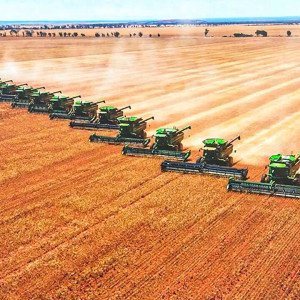
Modern technology has dramatically increased fuel production, and we now have a surplus, with an abundant supply available from Supermarkets.
We also need food to build and replace our body parts as they wear and age. It comes from the minerals, vitamins and phytonutrients in our food.
We also need food that contains microbes that regulate our bodies, along with the nutrients to feed them.
These foods are generally referred to as Metabolic foods, and are only a small proportion of the food we eat but are essential for health.
While the production of energy foods has increased dramatically, the production of metabolic foods has not increased in proportion, meaning our current diet has a surplus of energy foods and a shortage of metabolic foods, leading to a less healthy population.
We do this by breeding beneficial microbes in the soil. These microbes break down minerals in the soil, making them bioavailable to plants. If the soil lacks sufficient minerals, we add volcanic rock dust, which is sustainable and inexpensive.
We control conditions so beneficial microbes outbreed and outcompete harmful microbes.
These microbes enter the plants, and if we eat them fresh, they form part of our gut biome, which regulates our bodies, particularly producing the hormones that regulate our appetite so we want to eat the right amount of the right sort of food.
Dinosaurs v humans
Dinosaurs dominated Earth for 165 million years; we have dominated it for only 4,000 years. No doubt, humanity has a long road ahead; the choice is whether we take the hard way or the easy way.
Look at the facts. When I was born, the global population was about 2.5 billion; now it is over 8 billion, and in just one lifetime. This has never happened before in the history of the world.
When I was born, food was grown the way it had been for thousands of years, – in soil.
Soils vary across the globe; some, like those evolved from volcanic rock are full of a broad spectrum of minerals, other soils are lacking key minerals but it is easy enough to move volcanic rocks to these soils. There are literally mountains of rock that will last us for many years.
But these are insoluble, so they are not available to plants. But a system has evolved. Plants capture energy from the sun and use it to make sugars, which they exude from their roots.
This attracts microbes, which break down the rock and make the nutrients available to the plants. This isn’t some new invention; it started billions of years ago and is how life started on Earth.
And while the human population was small, it worked incredibly well, but we, particularly the kids, died from infectious diseases, so the population remained small.
Then, being smart creatures, we learned about hygiene and medicine and saw spectacular population increases. All those extra mouths had to be fed, so we developed a new way of growing food, combining fertilisers with the development of more productive species.
And it worked: food production increased faster than the population, and we produced enough food to feed the entire world, with some to spare.
True, many people are still starving, but that is because we don’t rank fairness of distribution highly.
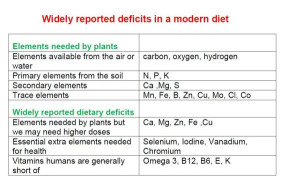
But there was a snag. This food contained ample energy and the minerals essential for growing plants. But we need many minerals that plants do not, so there is no incentive for the grower to add these nutrients to the soil, and hence the food.
The result is deficiencies in our modern diet. Deficiencies in minerals, vitamins, and, by far the most important, the microbes that regulate our bodies.
A healthy body senses when nutrients are low and sends out signals for our microbes to produce hormones that make us feel hungry; conversely, when it senses we have the nutrients, it sends out signals to say you are full – stop eating.
An unhealthy body may decide we are short on nutrients, or that we need to store more fat because we can’t absorb nutrients as we age or because of a history of food deprivation, and send signals for our microbes to produce hormones that make us want to eat more.
We aim to restore the balance between metabolic and energy foods, which is needed to improve the community’s health.
We hope to achieve this by creating a social movement focused on community education.
So simple yet so difficult
We know how to grow metabolic food. I have been experimenting with technology to grow metabolic food for over thirty years, and let us not be overly modest. I have been recognised as one of Australia’s leading innovators for my pioneering work in Computer-Aided Engineering.
The real challenge is educating the general population so they understand the importance of growing metabolic food.
We hope to achieve this by creating a social movement focused on community education.
That is what the Gbiota club is about; why not join us?
You hear it all the time: life is tough; we have food, health, climate, housing, migration, poverty or some other crisis. We are all doomed unless we do x, y or z.
There is no doubt we need to innovate to survive, but how do we get the right innovation?
Now, I am not a builder, so I cannot help with the housing crisis, but I have been involved in growing food for most of my eighty-six years, so I do know a bit about how to grow food.
Victory gardens
As a toddler, I was used as child labour in one of the great innovations of the time: Victory gardens, which are sadly one of the great forgotten triumphs of innovation and change.
It was crisis time, and sometimes it needs a crisis to sweep away old thinking and allow change to occur. People, almost exclusively women who had no experience in growing food, were given crash courses in growing food and were let loose in groups to dig up any available land where grass was growing, verges, lawns and, Donald Trump, please note, even golf courses.
And it worked, and soon much of the fresh food was being produced by these female land armies.
It was a time of crisis, and people responded, changed how they operated, and were victorious.
Today’s food crisis
We are now in another food crisis. We may not see it, as the shops are full of food, but look at the people in the shops, count the number of people who are overweight, the number with a diabetic amputation; there are actually eight million diabetic amputations a year, and each amputation costs about $40,000.
Multiply 8 million by $40,000, and you get a big number with lots of zeros. Now you and I are paying for this through our Government taxes, and it is due to food. Now tell me there is no food crisis and there is no need for change.
Human beings are highly successful for two reasons: we are intelligent and naturally cooperative. All our great creations happen because we work together as united teams, and no one likes to upset the apple cart by saying we are doing it wrong.
So let me stick my neck out and say our food system is wrong, and we need to change it before we are in an even deeper crisis.
Innovation is a process
Now I have been in the innovation business for a long time and have been recognised as one of Australia’s leading innovators. Still, sadly, innovation is seen as some act of extreme brilliance, but it is not. It is a process and a skill that has to be learned, just like playing a violin.
One of the great innovators, Thomas Edison, laid down the rules of innovation over a hundred years ago.
The first stage is to study everything that is known about the topic, then put the books down and define what the problem actually is.
Almost certainly, there are preconceived ideas or paradigms that are widely accepted but wrong.
These old paradigms, or ways of thinking, need to be replaced by new paradigms that work.
Innovation is not about some brilliant idea that comes by magic, but by changing paradigms; the way we think and getting people to change the way they think is the biggest challenge any innovator faces.
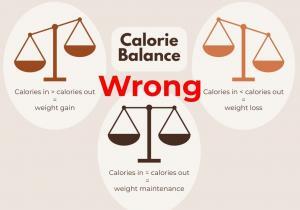
The calorie paradigm
Let me give you one example of a paradigm that is firmly entrenched, but it’s just plain wrong.
Virtually every book on diet says people get fat because they eat more calories than they burn. It sounds so obviously true, so how can it be wrong?
It sounds convincing because eating more than we burn is the mechanism that people get fat, but it is not the cause.
The cause is failure of the intelligent control system that regulates our bodies and decides how much fat we should store. It sends signals that make us feel hungry, and then we eat more than we burn.
Are you looking for evidence? Look at the number of people who go on a diet, loose weight then a few months later they are as fat or even fatter than before.
A total failure.
GLP-1 and our intelligent control system
I am not a proponent of GLP-1, but look what happens when you start using it.
GLP-1 is a hormone our bodies naturally produce that stops us from feeling hungry; it is part of the natural, intelligent control system that regulates our bodies.
But take this as a synthetic hormone and people stop feeling hungry and eating and turn into broomsticks.
Our bodies naturally exude GLP-1 for a short time but the synthetic versions are long term.
Why people should want to be broomsticks and whether it is healthy to be a weak and wobbly broomstick is another question.
Still, it shows that people get fat and sick because of instructions from our intelligent control system and not simply because we eat more than we burn.
The innovation business
Innovation is never a pleasant business.
Many people resist change; there is an old saying that science advances one funeral at a time.
Most people are happy to wait and watch, but a few pioneers with vision understand the importance of change and are willing participants.
These pioneers are more than welcome into the Gbiota club because they will help create the change.
But the food industry’s structure is dominated by giant corporations whose financial strength rivals that of a nation, and they operate on the principle of maximising profits for their shareholders.
As you may read in the article on energy and metabolic foods, they have a vested interest in promoting energy food over metabolic food.
The basic inputs for energy food are simple – sunlight, carbon dioxide from the air and rain, which are free or involve minimal management costs.
By contrast, metabolic food is complex and requires skill.
But these giant corporations are not responsible for what economists call externalities. If you need to have a foot amputated, they are not held responsible even though deficiencies in their products were the underlying cause.
Something, apart from the pioneers, would rather not think about.
How to get going
You can read a few articles on metabolic food for free in the header Why metabolic food, then decide whether to join.
If you join, you get access to articles on how to grow metabolic food under the heading growing metabolic food.
I have written hundreds of articles over the last thirty years, which you can access in the library. There are also many videos which you can watch directly from my YouTube channel ‘Gbiota’ or the more relevant ones from the section on videos.
And yes, I may be old but I am real person and always pleased to hear from like minded people so you can always email me.
Our aim is to enable people to enjoy better health and lifestyle by creating a social movement focused on community education.
That is what the Gbiota club is about; why not join us?
Your content goes here. Edit or remove this text inline or in the module Content settings. You can also style every aspect of this content in the module Design settings and even apply custom CSS to this text in the module Advanced settings.
Microbes are easy to breed. They are a hardy lot and, within twenty minutes, are hard at it.
Sound good news? The harmful microbes that make us sick, and can even kill us, breed just as fast.
No one wants to be responsible for breeding harmful microbes, so the approach with modern food has been to be as sterile as possible. But we also need beneficial microbes to regulate our bodies; they produce hormones that make us feel hungry or full, so we eat and/or stop when needed.
So the challenge is: how do we breed the beneficial microbes without breeding the harmful ones?
We do that by controlling conditions so beneficial microbes outbreed and outcompete harmful ones.
We do this with a system of flood and flush.
Water is attracted to good (hydrophilic) soils, so it does not readily move through the soil. We first need to saturate the soil so it is properly wetted, then let it drain, which is why we need to aggregate the soil so it is porous and drains easily.
As it drains, it sucks fresh air into the soil so it breathes.
But we don’t use pure water, since it has no nutrients; instead, we use what we call soil blood, which is full of nutrients.
The concentration of nutrients in the soil blood is critical. If the soil blood lacks enough nutrients, the plants will not flourish. Plants absorb nutrients through osmosis, when water moves from a weak solution to a strong one.
But if the soil blood is too concentrated, reverse osmosis occurs, pulling water from the plants and causing them to die.
This is how it works.
We catch the soil blood from the previous irrigation. This may be very dark, almost black, which indicates that it is too strong.
We need to dilute it until it is straw-coloured, a deep yellow.
We measure out the water needed for a single irrigation; there must be enough to saturate the soil, with enough left over for drainage. We learn this by experiment, but in a standard Gbiota box it is 5 litres.
We pour this onto the soil surface, typically with watering can with a rose.
This will flood the soil surface so the top layer of soil is totally saturated.
This will slowly soak down through the soil, which will absorb some water. It is like a wave of soil blood that gets progressively smaller as it moves through the soil but is large enough to reach the bottom of the box.
We may like to think our soil is nice and uniform, but in the real world it never is. There is always some channel the water can leak through without properly wetting the soil.
In a large garden bed, we use what we call a leaky dam. It prevents the water from escaping quickly, so the soil gets wetted and then drains slowly, so it drains properly.
We use the same ‘leaky’ principle in the box, but this time we make a hole in the base and plug it with a cloth, letting the soil drain slowly and thoroughly wetting the soil in the process.
This is the soil blood for the next irrigation, as it is full of nutrients, microbes, and soil creatures.
Learn how living soil supports human health. Discover how beneficial microbes, nutrient-dense food, and simple growing methods can help you improve your gut microbiome and overall wellbeing. Explore the Gbiota resources, videos, and community.


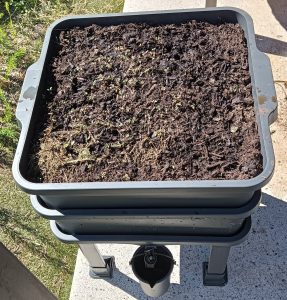
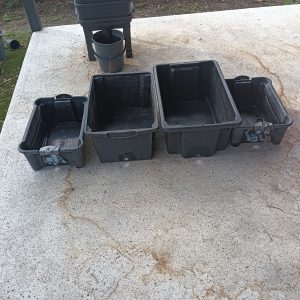 and the daughter boxes, which can be very simple: virtually any convenient, inexpensive box that fully utilises these excess inputs.
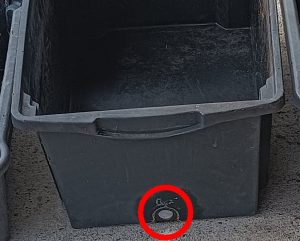 I have been trying a new method I call the leaky plug which is based on the well tried method of leaky dams I have been using in garden beds.
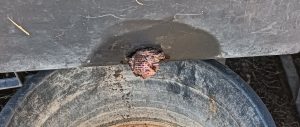
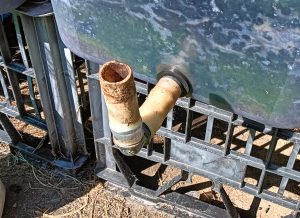 I am trialling this against the well-proven method of swivel tubes I have been using for years to control the flow through the boxes, so they are well tried and tested.
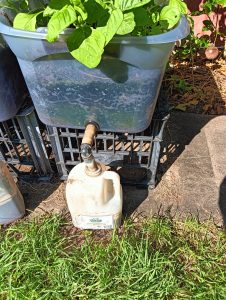 You set the saturated level by adjusting the swivel tube angle and the time the water remains in the box before draining.

 I discovered that there is an optimum size for the pipe: what I called the Goldilocks size. Not too big and not too small—just right.
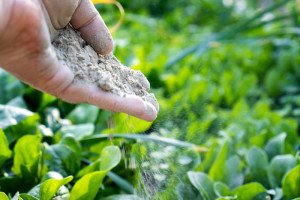 But what happens if, instead of relying on expensive and increasingly scarce soluble fertilisers, we apply volcanic rock dust, which is inexpensive and available in enormous quantities?


 Think of our bodies like a car.
 It needs fuel for energy. No energy – no go. Just like us.
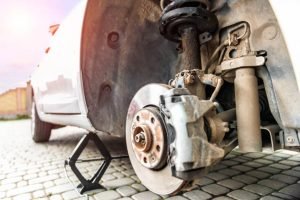 Our bodies are much more complicated than a car, and they have one very clever feature. When bits wear, we don’t have to take it to a garage; our bodies continuously replace body parts as they age and wear, and we don’t even have to think about it or ring up the garage to see if they have the needed parts in stock.
 Third, a car needs a mechanical way to control it: a steering wheel and at least two pedals, one to speed up and the other to slow down.

 Our bodies need the equivalent of this driver that has to learn. Some people say this learning starts before birth, but certainly at birth learning begins, even if it’s only to find mum’s nipple.
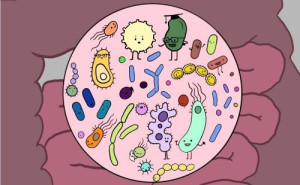 In our bodies, the equivalent of the driver is our brain, which continuously receives electrical signals from sensors throughout our bodies, processes them, learns from them, and sends signals back to the appropriate recipient.
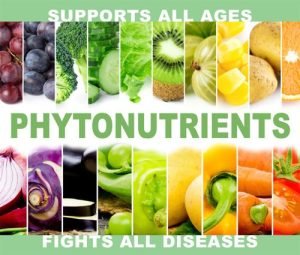 Next we need phytonutrients, specialised chemicals produced by plants. A single tomato has over a thousand separate phytonutrients. There are over thirty thousand edible plants. So I can be a boring sort of person, and I haven’t even got to the complicated bit.
 The human body is a remarkable self-learning system. Let me give you an example. When you were born, you had no idea how to ride a bicycle, yet not long after turning three, you could be zooming around with an apparent complete understanding of self-correcting gyroscopic forces.But the truth is that at three you have zero understanding of self-balancing gyroscopic forces. Still, your remarkable self-learning, intelligent control system learned by trial and error (yes, you had to fall off a few times) the operating characteristics of your bicycle, which baffles many engineering undergraduates.
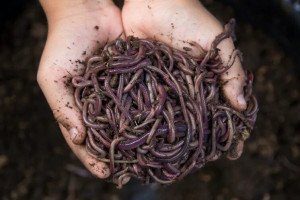 So if a few worms don’t put you off, and you don’t mind the other creepy crawlies that turn dirt into soil and grow metabolic food, then why not join the Gbiota club and enter the fascinating world of self-learning intelligent control systems that nature evolved to give us the edge over the jellyfish.
 You don’t have to grow all your own food; that’s impractical, but it is practical to grow the metabolic food your body needs, which is only a fraction of your total food consumption.

 I am updating my website to explain how to grow metabolic food that feeds our metabolism and breeds the microbes that regulate our bodies and control our appetite.
 Modern technology has dramatically increased fuel production, and we now have a surplus, with an abundant supply available from Supermarkets.
 But these are insoluble, so they are not available to plants. But a system has evolved. Plants capture energy from the sun and use it to make sugars, which they exude from their roots.
 As a toddler, I was used as child labour in one of the great innovations of the time: Victory gardens, which are sadly one of the great forgotten triumphs of innovation and change.
 We are now in another food crisis. We may not see it, as the shops are full of food, but look at the people in the shops, count the number of people who are overweight, the number with a diabetic amputation; there are actually eight million diabetic amputations a year, and each amputation costs about $40,000.
 Now I have been in the innovation business for a long time and have been recognised as one of Australia’s leading innovators. Still, sadly, innovation is seen as some act of extreme brilliance, but it is not. It is a process and a skill that has to be learned, just like playing a violin.
 Let me give you one example of a paradigm that is firmly entrenched, but it’s just plain wrong.
 The cause is failure of the intelligent control system that regulates our bodies and decides how much fat we should store. It sends signals that make us feel hungry, and then we eat more than we burn.

 Your content goes here. Edit or remove this text inline or in the module Content settings. You can also style every aspect of this content in the module Design settings and even apply custom CSS to this text in the module Advanced settings.