
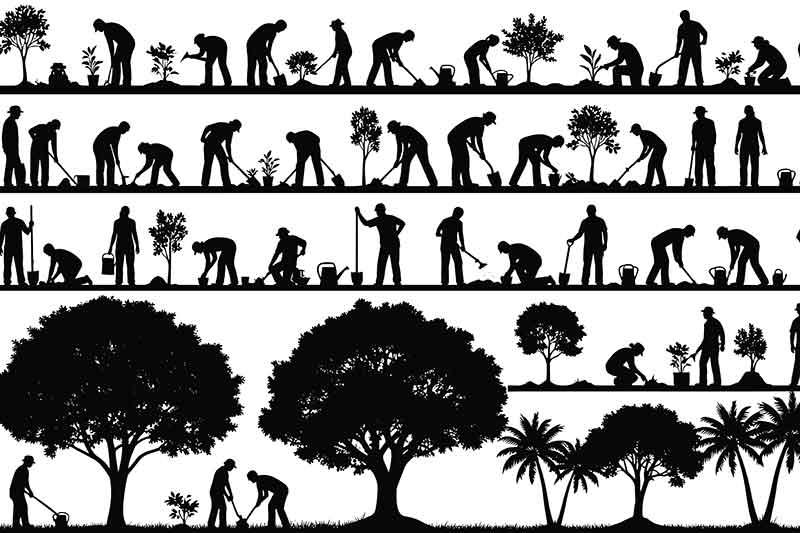
This story blends fiction, politics, soil science, and water management into a single narrative that challenges how the world values its most critical resource: soil. Through a fast-paced and sometimes confronting storyline, it explores how soil health underpins food, water security, human health, and climate resilience. Beneath the drama lies a serious message about regeneration, power, and the urgent need to rethink how civilisation manages land and water.
00 and the Soil Princess
The battle for control of the world’s most valuable resource
By Colin Austin
This story follows a familiar figure — a “00” agent — drawn into an unexpected conflict. He is tasked with overseeing the capture of a brilliant and elusive strategist, known as Ono, a Euro-Asian woman with a reputation as a master planner. What begins as a routine operation quickly turns into a reversal of power, forcing the agent to confront ideas that challenge everything he believes about control, security, and value.
Although presented as fiction, the technologies, ecological principles, and political dynamics beneath the story are grounded in real-world systems. The exaggeration, drama, and sensuality serve as narrative tools to hold attention while exposing uncomfortable truths about how modern societies exploit resources without understanding long-term consequences.
Soil as the Hidden Resource
The central idea of the story is simple but confronting: soil, not oil or minerals, is the most valuable resource on Earth. All food depends on it. Human health depends on it. Climate stability depends on it. Yet soil is treated as an expendable input rather than a living system.
Modern agriculture focuses on yield and short-term output, often supported by chemical fertilisers. While this produces calories, it strips soils of structure, minerals, biology, and resilience. The story contrasts this with ancient agricultural systems that actively build soil rather than consume it.
Healthy soils contain complex networks of fungi, bacteria, worms, plant roots, and organic matter. Together, these systems dissolve minerals from rock, concentrate trace elements, retain water, and buffer crops against drought and flood. When soil is destroyed, food quality declines, disease increases, and ecosystems unravel.
The Valley Lesson
In the mountainous valleys described in the story, farming is not extractive. It is regenerative. Plants are grown not for direct consumption, but to build soil. Deep-rooted species mine minerals from far below the surface. Mycorrhizal fungi dissolve these minerals and transport them into plant tissue. When plant material decomposes, those nutrients become available to future crops.
Worms play a critical role, creating tunnels that aerate the soil, improve structure, and distribute fungi through the profile. Organic matter acts as both food and sponge, holding moisture without waterlogging. Water is managed carefully — not too much, not too little — ensuring continuous biological activity.
This system produces people who are strong, healthy, and active well into old age. Their diet contains not just energy, but the trace elements required for DNA repair, immune function, and metabolic health. These are invisible to economic metrics but essential to human wellbeing.
Water, Soil, and Climate
The story makes clear that soil and water cannot be separated. Soil biology depends on stable moisture. Too dry, and life shuts down. Too wet, and oxygen is excluded. The challenge is maintaining moisture without saturation — a principle central to wicking systems and contour-based water management.
When soil is healthy, it absorbs rainfall rather than shedding it. Floods are reduced. Drought resilience improves. Carbon is stored underground instead of released into the atmosphere. Regenerative farming therefore becomes one of the most powerful climate tools available.
The narrative argues that farmers, if properly supported, could remove billions of tonnes of carbon dioxide from the air while increasing food security. Yet farmers are trapped between input suppliers, commodity traders, and supermarket chains that capture most of the value.
Power and Exploitation
Between farmers and consumers sit multinational corporations whose primary obligation is short-term profit. These organisations are not necessarily run by malicious individuals, but by systems that reward extraction and punish restraint. Governments, dependent on corporate donations and economic growth, rarely challenge this structure.
The story draws parallels between resource extraction industries — oil, mining, agriculture — and highlights how soil has remained invisible simply because it was once abundant. As soil becomes scarce, its true value emerges, and with it the risk of exploitation.
Unlike minerals, soil cannot be relocated or replaced. Once destroyed, it may take centuries to recover. This makes control of soil knowledge and regeneration techniques a matter of global importance.
The Role of Culture and Belief
A central question posed is how such knowledge can be protected and shared without being captured by powerful interests. The answer explored in the story is cultural rather than technological. A decentralised, non-hierarchical system — symbolised by Buddhist teaching traditions — offers a model that resists consolidation of power.
The idea of a “Roshi” or teacher is not about authority, but responsibility. Knowledge is shared openly, guided by ethics rather than profit. Anyone may teach, anyone may learn, and no single organisation can claim ownership of the system.
This contrasts sharply with corporate models that rely on patents, secrecy, and control. By embedding soil regeneration within culture rather than commerce, the system becomes harder to exploit.
Fiction as a Warning
The provocative elements of the story are deliberate. They force the reader to confront discomfort, power imbalance, and manipulation — not just between characters, but within global systems. The exaggerated control exercised over the protagonist mirrors the lack of agency experienced by farmers worldwide.
The narrative ultimately asks whether humanity will continue to destroy the foundations of its own survival, or whether it can relearn how to cooperate with natural systems. Soil regeneration is presented not as a technical fix, but as a cultural shift.
Underlying Message
The core message is clear: there is no single magic solution. Healthy soil arises from cooperation between plants, microbes, animals, water, and people. Remove one element and the system collapses. Restore them together and regeneration accelerates.
Soil is not dirt. It is a living system that connects food, water, climate, and health. Ignoring this truth has led to many of the crises we face today. Recognising it may offer one of the few viable paths forward.
What appears at first as a fictional thriller ultimately functions as a warning — and an invitation — to rethink what we value, how we farm, and how we measure success.
Download ‘00 and the Soil Princess’ (full PDF)
