Gbiota overview

Gbiota overview

"Go

Colin Austin © 5th July 2024 This document is published under the Creative Commons system which means that it can be copied and republished without further permissions but the author Colin Austin @ gbiota.com must be recognised.  

Gbiota overview

Food not pills

Pick and eat plants grown in living soil - that is the way to feed your gut-brain which controls your appetite and how much fat your body stores.

The wrong fat in the wrong place is the underlying cause of the modern epidemic of chronic diseases, obesity, diabetes, heart attacks and dementia.

This article is an overview of how the Gbiota system works. This is not an instruction manual, just to give you a general overview.

Gbiota is a community benefit organisation, (not some mega-corporation). It is run by activists who want to see future generations have access to healthy food. This does require active participation from members either in producing Gbiota boxes or being a customer and buying Gbiota boxes - the power of your wallet is supporting the movement.

Eco-balance

The underlying principle of the Gbiota system is to create an Eco-balance by breeding beneficial microbes in the soil and creating the conditions where the beneficial microbes out-breed and out-compete potential harmful microbes.

Beneficial microbes need a combination of nutrients, water and air.

In the Gbiota system, this is achieved by a combination of flood and drain and recycling.

The base of the bed is flooded which expels all the stale air, the bed is then allowed to drain and as the water drains it sucks in fresh air so the soil is breathing.

The fluid that is drained is full of nutrients and living creatures so this is recycled back into the bed - we call this fluid soil blood as it does the same job as our blood.

Wickimix and Gbiota beds.

The first step is to produce Wickimix, a growing media (or soil) full of beneficial microbes, living creatures and nutrients.

This is done in a Gbiota bed.

If you don’t have a garden or want to mess about producing your own Wickimix then find a local grower who can supply you with either Wickimix or Gbiota boxes.

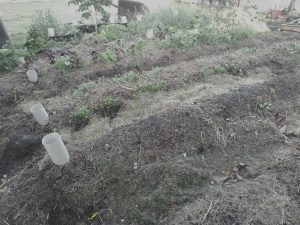
These are raised beds about 300mm high and are free-standing eg with no side wall.

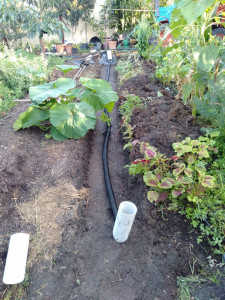
ag pipeStart by laying ag pipes, these must be level so either the bed must be flat or the pipe(s) laid along a contour line.

The bed is then covered to a depth of 100mm with organic waste. Grass cuttings make a good base, then covered with food or other organic waste.

This is then covered with a nutrient layer, typically a mix of manure, volcanic rock dust, dolomite (to balance pH) and trace minerals (found in blood and bone).

If just starting this is then covered with a third layer of soil plus inoculants (microbes and soil creatures) but one started this layer will be old Wickimix from boxes that are being regenerated.

The inlet to the ag pipe is raised for filling.

The exit is raised, sitting on a leaky dam. When the pipe is filled the incoming flow is much higher than the outlet flow from the leaky dam so the base is flooded, but when the inlet flow is stopped the base of the dam drains.

The drainage from the leaky dam is normally caught in a sump, with a pump, so the soil blood is automatically recirculated but a simple alternative is to replace the sump with a lower bed which catches the soil blood and is used to grow water-loving plants. Not ideal but practical.

Feeding the life stock

Gbiota beds are full of living creatures from the larger creatures like the worms right to the microscopic bacteria, fungi and viruses.

These feed on the organic waste and nutrients in the bed, but also plants which are growing in the soil exude nutrients from the roots.

Each species of plant exudes different nutrients to attract different species so a broad spectrum of plants are grown.

These can simply be used as green manure or consumed or sold.

Experienced home gardeners can quite happily make their own Gbiota beds but commercial growers can run a viable business selling Gbiota boxes to customers with no growing experience and who live in apartments.

Gbiota Boxes

Growers are most likely to sell Gbiota boxes with plants ready to start harvesting, but they may also supply clean skins, boxes ready to plant or even just supply the Wickimix which is a vital part of the Gbiota process.

These boxes work on the same principle as Gbiota beds using the flood and drain and recycling system but in a different way.

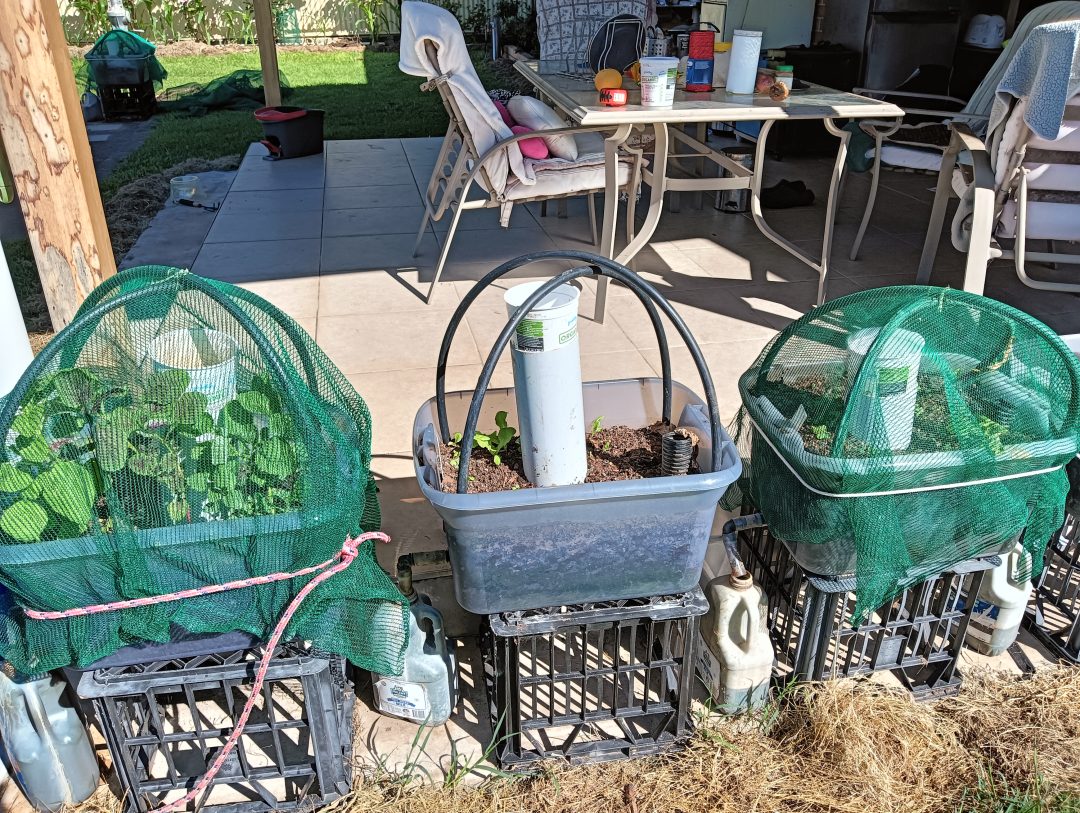
The box is fitted with a swivel tube which allows the bed to be flooded and drained and the soil blood to be circulated.

As with a bed, there is a length of ag pipe running along the base, and the box is initially loaded with three layers, grass clippings and organic waste, a nutrient layer and the top layer of mature Wickimix.

A compost tube is also used for customers who want to recycle their organic waste.

Seeding and germination

Seeds are sprinkled on the surface and covered with either Vermiculite (which is very light and holds water) or another layer of Wickimix.

Some seed varieties germinate best if they are totally flooded while others germinate best with light watering.

The compost tube goes down to the base of the box and is used to water the plants from underneath with the water wicking up to the root zone.

Regular watering

The compost tube can be filled with household waste so when water is poured into the tube the compost leachate is flushed into the base of the box.

The swivel tube is put into the up position and water (or the soil blood) is simply poured into the compost tube until the soil blood reaches the top of the swivel tube.

A container will be placed under the swivel tube to catch an overflow. The swivel tube will be turned to the down position to drain the box and the soil blood captured for the next irrigation.

Tipping

Plants are often grown on the cut-and-come-again principle in which just the tips of the leaves are harvested and the plant regrows. This gives a much longer harvesting period but at some point, the box will need reseeding.

Some customers may like to reseed themselves while others will just order a replacement box with plants ready to harvest.

"Go
"I

Loading

Gbiota overview

The essence


Join the gut-brain social movement

Out gut is part of the intelligent control system which regulates what and how much we want to eat.

mummyIn the past we had a very healthy gut-brain but died young from infectious diseases.

Modern food may be hygienic and full of energy food but does not feed our gut-brain so we get fat and sick from non-infectious diseases.

Now we know how to get a healthy gut without getting infectious diseases.

We just have to make it happen.  Only we the people can make it happen, we decide what we eat, not big business or the Government, it is up to us.

Microbes breed in the soil, enter the plants we eat and form part of our gut-brain which determines whether we are fit and healthy or get fat and sick - our choice.  It is not rocket sciencce.

We need to create a new industry of growing gut-brain food with local growers and consumers working together. Gbiota aim is to bring consumers and local growers  together by community action.

We train local growers (and skilled individuals) to breed the beneficial microbes that form our gut brain and supply their local community.

Whether you are a consumer who wants a healthy gut-brain or a potential grower sign up to our free membership and become part of the action. You will receive our Newsletter and learn about gut-brain health.

Join the movement for community health and take control of your health.

Feed your gut bugs

Feed your gut bugs, they are your friends, your mates. They look after you, digest your food, house much of your immune system, and make all sorts of complex chemicals your body needs.

You provide a nice warm home for them but you do have to feed them. You would not have a dog, cat or bird and not feed them and they are pets, your gut bugs are your mates and look after you, you just have to feed them in return.

partyThey just need plants, eaten fresh and grown in living soil full of beneficial microbes and nutrients.

They like to party (and breed) with other bugs, it’s called biome diversity.

grumpyBut if you don’t feed them they get grumpy, just like a human mate would and they send out hormones that make food cravings so you overeat and get fat and sick, you may get diabetes and have a leg chopped off, die from a heart attack, or worst of all get dementia.

So feed your gut bugs, they are your mates, living creatures just like your human mates.

grumpy

This website shows you how to grow gut food at home but if you are too busy or just can’t be bothered then go to your local farmer’s markets, preferably with a bunch of human mates, and find a local grower - just copy them on this web site and we will take it from there.

They will deliver Gbiota boxes to your door with plants already growing, all you have to do is water in the Gbiota way and pick and eat.

So simple, so inexpensive, less than buying ageing plants from a supermarket, just plants grown in living soil and eaten fresh before the good bugs die.

Why our gut-brain matters

Most people know that our gut is important for health - but do they know why?

Our gut-brain is the command centre for our bodies

gut brain connectionOur gut contains trillions of cells which communicate with each other - just like in a computer.

It is the intelligent control system which regulates our bodies, in particular how much and what we want to eat.

We don’t get fat and sick simply because we eat too much. We get fat and sick because our gut-brain senses deficiencies in our diet so decides it need to store more fat, send out hormones so we overeat, then we get fat and sick.

We can choose - do we want to live a long and healthy life, fit and active to the very end or do we want to get fat and sick and die young.

We must feed our gut-brain

gbiota boxesIf we want to be fit and healthy then we need to feed out gut brain so it works properly. This is not a total guarantee, our genetics play a part but if we don’t feed our gut-brain then the odds of living a long and healthy life are remote.

Gbiota™ is not a product you can buy at a chemist shop - it is a way of growing food - plants that contain the beneficial microbes and phytonutrients that your gut-brain needs to work properly and you intelligent control system. Gut-Brain Food.

If you have the space and gardening skill you can do it yourself but for most people, particularly those living in a flat you will need to buy Gbiota boxes with plants already growing from a local grower.

Put your name on the waiting list

First step is to register here with with your general location so you are on the waiting list. When there is a group we will look for a local grower in your area who can supply Gbiota boxes.

The wrong fat in the wrong place

Overweight, diabetes, heart attacks, and dementia all have a common underlying cause - the wrong fat in the wrong place.

This is not because we have turned into little piggies and overeat, it is because our modern chemical industrial food system is deficient in phyto-nutrients and beneficial microbes.

Our gut-brain, our intelligent control system that regulates our bodies, senses this deficiency and send out signals creating food cravings so we overeat and then we get fat and sick.

You can easily solve this by growing your own gut brain food, even if you live in a flat with no garden.

That is what this website is all about - we show you how.


Save 100,000 legs from diabetic amputation

This looks at the changes we must make to our food system to reduce the impact of chronic diseases like diabetes and ensure a sustainable supply of food that will keep us healthy.

Read more here

"If
"I

Loading

Gbiota overview

My teddy

Colin Austin © 29th June 2024 This document is published under the Creative Commons system which means that it can be copied and republished without further permissions but the author Colin Austin @ gbiota.com must be recognised.

My Teddy

If you think everything in the world is fine then you are either a hermit or smoking some pretty strong stuff.

war in MyanmarThe heartless massacre of ordinary people by powerful militia and the possibility of World War 3 cannot go unnoticed.

Neither can the waves of hungry refugees moving across the globe looking for a safe place to live.

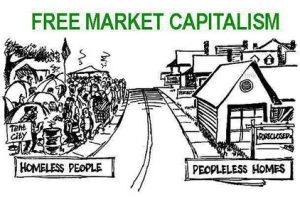
We could say that is just ‘The News’ but look at one of the wealthiest countries in the world, good old Australia. Homeless people sleeping under bridges because there are not enough houses while we have plenty of land while the builders who could build more houses are going bankrupt.

If that is not crazy I don’t know what is. Actually, I do - a food system which is making us fat and sick while we are a major food exporter.

One solution would be to take our teddies and hide under the blanket until mummy says it is safe to come out - but there is not a factory capable of making 8 billion teddies in time.

So who is going to save us? Could it be big business? Unlikely, big business has learned the trick of Neo-monopolies so we now have autocratic capitalism which seems not that much better than the worst of autocratic Governments.

Nice to think that our Governments are coming to save us, but it is not looking good. They are struggling as much as us to come to terms with the new world order as the over-exploitation of our natural resources begins to bite.

So what do we do? We do what made humans the dominant creature on earth, we use our intelligence and cooperate.

But how. Well, look at climate change. For decades scientists were telling us that things were going to get bad, but the delaying tactics of the fossil fuel industry and the lack of public pressure meant that Governments learned the ancient art of procrastination.

Greta ThunbergThen along came a school girl with Asperger syndrome, a grotty cardboard sign and determination and it totally tipped the balance. Now let us be clear, she did not change the world by herself, what she did was convince a few people that uncontrolled burning of fossil fuels was not the greatest idea, and they convinced the next tier who in turn convinced the next tier.

And before you could say Greta Thunberg the social pressure was so great that no Government could resist the social pressure. She formed a tribe that was unstoppable.

Now we need a food tribe. A tribe that understands that we need more than energy food, we need a food system that both makes us healthy and is sustainable.

To be healthy we need a healthy gut. Our gut does more than digest our food, the trillions of cells in our gut communicate with each other, just like in a supercomputer, to form a brain with real intelligence. This gut-brain decides what and how much food we want to eat and also hosts much of our immune system.

We simply cannot be healthy without a healthy gut-brain and that means feeding it gut-brain food.

And that is why we call it Gbiota and we use the slogan ‘Feed your gut brain’.

green protesterOur next job is to form a tribe with people who understand the importance of the gut-brain and want to live a long and healthy life and growers who can grow gut-brain food and see that this is providing both a community service but also an ethical and profitable business opportunity for those with a pioneering spirit.

So be smart, join the Gbiota social movement and be part of a social movement to create a food system that makes us healthy and is sustainable.

"I

Loading

Gbiota overview

The Great Food War

Who will win the Great Food War? Will the power of mega-corporations that control our food system reign supreme leaving the community fat and sick and destroying civilisation as we know it as the supply of essential minerals is exhausted or will the community rise up and unite so common sense prevails? Let me start with the story of the mouse and the elephant.

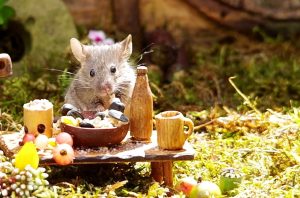
The mouse

I sat down to eat my breakfast, a bowl of muesli and there was a cute little mouse on the table watching me. Actually, a virtual mouse rather than a real mouse, but still cute. I am very fond of this little mouse, it is what I do, working out how to grow food that will make us healthy. That is a bit different to knowing what food will make us healthy. Take that wonder vegetable that some people swoon over, Kale. Kale can actually be what the trendies call a super-food but if you don’t grow it the right way in the right soil it is pretty useless.

The selfish gene

Richard Dawkins I know from Richard Dawkins and The Selfish Gene that I, like everyone else want to keep our human Genes going long after we die and that needs males and females doing what they do - a bit of the good old hanky-panky. Females have a problem with lack of iron but they can’t just go down to the local scrap yard and start munching on a wrecked car, apart from breaking their teeth that iron is not what we like to call bio-available which means it can get into her bloodstream. kale Now that is my day job, finding some microscopic bugs which can convert the iron in a wrecked car to make it bio-available so it can go into a plant which she can eat, or maybe an animal that she can eat, so she gets a good dose of iron into her blood. Males have a different problem, zinc. One good night of hanky-panky and there goes his supply of zinc. Again no use munching into a pile of zinc-coated roofing sheets, instead find some rock that contains zinc and the appropriate bugs, create some soil with bio-available zinc, grow some plants and bingo he is ready for another night of hanky-panky. All good fun and I am really quite happy messing around with what some people may think is just yukky soil full of rotting stuff to feed a few bugs and grow healthy food and telling people stories about what I learn.

The elephant

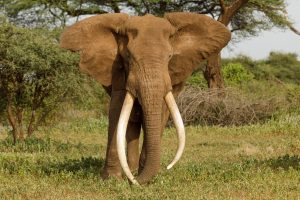
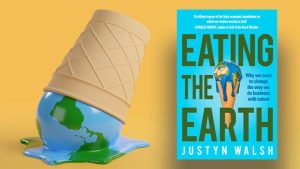
But then I went to go outside and there was this huge elephant, a really big one that was just too big to come inside so could not be the elephant in the room but is seemed quite happy to be the elephant just outside the room. It has a big label on its trunk saying ‘Modern food system’. Anyone with experience with elephants knows they are vegetarian which means they shit a lot, big steamy piles, so I was concerned that this elephant, although virtual, might still dump piles of shit in my patio. And my fears were justified which is the point of this story. Just in case you think I am making this all up just to spin a yarn can I recommend a couple of really good books. Eating the Earth by Justyn Walsh Food for Life The New Science of Eating Well by Tim Spector

What a magnificent creature!

Of course, the elephant is just an avatar for our food system but what a magnificent creature. Let us look at it in reality. We can go to the supermarket which is stacked high with foods from all over the world. It may be a national pass time moaning about the cost of living, but that is because the increase in wealth from our ever-developing technologies goes into the pockets of a few ultra-rich people. Compared with times past food is incredibly cheap and is a much smaller fraction of our weekly budget than not so long ago. Households now spend only around a tenth of their disposable income on food compared to a third before 1950. Food needs to be cheap or else we would not be able to afford tickets to the world’s favourite billionaire songstress, Taylor Swift. Let’s get our priorities right (or wrong). But are we on the edge of a Titanic moment, nothing can go wrong until it does. People who predict disaster with our food system do not have a good record. Malthus the one-time predictor of food disaster became the butt of jokes. Paul Ehrlich did not do much better. So it seems that the best way of predicting the future is just to wait until it happens. But predictions would make a really good disaster film with millions of starving people, hungry and angry (they even invented a word for it hangry) crossing the globe causing mayhem and disaster. We can say that that won’t happen with the same assurance that people said the Titanic was unsinkable. So forget about predicting the future, it is too unpredictable, and instead, look at what is happening right now and look for the trends. A lot safer.

Overfed and undernourished

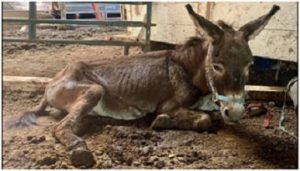
There is a very nice phrase, overfed and undernourished and if you want to see that in action just go to your local shopping centre and count the number of overweight people with wobbly bums and tums and the people in wheelchairs or hobbling about on crutches with a leg chopped off. It is what the experts like to call an epidemic of chronic diseases but to me that does not seem a good term, these are not infectious diseases they are a condition. You can’t cure being overweight but as sure anything is in this world you can change your diet and not be overweight. But not by eating less and exercising more, we have been trying that for decades and it has not worked so we try eating even less and exercising more and it still doesn’t work. Reminds me of the story of the farmer who was training his donkey to eat less. He got it down to one bean a day when the darned animal died. This is where the current paradigm on weight is just so wrong. The common paradigm is that we get fat and sick because we are little piggies and overeat and that is just not the way it works.

The man on the bridge

Our bodies are smart and detect there is a deficiency in our diet, either of beneficial microbes or critical nutrients. The captain, the man on the ships bridge bangs his bell shouting emergency, emergency store any food you can lay your paws on. Then the man on the bridge bangs his bell again and tells the gut down below to make up some of those hormones that make us hungry and squirt them out into our bloodstream so we end up just craving food, then the other crewmen pick up all this food that is streaming in and poke it neatly away in our bums and tums so we end up looking like a circus doll.

The not-so-free market

The number of people who claim to be religious has dropped but there is one religion that is doing extremely well. This religion says that the free market will solve all the world’s problems and we don’t have to do anything, the invisible hand of the free market will fix everything, just go out and spend money on whatever we fancy (and if we can’t afford it then just borrow). That may have been a workable religion many years ago when people lived in villages with a Saturday market and the power of the buyers and sellers was balanced and there was a good range of both suppliers and customers and there was no internet to spread disinformation.

What actually happens

But that is not the way the modern food system works. The food industry is riddled with Neo-monopolies. Let us just talk about what a Neo-monopoly actually is. Governments don’t like monopolies, they are so clearly bad that they get spurred into action and do something about it. In nature species become extinct (it could happen to us). But nature is smart so a new creature may evolve which is pretty much the same as before but does not get killed off. That is exactly how Neo-monopolies evolved. Instead of one single company becoming a genuine monopoly which would attract the attention of the Government a new system has evolved. Several companies maybe with one or possibly two lead companies with a handful of followers so they escape the actions of the marauding Government out to kill off monopolies but this little group know the rules. There is no need for clandestine meetings in dark parks after night or popping secret messages into holes in the wall like in spy films, just follow the well-understood but unpublished rules, and watch the money pour in.

Eating the Earth (a must read)

Let me give you a few quotes from Eating the Earth. Volume, efficiency and profits, rather than the health or needs of the local population tend to be the drivers of the industrial food economy. Industrialised agriculture favours quantity over quality. The food Fordism of gigantic farms and processing plants has been complemented by increasing monopolisation at both ends of the agricultural supply chain. At the pre-farmgate stage, 40% of the world’s commercial seed market, four companies account for more than 60% of global pesticide sales and just four corporations comprise a third of global nitrogen fertiliser production. At the other end of the supply chain, the purchase of international bulk commodities is dominated by just four privately owned companies who together control around 90% of the global grain trade. Big agriculture has defeated the competitive dynamics with a contrivance to raise prices while leveraging overwhelming bargaining power to drive down payments to the far more fragmented production sector, the actual farmers, squeezed in between. Industrial agriculture’s high input, high output business model requires more fossil fuel-based fertilisers, pesticides and pumped water.

Thanks, Justyn Walsh for your revealing book

Sounds bad? Well, it is nothing compared to the damage done to the soils which are degenerating to little more than dirt to hold up the plants which are fed chemical input. Whoops, I almost left out climate change. Sorry Greta. What a combination, climate change and destruction of our soils. Is there something wrong with our species that we have a death wish? How is it that there are such amazing people like Zomi Frankcom, who worked for World Central Kitchen, risked her life, and was killed, trying to get food to starving people in Gaza, yet we have such atrocities as the deception in the Tobacco industry, copied by the oil and food industries.

Woke green nutter

The executives at these mega food companies, on their multi-million dollars-a-year salaries, and whose decision lead to 8 million people a year having a limb amputated from diabetes are regarded as pillars of the community. Why are we so fixated with money? It is obvious that on a finite planet, we cannot continue to grow at an exponential rate and that at some point in time we must move from exploitation to recycling, a clever creature like us humans should be able to understand that simple message. All these terrible things and people don’t even seem to care. I care, I care about the life my two great-granddaughters will have, and all the terrible things I talk about that will happen in their lifetime, yet I get classified as a woke green nutter. There have been times in my life when I have been poor and others rich. I have no delusions that being rich is more pleasant but money should not so dominate our thinking that we do things that make people fat, sick and have their legs chopped off from diabetes. I can’t quite find the word, at least a polite word to describe that but there is no word for destroying the planet on which human life depends just for the sake of money. What is wrong with us as a species, how are some people so dedicated to helping society while other seems intent on destroying us as a species? If you know the answer please email me colin@gbiota.com

It keeps on getting worse

mineral deficiency But it gets worse, this reliance on chemicals results in food which is deficient in the beneficial microbes needed to replenish our gut biome and critical trace elements that are essential for our bodies but not essential for plants to grow into what looks like but isn’t healthy food. The net result is the epidemic of non-infectious diseases which are here right now. But what happens when we have used up all those minerals that power modern industrial agriculture? We only have some fifty years of phosphorous left.

Prediction is a dangerous business

If we don’t change from a society based on the exploitation of natural resources to one based on recycling then life is going to get real shitty, and I mean really shitty. Malthus and Paul Ehrlich may have got their timing wrong but were spot on in predicting oncoming chaos.

Shit Happens

Human beings are weird creatures. We are the most successful creature on the planet yet, in war, we kill each other with gay abandon, but also in peace with food that is equally effective as an AK-47 in killing people. Why do we do that? The answer to that lies in another great book. Facts and Other lies, Welcome to the disinformation Age by Ed Coper. Let me give you my version. Human beings are not physically well equipped for life in the wild, being a bit challenged in the claw, teeth and beak departments. True an adult human can survive in the wild for several episodes of Alone, cheered on by a television crew with a backup helicopter and support vehicles.

Species survive by breeding

But that is not really survival, for the species to survive we have to be able to breed. The hanky-panky part of breeding we do incredibly well, any aircraft toilet, dark alley, back of the bike shed or if we are boring a bed will allow the job to be done. But then 9 months later appears this totally useless baby whose only survival apparatus seems to be a good pair of lungs to attract attention and a powerful suck when mum wakes up. But it takes a couple of decades before this baby can enter the Alone competition.

It takes a village to raise a child

So we have that nice African phrase ‘it takes a village to raise a child’ which neatly says that if we are to survive we need the support of a village, our tribe or group - we just have to belong to survive. To belong we have to conform which means adopting the views or our group. This is really the essence of ‘Facts and other lies’ we think what our group thinks regardless of what the science of the real facts tell us. If our group thinks that we should all go out and massacre the next tribe along because they have adopted a silly hairstyle or wear their headgear back to front we will happily go out and massacre them, and maybe even get a medal from our tribe.

Think for yourself

Thinking for yourself seems an incredibly difficult operation which is of course discouraged by our education system. The kid who repeats the conventional wisdom is rewarded with an A while the kid who thinks for herself and gets it wrong gets punished with an F. And the ‘Fact’ yes real fact, is that if you think for yourself the odds are that you will be wrong.

Failure

Failure should be a curriculum item in our education system, first session every Wednesday. I don’t mean we should be teaching our kids to fail, but that failure is an integral part of life and we should learn to learn from failures. I know this well from my day job of experimental growing of plants. My experiments rarely work - they fall into that category of ‘it seemed a good idea at the time’. Now let me tell you the secret, as long as you don’t tell anyone. When an experiment fails, as is statistically probable, then just put it in the back of the shed and don’t tell anyone. If you tell them about the failures they will think you are some dumb clot. When something actually works, like my development of Wicking beds, then you tell the world and everyone thinks you are really smart.

Rubbish theory

I experiment to find out how well food works, using my body. I was getting a bit of a tum so I thought I would try a calorie-reduced diet. It did not have much effect on my tum but I was thoroughly miserable and grumpy. But when I caught sight of my face in a mirror and saw an intern from a World War Two concentration camp I decided the calorie theory was total rubbish and what really mattered was the quality not the quantity of food. Am I right? Well for me yes, I am 84 and fit and healthy. But I am not your fairy god mother so try for yourself and find out. Life is on big experiment. Eating a diet deficient in key elements, such as living microbes, and trace minerals just does not work so it is time to admit failure and try a new approach. But when the experts are all saying reduce calories this is not so easy which is why we have this epidemic of chronic diseases. We must learn from failures, failures are a necessary part of life.

Failures of societies

collapse of civilisation Within any particular society, there is generally a feeling that this society cannot fail. Yet the facts show otherwise. Just look at the history of civilisations. European societies think they were the pioneers of civilisation but for some reason I don’t understand, civilisations sprung up across the globe in Asia, India and the Americas at roughly the same time. Some of these had a long history. Another really good book is Farmers of Forty Centuries which examined why civilisations in China, Korea and Japan had been stable for over four thousand years while so many other civilisations collapsed. The picture is clear, the civilisations that had long-term survival were based on recycling their waste to provide nutrients in their soils. The civilisations that failed did it in two stages. They degraded their soils (and sometimes water systems) which weakened their civilisations but did not lead to their final collapse. That happened when they were overrun by other military-aggressive nations.

Change what you are smoking

If you think that our modern-day civilisations, with the combination of climate change and degradation of our soils and water supply, are immune to collapse there are two possible explanations. That general view among the majority of the people is that our civilisation is immune to collapse (despite history saying that no civilisation is immune) so we just follow along or What you are smoking is leading you to a state of delusion. Failure of our modern civilisation is a real threat, we just don’t know when. But it is likely to be in the lifetime of my two great-granddaughters who have just joined us.

So what to do?

So what can you and I do? And we must be realistic about what we can do. Let’s face reality, you and I are powerless against the might of billion-dollar international companies. We should be able to look to our Governments, after all, it is their job to protect the interests of the people. But again we have to face reality and their track record in taking on these mega corporations who can afford the very best public relations companies is not a story of success. I, and probably you, have no access to our Minister for Health. At best I may get a ChatGPT generated letter saying how concerned the Government is about the end of civilised society. The wonders of AI, it should have been called GS genuine stupidity. But these mega-corporations with a bag of gold in donations have an open door. But we should at least expect our Government to run educational programs so people have ready information on how food works. Information is power. But that is not enough. We must recognise there is a war on.

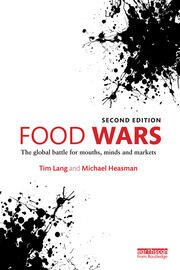
Back to The Great Food War

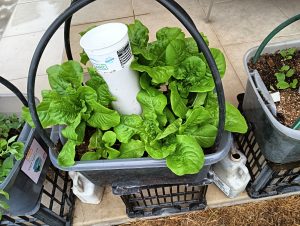
food wars On one side of the war is the mega-corporations. Large well resourced and ruthless for short-term profit and on the other side the community is placid, looking for a quiet life and a bit naive. The mega-corporations are willing to use the power of the disinformation age to convince us their food is healthy for us when in reality it lacks critical components which make us fat and sick and run the risk of having a leg chopped off from diabetes. But worse, it is destroying the planet on which we all depend, exploiting the finite natural resources which will eventually lead to the collapse of the food system and civilised society as we know it. This is a war the community must win, but right now we are in the battle of the gut-brain which is the intelligent control system which regulates our bodies, particularly what and how much we eat. This is a battle we must win or we will lose the war - but how? There are eight billion warriors on our side and we have the ultimate weapon, the power of the wallet, (well lots of wallets) but we are disorganised and therefore ineffective. A few gallant individuals will fight on, growing some of their own food and we need them, they are the commandos in this war paving the war for the bigger battle to follow. gbiotal ettuce But we need the full power of the community to win this battle. That is what the Gbiota club is all about, it brings together the local growers, who have the capacity to grow gut-brain food with the community as a whole who have the numbers. And how can it work? The growers can produce Wickimix, that magical growing medium teaming with beneficial life and critical nutrients which feed the plants which we eat to feed our gut. They can supply this in boxes, as clean skins, ready for the more adventurous members of the community who want to take charge of growing some of their own food or they can supply boxes, with plants ready to be picked and eaten genuinely fresh before the beneficial microbes die.

Loading

Growers wanted

Growers wanted

Growers wanted

At this moment Gbiota is used by a pretty determined bunch who are prepared to the bother of making their own Gbiota beds and boxes. However, it is now clear that while there are many people who want to have the health benefits of eating Gbiota food the majority of people just want to have a box delivered to their home.

So now I am on a campaign of setting up a network of local growers, independent businesses using the Gbiota technology to produce Wickimix the specialist growing media) and Gbiota boxes.

This is described below, this is not a legal document just a lay description of what will be the basis for a formal agreement.

Background

The human body has an intelligent control system, of which the gut is an integral part. This regulated bodily functions, particularly how much and what food we want to eat.

This is referred to as the gut-brain which needs to be fed gut-brain food made up of beneficial microbes and phytonutrients.

Modern food, particularly, highly processed foods lacks these microbes and phytonutrients which traditionally occurr naturally in the soil.

Modern food relying heavily on chemicals does not contain these essential beneficial microbes and phytonutrients. This deficiency is sensed by the gut-brain which produces hormones which create food cravings resulting in overeating that leads to excess fat storage.

The wrong fat in the wrong place is the underlying cause of the modern epidemic of chronic diseases such as diabetes, heart attacks and dementia.

While the food and pharmaceutical industries have tried to develop various pills to resolve this epidemic these have not provided an effective solution, certainly at an affordable price.

There is no real viable alternative but to eat natural food which contains beneficial microbes and phytonutrients.

However food grown in the traditional process, largely relying on natural fertilisers, like manure and compost can contain both the beneficial microbes but also pathogens which lead to infectious diseases.

Cohort International Pty Ltd is a company focused on intellectual property, rather than the manufacture of products.

They have developed a system of breeding beneficial microbes in the soil with careful control of the moisture and air levels in the soil, to breed the beneficial microbes while the breeding of harmful microbes of pathogens are controlled.

This is a two-stage process with the beneficial microbes being bred in Gbiota™ beds to produce a growing medium called Wickimix.

This Wickimix is then loaded in a container, called Gbiota™ boxes which can be used to grow plants, which contain the beneficial microbes, in homes and apartments.

This home growing is important as the beneficial microbes have a short life so it is important the plants are eaten shortly after picking, hence the name of the website www.pickandeat.shop.

These boxes can be supplied as clean skins, eg just the boxes and Wickimix ready-to-grow plants or as part of a swap over system where boxes with plants grown to the stage of being ready to eat and the boxes swapped over on an exchange basis.

Typically these boxes would be ordered online and delivered by the growing company.

Cohort International wishes to enter into a licensing arrangement with companies who can undertake all or part of the process. In many cases, these companies would already be in the business of supplying conventional vegetable fruit and vegetable boxes and the supply of Gbiota boxes would be in addition to their normal business.

For its part, Cohort International Pty Ltd would provide expertise and training in setting up and managing Gbiota bed and boxes. It would also undertake the promotion of the Gbiota system and the grower as an approved and licensed grower.

The grower would recognise the intellectual property of Cohort International, have the right to use the trade name Gbiota™ and would sell products under the Gbiota name.

For its part, the grower would agree to conform to set quality standards and to sell through the multi-vendor web site www.pickandeat.shop

A sales margin which is currently set at 15% would be charged on all sales.

In addition, the grower would register on the subscription site as a grower, which currently has an annual fee of $40 per annum which allows them to access the technology site www.gbiota.com.

They would also be invited to join the social media site www.gbiota.club a social media site which is free and can be used to communicate directly with customers.

Loading

Gbiota overview

Community benefit


The community benefits of gut-brain food

Colin Austin © 8thMay 2024 This document is published under the Creative Commons system which means that it can be copied and republished without further permissions but the author Colin Austin @ gbiota.com must be recognised.

The black foot and avoiding amputation

My wife Xiulan, a medical doctor and surgeon became diabetic, the professional medical given to us was that diabetes is an irreversible chronic disease, that will steadily get worse, we will put you on progressively stronger medicines but eventually, you are likely to end up with insulin injections and you will probably die young from some complications from diabetes.

We accepted that advice as an honest attempt to make us aware of the harsh reality.

But when her foot started to turn black we were advised that she would probably need to have her foot amputated.

We were not happy to accept that advice, searched all the relevant scientific literature we could find as it was quite clear to us that there was a big difference between what the leading researchers were saying and the advice being offered at the retail level.

So what did we see? Now let me be upfront, my wife may be a medical doctor but I am an engineer and engineering is really about the generation, transmission and application of power. So I naturally tend to look at the human body as a thermodynamic machine - like a steam engine.

The body as a thermodynamic machine

Thermodynamic machines have three components, they have a source of energy, in the case of a steam engine a boiler which burns fuel.

As long as the fuel burns in the boiler it does not matter much what the fuel is, coal, oil, gas, that old piano, table or chair that is never used, as long as it gives off heat that is all that matters.

It is the same with the human body. The energy food we eat, whether chicken wings and chips or the most select organic produce, is simply burned off as fuel.

There is widespread concern about the reliability of food supply yet our modern food system produces enough fuel, energy food to power the entire human population (if it were equatable distributed) now and for years to come.

As long as the sun continues to shine and some dictator with no social conscience and access to rocket technology, and who happens to have a palace on the shores of the Baltic Sea which is in danger of flooding, does not decide to blanket out the sun, there is, and will not be, a shortage of fuel.

Yet nutritionists seem obsessed with calories - lack of calories is not the issue. They should just forget about calories.

There are much bigger issues at stake.

That great clanking machine

Our hypothetical steam engine has a structure which must be built and maintained, oils and lubricants applied to keep the machine running smoothly and parts replaced as they wear. In our steam engine, this is done by humans but our bodies are much more sophisticated.

From very conception the fetus, weighing just a few grams, is supplied with food which enables it to grow to a few kilograms and after birth continues to consume food to grow to full size.

But even then our body parts may look pretty much the same but most of our body parts are being replaced, some like our skin very rapidly others like our teeth much slower.

We could say, in rather round terms that every three months we need to build a new body and for that we need food, not as much volume as for fuel, but still significant.

For some two thousand years this happened from our basic diet, largely from the complex chemicals, and phytonutrients in plants grown in living soil and eaten straight after picking.

These phytonutrients are incredibly complex - a single tomato will have some thousand different phytonutrients and no one really knows what they do.

Our modern food system lacks these phytonutrients and this is where nutritionists shine. They use their skills, and sophistication of modern technology, to produce a range of pills and supplements to overcome these deficiencies.

By and large, it works - at least sort of.

The intelligent controller

But then we come to the last bit of our steam engine. All machines has some sort of controller, it could be a simple on/off switch or it could be a highly sophisticated intelligent control system.

Now it just so happens that my first job as an engineer was working for a company that made controllers for power stations which happen to be highly relevant to the human body.

So let me tell you a funny story about power station controllers - and believe me it is relevant.

Most of the time this is pretty easy, you just monitor the load on the system and adjust the input energy with some fairly basic technology.

The controller measures for any error and if the energy input is too low or high it simply cuts back in proportion to the error. This is called proportional control

But as the error reduces the correction reduces so it never completely corrects the error. So the controller integrates the error and adjusts accordingly. This is called integral control.

But sometimes things change very rapidly so the system also measures the rate of change so the controller applies damping so the system is stable. This is called derivative control.

This may not seem to be connected to how our bodies work but we have a much better control system which I want to tell you about.

On many Saturday afternoons, there is a football match and the power consumption is low until the interval when a sizeable proportion of the population will get up and switch their kettles on for a quick cuppa creating a huge surge in power consumption.

This completely overwhelms the control system which by the time it gets the power plant up to the power setting the play has restarted.

How do struggling engineers like me manage this crisis - and no cuppa at halftime is a real crisis.

We all have an intelligent control system

This is really important because this is what our bodies do exceptionally well.

We call it adaptive or self-learning software (which was among the software I wrote).

The way it works is that you think you know that there will be a power demand at 3.30 and it will take 30 minutes to get up that extra pressure so you write software so at 3 it schedules the power station up to number 6 on the dial and sit back and see how big a goof you have made.

At 3.30 you (or the system) find out that you had made a big goof and it was nowhere near big enough so in the software you have written code which says big goof increase by 50% so next Saturday it dials it up to number 9 and wait and see what happens.

And what happens is pressure relief valves blowing off all over the place because number 9 is far too big so the software says 6 is far too small and number 9 is a bit too big so next week it tries number 8 and this goes on and until it works out that 7.352 works really well.

How does this relate to the human body? This is the way the human body works, we have an intelligent control system which is regulating every aspect of our bodies. This is the way our bodies work. But even though I used to be what was called a gun coder (like a gun shearer pretty good at the job) I have absolutely no idea of the code and nor does anyone else.

But that does not mean it is not happening.

At the shopping centre

Next time you go to a shopping centre you will see many obese or overweight people and assume they are just fat little piggies stuffing themselves. And you would be wrong.

There is a chance it could be genetic, some people are just naturally fat, but not that many.

It could be that the body is sensing that there are deficiencies in the diet, such as a lack of essential phytonutrients and goes into panic sending out signals to eat more so it can stuff fat anywhere and everywhere it can ready for a rainy day.

Or it could be a fault in the supercomputer in your gut-brain or more technically the wrong species of microbes in your gut.

Either of these is easily fixed by adding gut-brain food to your diet. I may not know the code in your gut-brain but at least I know how to feed it gut-brain food which automatically includes the phytonutrients.

You can read the technical details in this post - it is straightforward growing plants in Wickimix, the special soil, and maintaining the Goldilocks moisture level. But the plants must be eaten shortly after picking which means it must done at home or at least locally. This is not an operation for mega industries

But how do I let people know that this technology exists?

The disinformation age

When the internet and its search engines came out I thought this was one of the greatest innovations of all time giving all people access to that vast pool of knowledge which previously was only available to a limited few.

What a great equaliser.

And I was wrong, we are just saturated with dis-information with companies collecting our private details so they can sell that information to anyone who wants to sell us something.

I know this from personal experience. My interest is in gut biology and we get our first gut biology from mum at birth and later while breastfeeding. So naturally I use the internet to search for information about birthing and breastfeeding.

AI of GS?

As a result, I get bombarded with companies trying to sell something that a pregnant lady may want to buy. Now I ask you what is the probability of an 84 year-old male being pregnant - answer sweet FA. That’s why they call it Artificial Intelligence AI or as I prefer GS Genuinely Stupid.

What this means is that instead of the Internet being this wonderful innovation where people can get information out it is a blocker of information transfer.

But it is worse than that. Disinformation is such an important issue that it has received a staggering amount of research with some rather unsavoury conclusions.

What this research says is that we naturally form groups and are far more likely to believe what our group says than the facts.

Whether we are aware of it or like it the software on the internet naturally forms us into groups with common views. They call it the echo chamber.

Right or wrong is irrelevant it is what the group thinks that matters.

This even happens in science where the greedy piggy theory dominates the intelligent control system theory for being overweight.

Social conscience and the food industry

The modern food industry does an amazing job of providing us with energy food. It also does an equally amazing job of supplying us with an enormous variety of food choices - a variety of foods from all over the world in and out of season.

This is just so different to when I was a kid when food was just plain boring, toast for breakfast, meat and two veg for lunch and bread and butter and cake for tea.

But almost everyone would grow some fruit and vegetable in naturally living soil which supplied the phytonutrients and gut-brain food essential for health.

True there were some fat people but there was no epidemic of chronic diseases, that is manmade as a result of our food system.

We can buy vegetables from the supermarket but they will have been grown in soil with synthetic fertilisers so even at picking will be low in phytonutrients and beneficial microbes.

By the time they have been transported and at arrived our table these will have died - hence the food deficiency and chronic disease epidemic.

There is no point in trying to change the existing food industry which is dominated by megacorporations whose focus is on profits rather than saving people from having their limbs amputated from diabetes.

And in any case, the issue is the deficiencies of phytonutrients and beneficial microbes in their food.

If their product contained any ingredients that were harmful they would be legally liable but how can a company be legally liable for something that is not in their product?

We have to think of a new way in which we overcome group-think which has led to a lack of confidence in what people see on the web and is a major obstacle to the adoption of any new technology.

Creating a new local gut-brain industry

At this moment members of the Gbiota movement understand the importance of the technology and are prepared to make the boxes, collect the waste and basically do everything themselves - it is a ‘do it yourself ‘movement run by and for the community.

I have spent a lot of time working our ways that people, living in a flat can collect their waste and turn this into Wickimix, the soil in Gbiota boxes, and a key ingredient in the Gbiota technology.

It works but does require a bit of dedication and is not for everyone.

But think how much easier it would be with Government support.

We should try and persuade local councils to collect food waste and process this into Wickimix. Most councils have land available even in the centre of cities that could be used but they all have some form of recreation land or parks. Every flower bed in every park could be used to prepare Wickimix and they have horticultural expertise.

It is just requires burying the rubbish, covering with soil, growing plants that exude the sugars which attract the beneficial microbes then and managing the moisture levels.

After a few months, the WickiMix could be dug up and sold to local growers who could use the Wickimix to prepare Gbiota boxes with plants ready to harvest, which they could sell, on a swap-over basis, to local people who have little to do other than water and harvest their plants and supply clean kitchen waste to the council collection service.

This is a social issue project but just look at the economics.

In Australia, 4,400 people a year have a diabetic amputation which costs about $40,000 in total cost to our health system. That works out at $176,000,000 per year.

This money could be better spent in other areas of our health system but some of this money should be used to help the local councils who would provide the waste collection and processing.

It just needs coordinating all these activities to make it happen.

"I

Loading

Gbiota overview

Does it work


Does it work

Colin Austin © 30 April 2024 This document is published under the Creative Commons system which means that it can be copied and republished without further permissions but the author Colin Austin @ gbiota.com must be recognised.

Overweight, diabetes, heart attacks, and dementia all have a common underlying cause - the wrong fat in the wrong place.

little piggyThis is not because we have turned into little piggies and overeat, it is because our modern chemical industrial food system is deficient in phytonutrients and beneficial microbes.

Phytonutrients are the complex chemicals in living plants. One tomato has over a thousand phytonutrients, we have no idea what they all do but we do know that they work as a system and are vital to health.

chronic diseasesOur gut has trillions of cells, the number of different species that we know about seems to increase with every scientific paper but the current number is close to ten thousand species. Again we have no idea what each individual species does but we do know they work as an integrated system and are vital to health.

We do know they communicate with each other to form a supercomputer in our gut which controls and regulates our bodies.

gut brain connectionOur gut-brain, our intelligent control system that regulates our bodies, senses this deficiency and sends out signals creating food cravings so we overeat and then we get fat and sick.

This is a natural protection mechanism. It senses a shortage in some food components, decides this is an emergency, so it better start storing food.

The way it does that it by sending our signals to make us crave food so we eat more so food is available for storing as fat.

You can easily solve this by growing your own gut-brain food, even if you live in a flat with no garden. It has to be done the right way to breed the living beneficial microbes but is easy to do and it inexpensive.

The main input is waste food so is actually cheaper than buying dead food from the supermarket.

compost tubeBut the question everyone wants to know is if it really possible that growing a few vegetables on your patio can really resolve those chronic diseases.

gut brain foodWell let’s clear up a few points, the bulk of the food we eat is simply used by our bodies as fuel. Our modern food system is highly efficient in producing enough energy food to feed the eight billion people on earth.

There is no question of us growing all the food we need, just enough to cover the deficiencies, which is around 5% of our food intake.

But can just growing a small amount of living food on our patios really resolve the epidemic of chronic disease?

fat and skinnyPeople are all different, some people appear to be totally resistant to chronic disease and remain fit and healthy throughout their lives while other people are highly sensitive and it appears there is nothing we can do to help them.

Life is not meant to be easy.

But for the vast majority of people, we can help to a greater or lesser degree.

Let us take the case of a person who is in the very early stages of diabetes. They may not even be aware of what is happening to their bodies but fat is starting to build up in their muscles so it is more difficult for the essential sugars, which are the fuel for the muscles, to enter.

The body is adapting perfectly well by the pancreas making more insulin to drive the sugars into the muscles. The only symptom they may be aware of, if there are no medical tests undertaken, is that they are putting on a bit of extra weight as insulin is the hormone which leads to putting on weight.

At this stage, we just have a single step of persuading our gut-brain to stop storing extra fat so the chances of improvement are very high.

However, at some point, fat starts to build up in the pancreas, which makes it more difficult to produce insulin.

If we take action early in this stage the pancreas will still be in good condition and able to produce insulin but it is now a two step process of persuading our gut brain to remove the fat from the pancreas and then fire it up to produce more insulin.

If this is caught early the chances of success are still good.

However, if the pancreas has been clogged with fat for a long period it may have begun to atrophy with a much lower chance of returning to duty.

There is truth in the old adage that prevention is better than cure, so fix your gut-brain.

The good news is that if changing your diet to feed ‘living’ food to your gut-brain is actually cheaper than buying ‘dead’ food from the supermarket and as food waste contributes about 10% of greenhouse gases is better for the planet.

That is what the Gbiota social movement is all about - we show you how. Go to www.gbiota.com.


gbiotab

Navigate to

main menu -  videos -  blogs - references

Colin Austin  © Creative commons this document may be reproduced but the source should be acknowledged. Information may be used for private use but commercial use requires a license.

Loading

Gbiota overview

Getting started


Making it easy

Over the years I have written up many posts on how to make Gbiota boxes and beds - so many that it’s all a bit confusing so I have gone back over these posts, selected out the key bits of information and created one single post.

This is part of my campaign to save 100,000 people from diabetes amputation.

Basic principles

People get diabetes from deficiencies of phyto-nutrients and beneficial microbes in our modern diet.

Our intelligent control system, our gut brain, that regulates senses these deficiencies, sends out signals for us to eat more, then stores this as fat which in the case of diabetics goes to the pancreas so it can no longer makes insulin and bingo we are diabetic.

The solution which will work for most people is to feed our gut brain.

Will it work for you? I have no idea, genetics play a part in diabetes - you just have to try it and see.

But it is simple and inexpensive.

- make soil (Wickimix) a combination of clay (chemistry works on the particles surface), minerals (volcanic rock dust), organic waste (from your kitchen), creatures of the soil (like worms, soldier flies and other wrigglies which have a gut biome just like us) and inoculant (good bugs).

- set up an irrigation schedule so the water never becomes stagnant and floods and drain the soil so it breathes expelling old stale air and sucking in fresh air.

- grow a broad spectrum of plants

- pick and eat them while still fresh before the beneficial microbes die.


Chronic or non-infectious diseases, obesity, diabetes, heart attacks and dementia are the most common causes of sickness and death. The statistics are horrifying with eight million people are year having a limb amputated from diabetes from what we are told (wrongly) is an irreversible disease.

It never used to be like this - what went wrong?​

Chronic diseases all have the common feature of the wrong fat in the wrong place.

And what are we told? Eat less exercise more.

This assumes our bodies have no intelligence and just work on a simple basis of energy in and energy out.

Our bodies are much more complicated than that.

The deficit theory

We are not simply little piggies that eat too much - we overeat when we sense a deficiency in our diet and our gut-brain decides we need to fix that deficit.

Our bodies, actually our gut-brain, has real intelligence and can detect deficiencies in our bodies and hits the red alarm bell sending out messages for us to eat more.

When it senses that we have all the multitude of nutrients that we need it sends out signals saying you are full - stop eating.

Our super-computer

Out gut-brain is like a super-computer in our gut with trillions of cells communicating with each other and making decisions.

If we have the wrong microbes in our gut it does not work as it should and does not tell us to stop eating - that is probably the most common cause of obesity.

What works?

The only effective way of providing the essential microbes is by growing plants in living soil, full of beneficial microbes and nutrients. This is the way we used to eat so has been tested over thousands of years.

Chronic diseases have only reached epidemic proportions since we changed our food system.

Growing gut-brain food is simple, anyone can do it, even people living in an apartment and it costs less than buying food from the supermarket.

Social movement

We know how to grow gut-brain food. The question is how to get that message out to the millions of people at risk of chronic disease amidst a barrage of manipulative advertising.

This will only happen with a social movement.

People need to talk to real people who are growing their own gut-brain food so they can see for themselves that this works in the real world and is not a figment from the fake world of the digital society.

With eight million people having a limb amputated from diabetes, with the increasing impact of climate change and degradation of our soils, this is one of the most critical issues facing the future of humanity.

I, just one eighty-four year old man, can do little to change this.

But what I can do is provide the mechanism for people who are growing their own gut-brain food to tell their story. We are the dominant species on earth because we are intelligent and cooperative.

Join a social movement so we all have food that makes us healthy - read more here.

Food crisis

mineral deficiencyFood is one of the major threats to humanity, not an absolute lack of food - we produce more than enough energy food, carbs, fats and sugars, to feed the entire world now and well into the future.

Right now our food is deficient in essential minerals but even more important is food to feed out gut-brain which regulates our appetite and hosts much of our immune system.

Across the globe people are getting fat and sick, and it is not simply because we overeat. The real reason is that our gut-brain senses these deficiencies, decides we need to store more fat and sends out signals so we overeat.

gbiota boxGbiota.com is our technical web site which shows how to feed our gut-brain by breeding beneficial microbes in the soil, which is used to grow plants which, if eaten fresh, before the microbes die, will feed out gut brain.
But it is no good having the technology if it is not widely adopted.

Gbiota.club is the social media site where people, concerned about the food crisis, can exchange information and practical experiences and create the needed social movement to create change.


Why we need to act

Everybody has an intelligent control system that regulates our bodies.

It is a combination of our head and gut brains. We cannot change our head brain, we can train it and maybe change how it is expressed (Epigenetics).

But, putting it bluntly we are stuck with our head brain.

Some people can eat whatever the like and never become fat or diabetic while others will become diabetic whatever they do. Life is not fair.

But most people in the middle have a choice whether they have a foot chopped off or not.

But we can change our gut brain, simply by what what we eat.

If you are diabetic then you may end up having a limb amputated, like the other 8 million diabetics who have a limb amputated.

No one can tell you whether changing your gut brain will stop you from having a limb amputated, but it is easy to find out, just eat gut-brain food. It is easy and costs less than buying food from the supermarket but you do have to have plants growing at home so you can pick and eat while fresh and before the beneficial microbes die.

It is your choice but you need to know that there is an option available to you.

Our gut is an integral part of that control system regulating our appetite, how much and where we store fat in our bodies, and also our immune system.

Our gut has intelligence from the trillions of microbes in our gut communicating with each other, just like in a computer.

These microbes are living creatures that come from the soil.

In our modern diet, which is focused on highly processed foods, there are no living microbes.

The result is that our gut-brain does not work as it should so we have a major health epidemic of obesity, diabetes, heart attacks, and dementia, including the 8 million people a year have a limb amputated from diabetes.

The Gbiota technology was developed so almost all people, including those living in apartments, could be eating plants, grown in living soil, freshly picked and so full of beneficial microbes.

This technology could improve the lives of billions of people across the globe.

Every eight seconds someone has a limb amputated, there is a high chance we could prevent them from loosing their foot but we have to tell them how.

We need to modify our food system so everyone has access to gut-brain food – plants grown in living soil and eaten fresh before the microbes die.

That is what this web is all about.

Our intelligent control system

We all have an intelligent control system that regulates our bodies to give us the best chance of a long and healthy life.

It is a combination of our head and gut brain so we call it the gut-brain.

Its aim is to keep us alive and healthy as long as possible, it understands that it cannot do this forever so it wants us to breed to preserve its DNA.

Our intelligent control system is the most important system in our bodies, it keeps us alive and breeding.

It receives signals from all over our bodies, processes them to decide what action to take then sends out instructions.

If we get fat and sick it is not simply because we eat too much, it is because our gut-brain tells us to eat too much then we get fat and sick.

It evolved over many thousands of years, fed by plants, grown in living soil, and eaten fresh.

Our modern food system no longer feeds our gut-brain leading to an epidemic of chronic diseases, diabetes, heart attacks, strokes, and dementia.

If we want to increase our chances of a long and healthy life, we need to feed our gut-brain.

This website shows how. Anyone can do it but it is not trivial. Don’t be conned by the manipulative advertising that you can take some magic pill and be fit and healthy for ever, that is the virtual world but we live in the real world.

There are hundreds of posts and videos on this site which can be overwhelming so I have created a special post called Map to direct readers to the posts and videos that are relevant to them. This often changes.

Start by reading these two articles.


Grow your own gut-brain food if you want a long and healthy life

chronic diseases

Gbiota.com is a site for concerned thinkers. Concerned about our food system which right now is making us fat and sick and with the combination of climate change and degradation of our soil, threatens the food supply for every person on this earth.

In these modern times most people die from some chronic disease, overweight, diabetes, heart attack, dementia etc.

If you want a sporting chance of living a long and healthy life then you need to understand how the way your food is grown affects your health.

If you think that you can spend thirty seconds looking at some web page then buy some pill and then live a long and healthy life then I suggest you check out those mushrooms you are eating, because that is delusional.

You need to spend fifteen minutes reading how the way your food is grown affects your health then change what you eat - not that difficult but certainly not trivial either.

You can read Rethinking food and diabetes here, then either

- sign up as a grower which give you full access to this site, we don’t sell any product - we just show how to grow food

or

- sign up as a consumer and buy from a local Gbiota grower.


If you have a genuine interest in joining the Gbiota social movement and doing something about food security and the food crisis then join the Gbiota movement below.  You need to give a valid email. We rarely email members directly so we wont bug you.

But we do write a new post every week.  If you click on the 'notify me' of new posts button on any post you will receive automatic notification.

You will need to join once then login every time you enter the site to access these posts.

Food crisis

mineral deficiencyFood is one of the major threats to humanity, not an absolute lack of food - we produce more than enough energy food, carbs, fats and sugars, to feed the entire world now and well into the future.

Right now our food is deficient in essential minerals but even more important is food to feed out gut-brain which regulates our appetite and hosts much of our immune system.

Across the globe people are getting fat and sick, and it is not simply because we overeat. The real reason is that our gut-brain senses these deficiencies, decides we need to store more fat and sends out signals so we overeat.

gbiota boxGbiota.com is our technical web site which shows how to feed our gut-brain by breeding beneficial microbes in the soil, which is used to grow plants which, if eaten fresh, before the microbes die, will feed out gut brain.
But it is no good having the technology if it is not widely adopted.

Gbiota.club is the social media site where people, concerned about the food crisis, can exchange information and practical experiences and create the needed social movement to create change.


"I

Loading

Making a Gbiota box

Making a Gbiota box

I have been writing posts for many years, but I wanted to combine them into just one post to make it simple for people making Gbiota boxes. I include sections on Gbiota beds to help explain the Gbiota principles, but these are a bit more complicated and tend to be used by people with a higher skill level. You can still view the original posts in the growing section. I run a commentary on the posts in red.

Growers and the Gut Biota

This is an early post but is good for explaining the Gbiota principles. Microbes breed in the soil and enter plants, which then act as natural pre- and probiotics. When we eat these plants, they help form our gut biota. This process is the result of millions of years of evolution, so we know it works. But there are also harmful microbes and pathogens which lead to infectious diseases and can make us sick or even kill us. Beneficial microbes form our “gut brain”, which helps regulate our bodies, particularly how we store fat and where we store it, supporting a long and healthy life span. Unfortunately, modern food does not feed our gut brain. This is one of the underlying causes of the modern epidemic of diabetes, heart disease and dementia. In the Gbiota system, we carefully regulate the conditions so that beneficial microbes outcompete and outbreed the harmful microbes. The beneficial microbes need a combination of nutrients, water and air.

Beds, Boxes or Combo

If you have a garden, you can choose between Gbiota beds, Gbiota boxes or a combination of both. Beds have the advantage of much higher productive area and a natural migration of the creatures of the earth. They are also great for creating Wickimix to go into boxes. I will give a brief overview of beds here, but most people, particularly city dwellers, will use boxes – beds are mainly to get the idea over and to show the principles.

Gbiota Beds

We breed the beneficial microbes in raised beds with a subsurface ag pipe. “Soil blood” – a combination of water, nutrients and microbes – is stored in a sump. Soil blood drains out of the beds or boxes and is full of living creatures and nutrients. It fulfils the same function in the Gbiota beds as blood does in our bodies – transporting air, beneficial microbes and nutrients around the system. Pretty important stuff. We pump the soil blood into the ag pipe at relatively high flow rates so it creates a pressure which saturates the surrounding soil before it has time to drain away. These two basic principles of flood and drain (so the soil breathes) and circulating the soil blood are critical in the Gbiota system, ensuring that the organic matter does not become putrid. The end of the pipe rises over a leaky dam which allows the soil blood to build up pressure and then lets excess soil blood return to the sump. The area just above the ag pipe is loaded with organic waste which feeds the microbes. It is then covered with soil, minerals and inoculants, then seeded with either food crops or green manure crops. These plants exude nutrients which attract the beneficial microbes. After a period – typically a few months – the organic waste will have decomposed to create a living, highly nutritious soil. Soil blood is pumped into the bed, expelling any stale air. Excess soil blood drains back into the sump through the leaky dam. As soil blood leaks back through the leaky dam, it returns to the sump and fresh air is sucked back into the soil. The soil is literally breathing, and the soil blood never becomes stagnant. With the right conditions, the beneficial microbes outbreed the harmful ones. Eco-balance is the basic principle behind the Gbiota technology.

Gbiota Boxes

Our long-term aim is to have a network of operations supplying boxes with food ready to eat, but we are not there yet. The living soil is placed into Gbiota boxes and seeded to grow food plants which will act as natural pre- and probiotics. Growers sell these boxes to their customers so they have living plants growing at home. This is important as microbes have a short life, so the plants must be eaten shortly after harvesting, before the microbes die. Harvested plants may take some time before they go rotten, but the beneficial microbes will have died well before that. When the customer has finished eating their plants, they can swap their empty box for a fresh box. Customers and growers develop a long-term relationship. Customers have healthy plants growing at home and can look forward to a longer and healthier life, while growers have a viable business providing a valuable service to their local community.

Why “In-Soil” Composting?

Breeding beneficial microbes is a key part of the Gbiota system – this section explains why we use “in-soil” composting. Breeding microbes is easy – we have been doing it for years by composting. This is important because if we are to survive as a species, we have to recycle organic waste. Hot composting is a sophisticated process that effectively recycles organic waste while killing off most of the pathogens. But it does require careful balancing of ingredients with the right carbon-to-nitrogen ratio, and turning to ensure adequate air. The high temperatures – typically well over 60 °C – kill off the pathogens. Unfortunately, our guts do not operate at 60 +°C, so hot compost is not ideal for breeding gut biota. Cold composting typically ends up as a horrible smelly mess riddled with pathogens, so we need a different approach – using the creatures that naturally live in the soil. Worms are highly efficient recyclers, but there are numerous other creatures: beetles, sow-bugs, soldier fly larvae and many more we can see, and under a microscope, soil is teeming with microscopic life. This is a different approach from simply “adding microbes” to process the waste. Instead, we use creatures to consume the waste, which they process using the microbes in their guts – very similar to the microbes we need in our own guts. Virtually anything organic can be processed by burying it in the soil, as there will always be some creature that will consume the waste. Even wastes like orange peel will be reprocessed by fungi. This is a much better method for breeding gut biota. The only disadvantage is that it is slower than high-temperature composting, but that is not a real issue as the soil above can still be used for growing plants to eat. hot composting

Gbiota Beds and Boxes – Adapting to Climate Change

Gbiota beds were developed many years ago and remained stable in design. However, climate change and recent floods required a rethink.

Gbiota Beds and Boxes – Same Principles, Different Mechanics

We use the same principles in both Gbiota beds and boxes – partial flood, then drain, and recirculate – but we apply these principles in different ways.

Beds

Gbiota beds are, as their name suggests, in-ground beds. After major flooding from climate change, I now use raised beds, so they are really “on-ground” beds. They have several advantages. Technically, they encourage a wide range of creatures to enter the system. I talk a lot about microbes (which are incredibly small and have short lives) and fungi (which can be incredibly large – the largest single organism can extend over several kilometres), but the mid-sized creatures are also incredibly important to a living ecosystem. These creatures – worms, soldier fly larvae, beetles, slaters, sow bugs, spiders and more – all have a gut, just like us, to digest their food. Since we are trying to breed microbes for our gut, they are an important part of the scene. These creatures naturally find their way into the Gbiota beds; we don’t have to do anything special – they just come. In previous posts I showed a plastic liner, but that prevents the local soil life from entering the bed. I have found that on my block – a duplex soil with silt over clay – if I compact the soil (banging with a big hammer) it works fine without a plastic liner. I suspect that on a sandy soil a layer of clay may be needed to stop excess leakage. gbiota-beds-open-colin-austin-gbiota

Boxes

Gbiota boxes are a lot smaller so they don’t have the production capacity of beds, but they have one big advantage: they can be used at homes without a garden to grow Gbiota plants. This is incredibly important. Microbes work on a different time scale to us. I use the rough ratio that one hour of a microbe’s life is equivalent to a year of human life. If you buy a vegetable from the supermarket, it will have been grown in soil where nutrients are provided by chemical fertilisers; there will be minimal microbial life in the soil and hence in the plants. What little there is will usually have died by the time the vegetable ends up on your plate. The overriding advantage of the Gbiota boxes is that they allow people – even with no growing skills – to have growing plants at home, which they can pick and eat before the microbes die. This is a crucial part of the Gbiota technology.

Combo – Beds + Boxes

These are not competing systems. My preferred system is to use beds to create the living soil and then use this soil (Wickimix) in Gbiota boxes. This is the system I use at home. If for no other reason, it is much easier to protect boxes from the invading insects which are an inevitable part of growing without toxic chemicals. Gbiota box

Selecting a Gbiota Box

There is nothing magical about the box. I know there are many “wicking boxes” on the market, often at high prices, but what matters is the soil, not the box – almost any box will work fine. The main considerations are depth, size and UV resistance. About the minimum depth for a box is 200 mm, and I doubt many people will be growing a giant red gum in a flat, so there is no point making it deeper than about 300 mm. Most of my boxes are around 250 mm, and even then I don’t fill right to the top. There is a lot of nutrient in the Wickimix (the soil in the Gbiota box), so there is no need for a massive root system. Many people make very large wicking beds (and Gbiota beds are just a version of wicking beds), but the reality is that the box is a closed system and the soil will deteriorate with time. This requires soil regeneration, which is much easier in a small box than a large one (see Gbiota 101). My preference is for roughly a 30 litre box and leaving about a 50 mm air gap from the top. I can lift this with a level-1 grunt – but it depends how strong you are. I am going to describe the Gbiota boxes as it is easier to explain how they work. Gbiota beds are based on the same principles but the mechanics are a bit more complex. There is nothing special about the Gbiota boxes, they are just regular storage boxes you can buy from any hardware store. They will be exposed to sunlight, so they should be UV resistant. Black plastic boxes are loaded with carbon black, which is a dirt-cheap way of making them UV resistant. There are some UV-resistant clear boxes, but most cheap clear boxes will become brittle within a few weeks in direct sunlight. Size is important, as they need to be transported and carried. A 20 litre box is about the maximum that can be easily handled, but I often just partially fill a 30 litre box which I can use as a terrarium with a lid for germination, then later drape a fly screen over the top. Gbiota box swivelI drill a hole in the side as low as I can, then use a rubber grommet and connector to make a swivel tube outlet. Gbiota box pipeI cut a piece of slotted ag pipe to fit neatly into the base. I used to just bend the ag pipe to make a filler, but now I either cut the pipe at 45° (and do the same with the vertical pipe) or just drill a large hole in the base pipe. Either way allows me to view the water level in the base of the box, which is an important part of managing the system. I have now stopped using this vertical pipe and instead use the compost tube for filling. Filling Gbiota boxI then fill the base of the box to about a third of the height (about 100 mm) with organic waste. Grass clippings are great, but use whatever you can lay your hands on. On top of this I add a nutrient mix containing minerals, manure and trace minerals (typically available in blood and bone), and of course worms to process the organic waste. In the ideal situation I will then fill the box with soil created in a Gbiota bed (Wickimix), but if that’s not available, any good soil or potting mix can be used as a starter. I wet the box from above and then seed as normal. Nothing much new here – it is the way we operate the box that is important.

Future Vision – Ready-Made Boxes

I hope that at some point, groups will form where people or companies supply boxes with plants already growing, so people in flats can just buy online without having to make the boxes themselves. But they will still need to know how to water the boxes so the beneficial microbes outcompete and outbreed any harmful microbes. This principle of eco-balance is a key part of the Gbiota technology.

Operating a Gbiota Box

I have to wait until the seeds have germinated and put down a reasonable root system before I start operating the box according to Gbiota principles. Swivel upI set the swivel tube to the vertical (up) position and fill the box to the top of the swivel tube through the filler pipe. This has to fit around normal living, so I typically do this over the weekend. After the seeds have germinated and put down roots, I water from underneath. I leave the swivel tube in the up position and allow the water (soil blood) to wick up to the roots of the growing plants. I do not top-water, but if the boxes are outside and it rains, the surface will be wetted. I have recently started to foliar irrigate with soil blood (spraying it onto leaves) to increase the microbes in the plant. Swivel downBy mid-week – which is the maximum length of time I want the soil blood to be stagnant – I twist the swivel tube down and catch the soil blood in a suitable container (e.g. a recycled milk bottle) for reuse on the next cycle. Most of the soil blood will drain out, but there will still be some left in the base. I wait until that has all been used up before refilling. This is why I like to be able to view the water level through the filler pipe (or now, via the compost tube system).    
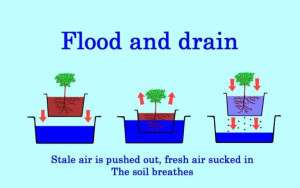
Flood, Drain and Circulation

Think about what is happening here:
  • When I flood the base of the bed, I am expelling the stale air that has accumulated in the soil from biological activity. Rotting organic waste can make growth inhibitors – and we don’t want that.
  • When I drain the bed, I am sucking fresh air back into the soil in the box – I am “breathing” the soil.
  • The soil blood is also aerated every time I cycle the system, creating conditions that favour beneficial microbes.
flood-and-drain-system-colin-austin-gbiota

Reloading (Older Method)

When the crop has finished, I used to refill the box by putting the lid back on, turning the box upside down, lifting the box off and reloading with fresh organic waste – then flipping the old soil back into the box so the soil structure was not disturbed. Note: with the success of compost tubes, this flipping method is no longer necessary.

Gbiota Beds – Construction and Operation

Gbiota beds work on the same principles as boxes: partial flood, drain and recirculate – but the mechanics differ. My strategy is to level the ground first. Hopefully, this gives me a bit of topsoil I can use later. Then I lay out lengths of ag pipe in rows. At the filler end, I pack some soil so the pipe will finish above the final height of the raised bed. At the other end, I make a leaky dam just a bit higher than the pipe thickness. It is sufficiently dense that it takes some time (hours) for the water to drain out when it returns to a sump below bed level. A sump pump in the sump has a float valve, so when the sump is nearly full the pump automatically switches on and feeds the ag pipe from a manifold. This floods the area around the pipe and, when the pump switches off, water wicks through the rest of the bed and drains back to the sump through the leaky dam. Operation is similar to the boxes: wet the soil and seed as normal, then surface-water if needed until the plants have put down roots. After that, irrigate from underneath using the subsurface pipes. All pretty straightforward. compacted-trench-colin-austin-gbiota

Making and Managing Wickimix

Boxes OK

Drilling boxThere does not seem to be much of a problem with making the boxes. They are just boxes you can buy from a hardware store. They do need a few holes drilled, but that does not appear to be a major issue.
Growing Plants OK

Actually growing the plants is usually not a problem either – many people are already growing house plants anyway. The big issue is creating the Wickimix. The main input is organic waste – in an apartment this is typically food waste.

Nutrients OK

But Wickimix needs more than organic waste. It needs some soil, as most of the action is on the surface of soil particles. Clay is especially good because the fine particles have a huge surface area. It also needs a source of nitrogen. Gardeners may have access to fresh chicken manure which is excellent, as it is full of microbes. It is also possible to buy processed chicken manure – this is clean but has lost many of the microbes. PigeonYou can simply put out some bird seeds and the local birds will offer a free delivery service of fresh manure loaded with beneficial microbes. So simple no one believes me, but it works great. Next, Wickimix needs minerals. A home grower may buy in bulk and store them, but an apartment dweller can still buy packets, and supplements like blood and bone can be readily purchased. There doesn’t seem much alternative to buying these, mixing them up and putting them into a box that can be easily stored – no problem. In addition, of course, we need worms, which are an integral part of the Gbiota system.
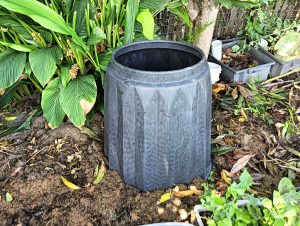
Pongy Food Waste – Not OK

Food wasteThe real problem for the apartment dweller is how to handle the pongy food waste. With a garden this is no problem – a couple of compost bins or rotating bins work fine – but having compost bins in an apartment is very not OK. BinsThe smell problem can be solved by sealed containers, but those pesky flies still seem able to smell out a delicious meal – at least in sunny Queensland where I live.
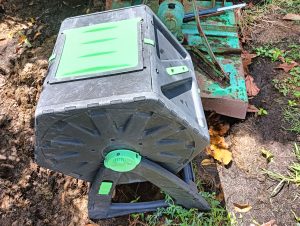
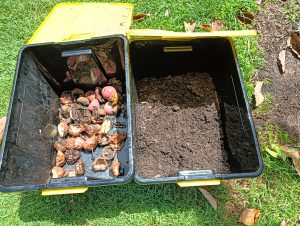
Two Experiments

Experiments over – compost tube won, but I still keep a box of Wickimix to top up the compost tubes after I add waste. Nutrient and waste boxesSo I tried two experiments. In the first, I used two boxes. One contains the nutrient mix and the other is for the waste. When I have some waste, I put it into the second box and cover it with the nutrient and worm mix from the first box. Compost tubeIn the second experiment, I went back to an older system – the compost tube. This is a pipe (about 100 mm diameter) that goes right down to the base of the box. This gives two input pipes: one for the water (or more correctly, soil blood) and one for the organic waste. When I put any organic waste into the compost tube, I cover it with the nutrient mix and also flush with water. This takes any decomposed material to the bottom of the box where friendly worms kindly distribute it throughout the box.
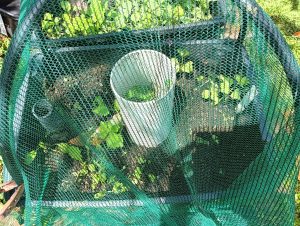
Easy Access

If I can get enough apartment dwellers to start eating food full of beneficial microbes, this will encourage commercial growers to start producing Wickimix and Gbiota boxes. This will make access available to many more people and reduce the number of people having a foot amputated from diabetes – which is what Gbiota is all about.

Wait and See (Update)

Originally, it was a case of “wait and see”. From the viewpoint of the Gbiota system, both approaches work fine for breeding beneficial microbes. The real question was which is the most user-friendly for an apartment dweller. Since I wrote that, I have been using compost tubes with great success. I have some boxes near the house that I just toss kitchen waste into – so simple. I find my favourite yoghurt containers make a really good tight-fitting cap for the tubes to keep out those pesky flies.

Moisture Control, Compost Tubes and Soil Blood

The key to the Gbiota system is controlling the moisture level. If the soil is left full of water for any length of time, harmful microbes will breed. The swivel tube is used to drain the box. We call the liquid that drains out “soil blood”, as it does the same job as blood does for us – circulating nutrients and oxygen around the body. If you look at soil blood under a microscope, you see it is full of microscopic creatures. As the soil blood drains out, it sucks fresh air into the soil. To ensure there is no stagnant water, the box is left for a period after draining. Organic waste is loaded into the compost tube and capped with Wickimix (or soil) and, if needed, worms – then flooded with soil blood, which pushes the nutrients into the base of the box. Soil blood can also be applied to the plants as a foliar feed – nutrients and microbes will be absorbed by the leaves. We apply a fixed volume of soil blood at every irrigation – typically about 15% of the soil volume. We use a highly sophisticated device for this: an old milk bottle. We are into recycling. We control the amount of water input by varying irrigation times. If I am at home, I will drain shortly after irrigating, but if I need to go away I can leave the draining until I return, which increases the time between irrigations. Controlling moisture and nutrient levels is the core of the Gbiota system. There are many articles on this website on this topic and I am always writing new ones. You can always contact me at colin@gbiota.com

Flipping vs Compost Tubes

Flipping was my standard practice. The success of compost tubes means that flipping is almost obsolete for a flat dweller but is still useful for a grower with a garden who is supplying swap-over boxes to other Gbiota growers. I used to use this flipping technique all the time, but now find I can move the compost tubes from place to place, eventually filling the entire base of the box. Commercial growers may still use the flipping technique for refurbishing swap-over boxes, but I think most home growers will prefer the compost tube method. It is also much better for boxes that are too big to flip.  

Loading

Gbiota overview

Save 100,000 legs from diabetic amputation

This is the covering letter and text to my video save 100,000 diabetic amputations


I have set myself the target of saving 100,000 people from a diabetic leg amputation before the end of 2025.

I know how to do this, I am an engineer and engineers take the best available science and turn this into a practical solution.

But that is not enough, I am also an entrepreneur and entrepreneurs ensure that this practical solution is adopted.

I have a track record I was a pioneer of computer-aided engineering and built up a multi-million dollar company from my back bedroom which ensured that my pioneering technology was adopted globally.

I was recognised by the Institute of Engineers as one of Australia’s leading innovators.

The best of science tells us that the epidemic of diabetes, and other chronic diseases is the wrong fat in the wrong place and the underlying cause is our diet, not eating too much fatter sugary food but a deficiency of phyto-nutrients and beneficial microbes which power our gut brain.

I can do it but I need serious help from people who see this as a worthwhile cause and are prepared to commit some of their time.

It is not a question of money, the average cost of a leg amputation is $48,000 so saving 100,000 amputations saves $4,800,000,000 and that is not counting the personal costs and the solution is cheaper than buying food from the supermarket.

What we need is fresh thinking and committed time - priceless.

I have made a video to explain this, please watch

and if you can help email me at colin@gbiota.com


I made this video to help resolve one of the biggest problem facing mankind, our food supply and consequent health.

My short term objective is to save 100,000 people before the end of 2025 from having a limb amputated from diabetes. This video shows how, technically, this can be done - if I can find a way of getting the message out.

When I ask for help from internet marketing experts they tell me I am doing it all wrong, in our modern information society people are dumb donkeys with the attention span of a grass hopper.

Prove them wrong.

True it is long and there are no car chases, sex scenes, half naked ladies frolicking in water falls, or pub fights to grab you attention but I have compromised by adding this preview in the hope that it will inspire you to watch the video through.

This is what to expect.

Stage 1 analyse the facts

First I analyse the facts, and come to the highly controversial conclusion that the issue it not an excess of sugar and fats but a deficiency in gut-brain food.

Simply eating less is not the solution - we need to eat more, of the right sort of food that feeds our but-brain which regulates our bodies.

A healthy gut-brain needs the right sort of microbes in our gut.

Stage 2 develop a solution

But I am an engineer, I use science as a tool to provide solutions which will work for the eight billion people on earth.

So secondly I have to take my analysis and work out a practical solution.

Pro-biotics, even if they work, which is doubtful, is not a practical solution. We need to eat plants grown in living soil full of the beneficial microbes. But the majority of people live in cities, often in apartments with no garden. Where do they get the living soil?

When I suggest that they should put out a tray of bird seeds and the birds will deliver, free of charge, little capsules full of nutrients and beneficial biota people think I am a nutter.

Pigeon pooh has a far wider range of beneficial microbes than any commercial pro-biotic.

Just add it to the soil mix and grow plants full of living biota. Eating fresh baby greens, as a juice or salad before main meals could be the difference between you becoming fat and sick, and like eight million people every year having a limb amputated from diabetes.

Am I a green nutter?

At this point you would be quite justified in thinking I am some sort of green nutter. I can live with that, but I don’t want you missing the message that could save 100,000 legs from amputation.

So not for my ego but for credibility for my augments let me just say I was a pioneer of computer aided engineering, I solved complex coupled partial differential equations that had never been solved before.

I was recognised by the Institute of Engineers as one of Australia's, leading innovators and build up a company that was the countries leading exporter of technical software.

I was recognised as the world leader in my somewhat niche area of computational fluid flow. I was jeered at when I suggested that some flow problems could be solve by using flow channels smaller which goes against common sense but was proved to be correct.

So please just hesitate when I suggest that pigeon pooh may be the practical solution for providing the eight billion people on earth a healthy gut.

Stage 3 How to create a paradigm shift

The scars on my back from trying to introduce paradigm changes ideas show I have learned a bit about how to create change.

So now comes the third and biggest problem of getting widespread adoption.

Innovators, by themselves, rarely change community attitudes.

That is done by a social change where other people try the new technology for themselves, find it works, tell others who form a second tier, then a third and forth tiers develop and what was thought of as a nutty idea becomes the accepted norm.

But even these three stages are not enough, targets have to be set and plans developed to reach those targets.

Stage 4 Setting targets

So let me, before you get down to the body of the video, let me tell you my targets are and how to reach them.

My immediate target is to save 100,000 people from having a limb amputated from diabetes before the end of 2025.

As eight million people a year have a limb amputated this may seem a puny target but it achievable and once the rock starts to roll down the hill it will pick up its own inertia.

So how does the plan shape up.

Diet, and feeding the gut-brain, may be the big issue but genetics still play a part, may be a small part, so some people will not avoid having a limb amputated.

So to save 100,000 amputations we need to 150,000 diabetics.

There is no way I can help 150,000 diabetics myself so lets work backwards.

5,000 people, knowledgeable in the Gbiota technology of growing gut-brain food could each act as coaches to groups of 30 diabetics giving us the support structure for the 150,000 diabetics.

So how do we get 5,000 trained coaches? Well I have been working on the Gbiota technology for many years now and could name at least 200 people who would make excellent coaches to the coaches giving the right incentives.

Motivation

So what is in if for them? The same as what is in it for me.

In a world which has gone crazy where so many people seem obsessed with greed, money and power and kill other humans on an industrial scale the feeling that you are one of the last few humans in existence that is prepared to work for the benefit of other humans.

Humans are the most successful creature on the planet because we are intelligent and naturally cooperative. We enjoy cooperting.

Ok lets start the video


My name is Colin Austin, the founder of the Gbiota movement. I am eighty-four years old, fit and healthy. Most days I go for a long walk in the neighbouring bushland, ride my bike and dig my garden.

I don’t blow my top when medical experts, half my age, tell me how to increase my life span - that is until they start telling me things which are wrong and make things worse rather than better.

Infectious diseases

Let me tell you about life. When I was a kid people worried about infectious diseases. We did not get vaccinated, if a local kid came down with a childhood infection, like chicken pox, our mums would set up a chicken pox party so we kids caught chicken pox, or whatever, and would develop immunity.

It was like a right of passage.

The disease we feared most was polio, I had an aunt who predated Sigourney Weaver in Aliens by having an iron exoskeleton so she could clump around.

Modern non-infectious or chronic diseases, like diabetes, no doubt existed but were rare and most people, including myself, did not even know they existed.

But over the years we made dramatic improvements in medical science overcoming many of these infectious diseases.

But then we replaced these infectious diseases with an epidemic of chronic or non-infectious diseases, in particular diabetes, heart attacks and dementia. This did not happen by some fluke of nature, it was man-made - unintentional, but still man-made.

Science developed a whole range of powerful technologies, like Mass spectrometry and DNA testing which gave us an insight into these chronic diseases. Biochemistry became a highly sophisticated science telling us the most intricate details of the chemicals in our bodies.

The wrong fat in the wrong places

The wrong fat in the wrong place is the underlying cause of these chronic diseases, fat in the pancreas prevents the production of insulin, plaque in the arteries prevents the supply of oxygen to the heart and amyloid plaques lead to dementia.

Eat less exercise more

Medical scientists applied the laws of thermodynamics and conservation of mass, normally the domain of engineers like myself, to the human body with disastrous results.

This led to the widespread view that we got fat because we ate too much and the solution was to eat less and exercise more.

Now while we can debate the wisdom of applying these engineering laws to the human body it totally misses the point.

The real reason why we get fat

Of course, these basic laws apply to the body as well as everything else but eating too much is not the reason why we get fat.

Biochemistry may be an exceptionally powerful tool it is still just a tool which does not get the real reason why we get fat.

It is the wrong tool. A hammer is a very good tool but is not a good tool for smashing open a bottle of wine.

While our bodies must conform to the fundamental laws of physics they are not the driving force that make our bodies work.

Intelligent control system

Our bodies have an intelligent control system which regulates our bodies, particularly how much and what sort of food we want to eat. It starts learning from birth when mum teaches us that her breasts are a good source of food.

It continues learning throughout life. It can sense if we are short of a particular nutrient and learns what type of food will satisfy that need.

We see this in action every time we dig our gardens on a hot summer day. We sweat and lose that complex combination of salts needed in our blood. So when we take a break we do not crave sweet food, even though we have used a lot of energy, we crave foods that will replace those salts.

We see this in people who have been deprived of food - like in wartime. Our control system learns and when food becomes available it sends out signals for us to eat as much as we can and store more fat.

We repeat this with calorie-restricted diets, we are training our control system that it needs to store more fat.

Not little piggies

This is a crunch point, we do not store fat simply because we are little piggies and eat too much, we store fat because our control system is attempting to protect us from food deficiencies by sending out signals, hormones and electrical signals saying ‘eat more’ so it can store more fat.

Eating more is not the cause of people getting fat, it is enabling our control system to store more fat.

Chronic diseases

This is a big deal, chronic diseases have largely replaced infectious diseases as a major health threat. They are now the dominant cause of death, I am told that 80% of deaths are from chronic diseases.

The social and financial costs to modern society are huge.

Eight million people have a limb amputated from diabetes. This may not affect life span but it certainly affects health span and the quality of life.

Deficiencies in our diet

The underlying cause is deficiencies in our modern diet. Our modern food system is a highly efficient producer of bulk or energy food, sugars, fats and carbohydrates - enough to feed the entire world with energy food but it has two fundamental deficiencies.

The simplest to solve is a lack of trace minerals which is easily solved by taking the appropriate supplement - far from ideal - much better to eat the right sort of food but supplements can work.

This is highly profitable for the food and supplement industry which is dominated by large profit-orientated companies so it happens.

Dominant deficiency - gut-brain food

But by far the most important is the food that feeds our intelligent control system - our gut-brain.

Our gut has trillions of cells which communicate with each other providing genuine intelligence.

Our gut brain controls our appetite, manufactures many of the complex chemicals our bodies need and powers much of our immune system.

If you want to have a long and healthy life you just have to feed your gut brain.

Feeding our gut-brain

We need to feed the existing microbes in our gut. This is relatively simple, their main food is fibre which is readily grown.

But that is not enough - we also need to be introducing new microbial life into our gut.

That is much more difficult.

Microbes breed like crazy - there is no problem about breeding microbes. 

Good v Bad bugs

But we need to breed the right sort of microbes - there are a whole spectrum of beneficial microbes we need but there are also harmful microbes which can make us sick or even kill us.

We can solve this by creating the conditions which favour the beneficial microbes so they out-compete and out-breed the harmful microbes.

This is a key part of the Gbiota system but is not our invention - it has been going on naturally for millions of years.

This is relatively easily done, even people living in apartments can grow their own gut-brain food.

One bug year is equivalent to one human year

Microbes may breed very fast but they also die very fast - an hour in the life of a microbe may be equivalent to a human year.

Do it yourself

This is not a problem for the home growers who can have plants growing in containers in their home so they can just pick and eat.

But it is a major problem for the current food system which is based on large centralised growing, often in mono-cultures and with an extended distribution system.

In the short term, people can grow their own gut-brain food. This is a solution for many people but everyone on this earth needs to have a healthy gut-brain.

Local growers

Longer term we need a system of local growers, a totally different scenario from our current food system which is dominated by a small number of very large corporations who dominate the market.

Gbiota - aim number 1

Gbiota’s first aim is to show people how to grow their own gut-brain food.

It is neither desirable nor practical to set up a global operation supplying gut-brain food as a supermarket shelf item.

Profit v health

The big question that people have to ask themselves is this - across the globe people living in a modern society are getting sick and dying from non-infectious diseases which is the result of deficiencies in our food system dominated by a few mega companies dominated by short-term profits.

Is this really what we want?

Our current food system is however very efficient in producing large quantities of energy food, sugars, fats and carbs which are our primary food source.

It is difficult to believe that they would have the desire, let alone the capability of creating a local industry to provide the relatively small, but essential, amount of gut-brain food needed to supply the community with gut-brain food.

Sustainability

We can go to the supermarket and think that the shelves will remain full of food way out into the foreseeable future - so why worry?

The eight billion people on earth generate an outstanding amount of waste which is full of nutrients that have typically been mined and there is a finite supply.

Phosphorous is essential for plant growth and is top of the list for critical minerals which will be exhausted, certainly in the lives of our current children. But this applies, in a less urgent way, to all the nutrients we currently mine.

In the short-term, we can recycle food waste - which is precisely what the Gbiota system does.

But in the longer term we will need a major revolution in recycling waste which is likely to come from reprocessing seaweed which effectively captures all the organic waste which we dump into the sea.

Gbiota aims number 2 - Community action

We can learn a lot about how social movements occur by studying the climate action movement.

This is closely analogous to the food industry with a small number of mega corporations in the fossil fuel industry that were making large profits and had the capacity to influence Governments.

But a climate action started from a little school girl sitting out in the freezing cold outside the Swedish parliament with a grotty cardboard sign.

Now let’s be clear, politicians even from the Swedish parliament, let alone from around the world, did not stop to talk to Greta Thunberg.

But a few people just passing by stopped to talk and thought she had a point.

Then these people talked to other people creating a second tier who in turn created a third then a forth tier. And soon there was a global climate movement which the politician could not ignore.

We must learn from this because having a food supply that keeps us healthy is a sister to climate change.

In a country like Australia which can go from below freezing at night to 40ºC in the day a couple of degrees of warming may not seem worth while worrying about. But it affects rainfall and coupled with the degradation of our soils will inevitably lead to a food crisis.

This will cause unimaginable difficulties, mass migration of desperate starving people, political instability within countries and conflict between countries.

Have no illusions this is something that we all must take steps to avoid, and we have two overridingly powerful weapons - the power of public opinion and the power of the wallet.

So if you share these views why not join the Gbiota movement. You can start by joining the free section of the gbiota.com web. Later you can upgrade, learn how to make Gbiota beds and boxes and participate in our community. 


"I

Loading