Why We Need a Biofoodies Group

Why We Need a Biofoodies Group

For thousands of years life has been getting better. We live longer, are fitter, taller and stronger, and we have gradually been overcoming infectious diseases. The graph of quality of life has been steadily going up.
This improvement comes from technology: sewage systems, fresh water, advances in medical science, and developments in food technology.

From Progress to Decline

But about fifty years ago the graph started to flatten, and about twenty years ago it started to drop. We are no longer living longer. On average we are becoming fatter and suffering from a range of non-infectious or chronic diseases like diabetes and dementia. People in old age are becoming less healthy and more infirm. Technology is having a dramatic impact on human society. It is self-evident that technology should work for the benefit of humanity as a whole, yet this is not universally true. It is creating a society in which a handful of people—the top executives and shareholders of mega-corporations—are becoming excessively rich while a significant proportion of the general population is going backwards.
The earliest diets were nutrient-dense and gut-supportive, but low in energy.

Innovation and Responsibility

I am an innovator in new technology. I was recently acknowledged by the Institute of Engineers as one of Australia’s top one hundred leading innovators for my pioneering work on computer-aided engineering, which literally changed an industry. But I believe that those of us who have had the good luck to be born with an innovative mind and create new technologies have a responsibility to ensure that technology works for the benefit of the human community as a whole, not an already rich few.

Food, Gut Biology and Chronic Disease

I now focus my technical capabilities on studying and experimenting with how the way we grow our food affects our health. Our guts form part of an intelligent control system which manages our body. When healthy, it instructs our bodies to store just the right amount of fat as a food reserve. Modern diets, high in sugars and fats and low in essential nutrients and biology, confuse this control system. It then sends instructions to store excess fat in the wrong places, such as our organs and brains, leading to diabetes, dementia and other chronic diseases.

We Can Grow Better Food

We now have the technology to grow food that restores our gut biology and supports long-term health—but that is not enough. We also need to develop alternative food distribution systems so that this kind of food is actually available to ordinary people, not just a privileged few.

Why We Need a Biofoodies Group

To make real change, we must connect people who care about how food is grown, distributed and eaten. A biofoodies group can bring together growers, innovators, health professionals and everyday consumers who want food that supports gut biology and prevents chronic disease, not food that simply maximises profit. We need communities that share knowledge, experiment with better ways of growing, and support local, nutrient-dense food systems as a practical alternative to industrial, health-damaging food.

Loading

Xiulan’s story

Xiulan’s story

Xiulan was not particularly concerned when she was first diagnosed with diabetes. She was a doctor — a surgeon and gynaecologist — and had confidence in the health system. That changed when she began to lose her sight and fell down a flight of stairs, breaking multiple bones. After a successful operation, the injured area started to turn black and the doctors began talking about amputation. The prospect of becoming a blind cripple was confronting and life-changing.She was told that diabetes was a chronic, irreversible disease that would steadily worsen. She could expect to take stronger and stronger medications and face a higher risk of dying young, possibly from a heart attack. Her husband, Colin, has been recognised as one of Australia’s leading innovators by the Institute of Engineers. He built his company, Moldflow, into Australia’s leading exporter of technical software. Neither of them could accept what they were being told without question, so they set out to discover the root causes of diabetes.

Discovering the Real Drivers of Diabetes

They began experimenting with continuous blood sugar monitoring, looking for patterns in the spikes and drops in blood sugar and trying to correlate them with the foods Xiulan was eating. The results were unexpected and raised more questions about what was really going on inside the body. Colin, now older, thought back to his childhood. At that time, chicken pox, mumps, and measles were common childhood diseases, but diabetes was rare. Today, diabetes is widespread. Around one in three people are diabetic, pre-diabetic, or overweight enough to be at risk of diabetes. In Australia, every few minutes someone has a leg amputated due to diabetes — a situation some have described as the “black death” of the twenty-first century. Trained as an engineer, Colin asked a simple question: in the last fifty years, what has changed to create this modern epidemic? He knew it could not simply be the type of food. In his childhood, people ate plenty of sugary foods — cakes with cream, marzipan, icing sugar — and lots of fats. Dripping (animal fat) on toast was a common breakfast. So what had really changed?

From Soil Biology to Gut Biology

As a schoolboy, Colin worked on a farm to earn money for a racing bike. He saw firsthand how farming practices changed over time. One of his jobs was burying manure and dead animals, and he clearly remembered how this improved the soil for years afterward. Looking back with the benefit of modern science, he realised this was not just about nutrients — it was about soil biology, which in turn affects our gut biology. With his expertise in computers, Colin also saw that it was not just about which species of microbes live in the gut. The microbes communicate and cooperate, forming an intelligent system that acts as a kind of control system for the body. When this system is damaged by toxins and a lack of critical minerals, it goes into “emergency mode”. The body begins to store extra fat inside cells. As these cells swell, it becomes harder for sugar to enter them — the root of insulin resistance. Our bodies can readily convert sugar to fat and fat back to sugar, but when the control system is impaired, this balance is disrupted. At this stage, a person may not yet be diagnosed with diabetes because the pancreas can still produce extra insulin to keep blood sugar under control. This can continue for years, with the main visible symptom being excess weight. The situation becomes serious when fat accumulates inside the cells of the pancreas itself, so it can no longer produce enough insulin. This is the point at which diabetes becomes dangerous and difficult to manage.

The Role of Gut Biology and Living Food

Diabetes is a complex condition with many contributing factors, but damage to gut biology is central. A diet based on food grown in healthy, living soil — rich in diverse microbes and balanced minerals — appears to play a crucial role in avoiding or helping to reverse diabetes. The fact that Xiulan still has good eyesight, both legs, and a significantly improved quality of life, together with research from around the world, supports this view.

From Personal Crisis to Global Mission

Because diabetes has become such a global problem, Colin's goal is to link diabetics and health-conscious people with farmers who practice regenerative agriculture, so they can improve their gut biology and overall health by buying nutrient-rich food at a reasonable price directly from these farsighted farmers. This is about more than just food; it is about rebuilding the connection between living soil, gut health, and human wellbeing.

Loading

Truth vs Misinformation About Food

Truth vs Misinformation About Food

We live in an age of overwhelming and conflicting information — and when it comes to food and health, the difference between truth and misunderstanding can determine whether we thrive or fall ill.


Conditional Truth

My interest is in how food is grown, and it matters a great deal. False information can make us sick and die young, while sound information can keep us healthy into old age.

I was brought up in the world of Newtonian laws — I was taught they were absolute truths. Then along came Einstein with a new set of laws. But they did not replace the Newtonian laws; they showed they were conditional. Newton’s laws work well under certain conditions, but not as absolute truth — yet they remain incredibly useful.

The same is true with food. We may be told bacon and eggs are bad for us, yet we all know someone’s Uncle Joe who ate bacon every day, lived into his late nineties, and stayed active and healthy.

So instead of searching for absolute truths, we should look for what is useful — what keeps us fit and healthy.

I have always had a terrible memory, but I learned early that if I really understood the underlying principles, I didn’t need to remember endless isolated facts. So my interest is in discovering the core principles that actually work.

But before that — we need to talk about how our brains deal with information.

Managing the Information Overload

We are bombarded with information — far more than we can analyse. Evolution has provided us a solution: mental pictures. Call it dogma, belief, habit, culture — I call it a mental picture.

These mental pictures shape how we act. From how we hold our knife and fork, to political beliefs, to religion, to whether we think bacon is good or bad.

They are deeply embedded and very difficult to change. In fact, we become skilled at defending them.

einstein-gbiota-colin-austin

For example, the mental picture that “fat is bad.” If respected experts repeat it often enough, we accept it. Yet we now know certain vitamins are fat-soluble — without the right fats, the body simply cannot access them. Worse, excess salt (sodium) can block access to essential minerals like potassium and magnesium.

This is like Einstein showing us Newton’s laws were conditionally true.

Yes — we need vitamins and minerals. But taking large doses of supplements is not automatically beneficial. We need balance, and we need the right fats so the body can actually use those nutrients.

Nowhere is conditional truth more misunderstood than in the advice:

“Eat Less and Move More”

We know one well-established fact: fat stored in the wrong places is harmful. Pre-diabetes occurs when fat builds up and the body becomes insulin resistant — but many people remain healthy at this stage. The serious damage comes when fat infiltrates the liver and pancreas, leading to diabetes.

The standard advice is to eat less and exercise more. And sometimes, this works. Extreme diets can force the body to burn stored fat.

But this is only conditionally true.

Some people are overweight yet remain healthy. Others follow strict diets only to rebound, becoming even heavier — as though the body “remembers” starvation and stores more fat to guard against it.

It’s not that “eat less and exercise more” is wrong — but it is a conditional truth.

Throughout these pages runs a consistent theme: our bodies are controlled by an intelligent control system, of which our gut microbiome is an integral part.

eat-less-move-more-colin-austin-gbiota

How do we know this for certain?

We don’t — not yet. We know the hormones involved, but hormones are only messengers. The decision-making logic remains mysterious.

So instead, I ask two questions:

  • Does it fit the known facts?
  • Is it useful?


Loading

Truth

Truth

Understanding Conditional Truth

We live in an age of unbridled information — and much of it is conflicting. How do we know what is true, what is false, and why does it matter? My personal focus is food and how it is grown. Here, the truth matters enormously. False information can make us sick or shorten our lives, while sound knowledge can help keep us healthy well into old age. I grew up with Newtonian laws — taught as absolute truth — until Einstein revealed that these laws worked under certain conditions, making them incredibly useful but not universal. The same applies to food. We may hear that bacon and eggs are unhealthy, yet we all know someone like Uncle Joe who ate bacon and eggs daily and lived energetically into his late eighties. Rather than chase absolute truths, we should focus on what is practical, useful, and keeps us healthy. I’ve always had a poor memory, but I learned early that if I truly understand basic principles, I don’t need to memorise endless facts — especially in a world drowning in information. My interest lies in uncovering those basic principles that consistently work. But before diving into that, let’s look at how our brains process information.

Managing Information Overload

We are bombarded with more facts than we can possibly analyse. Fortunately, evolution has equipped us with a way to cope. Call it dogma, prejudice, or a working model — I prefer the term mental picture. From table manners to politics and religion, we all develop mental pictures of how the world works. These guide our decisions so we don’t need to rethink everything from scratch. These mental pictures shape everything — simple habits like sleeping in on Sunday, or complex issues like climate change, diet, and whether bacon is good or bad for us. They are deeply ingrained, and people rarely change them without a strong external force. In fact, people can be very clever at defending them. For example, if influential voices tell us repeatedly that fat is bad, we form a mental picture that fat is harmful. But new science may show that certain vitamins are only fat-soluble. We may consume plenty of vitamins, but without the right fats our bodies cannot access them — and excess salt, for example, can block absorption of important minerals. This mirrors Einstein showing that Newtonian laws were conditionally true, not universally. We need vitamins and minerals (true), but simply flooding the body with them is only conditionally useful. We need balance — minerals, vitamins, and the necessary fats to access them. Nowhere is conditional truth clearer than in the belief that overweight people should simply eat less and exercise more.

Eat Less and Exercise More: A Conditional Truth

One fact is clear: fat stored in the wrong places is harmful. Science firmly links misplaced fat to diabetes. Initially, insulin resistance appears — which affects many people but often causes no immediate symptoms. But once the liver fills with fat and the pancreas becomes overloaded, insulin production drops and serious diabetes develops. Experts often advise eating less fat and fewer calories, arguing that carbohydrates easily convert to fat. This is conditionally true. Some people reverse diabetes with extreme diets that force the body to burn fat aggressively. But it misses an essential point. Throughout history there have been overweight people who are not diabetic and live active, healthy lives. And many who attempt extreme diets end up gaining more weight later, as if the body is trying to protect itself from future starvation. The issue is not that “eat less, exercise more” is wrong — nor that “eat more, exercise less” is right. It’s that both perspectives are conditional truths. Across all these discussions, a common theme emerges: the body is regulated by an intelligent control system, deeply connected to our gut biology. Do we fully understand this system? No. We understand hormones like ghrelin and leptin, but they are only messengers. We don’t yet know how the control system interprets information and decides what to do. Throughout these pages, I ask two key questions: 1. Does it fit the known facts? 2. Is it useful?

Loading

Gbiota beds – manual

Gbiota beds – manual


Gbiota beds

Gbiota beds were developed to help restore gut biology which is really the control centre for our bodies. Trillions of cells communicate with each other to provide intelligence which determines, with our head brain, our appetite and how much food we store. They work on the flood and drain principle in which a compost tea floods the root zone on a regular basis. Minerals in the soil are broken down by the soil biology so they are readily available to the plants. We have a nutrient rich biologically active soil and health starts in the soil. They were developed from Wicking Beds, which are still a very viable system for the home gardener, but Gbiota beds are better suited for larger commercial style growing for health conscious people. Open beds - e.g. beds made directly in the soil, are suitable for larger areas while closed bed, e.g in closed boxes which may be more suitable for green or shade houses for insect and climate protection. The principles are the same for both systems. Clean waste can be placed in the compost area or if there is a danger of contamination the compost can be pre-fermented or if there is a health risk from contamination even used to grow compost crops which are harvested for compost. A pump is place in a sump  below the bed levels and a timer (or from a solar panel with shade panels for timing) used to flood the base of the beds flooding the root zone with the nutrient rich tea and the beds then allowed to drain.  

Loading

Food basics

Food basics

Humans are the most successful creature on the face of the earth. There are 7.9 billion of us, because of our intelligence. Our tools and technology are only part of the story, we also work cooperatively together for our mutual benefit. At least most of the time. The internet and our TV screens are the wonder innovation of our time. By providing the public with access to the vast pool of world knowledge they should be creating equality throughout our society. And in the early days of the internet they certainly were. But no longer, they have become the centre of deception with manipulative promotions to sell product that don’t provide any benefits for the bulk of us humans – just benefiting a few already rich people. Nowhere is this more true than in food, despite years of advancement in medical science leading to a steady increase in life span we are now actually dying younger and worse become decrepit and infirm in our old age. Diabetes, dementia and obesity are everywhere and the health epidemic has been described as the black death of the twenty first century.
The web has created a culture of instant gratification – just pop a pill, gobble down an energy bar or get stuck into a pre-made or fast food meal. The modern health epidemic is man made based on the myth of instant gratification. It is an inconvenient truth but if we want to be healthy we have to eat food that will make us healthy, and that includes food that will feed our gut biota. Health begins in the soil. On this web I explain how to grow food that will feed your gut biota. I explain how to make Gbiota beds which were developed specifically to feed your gut biota. My article “Truth” talks about how to know what is true or a con. I explain how you can make Gbiota beds and grow your own food yourself or how to create a food group of biofoodies to persuade a local farmer to grow for you – and it will probably cost you less than the food you are currently buying. You don’t need to give up delicious food but you do have to feed your gut biota. With a healthy gut you will probably find that you no longer crave food and can forget about sticking to those diets that never work long term. But there is no instant gratification – whether you grow your own food or form a biofoodie group takes a bit of effort. That’s simply the truth and no clever marketing can disguise the truth. I have spent my life in technology and innovation and believe it can bring great benefits for humanity but the way it is being misused is creating the sort of world which I, and more importantly my grandchildren, will have to live in. I was recently selected by the Institute of Engineers as one of the top one hundred innovators in Australia for my pioneering work on computer aided engineering. Now lets be clear – being a successful innovator is not just about having a brilliant mind, in fact I have a mental defect – I have a terrible memory. My spelling is awful, my grammar can best be described as creative. At school I was terrible at languages but good at science by a simple trick. I learned that if you really understood the basic underlying principles you simply did not have to memorise all that mass of facts – you could just derive them from the underlying principles. But by really trying to understand the basic principles you sometimes see that they are just not really true – you end up becoming a paradigm buster which is what innovation is really all about. And nowhere is this more true than in food. What we are told about food, particularly by the mega corporations, is not just not true – it is damaging our health, making us decrepit and infirm in old age and making us die young. This web site is my attempt to change that. There is a lot of information on this web which is the result of my thinking about food, how we grow it and how it affects our health. I have been writing articles about food for many years now but I have tried to arrange them in a logical sequence so you can follow my thinking. I am sorry, I am not a marketing wiz kid coming up with magic three word punch phrases, if you want to follow my thinking and appreciate my findings there is just no alternative to doing a bit of reading and thinking yourself. It is all for free and I have solution which if you are into gardening you can do yourself and if not you can get a local grower to do for you, you will need to pay him – but probably less than what you are paying already for the pseudo food you are already buying. But I am not your mummy, if you want to go onto the internet and buy magic pills and potions, either with a long chemical name or from some secret herb coming from the remote jungles of the Amazon or the heights of the Himalayas that’s your choice. It’s your money you are wasting – not mine. The most important article shows how we need to rethink food. It tells the story of our evolution in a simple but hopefully entertaining way – it is called Food for Health 21 Dec 2019 and you can access it here as a .pdf:    

Loading

Food for health

Food for health

What is Gbiota food?

Gbiota food was developed to provide the trace minerals and beneficial biology essential to health but missing in our modern food system. It has much in common with the food eaten in the Blue Zones, where people regularly enjoy an active life into their nineties or hundreds simply by eating a largely plant-based diet grown in nutrient-rich, biologically active soils not degraded by modern agriculture. They don’t rely on fancy diets—just the natural intelligence of their gut and head brains, letting their internal control system decide what and how much to eat. Gbiota food is not a replacement for your usual meals, and there is no strict diet. It is typically eaten before each major meal, allowing your natural internal signals to regulate appetite and food choices. 
This site explains how food affects health, how to grow food that improves health (regenerative agriculture), and how people can buy healthy food directly from regenerative farmers.

Intelligent control system

Everyone has an intelligent control system that manages how much and what food we want to eat and how much and where we store fat. It has three main components: our DNA (which we cannot change), our subconscious head brain, and our gut biology—our “second brain.”

DNA

Babies are typically born chubby so they have a fat reserve. As children, they become skinny as their food intake fuels rapid growth and constant movement. As young adults, males develop muscle and store fat around the hips to fuel hunting, while females store fat more broadly to support feeding babies. As we age, we tend to accumulate more fat because it becomes harder to obtain food. This is simply how humans evolved—and we can't change that baseline biology.

Our head brain

Our head brain stores subconscious memories about food and how our body reacts to it. If we had a terrible overripe tomato as a child, that memory remains and influences our preferences. But we can overwrite these associations by consciously retraining ourselves—like eating fresh, delicious tomatoes to replace earlier bad experiences.

Our gut brain

Our gut brain—or Gbiota—is made up of trillions of microbes that communicate with each other, creating a form of collective intelligence. Good gut bugs digest food, support immunity, and help regulate appetite and fat storage. They are essential partners in health—we cannot live without them. But there are also harmful bugs that make us sick. While humans have been effective at killing bad bugs, we have also unintentionally harmed our good bugs through modern food and chemicals. This disruption has led to an epidemic of “fat in the wrong places”—diabetes, dementia and obesity. We must look after our microbial partners—feed them healthy food and avoid killing them with toxic chemicals. Our gut biota forms an intelligent system. They communicate, adapt, and influence our cravings, hunger levels, and fat storage. We must eat not only for our own body's needs, but also to feed those trillions of microbes that act as our gut brain. Modern food is energy-dense—fats, sugars, carbohydrates—and low in key minerals, vitamins, and gut-brain food. Gbiota beds™ were developed specifically to grow gut food. This site includes full instructions so home gardeners can build their own Gbiota bed. For people without land, time or gardening skills, the focus is on buying gut-healthy food from specialist growers. I promote the idea that humans have an intelligent control system that regulates appetite and fat storage. Our gut biota is a critical part of this system—but our modern food supply is failing to feed it, leading to cravings and chronic “fat in the wrong places” diseases. My aim has been to develop a system for growing food to feed the gut biota—hence, Gbiota beds.  

Loading

GBiota Green Smoothies

GBiota Green Smoothies

Dietary advice can appear to be totally confusing with so many different opinions: low fat, low carb, low meat, low eggs and more. One reason for this lack of clarity is that we are simply all different. Some people will never get fat and sick whatever they eat, while others go to extreme lengths to avoid putting on weight.

What the Blue Zones can teach us

Then, to confuse matters even more, we have the Blue Zones where people have no knowledge or interest in weird diets yet are fit and healthy to a ripe old age. They have no idea of the importance of trace minerals like zinc, chromium, selenium or iodine; neither do they think about their gut biology. They simply have nutritious soil by recycling and composting all their waste and picking and eating their vegetables without delay. This must tell us something. How do we make sense of all this?

Head brain, gut brain and natural self-regulation

We could read Dr. Mosconi's book about brain food or any of the many other books on brain and gut health. It then becomes clear that we have an inbuilt control system in our head and guts which regulates how much and what we eat. It has worked perfectly for millions of years. People in the Blue Zones are fit and healthy into their nineties because they are feeding their guts and brains food which is healthy for guts and brains, so they have no need to think about diet—their brain systems naturally regulate what they eat. Conversely, the reason why we have such a health crisis in so-called advanced countries is because we are eating a diet which is incredibly harmful to our guts and brains. Because our head and gut brains are not being fed healthy food and our diet is lacking essential minerals, our control system goes into panic mode and we develop almost irresistible food cravings—so we go and eat more sugary, fatty foods. We try and fix this by restrictive diets when we should be feeding our gut and head brains the food they need.

The Gbiota green smoothie: a simple first step

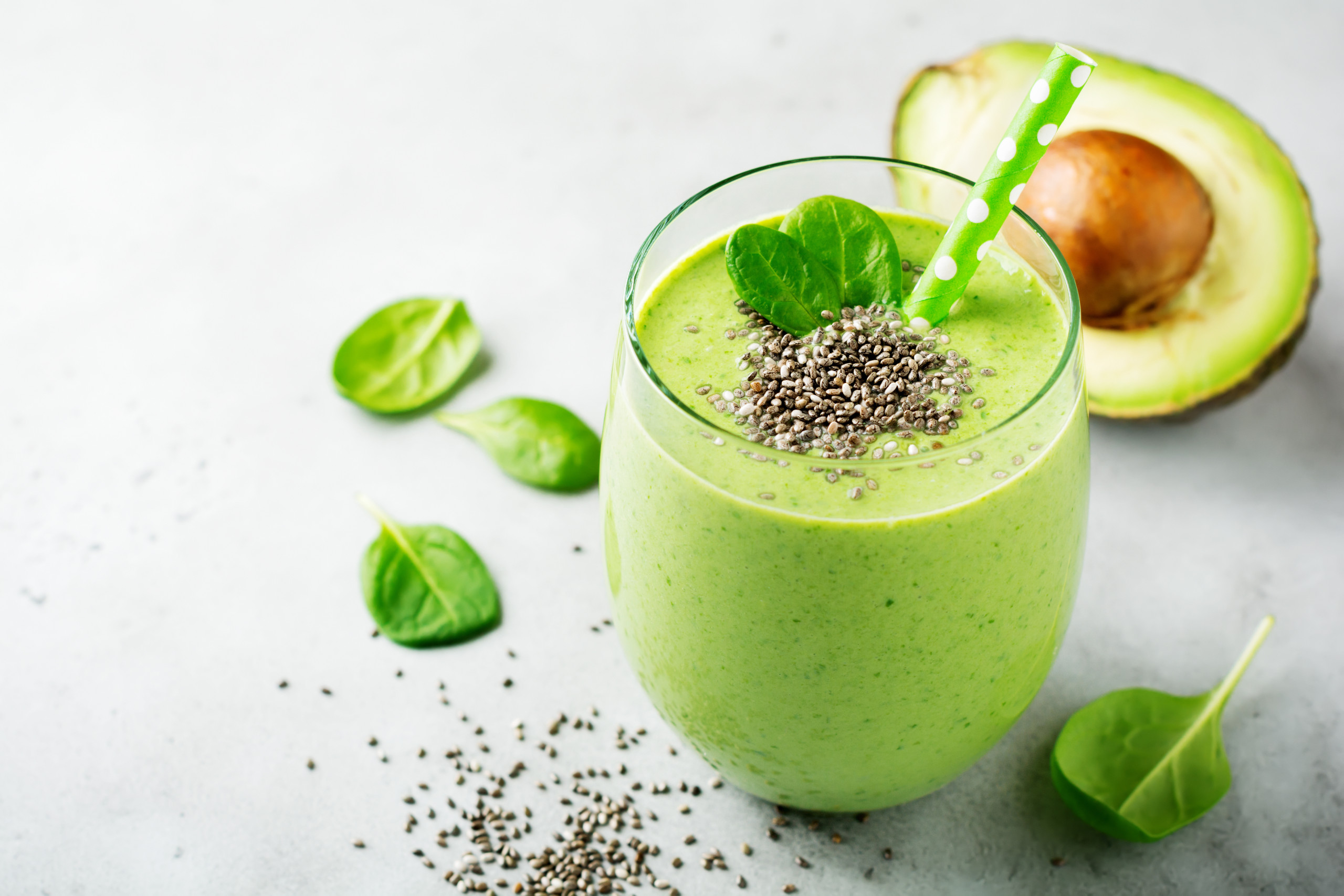
The solution is to focus on eating food that will make our guts and brains healthy and stop worrying about weighing our food to the nearest gram to control calorie intake. The easiest and most convenient food to feed our guts and brains is the Gbiota green smoothie. It is made by simply harvesting fresh greens using the tipping system, making it taste good by adding a little fruit and some herbs and spices, and then seeing if this can restore our gut and brain health so our bodies self-regulate. This does not involve any major change in the foods we have learned to love, even if they are unhealthy. We just drink a smoothie before and while we eat our normal food and simply see if our natural control system cuts in to regulate what and how much we want to eat. Will it work every time? We simply don't know as everyone is different, but it is so simple and easy to do that it should be the first step in improving health by diet. If it does not give the desired results then we have to adopt the more complex systems of changing our diets to restore our gut and brain health.

Why the Gbiota green smoothie is so effective

When we eat the normal modern high-sugar diet our blood sugar levels rise. Our bodies sense the high sugar levels and release insulin, which allows the sugar to enter our cells and reduce the dangerously high sugar levels. This is our intelligent body doing its job. The blood sugar levels drop, as intended, but there is still insulin in the system so we experience what engineers call “overshoot”—the result of the excessively high sugar levels our bodies have not evolved to cope with. As our blood sugar levels now drop below normal, we get sugar cravings and want to eat more sugary food, so we end up in an unstable cycle with our blood sugar levels swinging from too high to too low in a totally unstable way. Eventually we become so used to insulin that it stops being effective and we have insulin resistance, which is the start of the slippery slope to serious diabetes. But the vegetables in a green smoothie act as sugar blockers which slow the rate of sugar entering our bloodstream, so they act as a sort of damper, bringing stability to the system. We are eating sugary food in the first place because our gut biology has adapted to high sugar levels and so the sugar-loving bugs have become dominant in our guts, making us want to eat more sugary food. When we consume veggie smoothies on a regular basis, the veggie-loving bugs in our guts gradually out-compete the sugar-loving bugs so we just stop craving sugary foods. Once we have changed our gut biology we no longer have to adopt strict diets—we just have to listen to what our healthy gut biology is telling us. The biggest mistake the diet industry has made is to think of the human body as just a bunch of dumb biochemistry when in reality it is an intelligent system.
 

Loading