For the past twenty years I have been working to change how we grow and think about food.
I pioneered Wicking beds, gave them their name, and watched them spread around the world —
often with technical misinformation that I now hope to correct. I am writing a book about how we need to change our food industry, soil health, and how we grow nutrient-dense food.
The Global Spread of Wicking Beds
Twenty years ago, Wicking beds went viral online and became a popular water-efficient growing system worldwide.
They are used in gardens, farms, and urban food projects, but often with inaccurate information.
I am looking for people with photos and stories of their Wicking beds — how they learned about them and their experiences —
to include in my book on sustainable growing systems.
From Wicking Beds to Gbiota Beds
Since those early days, I have focused on modifying the Wicking Bed design to grow “gut food” —
natural pre and probiotics essential for gut health. These improved systems are now called Gbiota beds.
They breed beneficial soil biology using organic waste.
They grow natural gut-supporting plants that help regulate appetite and metabolism.
They offer a low-cost, sustainable method of producing nutrient-dense food at home or in community gardens.
We know that our gut controls appetite, manufactures key chemicals for body repair,
and supports the immune system — but it must be fed with living, biologically active food grown in living soil.
Why This Message Didn’t Go Viral
After the success of Wicking beds online, it seemed obvious that Gbiota beds —
a simple method of improving gut health and health span — would also go viral.
But that didn’t happen.
People are overwhelmed by an internet full of manipulation, misinformation, and high-pressure commercial content.
How the Internet Changed
The internet, once a reliable public information resource, has increasingly become dominated by advertising algorithms
and data-driven manipulation. Personal information is harvested, truth is distorted, and large monopolistic corporations
now control much of what people see online.
Understanding how digital platforms have changed — and what this means for human health, food security,
and the future of regenerative agriculture — is central to the story I want to tell.
A Call for Community Stories
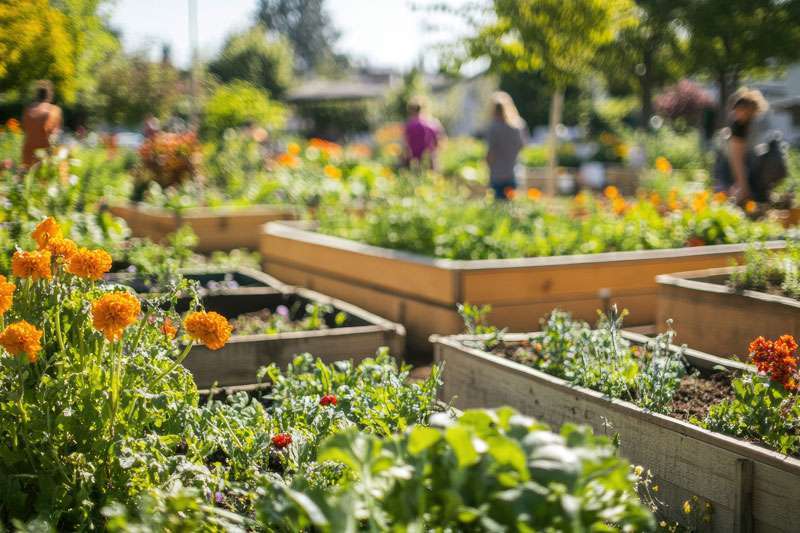
I am collecting real-world stories from gardeners and growers who have built Wicking beds or Gbiota beds.
Your experiences, photos, and insights help document how these systems support gut health, soil biology,
and sustainable food production.
The trillions of cells in our guts do more than digest food. They form part of an intelligent control system that manages how our bodies store fat.
We need to store fat; this is natural. But if the control system is not working correctly, fat is stored in the wrong places — in vital organs such as the pancreas (diabetes), in the brain (dementia), or throughout the body (obesity).
When the gut control system is damaged, the body stores fat where it harms rather than protects.
Science has not yet fully explained how this intelligent control system works. People exist on a spectrum: some can eat anything and remain slim; others struggle despite strict diets.
However, we can learn from the world’s “blue zones,” where people live long and stay healthy into old age. What these communities share is simple: they eat vegetables grown in nutrient-rich, biologically active soil, free from toxic chemicals.
Healthy soil produces healthy plants, which support a healthy gut, which supports a healthy body.
The Gbiota™ bed technology was developed based on observations from traditional societies to enhance gut biology. Eating food grown in a Gbiota™ bed does not guarantee the prevention of diabetes, dementia or obesity, but it may improve the odds. And results can be assessed personally by observing changes in gut function and appetite control.
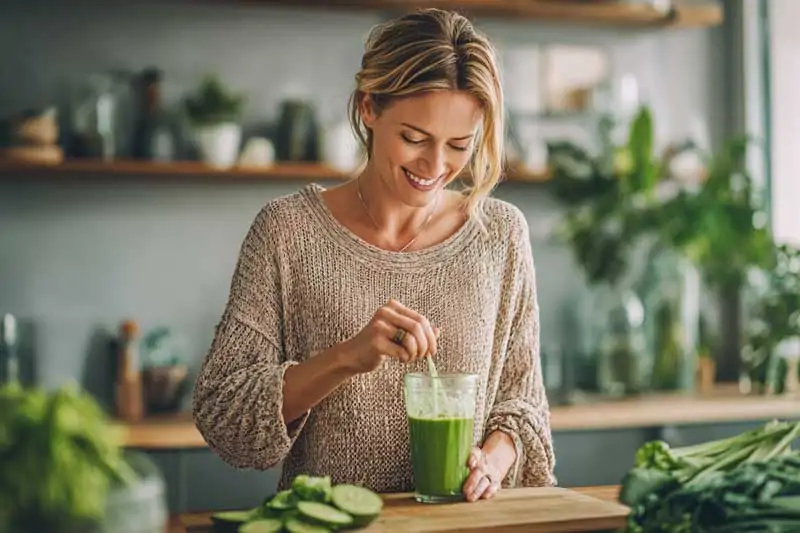
I enjoy food and experience cravings. But every morning, I drink a green smoothie made from Gbiota™ food. I stop feeling hungry and my gut function improves. You can test this yourself.
The Gbiota project shares practical knowledge on growing “refurbishment food” that supports gut biology and long-term health. The core idea is simple: modern diets are high in energy (sugar, fats, fast carbs) but low in minerals, phytonutrients, fibre, and living biology. That imbalance drives cravings and chronic disease. Gbiota beds focus on biologically active soil and mineral-rich inputs so home gardeners and commercial growers can produce nutrient-dense greens that help restore appetite control.
What the Gbiota project is
The aim of the Gbiota club is to share expertise on how to grow food that supports health. Anyone can participate, from people who want to grow a few trays or beds of greens at home, through to growers producing at commercial scale.
The Gbiota system is a way of growing food in a highly biologically active soil, with the specific goal of supporting gut biology and helping provide the phytonutrients and trace minerals that are essential for health. The system grew out of earlier practical growing innovations and is designed to be simple enough for experienced home gardeners, while also being economic enough to be used by commercial producers.
The real-world problem the project addresses
In a relatively short period of time, the pattern of human death—and more importantly how healthy we are before we die—has changed dramatically. Infectious diseases used to be the most common cause of death. Today, infectious disease is a small fraction, while chronic (non-infectious) diseases such as heart attacks, diabetes, strokes, and related conditions dominate. These chronic diseases now account for the great majority of deaths.
For many generations average age at death steadily increased. Now the warning signs are different: the “years alive” may not be the only issue. The bigger concern is that many people are less healthy in later years, and chronic disease is appearing earlier. This is not just a personal health issue; it is a societal systems issue.
Why we are becoming less healthy
The main drivers are not mysterious. They sit in plain sight, but they are often discussed separately instead of as one joined-up system. The root problem is a misapplication of technology: agriculture and food processing have become extremely good at producing cheap, high-energy food, while steadily stripping out what the body needs for repair, regulation, and resilience.
1) Reduced nutrition in modern food
The first driver is a reduction in the nutrition of modern foods. This is the easiest to discuss because nutrient content has been widely studied by many researchers. Across multiple lines of evidence, modern diets tend to be lower in trace minerals and protective plant compounds than traditional diets built around fresh, diverse, minimally processed foods.
2) Modern foods overload the diet with fast energy
The second driver is not only that food is less nutrient-dense, but that it is often loaded with added sugars, salts, fats, and fast acting carbohydrates. These combinations are highly palatable and easy to overconsume, and they create a diet that is rich in energy but poor in “refurbishment”.
3) Gut biology and appetite control are being disrupted
The third driver is the gut biome (gut biota). Modern food patterns tend to reduce the diversity and resilience of gut biology. The gut biome is not just passive “flora”; it behaves like an intelligent system that influences hormones, appetite, cravings, inflammation, and immune function. This is not a fringe concept—one of the strongest practical demonstrations is how dramatically metabolism can shift when gut ecology is altered in medical settings (for example, the well-known outcomes seen in faecal transplant research).
A key point is evolutionary: the appetite control system developed in a world where food was often lower in energy but higher in natural nutrients and living biology. There was little pressure to evolve a precise “mineral dashboard” that tells you exactly which micronutrient you are short of. Instead, the system tends to send a broad message: eat more. In a modern environment where cheap, high-energy foods are everywhere, that message can drive overeating.
Citizen research, and citizen action
The Gbiota project is more than citizen research; it is citizen action. Citizen research is often criticised because it cannot compete with specialist laboratories using electron microscopes and DNA sequencing machines. That criticism misses the point. The goal is not competition. The goal is complementarity.
The internet now gives citizens access to published research, clinical insights, and global experience. That access allows people to integrate knowledge “top down” and apply it “bottom up” in gardens, kitchens, and communities. This is how practical systems improve: by repeated trial, shared learning, careful observation, and honest reporting of what works (and what does not).
The first step is to define the real-world problem clearly: chronic disease has replaced infectious disease as the dominant health burden, and it is strongly connected to food quality, food processing, and the ecology of the gut. Once that is recognised, the next step is to act in ways that are practical, measurable, and scalable.
Food, not pills
Commercial prebiotic and probiotic pills do not appear to be consistently effective in real life for most people, and they are certainly not cheap. Food is a more powerful lever because it does two things at once: it introduces helpful biology and compounds, and it also feeds the beneficial organisms so they can out-compete less helpful organisms. This is the ecological principle of competition, applied inside the body.
There is strong evidence that diet can shift gut biology. Traditional diets in multiple regions show markedly different gut profiles compared with modern Western diets. The direction is consistent: diverse, fibre-rich, minimally processed diets tend to support a more diverse, robust gut ecosystem than diets dominated by ultra-processed foods.
The number one aim of the Gbiota approach is to improve gut biology through diet. Mineral and phytonutrient enrichment can help address deficiencies, but the core issue is ecological: improve the conditions so beneficial gut biology thrives.
Supplementary food: restoring balance rather than chasing extremes
A practical point: it is not necessary (or realistic) for most people to replace their entire diet overnight. The aim is to restore balance by increasing the proportion of biologically active, nutrient-dense “refurbishment” foods.
Food gives pleasure because hormones have evolved over millennia to motivate eating. Traditional diets tended to be lower in energy density but higher in natural nutrients and fibre, which helped appetite control operate smoothly. Modern industrial food systems have become exceptionally good at producing energy foods—especially grains and refined carbohydrates—at huge scale. This has helped feed a growing population, but it has also upset the balance by crowding out the foods that support repair, regulation, and gut ecology.
When the refurbishment and biology proportion falls too low, cravings rise, overeating becomes common, and chronic disease follows. Mechanical “eat less” advice often fails because appetite is not simply a conscious decision; it is heavily driven by gut-brain signalling. Improving gut ecology is a more realistic way to influence appetite over the long term.
What a Gbiota bed is designed to do
The Gbiota system grows plants in a highly biologically active soil. The aim is to produce food that supports gut biology and also delivers a stronger spectrum of phytonutrients and trace minerals. In practice, this includes building living soil, maintaining active microbial cycling, and using mineral inputs where needed so plants can build better “refurbishment chemistry” rather than just bulk biomass.
Gbiota beds can be used by experienced home gardeners, but the broader goal is scale: commercial growers can produce meaningful volumes of refurbishment food for people who do not want (or cannot) grow it themselves. This matters because the health problem is global and large. Home growing is valuable, but it will not reach everyone on its own.
Growers, economics, and the missing link
Many growers want to adopt regenerative, biologically based production. The obstacle is not belief; it is economics and market access. Modern supermarket distribution systems make it difficult for small growers to compete, even when they are producing higher quality food. If the goal is to combat diabetes and chronic disease, the contribution of commercial growers is essential—and the system must make it profitable for them to do the right thing.
The three stages of the Gbiota project
Stage 1: Build a practical knowledge club
Form a group of keen gardeners and growers with an interest in health. Set up Gbiota beds, share results, contribute improvements, and pool expertise to refine the system. Evaluate outcomes honestly—especially anything that seems to influence appetite, digestion, energy, and wellbeing. The goal is not perfect lab science; it is practical, repeatable outcomes combined with transparent learning.
Stage 2: Spread the word through real experience
Encourage members to share practical results with friends and local networks. The strongest message is not marketing; it is lived experience: better food, grown differently, eaten regularly, with clear and relatable benefits. People can be encouraged to grow some of their own refurbishment food, even if only a small amount at first.
Stage 3: Support commercial adoption
Encourage commercial growers to adopt Gbiota methods to supply people who are not growers. Growers will only adopt new systems if there is reliable demand and a clear way to differentiate their product. This stage is about market signals, relationships, and community-scale buying patterns that make “health-focused food” viable as a business.
Bottom-up push and top-down pull technologies
With all our sophisticated technology, it is reasonable to ask: how did society end up eating food that makes people less healthy as they age? One answer is that modern innovation is often highly reductionist and specialised. It optimises parts of the system (yield, shelf life, processing efficiency, marketing performance) while failing to protect the whole system (soil biology, nutrient density, gut ecology, and long-term health).
A key gap is the “soil to gut” pathway. There is abundant information on soil biology, and an even larger body of information on gut biology. What is rare are practical, integrated explanations that connect the whole chain: soil ecology → plant chemistry → food handling → gut ecology → appetite hormones → health outcomes. That missing integration is exactly where citizen action can help.
A recommended starting point
One highly recommended talk is by David R. Montgomery. It clearly explains how improving soil biology can connect to improved gut biology and better health outcomes. It is an inspiring introduction and helps frame why living soil matters for people, not just plants.
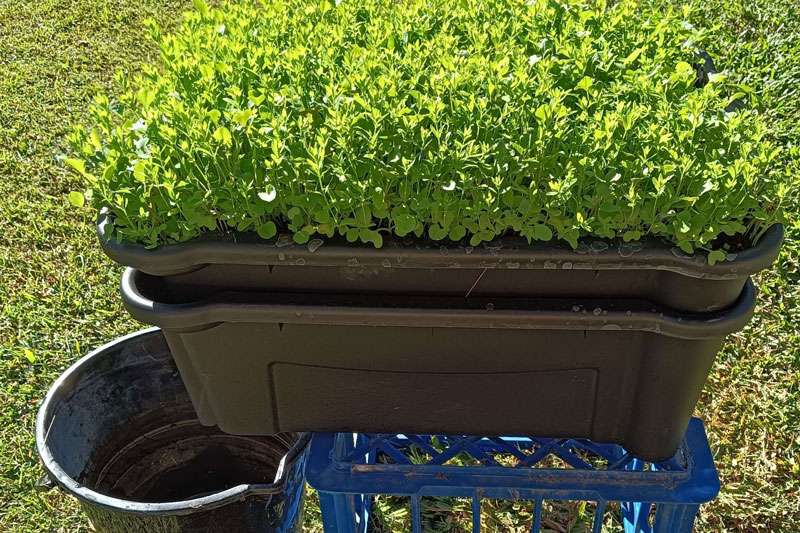
Many people have asked about the depths of the beds. The rules are pretty simple. The reservoir zone should always be less than the maximum wicking height of water in that medium. If you make it deeper then the water will never be pulled out of the bed and you will be left with a stinking mess in the bottom of reservoir. Generally a good depth is 300mm but it can be less, in which case you will simply have to water more frequently.
The depth of the upper soil bed depends on the root depth of the plants, obviously deeper rooted plants will grow successfully with a deeper bed, but may required overhead watering for a bit longer while the roots gets established.
For vegetables a depth of between 200 to 300mm is common. The great thing about vegetables and other plants is that for the most part the use of heavy machinery is not needed.
If you make this upper bed to shallow then the surface may be wet which will encourage fungi and moulds in some plants.
If you want to use a high bed to save stooping then you should fill the bottom of your container with some suitable material to raise the base of the bed so the bed itself is not too deep. Any fill will do as long as it is not sharp and will cut the plastics.
If you have a waterproof container, and I see that iron containers, like water tanks, are becoming very popular then you can simply place a stick down the side of the bin so there is a good drain for the excess water to escape. Good drainage of the top soil layer is critical for making wicking beds successful.
If you are using an open wicking bed, as used of fruit trees or deep rooted plants, when the water wicks up, then sideways and downwards outside the bed, then keep the lower layer at about 300mm (or less) and leave about 100mm for the water to wick up and over the side.
The microbes in our gut are critical for our health but in an effort to feed the ever increasing population and avoid infectious diseases we have adopted a food system which no longer breeds the beneficial microbes we need. But we can modify the traditional way we bred microbes by carefully controlling the conditions so the beneficial microbes out compete the harmful microbes. This is a powerful tool in combating the current epidemic of chronic diseases.
Our intelligent control system
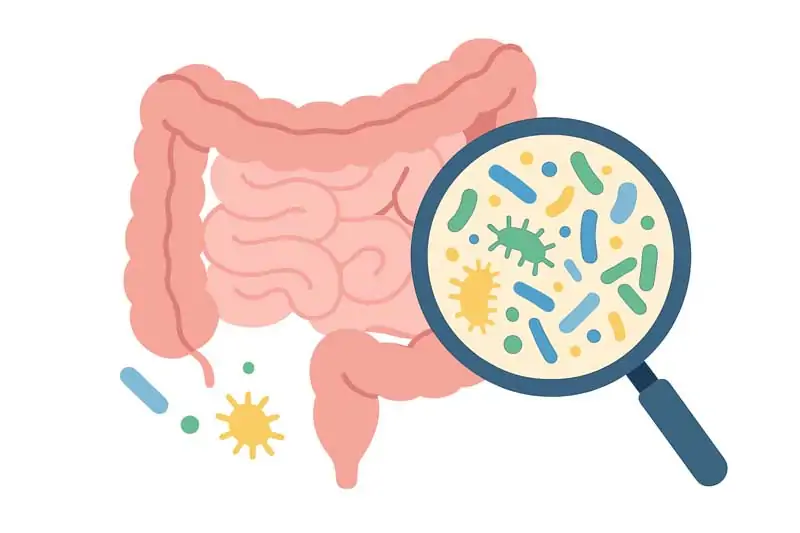
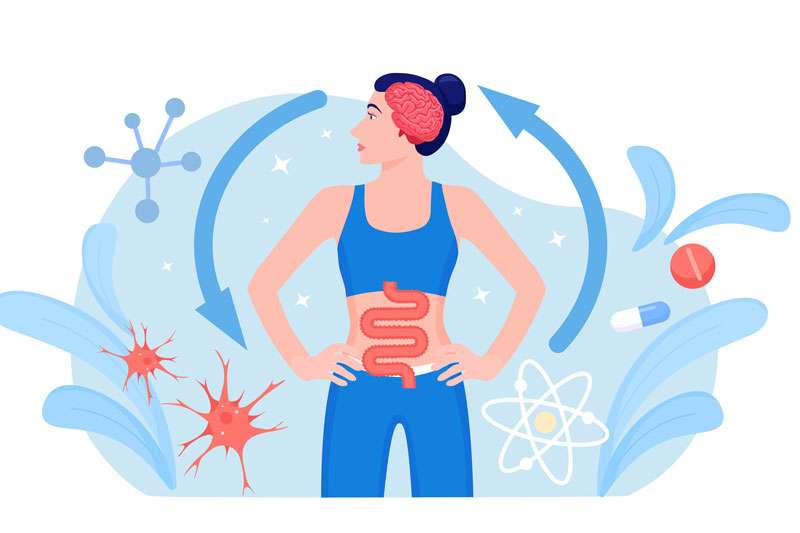
The microbes in our gut do much more than digest our food; they communicate with each other and our head-brain to provide the intelligent control system which regulates our bodies and determines our overall health.
Initially, the microbes may first come from mum at birth and then from her milk, but after that, it is from our food.
Historic food production
Historically, our food was grown under natural conditions in soil teeming with life from the creatures of the soil, like the worms, larvae, beetles, fungi, right down to the microbes themselves.
This certainly provided a broad spectrum of microbes, including the beneficial microbes we need to keep ourselves healthy, but often also contained harmful microbes which made us sick or even killed us.
Change for the worse
To increase production to feed the ever-growing population and to avoid the harmful microbes, we changed to chemical farming, which meant we lacked the critical beneficial microbes.
We have tried to overcome this by the use of probiotics, the breeding of known beneficial microbes under tightly controlled laboratory conditions.
We need a full spectrum of microbes
However, this has limitations, only a small number of the naturally occurring microbial species are incorporated, they often fail to reach the gut, and even if they do, they do not reproduce because of a lack of fibre in the diet.
This has led to the idea of studying the natural process of breeding microbes in the soil, so it can be mimicked, but without the danger of breeding the harmful microbes. This is intrinsically a very simple and effective process: breed the microbes in the soil under controlled conditions, grow plants in the soil so the microbes enter the plants, then eat the plants while fresh before the microbes die.
This leads to a broad spectrum of microbes, which is highly beneficial, while any harmful microbes are simply outbred by the beneficial microbes.
The Food Trap
The shops are full of food, often from the other side of the world, so always in season. It tastes good and is hygienically processed and wrapped.
So what could possibly be wrong?
To help us understand what is rather a sneaky situation, we can compare the food our bodies need with an aeroplane.
Fuel or Energy Food
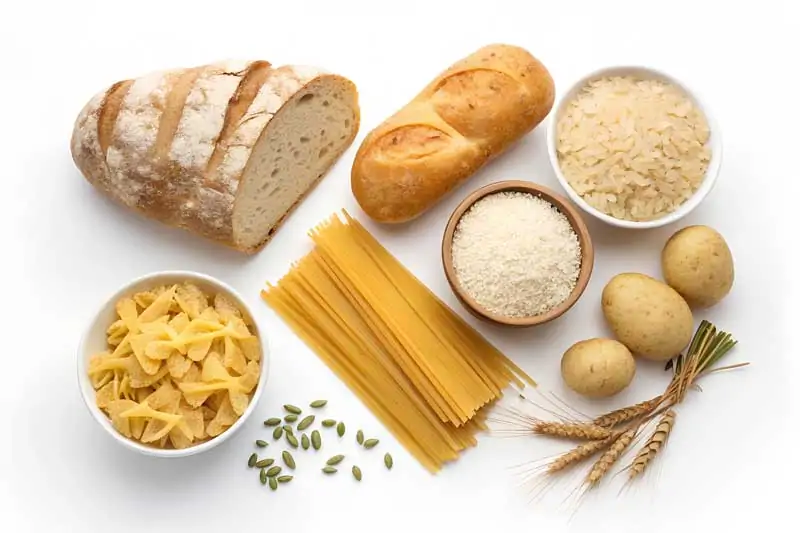
They both need fuel, and in large quantities. For us, it is mainly carbohydrates, sugars and fats—simple chemicals, largely consisting of carbon and hydrogen, which we burn off to release energy.
80% of the food we eat is simply burned off for energy. We have been amazingly successful in producing energy-dense food. The human population may have rapidly expanded, doubling every fifty years or so, but our production of energy food has expanded even faster.
There is no shortage of energy food. If some people do not have enough, it is not because of a shortage of energy food but a political problem of inequality.
Body Building and Replacement Food
Both an aeroplane and our bodies are complex machines which need a lot of input to build and replace all the parts. The picture here is not quite so rosy.
The total amount of nutrients in our food has not expanded as fast as the population, and there are some deficiencies in our diet. Most people are a little short of magnesium, women lack iron, and men lack zinc. There are a few trace elements and vitamins where we are falling behind.
There is still plenty of magnesium, iron, zinc and the other trace minerals available. The problem is more one of awareness and education rather than a physical shortage.
The Pilot and our Intelligent Controls System
An aeroplane needs a pilot—even a drone has a remote pilot—who is in charge of reaching the destination safely.
The pilot has instruments for fuel level, weather conditions, the presence of other planes or obstructions, and tools to control the plane. This is a highly skilled operation requiring extensive training and practice.
Our bodies have a similar control system made up of both our brains. Yes, we have two brains. Our head brain starts learning from birth, storing information and developing logic and learned, instinctive actions (the subconscious).
We also have a second brain in our gut. The microbes in our gut communicate with each other to provide real intelligence, which plays a different role than our head brain.
Together they form an integrated system, learning how the foods we eat work for us and how they provide the energy or nutrients we currently need. Sensors throughout the body detect deficiencies and help create the hormone mix that makes us crave particular foods.
This is a highly sophisticated and much under-appreciated wonder of the human body.
The Trap
However, there is a trap. The microbes in our gut are an integral part of this intelligent control system, and if we don’t have the right sort of microbes in our gut, it does not work properly.
This is the underlying cause of the modern epidemic of chronic disease.
We have been so intent on avoiding the harmful microbes by ensuring a high level of hygiene that we lack the beneficial microbes.
This leaves us with the challenge of creating a system which has the beneficial microbes we need without the harmful microbes.
This is made even more challenging as the microbes have a very short life, living in what we call dynamic equilibrium, with microbes continuously breeding and dying.
Control the conditions
This may sound very difficult, but it is actually very simple to solve. All we need to do is create the conditions that benefit the beneficial microbes so that they will outcompete the harmful microbes.
The beneficial microbes need a certain combination of nutrients, air and water. Provide those conditions, and the beneficial microbes will prevail.
This is the essence of the Gbiota technology—simple, inexpensive, and usable by virtually anyone.
Blue Zones
People in the Blue Zones enjoy long, healthy lives—and the common pattern is well known.
Much of their food is fresh and plant-based, grown in living soil fertilised naturally so it teems with life.
Microbes breed in the soil, enter the plants we eat, and help build our gut biome. These microbes work with our brain and body sensors to regulate health—shaping whether we stay well or develop chronic disease.
So why aren’t we all eating that way? It often costs less and can be more convenient and healthier than buying highly processed “always fresh, always there” food.
This matters because healthcare is now a major social cost, with many chronic diseases linked to the wrong fats in the wrong places—often driven by the wrong diet.
It’s a fascinating question that echoes how some technologies—from steam engines to AI—spread quickly, while others with clear benefits lag behind.
Steam engines existed before Watt, but efficiency gains made them truly practical. Only then did theory (thermodynamics) catch up and push further improvements. Similar patterns appear with bicycles, aeroplanes, computers, mobiles, and modern AI: practice proves value, then investment and theory accelerate progress. The sums now poured into AI are staggering—sometimes they pay off, sometimes not.
Food and health feel different. We already understand a lot about how food shapes health through soil, plants, microbes, and the gut biome. Yet sustainable, health-building food systems haven’t hit the “critical mass” that draws serious resources and matures the tech.
So how will that be solved?
Like other major innovations: people with a real need adopt it, prove it works, and create the momentum for widespread uptake.
That’s the aim of Gbiota—building the critical mass so a healthy, microbe-rich diet becomes normal and available to all.
Our food should keep us healthy and be produced in a sustainable way. A couple of hundred thousand years ago, when we were hunter-gatherers with a population of just a few thousand, there was an abundance of land and natural resources. Now, as our population approaches ten billion, we need a new technology. We simply cannot feed ten billion people by trotting into the forest and digging up a few tubers to eat.
Technology Should Benefit the Community
Technology is a double-edged sword. It can work for the benefit of people, providing what we all need, or it can concentrate power and wealth in the hands of a few while causing pain and misery for the majority.
Throughout my life, I have been dedicated to the development of technology. As a pioneer of Computer-Aided Engineering, I was recognised as one of Australia’s top innovators by the Institute of Engineers.
I believe in technology and see it as the way we will survive on our planet, but technology must work for the benefit of the community—not to create unimaginable wealth for a few while the rest of the population suffers the consequences.
Don’t believe me? Just watch the news and see the tensions in society caused by the misapplication of technology.
Some Basic Facts
Humans cannot live in isolation; we are totally dependent on the other living creatures on this planet. Take the case of microbes.
For the first three billion years of Earth’s existence, it was a dead, inert rock spinning around the sun. Then, presumably from a meteorite, microbes appeared. They broke down rocks to form soil, releasing minerals locked within, and life began to flourish.
Have no doubt—we are totally dependent on the smallest creatures on the planet.
How We Misused Our Technology
Life is never simple. There is always a balance between good and bad, and there are harmful microbes that have killed humans on mass.
Our response has been to develop technologies based on extensive use of chemicals to replace the microbes that have regenerated nutrients and recycled organic waste for millions of years. This has been highly profitable—for some—but it creates a much bigger crisis for the future.
If there were no alternative, this short-sighted approach might be understandable. But there is.
The Alternative Approach
The alternative is Gbiota technology, which is so simple it is often overlooked: create the conditions that favour beneficial microbes so they outcompete and outbreed harmful ones.
This is not a novel idea; it happens in nature. There are no polar bears in Africa and no antelopes in the Arctic because life adapts to its environment. Change the conditions, and the dominant species will change.
Adoption
The question is, how do we get these ideas adopted? Short-term financial benefits help—this technology is cost-effective—but that alone is not enough. The community must recognise that this is the right thing to do for the long-term benefit of society. That is why I say that Gbiota is more than a technology—it is a social movement for the health of both people and the planet.
The most common question I am asked is about soils for wicking beds. That’s as it should be, because soil is the most important factor in ensuring wicking beds work properly. Let me start by saying that I am not interested in growing healthy plants. I am interested in growing plants that make people healthy — this is not nit-picking over words as there is a fundamental difference.
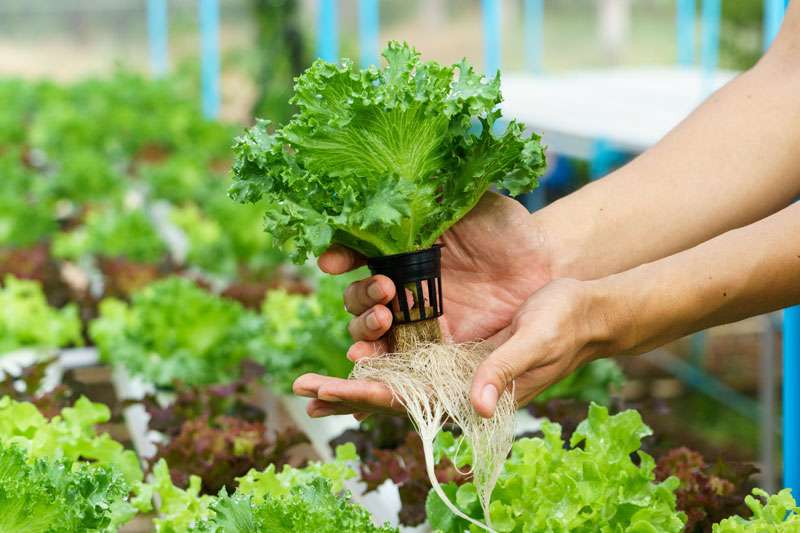
Hydroponics can grow really healthy plants: they look great, are clean and pest free, and with the right nutrients can be nutritious. It is a tribute to technology that such quality looking plants can be grown from purely synthetic chemicals — but they may not be the healthiest for us. Many wicking beds are very close to hydroponics, with inert stones for the water reservoir, manufactured soils for the growing medium and chemical fertilisers. The fact is that many wicking bed growers are very happy with this system — but they may be missing out on the potential health benefits.
Why Are Elderly Chinese So Healthy?
I recently visited rural China — one of my aims was to understand why so many elderly Chinese are so fit, healthy and energetic into their eighties and nineties.
I learned a lot from this trip — but as often happens in life, the more you learn the more confused you get as the bits of the jigsaw don’t quite fit together.
I asked many Chinese why they thought it was that so many elderly people were so fit and healthy. A very common answer was the warm and friendly social support structure. I could see this for myself talking to elderly people in their gardens, growing crops for their families — they seemed very contented people.
I could easily understand that this would make people want to live longer. But how should that actually help them live longer? Surely there must be some physical mechanism rather than some mystical or transcendental effect.
The facts were staring me in the face — there are so many fit and healthy elderly Chinese that there has to be some underlying mechanism rather than a simple ‘feel good’ effect.
Crude Energy Balance vs Intelligent Control
Maybe we have been thinking about diet in too simplistic a way — like our bodies are some sort of machine we pump food into and it chugs away in a totally automatic way.
Anyone who has studied diet and health will be aware of the ongoing battle between the various camps — high fat, high carb, etc. — often by highly qualified medical experts with a lot of data on both sides, yet still violent disagreement.
Despite it being painted as the devil, we actually need sugars for energy. Our bodies can make sugar from carbohydrates, which are produced so cheaply by modern agriculture there does not seem much point in home growing. Our bodies are continuously replacing most of our organs — we are not the same people we were a couple of months ago — we have been largely replaced. For this we need protein, and again the supermarkets provide this at unbeatable prices. This reference is one of the more sensible ones on diet — they recommend one third carb, one third protein and one third fat.
But the real problem is that we are looking at the problem the wrong way. Our bodies are not some dumb machine which we pump food into. This leads to silly conclusions such as “if we eat too much we automatically get fat.” Some people eat very little and still get fat, while other skinny people try really hard to put on a bit of weight but still stay skinny.
Guts, Brains and Intelligence
Maybe we should be recognising that our bodies are really an intelligent system, controlled by a complex web of nerves and hormones. If we want to eat healthy, we should look to a diet (and lifestyle) which affects our intelligent control system.
This article is about soil — not diet — but if we want a healthy diet there are two things we need to incorporate into our soils.
Soil Biology
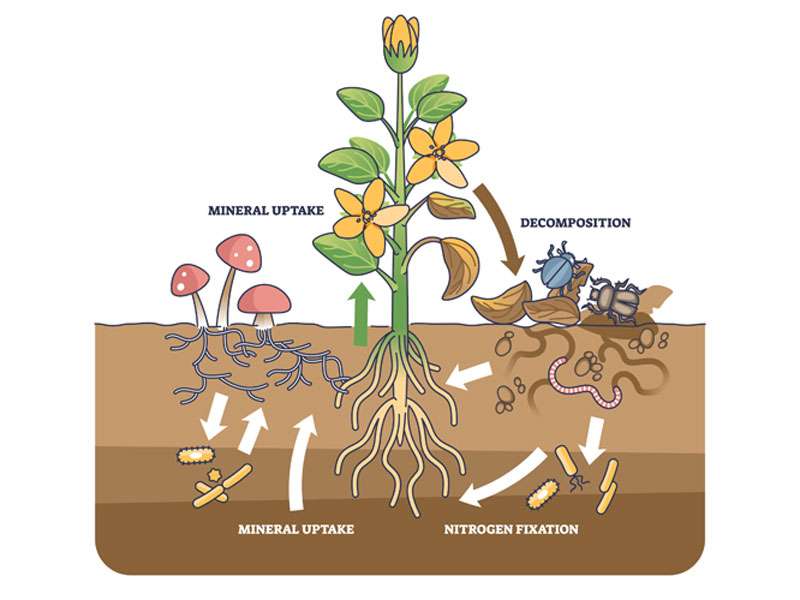
Soil biology is important for both the plants and us. Plants can only take up nutrients that are in solution; soil biology transforms otherwise inaccessible minerals into solutions which can be taken up by the plants.
But the plants themselves will be full of biology, some of which will end up in our guts and help maintain a healthy, intelligent gut. This gut system controls our bodies (particularly appetite and desire for certain foods) and helps keep us healthy.
That is, as long as we don’t go and kill them off by:
Long storage times (eat fresh — pick and eat).
Excessive washing in acidic washes (like many supermarkets do), and,
Excessive cooking. (Some cooking may be required to release nutrients, but excessive cooking is a big no-no).
Minerals
We also need a whole range of trace minerals and minor compounds, which are deficient in our modern diet, so they should be the target for home growers (or hopefully enlightened commercial growers who I would love to see take up real wicking beds).
We need a much wider range of minerals than plants and more of some of the ones (like magnesium) we both need. For example, we need molybdenum and chromium to transport sugar from our blood, and selenium is another mineral essential for humans.
Volcanic Rock Dust
Volcanic rock dust is the cheapest source of these trace minerals, but it is often only sold by the truck load. There are, however, plenty of commercial supplies with specifications of what minerals are included. This needs checking, as they don’t all contain the full spectrum. Look for chromium and selenium as good indicators — they should all contain the common ones like calcium, magnesium, molybdenum, etc.
If you like doing things the hard way you can of course bore a hole 20k down into the earth’s mantle and make your own volcano — but check with the neighbours first.
The Complexity of Micronutrients and Phytochemicals
If, like me, you follow the literature on diet and health (set up a Google Alert), you will — hopefully not like me — be totally overwhelmed by the almost never-ending number of specialty compounds, vitamins, and hormones our bodies need to be healthy.
Every month I read about some new essential compound. I have just been reading about the discovery of zonulin, which is linked with leaky gut syndrome. But there are so many others, such as serotonin — the happy hormone — which is produced by our gut bacteria.
How do we ensure we get enough of these critical compounds? We can’t take pills for all of them, so we need to look at how they are produced naturally.
Not everything natural is automatically good — there are plenty of things in nature that can harm us — but we can learn from how nature helps us and apply that knowledge.
How Nature Helps Us Be Healthy
Some soils are naturally good, others are bad. The best soils come from volcanic rock, but river silts also lead to good soils.
Fun of Funghi
The rocks or rock particles have a broad spectrum of minerals, but that is useless to plants as they can only absorb minerals in solution. That is where fungi come to play: they have very fine hyphae which create very high pressures and enzymes that dissolve the rocks to form a solution which they pass onto plants.
The plants pay the bill by providing the fungi with sugars which feed them and provide the raw material for the enzymes.
Plants produce the carbohydrates and proteins which provide our bulk food, plus a whole range of phytochemicals which our bodies need either directly or to use as raw materials for other essential compounds — often produced by our gut bacteria.
Plants feed soil bacteria which can attach to the plants we eat and so help top up our essential gut bacteria.
There is a continuous supply chain from raw minerals to the complex compounds that make us healthy. Soil is an integral part of this supply chain.
Creating Wicking Bed Soil
Generally, we have to use soil which is readily available either on site or locally purchased.
Unless you are very lucky with your soil, just shovelling local soil into a wicking bed won’t work (at least not well). Some people think they need stones and cloths to get the needed water holding capacity, but if the soil is processed properly, it will hold more water than stones and have much better wicking properties.
We should add any needed macro and micro nutrients. This is well established, so apart from emphasising the need for trace minerals, I will assume this is known.
Master Mix
For interest — I make up a master mix of equal parts gypsum, dolomite, organic manure-based fertiliser, blood and bone, and trace minerals. I use so much gypsum and dolomite because my soil is such a heavy clay, but it is still a good way of getting calcium and magnesium into your soil.
With a new bed I would add about 10% of this master mix to the total soil and top up later as necessary.
Releasing Nutrients
Simply adding minerals is not enough — we have to create the right texture with plenty of pore space and good wicking properties (hydrophilic), and also ensure there is an adequate concentration of fungi and other micro-organisms to make the minerals available to the plants.
The oil in gum leaves is particularly prone to making the soil hydrophobic so it does not wet.
Create the Soil Structure
We need both micro and macro biology to create the needed soil structure. These processes occur naturally over time — we just need to accelerate the process. Soil is not manufactured; it is “grown” naturally by the micro and macro soil biology. Just one crop cycle will dramatically improve a soil, but the soil will continue to improve over time. How you “grow” your soil depends on your local conditions, e.g. climate and base mother soil type. I am blessed with a good climate and cursed with terrible heavy clay.
This is why I use so much gypsum and dolomite. But again these need the microbiology to coat the particles so they coagulate and form the nice tilth of good soil.
The Soil Cycle
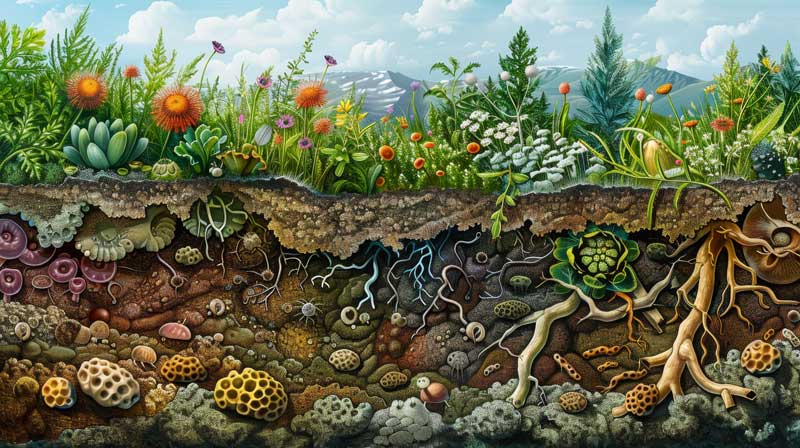
Soil is made by a cycle: plants grow, taking carbon from the atmosphere to form the mass of the plant. The roots exude sugars which feed fungi and the soil microorganisms, which will further feed on the roots as they die back. As the roots decompose, they form a network of channels through the soil creating both pore space and wicking channels.
My preferred method of “growing” soil is to use a patch of near virgin ground which will be full of biology, but using a sponge or open wicking bed works well.
It can also be done in a closed wicking bed, but because there is no contact with the parent soils it may be necessary to use an inoculant containing the starter biology. Biology duplicates rapidly, so a little inoculant goes a long way.
Selecting Plants for Growing Soil
All plants will contribute to growing the soil. I am a disorganised sort of person, so I keep my seeds in a big tub and often have a spill. When it comes time to grow soil I will use this assorted mix as part of my seed pack.
But as almost everyone is more organised than me, I suggest a mix of oats, clover, lucerne and sunflower. Sunflower is really good at attracting mycorrhizal fungi; oats form a really nice dense root system, while the legumes encourage desirable bacteria.
I go for a shortish growing period — basically let the sunflower bloom, then I mow them all down and set aside the mowings to make material for composting.
I dig up the roots, which should be pretty massive and dense, and put these into the base of the new wicking bed. Roots have been evolving for millennia to have good wicking properties — far better than stones — and they also create a very high void space.
You can easily measure void space by weighing a known volume (ice cream container), then filling it with water and reweighing. A good wicking bed soil will have a void content of around 50–60%. You can make it higher by adding vermiculite, which is porous and holds virtually its own volume of water.
This root mass is a great material for the base but is too coarse for seeding, so I will cover with about 100mm of fine soil.
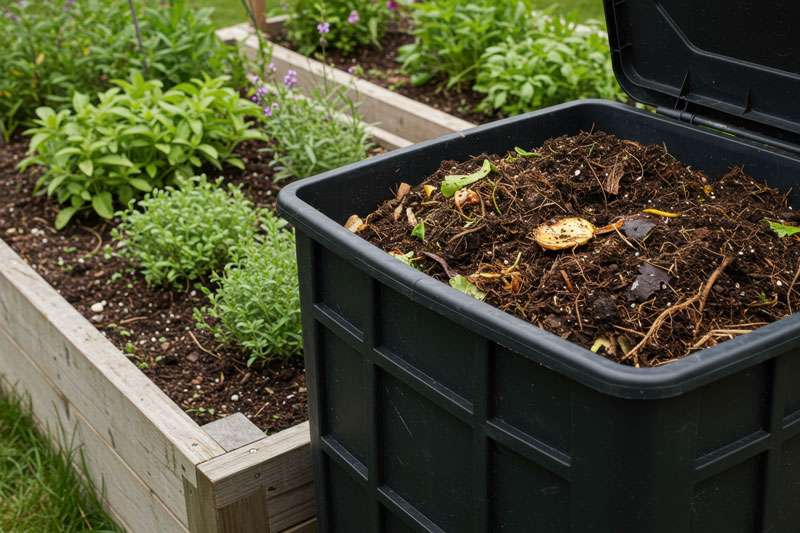
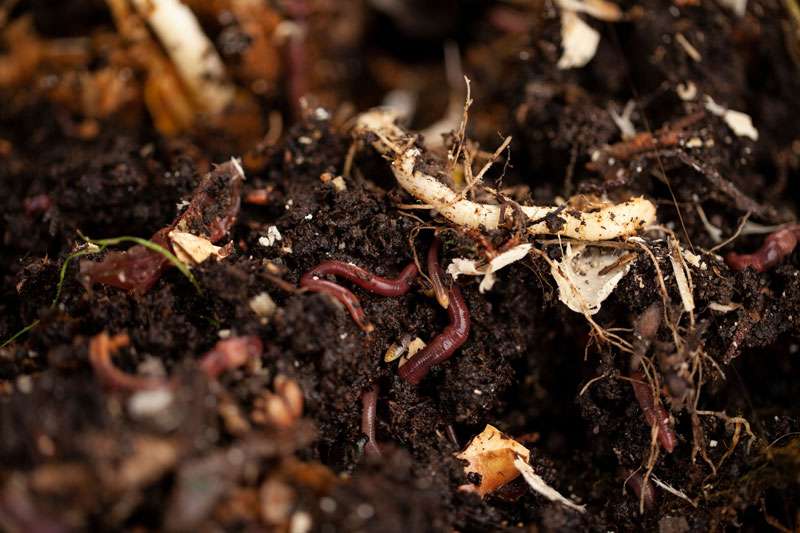
The only disadvantage of this method is that over time the organic material will decompose, so the bed will need topping up. I like to cover the top of the soil with mulch or compost and have plenty of worms which come up from deep in the soil at night and draw down the mulch.
A Word on Composting
Gardening books always recommend using fully matured compost. There are two reasons: the nutrients are fully available, and some plant growth inhibitors can be released during decomposition.
I have no arguments with this logic, but I am trying to grow bacteria in my soil — particularly the first stage or mesophilic bacteria. There is a special name for partially composted material: labile.
My interest is in growing soil biology which will end up as gut bacteria, so I use labile compost (partially composted organic material).
It may be against the books, but I find it works. You may like to give it a go, but I suggest moderation until the bacteria is well established.
Soil biology is the key — my aim with WickiMix is to provide a concentrate and inoculant where people can create their own healthy soil from what would otherwise be waste. It is only needed in small quantities to avoid excessive transport costs. The three key elements of soil are the chemistry, the physics and the biology. These are interrelated but here I look at how these areas affect the creation of wicking bed soil.
Part 1: Chemistry and nutrition of wicking beds
One of my early failures with wicking beds (unfortunately one of many failures but that’s how you learn) was over nutrition.
I fed my bed a very dilute worm juice mix every day and it worked wonders. The plants were really growing vigorously and all looked good. Then one morning I found that the entire box had keeled over and died. With the wonders of hindsight it was clear what had happened.
In a normal garden there is continuous flushing so the nutrient concentration stays constant. By contrast in a wicking bed there is little or no flushing (or should be) so any nutrient you add stays in the bed until used by the plants — but evaporation and transpiration still occur — so it is easy to add more nutrients than the plants are using. The result was a slow but steady increase in the concentration of the nutrient level in the water.
Roots absorb water by osmosis which is the principle that water will always flow from the weaker solution to the stronger. If the concentration in the roots is higher than in the surrounding soil the water will flow into the root system.
Conversely, if the water surrounding the root has a higher concentration then water will literally be pulled out of the plants and it will die.
The moral is to be very careful with nutrient levels particularly liquid fertilisers added routinely.
I am a great believer in recycling and composting and in my experience there is little need to add the primary elements N, K, P in a wicking bed other than a little manure pellets which I use very sparingly.
However compost may be low in some of the secondary minerals such as calcium, magnesium, zinc etc. Calcium is particularly important for soil biology so I am generous with soil additives like gypsum and dolomite.
Generally compost made from modern food waste is low in the critical trace elements — selenium is a classic example which is needed for DNA production. However many of these trace elements are toxic at higher concentrations and we only need these in very small quantities — we are talking micrograms. I therefore add these trace elements in very small quantities to my soils.
Soils and minerals
Any good book on horticulture will describe in detail the fertilisers needed to grow healthy plants. But that can be missing the point — the aim is to grow plants which will make us healthy and this is a far more complex issue.
We need a whole range of minerals that the plants simply do not need — for example selenium which is used in the reproduction of our DNA. If there is no selenium our DNA does not reproduce accurately and most likely we will get cancer and die.
We need other minerals in much larger quantities than plants — for example the sex minerals iron and zinc. We won’t die from lack of zinc or iron but without the sex minerals life will not be as much fun and our species would become extinct.
Diet and Health is discussed in detail in ‘How to grow (or buy) healthy vegetables’ in the June 2015 newsletter.
Widely reported deficits in our modern diet
Below shows the minerals that plants need to grow well, the primary and secondary elements and the elements that we as humans need to be healthy. Some minerals such as iron and zinc are needed by plants but in small quantities. We need these in larger amounts. Others like selenium and iodine are not needed by plants at all but are essential for our health. Over the years of continuous farming these trace elements have become denuded from the soil. Modern intensive farming aided by chemical fertilizers is highly productive but exhausts the soil of biology and minerals.
Bio-essential trace elements are critical to human life. These include iron, cobalt, selenium, copper, zinc, molybdenum, vanadium and cadmium. The elements are linked into the chemical structure of the cells and become a natural nutrient for survival. Cobalt is a central atom in the structure of vitamin B12, whereas zinc is essential for growth, magnesium guards against heart disease, Type 2 diabetes, prostate cancer and osteoporosis.
Elements needed by plants:
Carbon, oxygen, hydrogen (from the air or water) — Primary elements from the soil: N, P, K — Secondary elements: Ca, Mg, S — Trace elements: Mn, Fe, B, Zn, Cu, Mo, Cl, Co
Widely reported dietary deficits:
Elements needed by plants but we may need higher doses: Ca, Mg, Zn, Fe, Cu — Essential extra elements needed for health: Selenium, Iodine, Vanadium, Chromium — Vitamins humans are generally short of: Omega 3, B12, B6, E, K
Part 2: Soil Physics
Hydrophobic and hydrophilic soils
Most people are familiar with soils which appear to soak up water while others, such as a sandy soil with gum leaves will not wet so the water sits as little droplets on the surface.
All soils benefit from being hydrophilic or water loving but in wicking beds it is critical to have a soil which is water-loving — that’s how wicking beds work.
It is important to select components in the soil which are naturally hydrophilic but the performance can be increased significantly by soil biology.
Particle size
Capillary action works with size — the finer the capillary the greater the wicking force. However the finer the capillary the higher the resistance to flow.
For example clay has extremely fine particle size and therefore generates very high capillary forces — so far so good — but the resistance of water movement through the clay can be so high that there is simply not enough flow to supply the plant with water.
Conversely stones have virtually no wicking action so will never feed the plant by wicking action. (They may appear to work by a process of evaporation and condensation or the roots simply penetrating the stones to suck the water up directly) but they simply do not wick.
I aim for a particle size of between 0.2 and 0.5 mm which seems a reasonable compromise. However soil biology can create a surface chemistry which makes fine particles clump together in aggregates to give that magical property that all gardeners aim for — tilth.
Void space
One of the purposes of a wicking bed is to conserve water and extend the time between watering. (I actually think that preventing the waste of nutrients beyond the roots zone is more important.)
Some designs of wicking bed have a separate external water container connected to the soil by some form of wick. This is fine for smaller manufactured pots but it is not suitable for larger beds so most people use some form of internal water storage.
A common method is to use stones covered with a layer of cloth — another method which I prefer is to use soils which have been developed to have a very high water holding capacity.
Don’t talk, measure
There is a lot of debate about which is best — stones or soils — and both systems work but the debate is best settled by measurement not theoretical debate.
It is easy to measure: just take a container of known volume (weigh it full of water to get volume), then load it with dry soil (actually at wilting point), weigh it, then fill with water until totally saturated and weigh again. The increase in weight as a percentage of original volume is the void content of the soil.
An experiment like this would quickly show that if you simply dug up heavy soil straight out of the garden it is likely to have poor water holding capacity.
Soils for the water reservoir
I have measured up to 60% void in some of my best soils. This is higher than you would get with sand or stones. However it is more complicated than that.
Water is stored in the gaps between the particles; the amount is fixed by the geometry and packing of the soil particles. The void space does not depend on particle size.
If the particles are irregular in shape they do not pack closely giving a higher water holding capacity. If there is a range of particle sizes the water holding capacity is reduced as the smaller particles fill in the holes between the larger particles.
Voids and absorption
However in addition to the space between the particles water can be held inside the particles — for example with minerals such as vermiculite, perlite, zeolite etc. and organic materials such as coconut fibre or for that matter most organic material. Roots are my particular favourite as they can also introduce beneficial soil biology.
Some minerals such as vermiculite, perlite and zeolite absorb a lot of water internally (they are highly porous) and have irregular shaped particles so the water holding capacity is very high — approaching 100% almost as good as you get with a separate reservoir.
However there is a snag (as usual with things that sound too good to be true). These highly absorbent materials just love to hang onto the water. Wicking is a tug of war between competing surfaces so although there may be plenty of water it simply sits there and does not wick out so their effective water holding capacity is not as high as expected.
Cavalry to the rescue — here come the roots
However plants have a sophisticated method of capturing and transporting water. The roots pick up the water by osmosis in which water moves from weaker to stronger solutions, then wicking action helps the water move and finally the attraction of one water molecule to another literally pulls the water up the plant as water evaporates from the leaves. There is no way that wicking could pull water to the top of a twenty metre tree.
If roots are encouraged to extend over the entire volume they will extract water otherwise locked up inside these porous materials. Roots can easily penetrate the soil to extract all available water.
Good soil is full of voids, obviously a solid clay would not be good but if you get the soil right with organic material, worms (which make holes through the soil) and additives like vermiculite, perlite or better still organic material like decaying roots then soils can have a very large void capacity.
Roots 101
Roots absorb nutrients and water but they also need to breathe taking up oxygen and expelling gases like ethylene which acts as a growth inhibitor.
Plants have developed roots with different functions. In some plants this is totally obvious; there are the fine fibrous surface roots and a deep tap root.
Fibrous roots need to be able to breathe taking in oxygen and expelling stale gases — they need an open soil so they can breathe.
Tap roots are tough and seem able to handle being immersed in water. The fine surface or fibrous roots have evolved to survive in an open soil where they can absorb oxygen and expel toxic gases.
By contrast tap roots have evolved to bore down deep into even the hardest soil (where they may be very little air) and extract moisture and nutrients.
Many weeds have highly developed tap roots which is why they are so tough. Many of our food plants have predominantly fibrous roots which makes them more delicate. In nature there is a natural synergy between deep tap rooted and surface rooted plants which grow comfortably together.
80% sure
Conventional wisdom says that plants will die if the roots are totally submerged in water (except for specialist plants like mangroves and rice). This is largely true and I use this principle when I submerge difficult to kill weeds and their seeds in water.
However I have done tests in which I had a water reservoir formed by a layer of cloth in a fish tank so I can watch what happened. The roots were tenacious and went straight through the cloth as though it was not there, entered the water reservoir and appeared to continue to grow and branch even though completely submerged in water.
The soil above was relatively dry and has a well-developed root system.
It appears that provided that there are some roots that have access to air that other parts of the root system can flourish even if submerged in water.
In science you are never 100% sure and assign a probability to being right. From a scientific viewpoint I have a conservative estimate that there is an 80% probability of this being true, however I am pragmatic and plants grow really well with the system so this is the way I grow my plants.
Part 3: Soil Biology
Soil biology is the most critical component of good soil, it releases nutrients so they are available to the plants and changes the surface physics to improve the wicking action and to enable individual soil particles to aggregate to form that tilth which all gardeners strive for.
Working in the area of soil chemistry and physics is comfortable as we have a very high understanding of the science. However we do not have that comfort with soil biology. As yet we have only identified and studied a small percentage of the organisms which are suspected of existing.
We have only been able to identify, study and produce very few of the total number of species at a commercial scale.
I have experimented with some of these commercial products and been somewhat disappointed.
I have also been alarmed by the American practice of sterilising the soil with methyl bromide (a highly toxic and poisonous chemical) then re-introducing known beneficial organisms. Do we really know enough?
In this state of ignorance it is pragmatic to study and imitate how soil biology works in nature. After all nature has been developing viable ecosystems for over a billion years.
I have learned from studying the natural process to create a root structure or rhizosphere which is full of biology (hopefully balanced with beneficial controlling the harmful) which I call WickiMix-R the R standing for rhizosphere. I use this as the lower layer in my wicking beds (and even in sponge and conventional beds).
Roots are a naturally absorbent material with a high water holding capacity. I prepare this rhizosphere as described in my November newsletter and use the root web as my absorbent layer which is full of active soil biology. Once established the biology will continue to reproduce in a sustainable (and free) way.
No free lunch
The arguments for an organic system are overwhelming but there is no free lunch so there are a couple of issues.
My original wicking beds which I made almost twenty years ago were just filled with ground litter (twigs and branches) and weeds.
The first issue is nitrogen drain resulting from this decomposition. This is easily solved with a bit of chicken manure but it is important not to over apply as I learned all those years ago. Fortunately for a home gardener the plants soon tell you if the concentration is wrong.
The second issue is the organic material will decompose with the soil level sinking so some way of topping up is needed. This can be done by using mulches or by having a top tray in which plants grow. This can be lifted and fresh organic material added directly to the lower layer.
This need for topping up is not a real problem and you should be adding extra nutrients on a regular basis anyway. If you take goodies out you have to put them back.
Where to start regenerating soil? Well nature has been making soil for a few billion years so let us see what we can learn by taking a trip from the equator to the poles.
The equatorial zone
Despite the fact that equatorial soil gives the impression of being rich they are really very poor. The apparent luxuriance is caused by the continuous humidity which enables plants to feed off the dead vegetation in real time as it decomposes. Any nutrients which are not immediately recycled are simply swept away by the heavy rain.
The monsoonal belt
Moving away from the equator we enter the dry winters and monsoonal rains. Soil does develop in the warm winters but there is significant loss of soil in the heavy rains.
The desert regions
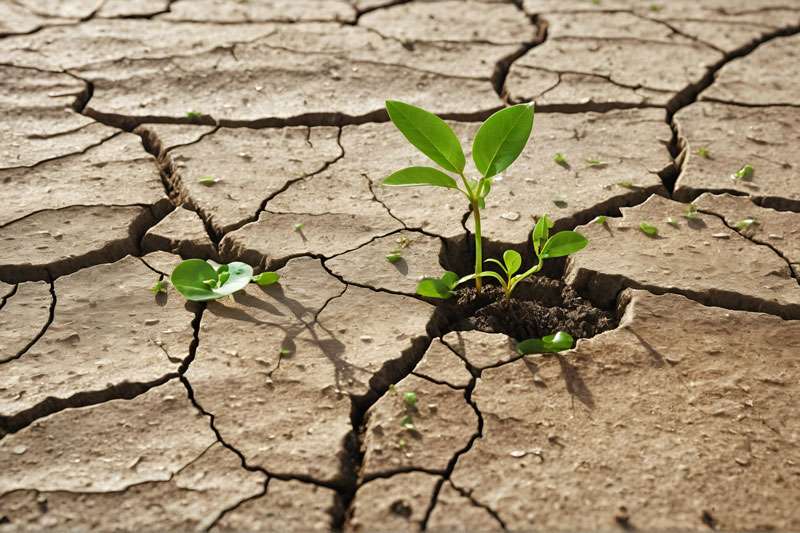
Moving poleward we enter the desert regions with no reliable rainfall. At first sight there does not seem to be much soil at all, just bare sand, but anyone who has been to the desert after the rare rain will be impressed by the mass of vegetation which appears virtually overnight and disappears in a few weeks.
Water is essential for soil formation but life can survive for years of drought.
You don’t need to be an expert in thermodynamics to drive a car
The lesson here is that seeds, soil biology (and even the desert frog which wraps itself in its own waterproof bag) can survive for years in dry conditions. As I learned regenerating soil is dominated by soil biology — which is incredibly complex. We have only discovered a small proportion of the species and it will be a long time before we have a true understanding.
We don’t need to understand everything — we just need to know how to care for the soil biology so it can do its job. After all, we have no idea how to create life from scratch but we have still created hundreds of billions of people over time by following our natural instincts (or lust).
The Rich Savannah Belt
Now we enter the Savannah zones which spread around the world in both hemispheres. Often there is rich soil — tens of metres deep. This is where much of the world’s food is produced and man has to work pretty hard to destroy this rich top soil — yet it happens — as in the great dust bowl in the US.
We can also see that even in the rich Savannah lands that some areas have much better soil than others. This coincides with regions where the base rocks are volcanic and rich in a broad spectrum of minerals.
The Tundra
As we get nearer the poles there is still vegetation but typically a monoculture of specialist plants which can survive the extreme conditions but the dead plants turn into peat rather than soil.
How soil is created
Soil formation requires the right amount of water and a broad spectrum mineral base — nothing surprising here.
Modern science has an extremely good understanding of the mineral needed to make soil, the chemistry is a done deal — but there is more to soil than just chemistry — the physical form or structure — of the soil is equally essential.
So let’s study how soil is formed particularly learning from the Savannah regions.
To my mind one of the most important symbiotic relations in the world is that between plants and soil biology.
The plants, by photosynthesis, produce an abundant supply of carbohydrates which they feed to the soil biology as either exudates or simply by the decay of dead vegetation. In return the soil biology creates enzymes which dissolve the rock making nutrients available to the plants; they also provide the glue which creates the aggregates which makes the texture of a good soil.
Soil is created by biology.
Lava flows
A particularly interesting subject is how lava flows are converted to soil.
Lava is full of minerals but there is a catch-22. Fungi cannot photosynthesise so cannot survive without the energy from plants to break down lava — they need plants. But plants cannot break down lava without fungi.
Lichens are peculiar organisms — neither plants nor fungi — but able to do the job of both.
A lichen is a composite organism that arises from algae or cyanobacteria (or both) living among filaments of a fungus in a symbiotic relationship.
Lichens can get the process going by breaking down the rock surface. This allows the weeds with strong tap roots to start colonizing.
Weeds are often short lived and so a compost forms from the dead plants. This allows plants with a more fibrous root structure which form a synergistic relationship with mycorrhizal to become established and in a relatively short time some of the world’s most fertile soil has been produced.
Plant roots, particularly the tap root of weeds provide a service by creating channels through the soil connecting the surface to the lower layers, essential for ‘breathing’ the soil. When the plant dies the roots rot automatically creating channels.
Pretty neat stuff this nature.
Soil biology is complex – we need to learn how to ‘farm’ soil biology
Anyone who studies soil biology appreciates how little we really understand this complex subject. On the other hand we don’t need to understand every intricate detail. I contrast creating soil by using biology with baking a cake.
A good cook can make a delicious cake by following the recipe but may not understand the chemistry. The same with soil — we now have the recipe to create a healthy soil; as yet we may not understand the mechanics of how the soil biology is generating the soil, but by creating the conditions for the biology to flourish we can produce a healthy soil.
Soil needs a better PR agent
So why are we still destroying soil on such a massive scale? It is partly because soil has never captured the public imagination like a new i-Phone with an updated version of Angry Birds, but the core reason is simply that modern chemical farming is more productive — as measured by the quantity of food produced — than soils produced by this natural process.
You don’t need soil to produce good looking plants — just take a bit of sand to hold up the plants and add chemicals and plants will grow.
I sometimes think that my passion for soil came from a false Eureka moment — you simply don’t need soil to produce food.
This is where the catch comes — the food may be full of energy but lacks the critical trace minerals, vitamins and phytonutrients which are needed to rebuild our bodies.
I am a great believer in science, however I am concerned about the way science is used (or abused). Antibiotics must be one of the great achievements of science, saving countless lives, yet we feed antibiotics to animals simply because it makes them grow fatter and faster, which makes more profit.
Next time you or I go to hospital we run the risk of becoming infected with some bacteria which has evolved to become immune to even our most powerful antibiotics. There is no polite way of describing this — it is just crazy and immoral. Most people realise that factory food is not doing us any favours. It is packed with fats, sugar and salt, while the real goodness — the vitamins, minerals and fibre — is missing. We may enjoy the taste and the convenience, but in the long run it makes us sick and drains billions from our health system.
We all love factory food; it is cheap, tastes good, convenient and addictive. It makes the food industry — the world’s largest industry — a lot of money.
Science and the Rise of Biology
When we talk about science we tend to think of the latest electronic gadget or computer. Certainly big business, but now a mature technology. The new kid on the block is biology, which is teaching us so much.
We know that there are more bacteria in our guts than in our entire body — they are totally crucial. They help us digest our food and create vitamin K which our bodies cannot. (Did you know that there are only two animals that cannot synthesise vitamin C — humans and Guinea pigs?).
Gut microbes also form part of the control system of our bodies — sending chemical messages to our brain which in turn tells us to eat more or stop eating, and whether to store extra fat.
The sort of bugs we have in our gut depend on what we eat. Highly processed food makes us eat more and store more as fat.
What Can We Do?
We can eat more fruit and vegetables — but not factory farmed, chemically reliant ones. We need to eat real vegetables grown in real natural soil.
The simplest, easiest and cheapest way of getting real food is to grow your own in real natural soil. (Not all — just some.)
Wicking Beds are a great technology which enables people with restricted time, space or experience to grow their own healthy vegetables. However, they won’t deliver the goodies if filled with some dead inert soil — they need a living soil like nature has evolved.
But What is Real Natural Soil?
The science of biology is greatly expanding our knowledge of soil biology but requires a different way of thinking. Classic science is essentially reductionist — each scientist working on some specialist area, perhaps some particular species of nematodes. All good work, but what really matters in soil is how it works as a system.
There are countless different species of soil biology, most as yet unidentified or studied. Maybe we will get there one day, but what really matters is how it works as a system — how the plants photosynthesise to produce the energy and sugars to feed the biology and how the multiple species interact with each other and the plants to create a stable living system.
We don’t have to invent this — nature has spent billions of years evolving this system. We don’t have to understand every component — what we really need to know is how to use this system for our benefit.
My aim is to supply the tools where people can grow their own living soil. Nature makes soil by the biology decomposing organic material. Most people have an abundant supply of suitable material which is generally thought of as waste — food waste and weeds.
This can be transformed into nutrient-rich healthy soil — all it needs is the introduction of soil biology to act as a culture and appropriate minerals.
I well understand that many people are perfectly happy with their sterile food and lifestyle and would be put off by soil biology. I have no intention of wasting large sums of money and my time trying to convince them to change their views.
But I have a feeling that there are many people who believe that natural food is more healthy. I have been studying diet, health and soil for many years now. My first step is to provide the educational facilities for what I accept may be a small but dedicated group of people.
Learn how living soil supports human health. Discover how beneficial microbes, nutrient-dense food, and simple growing methods can help you improve your gut microbiome and overall wellbeing. Explore the Gbiota resources, videos, and community.