Transforming Parent Soils for Healthy Wicking Beds
The importance of biology
Most people understand that the current system of factory farming and processing food is unhealthy – too much fat, sugars and salt and lacking critical vitamins and minerals. While medical experts praise the benefits of eating more fruit and vegetables the problem is not resolved by eating sterile – chemically farmed fruits and vegetables
We depend on biology. There are more bacteria in our bodies than native cells, they help us digest our food and produce hormones which signal that we are full. Without these signals we always feel hungry and tend to overeat. Further hormones signal our bodies to store excess calories as fat – our bodies mistakenly protecting us from starvation in the future.
We need to be eating fresh fruit and vegetables grown in healthy living soil. The easiest way is to grow them ourselves. Wicking beds enable almost anyone to grow healthy food but they need healthy soil – so what do we really mean by healthy soil.
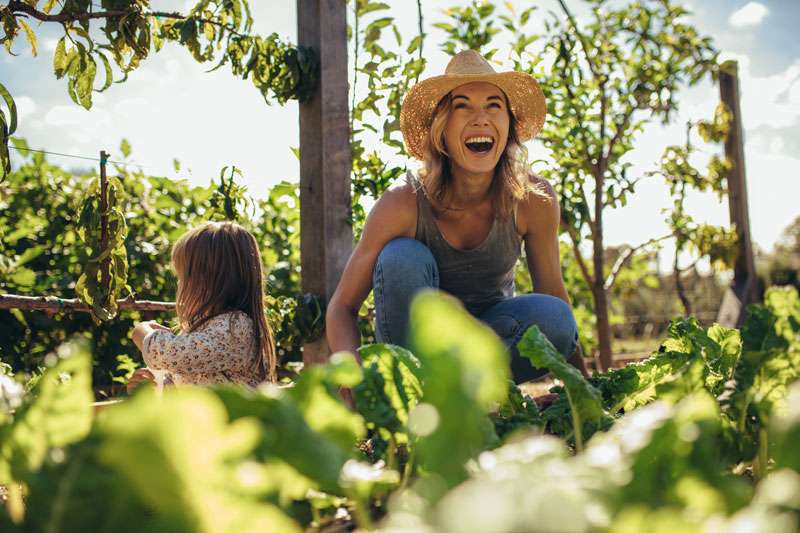
Wicking beds – anyone can grow their own food
Wicking beds make it easy to grow vegetables even for people with limited time or space – such as an apartment -however the quality of the produce – like in any growing system – is totally dependent on the quality of the soil.
The obvious benefit is that wicking beds don’t need to be watered so often – they almost thrive on neglect – so home growing has been taken up by many people who would have never contemplated growing in a traditional garden.
An even greater benefit of Wicking Beds is that nutrients are retained in the bed and not flushed away.
The greatest benefit of wicking beds is that virtually anyone can grow healthy plants but the soil must be a living soil. Health starts in the soil if nutrients aren’t in the soil they can never be in our food.
Soils for Wicking Beds
We have to make wicking beds soils starting from what is readily available and transform it to what we want.
The soil must have a high void space to hold water – if there is enough void space there is no need for any additional water reservoir – the soil can hold all the water that is needed.
It must be hydrophilic – water loving – so it will wick and hold onto water and nutrients.
It must contain the nutrients essential for both us and our plants and the nutrients must be available to the plants and not locked up. This comes from a living soil.
We know a great deal about the chemistry and physics of soil but the most important technology is soil biology – a young and rapidly growing science. But we still have only identified, isolated and studied a fraction of the millions of different species of soil biology.
Soil biology is more than a collection of many species – it is a living eco-system with all the myriad species working together.
Parent Soil
You have to start with what you have. If you have a garden you have access to soil but you are very lucky if you have that magic loam. Most people have soil which is from the extremes, either heavy clay or sand.
Clay may appear to be pretty horrible stuff with a lousy structure but it is generally fertile and has good water attraction properties.
Sand may be the opposite with a good structure but generally little nutrients. Some sands are hydrophilic with good wicking properties but many others, particularly if there are gum leaves around are hydrophobic and repel water, it just sits as little globules.
If you do not have a garden then you may have to buy potting mix. Factory production can also turn out bags of cheap potting mix by the truck load. But it is not a living soil and needs transforming.

Biology transforms soils
Soil Biology can transform soil. I t can cause the ultra fine particle in clay to aggregate creating a large voids space.
These voids need to be connected and the large creature in the soil can do this for us. If we simply flood the bed the critters will come to the surface making little channels through the soil.
The fungi can dissolve minerals and make them available to the plants.
Wicking Bed soils need a high void content so they can hold water. The voids need to be connected so air and stagnant gasses can readily move through the soil.
A good Wicking Bed soil will have at least 50% void content.
If you have a high void content there is no need to worry about using stones and cloths – the soil will hold all the water that is needed and it allows all the volume of a wicking bed to be occupied by the root system.
Soil Chemistry
If it is not in the soil it cannot be in the plants. Fortunately the science of soil chemistry is well developed and it is easy to get your soil tested. A lot depends on the parent soil but there is no difficulty in adding the needed minerals.
For the typical gardener there is no too much need to worry over the primary and secondary minerals as compost will usually provide these.
In the section on soil biology I talk about the importance of fungi. Calcium is essential for fungi so adding extra calcium in the form of gypsum and dolomite is recommended.
Many people are very selective in what they put in their compost and avoid adding citreous, onions, garlic etc. I respect that view but to be frank I don’t bother to sort my compost – if it is organic in it goes – however I am carful to endure that it does not become acidic by adding plenty of lime and other calcium sources.
Soil Physics
In a Wicking Bed the soil physics are very important. The particles need to be hydrophilic e.g water loving so it attracts water and wicks well and also must have the surface which can attract and hold onto nutrients.
This is always important but particularly for Wicking Beds.


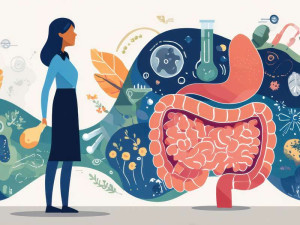

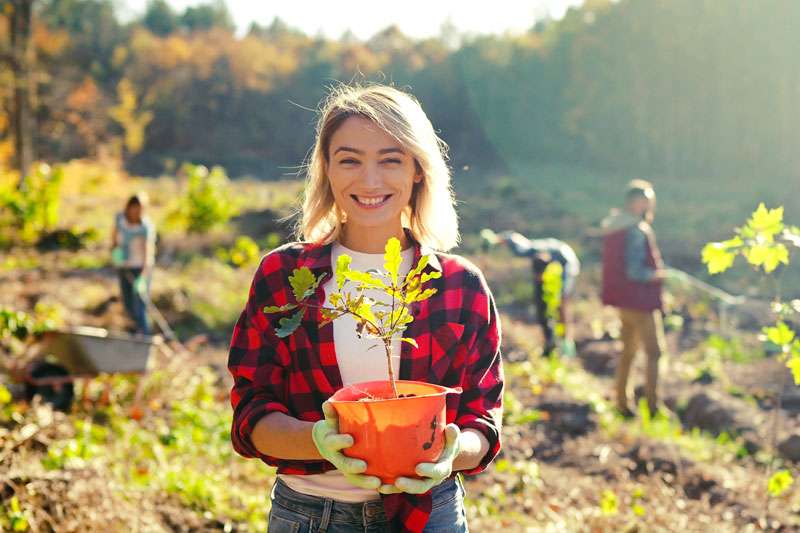


 Our energy comes from the sun captured by photosynthesis from the plants, plankton or algae. Our nutrients come from rocks, broken down by fungi, while the system of digestion and natural replacement is powered by the microbes.
 Microbes have a short life of around a day. They breed and die rapidly, typically in a day, in a state of dynamic equilibrium.
 This is not some wonder new technology; ancient hunter-gatherer tribes had a healthy gut biome, as do the few remaining hunter-gatherers. Their gut biome has been extensively researched, so we can be sure of that.
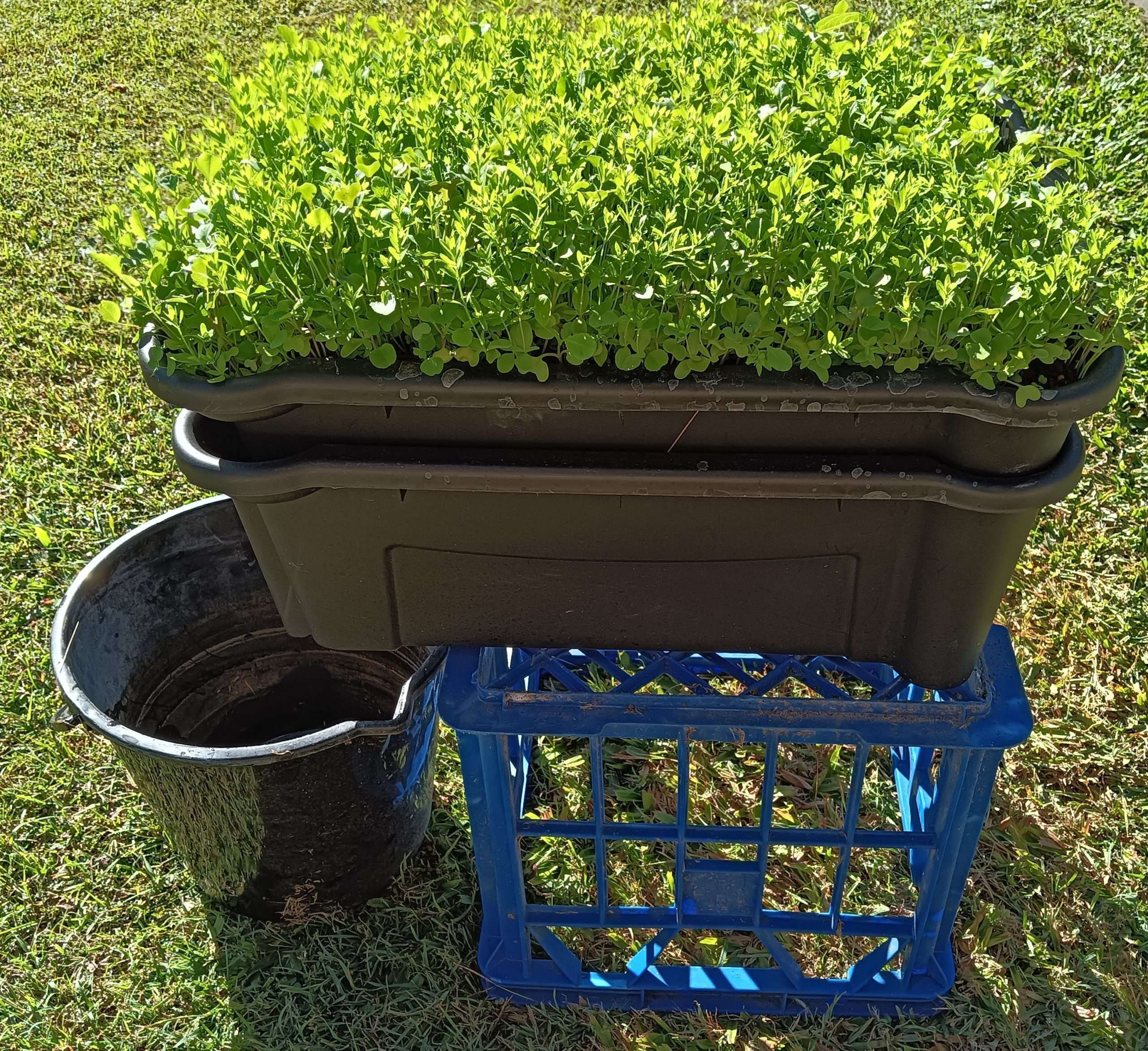
 The easiest way, particularly if you live in a flat with no garden or growing experience, is to grow the beneficial microbes in containers, or more correctly, container sets.
 Fill the top box with any good potting mix and seed in the normal way.
 Plants use sunlight and carbon from the air to create sugars. They exude some of these sugars to attract and feed the microbes into the root zone.
 The bottom box is where most of the breeding action occurs. This is fuelled by organic waste, which you might otherwise throw into the green waste bin, at least if your local council is environmentally sensitive.
 You need the aid of the recyclers, that myriad of creatures which recycle waste into something that is valuable.
 Beetles (not the musical Beatles, who have a good beat, but no beet) are also a critical member of the team.
 If you just watered the top box, you would have two boxes: the top box growing plant in the conventional way. They will grow quite happily, but they will not be the beneficial microbes you need.
 But now comes the critical part, which is creating the conditions so the beneficial microbes will out compete and out breed any less beneficial microbes.
 We need that magical Goldilocks moisture.
 That is how we get the Goldilocks moisture, and it is just so simple and is actually less work than dribbling water in every day.
 Unless you are wearing exceptionally dark sunglasses, you cannot help but notice that the so-called water is not clear water, but a dark brown.
 Right now, I can’t tell you that it will extend your health span or life. It should, but now I don’t know for sure, you will have to wait a few more decades until you are really old, when it will be a bit too late.
 But life is a question of risks and balances.

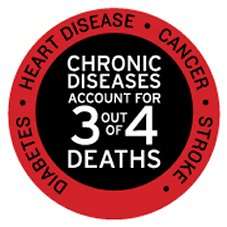

 The wrong fat in the wrong place is at the core of the modern epidemic of chronic diseases.
 There are some who say that modern technology will lead to the extinction of our species. Most people dismiss this as alarmist, green woke talk.
 I am in the hot seat. I was a pioneer of Computer Aided Engineering and have been recognised as one of Australia’s leading innovators. The company I formed became Australia’s leading exporter of technical software, a multi-million dollar company that changed an industry.
 Am I an evil creature leading to the extinction of my species, or can I become a leader to a better society where people not just survive but thrive?
 But what is the technology we need to develop so we thrive?
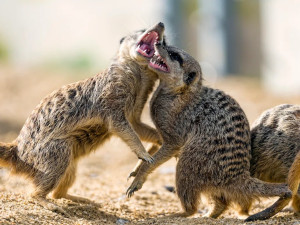 Then microbes appeared, probably from an asteroid.
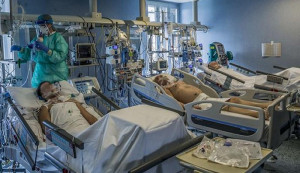 But not all microbes were beneficial: others were harmful microbes which made us sick or killed us, so only a few people lived to their natural life span.
 But humans, ever inventive, developed technologies to combat these harmful microbes.
 Our life span increased dramatically, and all looked good until we realised that we had also decimated the beneficial microbes on which life depends, and our health span, how long we remained fit and healthy, was dropping dramatically with an epidemic of chronic diseases - overweight, obesity, diabetes, heart attacks, cancer and dementia.
 We were slow to appreciate that the beneficial microbes did more than transform rock, recycled organic waste and digested our food. The microbes in our gut communicated with each other to create genuine intelligence, which formed part of the intelligent control system which regulated our bodies, particularly our appetite and where and how much fat we stored.
 The wrong fat in the wrong place is at the core of the modern epidemic of chronic diseases.

 I can’t answer all these questions, all I can do is give you the facts as I understand them.
 The calorie balance theory says that if we eat more calories than we burn that we will get fat. It sounds so simple and obvious - how can it possibly be wrong?
 If it decides that we need to store fat, for example, if we have been deprived of food for any length of time, as in a war or from an extreme diet, it sends signals to our gut to manufacture hormones to make us crave food.
 We have known for a long time that it is simple to change the microbes in mice - they eat each other's pooh. We can make fat mice skinny or skinny mice fat.
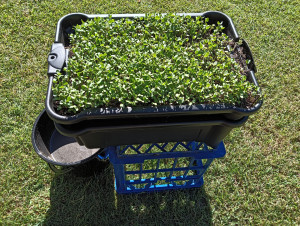 We solve both of these problems with the Gbiota bio-boxes which control the conditions to favour the beneficial microbes and make it easy for people to grow the plants themselves, even if they have no garden or growing experience.