
Will it work?
Will it work?
The bomb shell or light bulb moment
I may be a woke greenie concerned about the communities well being, but I read a lot.
 One morning I was having my after breakfast read, this time “I’m So effing hungry” by Dr. Amy Shah when I was hit by a bomb shell if you are a pessimist or a light bulb moment if your are an optimist.
You see, for years I have been working on the problem of chronic disease, or more specifically, why eight million people a year have a limb chopped off from diabetes.
I thought I had the solution pretty much sorted out from a technical viewpoint, which is my skill set, but I was failing miserably to get the message out to the wider public. I understood that I may have a good technical record, after all, I was selected as one of Australia’s leading innovators, but I was no marketing guru.
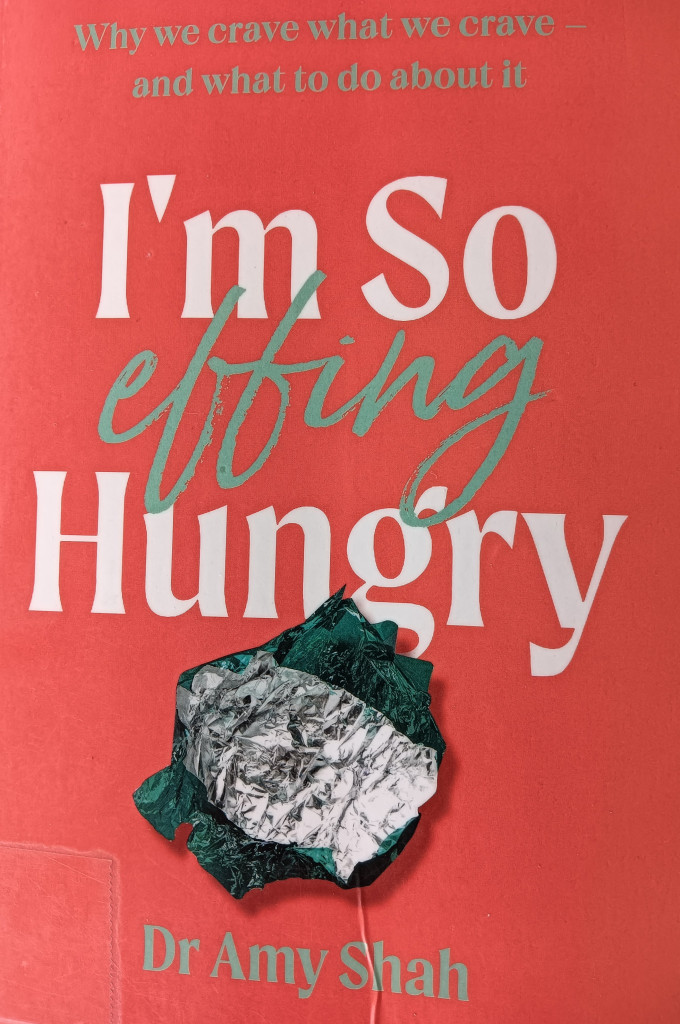 Yet here I was reading a book that said pretty much what I had been trying to get out to the public. So I decided to ask my friend, Dr. Google, how successful Amy was in getting the message out.
And what did I find out, she was a rip-roaring success with millions of followers, she was a fully qualified medical doctor, but unlike most doctors, she started by studying nutrition, which is a cornerstone in combating chronic disease.
Yet despite her success, when I go to my local shopping centre, what do I see? I see a sea of wobbly bums and tums.
There is something going on there I need to understand.
Now I admit to being a dull, boring engineer, and engineers have a role in life to study the best available science and work out how to apply it for the benefit of the community and maybe make enough money to keep on doing our job.
But we have one phrase we keep on asking, we may study all the leading science and work out how to apply it but then we ask a simple question “Does it work”.
The theory may seem unimpeachable, but when it comes to practice, there is always the fear of that hidden snag.
One of my favourite sayings is that
“Science is the art of managing truth, engineering is the art of managing ignorance”.
There is something here that we are missing, and I had to find out what.
The story I have been telling
 We all want to live a long and healthy life.
No one wants to be fat, have a limb chopped off from diabetes, die of a heart attack or inflict the suffering on our carers.
These are the costs of the modern epidemic of chronic disease which is by far the biggest health problem across the modern world.
Naturally, it has received a massive amount of research, and it was very quickly understood that they were caused by the wrong fact in the wrong place.
Initially, scientist and indeed much of the population dismissed this as people eating too much and the slogan “eat less, exercise more” was promoted.
It totally failed and has largely been abandoned, apart from that handful who cling to outdated ideas.
 But there are plenty of open-minded scientist who studied and experimented until they had a clear, and now well accepted view, that we have an intelligent control system which regulates our bodies
Our gut is an integral part of this intelligent control system with individual microbes in the gut communicating with each other and our head brain.
If this intelligent control system decided that we needed to store more fat the gut would produce hormones which would control our appetite, telling us to stop eating if we were full or crave specific food if our bodies need certain nutrients.
The spectrum of species of microbes in our gut played a critical part in this decision. Basically there are gut bugs that make us fat and other gut bugs that make us skinny.
This was first demonstrated in mice by feeding the pooh of skinny mice to fat mice when they became skinny and vice versa.
Later this was demonstrated beyond doubt on humans by the faecal transplant. Graphically if you poked the pooh of a skinny person up the bum of a fat person they would become skinny and vice versa.
There is no doubt that the science is correct - the species of microbes in your gut determines whether you are fat or skinny.
This has led to a multi billion dollar industry of pre and pro biotics, which as anyone can see by a visit to their local shopping centre and viewing the array of wobbly bums and tums has failed miserably.
So what went wrong
We need to understand three concepts.
The first concept is dynamic equilibrium. The gut bugs we have today are not the same as the ones we have tomorrow. Microbes have a very short life span so they are continuously breeding and dying so tomorrow microbes are the sons and daughters of today’s microbes. They may be similar but are not identical to today’s microbes.
Our gut microbes are slowly but steadily changing.
The second concept was given to us by Richard Dawkins in his selfish gene story. A gene in a living creature will struggle to preserve its nature. It may die along with the animal it lives in but the gene will fight to keep the gene family intact.
The third concept is that the food we eat contains microbes.
Microbes breed in the soil. If the conditions favour microbes beneficial to us they will be the dominant species of microbes, they will enter the plants, if we eat them fresh, just after picking we will benefit from these microbes.
If we eat them later we will be eating different species of microbes, the longer we wait the less beneficial they will be.
If the conditions in the soil do not favour beneficial microbes we will be eating plants containing harmful microbes.
If we do not eat plants with beneficial microbes and eat highly processed foods we will not be gaining the benefits of the beneficial microbes, but some other microbes.
Microbes breed incredibly fast and will breed until they fill all available space. In our everyday world, there is no such thing as microbe free, it is just a question of whether we eat beneficial, harmful or neutral microbes.
The microbes we have in our gut are the result of an ongoing battle for space between the various species of microbes. Who wins is dominated by the food we eat.
What does this all mean in the real world?
It means that the microbes in our gut are dominated by the food we eat. We can eat all the pro-biotics we like or have all the faecal transplants that we can bear but ultimately the species of microbes will be dominated by the food we eat at every meal.
What is Gbiota all about?
Showing people how to grow and eat the food that will lead to a beneficial gut biota.
How do you get started? First job is to sign up for a free Newsletter and check for new posts so you become part of the world of ever-changing gut microbes.



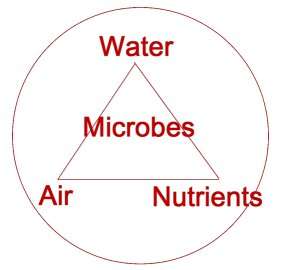 This is called Eco-balance - creating a stable Ecosystem which is in a state of stable balance.
The conditions are a balance of nutrients, water and air.
Nutrients come from was decaying organic matter and plants. Living plants exude nutrients from their roots with different species of plants exuding different nutrients which attract and feed different species of microbes.
Traditionally we ate food that was full of organic waste and ate plants so we naturally had a broad spectrum of microbes.
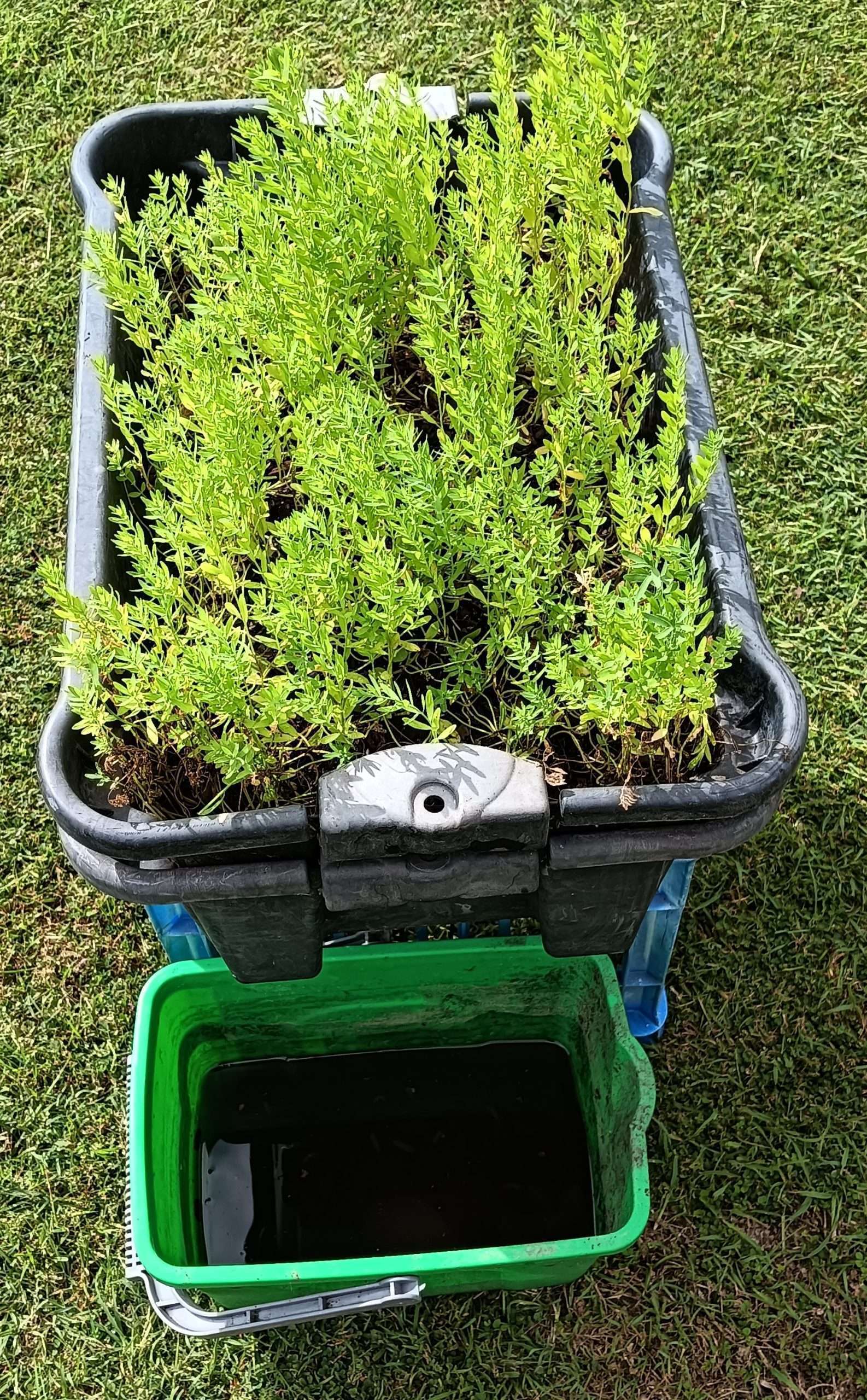
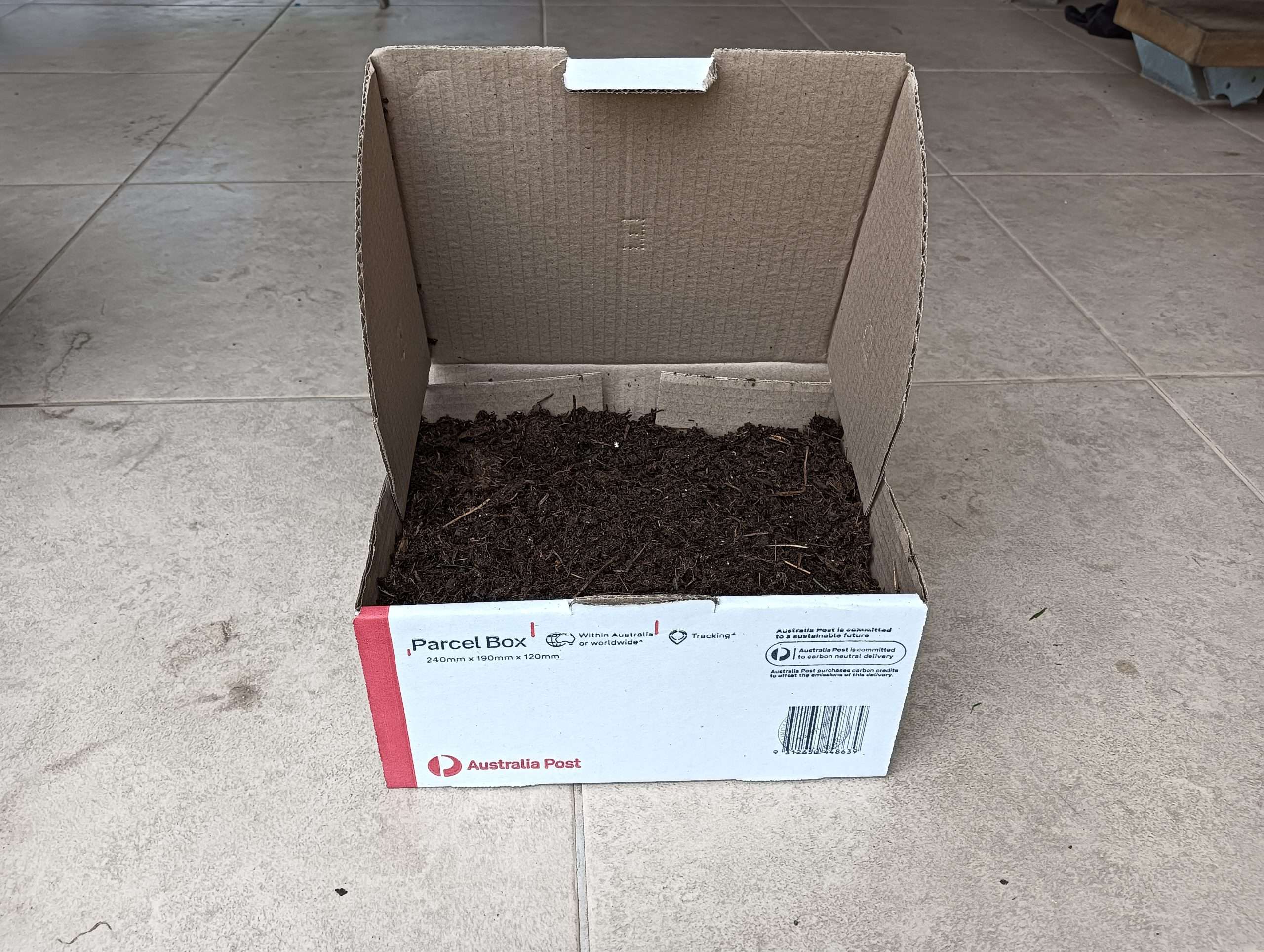 This process of breeding beneficial microbes is difficult to do on an industrial scale but is very easy for people to do at home, even if they have no garden or growing experience. Just grow plants in Gbiota boxes and use the flood and flush system.
This has many advantages other than enhancing our gut microbes particularly it is a lot cheaper than our modern remote growing system and it naturally recycles organic waste which would otherwise end up as greenhouse gases and food is always available in times of crisis.
Gbiota boxes can be readily made from boxes available at any hardware store together with regular potting mix and seeds.
It does however need a starter or inoculant kit containing a spectrum of beneficial microbes which is easily purchased online and will need replacing preferably twice a year - the microbial Ecosystem is delicate.

 My daughter, when she was about seven taught me a valuable lesson. She said she believed in Father Christmas because if she stopped believing she may not get any presents.
 These microbes monitor the types and amount of food in our bodies and if they sense a deficiency they will send out a complex family of hormones to make us crave the foods we need. Every time we eat it learns about that food and that information is stored in our head-brain ready for use when needed.
 This has been happening for millions of years but then we changed our food system so we stopped feeding and nurturing our gut microbes. The result was that it no longer sent out those essential hormones so we overeat and get fat and sick.
 It is no good running some monster advertising campaign to try to convince everyone. For a start the bulk of the people don’t want to admit there is a problem and even if they do they don’t want to feel out of place with their daily contacts.
 By contrast, the solution of people breeding beneficial microbes, that create hormones naturally, at home is just so simple and low cost.
 Bertha Benz ride through the German countryside may not have seemed particularly significant at the time - but look what happened.
 These microbes have a very short life, living and dying in dynamic equilibrium. This means the plants must be eaten shortly after harvesting.
 Breeding beneficial microbes in the soil is a natural process which which has been going on for millions of years. However breeding the microbes at home in organic waste depends on the flood and flush system so the soil breathes and the soil blood never becomes stagnant. This needs to be done correctly so we restrict access to members registered with a valid email address who will receive regular newsletters.
 In the past, and that means going back a million years to the first humanoids there was no epidemic of chronic diseases like obesity, diabetes, heart attack and dementia.
 As our population increased, we changed the way we grew our food so instead of eating fresh plants grown in living soil teeming with beneficial microbes, we changed it to growing plants with synthetic fertiliser, which is debatable, but far worse is we changed the food distribution system with extensive delays from harvest to eating.
 To understand why these catchy advertising jingles fail, we need to understand the differences between conscious and sub-conscious intelligence.
 I have spent my life in the innovation business, with my fair share of ideas that did not work, ideas that worked but no one wanted, two that worked and now the last one which is by far and away the most important. Broadly food that makes us healthy but more specifically breeding gut microbes that will create the hormones to tell us to stop eating when we have had sufficient.