Phytonutrients

Phytonutrients

When I was about 5, I was a naughty boy. We were told that we were not allowed to pick apples from the Coxes’ Orange tree in our garden because they were ‘keepers’, which we needed to save for winter. One day, my parents were out so I picked one and had never tasted anything so good; it was simply delicious. Now, all those years later, I understand why – phytonutrients. Plants, unless they are Triffids, cannot walk away, so they have become masters of chemistry, producing an incredible array of chemicals. A single tomato has over a thousand different phytonutrients; we have little idea what most of them do, but we know they are essential for health.


But we do know they taste good, and taste is the way our bodies work to make sure we eat food that is healthy and avoid harmful food. Simple but effective.

Sulforaphane

Some phytonutrients have been studied in depth. Sulforaphane, for example, which is found in many vegetables, but particularly broccoli, is one of the most powerful with major health benefits. But like many phytonutrients, it has a short life; Sulforaphane has a half-life of two hours. Most phytonutrients, which are so important to health, have a short life, and there is a major difference between a plant having a healthy phytonutrient spectrum and simply not going rotten.

Our modern food system has devoted major research into increasing shelf-life so the produce looks healthy, but the life of the valuable phytonutrients has not changed. Our modern food system is therefore deficient in functioning phytonutrients, which is causing a major health crisis, and with the increase in highly processed foods, the situation is deteriorating.

Our bodies know

The human mind and body form an incredibly sophisticated system. It knows whether we have the right balance of nutrients, and when it senses a deficiency, it sends out hormones which make us feel unsatisfied and want to eat more. Overeating, leading to the storage of excess fat, is the underlying cause of the modern epidemic of chronic diseases such as overweight, diabetes, heart attacks and dementia. The cost to our health systems is measured in trillions of dollars yet does not address the fundamental cause: the lack of phytonutrients in our diet.

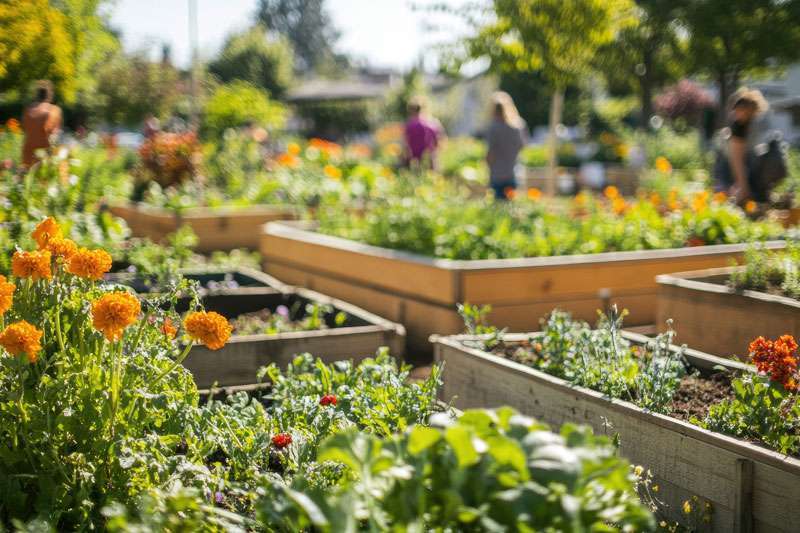
Home grown

Home Gardening | Growing | Gbiota

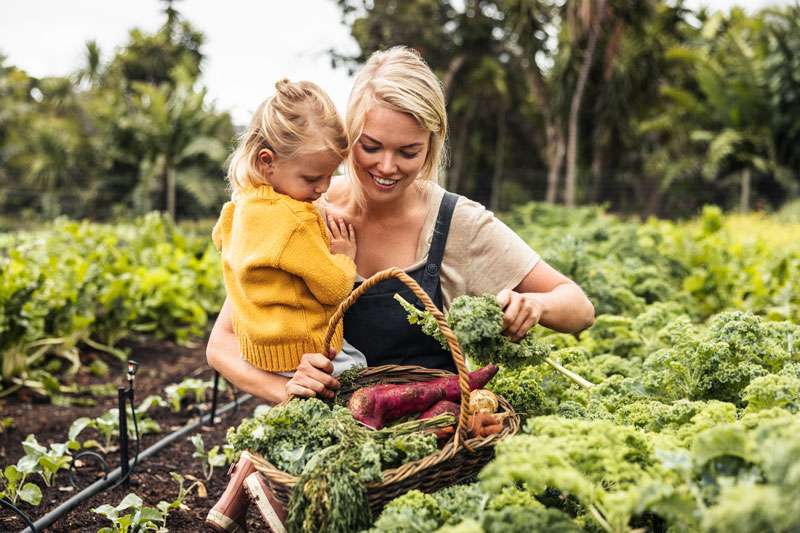
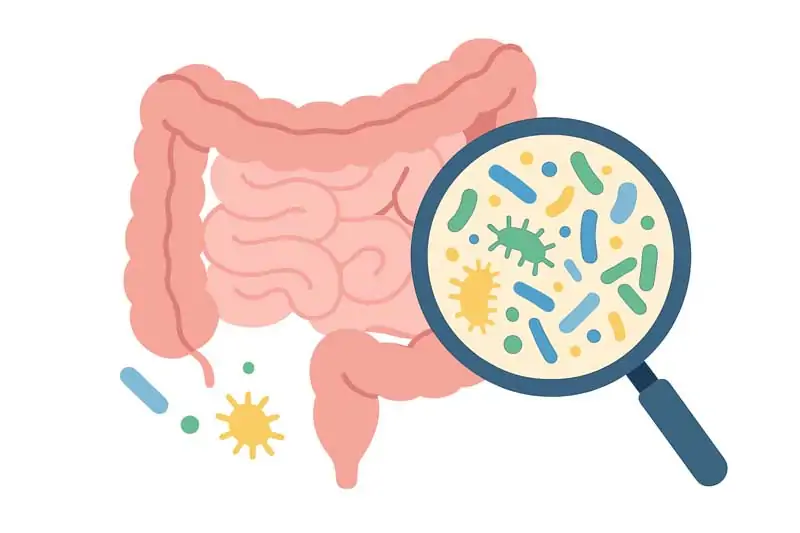
It is just a reality that there is no way of developing a system which can deliver fresh vegetables within two hours of harvesting. The solution is to grow at home so people can pick and eat, but it takes more than just growing at home; the plants must be grown in soil with the essential microbes and minerals. The microbes break down the minerals so they are available for the plants and hence for us, while the microbes themselves will form part of our gut microbes, which regulate our bodies.

There are people with gardens and growing skill who can do this, but the vast majority of people now live in cities, often in apartments with no garden, and people may not have the skills, or just the time, to grow their own vegetables.

Mary

Mary is nominally a fictitious person; any resemblance to a real person is purely coincidental. Mary is a single mum with two kids and three jobs, living a highly stressed-out life, trying to pay the bills and feed her kids healthy food. She is the motif for the Gbiota system and the reason why it was developed.

The Gbiota system

The Gbiota system was developed to provide a way of growing vegetables at home that provide the essential phytonutrients, but is so simple and easy to use that even people living in apartments can grow vegetables that provide these natural phytonutrients. The aim is not to create a system that is super sophisticated and complex, but one that is simple, inexpensive and works for Mary in her stressed-out life.

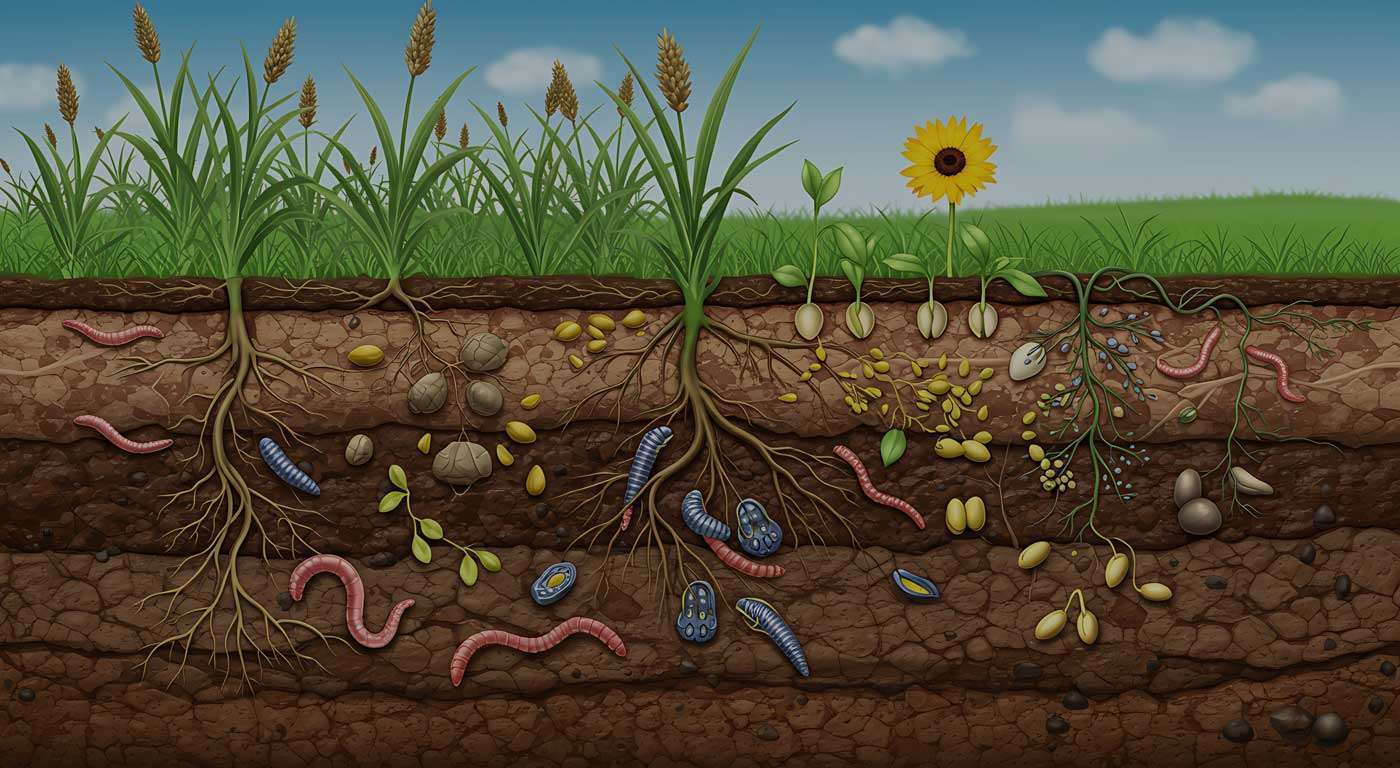
The major input is food waste, which is a major problem costing society millions of dollars in disposal and treatment, but is in fact a highly valuable resource. Minor inputs, small but essential, are the minerals that provide the essential nutrients, and the creatures of the soil that are the natural recyclers – the worms, soldier fly larvae, beetles and microbes – which turn waste into food for the plants, allowing them to produce the phytonutrients essential for health.

Loading

How I Grow Wickimix

How I Grow Wickimix

WickiMix is grown based on the practical observation that good soil is formed in the root zone of specific plants. My aim is therefore to select plants which will help form soil. We understand that soil is formed by the synergistic relationship between plants and soils – but it is not a simple question of selecting just one plant. I have selected a range of plants which form an eco system.


I live on an eco-village near Bundaberg in Queensland. The total area is over two hundred hectares, about half of which is natural bush which has never been tilled or worked and is pretty close to a pristine environment.

This is a very dry area – too far north for the winter rains and far enough south to dodge most of the normal summer tropical deluges. But we do have an excellent system of lakes which provide water throughout the year.

Mushroom Fairy Ring | Soil | Wicking Beds | Gbiota
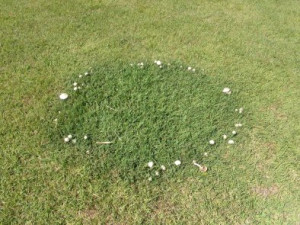
In the wet season my block becomes a haven for fungi to sprout into mushrooms. A fairy ring is formed when a mushroom fires off spawn which lands in a circle. The grass inside the ring is clearly much more luxuriant than where there is no fungi. No doubt about it – fungi really work. While I am sure there is an abundance of local mycorrhizal fungi in my block I have inoculated it with commercial fungi to get a broad spectrum.

Open Sponge Composting | Gbiota | Colin Austin

I grow my WickiMix in either an open wicking bed or a sponge bed. I use an open wicking bed as this allows the natural biology to enter the bed. For growing WickiMix I now generally prefer a sponge bed which is similar to a wicking bed but the water is held by an organic sponge rather than a waterproof layer.

Sponge Bed | Wicking Soil | Gbiota

I have developed a two stage composting process. I have set aside an area of my block as a dedicated compost ring. All the waste organic material is simply dumped in the centre of the ring – I don’t bother to sort – in it goes.

Two Stage Composting | Colin Austin

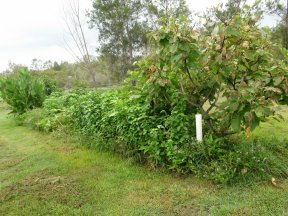
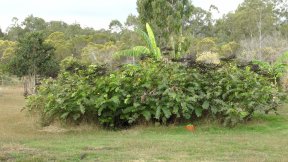
I then grow a ring of broad leaved and deep rooted plants like Senna alata, Queensland Arrowroot etc. around the edge. I can then harvest the leaves to provide me with a source of cleaned compost which is free of pathogens, weed seeds and other nasties.

I do not compost these but use them directly in my beds as food for the biology. I know most people prefer hot composting but I am more interested in feeding – and hence growing – the biology than any nutrient value.

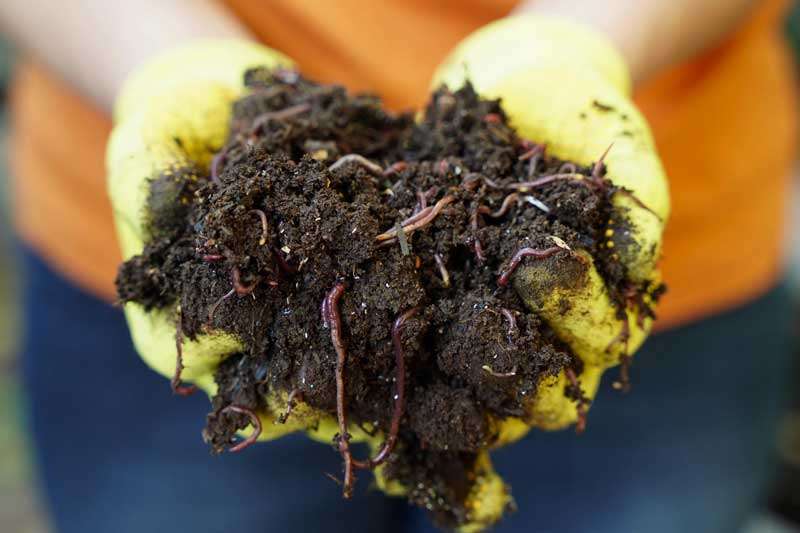
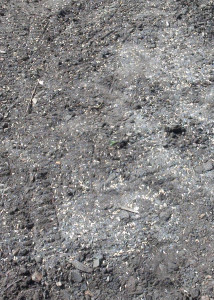
I cover the compostable material with vermicast (worm casting) which are really the basis of WickiMix. Fortunately Kookaburra Park Worm Farms are a close neighbour so I have an abundant supply of vermicast or worm casting and not too far away is an old volcanic rim which can supply volcanic rock dust.

I may add some minerals particularly calcium which is essential for the cell structure of fungi but otherwise I minimise any further nutrients. I want the plants to be a bit hungry so they exude the chemicals which encourage and feed the soil biology.

WickiMix-M is designed to add the minerals for later food production.

Now comes the tricky bit of selecting the plants to grow the WickiMix. Some plants seem to have no interest in creating soil.

For example our native Eucalyptus seems intent on destroying soil – the leaves make the soil hydrophobic and the roots just go straight through any heavy clay with no soil improvement.

At first sight this may seem in defiance of any law of ecology but gum trees have their method – their survival mechanism is based on killing off the competition – which they do by fire and destroying the soil.

So no gum trees in my selection. I want to create a synergistic eco system. Obviously I want plants that will create soil so I select some plants with
deep tap roots and others with fibrous roots.

But I also want plants that will form synergistic relations with the biology – such as legumes and others that encourage mycorrhizal fungi. I do not worry about bacteria – they can look after themselves – but fungi are the key to creating soil.

Now I have to protect my system. The conventional wisdom is to rely on chemicals to fight off attack and I have to admit this is the most economic way. However I just look at the health statistics and say this is clearly not working so I go back to creating a functioning ecosystem.

This means growing some plants which are known defenders. Some plants will provide protection against nematodes and others provide protection against insects and pests.

We now know that mycorrhizal fungi acts as a sort of underground internet. Most plants have very little protection against insects but when attacked they send out chemical signals which are picked up by the mycorrhizal internet which ‘emails’ any protective plants – like pyrethrum daisies – which then activate their protective shield for every plant’s benefit.

All these different species of plants end up with a very dense and self-protective environment.

But not totally – there is still the wildlife.

Where I live on an eco village has an expanse of natural bush and many lakes which provide a habitat for an extensive range of creatures which are intent on eating my plants and is also a source of many weeds.

The creatures – particularly the water birds – are beneficial, bringing with them biology – such as fungal spores – from the native bush. However they can be totally destructive when planting new seeds.

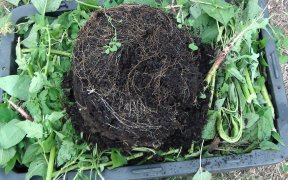
I never harvest the whole area – I just cut off the plants to soil level in a small area and harvest the root system to give me WickiMix-R. But this leaves me with a small bare patch which is open to predators – particularly the ducks and water hens which abound. So I reseed and cover until the patch has reached some level of maturity.

Warning

You do need to be aware that WickiMix-R is part of a natural eco system and will inevitably contain some seeds. It needs to be covered with at least 50mm or better 100mm of soil or WickiMix-M to minimise the seeds germinating. In any case the seeds I use are safe for wicking beds or gardens and can easily be pulled out.

You also need to plant out your bed as soon as possible. You grow what plants you want but plants with fine fibrous roots like the herbs such as parsley, sage, basil etc. are both useful and continue the soil improvement.

I use these as part of my seed mix so you may find they appear anyway.

Loading

Why WickiMix?

Why WickiMix?


Modern humans are the end result of millions of years of evolution. Our food was generally low in energy, high in fibre and rich in minerals and trace elements. Our bodies are adapted to this diet. A wide range of plants grew together in soil, developing synergistic relations – for example some plants being good at repelling insects, others at extracting minerals from deep in the soil. Soil biology was very active and formed part of this synergistic system.


Modern food is very different – in some ways better, in other ways worse. It is full of energy which is very quickly released into our bodies; it is grown in monocultures without the benefits of these synergistic relations with other plants and made viable by the extensive use of chemicals. Production is very high so soils have become depleted of biology and trace minerals.

Our bodies do not handle these sudden bursts of high energy food – it leads to sugar spikes and getting fat – so we need to balance this by eating food which takes longer to digest by containing more fibre and also contains the essential minerals, vitamins and trace elements.

The WickiMix system aims to help people balance their diet by helping people grow their own fruit and vegetables in a way which resembles the way our food was grown naturally.

Healthy bodies from healthy plants from healthy soil

Sounds great but how do we get healthy soil? There are hundreds of products on the market which you are supposed to sprinkle on the surface and somehow they magically create beautiful soil. I have tested many of these – many make no apparent difference, others actually make a minor improvement but none really transform the soil.

Yet I have found that in the root zone of certain plants the soil is actually transformed. The mechanism for this transformation may not be totally clear but it happens. It is possible to get an understanding of the mechanism by studying how soil is created by natural processes and for those interested I discuss this in later articles in this series.

For now I will keep it simple and say that you have to follow a process. This may require the use of soil additives like gypsum but these only work if they form part of a process.

For example, simply mixing gypsum with clay has very little effect, gypsum by itself does not readily mix with clay. However, the calcium in gypsum is essential for fungi which needs calcium for its cell structure. It is the combination of gypsum and soil biology which improves the soil.

But fungi, like all living organisms, needs food and energy, as fungi cannot create their own energy by photosynthesis. So by adding gypsum together with food such as lignum from dead plants and energy from the exudates from the roots of growing plants, we may dramatically improve soil.

How to create soil

Soil is more than a collection of ingredients – it is a combination of parent material, minerals, water, plants, biology and food for the biology working as a living eco-system. People cannot manufacture soil – all we can do is create the right conditions and add some critical components if needed – and soil will form naturally, as it has done for billions of years.

In nature soil creation can be a very slow process and with the wrong conditions soil will not form at all. However, if we provide the right conditions soil will form much faster than leaving it to the random process of nature.

It is a process – I often talk about the WickiMix process which I write about free of charge for anyone interested. I do sell some products which are not otherwise commercially available and other products can be purchased through established channels.

I say again, it is a process and here are some of the ingredients.

Parent material

Parent Soil | Gbiota | Colin Austin

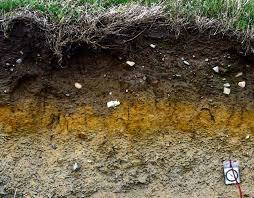
First you need the parent material – this could be your natural soil which may be anywhere from clay to sand, or if you don’t have a garden with suitable soil then you may use potting mix as your parent material. Potting mix may be great for seed and seedling but it is not a living soil which will grow the healthy plants you need for your health.

Minerals

Soil Minerals | Gbiota | Colin Austin

If (as is normal) your parent material is missing certain key minerals you will have to add these. I have already mentioned calcium which is often supplied by gypsum or dolomite, but there is a whole range of minerals which plants need and even more that we need – so these must be added to the soil.

Biology

Biology is essential for good soil. It is not simply a particular species like bacteria or mycorrhizal fungi that is needed but a diverse range which acts as a living eco-system.

WickiMix-R is literally grown in the root zone of selected plants and contains both micro and macro biology. It contains the micro organisms such as fungi and bacteria. In reality there is rarely any need to add bacteria to soil – they are totally ubiquitous and breed at a rate which makes rabbits look celibate.

Fungi generally need adding as part of a soil improvement program, as they break down the harder material which bacteria cannot break down (like lignin or woody stuff). They are crucial to the formation of humus, which is the stable form of carbon and a critical component of good soil.

However, the macro biology (such as worms) play a crucial role by making interconnected channels through the soil.

Water

It may seem so obvious that a living system needs water, but how the water is managed has a major effect on soil quality. The immediate reaction may be to supply water to maintain a constant moisture level, however natural soils have evolved with an often erratic rainfall which can be very beneficial to soil formation.

A wet and dry cycle creates a breathing action in the soil, sucking in fresh air as the water dries up and expelling stale air and gases as the water level rises.

It may not be instinctive but there is a major benefit in occasional flooding. This drives the macro biology to the surface which creates numerous channels to the surface. It can also kill off much harmful biology. Good soils are a living ecosystem with a balance between beneficial and harmful organisms.

Food for the biology

The biology needs to be fed. There are two sources of food – dead organic material and exudates from the plants themselves.

Many people prefer to hot compost any dead organic material – which often looks a tidier process than cold composting. However, simply burying dead organic material so it is digested by the biology is much more effective, as it provides food for the soil biology.

Plant exudates are particularly important, as they encourage specific types of organisms. As fanatical as I am about soil I have to admit it is a competitive place, with all sorts of organisms which are just waiting to attack and eat the root system of our plants. Nematodes and certain fungi can wreak havoc on plant roots.

Plants have developed a system of exudates which will feed beneficial biology that will protect the root system from attack.

Why WickiMix-R and -M

WickiMix-R is extracted from the rhizosphere or root zone of selected plants which are used to grow the biology. In practice the beneficial organisms – like mycorrhizal fungi – function best when the nutrient levels are not too high, presumably because the host plant will cut back on its exudates if there is an adequate supply of nutrients.

For this reason no extra nutrients are added to WickiMix-R apart from calcium, which is essential for fungi.

WickiMix-M is much finer than the fibrous WickiMix-R and is much more suitable for the propagation of seeds and seedlings.

Basics of how to use

Details of how to use the system for wicking beds are described in the manual. Here are the basic principles which can be used in most cases – particularly sponge beds.

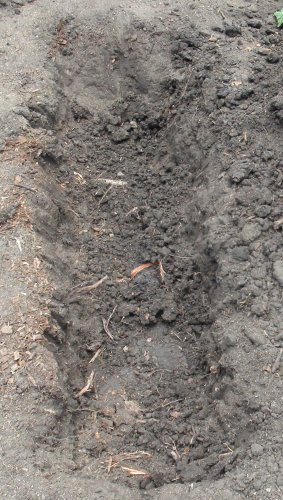
1. Dig the trench

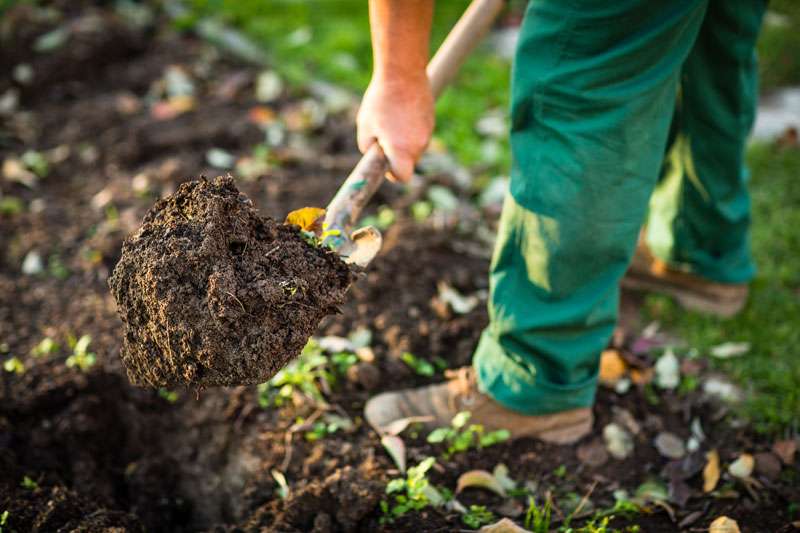
Trench | Gbiota | Colin Austin

First a trench is dug, minimum size 300 mm by 300 mm. This is my heavy clay soil, which is a challenge, so I have gone for the minimum size. I wish I was younger.

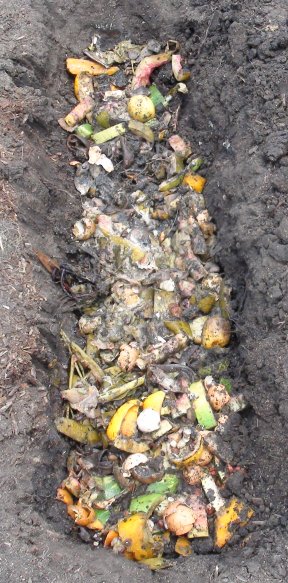
2. Add food waste

Food Waste | Compost | Trench | Gbiota

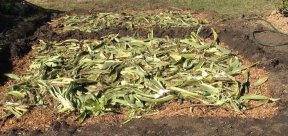
The trench is then filled with food waste. This is where I stop being technical and live in the real world. I wait until the compost bin is just at the point before the bin starts to smell and my wife will get grumpy, then take it down to the sponge bed to empty the bin. I guess the length of the trench so the food layer will be about 100 mm high.

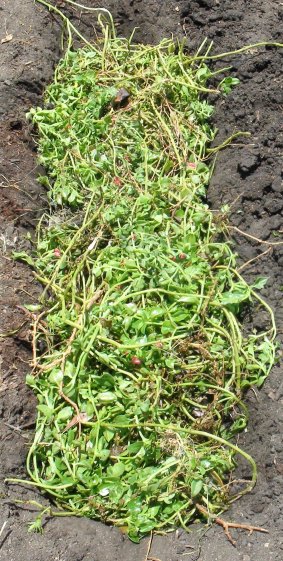
3. Cover with weeds and amendments

Weeds and Amendments | Gbiota Wicking Beds | Colin Austin

I then cover the food with weeds. I have tonnes of weeds at my place and I used to think of them as a total pain. I now look upon them as a highly efficient way of mining nutrients (but weeding is still a pain). If you live in an apartment weeds are not essential, but it is worth adding some dolomite (calcium) and manure (nitrogen).

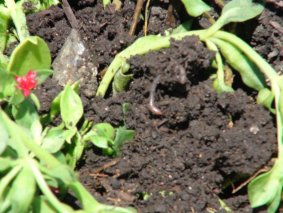
4. Add WickiMix-R

Wickimix R | Wicking Beds | Gbiota | Colin Austin

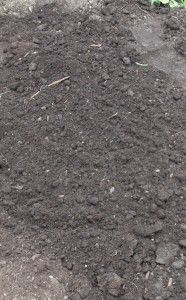
I then add WickiMix-R on top of the weeds or waste. WickiMix-R is extracted from the root zone of selected plants and is very fibrous, so it is impossible to get a nice smooth layer. There are usually plenty of worm eggs in the WickiMix-R so they will soon reappear and start working your soil.

5. Backfill with parent soil and WickiMix-M

Sponge Bed | Soil | Wicking Beds | Gbiota | Colin Austin
In a large sponge bed I will try and smooth the surface by backfilling with the parent soil. Unfortunately my soil is a heavy clay so it gives a lumpy surface, but I do as best as I can then add the fine WickiMix-M. In a small wicking bed I would simply use WickiMix-M to create the smooth surface for seeding.

6. Seed or plant immediately

Wicking Soil Mix | Colin Austin | Gbiota

I now apply a layer of the fine WickiMix-M to the surface to germinate my seeds. It is most important to either seed or put in seedlings or a mature plant. Soil is created by the synergistic relation between plant roots and soil biology.

Essentially, waste organic material is placed relatively deep in the soil. This is covered with a layer of WickiMix-R where the biology will transform the waste organic material. In a small wicking bed (where cost is not so much of an issue) this will be covered with a layer of WickiMix-M. However, on a larger area it is more economic to cover with a layer of parent soil or potting mix, then cover with a layer of the fine WickiMix-M for seed propagation.

This laminated structure is only the starting point. The macro biology will move from layer to layer so you will end up with a beautifully mixed soil, particularly if you follow the recommended deep cycle irrigation.

About WickiMix-R and WickiMix-M

Wicking Mix | Rhizosoil | Colin Austin | Gbiota
WickiMix-R
is a natural culture from the rhizosphere or root zone of selected plants known to attract beneficial micro-organisms. It will transform organic material such as weeds and food waste into nutrient rich soil.

WickiMix-M contains minerals and trace elements essential for health and provides a fine, seed-friendly layer for germination and early growth.

Loading

Soils for Wicking Beds

Soils for Wicking Beds

Many people think wicking beds are just to save water; the most important feature however is creating a mini ecology with a complex soil biology which can release nutrients and trace elements in the soil so the plants are rich in phytochemicals to improve health. This article shows how even poor soil can be regenerated using soil biology.


Index

Who does the public relations for soil?

Dirty, boring, yucky, so 2012 as teenagers say. Now I am a soil nut; we could not exist without soil. We are totally dependent on soil for our food and clothing. Don’t think hydroponics will save us – most of the feedstock comes from soil anyway.

Many of our environmental problems come down to soil. One of the worst aspects of deforestation is the destruction of soil, yet soil could hold enough carbon to sequester manmade emissions for fifty years, giving us time to come up with alternative energy.

Soil is among the world’s most critical resources, yet we have a food supply system dominated by major companies who pressure farmers to destroy their soil to stay solvent. Let’s face it, farmers do not wake up each morning and say, “I think I will destroy another 400 hectares of soil; I only did 250 yesterday so I must make a special effort today.”

Rich or poor, we all need soil.

What a learning experience

Some forty years ago (yes, I know I am old) Australia suffered terrible dust storms, losing millions of tonnes of topsoil. I realised that at some point in time people would want to know how to regenerate topsoil, so I started a series of experiments. I bought every soil improver and clay breaker I could find: gypsum, dolomite, seaweed extracts, sulphur-based clay breakers, sawdust, woodchips and so on. I also experimented with different ways of working the soil, such as contour ploughing, rotocultivation, green manures, etc. Whatever else you may say about these experiments, they were certainly obsessive.

What did I find? There is simply no magic powder you can sprinkle on claggy clay that will convert it to beautiful loam. Pity – it would be worth a fortune, but that is the reality.

But over these last forty years I have found that you can make soil. Not instantaneously, but you can make beautifully productive soil by following a process.

Now I anticipate some readers will want a simple step-by-step procedure. I do that right at the end, but first I want to have a bit of a yarn to show how the basic principles were established.

Bartering food

My relationship with soil goes back a long way. I was born and Hitler declared war and tried to starve and bomb us into submission. Every bit of available land was brought into production to grow food. To me, as a toddler, people growing food and bartering a sack of potatoes for a few cabbages was simply the way the world worked.

One of my earliest lessons about soil was the use of the humble potato. A lot of wasteland, basically covered with weeds and overgrown, was brought into production. To get rid of all those weeds would have been a horrendous job, made worse as there were no people to do it – they were all busy making Spitfires. But potatoes are a hungry crop that can out-compete the weeds and make the land productive for other crops later on. A useful lesson – look for ways of letting nature do the work.

That lesson was rammed home many years later when, in a burst of ignorant youth, I rotocultivated my lawn to break up the heavy clay. When I finished it looked beautiful, a nice fine tilth. But after the first heavy rain it turned into concrete.

The mystery of the dead chook – it took 65 years to solve

Another early learning experience I can recall about soil is when we buried the remains of a chicken in the lawn. You will not be surprised that with all those nutrients the grass grew taller and greener than the surrounding grass. But the grass continued to be taller and greener for year after year, well after all the nutrients had been dispersed.

It was some sixty-five years later that I began to understand the mystery of the dead chook.

Not that long ago I noticed the traditional fairy ring of mushrooms on my lawn. These sort of come and go as they feel like it. We know how they work: a mushroom has a ring of “cannons” ready to fire out spores. When the conditions are just right – and you need to be a mushroom to know when that is – they all fire off together, creating a ring of spores a metre or so away which makes the fairy ring. But if you look at the grass inside the fairy ring it is much longer and healthier than the surrounding grass.

Now we know that fungi are particularly effective, far better than plants, at extracting nutrients from the soil. Their hyphae are very fine so can exert very high pressures and they exude enzymes which can dissolve rock particles so the plants have an extra supply of food.

So the mystery of the dead chook was resolved. True, the nutrients gave the grass a kick start, but they also started a fungal colony which year after year helped feed the grass, long after the nutrients had been distributed far and wide.

Farming the soil biology

Soil is created by the millions of creatures that live in the soil – the soil biology. This is a complex business which scientists spend lifetimes studying. But you do not need to know about every species in the soil; rather, you need to know how to farm the soil biology, just like a farmer looks after his cows.

Soil biology has goodies and baddies. Mycorrhizal fungi and worms are highly beneficial, creating the structure for the soil, while nematodes can eat away the roots and cinnamon fungi and phylloxera create much damage.

The aim is to “farm” the biology to create conditions that encourage the beneficial biology while discouraging the detrimental.

Plants, by photosynthesis, provide the energy for soil biology. Some crops are beneficial for soil regeneration, but generally selecting plants specifically for soil regeneration is faster and more effective. The plants selected depend on the natural soil type and the climate. I call these soil trees; they are grown purely to create good soil.

Xiulan, my wife, thinks I am mad: “You grow rubbish trees,” she says. But this is one of the few times I am right and she is wrong. Growing trees to improve soil may waste a bit of land, but it makes the crops I do grow much more productive.

Selecting the appropriate soil tree is an important job and it depends on the soil and the climate.

I live in an area which is subtropical, near what is left of Bundaberg after the floods. It is at the same latitude as our major deserts and is dry for much of the year; there is no regular rainfall. We just get the edges of extreme weather, mostly cyclones from the north in summer, but sometimes we get a winter storm from the south.

My soil is a seriously heavy clay – sticky, claggy and virtually unworkable when wet but like concrete when dry. These are pretty extreme conditions, so I have to search for a seriously tough plant that can thrive. On the other hand I do not want it so ferocious that it becomes a weed. There are plenty of weeds that thrive in our conditions, but they just get out of control.

The most successful plant I have found to date is Senna alata. It can be grown from cuttings but seeds are probably the easiest, and it can reach maturity and flower within the year. It can be grown as an annual or as a permanent tree to act as a host for the mycorrhizal fungi and worms.

It produces abundant foliage which I use to feed the soil biology and seems to thrive under all conditions and is tough enough to out-compete the weeds. It is a legume, so harvests nitrogen and is efficient at “mining” phosphorous, so it is a good source of two of the big three, N.P.K.

The root system is extremely tough and seems to have no problem in penetrating my heavy clay. Once I tried to grow it in polystyrene vegetable boxes – the roots just went right through. The only snag I have found so far is that it does not handle frost, which kills off the stem and branches, but the roots seem to survive so next year the plant just regrows, and it is such a fast grower that I do not see that as a big problem.

I grow them in my wicking beds (they make great stakes for beans and tomatoes) but also use them in a new system I am experimenting with which I call a sponge bed.

Wicking boxes and beds are fine for smaller use, but what about on a larger scale? This is where I see the sponge bed could be the answer. There is no plastic sheet to provide a seal to prevent the water leaking away. Instead I am creating a highly absorbent layer deep in the soil. It works like a baby’s nappy – holding onto the water to maintain that uniform moisture essential for the beneficial soil biology.

Moisture the key

Moisture is the key to soil regeneration. I know that most people think of wicking beds as a highly efficient way of watering, with virtually no loss to evaporation or soaking beyond the root zone, but to me the way they maintain a uniform moisture to aid the soil biology is equally, if not more, important.

But why is moisture so important? To answer this I must talk about the differences between bacteria and fungi. They are both decayers, taking their energy from the organic material from plants, but they behave very differently.

Bacteria are everywhere; they can live almost anywhere on earth in the most extreme conditions, from sulphur-emitting vent holes deep in the ocean to high up in the atmosphere. They break down the organic material, emitting carbon dioxide, while a certain amount of carbon goes into their bodies. But they are short-lived and when they die their bodies are eaten by yet more bacteria, releasing more carbon dioxide into the atmosphere.

The net result is that they are actually reducing the level of carbon in the soil. They are very small and do not move about and while they do release some nutrients to the soil, they do very little for the structure of the soil.

Contrast this with fungi. They are even more effective decomposers, attacking the hard material like lignin (hard wood) which the bacteria tend to leave. This forms humates (or humus), complex organic chemicals which are stable in the soil for years, both storing carbon and aiding the structure of the soil.

Fungi are very long-lived (in appropriate conditions) and hold a significant amount of carbon in their bodies, but they are very effective at giving the soil its critical structure, breaking up the soil and making it porous so it can hold more water and nutrients and allow the plant roots to penetrate the soil. Plant roots exude saccharides which feed the soil biology, so there is a natural symbiotic relationship.

The mycorrhizal fungi form an even more effective symbiotic relationship with the plants, attaching directly to the roots. The fungi provide the plant with moisture and nutrients, which fungi are very effective at harvesting (better than plants), while the plants provide the fungi with sugars and energy. Pretty neat deal!

The fungi are far more sensitive to moisture levels, only flourishing in a limited range of moisture. To improve the soil we want to preferentially encourage the fungi, which we can do by maintaining the moisture level.

Worms, the other great soil conditioner, also thrive in moist conditions. However, there are different types of worms which fulfil different functions in soil regeneration. The worms normally sold are compost worms, which do a brilliant job of breaking down organic matter; however, they tend to stay in one spot.

Other varieties of worms are much larger and stronger and are deep-burrowing; they will come to the surface to gather food then go back deep into the soil. As they travel they make the soil much more porous and play an important part in soil regeneration.

The major advantage of a wicking bed is that it maintains the soil continuously moist, not too wet, not too dry – just the right conditions for the beneficial soil biology.

Bio-packs

But how do we get the right biology into the soil? I have many years experimenting and am now developing the bio-pack. I am using wicking beds with their consistent moisture levels to grow what is in effect a complete ecosystem of plants, mycorrhizal fungi, worms, micronutrients and the other components of soil biology. These bio-packs are small enough to be shipped as an inoculant to initiate the soil biology.

Just scratch out a little hole in the ground, pop in a bio-pack, go and relax and let the biology do the work. Life may be hard but it doesn’t have to be all that hard.

Soil dynamics

Soil can be created but is also being destroyed by the release of carbon back to the atmosphere. The organic materials in the soil are essentially long chain molecules with carbon as the backbone, just like plastics. But UV degradation and oxygen are powerful destroyers of long chain molecules. If you have ever left a bit of plastic out in the sunlight you will have seen how it first goes brittle, then cracks and finally disintegrates. It is the same with organic molecules on the soil; they are continuously being broken down by the deadly combination of UV and oxygen.

To make matters worse, the bacteria are also breaking down the long chain molecules. The net result is a loss of carbon back to the atmosphere. On the other hand, plants are continuously extracting carbon from the atmosphere so carbon is continuously cycling. If we manage the system using plants, such as soil plants, to continuously extract carbon from the atmosphere, the carbon content and soil quality will continue to increase year after year.

However, if we adopt inferior farming practices (as farmers are often forced into) with a lower carbon capture, then carbon loss will exceed that gained so the carbon level will decrease.

Clay, if left unattended, will always revert back to its original form, so it is essential to keep the soil biology fed and watered so they just keep on making the soil better.

It is a bit like pushing a wheelchair up a hill. If you continue to push you will eventually get to the top of the hill. But if you let go it will roll back to where you started.

Soil carbon and climate change

This cycling of carbon is the fundamental administrative problem with using soil carbon as a mechanism in fighting climate change. The rules, decided over twenty years ago, say that the carbon sequestered should be permanent, yet soil carbon is continuously recycling. It is totally the wrong way to look at the role soil carbon plays in climate change. It will never be a permanent solution to climate change; we simply have to adopt new energy sources.

But that takes time, and soil carbon is a cheap and immediately available technology which can give us a window in time while we make that change. On a global scale we could use soil carbon to stabilise our atmospheric carbon for up to fifty years while we make the needed energy changes, but we need to rethink the role of soil carbon. The current logic is just about as sensible as jumping out of an aircraft with a perfectly good parachute but not pulling the rip cord on the basis that the parachute will be no use after you hit the ground.

Meanwhile, people have their houses washed away in the Bundaberg floods.

Soil for wicking beds

Wicking beds may be a very efficient way of watering plants, but they need good soil. One of the aims of developing the wicking bed was to create those moist conditions for the soil biology, particularly the fungi, which make good soil.

So where do we start? We could of course just go and buy some soil. But here is the snag. Processed soils are deliberately sterilised so any harmful bacteria have been killed, but that also kills off the beneficial biology.

OK, so you can buy topsoil. Sometimes you see “mountain soil” advertised, giving the impression that the soil is imported from the rich mountains of Nepal at amazing expense. Now what often happens in reality is that the company goes around building sites collecting the spare topsoil, they take it back to their yard and pile it up into a mountain, then sell this as “mountain” soil.

So generally I prefer to use local soil and improve this. At least the soil will contain local soil biology which is well adapted.

Regenerating soil

The three basic aspects of soil are the physical (e.g. particle size and distribution), the soil chemistry (what nutrients or harmful chemicals may be in the soil) and the soil biology.

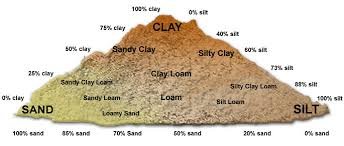
Let’s see how we can improve an existing soil, starting with the soil physics. There is a very simple experiment which is really quite fun. Just take a sample of the soil (about a cupful) and put it into a glass container. Fill with water and add a little detergent. Break up the soil until it is a uniformly mixed slurry. With clay soils this can be a bit of work. Then just let the particles settle and watch from time to time.

If you have not broken up the lumps of clay properly they will fall straight to the bottom. Don’t worry, just mix them up and start again, maybe squeezing with your fingers until all the lumps have been broken down.

The larger sand particles will fall out first. This may occur in a few minutes. It always surprises me that a soil which looks to be totally clay with fine particles may still contain significant sand particles. Sand can also contain a significant amount of fines.

This will form a uniform layer at the bottom of the container. Next the finer particles, which may be classified by a soil scientist as silts, will start to drop out. This will take a few hours. Finally the very fine clay particles will settle out. It could take several days or weeks for these very fine particles to settle out and the water to become clear.

You may also find bits of organic material floating on the surface.

It is pretty obvious what the distribution of particles in your soil is like just by looking at the various layers which are usually pretty clear, but if you like you can drain out the water and examine the various layers using a magnifying glass or microscope. You can buy quite cheaply little magnifying cameras that fit onto your computer. I bought mine on eBay and it is great fun.

Having found out about the structure of your soil it is time to start rectification.

Rectifying your soil – structure

If your soil is predominantly sandy you are lucky, as this is very good for wicking beds. Normally sandy soils are not considered good as they hold little water or nutrients. The larger particle size means there is less area for the nutrients to bond to.

But sand is still a pretty good wicking medium; we don’t have to worry about the water draining away and, using the “compost pipe”, the plants are fed a compost tea which provides lots of nutrients.

If the sand level is extreme with no fines then adding a little clay may be beneficial. Clay particles are so small that they have a larger surface area that the nutrients attach to.

A heavy clay soil is not such good news but still solvable. You need to mix in a combination of dolomite or gypsum and sand. Don’t be mean with the sand – too little will just make the clay like concrete without breaking up the clay. Add at least 20% sand.

When the clay is wet it is very difficult to mix with the sand and dolomite; it just forms frustrating lumps. Not much you can do about this other than let the clay dry out when the clumps can be broken up manually.

Now I have to admit that breaking up lumps of clay is not my ideal way of spending a Sunday afternoon – so I cheat. When I have got the big lumps broken down I will fill my wicking box to within about 50 mm of the top, then add a 50 mm layer of vermicast (worm castings) into which I can put my plants. The worms and soil biology can then take over the job from where I left off.

Now you have a base soil you need to start working in the additives to give the soil body and tilth. This will depend on what is available locally. Vermicast is excellent, as is compost or whatever organic material is available. I use tonnes of mill mud, a by-product from the sugar mill near where I live, but it is really up to you to find a local source of organic material.

Compost really needs to be a balance between brown and green material. Unfortunately much compost is what I call brown; food scraps may contain a little green material but are still largely brown. This is where the soil trees come in – providing a supply of green leafy material.

In principle I prefer direct in-soil composting, but sometimes pre-composting is needed.

Regenerating soil – chemistry

Next we have to consider the chemical requirements. This is a mature area of science with many references, in particular Garden Talk by Colin Campbell and The New Organic Gardener by Tim Marshall. Colin’s book has some very useful tips on recognising deficiencies by inspecting the plants.

If you are going to use a lot of undecomposed organic material you will need to add extra nitrogen as decomposition takes out a lot of nitrogen. I use chicken pellets and blood and bone.

But a word of warning: with conventional growing there is always a loss of nutrients by leaching. This does not normally happen in a wicking bed unless you deliberately flush. This means that it is very easy to over-fertilise. I know you can get all sorts of tests done on soils, but the easiest way is to let your plants tell you. If you find they are growing too fast, such as lettuce bolting prematurely or radish and carrots splitting, then you have too much fertiliser, particularly nitrogen.

Generally the big three (N, P, K) are readily available, so be careful how much you add. I prefer organic fertilisers as they are slow release, but I am quite happy about adding extra potassium even as a chemical.

Now come the minor and trace elements, and this is where the controversy starts. Soil scientists generally talk about primary, secondary and trace elements. Plants must have some of these, but the amounts are very small. That is to make the plants healthy.

But we are animals, and the amount of these minor and trace elements we need is much higher than plants. The level of these elements in our bodies is typically ten times that found in plants. This is also important for the soil biology; worm farmers report that feeding the worms extra minerals improves their health.

And this is where I must digress.

Delusions of self sufficiency

When Bill Mollison first launched permaculture on the world it created quite a stir. His arguments about the weaknesses of modern monoculture agriculture seemed so powerful that I was hooked and decided I would have a go at self-sufficiency. Now that was a learning experience. I learned that it is relatively easy to plant the seeds and grow a good crop; it is a totally different thing to plant seeds every couple of weeks or so and get a continuous supply of food.

First there is the human fallibility of not planting on a regular basis – that is my problem – but then there is the issue of natural variability and the weather. Let me tell you about the real world and self-sufficiency. I can put in a quarter of a packet of lettuce and the germination will be pretty poor, so I know that I am not going to get a good enough crop. So I will race out and plant a full packet to allow for losses. Now as far as I can see I have done everything exactly the same as last time, but this time I will have virtually 100% germination so I think I am going to be flooded with lettuce.

Now I live near Bundaberg and we were hit by a mind-blowing amount of water. We had 820 mm of rain in 3 days. We had 300 mm fall on the Sunday night (when North Bundaberg was washed away). I reckon that we had 100 mm fall in about three hours; I thought I would go outside with my torch to see whether the drainage systems I put in after the last floods were coping. The force of the rain and wind was so great I turned straight around and went back to bed. This was no place for humans to be outside.

In the morning I inspected. The drainage systems I put in after the 2011 floods went straight under my house. These had done an excellent job, just some wind-blown rain but no flooding. But my bumper crop of lettuces was totally pummelled into the ground.

I think back to wartime, when we weren’t playing at self-sufficiency – it was for real. How did we manage? Well, we did not have a continuous supply of fresh vegetables. We grew crops which could be stored; we had sacks of potatoes in the cellar, Mum pickled what seemed like sixty million jars of cabbage, made jam and preserves.

Now I am happy to let nature take its course and just see what grows well. The answer on my block is pumpkins. I don’t think I have ever planted or bought pumpkins; many years ago someone may have given me a pumpkin and the waste went onto the compost. Now every year we have this forest of self-set pumpkins that invade our property – enough to feed us for a year. Yes, it would be perfectly possible to be self-sufficient, but in my case that would mean periods of living off pumpkins and that does not necessarily mean a healthy diet.

Now you have heard my views on our food distribution system, and it is just a fact that plants are bred for appearance and shelf life rather than taste or nutritional value. But give them a go; they have been remarkably effective in bringing food from all over the world to the local shop at remarkably low prices (even if that means squeezing the farmer on price).

So what do we do? Well, I am relatively lucky. I live in a rural area with a local market where I can buy food grown locally, and even our supermarket (run by a local guy) buys in local produce. So I grow what I can and buy locally what I cannot. But I want to make sure that the food I grow provides the phytochemicals my body needs.

Phytochemicals are the complex chemicals produced by plants, some of which are known to science while many are not. But as long as we eat some food grown in soil with a high concentration of the micro-elements we need, then there is a fair bet they are providing all the supplementary food we need.

I find it difficult to argue the case, on either economic or practical grounds, for trying to replace all bought-in foods with home grown. But I strongly argue that you can grow high nutrient-rich plants, full of phytochemicals, to provide the necessary minerals and speciality chemicals (vitamins etc.) needed for health. This is an infinitely better approach than stuffing yourself full of expensive vitamin pills.

Can we be sure

Now you may ask, if science hasn’t even identified all these phytochemicals, then how can I say that these are important for health? Well, no one can be sure, but life is about managing risks. On the one hand I can eat fatty meat and greasy chips, or I can eat a combination of fresh vegetables I buy in plus some I grow myself in soil with a high micronutrient load.

I look upon these home grown vegetables as a supplement – much better than eating tonnes of vitamin pills.

Am I right?

Well, to help you decide, can I tell you a little story from my studies into anthropology. It is a little-known fact that some hundred thousand years ago there were two breeds of human-like creatures on the earth.

The first group were not particularly intelligent and just went about their business of surviving in the way that seemed best to them at the time and basically having a good time. But at least they were action-orientated and got things done. These were the sort of guys that would pull the rip cord on the parachute, even if they had not worked out what to do with the parachute when they landed on the ground.

The second group were super-intelligent; a bunch of Fouriers, Newtons and Einsteins who spent much of their days discussing issues of the greatest significance. Great debates of the highest complexity, but they only took action where they were totally sure with total scientific proof (non rip-cord pullers). Now one day they came around to discussing sex. They came to the conclusion that they did not have a proper understanding of sex and that, as DNA was not going to be discovered for another hundred thousand years, they should wait until the discovery before having any more sex. WUSP was their motto – wait until scientifically proven.

Despite their super intelligence they became extinct while the other mob prospered. But the “smarties” did not go quite extinct. A few of the lads thought that they should conduct some scientific experiments on sex, purely for knowledge of course.

So they high-tailed it over to the other camp, where things had been quite active. After a good meal of kangaroo steak George asked Mavis if she fancied a bit of hanky-panky. Now Mavis thought, “Well, washing up won’t be invented for a hundred thousand years, so why not?” So off to the bushes they went to ensure the propagation of the species.

Now the lads from the intellectual camp met up with Mavis’s younger sister and cousin and started to chat them up – as young lads do. These young lasses had not had any hanky-panky for some time and hadn’t been brainwashed into the benefits of abstinence by the yet-to-be-invented religious orders, so they told the lads to stop talking, grabbed them by their kangaroo shirt collars and took them off to the bushes. And so their genes survived, which is why we have people saying we should wait until the science has been confirmed before taking action on climate change (by, for example, exploiting the benefits of soil carbon). The solution to that is to incarcerate them all in North Bundaberg which was wiped out in the last floods.

So we may not be sure that eating at least some vegetables grown in soil rich in micro-nutrients is the proven way to health, but it is certainly the best show in town.

But here lies the snag. It is easy to add the micro-nutrients to the soil, but these were made by grinding up rocks which are insoluble. Just adding micro-nutrients does not do much good; the plants cannot access them. This is one of the many roles of soil biology.

Regenerating soil – biology

Biology is what gives soil its structure; it creates aggregates and fine passages which enable the roots to penetrate the ground and the soil to hold much more water. Soil biology is what releases the nutrients which may be locked up as insoluble minerals into the complex soluble chemicals which the plants can take up.

Whether you are starting with a clay or sandy soil, the soil biology can convert it to open, quality soil with a good tilth. It is at the heart of making us healthy by eating healthy plants.

You can see I get a bit steamed up about soil biology.

So what do you need to do to get a good soil biology? Well, just take what I am about to say as a bit of a shock treatment: forget about your plants, whether they have enough water and food, and just be totally obsessive about your soil and its biology. (I told you I was a soil nut.) But this is not as daft and extreme as it sounds. If you look after the soil biology the plants will automatically grow well.

Now do not think for one minute that you can just go and buy one of my bio-packs and you will end up with beautifully rich soil, because you won’t. Putting a bio-pack into your soil is a bit like having a baby dumped on your doorstep. If you just leave it there it will simply die – you have to look after it by feeding and watering it (and letting it breathe).

Watering with a wicking bed is easy. In a wicking box it is convenient to use a sight glass (which also makes them easy to drain). In the larger wicking bed it is not so easy to put a sight glass, so even if you use a compost pipe it is still a good idea to have a pipe so you can see the water level. The only decision is whether to keep the water reservoir topped up (shallow cycle) or to let the water level drop until almost empty then refill (deep cycle).

I prefer the deep cycle for two reasons. First, the deep filling and emptying cycle is actually sucking and expelling air – like breathing. Secondly, I now fill my wicking bed completely with soil and do not use a separate reservoir. The plants can then use the full depth of the soil; the roots do not mind the occasional saturation you get with the deep cycle, but with a shallow cycle they will not live in continuously wet soil.

Feeding the soil biology is more complex

Soil biology cannot photosynthesise (generally; algae and some specialist organisms can). They are totally dependent on the plants for energy. Mycorrhizal fungi get their energy directly from the plants, but the rest of the soil biology has to chomp up dead plants.

On my first generation wicking beds I had a plastic water pipe feeding the bottom of the bed. In the second generation I added a worm bed, typically a plastic bucket with holes in the bottom, filled with organic waste and worms. Then I thought, this is silly: I am wasting a lot of space in the bed and the worms are a bit restricted and may not work through the bed properly, so I combined the pipe and the worm bed into one.

It’s dead simple. When I make a bed I just put a pipe into the box, fill the box with soil and the compost pipe with (yes, you have guessed it) compost. I pull out the plastic pipe, making sure the compost is pushed down. Next I put in the bio-pack, then the seeds, water, and I am away. It is really a question of minutes to set up a box.

This is a relatively new method. A hole is formed in the soil using an old flowerpot or a pipe; this is then removed and the hole filled with compost.

I have had no problem with the water pipe clogging up, but I have a variety of weapons to clear it out or make a new one if needed. I am also using these tools to make compost pipes in existing beds.

To maintain the box I water through the compost pipe. This flushes out a compost tea which flows to the bottom of the box then wicks up. I can add fertiliser and the trace elements to the compost pipe. Using chicken pellets and blood and bone helps the compost to decompose.

I do pre-compost some of my rubbish but I also like to add fresh green material to my compost pipe.

Adding further compost is where wicking bed users seem to have a variety of approaches. Some like to use it as a mulch around the plants. I am sure this is good, but I have a slightly different view. Surface mulch is broken down both by UV light and bacteria, whereas my approach is to say that all that light that is falling on the mulch can be used to grow more plants. I like companion planting, putting new plants in among the others as space appears.

I could argue the technology for doing that, but the real reason is that I am just a messy person and just like having a rolling stream of plants filling up all available space – it just suits my personality. Many people like plants in nice straight rows. If you are one of those I salute you, and please come and tidy up my house which is a mess. (Xiulan is in China so I can get away with the mess; as the saying goes, while Xiulan is away Colin messes up. I think the original was more to do with cats and mice.)

Have I had problems? Well yes, some of my early beds which used mainly clay with no sand have become quite hard, but that was after about five years. I simply aerated by pushing in a fork and levering back until the soil cracked. I did not dig or disturb the soil and it worked fine. I will just have to wait another five years to see how the current system using more sand, dolomite and the bio-pack work out over time.

I will just mention that in my sponge bed I am putting the cuttings from my senna trees into trenches so it goes into rather than onto the soil, but these are still experimental and the topic of another article.

Bringing it all together

So at last here is the summary:

  • Check the available soil for sand and clay content.
  • If the soil is predominantly sandy then you can use 75% soil, but if clay is available 50% sand with 25% clay may give more body to the soil.
  • If the soil is predominantly clay then use 50% clay, 20% sand, 5% dolomite or gypsum.
  • Add 20% vermicast or compost.
  • Add 5% organic fertiliser (chicken pellets and blood and bone).
  • Build the compost pipe into the bed and fill with compost (insert dummy pipe, pack soil around the outside, carefully pull out dummy pipe).
  • Create small holes every metre and bury bio-packs level with surface.
  • Plant as you see fit.
  • Ensure compost pipe is regularly filled with fresh compost and add trace elements as needed.

Download ‘Soil for Wicking Beds’ (full PDF)

Loading

Health Starts in the Soil & Community Supported Agriculture

Health Starts in the Soil & Community Supported Agriculture

Human health begins in the soil that feeds our food and ultimately our gut microbes. Healthy, biologically rich soil creates healthy plants, which support a healthy gut, which supports a healthy intelligent control system. Community-supported models help reconnect people with genuinely fresh, living food.

Health starts in the soil

Cold hard fact. If you want to be healthy, eating plants grown in nutrient-rich living soil is essential.

The more our diets drift from living soil, the more chronic disease rises.

In modern society, people spend their money on houses, cars, travel, bling and other stuff. But the reality is that our bodies are our most valuable asset.

What keeps our bodies functioning are the trillions of cells in our body but these need a constant supply of food – what we eat.

The bottom line is that most of our food is now deficient in minerals and beneficial microbes.

Community supported agriculture

I am supporting community supported agriculture for a number of reasons.

Linking growers and eaters creates fresh, microbe-rich food that industrial systems can’t provide.

People need to eat plants grown in biologically active soil and eat genuinely fresh, that is before the microbes have died.

A domestic supermarket cannot supply this but a local network of regenerative growers can.

These growers need the support of a local community, community supported agriculture (CSA).

There is a growing movement worldwide where communities and farmers work together to grow and harvest food.

The approach I support is simple

  • Form a local group
  • Decide what you want to grow
  • Find a regen farmer
  • Farmer grows then lists produce online
  • Members order online
  • A van collects and delivers

You can read about the global CSA system here https://en.wikipedia.org/wiki/Community-supported_agriculture

Regenerative farmers

Regenerative farmers don’t just grow crops — they grow soil.

Regenerative farmers focus on creating healthy soil and ideally have both earthworms and BSFL.

Earthworms eat the dead microbes

BSFL eat the organic waste

This is ideal

Grow your own

This is the best long-term solution for the many people.

You can grow in your back yard raised beds or indoors in Gbiota boxes.

Plants must be picked and eaten while genuinely fresh, before the microbial life dies.

You pick and eat plants around breakfast time while genuinely fresh, that is before the microbes have died.

There are many articles and videos on this website to help you do this.

Loading

Intelligent Control System & Blue Zones

Intelligent Control System & Blue Zones

Our intelligent control system, shaped by evolution and supported by gut biology, regulates appetite, fat storage, cravings and long-term health. Blue Zone communities — where people live active lives into their 90s and 100s — reveal how feeding this system with nutrient-rich, microbe-rich foods supports lifelong wellbeing.

Feed our brains, our head brain and our gut brain and they will look after us.

In parts of the world known as blue zones, people live long and active lives—often into their nineties or hundreds—by eating mostly plant-based foods grown in healthy, mineral-rich soil. Their gardens are alive with beneficial microbes, unlike the depleted soils of modern industrial farming.

They harvest and eat their vegetables straight from the garden, keeping those living bacteria intact and supporting healthy gut biology.

They harvest and eat their vegetables straight from the garden, keeping those living bacteria intact and supporting healthy gut biology. They don’t follow diets. Their gut and head brains—the body’s natural control system—decide what and how much to eat. Modern food, by contrast, is high in sugar and fat, low in nutrients, and full of chemicals. This damages gut health and drives constant cravings for more unhealthy food.

What is Gbiota Food?

Gbiota food restores the minerals and beneficial biology missing in modern diets. It mirrors the natural nutrition found in blue zones, where people thrive on food grown in living soil. Gbiota food isn’t a diet plan—it’s eaten before meals to help the body’s natural systems regulate appetite and balance.

Feed your brain

Modern diseases like diabetes, obesity, and dementia stem from fat stored in the wrong places. Calorie counting and restrictive diets fail because they ignore how our two brains—head and gut—work together to manage appetite. These systems evolved to keep us healthy, but only if we feed them properly.

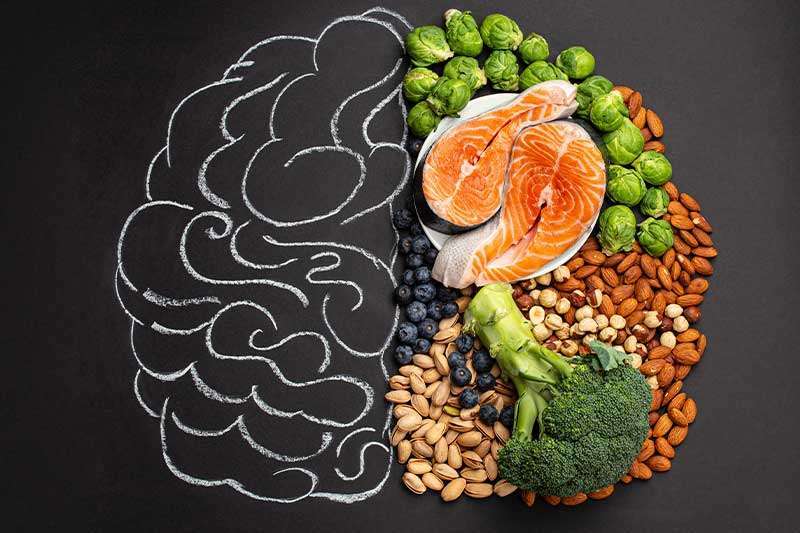
People on high-fat, high-sugar diets have shrunken, unhealthy brains, while those on nutrient-rich diets have full, healthy ones.

Neuroscientist Dr. Lisa Mosconi showed that people on high-fat, high-sugar diets have shrunken, unhealthy brains, while those on nutrient-rich diets have full, healthy ones. The message is simple: feed your brain.

Colin’s Journey

When Colin Austin’s wife, Dr. Xiulan, faced diabetes and near blindness, he turned his background in innovation toward health. He realised modern food lacks vital nutrients because industrial farming replaces only what plants need—not what humans need. This deficiency triggers constant hunger and disease.

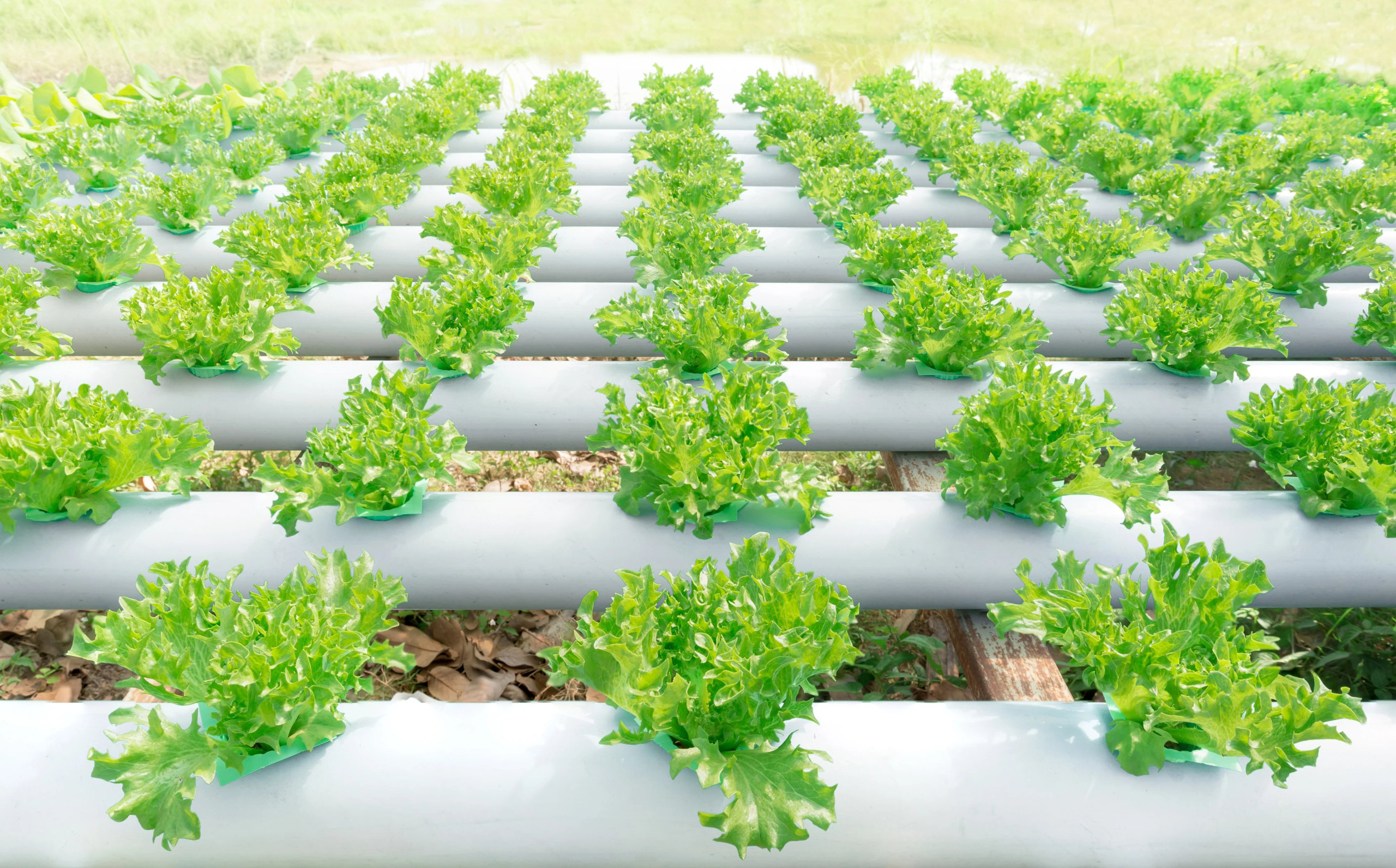
hydroponic lettuce

Ask “Why?”

Fifty years ago, obesity and diabetes were rare. What changed? Our food.

Fifty years ago, obesity and diabetes were rare. What changed? Our food. Today’s diets are high in calories and low in essential nutrients. When we restore nutrients to our diet, cravings and “fat in the wrong places” begin to fade.

Forget Calorie Counting

Counting calories ignores how our bodies evolved. Feed your gut and brain real food, not processed calories, and they will regulate energy naturally.

It’s in the Soil

Colin travelled through Africa, Asia, and the Americas to learn from traditional farmers and combined their wisdom with modern innovation. The result was the Gbiota bed—a system that grows nutrient-rich, biologically alive food in a sustainable way.

Vegetables are healthy only if grown in living soil — chemically grown produce may look good but lack nutrients or even contain toxins.

Vegetables like kale or celery are healthy only if grown in living soil. Chemically grown produce may look good but lack nutrients or even contain toxins. Real food comes from honest soil.

Healthy soil biology mirrors the human gut. In Gbiota’s system, plants are delivered while still growing, full of living microbes that strengthen gut health and restore the body’s natural balance.

Test for Yourself

Track your weight, waist, or blood sugar levels—or simply notice how you feel. Health isn’t about numbers alone; it’s about how your body responds.

Many people leave traditional lifestyles for convenience and entertainment, but modern living often leads to poor health. We don’t need to choose between progress and wellbeing—we can unite both through a movement for real, living food grown in living soil.

Loading

Food for Health & Growing

Food for Health & Growing

The intelligent control system that manages appetite, fat storage and overall health depends on nutrients and soil-based microbes found in genuinely fresh, biologically active food. Understanding how food works — and how to grow it — is the foundation of long-term health.

Food for Health

Food is the key to health.

Junk food is tasty, convenient, inexpensive but not healthy.

Genuine organic food may be healthy but is very expensive.

There is a third type of food which is both healthy and inexpensive.

But there is a third type of food which is both healthy and inexpensive, cheaper than junk food and healthier than organic food.

How can that possibly be? What is the catch? It takes a little effort to understand how food works in our bodies and to grow, or buy, this food takes a little effort, that is the cost of health.

This web is in two main sections.

Food and Health

Here we look at how food determines our health with a particular emphasis on our intelligent control system which regulates our bodies deciding how much and where we should store fat.

It is often argued that we get fat and sick because we eat too much – that is how we get fat our intelligent control system determines why we get fat, which is very different.

We generally get fat because of deficiencies in our diet, not simply excess calories.

While there is a genetic component we generally get fat and sometimes sick because of deficiencies in our diet so our intelligent control system sends signals that make us hungry and eat more than we need.

The soil in which our food is grown dominates our health.

There are many articles on how food affects our health but first step is to read ‘The essence’.

It may be interesting to understand how our intelligent control system regulates our bodies and how the microbiology in the soil affects our food and then our health but to get the benefits you have to eat food grown in biologically active soil.

That means either growing or at least buying Gbiota food.

Growing

The growing section covers the specialist growing system to grow plants that avoid deficiencies in our diet which are the root cause of chronic diseases.

Microbes play a crucial role in this forming part of our intelligent control system and processing minerals to produce the wide array of complex molecules our bodies need.

Microbes breed incredibly easily — the challenge is breeding the beneficial ones without breeding the harmful ones.

Microbes breed incredibly easily, the challenge is breeding the beneficial microbes without breeding the harmful microbes.

This is covered in the ‘growing’ section but the article ‘Summary: Creating Gbiota Beds and Boxes’ explains the basic principles.

Recommended action plan

The first step is to read these two overview articles ‘The Essence’ and ‘Summary: Creating Gbiota Beds and Boxes’.

These are free and you don’t have to sign in or anything, click and read which will give you a good understanding of how our intelligent control system regulates our bodies and how we can train and grow food to feed our intelligent control system.

You can then either sign up for free to read our articles on food and health which we publish most weeks or become a full Gbiota member and subscribe and receive technical support by email or video chat.

Gbiota is about breeding beneficial microbes in the soil, growing plants in that soil when the microbes transfer to our gut.

It is a simple, inexpensive and highly effective system — but it is important it is done right.

It is a simple, inexpensive and highly effective system and is in everyone’s interest that it is done right, hence we attach great importance to technical support.

So email me at colin@gbiota.com so we can chat about your project.

Lots of stuff

There are over 300 articles and 200 videos on this site, that is a lot of stuff and nobody expects you to view everything so here are some tips to make life easy.

The key point is that we all have an intelligent control system which regulates our bodies and the key to health is to learn to feed and train this control system.

If this control system is working as it should we don’t have to worry about taking a specific number of micrograms of B12 or Selenium or whatever, our intelligent control system learns over time what foods contain what nutrients or minerals, sends out signals so we want to eat those foods without even thinking about it.

We evolved eating natural foods grown locally — foods containing the microbes our bodies depend on.

We have been successfully doing this for a million years or so without a dietary handbook in sight, just by eating natural foods grown locally.

These foods naturally contain the microbes which form part of our intelligent control system and also process naturally occurring minerals which make them bio-available.

That was until we changed our food system so it was deficient in these microbes which has led to the modern epidemic of chronic diseases.

As these microbes breed in the soil it may seem obvious to start breeding these beneficial microbes in the soil again which is a simple and inexpensive process.

But that is not the conventional wisdom.

Gbiota is simply about how to breed these beneficial microbes in organic waste to make a nutrient-rich living soil then grow plants in this soil and eat the plants while fresh before the microbes die.

Despite its simplicity, this solution faces resistance because modern culture prefers complexity.

In a world which seems to worship complexity, it seems that such a simple solution to the major problem of the epidemic of chronic disease would be welcomed with open arms but that is not the case.\

If you feel that this is something you may like to undertake then you will need to sign up and become a full paying member when you will receive technical support.

However before you sign up and pay the money I suggest that you drop me an email, tell me a bit about your situation and I can make some suggestions on the best way to proceed.

You may want to be a home grower, you may want to become a Gbiota coach and advise new members or you may want to become a Gbiota grower and supply boxes to local people

Loading

Breed Beneficial Gut Microbes at Home

Breed Beneficial Gut Microbes at Home

Our intelligent control system depends on living microbes that originate in healthy soil. By learning how to breed and maintain these beneficial microbes at home, anyone — even in an apartment — can restore the gut biology that regulates appetite, immunity and long-term health.

A healthy gut is essential for health as it manufactures the hormones which regulate our appetite so we don’t get fat and sick.

Beneficial microbes start in the soil, entering our bodies when we eat plants grown in living soil and eaten fresh.

Beneficial microbes start in the soil. You eat plants grown in soil with the essential microbes while fresh before the microbes die.

You can easily do this even if you live in an apartment by buying most of what is required – containers, potting mix, seeds, etc from your local shops.

You will need to learn how to breed the beneficial microbes by creating the right conditions, which you can do by registering as a home grower and buying a starter or inoculant kit that provides the initial microbes.

People breeding beneficial gut microbes at home is a new concept, and our role is to guide you through the process.

People breeding beneficial gut microbes at home is a new concept, and our role is to guide you through the process, which is straightforward but must be done right. We do this by email and video conferencing and our many articles on this website.

There are over three hundred articles and a similar number of videos but when we make contact, we can guide you through the process of becoming a successful beneficial gut microbe breeder.

But the first step is to register for our Newsletter, and if you decide this is for you introduce yourself so we can walk you through the process of breeding beneficial gut microbes at home.

Loading

Gbiota Technology: Gut–Brain Food and Eco-Balance

Gbiota Technology: Gut–Brain Food and Eco-Balance

Our intelligent control system relies on the biology of living soil — the microbes, minerals and ecosystem cycles that humans evolved alongside. When modern food breaks this relationship, health declines, but Gbiota methods restore the natural gut–soil connection our bodies depend on.

Gbiota what? The essence

The microbes in our gut have swarm intelligence, which regulates where and how much fat we store. It produces a complex array of hormones which regulate our appetite.

Microbes breed and die rapidly in a dynamic equilibrium extending from soil to plants to animals — a system billions of years old.

Microbes breed and die rapidly in a state of dynamic equilibrium, which extends from the soil where the microbes naturally breed to the plants, the animals that eat the plants and the animals that eat the plant eaters.

This is a system which has evolved over billions of years and is the basis of all life on earth until humans changed the system, which has led to an epidemic of chronic disease, obesity, diabetes, heart attacks and dementia.

We know how to resolve this. Beneficial microbes in the soil need a combination of nutrients, water and air which can be achieved by making the soil breathe by circulating what we call soil blood in a series of pulses flooding the soil to expel stale air and draining to suck in fresh air, what we call flood and flush.

This simple, inexpensive process allows anyone — even apartment dwellers — to grow gut-brain food.

This is a simple and inexpensive process which can be applied in the long term and on a large scale to create a new industry of gut-brain food, but in the short term by people growing their own gut-brain food. The process is so simple and inexpensive that it can be done at home even by people with no growing experience living in an apartment.

However, this requires a wide acceptance by the population of the need to modify our food system.

But is it no good just telling people. Logic is not enough; people are strongly influenced by what other people think, so acceptance has to reach a critical mass with people seeing other people they trust adopting the technology before widespread adoption occurs.

Early adopters are essential — social proof is what drives real food system change.

This requires the early adopters, the entrepreneurial thinkers who are prepared to pioneer a new technology and so reach this critical mass.

These pioneers are critical for our species in developing a sustainable, healthy food system for the future. Humans are the most successful creature on the planet because we are both intelligent and naturally cooperative, prepared to invest in the long term benefit of our communities.

Join me in becoming a healthy food gut-brain pioneer.


Eco-balance

The Gbiota technology is based on the principle of Eco balance. We control the conditions, specifically nutrients and most importantly moisture and air so the beneficial microbes in the soil out-compete and out-breed the harmful microbes.

Eco-balance ensures beneficial microbes out-breed harmful ones — the foundation of safe gut-brain food.

This is a problem of fluid flow – my day job.

Gbiota beds and boxes

The majority of people now live in cities, often in apartments with no garden so the Gbiota system is a two-stage process.

Stage 1 is to produce Wickimix, a growing medium or soil full of beneficial microbes and nutrients in raised garden beds.

Stage 2 is to load the Wickimix into Gbiota boxes where plants can be grown in a modern dwelling, even a flat with no garden, so people can pick and eat plants while still fresh.

Plants must be eaten genuinely fresh — while the microbes are still alive.

Dynamic population

All the individuals living in a city a hundred years ago have now died, but they bred to create a new population. It is similar to microscopic life but the time scale if very different. An hour in the life of a microbes is equivalent to a human year so plants must be picked and eaten while genuinely fresh.

There is a big difference between being genuinely fresh, with the microbes still alive, and not gone rotten.

Growers and consumers

The Gbiota movement has growers, maybe just urban micro-farms which produce the Wickimix which they may load into Gbiota boxes and plant ready for the consumers so they have growing plants ready to harvest at home.

Gbiota boxes may be clean skins, eg loaded ready to start growing so the consumer looks after all the seeding and growing or with plants grown to the stage where they are ready to start picking.

Typically the plants are tipped, eg the tips of the plants are cut off where they regrow, often called cut and come again.

The boxes may also have a spectrum of plants, this is partly to achieve a wider spectrum of beneficial microbes but also they have a staggered growing period with slow and fast-growing plants giving a longer harvest period.

At the end of each cycle, boxes return to growers for reloading with fresh Wickimix.

At the end of the cycle, the boxes would be returned to the grower for reloading with fresh Wickimix and its beneficial microbes.

Sustainability

An important benefit of this system is that the inputs are organic waste and rock dust (to provide the essential minerals). Fortunately, these are in abundant supply and sustainable.

Swapping exploitation for recycling is essential for long-term food security.

Swapping from a system of exploitation to recycling is essential for the survival of our species.

We may be rich now but it will stop when we have used up the readily available resources. Look at Nauru, once one of the wealthiest countries in the world mining guano, then one day the thing happened that everyone had been predicting but done nothing about, they ran out of guano.

It will happen to us first with phosphorous, an essential mineral for growing plants.

Loading

The Essence of Life and Our Intelligent Control System

The Essence of Life and Our Intelligent Control System

Our bodies are regulated by an intelligent control system that evolved over millions of years. This system manages appetite, fat storage, immunity, energy, and long-term health — but it only functions properly when we feed it the biology and nutrients it expects from natural food grown in living soil.

Everyone has an intelligent control system, it manages our breathing so we have enough oxygen, our heart rate so our muscles have adequate energy, our immune system, our temperature and most importantly our appetite.

If we have a fully functioning intelligent control system we can look forward to a long and healthy life, if it malfunctions we may get fat and sick and if it stops working we die.

This is the result of over a billion years of evolution and is one of the wonders of the world. If we have a fully functioning intelligent control system we can look forward to a long and healthy life, if it malfunctions we may get fat and sick and if it stops working we die.

It could be called the essence of life yet we have very little understanding of how it works. We can observe the result of its actions which gives us some idea and recently humans have developed intelligent control systems for their machines which gives a further insight into how it may work.

Appetite

Unlike breathing and drinking, appetite is very complex, we need a whole range of foods, food for energy which is relatively simple but we need a complex array of nutrients to build and replace our body parts.

Our intelligent control system can sense if we are short of specific nutrients and learns over time which foods supply those nutrients.

Our intelligent control system can sense if we are short of specific nutrients and learns over time which foods supply those nutrients and then sends out a complex spectrum to make us crave those particular foods.

Fat or skinny

Some people are fat while others are skinny. We change throughout our lives, babies are born chubby, but when they learn to walk they lose their baby fat and are skinny until adolescence when the sexes diverge in their fat distribution.

These variations continue into midlife with men developing wobbly tums and women developing wobbly bums until in old age we revert back to being skinny.

Genetics play a part but research with twins shows this is not as strong as we may think.

But what drives this process?

Genetics play a part but research with twins shows this is not as strong as we may think. Fat people may have fat kids so we may think but they also share a similar lifestyle.

It seems that how we train our intelligent control system has a major influence. Without thinking we train our intelligent control system to learn that certain foods do certain jobs and can create a hormone spectrum to crave those particular foods. It is much more complex than a single hormone that makes us crave food and another hormone that makes us feel full and stop eating.

The role of hormones

Whether we are fat or skinny is decided by our intelligent control system and implemented by creating hormones to control our appetite.

We may try to override our intelligent control system but this is rarely successful long term.

True if we get fat it is because of what we eat and what we want to eat is driven by our intelligent control system sending our hormones.

We may try to override our intelligent control system but this is rarely successful long term.

But we can train our intelligent control system so it sends out the appropriate hormonal spectrum.

We learned this from observing people who have been deprived of food for a period. When food becomes available our intelligent control system decides we need to store more fat. A restrictive diet only makes things worse.

To bring weight back to normal we have to re-train our intelligent control system by a nutrient-rich diet.

To bring weight back to normal we have to re-train our intelligent control system by a nutrient-rich diet.

Mostly our intelligent control system works in our subconscious which we do not control but we can use our conscious brain to retrain our intelligent control system.

Gut Microbiome Illustration Gbiota

Our gut microbes

Even more surprising is that the microbes in our gut, which are not part of us, form part of our intelligent control system.

These microbes communicate with each other to form swarm or group intelligence.

These microbes communicate with each other to form swarm or group intelligence.

We have known for a long time that we can make fat people skinny and skinny people fat by changing the species of microbes in their gut.

The epidemic of chronic disease

Across the globe, we are experiencing an epidemic of chronic diseases obesity, diabetes, heart attacks and dementia.

A functioning intelligent control system will create the hormones that make you stop eating, even if your diet is highly processed foods.

These have existed for a long time but been relatively rare – but now the scale has reached epidemic proportions.

We may be tempted to blame the abundance of highly processed foods which are full of sugars and fats blended to the bliss point and containing addictive additives.

No way can we defend these but they are not the prime cause of the epidemic of chronic diseases.

A functioning intelligent control system will create the hormones that make you stop eating, even if your diet is highly processed foods.

But if your intelligent control system is not functioning then you will overeat, regardless of what you are eating.

The root cause is a lack of the beneficial microbes which form part of your intelligent control system – your gut-brain.

The root cause is a lack of the beneficial microbes which form part of your intelligent control system – your gut-brain.

That is simply solved by feeding your gut-brain by eating plants grown in soil where the beneficial microbes are breeding.

This is simple, anyone can do it even if they have no growing experience and live in an apartment.

It just needs a Gbiota biobox.

Loading