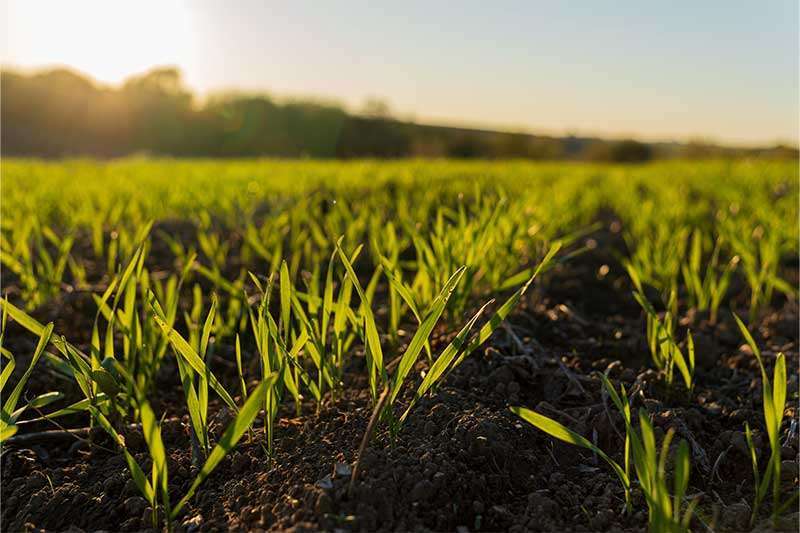
This article explores how weather influences the performance of wicking beds. Drawing from Colin Austin’s research and field observations, it explains how rainfall, drought, temperature extremes, and soil biology impact plant growth. Practical guidance is provided for designing, maintaining, and protecting wicking beds in a range of climates, from home gardens to larger agricultural applications. Readers will learn strategies to enhance water efficiency, preserve soil fertility, and optimise crop productivity under changing weather patterns.
Introduction
These notes summarise research by Colin Austin on the interaction between weather conditions and wicking-bed performance. They were prepared to provide insights into sustainable water-efficient gardening practices. Wicking beds, which rely on a water reservoir beneath the soil, have become popular for conserving water and improving plant health. However, their success depends not only on water management but also on maintaining biologically active soil. Healthy microbial ecosystems ensure consistent plant growth even under challenging environmental conditions.
Understanding Weather Challenges
Weather conditions vary widely across Australia and globally. In Gin Gin, Queensland, the climate alternates between long dry periods and intense wet seasons, occasionally including cyclones or extreme rainfall events exceeding 200 mm in a single day. Prolonged wet periods saturate the soil, while extended droughts can severely limit plant growth. Understanding these patterns is essential when designing and managing wicking beds, as it informs soil preparation, bed height, and water reservoir management.
Extreme events such as the 2011 Queensland floods highlight the vulnerability of unprotected soil. While wicking beds reduce water loss and provide a consistent supply for plant roots, they must be constructed and maintained carefully to prevent erosion, nutrient loss, or collapse during high rainfall. Conversely, during droughts, the same beds can maintain sufficient moisture for plant survival if the reservoir is properly managed.
Principles of Wicking Bed Design
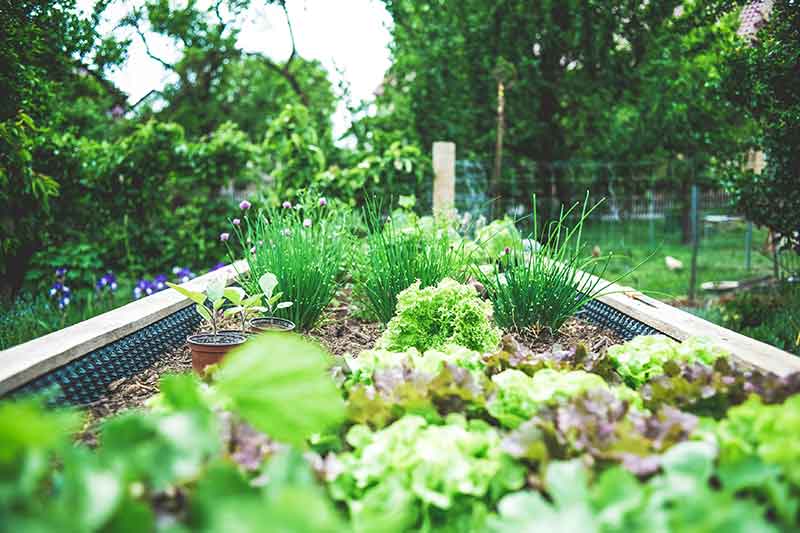
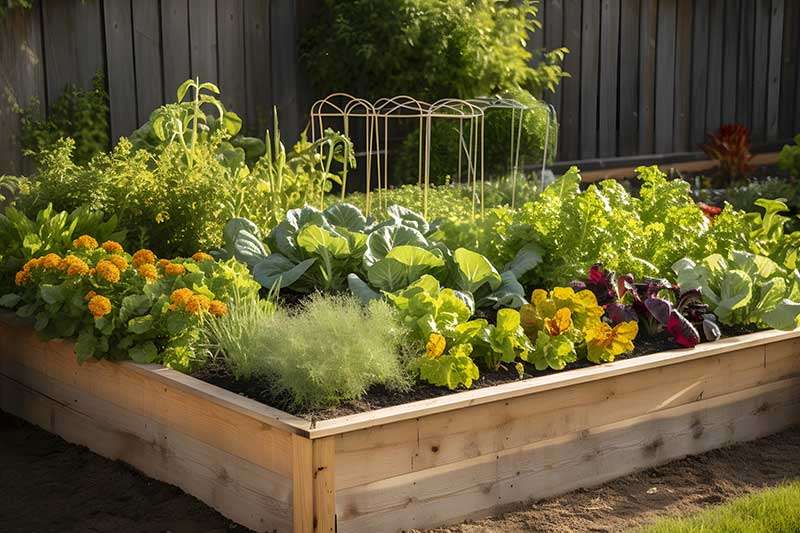
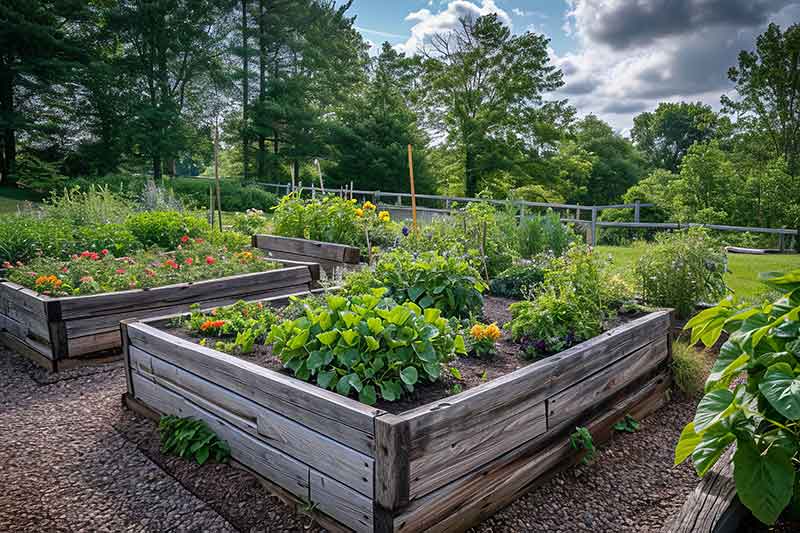
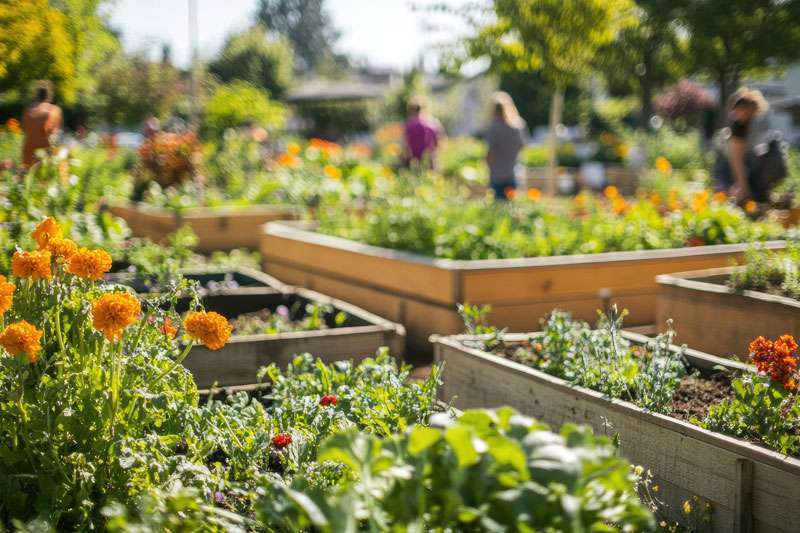
A wicking bed stores water at the base, allowing moisture to rise into the soil through capillary action. Raised beds protect soil from flooding, provide good drainage, and prevent erosion, while maintaining a consistent moisture supply for plants. Experimental observations indicate that even small adjustments to soil composition, bed height, or reservoir depth can significantly influence bed performance, particularly during extreme weather events.
Soil composition is critical. Combining sandy, loamy, and organic materials creates a medium that wicks water efficiently while supporting microbial life. Organic material such as compost or mulch not only retains water but also enhances biological activity. Weeds or cover plants can serve as natural mulch, protecting soil from direct rain impact and preserving soil structure, though they may temporarily slow germination of new seeds.
Field Observations and Experiments
Tests at Gin Gin and in China reveal several practical insights. Raised beds improve resilience to heavy rainfall, though they require periodic topping up with organic material. Covering beds with mulch reduces soil erosion and maintains temperature and moisture. Beds on slopes require careful water management, as uneven saturation can lead to plant stress or soil displacement. Observations also show that healthy soil biology can mitigate some of the negative effects of drought or intense rainfall by improving water distribution and nutrient cycling.
Green mulch, weeds, and decaying organic matter contribute to long-term soil fertility. While removing weeds may increase space for planting, it reduces the protective layer that shields soil from erosion. Over time, topping up beds with organic material helps maintain a balance between plant productivity and soil health, allowing the system to perform reliably under variable weather conditions.
Large-Scale Applications
Scaling wicking beds to larger agricultural applications presents unique challenges. Soil erosion, compaction, and uneven water distribution must be managed carefully. Strategies include using raised growing areas with water reservoirs, layering soil to improve wicking efficiency, and maintaining bed height through regular organic additions. Sloped terrain can be adapted with terraces or segmented beds to optimise irrigation and prevent pooling.
Practical field solutions also include using biodegradable barriers to direct water flow, maintaining mulch layers to reduce surface erosion, and selecting plant species suited to local climatic conditions. Maintaining microbial activity at larger scales is essential, as it improves soil structure, nutrient availability, and drought resilience. Observations suggest that even in flood-prone areas, properly constructed wicking beds can sustain plant growth and minimise soil loss.
Soil Biology and Plant Health
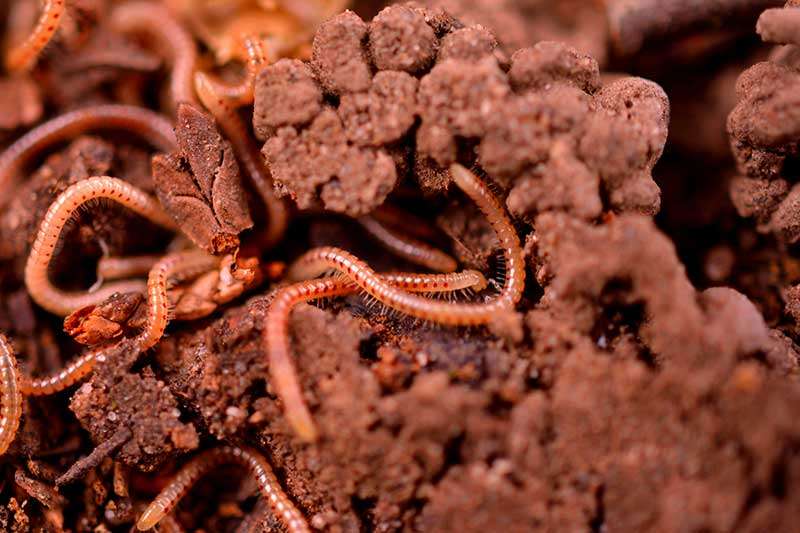
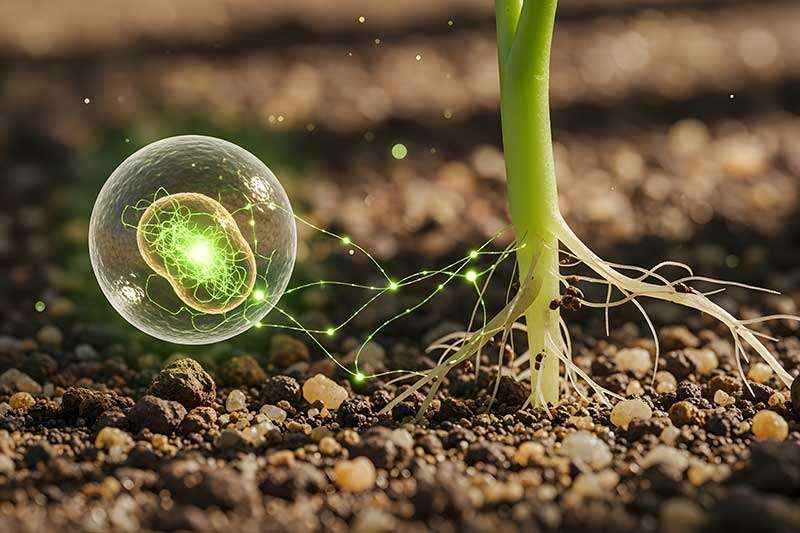
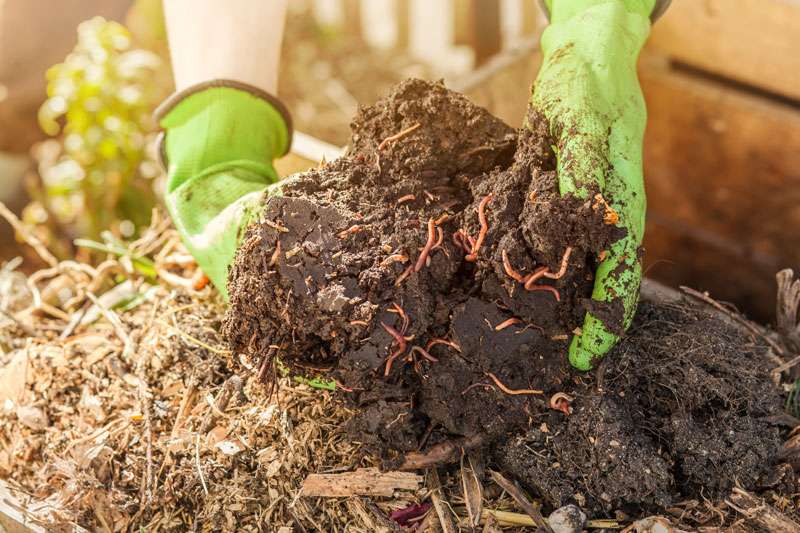
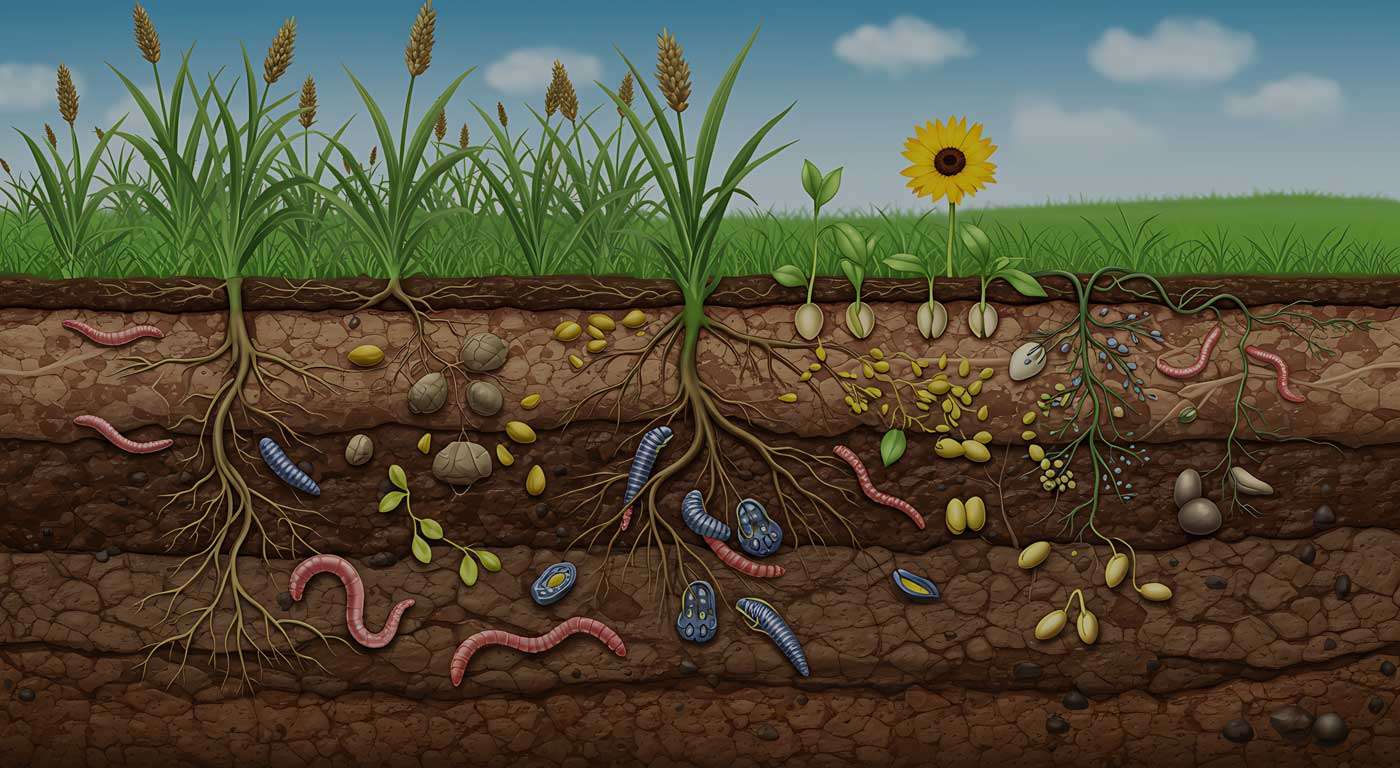
Soil organisms such as bacteria, fungi, and earthworms are fundamental to wicking-bed success. They improve soil structure, retain moisture, and release nutrients in forms plants can absorb. Healthy biological activity reduces the need for external fertilisers and helps plants withstand droughts or heavy rains. Fungal hyphae, for instance, extend water distribution beyond the immediate root zone, while decomposing organic matter provides a steady nutrient supply.
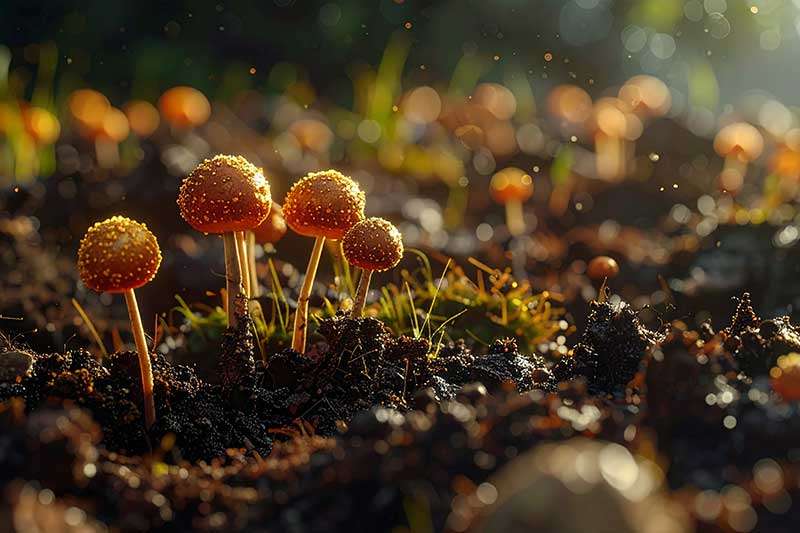
Observing microbial activity, including the growth of beneficial fungi, is a key part of managing wicking beds. Maintaining a moist, nutrient-rich environment supports these organisms, which in turn stabilise soil, enhance plant growth, and increase bed resilience to climatic extremes.
Lessons from Extreme Weather
Field trials indicate that wicking beds must be prepared for both drought and flooding. Raised bed designs help prevent waterlogging, while mulch layers reduce soil erosion and maintain temperature and moisture balance. Planning for rare but extreme events, such as cyclones or extended dry spells, ensures that beds remain productive. Integrating soil biology management with physical bed design is essential for maintaining crop yields under extreme weather conditions.
Maintenance and Monitoring
Regular inspection of beds is recommended. Check for signs of waterlogging, uneven settling, or organic matter depletion. Top up beds with compost or mulch as needed, and monitor soil biology to ensure microbial communities remain active. Over time, beds may settle, requiring adjustments to maintain optimal water distribution and plant health. Monitoring also helps identify potential pest or disease problems early, allowing for natural and sustainable interventions.
Future Directions
Research continues into scaling wicking-bed technology for larger agricultural systems, improving organic topping strategies, and maintaining microbial activity under variable climatic conditions. Experiments focus on optimising water distribution, soil composition, and slope management. The goal is to produce more food efficiently while preserving soil quality and ensuring resilience against increasingly unpredictable weather.
Conclusion
Wicking beds are a practical, water-efficient, and biologically supportive solution for sustainable gardening. By understanding how weather, soil biology, and design interact, gardeners and farmers can protect plants during extreme rainfall, improve drought resilience, and maintain soil fertility. Insights from research at Gin Gin and other test sites guide both small-scale and larger agricultural applications, making wicking beds a reliable approach in the face of climate variability.
This article provides a detailed guide on operating modern wicking systems, from small garden boxes to large-scale beds. It explains setup, soil preparation, compost management, worm and microbial care, water techniques, and ongoing maintenance. Following these guidelines ensures water efficiency, healthy plants, and biologically rich soil. Suitable for beginners and experienced gardeners, it helps grow food sustainably while restoring soil and conserving water.
Introduction
Wicking systems are designed to provide consistent moisture to plant roots while improving soil fertility. By combining water reservoirs, soil biology, and organic matter, these systems allow plants to thrive in small or large gardens, even in dry or variable climates. Properly managed wicking systems support worms and microbes, which are essential for nutrient cycling and maintaining healthy soil.
This guide covers all aspects of wicking systems, including choosing containers, preparing soil, adding compost and worms, watering techniques, maintenance, and troubleshooting common issues. It is based on practical experience and offers guidance for both home gardeners and community projects.
Choosing a Wicking System
Wicking systems can vary from small balcony boxes to large raised beds. The choice depends on space, water availability, and the type of plants grown. Small containers are ideal for urban gardens or patios, while larger in-ground or raised beds suit community gardens, farms, or schools.
When selecting a system, consider:
The type of container or bed.
Water reservoir depth and accessibility.
Soil mix and composition.
Compatibility with worms and beneficial microbes.
Ease of maintenance and harvesting.
Preparing the Container or Bed
For small boxes, use waterproof containers like polystyrene vegetable boxes, storage tubs, or other plastic bins. Bed height should generally be 250–400mm, although larger systems can exceed this if properly drained. Containers need a water reservoir at the bottom, often enhanced with a compost pipe that allows nutrients to slowly release to roots. The base can be lined with gravel or sand for additional drainage, but soil should remain in direct contact with the water reservoir to wick moisture upward.
In larger beds, raised or in-ground systems can include multiple compost pipes and water channels to distribute moisture evenly. Adding organic matter such as compost, aged mulch, or vermicast improves soil structure and nutrient retention. Clay and sand can be added to balance drainage and prevent compaction.
Soil Preparation
The soil in wicking systems must support both plant growth and healthy soil biology. It is essential to use a mix of organic matter, sand, and clay. Compost and organic inputs help retain moisture while providing nutrients. Key points include:
Use well-decomposed compost, mushroom compost, or sugarcane mulch.
Introduce beneficial microbes such as mycorrhizal fungi to enhance nutrient availability.
Worms, especially compost worms and Amynthas species, help aerate soil, recycle nutrients, and maintain moisture balance.
Mineral supplements such as dolomite or trace elements support plant nutrition and maintain soil pH.
Planting and Green Matter Management
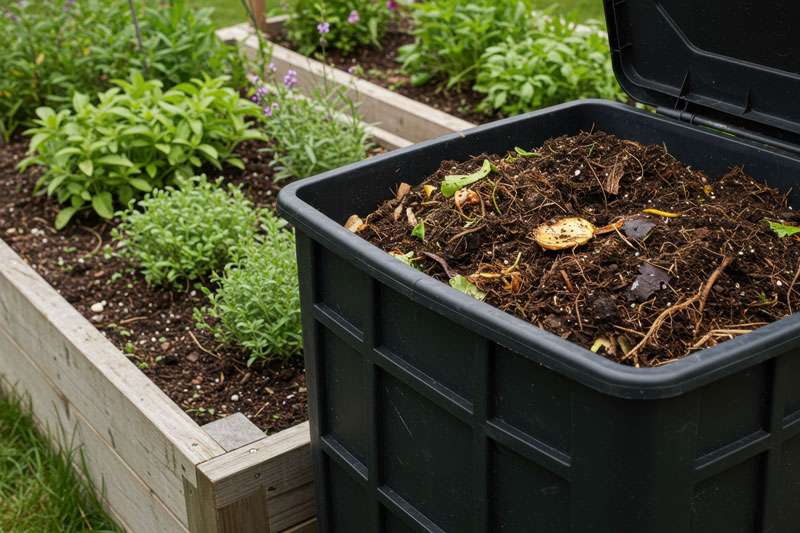
When planting seeds or seedlings, ensure that the soil is moist and the compost pipe is filled with organic matter. This provides a slow-release source of nutrients directly to the roots. Adding green matter such as prunings, kitchen scraps, or fresh plant material keeps worms active and microbial populations thriving. Regularly top up the compost pipe to maintain nutrient levels.
Surface watering may be needed for germination, but once seedlings are established, wicking provides the majority of water. Overhead watering can be minimal, reducing evaporation and promoting healthier root growth.
Watering Techniques
Water management is a key advantage of wicking systems. The water reservoir at the bottom allows soil to draw water upward as needed. Effective techniques include:
Fill the reservoir initially to fully saturate the soil.
Monitor the level through inspection or drain holes.
Add water gradually as the soil dries rather than flooding the surface.
Ensure the compost pipe remains moist to allow nutrient transport to roots.
Avoid stagnant water, which can harm worms and microbes.
Worms and Soil Biology
Worms play a critical role in maintaining healthy soil. Compost worms break down organic matter, improving nutrient availability, while Amynthas worms aerate the soil and evenly distribute nutrients. Microbial inoculants further enhance nutrient cycling and promote plant growth. Maintaining a balanced soil ecosystem reduces the need for chemical fertilizers and increases resilience against pests and diseases.
Key practices include:
Providing diverse organic matter to feed worms and microbes.
Keeping compost pipes covered to protect soil life from light and pests.
Adding microbial inoculants periodically to sustain biological activity.
Add organic material to compost pipes and the soil surface every few weeks.
Check soil moisture and water levels weekly.
Prune overgrown plants to maintain airflow and provide green matter for composting.
Inspect plants for nutrient deficiencies and adjust fertiliser or mineral inputs as needed.
Maintain worm populations and soil microbial health.
Troubleshooting Common Issues
Even well-designed wicking systems may face challenges. Common problems and solutions include:
Stagnant water: Reduce container depth or improve drainage.
Poor germination: Ensure the soil surface is adequately moistened until roots establish.
Soil compaction: Add organic matter and maintain worm activity.
Overgrowth of plants: Prune regularly and recycle green matter into the compost pipe.
Mineral deficiency: Apply dolomite or a balanced fertiliser.
Pests: Use organic pest controls and protective covers.
Large-Scale and Community Systems
For larger beds or community gardens, wicking systems can be scaled up to support multiple crops. Key considerations include water distribution channels, multiple compost pipes, and careful soil mix preparation. Community systems benefit from workshops, shared maintenance schedules, and collective monitoring to sustain soil and water balance. Including diverse plant species encourages ecosystem health and prevents pest outbreaks.
Benefits of Wicking Systems
Wicking systems offer numerous advantages over conventional gardening:
Efficient water use and minimal waste.
Consistent moisture for plant roots.
Enhanced soil fertility through composting and biological activity.
Reduced reliance on chemical fertilizers.
Support for sustainable urban and rural gardening, even in dry climates.
Conclusion
Wicking systems provide an accessible, sustainable, and efficient way to grow healthy plants. By combining water-efficient design, soil biology, compost management, and careful monitoring, gardeners can achieve high productivity and restore soil health. Whether for small balcony boxes or large community gardens, these systems enable food production while conserving water and building biologically rich soils.
This article introduces the Soil BioPack, a living ecosystem of plants, fungi, bacteria, worms, and minerals designed to regenerate soil and improve the health of food crops. By combining synergistic plants with beneficial soil organisms, BioPacks create fertile, biologically active soil. This guide explains how BioPacks are prepared, the roles of plants, fungi, and worms, and how to use and maintain them effectively for long-term soil health.
Introduction
The Soil BioPack is a living ecosystem containing plants, soil biology, worms, fungi, bacteria, and minerals. It is designed to inoculate soil and create a fertile, biologically active environment that enhances the nutritional value and health of food crops. Unlike traditional fertilizers that focus on rapid growth, BioPacks support complex phytochemicals and vitamins by providing minerals and a living soil ecosystem.
Preparation of Soil BioPacks
BioPacks are grown in wicking beds with soil rich in natural biological systems. Beneficial fungi (especially mycorrhizal fungi), bacteria such as Rhizobia, worms, and minerals are added to reinforce the soil ecosystem. Plants form a synergistic relationship with the soil biology. Each BioPack is carefully cut from the bed, placed in a biodegradable box, and buried in the host ground to spread the living microorganisms.
The Role of Macro Soil Organisms
Worms and other macro-organisms are essential for spreading beneficial microbes throughout the soil. Worms create channels, aerate the soil, and release slime that stabilizes soil structure. Compost, green matter, and minerals feed these organisms, supporting the ongoing development of a living soil ecosystem that expands over time.
Plants in BioPacks
Senna Alata: A nitrogen-fixing legume with deep roots that extract nutrients like phosphorus from deep soil layers. Provides green material when pruned.
Gota Kola: A creeping herb with a taproot that provides ground cover without competing with crops.
Sub clover: Fixes nitrogen and adds bulk to the soil.
Herb mixtures: Provide fibrous roots complementing tap-rooted species for soil stability.
Other plants may be used to suit specific climates or soil conditions.
Mycorrhizal Fungi and Rhizobium Bacteria
Fungi, particularly mycorrhizal types, play a key role in regenerating soil. Their hyphae release enzymes that dissolve rock and lignin, freeing nutrients and structuring the soil. Inoculating plants with these fungi and Rhizobium bacteria ensures beneficial microorganisms are established in the soil ecosystem.
Compost, Mulches, and Minerals
Compost and green matter feed the soil biology, supporting ongoing expansion of the living ecosystem. Minerals and trace elements are incorporated to provide plants with essential nutrients. Fungi release these minerals to the plants, which ultimately improves the mineral content and phytochemical richness of harvested food.
Packing and Planting BioPacks
BioPacks are supplied in biodegradable 152mm cube boxes weighing 3kg. Plants are pruned to just above the soil line and protected with vermiculite during shipping. Boxes are opened and buried in the soil, where they continue to grow and expand. Soil should be handled carefully to avoid damaging fungi, and refuge areas should be maintained for ecosystem stability.
Ordering and Costs
Orders are placed via email, specifying the number of BioPacks and delivery address. BioPacks contain living organisms and are posted on Mondays or Tuesdays to avoid weekend delays. Lids must be removed, and packs buried and watered immediately. Each BioPack costs $28, with $15 postage for the first box and $3 for each additional box.
Conclusion
Soil BioPacks are a practical, low-maintenance solution to create fertile, biologically active soil for healthier food crops. By integrating plants, fungi, bacteria, worms, and minerals, BioPacks restore soil health, enhance crop nutrition, and support sustainable gardening practices. They provide a hands-on approach to maintaining soil ecosystems, making it easier for gardeners and farmers to grow nutrient-rich food while promoting long-term soil vitality.
This article traces how the wicking worm bed developed from simple subsurface watering ideas into a practical, highly productive horticultural system. It covers design improvements, the role of worms and microbes, materials and construction techniques, and how the system conserves water while building soil. Clear, low-tech adaptations make the method suitable for home gardeners, schools and small farms aiming for reliable production in dry or variable climates.
Introduction
The wicking worm bed is the result of decades of practical experimentation aimed at growing good crops with minimal water and labour. Early ideas about subsurface watering and simple reservoirs evolved into a system that deliberately combines micro-hydrology (water storage and movement below the soil) with active micro-biology (worms and microbes that convert organic waste into plant nutrients). The strength of the system is that it creates a stable root zone — moist, aerated and biologically active — where plants thrive.
Origins and Early Experiments
The first steps toward the modern wicking bed were simple: contain water beneath the planting zone so moisture can rise to roots by capillary action. Trial beds and boxes showed that plants grown over a subsurface reservoir used far less water and stayed healthier during dry spells. Early experiments also revealed that simply storing water was not enough — the root zone needed nutrients and a living soil structure to sustain strong growth.
The Role of Worms and Microbes
Introducing worms to the bed changed performance dramatically. Worms process coarse organic material and, together with microbes, convert it into soluble nutrients and stable organic matter. This biological activity improves soil aggregation, increases pore space for air and water movement, and releases nutrients in forms plants can readily absorb. Worm movement also helps distribute decomposed material and creates channels that improve capillary flow from the reservoir into the root zone.
Design Improvements
Over time the design of wicking worm beds was refined. Key elements include a lined or compacted subsurface reservoir, a coarse organic base that stores water and creates voids, and a topsoil layer mixed with compost and fines to form an eating and rooting zone. Drain holes and fill pipes are included so beds can be refilled, drained for maintenance, or topped up with fresh water or compost tea. Variations grew from simple boxes to semi-raised beds, in-ground installations and hybrid tree systems.
Materials and Construction
Practical builds depend on available materials. Common components are plastic liners or compacted clay to hold water, coarse organic matter (wood chips, straw, or bulky compost) to form the sponge layer, and a top layer of fertile soil mixed with compost to support roots. Pipes for filling and overflow help manage water levels. In heavy clay soils, semi-raised beds prevent saturation during heavy rains; in rocky or sloping ground, above-ground or container wicking beds are often preferable.
Water Management and Hydrology
Wicking worm beds are explicitly designed to use water efficiently. Because water is stored below the surface, evaporation is minimal and there is no deep drainage beyond the root zone. Capillary action draws moisture upward into the pores of the soil where roots can access it. Beds perform best when the soil profile above the reservoir includes a balanced mix of pore sizes — enough fine pores to hold water at field capacity and larger pores to allow air exchange.
Nutrition and Soil Building
Instead of depending solely on external fertilisers, wicking worm beds generate fertility on site. Added organic matter decomposes slowly in the reservoir and is processed by microbes and worms. Nutrient-rich leachate and dissolved organics wick into the root zone, feeding plants gradually. Over time this builds soil carbon, improves structure and increases the biological resilience of the bed — reducing the need for repeated chemical inputs.
Practical Applications
The system is flexible. Small home gardeners appreciate the water savings and the high yields from patio or raised wicking boxes. Schools and community gardens use wicking beds for demonstration and food production because they are easy to manage and forgiving of intermittent watering. On larger properties, semi-raised or in-ground wicking lines can be used for vegetables, herbs and even orchard establishment when combined with appropriate tree rings or narrow reservoirs alongside rows.
Maintenance and Troubleshooting
Wicking worm beds are low maintenance but benefit from simple care: top up with compost or mulch each season, monitor water levels through the fill pipe, and occasionally check drainage holes to prevent blockages. If pests or disease appear, strengthening soil biology—adding compost, introducing diverse plantings and avoiding over-use of pesticides—usually restores balance. In very wet climates, raised designs prevent root saturation; in very dry regions, larger reservoirs or targeted shade may be required.
Benefits and Limitations
Major benefits include substantial water savings, improved plant nutrition from on-site decomposition, reduced labour for watering, and rapid soil improvement. Beds also make efficient use of local organic waste. Limitations are mostly practical: initial construction requires some materials and planning, very heavy soils or poorly draining sites may need raised beds, and large-scale adaptation requires community logistics to supply organic matter. Nonetheless, the technique scales well from small gardens to cooperative production plots.
Looking Forward
Ongoing refinements aim to simplify construction, improve reservoir longevity and integrate additional features such as passive composting pipes, worm tunnels and shade options for hot climates. Research into ideal soil mixes and microbial inoculants continues, but the core principle — combine subsurface water storage with biological processing — remains robust. As water scarcity and climate variability increase, the wicking worm bed offers a practical, nature-based tool to grow reliable, nutrient-dense food with lower inputs.
Food security is a critical challenge as climate change, soil degradation, and water scarcity threaten global food production. This article explores practical solutions to improve soil health, water efficiency, and sustainable agriculture, emphasizing the importance of community-based approaches. By integrating soil regeneration, wicking bed technology, and carbon capture, farmers and communities can ensure long-term food availability, healthy crops, and resilient ecosystems.
Introduction
Food security is becoming an urgent issue worldwide due to climate change, soil degradation, and water shortages. Traditional agricultural methods often rely on high-input systems that can damage the soil and waste water. In this article, I explore practical approaches that focus on soil regeneration, water efficiency, and sustainable farming methods. By addressing these fundamental factors, we can build resilient food systems that support both local communities and global needs.
Lessons from Past Agricultural Practices
The Green Revolution of the 20th century significantly increased food production through improved plant genetics. While this helped reduce hunger in some regions, it also created new problems. High-energy, nutrient-heavy farming methods relied on oil-based fertilizers, which harmed soil microbiology and structure. Water use increased dramatically, often tapping into non-renewable aquifers. Furthermore, the benefits were not evenly distributed—many low-income farmers were left behind, while obesity and diabetes rose in affluent nations due to nutrient-poor, processed surplus food.
Beyond Genetics: Soil and Water as the Foundation
While improved plant genetics can play a role in food security, I argue that focusing solely on genetics is insufficient. Healthy soil and reliable water resources are fundamental. Without fertile, biologically active soil and efficient water management, even the best genetic improvements cannot ensure sustainable food production. Regenerating soil requires maintaining moisture, encouraging microbial activity, and providing adequate nutrients for soil organisms like mycorrhizal fungi, which are essential for soil structure and fertility.
Water as a Central Issue
Water scarcity is a major challenge. Agriculture uses the largest share of fresh water, yet much of it is lost through evaporation, poor irrigation practices, or runoff. Flood irrigation, still common in many areas, is particularly inefficient. Modern alternatives, such as micro-sprinklers, drip irrigation, and wicking bed technology, can drastically reduce water waste. Wicking beds, for example, store water underground and deliver it directly to plant roots through capillary action, minimizing loss and promoting consistent soil moisture.
Wicking Bed Technology and Soil Regeneration
Wicking beds do more than save water. By keeping soil moist without saturation, they create ideal conditions for fungi and microbes that regenerate the soil. These organisms improve nutrient cycling, soil structure, and plant growth. On small farms, adding organic waste feeds these microbes, but scaling this approach to larger areas requires community cooperation and innovative solutions. Local collaboration in sourcing and applying organic materials can amplify the benefits, helping secure food production at a regional level.
Carbon Capture as an Incentive
Regenerating soil with organic matter also captures carbon, offering both environmental and economic benefits. By sequestering carbon in soils, farmers can potentially earn additional revenue or incentives, which encourages adoption of sustainable practices. Monitoring carbon capture at scale does not require exact measurement on every farm; instead, process-based monitoring, similar to quality control in industry, can track improvements over large areas. This approach can make sustainable soil practices economically viable for low-income and small-scale farmers.
Addressing Climate Challenges
Climate change intensifies flooding, drought, and unpredictable rainfall patterns, complicating food production. Earlier snow melts, altered river flows, and extreme weather events disrupt traditional irrigation schedules. By combining soil regeneration with efficient water systems, we can buffer crops against these extremes. Wicking beds and other soil-based water retention methods act like natural reservoirs, storing water during wet periods and releasing it gradually during dry times, helping communities maintain steady food production.
Irrigation and Political Realities
Flood irrigation has long been embedded in agricultural policy, often driven by historical infrastructure and political pressures. Upgrading delivery systems can help, but true water efficiency requires adopting modern irrigation technologies like micro-sprinklers, drip systems, or wicking beds. These methods allow a slow, steady water supply rather than large bursts, significantly reducing losses. Community awareness and policy support are key to transitioning from inefficient, water-intensive practices to more sustainable approaches.
Community-Based Solutions for Sustainable Agriculture
Local communities play a vital role in food security. Sharing knowledge, pooling resources, and implementing regenerative practices collectively can make large-scale improvements possible. Community composting, organic matter collection, and cooperative use of water-efficient technologies ensure that small and medium-scale farmers can participate in sustainable agriculture. By working together, communities can improve soil fertility, reduce water waste, and support resilient food systems for all members.
The Role of Education and Knowledge Sharing
Education is essential for implementing effective food security strategies. Farmers, community groups, and policymakers need access to information on soil biology, water efficiency, and regenerative practices. Simple, practical guidance—such as how to build and maintain wicking beds or integrate compost into soil—empowers communities to take action. Knowledge sharing also promotes innovation and adaptation, ensuring solutions are tailored to local environmental conditions and resource availability.
Balancing Technology and Simplicity
High-tech irrigation and monitoring systems can offer efficiency gains, but they are often expensive and inaccessible to small-scale farmers. Wicking beds and other low-tech, nature-based solutions provide an affordable, scalable alternative. By combining traditional knowledge with scientific insights, communities can achieve sustainable food production without reliance on costly technologies. This balance of simplicity and practicality makes regenerative agriculture accessible to a wide range of growers.
Practical Steps for Food Security
To implement these solutions, communities can focus on key actions:
Protect and restore local soils using compost, mulch, and organic amendments.
Adopt efficient water technologies like wicking beds or drip irrigation.
Encourage crop diversity to enhance resilience and soil health.
Promote education on regenerative practices and soil biology.
Integrate carbon capture strategies into community farming.
Monitor and share results to refine local food production techniques.
Foster cooperative networks to distribute knowledge, resources, and crops equitably.
Planning for Long-Term Food Security
Food security is not just about producing more; it’s about creating sustainable, resilient systems. Community engagement, soil regeneration, water management, and knowledge sharing form the foundation for long-term solutions. Supporting farmers with technical advice, economic incentives, and cooperative frameworks ensures that food systems remain robust in the face of climate change. By planning ahead, we can reduce vulnerability and build a future where communities thrive with healthy, productive land.
Conclusion — Building Resilient Communities Through Food Security
Ensuring food security in the face of climate change and environmental pressures requires practical, community-centered solutions. By focusing on soil health, efficient water use, and regenerative practices, communities can produce nutritious crops sustainably. Wicking beds, compost integration, and carbon capture technologies provide tools for resilient agriculture. Collaboration, education, and shared responsibility are essential. Together, we can build stronger, more secure food systems that benefit both people and the planet.
This article explores the global food system, highlighting the importance of healthy soils, sustainable water use, and the role of technology in ensuring food security. It examines the challenges of soil degradation, inefficient water management, and socio-economic issues in food distribution. By understanding the science behind soil biology and nutrient cycles, communities can work together to produce sustainable, nutrient-rich food while addressing long-term food security concerns.
Introduction
Food security is one of the greatest challenges facing the world today. Thirty-five years ago, Australia experienced major dust storms that led to the loss of millions of tonnes of topsoil. This made me consider the consequences if the world lost its topsoil entirely. Would civilization as we know it collapse? It also prompted me to explore technologies that regenerate soil and improve water use, such as wicking beds, which allow soil to remain moist and support plant growth through the addition of organic matter and soil supplements. While the technology is mature, scaling it globally raises questions about economic, political, and social factors that influence soil and water management.
The Reality of the Food Crisis
Many fear that the loss of topsoil would result in global food shortages. However, today there is actually a net surplus of food worldwide. Millions of tonnes of nutritious food are wasted each year in wealthy nations. The hunger experienced by nearly a billion people is often caused not by lack of food, but by poverty, poor distribution, and political dysfunction. Technological advances have improved food production and lowered prices, but they have not solved access issues for the poor. In many cases, economics and distribution challenges outweigh the actual production of food.
Soil and Productivity
Two types of technology have protected us from a widespread food crisis. One relies on intensive agriculture using chemical fertilizers, improved irrigation, and genetically enhanced crops. While these methods provide short-term yield increases, they can degrade soil structure over time. Poorer soils quickly lose productivity, and over-reliance on fertilizers is not sustainable, especially with rising costs and limited availability of essential minerals like phosphorus. Wealthier nations benefit most from this approach, creating a concentration of global food production that could threaten political stability.
The second type of technology focuses on soil conservation, including no-till farming and controlled traffic methods. These practices, pioneered by Australian farmers, initially seemed less productive compared to conventional methods and received little government support. However, repeated droughts demonstrated that healthy, organic soil holds more water, allowing crops to survive adverse conditions. Today, soil-conserving techniques are widely adopted in dry regions, providing resilience and long-term sustainability. Although some farmers adopt these practices primarily for survival, rather than full belief in soil biology, they highlight the importance of maintaining healthy soil ecosystems.
Water Management
Water is another critical component for food production. Freshwater is being consumed faster than it can naturally regenerate due to overuse of aquifers and river systems. Efficient irrigation technologies, such as soil moisture sensors and computer-controlled systems, can reduce water use by up to 50% while improving productivity. However, flood irrigation still dominates globally, resulting in significant water waste. Wicking bed technology was originally developed to improve water use efficiency, storing moisture in the soil for better crop growth while minimizing loss.
Alternatives to Soil-Based Food
While some foods can be synthetically produced, there is no feasible technology that could feed the global population without soil. Proponents of hydroponics argue that soil only supports plants physically and that nutrients can be supplied via solutions. This overlooks the fact that many essential elements originate from natural soil processes. Soil biology drives nutrient cycles, making it impossible to replicate soil’s full functionality at a global scale. Reliance on mega-hydroponics cannot replace the combination of photosynthesis and soil biology needed to sustain life.
The Role of Soil in Food Production
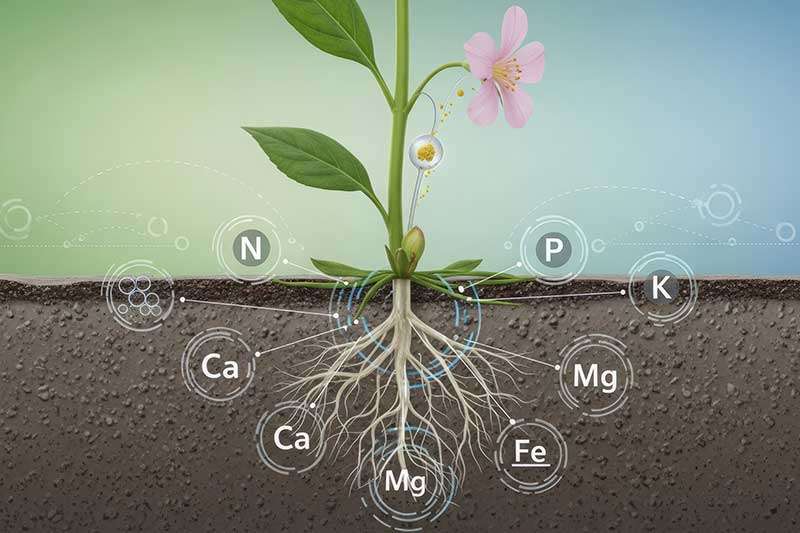
Soil is essential for converting sunlight, carbon dioxide, and water into complex compounds through photosynthesis, which forms the basis of food for all living creatures. While plants absorb N, P, and K from fertilizers, they also require trace elements for photosynthesis and for providing essential minerals in our diets. These trace minerals, critical for human health, are delivered through the soil ecosystem. For billions of years, soil biology has ensured that plants contain these nutrients naturally, reinforcing the need for sustainable soil management.
Understanding Soil Biology
Soil biology is complex, dominated by bacteria and fungi. Bacteria recycle organic material, ensuring nutrients and trace elements remain available to plants, while fungi support soil structure and nutrient exchange. Soil organisms also produce new elements indirectly through interactions with the environment. Healthy soils with diverse microbial populations enhance plant growth, nutrient content, and resilience to stressors such as drought, pests, and disease. Maintaining these biological systems is vital for sustainable food production.
Soil Depletion and its Consequences
Intensive agriculture that relies heavily on chemical inputs can degrade soil structure over time. Repeated fertilizer use increases short-term yields but reduces organic matter, compaction resistance, and microbial activity. Poor soil management leads to decreased water retention, nutrient availability, and crop resilience. As a result, food production becomes less reliable and more vulnerable to climate extremes. Sustainable practices, such as organic amendments, cover crops, and reduced tillage, help restore soil function, support microbial life, and improve long-term productivity.
Community-Based Solutions for Food Security
Addressing food security requires more than just technology—it demands community involvement. Local farmers, gardeners, and community groups can adopt soil-conscious practices to maintain fertility and conserve water. Wicking beds, cover crops, composting, and crop rotation all support soil health. Communities that prioritize soil biology can produce nutrient-rich food, reduce waste, and adapt to climate challenges collectively. By sharing knowledge and resources, communities create resilient food systems that are less dependent on global supply chains.
Nutrition and Soil Quality
The quality of soil directly affects the nutritional value of crops. Trace minerals, such as iron, zinc, and selenium, are essential for human health and are most abundant in biologically active soils. Crops grown in nutrient-depleted soils may provide calories but lack critical micronutrients, contributing to malnutrition even in regions with sufficient food. By restoring soil health, communities ensure that local food is not only plentiful but also nutritionally rich, supporting long-term health outcomes.
Technology and Sustainable Agriculture
Advances in technology, including precision irrigation, soil sensors, and organic soil amendments, can help communities optimize productivity while conserving resources. When combined with traditional knowledge and community cooperation, these tools create sustainable farming systems. Technologies like wicking beds demonstrate that efficiency and resilience are achievable without compromising soil biology. By adopting these methods, communities can ensure reliable food production even under challenging environmental conditions.
Global Challenges and Local Action
Global food security is influenced by economic, political, and social factors. Food is often abundant but inaccessible due to poverty, poor infrastructure, and governance issues. Communities can mitigate these challenges by strengthening local production systems, sharing knowledge, and supporting sustainable practices. Encouraging local initiatives, cooperative farming, and community education empowers individuals to take ownership of food security while reducing reliance on distant food supply chains.
Strategies for Maintaining Healthy Soil and Food Systems
Practical steps for communities to enhance soil and food security include:
Regular addition of organic matter, compost, and mulch.
Adopting no-till or low-till farming practices.
Using efficient irrigation systems such as wicking beds.
Rotating crops and planting diverse species to maintain soil fertility.
Encouraging community gardens and shared resources for knowledge exchange.
Monitoring soil nutrient levels and supplementing trace minerals as needed.
Educating communities about the connection between soil health and nutrition.
Conclusion — Building Resilient Communities Through Soil
Ensuring global food security depends on the health of our soils, efficient water use, and sustainable agricultural practices. By combining technology, community involvement, and an understanding of soil biology, we can produce nutrient-rich, resilient crops. Local initiatives, cooperation, and education empower communities to maintain soil fertility and food security. Healthy soils are the foundation of sustainable agriculture, and by protecting them, we protect our food, health, and future.
Diabetes is a complex and potentially life-altering condition, but our diet — especially fresh, nutrient-rich vegetables and herbs — can play a crucial role in managing it. By understanding the importance of phytochemicals, trace minerals, and biologically active soil, we can make better food choices that support blood sugar control and overall health. Growing your own food or sourcing it locally ensures the highest nutrient content for optimal wellness.
Introduction
Diabetes is a serious condition that can affect every part of the body, from blood sugar balance to eyesight and limb health. I learned this firsthand through my wife, Xiulan, who developed diabetes after moving from China to Australia. Despite standard medications, her blood sugar would spike, sometimes causing temporary vision loss and dangerous blackouts. Determined to help, I explored alternative dietary strategies rooted in fresh, nutrient-dense foods and the natural chemistry of plants, particularly phytochemicals.
Discovering the Power of Fresh Food
When Xiulan returned to China and followed a traditional diet, her blood sugar levels normalized quickly. The diet relied heavily on fresh vegetables, often harvested within hours of consumption, prepared lightly through steaming or quick stir-frying. Unlike restaurant-style Chinese food abroad, which is adapted for taste rather than nutrition, authentic Chinese meals contain a variety of vegetables, herbs, and minimally processed ingredients. Eating this way restored her health and gave us insight into the importance of freshness, mineral-rich soil, and variety in diet.
The Role of Phytochemicals
Phytochemicals are naturally occurring compounds in plants that provide numerous health benefits. While science has isolated thousands of these compounds, we don’t need to understand each one individually to benefit from them. A diet rich in a variety of vegetables, fruits, and herbs provides a diverse array of phytochemicals, which help regulate blood sugar, support cellular health, and prevent disease. Our bodies have evolved to utilize these compounds, and consuming fresh, whole foods allows them to perform their natural functions.
Why Trace Minerals Matter
Trace minerals such as iron, chromium, selenium, and iodine are essential for healthy metabolism and blood sugar regulation. While they exist in the soil, their availability depends on soil quality, microbial activity, and plant uptake. Plants convert some minerals into forms we can absorb, but this process is optimized when soil is biologically active and rich in microbes and fungi. By growing or sourcing food from healthy soils, we maximize the nutrient content and bioavailability of essential trace elements.
Understanding Soil Biology
Soil is not inert; it’s a living ecosystem full of microorganisms, fungi, and bacteria. These organisms create a natural food chain that recycles nutrients, enhances mineral availability, and supports plant health. Mycorrhizal fungi, for example, extend root networks, exude enzymes, and dissolve minerals so plants can absorb them efficiently. This nutrient-rich plant material then enters our diet, delivering minerals and phytochemicals in a bioavailable form. Healthy soil directly impacts the nutritional quality of the food we eat.
Managing Diabetes Through Diet
For someone with diabetes, controlling blood sugar levels is crucial. Fresh vegetables, herbs, and minimally processed foods provide a steady supply of essential nutrients that help stabilize blood sugar. Daily monitoring allows immediate feedback on the effectiveness of dietary strategies. For example, beans, leafy greens, and locally grown vegetables help regulate glucose, while over-processed or refined foods can exacerbate spikes. Consistency, variety, and freshness are key components in managing diabetes naturally.
Limitations of Processed Foods
Supermarkets provide convenience but often at the cost of nutrient density. Processed foods are high in refined carbohydrates, sugars, fats, and additives, which stimulate appetite without delivering essential micronutrients. Regular consumption can worsen blood sugar control and contribute to mineral deficiencies. Even if a food contains some nutrients, processing, storage, and transport reduce their availability. In contrast, home-grown or locally sourced fresh produce contains concentrated nutrients that support metabolic health.
Building a Nutrient-Rich Diet
To support blood sugar and overall health, focus on fresh vegetables, herbs, and plant-based proteins. Rotate and diversify plant sources to include legumes, leafy greens, and seasonal vegetables. Emphasize quick-cooking methods such as blanching, steaming, or stir-frying to preserve phytochemicals. Growing food in a greenhouse or garden ensures access to fresh produce with high nutrient density. Even small amounts of home-grown vegetables can contribute significantly to micronutrient intake.
Phytochemicals and Blood Sugar Regulation
Phytochemicals help modulate blood sugar by improving insulin sensitivity, slowing carbohydrate absorption, and supporting pancreatic function. For example, polyphenols, flavonoids, and carotenoids act synergistically to reduce oxidative stress and inflammation, both of which are linked to diabetes complications. While supplements exist, whole foods provide a complex mix of compounds that are more effective together than in isolation. Fresh, diverse diets leverage this natural synergy for optimal health outcomes.
Local and Seasonal Eating
Eating locally grown, seasonal vegetables ensures maximum freshness and nutrient retention. Vegetables consumed within hours of harvest retain higher levels of vitamins, minerals, and phytochemicals compared to produce transported over long distances and stored for days or weeks. This approach mirrors traditional diets observed in healthy communities, such as in parts of China, where fresh, minimally processed food is central to daily nutrition. Supporting local agriculture also strengthens community health networks.
Practical Tips for Diabetes-Friendly Gardening
Creating a small garden or greenhouse allows consistent access to nutrient-rich vegetables. Include legumes, leafy greens, and a variety of herbs. Use compost and mineral amendments to maintain soil fertility and biological activity. Allow pumpkins, squashes, and self-seeding plants to grow naturally, providing a reliable harvest with minimal effort. This hands-on approach empowers individuals to control the quality and nutrient density of their diet while enjoying the benefits of fresh food daily.
Monitoring Health
Daily blood sugar monitoring provides immediate feedback on dietary choices. If levels remain stable, it indicates that your food is supporting metabolic health. If spikes occur, adjustments to meal composition, portion size, or cooking methods may be necessary. This feedback loop allows real-time personalization of diet strategies, combining traditional knowledge, modern nutritional science, and practical gardening to manage diabetes effectively.
Summary of Key Principles
Fresh, locally grown vegetables and herbs deliver essential minerals and phytochemicals.
Biologically active soil maximizes nutrient content and bioavailability.
Diverse plant diets support blood sugar regulation and overall health.
Minimally processed foods reduce the risk of nutrient deficiencies and sugar spikes.
Daily monitoring allows immediate feedback and fine-tuning of dietary strategies.
Conclusion – Building a Healthier Life Through Food
Managing diabetes is achievable through informed dietary choices, fresh produce, and attention to soil health. Phytochemicals, trace minerals, and biologically active soils play a crucial role in regulating blood sugar and maintaining overall wellness. Growing your own food or sourcing it from local, nutrient-rich farms ensures access to fresh, bioavailable nutrients. Combining practical gardening, traditional knowledge, and modern nutritional insights creates a sustainable approach to living well with diabetes.
This article explores why many popular “health foods” and diet products — often promoted with flashy adverts and “scientific” claims — are misleading. I will explain how true science works (with rigorous experiments, peer review, and real data) and contrast this with marketing hype. I believe diet advice should be based on soil‑biology, trace minerals from real food, and honest science. Over‑hyped diets, magic pills, or miracle foods often ignore these fundamentals.
Introduction
I start by discussing a simple idea: using a compost‑tube system in a wicking bed so that compost “tea” feeds plant roots, rather than just mixing mature compost into soil. But I quickly diverge into a broader concern: the proliferation of diet and health products backed by misleading claims. What began as a humble discussion about compost leads to a critique of how the scientific process is being hijacked to sell supposed health miracles.
A World of Scams
I see a vast amount of advertising promoting exotic products — “magic” plants from remote places claiming to restore youthful health. These adverts often feature attractive young people in lab coats, giving the illusion of scientific legitimacy. In my view, this does not constitute real scientific proof.
Even in scientific circles, I notice many conflicting opinions and selected data — for example, claims such as “a pure vegetarian diet is best,” “high‑protein diets are essential,” or “sugar is the real health villain.” Respected scientists may hold all these contradictory views. This raises a key question I consider: how can ordinary people, concerned about their health, make sense of the confusion?
Understanding the Scientific Process
To make use of reliable science, I think it is important to understand the process behind it. Real science demands rigorous methods, peer review, and independent testing before conclusions are accepted.
Science aims to discover the fundamental laws governing nature, while technology uses these laws to build useful tools or applications. For example, in physics, earlier scientists tried to catalog every motion by collecting data, but only when Isaac Newton introduced his laws of motion did the problem simplify — showing how a simple theoretical law can explain complex data.
From Theory to Reality: The Challenge of Complexity
I recognize that the real world — especially nutrition — is far more complicated than the simplified world of theoretical science. Factors like soil type, diet variety, individual biology, and environmental context make universal laws (like Newton’s laws) practically impossible for food. When simple scientific laws meet real-world complexity (for example, air resistance in physics, or soil biology in nutrition), I rely on empirical observations or working hypotheses. These are not as elegant or certain as theoretical laws, but they can be useful if treated with humility.
When Science is Misrepresented: Examples and Dangers
I recall a case where a legitimate scientific experiment showed that increasing fungal (mycorrhizal) levels in sterilized soil raised CO₂ emissions. The press, however, misinterpreted this and claimed that boosting soil fungi would worsen climate change — a dangerously misleading summary. This misuse of science illustrates the danger of applying findings from highly controlled experiments to complex ecosystems (like soil) or human diets — without accounting for all variables.
What Should We Eat? The Limits of Food Science
At the basic chemical level, I know macronutrients (fats, proteins, carbohydrates) and their roles. I also understand some essential trace elements (like iodine) that our bodies need. But beyond that, there are many trace compounds — phytochemicals and micronutrients — that depend strongly on soil quality, plant variety, and growing conditions. I believe food science cannot yet provide universal dietary laws that apply equally to everyone.
The Hidden Value of Soil Biology and Trace Minerals
I have observed that many health problems stem from soils depleted of essential minor elements. For example, iodine deficiency (in areas where soil lacks iodine) can impair brain function.I have also seen regions in the world where people live long, healthy lives — often linked to diets based on locally grown produce in mineral‑rich soils. This suggests to me that diet — influenced by soil quality — may matter more than genetics in long-term health. From this, I develop a “working hypothesis”: regular consumption of small amounts of food grown in healthy, biologically active soil can provide beneficial trace elements and phytochemicals, supporting long-term health.
The Dual-Hormone Model of Appetite and Diet Misleading
Research shows that our appetite is regulated by two hormones: one signalling hunger (eat), and one signalling fullness (stop). I have noticed that individuals react to these hormones differently. In some people, the “full” hormone kicks in quickly and they stop eating early (tending to stay lean), while in others it drops sooner, prompting overeating and weight gain. This suggests that how we feel hunger and fullness is not only about calories — but also about what nutrients (especially trace minerals and phytochemicals) our body senses are missing. If the body lacks certain trace nutrients, the “hungry” hormone might drive extra eating.
Processed Foods, Taste Additives and the “Junk Food Trap”
Processed foods often contain fat, sugar, salt and strong taste additives to make them palatable. I know that this doesn’t necessarily deliver the trace nutrients or phytochemicals our body needs. Because these foods taste good, and often stimulate hunger signals, people tend to overeat — triggering the hormonal system to keep asking for more, even if basic caloric needs are met. I believe a diet of processed or “junk” foods can lead to mineral deficiencies, poor nutrient intake, and long-term health problems — even if calorie intake is high.
From Confusion to a Working Hypothesis: Individual Diets Matter
Given the complexity and variability of soil, environment, and human biology, I do not expect universal dietary laws that fit everyone. Instead, I adopt a working hypothesis approach: test what works for each individual, paying attention to nutrient-rich, soil‑grown food, and observe our body’s responses.
What We Can Conclude (For Now)
From my observations, I draw several tentative conclusions:
Trace elements (micronutrients) in our diet are important for health.
Our bodies may sense dietary deficiencies and trigger hunger accordingly.
Even small amounts of food grown in healthy, biologically active soil may boost health by providing essential trace minerals and phytochemicals.
The way food is produced — especially soil quality and soil biology — matters for the nutritional value of what we eat.
Implications for Diet, Nutrition, and Agriculture
If these ideas hold true, I believe the focus should shift from fad dieting and processed “health foods” toward producing and eating food grown in healthy, living soil. This includes supporting soil biology (microbes, fungi), ensuring soils have proper trace minerals, and emphasising whole, minimally processed foods. It also means being skeptical of flashy marketing — products that claim miraculous health benefits without robust scientific backing. The scientific method — rigorous experiments, peer review, and honest reporting — should be the standard, not marketing hype.
A Call for Real, Honest Science and Real Food
I advocate for a return to honest science, where dietary recommendations are grounded in soil science, biology, and real-world observation — not marketing. I encourage individuals to think critically, be aware of “too good to be true” health claims, and consider personal experimentation with real food from healthy soils. Above all, I emphasize humility: we don’t have all the answers yet. But by combining the best of biological knowledge, soil science, and honest observation, we can work toward diets that truly support long-term health.
Conclusion
Diet and nutrition are complex. While basic macronutrients are well understood, the importance of trace minerals, soil biology, and the context in which food is grown is often ignored. The marketing of exotic “health foods” and miracle diets frequently misuses scientific language to sell products. Rather than seeking universal dietary “laws,” I suggest valuing real food, healthy soil, and personal observation. Eating food grown in biologically active soil — even in small amounts — may provide essential nutrients and significantly improve our health over time. Honest science, not hype, should guide how we eat.
‘The Biology Revolution’ explains how working with living soils can transform food production. Healthy, biologically active soil improves nutrient availability, water retention, and plant resilience. The article offers practical guidance for gardens and wicking beds, helping people grow nutrient-rich, sustainable food. By focusing on soil ecosystems instead of chemicals, gardeners can produce healthier crops, reduce waste, and support community wellbeing. This approach also contributes to wider regenerative agriculture practices, promoting long-term soil health and food security globally.
Understanding Soil as a Living System
Healthy soil is more than dirt. It is a living ecosystem composed of bacteria, fungi, worms, and other microfauna. These organisms break down organic matter, release nutrients, and create a porous structure that holds water and air. By understanding soil as a dynamic living system, gardeners can manage it to grow stronger, more nutritious plants without relying heavily on chemical fertilizers or artificial interventions.
The Role of Microbes and Fungi
Microbes and fungi are the engines of soil health. Bacteria decompose organic matter, while fungi extend the root network and transport nutrients to plants. Mycorrhizal fungi, in particular, form a symbiotic relationship with plant roots, increasing nutrient uptake and improving drought resilience. Encouraging microbial life through compost, mulch, and minimal soil disturbance is a key step toward productive and resilient gardens.
Benefits of Living Soil
Working with biologically active soil offers multiple advantages. First, nutrient cycling becomes more efficient: minerals and trace elements are made available to plants naturally. Second, water is retained better due to improved soil structure, reducing irrigation needs. Third, plants become more resilient to pests and diseases because a healthy soil ecosystem creates natural checks and balances. Ultimately, gardeners gain higher yields and better-tasting, nutrient-rich produce.
Applying the Principles in Wicking Beds
Wicking beds are an ideal system for leveraging soil biology. By keeping water in a reservoir below the root zone, these beds provide consistent moisture while encouraging roots to explore biologically active soil. Incorporating organic matter, minerals, and microbial inoculants into the soil mix ensures that plants receive both nutrients and water efficiently. Flood-and-drain cycles further improve aeration, supporting root and microbial health.
Soil Structure and Porosity
Creating the right soil structure is critical. A well-structured soil has fine pores that allow water to move via capillary action, supporting roots and soil life. Organic matter such as compost, vermicast, and shredded leaves increases porosity and provides food for microbes. Avoiding compacted layers and barriers like cloth or stones ensures that water and nutrients flow evenly, reducing stagnant zones and preventing plant stress.
Nutrient Management
Chemical fertilizers provide nutrients quickly but often fail to improve soil health long-term. Instead, using mineral amendments like rock dust and seaweed encourages soil organisms to release nutrients naturally. Nitrogen, phosphorus, and potassium are essential, but trace elements like zinc, selenium, and iodine are just as important for human nutrition. Living soils make these trace elements bioavailable, directly benefiting the food produced.
Composting and Organic Amendments
Compost is the foundation of soil biology. By adding well-decomposed organic matter, gardeners feed microbes and maintain soil structure. Compost teas can further enhance microbial populations, providing a concentrated dose of nutrients and beneficial organisms. Two-stage composting is recommended: an initial phase to break down raw materials and a secondary stage to stabilize nutrients and reduce pathogens, ensuring safe and productive soil.
Root Health and Aeration
Roots require air as much as water. Poorly aerated soils lead to anaerobic conditions, producing foul smells and limiting nutrient uptake. Flood-and-drain systems, periodic drying, and loose, biologically active soils allow roots to breathe while maintaining sufficient moisture. Encouraging deep and fibrous root systems improves plant stability and supports a larger microbial network, further enhancing soil fertility.
Practical Garden Design
Gardens should be designed to maximize biological activity. Plant diversity, including legumes, deep-rooting species, and nutrient accumulators, supports microbial populations and improves nutrient cycling. Crop rotation and interplanting reduce pest and disease pressure while maintaining soil fertility. Raised beds and wicking beds can be strategically located for sunlight and water access, ensuring optimal growth and energy efficiency.
Monitoring and Maintenance
Maintaining soil biology requires ongoing attention. Regularly adding organic matter, monitoring moisture, and adjusting mineral supplements helps sustain a healthy ecosystem. Observing plant growth provides clues about soil health — pale leaves may indicate nutrient deficiencies, while slow growth could signal poor microbial activity. Simple, consistent maintenance ensures that gardens continue to produce nutrient-dense crops over time.
Community and Knowledge Sharing
Sharing techniques and lessons learned strengthens community resilience. Creative Commons licensing allows gardeners to share designs and methods freely, promoting wider adoption of sustainable practices. Demonstration gardens, workshops, and social media posts spread practical knowledge quickly. Communities that prioritize soil biology and living systems can produce better food collectively, improving health and food security locally.
The Global Perspective
The biology revolution extends beyond individual gardens. Globally, soils are degrading due to chemical-intensive agriculture and monoculture practices. By embracing soil biology, communities can regenerate degraded lands, increase local food production, and reduce environmental impact. This approach aligns with regenerative agriculture principles, helping to address climate change, biodiversity loss, and declining nutrient density in our food.
Final Thoughts
The Biology Revolution highlights a shift in how we view agriculture: from a focus on chemical inputs to an understanding of living ecosystems. By managing soil biology thoughtfully, gardeners can grow nutrient-rich, resilient plants while conserving water and reducing reliance on synthetic fertilizers. Wicking beds, composting, and proper aeration are practical ways to apply these principles, benefiting both individual gardeners and the wider community.
If you would like further technical guidance or to discuss community projects, contact: colinaustin@bigpond.com.
This newsletter explains why some wicking beds fail, why they may smell, and how soil biology, water balance, and nutrients affect plant health. It shares the story behind the development of wicking beds, the mistakes early users made, and the importance of living soil. It also highlights global food quality issues and introduces new plans to make wicking beds easier for everyone, including people in small homes or apartments.
Introduction — A Tough Morning With Wicking Beds
Some days just don’t go well. I started receiving a wave of emails from wicking bed users complaining that their beds were smelly or failing to keep plants well watered. If you have ever asked similar questions, don’t feel bad — your queries have helped highlight a critical issue and pushed me to rethink parts of how these systems work.
Wicking beds are wonderful when they work, but they can also go wrong — and when they go wrong they can seem “putrid” or disappointing. These problems have implications not just for individual gardeners, but for how the wicking bed idea is perceived globally. If the public sees beds fail, they won’t adopt the technology that can make food production more sustainable and nutritious.
The Birth of Wicking Beds
The original goal of developing wicking beds was practical and simple: how could I provide cheap, reliable water to grow sustenance food in drought-prone areas like rural Africa? Many subsistence farmers live on a few dollars a day and cannot afford expensive irrigation or fertilizers. The idea of using a reservoir beneath the soil to supply moisture directly to plant roots seemed ideal — cheap, simple, and adaptable to diverse conditions.
In the early days, I built wicking beds from whatever was available — old bathtubs, wheelbarrows, tyres lined with plastic bags, and other inexpensive containers. These simple systems worked surprisingly well. Once filled with soil and a bit of organic matter, they kept plants alive even when rainfall was minimal.
As the idea spread through the internet, I was taken aback by how many people adopted wicking beds. It was never intended to be a commercial product — I simply shared the concept online so others could benefit. However, rapid adoption led to both good and bad versions of the system floating around, and not all of them worked correctly.
Commercial Suppliers and Technical Support
Many people now buy ready-made wicking beds from commercial suppliers. Often these products come with little to no technical support. The manufacturers may build a bed, sell it, and leave the buyer to figure out how it works. This can be problematic because wicking bed success depends on understanding how water moves through soil, how roots breathe, and how soil biology functions. Without this knowledge, users may experience poor results and wrongly conclude that wicking beds don’t work at all.
There’s a real paradox here. When I first proposed the idea, many technical experts claimed wicking beds wouldn’t work because water stagnant at the base would become putrid. In principle, they were correct: plant roots need oxygen, and if they are submerged too long without air, they effectively “drown” just as humans would in similar conditions. A major part of early development was finding ways to ensure roots had access to both sufficient water and oxygen.
Stinky Beds – What’s Really Going On?
One common problem is that beds can go putrid. This happens when there’s too much stagnant water and not enough oxygen in the soil. Roots emit gases like ethylene, which can inhibit growth if trapped. If the water level in the soil stays high for too long, the environment becomes anaerobic (without oxygen), which creates unpleasant smells and poor growing conditions.
Another issue is the soil mix itself. If the soil is inert — for example, stones, sterile sand, or chemically sterilised potting mix — it won’t support soil biology. Without soil life, organic matter does not decompose properly, and nutrients do not become available for plants. You might avoid smells in a sterile mix, but the produce will likely be low in nutritional quality, similar to many supermarket vegetables.
Just adding a bit of compost to a bed can lead to smells not because compost is bad, but because the soil biology is not well balanced. If there’s not enough oxygen or the proper microbial population, decomposition becomes anaerobic and odorous.
Nutrition and the Global Food Crisis
My focus has shifted from just water to a broader issue: nutrition. My wife Xiulan’s diagnosis of diabetes highlighted the real health consequences of modern diets — diets high in sugar, fats, and calories but low in essential vitamins, minerals, and phytonutrients. Diabetes is not just about sugar; it is a hormonal malfunction that leads to serious diseases and complications, including blindness and amputations.
The modern industrial food system produces large quantities of energy-dense foods that are nutrient-poor. Although pills and supplements are marketed as solutions, they cannot replicate the complex balance of nutrients, vitamins, and phytonutrients that natural, biologically grown food provides. Growing nutrient-dense food locally, in biologically active soil, is a practical way to improve diet quality.
Around the world, people are suffering from chronic diseases linked to poor diet. For example, Australia has millions living with diabetes, the United States has tens of millions, and China’s numbers are rapidly rising. Most people could benefit from growing at least some of their own food to reduce dependence on processed, nutrient-deficient products.
Growing Your Own Food
The most practical solution is to grow a portion of your own food in nutrient-rich soil. This doesn’t require joining a complex movement or becoming an expert gardener — even a few tomatoes, spinach, or herbs grown in well-managed soil can improve nutritional intake.
However, many people live in apartments or have limited garden space. To address this, I have been developing an upgraded design — the “wicking bed basket.” This is a compact, soil-rich container system designed to fit in apartments and small yards. It allows anyone, regardless of space, to grow nutritious food using minimal resources.
Learning from Mistakes
There’s an old saying: both fools and wise men make mistakes, but the wise learn from them. I recognise that I made mistakes in how I promoted and supported wicking beds. I shared all my information freely online, but not everyone understood the underlying principles. This led to misapplications of the technology and some failed beds.
These failures can harm the reputation of wicking beds. If the public associates them with bad results or foul smells, adoption will falter. Yet when used correctly and supported with some technical guidance, wicking beds have enormous potential to help people grow healthy food around the world.
Commercial and Community Support
To support wider adoption, simply sharing information is not enough. People need technical support to succeed with their beds. One idea is to create a formal structure — a wicking bed club — where members pay a small fee for access to support, updates, and expert guidance. This model does not rely on patents or heavy legal systems but rather on shared knowledge and collective improvement.
The club concept allows growers to access technology, training, and resources while contributing to a network of gardeners sharing ideas and improvements. Coaches could provide personalised help, and members could benefit from collective expertise on soil mixes, biological supplements (like BioPacks), minerals, trace elements, and plant choices.
Conclusion — Growing Healthy Soil and Food
The challenge is to make wicking beds both effective and widely adopted. Most current users see good results, but some do not because they lack understanding of how water, air, soil biology, and nutrients interact. The goal remains simple: enable as many people as possible to grow nutrient-rich, homegrown food using sustainable, low-cost methods. Ensuring proper technical support and education will help wicking beds reach millions globally, improving diet quality and community resilience.
Healthy plant roots need both water and air. In wicking beds, water rises from a reservoir into the soil, but if the soil becomes too wet, roots can suffocate and the bed can become smelly or unhealthy. This article explains why good aeration — the movement of air through the soil — is essential for plant health, how wicking beds can be managed to avoid saturation, and practical techniques such as drainage, deep cycling, soil biology, compost burial and plant selection to improve airflow and keep soil healthy.
Introduction — Why Aeration Matters
Plants cannot grow well in soil that is completely saturated with water because their roots need oxygen to function. Roots absorb nutrients and water from the soil, but they also release gases like ethylene, which needs to escape into the surrounding air. If the soil stays too wet, the space that should be filled with air becomes filled with water, choking roots and slowing growth. This is one of the main reasons some wicking beds fail — the soil becomes too wet and the roots cannot breathe.
Problem: Too Much Moisture in Wicking Beds
Many people report wicking beds that turn “putrid” or develop unpleasant odours. Often this happens because the soil near the base stays saturated for long periods. In some designs, water is applied from the top, and old water stays trapped below. This can create anaerobic (oxygen-free) conditions that harm plants.
To avoid this, it helps to understand how water and air move through soil. Water that enters from the top can push air out of place, and if the soil stays wet for too long, beneficial soil organisms like fungi and worms cannot thrive.
Technique 1 — Controlled Drainage
One simple method to improve aeration is to include a drain hole. This allows water that is no longer needed to escape freely, rather than remaining trapped. By supplying fresh water from below through pipes and allowing old water to exit through a drain, you can create a “first in, first out” water exchange system. This ensures that water in the reservoir does not stagnate and that roots have access to oxygenated soil rather than old, stale water.
Technique 2 — Deep Cycle Moisture Refill
Another useful approach is what the author calls a “deep cycle” refill. When the water reservoir is filled, it pushes out old air and water. As plants use that water, they naturally draw in fresh air around the root zones. This creates a cycle in which moisture is replaced and air is drawn back into the soil as water levels fall — mimicking a more natural wet-dry cycle that encourages plant health and prevents waterlogging.
Technique 3 — Soil Biology Creates Air Channels
Soil organisms such as worms and fungi play a major role in creating pathways for air and water. Worms burrow through the soil, leaving tunnels that allow air to penetrate deeply. Fungi produce filaments that help bind soil particles into stable clumps, improving structure and aeration. Encouraging soil biology through compost, organic matter and minimal disturbance creates a living soil with many microscopic and macroscopic pores that benefit both roots and microbes.
Technique 4 — Bury Compost for Local Aeration
Burying compost directly in the bed can help. Some gardeners use a compost bin with holes buried in the soil, or simply dig fresh compost into specific areas. These pockets of decomposing organic matter attract soil life and create local air pathways without disturbing the rest of the soil. This approach improves aeration while preserving the existing soil biology, which can be easily harmed by extensive digging.
Technique 5 — Avoid Barriers That Restrict Roots
Barriers like cloth or liners that restrict where roots can grow can also restrict airflow. Roots that spread throughout the soil help reduce stagnant water because they draw moisture and facilitate gas exchange. For shallow-rooted plants, combining them with deeper-rooted species — such as Senna alata — can help “draw down” excess water and improve aeration by creating more root channels throughout the soil profile.
Technique 6 — Emergency Aeration with a Garden Fork
If a soil becomes compacted or waterlogged, a simple intervention is to insert a garden fork into the soil and tilt it slightly to fracture the soil. This creates new air channels and temporarily improves oxygen flow to roots. This method is useful when beds become too dense or when roots struggle to access fresh air.
Balancing Water and Air
The key balance in wicking beds is water and air. Too much water without avenues for air exchange will limit root respiration and plant growth. By adopting techniques that allow both air and water to move freely through the soil, gardeners can maintain healthy, well-aerated soils. A combination of proper drainage, deep cycling, strong soil biology, and plant selection helps maintain this balance, resulting in healthier, more productive plants.
Summary
Healthy wicking beds are not just about water supply; they must also provide enough air for roots and soil organisms. Saturated soil blocks oxygen, slows growth, and can lead to unpleasant conditions. Practical techniques — such as providing drains, managing water cycles, encouraging worms and fungi, burying compost, avoiding barriers, and creating air channels — all improve aeration. Taken together, these practices ensure that wicking beds function effectively by supplying both moisture and oxygen to plant roots, leading to stronger, more resilient plants.
Wicking beds work by keeping soil at a consistently moist level through capillary action, using an underground water reservoir instead of frequent surface watering. This improves the water-holding capacity of the soil, supports soil biology (especially fungi), and can help regenerate degraded soils. By widening the volume of soil accessible to plant roots and maintaining moisture between soil field capacity and plant wilt point, wicking beds allow plants to grow with less frequent irrigation. Understanding these basic principles helps gardeners optimise soil and water use for sustainable, productive food growing.
Introduction
Wicking beds are a well-established gardening technique that uses water stored below the root zone to keep the soil moist from below. The simplest example is a flower pot standing in a saucer of water: water is drawn upward into the soil by capillary action. There are many variations on this theme, but the core idea is always the same — to increase the effective water available to a plant’s roots by using the soil’s natural ability to hold moisture rather than frequent surface watering.
Single Chamber vs Two Chamber Systems
Many modern wicking bed designs use two separate containers — one for water and one for soil — with a connection between them. Sometimes this connection is simply soil; in other cases, a cotton or fabric wick is used. However, the wicking beds pioneered here use only one chamber. In this design, the water reservoir is under the soil itself, and the entire bed acts as both the water source and growing medium.
This single chamber system increases the waterholding capacity of the soil directly. Some gardeners have tried to return to two-chamber designs, placing rocks or scoria below the soil layer and separating them with a membrane. In practice, this often complicates the system without real benefit.
Soil Degradation and the Need for Soil Regeneration
Soils around the world are degrading due to tillage, inappropriate chemical use, erosion and other harmful practices. Although fertilisers and irrigation have partly offset this degradation, the long-term sustainability of food production is threatened as soils continue to lose biological and physical health — particularly in the face of growing populations and increased demand for food.
Experiments conducted by the author in the 1970s showed that keeping soil moist is critical to regenerating degraded soils. Both overly dry and overly wet soils impede biological activity. Capillary-fed moisture from wicking beds maintains soil moisture in the ideal range — moist, but not saturated — creating conditions that support soil organisms that build and restore soil structure.
Basic Wicking Bed Principles
To understand why wicking beds work, it helps to know about two key soil water levels:
Field capacity: the amount of water soil can hold against gravity after excess water has drained. Small soil pores hold this water by surface tension.
Wilt point: the lowest moisture level at which a plant can no longer extract water from the soil.
The difference between field capacity and wilt point is the water holding capacity available for plants. For example, if soil field capacity is 20% and wilt point is 10%, only 10% of the soil volume holds plant-accessible water. For plants with a 300 mm root zone, this may not be enough without frequent watering.
Wicking beds increase both the water holding capacity and the volume of soil available to roots. A waterproof liner placed beneath the soil becomes a reservoir. When soil around that reservoir is saturated, the available water can increase — for example, from 10% to 20%. This means plants can access moisture for longer periods between surface watering.
Soil Biology and Moisture Management
Maintaining the correct moisture level is not just about physical water availability — it’s also about supporting soil biology. Most soil organisms, especially fungi, cannot photosynthesise and need a reliable moist environment. Capillary moisture provided by wicking beds creates conditions favourable to fungi and other beneficial microbes, which in turn improve soil structure and nutrient cycling.
Soil biology depends on a supply of energy, which comes from plants. This can be direct — from living plant roots — or indirect — from organic material added to the soil. Some gardeners avoid burying plastic underground for environmental reasons. Others experiment with low-plastic or biological sealing methods, such as using waxy leaves from certain plants (e.g., species adapted to dry environments) to help create a natural waterproof layer.
Increasing Water Holding Capacity
There are additional ways to increase the water holding capacity of soil beyond simply adding a reservoir. For example, laminating involves placing a fine-pored layer of material above a coarser layer so that water cannot easily move downward through gravity. This technique is used with sand to create a hanging water table because surface tension holds water in the fine layer. However, soil is a living system that depends on many organisms to build structure, so mechanical techniques alone are not sufficient.
Role of Fungi and Mycorrhizal Networks
Mycorrhizal fungi and other soil organisms play a key role in water and nutrient dynamics. Fungi can be more efficient than plant roots in extracting moisture and nutrients, effectively lowering the soil’s wilt point and making more water available to plants. Fungal hyphae also help transfer water and nutrients between plants, creating a connected soil ecosystem.
In practical gardening, some people grow soil plants — species chosen specifically to enhance soil structure and biology — either within or around wicking beds. These plants, combined with composting and microbial inoculation, help build a more resilient, fertile soil.
Minerals and Human Nutrition
While plants may not require large quantities of trace minerals, humans do. Soil organisms, particularly fungi, are adept at releasing minerals that might otherwise remain inaccessible. They exude enzymes that dissolve rock particles and mineral deposits, making trace elements available to plants and — ultimately — to us. This underscores the broader importance of soil quality not just for plant growth, but for human health.
Challenges of Evidence-Based Policy
The original article also reflects on broader issues in science and decision-making. While soil regeneration and its effects on human health are supported by probability and emerging research, they are not always easily demonstrated by strict scientific proof. Policy systems often struggle to act on probabilistic evidence, which can delay adoption of beneficial practices like soil regeneration and climate-adaptive agriculture.
Conclusion
Wicking beds are more than a water-saving gardening method — they are a tool for improving soil health, increasing plant-available water, and supporting the biological systems that make soils fertile. By maintaining consistent moisture levels, expanding the volume of soil available to roots, and encouraging beneficial soil organisms, wicking beds help regenerate degraded soils and support sustainable food production.
Using stones or coarse materials in wicking beds is often counterproductive. This guide explains why fine, organic-rich soils perform better, how proper soil structure and biology improve water distribution, nutrient availability, and root health, and how gardeners can optimise their beds for consistent moisture, fertility, and vigorous plant growth. Understanding the limits of stone-based designs helps avoid stagnant water, poor nutrient release, and restricted root systems, ensuring your wicking bed functions efficiently and sustainably.
Introduction
Many gardeners place stones, gravel, or coarse sand at the base of wicking beds, thinking these materials improve water retention. While this is a common approach, it often creates more problems than it solves. Stones have large pores that prevent effective capillary rise, meaning water does not reliably move upward into the soil. Over time, these layers may compact or interfere with root growth. Additionally, stones contribute no nutrients, and there is little biological activity to release essential minerals. As a result, plants may struggle even with regular watering.
The Issues with Stone Layers
When stones are used in wicking beds, several problems often appear. Water may remain trapped at the bottom, leading to stagnant reservoirs that smell and support anaerobic bacteria. Roots may struggle to reach water efficiently, reducing overall growth and yield. Nutrient availability is limited because stones do not support microbial communities that break down organic matter. In some cases, soil can infiltrate the stone layer and become compacted, forming dense zones that restrict root expansion and prevent optimal water movement. These factors combined can create a bed that appears functional but underperforms compared to well-prepared soil systems.
Optimising Soil for Wicking Beds
A better approach is to use a fine-textured, organic-rich soil or purpose-made sponge soil. This type of soil has smaller pores that retain water and allow it to move upward through capillary action. High porosity ensures that roots have access to moisture while also allowing air to circulate and microbes to thrive. Adding compost, vermicast, or other organic matter supports soil biology, feeding fungi, bacteria, worms, and other microfauna. These organisms break down organic material and mineral amendments, releasing nutrients that are immediately available to plants.
In very dry climates, a separate water reservoir or buried container can be used to supply moisture, but it should remain separate from the main soil layer. This ensures that roots can freely access the soil and nutrients, rather than being restricted to the reservoir. Avoid barriers like cloth or geotextile layers that block water movement, as these prevent proper wicking and can isolate water from the soil layer.
Benefits of Soil-Based Wicking Beds
Fine, biologically active soils offer multiple advantages over stone-based designs. Water is distributed evenly through the soil matrix, supplying roots consistently without oversaturation. Soil organisms release nutrients through natural decomposition processes, supporting plant health and improving crop quality. Roots can penetrate freely, reducing compaction and encouraging a strong and extensive root system. Overall, these beds are simpler to maintain: replenishing organic matter and minerals over time sustains fertility without the need for heavy stone layers or complex construction.
Practical Recommendations
For optimal performance, use a well-structured soil mix with good porosity and high organic content. Feed soil biology with compost or worm castings, and include mineral amendments if the local soil is deficient in calcium or trace elements. Avoid placing barriers between soil and water reservoirs that can interrupt capillary flow. In dry areas, supplementary reservoirs can help, but they should be designed to complement, not replace, a living soil layer. Monitoring soil moisture and replenishing organic inputs over time ensures that beds remain productive and nutrient-rich for years.
Conclusion
While stones may appear to offer water retention benefits, they often hinder the function of wicking beds. Fine-textured, organic-rich soils with active microbial communities perform far better, providing consistent moisture, nutrient availability, and healthy root growth. By focusing on soil biology, structure, and careful water management, gardeners can create sustainable, high-performing wicking beds that produce nutrient-dense vegetables and maintain soil resilience over the long term. Optimising your soil is a simple yet powerful step toward efficient, productive, and sustainable gardening.
Colin argues that diabetes is not caused by genetics or fate, but by a modern food system that overwhelms our intelligent control system — our “head brain”, our “gut brain”, and the trillions of microbes that run our internal fuel management.
The Real Problem Behind the Diabetes Explosion
Fifty years ago, type 2 diabetes was rare. Today it affects hundreds of millions of people and continues to rise at around 4% per year. Something drastic has changed — and it isn’t human biology. Our bodies are the result of millions of years of evolution. They haven’t suddenly failed.
What has changed is our food. Modern industrial-chemical farming produces food high in energy (sugar, fats, refined carbs) and low in minerals, vitamins, phytonutrients and microbes. Our control system senses this lack of micronutrients and interprets it as hunger, even when we are full — creating overeating, fat storage, and ultimately diabetes.
People aren’t getting diabetic because they ate too much — they’re getting diabetic because their control system has been screwed up by modern food.
The tragedy is that medicine often treats the symptom — high blood sugar — instead of the root cause. Drugs that increase insulin may lower sugar in the short term, but they also lock people into lifelong diabetes. Yet we now know diabetes can be reversed with food.
The Old Paradigm vs the New Paradigm
Colin describes the failed old paradigm like this:
Old paradigm: “You’re diabetic because you eat too much. Eat less. Take insulin.”
Result: People store more fat, become more insulin resistant, and diabetes gets worse.
The new paradigm looks at the body’s intelligent control system:
Your brain + gut + microbiome are constantly managing fuel flow.
If they sense “food insecurity”, they lock fat away and refuse to release it.
This is why people often regain weight after diets — the system simply resists.
Diabetes is not a calorie problem — it is a control-system problem.
Why Modern Food Breaks Our Control System
Modern food stresses our internal system in three ways:
Too much fast energy — sugar, refined carbs, seed oils.
Too few micronutrients — minerals, vitamins, phytonutrients.
Disrupted gut biology — pesticides, antibiotics and sterile soil reduce microbial diversity.
Our bodies cannot identify which nutrient is missing — they just send a powerful “eat” signal. In a world full of cheap, fast-acting food, that signal becomes destructive. We store more fat, then the “ferocious guard dog” (Colin’s metaphor for the defensive side of the system) refuses to let that fat back out.
Why Some People Become Diabetic and Others Don’t
Colin explains that genetics alone cannot explain the rise. Instead, it’s a combination of:
Fat-storage capacity — some people can store huge amounts of fat before becoming insulin resistant.
Epigenetics — environment can affect how genes express across generations.
Gut microbiome differences — some people have biology that protects them, others don’t.
But the key point is this: the sudden global surge of diabetes is man-made. It is not an evolutionary flaw.
The Puppy and the Guard Dog
Colin uses one of his most memorable metaphors to explain why diabetes is so hard to reverse:
Your internal control system starts as a smart little puppy.
When you experience food stress (real or imagined), the puppy grows into a ferocious guard dog.
The guard dog refuses to release stored fat — even when you’re dieting.
This is why dieting alone rarely works. The system must be retrained, not starved.
Reversing Diabetes: The Practical Path
Diabetes reversal requires burning off the excess fuel stored in cells so they can become insulin sensitive again. Thousands of people worldwide have done this through different dietary approaches: low-carb, low-fat, plant-based, intermittent fasting and more.
What they all have in common is not the specific diet, but the fact that they reduce stored fuel and retrain the control system.
The long-term solution, however, goes deeper — rebuilding gut biology and eating nutrient-rich food grown in living soil.
Why the Gbiota Project Matters
Colin founded the Gbiota project because reversing diabetes for one person at a time is not enough. We need to change the way food is produced. This means:
Growing food in biologically rich soil.
Restoring gut microbes through living plants.
Providing micronutrients that industrial farming has stripped away.
Supporting community growers and home gardeners.
Gbiota beds allow people to grow refurbishment food — food that feeds the microbiome and restores the body’s intelligent control system.
Making the Paradigm Shift
Change won’t come from governments, pharma or the food industry. It will come from citizens who see the need for change, reverse their diabetes, and share what worked.
The Gbiota club exists to help people support each other, grow meaningful food, run personal trials and build a community-led revolution in health.
To find out more, check out the rest of this document.
Wicking bed technology is a sustainable gardening method that saves water, improves soil fertility, and promotes healthy plant growth. Using an underground reservoir, water moves up to plant roots through capillary action, reducing waste and enhancing nutrient uptake. Wicking beds support soil biology, beneficial microbes, and fungi, allowing gardeners to grow nutrient-rich vegetables with less effort, while maintaining resilient soils even in dry or variable climates.
Introduction
Wicking beds are a smart solution for gardeners looking to conserve water and grow healthy plants with minimal effort. The design combines a water reservoir beneath the soil with capillary action, which allows water to move upward into the root zone as needed. Unlike traditional irrigation, which can be inefficient due to evaporation or drainage loss, wicking beds ensure roots receive a steady supply of moisture. They also maintain nutrient-rich, biologically active soils, making them a sustainable option for household gardens, community plots, and larger horticultural operations.
Section 1 — What is a Wicking Bed?
A wicking bed is essentially a planting bed constructed over a water reservoir, typically lined with plastic or another impermeable material. Water stored in the reservoir moves upward into the soil through natural capillary action, ensuring that roots remain consistently moist. This approach minimizes water waste, supports plant health, and reduces the need for frequent watering. By delivering water directly to roots, wicking beds improve nutrient uptake, prevent soil compaction, and encourage vigorous plant growth. They are also particularly useful in areas with inconsistent rainfall or limited water supply.
Section 2 — Principles of Water Movement
Water moves upward through soil due to surface tension and capillarity. The soil’s pore structure plays a critical role: large pores drain quickly, while smaller pores hold water more tightly. In a wicking bed, water rises from the reservoir to fill these smaller pores, making moisture readily available to plant roots. Maintaining a balance between pore sizes ensures roots can access water efficiently without creating waterlogged conditions. This capillary action is most effective in soils with mixed particle sizes and high organic content, which also support soil microbes and beneficial fungi.
Section 3 — Soil Moisture Dynamics
To maximize a wicking bed’s effectiveness, it is important to understand soil moisture dynamics. When water enters the soil, large pores fill first and excess water drains downward. Water retained in small pores is known as field capacity and is available for plant use. As plants take up water, a drying front forms, and moisture is drawn from the reservoir to maintain the field capacity. The soil moisture level should ideally remain between field capacity and the permanent wilting point, ensuring that plants never experience water stress while minimizing waste. Properly structured soil allows roots to penetrate deeply and access consistent moisture.
Section 4 — Improving Irrigation Efficiency
Traditional irrigation methods often fail to efficiently deliver water to plant roots. Shallow watering evaporates quickly, while deep irrigation can carry nutrients below the root zone. Wicking beds address this by storing water underground and allowing it to move upward as required. This keeps roots moist, reduces nutrient leaching, and improves plant growth. Because the reservoir releases water gradually, plants benefit from a stable supply of moisture over extended periods, reducing the frequency of manual watering and improving overall garden productivity. This efficiency also helps in areas with restricted water access.
Section 5 — Open vs. Closed Wicking Beds
Wicking beds can be constructed as open or closed systems depending on the scale and purpose. Open systems are suitable for larger gardens, community plots, or agricultural use, allowing natural water exchange and easy access for maintenance. Closed systems are ideal for small gardens, rooftop setups, or places where precise water and nutrient control is important. Both systems save water, support plant growth, and maintain soil health. Choosing the right system involves considering available space, climate, and desired outcomes, as well as the level of maintenance required.
Section 6 — Soil Structure and Pore Management
Soil structure is central to the success of wicking beds. High porosity ensures that water moves freely through the soil while maintaining adequate air spaces for roots and soil organisms. A well-structured soil allows water to wick evenly and supports microbial life. Organic amendments such as compost or vermicast improve soil texture, water retention, and fertility. Avoid compacted layers or hydrophobic soil, which can prevent effective water movement and reduce plant growth. Ensuring a balanced mix of sand, silt, clay, and organic matter creates an optimal environment for capillary water movement and root development.
Section 7 — The Role of Soil Biology
Soil biology drives nutrient availability and plant health in wicking beds. Microbes, fungi, and soil fauna decompose organic matter, release nutrients, and aggregate soil particles to improve structure. Mycorrhizal fungi extend root networks, increase water uptake, and participate in plant signaling and defense. Wicking beds enhance biological activity by providing stable moisture, organic matter, and minimal soil disturbance. Over time, a biologically active soil supports nutrient cycling, increases mineral availability, and boosts plant resilience against pests, drought, and other stressors.
Section 8 — Nutrient Management
Maintaining nutrient balance is essential for plant growth. Wicking beds prevent nutrient leaching by keeping water in the root zone. Essential minerals such as calcium, magnesium, and trace elements can be added to correct soil deficiencies. Organic amendments, including compost and vermicast, provide additional nutrients and feed beneficial microbes. Regular monitoring ensures that plants receive adequate nutrition. Well-managed nutrient delivery produces healthier plants, increases yields, and supports long-term soil fertility, enabling sustainable gardening and high-quality, nutrient-dense produce.
Section 9 — Water Conservation and Climate Adaptation
Wicking beds are particularly valuable in areas with irregular rainfall or drought. The underground reservoir captures water, reduces evaporation loss, and ensures roots receive a steady supply of moisture. Even light rainfall and dew are absorbed efficiently, improving water use and crop resilience. By conserving water, wicking beds help gardeners and growers adapt to variable climates, reduce environmental impacts, and maintain productivity. This makes them a practical, sustainable choice for both small-scale and commercial horticulture.
Section 10 — Plant Selection and Ecosystem Design
The success of a wicking bed also depends on plant diversity. Including deep-rooted species, fibrous-rooted plants, legumes, and nutrient accumulators helps mine soil nutrients and fix nitrogen. Companion plants can protect against pests and promote soil health. Designing the bed as a small ecosystem ensures ongoing biological activity, supports soil microbes, and maximizes nutrient cycling. Rotation and interplanting maintain soil fertility, prevent disease buildup, and encourage consistent yields of healthy, nutrient-rich crops.
Section 11 — Practical Construction Considerations
Building a functional wicking bed requires careful planning:
Choose a site with adequate sunlight and access to water.
Create a lined water reservoir or pit beneath the planting bed.
Mix soil with varying particle sizes and organic matter to ensure porosity.
Include coarse material at the base to distribute water evenly.
Top with fertile soil enriched with organic matter and mineral amendments.
Plant diverse species including deep-rooted and nutrient-accumulating plants.
Maintain the system by adding compost, monitoring water levels, and replacing depleted organic matter as needed.
This approach emphasizes feeding soil biology rather than sterilizing it, allowing the system to improve over time and become increasingly productive.
Section 12 — Benefits and Applications
Wicking beds provide numerous benefits:
Reduce water use by up to 50% compared to traditional irrigation.
Maintain consistent moisture and reduce plant stress.
Enhance nutrient availability and soil biology.
Promote healthy root systems and plant growth.
Conserve water during droughts or low rainfall.
Support sustainable, low-maintenance gardening for homes, community gardens, and commercial projects.
Encourage carbon capture and improve soil structure over time.
These advantages make wicking beds a versatile, environmentally friendly, and highly effective method for growing nutrient-dense crops sustainably.
Conclusion
Wicking beds are a practical, cost-effective solution for sustainable gardening. By combining a water reservoir, proper soil structure, nutrient management, and biological activity, these systems provide consistent moisture, improve nutrient availability, and support robust plant growth. They reduce labor, conserve water, and promote resilient soil ecosystems. Suitable for households, community gardens, and commercial growers, wicking beds allow gardeners to adapt to changing climates, produce high-quality crops, and maintain long-term soil fertility, making them a cornerstone of sustainable horticulture practices.
This article argues that human health and soil health are intimately linked: modern food often lacks essential minerals and phytochemicals because soils are depleted. By growing our own food using biologically active soils — for example in wicking beds — we can restore missing nutrients, support soil ecology, and produce food that helps regenerate our bodies. The approach depends on balanced soil biology, mineral-rich soils and sustainable growing methods rather than artificial fertilizers.
Soil, Food and Body Regeneration
Many commercial foods today are rich in calories, but poor in the minerals and complex plant‑derived chemicals (phytonutrients) that our bodies need to regenerate cells, tissues, and maintain health. Plants are nature’s chemists: they draw minerals from soil, make these compounds, and store them in edible parts. But when soils lose minerals or biological activity, foods become nutrient-poor — and our bodies suffer.
Growing some of our own food — on biologically active soil — gives us control. We can ensure soils contain minerals and promote the microbial life that helps make those minerals plant‑available. Wicking beds are one practical method for doing that.
Why Soil Regeneration Matters
Many soils around the world have been degraded by overuse, erosion, or poor agricultural practices. Topsoil can erode, lose nutrients, or become compacted and biologically dead. Without regenerative practices, these soils produce food low in minerals and phytonutrients — even if yields remain high.
Soil regeneration isn’t just for farms. Anyone with a small plot, garden bed or even a container can help restore soil quality to produce healthier vegetables — for themselves and the community.
Soil Biology: The Invisible Engine
Soil is not inert: it is alive. Fungi, bacteria, protozoa, worms and other soil fauna work together to transform minerals and organic matter into forms accessible to plant roots. Mycorrhizal fungi, for instance, connect with plant roots and help gather nutrients — far more efficiently than roots alone. Soil microbes break down organic matter and free up trace elements that would otherwise remain locked in mineral particles.
If you kill or suppress this soil biology — for example by sterilising soil or over‑using chemicals — you lose the engine that powers nutrient cycling. Plants still grow, but their nutritional value drops.
The Role of Wicking Beds and Water Management
Maintaining appropriate soil moisture is critical. Too dry and microbes struggle, too wet and oxygen levels drop, harming biological activity. Wicking beds offer a reliable way to hold moisture below the soil surface. Water slowly rises by capillary action, keeping soil evenly moist but not waterlogged. This stable moisture zone supports beneficial biology while giving plant roots consistent access to water and nutrients.
This moisture stability is especially useful in arid climates or where rainfall is irregular. It also conserves water — a key benefit for sustainable gardening and soil regeneration.
How to Regenerate Soil — The Basics
To regenerate soil effectively, focus on three core aspects: biology, chemistry (minerals), and physical structure.
– **Feed the biology** — enrich soil with compost, organic residues or carefully prepared organic amendments. This gives microbes and fungi the energy they need to thrive.
– **Supply minerals** — if the soil lacks key trace elements or essential minerals (such as calcium, magnesium, trace element mix), add them. Plants and soil life need these to grow and to produce nutrient‑rich food.
– **Improve structure and porosity** — ensure soil has enough pore space for air, water and root movement. This includes mixing in coarse materials or sand if the native soil is heavy clay, or adding organic matter if soil is too sandy.
When all three conditions are met — living biology, balanced minerals, and good structure — soil can regenerate and support healthier plant growth and better nutrition.
From Theory to Practice
You don’t need a large farm to participate. Even small wicking beds, containers or raised garden beds can be used. Key steps:
1. Start with existing local soil — this helps retain adapted microorganisms.
2. Mix in compost or organic waste to feed biology.
3. Add mineral amendments if needed (especially trace elements).
4. Use a wicking bed or water‑efficient system to maintain stable moisture.
5. Plant a diversity of vegetables — this supports resiliency and nutrient variety.
6. Maintain regularly: top up organic matter, monitor water, avoid chemical sterilizers.
Over time, the soil becomes more alive, minerals become more available, and the produce becomes richer in nutrients and phytonutrients — food that more effectively supports body regeneration.
Why This Matters for Health and Sustainability
Our bodies constantly regenerate — building new cells, healing tissues, and maintaining organ function. To do this properly we need more than calories; we need high‑quality nutrients, minerals and phytochemicals. Food grown in depleted soils struggles to provide these.
By restoring soil health, we restore the nutritional potential of our food. Moreover, soils that support biodiversity and retain carbon help ecological resilience and combat environmental degradation. Wicking beds and regenerative soil practices offer a practical, scalable path for individuals and communities to contribute.
Conclusion — Soil Regeneration for People & Planet
Soil regeneration is not a distant academic exercise — it’s a practical, necessary step for healthy food, healthy bodies, and a healthy planet. By combining living soil biology, balanced minerals, stable moisture and sustainable practices, we can rebuild soils even on degraded land or in urban gardens. Wicking beds and simple soil‑building techniques empower people to grow mineral‑rich, nutrient-dense food. In doing so, we help regenerate not only the earth beneath our feet, but the bodies that rely on it.
If you’d like more information or practical guidance, feel free to reach out: colinaustin@bigpond.com
This article explores the principles of regenerating soil for vegetable growing using wicking bed baskets. It highlights how soil biology, water management, and mineral balance are crucial for producing nutrient-dense food. Drawing from global observations, from equatorial forests to desert and savannah soils, it explains how to work with natural processes to restore degraded land. The focus is on practical insights for community gardeners, emphasizing low-cost, biology-focused methods to create fertile, water-retaining soils that support sustainable food production.
Introduction
Soil regeneration is essential for producing nutritious food. This article explains how to use wicking bed and sponge-bed methods to create fertile, biologically active soils. The approach focuses on simple, low-cost strategies that help communities restore degraded land, retain water efficiently, and increase nutrient availability for crops.
Lessons from Experience
Over decades of observation and experimentation, I have learned that soil is much more than dirt. It is a living ecosystem where microbes, fungi, worms, and other organisms interact with minerals and plant roots to produce fertile soil. Observing dust storms in Australia, where topsoil was stripped from the land, highlighted how easily soil can degrade and the urgent need for restoration.
Early Technology Insights
Years of working in real-time computing and fluid simulation taught me the value of experimentation and observation. These lessons applied directly to soil regeneration, especially in understanding water movement and how plant roots interact with soil particles. Technology provided a framework for experimenting with water flow in wicking beds and assessing soil structure scientifically.
Global Soil Observations
Studying soils worldwide provides valuable lessons for gardeners:
Equatorial forests: Soils are often poor because heavy rain leaches nutrients, but dense vegetation recycles nutrients quickly.
Monsoon regions: Seasonal rainfall brings nutrients but can also erode topsoil if vegetation cover is lost.
Desert zones: Minimal rainfall limits soil formation, but when it rains, plants respond quickly. Capturing water efficiently is critical.
Savannahs: Rich volcanic soils often support productive agriculture if biological activity is maintained.
Tundra: Cold, wet conditions produce peat rather than fertile topsoil, limiting plant growth.
Understanding these patterns helps gardeners design systems that work with natural processes rather than against them.
Soil Formation Principles
Soil forms through the interaction of water, minerals, and living organisms. Plant roots provide sugars and organic matter to microbes, which in turn solubilize minerals and create aggregates that improve water retention and aeration. Without living organisms, even nutrient-rich materials may not become fertile soil.
Soil Biology and Plant Health
Healthy soil contains a complex web of bacteria, fungi, and invertebrates. Mycorrhizal fungi form symbiotic relationships with plants, extending root systems and helping with mineral uptake. Worms and microfauna create channels that improve drainage and aeration. Supporting these communities ensures crops grow vigorously and contain more vitamins and minerals.
Wicking Beds and Water Efficiency
Wicking beds supply water from below, letting it rise through capillary action. This approach reduces evaporation, keeps roots consistently moist, and prevents nutrient loss through leaching. Key factors include soil porosity, organic content, and a balanced mixture of coarse and fine particles to allow water distribution throughout the bed.
Key Principles for Regeneration
Feed the biology: Compost, vermicast, and organic residues maintain microbial activity and soil fertility.
Balance minerals: Essential elements such as calcium, magnesium, and trace minerals are added because plants and microbes cannot synthesize them.
Maintain structure: Soils must be loose and hydrophilic, allowing roots, microbes, and water to move freely.
Recycle resources: Use local organic waste like kitchen scraps, pond plants, and weeds to reduce costs and close nutrient cycles.
Manage hygiene: Two-stage composting and plant filters reduce pathogen risk when using labile materials.
Practical Steps to Build Beds
1. Choose a sunny site with access to water.
2. Prepare a shallow basin or raised bed; line it if needed to retain moisture.
3. Layer recycled organic matter with coarse material to maintain structure and drainage.
4. Compost in two stages: initial breakdown reduces pathogens, second stage stabilizes nutrients and inoculates soil with beneficial organisms.
5. Add mineral amendments and mix well to provide essential elements.
6. Finish with a biologically active topsoil layer and plant a mix of deep-rooted, fibrous, nitrogen-fixing, and pest-deterring species.
Plant Selection and Diversity
Select a variety of plants to maintain soil health: legumes fix nitrogen, deep-rooted species bring minerals from lower layers, accumulator plants extract residual nutrients, and herbs or flowers repel pests. Diversity prevents soil depletion and encourages a self-sustaining ecosystem.
Maintenance and Harvesting
Regular care is essential because harvesting removes nutrients. Add compost, green manure, and trace minerals periodically. Rotate planting zones and allow rest periods to restore biological activity. Properly maintained beds provide consistent, nutrient-rich produce over time.
Observations on Soil Behavior
Over time, wicking and sponge beds reveal patterns in soil and plant behavior. Well-prepared soils retain water more effectively than systems with stones or artificial layers. Roots explore soil thoroughly, microorganisms thrive, and plants access nutrients efficiently. Observing these interactions informs adjustments in bed design, composting, and plant selection.
Building Resilient Communities
By using low-cost, biology-focused soil systems, communities can improve food security and nutrition. Sharing knowledge and techniques through community gardens, workshops, and clubs ensures consistent practices and spreads benefits. Collaboration helps avoid common mistakes, like over-sanitizing soil or using ineffective layers.
Conclusion
Restoring degraded soil requires understanding water management, mineral balance, and soil biology. Wicking and sponge beds offer practical, low-cost methods to grow nutrient-rich food while regenerating land. With careful planning, diverse plantings, and ongoing maintenance, these systems provide long-term resilience and healthy crops for households and communities. By working with natural processes, we can create fertile, water-retaining soils that support plants, microbes, and humans alike.
If you would like more guidance or wish to discuss community projects, contact: colinaustin@bigpond.com.
This project is not an abstract health theory for me – it began with watching my wife battle diabetes, face possible amputation, and being told there was no hope of reversing it.
Why Diabetes Became Personal
We are all aware of the damage caused by non-infectious diseases such as diabetes, heart attacks and strokes. They destroy lives, families, and swallow health budgets. For me, this is not just a statistic – it is my wife’s story.
My wife developed diabetes. Her eyesight began to fail. She fell down a flight of stairs and broke multiple bones in her foot. After surgery, her foot started to turn black and we genuinely feared amputation.
The diabetes specialist gave us the standard message: diabetes is a chronic disease, it is not curable, it will get worse over time. We were told she would need stronger and stronger medication, move on to insulin injections, and probably die young. We were sceptical. So we began our own long search to understand what was really going on.
Questioning the Standard Approach
We discovered there are many qualified doctors who strongly disagree with the “progressively worse, nothing you can do” view. One of the most vocal is Dr Jason Fung (search him on YouTube), who argues that treating diabetes with ever more insulin may help in the short term, but actually makes insulin resistance worse in the long term.
We also learned that diabetes is dominated by diet – but not in the simplistic “eat less, exercise more” way. That approach has failed millions of people over decades, yet it is still handed out as the default prescription along with a stronger pill.
We don’t get fat just because we overeat – our hormones make our bodies store fat, which then makes us hungry and drives us to overeat.
This process is automatic. Willpower has very little to do with it. If we want to change the way our bodies handle insulin and fat, we have to change the hormones running the show.
Hormones, Gut Biology and Appetite
That led us to the next layer: hormones are largely controlled by our gut biology. The microbes in our intestines act as a kind of gut brain. They influence which hormones are released, how hungry we feel, what we crave, and how we store or burn energy.
So the chain looks like this:
Change your gut biology → you change your hormones.
Change your hormones → you change how your body handles insulin and fat.
Change that system → you change your risk of diabetes and other chronic diseases.
If you want to change your hormones, you have to change your gut biology – and the most powerful way to do that is through the food you grow and eat.
Fortunately, in our case, we were able to turn things around. My wife’s health improved, and she has been able to cut back on her diabetes medication instead of endlessly increasing it. That experience convinced us that other people should have the chance to benefit from what we learned.
Why I Started Developing the Gbiota System
We were lucky. My wife, Xiulan, is a qualified doctor and respected surgeon. I am an engineer who spent much of my life as a technical entrepreneur, building Moldflow – at one time Australia’s leading exporter of technical software. Between us we had the skills and stubbornness to question the standard story and dig deeper.
It became clear that simply telling people to “eat healthy” was not enough. Our desire for food is controlled by the gut biome. If we want to help people stay healthy, we have to focus on improving gut biology, not lecturing them about willpower.
So I began developing a growing system aimed specifically at improving gut biology: Gbiota beds. These beds are designed to grow plants in a highly biologically active environment, with the right microbes, minerals and phytonutrients to support a healthier gut.
The Role of the Gbiota Club
The first practical step was to form the Gbiota Club. This is a citizen science project where people – completely independent of me – can set up their own growing beds, eat the food, and monitor the effects on their health.
This independent experience is essential. It is not enough for me to say “it works for us.” We need many people, in different places and circumstances, to try the system and report what happens. Only then will the idea earn real credibility.
The long-term goal is for commercial growers to offer plants grown with the Gbiota system. Home gardeners and small growers can start the movement, but to reach the huge number of people suffering from diabetes and other chronic diseases we need commercial-scale production. That means making it practical and profitable for growers to supply biologically active “gut-friendly” food.
Why I Am Sharing This
My motive is simple. I have seen what happens when the standard story about diabetes is accepted without question. I have also seen what can happen when we change diet, improve gut biology, and challenge the idea that decline is inevitable.
I cannot promise miracles, and I do not offer medical treatment. What I can offer is a system for growing better food, a community of people testing it, and a different way of thinking about diabetes and chronic disease – from the gut up.
If this resonates with you, I invite you to learn more about the Gbiota system and consider joining the Gbiota Club.
The Gbiota bed is designed with a single purpose: to grow food in biologically rich soil so we can restore our gut biology and improve our health.
Aims and Ambitions
The long-term goal of the Gbiota project is ambitious—to help shift our food system so everyone can access genuinely healthy food. In the shorter term, the aim is more focused: to develop a practical growing system where plants raised in biologically active soil can improve gut biology, reduce cravings, and help people feel healthier and more energetic.
If enough members of the Gbiota Club report better energy, fewer cravings, and improved gut function, the idea will spread naturally. Personal experience is the most powerful educator.
Where the Principles Come From
We already know gut biology is central to health and directly affects chronic disease. There is no shortage of scientific research on soil biology or gut biology. Yet surprisingly little explains how biology moves from the rhizosphere—the root zone—into the plants and finally into our guts.
This missing link is exactly what the Gbiota system aims to explore from a practical, top-down perspective: grow food in biologically rich soil, eat it, and observe the impact on gut function and wellbeing.
From Soil to Gut
A key question drives the design of a Gbiota bed: how does biology get from the soil into us? Observing traditional fermentation practices in rural cultures offers clues. Even after vigorous washing and salting, vegetables still ferment powerfully—suggesting the biology is inside the plant, not just on the surface.
Evidence indicates that microbes travel with water and solutes from the rhizosphere into the plant itself. Damage caused by insects may also allow microbes or even viruses to enter roots. The full mechanism still needs deep scientific study, but we can work top-down: grow biologically rich food and measure the effects.
The critical issue is not simply nutrients, but feeding the soil microbes—which is the whole point of a Gbiota bed.
Modern gut testing is now accessible, but even without it, most people can feel the changes in gut activity when biology is restored, especially after antibiotics or a period of poor diet.
Learning From Ancient Societies and the Wild
Traditional rural and semi-nomadic societies consistently outperform modern populations in gut health. They didn’t follow wellness trends or take probiotic pills—they simply grew or gathered food in living ecosystems. Their soils remained biologically active, and their diets contained natural diversity.
The goal is not to imitate ancient cultures, but to identify what worked biologically and adapt those principles into a modern growing system. Gbiota beds combine lessons from wild ecology, historic agriculture, and modern understanding of soil biology.
Recycling and the Living Eco-System
Ancient agricultural systems functioned as self-contained ecosystems. Plants were continuously replaced without disturbing the entire bed. Soil life remained intact and undisturbed, allowing the biology to flourish between plantings.
Most importantly, these cultures fed their soil. Composting, animals, and constant recycling kept soils alive and nutrient-rich. The purpose was not just fertilisation—it was sustaining the biological community that plants rely on.
The Problem With Disturbing Soil
Modern gardening habits—turning, tilling, breaking soil into a fine texture—destroy fungal networks and disrupt the microbial life that supports plant health. Gbiota beds aim to preserve the rhizosphere, allowing biology to mature rather than starting from scratch each season.
Balancing the Eco-System
Our guts and farm soils share a similar problem: aggressive chemicals and antibiotics kill beneficial biology, allowing harmful species to dominate. Some argue industrial farming is necessary to feed the world, but even if true, we still need part of our diet to come from balanced ecosystems rich in beneficial biology.
Gbiota beds provide that component—food grown not for maximum yield but for biological richness and health.
Water in Ancient Agriculture
Traditional watering methods often flushed biology down into the root zone. This principle is critical. In Gbiota beds, biologically active water—compost tea—is circulated through the root zone using a simple pump and timer or manually if preferred.
The engineering is straightforward. What matters is creating an active, sustainable rhizosphere where plant roots and soil biology continually interact.
The Rhizosphere: The Heart of a Gbiota Bed
Many agricultural models see nutrients as dissolved chemicals that move into root hairs by osmosis. While this explains some aspects of plant growth, it is only part of the story. In biologically rich soils, energy from plant root exudates feeds fungi and microbes, which in turn feed the plants.
Mycorrhizal fungi act as nutrient miners, using enzymes and enormous pressure to unlock minerals from rocks. Bacteria, fungi, micro-organisms, and the guts of macro-creatures like worms and insects form a complex war zone where beneficial biology suppresses harmful biology through competition.
Nature’s fertiliser factory is the rhizosphere—a balanced eco-system where biology feeds plants, and plants feed biology.
A Gbiota bed is designed to maintain this balance continuously rather than destroying it each growing cycle.
Composting in Nature and in Agriculture
In the wild, dead plants and animals are broken down in stages—first by insects and animals, then by fungi and microbes. Early decomposition can be toxic to living plants, which is why natural systems keep distance between fresh waste and new growth.
Ancient farmers understood this instinctively. They let waste decompose or let animals process it through their guts, converting toxins into usable nutrients.
Summary of Principles
The purpose of a Gbiota bed is to grow food that improves gut biology and promotes health. This is achieved by:
Maintaining a stable, living rhizosphere.
Using permanent planting with sequential replacements rather than full soil disturbance.
Feeding and reinforcing soil biology with compost tea.
Allowing the soil ecosystem to mature rather than resetting it each season.
When we grow food in this way, we restore the biology our guts evolved with. This is not high-tech—it is simply working with natural systems rather than against them.
This newsletter explains the principles and practical use of Mk 11 wicking beds, a system designed to save water, recycle nutrients, and grow healthy vegetables efficiently. It covers water management, soil preparation, plant selection, and common misconceptions about stagnant water and reservoir designs. By understanding wicking bed function and biology, gardeners can produce nutrient-rich food while reducing waste and environmental impact.
Introduction
Wicking beds are a method for growing vegetables efficiently by supplying water directly to plant roots. The Mk 11 wicking bed focuses on saving water and keeping nutrients in the system, rather than losing them through drainage. This newsletter shares insights into wicking bed design, water management, and practical tips for healthy, productive gardens.
Background and Motivation
I started working with sub-surface water systems to provide food during droughts. Traditional irrigation often loses water and nutrients, which harms both crops and the environment. By placing a plastic sheet below the root zone, water stays available to plants. Despite warnings that this would cause stagnation or putrid water, the system worked well and became the foundation for further innovation.
Global Food and Health Context
Although mass starvation has decreased in politically stable countries, metabolic diseases like obesity, diabetes, heart attacks, and strokes are rising globally. This is largely due to diets high in refined sugars, fats, and salt but low in essential nutrients. Wicking beds aim to help people grow nutrient-rich food that supports gut health and proper metabolism.
Wicking Beds: Water and Nutrient Management
Wicking beds save water and prevent nutrient loss. Water moving past roots carries valuable nutrients away, causing river pollution, algae blooms, and reef damage. Around 60% of applied fertilizer can be lost. Additionally, up to 40% of food is wasted between farm and table. Wicking beds help recycle nutrients, reduce waste, and ensure plants get the minerals they need.
Challenges and Innovations
Early designs faced issues like vinegar flies and poor germination in recycled food systems. Testing and refinement led to solutions that maintain healthy microbial activity and plant growth. This newsletter also highlights debates about stones vs. organic layers in reservoirs, showing why simple soil-based systems often outperform complex designs.
Common Misconceptions
Experts once claimed water in wicking beds would become putrid. In reality, moving water beneath roots, taken up by plants, keeps water fresh. Only stagnant water with excess nitrogen can go bad, which is easily avoided by proper design. Deep-rooted plants like tomatoes or parsley can maintain water circulation and prevent stagnation.
How to Build a Wicking Bed
1. Choose a sunlit site with water access.
2. Select a watertight container about 300mm deep.
3. Fill with suitable soil (details in soil-focused guides).
4. Insert a bottom-fill system using a hose or pipe.
5. Prevent complete flooding using a side hole or sight glass to monitor water.
6. Plant directly into soil once roots can access water.
This simple setup provides effective water management without complicated reservoirs or stone layers. It also supports nutrient availability and healthy root growth.
Stones vs. Organic Layers
Some designs use stones and cloth to create a separate reservoir. Problems with this method include:
– Nitrogen migration into the reservoir, making the cloth unnecessary.
– Roots penetrate cloth easily, which is beneficial for water and nutrient access.
Soil-based wicking beds without stone layers generally provide better water distribution and support a living microbial ecosystem.
Soil and Plant Interaction
Healthy soil in wicking beds should support biological activity. Organic matter, compost, and mineral amendments feed microbes and fungi, creating a stable structure. Plants’ roots and exudates attract beneficial organisms, improving nutrient uptake. Rotating crops and adding compost ensures the soil remains fertile and productive over time.
Practical Tips for Success
– Avoid overfilling with water at seeding; roots must develop first.
– Use a mixture of deep-rooted and fibrous-rooted plants to maintain water movement.
– Monitor water level using a simple sight glass.
– Replenish organic matter and nutrients regularly to sustain plant health.
Community and Education
Information about wicking beds has spread widely online. Sharing accurate designs prevents misuse and maintains the system’s efficiency. Community education and practical demonstrations help gardeners understand soil biology, water management, and nutrient recycling, ensuring widespread adoption of effective methods.
Environmental Benefits
By keeping water and nutrients within the system, wicking beds reduce environmental impacts like fertilizer runoff, water pollution, and soil degradation. They also minimize water usage, making them ideal for drought-prone areas. Proper design and plant selection maximize these benefits.
Conclusion
Mk 11 wicking beds provide a simple, effective way to grow nutrient-rich vegetables while conserving water and recycling nutrients. By understanding water movement, soil biology, and plant interactions, gardeners can produce food that supports health and reduces waste. The focus on simplicity, practicality, and biological principles ensures a sustainable approach suitable for home gardens and community projects.
The Gbiota project is about one simple idea: growing food in biologically active soil to improve our gut biology, restore essential nutrients, and help prevent the chronic diseases now dominating global health.
The aim of the Gbiota Club is to share practical knowledge about how to grow food that actually makes us healthier. Anyone can take part—home gardeners who want better vegetables, or commercial growers who want to supply refurbishment food at scale.
The Gbiota system is built around growing in living, biologically rich soil. Healthy soil produces plants rich in minerals, phytonutrients, and the gut biology we desperately lack in modern diets. This approach has been pioneered by Colin Austin, also known for creating the Wicking Bed system.
In a very short period of human history, our patterns of disease have completely shifted. Infectious diseases once dominated. Now chronic diseases—diabetes, heart attacks, strokes, dementia—account for around 88% of deaths. Worse, although people used to live longer and healthier lives, today both lifespan and health span are declining.
Why Are We Becoming Less Healthy?
Modern food is high in energy but low in nutrients. It is engineered to taste good but often stripped of the biology and trace elements that support a diverse gut biome. Our gut biology evolved to help regulate appetite, mood, weight, and metabolism, yet modern diets disrupt those signals.
Our gut biome has evolved a highly sophisticated system to control appetite—it’s virtually impossible to override the hormones coming from our gut.
This means cravings are not a moral failure or a lack of willpower. The gut simply never evolved a mechanism to tell us which specific nutrients we’re missing. It just sends the message to “eat more,” which drives overconsumption of high-energy, low-nutrient foods.
Citizen Research and Citizen Action
The Gbiota project is not just research—it is practical action. Many people question whether citizen science can contribute anything meaningful, but the goal is not to replace professional research. Instead, it is to complement it by looking at the whole system from soil to gut, something highly specialised fields often overlook.
The internet now gives ordinary citizens access to world-class research. By combining that knowledge with hands-on experimentation, we can build a top-down understanding that drives real-world solutions.
We must start with the real problem: chronic diseases have skyrocketed while average age at death and late-life health have declined. Infectious diseases have dropped from 53% of deaths to around 3%, replaced by chronic illness.
The Three Causes of Declining Health
1. Reduction in Nutrients
Modern agriculture produces large quantities of food that is often low in minerals, phytonutrients, and enzymatic activity. Many studies confirm that nutrient density has fallen across vegetables, fruits, and grains.
2. Disruption of the Gut Biome
Modern diets feed the wrong biology. A diverse gut biome supports immunity, mood, metabolism, and appetite control. The success of faecal transplants in reversing obesity shows how powerful gut biology really is.
3. Appetite Signals No Longer Match Modern Food
Our gut biology evolved during periods of scarcity where food was low in energy but high in nutritional diversity. There was never a need to evolve a mechanism to signal which nutrients we were deficient in—just a general signal to “eat.”
Whether we like it or not, we end up overeating high-energy, low-nutrient modern foods because our gut biology can only send one message: eat more.
Food, Not Pills
Commercial probiotics and prebiotics often deliver underwhelming results and are expensive. But eating the right food can change gut biology dramatically—this has been proven in numerous global studies. Traditional diets rich in diverse plants and living soil biology produce healthier gut biomes than modern Western diets.
The number one aim of the Gbiota system is to improve gut biology through food. By growing in biologically active soil, we reintroduce the microbes, minerals, and phytonutrients missing from industrial food.
Supplementary Biological Food
We do not need our entire diet to come from Gbiota beds. Even adding a proportion of biologically active food can shift the gut toward beneficial species that regulate appetite and metabolism. Traditional diets were naturally balanced—low in energy, high in refurbishment. Today the balance is reversed.
Industrial agriculture excels at producing high-energy foods like wheat, rice, corn, and oats—essential for feeding billions of people. But the lack of refurbishment food has created a global metabolic crisis. Obesity, diabetes, and heart disease follow directly from this imbalance. Restoring gut biology is essential because it controls appetite. Mechanical dieting fails; biology succeeds.
Gbiota for Home Gardeners and Commercial Growers
Gbiota beds allow home gardeners to grow highly nutritious food with relative ease. But the system must also support commercial growers who can supply refurbishment food to the wider population. Many growers want to produce healthier food but find it difficult to compete with industrial farming and supermarket pricing.
For Gbiota to make a real difference, growers must be able to differentiate their produce and be rewarded for growing biologically active food. The Gbiota system offers that pathway.
The Three Stages of the Gbiota Project
Stage 1: Develop and Refine the System
A group of gardeners form the Gbiota Club, build their own beds, compare results, refine the methods, and monitor changes in their health and gut biology.
Stage 2: Spread the Word
Members share the benefits with friends and family, encouraging more people to grow biologically active food or purchase it from growers.
Stage 3: Commercial Adoption
Commercial growers adopt the system once demand is established and there is a clear way to brand and differentiate Gbiota-grown produce.
Bottom-Up vs Top-Down Technology
Despite all our technical sophistication, we have ended up with food that shortens our lives and undermines our health. This is because modern science is highly specialised and tends to miss the big picture.
Bottom-up technology looks at individual components—soil biology, gut bacteria, plant nutrients—but rarely integrates them. Top-down technology starts with the real-world outcome we want: healthier people. The Gbiota project is firmly top-down.
There are countless scientific articles on soil biology and even more on gut biology. But almost none explore the pathway from soil to gut to health. That is the Gbiota niche.
A highly recommended resource is a talk by David R. Montgomery exploring how individuals can improve health by changing soil biology: https://www.youtube.com/watch?v=JHy9Cf9IDGA
Why the Gbiota Club Exists
I am not ready to publish the full Gbiota system publicly. The club exists so members can test the system, refine it, and build confidence that it works for real people—not just in theory.
When the group as a whole is confident in the results, the system can be promoted more widely and help the public access genuinely healthy food grown in nutrient-rich living soil.
Anyone can join the club. Members simply agree to keep the technical details confidential during development, and to share their own learning experiences within the group. If you want to join—or if you have not yet received your copy of “Making a Gbiota Bed”—email me at colinaustin@bigpond.com.
Help us fight diabetes and the chronic diseases caused by modern diets. Spread the word, support growers, and share the benefits of food grown in living soil.
Chronic diseases like diabetes and heart attacks are not just medical problems – they are the end result of how we grow, process, and eat our food.
Why Gbiota Is About More Than Gardening
At first glance, Gbiota beds look like something for keen home gardeners – an extension of Wicking Beds, designed to grow vegetables with more minerals, phytonutrients, and biology. That’s true, but it’s only a small part of the picture. My real aim is to help prevent chronic diseases by changing both our food and our relationship with appetite.
For millions of years, humans lived as hunter gatherers, eating wild plants and animals grown in living, mineral-rich soils. Energy food and refurbishing food were in balance. With the invention of agriculture, then industrial agriculture, we changed that balance. We now produce vast quantities of high-energy food but stripped of minerals, phytonutrients, and gut-supporting biology.
There is a fundamental difference between what we should eat and what our bodies want to eat – and what our bodies want always wins.
Modern food is perfect for meeting energy needs, but poor at refurbishing our bodies and especially our gut biology. That mismatch is feeding an epidemic of chronic disease.
From Infection to Chronic Disease
In the past, most people died from infections, accidents, or violence. Infant mortality was horrific. If you survived childhood, you might live to a ripe old age. Modern hygiene, antibiotics, and engineering gave us sewers, clean water, and safe housing – and life expectancy shot up by around thirty years.
Now we are losing ground again. Chronic diseases – heart attacks, strokes, diabetes, dementia – are killing people earlier and causing years of disability. The averages hide a harsh reality: many people are dying younger from chronic disease, while the lucky ones live longer than ever.
Diabetes as a Warning Light
I use diabetes as a proxy for all chronic diseases, because it is easy to measure and tightly linked to food. We can track blood sugar, waist size, and weight. Globally, around half a billion people are diagnosed with diabetes, and many more are undiagnosed, pre-diabetic, or on their way there. The true number at risk is over a billion – more than the population of China or India.
No health system can cope with that scale. You cannot line all those people up for full medical assessment and treatment. Prevention has to be something people can do themselves, using food and daily habits, while medical systems focus on those already in serious trouble.
Prevention Means Changing Food, Not Just Pills
I have great respect for medical research and the search for new drugs, including treatments for insulin resistance. But prevention is better than cure. And prevention, in this case, is about food – not just nutrients on a label, but how that food is grown and how it trains our gut and brain to regulate appetite.
If one very wealthy person came to me asking how to keep his family healthy, the answer would be simple: buy land with good volcanic soil and clean water, grow a wide variety of fruits and vegetables using organic methods, avoid toxic chemicals, eat wild or free-ranging animals and fresh fish, and stay active. That’s a modern version of the hunter-gatherer diet – reliable, diverse, and nutrient-rich.
The problem is scale. For every one hunter gatherer, we now have roughly 10,000 modern humans who want food, transport, phones, and Sunday barbecues. We can’t all live like hunter gatherers. But we can learn from how they ate and what their food did to their guts.
Fuel Food vs Refurbishing Food
We like to classify food as fats, carbohydrates, and proteins. That’s useful for chemists, but not terribly helpful for understanding health. I find it more helpful to think of food in two groups:
Fuel food – simple, fast energy, mainly from carbohydrates and sugars.
Refurbishing food – everything the body needs to repair and rebuild: minerals, phytonutrients, vitamins, proteins, fats, and the biology that supports our gut.
Modern agriculture is very good at producing fuel food – cheap, abundant, and tasty. It is much worse at supplying refurbishing food. Our bodies are not stupid; they can sense when something is missing, but the “instrumentation” is faulty. When one key ingredient is low – say a mineral or specific nutrient – the body doesn’t tell us “eat more onions” or “go and get something fermented.” It simply says “eat.”
Our bodies are intelligent – they know something is missing, but instead of sending a precise message, they just send hunger.
So we keep eating more fuel food when what we really need is refurbishing food. That floods the body with energy, drives insulin up, and eventually pushes us towards insulin resistance and diabetes.
The Faulty Fuel Gauge
Our appetite is controlled by hormones like leptin, ghrelin, and insulin. In theory, this is our internal fuel gauge. In practice, it’s faulty. We get hunger signals when fuel is low, but also when just one refurbishing component is missing. The system worked reasonably well when traditional diets were low in simple carbohydrates and high in refurbishing foods. It fails badly in a modern food environment where fuel is everywhere and refurbishing food is scarce.
This is the root of the diabetic epidemic. Our biological control system hasn’t caught up with industrial food. Our brains and gut still behave as if we live in a world of scarcity, not one of supermarket aisles and 24-hour snacks.
Intermittent Fasting and Listening to the Body
I’ve experimented with intermittent fasting. At first, it was awful. Hunger felt like a crisis. But after a while, the body adapted. A wave of hunger would come, then fade, and I began to recognise the difference between simple “fuel hunger” and specific cravings.
I don’t treat fasting as a rigid mechanical schedule. I try to use my internal fuel gauge – to eat when I’m truly hungry and stop when I’m genuinely full. I’ve learned, through trial and error, that I can lose weight and trim my waist far more reliably this way than by simply “eating less.”
But there’s a catch: for the fuel gauge to work, refurbishing food must be available. If the body is constantly missing essential elements, it keeps sending hunger signals even when the fuel tank is full. That’s where Gbiota beds come in.
Training the Gut – My “Pet Doggy”
I think of my gut biology as a pet dog that needs training. If I feed it cheese cake and fast carbs, it will demand more of the same. If I learn which foods make me feel satisfied and help curb appetite – bitter fermented cabbage, dark chocolate – I can use them to “train the dog.”
This isn’t mysticism; it’s self-experimentation. Eat certain foods and observe: do you feel hungry and want to eat more, or do you feel satisfied and ready to stop? Over time, you can train your subconscious system to favour foods that keep you healthy instead of foods that drive overeating.
Changing the Food System – Not Just the Individual
None of this works on a large scale unless we change how food is produced. Conventional agriculture can keep producing fuel food – it’s very good at that. What we need alongside it is a new type of agriculture focused on refurbishing foods: diverse plants grown in biologically active soil, rich in minerals and microbes.
That’s the aim of the Gbiota system: a practical, scaleable way to grow regenerative, gut-supporting food at an economic price. Home gardeners can use Gbiota beds in their backyards, balconies, or small plots. Commercial growers can adopt larger systems, provided they can differentiate their produce and earn a fair return.
Why Gbiota Needs a Movement, Not Just a Method
I’ve seen what happens when a useful idea spreads without structure. When Wicking Beds went viral, the concept was copied, altered, and in some cases made unnecessarily complex. The core idea was diluted. Commercial growers were turned off by misinformation and overengineering.
Gbiota needs a different path. We need a community – the Gbiota Club – where people test the system, share results, improve the technology, and become advocates if it works for them. My role is to explain the principles and document the methods, but real change happens when many people adopt the system and tell others.
Top-Down Innovation: Making It Useful First
There are two broad ways technology develops. The bottom-up path starts with deep science and gradually builds applications – transistors, thermodynamics, fundamental research. The top-down path starts with a pressing problem and cobbles together a practical solution – the steam engine pumping out mines, early Wicking Beds in dry landscapes, and now, potentially, Gbiota beds for chronic disease prevention.
Top-down systems are messy and imperfect at first. They get refined over time as people use them, test them, challenge them, and improve them. My goal with the Gbiota system is not to present a perfect, final answer, but to offer a practical starting point that people can try for themselves.
Why I Care
My interest is not academic. My wife came from China, started eating Western-style food, and developed diabetes. Her eyesight deteriorated, she fell, broke bones in her foot, and we were looking at the possibility of amputation. Together we worked hard – on food, biology, and lifestyle – and she kept both her sight and her feet.
That experience sent me down the rabbit hole of diabetes, diet, and gut biology. The conventional view says diabetes is a non-reversible chronic disease that must simply be managed. A minority of doctors and researchers disagree, arguing that we are overloading on fast carbs and underfeeding the rest of the system. My own conclusion is simple: we need more refurbishing food grown in biologically active soil.
If I can help prevent even a fraction of the billion people heading towards diabetes by sharing what I’ve learned, that’s reward enough.
The Role of the Gbiota Club
I cannot change the global food system alone, and I’m honest enough to admit I’m a DOF – a Doddery Old Fool – in internet terms. But I’ve watched paradigm shifts happen twice before: once with plastic flow simulation, once with Wicking Beds. In both cases, change came when other people tried the ideas, found they worked, and spread them.
The Gbiota Club exists for the same reason. It’s for gardeners, growers, and citizens who want to:
Grow regenerative, biologically active food.
Improve their own gut health and track changes in weight, energy, and metabolic markers.
Share results and refinements with others.
Become advocates if the system works for them.
We need people with skills in soil, plants, microbiology, health, logistics, and communication. But above all, we need people who are prepared to try, observe, and be honest about what happens.
If that sounds like you, I invite you to join the Gbiota Club. Email me at colinaustin@bigpond.com and say you’re interested.
To read the full document, you can download the complete PDF below.
Wicking beds Mk 11 provide a practical, low-cost solution for growing nutrient-rich vegetables at home. By carefully separating air and water layers, supporting healthy roots, and adding essential minerals, these beds enable small-scale urban gardening that improves diet quality, supports soil biology, and encourages sustainable food production.
Introduction
Wicking beds have become a popular method for home gardening because they use water efficiently and produce nutrient-dense vegetables. The Mk 11 version is the latest design, created to be affordable, simple, and highly effective. By carefully managing soil structure, water movement, and biological activity, Mk 11 beds give plants the best possible environment for growth. They also help gardeners grow food with better nutritional quality compared to standard supermarket vegetables.
The Modern Food Challenge
Many people today consume diets high in sugar, salt, and refined fats but low in essential vitamins and minerals. These dietary patterns contribute to widespread health problems, including obesity, Type 2 diabetes, and heart disease. The quality of soil, water, and plants directly affects human nutrition. Growing your own vegetables using Mk 11 beds allows families to access fresh, mineral-rich produce and reduces reliance on processed foods, improving health outcomes over time.
Why Grow Your Own Food
Commercially grown vegetables often lack important minerals because modern farming soils are depleted. Mk 11 wicking beds empower households to grow their own high-quality produce, even in small spaces such as balconies or urban yards. The system is low-cost, uses easily sourced containers and organic materials, and focuses on efficiency and nutrient availability. By growing food at home, gardeners can ensure that their vegetables are both fresh and rich in the nutrients that support gut health and hormonal balance.
Understanding Root Systems
Healthy roots are essential for plant growth. Fibrous roots spread widely near the surface, absorbing oxygen, water, and nutrients. Taproots penetrate deeper, accessing water and minerals that are unavailable near the surface. Mk 11 beds support both root types. This separation ensures that fibrous roots have aerated soil while taproots reach the moist, nutrient-rich lower layer. Strong root systems improve plant resilience, nutrient uptake, and overall vegetable quality.
Physical Design of Mk 11
Mk 11 beds separate soil into two layers. The top layer is airy and supports seedlings and fibrous roots. The bottom layer is moist, nutrient-rich, and feeds deeper roots and soil microbes. This layered design maximizes water efficiency and prevents nutrient loss. Containers can be inexpensive and readily available, making Mk 11 accessible to gardeners with limited budgets. Maintaining independent top and bottom layers allows gardeners to control soil conditions precisely, improving overall plant health.
Soil Health
Healthy soil is the foundation for nutritious vegetables. Urban gardeners have the advantage of controlling soil quality directly. By adding compost, organic matter, and mineral amendments, the soil becomes biologically active. This encourages microbial and fungal activity, which enhances nutrient availability and supports root development. Maintaining soil biology ensures a sustainable environment that continues producing nutrient-rich vegetables over time.
Essential Minerals
Minerals such as selenium, iodine, zinc, iron, and chromium are vital for human health. Modern agricultural soils are often depleted in these trace elements. Mk 11 beds allow gardeners to supplement soil with essential minerals, ensuring that vegetables grown at home are nutrient-dense. Calcium and magnesium are particularly important for fungal activity and soil structure. With proper mineral supplementation, vegetables produced in Mk 11 beds provide higher nutritional quality than store-bought alternatives.
Addressing Nutrient Deficiencies
Plants cannot make minerals; they depend on the soil. Without adequate trace elements, even healthy-looking vegetables may be nutritionally deficient. Adding broad-spectrum mineral amendments, volcanic rock dust, or trace element mixes ensures that plants receive the nutrients they need. These minerals then become available to humans when the vegetables are consumed. Regular replenishment maintains soil fertility and helps prevent dietary deficiencies common in modern societies.
Water and Air Management
Mk 11 beds create a moisture gradient. The top layer remains slightly dry, allowing oxygen to reach fibrous roots. The bottom layer remains moist, feeding deeper roots and soil microbes. This mimics natural soil conditions, where air and water are balanced to support both biological activity and root function. Proper water management reduces evaporation, prevents waterlogging, and improves overall plant growth.
Soil Biology
Soil organisms such as fungi, bacteria, worms, and microfauna play a critical role in plant health. They break down organic matter, release minerals, and create stable soil structure. Introducing vermicast or compost seeds beneficial microbes in Mk 11 beds. A biologically active soil ensures that trace minerals become available to roots, improves water retention, and supports nutrient cycling, resulting in healthier, nutrient-dense vegetables.
Building Mk 11 Beds
Steps to construct Mk 11 wicking beds:
Choose a sunny site with easy access to water.
Use two containers to separate the air and water layers.
Prepare the topsoil layer to be light and airy.
Prepare the bottom layer with moist, nutrient-rich soil.
Add compost, organic matter, and essential mineral amendments.
Plant vegetables, combining fibrous-rooted and deep-rooted species for optimal nutrient use.
Monitor moisture levels and top up organic matter and minerals regularly.
Plant Selection
Diversity is key. Include legumes to fix nitrogen, deep-rooted vegetables to bring up subsoil minerals, and accumulator plants to extract remaining nutrients. Herbs and companion plants can deter pests naturally. By maintaining a diverse ecosystem, gardeners promote soil biology, reduce disease risk, and improve overall plant health.
Maintenance and Harvesting
Harvesting removes nutrients, so regular replenishment is essential. Compost, green manure, and mineral top-dressings maintain fertility. Rotating planting areas and allowing soil rest helps rebuild biological activity. Well-maintained Mk 11 beds provide consistent, nutrient-rich produce with minimal external inputs, supporting sustainable urban gardening practices.
Advantages for Urban Gardening
Mk 11 beds are low-cost, water-efficient, and suitable for small spaces. They improve vegetable nutrient density, reduce reliance on processed foods, and enable communities to grow fresh, healthy produce. The design is scalable, adaptable, and encourages environmentally responsible gardening while promoting local food resilience.
Conclusion — Healthy Soil, Healthy Food
The Mk 11 wicking bed system combines practical design, soil biology, and mineral supplementation to support urban and household gardening. It addresses nutrient deficiencies, promotes sustainability, and provides a low-cost solution for growing nutrient-rich vegetables. By implementing Mk 11 beds, families and communities can produce healthier food locally, contributing to improved health outcomes and resilient urban food systems.
Why changing how we grow food may be the key to changing our gut biology — and our health.
This is an invitation to join the Gbiota Club. Why form a club at all? Because if we want to improve our health by improving our gut biology, we need a practical system — a top-down way of growing food in biologically active soil and seeing what actually works in the real world.
Why Gut Biology Matters
We’ve known for a long time that gut biology helps us digest food, but modern research shows it is far more than a fermentation tank. Our gut is an intelligent control centre made of trillions of cells communicating like a biological computer. It supports immunity, produces vitamins, regulates appetite, controls weight, influences mood, and affects chronic diseases such as diabetes, heart disease, strokes, and depression.
We don’t simply “get fat because we eat too much.” Our gut sends hormonal signals — leptin, ghrelin, insulin — telling our body whether to store fat, burn fat, or keep eating. Why different people store fat differently remains one of the gut brain’s mysteries. But one thing is clear: if we want long-term health, we must manage our gut biology, not just our calories.
Why Science Isn’t There Yet
Modern medicine can give me a titanium knee that works beautifully, but when it comes to gut biology, we are still scratching the surface. We can identify thousands of microbial species, but we still don’t fully understand how they work together as a computer system controlling our health.
Thousands of scientists are working on it, but real breakthroughs may take decades — and I don’t have decades to wait. Like many older people, I am less philosophical and more impatient. So I turned to self-experimentation.
Self-Experimentation: What Happened
I read everything I could about gut biology, then bought commercial probiotics. What changed? Absolutely nothing. Bottle after bottle. No noticeable improvement in health or energy.
But when I switched to a diet of plants grown in biologically active soil — what I call a “wild ecosystem diet” — something finally happened. My gut behaved like an internal brewery. Noisy, active, alive. Fermented foods and garden-fresh plants triggered dramatic changes that I could feel, not just theorise.
Subjectively I felt better. Objectively, well, my pulse still increased when a pretty girl walked by, which was at least scientific confirmation that I was alive.
Why Modern Food Isn’t Enough
The explosion of chronic disease is recent. Something has changed. Yes, processed foods, sugars, refined carbs, and inactivity are part of the problem — but so is the way we grow our food. Our soils have been stripped of minerals, phytonutrients, and biology. Produce is cleaner, stored longer, and biologically emptier. Tribes living traditional lifestyles don’t suffer these chronic diseases. They eat wild food harvested from functioning ecosystems and have far richer gut biology than we do.
The conclusion is simple: we can improve our gut biology by changing our diet, but only if that diet contains both probiotics (the bugs) and prebiotics (the food the bugs eat). The best source is food grown in biologically rich soil — not sterile mass-produced supermarket vegetables.
Gbiota Beds: Phase 1
The first step is gathering people willing to grow biologically active food — Gbiota beds — and actually eat it to see what happens. This is citizen research. Not double-blind statistical trials, but practical case histories. If enough people notice improved health, we’ll know we’re onto something valuable.
Some eating habits may need to change: less sugar, fewer high-glycaemic carbs, maybe some intermittent fasting. And yes, red wine and chocolate remain exempt — life needs pleasure.
We can measure outcomes simply: energy levels, waist circumference, weight, blood sugar readings for diabetics. Enough real-world data can show whether this approach works.
Gbiota Beds: Phase 2
I made a mistake with Wicking Beds: I released everything freely, they went viral, but the technology was altered, misinterpreted, and complicated unnecessarily. Commercial growers lost interest because the system seemed too complex and expensive.
If Gbiota beds can genuinely help fight chronic diseases — especially diabetes — we must protect the system from corruption. That means protecting the name “Gbiota” and licensing the technology so growers can produce genuine Gbiota food and earn a fair return.
Commercial growers need a brand the public recognises for its health benefits. They also need confidence that the technology is robust, scaleable, and scientifically grounded.
The Gbiota Manual
The system will be documented in the confidential Gbiota Manual — a living document available to club members. Every member agrees not to share it publicly, helping preserve the integrity of the technology.
Members can contribute their own findings, and I will incorporate them into the manual. No one person can know everything about soil, water, microbiology, hydraulics, horticulture, and the vast array of plants with potential health benefits. But together, a group can.
Membership
There are two membership types:
Home growers — $20 per year, for private non-commercial use.
Commercial growers — $100 per year, licensed to sell food under the Gbiota name.
Citizen Research: Why Top-Down Matters
Scientific progress often starts with practical discovery, not theory. Agriculture came before genetics. Steam engines came before thermodynamics. Computing evolved from codebreaking before it became the science we know today.
Top-down technology shows a method is useful. Bottom-up science later explains why. We don’t need perfect scientific understanding before taking action. We only need evidence that something works well enough to pursue it — and refine it.
If improving gut biology can reduce chronic disease, we cannot wait decades for perfect science. We must learn pragmatically, like the Hadza, Pima, and Yanomami, whose gut biology adapts seasonally and thrives without laboratories.
Why Form a Club?
Because the stakes are enormous. Diabetes alone affects over a billion people. If Gbiota beds or “wild food” diets can help restore gut biology, the benefits are global. But the only way to know for sure is collective experimentation.
And on a personal note — forming this club is a way to pass on what I know before I reach my “final Wicking Bed grave,” where the worms may appreciate me more than the living world does.
If you feel the same urgency — the same “grandfather’s disease” of wanting your grandchildren to live healthy lives — then consider joining the Gbiota Club.
Sponge beds are a low-cost method for building biologically active, mineral-rich soil from poor parent material. They use recycled organic waste, staged composting, targeted mineral additions (especially calcium and trace elements), and plant selection to create porous, water-retaining soils that support mycorrhizae and diverse soil life. Sponge beds are designed to produce nutrient-dense food for community and household use while managing risk through simple hygiene and composting protocols.
Part 1 — Why sponge beds
Sponge beds are intended to convert inert or degraded earth (heavy clay, bare sand, or exhausted topsoil) into living soil capable of producing nutritious food. The method emphasises biology: fostering microbes, fungi and invertebrates that break down organic matter, mobilise minerals and create a stable pore network. Because most modern diets lack key trace elements and phytonutrients, generating soil that makes these elements plant-available is a priority. Sponge beds are cheap, require mostly recycled inputs, and are accessible to inexperienced growers.
Part 2 — The health context
Worldwide, metabolic disease (the “metabolic syndrome”) is rising: obesity, Type 2 diabetes, heart disease and strokes are all linked to diets high in refined carbohydrates, fats and salt but low in micronutrients. Sponge beds aim to help remediate this by enabling people to grow vegetables rich in minerals, vitamins and phytonutrients — components that influence gut biology and hormonal regulation of appetite and metabolism. The approach is preventative and community-friendly.
Part 3 — Key principles
Biology first: create conditions for fungi, bacteria, worms and microfauna to thrive; they mobilise nutrients and build soil structure.
Minerals where needed: add missing minerals (calcium, magnesium, trace elements) because biology cannot manufacture elements from nothing.
Porosity and hydrophilicity: make soils with high void content (pores) and surfaces that attract water so the whole soil volume is usable by roots.
Recycling and low cost: use local organic wastes (weeds, kitchen scraps, pond plants) to supply bulk nutrients and organic matter.
Simple safety: stage composting and use plant filtration to reduce pathogen risk when using labile materials.
Part 4 — Minerals and nutrition
Modern agricultural soils are often depleted in trace elements vital for human health: selenium, iodine, zinc, iron, chromium and others. Plants need some elements in trace amounts, but humans may require much larger quantities. If soils lack these elements, plants cannot supply them and the downstream diet remains deficient. Practical sponge-bed practice therefore includes adding a broad-spectrum mineral amendment (volcanic rock dust, trace element mixes) and ensuring abundant calcium (gypsum or dolomite) to support fungi and improve soil physical behaviour.
Part 5 — Soil physics and structure
Healthy sponge-bed soil has a network of pores (voids) that provide water-holding capacity and air exchange. Good structure allows roots to penetrate, microbes to move, and water to wick effectively. Rather than relying on stone reservoirs, a well-prepared soil matrix can both store and release water through capillary action, making the entire soil volume productive. Avoid hydrophobic layers or compacted zones that prevent water penetration.
Part 6 — The biological engine
Plants secrete root exudates that recruit beneficial fungi and bacteria. Mycorrhizal fungi extend the plant’s nutrient reach and participate in a subterranean signalling network. Worms and soil fauna create channels and aggregate particles. The sponge-bed method aims to seed and feed this community by using vermicast, two-stage composting and inoculation where appropriate. A living soil will solubilise mineral dusts and incorporate trace elements into plant tissues.
Part 7 — Practical construction
Basic sponge-bed construction steps (simplified):
Choose a site with reasonable sun and access to water.
Prepare a shallow basin or raised bed; line if necessary to retain moisture.
Create a layered fill using recycled organic matter (weeds, pond plants, kitchen scraps) mixed with coarse material for structure.
Use a two-stage composting sequence: initial decomposition to reduce pathogens, then a secondary stage where leafy filters and vermicast are used to stabilise and inoculate the mass.
Add mineral amendments (calcium source plus a trace element blend) and mix thoroughly.
Finish with a biologically active topsoil layer and plant with a mix that includes deep-rooted species, fibrous-rooted herbs, legumes and protective ‘defender’ plants.
These steps emphasise feeding biology and creating structure rather than sterilising or over-sanitising the medium. Regular monitoring and top-up of organic matter maintain fertility over time.
Part 8 — Plant selection and ecosystem design
Design the bed as a small ecosystem: include legumes to fix nitrogen, deep-rooting plants to bring up subsoil minerals, fast-growing ‘accumulator’ species (many common weeds) to mine residual nutrients, and herbs or flowers that deter pests. A mixture of functional plants sustains the soil biology and offers protection against pests and nematodes. Maintain diversity rather than monoculture.
Part 9 — Hygiene and safety
Using labile materials (humanure, food waste, pond weeds) requires risk management. Two-stage composting and using intermediate leaf/plant filters reduces pathogen danger. Avoid spreading immature compost directly on food crops; instead, allow secondary processing and vermicast to condition materials. Simple, pragmatic precautions keep the system safe while preserving beneficial biological complexity.
Part 10 — Maintenance and harvesting
Sponge beds are not once-and-for-all: harvesting removes nutrients and organic matter, so regular replenishment is needed. Add compost, green manures and targeted mineral top-dressings. Rotate planting pockets and allow rest periods to rebuild biology. When maintained, sponge beds provide an efficient, low-input source of nutrient-dense vegetables.
Conclusion — Practical, local food resilience
Sponge beds translate ecological soil-building into a simple, low-cost method that communities and households can use to regenerate soil and produce healthier food. Their strength lies in recycling organic wastes, building biological activity, and ensuring mineral availability through modest amendments. When combined with sensible hygiene and diverse planting, sponge beds offer a practical route toward improved local nutrition and resilience.
If you would like further technical guidance or to discuss community projects, contact: colinaustin@bigpond.com.
Why our modern diet is failing us—and how real health begins in the soil.
A Personal Story: Why Diet Matters
When Xiulan first came to Australia, she was fit, slim, and healthy. Three years later she was diagnosed with diabetes. What followed was a mess of conflicting dietary advice, hunger swings, failing eyesight, and eventually a fall that shattered the bones in her foot. After surgery, her foot began turning black. Amputation was on the table.
It was obvious to me the problem was food. Not how much she ate, but what the modern food system had done to the quality of that food. So I started reading. Not just diet books—everything from soil biology and thermodynamics to the politics of the global food industry. It became clear our health crisis starts long before food reaches our plate. It starts in the soil.
Overfed yet undernourished—that’s the real story of modern food.
Two Types of Food: Energy & Regeneration
Our bodies need food for two very different reasons: 1. To supply energy, and 2. To regenerate our tissues, hormones, and cells.
Energy food is simple. Plants turn sunlight into carbohydrates. There’s plenty of it, and modern farming produces more than enough. Often too much.
But regeneration food is different. It comes from plants grown in nutrient-rich soil, containing minerals, trace elements, vitamins, and phytonutrients—those complex plant chemicals that our bodies use to rebuild themselves. Modern farming has stripped much of this away. Chemical fertilisers grow big plants, not necessarily nutritious ones.
This leaves us in a strange position: full stomachs, empty nutrition.
Why Modern Diets Don’t Work
When Xiulan went to the diabetes clinic, she received the standardised “sausage-factory” diet plan—low fat, high carbohydrate, no allowance for culture, taste, or individual physiology.
She was constantly hungry. The diet relied heavily on carbohydrates, which caused sugar spikes, wild mood swings, and eventually binge eating. The more she followed the advice, the worse she became.
We don’t fail diets—diets fail to understand how our bodies actually work.
Different people react differently to food. Hormones, gut microbes, past trauma, personal history—all shape appetite and metabolism. A single “perfect diet” for everyone simply doesn’t exist.
The Real Issue: Soil, Nutrients, and Health
After months of research, one truth became unavoidable: You can’t fix diet without fixing the nutrients in the food, and you can’t fix the food without fixing the soil.
Healthy soil contains a broad spectrum of minerals and trace elements—selenium, magnesium, chromium, zinc, iodine, and more. These are absorbed by plants and turned into phytonutrients that our bodies depend on for repair and hormonal balance.
But industrial farming doesn’t care about human nutrition—only yield. So those minerals are long gone. Modern vegetables often look perfect but lack the complex chemistry that keeps us healthy.
Why We Need Regeneration Food
Our cells are constantly being replaced. Bones, organs, hormones, immune cells—everything depends on the raw materials plants provide. Without those minerals and phytonutrients:
Blood sugar regulation collapses.
Appetite becomes distorted.
Fat storage increases.
Inflammation rises.
Chronic diseases follow.
This isn’t theory. I saw it firsthand watching Xiulan’s health unravel and then recover.
So What’s the Solution?
The answer isn’t another restrictive diet. It’s not counting calories or avoiding pleasure. It’s much simpler:
Eat plants grown in mineral-rich, biologically active soil.
That means either growing some of your own food or buying from growers who understand soil biology—not just NPK fertiliser, but the full mineral profile and the microbial life that unlocks it.
If it isn’t in the soil, it won’t be in the plant—and it definitely won’t be in you.
A Healthier Food System Starts at Home
Not everyone can grow everything, but everyone can grow something. Even a few pots of herbs or greens grown in nutrient-rich soil can supply missing minerals and phytonutrients.
This isn’t about becoming self-sufficient—it’s about becoming soil-sufficient.
Later chapters explore:
How soil minerals shape human health.
Why gut microbes control appetite.
How to grow nutrient-dense plants at home.
How communities can create a regenerative food supply.
To read the full document, you can download the complete PDF below.
This newsletter explains why healthy soil is fundamental to healthy food and healthy people. It shows how modern processed food is full of sugar, fat and salt but often lacks the minerals that our bodies — especially our bones, organs and DNA — need. The article describes how soil enriched with minerals and living biology can help grow nutritious vegetables. It also introduces how WickiMix soil layers turn waste and compost into rich growing soil that supports plant growth, nutrients, and human health.
Health Starts in the Soil
Most discussions about diet and health focus on what we eat — carbohydrates, fats, sugars — but it all begins in the soil. If the soil that grows our food lacks important minerals, the vegetables and fruits won’t have them either. Over time, eating food grown in depleted soils can contribute to serious health problems — like obesity, diabetes, heart disease, even damage to DNA. This newsletter looks at the soil first: how to make it healthy so the food it produces nourishes us properly.
The Modern Food System and Its Problems
Walk through a supermarket and you’ll notice many people carrying excess body fat. Thirty years ago, before processed food became widespread, most people were leaner. This change didn’t happen because our genes changed — it happened because the food changed.
Today’s cheap, processed food is packed with sugar, fat and salt. These make the food taste good and trigger cravings, making us eat more than we need. The result is overeating, nutrient‑poor food, and health issues. Even if food tastes good, if it lacks essential minerals, our bodies still suffer.
Why Minerals and Trace Elements Matter
Plants need some basic minerals (like nitrogen, phosphorus and potassium) to grow. But humans need additional minerals — such as zinc, iron, selenium, iodine, chromium — often in greater quantities than plants do. These “trace elements” help build healthy bones, organs, blood, support our DNA, and protect us from disease.
Modern intensive farming tends to strip these minerals from soil over time. Chemical fertilisers may help plants grow, but they don’t necessarily replace all important minerals. That means even healthy-looking vegetables can be lacking in nutrients that are critical for human health.
The Missing Link: Soil Biology + Mineral Recycling
Good soil isn’t just mineral-rich: it’s alive. Soil contains bacteria, fungi, worms, roots and many other tiny organisms that break down minerals, organic waste and help make nutrients available to plants. Without this living community, many minerals stay locked in soil and never reach the plants — and thus, never reach us.
Plants themselves help feed soil biology. Their roots release sugars and other compounds into the soil, which feed microbes. Over time, soil becomes more fertile, better structured, and more capable of supplying minerals to plants steadily.
Roots — How Plants Get Water and Nutrients
Plant roots come in two main types: fibrous surface roots and deep tap‑roots. Fibrous roots spread out near the surface and need air to survive. Deep tap‑roots dive deep into the ground to access water and minerals. When both types grow together, they help build healthy, mineral‑rich soil and strong plants.
If soil is compacted or lacks oxygen, surface roots struggle. But if soil has good structure — filled with air pockets, water, and living biology — roots thrive. That’s when plants can uptake water, minerals, and grow well.
WickiMix — A Soil System to Bring Life Back to Soil
Because of all these needs — minerals, water, biology, structure — I developed a soil‑building method called WickiMix. It uses two layers to give the best chance for healthy plants:
Top layer (WickiMix‑M): Soil mixed with minerals and additives to make it water‑loving (hydrophilic) and good for seed growth. This layer helps seeds germinate and ensures roots have access to water and nutrients.
Lower layer (WickiMix‑R): Compost, root‑mass and waste‑derived material rich in living biology to break down minerals, recycle nutrients, and support a healthy soil ecosystem.
Example: A Simple Wicking‑Bed Setup
One easy way to use WickiMix is with a container or tote box. Here is a basic setup:
Fill the bottom with organic waste or compostable material (food scraps or weeds).
Cover with WickiMix‑R to provide biological soil layer.
On top, add a seed tray or mesh tray and fill with WickiMix‑M, making sure the soil connects through the mesh so roots can reach the lower layer.
Plant seeds or seedlings and water gently to allow wicking (water moving up from the base into the soil).
This setup works well even in small apartments or balcony gardens. It recycles organic waste, builds living soil, and gives you better nutrients from your plants.
Why WickiMix Helps City and Small‑Space Gardeners
Not everyone has a big backyard. Many people live in apartments or small houses, but they still want fresh, healthy food. WickiMix allows urban gardeners to grow nutritious vegetables in small containers, waste less water, recycle kitchen scraps and enjoy the benefits of living soil without needing farmland.
A Real‑World Example — Soil Rich in Selenium and Longevity
In a remote mountain valley in China, people often live into their 90s and even beyond 100. Medical researchers found their longevity may be linked to the high levels of selenium and other trace minerals in local soil and water. Such minerals are vital for DNA repair, immune function and overall health.
When younger generations moved to cities and ate processed food grown on depleted soils, many lost those health benefits. This story shows why having a mineral‑rich, biologically active soil can make a real difference over a lifetime.
WickiMix as a Strategy Against Poor Nutrition
WickiMix isn’t just about gardening — it’s a way to fight the nutritional deficiencies caused by modern food systems. By rebuilding soil and growing food with living soil, we can restore lost minerals and provide real nutrition for ourselves and our families.
How to Make WickiMix — A Simple Soil Recipe
Making WickiMix is possible even on an eco‑village, rural land, or urban backyard. The basic idea is to combine organic waste, compost, and mineral-rich soil, encourage living biology, and structure the soil so roots, water and air can interact. Over time, the soil becomes fertile, water‑retentive, and biologically active, producing healthy plants without chemical fertilisers.
Why This Matters — Soil, Food, and Health Are Connected
The soil that grows our food directly affects what ends up on our plates — and inside our bodies. Poor soil means poor nutrients. Living, mineral‑rich soil means better nutrition, stronger bodies, healthier digestion, and long-term wellbeing. By paying attention to how our food is grown — starting in the soil — we have a chance to change the way we eat for the better.
Call to Action
If you care about your health and the health of your community, start by caring for your soil. Even a small container garden can make a difference. Grow vegetables, recycle food waste, build living soil, share what you learn. Together, we can help make real food more common, not rare.
This article explains why soil biology is the foundation of healthy, fertile soil — not just chemistry or texture. Living soil, alive with microbes, fungi, roots and organic matter, unlocks minerals, retains water, forms proper structure, and supports plants that nourish us. By understanding how soil biology works and how it interacts with soil chemistry and physics, gardeners can build living soils that grow truly nutritious food and sustain ecosystems over time.
Why Soil Biology Matters
Soil is not just dirt. A truly fertile soil combines three interrelated components: chemistry (minerals and nutrients), physics (structure, particle size, water retention), and biology (microbes, fungi, roots, organic matter). Among these, biology is often the most overlooked — yet it is the factor that transforms raw soil into a living medium capable of producing nutritious plants.
“Soil biology is the key” is not a slogan — it reflects the reality that life in the soil drives nutrient cycling, structure formation, water retention, and long-term fertility. Without biology, soil remains inert and has limited capacity to support healthy plants, let alone nutritious food.
Chemistry and Nutrition: Minerals for Plants and People
One component of soil fertility is minerals and nutrients. While conventional horticulture often focuses on the elements plants need (nitrogen, phosphorus, potassium, calcium, magnesium, etc.), for human nutrition the requirements are broader. Humans need certain trace elements — such as selenium, iodine, chromium, and others — which plants may not require or only need in trace amounts.
Modern intensive agriculture, often reliant on chemical fertilisers, can deplete soil of these trace minerals over time. As a result, even if plants grow well, they may lack the mineral diversity needed for optimal human nutrition.
Moreover, in systems like wicking beds — where water is conserved and not frequently flushed — nutrient balance becomes critical. Over‑application of nutrients (especially liquid fertilisers) can lead to high concentrations around roots; due to osmosis, this can pull water out of plants, causing plant death.
Thus, good soil must provide a broad spectrum of minerals, including those important for human health, and do so in ways that are bio‑available. This requires more than just dumping fertiliser; it requires living soil biology.
Physics of Soil: Water Retention, Wicking and Structure
Soil physics — how particles are arranged, the size and shape of soil particles, and how water moves through soil — play an important role in supporting plant roots and soil life.
For water‑efficient systems such as wicking beds, hydrophilicity (water‑loving behaviour) of soil particles is critical. Soils must absorb and draw water upward via capillary action, delivering moisture to the roots.
Particle size matters: very fine particles generate strong capillary forces but may resist flow; coarse particles (stones) hold little water and don’t wick. A compromise particle size (e.g., around 0.2–0.5 mm) can offer reasonable wicking while allowing root growth and air movement. With living biology, soil tends to aggregate naturally — improving void space, drainage, and structure.
Void space — the pores and channels within the soil — is essential for water storage, root growth, and gas exchange. Healthy soils with plenty of interconnected pore space can store substantial water and support robust root and microbial activity.
Roots and Their Role in Living Soil
Roots are not just passive water‑and‑nutrient sponges. Plants often have two types of root systems: fibrous surface roots (which need air and loose soil to breathe and grow), and deep tap roots (which can penetrate dense soil or even low‑air zones to find moisture and nutrients).
In natural ecosystems, there is synergy when deep‑rooted and surface-rooted plants grow together: tap roots draw up deep minerals and moisture, while fibrous roots support soil surface ecology, air exchange, and microbial interactions.
Interestingly, in controlled experiments with wicking beds, roots sometimes penetrate even into water‑filled reservoirs and appear to grow — indicating that if part of the root system retains access to air, other parts can survive in saturated conditions. While not universally guaranteed, this suggests flexible root behaviour depending on soil and water design.
The Role of Soil Biology: Microbes, Fungi, and Organic Matter
Soil biology — including bacteria, fungi, protozoa, worms and other soil fauna — is what turns raw soil and mineral particles into living, fertile earth. These organisms break down organic matter, dissolve mineral particles into bio‑available nutrients, and build soil structure through aggregation and the creation of pore networks.
Biological activity also improves soil physics: organisms help create stable aggregates, improve soil tilth, increase water retention, and support aeration. This transforms poor or compacted soils (such as heavy clay or sterile potting mix) into soil capable of sustaining plant and microbial life.
In the context of water‑efficient gardens or wicking beds, biology becomes critical. A biologically active soil can wick water effectively, circulate nutrients, and support healthy root growth — an outcome that inert, heavily mineralised, or overly chemical soils rarely achieve.
Building Living Soil — Practical Steps
You don’t need pristine “forest soil” to build living soil. Even degraded, compacted, or poor-quality soil can be regenerated with the right treatments:
Add organic matter: Compost, manure, leaf litter, plant residues — these feed microbes, improve structure, and add humus.
Include mineral amendments with trace elements: Use volcanic rock dust, dolomite, gypsum or balanced mineral blends to restore missing micronutrients.
Encourage soil biology: Avoid sterilising chemicals, excessive tilling or heavy synthetic fertilisers; instead foster microbial, fungal and faunal life by maintaining moisture, roots and organic matter.
Support root diversity: Grow plants with varied root systems — deep tap roots, fibrous roots, legumes — to enhance soil aeration, nutrient cycling and structure.
Ensure proper soil structure: Aim for good pore space, aggregate formation, water‑holding capacity, and ease of root penetration.
Maintain ongoing cycling: As plants are harvested and organic matter decomposes, continuously replenish compost, mulch, or plant residues to sustain the living soil.
Understanding Limitations — There’s No Free Lunch
Restoring and maintaining soil biology and fertility is not an instant fix. It requires time, care, and ongoing attention. Organic decomposition can drain nitrogen temporarily; soils may settle and compact; without regular replenishment soil life and fertility can decline.
Furthermore, while soil biology is powerful, it is not invincible: heavy use of chemical fertilisers, pesticides or sterilising agents, repeated deep tillage, or leaving soil bare for long periods can severely disrupt microbial communities, reduce diversity, and degrade soil structure.
Therefore, building living soil is both a commitment and a practice — one that requires respect for natural processes, patience, and consistent care.
The Bigger Picture: Soil, Nutrition and Human Health
Our health is intimately linked to the soil beneath our plants. Soil biology determines the nutrient content, mineral diversity, and overall vitality of the food we grow. Plants grown in living soils are more likely to provide the full spectrum of minerals, trace elements and phytonutrients necessary for human health.
By cultivating living soils, gardeners contribute not just to better plants — but to healthier diets, stronger gut microbiota, and improved long-term wellness. This is especially relevant when modern agriculture and processed foods often prioritise yield and appearance over nutritional depth.
Conclusion — Soil Life Is Our Foundation
“Real soil” is alive, dynamic and deeply interconnected: minerals, water, roots, microbes and organic matter all interact to sustain plants — and through them, human life. Understanding and nurturing soil biology is not simply a gardening choice; it is a foundational step toward food quality, ecological health and human wellbeing. Rebuilding soil is both possible and necessary. With compost, minerals, careful soil structure, and respect for biological life, we can regenerate soils that support thriving plants — and nourish ourselves properly.
This article argues that true human health begins with living soil. It explains how modern processed‑food systems, intensive farming and sterile soils undermine nutrient density and gut biology. Real soil is alive — a complex ecosystem of microbes, fungi, minerals and organic matter. By restoring soil biology and growing our own food in living soil (for example with wicking beds), we can reclaim control over the nutrition we eat and support long‑term health.
Modern Food and the Loss of Soil Life
Our current food system—factory farming and processed foods—tends to prioritise profit, convenience and yield over nutritional quality. Many foods today are high in fat, sugar and salt, yet low in essential vitamins, minerals, fibre and phytonutrients. This imbalance contributes to rising rates of chronic diseases and places heavy burdens on public health systems.
At the same time, advances in biology have revealed just how important microbial life is — not only in our guts, but in the soil that grows our food. Just as gut microbes support digestion, immune function and even mood regulation, soil microbes, fungi and other soil organisms support plant health and nutrient production. Yet these connections are often ignored.
Defining “Real Soil”
“Real soil” is not inert dirt. It is a dynamic ecosystem formed over eons — a living network of biology, minerals, water, organic matter and plant roots. Soil works as a system: plants photosynthesise, sending sugars underground to feed microbes; microbes and fungi transform minerals and organic matter into plant‑available nutrients; decaying roots and organic debris build structure and porosity; water and air circulate through pores; and roots penetrate, access nutrients, and grow.
We don’t need to understand every microbe or chemical reaction. What matters is that we restore and encourage a functional, balanced soil ecosystem — the kind nature has refined over millions of years.
How to Restore Real Soil
Many people assume they must import “special topsoil.” But the easiest, cheapest, and most effective way is to regenerate the soil you already have — with compost, organic matter, and soil biology. Food waste, garden waste, weeds — often treated as rubbish — can become raw material for living soil.
Where soils have been degraded by heavy use, compaction, chemical fertilisers or monoculture farming, we can rebuild by reintroducing microbial life and balancing minerals. This can be done on a small scale (home gardens, wicking beds) or larger plots. The key is biology, not chemical magic.
Growing Your Own Healthy Food — The Role of Wicking Beds
Growing vegetables and fruit in living soil is the simplest path to healthy food. For people with limited space, time, or gardening experience, wicking beds offer an excellent solution. Wicking beds use a water-efficient design to keep soil moist without waterlogging, creating ideal conditions for soil biology to thrive and for plants to uptake nutrients.
However, a wicking bed filled with dead, sterile soil — even if watered properly — will not deliver nutrient‑dense food. To benefit, the soil must be alive, biologically active, and rich in minerals and organic matter.
The Science of Soil as an Ecosystem
Traditional scientific approaches often isolate one factor at a time: a type of bacteria, a mineral, a plant. But real soil — and real health — depends on systems thinking. Soil quality depends on the interactions of many parts: microbes, fungi, root systems, organic debris, minerals, moisture and structure. What matters most is how the system works as a whole.
In a healthy soil ecosystem: organic matter decomposes; microbes release nutrients; roots penetrate and aerate; water and air move through the pore network; minerals dissolve and become available; plants grow strong; and soil structure improves over time. This system reproduces itself — soil regenerates naturally, with minimal external inputs.
Why Growing Soil is a Political and Social Choice
Choosing to use real soil and grow real food is more than a gardening decision — it is a health decision, a social decision, and an ecological decision. It challenges the dominant food paradigm of industrial agriculture and processed meals. It emphasises self-reliance, sustainability and respect for the living systems that feed us.
Not everyone will be convinced. Sterile soils, convenience, and sterile food are deeply embedded in modern society. But for those willing to invest time and care, rebuilding soil offers a path back to healthy food, resilient ecosystems and personal empowerment.
A Call to Action: Grow, Share, Educate
My aim is to provide knowledge, tools and support so more people can grow real food in real soil. There is a wealth of information on my website on diet, soil, plants and health. I hope to encourage a small but dedicated community of people determined to change how we eat — for ourselves, for our families, and for the planet.
If you are curious about living soil, wicking beds or growing your own food, I invite you to explore further. Whether you have a backyard, a balcony, a community garden or just a pot on a windowsill — even a small effort counts. Share the idea, show others, and help rebuild soil, one bed at a time.
This article presents the principles of “WickiMix” soil preparation for wicking beds in a clear and memorable way. It explains how combining minerals, compost, organic matter, and biological activity creates fertile, water-retentive soils that support healthy plant growth. By understanding these steps and how soil biology, mineral availability, and soil structure interact, gardeners can transform poor soils into living, nutrient-rich media for vegetables and herbs. Properly prepared WickiMix soil maximizes water use, supports microbial life, and improves plant nutrition — creating a practical foundation for productive and sustainable gardening.
The Philosophy Behind WickiMix
WickiMix is a soil system designed for wicking beds and intensive gardening. The concept revolves around creating a medium that holds water efficiently, supplies nutrients consistently, and supports a thriving soil biology. Unlike conventional potting mixes or inert garden soils, WickiMix is alive: it combines organic matter, minerals, and microbial life to form a self-sustaining system.
At its core, WickiMix recognizes that plants rely on three essential soil factors:
Minerals: Both major elements (calcium, magnesium) and trace elements (selenium, chromium, molybdenum) are required for optimal plant metabolism and human nutrition.
Organic matter: Compost, decayed plant material, and green waste feed soil organisms and improve structure.
Biology: Microbes, fungi, and worms process minerals, aerate soil, and create channels for water, air, and roots.
Step-by-Step WickiMix Preparation
Preparing WickiMix involves layering and blending materials to create fertile, well-structured, hydrophilic soil:
Mineral Additions: Add volcanic rock dust, dolomite, or gypsum to supply a full spectrum of macro and trace minerals.
Organic Compost: Include green matter, composted plant residues, and humus. This provides food for soil microbes and improves aggregation.
Two-Stage Mixing: Initially mix minerals and compost into the base soil. After the first season, top-dress or incorporate additional organic matter to feed biology.
Ensure Hydrophilicity: Soil should readily absorb and retain water. Avoid hydrophobic materials or soils that repel moisture.
Encourage Soil Biology: Introduce or maintain fungi, bacteria, protozoa, and worms. Avoid chemical sterilizers that kill life in the soil.
Maintain Structure: Ensure sufficient pore space for water, air, and roots. Aggregate formation by microbes and organic matter creates channels for efficient water movement.
Understanding the Role of Each Component
Minerals: These are the building blocks for plants. Without them, soil may hold water but fail to nourish. Minerals must be bioavailable; microbial action is essential to dissolve and mobilize elements for plant uptake.
Organic Matter: Composted material supports the microbial ecosystem. It retains water, prevents compaction, and gradually releases nutrients. Over time, organic matter becomes humus, improving long-term soil fertility.
Soil Biology: Life in the soil drives nutrient cycling, breaks down complex organic compounds, and maintains soil structure. Fungi form networks connecting plant roots, bacteria release plant-available minerals, and worms aerate the soil while creating nutrient-rich castings.
Water Management and Wicking
One of the key advantages of WickiMix soil is its ability to wick water efficiently. Proper structure, particle size, and organic content allow water to move upwards from a reservoir to reach plant roots. Unlike stone-based beds, water is evenly distributed throughout the soil volume. This minimizes evaporation losses and maximizes root access.
Hydrophilicity ensures that water spreads through the soil rather than forming pockets or running off. Combined with interconnected pores, roots have continuous access to moisture and oxygen — essential for healthy growth and strong microbial activity.
Practical Tips for Using WickiMix
Mix thoroughly to distribute minerals and compost evenly.
Use approximately 10–15% mineral amendment relative to total soil volume, adjusting according to soil test results.
Top-dress annually with compost to feed biology and replace nutrients removed by crops.
Choose plants with a variety of root types to improve soil structure naturally.
Maintain moisture without overwatering; wicking beds reduce water loss but require careful monitoring.
Avoid chemical sterilizers or excessive tilling which disrupt microbial networks.
The Benefits of WickiMix Soil
WickiMix soils provide several advantages over conventional or inert growing media:
Water Efficiency: Soil retains and distributes water evenly, reducing waste.
Nutrient Availability: Minerals are dissolved and mobilized by soil biology, supporting healthy plant growth.
Enhanced Microbial Activity: Living soil supports fungi, bacteria, and worms, improving structure and fertility.
Better Plant Health: Nutrient-rich soils produce more vigorous, nutrient-dense crops.
Sustainable: Continuous soil biology and organic matter reduce the need for synthetic fertilisers.
Takeaways
WickiMix is more than a recipe — it is a philosophy of gardening. It recognizes that healthy plants come from healthy soil, and that soil is alive. By combining minerals, compost, organic matter, and biological activity, gardeners can transform even poor soils into fertile, water-retentive, nutrient-rich media. The process encourages sustainability, improves crop health, and produces food that supports human nutrition. Whether in a wicking bed, raised garden, or standard plot, WickiMix principles help gardeners grow resilient, productive, and nutritious plants.
This article explains why truly “living soil” is essential to good health. It describes how trace minerals, soil biology and proper soil structure work together to convert raw earth into nutrient‑rich soil that feeds plants — and ultimately us. By building soils that hold water, minerals, and life, you can grow food which supports gut biology, overall nutrition and long‑term wellness.
Why Trace Minerals Matter
Modern diets often lack a broad spectrum of essential trace minerals. Many of these minerals — such as molybdenum, chromium and selenium — are critical to human metabolic processes including sugar regulation, immune function and cellular health.
The cheapest and most effective way to supply these trace minerals to garden soil is through volcanic rock dust or similar mineral-rich amendments. These often contain a wide array of minerals, including the common ones (calcium, magnesium) as well as trace elements. However, not all products labeled “rock dust” are the same — it is important to check the specification to ensure the full spectrum of minerals is present (including chromium and selenium).
From Minerals to Food: The Role of Soil Biology
Raw mineral particles — from rock dust or parent material — are insufficient by themselves. Plants cannot absorb most minerals directly; those minerals must first become dissolved in water. That is where soil biology comes into play. Fungi, bacteria and other microorganisms use fine hyphae, biochemical processes, and pressure to break down rock particles, dissolve minerals, and make them available in solution so plants can absorb them.
In return for this service, plants supply the soil biology with sugars via root exudates. The result is a living ecosystem underground that continuously transforms inert mineral components into plant‑available nutrients. Plants then use those nutrients (and sunlight) to build carbohydrates, proteins, and a vast array of phytochemicals — some of which are critical to human health.
Thus soil is not just a growth medium — it is an active participant in nutrition. Healthy soil biology helps create nutrient‑dense plants and supports a chain from minerals → soil life → plants → nutritional food → human health.
Building Wicking‑Bed Soil that Works
Many people think that a wicking bed must include stones and cloth at the bottom to store water. In fact, properly prepared soil — with the right balance of texture, biology and structure — can hold more water and wick more efficiently than stones.
The essential steps for preparing good soil for a wicking bed are:
Add mineral amendments (such as volcanic rock dust) to supply a broad spectrum of trace elements.
Ensure a soil texture and particle surface chemistry that is hydrophilic so water can be drawn (wicked) up to plant roots rather than pooling or evaporating.
Introduce or encourage healthy soil biology — fungi, bacteria, worms — which dissolve minerals and build soil structure over time.
Provide organic matter (compost, mulch, plant residues) to feed soil organisms and support the biological cycle.
In soils rich in clay (or otherwise heavy), I often use a “master mix”: equal parts gypsum, dolomite, organic manure, blood‑and‑bone fertiliser, and trace minerals. Initially, I mix about 10% of this master mix into the total soil volume of a new bed, and top up later as needed. This helps supply calcium, magnesium and other vital nutrients, especially in heavy or nutrient‑poor soils.
Why Structure and Biology Need to Work Together
Simply adding minerals or fertilisers is not enough. Soil must have the right structure — good pore space (voids), connected voids for water and air, and hydrophilic surfaces to draw water. Without this, water may not reach roots evenly, nutrients may stay locked up, and soil biology may struggle.
Gum‑tree soils or soils contaminated with waxy leaf‑debris (as from some native trees) may develop hydrophobic (water‑repelling) surfaces, making water infiltration and wicking difficult. In such cases, biological conditioning becomes even more important. Microorganisms and organic matter help change the surface chemistry, breaking down hydrophobic compounds and restoring water‑loving properties to the soil.
The formation of soil is cyclic and continuous: plants grow and draw nutrients, they exude sugars to feed soil life, roots and microbial activity break down minerals and organic matter, roots die or shed, and organic residue decomposes — creating more pore space, more organic matter, and more microbial habitat. Over successive cycles, soil quality improves: structure becomes crumbly, water retention increases, and nutrient availability rises.
Practical Steps: How to Grow Soil in Beds or Gardens
Here is a practical strategy many gardeners use to build living soil suitable for wicking beds or nutrient‑dense gardens:
Start with available soil: Use what you have — clay, sand, or commercial mix. Recognise that few soils are ideal “out of the bag.”
Amend with minerals: Add trace‑mineral supplements (volcanic dust or balanced mineral blends) to address potential deficiencies.
Add organic matter: Use green waste, compost or well-chopped weeds and plant residue — avoid relying solely on chemical fertilisers.
Encourage biological inoculation: Introduce or support soil microbes, fungi, worms — this can be done via compost, leaf mould, manure or even a small amount of soil from a healthy ecosystem.
Use mixed-root crops for soil building: Grow plants with varied root systems — deep tap‑roots, fibrous roots, legumes — then cut them down and incorporate roots and shoots into the soil. This adds complex root structures that improve soil porosity and water movement.
Allow time and repeat cycles: Soil building is not instant. Over several crop cycles, nutrients accumulate, soil biology multiplies, structure improves, and the soil transforms into a living medium.
Maintain with compost or mulch: As plants grow and are harvested, nutrients are removed. Regular addition of compost or mulch helps replenish nutrients and feed soil life. Soils should never be left bare for extended periods.
Why Living Soil Matters for Food and Human Health
The quality of the soil beneath our plants is fundamentally tied to the nutritional quality of our food. Plants grown in biologically active, mineral‑balanced soils are more likely to be rich in minerals, vitamins, and phytochemicals. These nutrients support human physiology, gut microbiota, immunity and long‑term health.
When soil lacks biology or mineral balance, plants may grow — but they will be nutrient-poor. The water content may be adequate, but the minerals and phytonutrients will remain deficient. This may contribute to nutritional deficiencies and chronic diseases linked to poor diet quality.
Producing food in living soil is therefore not just a gardening choice — it is a health choice. By taking control of soil quality, gardeners and small-scale growers can contribute to healthier diets, improved gut biology, and better overall wellness.
Challenges and Ongoing Attention
Transforming soil is not a one‑time task. It requires ongoing attention. Organic matter decomposes, nutrients are exported in harvested crops, soil biology needs continuous nourishment, and soil structure must be maintained. That means regular composting or mulching, crop rotation or cover cropping, and avoiding practices that sterilise or degrade the soil (e.g. heavy chemicals, over tilling, leaving soil bare).
In some soils — especially heavy clays or soils with hydrophobic compounds — restoring hydrophilicity and structure may take several cycles. Gains may be gradual but cumulative. Patience, persistence and correct technique are the keys to success.
Conclusion — Growing Soil is Growing Health
Soil is not inert dirt: it is the foundation of life. By understanding the roles of minerals, biology and structure, we can transform even poor soils into living, nutrient‑rich systems. Wicking beds and gardens built on living soil produce more than just bulk: they yield high‑nutrient, mineral‑rich produce that supports human health.
If you care about long-term health — yours, your family’s, or your community’s — then caring for your soil is one of the most effective first steps. Build the soil first, nurture the life beneath the surface, and the plants you grow will not just survive — they will nourish.
The Gbiota Club helps people grow nutrient-rich food using living soils. Members learn practical gardening and wicking bed techniques, improve soil biology, and support human health. The Club offers guidance, resources, and a community to produce sustainable, nutrient-dense food while highlighting the link between soil, plants, and wellbeing.
Invitation & Purpose
The Gbiota Club brings together individuals who are motivated to change how food is grown, shifting from chemically dependent, low-nutrient systems to soil-based, biologically active methods. Modern agriculture often focuses on quantity over quality, removing nutrients and beneficial microbes from the food supply. The Club’s goal is to restore the connection between soil, plants, and human health by teaching practical methods and monitoring outcomes.
Membership is not merely about gardening; it is about cultivating a living ecosystem that produces food capable of improving metabolic and digestive health. Healthy soil produces plants with complete nutrients and microbial diversity, which are essential for gut microbiota function, immunity, and overall wellness. Through a community-based approach, members learn to grow food in ways that maximize both yield and nutritional content.
The Role of Gut Health
Gut microbes are central to human health. They regulate digestion, produce vitamins, influence hormones, support immune responses, and modulate metabolism. Disruption in gut biology is linked to chronic diseases such as diabetes, obesity, cardiovascular disease, autoimmune conditions, and mental health challenges. Diets based on processed foods lack microbial diversity and essential micronutrients, undermining gut function over time.
Growing food in biologically active soil introduces nutrients and microbes that support a healthy gut. Plants absorb minerals and phytochemicals from the soil, while microbes in the soil can indirectly influence the microbial content of produce. Regular consumption of these foods reinforces gut microbiota diversity, improves digestion, and stabilizes metabolic function.
Club Structure & Benefits
The Gbiota Club has three main components:
Practical gardening: Members implement living soil and wicking bed methods at home or in community spaces, learning to manage soil biology, water efficiency, and plant nutrition.
Citizen research: Members track observations about their produce, growth patterns, and personal health outcomes. Metrics can include digestion, energy levels, weight stability, and overall vitality.
Commercial licensing: Experienced growers can license Gbiota methods to produce nutrient-rich crops for broader distribution. Licensing ensures proper technique and maintains the integrity of the system.
Members receive the Gbiota Manual, which explains soil preparation, composting, plant selection, bed construction, harvesting, and handling. The Manual is designed to be clear, practical, and adaptable to different climates and soil types. Annual membership fees help maintain Club operations, encourage commitment, and provide resources for ongoing development and community support.
Citizen Research — Generating Real-World Data
Formal scientific studies are expensive and slow, often taking years to provide usable data. The Gbiota Club applies a practical, citizen-research model. Members grow food using Gbiota soils, record observations, and report health outcomes. This grassroots approach provides actionable insights into the relationship between biologically active soil, nutrient-dense food, and human health.
Observations include plant growth rates, resilience to pests, nutrient density, and taste quality. Health outcomes focus on digestion, energy levels, weight management, and general well-being. When multiple members report consistent benefits, these data guide further refinements to soil management, crop selection, and cultivation methods. The iterative process ensures methods remain practical and effective for diverse users.
Transitioning from Home Gardens to Commercial Supply
While home gardens provide important experimental environments, commercial production is essential for making nutrient-rich food widely available. Gbiota methods can be licensed to commercial growers, ensuring that the principles of living soil, mineral balance, and microbial diversity are maintained. Licensing prevents degradation of the methodology and helps consumers trust the quality of produce.
Commercial adoption also allows for scaled observation. Growers can monitor crop nutrient content, yield efficiency, and resilience under larger-scale conditions. This integration of practical gardening and commercial production bridges the gap between personal health improvements and public nutritional impact.
Membership and Access
Membership is open to home gardeners, commercial growers, or supporters. Members gain access to:
The Gbiota Manual with detailed soil and bed management instructions.
Technical support and guidance from experienced members.
Access to community observation data and discussions to refine practices.
Opportunities to participate in small-scale trials and pilot projects.
Members are encouraged to contribute observations, suggest improvements, and share results. Collective knowledge grows over time, making the methods more resilient and adaptable to diverse conditions. By participating, members help maintain the quality, reliability, and effectiveness of Gbiota systems.
Why Participate?
Modern diets are deficient in essential nutrients due to industrial agriculture and processed food systems. Chronic diseases such as diabetes, obesity, and cardiovascular disease are increasing globally. By participating in the Gbiota Club, members gain immediate, practical ways to improve their own food supply, strengthen their gut health, and contribute to broader research efforts.
Participation is proactive: instead of waiting for decades of formal studies, members can implement biologically active soil methods today, grow nutrient-rich crops, and track outcomes. This real-world approach empowers individuals and communities to reclaim health through food systems they can control.
Practical Guidance for Members
Key steps for success in the Gbiota Club include:
Assessing soil type and condition, including texture, drainage, and nutrient levels.
Creating biologically active soil through composting, organic matter incorporation, and inoculation with beneficial microbes.
Using wicking beds or other water-efficient systems to provide consistent hydration while maintaining soil aeration and nutrient distribution.
Monitoring plant growth, resilience, and nutrient density.
Tracking personal health indicators to evaluate the impact of nutrient-rich produce.
By following these steps, members can transform poor or conventional soils into living ecosystems that produce nutrient-dense, biologically rich food.
The Broader Impact
The Gbiota Club demonstrates that soil health, plant health, and human health are deeply connected. Each garden or wicking bed cultivated with Gbiota methods contributes to a system of improved nutrition, ecological restoration, and community knowledge. Healthy soil produces plants that support healthy guts, which in turn fosters healthier people. Community participation amplifies the benefits by spreading knowledge, refining methods, and making nutrient-rich food widely available.
Conclusion — Joining the Movement
The Gbiota Club is more than a gardening initiative. It is a movement to reclaim health through biologically active soils and nutrient-dense food. By participating, members gain practical knowledge, contribute to real-world research, and support a system that links soil, plants, and human health. Healthy soil is the foundation for nutritious food, and nutritious food is essential for human well-being. Joining the Gbiota Club allows immediate action, fostering both personal health and broader community resilience.
Interested individuals can join by emailing colinaustin@bigpond.com. Membership grants access to manuals, technical guidance, and the opportunity to contribute to the collective knowledge of the Gbiota community.
This article explains how to turn basic soils — like clay, sand, or potting mix — into fertile, living soils for gardens or wicking beds. By adding organic matter, minerals, and encouraging soil biology, you can create soil that holds water, releases nutrients effectively, and supports healthy plant growth. Understanding how soil works helps gardeners grow nutrient-rich vegetables and improve the quality of their food.
Introduction
Many gardeners start with soils that are not ideal — heavy clay, loose sand, or simple potting mixes. With proper care and biological conditioning, these “parent soils” can be transformed into fertile, water-retaining soils suitable for gardens or wicking beds. Essential qualities include good water retention, adequate pore space for air and water, and a thriving biological community that unlocks nutrients for plants. Healthy soil is built from living organisms, not just chemistry or texture. Understanding these principles enables gardeners to produce nutrient-dense food efficiently and sustainably.
The Role of Soil Biology
Modern food systems often produce calorie-rich but nutrient-poor food. Soil biology is central to reversing this trend. Healthy soil is a living ecosystem, containing bacteria, fungi, protozoa, worms, and other organisms. These organisms cycle nutrients, dissolve minerals, and improve soil structure. Without this biotic framework, minerals remain locked in forms inaccessible to plants, and water retention is limited.
Soil biology directly impacts human nutrition. Just as gut microbes help digest food and regulate metabolism, soil organisms determine the nutrient content of crops. Wicking beds filled with biologically active soil allow gardeners to grow healthy vegetables even with limited space or time. The soil must be alive, not sterile, to achieve this.
Understanding Your Starting Soil
Most home gardens lack ideal “magic loam.” Gardeners typically start with extremes: heavy clay soils that hold water but can compact, or sandy soils with excellent drainage but poor nutrient retention. Clay soils benefit from biological activity to improve drainage, structure, and root access. Sandy soils need organic matter to increase water-holding capacity and nutrient availability.
Commercial potting mixes are widely used but often sterile and biologically depleted. They can support seedlings but rarely provide the long-term microbial activity and nutrient retention required for sustainable food production. Biological conditioning is essential for these soils to support nutrient-dense plants.
Transforming Soils Biologically
Even poor soils can be transformed into fertile, living soils. Microbes, fungi, and soil fauna create aggregates that improve soil structure, form connected voids, and enhance water and nutrient movement. Fungi and bacteria dissolve mineral particles and make nutrients available to plants. Over time, clay, sand, or potting mix evolves into soil that supports vigorous plant growth.
For wicking beds, aim for soil with 40–60% pore space. This allows water to move efficiently and ensures roots can access moisture without the need for additional reservoirs. Adequate pore connectivity supports aeration, microbial activity, and healthy root growth.
Soil Chemistry: Nutrients and Mineral Availability
Well-structured soil alone is insufficient for nutrient-dense crops. Essential minerals must be present. Soil testing helps identify deficiencies and guide supplementation. Composting provides primary nutrients, but amendments may be necessary for elements critical to human health, such as calcium, magnesium, and trace elements.
Calcium, for example, supports fungal health and soil structure. Practical approaches include adding gypsum or dolomite to maintain calcium levels while allowing the soil biology to naturally regulate pH and nutrient availability. This avoids overly selective composting and encourages a balanced, self-sustaining soil ecosystem.
Soil Physics: Structure and Hydrophilicity
Soil used in wicking beds must be hydrophilic, meaning it readily absorbs and holds water. If soil particles repel water (become hydrophobic), water will form droplets instead of penetrating the soil, limiting plant access and wicking efficiency. Proper soil physics require connected void spaces for water, air, and roots to move freely. Compacted or dense soils may hold water but suffocate roots and inhibit microbial life.
Living soil with good structure promotes oxygen flow, nutrient distribution, and active microbial communities. This creates a self-regulating environment where plants can access water and nutrients efficiently, supporting both growth and nutrient density.
Practical Steps for Creating Living Soil
Assess your soil: Determine if it is clay, sand, or potting mix, and evaluate water retention and structure.
Add organic matter: Compost, green material, and decaying plant matter feed microbes and build humus.
Amend minerals: Add calcium, magnesium, or trace elements if deficiencies are detected.
Encourage soil life: Avoid chemical sterilizers, allow fungi, bacteria, and worms to thrive.
Improve structure: Encourage aggregation and connected pores for roots, air, and water movement.
Ensure hydrophilicity: Use water-attracting particles and organic matter; avoid hydrophobic layers.
Following these steps allows even poor soils to evolve into fertile, biologically active soils suitable for wicking beds or intensive gardening. Water is retained, nutrients are accessible, and microbial communities thrive.
Why Soil Health Matters
Wicking beds are popular for water efficiency and urban gardening, but soil quality determines plant nutrient content. Plants cannot concentrate minerals if the soil lacks them or if microbial life is absent. Living, nutrient-rich soil produces plants high in vitamins, minerals, and phytonutrients, supporting human health and well-being.
Transforming soil gives gardeners control over food quality, improving nutrition and reducing dependence on industrial agriculture. Healthy soil directly benefits both plants and people, making soil stewardship an essential practice for sustainable gardening.
Soil Maintenance and Sustainability
Even transformed soils require ongoing care. Regular addition of compost and organic matter replenishes nutrients removed by harvested crops. Periodic monitoring ensures mineral levels remain sufficient for plant and microbial health. Biological diversity must be maintained to prevent nutrient lock-up, disease, and soil degradation.
For wicking beds, the living soil also helps regulate moisture efficiently, reducing the need for additional watering while maintaining nutrient availability. A healthy microbial community stabilizes the soil environment, decomposes organic matter, and supports resilient plant growth.
Conclusion — Soil Transformation is Achievable and Essential
Starting soils — whether clay, sand, or potting mix — do not limit gardening success. Biological transformation, mineral supplementation, and structural improvements create fertile, living soils capable of supporting nutrient-dense plant growth. Wicking beds enhance water use efficiency, but their success depends on the soil within them.
By prioritizing living soil over shortcuts, gardeners provide plants with the environment they need to thrive. The result is productive, nutrient-rich gardens that improve human health. Soil transformation is practical, rewarding, and foundational to sustainable food production.
Soil is the foundation of life, yet often overlooked. Modern agriculture treats it as inert, managed by chemicals rather than understood as a living system. In reality, soil forms through complex interactions of water, minerals, climate and biology. Understanding these processes is essential for sustainable food production and human health.
A Global Perspective on Soil Formation
When one travels from the equator toward the poles, both climate and soil profile shift dramatically. These variations demonstrate the influence of rainfall, temperature, biological activity and underlying geology on the creation of soil. Near the equator, plant growth is exceptionally vigorous due to abundant sunlight and high rainfall. Organic matter is produced rapidly and decomposes almost as quickly, creating a thin but active layer of biological processes. Despite this apparent abundance, equatorial regions often lack deep fertile soils because heavy rainfall repeatedly washes soluble nutrients away faster than they can accumulate.
Monsoonal regions illustrate a different pattern. Long dry periods allow soil to stabilise and harden, only to be disrupted during intense seasonal rains. These floods can remove large quantities of topsoil, especially where vegetation has been cleared. Even so, the alternating cycles of moisture encourage decomposition, mineral weathering and biological activity, gradually contributing to soil formation despite periodic losses.
Deserts provide another contrast. With extremely limited rainfall, biological activity is constrained. Soil in these regions forms slowly, with organic matter often stored for long periods without significant decay. Yet when desert rain does occur, dormant seeds germinate almost instantly, illustrating how even minimal moisture can activate soil processes that usually operate at a subdued pace.
Savannahs, often located between deserts and tropical zones, contain some of the most agriculturally productive soils. These regions typically receive moderate rainfall and support grasslands with extensive root systems. The steady input of organic matter from these grasses, combined with seasonal decomposition, creates deep, stable soils that have sustained human agriculture for thousands of years.
In volcanic regions, soils tend to be particularly rich in minerals. Fresh volcanic rock contains a wide range of essential elements that plants require. However, these minerals must first be broken down by natural weathering and biological processes before plants can use them. As a result, volcanic soils are often both young and highly fertile, especially after biological communities become established.
Tundra landscapes at high latitudes offer yet another example of how climate affects soil. Cold temperatures suppress microbial activity and slow decomposition. As a result, organic material accumulates on the surface in layers of peat rather than forming deep mineral soils. Although these soils are not famously fertile, they demonstrate the persistence of soil-building processes even under extreme environmental constraints.
The Essential Components of Soil
Soil is more than a simple mixture of sand, silt and clay. It is a dynamic, evolving system shaped by the interaction of minerals, water and living organisms. Minerals provide the raw elements for plant nutrition. Water transports these minerals, supports biological activity and enables chemical reactions. Biology — from microscopic bacteria to fungi, insects and plant roots — orchestrates the transformation of raw materials into structured, fertile soil.
Although modern science has extensively documented the mineral requirements of plants, the biological dimension of soil is far more complex. Soil contains an astonishing diversity of organisms, many of which are still unknown or poorly understood. Yet complete knowledge of each species is unnecessary for practical management. What matters most is recognising that healthy soils rely on active biological communities and that these communities flourish when provided with organic matter, moisture and minimal chemical disruption.
Early Stages of Soil Creation
One of the most illustrative examples of soil formation begins on new lava flows. When lava cools, it forms hard, mineral-rich rock that is initially devoid of life. The first colonisers are usually lichens — remarkable composite organisms formed by fungi and algae living symbiotically. Lichens slowly secrete acids that dissolve rock surfaces, initiating the process of weathering. Over time, cracks appear, and small particles break away, creating the first rudimentary form of soil.
Once these initial particles accumulate, they trap dust, moisture and organic fragments, allowing mosses and pioneering plants to establish. These early plants begin photosynthesis, producing carbohydrates that feed emerging soil microorganisms. Microbes then release enzymes that accelerate the breakdown of minerals, making nutrients available for plants. This feedback loop — plants feeding microbes and microbes mobilising minerals — forms the basis of soil creation in all ecosystems.
As more plants colonise the developing soil, their roots increase its porosity. Deep-rooted pioneer species create channels that improve aeration and water penetration. When these plants die, their decaying roots leave organic-rich cavities that help new roots establish. This cyclical pattern of growth, death and decomposition gradually transforms raw rock fragments into structured, fertile soil.
The Role of Soil Biology
The biological dimension of soil formation cannot be overstated. Soil organisms perform an extraordinary range of functions: breaking down organic matter, cycling nutrients, creating soil aggregates, suppressing pathogens and enabling symbiotic relationships with plant roots. Although the detailed workings of soil biology can be incredibly complex, practical application does not require full scientific mastery. Just as a baker follows a recipe without needing to understand every chemical reaction, a soil builder can follow general principles that support beneficial microorganisms and create favourable conditions for soil formation.
These principles include providing organic material, maintaining moisture, protecting soil from erosion and avoiding practices that disrupt biological networks. When these conditions are met, soil biology tends to flourish naturally, driving the formation of stable soil structure and nutrient availability.
Contrasting Natural Soil with Chemical Agriculture
Despite the importance of soil biology, chemical agriculture has often operated under the assumption that soil processes can be replaced by manufactured inputs. Plants grown hydroponically or in heavily fertilised soils may appear vigorous, but such systems often produce food that lacks essential trace minerals and beneficial phytonutrients. Furthermore, continual reliance on synthetic fertilisers, pesticides and intensive tilling degrades soil structure, reduces biological diversity and increases vulnerability to erosion.
This situation is partly due to the fact that soil formation is slow and subtle. Its benefits are long-term and do not always align with short-term productivity goals. As a result, the public and many agricultural systems have underestimated the value of maintaining living soil. However, as concerns about food quality, sustainability and environmental resilience grow, interest in soil regeneration is rapidly increasing.
Learning from Nature: Principles for Soil Regeneration
Nature provides a clear guide for rebuilding soil. The essential strategy is to support biological life and replicate natural soil-forming processes wherever possible. This means incorporating organic matter through compost, mulches and cover crops; encouraging diverse microbial communities; and selecting plants whose roots support soil structure. Minimising the use of synthetic chemicals, reducing soil disturbance and maintaining continuous ground cover further protect and enhance soil.
Effective soil regeneration requires patience and consistency. Over time, biological activity creates aggregates that improve water retention, aeration and nutrient cycling. As the microbial community strengthens, plants grow more vigorously, and the soil becomes increasingly resilient. These improvements support not only higher-quality food production but also long-term ecological stability.
Soil and Human Wellbeing
Healthy soils directly influence human health. Plants grown in biologically active soils often contain higher levels of essential minerals such as magnesium, zinc, iron and calcium, along with beneficial phytonutrients that support immune function and metabolic health. Soil also plays an indirect role in maintaining a balanced human microbiome. Foods grown in living soils often contain natural microbial diversity that contributes to digestive and immune health.
By prioritising soil regeneration, communities support not only sustainable agriculture but also improved nutrition and long-term public health outcomes. Soil is, in this sense, both an ecological resource and a health resource.
Conclusion: Soil as the Foundation of Life
Soil formation is an intricate process shaped by the interplay of climate, geology and biology. From volcanic rock to productive farmland, the creation of soil requires time, water, minerals and living organisms working in harmony. Although conventional agriculture has sometimes treated soil as expendable, a deeper understanding of soil processes reveals its irreplaceable value. Regenerative approaches that support biological activity, protect soil structure and encourage natural cycles offer a sustainable path forward.
Ultimately, soil is not merely a medium for plant growth — it is a living system essential for ecological resilience, agricultural productivity and human wellbeing. By respecting the natural processes that form soil and adopting practices that support life within it, we contribute to a healthier planet and a healthier future.
Growing for Health: A Community Guide to Nutrient-Dense Food Production
This document is a condensed and reorganised version of the “Xiulan” material: a practical, chapter-based account that links diet, soil, plants and health. It explains why modern food systems have undermined nutrient density, how mechanistic understanding (not just statistics) clarifies the problems, and outlines pragmatic steps — centred on living soil and community action — to grow food that genuinely supports health.
Preface
This work grew from a personal and professional concern: how do we restore food that actually nourishes people? The aim is to set out a coherent, practical account for community action — not an abstract treatise. The book addresses three linked domains: the soil that supplies raw materials, the plants that transform those materials into phytonutrients, and the human body whose hormones and gut biology determine how those nutrients are used. Understanding the mechanisms that connect these domains is essential if we are to design systems (practical gardens, wicking beds and soil regimes) that produce genuinely healthy food.
Chapter 1 — Personal Motivation: Xiulan’s Diagnosis
A defining moment was a close family diagnosis of diabetes. A medically trained person, raised on traditional diets, developed metabolic disease soon after moving into a food environment dominated by processed foods. That raised a question: why would a previously healthy diet suddenly fail? Research pointed away from simplistic answers. Rather than looking only at calories, fats or carbohydrates in isolation, the evidence suggested we must consider the biochemical and endocrine mechanisms that shape hunger, energy storage and long-term health — and the role of food quality in those processes.
Chapter 2 — Statistics versus Mechanism
Modern nutrition research generated vast datasets (especially since WWII) but often lacked mechanistic insight. Statistics can show correlations; mechanisms explain causation. Without mechanistic models (hormonal signalling, gut microbiota interactions, nutrient bioavailability), policy and dietary advice risk producing large, well-intentioned errors. The classic example is the narrow low-fat push that encouraged higher carbohydrate intake, worsening metabolic dysfunction for many people. Engineers and applied scientists tend to ask: does it work, and why does it work? We must apply the same pragmatic standard to diet and soil interventions.
Chapter 3 — Gut Biology and Hormonal Control
The gut is not a passive tube: it is an active, semi-autonomous organ system that communicates extensively with the brain via nerves and hormones. Gut microbiota modulate appetite, satiety hormones and metabolic set-points. Refined sugars and processed foods provoke rapid glycaemic swings, insulin surges and subsequent hunger signals; over time these cycles promote fat deposition and insulin resistance. Restoring gut ecology and providing balanced, nutrient-dense foods reduce harmful signalling and support metabolic stability.
Chapter 4 — Why Plants (and Their Soil) Matter
Plants supply micronutrients, fibre and a complex suite of phytochemicals that regulate human physiology. These phytonutrients are not arbitrary: they evolved as ecological signals, defensive compounds and attractants — and, fortuitously, many are essential for human health. However, plants can only synthesise these compounds if the soil supplies the raw materials in bioavailable form. Soil chemistry, particle surfaces and biological activity determine whether trace elements such as iron, zinc, iodine and selenium become incorporated into plant tissues.
Chapter 5 — Soil: Parent Material, Transported Material, and Biology
Soils have diverse origins. Volcanic parent materials provide broad mineral spectra; transported loess and alluvial soils accumulate fertility over long periods. Modern agriculture, heavy on high-yield inputs and minimal recycling, has depleted many soils of trace elements. Adding mineral dust (volcanic rock dust) is useful, but minerals alone are insufficient: soil biology — fungi, bacteria, protozoa and macrofauna — mobilises and solubilises minerals, making them available to roots. Structure matters too: porosity, organic matter and stable aggregates regulate water, air and biological habitats.
Chapter 6 — The Role of Mycorrhizae and Root Exudates
Plants actively recruit soil partners. Root exudates (sugars and signalling molecules) attract mycorrhizal fungi and beneficial microbes that trade mineral nutrients for carbon. Mycorrhizal networks also facilitate plant-to-plant signalling (a kind of underground “internet”) that coordinates defence and resource allocation. Managing soils to favour these symbioses is central to producing nutrient-dense plants.
Chapter 7 — Wicking Beds, WickiMix and Practical Soil Formation
Wicking beds offer a practical platform for small-scale, water-efficient food production. To achieve nutritional goals we must go beyond simple water storage: the medium must be biologically active and mineral-rich. WickiMix concepts combine: two-stage composting to feed soil biology, vermicast to seed microbial activity, minimal but targeted mineral amendments (especially calcium), and careful plant selection to create a synergistic assemblage (deep roots, fibrous roots, legumes and defenders). Avoid plants that inhibit soil formation (for example, species that induce hydrophobicity).
Chapter 8 — Managing Risk: Pathogens, Hygiene and Practical Safety
Biologically active systems carry both beneficial and harmful organisms. Practical protocols reduce risk: two-stage composting, using leaf filters, controlled vermicompost applications, and proper maturation of harvested materials. Where human waste or labile feedstocks are used, staged composting and plant-based filtration mitigate pathogen risk. Commercialisation requires added safeguards and traceable systems to reassure consumers.
Chapter 9 — Information, Intellectual Property and Community Governance
When Wicking Beds “went feral” online, simplified and sometimes incorrect versions spread. Technical corruption highlights the need for clear, accessible documentation and a managed knowledge base. Creative Commons licensing allows sharing while preserving attribution and basic safeguards. For wider adoption, community structures (clubs, technical mailing lists, controlled documentation distribution) can encourage accurate practice, support small producers and enable commercial growers to differentiate products through verified protocols.
Chapter 10 — Scaling: Clubs, Testing and Commercial Pathways
A pragmatic route to scaling is a membership-based club that shares technical know-how confidentially, organises trials, and coordinates modest testing of produce (nutrient assays, observational health data). This approach balances open sharing with quality control. Commercial growers can participate under licensing terms that ensure consistent methods and provide consumers with verified nutritional claims. Financial modesty and ethics should guide any commercial model; the priority is health outcomes, not pure profit.
Conclusion — A Practical Call to Action
Restoring nutrient-dense diets requires a systems approach: soils → plants → gut biology → human health. Simple fixes are tempting but inadequate. Instead, combine mechanistic understanding with practical methods: build biologically active soils, favour mycorrhizal partnerships, use targeted mineral amendments, and deploy water-wise systems such as wicking beds. Community action — local teaching, shared manuals, and verified trials — can drive adoption more effectively than top-down regulation. If you wish to receive technical documentation or discuss community projects, contact: colinaustin@bigpond.com.
This article explores how healthy soils and biologically active plants support human gut health. The GBiota system combines minerals, compost tea, and organic matter in wicking beds to grow nutrient-rich vegetables that enhance beneficial gut microbes. By understanding and managing soil biology, we can improve the nutritional quality of food naturally. A GBiota Club is proposed to share knowledge, support experimentation, and ensure safe, effective adoption.
Risks of Experimentation
Enhancing gut biology through the consumption of vegetables grown in biologically active soils has long been a goal. A hydraulic system has now been developed that circulates water through a compost reservoir, producing a nutrient-rich compost tea that nourishes plant roots in wicking beds. This system combines mineral supplementation with biologically active solutions, both critical for human health.
Water weeds are used as a source of minerals and organic matter, delivering them directly to the root zone. However, experimentation is not without challenges. New soil environments, such as sandy silt over deep clay with low organic matter, highlight the need for sufficient organic content. While soil regeneration is possible, it is a slow process, and careful observation is required to ensure system effectiveness.
Mineral Deficiency
Earlier wicking beds used weeds at the base of water reservoirs to supply essential minerals. Modern high-yield farming has depleted soils of these trace elements, leading to deficiencies that affect human health. Most food plants absorb minerals inefficiently, whereas weeds excel at this task. Using weeds in cultivation is therefore a practical and low-cost method to restore mineral content and improve dietary nutrition.
Importance of Soil Biology
Mineral supplementation alone is insufficient. Soil microorganisms play a key role in converting minerals into forms plants can absorb. This biological activity ensures nutrients enter the food chain effectively. While this process is well understood for plant growth, its potential to enhance human gut biology through plant cultivation is still emerging.
Gut Biology and Hormonal Regulation
Gut microbiota influence human physiology by regulating hormones, nutrient absorption, and metabolism. Thousands of microbial species interact within the gut ecosystem, and the benefits arise from their combined activity rather than individual species. Growing plants that support this complex microbiome is a novel approach to improving health.
Natural Diet Versus Supplements
Current strategies often rely on dietary supplements containing limited microbial species or isolated nutrients. While these can help, a more sustainable approach is consuming naturally grown produce rich in essential minerals and beneficial microbiota. Historically, humans obtained these elements directly from food. Focusing on diet as the first line of defense is both practical and health-promoting.
Dissemination and Technology Integrity
Sharing agricultural innovations carries the risk of misapplication. Past experience with wicking beds shows that simplified adaptations, such as replacing weeds with stones, reduce effectiveness. Maintaining the integrity of biologically active cultivation practices is essential, especially when public health is involved.
The modern digital environment adds complexity. Commercial promotion may misrepresent technologies for profit. It is crucial to ensure that biologically active cultivation practices are accurately represented and implemented safely.
Balancing Beneficial and Harmful Biology
Both beneficial and harmful microbes coexist in agricultural systems. Pathogens such as E. coli demonstrate the risks of improper handling. Chemicals may remove harmful microbes but also reduce beneficial ones. Ecological management seeks to favor beneficial organisms, maintaining balance and supporting human health.
Traditional practices have long managed these risks. Staged composting transforms waste into safe fertilizer, preserving beneficial microbes. In the GBiota system, young compost and wetland plants cultivate gut-supporting biology, with minimal washing before consumption, maintaining safety and nutrient integrity.
Commercialization and Product Differentiation
To extend the benefits to more people, commercial adoption is necessary. Producers require ways to differentiate products to justify the extra effort. GBiota-grown produce could offer significant health advantages, but consumer confidence depends on credible evidence of these benefits.
Direct public dissemination risks misapplication. Structured frameworks are needed to protect technology, ensure safety, and provide incentives for growers to adopt these practices responsibly.
Formation of the GBiota Club
A GBiota Club could provide controlled access to the system, allowing members to experiment, observe outcomes, and share knowledge. While not a formal clinical trial, case-based monitoring could provide valuable insights and accelerate refinement.
Collaboration allows participants to contribute expertise in areas such as companion planting, pest management, and specialty herbs. This ensures the system benefits from diverse knowledge, enhances safety, and encourages broader adoption while protecting the methodology.
Financial Considerations
While the primary goal is health improvement, experimentation requires funding. Club membership fees could offset costs for developers and participants, supporting ongoing research and innovation. This approach balances financial sustainability with the goal of promoting human health through biologically active cultivation.
This article explains how healthy soil supports plants that provide essential nutrients and phytonutrients for human health. By understanding and enhancing natural soil processes, we can grow nutrient-rich plants and create resilient, biologically active ecosystems.
Part 1: Any Road Won’t Do
The goal of this series is to explore how to create soils that support plants producing optimal nutrition for humans. The chain from soil to plants to diet to human physiology is critical and must be approached holistically. Each link in this chain is interdependent, and any weakness can compromise the nutritional outcomes of the entire system.
Expertise is often siloed—soil science, plant biology, and human physiology rarely communicate effectively. Yet integrating knowledge across these domains is essential for improving human health through cultivation and diet. Understanding the mechanistic links between these silos enables us to design systems that optimize plant growth and nutrient content.
Soil, Plants, and Human Physiology
Nutrition science advanced rapidly during World War II, as militaries needed to feed troops in diverse and challenging environments. Large datasets were collected and analyzed using sophisticated statistical techniques, yet understanding of underlying biochemical and physiological mechanisms remained limited. This knowledge gap contributed to widespread misinterpretation of dietary impacts, forming the foundation for current global health crises such as obesity, diabetes, cardiovascular disease, and stroke.
Relying solely on statistical correlations without mechanistic understanding is misleading. For example, observing that a choke setting affects a lawn mower’s start does not explain the underlying mechanical principles. Similarly, correlating dietary intake with outcomes without understanding metabolism and hormonal regulation can result in ineffective or even harmful recommendations.
Mechanistic Understanding Versus Statistical Analysis
Engineers and applied scientists emphasize mechanism-based understanding: does it function, and does it work reliably? In nutrition, this means understanding nutrient metabolism, hormonal regulation, gut signaling, and their effects on energy storage and appetite. Statistical approaches alone may highlight patterns but cannot account for the complex interactions driving health outcomes.
Part 2: Guts and Hormonal Control
The human gastrointestinal system is a complex, semi-autonomous organ network that regulates nutrient absorption, satiety, and metabolic signaling. It communicates with the central nervous system through extensive neural pathways and endocrine networks, controlling hunger, cravings, and energy storage.
Diets rich in refined sugars, processed carbohydrates, and high-fat foods disrupt these mechanisms. Excess sugar triggers insulin overproduction, promoting fat storage and subsequent hunger signals, creating a cyclical pattern that drives overeating and metabolic dysfunction. Nutrient deficiencies further exacerbate these cycles by stimulating increased caloric intake to compensate for missing vitamins and minerals.
Individual Variability
Responses to diet vary significantly among individuals. Some efficiently metabolize excess calories while maintaining lean body composition, whereas others preferentially store energy, predisposing them to obesity. This interindividual variability illustrates the limitations of dietary recommendations based solely on statistical averages. Personalized understanding of gut, hormonal, and metabolic mechanisms is therefore essential for effective dietary guidance.
Role of Fiber and Micronutrients
Dietary fiber slows digestion, stabilizes glycemic response, and promotes satiety. Adequate micronutrients regulate metabolic processes and prevent compensatory overeating. Nutrient balance is critical; excessive supplementation of one mineral can impair the absorption or function of others. Optimal dietary strategies consider the complex interactions of whole-food nutrients, rather than isolated supplementation.
Phytonutrients and Plant Complexity
Plants naturally produce a vast array of phytochemicals and phytonutrients that enhance human health. These compounds influence nutrient bioavailability, hormonal regulation, and antioxidant defenses. Even animal-derived foods reflect the nutritional quality of the plants consumed, demonstrating the importance of soil and ecological cultivation methods. Nutrient-rich soils produce plants with complex phytochemical profiles, which in turn regulate appetite, energy metabolism, and overall health.
Part 3: Plants, Fiber, and Phytonutrients
Understanding plant physiology is essential to appreciating their nutritional value. Plants absorb water and dissolved minerals from the soil through osmosis, where a dilute solution moves across a semipermeable membrane into the plant root. Water’s cohesive properties create continuous chains from roots to leaves, and evaporation at the leaf surface generates tension that draws water upward. This process not only transports water but also carries essential minerals and chemicals required for growth and nutrient synthesis.
Plants cannot physically extract minerals from rocks; they absorb only those elements available in soil solution. To facilitate mineral acquisition, roots exude specific sugars that attract beneficial organisms, such as mycorrhizal fungi, which exchange nutrients for carbohydrates. This symbiotic relationship is crucial for plant health and the nutritional quality of the food we consume.
Photosynthesis converts sunlight into chemical energy, producing carbohydrates from water and carbon dioxide. Essential trace elements act as catalysts in these reactions. Beyond primary metabolism, plants synthesize a remarkable array of phytochemicals, including allelopathic compounds that inhibit competing plants, and insect-repellent chemicals. Some plants even communicate via underground mycorrhizal networks, signaling neighboring plants to produce defensive compounds.
Fruits and leaves contain diverse phytonutrients, including vitamins, minerals, antioxidants, and secondary metabolites, all vital for human health. However, plants require bioavailable minerals in the soil to synthesize these compounds. Soil chemistry, including surface properties that retain essential nutrients, is therefore a critical determinant of food quality and plant productivity.
Part 4: How Soil Works
Soil is the foundation for nutrient-dense plant production and, ultimately, human health. While plants require only trace amounts of certain minerals, humans need higher concentrations of iron, zinc, iodine, selenium, and other elements. These nutrients must be bioavailable in soil to enter the food chain effectively, ensuring human nutritional requirements are met.
Compost and mineral amendments improve soil fertility, but they are insufficient alone. Effective soil formation depends on natural processes evolved over millennia, including nutrient cycling, microbial activity, and development of soil structure and porosity. Parent materials, such as volcanic rock, provide a broad spectrum of minerals, initially broken down by lichens, pioneer plants, and soil organisms. Transported soils, formed by wind or water deposition, accumulate nutrients gradually, layer upon layer, creating fertile topsoil.
Soil compaction is another critical consideration. Conventional advice often emphasizes avoiding heavy pressure, but natural ecosystems, such as the African plains with migratory herbivores, maintain soil structure despite the passage of large animals. Roots, soil fauna, and macrofauna collectively form channels that maintain aeration, water infiltration, and nutrient movement. Birds, insects, and large animals contribute to fertilization and organic matter incorporation through movement, feeding, and excretion.
Natural soil formation is inherently slow, but understanding these mechanisms holistically allows us to accelerate the process for agricultural and horticultural applications. By mimicking and enhancing natural soil development, we can create soils capable of sustaining nutrient-dense plants and resilient ecosystems.
Conclusion
Human health is deeply connected to soil quality. A mechanistic understanding of soil, plant biology, and human physiology allows for cultivation of nutrient-rich foods, promotes healthy gut function, and mitigates chronic disease risk. Integrating ecological, chemical, and biological knowledge is essential for designing soils and cultivation systems that sustain both plant and human health. Prioritizing holistic perspectives over isolated observations ensures long-term success in growing foods that truly nourish.
The food we eat has a dramatic effect on our health. In the modern food system,
mega corporations heavily promote highly processed foods that are loaded with
sugars, fats, and salt yet low in essential vitamins and minerals. This is a
serious issue that contributes to the world’s most widespread health crisis —
a metabolic epidemic resulting in overweight, diabetes, heart attacks, strokes,
cancer, and other chronic diseases.
The influence of mega food corporations is immense. With vast financial power
and significant political reach, it is unrealistic to expect rapid government
intervention or systemic change in the short term. The current food system is
deeply entrenched, and transitioning to healthier, nutrient-dense food sources
requires action at the community level.
This is where Wicking Beds provide a practical and empowering solution.
Wicking Beds make it possible for almost anyone — regardless of gardening
experience, climate challenges, or limited water access — to grow fresh,
nutritious fruits and vegetables at home. By supplying consistent moisture and
creating stable growing conditions, they help people access high-quality food
that supports metabolic health, reduces reliance on processed foods, and lowers
overall household food costs.
A key part of the proposed community initiative is for experienced growers to
share knowledge, demonstrate simple methods, and support beginners. Workshops,
local gardens, online groups, and neighbour-to-neighbour mentoring can help
people regain the skills needed to grow real food and reclaim control over what
they eat.
However, healthy food requires healthy soil. To realise the full benefits of
homegrown produce, plants must be grown in living soil rich in minerals,
biology, and organic matter. This living soil forms the foundation of nutrient
density in fresh food — without it, even homegrown plants may lack essential
micronutrients.
One core component of the community action plan is to grow” soil, not just
use it. This means developing soil biologically through a system inspired by
the natural process of soil formation that occurs after volcanic eruptions.
Volcanic lava breaks down into mineral-rich material which, over time, becomes
living soil through the combined activity of fungi, microbes, plant roots, and
organic matter cycling.
By studying these natural systems, a practical soil-building method has been
developed to help home growers recreate the same processes in gardens and
Wicking Beds. This approach focuses on:
Together, these steps allow communities to create a self-sustaining cycle:
healthier soil → healthier plants → healthier food → healthier people.
I recently publicised my work on creating living soil using fungal composting, which I assumed was a niche interest. I was wrong—many people understand that health starts in the soil and want to improve their soils through recycling. I am now preparing documentation on the system. This document is in two parts. Part 1 analyses how modern food systems compromise our health and outlines my plan for a community project to help people balance their diet with home-grown produce. If you want to contribute your expertise to this project, please read Part 2 to understand the organisational structure. If you only want information on my fungal composting system, email me at colinaustin@bigpond.com and I will send the documentation as it becomes available. It is free, but conditions apply to protect the integrity of the system.Information is provided strictly for private, non-commercial use and must not be shared or publicised. Please encourage friends to contact me directly so they receive correct information and avoid the misinformation problems that occurred with Wicking Beds.
When I was about 5, I was a naughty boy. We were told that we were not allowed to pick apples from the Coxes’ Orange tree in our garden because they were ‘keepers’, which we needed to save for winter. One day, my parents were out so I picked one and had never tasted anything so good; it was simply delicious. Now, all those years later, I understand why – phytonutrients. Plants, unless they are Triffids, cannot walk away, so they have become masters of chemistry, producing an incredible array of chemicals. A single tomato has over a thousand different phytonutrients; we have little idea what most of them do, but we know they are essential for health.
But we do know they taste good, and taste is the way our bodies work to make sure we eat food that is healthy and avoid harmful food. Simple but effective.
Sulforaphane
Some phytonutrients have been studied in depth. Sulforaphane, for example, which is found in many vegetables, but particularly broccoli, is one of the most powerful with major health benefits. But like many phytonutrients, it has a short life; Sulforaphane has a half-life of two hours. Most phytonutrients, which are so important to health, have a short life, and there is a major difference between a plant having a healthy phytonutrient spectrum and simply not going rotten.
Our modern food system has devoted major research into increasing shelf-life so the produce looks healthy, but the life of the valuable phytonutrients has not changed. Our modern food system is therefore deficient in functioning phytonutrients, which is causing a major health crisis, and with the increase in highly processed foods, the situation is deteriorating.
Our bodies know
The human mind and body form an incredibly sophisticated system. It knows whether we have the right balance of nutrients, and when it senses a deficiency, it sends out hormones which make us feel unsatisfied and want to eat more. Overeating, leading to the storage of excess fat, is the underlying cause of the modern epidemic of chronic diseases such as overweight, diabetes, heart attacks and dementia. The cost to our health systems is measured in trillions of dollars yet does not address the fundamental cause: the lack of phytonutrients in our diet.
Home grown
It is just a reality that there is no way of developing a system which can deliver fresh vegetables within two hours of harvesting. The solution is to grow at home so people can pick and eat, but it takes more than just growing at home; the plants must be grown in soil with the essential microbes and minerals. The microbes break down the minerals so they are available for the plants and hence for us, while the microbes themselves will form part of our gut microbes, which regulate our bodies.
There are people with gardens and growing skill who can do this, but the vast majority of people now live in cities, often in apartments with no garden, and people may not have the skills, or just the time, to grow their own vegetables.
Mary
Mary is nominally a fictitious person; any resemblance to a real person is purely coincidental. Mary is a single mum with two kids and three jobs, living a highly stressed-out life, trying to pay the bills and feed her kids healthy food. She is the motif for the Gbiota system and the reason why it was developed.
The Gbiota system
The Gbiota system was developed to provide a way of growing vegetables at home that provide the essential phytonutrients, but is so simple and easy to use that even people living in apartments can grow vegetables that provide these natural phytonutrients. The aim is not to create a system that is super sophisticated and complex, but one that is simple, inexpensive and works for Mary in her stressed-out life.
The major input is food waste, which is a major problem costing society millions of dollars in disposal and treatment, but is in fact a highly valuable resource. Minor inputs, small but essential, are the minerals that provide the essential nutrients, and the creatures of the soil that are the natural recyclers – the worms, soldier fly larvae, beetles and microbes – which turn waste into food for the plants, allowing them to produce the phytonutrients essential for health.
WickiMix is grown based on the practical observation that good soil is formed in the root zone of specific plants. My aim is therefore to select plants which will help form soil. We understand that soil is formed by the synergistic relationship between plants and soils – but it is not a simple question of selecting just one plant. I have selected a range of plants which form an eco system.
I live on an eco-village near Bundaberg in Queensland. The total area is over two hundred hectares, about half of which is natural bush which has never been tilled or worked and is pretty close to a pristine environment.
This is a very dry area – too far north for the winter rains and far enough south to dodge most of the normal summer tropical deluges. But we do have an excellent system of lakes which provide water throughout the year.
In the wet season my block becomes a haven for fungi to sprout into mushrooms. A fairy ring is formed when a mushroom fires off spawn which lands in a circle. The grass inside the ring is clearly much more luxuriant than where there is no fungi. No doubt about it – fungi really work. While I am sure there is an abundance of local mycorrhizal fungi in my block I have inoculated it with commercial fungi to get a broad spectrum.
I grow my WickiMix in either an open wicking bed or a sponge bed. I use an open wicking bed as this allows the natural biology to enter the bed. For growing WickiMix I now generally prefer a sponge bed which is similar to a wicking bed but the water is held by an organic sponge rather than a waterproof layer.
I have developed a two stage composting process. I have set aside an area of my block as a dedicated compost ring. All the waste organic material is simply dumped in the centre of the ring – I don’t bother to sort – in it goes.
I then grow a ring of broad leaved and deep rooted plants like Senna alata, Queensland Arrowroot etc. around the edge. I can then harvest the leaves to provide me with a source of cleaned compost which is free of pathogens, weed seeds and other nasties.
I do not compost these but use them directly in my beds as food for the biology. I know most people prefer hot composting but I am more interested in feeding – and hence growing – the biology than any nutrient value.
I cover the compostable material with vermicast (worm casting) which are really the basis of WickiMix. Fortunately Kookaburra Park Worm Farms are a close neighbour so I have an abundant supply of vermicast or worm casting and not too far away is an old volcanic rim which can supply volcanic rock dust.
I may add some minerals particularly calcium which is essential for the cell structure of fungi but otherwise I minimise any further nutrients. I want the plants to be a bit hungry so they exude the chemicals which encourage and feed the soil biology.
WickiMix-M is designed to add the minerals for later food production.
Now comes the tricky bit of selecting the plants to grow the WickiMix. Some plants seem to have no interest in creating soil.
For example our native Eucalyptus seems intent on destroying soil – the leaves make the soil hydrophobic and the roots just go straight through any heavy clay with no soil improvement.
At first sight this may seem in defiance of any law of ecology but gum trees have their method – their survival mechanism is based on killing off the competition – which they do by fire and destroying the soil.
So no gum trees in my selection. I want to create a synergistic eco system. Obviously I want plants that will create soil so I select some plants with
deep tap roots and others with fibrous roots.
But I also want plants that will form synergistic relations with the biology – such as legumes and others that encourage mycorrhizal fungi. I do not worry about bacteria – they can look after themselves – but fungi are the key to creating soil.
Now I have to protect my system. The conventional wisdom is to rely on chemicals to fight off attack and I have to admit this is the most economic way. However I just look at the health statistics and say this is clearly not working so I go back to creating a functioning ecosystem.
This means growing some plants which are known defenders. Some plants will provide protection against nematodes and others provide protection against insects and pests.
We now know that mycorrhizal fungi acts as a sort of underground internet. Most plants have very little protection against insects but when attacked they send out chemical signals which are picked up by the mycorrhizal internet which ‘emails’ any protective plants – like pyrethrum daisies – which then activate their protective shield for every plant’s benefit.
All these different species of plants end up with a very dense and self-protective environment.
But not totally – there is still the wildlife.
Where I live on an eco village has an expanse of natural bush and many lakes which provide a habitat for an extensive range of creatures which are intent on eating my plants and is also a source of many weeds.
The creatures – particularly the water birds – are beneficial, bringing with them biology – such as fungal spores – from the native bush. However they can be totally destructive when planting new seeds.
I never harvest the whole area – I just cut off the plants to soil level in a small area and harvest the root system to give me WickiMix-R. But this leaves me with a small bare patch which is open to predators – particularly the ducks and water hens which abound. So I reseed and cover until the patch has reached some level of maturity.
Warning
You do need to be aware that WickiMix-R is part of a natural eco system and will inevitably contain some seeds. It needs to be covered with at least 50mm or better 100mm of soil or WickiMix-M to minimise the seeds germinating. In any case the seeds I use are safe for wicking beds or gardens and can easily be pulled out.
You also need to plant out your bed as soon as possible. You grow what plants you want but plants with fine fibrous roots like the herbs such as parsley, sage, basil etc. are both useful and continue the soil improvement.
I use these as part of my seed mix so you may find they appear anyway.
Modern humans are the end result of millions of years of evolution. Our food was generally low in energy, high in fibre and rich in minerals and trace elements. Our bodies are adapted to this diet. A wide range of plants grew together in soil, developing synergistic relations – for example some plants being good at repelling insects, others at extracting minerals from deep in the soil. Soil biology was very active and formed part of this synergistic system.
Modern food is very different – in some ways better, in other ways worse. It is full of energy which is very quickly released into our bodies; it is grown in monocultures without the benefits of these synergistic relations with other plants and made viable by the extensive use of chemicals. Production is very high so soils have become depleted of biology and trace minerals.
Our bodies do not handle these sudden bursts of high energy food – it leads to sugar spikes and getting fat – so we need to balance this by eating food which takes longer to digest by containing more fibre and also contains the essential minerals, vitamins and trace elements.
The WickiMix system aims to help people balance their diet by helping people grow their own fruit and vegetables in a way which resembles the way our food was grown naturally.
Healthy bodies from healthy plants from healthy soil
Sounds great but how do we get healthy soil? There are hundreds of products on the market which you are supposed to sprinkle on the surface and somehow they magically create beautiful soil. I have tested many of these – many make no apparent difference, others actually make a minor improvement but none really transform the soil.
Yet I have found that in the root zone of certain plants the soil is actually transformed. The mechanism for this transformation may not be totally clear but it happens. It is possible to get an understanding of the mechanism by studying how soil is created by natural processes and for those interested I discuss this in later articles in this series.
For now I will keep it simple and say that you have to follow a process. This may require the use of soil additives like gypsum but these only work if they form part of a process.
For example, simply mixing gypsum with clay has very little effect, gypsum by itself does not readily mix with clay. However, the calcium in gypsum is essential for fungi which needs calcium for its cell structure. It is the combination of gypsum and soil biology which improves the soil.
But fungi, like all living organisms, needs food and energy, as fungi cannot create their own energy by photosynthesis. So by adding gypsum together with food such as lignum from dead plants and energy from the exudates from the roots of growing plants, we may dramatically improve soil.
How to create soil
Soil is more than a collection of ingredients – it is a combination of parent material, minerals, water, plants, biology and food for the biology working as a living eco-system. People cannot manufacture soil – all we can do is create the right conditions and add some critical components if needed – and soil will form naturally, as it has done for billions of years.
In nature soil creation can be a very slow process and with the wrong conditions soil will not form at all. However, if we provide the right conditions soil will form much faster than leaving it to the random process of nature.
It is a process – I often talk about the WickiMix process which I write about free of charge for anyone interested. I do sell some products which are not otherwise commercially available and other products can be purchased through established channels.
I say again, it is a process and here are some of the ingredients.
Parent material
First you need the parent material – this could be your natural soil which may be anywhere from clay to sand, or if you don’t have a garden with suitable soil then you may use potting mix as your parent material. Potting mix may be great for seed and seedling but it is not a living soil which will grow the healthy plants you need for your health.
Minerals
If (as is normal) your parent material is missing certain key minerals you will have to add these. I have already mentioned calcium which is often supplied by gypsum or dolomite, but there is a whole range of minerals which plants need and even more that we need – so these must be added to the soil.
Biology
Biology is essential for good soil. It is not simply a particular species like bacteria or mycorrhizal fungi that is needed but a diverse range which acts as a living eco-system.
WickiMix-R is literally grown in the root zone of selected plants and contains both micro and macro biology. It contains the micro organisms such as fungi and bacteria. In reality there is rarely any need to add bacteria to soil – they are totally ubiquitous and breed at a rate which makes rabbits look celibate.
Fungi generally need adding as part of a soil improvement program, as they break down the harder material which bacteria cannot break down (like lignin or woody stuff). They are crucial to the formation of humus, which is the stable form of carbon and a critical component of good soil.
However, the macro biology (such as worms) play a crucial role by making interconnected channels through the soil.
Water
It may seem so obvious that a living system needs water, but how the water is managed has a major effect on soil quality. The immediate reaction may be to supply water to maintain a constant moisture level, however natural soils have evolved with an often erratic rainfall which can be very beneficial to soil formation.
A wet and dry cycle creates a breathing action in the soil, sucking in fresh air as the water dries up and expelling stale air and gases as the water level rises.
It may not be instinctive but there is a major benefit in occasional flooding. This drives the macro biology to the surface which creates numerous channels to the surface. It can also kill off much harmful biology. Good soils are a living ecosystem with a balance between beneficial and harmful organisms.
Food for the biology
The biology needs to be fed. There are two sources of food – dead organic material and exudates from the plants themselves.
Many people prefer to hot compost any dead organic material – which often looks a tidier process than cold composting. However, simply burying dead organic material so it is digested by the biology is much more effective, as it provides food for the soil biology.
Plant exudates are particularly important, as they encourage specific types of organisms. As fanatical as I am about soil I have to admit it is a competitive place, with all sorts of organisms which are just waiting to attack and eat the root system of our plants. Nematodes and certain fungi can wreak havoc on plant roots.
Plants have developed a system of exudates which will feed beneficial biology that will protect the root system from attack.
Why WickiMix-R and -M
WickiMix-R is extracted from the rhizosphere or root zone of selected plants which are used to grow the biology. In practice the beneficial organisms – like mycorrhizal fungi – function best when the nutrient levels are not too high, presumably because the host plant will cut back on its exudates if there is an adequate supply of nutrients.
For this reason no extra nutrients are added to WickiMix-R apart from calcium, which is essential for fungi.
WickiMix-M is much finer than the fibrous WickiMix-R and is much more suitable for the propagation of seeds and seedlings.
Basics of how to use
Details of how to use the system for wicking beds are described in the manual. Here are the basic principles which can be used in most cases – particularly sponge beds.
1. Dig the trench
First a trench is dug, minimum size 300 mm by 300 mm. This is my heavy clay soil, which is a challenge, so I have gone for the minimum size. I wish I was younger.
2. Add food waste
The trench is then filled with food waste. This is where I stop being technical and live in the real world. I wait until the compost bin is just at the point before the bin starts to smell and my wife will get grumpy, then take it down to the sponge bed to empty the bin. I guess the length of the trench so the food layer will be about 100 mm high.
3. Cover with weeds and amendments
I then cover the food with weeds. I have tonnes of weeds at my place and I used to think of them as a total pain. I now look upon them as a highly efficient way of mining nutrients (but weeding is still a pain). If you live in an apartment weeds are not essential, but it is worth adding some dolomite (calcium) and manure (nitrogen).
4. Add WickiMix-R
I then add WickiMix-R on top of the weeds or waste. WickiMix-R is extracted from the root zone of selected plants and is very fibrous, so it is impossible to get a nice smooth layer. There are usually plenty of worm eggs in the WickiMix-R so they will soon reappear and start working your soil.
5. Backfill with parent soil and WickiMix-M
In a large sponge bed I will try and smooth the surface by backfilling with the parent soil. Unfortunately my soil is a heavy clay so it gives a lumpy surface, but I do as best as I can then add the fine WickiMix-M. In a small wicking bed I would simply use WickiMix-M to create the smooth surface for seeding.
6. Seed or plant immediately
I now apply a layer of the fine WickiMix-M to the surface to germinate my seeds. It is most important to either seed or put in seedlings or a mature plant. Soil is created by the synergistic relation between plant roots and soil biology.
Essentially, waste organic material is placed relatively deep in the soil. This is covered with a layer of WickiMix-R where the biology will transform the waste organic material. In a small wicking bed (where cost is not so much of an issue) this will be covered with a layer of WickiMix-M. However, on a larger area it is more economic to cover with a layer of parent soil or potting mix, then cover with a layer of the fine WickiMix-M for seed propagation.
This laminated structure is only the starting point. The macro biology will move from layer to layer so you will end up with a beautifully mixed soil, particularly if you follow the recommended deep cycle irrigation.
About WickiMix-R and WickiMix-M
WickiMix-R is a natural culture from the rhizosphere or root zone of selected plants known to attract beneficial micro-organisms. It will transform organic material such as weeds and food waste into nutrient rich soil.
WickiMix-M contains minerals and trace elements essential for health and provides a fine, seed-friendly layer for germination and early growth.
Many people think wicking beds are just to save water; the most important feature however is creating a mini ecology with a complex soil biology which can release nutrients and trace elements in the soil so the plants are rich in phytochemicals to improve health. This article shows how even poor soil can be regenerated using soil biology.
Dirty, boring, yucky, so 2012 as teenagers say. Now I am a soil nut; we could not exist without soil. We are totally dependent on soil for our food and clothing. Don’t think hydroponics will save us – most of the feedstock comes from soil anyway.
Many of our environmental problems come down to soil. One of the worst aspects of deforestation is the destruction of soil, yet soil could hold enough carbon to sequester manmade emissions for fifty years, giving us time to come up with alternative energy.
Soil is among the world’s most critical resources, yet we have a food supply system dominated by major companies who pressure farmers to destroy their soil to stay solvent. Let’s face it, farmers do not wake up each morning and say, “I think I will destroy another 400 hectares of soil; I only did 250 yesterday so I must make a special effort today.”
Rich or poor, we all need soil.
What a learning experience
Some forty years ago (yes, I know I am old) Australia suffered terrible dust storms, losing millions of tonnes of topsoil. I realised that at some point in time people would want to know how to regenerate topsoil, so I started a series of experiments. I bought every soil improver and clay breaker I could find: gypsum, dolomite, seaweed extracts, sulphur-based clay breakers, sawdust, woodchips and so on. I also experimented with different ways of working the soil, such as contour ploughing, rotocultivation, green manures, etc. Whatever else you may say about these experiments, they were certainly obsessive.
What did I find? There is simply no magic powder you can sprinkle on claggy clay that will convert it to beautiful loam. Pity – it would be worth a fortune, but that is the reality.
But over these last forty years I have found that you can make soil. Not instantaneously, but you can make beautifully productive soil by following a process.
Now I anticipate some readers will want a simple step-by-step procedure. I do that right at the end, but first I want to have a bit of a yarn to show how the basic principles were established.
Bartering food
My relationship with soil goes back a long way. I was born and Hitler declared war and tried to starve and bomb us into submission. Every bit of available land was brought into production to grow food. To me, as a toddler, people growing food and bartering a sack of potatoes for a few cabbages was simply the way the world worked.
One of my earliest lessons about soil was the use of the humble potato. A lot of wasteland, basically covered with weeds and overgrown, was brought into production. To get rid of all those weeds would have been a horrendous job, made worse as there were no people to do it – they were all busy making Spitfires. But potatoes are a hungry crop that can out-compete the weeds and make the land productive for other crops later on. A useful lesson – look for ways of letting nature do the work.
That lesson was rammed home many years later when, in a burst of ignorant youth, I rotocultivated my lawn to break up the heavy clay. When I finished it looked beautiful, a nice fine tilth. But after the first heavy rain it turned into concrete.
The mystery of the dead chook – it took 65 years to solve
Another early learning experience I can recall about soil is when we buried the remains of a chicken in the lawn. You will not be surprised that with all those nutrients the grass grew taller and greener than the surrounding grass. But the grass continued to be taller and greener for year after year, well after all the nutrients had been dispersed.
It was some sixty-five years later that I began to understand the mystery of the dead chook.
Not that long ago I noticed the traditional fairy ring of mushrooms on my lawn. These sort of come and go as they feel like it. We know how they work: a mushroom has a ring of “cannons” ready to fire out spores. When the conditions are just right – and you need to be a mushroom to know when that is – they all fire off together, creating a ring of spores a metre or so away which makes the fairy ring. But if you look at the grass inside the fairy ring it is much longer and healthier than the surrounding grass.
Now we know that fungi are particularly effective, far better than plants, at extracting nutrients from the soil. Their hyphae are very fine so can exert very high pressures and they exude enzymes which can dissolve rock particles so the plants have an extra supply of food.
So the mystery of the dead chook was resolved. True, the nutrients gave the grass a kick start, but they also started a fungal colony which year after year helped feed the grass, long after the nutrients had been distributed far and wide.
Farming the soil biology
Soil is created by the millions of creatures that live in the soil – the soil biology. This is a complex business which scientists spend lifetimes studying. But you do not need to know about every species in the soil; rather, you need to know how to farm the soil biology, just like a farmer looks after his cows.
Soil biology has goodies and baddies. Mycorrhizal fungi and worms are highly beneficial, creating the structure for the soil, while nematodes can eat away the roots and cinnamon fungi and phylloxera create much damage.
The aim is to “farm” the biology to create conditions that encourage the beneficial biology while discouraging the detrimental.
Plants, by photosynthesis, provide the energy for soil biology. Some crops are beneficial for soil regeneration, but generally selecting plants specifically for soil regeneration is faster and more effective. The plants selected depend on the natural soil type and the climate. I call these soil trees; they are grown purely to create good soil.
Xiulan, my wife, thinks I am mad: “You grow rubbish trees,” she says. But this is one of the few times I am right and she is wrong. Growing trees to improve soil may waste a bit of land, but it makes the crops I do grow much more productive.
Selecting the appropriate soil tree is an important job and it depends on the soil and the climate.
I live in an area which is subtropical, near what is left of Bundaberg after the floods. It is at the same latitude as our major deserts and is dry for much of the year; there is no regular rainfall. We just get the edges of extreme weather, mostly cyclones from the north in summer, but sometimes we get a winter storm from the south.
My soil is a seriously heavy clay – sticky, claggy and virtually unworkable when wet but like concrete when dry. These are pretty extreme conditions, so I have to search for a seriously tough plant that can thrive. On the other hand I do not want it so ferocious that it becomes a weed. There are plenty of weeds that thrive in our conditions, but they just get out of control.
The most successful plant I have found to date is Senna alata. It can be grown from cuttings but seeds are probably the easiest, and it can reach maturity and flower within the year. It can be grown as an annual or as a permanent tree to act as a host for the mycorrhizal fungi and worms.
It produces abundant foliage which I use to feed the soil biology and seems to thrive under all conditions and is tough enough to out-compete the weeds. It is a legume, so harvests nitrogen and is efficient at “mining” phosphorous, so it is a good source of two of the big three, N.P.K.
The root system is extremely tough and seems to have no problem in penetrating my heavy clay. Once I tried to grow it in polystyrene vegetable boxes – the roots just went right through. The only snag I have found so far is that it does not handle frost, which kills off the stem and branches, but the roots seem to survive so next year the plant just regrows, and it is such a fast grower that I do not see that as a big problem.
I grow them in my wicking beds (they make great stakes for beans and tomatoes) but also use them in a new system I am experimenting with which I call a sponge bed.
Wicking boxes and beds are fine for smaller use, but what about on a larger scale? This is where I see the sponge bed could be the answer. There is no plastic sheet to provide a seal to prevent the water leaking away. Instead I am creating a highly absorbent layer deep in the soil. It works like a baby’s nappy – holding onto the water to maintain that uniform moisture essential for the beneficial soil biology.
Moisture the key
Moisture is the key to soil regeneration. I know that most people think of wicking beds as a highly efficient way of watering, with virtually no loss to evaporation or soaking beyond the root zone, but to me the way they maintain a uniform moisture to aid the soil biology is equally, if not more, important.
But why is moisture so important? To answer this I must talk about the differences between bacteria and fungi. They are both decayers, taking their energy from the organic material from plants, but they behave very differently.
Bacteria are everywhere; they can live almost anywhere on earth in the most extreme conditions, from sulphur-emitting vent holes deep in the ocean to high up in the atmosphere. They break down the organic material, emitting carbon dioxide, while a certain amount of carbon goes into their bodies. But they are short-lived and when they die their bodies are eaten by yet more bacteria, releasing more carbon dioxide into the atmosphere.
The net result is that they are actually reducing the level of carbon in the soil. They are very small and do not move about and while they do release some nutrients to the soil, they do very little for the structure of the soil.
Contrast this with fungi. They are even more effective decomposers, attacking the hard material like lignin (hard wood) which the bacteria tend to leave. This forms humates (or humus), complex organic chemicals which are stable in the soil for years, both storing carbon and aiding the structure of the soil.
Fungi are very long-lived (in appropriate conditions) and hold a significant amount of carbon in their bodies, but they are very effective at giving the soil its critical structure, breaking up the soil and making it porous so it can hold more water and nutrients and allow the plant roots to penetrate the soil. Plant roots exude saccharides which feed the soil biology, so there is a natural symbiotic relationship.
The mycorrhizal fungi form an even more effective symbiotic relationship with the plants, attaching directly to the roots. The fungi provide the plant with moisture and nutrients, which fungi are very effective at harvesting (better than plants), while the plants provide the fungi with sugars and energy. Pretty neat deal!
The fungi are far more sensitive to moisture levels, only flourishing in a limited range of moisture. To improve the soil we want to preferentially encourage the fungi, which we can do by maintaining the moisture level.
Worms, the other great soil conditioner, also thrive in moist conditions. However, there are different types of worms which fulfil different functions in soil regeneration. The worms normally sold are compost worms, which do a brilliant job of breaking down organic matter; however, they tend to stay in one spot.
Other varieties of worms are much larger and stronger and are deep-burrowing; they will come to the surface to gather food then go back deep into the soil. As they travel they make the soil much more porous and play an important part in soil regeneration.
The major advantage of a wicking bed is that it maintains the soil continuously moist, not too wet, not too dry – just the right conditions for the beneficial soil biology.
Bio-packs
But how do we get the right biology into the soil? I have many years experimenting and am now developing the bio-pack. I am using wicking beds with their consistent moisture levels to grow what is in effect a complete ecosystem of plants, mycorrhizal fungi, worms, micronutrients and the other components of soil biology. These bio-packs are small enough to be shipped as an inoculant to initiate the soil biology.
Just scratch out a little hole in the ground, pop in a bio-pack, go and relax and let the biology do the work. Life may be hard but it doesn’t have to be all that hard.
Soil dynamics
Soil can be created but is also being destroyed by the release of carbon back to the atmosphere. The organic materials in the soil are essentially long chain molecules with carbon as the backbone, just like plastics. But UV degradation and oxygen are powerful destroyers of long chain molecules. If you have ever left a bit of plastic out in the sunlight you will have seen how it first goes brittle, then cracks and finally disintegrates. It is the same with organic molecules on the soil; they are continuously being broken down by the deadly combination of UV and oxygen.
To make matters worse, the bacteria are also breaking down the long chain molecules. The net result is a loss of carbon back to the atmosphere. On the other hand, plants are continuously extracting carbon from the atmosphere so carbon is continuously cycling. If we manage the system using plants, such as soil plants, to continuously extract carbon from the atmosphere, the carbon content and soil quality will continue to increase year after year.
However, if we adopt inferior farming practices (as farmers are often forced into) with a lower carbon capture, then carbon loss will exceed that gained so the carbon level will decrease.
Clay, if left unattended, will always revert back to its original form, so it is essential to keep the soil biology fed and watered so they just keep on making the soil better.
It is a bit like pushing a wheelchair up a hill. If you continue to push you will eventually get to the top of the hill. But if you let go it will roll back to where you started.
Soil carbon and climate change
This cycling of carbon is the fundamental administrative problem with using soil carbon as a mechanism in fighting climate change. The rules, decided over twenty years ago, say that the carbon sequestered should be permanent, yet soil carbon is continuously recycling. It is totally the wrong way to look at the role soil carbon plays in climate change. It will never be a permanent solution to climate change; we simply have to adopt new energy sources.
But that takes time, and soil carbon is a cheap and immediately available technology which can give us a window in time while we make that change. On a global scale we could use soil carbon to stabilise our atmospheric carbon for up to fifty years while we make the needed energy changes, but we need to rethink the role of soil carbon. The current logic is just about as sensible as jumping out of an aircraft with a perfectly good parachute but not pulling the rip cord on the basis that the parachute will be no use after you hit the ground.
Meanwhile, people have their houses washed away in the Bundaberg floods.
Soil for wicking beds
Wicking beds may be a very efficient way of watering plants, but they need good soil. One of the aims of developing the wicking bed was to create those moist conditions for the soil biology, particularly the fungi, which make good soil.
So where do we start? We could of course just go and buy some soil. But here is the snag. Processed soils are deliberately sterilised so any harmful bacteria have been killed, but that also kills off the beneficial biology.
OK, so you can buy topsoil. Sometimes you see “mountain soil” advertised, giving the impression that the soil is imported from the rich mountains of Nepal at amazing expense. Now what often happens in reality is that the company goes around building sites collecting the spare topsoil, they take it back to their yard and pile it up into a mountain, then sell this as “mountain” soil.
So generally I prefer to use local soil and improve this. At least the soil will contain local soil biology which is well adapted.
Regenerating soil
The three basic aspects of soil are the physical (e.g. particle size and distribution), the soil chemistry (what nutrients or harmful chemicals may be in the soil) and the soil biology.
Let’s see how we can improve an existing soil, starting with the soil physics. There is a very simple experiment which is really quite fun. Just take a sample of the soil (about a cupful) and put it into a glass container. Fill with water and add a little detergent. Break up the soil until it is a uniformly mixed slurry. With clay soils this can be a bit of work. Then just let the particles settle and watch from time to time.
If you have not broken up the lumps of clay properly they will fall straight to the bottom. Don’t worry, just mix them up and start again, maybe squeezing with your fingers until all the lumps have been broken down.
The larger sand particles will fall out first. This may occur in a few minutes. It always surprises me that a soil which looks to be totally clay with fine particles may still contain significant sand particles. Sand can also contain a significant amount of fines.
This will form a uniform layer at the bottom of the container. Next the finer particles, which may be classified by a soil scientist as silts, will start to drop out. This will take a few hours. Finally the very fine clay particles will settle out. It could take several days or weeks for these very fine particles to settle out and the water to become clear.
You may also find bits of organic material floating on the surface.
It is pretty obvious what the distribution of particles in your soil is like just by looking at the various layers which are usually pretty clear, but if you like you can drain out the water and examine the various layers using a magnifying glass or microscope. You can buy quite cheaply little magnifying cameras that fit onto your computer. I bought mine on eBay and it is great fun.
Having found out about the structure of your soil it is time to start rectification.
Rectifying your soil – structure
If your soil is predominantly sandy you are lucky, as this is very good for wicking beds. Normally sandy soils are not considered good as they hold little water or nutrients. The larger particle size means there is less area for the nutrients to bond to.
But sand is still a pretty good wicking medium; we don’t have to worry about the water draining away and, using the “compost pipe”, the plants are fed a compost tea which provides lots of nutrients.
If the sand level is extreme with no fines then adding a little clay may be beneficial. Clay particles are so small that they have a larger surface area that the nutrients attach to.
A heavy clay soil is not such good news but still solvable. You need to mix in a combination of dolomite or gypsum and sand. Don’t be mean with the sand – too little will just make the clay like concrete without breaking up the clay. Add at least 20% sand.
When the clay is wet it is very difficult to mix with the sand and dolomite; it just forms frustrating lumps. Not much you can do about this other than let the clay dry out when the clumps can be broken up manually.
Now I have to admit that breaking up lumps of clay is not my ideal way of spending a Sunday afternoon – so I cheat. When I have got the big lumps broken down I will fill my wicking box to within about 50 mm of the top, then add a 50 mm layer of vermicast (worm castings) into which I can put my plants. The worms and soil biology can then take over the job from where I left off.
Now you have a base soil you need to start working in the additives to give the soil body and tilth. This will depend on what is available locally. Vermicast is excellent, as is compost or whatever organic material is available. I use tonnes of mill mud, a by-product from the sugar mill near where I live, but it is really up to you to find a local source of organic material.
Compost really needs to be a balance between brown and green material. Unfortunately much compost is what I call brown; food scraps may contain a little green material but are still largely brown. This is where the soil trees come in – providing a supply of green leafy material.
In principle I prefer direct in-soil composting, but sometimes pre-composting is needed.
Regenerating soil – chemistry
Next we have to consider the chemical requirements. This is a mature area of science with many references, in particular Garden Talk by Colin Campbell and The New Organic Gardener by Tim Marshall. Colin’s book has some very useful tips on recognising deficiencies by inspecting the plants.
If you are going to use a lot of undecomposed organic material you will need to add extra nitrogen as decomposition takes out a lot of nitrogen. I use chicken pellets and blood and bone.
But a word of warning: with conventional growing there is always a loss of nutrients by leaching. This does not normally happen in a wicking bed unless you deliberately flush. This means that it is very easy to over-fertilise. I know you can get all sorts of tests done on soils, but the easiest way is to let your plants tell you. If you find they are growing too fast, such as lettuce bolting prematurely or radish and carrots splitting, then you have too much fertiliser, particularly nitrogen.
Generally the big three (N, P, K) are readily available, so be careful how much you add. I prefer organic fertilisers as they are slow release, but I am quite happy about adding extra potassium even as a chemical.
Now come the minor and trace elements, and this is where the controversy starts. Soil scientists generally talk about primary, secondary and trace elements. Plants must have some of these, but the amounts are very small. That is to make the plants healthy.
But we are animals, and the amount of these minor and trace elements we need is much higher than plants. The level of these elements in our bodies is typically ten times that found in plants. This is also important for the soil biology; worm farmers report that feeding the worms extra minerals improves their health.
And this is where I must digress.
Delusions of self sufficiency
When Bill Mollison first launched permaculture on the world it created quite a stir. His arguments about the weaknesses of modern monoculture agriculture seemed so powerful that I was hooked and decided I would have a go at self-sufficiency. Now that was a learning experience. I learned that it is relatively easy to plant the seeds and grow a good crop; it is a totally different thing to plant seeds every couple of weeks or so and get a continuous supply of food.
First there is the human fallibility of not planting on a regular basis – that is my problem – but then there is the issue of natural variability and the weather. Let me tell you about the real world and self-sufficiency. I can put in a quarter of a packet of lettuce and the germination will be pretty poor, so I know that I am not going to get a good enough crop. So I will race out and plant a full packet to allow for losses. Now as far as I can see I have done everything exactly the same as last time, but this time I will have virtually 100% germination so I think I am going to be flooded with lettuce.
Now I live near Bundaberg and we were hit by a mind-blowing amount of water. We had 820 mm of rain in 3 days. We had 300 mm fall on the Sunday night (when North Bundaberg was washed away). I reckon that we had 100 mm fall in about three hours; I thought I would go outside with my torch to see whether the drainage systems I put in after the last floods were coping. The force of the rain and wind was so great I turned straight around and went back to bed. This was no place for humans to be outside.
In the morning I inspected. The drainage systems I put in after the 2011 floods went straight under my house. These had done an excellent job, just some wind-blown rain but no flooding. But my bumper crop of lettuces was totally pummelled into the ground.
I think back to wartime, when we weren’t playing at self-sufficiency – it was for real. How did we manage? Well, we did not have a continuous supply of fresh vegetables. We grew crops which could be stored; we had sacks of potatoes in the cellar, Mum pickled what seemed like sixty million jars of cabbage, made jam and preserves.
Now I am happy to let nature take its course and just see what grows well. The answer on my block is pumpkins. I don’t think I have ever planted or bought pumpkins; many years ago someone may have given me a pumpkin and the waste went onto the compost. Now every year we have this forest of self-set pumpkins that invade our property – enough to feed us for a year. Yes, it would be perfectly possible to be self-sufficient, but in my case that would mean periods of living off pumpkins and that does not necessarily mean a healthy diet.
Now you have heard my views on our food distribution system, and it is just a fact that plants are bred for appearance and shelf life rather than taste or nutritional value. But give them a go; they have been remarkably effective in bringing food from all over the world to the local shop at remarkably low prices (even if that means squeezing the farmer on price).
So what do we do? Well, I am relatively lucky. I live in a rural area with a local market where I can buy food grown locally, and even our supermarket (run by a local guy) buys in local produce. So I grow what I can and buy locally what I cannot. But I want to make sure that the food I grow provides the phytochemicals my body needs.
Phytochemicals are the complex chemicals produced by plants, some of which are known to science while many are not. But as long as we eat some food grown in soil with a high concentration of the micro-elements we need, then there is a fair bet they are providing all the supplementary food we need.
I find it difficult to argue the case, on either economic or practical grounds, for trying to replace all bought-in foods with home grown. But I strongly argue that you can grow high nutrient-rich plants, full of phytochemicals, to provide the necessary minerals and speciality chemicals (vitamins etc.) needed for health. This is an infinitely better approach than stuffing yourself full of expensive vitamin pills.
Can we be sure
Now you may ask, if science hasn’t even identified all these phytochemicals, then how can I say that these are important for health? Well, no one can be sure, but life is about managing risks. On the one hand I can eat fatty meat and greasy chips, or I can eat a combination of fresh vegetables I buy in plus some I grow myself in soil with a high micronutrient load.
I look upon these home grown vegetables as a supplement – much better than eating tonnes of vitamin pills.
Am I right?
Well, to help you decide, can I tell you a little story from my studies into anthropology. It is a little-known fact that some hundred thousand years ago there were two breeds of human-like creatures on the earth.
The first group were not particularly intelligent and just went about their business of surviving in the way that seemed best to them at the time and basically having a good time. But at least they were action-orientated and got things done. These were the sort of guys that would pull the rip cord on the parachute, even if they had not worked out what to do with the parachute when they landed on the ground.
The second group were super-intelligent; a bunch of Fouriers, Newtons and Einsteins who spent much of their days discussing issues of the greatest significance. Great debates of the highest complexity, but they only took action where they were totally sure with total scientific proof (non rip-cord pullers). Now one day they came around to discussing sex. They came to the conclusion that they did not have a proper understanding of sex and that, as DNA was not going to be discovered for another hundred thousand years, they should wait until the discovery before having any more sex. WUSP was their motto – wait until scientifically proven.
Despite their super intelligence they became extinct while the other mob prospered. But the “smarties” did not go quite extinct. A few of the lads thought that they should conduct some scientific experiments on sex, purely for knowledge of course.
So they high-tailed it over to the other camp, where things had been quite active. After a good meal of kangaroo steak George asked Mavis if she fancied a bit of hanky-panky. Now Mavis thought, “Well, washing up won’t be invented for a hundred thousand years, so why not?” So off to the bushes they went to ensure the propagation of the species.
Now the lads from the intellectual camp met up with Mavis’s younger sister and cousin and started to chat them up – as young lads do. These young lasses had not had any hanky-panky for some time and hadn’t been brainwashed into the benefits of abstinence by the yet-to-be-invented religious orders, so they told the lads to stop talking, grabbed them by their kangaroo shirt collars and took them off to the bushes. And so their genes survived, which is why we have people saying we should wait until the science has been confirmed before taking action on climate change (by, for example, exploiting the benefits of soil carbon). The solution to that is to incarcerate them all in North Bundaberg which was wiped out in the last floods.
So we may not be sure that eating at least some vegetables grown in soil rich in micro-nutrients is the proven way to health, but it is certainly the best show in town.
But here lies the snag. It is easy to add the micro-nutrients to the soil, but these were made by grinding up rocks which are insoluble. Just adding micro-nutrients does not do much good; the plants cannot access them. This is one of the many roles of soil biology.
Regenerating soil – biology
Biology is what gives soil its structure; it creates aggregates and fine passages which enable the roots to penetrate the ground and the soil to hold much more water. Soil biology is what releases the nutrients which may be locked up as insoluble minerals into the complex soluble chemicals which the plants can take up.
Whether you are starting with a clay or sandy soil, the soil biology can convert it to open, quality soil with a good tilth. It is at the heart of making us healthy by eating healthy plants.
You can see I get a bit steamed up about soil biology.
So what do you need to do to get a good soil biology? Well, just take what I am about to say as a bit of a shock treatment: forget about your plants, whether they have enough water and food, and just be totally obsessive about your soil and its biology. (I told you I was a soil nut.) But this is not as daft and extreme as it sounds. If you look after the soil biology the plants will automatically grow well.
Now do not think for one minute that you can just go and buy one of my bio-packs and you will end up with beautifully rich soil, because you won’t. Putting a bio-pack into your soil is a bit like having a baby dumped on your doorstep. If you just leave it there it will simply die – you have to look after it by feeding and watering it (and letting it breathe).
Watering with a wicking bed is easy. In a wicking box it is convenient to use a sight glass (which also makes them easy to drain). In the larger wicking bed it is not so easy to put a sight glass, so even if you use a compost pipe it is still a good idea to have a pipe so you can see the water level. The only decision is whether to keep the water reservoir topped up (shallow cycle) or to let the water level drop until almost empty then refill (deep cycle).
I prefer the deep cycle for two reasons. First, the deep filling and emptying cycle is actually sucking and expelling air – like breathing. Secondly, I now fill my wicking bed completely with soil and do not use a separate reservoir. The plants can then use the full depth of the soil; the roots do not mind the occasional saturation you get with the deep cycle, but with a shallow cycle they will not live in continuously wet soil.
Feeding the soil biology is more complex
Soil biology cannot photosynthesise (generally; algae and some specialist organisms can). They are totally dependent on the plants for energy. Mycorrhizal fungi get their energy directly from the plants, but the rest of the soil biology has to chomp up dead plants.
On my first generation wicking beds I had a plastic water pipe feeding the bottom of the bed. In the second generation I added a worm bed, typically a plastic bucket with holes in the bottom, filled with organic waste and worms. Then I thought, this is silly: I am wasting a lot of space in the bed and the worms are a bit restricted and may not work through the bed properly, so I combined the pipe and the worm bed into one.
It’s dead simple. When I make a bed I just put a pipe into the box, fill the box with soil and the compost pipe with (yes, you have guessed it) compost. I pull out the plastic pipe, making sure the compost is pushed down. Next I put in the bio-pack, then the seeds, water, and I am away. It is really a question of minutes to set up a box.
This is a relatively new method. A hole is formed in the soil using an old flowerpot or a pipe; this is then removed and the hole filled with compost.
I have had no problem with the water pipe clogging up, but I have a variety of weapons to clear it out or make a new one if needed. I am also using these tools to make compost pipes in existing beds.
To maintain the box I water through the compost pipe. This flushes out a compost tea which flows to the bottom of the box then wicks up. I can add fertiliser and the trace elements to the compost pipe. Using chicken pellets and blood and bone helps the compost to decompose.
I do pre-compost some of my rubbish but I also like to add fresh green material to my compost pipe.
Adding further compost is where wicking bed users seem to have a variety of approaches. Some like to use it as a mulch around the plants. I am sure this is good, but I have a slightly different view. Surface mulch is broken down both by UV light and bacteria, whereas my approach is to say that all that light that is falling on the mulch can be used to grow more plants. I like companion planting, putting new plants in among the others as space appears.
I could argue the technology for doing that, but the real reason is that I am just a messy person and just like having a rolling stream of plants filling up all available space – it just suits my personality. Many people like plants in nice straight rows. If you are one of those I salute you, and please come and tidy up my house which is a mess. (Xiulan is in China so I can get away with the mess; as the saying goes, while Xiulan is away Colin messes up. I think the original was more to do with cats and mice.)
Have I had problems? Well yes, some of my early beds which used mainly clay with no sand have become quite hard, but that was after about five years. I simply aerated by pushing in a fork and levering back until the soil cracked. I did not dig or disturb the soil and it worked fine. I will just have to wait another five years to see how the current system using more sand, dolomite and the bio-pack work out over time.
I will just mention that in my sponge bed I am putting the cuttings from my senna trees into trenches so it goes into rather than onto the soil, but these are still experimental and the topic of another article.
Bringing it all together
So at last here is the summary:
Check the available soil for sand and clay content.
If the soil is predominantly sandy then you can use 75% soil, but if clay is available 50% sand with 25% clay may give more body to the soil.
If the soil is predominantly clay then use 50% clay, 20% sand, 5% dolomite or gypsum.
Add 20% vermicast or compost.
Add 5% organic fertiliser (chicken pellets and blood and bone).
Build the compost pipe into the bed and fill with compost (insert dummy pipe, pack soil around the outside, carefully pull out dummy pipe).
Create small holes every metre and bury bio-packs level with surface.
Plant as you see fit.
Ensure compost pipe is regularly filled with fresh compost and add trace elements as needed.
Human health begins in the soil that feeds our food and ultimately our gut microbes. Healthy, biologically rich soil creates healthy plants, which support a healthy gut, which supports a healthy intelligent control system. Community-supported models help reconnect people with genuinely fresh, living food.
Health starts in the soil
Cold hard fact. If you want to be healthy, eating plants grown in nutrient-rich living soil is essential.
The more our diets drift from living soil, the more chronic disease rises.
In modern society, people spend their money on houses, cars, travel, bling and other stuff. But the reality is that our bodies are our most valuable asset.
What keeps our bodies functioning are the trillions of cells in our body but these need a constant supply of food – what we eat.
The bottom line is that most of our food is now deficient in minerals and beneficial microbes.
Community supported agriculture
I am supporting community supported agriculture for a number of reasons.
Linking growers and eaters creates fresh, microbe-rich food that industrial systems can’t provide.
People need to eat plants grown in biologically active soil and eat genuinely fresh, that is before the microbes have died.
A domestic supermarket cannot supply this but a local network of regenerative growers can.
These growers need the support of a local community, community supported agriculture (CSA).
There is a growing movement worldwide where communities and farmers work together to grow and harvest food.
The approach I support is simple
Form a local group
Decide what you want to grow
Find a regen farmer
Farmer grows then lists produce online
Members order online
A van collects and delivers
You can read about the global CSA system here https://en.wikipedia.org/wiki/Community-supported_agriculture
Regenerative farmers
Regenerative farmers don’t just grow crops — they grow soil.
Regenerative farmers focus on creating healthy soil and ideally have both earthworms and BSFL.
Earthworms eat the dead microbes
BSFL eat the organic waste
This is ideal
Grow your own
This is the best long-term solution for the many people.
You can grow in your back yard raised beds or indoors in Gbiota boxes.
Plants must be picked and eaten while genuinely fresh, before the microbial life dies.
You pick and eat plants around breakfast time while genuinely fresh, that is before the microbes have died.
There are many articles and videos on this website to help you do this.
Our intelligent control system, shaped by evolution and supported by gut biology, regulates appetite, fat storage, cravings and long-term health. Blue Zone communities — where people live active lives into their 90s and 100s — reveal how feeding this system with nutrient-rich, microbe-rich foods supports lifelong wellbeing.
Feed our brains, our head brain and our gut brain and they will look after us.
In parts of the world known as blue zones, people live long and active lives—often into their nineties or hundreds—by eating mostly plant-based foods grown in healthy, mineral-rich soil. Their gardens are alive with beneficial microbes, unlike the depleted soils of modern industrial farming.
They harvest and eat their vegetables straight from the garden, keeping those living bacteria intact and supporting healthy gut biology.
They harvest and eat their vegetables straight from the garden, keeping those living bacteria intact and supporting healthy gut biology. They don’t follow diets. Their gut and head brains—the body’s natural control system—decide what and how much to eat. Modern food, by contrast, is high in sugar and fat, low in nutrients, and full of chemicals. This damages gut health and drives constant cravings for more unhealthy food.
What is Gbiota Food?
Gbiota food restores the minerals and beneficial biology missing in modern diets. It mirrors the natural nutrition found in blue zones, where people thrive on food grown in living soil. Gbiota food isn’t a diet plan—it’s eaten before meals to help the body’s natural systems regulate appetite and balance.
Feed your brain
Modern diseases like diabetes, obesity, and dementia stem from fat stored in the wrong places. Calorie counting and restrictive diets fail because they ignore how our two brains—head and gut—work together to manage appetite. These systems evolved to keep us healthy, but only if we feed them properly.
People on high-fat, high-sugar diets have shrunken, unhealthy brains, while those on nutrient-rich diets have full, healthy ones.
Neuroscientist Dr. Lisa Mosconi showed that people on high-fat, high-sugar diets have shrunken, unhealthy brains, while those on nutrient-rich diets have full, healthy ones. The message is simple: feed your brain.
Colin’s Journey
When Colin Austin’s wife, Dr. Xiulan, faced diabetes and near blindness, he turned his background in innovation toward health. He realised modern food lacks vital nutrients because industrial farming replaces only what plants need—not what humans need. This deficiency triggers constant hunger and disease.
Ask “Why?”
Fifty years ago, obesity and diabetes were rare. What changed? Our food.
Fifty years ago, obesity and diabetes were rare. What changed? Our food. Today’s diets are high in calories and low in essential nutrients. When we restore nutrients to our diet, cravings and “fat in the wrong places” begin to fade.
Forget Calorie Counting
Counting calories ignores how our bodies evolved. Feed your gut and brain real food, not processed calories, and they will regulate energy naturally.
It’s in the Soil
Colin travelled through Africa, Asia, and the Americas to learn from traditional farmers and combined their wisdom with modern innovation. The result was the Gbiota bed—a system that grows nutrient-rich, biologically alive food in a sustainable way.
Vegetables are healthy only if grown in living soil — chemically grown produce may look good but lack nutrients or even contain toxins.
Vegetables like kale or celery are healthy only if grown in living soil. Chemically grown produce may look good but lack nutrients or even contain toxins. Real food comes from honest soil.
Healthy soil biology mirrors the human gut. In Gbiota’s system, plants are delivered while still growing, full of living microbes that strengthen gut health and restore the body’s natural balance.
Test for Yourself
Track your weight, waist, or blood sugar levels—or simply notice how you feel. Health isn’t about numbers alone; it’s about how your body responds.
Many people leave traditional lifestyles for convenience and entertainment, but modern living often leads to poor health. We don’t need to choose between progress and wellbeing—we can unite both through a movement for real, living food grown in living soil.
The intelligent control system that manages appetite, fat storage and overall health depends on nutrients and soil-based microbes found in genuinely fresh, biologically active food. Understanding how food works — and how to grow it — is the foundation of long-term health.
Food for Health
Food is the key to health.
Junk food is tasty, convenient, inexpensive but not healthy.
Genuine organic food may be healthy but is very expensive.
There is a third type of food which is both healthy and inexpensive.
But there is a third type of food which is both healthy and inexpensive, cheaper than junk food and healthier than organic food.
How can that possibly be? What is the catch? It takes a little effort to understand how food works in our bodies and to grow, or buy, this food takes a little effort, that is the cost of health.
This web is in two main sections.
Food and Health
Here we look at how food determines our health with a particular emphasis on our intelligent control system which regulates our bodies deciding how much and where we should store fat.
It is often argued that we get fat and sick because we eat too much – that is how we get fat our intelligent control system determines why we get fat, which is very different.
We generally get fat because of deficiencies in our diet, not simply excess calories.
While there is a genetic component we generally get fat and sometimes sick because of deficiencies in our diet so our intelligent control system sends signals that make us hungry and eat more than we need.
The soil in which our food is grown dominates our health.
There are many articles on how food affects our health but first step is to read ‘The essence’.
It may be interesting to understand how our intelligent control system regulates our bodies and how the microbiology in the soil affects our food and then our health but to get the benefits you have to eat food grown in biologically active soil.
That means either growing or at least buying Gbiota food.
Growing
The growing section covers the specialist growing system to grow plants that avoid deficiencies in our diet which are the root cause of chronic diseases.
Microbes play a crucial role in this forming part of our intelligent control system and processing minerals to produce the wide array of complex molecules our bodies need.
Microbes breed incredibly easily — the challenge is breeding the beneficial ones without breeding the harmful ones.
Microbes breed incredibly easily, the challenge is breeding the beneficial microbes without breeding the harmful microbes.
This is covered in the ‘growing’ section but the article ‘Summary: Creating Gbiota Beds and Boxes’ explains the basic principles.
Recommended action plan
The first step is to read these two overview articles ‘The Essence’ and ‘Summary: Creating Gbiota Beds and Boxes’.
These are free and you don’t have to sign in or anything, click and read which will give you a good understanding of how our intelligent control system regulates our bodies and how we can train and grow food to feed our intelligent control system.
You can then either sign up for free to read our articles on food and health which we publish most weeks or become a full Gbiota member and subscribe and receive technical support by email or video chat.
Gbiota is about breeding beneficial microbes in the soil, growing plants in that soil when the microbes transfer to our gut.
It is a simple, inexpensive and highly effective system — but it is important it is done right.
It is a simple, inexpensive and highly effective system and is in everyone’s interest that it is done right, hence we attach great importance to technical support.
So email me at colin@gbiota.com so we can chat about your project.
Lots of stuff
There are over 300 articles and 200 videos on this site, that is a lot of stuff and nobody expects you to view everything so here are some tips to make life easy.
The key point is that we all have an intelligent control system which regulates our bodies and the key to health is to learn to feed and train this control system.
If this control system is working as it should we don’t have to worry about taking a specific number of micrograms of B12 or Selenium or whatever, our intelligent control system learns over time what foods contain what nutrients or minerals, sends out signals so we want to eat those foods without even thinking about it.
We evolved eating natural foods grown locally — foods containing the microbes our bodies depend on.
We have been successfully doing this for a million years or so without a dietary handbook in sight, just by eating natural foods grown locally.
These foods naturally contain the microbes which form part of our intelligent control system and also process naturally occurring minerals which make them bio-available.
That was until we changed our food system so it was deficient in these microbes which has led to the modern epidemic of chronic diseases.
As these microbes breed in the soil it may seem obvious to start breeding these beneficial microbes in the soil again which is a simple and inexpensive process.
But that is not the conventional wisdom.
Gbiota is simply about how to breed these beneficial microbes in organic waste to make a nutrient-rich living soil then grow plants in this soil and eat the plants while fresh before the microbes die.
Despite its simplicity, this solution faces resistance because modern culture prefers complexity.
In a world which seems to worship complexity, it seems that such a simple solution to the major problem of the epidemic of chronic disease would be welcomed with open arms but that is not the case.\
If you feel that this is something you may like to undertake then you will need to sign up and become a full paying member when you will receive technical support.
However before you sign up and pay the money I suggest that you drop me an email, tell me a bit about your situation and I can make some suggestions on the best way to proceed.
You may want to be a home grower, you may want to become a Gbiota coach and advise new members or you may want to become a Gbiota grower and supply boxes to local people
Our intelligent control system depends on living microbes that originate in healthy soil. By learning how to breed and maintain these beneficial microbes at home, anyone — even in an apartment — can restore the gut biology that regulates appetite, immunity and long-term health.
A healthy gut is essential for health as it manufactures the hormones which regulate our appetite so we don’t get fat and sick.
Beneficial microbes start in the soil, entering our bodies when we eat plants grown in living soil and eaten fresh.
Beneficial microbes start in the soil. You eat plants grown in soil with the essential microbes while fresh before the microbes die.
You can easily do this even if you live in an apartment by buying most of what is required – containers, potting mix, seeds, etc from your local shops.
You will need to learn how to breed the beneficial microbes by creating the right conditions, which you can do by registering as a home grower and buying a starter or inoculant kit that provides the initial microbes.
People breeding beneficial gut microbes at home is a new concept, and our role is to guide you through the process.
People breeding beneficial gut microbes at home is a new concept, and our role is to guide you through the process, which is straightforward but must be done right. We do this by email and video conferencing and our many articles on this website.
There are over three hundred articles and a similar number of videos but when we make contact, we can guide you through the process of becoming a successful beneficial gut microbe breeder.
But the first step is to register for our Newsletter, and if you decide this is for you introduce yourself so we can walk you through the process of breeding beneficial gut microbes at home.
Our intelligent control system relies on the biology of living soil — the microbes, minerals and ecosystem cycles that humans evolved alongside. When modern food breaks this relationship, health declines, but Gbiota methods restore the natural gut–soil connection our bodies depend on.
Gbiota what? The essence
The microbes in our gut have swarm intelligence, which regulates where and how much fat we store. It produces a complex array of hormones which regulate our appetite.
Microbes breed and die rapidly in a dynamic equilibrium extending from soil to plants to animals — a system billions of years old.
Microbes breed and die rapidly in a state of dynamic equilibrium, which extends from the soil where the microbes naturally breed to the plants, the animals that eat the plants and the animals that eat the plant eaters.
This is a system which has evolved over billions of years and is the basis of all life on earth until humans changed the system, which has led to an epidemic of chronic disease, obesity, diabetes, heart attacks and dementia.
We know how to resolve this. Beneficial microbes in the soil need a combination of nutrients, water and air which can be achieved by making the soil breathe by circulating what we call soil blood in a series of pulses flooding the soil to expel stale air and draining to suck in fresh air, what we call flood and flush.
This simple, inexpensive process allows anyone — even apartment dwellers — to grow gut-brain food.
This is a simple and inexpensive process which can be applied in the long term and on a large scale to create a new industry of gut-brain food, but in the short term by people growing their own gut-brain food. The process is so simple and inexpensive that it can be done at home even by people with no growing experience living in an apartment.
However, this requires a wide acceptance by the population of the need to modify our food system.
But is it no good just telling people. Logic is not enough; people are strongly influenced by what other people think, so acceptance has to reach a critical mass with people seeing other people they trust adopting the technology before widespread adoption occurs.
Early adopters are essential — social proof is what drives real food system change.
This requires the early adopters, the entrepreneurial thinkers who are prepared to pioneer a new technology and so reach this critical mass.
These pioneers are critical for our species in developing a sustainable, healthy food system for the future. Humans are the most successful creature on the planet because we are both intelligent and naturally cooperative, prepared to invest in the long term benefit of our communities.
Join me in becoming a healthy food gut-brain pioneer.
Eco-balance
The Gbiota technology is based on the principle of Eco balance. We control the conditions, specifically nutrients and most importantly moisture and air so the beneficial microbes in the soil out-compete and out-breed the harmful microbes.
Eco-balance ensures beneficial microbes out-breed harmful ones — the foundation of safe gut-brain food.
This is a problem of fluid flow – my day job.
Gbiota beds and boxes
The majority of people now live in cities, often in apartments with no garden so the Gbiota system is a two-stage process.
Stage 1 is to produce Wickimix, a growing medium or soil full of beneficial microbes and nutrients in raised garden beds.
Stage 2 is to load the Wickimix into Gbiota boxes where plants can be grown in a modern dwelling, even a flat with no garden, so people can pick and eat plants while still fresh.
Plants must be eaten genuinely fresh — while the microbes are still alive.
Dynamic population
All the individuals living in a city a hundred years ago have now died, but they bred to create a new population. It is similar to microscopic life but the time scale if very different. An hour in the life of a microbes is equivalent to a human year so plants must be picked and eaten while genuinely fresh.
There is a big difference between being genuinely fresh, with the microbes still alive, and not gone rotten.
Growers and consumers
The Gbiota movement has growers, maybe just urban micro-farms which produce the Wickimix which they may load into Gbiota boxes and plant ready for the consumers so they have growing plants ready to harvest at home.
Gbiota boxes may be clean skins, eg loaded ready to start growing so the consumer looks after all the seeding and growing or with plants grown to the stage where they are ready to start picking.
Typically the plants are tipped, eg the tips of the plants are cut off where they regrow, often called cut and come again.
The boxes may also have a spectrum of plants, this is partly to achieve a wider spectrum of beneficial microbes but also they have a staggered growing period with slow and fast-growing plants giving a longer harvest period.
At the end of each cycle, boxes return to growers for reloading with fresh Wickimix.
At the end of the cycle, the boxes would be returned to the grower for reloading with fresh Wickimix and its beneficial microbes.
Sustainability
An important benefit of this system is that the inputs are organic waste and rock dust (to provide the essential minerals). Fortunately, these are in abundant supply and sustainable.
Swapping exploitation for recycling is essential for long-term food security.
Swapping from a system of exploitation to recycling is essential for the survival of our species.
We may be rich now but it will stop when we have used up the readily available resources. Look at Nauru, once one of the wealthiest countries in the world mining guano, then one day the thing happened that everyone had been predicting but done nothing about, they ran out of guano.
It will happen to us first with phosphorous, an essential mineral for growing plants.
Our bodies are regulated by an intelligent control system that evolved over millions of years. This system manages appetite, fat storage, immunity, energy, and long-term health — but it only functions properly when we feed it the biology and nutrients it expects from natural food grown in living soil.
Everyone has an intelligent control system, it manages our breathing so we have enough oxygen, our heart rate so our muscles have adequate energy, our immune system, our temperature and most importantly our appetite.
If we have a fully functioning intelligent control system we can look forward to a long and healthy life, if it malfunctions we may get fat and sick and if it stops working we die.
This is the result of over a billion years of evolution and is one of the wonders of the world. If we have a fully functioning intelligent control system we can look forward to a long and healthy life, if it malfunctions we may get fat and sick and if it stops working we die.
It could be called the essence of life yet we have very little understanding of how it works. We can observe the result of its actions which gives us some idea and recently humans have developed intelligent control systems for their machines which gives a further insight into how it may work.
Appetite
Unlike breathing and drinking, appetite is very complex, we need a whole range of foods, food for energy which is relatively simple but we need a complex array of nutrients to build and replace our body parts.
Our intelligent control system can sense if we are short of specific nutrients and learns over time which foods supply those nutrients.
Our intelligent control system can sense if we are short of specific nutrients and learns over time which foods supply those nutrients and then sends out a complex spectrum to make us crave those particular foods.
Fat or skinny
Some people are fat while others are skinny. We change throughout our lives, babies are born chubby, but when they learn to walk they lose their baby fat and are skinny until adolescence when the sexes diverge in their fat distribution.
These variations continue into midlife with men developing wobbly tums and women developing wobbly bums until in old age we revert back to being skinny.
Genetics play a part but research with twins shows this is not as strong as we may think.
But what drives this process?
Genetics play a part but research with twins shows this is not as strong as we may think. Fat people may have fat kids so we may think but they also share a similar lifestyle.
It seems that how we train our intelligent control system has a major influence. Without thinking we train our intelligent control system to learn that certain foods do certain jobs and can create a hormone spectrum to crave those particular foods. It is much more complex than a single hormone that makes us crave food and another hormone that makes us feel full and stop eating.
The role of hormones
Whether we are fat or skinny is decided by our intelligent control system and implemented by creating hormones to control our appetite.
We may try to override our intelligent control system but this is rarely successful long term.
True if we get fat it is because of what we eat and what we want to eat is driven by our intelligent control system sending our hormones.
We may try to override our intelligent control system but this is rarely successful long term.
But we can train our intelligent control system so it sends out the appropriate hormonal spectrum.
We learned this from observing people who have been deprived of food for a period. When food becomes available our intelligent control system decides we need to store more fat. A restrictive diet only makes things worse.
To bring weight back to normal we have to re-train our intelligent control system by a nutrient-rich diet.
To bring weight back to normal we have to re-train our intelligent control system by a nutrient-rich diet.
Mostly our intelligent control system works in our subconscious which we do not control but we can use our conscious brain to retrain our intelligent control system.
Our gut microbes
Even more surprising is that the microbes in our gut, which are not part of us, form part of our intelligent control system.
These microbes communicate with each other to form swarm or group intelligence.
These microbes communicate with each other to form swarm or group intelligence.
We have known for a long time that we can make fat people skinny and skinny people fat by changing the species of microbes in their gut.
The epidemic of chronic disease
Across the globe, we are experiencing an epidemic of chronic diseases obesity, diabetes, heart attacks and dementia.
A functioning intelligent control system will create the hormones that make you stop eating, even if your diet is highly processed foods.
These have existed for a long time but been relatively rare – but now the scale has reached epidemic proportions.
We may be tempted to blame the abundance of highly processed foods which are full of sugars and fats blended to the bliss point and containing addictive additives.
No way can we defend these but they are not the prime cause of the epidemic of chronic diseases.
A functioning intelligent control system will create the hormones that make you stop eating, even if your diet is highly processed foods.
But if your intelligent control system is not functioning then you will overeat, regardless of what you are eating.
The root cause is a lack of the beneficial microbes which form part of your intelligent control system – your gut-brain.
The root cause is a lack of the beneficial microbes which form part of your intelligent control system – your gut-brain.
That is simply solved by feeding your gut-brain by eating plants grown in soil where the beneficial microbes are breeding.
This is simple, anyone can do it even if they have no growing experience and live in an apartment.
For the past twenty years I have been working to change how we grow and think about food.
I pioneered Wicking beds, gave them their name, and watched them spread around the world —
often with technical misinformation that I now hope to correct. I am writing a book about how we need to change our food industry, soil health, and how we grow nutrient-dense food.
The Global Spread of Wicking Beds
Twenty years ago, Wicking beds went viral online and became a popular water-efficient growing system worldwide.
They are used in gardens, farms, and urban food projects, but often with inaccurate information.
I am looking for people with photos and stories of their Wicking beds — how they learned about them and their experiences —
to include in my book on sustainable growing systems.
From Wicking Beds to Gbiota Beds
Since those early days, I have focused on modifying the Wicking Bed design to grow “gut food” —
natural pre and probiotics essential for gut health. These improved systems are now called Gbiota beds.
They breed beneficial soil biology using organic waste.
They grow natural gut-supporting plants that help regulate appetite and metabolism.
They offer a low-cost, sustainable method of producing nutrient-dense food at home or in community gardens.
We know that our gut controls appetite, manufactures key chemicals for body repair,
and supports the immune system — but it must be fed with living, biologically active food grown in living soil.
Why This Message Didn’t Go Viral
After the success of Wicking beds online, it seemed obvious that Gbiota beds —
a simple method of improving gut health and health span — would also go viral.
But that didn’t happen.
People are overwhelmed by an internet full of manipulation, misinformation, and high-pressure commercial content.
How the Internet Changed
The internet, once a reliable public information resource, has increasingly become dominated by advertising algorithms
and data-driven manipulation. Personal information is harvested, truth is distorted, and large monopolistic corporations
now control much of what people see online.
Understanding how digital platforms have changed — and what this means for human health, food security,
and the future of regenerative agriculture — is central to the story I want to tell.
A Call for Community Stories
I am collecting real-world stories from gardeners and growers who have built Wicking beds or Gbiota beds.
Your experiences, photos, and insights help document how these systems support gut health, soil biology,
and sustainable food production.
The trillions of cells in our guts do more than digest food. They form part of an intelligent control system that manages how our bodies store fat.
We need to store fat; this is natural. But if the control system is not working correctly, fat is stored in the wrong places — in vital organs such as the pancreas (diabetes), in the brain (dementia), or throughout the body (obesity).
When the gut control system is damaged, the body stores fat where it harms rather than protects.
Science has not yet fully explained how this intelligent control system works. People exist on a spectrum: some can eat anything and remain slim; others struggle despite strict diets.
However, we can learn from the world’s “blue zones,” where people live long and stay healthy into old age. What these communities share is simple: they eat vegetables grown in nutrient-rich, biologically active soil, free from toxic chemicals.
Healthy soil produces healthy plants, which support a healthy gut, which supports a healthy body.
The Gbiota™ bed technology was developed based on observations from traditional societies to enhance gut biology. Eating food grown in a Gbiota™ bed does not guarantee the prevention of diabetes, dementia or obesity, but it may improve the odds. And results can be assessed personally by observing changes in gut function and appetite control.
I enjoy food and experience cravings. But every morning, I drink a green smoothie made from Gbiota™ food. I stop feeling hungry and my gut function improves. You can test this yourself.