The Gbiota project shares practical knowledge on growing “refurbishment food” that supports gut biology and long-term health. The core idea is simple: modern diets are high in energy (sugar, fats, fast carbs) but low in minerals, phytonutrients, fibre, and living biology. That imbalance drives cravings and chronic disease. Gbiota beds focus on biologically active soil and mineral-rich inputs so home gardeners and commercial growers can produce nutrient-dense greens that help restore appetite control.
What the Gbiota project is
The aim of the Gbiota club is to share expertise on how to grow food that supports health. Anyone can participate, from people who want to grow a few trays or beds of greens at home, through to growers producing at commercial scale.
The Gbiota system is a way of growing food in a highly biologically active soil, with the specific goal of supporting gut biology and helping provide the phytonutrients and trace minerals that are essential for health. The system grew out of earlier practical growing innovations and is designed to be simple enough for experienced home gardeners, while also being economic enough to be used by commercial producers.
The real-world problem the project addresses
In a relatively short period of time, the pattern of human death—and more importantly how healthy we are before we die—has changed dramatically. Infectious diseases used to be the most common cause of death. Today, infectious disease is a small fraction, while chronic (non-infectious) diseases such as heart attacks, diabetes, strokes, and related conditions dominate. These chronic diseases now account for the great majority of deaths.
For many generations average age at death steadily increased. Now the warning signs are different: the “years alive” may not be the only issue. The bigger concern is that many people are less healthy in later years, and chronic disease is appearing earlier. This is not just a personal health issue; it is a societal systems issue.
Why we are becoming less healthy
The main drivers are not mysterious. They sit in plain sight, but they are often discussed separately instead of as one joined-up system. The root problem is a misapplication of technology: agriculture and food processing have become extremely good at producing cheap, high-energy food, while steadily stripping out what the body needs for repair, regulation, and resilience.
1) Reduced nutrition in modern food
The first driver is a reduction in the nutrition of modern foods. This is the easiest to discuss because nutrient content has been widely studied by many researchers. Across multiple lines of evidence, modern diets tend to be lower in trace minerals and protective plant compounds than traditional diets built around fresh, diverse, minimally processed foods.
2) Modern foods overload the diet with fast energy
The second driver is not only that food is less nutrient-dense, but that it is often loaded with added sugars, salts, fats, and fast acting carbohydrates. These combinations are highly palatable and easy to overconsume, and they create a diet that is rich in energy but poor in “refurbishment”.
3) Gut biology and appetite control are being disrupted
The third driver is the gut biome (gut biota). Modern food patterns tend to reduce the diversity and resilience of gut biology. The gut biome is not just passive “flora”; it behaves like an intelligent system that influences hormones, appetite, cravings, inflammation, and immune function. This is not a fringe concept—one of the strongest practical demonstrations is how dramatically metabolism can shift when gut ecology is altered in medical settings (for example, the well-known outcomes seen in faecal transplant research).
A key point is evolutionary: the appetite control system developed in a world where food was often lower in energy but higher in natural nutrients and living biology. There was little pressure to evolve a precise “mineral dashboard” that tells you exactly which micronutrient you are short of. Instead, the system tends to send a broad message: eat more. In a modern environment where cheap, high-energy foods are everywhere, that message can drive overeating.
Citizen research, and citizen action
The Gbiota project is more than citizen research; it is citizen action. Citizen research is often criticised because it cannot compete with specialist laboratories using electron microscopes and DNA sequencing machines. That criticism misses the point. The goal is not competition. The goal is complementarity.
The internet now gives citizens access to published research, clinical insights, and global experience. That access allows people to integrate knowledge “top down” and apply it “bottom up” in gardens, kitchens, and communities. This is how practical systems improve: by repeated trial, shared learning, careful observation, and honest reporting of what works (and what does not).
The first step is to define the real-world problem clearly: chronic disease has replaced infectious disease as the dominant health burden, and it is strongly connected to food quality, food processing, and the ecology of the gut. Once that is recognised, the next step is to act in ways that are practical, measurable, and scalable.
Food, not pills
Commercial prebiotic and probiotic pills do not appear to be consistently effective in real life for most people, and they are certainly not cheap. Food is a more powerful lever because it does two things at once: it introduces helpful biology and compounds, and it also feeds the beneficial organisms so they can out-compete less helpful organisms. This is the ecological principle of competition, applied inside the body.
There is strong evidence that diet can shift gut biology. Traditional diets in multiple regions show markedly different gut profiles compared with modern Western diets. The direction is consistent: diverse, fibre-rich, minimally processed diets tend to support a more diverse, robust gut ecosystem than diets dominated by ultra-processed foods.
The number one aim of the Gbiota approach is to improve gut biology through diet. Mineral and phytonutrient enrichment can help address deficiencies, but the core issue is ecological: improve the conditions so beneficial gut biology thrives.
Supplementary food: restoring balance rather than chasing extremes
A practical point: it is not necessary (or realistic) for most people to replace their entire diet overnight. The aim is to restore balance by increasing the proportion of biologically active, nutrient-dense “refurbishment” foods.
Food gives pleasure because hormones have evolved over millennia to motivate eating. Traditional diets tended to be lower in energy density but higher in natural nutrients and fibre, which helped appetite control operate smoothly. Modern industrial food systems have become exceptionally good at producing energy foods—especially grains and refined carbohydrates—at huge scale. This has helped feed a growing population, but it has also upset the balance by crowding out the foods that support repair, regulation, and gut ecology.
When the refurbishment and biology proportion falls too low, cravings rise, overeating becomes common, and chronic disease follows. Mechanical “eat less” advice often fails because appetite is not simply a conscious decision; it is heavily driven by gut-brain signalling. Improving gut ecology is a more realistic way to influence appetite over the long term.
What a Gbiota bed is designed to do
The Gbiota system grows plants in a highly biologically active soil. The aim is to produce food that supports gut biology and also delivers a stronger spectrum of phytonutrients and trace minerals. In practice, this includes building living soil, maintaining active microbial cycling, and using mineral inputs where needed so plants can build better “refurbishment chemistry” rather than just bulk biomass.
Gbiota beds can be used by experienced home gardeners, but the broader goal is scale: commercial growers can produce meaningful volumes of refurbishment food for people who do not want (or cannot) grow it themselves. This matters because the health problem is global and large. Home growing is valuable, but it will not reach everyone on its own.
Growers, economics, and the missing link
Many growers want to adopt regenerative, biologically based production. The obstacle is not belief; it is economics and market access. Modern supermarket distribution systems make it difficult for small growers to compete, even when they are producing higher quality food. If the goal is to combat diabetes and chronic disease, the contribution of commercial growers is essential—and the system must make it profitable for them to do the right thing.
The three stages of the Gbiota project
Stage 1: Build a practical knowledge club
Form a group of keen gardeners and growers with an interest in health. Set up Gbiota beds, share results, contribute improvements, and pool expertise to refine the system. Evaluate outcomes honestly—especially anything that seems to influence appetite, digestion, energy, and wellbeing. The goal is not perfect lab science; it is practical, repeatable outcomes combined with transparent learning.
Stage 2: Spread the word through real experience
Encourage members to share practical results with friends and local networks. The strongest message is not marketing; it is lived experience: better food, grown differently, eaten regularly, with clear and relatable benefits. People can be encouraged to grow some of their own refurbishment food, even if only a small amount at first.
Stage 3: Support commercial adoption
Encourage commercial growers to adopt Gbiota methods to supply people who are not growers. Growers will only adopt new systems if there is reliable demand and a clear way to differentiate their product. This stage is about market signals, relationships, and community-scale buying patterns that make “health-focused food” viable as a business.
Bottom-up push and top-down pull technologies
With all our sophisticated technology, it is reasonable to ask: how did society end up eating food that makes people less healthy as they age? One answer is that modern innovation is often highly reductionist and specialised. It optimises parts of the system (yield, shelf life, processing efficiency, marketing performance) while failing to protect the whole system (soil biology, nutrient density, gut ecology, and long-term health).
A key gap is the “soil to gut” pathway. There is abundant information on soil biology, and an even larger body of information on gut biology. What is rare are practical, integrated explanations that connect the whole chain: soil ecology → plant chemistry → food handling → gut ecology → appetite hormones → health outcomes. That missing integration is exactly where citizen action can help.
A recommended starting point
One highly recommended talk is by David R. Montgomery. It clearly explains how improving soil biology can connect to improved gut biology and better health outcomes. It is an inspiring introduction and helps frame why living soil matters for people, not just plants.
Many people have asked about the depths of the beds. The rules are pretty simple. The reservoir zone should always be less than the maximum wicking height of water in that medium. If you make it deeper then the water will never be pulled out of the bed and you will be left with a stinking mess in the bottom of reservoir. Generally a good depth is 300mm but it can be less, in which case you will simply have to water more frequently.
The depth of the upper soil bed depends on the root depth of the plants, obviously deeper rooted plants will grow successfully with a deeper bed, but may required overhead watering for a bit longer while the roots gets established.
For vegetables a depth of between 200 to 300mm is common. The great thing about vegetables and other plants is that for the most part the use of heavy machinery is not needed.
If you make this upper bed to shallow then the surface may be wet which will encourage fungi and moulds in some plants.
If you want to use a high bed to save stooping then you should fill the bottom of your container with some suitable material to raise the base of the bed so the bed itself is not too deep. Any fill will do as long as it is not sharp and will cut the plastics.
If you have a waterproof container, and I see that iron containers, like water tanks, are becoming very popular then you can simply place a stick down the side of the bin so there is a good drain for the excess water to escape. Good drainage of the top soil layer is critical for making wicking beds successful.
If you are using an open wicking bed, as used of fruit trees or deep rooted plants, when the water wicks up, then sideways and downwards outside the bed, then keep the lower layer at about 300mm (or less) and leave about 100mm for the water to wick up and over the side.
The microbes in our gut are critical for our health but in an effort to feed the ever increasing population and avoid infectious diseases we have adopted a food system which no longer breeds the beneficial microbes we need. But we can modify the traditional way we bred microbes by carefully controlling the conditions so the beneficial microbes out compete the harmful microbes. This is a powerful tool in combating the current epidemic of chronic diseases.
Our intelligent control system
The microbes in our gut do much more than digest our food; they communicate with each other and our head-brain to provide the intelligent control system which regulates our bodies and determines our overall health.
Initially, the microbes may first come from mum at birth and then from her milk, but after that, it is from our food.
Historic food production
Historically, our food was grown under natural conditions in soil teeming with life from the creatures of the soil, like the worms, larvae, beetles, fungi, right down to the microbes themselves.
This certainly provided a broad spectrum of microbes, including the beneficial microbes we need to keep ourselves healthy, but often also contained harmful microbes which made us sick or even killed us.
Change for the worse
To increase production to feed the ever-growing population and to avoid the harmful microbes, we changed to chemical farming, which meant we lacked the critical beneficial microbes.
We have tried to overcome this by the use of probiotics, the breeding of known beneficial microbes under tightly controlled laboratory conditions.
We need a full spectrum of microbes
However, this has limitations, only a small number of the naturally occurring microbial species are incorporated, they often fail to reach the gut, and even if they do, they do not reproduce because of a lack of fibre in the diet.
This has led to the idea of studying the natural process of breeding microbes in the soil, so it can be mimicked, but without the danger of breeding the harmful microbes. This is intrinsically a very simple and effective process: breed the microbes in the soil under controlled conditions, grow plants in the soil so the microbes enter the plants, then eat the plants while fresh before the microbes die.
This leads to a broad spectrum of microbes, which is highly beneficial, while any harmful microbes are simply outbred by the beneficial microbes.
The Food Trap
The shops are full of food, often from the other side of the world, so always in season. It tastes good and is hygienically processed and wrapped.
So what could possibly be wrong?
To help us understand what is rather a sneaky situation, we can compare the food our bodies need with an aeroplane.
Fuel or Energy Food
They both need fuel, and in large quantities. For us, it is mainly carbohydrates, sugars and fats—simple chemicals, largely consisting of carbon and hydrogen, which we burn off to release energy.
80% of the food we eat is simply burned off for energy. We have been amazingly successful in producing energy-dense food. The human population may have rapidly expanded, doubling every fifty years or so, but our production of energy food has expanded even faster.
There is no shortage of energy food. If some people do not have enough, it is not because of a shortage of energy food but a political problem of inequality.
Body Building and Replacement Food
Both an aeroplane and our bodies are complex machines which need a lot of input to build and replace all the parts. The picture here is not quite so rosy.
The total amount of nutrients in our food has not expanded as fast as the population, and there are some deficiencies in our diet. Most people are a little short of magnesium, women lack iron, and men lack zinc. There are a few trace elements and vitamins where we are falling behind.
There is still plenty of magnesium, iron, zinc and the other trace minerals available. The problem is more one of awareness and education rather than a physical shortage.
The Pilot and our Intelligent Controls System
An aeroplane needs a pilot—even a drone has a remote pilot—who is in charge of reaching the destination safely.
The pilot has instruments for fuel level, weather conditions, the presence of other planes or obstructions, and tools to control the plane. This is a highly skilled operation requiring extensive training and practice.
Our bodies have a similar control system made up of both our brains. Yes, we have two brains. Our head brain starts learning from birth, storing information and developing logic and learned, instinctive actions (the subconscious).
We also have a second brain in our gut. The microbes in our gut communicate with each other to provide real intelligence, which plays a different role than our head brain.
Together they form an integrated system, learning how the foods we eat work for us and how they provide the energy or nutrients we currently need. Sensors throughout the body detect deficiencies and help create the hormone mix that makes us crave particular foods.
This is a highly sophisticated and much under-appreciated wonder of the human body.
The Trap
However, there is a trap. The microbes in our gut are an integral part of this intelligent control system, and if we don’t have the right sort of microbes in our gut, it does not work properly.
This is the underlying cause of the modern epidemic of chronic disease.
We have been so intent on avoiding the harmful microbes by ensuring a high level of hygiene that we lack the beneficial microbes.
This leaves us with the challenge of creating a system which has the beneficial microbes we need without the harmful microbes.
This is made even more challenging as the microbes have a very short life, living in what we call dynamic equilibrium, with microbes continuously breeding and dying.
Control the conditions
This may sound very difficult, but it is actually very simple to solve. All we need to do is create the conditions that benefit the beneficial microbes so that they will outcompete the harmful microbes.
The beneficial microbes need a certain combination of nutrients, air and water. Provide those conditions, and the beneficial microbes will prevail.
This is the essence of the Gbiota technology—simple, inexpensive, and usable by virtually anyone.
Blue Zones
People in the Blue Zones enjoy long, healthy lives—and the common pattern is well known.
Much of their food is fresh and plant-based, grown in living soil fertilised naturally so it teems with life.
Microbes breed in the soil, enter the plants we eat, and help build our gut biome. These microbes work with our brain and body sensors to regulate health—shaping whether we stay well or develop chronic disease.
So why aren’t we all eating that way? It often costs less and can be more convenient and healthier than buying highly processed “always fresh, always there” food.
This matters because healthcare is now a major social cost, with many chronic diseases linked to the wrong fats in the wrong places—often driven by the wrong diet.
It’s a fascinating question that echoes how some technologies—from steam engines to AI—spread quickly, while others with clear benefits lag behind.
Steam engines existed before Watt, but efficiency gains made them truly practical. Only then did theory (thermodynamics) catch up and push further improvements. Similar patterns appear with bicycles, aeroplanes, computers, mobiles, and modern AI: practice proves value, then investment and theory accelerate progress. The sums now poured into AI are staggering—sometimes they pay off, sometimes not.
Food and health feel different. We already understand a lot about how food shapes health through soil, plants, microbes, and the gut biome. Yet sustainable, health-building food systems haven’t hit the “critical mass” that draws serious resources and matures the tech.
So how will that be solved?
Like other major innovations: people with a real need adopt it, prove it works, and create the momentum for widespread uptake.
That’s the aim of Gbiota—building the critical mass so a healthy, microbe-rich diet becomes normal and available to all.
Our food should keep us healthy and be produced in a sustainable way. A couple of hundred thousand years ago, when we were hunter-gatherers with a population of just a few thousand, there was an abundance of land and natural resources. Now, as our population approaches ten billion, we need a new technology. We simply cannot feed ten billion people by trotting into the forest and digging up a few tubers to eat.
Technology Should Benefit the Community
Technology is a double-edged sword. It can work for the benefit of people, providing what we all need, or it can concentrate power and wealth in the hands of a few while causing pain and misery for the majority.
Throughout my life, I have been dedicated to the development of technology. As a pioneer of Computer-Aided Engineering, I was recognised as one of Australia’s top innovators by the Institute of Engineers.
I believe in technology and see it as the way we will survive on our planet, but technology must work for the benefit of the community—not to create unimaginable wealth for a few while the rest of the population suffers the consequences.
Don’t believe me? Just watch the news and see the tensions in society caused by the misapplication of technology.
Some Basic Facts
Humans cannot live in isolation; we are totally dependent on the other living creatures on this planet. Take the case of microbes.
For the first three billion years of Earth’s existence, it was a dead, inert rock spinning around the sun. Then, presumably from a meteorite, microbes appeared. They broke down rocks to form soil, releasing minerals locked within, and life began to flourish.
Have no doubt—we are totally dependent on the smallest creatures on the planet.
How We Misused Our Technology
Life is never simple. There is always a balance between good and bad, and there are harmful microbes that have killed humans on mass.
Our response has been to develop technologies based on extensive use of chemicals to replace the microbes that have regenerated nutrients and recycled organic waste for millions of years. This has been highly profitable—for some—but it creates a much bigger crisis for the future.
If there were no alternative, this short-sighted approach might be understandable. But there is.
The Alternative Approach
The alternative is Gbiota technology, which is so simple it is often overlooked: create the conditions that favour beneficial microbes so they outcompete and outbreed harmful ones.
This is not a novel idea; it happens in nature. There are no polar bears in Africa and no antelopes in the Arctic because life adapts to its environment. Change the conditions, and the dominant species will change.
Adoption
The question is, how do we get these ideas adopted? Short-term financial benefits help—this technology is cost-effective—but that alone is not enough. The community must recognise that this is the right thing to do for the long-term benefit of society. That is why I say that Gbiota is more than a technology—it is a social movement for the health of both people and the planet.
The most common question I am asked is about soils for wicking beds. That’s as it should be, because soil is the most important factor in ensuring wicking beds work properly. Let me start by saying that I am not interested in growing healthy plants. I am interested in growing plants that make people healthy — this is not nit-picking over words as there is a fundamental difference.
Hydroponics can grow really healthy plants: they look great, are clean and pest free, and with the right nutrients can be nutritious. It is a tribute to technology that such quality looking plants can be grown from purely synthetic chemicals — but they may not be the healthiest for us. Many wicking beds are very close to hydroponics, with inert stones for the water reservoir, manufactured soils for the growing medium and chemical fertilisers. The fact is that many wicking bed growers are very happy with this system — but they may be missing out on the potential health benefits.
Why Are Elderly Chinese So Healthy?
I recently visited rural China — one of my aims was to understand why so many elderly Chinese are so fit, healthy and energetic into their eighties and nineties.
I learned a lot from this trip — but as often happens in life, the more you learn the more confused you get as the bits of the jigsaw don’t quite fit together.
I asked many Chinese why they thought it was that so many elderly people were so fit and healthy. A very common answer was the warm and friendly social support structure. I could see this for myself talking to elderly people in their gardens, growing crops for their families — they seemed very contented people.
I could easily understand that this would make people want to live longer. But how should that actually help them live longer? Surely there must be some physical mechanism rather than some mystical or transcendental effect.
The facts were staring me in the face — there are so many fit and healthy elderly Chinese that there has to be some underlying mechanism rather than a simple ‘feel good’ effect.
Crude Energy Balance vs Intelligent Control
Maybe we have been thinking about diet in too simplistic a way — like our bodies are some sort of machine we pump food into and it chugs away in a totally automatic way.
Anyone who has studied diet and health will be aware of the ongoing battle between the various camps — high fat, high carb, etc. — often by highly qualified medical experts with a lot of data on both sides, yet still violent disagreement.
Despite it being painted as the devil, we actually need sugars for energy. Our bodies can make sugar from carbohydrates, which are produced so cheaply by modern agriculture there does not seem much point in home growing. Our bodies are continuously replacing most of our organs — we are not the same people we were a couple of months ago — we have been largely replaced. For this we need protein, and again the supermarkets provide this at unbeatable prices. This reference is one of the more sensible ones on diet — they recommend one third carb, one third protein and one third fat.
But the real problem is that we are looking at the problem the wrong way. Our bodies are not some dumb machine which we pump food into. This leads to silly conclusions such as “if we eat too much we automatically get fat.” Some people eat very little and still get fat, while other skinny people try really hard to put on a bit of weight but still stay skinny.
Guts, Brains and Intelligence
Maybe we should be recognising that our bodies are really an intelligent system, controlled by a complex web of nerves and hormones. If we want to eat healthy, we should look to a diet (and lifestyle) which affects our intelligent control system.
This article is about soil — not diet — but if we want a healthy diet there are two things we need to incorporate into our soils.
Soil Biology
Soil biology is important for both the plants and us. Plants can only take up nutrients that are in solution; soil biology transforms otherwise inaccessible minerals into solutions which can be taken up by the plants.
But the plants themselves will be full of biology, some of which will end up in our guts and help maintain a healthy, intelligent gut. This gut system controls our bodies (particularly appetite and desire for certain foods) and helps keep us healthy.
That is, as long as we don’t go and kill them off by:
Long storage times (eat fresh — pick and eat).
Excessive washing in acidic washes (like many supermarkets do), and,
Excessive cooking. (Some cooking may be required to release nutrients, but excessive cooking is a big no-no).
Minerals
We also need a whole range of trace minerals and minor compounds, which are deficient in our modern diet, so they should be the target for home growers (or hopefully enlightened commercial growers who I would love to see take up real wicking beds).
We need a much wider range of minerals than plants and more of some of the ones (like magnesium) we both need. For example, we need molybdenum and chromium to transport sugar from our blood, and selenium is another mineral essential for humans.
Volcanic Rock Dust
Volcanic rock dust is the cheapest source of these trace minerals, but it is often only sold by the truck load. There are, however, plenty of commercial supplies with specifications of what minerals are included. This needs checking, as they don’t all contain the full spectrum. Look for chromium and selenium as good indicators — they should all contain the common ones like calcium, magnesium, molybdenum, etc.
If you like doing things the hard way you can of course bore a hole 20k down into the earth’s mantle and make your own volcano — but check with the neighbours first.
The Complexity of Micronutrients and Phytochemicals
If, like me, you follow the literature on diet and health (set up a Google Alert), you will — hopefully not like me — be totally overwhelmed by the almost never-ending number of specialty compounds, vitamins, and hormones our bodies need to be healthy.
Every month I read about some new essential compound. I have just been reading about the discovery of zonulin, which is linked with leaky gut syndrome. But there are so many others, such as serotonin — the happy hormone — which is produced by our gut bacteria.
How do we ensure we get enough of these critical compounds? We can’t take pills for all of them, so we need to look at how they are produced naturally.
Not everything natural is automatically good — there are plenty of things in nature that can harm us — but we can learn from how nature helps us and apply that knowledge.
How Nature Helps Us Be Healthy
Some soils are naturally good, others are bad. The best soils come from volcanic rock, but river silts also lead to good soils.
Fun of Funghi
The rocks or rock particles have a broad spectrum of minerals, but that is useless to plants as they can only absorb minerals in solution. That is where fungi come to play: they have very fine hyphae which create very high pressures and enzymes that dissolve the rocks to form a solution which they pass onto plants.
The plants pay the bill by providing the fungi with sugars which feed them and provide the raw material for the enzymes.
Plants produce the carbohydrates and proteins which provide our bulk food, plus a whole range of phytochemicals which our bodies need either directly or to use as raw materials for other essential compounds — often produced by our gut bacteria.
Plants feed soil bacteria which can attach to the plants we eat and so help top up our essential gut bacteria.
There is a continuous supply chain from raw minerals to the complex compounds that make us healthy. Soil is an integral part of this supply chain.
Creating Wicking Bed Soil
Generally, we have to use soil which is readily available either on site or locally purchased.
Unless you are very lucky with your soil, just shovelling local soil into a wicking bed won’t work (at least not well). Some people think they need stones and cloths to get the needed water holding capacity, but if the soil is processed properly, it will hold more water than stones and have much better wicking properties.
We should add any needed macro and micro nutrients. This is well established, so apart from emphasising the need for trace minerals, I will assume this is known.
Master Mix
For interest — I make up a master mix of equal parts gypsum, dolomite, organic manure-based fertiliser, blood and bone, and trace minerals. I use so much gypsum and dolomite because my soil is such a heavy clay, but it is still a good way of getting calcium and magnesium into your soil.
With a new bed I would add about 10% of this master mix to the total soil and top up later as necessary.
Releasing Nutrients
Simply adding minerals is not enough — we have to create the right texture with plenty of pore space and good wicking properties (hydrophilic), and also ensure there is an adequate concentration of fungi and other micro-organisms to make the minerals available to the plants.
The oil in gum leaves is particularly prone to making the soil hydrophobic so it does not wet.
Create the Soil Structure
We need both micro and macro biology to create the needed soil structure. These processes occur naturally over time — we just need to accelerate the process. Soil is not manufactured; it is “grown” naturally by the micro and macro soil biology. Just one crop cycle will dramatically improve a soil, but the soil will continue to improve over time. How you “grow” your soil depends on your local conditions, e.g. climate and base mother soil type. I am blessed with a good climate and cursed with terrible heavy clay.
This is why I use so much gypsum and dolomite. But again these need the microbiology to coat the particles so they coagulate and form the nice tilth of good soil.
The Soil Cycle
Soil is made by a cycle: plants grow, taking carbon from the atmosphere to form the mass of the plant. The roots exude sugars which feed fungi and the soil microorganisms, which will further feed on the roots as they die back. As the roots decompose, they form a network of channels through the soil creating both pore space and wicking channels.
My preferred method of “growing” soil is to use a patch of near virgin ground which will be full of biology, but using a sponge or open wicking bed works well.
It can also be done in a closed wicking bed, but because there is no contact with the parent soils it may be necessary to use an inoculant containing the starter biology. Biology duplicates rapidly, so a little inoculant goes a long way.
Selecting Plants for Growing Soil
All plants will contribute to growing the soil. I am a disorganised sort of person, so I keep my seeds in a big tub and often have a spill. When it comes time to grow soil I will use this assorted mix as part of my seed pack.
But as almost everyone is more organised than me, I suggest a mix of oats, clover, lucerne and sunflower. Sunflower is really good at attracting mycorrhizal fungi; oats form a really nice dense root system, while the legumes encourage desirable bacteria.
I go for a shortish growing period — basically let the sunflower bloom, then I mow them all down and set aside the mowings to make material for composting.
I dig up the roots, which should be pretty massive and dense, and put these into the base of the new wicking bed. Roots have been evolving for millennia to have good wicking properties — far better than stones — and they also create a very high void space.
You can easily measure void space by weighing a known volume (ice cream container), then filling it with water and reweighing. A good wicking bed soil will have a void content of around 50–60%. You can make it higher by adding vermiculite, which is porous and holds virtually its own volume of water.
This root mass is a great material for the base but is too coarse for seeding, so I will cover with about 100mm of fine soil.
The only disadvantage of this method is that over time the organic material will decompose, so the bed will need topping up. I like to cover the top of the soil with mulch or compost and have plenty of worms which come up from deep in the soil at night and draw down the mulch.
A Word on Composting
Gardening books always recommend using fully matured compost. There are two reasons: the nutrients are fully available, and some plant growth inhibitors can be released during decomposition.
I have no arguments with this logic, but I am trying to grow bacteria in my soil — particularly the first stage or mesophilic bacteria. There is a special name for partially composted material: labile.
My interest is in growing soil biology which will end up as gut bacteria, so I use labile compost (partially composted organic material).
It may be against the books, but I find it works. You may like to give it a go, but I suggest moderation until the bacteria is well established.
Soil biology is the key — my aim with WickiMix is to provide a concentrate and inoculant where people can create their own healthy soil from what would otherwise be waste. It is only needed in small quantities to avoid excessive transport costs. The three key elements of soil are the chemistry, the physics and the biology. These are interrelated but here I look at how these areas affect the creation of wicking bed soil.
Part 1: Chemistry and nutrition of wicking beds
One of my early failures with wicking beds (unfortunately one of many failures but that’s how you learn) was over nutrition.
I fed my bed a very dilute worm juice mix every day and it worked wonders. The plants were really growing vigorously and all looked good. Then one morning I found that the entire box had keeled over and died. With the wonders of hindsight it was clear what had happened.
In a normal garden there is continuous flushing so the nutrient concentration stays constant. By contrast in a wicking bed there is little or no flushing (or should be) so any nutrient you add stays in the bed until used by the plants — but evaporation and transpiration still occur — so it is easy to add more nutrients than the plants are using. The result was a slow but steady increase in the concentration of the nutrient level in the water.
Roots absorb water by osmosis which is the principle that water will always flow from the weaker solution to the stronger. If the concentration in the roots is higher than in the surrounding soil the water will flow into the root system.
Conversely, if the water surrounding the root has a higher concentration then water will literally be pulled out of the plants and it will die.
The moral is to be very careful with nutrient levels particularly liquid fertilisers added routinely.
I am a great believer in recycling and composting and in my experience there is little need to add the primary elements N, K, P in a wicking bed other than a little manure pellets which I use very sparingly.
However compost may be low in some of the secondary minerals such as calcium, magnesium, zinc etc. Calcium is particularly important for soil biology so I am generous with soil additives like gypsum and dolomite.
Generally compost made from modern food waste is low in the critical trace elements — selenium is a classic example which is needed for DNA production. However many of these trace elements are toxic at higher concentrations and we only need these in very small quantities — we are talking micrograms. I therefore add these trace elements in very small quantities to my soils.
Soils and minerals
Any good book on horticulture will describe in detail the fertilisers needed to grow healthy plants. But that can be missing the point — the aim is to grow plants which will make us healthy and this is a far more complex issue.
We need a whole range of minerals that the plants simply do not need — for example selenium which is used in the reproduction of our DNA. If there is no selenium our DNA does not reproduce accurately and most likely we will get cancer and die.
We need other minerals in much larger quantities than plants — for example the sex minerals iron and zinc. We won’t die from lack of zinc or iron but without the sex minerals life will not be as much fun and our species would become extinct.
Diet and Health is discussed in detail in ‘How to grow (or buy) healthy vegetables’ in the June 2015 newsletter.
Widely reported deficits in our modern diet
Below shows the minerals that plants need to grow well, the primary and secondary elements and the elements that we as humans need to be healthy. Some minerals such as iron and zinc are needed by plants but in small quantities. We need these in larger amounts. Others like selenium and iodine are not needed by plants at all but are essential for our health. Over the years of continuous farming these trace elements have become denuded from the soil. Modern intensive farming aided by chemical fertilizers is highly productive but exhausts the soil of biology and minerals.
Bio-essential trace elements are critical to human life. These include iron, cobalt, selenium, copper, zinc, molybdenum, vanadium and cadmium. The elements are linked into the chemical structure of the cells and become a natural nutrient for survival. Cobalt is a central atom in the structure of vitamin B12, whereas zinc is essential for growth, magnesium guards against heart disease, Type 2 diabetes, prostate cancer and osteoporosis.
Elements needed by plants:
Carbon, oxygen, hydrogen (from the air or water) — Primary elements from the soil: N, P, K — Secondary elements: Ca, Mg, S — Trace elements: Mn, Fe, B, Zn, Cu, Mo, Cl, Co
Widely reported dietary deficits:
Elements needed by plants but we may need higher doses: Ca, Mg, Zn, Fe, Cu — Essential extra elements needed for health: Selenium, Iodine, Vanadium, Chromium — Vitamins humans are generally short of: Omega 3, B12, B6, E, K
Part 2: Soil Physics
Hydrophobic and hydrophilic soils
Most people are familiar with soils which appear to soak up water while others, such as a sandy soil with gum leaves will not wet so the water sits as little droplets on the surface.
All soils benefit from being hydrophilic or water loving but in wicking beds it is critical to have a soil which is water-loving — that’s how wicking beds work.
It is important to select components in the soil which are naturally hydrophilic but the performance can be increased significantly by soil biology.
Particle size
Capillary action works with size — the finer the capillary the greater the wicking force. However the finer the capillary the higher the resistance to flow.
For example clay has extremely fine particle size and therefore generates very high capillary forces — so far so good — but the resistance of water movement through the clay can be so high that there is simply not enough flow to supply the plant with water.
Conversely stones have virtually no wicking action so will never feed the plant by wicking action. (They may appear to work by a process of evaporation and condensation or the roots simply penetrating the stones to suck the water up directly) but they simply do not wick.
I aim for a particle size of between 0.2 and 0.5 mm which seems a reasonable compromise. However soil biology can create a surface chemistry which makes fine particles clump together in aggregates to give that magical property that all gardeners aim for — tilth.
Void space
One of the purposes of a wicking bed is to conserve water and extend the time between watering. (I actually think that preventing the waste of nutrients beyond the roots zone is more important.)
Some designs of wicking bed have a separate external water container connected to the soil by some form of wick. This is fine for smaller manufactured pots but it is not suitable for larger beds so most people use some form of internal water storage.
A common method is to use stones covered with a layer of cloth — another method which I prefer is to use soils which have been developed to have a very high water holding capacity.
Don’t talk, measure
There is a lot of debate about which is best — stones or soils — and both systems work but the debate is best settled by measurement not theoretical debate.
It is easy to measure: just take a container of known volume (weigh it full of water to get volume), then load it with dry soil (actually at wilting point), weigh it, then fill with water until totally saturated and weigh again. The increase in weight as a percentage of original volume is the void content of the soil.
An experiment like this would quickly show that if you simply dug up heavy soil straight out of the garden it is likely to have poor water holding capacity.
Soils for the water reservoir
I have measured up to 60% void in some of my best soils. This is higher than you would get with sand or stones. However it is more complicated than that.
Water is stored in the gaps between the particles; the amount is fixed by the geometry and packing of the soil particles. The void space does not depend on particle size.
If the particles are irregular in shape they do not pack closely giving a higher water holding capacity. If there is a range of particle sizes the water holding capacity is reduced as the smaller particles fill in the holes between the larger particles.
Voids and absorption
However in addition to the space between the particles water can be held inside the particles — for example with minerals such as vermiculite, perlite, zeolite etc. and organic materials such as coconut fibre or for that matter most organic material. Roots are my particular favourite as they can also introduce beneficial soil biology.
Some minerals such as vermiculite, perlite and zeolite absorb a lot of water internally (they are highly porous) and have irregular shaped particles so the water holding capacity is very high — approaching 100% almost as good as you get with a separate reservoir.
However there is a snag (as usual with things that sound too good to be true). These highly absorbent materials just love to hang onto the water. Wicking is a tug of war between competing surfaces so although there may be plenty of water it simply sits there and does not wick out so their effective water holding capacity is not as high as expected.
Cavalry to the rescue — here come the roots
However plants have a sophisticated method of capturing and transporting water. The roots pick up the water by osmosis in which water moves from weaker to stronger solutions, then wicking action helps the water move and finally the attraction of one water molecule to another literally pulls the water up the plant as water evaporates from the leaves. There is no way that wicking could pull water to the top of a twenty metre tree.
If roots are encouraged to extend over the entire volume they will extract water otherwise locked up inside these porous materials. Roots can easily penetrate the soil to extract all available water.
Good soil is full of voids, obviously a solid clay would not be good but if you get the soil right with organic material, worms (which make holes through the soil) and additives like vermiculite, perlite or better still organic material like decaying roots then soils can have a very large void capacity.
Roots 101
Roots absorb nutrients and water but they also need to breathe taking up oxygen and expelling gases like ethylene which acts as a growth inhibitor.
Plants have developed roots with different functions. In some plants this is totally obvious; there are the fine fibrous surface roots and a deep tap root.
Fibrous roots need to be able to breathe taking in oxygen and expelling stale gases — they need an open soil so they can breathe.
Tap roots are tough and seem able to handle being immersed in water. The fine surface or fibrous roots have evolved to survive in an open soil where they can absorb oxygen and expel toxic gases.
By contrast tap roots have evolved to bore down deep into even the hardest soil (where they may be very little air) and extract moisture and nutrients.
Many weeds have highly developed tap roots which is why they are so tough. Many of our food plants have predominantly fibrous roots which makes them more delicate. In nature there is a natural synergy between deep tap rooted and surface rooted plants which grow comfortably together.
80% sure
Conventional wisdom says that plants will die if the roots are totally submerged in water (except for specialist plants like mangroves and rice). This is largely true and I use this principle when I submerge difficult to kill weeds and their seeds in water.
However I have done tests in which I had a water reservoir formed by a layer of cloth in a fish tank so I can watch what happened. The roots were tenacious and went straight through the cloth as though it was not there, entered the water reservoir and appeared to continue to grow and branch even though completely submerged in water.
The soil above was relatively dry and has a well-developed root system.
It appears that provided that there are some roots that have access to air that other parts of the root system can flourish even if submerged in water.
In science you are never 100% sure and assign a probability to being right. From a scientific viewpoint I have a conservative estimate that there is an 80% probability of this being true, however I am pragmatic and plants grow really well with the system so this is the way I grow my plants.
Part 3: Soil Biology
Soil biology is the most critical component of good soil, it releases nutrients so they are available to the plants and changes the surface physics to improve the wicking action and to enable individual soil particles to aggregate to form that tilth which all gardeners strive for.
Working in the area of soil chemistry and physics is comfortable as we have a very high understanding of the science. However we do not have that comfort with soil biology. As yet we have only identified and studied a small percentage of the organisms which are suspected of existing.
We have only been able to identify, study and produce very few of the total number of species at a commercial scale.
I have experimented with some of these commercial products and been somewhat disappointed.
I have also been alarmed by the American practice of sterilising the soil with methyl bromide (a highly toxic and poisonous chemical) then re-introducing known beneficial organisms. Do we really know enough?
In this state of ignorance it is pragmatic to study and imitate how soil biology works in nature. After all nature has been developing viable ecosystems for over a billion years.
I have learned from studying the natural process to create a root structure or rhizosphere which is full of biology (hopefully balanced with beneficial controlling the harmful) which I call WickiMix-R the R standing for rhizosphere. I use this as the lower layer in my wicking beds (and even in sponge and conventional beds).
Roots are a naturally absorbent material with a high water holding capacity. I prepare this rhizosphere as described in my November newsletter and use the root web as my absorbent layer which is full of active soil biology. Once established the biology will continue to reproduce in a sustainable (and free) way.
No free lunch
The arguments for an organic system are overwhelming but there is no free lunch so there are a couple of issues.
My original wicking beds which I made almost twenty years ago were just filled with ground litter (twigs and branches) and weeds.
The first issue is nitrogen drain resulting from this decomposition. This is easily solved with a bit of chicken manure but it is important not to over apply as I learned all those years ago. Fortunately for a home gardener the plants soon tell you if the concentration is wrong.
The second issue is the organic material will decompose with the soil level sinking so some way of topping up is needed. This can be done by using mulches or by having a top tray in which plants grow. This can be lifted and fresh organic material added directly to the lower layer.
This need for topping up is not a real problem and you should be adding extra nutrients on a regular basis anyway. If you take goodies out you have to put them back.
Where to start regenerating soil? Well nature has been making soil for a few billion years so let us see what we can learn by taking a trip from the equator to the poles.
The equatorial zone
Despite the fact that equatorial soil gives the impression of being rich they are really very poor. The apparent luxuriance is caused by the continuous humidity which enables plants to feed off the dead vegetation in real time as it decomposes. Any nutrients which are not immediately recycled are simply swept away by the heavy rain.
The monsoonal belt
Moving away from the equator we enter the dry winters and monsoonal rains. Soil does develop in the warm winters but there is significant loss of soil in the heavy rains.
The desert regions
Moving poleward we enter the desert regions with no reliable rainfall. At first sight there does not seem to be much soil at all, just bare sand, but anyone who has been to the desert after the rare rain will be impressed by the mass of vegetation which appears virtually overnight and disappears in a few weeks.
Water is essential for soil formation but life can survive for years of drought.
You don’t need to be an expert in thermodynamics to drive a car
The lesson here is that seeds, soil biology (and even the desert frog which wraps itself in its own waterproof bag) can survive for years in dry conditions. As I learned regenerating soil is dominated by soil biology — which is incredibly complex. We have only discovered a small proportion of the species and it will be a long time before we have a true understanding.
We don’t need to understand everything — we just need to know how to care for the soil biology so it can do its job. After all, we have no idea how to create life from scratch but we have still created hundreds of billions of people over time by following our natural instincts (or lust).
The Rich Savannah Belt
Now we enter the Savannah zones which spread around the world in both hemispheres. Often there is rich soil — tens of metres deep. This is where much of the world’s food is produced and man has to work pretty hard to destroy this rich top soil — yet it happens — as in the great dust bowl in the US.
We can also see that even in the rich Savannah lands that some areas have much better soil than others. This coincides with regions where the base rocks are volcanic and rich in a broad spectrum of minerals.
The Tundra
As we get nearer the poles there is still vegetation but typically a monoculture of specialist plants which can survive the extreme conditions but the dead plants turn into peat rather than soil.
How soil is created
Soil formation requires the right amount of water and a broad spectrum mineral base — nothing surprising here.
Modern science has an extremely good understanding of the mineral needed to make soil, the chemistry is a done deal — but there is more to soil than just chemistry — the physical form or structure — of the soil is equally essential.
So let’s study how soil is formed particularly learning from the Savannah regions.
To my mind one of the most important symbiotic relations in the world is that between plants and soil biology.
The plants, by photosynthesis, produce an abundant supply of carbohydrates which they feed to the soil biology as either exudates or simply by the decay of dead vegetation. In return the soil biology creates enzymes which dissolve the rock making nutrients available to the plants; they also provide the glue which creates the aggregates which makes the texture of a good soil.
Soil is created by biology.
Lava flows
A particularly interesting subject is how lava flows are converted to soil.
Lava is full of minerals but there is a catch-22. Fungi cannot photosynthesise so cannot survive without the energy from plants to break down lava — they need plants. But plants cannot break down lava without fungi.
Lichens are peculiar organisms — neither plants nor fungi — but able to do the job of both.
A lichen is a composite organism that arises from algae or cyanobacteria (or both) living among filaments of a fungus in a symbiotic relationship.
Lichens can get the process going by breaking down the rock surface. This allows the weeds with strong tap roots to start colonizing.
Weeds are often short lived and so a compost forms from the dead plants. This allows plants with a more fibrous root structure which form a synergistic relationship with mycorrhizal to become established and in a relatively short time some of the world’s most fertile soil has been produced.
Plant roots, particularly the tap root of weeds provide a service by creating channels through the soil connecting the surface to the lower layers, essential for ‘breathing’ the soil. When the plant dies the roots rot automatically creating channels.
Pretty neat stuff this nature.
Soil biology is complex – we need to learn how to ‘farm’ soil biology
Anyone who studies soil biology appreciates how little we really understand this complex subject. On the other hand we don’t need to understand every intricate detail. I contrast creating soil by using biology with baking a cake.
A good cook can make a delicious cake by following the recipe but may not understand the chemistry. The same with soil — we now have the recipe to create a healthy soil; as yet we may not understand the mechanics of how the soil biology is generating the soil, but by creating the conditions for the biology to flourish we can produce a healthy soil.
Soil needs a better PR agent
So why are we still destroying soil on such a massive scale? It is partly because soil has never captured the public imagination like a new i-Phone with an updated version of Angry Birds, but the core reason is simply that modern chemical farming is more productive — as measured by the quantity of food produced — than soils produced by this natural process.
You don’t need soil to produce good looking plants — just take a bit of sand to hold up the plants and add chemicals and plants will grow.
I sometimes think that my passion for soil came from a false Eureka moment — you simply don’t need soil to produce food.
This is where the catch comes — the food may be full of energy but lacks the critical trace minerals, vitamins and phytonutrients which are needed to rebuild our bodies.
I am a great believer in science, however I am concerned about the way science is used (or abused). Antibiotics must be one of the great achievements of science, saving countless lives, yet we feed antibiotics to animals simply because it makes them grow fatter and faster, which makes more profit.
Next time you or I go to hospital we run the risk of becoming infected with some bacteria which has evolved to become immune to even our most powerful antibiotics. There is no polite way of describing this — it is just crazy and immoral. Most people realise that factory food is not doing us any favours. It is packed with fats, sugar and salt, while the real goodness — the vitamins, minerals and fibre — is missing. We may enjoy the taste and the convenience, but in the long run it makes us sick and drains billions from our health system.
We all love factory food; it is cheap, tastes good, convenient and addictive. It makes the food industry — the world’s largest industry — a lot of money.
Science and the Rise of Biology
When we talk about science we tend to think of the latest electronic gadget or computer. Certainly big business, but now a mature technology. The new kid on the block is biology, which is teaching us so much.
We know that there are more bacteria in our guts than in our entire body — they are totally crucial. They help us digest our food and create vitamin K which our bodies cannot. (Did you know that there are only two animals that cannot synthesise vitamin C — humans and Guinea pigs?).
Gut microbes also form part of the control system of our bodies — sending chemical messages to our brain which in turn tells us to eat more or stop eating, and whether to store extra fat.
The sort of bugs we have in our gut depend on what we eat. Highly processed food makes us eat more and store more as fat.
What Can We Do?
We can eat more fruit and vegetables — but not factory farmed, chemically reliant ones. We need to eat real vegetables grown in real natural soil.
The simplest, easiest and cheapest way of getting real food is to grow your own in real natural soil. (Not all — just some.)
Wicking Beds are a great technology which enables people with restricted time, space or experience to grow their own healthy vegetables. However, they won’t deliver the goodies if filled with some dead inert soil — they need a living soil like nature has evolved.
But What is Real Natural Soil?
The science of biology is greatly expanding our knowledge of soil biology but requires a different way of thinking. Classic science is essentially reductionist — each scientist working on some specialist area, perhaps some particular species of nematodes. All good work, but what really matters in soil is how it works as a system.
There are countless different species of soil biology, most as yet unidentified or studied. Maybe we will get there one day, but what really matters is how it works as a system — how the plants photosynthesise to produce the energy and sugars to feed the biology and how the multiple species interact with each other and the plants to create a stable living system.
We don’t have to invent this — nature has spent billions of years evolving this system. We don’t have to understand every component — what we really need to know is how to use this system for our benefit.
My aim is to supply the tools where people can grow their own living soil. Nature makes soil by the biology decomposing organic material. Most people have an abundant supply of suitable material which is generally thought of as waste — food waste and weeds.
This can be transformed into nutrient-rich healthy soil — all it needs is the introduction of soil biology to act as a culture and appropriate minerals.
I well understand that many people are perfectly happy with their sterile food and lifestyle and would be put off by soil biology. I have no intention of wasting large sums of money and my time trying to convince them to change their views.
But I have a feeling that there are many people who believe that natural food is more healthy. I have been studying diet, health and soil for many years now. My first step is to provide the educational facilities for what I accept may be a small but dedicated group of people.
Parent soils, such as clay, sands and potting mixes can be transformed into soils suitable for wicking beds. Here we start by looking at what characteristics we should aim for.
The importance of biology
Most people understand that the current system of factory farming and processing food is unhealthy – too much fat, sugars and salt and lacking critical vitamins and minerals. While medical experts praise the benefits of eating more fruit and vegetables the problem is not resolved by eating sterile – chemically farmed fruits and vegetables
We depend on biology. There are more bacteria in our bodies than native cells, they help us digest our food and produce hormones which signal that we are full. Without these signals we always feel hungry and tend to overeat. Further hormones signal our bodies to store excess calories as fat – our bodies mistakenly protecting us from starvation in the future.
We need to be eating fresh fruit and vegetables grown in healthy living soil. The easiest way is to grow them ourselves. Wicking beds enable almost anyone to grow healthy food but they need healthy soil – so what do we really mean by healthy soil.
Wicking beds – anyone can grow their own food
Wicking beds make it easy to grow vegetables even for people with limited time or space – such as an apartment -however the quality of the produce – like in any growing system – is totally dependent on the quality of the soil.
The obvious benefit is that wicking beds don’t need to be watered so often – they almost thrive on neglect – so home growing has been taken up by many people who would have never contemplated growing in a traditional garden.
An even greater benefit of Wicking Beds is that nutrients are retained in the bed and not flushed away.
The greatest benefit of wicking beds is that virtually anyone can grow healthy plants but the soil must be a living soil. Health starts in the soil if nutrients aren’t in the soil they can never be in our food.
Soils for Wicking Beds
We have to make wicking beds soils starting from what is readily available and transform it to what we want.
The soil must have a high void space to hold water – if there is enough void space there is no need for any additional water reservoir – the soil can hold all the water that is needed.
It must be hydrophilic – water loving – so it will wick and hold onto water and nutrients.
It must contain the nutrients essential for both us and our plants and the nutrients must be available to the plants and not locked up. This comes from a living soil.
We know a great deal about the chemistry and physics of soil but the most important technology is soil biology – a young and rapidly growing science. But we still have only identified, isolated and studied a fraction of the millions of different species of soil biology.
Soil biology is more than a collection of many species – it is a living eco-system with all the myriad species working together.
Parent Soil
You have to start with what you have. If you have a garden you have access to soil but you are very lucky if you have that magic loam. Most people have soil which is from the extremes, either heavy clay or sand.
Clay may appear to be pretty horrible stuff with a lousy structure but it is generally fertile and has good water attraction properties.
Sand may be the opposite with a good structure but generally little nutrients. Some sands are hydrophilic with good wicking properties but many others, particularly if there are gum leaves around are hydrophobic and repel water, it just sits as little globules.
If you do not have a garden then you may have to buy potting mix. Factory production can also turn out bags of cheap potting mix by the truck load. But it is not a living soil and needs transforming.
Biology transforms soils
Soil Biology can transform soil. I t can cause the ultra fine particle in clay to aggregate creating a large voids space.
These voids need to be connected and the large creature in the soil can do this for us. If we simply flood the bed the critters will come to the surface making little channels through the soil.
The fungi can dissolve minerals and make them available to the plants.
Wicking Bed soils need a high void content so they can hold water. The voids need to be connected so air and stagnant gasses can readily move through the soil.
A good Wicking Bed soil will have at least 50% void content.
If you have a high void content there is no need to worry about using stones and cloths – the soil will hold all the water that is needed and it allows all the volume of a wicking bed to be occupied by the root system.
Soil Chemistry
If it is not in the soil it cannot be in the plants. Fortunately the science of soil chemistry is well developed and it is easy to get your soil tested. A lot depends on the parent soil but there is no difficulty in adding the needed minerals.
For the typical gardener there is no too much need to worry over the primary and secondary minerals as compost will usually provide these.
In the section on soil biology I talk about the importance of fungi. Calcium is essential for fungi so adding extra calcium in the form of gypsum and dolomite is recommended.
Many people are very selective in what they put in their compost and avoid adding citreous, onions, garlic etc. I respect that view but to be frank I don’t bother to sort my compost – if it is organic in it goes – however I am carful to endure that it does not become acidic by adding plenty of lime and other calcium sources.
Soil Physics
In a Wicking Bed the soil physics are very important. The particles need to be hydrophilic e.g water loving so it attracts water and wicks well and also must have the surface which can attract and hold onto nutrients.
This is always important but particularly for Wicking Beds.
Wicking systems rely on the attraction between soil and water so water (and nutrients) will rise up from a water storage to the soil where the plant is growing. Here we review the various systems and conclude that the soil is the most important factor.
Wicking Flower Pots
A flower pot sitting in a saucer is the simplest wicking system. It catches any excess water which can then wick back up into the pot as the plant uses the water.
It is a very old system probably dating back to when pottery was first developed and was likely used by the ancient Egyptians.
They rely on the soil acting as a wick to pull the water out of the saucer. They catch both water and nutrients — avoiding losing nutrients is particularly important as it leads to higher growth.
Another version is simply putting drain holes in the side of a container rather than on the bottom so automatically creating a water reservoir — so simple.
Normally a layer of organic material is laid in the base. The water is stored in the organic material and in the soil. The same system can be used in larger in-ground beds. The water is stored in the soil which needs to have a high void space to store the water as well as being hydrophilic or water loving for wicking to occur.
Pots with Wick
A simple extension of the basic pot-and-saucer system is to put a wick in the hole in the base of the pot so that water can wick up from a lower container. The wick should be made from a material with good wicking properties — a dish cloth is both cheap and effective.
The hole in the base of the pot also acts as a drain so there is no danger of the soil becoming water-logged.
There are typically two separate pots so normally the top pot is lifted and the lower pot filled with water.
These are very easy to make as a do-it-yourself project.
Cotton makes a very effective wick and takes up little space so virtually 100% of the reservoir is available for water storage. This is the basic principle of wicking baskets but in this case the basket fits inside a bucket (which is convenient) but means a drain tube must be fitted.
The drain tube can be twisted to control the water level — it can also be used for filling. The water level can be raised when seeding and lowered as the roots develop.
A similar system uses a standard horticultural tray which just sits on a lower container filled with soil and water. In this case the roots go straight through the mesh so there must be good contact between the soil in the upper and lower containers (e.g. no air gap).
This very simple ‘hole in the side’ box uses a pipe so the water is filled from the base and rises. This helps flushing and avoids stagnation.
Soil Fingers
Another version of the wick is to use the soil as a wick by having soil “fingers” going down into a lower water reservoir.
These systems are more complex to make and often use a plastic moulding so they are not so suitable for the handyman.
Soil fingers reduce the volume of water in the reservoir and are not as effective at wicking as a cloth wick and there is a compromise between the size and number of soil wicks so less of the water reservoir is available for the plants.
They are widely used because they are sold at high prices which give margins for promotions — there is no promotion margin in a dish cloth which is technically superior.
Crates
Another version is to have some form of internal container to act as a reservoir. The container (which could be an old crate) is wrapped in geotextile to prevent the soil getting into the box.
They are really a version of the soil wick as the soil must surround the crate.
Gravel Beds
Gravel beds aim to create a water reservoir by filling the base with stones so the water can be stored in the spaces between the stones. Water storage is a lot less but is practical for the larger boxes.
A distribution pipe is laid in the bottom, then a layer of stones, then geotextile, then soil on top. Stones do not wick but roots are aggressive and will push straight through the geotextile to pick up the water. Also water will evaporate from the water surface and condense on the soil above. This can be quite effective if the soil is hydrophilic when it will readily absorb the water from the air (a bit like silica gel).
The water storage can be significantly increased by using a porous rock (like pumice).
Larger Beds
Beds can be made in many ways such as raised beds made from shade cloth lined with plastics. How the beds are built is not important as long as they hold water.
Drainage is essential; this sight glass and drain tube can be swivelled to adjust water level. The drainage pipe can be connected to an external reservoir which can be very large, holding a lot of water to extend the time between irrigations.
Which Are the Most Water Efficient and the Best?
This is a natural question to ask — but is it the right question? The fact is that they all supply water on a fairly continuous basis to the plants, so they all work pretty well when judged by increasing the time between watering.
But let us see whether we are really asking the right question by asking why people use Wicking Beds.
Of course some people just want to save the work and inconvenience of watering, but I would hope that most people would say it is because they are concerned about the chemical farming of commercial produce — high in calories and low in nutrients — and want to eat healthy food, full of minerals, vitamins and phytonutrients to improve their health.
On that basis all of the above systems are just ways of delivering a steady supply of water to the plants, but do not directly improve the health-giving benefits of the plants. Wicking Beds can do that very well because there is no flushing of nutrients.
Growing Healthy Food
Science has known for many years the minerals and vitamins that are essential for health; however our soils have become depleted in trace minerals. The “productisation for profit” of our food system has been a disaster leading to the world’s worst health crisis.
At one time it was thought that all we had to do was to take vitamin pills and we would be healthy. More recent science has shown just how complex the human body is and the food chain which powers it. We are just becoming aware of the importance of gut bacteria and the hormones which control our body and how they can be affected by the minerals and biology in the soil in which our food is grown.
Closed Wicking Beds
In a closed wicking bed there is no direct connection from the surrounding soil, so both minerals and biology must be added to the bed.
Soil biology creates the right surface chemistry for wicking and to hold onto the nutrients so they are available to the plants.
Whatever type of wicking bed you choose, having a living soil with the needed minerals and soil biology is the single most important factor. The spectrum of soil biology from the microscopic fungi and bacteria to the larger creatures releases the minerals in the soil and makes them available to the plants. The larger creatures like worms release glues so the soil forms aggregates and creates tunnels which give a high void capacity.
Worm bins (buried — not as shown) can be used directly in a wicking bed. It is easy to add the needed minerals to a wicking bed and they can be inoculated with pre-grown soil biology to start the process.
However adding soil biology is not like adding an inert fertiliser. Soil biology is living and while it can grow very rapidly, it must be cared for like a farmer looks after his animals.
How Types of Wicking Beds Work Together
Whatever the system, the principle is the same: water moves by attraction (wicking) through the soil, supplying moisture and nutrients to the plant roots — provided the soil is hydrophilic, porous, and biologically active.
The way the soil is constructed and cared for is far more important to the long-term health and nutrition of the plants (and thus people) than the particular wicking configuration chosen.
For the first few billion years the earth was just a barren rock. Then microbes appeared, they broke down the rocks and made soil which led to plants flourishing.
Next came animals that ate the plants which were full of microbes so some microbes ended up in the guts of these animals. These microbes digested the animal’s food, manufacturing the spectrum of complex chemicals the animals needed and, most significantly, regulating appetite—sending out specific hormones to make the animals hungry for a particular food when they were low in it, and yet other hormones so they would stop eating when full.
Microbes didn’t just make soil—they became the hidden regulators of life itself, controlling appetite, energy, and survival.
Microbes Make Life Possible
We need the microbes to power the intelligent control system which regulates our bodies. Without these microbes we don’t live a long and healthy life—we overeat and get fat and sick.
Our modern food system is a highly sophisticated industrialised chemical process relying on synthetic fertilisers and toxic sprays which have eliminated the microbes. This has led to the modern epidemic of chronic diseases which is causing so much personal suffering for the population and so much cost to the Governments in charge of our health system.
Obesity affects much of the population.
Diabetes is the fastest growing of all diseases, with over eight million people a year having a limb amputated.
Heart attacks are the most common cause of death.
Dementia must be one of the most heartbreaking conditions.
All these stem from not having the beneficial microbes in our gut that regulate our appetite.
Solution – Breed Microbes at Home
But we can solve this problem.
Microbes breed in organic waste, which makes breeding microbes easy, and they naturally move into plants. But they also die very quickly, which means they must be grown and eaten shortly after picking. In practice—since most people now live in apartments or have little garden—this means using special breeding containers at home.
The solution is not in more chemicals—it is in restoring our partnership with microbes, right in our homes.
This is cheaper than buying aged plants from a supermarket, but it does mean a change in behaviour, like having a breeding container on your balcony if you live in an apartment.
Microbes have a short life.
We already have the technology of breeding beneficial microbes. Gbiota basket-boxes breed beneficial microbes in organic waste under controlled conditions to grow the plants which contain the beneficial microbes.
This is straightforward, but we need to create a social change where people grow that critical part of their diet—gut-brain food—at home rather than relying on the centralised industrial chemical food system.
For that, we need a food social movement. The community has to be educated about the importance of our gut microbes and shown that they can grow these microbes at home, even if they have no garden or growing skills.
Local Gut-Brain Food Industry
We need to create a new industry where people can buy everything they need—the soil, boxes, seeds, etc.—from a local supplier and, if needed, get the critical support from a suitably qualified dietitian who understands how the gut microbes act as the control system for our appetite.
What we need is not just a product, but a movement—a cultural shift toward food that nurtures microbes, and in turn, nurtures us.
How do we create this societal change? We need to create a team of people with a range of skills who understand the benefits to the community of the gut microbes in regulating our bodies.
Food gives us energy and regenerates our bodies. Most commercial foods now contain a lot of energy or calories based on simple hydrocarbons but lack the complex chemicals needed to regenerate our bodies are much more complex.
Our bodies are in a continuous state of regeneration, we may not realise this is happening as there may be no apparent change. For example, our hair and nails are continuously growing so the hair we had a few months ago has been replaced by new hair which looks just like the old hair, but every molecule has been replaced. It just looks the same as the generation of new cells is controlled by our DNA. This is happening all over our body with old cells dying and being replaced by new cells.
This regeneration of our bodies requires far more complex foods that have evolved from the synergistic relations between plants and animals. Plants are the master of chemistry.Plants produce chemicals which are highly beneficial for us animals – the vitamins are a classic example but science is continuously discovering new beneficial chemicals (called phytochemicals).
These beneficial chemicals often incorporate minerals which the plants do not need themselves but we need. Over the years soils can become deficient in these minerals required to regenerate our bodies but still provide high calorie food which can be profitably sold. This is the way our food system works.
So what can we do about this? The answer is simple – grow some of our own food.
That is what this website is all about – helping people to grow food which contains the minerals and phytochemicals to regenerate our bodies.
The wicking bed is a convenient way of growing food, they save water and can extend the time between watering but they are much more than a simple self-watering pot – they produce the phytochemicals needed for our bodies to regenerate.
The production of these beneficial phytochemicals needs a food chain from a balanced ecosystem. The starting point is the minerals which are insoluble and need fungi to break them down and make them available to the plants.
But fungi need worms to distribute the spores and worms need bacteria to break down organic material to make it digestible, compost is important both as a food source for the biology but because it can hold onto nutrients (CES or cation exchange capacity). All this together creates a working eco system.
The microbes in our gut are critical for our health but in an effort to feed the ever increasing population and avoid infectious diseases we have adopted a food system which no longer breeds the beneficial microbes we need. But we can modify the traditional way we bred microbes by carefully controlling the conditions so the beneficial microbes out compete the harmful microbes. This is a powerful tool in combating the current epidemic of chronic diseases.
Our intelligent control system
The microbes in our gut do much more than digest our food; they communicate with each other and our head-brain to provide the intelligent control system which regulates our bodies and determines our overall health.
Initially, the microbes may first come from mum at birth and then from her milk, but after that, it is from our food.
Historic food production
Historically, our food was grown under natural conditions in soil teeming with life from the creatures of the soil, like the worms, larvae, beetles, fungi, right down to the microbes themselves.
This certainly provided a broad spectrum of microbes, including the beneficial microbes we need to keep ourselves healthy, but often also contained harmful microbes which made us sick or even killed us.
Change for the worse
To increase production to feed the ever-growing population and to avoid the harmful microbes, we changed to chemical farming, which meant we lacked the critical beneficial microbes.
We have tried to overcome this by the use of probiotics, the breeding of known beneficial microbes under tightly controlled laboratory conditions.
We need a full spectrum of microbes
However, this has limitations: only a small number of the naturally occurring microbial species are incorporated, they often fail to reach the gut, and even if they do, they do not reproduce because of a lack of fibre in the diet.
This has led to the idea of studying the natural process of breeding microbes in the soil, so it can be mimicked without the danger of breeding harmful microbes. This is intrinsically a very simple and effective process: breed the microbes in the soil under controlled conditions, grow plants in the soil so the microbes enter the plants, then eat the plants while fresh before the microbes die.
This leads to a broad spectrum of microbes which is highly beneficial, while any harmful microbes are outbred by the beneficial microbes.
The Food Trap
The shops are full of food, often from the other side of the world, so always in season. It tastes good and is hygienically processed and wrapped.
So what could possibly be wrong?
To help us understand what is rather a sneaky situation, we can compare the food our bodies need with an aeroplane.
Fuel or Energy Food
They both need fuel, and in large quantities. For us, it is mainly carbohydrates, sugars and fats—simple chemicals, largely consisting of carbon and hydrogen, which we burn off to release energy.
80% of the food we eat is simply burned off for energy. We have been amazingly successful in producing energy-dense food. The human population may have rapidly expanded, doubling every fifty years or so, but our production of energy food has expanded even faster.
There is no shortage of energy food. If some people do not have enough, it is not because of a shortage of energy food but a political problem of inequality.
Body Building and Replacement Food
Both an aeroplane and our bodies are complex machines which need a lot of input to build and replace all the parts. The picture here is not quite so rosy.
The total amount of nutrients in our food has not expanded as fast as the population, and there are some deficiencies in our diet. Most people are a little short of magnesium, women lack iron, and men lack zinc. There are a few trace elements and vitamins where we are falling behind.
There is still plenty of magnesium, iron, zinc and the other trace minerals available. The problem is more one of awareness and education rather than a physical shortage.
The Pilot and our Intelligent Controls System
An aeroplane needs a pilot—even a drone has a remote pilot—who is in charge of reaching the destination safely.
The pilot has instruments for fuel level, weather conditions, obstacles, and tools to control the plane. This is a highly skilled operation requiring extensive training and practice.
Our bodies have a similar control system made up of both our brains. Yes, we have two brains. Our head brain
starts learning from birth, storing information and developing logic and instinctive actions (the subconscious).
We also have a second brain in our gut. The microbes in our gut communicate with each other to provide real
intelligence, which plays a different role than our head brain.
Together they form an integrated system, learning how the foods we eat work for us and how they provide the energy or nutrients we need. Sensors throughout the body detect deficiencies and help create the hormone mix that makes us crave particular foods.
This is a highly sophisticated and much under-appreciated wonder of the human body.
The Trap
However, there is a trap. The microbes in our gut are an integral part of this intelligent control system,
and if we don’t have the right sort of microbes in our gut, it does not work properly.
This is the underlying cause of the modern epidemic of chronic disease.
We have been so intent on avoiding harmful microbes through extreme hygiene that we now lack the beneficial microbes.
This leaves us with the challenge of creating a system which has the beneficial microbes we need without the harmful microbes.
This is more challenging because microbes have a very short life, living in dynamic equilibrium—continuously breeding and dying.
So, how do we breed beneficial microbes without breeding harmful ones?
Control the conditions
This may sound difficult, but it is actually simple. We just need to create the conditions that benefit the beneficial microbes so they outcompete the harmful ones.
The beneficial microbes need a combination of nutrients, air and water. Provide those conditions, and the beneficial microbes will prevail.
This is the essence of Gbiota technology—simple, inexpensive, and usable by virtually anyone.
Blue Zones
People in the Blue Zones enjoy long, healthy lives—and the common pattern is well known.
Much of their food is fresh and plant-based, grown in living soil fertilised naturally so it teems with life.
Microbes breed in the soil, enter the plants we eat, and help build our gut biome. These microbes work with
our brain and body sensors to regulate health—shaping whether we stay well or develop chronic disease.
So why aren’t we all eating that way? It often costs less and can be more convenient and healthier than buying highly processed “always fresh, always there” food.
This matters because healthcare is now a major social cost, with many chronic diseases linked to the wrong fats in the wrong places—often driven by the wrong diet.
Food and health feel different from other technologies, even though the benefits of microbe-rich diets are clear. Yet sustainable, health-building food systems haven’t reached critical mass.
So how will that be solved?
Like all major innovations: people with real need adopt it, prove it works, and generate momentum.
That is the purpose of Gbiota—building the critical mass so a healthy, microbe-rich diet becomes normal and accessible to all.
Plants capture energy from sunlight and carbon from the air to make sugars, which they exude from their roots. This feeds microbes in the soil, which break down the rocks to provide minerals to the plants.The plants pull water from the soil together with microbes, which enter the plants. We eat plants that contain the microbes that enter our gut and break down our food, allowing us to digest it.
But the microbes do much more. They have crowd intelligence and regulate how much and what sort of food we want to eat, where and how much fat we store, power our immune system, and even affect our psychological state.
That’s how life works and has worked for many millions of years.
Then we changed our food system, relying on chemicals, often toxic, so this microbiological balance was upset and we, yes we, created an epidemic of chronic diseases - obesity, diabetes, heart attacks, cancer and dementia all for the sake of profit.
But we created this crisis, and we can fix it.
Gbiota provides growing kits comprising a mix of seeds selected to feed the microbes, together with an inoculant containing the initial beneficial microbes.
The Gut Brain at work
Biochemistry is an amazing technology. We understand the needs of the body from the basics of calories, through minerals, trace elements and vitamins, right down to micrograms.
So you would expect that we would all be healthier and living longer. But that is not the case, life span and particular health span - how long we remain fit and healthy - are decreasing.
What is going on?
Some facts can be really puzzling. We can take foods that are highly desirable - say, pizza and cheesecake. It is not surprising that some people will stuff themselves while others will eat in moderation.
It is hardly surprising that of those who stuff themselves on a regular basis, some will get fat, but what is surprising is that of those who stuff themselves, some will remain slim, fit and healthy.
To understand this, we require a new technology of control theory. This is again a highly sophisticated technology in the engineering world. We can balance a rocket on a stream of hot gases so it remains stable and land it on a faraway plant within metres of the target - truly amazing.
But we are just at the beginning of understanding how the control system that regulates our bodies works.
We know that the microbes in our gut play a critical part in this control system. The trillions of microbes in our gut communicate with each other to create genuine intelligence - it is like having a supercomputer inside us. Sadly, we do not have access to the code that drives this supercomputer, but we do know that it is essential for a long and healthy life.
We also know that in our desire to avoid infectious diseases, we have crippled our natural gut microbes. The gut microbes in existing hunter-gatherer tribes are far healthier and more diverse than those of people eating a modern, ultra-processed diet.
Modern science may have overcome the worst of infectious diseases, but we have created a new epidemic of chronic or non-infectious diseases, which is now by far the biggest health crisis facing humanity, causing great personal hardship and costing our health system trillions of dollars.
So what can we do about this?
We can develop the technology of breeding beneficial microbes without breeding harmful microbes.
This may sound incredibly difficult, particularly since we have yet to understand how the intelligent control system works.
In fact, it is relatively simple and is the basis for the Gbiota technology.
Our gut microbes originate in the soil, where they breed, enter the plants that we eat and then into our gut.
If we control the condition in the soil, we can breed the beneficial microbes, so they will out-compete and out-breed the harmful microbes.
The first step is to feed them. Plants naturally capture energy from the sunlight and carbon from the air to create sugars. They exude sugars from their roots, which feed the microbes on which the plants depend for their food.
Different plants exude different sugars, which attract different species, so all we have to do is grow a mixture of plants which will feed the spectrum of microbes we need.
But in addition, we need to control the water-to-air ratio. If the soil is too dry, the plants won’t grow. If the soil is too wet without air we will breed the wrong sort of microbes. This is easily done by the Gbiota flood and flush system, which sucks fresh air into the soil.
It is all so simple that virtually anyone can do it.
But therein lies another problem. How can a technology that is so simple solve the greatest health problem on the planet? It sounds unbelievable.
So how do we convince people that it works, by the simple method of getting people to try it and show it works. Seeing is believing. The results are obvious and very rapid, people just feel better.
So why not join the Gbiota movement, breed beneficial gut microbes and make the world a better place to live in?
The Gbiota mission
The essence
The Gbiota technology breeds beneficial microbes in the soil. Plants are grown in the soil which when eaten, transports the microbes from the soil into our guts.
The microbes in our gut have intelligence and regulate our appetite, how much and where we store fat, much of our immune system and our physiological well-being.
It is a simple and inexpensive process, but microbes have a short life, so the plants must be harvested and eaten straight away, which in practice means people growing their own plants at home.
The Challenge
Across the globe, people’s gut microbes have deteriorated as our food system has changed from growing plants under natural conditions to intense agriculture based on chemical inputs and the adoption of ultra-processed foods, which are inert and devoid of microbes.
There are three ways of changing the gut microbes.
Poo transplants are effective but are high-risk depending on the health of the donor.
Pro-biotic pills have not stood the test of scientific investigation and proved effective partly because the range of microbial species is limited and they die before they become part of the gut micro-biome.
Eating plants is highly effective, but plants are now typically grown using chemicals, which do not feed the microbes that would have died well before the plants are consumed anyway.
But by far the biggest challenge is the power of the food and drug industries, which have multi-billion dollar advertising budgets which are manipulative and highly effective, and dwarf any promotion from alternatives.
It is simply impossible to out-sell and out-promote the marketing power of the food and drug industries.
The Solution - create a social movement
We may think that people are driven purely by self-interest, and that may be true for some people, but the majority of people care deeply about the society in which they live.
The solution is to create a social movement of people who care about their, and their communities, gut health. They can breed their own gut microbes and see for themselves the improvements in their health, but above all, they can show their friends and contacts how they are improving their health, and there is no better way of spreading ideas than people seeing other people achieving benefits.
The message
The microbes in our gut have intelligence, controlling our appetite, how and where we store fat, much of our immune system and our physiological state.
The lack of these beneficial microbes is the underlying cause of the modern epidemic of chronic disease - the major health problem facing the world.
Solving this is incredibly important, so failure to achieve adoption was serious.
It was not working because the internet is so saturated with promotions for dubious magic pills, which are so obviously marketing crap that now no thinking person believes a word.
Then, out of the blue, I watched the Australian Story on Jane’s story. Just Google ‘Australian Story poo transplant’. This had 30,000 views on YouTube in the first day.
This showed me that I should forget about the fake world of internet marketing. Intelligent people tend to dismiss this as marketing hype.
They want to hear stories of sensible people who are prepared to take their health into their own hands, who have tried the new technology for themselves - not a load of marketing hype.
However, poo transplants are a risky business, presenting difficulties for large-scale trials, even if supervised by a recognised University or research institute.
By contrast, the Gbiota technology has minimal risk, making it suitable for such trials.
If you have an interest in changing your gut microbes and are prepared to pioneer a new technology by participating in a supervised trial, please email me here.
This would benefit you and many of your fellow human beings.
The Gbiota technology enables people to breed their own gut microbes.
Microbes have a short life of around a day. They breed and die rapidly, typically in a day, in a state of dynamic equilibrium.
Of the microbes you think you are buying as probiotics, some may just survive if they are kept cold enough, but the real solution is to breed them yourself.
It is better and cheaper.
Some people want to spend time studying some of the many articles about how to breed beneficial gut microbes before they start breeding themselves, while others want to start straight away. If you are one of these action people you can go straight to the post 'How to breed gut microbes yourself'.
What does the Gbiota technology do?
The Gbiota technology enables people with minimal training to breed beneficial microbes in special soil in containers where plants are grown.
These beneficial microbes enter the plants and, when eaten fresh, enter our gut biome, so extending health span.
These beneficial microbes communicate with each other, providing genuine intelligence, creating hormones which regulate appetite, and where, how much, and what type of fats are stored.
The wrong fat in the wrong place is the cause of the modern epidemic of chronic diseases, and is caused by deficiencies in our modern diet. Our bodies sense these deficiencies and create hormones which make us want to eat more food, typically in our modern food system, sugary, fatty foods.
The problem is not the sugary, fatty foods themselves but the deficiencies, and the biggest deficiency of all is the lack of beneficial microbes in our gut.
It is simple - if you don't have the right microbes in your gut, then you are likely to end up fat and sick with a reduced health span.
Let us be clear. We are not advocating a diet of sugary fatty food, nor are we saying that the fundamental laws of conservation of mass and energy do not apply to the human body.
To get fat, you must consume more than you use.
But eating fatty, sugary food is not the cause of why people get fat. It is an enabling factor, NOT the cause.
The cause is that our bodies, or more specifically, the control system that regulates our bodies, decides that we need to store more fat. It then produces hormones so we crave food, consume more than we use and then we get fat and sick.
Traffic lights enable or disable a car from crossing an intersection, but it is the drivers decision that causes the car to cross the intersection.
This is not some pedantic academic argument; it affects the entire strategy for combating the modern epidemic of chronic disease, which is what this website is all about.
The good news is that the strategy is so simple, easy and inexpensive to fix. The bad news is that no one will make a lot of money from such a simple and easy solution so promotion is left to community benefit organisations, like Gbiota, who are not into the mega budgets required for manipulative marketing, but we can afford good and innovative technology.
Why a plant-based diet
Observational trials
Many extensive trials involving many thousands of people have been conducted by reputable scientific organisations and have shown that people eating a predominantly plant-based diet are healthier, live longer and are relatively free of the modern epidemic of chronic diseases, such as overweight, diabetes, heart attacks, cancer and dementia.
We need to know why
But there are purely observational trials; they do not tell us why.
A diet of predominantly hydroponic lettuce will leave us short of protein and the essential vitamin B12.
By contrast, Flax is full of protein and the beneficial Omega-3 three, essential for managing cholesterol and avoiding heart problems.
But Flax also contains cyanide, which, if eaten in excess, can be dangerous.
We need to understand how the plant system works.
Phytonutrients
Plants do not have legs, so they cannot run away, so they have developed an incredible array of complex chemicals we call phytonutrients.
Some will deter predators like insects, while others will attract animals and birds to spread their seeds.
A single tomato will contain over a thousand different phytonutrients, so animals will find them delicious to eat, while the seeds are protected from gastric juices, so the plants will spread.
Specimen-quality plants can be grown chemically
It is perfectly possible to grow plants which appear near perfection by growing them in a biologically inactive soil and feeding them a carefully balanced chemical formulation.
Much of our modern food is produced this way and is why our Supermarkets are stocked with specimen quality fruit and vegetables.
But this is not the way plants grow naturally and is the root cause of the modern epidemic of chronic diseases.
Plants are naturally part of an eco-system
In the natural state plants thrive by being part of a natural Eco-system. They need microbes to break down the rocks and recycle dead organic matter so the nutrients become bio-available.
Plants exude nutrients from their roots so beneficial microbes can breed.
Different plants exude different nutrients so plants of different species naturally grow together with a broad range of creatures in the soil like worms and larvae to create a system which has proved sustainable for over a billion years.
Microbes and humans are synergistic
The microbes in the soil enter the plants and have become a natural part of us.
They do much more than help us digest our food, they communicate with each other to create genuine intelligence which regulates our bodies.
They control our appetite, what type and how much fat we store, and play a major role in our immune system.
The benefit of this intelligent control system far outweighs even the nutritional benefits of phytonutrients.
A billion years of evolution
This incredible eco-balance is not an accident; it is the product of a billion years of evolution.
If we maintain it, our species could survive another billion years.
If we destroy it, we face the same fate as countless extinct species.
The important and the critical
Eating a plant-based diet is important.
But how we grow those plants is critical.
If we grow plants using the principles developed through evolutionary eco-balance, we thrive.
If we ignore it, we risk collapse.
And as humans, we tend to ignore symptoms until we reach crisis… then scramble to fix what could have been prevented.
Action Plan
Saving our species from extinction by changing the global food system is not trivial and is made more difficult by our information system, which has trained us to have the attention span of a moth.
We need to breed the right sort of microbes in the soil, then eat the plants while fresh, so we have the microbes in our gut which regulate our appetite and how much, what sort and where we store fat.
Gbiota shows you how—it is not difficult. We have been doing it for a million years without thinking about it.
It only became a problem when we changed our food system to chemicals toxic to microbes and increased the delay between harvest and eating.
We may live in our cities of concrete and steel, but we are totally dependent on the Earth’s Ecosystem to survive.
Our energy comes from the sun captured by photosynthesis from the plants, plankton or algae. Our nutrients come from rocks, broken down by fungi, while the system of digestion and natural replacement is powered by the microbes.
But the microbes do more than that, they communicate with each other in our gut, creating natural intelligence which regulates our appetite, how much and where we store fat.
Sustained life is not possible without microbes, yet our modern food system has decimated the natural microbes and led to a worldwide crisis of chronic diseases, yet it is so simple to resolve.
Forget about thinking you can just go and buy a bag of microbes from your local chemist’s shop or online.
Microbes have a short life of around a day. They breed and die rapidly, typically in a day, in a state of dynamic equilibrium.
Of the microbes you think you are buying as probiotics, some may just survive if they are kept cold enough, but the real solution is to breed them yourself.
It is better and cheaper.
No, don’t think you need a Ph D in microbiology to breed microbes, they are a randy lot and breed like crazy with a little help from us. We just need to control the conditions so we breed the beneficial microbes and not the harmful ones that make us sick or even kill us.
This is not some wonder new technology; ancient hunter-gatherer tribes had a healthy gut biome, as do the few remaining hunter-gatherers. Their gut biome has been extensively researched, so we can be sure of that.
True, it can be a delicate process but I have experimented to find the easiest way so virtually anyone can breed their own gut microbes and have the benefit of a healthy gut.
Here’s how.
Containers
The easiest way, particularly if you live in a flat with no garden or growing experience, is to grow the beneficial microbes in containers, or more correctly, container sets.
You will need several to provide the volumes and reliable supply that you need, but let us just start with a single container set.
You will need two containers, which you can buy from any hardware shop.
Eventually, I suggest you buy a number of small containers rather than one big one. Technically, it allows much better control, and in practice, they are heavy.
I use 20-litre containers.
Most containers nest neatly inside each other, but some are designed so they can either stack or nest. Both work fine, but you need them in the nesting position.
You will need to drill a drainage hole, at least 15mm in diameter, in the edge of both containers, but preferably at the opposite end of the boxes, so the water has to flow through the boxes.
The top box
Fill the top box with any good potting mix and seed in the normal way.
The potting mix will not contain the beneficial microbes that you need in your gut biome, but we will come to that later.
Plants exude sugars
Plants use sunlight and carbon from the air to create sugars. They exude some of these sugars to attract and feed the microbes into the root zone.
Plants need these microbes to process the nutrients for the plants.
This is one of life’s greatest synergistic relationships, and without this relationship, you would not be here to read this article. It is the result of a billion years of evolution. Nature may take its time, but it produces incredible results in the end.
Different plants exude different sugars to attract different microbes. Gbiota distributors supply seed kits containing the needed spectrum of species to grow baby greens; the easiest and quickest plants to grow to breed gut microbes.
The bottom box
The bottom box is where most of the breeding action occurs. This is fuelled by organic waste, which you might otherwise throw into the green waste bin, at least if your local council is environmentally sensitive.
Put a piece of dishcloth over the hole so the waste does not fall out and make a mess.
You may need to poke the cloth with your finger from time to time so it does not silt up.
But this organic matter is not waste; it is a highly valuable resource which is part of the process of leading you to a long and healthy life. Pretty valuable!
But you can’t just throw in a load of kitchen scraps; the flies may be happy, but you will not be happy.
You will also need to add an inoculant kit to the bottom box. This contains the starter microbes but also a variety of creatures of the soil, the great recyclers which break down organic waste for the microbes to digest and have guts like us.
It is no coincidence that the microbes in our gut are also found in the soil. Put it simply that is where they came from in the first place.
If you live in Australia you can sign up as a home grower when you will automatically receive a Gbiota inoculation kit in the post. Delivery does have to be arranged as the kit contains living creatures which must be put into the Gbiota box as soon as it is received so they don't die.
You need the aid of the recyclers, that myriad of creatures which recycle waste into something that is valuable.
There are many recyclers, each doing the job they are best suited to.
Worms are at the front of the list, but they don’t have teeth to break down tough waste, but they do have a very active gut biome, which can process their own weight in a day, but they do need the help of the other recyclers.
Soldier fly larvae do a great job here, but they won’t win any beauty competitions.
Beetles (not the musical Beatles, who have a good beat, but no beet) are also a critical member of the team.
But recycling is a team effort with many and varied species involved. Ask any soil micro-biologist and they will talk for hours about the world of recyclers.
But you don’t need to become a soil microbiologist; that is the job of the Gbiota breeders who supply the Gbiota distributors the material to make the kits, which consist of a combination of both the seeds and the inoculant.
All you have to do is buy the kits from your distributor.
Preferential breeding
Labile compost
If you just watered the top box, you would have two boxes: the top box growing plant in the conventional way. They will grow quite happily, but they will not be the beneficial microbes you need.
The bottom box is teaming with what is commonly called labile or young compost, meaning that some microbes will be the beneficial microbes you want, while others will not be properly processed as yet. Labile rhymes with nubile, which implies young
That is why you need two boxes.
Creating the conditions
But now comes the critical part, which is creating the conditions so the beneficial microbes will out compete and out breed any less beneficial microbes.
This may sound tricky, but in practice it is very simple - it is just a question of creating the right balance of air and water.
If the soil is too wet, the harmful microbes will breed; if the soil it too dry, the beneficial microbes won’t breed.
Goldilocks moisture
We need that magical Goldilocks moisture.
If you are one of those sorts of people who like to read long, boring technical articles, such as mine on how water moves through the soil and hydrophilic and hydrophobic soils, then please go ahead - but you don’t have to.
All you have to understand is that most soils love water and will hang on to it in a deep embrace and not let it go. Romantic but a bit of a pain.
So what we have to do is to thoroughly wet the soil until all the soil is saturated, then let the water drain away.
When the water saturates the soil, it will expel all the stale air, and when it drains, it will suck in fresh air.
Flood and flush
That is how we get the Goldilocks moisture, and it is just so simple and is actually less work than dribbling water in every day.
It is so simple. Take the drainage from the bottom box and add enough water to completely flood both the upper and lower boxes.
If you are using 20 litre containers, that may be about 5 litres, but you can easily tell, water needs to drain out of the bottom box and if it does not, then next time use more.
Soil blood
Unless you are wearing exceptionally dark sunglasses, you cannot help but notice that the so-called water is not clear water, but a dark brown.
If you are that sort of person, you may look at this under a microscope, when you will see that it is full of wriggly little creatures. Unless it is a very powerful microscope, you may not see the microbes themselves, but you will see that it is just full of life.
Where there is life, there is microbes, so you can be sure that when you pour this liquid over your plants, they will be covered in microbes.
We call this liquid soil blood because it is doing the same job as our blood - distributing air, water, nutrients, and other essentials around our bodies and among those essentials are the microbes that we need to regulate our bodies.
Does it work
Right now, I can’t tell you that it will extend your health span or life. It should, but now I don’t know for sure, you will have to wait a few more decades until you are really old, when it will be a bit too late.
But you can very quickly tell if it is working, maybe not right now but within a month or so.
You don’t need any complicated piece of scientific equipment to see if your appetite and food cravings are reduced. They should be, but there are some people who suffer from a genetic permutation that makes them continuously hungry, but that is very rare.
The most common cause of excessive hunger or getting fat is the wrong microbes in your gut.
You can also tell if you feel better. But if you want to be a bit more scientific, you can measure your weight or waist dimensions.
Risks and balances
But life is a question of risks and balances.
What are the benefits?
A longer health span and generally feeling better.
What are the costs? Apart from a bit of cost in setting up, the cost of the greens are a lot lower than buying decidedly non-fresh vegetables from the supermarket.
Apart from misreading the instructions and pouring raw sewage directly onto your plants, there is minimal risk from eating fresh home grown vegetables, certainly less risk than much commercially grown fruit and vegetables.
So what is the final conclusion?
In plain Aussie, just give it a go and see what happens.
The wrong fat in the wrong place is at the core of the modern epidemic of chronic diseases.
Three out of four people now die from a chronic disease, which is crippling our health system, leading to 8 million people a year suffering from an unnecessary diabetic amputation, and is a direct result of misapplication of modern technology.
There are some who say that modern technology will lead to the extinction of our species. Most people dismiss this as alarmist, green woke talk.
But who is right?
I am in the hot seat. I was a pioneer of Computer Aided Engineering and have been recognised as one of Australia’s leading innovators. The company I formed became Australia’s leading exporter of technical software, a multi-million dollar company that changed an industry.
Am I an evil creature leading to the extinction of my species, or can I become a leader to a better society where people not just survive but thrive?
The answer is simple: technology should be developed for the benefit of the community and not for greed or profits.
But what is the technology we need to develop so we thrive?
For the first three billion years, the Earth was a dead rock with no life.
Then microbes appeared, probably from an asteroid.
They broke down the rocks to create soil, plants followed, then life exploded, leading eventually to us.
But not all microbes were beneficial: others were harmful microbes which made us sick or killed us, so only a few people lived to their natural life span.
But humans, ever inventive, developed technologies to combat these harmful microbes.
We initially increased our life span but that plateaued and our health span declined.
Our life span increased dramatically, and all looked good until we realised that we had also decimated the beneficial microbes on which life depends, and our health span, how long we remained fit and healthy, was dropping dramatically with an epidemic of chronic diseases - overweight, obesity, diabetes, heart attacks, cancer and dementia.
We were slow to appreciate that the beneficial microbes did more than transform rock, recycled organic waste and digested our food. The microbes in our gut communicated with each other to create genuine intelligence, which formed part of the intelligent control system which regulated our bodies, particularly our appetite and where and how much fat we stored.
The wrong fat in the wrong place is at the core of the modern epidemic of chronic diseases.
The answer is obvious: we need the technology of breeding the beneficial microbes without breeding the harmful microbes. It had to be simple and inexpensive, so everyone could benefit from it and not limited to the laboratory.
So that is why I developed the Gbiota technology, so we can not just survive but thrive.
Interested? Join the Gbiota movement. Start here and sign up for our Newsletter, then act.
If I am honest, you will probably find my website overwhelming and at first confusing, with over 300 articles and videos.
Solving the world’s greatest health crisis is not trivial and requires a change in thinking from focusing on bio-chemistry to thinking about homeostasis and understanding the basics of control theory, which is an engineering rather than a medical technology.
But don’t give up, we are not some mega corporation focused on profits, but real people trying to save the people from the obsession with power and money.
When you are ready to take action to start growing your own beneficial gut microbes just drop us an email telling us a bit about your situation and we will direct you in the best way that suits your needs.
The theory may seem overwhelming but anyone can grow plants in living soil. People have been doing it for ages before our obsession with profits.
There is a saying that bad things happen when good men stand by and do nothing.
Right now, bad things are happening, so we need good men (and women) to act. I will tell you how later.
The state of the world
But for now, just look at the state of the world. Decent, ordinary people, women and children, are being slaughtered in bulk with the aid of modern arms.
Bad, but things get even badder.
Mis and dis information are destroying the structure and confidence in our society.
Bad, but things get even badder.
Refugees across the globe are escaping from their native countries, looking for security, damaging both the countries they leave and try to migrate to.
Bad, but things get even badder.
People need a home where they feel safe and secure. We know how to build homes, but our political system blocks our ability to build at scale.
Bad, but things get even badder.
We all need to eat food that leads to a long and health life, yet we have a food system full of sugars, fats and salt but deficient in essential microbes and trace minerals and which makes us fat and sick and creating the modern epidemic of chronic diseases, obesity, diabetes, heart attacks, cancer and dementia.
The scale is overwhelming, three out of four people die from a chronic disease, diabetes is the fastest growing of all diseases with eight million people a year suffering from a limb amputation.
It is true there have been remarkable improvements in diabetic drugs but the first approach should be to avoid becoming diabetic is the first place.
This is not expensive, it actually costs less than buying highly processed food.
The emphasis should be on prevention using simple and inexpensive technology that works rather than complex technologies, that at best, reduce the damage when disease becomes established.
Sadly, there is little reward for prevention while cure is highly profitable.
Microbes - essential for life
But worst of all, it is destroying our ability to produce the critical components needed to grow our food, such as the right amount of water and nutrients, but in particular, the microbes which recycle nutrients and also live in our gut and control our bodies.
We know how important these microbes are. For three billion years, there were no microbes and no life on Earth. Then, a billion years ago, microbes appeared, leading to the proliferation of life and eventually us.
Life cannot exist without these microbes. But there are beneficial microbes that are essential for a healthy life, and those that make us sick or kill us.
We have proved very effective at killing microbes, but we need the technology of breeding beneficial microbes, without breeding harmful microbes.
That is where the Gbiota technology comes in.
Capability profiles
Everyone has their own capability profile; some people are good at many things, while others are very good at some things and pretty useless at many others.
I fit into the second category. I am a natural innovator, I have been recognised as one of the top leading innovators by the Institute of Engineers, but I am pretty useless at many other things, including marketing.
Breeding beneficial microbes
I set myself the task of creating the technology of breeding beneficial microbes by recycling organic waste, but without breeding the harmful microbes.
A critical technology, but useless if not widely applied, which means bringing a new technology to market.
Technology, useless without wide adoption
I, like many people, am suspicious of the honesty of many marketing companies, but after much frustration, I found a marketing company that clearly understood ethics and the need for food that keeps people healthy.
Gbiota - a social benefit organisation
Gbiota is a social benefit organisation, our prime focus is to benefit the community by ensuring a healthy food system, but like any organisation, we need to generate money to pay the bills.
I therefore asked Mediamortar and their associate company, Explanate, to prepare a report on how we could best make this technology widely available.
In the spirit of openness, which is part of being a community benefit organisation, I have decided to make this report available to those interested in participating in the social benefit project.
You can read it here.
At the start I said I would tell you what I am asking. In this era of mis and dis information and marketing hype, people naturally distrust anything they are told, particularly if it is on their screen.
But people do believe what they hear from a trusted friend, so I am asking people to try the system and eat food produced using the Gbiota system, see for themselves that it actually works and then tell their friends.
Why are some people fat and others skinny?
Do fat people live longer than skinny people?
Does it matter anyway or should we just enjoy life?
Can we do anything about it?
I can’t answer all these questions, all I can do is give you the facts as I understand them.
We need to store some fat, that is what our bums are for, and it is healthy to store some fat in our bums.
But the wrong fat in the wrong place is the underlying cause of the modern epidemic of non-infectious diseases.
For the individual, this means a shorter life span and, probably more important, a much shorter health span.
Globally, this is the world’s biggest health cost to our health system.
I think these matters and is why I run this website. There is a lot of information here, but this is the essence.
For a long time, we were told that people got fat because they consumed more calories than they burned. This is not the reason why we get fat. It is true that to get fat we do have to consume more calories than we burn, but it is not the reason why we get fat.
We get fat because we have an intelligent control system which regulates our bodies.
If we consume more calories than we consume, then our intelligent control system is perfectly capable of disposing of the excess in our pooh.
If it decides there are deficiencies in our diet it will generate hormones which will make us crave food that will overcome that deficiency.
If it decides that there are no deficiencies, it will create other hormones that say you are full, stop eating. We can override those hormones, but that is our decision.
Modern biochemistry has advanced rapidly in the last few years, so we understand all the complex chemicals we need and, on average, how much of each we need. We have the tests to reveal any deficiencies and can readily buy supplements to correct those deficiencies
But, our intelligent control system is continuously monitoring our bodies, can detect any deficiency and learns (or more precisely, we can train it to learn) which foods will correct for that deficiency.
But our intelligent control system does this far more effectively.
But, and this is the crux of the matter, for our intelligent control system to work effectively, we need
1) The right microbes in our gut, which is an integral part of our intelligent control system. This is easily fixed by eating the right food
2) We need to regularly feed our gut microbes so the beneficial microbes prevail
3) We need to train our intelligent control system, which we do by eating the right food from the minute we are born and onwards
All simple and inexpensive. You just have to take your health into your own hands and do it.
Here we show you how.
Obvious - but wrong
We are told that if we want to live a long and healthy life and avoid the dangers of the modern epidemic of chronic disease, we should eat less and exercise more, but it does not seem to work. People who go on strict diets seem to end up fatter, while people who eat what they fancy seem to be perfectly healthy.
What is going on?
The calorie balance theory says that if we eat more calories than we burn that we will get fat. It sounds so simple and obvious - how can it possibly be wrong?
It may be true of a water tank, if you put more water in than what you take out, the tank will eventually overflow, the equivalent of getting fat.
But we are much smarter than a dumb water tank. We have a highly sophisticated control system that regulates our bodies.
It is not just one organ but a collection of our gut, which has
- microbes which communicate with each other to form intelligence,
- our subconscious head brain, which learns that a slice of cheesecake will lead to a rush of dopamine in our bodies, which makes us feel good,
- our conscious brain, which decides whether to stretch out our arms and scoff the cheesecake,
- a complex array of sensors throughout our bodies
- a communication system of hormones, manufactured by our gut brain and an electric communication system.
See, quite an upmarket system.
If it decides that we need to store fat, for example, if we have been deprived of food for any length of time, as in a war or from an extreme diet, it sends signals to our gut to manufacture hormones to make us crave food.
We get fat because our intelligent control system decides that we need to store more fat not because we are little piggies and stuff ourselves.
If we want to avoid getting fat and avoid becoming yet another statistic in the chronic disease epidemic we have to do three things.
- make sure we have a healthy gut with the right species of microbes
- train our subconscious head brain so it knows what foods work for us
- make sure we eat enough of the right sort of foods so there are no deficiencies
Although it may seem obvious that the solution to getting fat and avoiding chronic diseases is to eat less that is just wrong.
We need to eat more, but not just more sugary fatty foods but foods which will ensure that our intelligent control system recognises that we have all the nutrients that we need when it sends out signals to out gut saying “body full - send out hormones to stop eating”.
Our intelligent control system is the result of a million years of evolution and is smart. Treat it nice and it will look after you and tell you what foods to eat - so simple - so effective.
Don't look after your intelligent control system and life will be short and miserable.
Change your gut microbes
Gbiota aims to help people change their gut microbes so they can expect to lead a long and healthy life and less at risk from the modern epidemic of chronic diseases, obesity, diabetes, heart attacks and dementia.
While genetics plays a small part, the microbes in our gut dominate whether we expect to live a long and healthy life or be fat and part of the modern epidemic of chronic diseases.
We have known for a long time that it is simple to change the microbes in mice - they eat each other's pooh. We can make fat mice skinny or skinny mice fat.
We can change the microbes in humans but it is more difficult. We need to eat food which both contains the beneficial microbes and the nutrients that feeds the beneficial microbes so they continue to breed in our gut.
Breeding beneficial microbes is easy, they breed like crazy starting within twenty minutes of being created, but there are two problems we need to overcome.
The first problem is that we have to breed the beneficial microbes without breeding the harmful microbes which make us sick. We do this by carefully controlling the conditions so they favour the beneficial microbes so they out-compete and out-breed the harmful microbes.
The second problem is that while microbes breed very rapidly, they live in a state of what we call dynamic equilibrium. The microbes appear to be the same but they are the children or grandchildren of the original microbes.
They breed and die equally rapidly, so you need eat plants containing the beneficial microbes shortly after harvesting.
That means you have to grow the plants yourself and pick and eat.
I am sorry about that but that is just the way of the world.
We solve both of these problems with the Gbiota bio-boxes which control the conditions to favour the beneficial microbes and make it easy for people to grow the plants themselves, even if they have no garden or growing experience.
We can’t do it for you, you have to do it yourself. It is your body and you make the choice.
What we can do is show you how to do it and supply living starter soil in which the beneficial microbes are already breeding.
Our intelligent control system
We all want to live a long and healthy life.
Our health depends on the intelligent control system that regulates our bodies, and the microbes in our gut are a critical part of this system.
But they are not us, we have a synergistic relationship with them. They keep us alive, and we keep them alive.
If we get fat, it is not simply because we eat too much. Our gut microbes, rightly or wrongly, decide that we need to store more fat and create hormones which make us crave food, so we overeat and get fat.
The wrong fat in the wrong place is the cause of the modern epidemic of chronic diseases, obesity, heart attacks, diabetes and dementia, so I suggest that you read the following story about the history of gut microbes.
No microbes - no life
For the first three billion years on Earth, there was no life and no microbes.
Just a dead rock whizzing around the sun.
No microbes - no life. Pretty simple.
Microbes appeared
Then, a billion years ago, microbes appeared, maybe from an asteroid, and life exploded.
The microbes broke down the rocks to produce soil, plants grew in the soil, then animals ate the plants, and other animals ate the animals that ate the plants.
Microbes breed incredibly fast, and the children of microbes are not identical to their parents, so soon there were hundreds of thousands of different species of microbes.
We still have only a limited understanding of this multitude of microbes, but we do know, for sure, that there are beneficial microbes - the good bugs, which lead to a healthy life and harmful microbes - the bad bugs, which make us sick.
Humans arrive
Humanoid creatures evolved some million years ago. There were very few of them, so they lived in isolated communities, so the harmful microbes which make us sick, or kill us, were not too much of a problem.
Agriculture
Then we developed agriculture, which gave us a secure source of food, so we developed cities with people living in close proximity.
These created good conditions for the harmful microbes to breed, so disease and plagues were a major issue.
Modern technology
But humans are inventive creatures, pioneers like Janssen and Leeuwenhoek developed the compound microscope, leading to Louis Pasteur's understanding of microbes and how they can make us sick.
This understanding led to a wave of technology to reduce infectious diseases being developed. Some were clearly beneficial. Who can debate the benefits of clean drinking water, louse-free bedding, sewage systems, antibiotics, etc.
But as happens so often with technology, the benefits are immediately obvious, but the negatives appear later. I very much doubt that when Stevenson took that ride on the first commercial train, the rocket, he was too much concerned about climate change.
Similarly, our modern food system with its highly productive use of synthetic fertilisers and convenient, highly processed leading to supermarkets full of tasty food loaded with energy may seem a wonder.
The unexpected result is a degradation of the microbial distribution in our guts.
Microbes matter
Microbes play a critical role.
They breed in the soil and break down the rocks to make the nutrients bio-available for the plants that we eat.
Some microbes enter our gut, where they continue to breed. They communicate with each other to create real intelligence, our gut-brain, which regulates our appetite.
Working with our head brain, they learn which foods are beneficial and supply critical nutrients.
If we are deficient in these nutrients, the gut-brain will create hormones so we crave the food that supplies those nutrients and if we are satisfied, it will create hormones so we feel full and satisfied and stop eating.
In ages past, we had no idea about microbes. By random chance, some of the food we ate would contain the nutrients and beneficial microbes, but harmful microbes bred profusely so most people died before reaching their natural life span.
But we learned about the harmful microbes and changed the conditions, improved the way we grew our food, better hygiene with sewage and clean water systems and increased our life span.
But we had not only killed off the harmful microbes but had killed off the beneficial microbes which regulate our bodies. We lowered our gut’s ability to regulate our bodies.
Our intelligent control system recognised the deficiencies and sent out hormones for us to eat more. We accumulate excess fat and as the wrong fat in the wrong place is the underlying cause of chronic or non-infectious diseases, we created the modern epidemic of chronic diseases.
We now need to enter a third stage where we learn to control the conditions so the beneficial microbes out-compete and out-breed the harmful microbes.
This is what Gbiota does, we show people how to control the conditions in both the soil and in the food we eat so the beneficial microbes triumph.
Learning how to do this has been a long and expensive road. But we are a community benefit company, our aim is to benefit the community, not to make unjustified profits at the expense of the community.
Neither are we a charity so we need to cover our costs. Much of the information we supply is free for anyone with an interest to study how food works in our bodies, but we do charge for the more detailed information on how to control the conditions.
If interested you can read about Community benefit companies in the article ‘Changing the system’.
Breed beneficial microbes in living soil. Grow plants in that soil and eat them fresh so the microbes reach your gut alive. Because microbes have short lifespans, freshness matters—hence growing at home.
Create a Social Movement
Most people care about community wellbeing. When individuals breed their own microbes and feel better, real-world results spread faster than hype. Organised, honest communication is essential.
Why Grow Microbes?
Plants capture energy from sunlight and carbon from the air to make sugars. They exude some of those sugars through their roots to feed soil microbes that, in turn, help unlock minerals for the plant. Water drawn up by roots also carries microbes into plant tissues. When we eat fresh plants, those microbes reach our gut and help us digest food—yet they do far more: they coordinate like a crowd-intelligence, influencing appetite, fat storage, immune function, and even mood. This has been the basic pattern of life for millions of years. Modern agriculture and ultra-processed diets disrupted that microbial balance. The result is fewer beneficial microbes and a rise in chronic diseases. The good news: we can fix this.
The Gut Brain at Work
Even with deep biochemical knowledge—calories, minerals, vitamins—healthspan is falling. Why do some people overeat foods like pizza and cheesecake while others don’t, and why do some heavy eaters stay healthy? Think control theory: our bodies run on feedback systems. Trillions of gut microbes communicate to form real intelligence—like a supercomputer we can’t directly program—vital for long, healthy lives. In avoiding infectious disease, we also weakened our natural gut communities. Hunter-gatherer microbiomes remain richer and more diverse than those fed by ultra-processed diets.
From Soil to Gut
Gut microbes originate in living soil. If we manage soil conditions, we can preferentially breed beneficial species so they out-compete harmful ones. Step one is food: plants exude sugars that feed specific microbes, so a mix of plant species supports a broad spectrum.
Step two is environment: balance water and air. Too dry and plants don’t grow; too wet and you select the wrong microbes. The Gbiota flood-and-flush method draws fresh air into soil and makes this easy for home growers.
The Challenge
Our food system shifted toward chemical inputs and ultra-processed products that are microbially inert. Options for changing the gut biome include:
Faecal transplants: effective but high-risk, donor-dependent.
Probiotic pills: limited species and poor survival to colonise the gut.
Eating plants from living soil: effective when microbes are present and the food is eaten fresh.
The largest barrier is the sheer marketing power of food and drug industries.
Internet Marketing (Done Right)
After decades refining the growing technology, the next step is a capable partner to coordinate a major, ethical online campaign—because a working system deserves scale.
The Message (In Brief)
Gut microbes influence appetite, fat storage, immunity and psychological state.
Lack of the right microbes underlies today’s chronic-disease epidemic.
People trust evidence from real users more than promotional hype.
Gbiota’s approach is low-risk and well suited to supervised community trials.
Because microbes live roughly a day, think “dynamic equilibrium.” Some probiotics survive if kept cold, but the practical answer is to breed your own—it’s better and cheaper.
With simple training, anyone can cultivate beneficial microbes in special soil within containers, grow greens, and eat them fresh. Those microbes talk to each other, shaping hormone signals that regulate appetite and where—and what kind of—fat is stored. Fatty, sugary foods may enable overeating, but the deeper cause is the body’s regulation deciding to store fat. Fixing the regulatory signals by restoring microbe diversity is the strategy—simple, inexpensive, and community-scale.
Plants, Ecosystems, and Us
Plants Thrive in Balanced Ecosystems
In nature, microbes recycle minerals and organic matter so nutrients become bio-available. Mixed plantings feed a broader spectrum of beneficial microbes and soil creatures like worms and larvae.
Microbes and Humans Are Synergistic
Soil microbes enter plants, then us. Beyond phytonutrients, the microbial “intelligence” is a bigger health lever—regulating appetite and fat distribution.
A Billion Years of Evolution
Eco-balance emerged over vast timescales. Keep it, and our species prospers; ignore it, and we court collapse.
Important vs Critical
Plant-based eating is important. The critical piece is how we grow those plants—respecting ecosystem principles honed by evolution.
Action Plan
Breed the right microbes in soil and eat plants fresh to supply your gut.
Shift thinking step-by-step; start with concise resources, then act.
I may be a woke greenie concerned about the communities well being, but I read a lot.
One morning I was having my after breakfast read, this time “I’m So effing hungry” by Dr. Amy Shah when I was hit by a bomb shell if you are a pessimist or a light bulb moment if your are an optimist.
You see, for years I have been working on the problem of chronic disease, or more specifically, why eight million people a year have a limb chopped off from diabetes.
I thought I had the solution pretty much sorted out from a technical viewpoint, which is my skill set, but I was failing miserably to get the message out to the wider public. I understood that I may have a good technical record, after all, I was selected as one of Australia’s leading innovators, but I was no marketing guru.
Yet here I was reading a book that said pretty much what I had been trying to get out to the public. So I decided to ask my friend, Dr. Google, how successful Amy was in getting the message out.
And what did I find out, she was a rip-roaring success with millions of followers, she was a fully qualified medical doctor, but unlike most doctors, she started by studying nutrition, which is a cornerstone in combating chronic disease.
Yet despite her success, when I go to my local shopping centre, what do I see? I see a sea of wobbly bums and tums.
There is something going on there I need to understand.
Now I admit to being a dull, boring engineer, and engineers have a role in life to study the best available science and work out how to apply it for the benefit of the community and maybe make enough money to keep on doing our job.
But we have one phrase we keep on asking, we may study all the leading science and work out how to apply it but then we ask a simple question “Does it work”.
The theory may seem unimpeachable, but when it comes to practice, there is always the fear of that hidden snag.
One of my favourite sayings is that
“Science is the art of managing truth, engineering is the art of managing ignorance”.
There is something here that we are missing, and I had to find out what.
The story I have been telling
We all want to live a long and healthy life.
No one wants to be fat, have a limb chopped off from diabetes, die of a heart attack or inflict the suffering on our carers.
These are the costs of the modern epidemic of chronic disease which is by far the biggest health problem across the modern world.
Naturally, it has received a massive amount of research, and it was very quickly understood that they were caused by the wrong fact in the wrong place.
Initially, scientist and indeed much of the population dismissed this as people eating too much and the slogan “eat less, exercise more” was promoted.
It totally failed and has largely been abandoned, apart from that handful who cling to outdated ideas.
But there are plenty of open-minded scientist who studied and experimented until they had a clear, and now well accepted view, that we have an intelligent control system which regulates our bodies
Our gut is an integral part of this intelligent control system with individual microbes in the gut communicating with each other and our head brain.
If this intelligent control system decided that we needed to store more fat the gut would produce hormones which would control our appetite, telling us to stop eating if we were full or crave specific food if our bodies need certain nutrients.
The spectrum of species of microbes in our gut played a critical part in this decision. Basically there are gut bugs that make us fat and other gut bugs that make us skinny.
This was first demonstrated in mice by feeding the pooh of skinny mice to fat mice when they became skinny and vice versa.
Later this was demonstrated beyond doubt on humans by the faecal transplant. Graphically if you poked the pooh of a skinny person up the bum of a fat person they would become skinny and vice versa.
There is no doubt that the science is correct - the species of microbes in your gut determines whether you are fat or skinny.
This has led to a multi billion dollar industry of pre and pro biotics, which as anyone can see by a visit to their local shopping centre and viewing the array of wobbly bums and tums has failed miserably.
So what went wrong
We need to understand three concepts.
The first concept is dynamic equilibrium. The gut bugs we have today are not the same as the ones we have tomorrow. Microbes have a very short life span so they are continuously breeding and dying so tomorrow microbes are the sons and daughters of today’s microbes. They may be similar but are not identical to today’s microbes.
Our gut microbes are slowly but steadily changing.
The second concept was given to us by Richard Dawkins in his selfish gene story. A gene in a living creature will struggle to preserve its nature. It may die along with the animal it lives in but the gene will fight to keep the gene family intact.
The third concept is that the food we eat contains microbes.
Microbes breed in the soil. If the conditions favour microbes beneficial to us they will be the dominant species of microbes, they will enter the plants, if we eat them fresh, just after picking we will benefit from these microbes.
If we eat them later we will be eating different species of microbes, the longer we wait the less beneficial they will be.
If the conditions in the soil do not favour beneficial microbes we will be eating plants containing harmful microbes.
If we do not eat plants with beneficial microbes and eat highly processed foods we will not be gaining the benefits of the beneficial microbes, but some other microbes.
Microbes breed incredibly fast and will breed until they fill all available space. In our everyday world, there is no such thing as microbe free, it is just a question of whether we eat beneficial, harmful or neutral microbes.
The microbes we have in our gut are the result of an ongoing battle for space between the various species of microbes. Who wins is dominated by the food we eat.
What does this all mean in the real world?
It means that the microbes in our gut are dominated by the food we eat. We can eat all the pro-biotics we like or have all the faecal transplants that we can bear but ultimately the species of microbes will be dominated by the food we eat at every meal.
What is Gbiota all about?
Showing people how to grow and eat the food that will lead to a beneficial gut biota.
How do you get started? First job is to sign up for a free Newsletter and check for new posts so you become part of the world of ever-changing gut microbes.
We all want to live a long and healthy life, free of disease. That depends very much on the food we eat.
Energy food
We need food for energy. Our modern food system provides us with abundant energy food.
Replacement food
We need to build and replace our body parts as they age and wear. This requires many complex chemicals, which need a broad spectrum of nutrients and vitamins. Our modern food system barely scrapes a pass here.
Gut-brain food
We need food to feed and replenish the microbes in our gut. Our modern system fails completely here.
Our guts do much more than digest our food. The individual microbes communicate with each other to create intelligence, which regulates our bodies, particularly our appetite.
Having a system with an abundant supply of energy but no control system is like having a high-performance car with a drunk at the wheel - a formula for disaster.
The modern epidemic of chronic disease
And disaster we get in abundance with the modern epidemic of chronic or non-infectious diseases.
Three out of four people now die young from a non-infectious disease, and over half the population is overweight or obese.
Diabetes is the most rapidly growing disease, with over eight million people a year suffering from a diabetic amputation.
Heart disease is the most common cause of death.
Dementia must be one of the cruellest diseases for the carers.
The root cause is the failure of our control system, which regulates our bodies and leads to the accumulation of the wrong fat in the wrong place.
Where to point the finger
Don’t point the finger at people who overeat, point the finger at the food system which fails to feed and replenish out gut-brain which regulates our appetite.
Glaringly obvious
The solution to not feeding your gut-brain is so glaringly obvious that people seem to have problems believing the solution - feed your gut-brain.
Thousands of people are already doing precisely this, and it is so simple that most people don’t even know they are doing it.
Beneficial microbes breed in the soil, as long as we don’t kill them with toxic chemicals.
The microbes enter the plants. If we eat the plants while they are fresh, microbes have a very short life, we receive a fresh supply of beneficial microbes and if we feed them with fibre which comes naturally from the plants, they will continue to breed inside us, so we can look forward to a long and healthy life.
I can hardly believe that I have to spend my time writing this when it is all so obvious and easy to resolve, so I have to ask myself why?
The answer lies in the way communities work.
Self sufficiency
The was a time in my life, when I was a lot younger, that I thought I would become self-sufficient in food.
Yes, it may appear possible to be self-sufficient, grow potatoes, cabbages and grains, and keep a few chickens. A lot of hard boring work, but not really self-sufficient.
You need a spade, and for that you need a steel works and that needs an iron ore mine. Total self sufficiency is a myth we all depend on a community.
Humans are the dominant creature on Earth because we are both intelligent and naturally cooperative - we just have a bit of a problem in organising our naturally cooperative spirit.
The invention of companies
One of the great, yet widely unrecognised human innovations is the development of companies, a legally recognised entity which can be treated at law as a separate entity from the humans that create and run the companies.
But what about the rules, formal and informal which regulate how a company operates? There are the formal rules set by Government and enforced by law and the informal rules set by the society and the power of the wallet.
In Law, the companies have an obligation to protect the interests of the shareholders but for a period there was an understanding that companies also had obligations to the employees and the community at large.
Later it was also recognised that companies also had an obligation to protect the natural resources and environment on which we all depend.
This may have worked for a period when there was a multitude of competing companies in close contact with their customers and communities and subject to the power of the wallet, but that all changed with the rise of the multi-national megacorporations and neo-monopolies.
The rise of the Mega food corporations
The food industry is not the only industry where multi-national mega corporations have developed but they certainly are the industry which has had the most impact on the well-being of the community.
They have reverted back to the minimum legal requirements that their role is maximum profits for their shareholders, and with stock options being the norm that has meant the top layer of management.
Their social obligations have been discarded in the name of profit.
Their monopolistic power has increased by a combination of the effectiveness of Neo-monopolies to avoid the wrath of Governments together with the monopoly power of technology and manipulative marketing.
The health bar
Take the example of the so-called Health Bar. There is nothing healthy about it at all. It is full of fats, sugars and salts carefully blended to create the bliss point which is bad enough but worse is the incorporation of highly addictive artificial flavouring.
Is it no wonder that we have a health crisis resulting from overeating.
Hot under the collar
There are many people getting hot under the collar about the gross injustices I am just talking about but that does no good. A few critical words on my website are not going to have any effect whatever on these mega-corporations.
So what can I do that will make the world a better place to live in for me and my great grand kids? Create a social movement. This has three components.
The action plan
The first step was to create a legal entity Cohort International Pty Ltd which acts as a social benefit organisation.
It is not a charity, it operates as a regular company that pays its way, but our aim is not to prioritise the share-holders but to provide benefits to both the community and the environment on which we all ultimately depend
This is the legal entity behind the Gbiota movement which aims to provide the social benefit of people all people having access to food that will keep them healthy.
The second step was to develop a technology which would enhance and feed their people's guts which controls their appetite.
I have had the good fortune to have an innovative mind, which led me to become a pioneer of Computer Aided Engineering and a recognised world expert in computational fluid flow which has proved invaluable in understanding how water and nutrients move through the soil.
The third step was to make this information widely available which I try and do on my website gbiota.com.
I have a firm believe that technology should be for the benefit of the community. But not everyone has the time or inclination to become technical experts so I have to consider the most effective way of making this technology available as widely as possible.
My inoculation kits are an example. Breeding from scratch the beneficial microbes that form the intelligent control system in our gut is not something that many people would consider but the inoculation kits enable virtually everyone to breed beneficial microbes at home.
The microbes in our gut communicate with each other to provide real intelligence, they monitor our bodies and generate hormones to control our appetite. Traditionally, there were plenty of microbes, so we had healthy guts, but there were also harmful microbes which caused disease. Modern food is deficient in beneficial microbes, so we have poor gut health, which has led to the epidemic of chronic diseases.
Both beneficial and harmful microbes breed very easily, but it is possible to control the species by controlling the conditions to favour the beneficial microbes.
Microbes breed very rapidly but also die very rapidly, they exist in a state of dynamic equilibrium.
People can easily breed beneficial microbes at home by controlling the conditions. It is simple and inexpensive, but it does take a little training, and they need starter soil to begin.
The Gbiota technology
The Gbiota technology manages the conditions so that the beneficial microbes (the good bugs) outcompete and outbreed the harmful microbes (the bad bugs).
This is based on the principle of ecological balance - creating the right conditions and ensuring that beneficial microbes prevail.
It is not a lab process where a few species of microbes are bred under tight conditions but where a full spectrum of microbes are bred.
A healthy gut needs this full spectrum of living microbes.
It is a simple process which anyone can do; even people living in an apartment can breed a full spectrum of living beneficial microbes in containers at a much lower cost than conventional probiotics.
Microbes create life
Microbes create life. For three billion years, the Earth was a sterile rock whirling around the sun.
Then, from somewhere, probably a meteorite, microbes appeared. They broke down the rocks to form soil, plants grew, and creatures that ate the plants followed. The world became, and still is, a hub of life.
Microbes and symbiotic relations
The microbes are everywhere and have formed partnerships or symbiotic relations with the plants and the creatures, which include us humans.
They digest our food, making liberating energy and creating a whole range of complex chemicals we need to make and replace our body parts, and most importantly, the microbes in our gut communicate with each other, creating swarm or group intelligence. This forms part of the intelligent control system which regulates our bodies, ensuring we have an adequate supply of oxygen, water, air and nutrients.
We are only alive because of the symbiotic relations we have with the microbes. The microbes in our gut control our appetite, so we want to eat the right amount of the right sort of food, and also much of our immune system.
These are the beneficial microbes or good bugs.
But there are also the harmful microbes which attack us and make us sick or kill us.
The battle of the good and bad bugs
This battle between the good bugs and the bad bugs has been going on since the very first humanoids appeared.
We are still here, so we won, but only at a terrible cost from plagues and diseases. We won because more often than not, the conditions favoured the good bugs so there was a large enough supply of good bugs breeding in the soil, entering the plants and then our gut for us to survive.
Smart creatures
But we are a smart creature and developed technologies, not just medical technologies to help us fight the bad bugs, but technologies of clean water, sewage and hygiene.
We did not just survive, we became the dominant creature on Earth.
Our horrible mistake
That is, until we made a horrible mistake. We changed the way we grew our food. It may be full of fats, sugars and flavourings so it taste eally good but it is deficient in the microbes that keep us healthy.
We were no longer breeding the beneficial microbes in the soil; we lack the spectrum of microbes in our gut, particularly those that form our intelligent control system which regulates our bodies so we gat fat and sick and prone of chronic diseases.
But it is very easy to fix.
Infections and non-infections (chronic) diseases
So while we had largely won the battle over infectious diseases, we faced a new crisis - the crisis of epidemic chronic or non-infectious diseases such as obesity, diabetes, heart attacks, cancer and dementia.
But we are a smart creature and have the technology to resolve that epidemic of chronic diseases. We just have to study how we have been managing the conditions to favour the good bugs, which we have been doing for the last million years.
Updating the old technology to modern conditions
We can’t replicate what we used to do because there are now billions of people on earth, and we do not have the land area, but we can use the time-tested processes and apply them to growing plants in containers designed to breed beneficial microbes.
What is Rhizosoil?
Rhizosoil is the soil in the Rhizosphere. For the last billion years or so, it has been the centre of life based on mutual cooperation and recycling.
Plants capture carbon dioxide from the atmosphere and energy from the sun to create sugars that they exude from their roots. This feeds microbes in the soil, which break down the rocks to make nutrients available for the plants.
Microbes enter the plants and animals (including humans), eat the plants, and the microbes form the gut-brain, which regulates our bodies so we eat the right sorts of foods and don’t overeat.
In the past, we and the animals would excrete these microbes back into the soil, where they would continue to breed.
Natural recyclers
Recyclers in the soil, the worms, larvae, ants, beetles, nematodes, etc, would reprocess the waste organics for food for the plants and creatures.
Perfectly sustainable, but with one disadvantage for the animals. If the conditions were not right, harmful microbes would cause disease, which in the case of humans, meant that very few people reached their natural maximum age.
Synthetic fertilisers
Humans broke this system by adopting synthetic fertilisers, which, although very effective in producing large quantities of food, led to the weakening of the microbial system that forms our gut-brain, which regulates our bodies, particularly our appetite, leading to an epidemic of chronic or non-infectious diseases.
The modern product, Rhizosoil, is a modern development based on the traditional cycle but with careful control of the conditions. Hence, the beneficial microbes out-compete and out-breed any harmful microbes.
Buying Rhizosoil
Rhizosoil can be purchased as an inoculant so that virtually anyone can breed beneficial gut microbes at home.
The microbes in Rhizosoil need to be fed by adding organic waste, such as kitchen scraps.
How to use
The simplest method is to mix with organic waste and place it at the bottom of any growing container. This works fine for a period, but as soon as the food supply is used up, the microbes will die, so they need to be replaced, which costs money.
A far more efficient method is to use the Gbiota biobox system, which has two nesting boxes. The bottom box is filled with organic waste together with the Rhizosoil, while the top box grows plants.
A system of flood and flush is used to circulate the liquid in the soil, which we call soil blood as it provides the essentials for life, so the are regularly flushed with fresh soil blood.
The boxes must be small enough so they can be easily lifted and refilled with fresh organic waste.
Compost tubes can be used in larger containers which are too heavy to lift.
Practical realities
Rhizosoil contains living creatures which will quickly die. It is normally supplied in 5 Kg packs supplied by post, but must be opened and mixed with the organic waste on arrival.
There is also a question of supply. Rhizosoil is grown in special beds, and it takes several months to produce from the finite number of beds currently available.
To manage this issue, we have set up a system where you notify us of your desire to purchase Rhizosoil. We notify you by email when Rhizosoil is nearly ready (it is a living product) so you can confirm your purchase. If you do not confirm, the option is passed to the next person in the queue.
The world is in a state of quiet conflict between those who care about their fellow humans and their future and the anti-woke destructors. The battleground is food that keeps us healthy.
We have an abundance of food, modern technology has increased, (and continues to increase), the production of energy food faster than the increase in population but it is failing to produce the food that sustains our gut microbes which control our bodies, particularly our appetite.
Without a functioning control system, we are like a high performance car with a drunk at the wheel.
The quality of our food matters and it is deficient in gut-brain food.
Survival
Species go extinct because of food. A few million years ago dinosaurs were by far the most successful creature on the planet. They had dominated the world for many millions of years.
Then out of the blue came an asteroid that wiped them out. It only killed a very few from the impact but it created a dust storm which blocked out the sun so the plants did not grow and the dinosaurs died from a broken food system.
Today we face a similar crisis, not a lack of food but a lack of food that controls our bodies, particularly our appetite.
We see a warning shot from the modern epidemic of chronic diseases but this is just the start. Chronic diseases have the common feature of the wrong fat in the wrong place and that starts with a failure of our control system which regulates where and how much fat we store.
The microbes in our gut are a critical part of this control system, but where do they come from? From the creatures of the soil the worms, ants, beetles, nematodes etc which are the world’s recyclers. They breed the microbes in their gut by recycling organic waste.
We only survive as a species by courtesy of the recyclers.
They are, or at least should be an integral part of our food system but we are destroying them.
This may seem a trivial issue but it determines whether the human species survives and thrives or goes the way of the dinosaurs - not a spectacular end just a slow deciduous decline if the woke destructors have their way.
The mild-mannered caring people of the world must win this conflict.
Microbes and swarm intelligence
The microbes in our gut communicate with each other to form swarm or group intelligence - our gut-brain.
Our gut-brain monitors all the food we eat and the effect it has on our bodies.
This information is shared via the Vagus nerve with our head brain which learns and remembers.
Our gut-brain monitors our bodies looking for deficiencies. If it finds a deficiency it will access our head brain to find out what foods will satisfy that deficiency then send out a complex hormone mix so we want to eat that particular food.
If it finds that we have all the food we need it will send out hormones to tell us we are full so we no longer want to eat.
For the gut-brain to work effectively it needs the right balance of microbes.
These come initially from mum at birth and breed inside our gut and later from the food we eat.
Our food needs to contain a fresh supply of microbes of the right species and food to feed the existing microbes.
Microbes breed very fast but also die very fast, they exist in a state of dynamic equilibrium with old microbes being replaced by new microbes.
We need to eat fibre to feed the existing microbes so they can breed in our gut.
We need to refurbish our microbes by eating plants growing in soil where the microbes are breeding.
Species matter
The species of microbes that breed in the soil depend on the conditions. If the conditions are favourable the beneficial microbes will out breed and out compete the harmful microbes. If the conditions are unfavourable harmful microbes which make us sick will out breed and out compete the beneficial microbes.
Eco-balance
This is called Eco-balance - creating a stable Ecosystem which is in a state of stable balance.
The conditions are a balance of nutrients, water and air.
Nutrients come from was decaying organic matter and plants. Living plants exude nutrients from their roots with different species of plants exuding different nutrients which attract and feed different species of microbes.
Traditionally we ate food that was full of organic waste and ate plants so we naturally had a broad spectrum of microbes.
Infectious vs non-infectious disease
This meant that generally, we had a broad spectrum of beneficial microbes but because there was no control of the conditions there were times when harmful microbes out bred the beneficial microbes. The result was that most people died from infectious diseases, particularly the young.
In recent times we have changed our food system from one relying on organic waste as the source of nutrients by adopting a system of mono-culture so the spectrum of microbes is reduced.
We no longer predominantly die from infectious diseases but die from non-infectious or chronic diseases obesity, diabetes, heart attacks and dementia.
Three out of four people now die from a non-infectious disease. Diabetes is the fastest growing disease with over eight million people having a limb amputated.
But this is just the start.
Rectification
We can rectify this by growing plants in soil with favourable conditions - the correct balance of nutrients in the form of organic waste, and the correct balance of air and water.
Water only moves through the soil when it reaches a critical point often referred to as field capacity when the surface tension forces in the soil balance gravity.
The field capacity of most soils it too high for breeding the optimum spectrum of microbes.
The field capacity of the soil depends on the pore size of the soil.
The creatures of the soil have the secondary benefit of boring through the soil creating flow channels and the microbes they exude lead to the soil aggregating which further increases the porosity of the soil.
The Air and Water Balance
We can achieve a favourable balance of air and water by having a soil with an open pore structure and a process of flooding the soil and then allowing the soil to drain.
When the soil is flooded stale air is expelled and when it drains fresh air is sucked into the soil. We are making the soil breathe.
As the soil drains, we can catch the drainage and recycle. We call this soil blood as it is circulating nutrients air and microbes.
Our modern food system lacks these beneficial microbes so the plants have a very low microbial density and the time from harvest to eating means that any beneficial microbes will have died.
Later the microbial vacuum will be replaced by harmful microbes - it will have gone rotten.
There is a big difference between having beneficial microbes and not gone rotten.
Local v centralised
This process of breeding beneficial microbes is difficult to do on an industrial scale but is very easy for people to do at home, even if they have no garden or growing experience. Just grow plants in Gbiota boxes and use the flood and flush system.
This has many advantages other than enhancing our gut microbes particularly it is a lot cheaper than our modern remote growing system and it naturally recycles organic waste which would otherwise end up as greenhouse gases and food is always available in times of crisis.
Gbiota boxes can be readily made from boxes available at any hardware store together with regular potting mix and seeds.
It does however need a starter or inoculant kit containing a spectrum of beneficial microbes which is easily purchased online and will need replacing preferably twice a year - the microbial Ecosystem is delicate.
Life is good, we are living longer and the supermarkets are full of healthy food.
Sounds great but is it true?
My daughter, when she was about seven taught me a valuable lesson. She said she believed in Father Christmas because if she stopped believing she may not get any presents.
But the other kids around her told her that Father Christmas was not real and it was mum and dad that bought the presents so she stopped believing.
But I realised that this applied to the bulk of the population. People tend to believe what is convenient to believe and what other people believe.
I am an innovator, my job is to identify problems and find solutions and there is a very real problem with our food.
We may be very proud of our technical achievements but the human body, the result of millions of years of evolution is incredibly sophisticated. It has formed a relationship with the microbes in our gut that digest our food.
These microbes monitor the types and amount of food in our bodies and if they sense a deficiency they will send out a complex family of hormones to make us crave the foods we need. Every time we eat it learns about that food and that information is stored in our head-brain ready for use when needed.
If it senses that we have all the foods that we need it will send out other hormones to say stop eating.
This is truly a remarkable system.
But we need to feed, train and replenish our gut microbes - something we have done naturally by eating plants that have grown in soil full of living creatures with beneficial microbes living in their guts.
This has been happening for millions of years but then we changed our food system so we stopped feeding and nurturing our gut microbes. The result was that it no longer sent out those essential hormones so we overeat and get fat and sick.
This is the underlying cause of the modern epidemic of chronic diseases like obesity, diabetes, heart attacks and dementia.
This is well understood by scientists working for drug companies who have developed synthetic hormones to stop food cravings. They do work, at least for a period until our smart bodies learn about these hormones so they are no longer effective.
But my job as an innovator is to find an effective solution and that is what I have done by creating a system where people can breed the beneficial microbes that create the natural hormones, at home, even if they live in a flat with no garden.
But as is common, developing the technical solution is the easy bit of innovation, the difficult bit is getting people to adopt the solution and that is where the lessons from my seven year old daughter come in.
It is no good running some monster advertising campaign to try to convince everyone. For a start the bulk of the people don’t want to admit there is a problem and even if they do they don’t want to feel out of place with their daily contacts.
That does not work - it has to be taken in steps.
There are always a few people who are willing to admit there is a problem and be pioneers in adopting a new solution.
But here comes another problem. The epidemic of chronic diseases is a huge problem causing much misery to the sufferers and costs to the health system.
It is natural to think that such a difficult problem requires a highly sophisticated solution like synthetic hormones which is undoubtedly a sophisticated solution.
By contrast, the solution of people breeding beneficial microbes, that create hormones naturally, at home is just so simple and low cost.
It is unbelievable to most people that such a simple low-cost solution could possibly be effective - so they don’t believe it.
How do we solve that problem? Not by more and yet more scientific studies and reports, that do not convince people.
What will work is finding those entrepreneurial pioneers and supporting them to use the system for themselves. Even these pioneers may not be convinced by scientific arguments but if they try it for themselves and it works for them they will form the nucleus that leads to societal change. I have written many articles on creating paradigm shifts, the latest is Innovation is a Funny Business which you can sign up to read for free along with many other articles.
And if you see yourself as one of those pioneering spirits willing to change the society they live in for the better then email me here.
Warning
Bertha Benz ride through the German countryside may not have seemed particularly significant at the time - but look what happened.
A few pots breeding beneficial microbes may not seem particularly significant now but the global population needs a gut-brain food industry if we are to be healthy.
Failures in the development stage are part of life. When it comes to the early stage of adoption failures could kill any hopes of developing a viable industry.
Success is in the hands of a few visionary pioneers - we must get this right hence the need for an effective support structure.
Our gut-brain is highly sophisticated - evolved over millions of years to keep us alive and healthy for as long as possible.
All we have to do is to feed and train our gut-gut brain. It will then do its job with no further effort from us.
It monitors our bodies, sensing what sort of food we may need or whether we are full. It sends out a complex array of hormones so we want to eat the food we need or to stop eating.
The microbes start life in the soil, or more precisely in the gut of the creatures of the soil, enter the plants that we eat and then our gut.
These microbes have a very short life, living and dying in dynamic equilibrium. This means the plants must be eaten shortly after harvesting.
In our modern chemical industrial food system, there are few microbes in the soil and they will have all died by the time we eat the plants the microbes will have died.
This is the underlying reason for the modern epidemic of chronic diseases obesity, diabetes, heart attacks and dementia.
This is easily resolved, even if you live in an apartment by growing plants in a basket with special soil. It is effective and literally dirt cheap.
Our job is to show you how.
Breeding beneficial microbes in the soil is a natural process which which has been going on for millions of years. However breeding the microbes at home in organic waste depends on the flood and flush system so the soil breathes and the soil blood never becomes stagnant. This needs to be done correctly so we restrict access to members registered with a valid email address who will receive regular newsletters.
We offer technical support by email and video conference so you can do it right.
You can start by signing up for our weekly Newsletter and reading the many articles on our website. This is free - just register. Later you can upgrade to become a consumer, buying the boxes from our licensed grower, or if you feel you have the gardening skills and space a home grower or a licensed grower running a profitable community company benefiting your local community.
Colin Austin 27 March 2025. Published under the Creative Commons System, This may be reproduced without further permission, just acknowledgement of source.
Food and health
Let us look at the story of food and health.
In the past, and that means going back a million years to the first humanoids there was no epidemic of chronic diseases like obesity, diabetes, heart attack and dementia.
These are all caused by the wrong fat in the wrong place and we had evolved a very effective system in which our gut would sense if there were any deficiencies in our diet and send out a hormone complex so we craved the needed food. When satisfied it would send out other hormones saying stop eating you are full.
For convenience, let us call this our gut-brain.
Evolution at work
Our gut-brain is an incredibly sophisticated system that has evolved over millions of years. But evolution is never after perfection just survival, so there are millions of creatures, from cockroaches to crocodiles, which have survived for millennia but are far from perfect - like us.
So although there were isolated cases of chronic disease, there was no epidemic.
Then, about fifty years ago, we changed our food system and the epidemic of chronic disease has been growing steadily ever since.
The great human intelligence
So what did we humans, with our great intelligence and innovation skills, do to reverse this epidemic? If ever there was a $64,000 question, this is it.
We understood the cause of the epidemic. Our gut-brain stopped working in the way it has done for the last million years.
Our gut-brain is in a state of dynamic equilibrium with individual microbes breeding and dying rapidly but with the system staying in equilibrium.
This depends on feeding and replenishing them from the food we eat.
Increased population and food demand
As our population increased, we changed the way we grew our food so instead of eating fresh plants grown in living soil teeming with beneficial microbes, we changed it to growing plants with synthetic fertiliser, which is debatable, but far worse is we changed the food distribution system with extensive delays from harvest to eating.
Net result - poor gut health and poor control over our appetite - we got fat and sick, and the epidemic grew and grew.
Ask a seven-year-old kid for the solution, and they would say we need to invent a box so people can grow plants, full of beneficial microbes, on their windowsill.
This would have been a great solution as our subconscious brain would have continued to control our appetite as it had done for the last million years.
Eat less exercise more
But being highly intelligent and sometimes overly logical creatures, we ignored the advice of the seven-year-old and decided we had the technology to manage our diet.
So we developed sophisticated diets and pills measuring calories and nutrients down to the last microgram.
People thought this would solve all the problems and we had catchy advertising programs like eat less, exercise more which sounded great but were a total failure - we just got fatter and sicker.
Subconscious and conscious intelligence
To understand why these catchy advertising jingles fail, we need to understand the differences between conscious and sub-conscious intelligence.
The fact is that subconscious intelligence eventually wins.
To make the point, let me refer you to one of my favourite characters - the kid on the bike.
A three-year-old will soon learn how to ride a bike and will be outpacing mum or dad. That is because the kid is using her subconscious brain which is highly perfected.
If dad had never seen a bike before and I tried to explain how it stays upright by talking about self-balancing gyroscopic couples he is likely to have no idea what I am talking about and certainly no better idea how to ride a bike than when I started.
It is the same with food. We may know, in our conscious brain, what we should eat but what we want to eat (our subconscious brain) will win in the end.
Back to the boxes
OK, our seven year old has the idea of breeding the beneficial microbes, and their food, in a box. She will probably love playing with all the worms and creepy crawlies but will need a bit of adult assistance to get everything working properly.
That is where we are now, but that is just the start. There is this conception that all you need to be an innovator is to have this great idea.
I have been having so-called great ideas all my life. 80% fail because they don’t work.
Another 15% fail because they don’t do anything useful that people want.
To turn the remaining 5% into a useful product or service requires a lot of grunt work.
The marketing myth
There are internet advertising gurus who will try and convince you that they can run an internet campaign and you will be an overnight success - and nothing is further from the truth.
Let us get back to the box which does have the potential to combat the chronic disease epidemic - but there is a long way to go.
Growers
It is fine to have all these wonderful concepts but they are useless without a product. A very old-fashioned idea I know but innovations need products that work and do the job and people have confidence that the product works.
That means setting up what is a new industry which requires on one hand growers who can produce the boxes but also the marketing, legal and commercial infrastructure which requires a spectrum of skills.
We may know how to do that but is still has to be done.
Changing the way we eat
Now comes the difficult bit. Persuading the bulk of the population they should have a box on the balcony growing plants which they cut and chop up to make a garnish for their main meal.
The Internet marketing gurus will tell you how they can run this brilliant marketing campaign on the web with flashy web pages, social media, video clips etc the whole shebang.
The net result will be they will end up richer, you poorer with no advance to the cause.
How innovations happen
I have spent my life in the innovation business, with my fair share of ideas that did not work, ideas that worked but no one wanted, two that worked and now the last one which is by far and away the most important. Broadly food that makes us healthy but more specifically breeding gut microbes that will create the hormones to tell us to stop eating when we have had sufficient.
There are three steps in this process.
Step 1 assembling the skill set
No one person has all the skills to generate the social change that a major innovation involves.
This requires the formation of an inner circle with a range of skills, technical, marketing, communications and understanding of how societies work and change.
This is where we are now, forming this inner circle - are you interested in changing the world for the better - let me know, we need you.
Step 2 the pioneers
There are eight billion people on Earth and we are all different. We are a social animal and being part of a group is incredibly important to us.
But there is a small minority of people who are prepared to go against the conventional wisdom and replace it with a better wisdom - the paradigm shift.
But they won’t do this based on logical augments alone, they have to test it first for themselves.
I know this very well. Fifty years ago I was travelling the world telling people about my innovation in the area of Computer Aided Engineering which challenged the conventional wisdom.
Not a nutter
Most people wrote me off as a nutter, but a few thought I may have a point. In no way were they convinced by my logic but they thought it worth their while to test for themselves.
Fortunately for me, it worked, an essential requirement for any innovation, and then they became convinced. It was not my logical or miserable marketing skills that convinced them - they had to try it and prove to themselves that it worked.
This group then became the disciples, they were often people of influence and when other people saw that people were using this technology they became the message bearers and we entered the third stage.
Step 3 Acceptance
When it became clear that there was a group, even if it was a small group, people felt more comfortable about making the change. Again they had to go through the process of trying it for themselves before they made the change but eventually, the change became the norm and the paradigm shift occurred.
Back to the box
This is the process we need to follow to get the box accepted.
We need this small group with the spectrum of skills needed.
Recruit the growers to produce the boxes so people can try it for themselves.
Make contact with the pioneers who will become the first wave of acceptance
Finally, be able to satisfy the demand as this becomes the accepted norm.
Interested
Interested in becoming part of a global change for the better - contact me
Good gut-bugs create hormones that control appetite naturally – no pills. You can grow the good gut-bugs at home in containers, Gbiota baskets – even if you live in an apartment with no garden and no growing experience. You grow plants which lead to a healthy gut-biome. You change your gut biota by diet – eating plants grown in soil teeming with beneficial microbes and eaten shortly after picking while fresh. We show you how.
Some people appear to be naturally skinny while others appear to be naturally overweight. This is because of the gut bugs which send out hormones which control appetite. You can’t fight the hormones but you can change your gut bugs by eating plants grown in soil where the beneficial microbes breed, but you must eat them fresh as microbes have a short life so you need to eat them shortly after picking.
That is why you need to grow the plants at home – just pick and eat.
Our gut has trillions of cells which communicate with each other to provide intelligence. It works with our head brain to form the intelligent control system which regulates our bodies – this is our gut-brain.
If our gut-brain senses any deficiencies in our diet it will send out hormones to make us hungry. This is in our subconscious and we have no control over this.
We may try and restrict the amount of food we eat but it is very difficult to overcome those hormones for any length of time – that is why it is so hard to avoid becoming overweight and sick.
In our modern diet, we are very unlikely to have a deficiency in energy food which comes from sugars and fats.
The deficiencies that our gut-brain may detect are deficiencies in trace minerals or vitamins, deficiencies in food to feed the gut-brain, but by far the most common and important is deficiencies of species in the gut.
We show people how to feed their gut-brain.
Why our gut-brain matters
This is important because our gut has trillions of microbes of thousands of species which can communicate with each other to create genuine intelligence.
It works with our head brain to form the intelligent control system which regulates our bodies, particularly our appetite – how much and what we want to eat.
We don’t overeat and get fat and sick because we are little piggies, we get fat and sick because our gut-brain senses deficiencies in our diet and creates hormones that make us overeat.
Having a fully functioning gut-brain is the difference between enjoying a long health span and falling prey to the modern epidemic of chronic diseases – obesity, diabetes, heart attacks and dementia.
How it works
Wickimix
It starts with a special soil we call Wickimix. Like all good soils it has an open structure full of essential nutrients – N, P, K – but also minerals we are generally short of: calcium, magnesium, iron, zinc, copper, selenium, iodine, chromium, vanadium, etc.
What makes Wickimix different is that it is full of the natural creatures of the soil – recyclers such as worms, beetles, larvae, nematodes and fungi – plus a high loading of organic waste for them to feed on.
Wickimix is at the heart of the Gbiota process and requires knowledge and skill. It can be done by an experienced gardener, but for most people it is best left to trained commercial growers.
Soil blood
These creatures of the soil have guts, like us, and they exude a complex array of gut microbes into the soil which helps to form soil blood – the potent combination of water, nutrients and microbes which circulates in the soil to feed the plants.
The plants feed on soil blood so the microbes enter the plants which we eat to enhance our gut biota.
This has been the norm since life first appeared on Earth. It stopped around fifty years ago with the adoption of modern chemical industrial food systems.
Dynamic equilibrium
Microbes breed rapidly but have a short life. To benefit from eating plants loaded with beneficial microbes, they must be eaten fresh.
The most practical way is to grow plants at home so they can be picked and eaten immediately – even in an apartment using the Gbiota box and basket system.
The Gbiota box and basket system
The creatures of the soil that provide beneficial gut microbes need organic waste to feed on.
Organic waste – kitchen scraps, grass clippings, coffee grounds – is collected and placed in the base of the Gbiota box, with the growing basket placed on top.
The basket has holes allowing soil creatures to move freely between waste and growing zones.
Soil blood must be aerated to remain active. This is done through regular flooding and flushing using a swivel tube system that expels stale air and draws in fresh oxygen.
The drained soil blood, rich in nutrients and microbes, is collected and reused.
Growing your own gut microbes is not for everyone, but you are welcome to email me here to discuss whether it is right for you.
Our Intelligent Control System
Our gut-brain comprises trillions of cells which communicate to create swarm intelligence that regulates our bodies. When satisfied, it releases hormones that make us feel full. GLP-1 is the hormone used in drugs like Ozempic, Wegovy and Saxenda. Our bodies naturally produce it when properly fed. Ultra-processed modern diets deprive the gut-brain of what it needs, so natural GLP-1 production is suppressed and overeating continues.
This underlies the modern epidemic of obesity, diabetes, heart disease and dementia. The solution is not drugs, but feeding the gut-brain the way nature intended.
That is what Gbiota gut-brain food is all about.
For the first few billion years the earth was just a barren rock.
Then microbes appeared, they broke down the rocks and made soil which led to plants flourishing.
Next came animals that ate the plants which were full of microbes so some microbes ended up in the guts of these animals
These microbes digested the animal’s food, manufacturing the spectrum of complex chemicals the animals needed and, most significantly regulating appetite, sending out specific hormones to make the animals hungry for that food when they were low in a particular food and yet other hormones so they would stop eating when full.
Microbes make life possible
We need the microbes to power the intelligent control system which regulates our bodies.
Without these microbes we don’t live a long and healthy life we overeat and get fat and sick.
Our modern food system is a highly sophisticated industrialised chemical process relying on synthetic fertilisers and toxic sprays which have eliminated the microbes.
This has led to the modern epidemic of chronic diseases which is causing so much personal suffering for the population and so much cost to the Governments in charge of our health system.
Obesity affects much of the population.
Diabetes is the fastest growing of all diseases with over eight million people a year having a limb amputated.
Heart attacks are the most common cause of death.
Dementia must be one of the most heartbreaking conditions.
All these stem from not having the beneficial microbes in our gut that regulate our appetite.
Solution - breed microbes at home
But we can solve this problem.
Microbes breed in organic waste which makes breeding microbes easy and naturally move into plants. But they also die very quickly which means they must be grown and eaten shortly after picking, in practise - as most people now live in apartments or have little garden, this means in special breeding containers at home.
This is cheaper than buying aged plants from a supermarket but it does mean a change in behaviour, like having a breeding container on your balcony if you live in an apartment.
Microbes have a short life.
We already have the technology of breeding beneficial microbes. Gbiota basket-boxes breed beneficial microbes in organic waste under controlled conditions to grow the plants which contain the beneficial microbes.
This is straightforward but we need to create a social change where people grow that critical part of their diet - gut brain-food - at home rather than relying on the centralised industrial chemical food system.
For that, we need a food social movement.
The community has to be educated about the importance of our gut microbes and shown that they can grow these microbes at home, even if they have no garden or growing skills.
Local gut-brain food industry
We need to create a new industry where people can buy everything they need - the soil, boxes, seeds etc from a local supplier and if needed, get the critical support from a suitably qualified dietitian who understand how the gut microbes act as the control system for our appetite.
How do we create this societal change? We need to create a team of people with a range of skills who understand the benefits to the community of the gut microbes in regulating our bodies.
We need a team because no one person can have all the skills needed, these skills include a spectrum of knowledge, not just the obvious skills of diet, of how gut microbes control our appetite, but a knowledge of how communities work, internet marketing, communication and business skills.
If you feel that you could be interested in becoming part of this team then I suggest you have a look at the many articles on my website gbiota.com then contact me directly here.
Colin Austin 17 March 2025 Published under the Creative Commons system so may be reproduced without further permission, just acknowledgement of source.
The third mega-change
If you think the world is going through a difficult period you are right. We are going through our third mega-change and managing this change is not going to be easy.
But we can learn from looking at the two previous mega changes.
Mega change no 1 - Fire and cooking
The biggest change was the use of fire for cooking over a million years ago.
The results were dramatic - more nutrients led to bigger brains and smaller guts.
Fire changed us humans creating a new, very different creature.
Humans became the dominant creature and changed the planet forever. No fire and we would have remained an insignificant ape.
Mega change no 2 - Agriculture
The next biggest change was the development of agriculture which had some surprising side effects. It led to us living in close proximity in cities where infection could easily spread.
Natural selection meant that those with a stronger immune system survived better - so again humans changed. We became smaller than our hunter-gatherer ancestors but with a stronger immune system.
This led to the age of colonisation, the history books may talk about significant battles won by the colonisers but in truth, these were just a formality, the people of the colonised countries had been decimated by the introduced diseases.
The world changed yet again.
These changes were not planned by some evil master brain, we can leave that to some Netflix video and were only well understood after the event.
Mega change number 3 - Technology and Industrialisation
We are now in the midst of a third change which is neither planned nor understood - it stems from the new technologies we have developed.
The simplest, and easiest to understand is climate change which is leading to a steady but progressive change to our planet and also has led to a strong activist movement.
Related and even more significant is the industrialised food system.
Let me explain why this is so dramatic.
How life started
For the first few billion years the earth was just a barren rock, nothing, no Netflix, Facebook, nothing not even TikTok.
Then one day microbes appeared, probably from an asteroid that crashed into Earth.
These microbes were hungry so they broke down the rocks and made soil which led to plants flourishing.
Next came animals that ate the plants which were full of microbes so some microbes ended up in the guts of these animals where again it was nice and warm with plenty of food so they flourished.
Evolution leads to the most amazing results. It was in the interest of the microbes to keep the animals alive as long as possible.
So they adopted the role of digesting the animal’s food, manufacturing the spectrum of complex chemicals the animals needed and, most significantly regulating appetite, sending out specific hormones to make the animals hungry for that food when they were low in a particular food and yet other hormones so we would stop eating when full.
We are only just beginning to appreciate the sophistication of this system which is the deal of the millennium.
Microbes make life possible
It is just a fact that life on this planet is only possible because of the microbes.
Without the microbes, our planet would still be a dead rock with no soil to grow plants to feed the animals.
But having food is not enough, we need the microbes to power the intelligent control system which regulates our bodies.
Humans goof
But there was one funny animal that decided to stop feeding the microbes.
That animal was of course us and that is why instead of living a long and healthy life we overeat and get fat and sick.
Why did we stop feeding the microbes?
This was not because of some evil person worthy of being the central character of a Netflix film. It was because we did not understand the sophistication and benefits of this natural intelligent control system and it was a lot cheaper and more convenient to use synthetic chemicals to grow our food rather than rely on the natural process of microbes making nutrients bio-available.
This was among the biggest goofs that humans have made and has led to the modern epidemic of chronic diseases which is causing so much personal suffering for the population and so much cost to the Governments in charge of our health system.
Fixing the goof
So how do we fix this goof? We need two things, the technology and a change of attitude.
The technology is easy. Microbes are a randy lot and are happy to breed in organic waste which makes breeding microbes easy. But they also die very quickly which means they must be grown and eaten shortly after picking, in practise - as most people now live in apartments or have little garden, this means in special breeding pots at home.
It is still cheaper than buying aged plants from a supermarket but it does mean a change in behaviour, having a pot on your balcony rather than going to the supermarket.
This does take a bit of training for the non-gardener so the right microbes are bred. They also need to be able to buy their pots and particularly soil from a local grower.
But these are simple problems to resolve.
Creating social change
The overriding problem is how to create the change by creating a social movement.
Just as climate change requires climate activists food requires food activists.
The motivation is there, in most developed countries over half the population are overweight.
Diabetes is the fastest growing of all diseases with over eight million people a year having a limb amputated.
Heart attacks are the most common cause of death.
Dementia must be one of the most heartbreaking conditions.
Two ways to look at food
Visit a dietitian and you will get a clear picture. Highly processed foods full of fats and sugars are not healthy and you should be incorporating plants grown in living soil, full of nutrients and beneficial microbes and eaten fresh into your diet.
The amount of research being undertaken in research labs across the globe into food and our gut biome is staggering. Thousands of peer-reviewed papers are published every year and they conform to a common theme.
You will learn the importance of microbes and how they regulate our appetite so we naturally want to eat the right sort of food in the right amount.
We know what sorts of food we should be eating.
Now walk out of the office and enter the commercial world we live in.
The supermarkets are full of highly processed foods supported by multi-billion dollar advertising campaigns claiming how healthy they are.
The fresh fruit and vegetable myth
You may not be convinced so you go to the fruit and vegetable aisles expecting to find healthy products. You see row upon row of identical and almost perfect-looking produce.
How wonderful you may think - just what I am looking for - healthy fruit and vegetables, my search is over.
But wait a minute, how did they manage to grow such magnificent-looking produce? By a highly sophisticated industrialised chemical process relying on synthetic fertilisers and toxic sprays which have eliminated the microbes you have been told are essential for health.
And worse - any beneficial microbes will have died in the time from when the plants were harvested to when they are eaten.
Microbes have a short life.
The great divergence
There is a clear divergence between what the science-based community are telling us we should eat and what the commercial mega corporations are offering.
The deficiencies in the current food system are seen as an opportunity for another industry, the supplement industry to create good profits by providing pills.
But pills are not the solution, we need to fix the problem at the source and eat healthy food.
‘Real food not pills’ is a good motto.
Gbiota role
Gbiota is not trying to duplicate the massive research effort which is being carried out in respected research institutions across the globe. We are taking that as a given.
We are facing the challenge of how the community as a whole can access the food which is accepted as healthy.
When I say the community as a whole I mean the whole community. There are many dedicated home growers who are using organic style approaches to produce food which is genuinely healthy. No arguments here.
But the reality is that the majority of the population now live in apartments or houses with very small gardens. They don’t have the area, time or the skills of the dedicated organic home grower so they need an alternative to access the healthy food they need.
The first part of the problem, the technical part has been solved by the development of the Gbiota boxes which breed the beneficial microbes in organic waste to grow the plants which contain the beneficial microbes.
This is straightforward.
The difficult part is to create the social change where people grow that critical part of their diet - gut brain-food - at home.
For that, we need a food social movement.
How to create the food social movement
The pressure is there but how do we make it happen? How do we create this social movement?
This problem is made worse by the misinformation and disinformation which now dominate the web and the marketing power of the food and drug industries.
One person, (particularly if he is 85 like me) is not going to be able to do this, it needs a team of about a dozen people with a range of skills, not just technical but marketing and communications and an understanding of how communities work to form a team.
My immediate aim is to build this inner sanctum of a dozen or so people, committed to the ‘food for health’ cause.
Local gut-brain food industry
Once we have this inner sanctum in place we can move onto the next stage - creating a local gut-brain food industry.
The bulk of the population cannot do everything from scratch - they need to be able to go and buy the soil, boxes, seeds, and everything they need from a local supplier.
It has to be local as microbes have a short life.
Going Viral
In the current age of disinformation, people may have become sceptical about what they are told but they believe what they see.
When they see so many wobbly tums and bums at the shopping centre and while there are other people who are fit and healthy from eating a different diet they will change their views and see the need for change.
Death of the Deniers
We can learn from that other and closely linked need for change, climate. For decades climate deniers who benefit directly from the current system have been able to create doubt so they could block the needed action.
But when people experienced for themselves the increase in floods, droughts and storms they began to question what they were being told and now the bulk of the population has accepted the need for change.
The deniers, often in positions of extreme power are still able to block the change.
In my younger days, I fought a similar reluctance to change from deniers. I accepted that it was impossible to change their attitude but then I was young and knew they would die and be replaced by younger people who were more accepting of change.
It will happen with climate change and it will happen with food change.
Younger people have this odd habit of growing up into older people in a position of power.
The future of our species lies with the fresh minds of the young and they will create the change and our species will not just survive but thrive.
At my age, I will not be around to see it but I am happy to have been part of the process of change that enables our species to thrive.
Invitation
If you feel that you could be interested in joining this inner sanctum then I suggest you have a look at the many articles on my web gbiota.com then contact me directly here.
The community needs you. There may be a lot of selfish pricks in the world but our future lies with those who are not selfish pricks. Labelling them woke greenies won’t stop them.
Colin Austin 12 March 2025 Published under the Creative Commons system so may be reproduced without further permission, just acknowledgement of source.
Fighting the chronic disease epidemic
Across the globe, we are facing an epidemic of chronic diseases, obesity, diabetes, heart attacks and dementia.
Whether we approve or not what happens in the real world is that people just carry on with their normal life until their health deteriorates to the point where they need to go to a doctor who tries to cure them.
This is at great personal burden to the individual and financial cost to our health system. Chronic diseases inflict the most damage to community health and are a major financial cost.
Prevention is better than cure.
Prevention depends on understanding the root causes of the epidemic.
Changes in our food production system
One of the best videos explaining the changes in our food system is by David Trood of The Weedy Garden
Organics is an unfortunate name as the underlying principle is how all food has been grown for over a billion years, until we changed it.
A complex array of soil creatures, microbes and fungi break down the rocks to make them bio-available for plants and then animals that eat the plants.
These microbes end in our gut, they communicate with their neighbours to create real intelligence and work with our head brain to form the intelligent control system which regulates our bodies, particularly our appetite by creating the hormones which make us feel full or hungry.
The hormones work at the subconscious level and are extremely powerful.
Our sub-conscious brain is what enables us to do amazing things like catch balls and ride a bike.
We may try and control what and how much we eat by going on a diet but this is at the conscious level and is typically only effective for a period of time, our hormones almost always win.
The change in our food system to relying on inert fertilisers has resulted in a loss of the beneficial microbes that form our gut-brain and is the underlying force behind the epidemic of chronic diseases.
This is why we need to change our gut biota - by diet - to combat the epidemic.
Our intelligent control system
At the core of all chronic diseases is the wrong fat in the wrong place. Our gut has trillions of cells which communicate with their neighbours to create genuine intelligence which then forms part of the intelligent control system which regulates our bodies.
If our intelligent control senses deficiencies in our bodies it will send out hormones to make us hungry so we overeat, and alternatively, when it thinks we are satisfied, it will send out other hormones so we feel full and stop eating.
This is a very powerful system operating at the sub-conscious level; we have no control over it and attempts to override this in our conscious brain are rarely successful long term.
We have to work with, rather than against, our intelligent control system.
Prevention super clinics
I am suggesting setting up a network of prevention super clinics.
Prevention super clinics would be run by a qualified dietitian, following the existing protocols but integrating a much wider range of services.
They would certainly have close working relations with a suitably trained grower to breed the beneficial microbes in soil containing both organic and mineral waste using the appropriate protocols.
This soil is referred to as Wickimix and can be sold directly to keen gardeners but is more likely to be incorporated into growing baskets for wider use.
These baskets, with growing plants, may be bulk delivered to a place where the clients may visit regularly such as a gymnasium or health food cafe or store.
It needs to be recognised that the life span of the beneficial microbes is short so the plants need to be consumed shortly after picking.
While these may be separate businesses they need to follow protocols, and the dietitian has both and integrating and supervising roles.
Making organic style food widely available
I think there is no debate that organic food, rich in nutrients and microbes, is beneficial for health however, it tends to be expensive and the microbes only have a short life after picking.
The Gbiota basket/box system means that people, even if they live in an apartment, can have organically grown plants growing in their home at minimum cost ready to harvest.
Personal anguish and money.
Before you reject the idea that this is adding an extra expense to the system, this would save a great deal of personal anguish and money.
The basic cause of chronic disease is deficiencies in our diet, specifically beneficial gut microbes and trace minerals.
With the appropriate protocols, you can breed beneficial gut microbes in organic waste at a relatively trivial cost.
Growers can have a truckload of volcanic rock dust, a waste product from quarries, delivered to their door at about $10 per tonne. This contains all the trace elements needed, it just needs the soil microbes to make it bio-available in our food, which costs a fraction of buying pills and contains a wider and better-balanced spectrum.
Further information
My website gbiota.com contains many articles and videos on food and health. there is a special section for health professionals accessed from the home page and you can contact me directly at colin@gbiota.com
Surely the aim for any community is for its members to live a long and healthy life.
Yet we are not doing that well with over half the population suffering from some form of chronic disease, maybe just a bit podgy, maybe in fear of having a limb amputated from diabetes or worse of all dementia, sitting in a chair, covered with blanket to hide that you have just peed your pants and wondering who those pesky kids are who keep on calling you granddad.
But the frustration is we know exactly how to fight this epidemic, if you take 5 minutes out of the whirlwind of modern life and look at all the expertise that is available then we have all the knowledge needed, but everyone is just too busy beavering away they never have time to lift their head and look at what all the other beavers are up to.
It is not that we are not cooperative, the two features that have led to humans becoming the dominant creature on Earth are that we are both intelligent and cooperative.
It is just that we all have different skills and our current system and work pressures make it difficult to communicate with a fellow human with a different skill set to you.
I know this too well. I look at my granddaughter’s skills on their mobile phones. Their fingers and thumbs are just a blur of high speed activity making me look like some monster from the pre-dinosaur age.
Yet ask them to help clean out a blocked gutter and their interest and skill level is well into the negative, yet to me, it is just a routine part of the chore of being a householder.
So how are we going to coordinate all the skills necessary to battle the epidemic of chronic disease?
The motivation is there, no one wants to be fat or have a leg chopped off from diabetes and it costs trillions of dollars to the world economy.
And believe me the skills are there, I don’t have a job description so I spend my time in anyway I want and that is chatting with Mr Google and following up on the leads to chat further twith the specialist in all the relevant fields. I have also been recognised as one of Australia’s leading innovators and conduct experiments that no sensible grant agency would even consider - but good ideas come from doing things that seem daft and learning from the failures.
So what is the next step? It is no good just talking about the integration of skill sets, we have to show that it really works and to do that we need to set up pilot operations. One is good but three or more would be so much better particularly if they are in different parts of the world, this is a global issue.
So how do we set up these pilot projects? A must-have is a coordinator, someone with the skill set to bring a range of different skill sets and people with very different backgrounds to work together.
What is the required profile for a coordinator? They must have a conviction of the importance of fighting the epidemic of chronic disease and they must be comfortable with working with a variety of people from researchers, growers and maybe highly stressed members of the public facing some pretty horrible predictions.
Do they need any specific qualifications? I am not sure they do, I think motivation that this is a highly socially important project is the key but if I had to pick a particular skill it would be a dietitian.
And who are the other members of the group?
There must be members of the public who are motivated about their health and they must be willing to learn about how we all have an intelligent control system, a combination of our gut and head brains which regulate what we want to eat and also control what happens to the food that we eat, burned for energy, rebuild our body parts, stored as fat or out at pooh.
We need organisations who are prepared to carry out this education. The lead organisation here would be the Government Health Departments which are carrying the cost of the epidemic.
This is not as simple as it seems as there is a well-recognised time gap from the leading edge of research to when this knowledge becomes the norm. In the medical field, which has requirements for caution, this time gap can be twenty years.
For these projects, we must apply the latest thinking.
We need growers who are going to breed the beneficial microbes in the soil which will eventually become part of our gut biota. There are many regenerative growers with a good knowledge of soil biology who can readily acquire the specific skills of breeding the beneficial microbes.
The growers need a supply of organic waste for breeding the microbes. Local Governments have a key role to play here.
So what is the next step? First step is to have a look at the section for health professionals on my web gbiota.com then if you feel you would like to be part of these pilot projects (note the plural) email me indicating whether you see yourself in the coordinator or participant roles.
I have created this section for health professionals.
This may seem a little odd as I have no medical qualifications apart from being married to a medical doctor, who became diabetic, her foot turned black and our medical advisers were talking about amputation, but we changed her diet and she still has both feet.
But I am not a drongo, I am an engineer I was selected by the Institute of Engineers as one of Australia’s leading innovators for my pioneering work in Computer Aided Engineering.
I, like many of my fellow engineers, may lack the sophistication in articulation of many professions but I don’t rank too badly in understanding how things work.
I was what is often called a code cutter, I wrote software and that included intelligent or self-learning software for intelligent control - which works by monitoring what needs to be controlled, making changes, observing the effect of these changes to develop an understanding of how that system works which eventually leads to very effective control of that system.
Even though I am an engineer I can read, which I do with great intensity, trying to understand how food affects the health of our bodies and recognise the sophistication of professionals in that area.
I see an almost universal belief among health professionals that modern ultra-processed foods are harmful to health while diets centred on plants are beneficial.
Yet, despite this overwhelming evidence the consumption of ultra-processed food increases but plants-based food does not, or at best marginally.
As an engineer with expertise in control theory, I ask myself why?
It is not that people are not informed, they know full well that this ultra-processed food is harmful to their health and plant-based foods are beneficial but the majority of people continue to eat an ever-increasing amount of ultra-processed foods.
Why do people do things that are bad for them knowing full well that they will cause harm? And being an engineer what can we do about it?
Humans are notorious for doing things that are harmful to other humans and themselves so I thought I would ask Mr. Google if he had any ideas.
As usual, I was surprised.
I anticipated to be told that humans were the most destructive creatures to their own species, after all just watch the news and it is dominated by humans using their great skills in technology for the sophisticated killing of other humans.
We humans can be a violent species, with stories of war, murder and terrorism frequently hitting the headlines. Yet the record went to those cute and cuddly Meerkats who put our bloodthirsty tendencies to shame with 20 per cent of the cute critters being slaughtered by their own species.
Animals unquestionably kill members of their species, all the time. Male lions slaughter all the cubs when they join a new pride; rival ant colonies of the same species fight bloody wars; chimpanzees have been shown to kill each other at similar per capita rates to humans.
Hippopotamuses, Hamsters, Crab spiders, Cane toads, Praying mantis, Black widow spiders,Polar bears and many snakes are going to have to improve their game to win a Nobel Peace prize.
This may all be interesting but it does not answer the question why the bulk of people eat food that is bad for them, while knowing it is bad for them. That is why understanding how our intelligent control system works is so important and what this website is about.
Colin Austin 6 March 2025 published under the Creative Commons system. It may be reproduced without further permission - just acknowledgement of source.
Why is it?
Why is it that some people are fit and healthy, enjoy a long health span with hardly a visit to the doctor while despite the sophistication of modern medical research does the epidemic of chronic diseases continues to increase causing a great deal of personal grief and costing health systems trillions of dollars?
Why is it that some people are slim, fit and healthy and others are fat and sick?
Maybe it is time to take a moment out of the rush of modern living and have a deep think.
Who the (?) are you?
Let me start by saying that I have no formal medical qualifications, I am a successful innovative engineer and was recognised by the Institute of Engineers as one of Australia’s leading innovators for my pioneering work in Computer Aided Engineering.
Innovation requires more than developing new technologies, important as that is, but it also requires challenging long established views often held by experts in the field - not a pleasant process.
However, among all those well respected experts there are those free thinkers, the technical entrepreneurs, who see the need for a new way of thinking, pick up the baton and lead the charge for a new way of thinking.
Change is often born when an isolated individual, often outside the field, without the burden of the conventional paradigms rethinks an issue.
But that isolated individual rarely makes the change. That happens when a few entrepreneurial thinkers within the field see the need for rethinking and lead the charge.
Our intelligent control system
We have a wealth of perfectly valid science helping us understand the biochemistry of our bodies which has led to the development of the so-called wonder drugs like Ozempic based on glucagon-like peptide 1 (GLP-1).
This is based on a naturally occurring hormone which our bodies produce to tell us to stop eating. Development of such drugs is highly sophisticated and valid technology which we must respect.
But the question we need to ask is - "This is a naturally occurring hormone which our bodies produce, why is our body not producing this hormone to stop us getting fat and sick?"
This is the question that the entrepreneurial free thinkers within the health profession should be asking.
The answer lies in understanding how our intelligent control system works.
The change in thinking we need right now is to recognise that our bodies have an intelligent control system which regulates our bodies, particularly what and how much we eat and try and understand how this intelligent control system works, why it sometimes does not work and then how to fix it.
Intelligent control software
One of my activities was writing intelligent or self-learning control software for irrigation control.
This is of course nothing to do with how our body’s intelligent control system works, but understanding the methodology of how human generated intelligent control system works gives us an insight into how our natural intelligent control system works.
Irrigation is a complex problem as the weather is changing, the plants are growing and have different water requirements throughout their lives.
By continuously monitoring soil moisture, past evaporation and rainfall and anticipated evaporation and rainfall it is possible to learn how the ever-changing system works and predict how much water should be applied at the next irrigation to cater for anticipated needs.
Chronic disease
I say I have no medical qualifications but I am married to a medical doctor who is also diabetic, her foot started to turn black and our medical advisers were talking about the necessity of amputation.
However, I did learn that chronic diseases have a basic cause of the wrong fat in the wrong place, in the case of diabetes fat in the pancreas. (nb she still has both feet.)
Out of the Silo
So I asked myself, as an engineer, what is the basic cause of the wrong fat in the wrong place.? The classic answer from the viewpoint of biochemistry is overeating, but as an engineer knowing how intelligent control systems work it seemed that the more valid answer is that it is a control problem.
Why do we overeat?
Swarm intelligence
We know that the gut contains trillions of cells with each cell being able to communicate with neighbouring cells to create swarm intelligence - which is well understood.
We also know that the gut is in continuous communication with the cerebral brain to create an intelligent control system for our bodies.
This is a remarkable system but as it operates in our subconscious brain we are not aware and have no control over its operation.
Subconscious control
But it is still remarkable, it can control our temperature over a range of conditions to a fraction of a degree, it controls our heart and breathing rate to ensure that there is adequate oxygen for our muscles.
But perhaps some of the most remarkable achievements occur with a combination of our subconscious and conscious brains.
We can walk upstairs, carrying a cup of coffee while talking on our mobile phones. Even a three-year-old kid can ride a bicycle which requires the skill to apply the mechanism of self-balancing gyroscopic couples - truly remarkable.
Equally remarkable is the control of appetite. For the last billion years, all animals (and despite our intellect when it comes to scoffing down slices of piazza and cheesecake we are all animals) have been able to manage their appetite knowing what and how much to eat to thrive.
So I suggest that when we face the very real problem of the epidemic of chronic diseases we expand our thinking from the science of bio-chemistry and diet to include the thinking of a control engineer.
Three critical issues - intelligent gut, deficiencies, learning
It seems there are three critical issues where we only have partial understanding, at least at the theoretical level but where we have indisputable, even if empirical evidence.
There is a saying that science is the art of managing truth while engineering is the art of managing ignorance.
Maybe to combat the epidemic of chronic disease we need to learn to manage our ignorance.
Intelligent control system
Unfortunately, we do not have a proper understanding of how our intelligent control system works, at least at the code level but there are certain experimental observations which are indisputable and important.
We have known for many years that we can make fat mice skinny and skinny mice fat by changing their gut biota and that is equally true with humans, (although we have not adopted the habit of eating each other pooh).
Specific deficiencies
Empirical evidence shows that the human body is far more sophisticated than the simple calorie theory. Our bodies can detect specific deficiencies, and when it does it will create hunger hormones so we eat more, not just more but more of the specific food it has learned will satisfy that specific deficiency.
If we don’t eat the specific food it will keep on sending our hormones until we do - a somewhat random process which results in overeating.
Again the understanding at the scientific level is limited but at the empirical level, there is no doubt as anyone who has dug their garden on a hot summer day experiences.
Sweating on a hot day leads to a loss of salts which, if our self-learning process has worked, will normally create a craving for salty food - often beer and crisps but not cheesecake.
But again our body will keep on pumping our eat more hormones until the deficiencies are filled.
This is not a new concept, homeostasis was first proposed over two hundred years ago.
Training and long-term memory
We know that from birth our intelligent control system is monitoring the specific food we eat and associating this with our feeling of following satisfaction.
If there is a serious deficiency it will decide that it needs to operate with a higher safety margin for food - a long-winded way of saying the intelligent control system decided we need to store more fat.
We have known this for over eighty years, people who suffered severe starvation in the war became obese when food was later available.
Three-pronged solution
Changing the gut biome of eight billion people
Changing people’s gut biome is already a well-established technology, the issue is how to viably and economically change the gut biome of the eight billion people on Earth. Now there is a challenge.
There is no difficulty in breeding gut microbes, the issue is how to breed the right sort, the beneficial microbes without breeding the harmful ones.
We have to step outside the confines of the lab and think on an industrial scale recognising that a healthy gut biome may have over a thousand different species of biota.
The solution, which can operate on an industrial scale is based on the principle of ecological balance, creating the conditions that favour the beneficial microbes so they out-compete and out-breed the harmful microbes.
This is not a medical or even a biological issue, it is a straightforward engineering problem - largely based on fluid flow.
By luck I was a pioneer in computation fluid flow and when younger was recognised as a leader in this field. The solution is technically straightforward and well within the capacity of an experienced grower.
But there are two obstacles.
The first is with the scientific community in getting them to accept a simple, pragmatic solution when the underlying science has not matured.
The second is with Governments. It does mean creating what is a new industry of gut-brain food. This really needs Government support, just waiting for economics and the profit motive will not lead to a rapid solution.
But there needs to be a sense of urgency with eight million people having a limb amputated every year and the ever-increasing increase in obesity, now creeping into the younger generation.
The second problem of specific deficiencies is automatically resolved by this technology as breeding the beneficial requires a supply of the trace minerals to feed the microbes.
The third problem of training our gut-brain is more difficult. For years the standard promotion of ‘eat less exercise more’ has become ingrained into the system.
As we learned from wartime starvation a simple restrictive diet aggravated rather than resolves the obesity problem.
Changing the paradigm within a profession which has a duty to be cautious is not going to be easy. That can be resolved by pilot plant style demonstrations working on the show me don’t tell me basis.
The punch line
The health of billions of people and controlling the trillions of dollars spent on trying to manage health care costs depend on recognising the importance of our intelligent control system.
I may have developed technology to power our intelligent control system but I cannot create this change myself, this has to come from the entrepreneurial free thinkers within the health profession.
This is a decidedly different post. I have just had my eighty-fifth birthday. Very nice party - but a time for reflection.
I was thirty-five when I formed Moldflow pioneering my career in computer-aided engineering. This involved a lot of paradigm busting, brushing away old ways of thinking and replacing them with the new ways that computer simulation enabled.
But this was a battle to change thinking between engineers and I am an engineer so I was fighting on my home turf.
Tough Battle
This was a tough battle, and although I am still fit and healthy you don’t have to be a brilliant mathematician to see that eighty-five is a lot bigger than thirty-five.
Gbiota, at its core, is still about paradigm shifting but the scale of the battle is just so much bigger. Chronic diseases are the biggest health problem across the globe.
Being overweight is everywhere, don’t bother about statistics just go to the local shopping centre.
Diabetes is the most rapidly expanding disease with eight million people a year suffering from a limb amputation, heart attacks are the most common cause of death and at eighty-five dementia is a real threat - sitting in a wheelchair, peeing your pants and wondering who those pesky kids are who keep calling you grand-dad.
If you are one of that diminishing minority that thinks human suffering matters this is an immense challenge.
If you are one of that rapidly expanding majority that thinks the only thing that matters is money then the global health costs are measured in the multi-trillions.
The battle over paradigms
Again the battle is over paradigms.
The old way of thinking is that chronic diseases are a medical issue which will be solved by medical technology.
The new way of thinking is that chronic diseases may appear to be a medical problem but they will be solved by food technology.
Wrong fat in the wrong place
It is simple. The underlying cause of chronic diseases is the wrong fat in the wrong place and that, quite correctly, stems from overeating.
But we overeat because we are not feeding the intelligent control system which regulates our appetite.
The microbes in our gut communicate with their neighbours to create swarm or group intelligence which, together with our head brain, regulates our appetite.
It does this by manufacturing hormones which make us crave specific types of food which we have learned about from our accumulated experience of eating food over our lifetime. That information is stored in our head brain which works at the subconscious level - we have no conscious control over what our sub-conscious brain does.
Food not pills
Our modern food system does not feed our gut-brain so it generates hormones to make us hungry.
We may be able to override our hunger cravings for a while but they will always win in the end. That is why telling people to eat less and exercise more does not work long term.
The solution is to feed our gut-brain which includes enhancing the microbes which live in our gut and drive the process.
We know exactly how to do that - breed beneficial microbes in soil which includes both organic waste and a spectrum of minerals, which is the food for the microbes.
Three snags
But there are three big snags.
The first snag is that it is incredibly inexpensive. Yes, you read that right, inexpensive. Breeding beneficial microbes can be done for next to nothing by collecting organic waste and incorporating this into a special soil and growing plants in this soil.
So why is ‘inexpensive’ the problem?
Because of snag number two which is that it must be done right to breed the beneficial microbes and not the harmful microbes which are equally keen to breed.
This is a catch-22. Because there is no expensive product to sell there is no money to promote and teach people how to feed their gut-brain.
Companies selling drugs like Ozemic, which costs about a thousand dollars a month have plenty of money to promote their expensive pills.
Snag number three is that we live in an age of disinformation. The web is saturated with very effective, manipulative advertising so that no one (or at least no one with a basic thinking capacity) believes anything they see on the web.
But I do know that people will listen to and follow real people (no Avatars thanks) they trust.
Don’t sit in the corner and rock
Now before we sit in the corner and rock, or hit the bottle or whatever is your method of coping - there is a solution.
In theory, it is simple but in practice not so easy.
We have to form a small group, not the entire population of eight billion people - so how many? This small group needs to change their gut biota to show what happens.
Eating gut-brain food and showing that this really does curb appetite and avoids food cravings is hard evidence.
Forming a lead group
How many people should be in this group?
Robin Dunbar may have the answer. He suggested that the maximum number of people we can effectively communicate with is 150.
But there is a little twist to the story which I discovered when I gave a talk to the local organic growers association. They were not that motivated by my talk, which was a little frustrating until I looked at the audience of about fifty people.
They looked a similar age to me (eg old) but they all looked fit and healthy and were certainly very different to the people I see at the shopping centre.
We have to work with the people that need help.
Diabetics
We need to focus on a group that needs help, and there is no group that needs help more than diabetics. The standard procedure as soon as someone is diagnosed as diabetic is to start medication of some, sort, typically Metformin.
If that may be proved essential later but the first action should be diet. But it is no good just telling people if their hormones are telling them differently so the first action should be to change the way their gut works so they want to change their diet.
The magnificent dozen
So my thinking is that we should aim for a small core group of about a dozen people. They may not need help themselves but can be leaders of a group again of about a dozen, who are at risk of suffering from a chronic disease.
How do we find these dozen people to act as group leaders? I have no idea but I do believe in the power of ‘group think’ so if you have an idea how to create this group of group leaders please, let me know.
Look around you, we humans don’t have giant claws or big teeth, we can't run very fast and unless you are an old lady with a black cat, pointed hat and special broomstick we can't fly.
So how do we survive? One word - intelligence.
But it takes a long time to grow our big brains - some twenty-five years for them to fully mature and just brute intelligence is not enough - our brains must be trained.
For that, we must be part of a tribe with older people who can accumulate and pass on information to the next generation.
This big brain and the ability to accumulate information over time is how we have become the dominant creature on Earth.
But it meant that we needed enough people to be fit and healthy to an old age to pass on information. Being alive was not enough - we needed a long health span.
Along with elephants and an odd species of tortoise, crocodiles, and jellyfish we have evolved to be among the longest-living creatures on earth.
We have two brains, the one in our head which we all know about but we have a second, subconscious brain in our gut. The trillions of cells communicate with each other to create intelligence which regulates our appetite, what and how much we eat.
The sort of food we eat and particularly how it is grown is critical to feeding both our brains and achieving a long health span. We need to eat gut-brain food.
Gbiota does not sell food, we show how to grow food for a long health span and if you don’t want to grow yourself we aim to link you to a local grower.
We provide documentation and support by email and video calls - it is not rocket science but must must be done right.
If this is of interest then start by reading the overview article Taste, Hunger and Health span. It is quite long but you are not going to achieve a long health span from a three-word slogan, it does take a bit of effort.
Having read this article you can decide if this is for you and subscribe but if you feel you need more information we can set up an email or video chat.
This is a members only site for people who are serious about gut health - and recognise that the trillions of microbes in our gut have swarm intelligence and form an essential part of our intelligent control system which regulates our appetite as described below.
They recognise that this is more complex than popping a few pills and takes some effort to successfully improve overall health.
You must be logged in to access this site. Login here or read the overview and if you feel you can commit then register at the bottom of the page.
Extend health span
by enhancing your gut-brain
Health Span
We have amazing medical and food science - we should all be fit and healthy and enjoying a longer health span, but we are not - we have such powerful technology which should be working for the benefit of the community - but it is not, why and what can we do about it?
That the question we examine on this web. It is not trivial so we take it in stages.
The Gbiota movement
The Gbiota movement is based on three core principles.
Our gut-brain is intelligent
Our gut is generally thought of from the viewpoint of bio-chemistry. It is true that our gut digests our food and manufactures a range of chemicals essential for health.
This is true but only a partial truth.
Our gut contains trillions of cells of thousands of species. They communicate with each other to create swarm intelligence, which together with our head brain controls our bodies.
This operates as our subconscious brain which can override our conscious brain.
Our subconscious and conscious brains must work in unison. We can manage our subconscious gut brain in three steps - ensure we have the right species feed and enhance them - train them.
Modify our food system
Our food system is dominated by mega-corporations that focus on profits by giving people what they want which is highly processed food which is cheap, convenient and tastes good.
They crave this food because our current food system is deficient in the food which powers our gut-brain.
We need to create a new industry of gut-brain food.
Creating a gut-brain food industry is a key objective of the Gbiota movement.
Food Honesty
The Internet must be among the greatest innovations of our era, giving people access to information which would not otherwise be readily available.
Unfortunately, it has become the home of manipulative advertising for profit.
All businesses need to cover their costs and make a profit, that is fine, but if they abuse the power of manipulative advertising without considering community benefit and the sustainability of human life on earth the future for the human species looks bleak.
The way to combat this manipulation of the truth is to have an informed public.
Cooperating with concerned individuals, organisations and Governments to inform the public is a key objective of the Gbiota movement.
Join and support the Gbiota movement our future depends on it. The Earth has been spinning around the sun for over four billion years and as far as we know will still spinning around the sun for another four billion years.
How long humans will enjoy a viable existence on earth depends on the decisions every individual takes.
Register now and join the Gbiota movement. Below are our various levels of membership.
This document is published under the Creative Commons system which means it can be copied and reproduced without further permission but the source Colin Austin of Gbiota must be acknowledged. Colin Austin 20 Feb 25
This document addresses one of the major health issues - diet, health span and the epidemic of chronic diseases. Comments and suggestions welcome. Email me here.
Zonked
Eighty fifth birthday party
I have just had my eighty fifth birthday, I have a menagerie of grand kids in the young adult stage and two great grand daughters.
One of my grand daughters, Candy came up from Brisbane for my party and to stay for a few days and bring me a birthday cake.
I usually go for a walk around Baldwin Swamp in the morning so I asked her if she wanted to come along but she said I am zonked.
Zonked
I am a native English speaker but young adults like my grand kids seem to talk a different version of the English language but I did learn that Zonked is a pseudo medical term meaning exhausted from the stress on modern living.
So what happens if you are zonked? Obviously go to the doctor.
Haem iron
If you are female, the doctor will look at the blood test, see that your iron level is low, and probably won’t prescribe that you go down to the local scrap yard and munch away on a few cylinder heads but will give you a short lecture on haem iron and prescribe the appropriate pills.
Zinc
If you are male, the doctor will suspect that you have been having to much hanky panky which exhaust you supply of zinc, make some comment about lucky you and prescribe some zinc pills as one good hanky panky can exhaust your supply of zinc.
Nothing wrong with this, the doctors are just doing their job but across the globe, we are suffering from an epidemic of chronic diseases, obesity, diabetes, heart attacks and dementia.
The doctors do their best to treat these illnesses but wouldn’t it be better to find a way of avoiding these illnesses in the first place?
Out numbered
In my family, I am outnumbered. My wife is a medical doctor while my two granddaughters are studying medicine in Brisbane and I am just a humble engineer.
But I think like an engineer which means I like to understand how things really work so when my wife became diabetic and her foot started to turn black and the doctors were talking about amputation I was not at all happy and wanted to understand what is the real cause.
The wrong fat in the wrong place
It turns out that the cause of all chronic diseases, obesity, diabetes, heart attacks and dementia is the wrong fat in the wrong place.
In the case of diabetes, it is fat in the pancreas which can no longer produce enough insulin.
So she went on a diet, largely of fresh home grown vegetables and the good news is she still has both her feet.
Motivated
But is did make me highly motivated, eight million people a year have a limb amputated from diabetes, heart attacks, often related to fat in the arteries, are the most common cause of death while dementia, fat in the brain must be one of the most heart-wrenching diseases.
Chronic diseases are the world's biggest health crisis well overtaking infectious diseases.
But I am just an engineer what could I do about it? Understand how our bodies work in the way that an engineer understand how a machine works.
Every machine has some sort of control system so I have had to understand how our body's intelligent control system works.
We have been here before
We have been here before with infectious diseases. It is not that long ago that infectious disease were the big killer, three out of five babies would die before the age of five, another in their teens while most of the adults would never reach their natural life span.
Of course medical science made a great contribution to fighting infectious diseases but the real impact came from prevention.
Engineers built sewage and clean water systems, hygiene was dramatically improved, the humble bed with clean sheets and washing machines removed the source of infections.
Modern day prevention
Now we face the new problem of chronic diseases. Medical science is making great strides but the real solution will come from prevention.
Prevention is more effective and costs far less then trying to resolve the diseases when it has become established.
So how do we prevent chronic disease? By focusing on the underlying cause.
The short, simplistic and wrong answer is to tell tell people to eat the right amount of the right food.
The slogan “eat less, exercise more” has been around for donkeys keys and has not worked because it is not addressing the fundamental cause.
We have an intelligent control system which regulates our bodies, particular our appetite, how much and what we eat. It is called homeostasis and we have known about it for the best part of a couple of hundred years.
Let us take an example of our intelligent control system at work with a young kid riding a bike.
I am an engineer and can explain how a bike stays upright by talking about self balancing gyroscopic couples.
Is that how I taught my kids when they were three years old to ride a bike - no way.
They just got on the bike, fell of a few time but soon got the knack without knowing anything about self balancing gyroscopic couples.
That is because their intelligent control system works in the their subconscious - it is high speed, very powerful and easily overrides our slow and clunky conscious of logical brain.
If we are going to use a strategy of prevention which is the only effective way of combating the epidemic of chronic disease then we must work with our subconscious brain and not just yell at people to eat less and exercise more.
That is a waste of time and energy.
Abstract
We don’t get fat and sick simply because we eat too much.
Our gut and head brains form an intelligent control system which regulates our bodies. If it decides we need to store more fat it will send out hormones which make us feel hungry so then we overeat and get fat and sick.
This happens when we do not feed our gut-brain the right sort of food. Our modern food system is not feeding our gut brain which has led to a global epidemic of chronic or non-infectious disease which is reducing our health span and is modern societiy’s greatest health challenge.
Before our modern food system we ate food that fed our gut-brain with beneficial microbes but we also bred many harmful microbes which led to infectious diseases and much of the population dying before their natural term.
Our modern food system has reduced the harmful microbes but also the beneficial microbes. The great technical challenge is to breed the beneficial microbes without breeding the harmful microbes.
We need to create a new industry of growing gut-brain food, here we show how.
Success requires the successful development of technology, where as a successful innovator I have spent much of my eighty-five years but it also requires a social movement where dedicated community-minded people try it, see if their appetite and food cravings are reduced then tell their friends and contact to create a movement of public awareness.
The essence - Creating the new gut-brain food industry
Chronic disease caused by the wrong fat in the wrong place
Chronic or non-infectious diseases have now far overtaken infectious diseases and are now our major health threat.
Chronic diseases are caused by the wrong fat in the wrong place.
Our bodies have an intelligent control system
Our bodies have an intelligent control system which decides and then regulates by hormones where and how much fat we store.
This intelligent control system is made up of our head and gut brains communicating and working together.
Our gut is an integrated system of trillions of cells consisting of thousands of different species. Each cell can communicate with neighbouring cells to create swarm or group intelligence.
How our gut-brain works depends on the overall integrated system rather than a few specific species.
Our gut-brain dominated by the food we eat
Our gut brain is initially populated by our mum at birth; after that, it is dominated by the food we eat, although contact with other creatures has an effect.
Our gut-brain works in our subconscious brain which is far faster and more effective than our conscious brain in determining what we eat - it is what we want to eat that matters.
Conscious and subconscious brains
It is not effective to tell our conscious brain to eat less and exercise more. We have to manage our subconscious brain so we want to eat the right amount of the right sort of food.
The combination of our gut and head brain has memory and can be trained.
The food we eat contains a spectrum of microbes which come from the soil, particularly the creatures of the soil who have guts like us.
Microbes have a short life - dynamic equilibrium
Microbes have a very short life but breed incredibly fast. Our gut is in a state of dynamic equilibrium with individual cells dying and being replaced by this rapid breeding.
To breed the cells in our gut they must be fed with gut-brain food.
Modern food - high in energy low in gut-brain food
We need to enhance our gut-brain with a steady supply of fresh microbes in our food.
Historically food was grown locally and eaten shortly after harvesting which naturally provided us with gut-brain food.
Our modern food has changed what we eat. It contains an abundance of energy food - sugars and fats - but is deficient in gut-brain food and microbes. It is largely inert and any microbes that may have been in it will have died from the extended time from harvest to eating.
We need to create a new industry of gut-brain food
We need to create a new industry of gut-brain food.
This industry will be based on the underlying principle of controlling the conditions so the beneficial microbes out-breed and out-compete the harmful microbes - the principle of Ecological balance.
Ecological balance
Beneficial microbes need a balanced combination of nutrients, water and air.
Nutrients can be provided from recycling organic waste which has the added advantage of being sustainable.
Circulate Soil Blood
This can be achieved by circulating the soil blood (the mixture of water, dissolved nutrients and microbes) in a regular flood and flush cycle so the soil and plants receive a regular supply of nutrients, water and air without the soil blood ever becoming stagnant.
Skilled growers already exist but they need a market
There are an adequate number of skilled growers who are fully capable of producing gut-brain food but they need a market to create a sustainable business.
Need for major educational program
This requires a major educational program from the relevant organisations, particularly Governments who have responsibility for their community health.
This education is challenged by the level of disinformation on the Internet and the marketing power of the current food industry, which is dominated by mega, multinational organisations that are extremely skilled in manipulative marketing.
Must make the effort
Despite all these obstacles if we are to thrive as a species we must make the effort. In the first instance, this will fall on the shoulders of a few dedicated individuals.
Taste, hunger and healthspan
Preface
Extinction
Is humanity in danger of extinction? Probably not.
Is our modern comfortable lifestyle in danger of extinction? Definitely yes and it is happening right now.
Can we do anything to avoid this? Yes - but it takes a bit of effort to understand the problem and do something about it.
What is the biggest problem? Food - there is plenty of food - that is not the problem - modern food is making us fat and sick. We need food that will lead to a long and healthy life.
Is this a technical problem? No - we know how to grow food that will make us healthy.
So what is the problem? Persuading people to eat healthy food when they are bombarded with manipulative advertising and food that is deliberately made addictive.
Will that happen? It is up to you with the power of the wallet.
Deciding what we eat
Modern science has given us a good understanding of what we should eat to lead a long and healthy life. We understand this at the conscious level.
That is the easy bit.
But our body has an intelligent control system which makes us want to eat too much of the wrong sorts of food - and it almost always wins.
That is the difficult bit.
Intelligent control
Without taste and hunger, we would soon be dead so it seems a pretty good idea to see how they work and how we can use this understanding to increase our health span - how long we are fit and healthy.
It starts with our intelligent control system which regulates our bodies which is formed by cooperation between our gut and head brain.
Our gut contains trillions of cells of thousands of species and we often talk about our gut as having swarm intelligence and compare it to flocks of birds, swarms of ants and bees and not to forget the wonder of slime moulds.
This analogy may not be strictly accurate as these have many identical items with each item communicating with its neighbour so the entire system has a collective intelligence.
However, our gut has thousands of species of microbes which can have very different behaviour so it might be better to talk about group intelligence.
And what animal is spectacularly successful at group intelligence? Well, what about us.
In fact, we are so good at it that we never bother to think about it and study how it works. Let us look at that at work in building a house.
Group intelligence and building a house
Our bodies are complex and difficult to understand so it may be useful to look at an everyday occurrence which we can understand - building a house.
It all seems so simple but no one single person knows everything about building a house.
It starts with a soil engineer who examines the load-bearing capacity of the soil and designs a system of foundations.
Then an earth-moving specialist may come along and drill holes for a concrete specialist to fill.
Then a framework designer will design a structure which a tradesman skilled in wood or steel builds to be later encased by a bricklayer, or other tradesmen.
Along comes further specialists to install the internal, plumbing, electricals, air conditions, internet, phone and satellite connection etc.
A project manager may coordinate all these activities but won’t understand the details of every speciality.
If he sees that the electrical work is falling behind he won’t recruit more bricklayers. Instead, he will try and recruit more electricians - which won’t be easy if the house is being built in Bundaberg. (Believe, me I know).
Combining a multitude of skills comes naturally to us humans that we never even recognise it is happening.
Group intelligence and our bodies
Our intelligent control system faces similar, but much more complex problems.
For a start we need oxygen so we need lungs to suck in air and to transfer oxygen to our blood, then we need a heart to pump it around our arteries and deliver it to our muscles.
The speed has to be controlled to match demand and the air will almost certainly contain some harmful microbes so an immune system is needed to identify and deal with these harmful intruders.
This all works automatically, controlled by our subconscious brain, and we never bother to think about it but I needed to set the scene for the big issue that I want to talk about - “Food”.
The Big Food Control Myth
We like to think that we decide what and how much we want to eat in our conscious brain.
It is true we do have the benefit of some intelligent and conscientious dietitians who will tell us we need so many calories, so many grams of carbohydrates and proteins and so many milligrams or micrograms of a whole range of minerals and vitamins.
Now let me be clear, I am not saying they are wrong they may well be perfectly correct down to the last micro-gram of B12 but it is not the way our intelligent control system (our gut-brain) works now or has worked for the last million years or so.
Our gut-brain works in our subconscious brain deciding whether we have enough of the right sort of food.
Feeling satisfied
Our subconscious gut-brain asks “Do we have the right amount of the right sort of food?”
If yes it will create hormones so we feel satisfied and not want to eat.
If no it will create hormones to make us feel hungry. But it does much more than making us feel hungry and want to eat, it knows what sorts of food we need.
It has been learning from the first suck on mum’s breasts what food makes us feel good and associate that with a particular taste.
So, depending on the learning experience, we may crave a slice of cheesecake, a giant steak or a vegetable curry.
We are not born craving cheesecake or vegetable curry and enjoying the taste, we learn over a period to time and associate the particular taste with feeling good and satisfied.
What tastes good to me could well be revolting to you, taste is learned from what makes us feel good and satisfied.
Conscious v subconscious - the battle
We may learn from our dietitian that eating a specific diet is the most healthy for us and will lead to a long and healthy life but if our subconscious brain is saying no, don’t eat that go stuff yourself with this - then we have a conflict.
Whether our conscious or subconscious brain wins that conflict depends a bit on willpower and it is possible that we will eat the dietitian-created diet for a period, but the odds are that eventually the subconscious brain will win.
Don’t believe me? Go to the local shopping centre and see the number of wobbly bums and tums.
Training our subconscious brain
But we can adopt a different strategy of training our gut-brain so it sends out signals to eat the healthier diet.
There are three steps to this.
Full spectrum of microbes
The first step is to ensure we have the right spectrum of microbes in our gut.
This is more complex than taking pro-biotics containing a few species we need a full spectrum.
Just as in building a house, it is pointless recruiting more concreters if we are short of electricians.
Feed the microbes so they breed
The second step is to feed the microbes so they breed. Microbes breed like crazy, but they need food so we need to eat food that will enable our microbes to breed inside us.
But that is not enough we also need to eat food that contains a fresh supply of microbes with a full spectrum to ensure our gut maintains a full spectrum.
Train the gut-brain
Our subconscious brain has intelligence and is continuously learning from the first such on mum’s breasts.
We have to use our conscious brain to expose it to a variety of foods so it learns.
Feeding our kids ultra-processed food is condemning them to a life of being fat and sick. They need to be exposed to what I call Gbiota food meaning plants, grown in living soil and eaten fresh.
That includes spices and herbs which add a bit of flavour to what could otherwise be a very bland food.
Part 2 Solutions Technology and Social
Technology
This is not a manual, that is separate, this is just an overview.
The aim is to grow food containing a broad spectrum of beneficial microbes.
Before I describe how to do this I need to talk about three essential concepts.
Ecological balance
Breeding microbes is more than easy, it is almost impossible to stop. Just leave anything organic, meat veggies food scraps, prunings, dead logs, grass cutting, whatever and some microbe will come along and use it as food and once fed it will breed like crazy.
The problem is that a lot of these microbes are harmful so how do we breed the beneficial microbes without breeding the harmful ones?
I should add a foot-note - on a scale to feed eight billion people at an economic price.
The answer comes from nature and has existed for billions of years - Ecological balance.
It is why we have polar bears in the Arctic but no Antelopes but no polar bears but plenty of Antelopes in Africa.
It is simply a question of carefully controlling the conditions to preferentially favour the beneficial microbes.
Plants need five things - sunlight and carbon dioxide which they get from the air free of charge.
They also need a balanced ration of nutrients, water and air (technically dissolved oxygen) they get from the soil.
All we have to do is to manage the ratio of nutrients, water and air in the soil to preferentially benefit the good microbes.
The flood and flush system is a practical way of maintaining this air to water ratio.
Goldilocks moisture, not to wet and not to dry - just right.
Soil blood
A second basic concept is soil blood, a term I made up thinking about how our bodies work.
All our organs need oxygen which they get from blood which contains dissolved oxygen via our lungs.
This is how fish and soil life works.
In the Gbiota technology, we are consistently circulating water containing both nutrients and dissolved oxygen.
Dynamic equilibrium
There is another basic concept I must introduce before I describe the mechanics.
Look at the major cities of the world that have existed for thousands of years, but the characteristics of their citizens have remained relatively consistent over generations.
It is the same with microbes in the soil, plants and our gut - given stable conditions they are consistent over a long period of time. But change the conditions and the microbes will change very rapidly.
Microbes may breed like crazy but they also die very quickly, we are talking about a half-life of less than a day. When we harvest a plant we cut off the natural supply of nutrients so the microbes in the plant, which will later form our gut biota will change (from good to bad).
Plants need to be eaten while fresh, and fresh does not mean ‘not gone rotten’.
Gbiota beds
Gbiota beds are the most direct way of growing plants to enhance our gut biota.
They are generally raised beds, preferably not enclosed, to avoid the soil becoming saturated in times of heavy rain.
Ag pipes (slotted drainage pipes) are laid on the base and feed into a sump (by a leaky dam as described in the support articles).
They are filled with a mixture of organic waste, soil with a fine particle size, minerals and initially inoculants and soil creatures.
Beneficial microbes do breed in the soil but they also breed in the gut of the creatures of the soil, worms, beetles, larvae, nematodes etc.
These creatures play a key role in breaking down the organic waste.
We need to grow a spectrum of plants as each species exudes nutrients which attract specific species of microbes.
Plants can be seeded directly into the soil and the bed irrigated using a combination of flood and flush and spraying.
The water or soil blood comes from the sump using a pump.
The drainage pipes are used as subsurface irrigation pipes to flood the base of the bed but when the pump is turned off the soil blood drains slowly (via the leaky dam) back into the sump.
As the soil blood drains it will suck fresh air into the bed.
The same pump can be used to sprinkle irrigate. This has several advantages, the soil blood contains beneficial microbes which will enter the plant via the foliage, the soil blood will absorb oxygen by sprinkling and it also helps germinate seeds.
The limitation of the Gbiota bed is that the plants need to be eaten shortly after harvesting. This is no problem for a home grower but severely limits the market for commercial growers.
This problem is resolved by Gbiota baskets.
Gbiota baskets
Gbiota baskets are any suitable container with holes - supermarket baskets work fine and are light enough to carry.
Food plants are grown in the soil in the baskets and the microbes and the creatures of the soil enter the baskets and the irrigation, both subsurface and spray are spreading the microbes.
When the plants are ready to start harvesting they can be delivered and all the consumer has to do is to water and harvest, preferably by tipping (see documentation).
As the baskets, using tipping, may be productive for a month or more this makes transport more manageable.
The baskets can be placed in a box with a swivel tube so it works similar to a wicking box and allows the use of the flood and flush system to maintain the Goldilocks moisture level.
It also save time with less frequent waterings.
The box can be partially filled with water which will wick up to the plants, but it must not lie there stagnant or the wrong microbes will breed.
It need to be circulated using the flood and flush.
Gbiota boxes
Gbiota boxes are intermediate between beds and baskets.
They use compost tubes for recycling and are fitted with swivel tubes so can operate the flood and flush system as in a Gbiota bed.
They do need the special mix we call Wickimix to set them up and they do need replenishing after a time.
They may have a longer time between swapping but they require more skill and effort to manage than a Gbiota baskets.
Social
The Gbiota system may provide a technical solution to the epidemic of chronic disease but it does require a change in the way our food system works and social changes are never easy, particularly when the main players are multi-national mega companies seemingly beyond the control of National Governments.
So how do we go about creating this social change?
Functions of food
We need food for energy, we are thermodynamic machines so we eat food to power our bodies. Typically that energy comes from sugar and fats and if there is one thing that our current food system is good at is providing us with sugary fatty foods, laced with flavourings which are often addictive and promoted by highly skilled manipulative marketing.
Some 80% of the food we eat is energy food and our current food system is well geared to keep on supplying energy food on a massive scale.
We also need food to replace our body parts as they wear and age.
Modern technology has dramatically increased the production of energy food but the supply of the critical nutrients for replacement food has remained static so there is an issue with trace minerals and vitamins but at this moment it is not at a critical level.
Replacement food needs to be around 15% of our food intake.
The serious issue is that our modern food is deficient in food to feed and replace our gut microbes.
In an effort to get fed our gut microbes, who are at the wheel as our intelligent control system, send out signals for us to eat more in the hope of getting gut-brain food.
This may be only 5% of our needed food intake but this deficiency is at the core of resolving the epidemic of chronic disease.
The big challenge we face is how to educate the public that they need to be eating gut-brain food.
There will be no new gut-brain food industry if there is no demand from the public.
How do we do that?
Farther Christmas
My daughter, when she was about seven accidentally taught me a very valuable lesson.
Like all seven year old’s the world is full of wonder and discovery and those rather stupid, uniformed adults need educating about these discoveries.
She has found out the way of identifying real Farther Christmases from fake ones.
All you had to do was look behind their ears. If there was elastic holding up their beard they were fakes, no elastic and they were real.
After she had explained this major discovery to me I asked in the typical clumsy way of adults if she still believed in Father Christmas.
This was a big problem for her which required a long thought but eventually, she responded with a question “If I say I have stopped believing in Father Christmas, will I still get presents?”
That was a long time ago, she is now a grandmother but in the age of the internet and disinformation and manipulative marketing, people will believe in what is best for them and the truth plays only a minor part.
How to convince the public
I don’t think I am particularly weird in wanting to live a long and healthy life so have experimented on myself with many diets.
I am a natural pig so in my older years have developed a bit of a tum so I tried a strict calorie-restricted diet. I caught sight of myself in a mirror and was horrified to see the emaciated face, like from a feature film about the concentration camps, looking back at me.
That certainly made me question the value of simple calorie restriction and led me to investigate how the body naturally controls weight.
I know that the natural system works because if we had been fat back in our period of evolution we could not have climbed trees and swung from branch to branch to escape the ferocious beast below.
I have stopped worrying about calories, but ensure that I eat food that will feed my gut-brain and also contains the essential minerals and vitamins.
I am eighty-five, fit and healthy go for a long walk or bike ride most mornings so as far as I am concerned it has worked for me.
I don’t spend hours worrying about my diet, if my body tells me I am hungry I eat and if it tells me I am not hungry I don’t eat (or only eat a little).
Statistics and an n of 1
I know enough about statistics to know that an ‘n’ or sample size of 1 is next to useless and that you need a sample size in the many thousands with complex adjustments to correct for a range of factors to be scientifically valid.
But even then the public will be confused by the technical jargon of statistics and will still be unconvinced - unless - yes wait for it
that ‘n’ happens to be you.
Strategy for the Disinformation Age
Step 1 - Keen, health-conscious gardeners
I think we can assume that in this disinformation age that hardly anyone is going to believe what they see on the internet - unless it is from a real person they trust.
It is also unrealistic to go head to head against the might of the modern food industry who are very good at their job - which is making as much money as possible and manipulative promotion plays a key part and is something they are very good at.
But there are people who have that magic combination of being both keen gardeners and concerned about their health. Maybe only a minority of the population but they can play a critical role.
So we start by helping these keen health-conscious gardeners to set up their own Gbiota beds, get them to eat the gut-brain food they grow and see if their appetite is reduced.
They don’t have to do what I have done, wait until they are eighty-five and see if they are still fit and healthy.
If they feel that they are satisfied, stop craving food and naturally eat less then it is virtually certain that they have extended their health span.
Then, and this is the critical bit, persuade them of their community obligation to tell their friends and contacts.
Step 2 Set up a local gut-brain food industry
The epidemic of chronic diseases is global involving billions of people. It will not be resolved by home growers. We need to create a global gut-brain industry. But how?
There are many entrepreneurial growers who are potential gut-brain growers. As professional growers, they already have the technical base, so with a little training they can be effective suppliers.
But professional growers have to earn a living so how can this be turned into a sound and stable business?
Technically gbiota baskets and boxes are good products but there is a transport issue. We are not shipping plants but plants growing in boxes or baskets.
In practice this means they must be local suppliers but today so many people live in cities well away from the conventional farming areas.
However, it does not take a lot of space and most cities are surrounded by growing areas. In some cities areas have already been set aside for food production.
This is a problem where local Governments need to be involved.
Central Governments also need to be involved, particularly for public education. As they bear the brunt of the cost of the epidemic there is every reason for them to be motivated.
The modern internet resolves some of the problems with consumers being able to order and pay online.
But there is still the physical problem of distribution. An ideal solution would be to have some central location where consumers visit as part of their normal routine and baskets or boxes could be delivered in bulk.
Local farmers markets, health food shops and gyms come to mind.
Final note
Despite all these obstacles if we are to thrive as a species we must make the effort. In the first instance, this will fall on the shoulders of a few dedicated individuals.
I cannot create the change myself, I am just one person. But a group of dedicated people, who see the importance of creating a new industry of gut-brain food so we have a healthy community, can make this essential change.
At this moment the most important job it so spread the word to create an active community.
This document is published under the creative commons which means it can be copied and republished without further approval just acknowledgement of source.
So if you appreciate the importance of this project please tell your friends and if you really want to make an impact persuade your Government that they carry the responsibility for community health.
If you are serious contact me here and I can set up a video call, one of the good things of modern technology, and we can have a chat.
Why? There are trillions of microbes of thousands of species in your gut. Each cell can communicate with its neighbour to create swarm intelligence which controls our bodies, including our appetite.
If we have a healthy gut we can look forward to a long and healthy life.
Breed like crazy
Gut bugs are easy to breed, they breed like crazy making a randy teenage party look like a pack of nuns. So why isn’t everyone breeding their own gut bugs?
Because there are bad bugs which also breed easily and make us fat and sick.
Ecological balance
So how can we breed the good bugs without breeding the bad bugs?
For the same reason there are no polar bears in Africa or Antelopes in the Arctic.
It is called Ecological balance, if the conditions favour a particular species they will out compete and out breed the other species.
We show you how to create the conditions that favour the good bugs.
Reality check
Time for a reality check. The modern web is saturated with promotions for magic pills, often from some plants you have never heard of from some remote part of the world.
Fortunately, they are harmless and their main effect is to transfer money from your bank account to theirs.
We are involved with microbes, what we commonly call bugs or even more directly germs. These are dangerous and for most of human existence people have died from infectious diseases. It is only recently that we have had the technology of hygiene and medicine to bring these diseases under control.
But as a consequence we have killed of the beneficial microbes that should give us health and has led to a global epidemic of chronic or non infectious diseases.
We are trying to correct that but it does involve breeding beneficial microbes without breeding the harmful ones.
This has to be done with due care and attention We don’t want people eating plants grown in stagnant conditions full of decaying organic waste.
Food myths
Don’t believe the myth that you can hand over a significant amount of money and take some pills and you will be free from the threat of chronic diseases.
Despite all the hype and catch phrases like “eat less exercise more” chronic diseases continue to expand across the globe.
Diabetes is the fastest growing of all diseases and causes far more harm than infectious diseases like Covid.
Overweight, obesity, and the chronic diseases which follow, affect a high proportion of the global population.
Despite the millions of dollars spent by our Governments on simplistic solutions they do not work.
If we are going to reverse chronic diseases so people live long and healthy lives (eg increase health span), we have to face the harsh reality and change our food system so at least some of the food that we eat contains the beneficial microbes which power our gut-brain which regulates our appetite.
Social, not technical problem
This is not a technical problem, we know how to breed beneficial microbes in the soil, grow plants that contain these microbes and eat the plants while they are fresh before they die.
It is a social problem of changing our food system which is dominated by mega-corporations who prioritise profits.
A few dedicated gardeners can grow some of their own food in Gbiota beds. It is a good place to start but it only benefits a small proportion of the population.
Gbiota baskets
Gbiota baskets were developed to solve this problem. The baskets sit in holes in Gbiota beds so the beneficial microbes can move into the baskets and hence the plants.
The baskets can then be delivered to consumers who just have to water them and circulate the soil blood which is part of the Gbiota technology.
Anyone can be shown how to do this simple process.
The baskets are swapped for fresh baskets when the plants have been consumed.
Creating a new industry
To achieve this we need to create a new industry of local growers trained in the technology of breeding beneficial microbes in the soil.
Creating a new global industry is a massive undertaking that needs the cooperation of not only growers, but also Governments, health care professionals, researchers, and of course the public.
For success we need a plan
We already have home growers who form a base from which to start. We will continue to support home growers who provide a source of expertise and confirmation.
They can monitor their health, particularly if they feel their appetite is working as it should but also more scientific measurements like continuous blood sugar monitoring.
Some of these home growers will be dedicated and from an inner core.
We need growers, training a new grower is not an issue but locating growers with an entrepreneurial attitude, willing to pioneer a new industry is a challenge.
Step by step
The first step is to get as many people as possible to view gbiota.com.
I have set it up so that viewers can read key articles, free of charge but they will need to register.
I am already advertising and promoting the web using YouTube videos.
Hopefully, some of these viewers will want to move onto the next stage which is registering as a consumer.
There is a nominal charge for this, we receive no external funding for such a large project.
The next step is to register as a home grower. This does involve significant training so there is a higher, but still very moderate charge. This is the next step, even for growers interested in setting up a commercial operation.
The next step is for some of the people who have registered as commercial growers.
They become licensed but independent growers. Gbiota provides umbrella marketing aimed at recruiting new consumers and will link these consumers to a local grower who will sell directly to the consumer.
Creating a this new industry of gut-bug growers is the way to reverse the epidemic of chronic diseases.
Across the globe people are getting fat leading to an epidemic of chronic diseases. Here is why and what we can do about it.
Our gut-brain
In our gut, we have trillions of microbes of thousands of different species.
We know about swarm or crowd intelligence from studying swarms in nature, in birds, bees, and insects - particularly ants and bees and of course that freak of nature slime moulds.
It is Really Smart
Our human gut is smart.
Each insignificant microbes or cell can communicate with its neighbours, our head brain, and an array of sensors throughout our body to form our intelligent control system which regulates our bodies.
Intelligent control systems are important.
We don’t get fat and sick simply because we eat too much. We get fat and sick because our intelligent control system decides we need to store more fat and then sends out signals so we overeat.
The three steps to a healthy gut-brain
Get the right microbes
The first step is to get the right microbes.
We normally get our first flush of microbes during birth, but after that, we get them from our food, specifically plants grown in living soil and eaten fresh.
Living soil is full of beneficial microbes, or more correctly creatures with guts like ours - full of beneficial microbes.
Feed the microbes
Microbes have a short life, if we supply them with the right food they will breed inside us but we still need to continuously enhance them by eating plants containing a broad spectrum of beneficial microbes.
If we don’t feed our gut fresh microbes the species profile will change for the worse.
In our modern food system, we fail miserably at feeding our gut-brain. Not good.
Train our gut-brain
We must train our gut-brain. When we are born it has no idea what food is good for us and what food is harmful.
Just like Artificial Intelligence it learns by looking at a mass of information over time and developing associations but has no understanding.
Conscious and sub-conscious brains
There is a fundamental difference between the way our conscious and subconscious brains work.
If we ask our conscious brains why we like chocolate it will try and develop an explanation based on understanding, chocolate contains endorphins which lead to the production of feel-good chemicals like dopamine.
Ask our subconscious brain and it does not care, it just sees an association between chocolate and feeling good.
It is the difference between real and artificial intelligence - associations or understanding.
Our bodies will always give priority to our subconscious brain which is why just telling people to eat less fails so spectacularly. Our conscious brain may understand we should eat less but our subconscious brain is saying you are hungry eat more and eventually wins.
The epidemic
We are suffering from a worldwide epidemic of chronic diseases - obesity, diabetes, heart attacks, and dementia. The personal and economic costs are massive.
The underlying cause is we are not caring for our gut-brain which we are depleting and then training to crave sugary fatty foods. A formula for disaster.
We need to care for our gut-brain by the three basic rules - ensure the right spectrum of microbes, then feed and train them.
We are not going to solve this by appealing to our conscious brain saying eat less.
This shows the wisdom of the saying that for every difficult and complex problem, there is a simple solution that does not work.
We know how to ameliorate the epidemic, we have to follow the three rules of caring for our gut brain, that is what Gbiota is all about but we have to get this message out to the community, our health professionals and Governments.
More detailed explanations are on my web gbiota.com and you can always contact me from there, then help spread the word. Eight million people a year have a limb amputated from diabetes - those facing the horrors of the epidemic of chronic diseases will thank you.
Gbiota - the new industry of sustainably breeding beneficial microbes in the soil to grow plants that will enhance our gut biota to keep us healthy.
Why are some people fat and others skinny
We have known for a long time that if we feed the pooh of a skinny mouse to a fat mouse that it will become skinny and vice versa.
Of course, humans are not in the habit of eating each other’s pooh but we can get similar results with humans by a faecal transplant.
Maybe something that we don’t want to think about but taking the pooh of a fat or skinny person and poking it up someone else bum will switch them from to being fat or skinny.
Changing our gut biota can switch us from being fat or skinny.
Newton
You have no doubt heard the conventional wisdom that we get fat and sick because we eat to much and the solutions is to eat less and exercise more - the calorie balance theory.
Similarly you will no doubt be aware that despite these words of wisdom that people across the globe are getting fatter and sicker.
The fundamental laws of conservation of mass and energy were given to us by Newton some two hundred years ago - how can we reconcile what appears to be opposing approaches.
What is the mechanism?
This raises many questions -
How does changing the gut biota change people from fat to skinny or vice versa? What is the mechanism?
Does it matter and how can we take advantage of this mechanism?
Well, it matters a lot. Skinny people are more prone to infectious diseases while fat people are more prone to non-infectious or chronic diseases. This has reached epidemic proportions and would probably rank as the top global health crisis - so it matters a lot.
We can answer that. Our gut has trillions of cells which communicate with each other to provide genuine intelligence, particularly in deciding what and how much food we want to eat.
These microbes need to be fed, so say before we had sugar-eating microbes and we changed the balance to more fibre-eating microbes. The remaining sugar-eating microbes would feel they are starving so would send out signals to make us feel hungry leading us to want to overeat and get fat.
See food not sea food
We can loose weight by going on a calorie restricted diet but we will suffer from food cravings. We can win for a while but eventually we will see food and eat it.
Our gut-brain almost always eventually wins so leading to the well know yo-yo eating.
To win long term we need to overcome these food cravings so we feel satisfied and that is much easier than you may think - just feed our gut-brain the right sort of gut-brain food so we have a beneficial microbes in our gut.
Will it work?
Science likes general laws which can be used to solve specific problems. Newtons laws are general laws which we all thought were universally true until Einstein came along and showed us that if we were zapping around near the speed of light that we needed a modified set of general laws.
The human body, particularly our gut and heat brains, are highly sophisticated with considerable variation between people so there bad news is that there is no law which is universally true but the good news is that it is a simple and inexpensive process to feed your gut-brain for say three months and then you will know for sure whether this will work for you.
I am sorry I can’t give you a general law, I didn’t design the universe, I just do my best to understand how it works.
So what goes?
So what can we do about it? We can’t just start eating each other’s pooh.
Many animals from mice to elephants will eat each others pooh to feed their gut biota but they have evolved an immune system which can cope with eating other creatures’ pooh without getting sick.
We lack that immune system so no doubt you will be pleased to hear that the recommended solution does not involve us becoming pooh eaters.
Understanding our gut biota
But we can study where our gut biota comes from and use this understanding to develop strategies to enhance our gut biota.
As a baby, mum transferred her biota to us during birth, and then after from her milk but where did mum get her gut biota from? From the food she ate.
Humanoid creatures have been on this earth for some million years and modern humans, like us for some two hundred thousand years.
Eating plants grown in living soil
Until very recently we ate plants that were grown in soil full of living creatures, some like the nematodes microscopic and others like worms and beetles large enough for us to see.
All these creatures would be busy pooping out living microbes. Also, the plants exude sugars to feed the microbes living in the soil, with each plant exuding different sugars to support specific types of microbes which would benefit that plant.
Eco-balance
This is a highly sophisticated Eco-system which would generally be in a state of balance with the beneficial microbes out-competing and out-breeding any harmful microbes.
But not always and it was not uncommon, if the conditions did not preferentially benefit the beneficial microbes, that the harmful microbes would gain the upper hand.
Historically this was not good for us humans with many, actually most, people dying young before their natural life expectancy.
The wrong technology
Humans, being technologically sophisticated, developed the use of chemicals to control any potentially dangerous microbes but the net result was that we killed off the beneficial microbes which has led to the current epidemic of chronic or non-infectious diseases.
That is why the Gbiota technology was developed, it is based on the principles of Eco-balance so the beneficial microbes can out-compete and out-breed the harmful microbes.
This is done in the soil, so the soil is teaming with beneficial microbes which will enter the plants and then our gut.
But microbes have a very short life so the plants must be eaten while fresh - shortly after picking.
Local growers
We can solve that problem by licensing the Gbiota technology to local growers who create the Eco-balance in the soil in permanent Gbiota beds.
But open mesh baskets, like supermarket baskets, are incorporated into these beds so the beneficial microbes can readily enter the baskets and hence the plants.
When the plants are ready to be eaten the Gbiota basket is then taken from the Gbiota beds, full of the Gbiota soil we call Wickimix, and delivered to the final customer who can then pick and eat the plants while genuinely fresh and hence enhance their gut biota.
Register your interest
If this is of interest, and of course, many people are put off by the whole business of creatures pooping away in the soil, but if you can handle that idea then please register your interest here.
When there are sufficient people in an area we will seek out and train a local grower so they can provide the local community with Gbiota baskets.
A new food industry for a healthy and sustainable future
Let us be clear this is creating a new industry with local growers supplying their local community, very different to the current industry dominated by global meg-corporations.
In some ways this is not new at all, microbes were the first living creatures on the earth going back billions of years and creating soil which led to an explosion of life on earth, but it was an uncontrolled process leading to epidemics of infectious diseases.
Microbes breed very easily, there is nothing new about microbes breeding what is new it controlling the conditions to create an Eco-balance so the beneficial microbes out-breed the harmful microbes.
Pioneering spirits
Preferentially breeding beneficial microbes in the soil means the creation of a new industry and new industries are not created by one person, certainly not me without help, but by a team of pioneering spirits with vision who can look into the future to see what needs to be done.
If you are such a pioneering spirit I would love to hear from you so why not email me here
Linking to a grower
Gbiota enhances Gut Biota, which regulates your body, by breeding beneficial microbes in Wickimix – a special soil - then growing plants in this Wickimix which will transfer these microbes to your gut.
You can join the Gbiota movement in three ways
Consumer
You can join as a consumer for free to buy Gbiota boxes but you will need to link to a local grower.
We will try and link you to a local grower in your area but you will need to complete the registration form and tick the box -
Consumer (wants to link to grower to buy Gbiota boxes)
Licensed grower
You can join as a licensed grower to supply Gbiota boxes to consumers in your area, we will provide training and support on how to produce Gbiota boxes and link you to local consumers to run a profitable, social benefit business.
You can register your interest for free while we go through the process of establishing you as a licensed grower. Tick the box -
Local grower (offer Gbiota boxes for sale)
Home grower
If you want to grow Gbiota plants for your own use you can join as a private home grower. Click the box -
Private home grower (just grow for own use)
Register here
You can express your interest for free here and click on the appropriate box.
Ask around “What is the biggest health challenge?” no not dinosaurs, you are likely to get the very short answer “fat” for the simple reason that the wrong fat in the wrong place is the underlying cause of chronic diseases - obesity, diabetes, heart attacks and dementia.
This is a problem across the globe affecting billions of people and costing Government trillions of dollars in health care costs.
So how are we going to fix this - for a start Governments should stop telling people to eat less, that has never worked and never will, is technically wrong.
It is just a waste of time and money instead we must do something that will work and that is swarm intelligence.
You may well ask what is swarm intelligence and what has it got to do with people getting fat and sick?
Fair enough question but give me a moment.
What is swarm intelligence?
Swarm intelligence has been around for years and is very impressive. We see this in ants, bees, slime moulds, bird flocks, and even people.
It occurs when you have a large number of similar living creatures, birds, bees or microbes.
Each individual may be very unimpressive on their own but they can communicate with their neighbour.
Even though they may only communicate with the creature next door it spreads throughout the colony which acts as an integrated system showing remarkable intelligence.
Swarm intelligence is how our gut works
Swarm intelligence is how our gut works. Every cell can communicate with a neighbouring cell and then all cells work together as an integrated system to regulate our bodies, particularly our appetite - what and how much we want to eat.
We can call this our gut-brain.
We are all different but overeating was not a significant issue from the very first humanoids as our gut-brain would tell us to stop eating.
It has been doing that, very successfully for a million years until we hit a double whammy and everything changed with the majority of people now suffering from the side effects of overeating.
The dreaded double whammy
The first part of the double whammy was that we stopped feeding our gut-brain the food it needs to keep it working properly.
The second part of the double whammy was a change in our food creating a food system carefully tailored to create a bliss point, a magic combination of sugar, fat, salt and addictive flavourings which is almost irresistible.
Result - a global epidemic of chronic disease.
We have been here before
We have faced similar problems before with tobacco, alcohol and addictive drugs like opium.
We know from bitter experience what does not work.
It is no good Governments telling us to stop smoking, drink less or stop taking drugs. Similarly just telling people to eat less - it does not work, never has and never will.
A nice polite note to the head of a drug cartel, even from a powerful head of state asking them to stop supplying opium to our people is ridiculous just as asking the food industry to stop supplying addictive foods that people are craving to buy would be equally ridiculous.
If we, that is the people and the Governments who are supposed to look after our interests, are going to reverse this epidemic of chronic disease we need much tougher action than waffle words and for that we need allies.
So who could be our allies?
So who could be our allies?
Could it be some wonder drug like Ozempic which reduces appetite? They are expensive but do work - at least for a period but then our bodies acclimatise to the drug when they stop working leaving us still fat, but poorer.
Gastric surgery also works but it does not make sense to remove much of the organ which evolved to provide us with energy.
So who could be our allies?
Those trillions of microbes in our gut that have been successfully regulating our appetite since humanoids first appeared. They have evolved to be very good at preventing us from getting fat and being a meal for some ferocious beast.
So let us have a closer look at our allies.
Our allies - our gut-brain
We have a conscious and subconscious brain that are very different.
Our conscious brain is slow, clunky and forgets things but it does allow us to logically analyse complex situations.
By contrast, our subconscious brain is incredibly fast and never forgets things.
You don’t learn to ride a bike by learning about gyroscopic couples or catch a ball by learning about the laws of motion.
You learn such things by training your high speed sub-conscious by trial, error and correction. It takes time but once you have learned you never forget.
That is how our gut-brain works, starting from the first suck on mum’s breasts it is continuously learning about food and how it affects your body, for better or worse.
If you are starved as a kid your body will always remember this and ensure you store adequate fat reserves.
Let’s say you go out in the garden on a hot day and sweat a lot. Somehow your body knows that you have lost a lot of salts like potassium in your sweat and that certain types of food like walnuts or peanuts contain these savoury salts.
So it creates hunger signals, not just saying you are hungry but you want to eat and drink something that contains these depleted salts, like a beer and a packet of peanuts.
Later in the evening, you may go to a party and a pretty girl in a low-cut dress offers you a slice of cheese cake. Your body checks out your testosterone levels and if it sees you are an adolescent male it will send out signals saying enjoy the view and scoff a slice or three of cheesecake.
It works out there really is enough room with a bit of a squeeze and you can skip tomorrow’s breakfast doughnut.
Real intelligence regulating your body
This may all seem rather light-hearted but what your body is doing is monitoring your body, seeing what types of foods are already available and what type and how much food you need to be eating to ensure a balanced supply of needed foods, then creating a hunger for those specific foods that you need to be fit and healthy.
Our gut-brain has been doing that for a million years without a dietary textbook, just learning by monitoring and remembering what works.
If you don’t find this impressive I don’t know what will impress you and you may miss the importance of the next statement.
Your gut-brain is the result of millions of years of evolution to keep you fit and healthy. The modern epidemic of chronic diseases, overweight, diabetes, heart attacks and dementia is the direct result of not feeding and replenishing this marvel of nature.
This is what Gbiota is all about feeding and replenishing your gut-brain.
How to avoid getting fat
To avoid getting fat we must work with our gut-brain.
If we just restrict calories we are training our gut-brain to store fat whenever it becomes available. We may lose fat in the short term but in the long term, we will end up fatter.
But we can train our gut-brain that there is a readily available supply of everything we need then it will see no need to store unnecessary fat.
We don’t get fat just because modern is full of sugars and fats. We get fat because of deficiencies in our modern food which our gut-brain detects and makes us hungry so we overeat on food that is full of sugars and fats.
To avoid getting fat we have to fix those deficiencies.
We need the right fat in the right place. Obesity and chronic diseases are caused by the wrong wrong fat in the wrong place.
Our bodies have evolved to self-regulate, however, our modern food system has deficiencies, to a minor extent lacking critical trace minerals and nutrients but the major deficiency is the lack of the beneficial microbes which form our gut-brain.
We have known for a long time that changing the gut biota can make fat people thin and thin people fat.
Our modern food may be hygienic but is inert, devoid of the beneficial microbes which in the past enhanced and reinforced our gut-brain.
Gbiota growers can correct this.
Why we need Gbiota growers
Gbiota growers prepare special raised beds that contain a special mix, we call Wickimix made from some soil, minerals and an abundance of organic waste to feed the beneficial microbes.
By controlling the conditions these beneficial microbes out-compete and out-breed any harmful microbes.
We show Growers how - that is what we do. That way many more people can benefit from the Gbiota technology.
Gbiota baskets are placed in these beds, filled with Wickmix and seeded.
The creatures of the soil, and their beneficial microbes move into the Gbiota baskets and then the plants, as has been happening for the last billion years.
When the plants have reached maturity the boxes are lifted out and replaced by a fresh basket.
The mature baskets, complete with their load of plants and beneficial microbes are delivered to consumers who will need to simply water the plants, cut the tips of the plants and incorporate into their normal diet - maybe in a smoothie, a salad or just agarnishto a regular meal.
The grower swaps the baskets on a regular basis so the consumer has a steady supply of gut-brain food.
Simple, effective and inexpensive.
Register to enter this site
This is a subscription site for people concerned about our modern food supply which is making us fat and sick and are prepared to help change the system so we can enjoy living a longer and healthier life.
There are several levels of membership.
We are currently creating a series of YouTube videos which are bringing a stream of potential interested people to the site just wanting to find out what it is all about.
They can access much of the site for free while they decide whether this is something they want to become involved with but they do need to register when they will receive our newsletter and notifications of the new posts which we write on a regular basis.
Our registration page is designed for long term members but while you are looking all you need to do is enter name and email. Then login and click on the buttons at the bottom of every post to request which notifications your want.
If they decide this is not for them they do not need to do anything as membership is automatically cancelled for people who are not active on the site.
Should you decide that you want to be an active member then you need to change you subsciption level. You have three option.
You can decide that you want to be a consumer and eat food which will enhance your gut health but don’t want to be involved in growing the food yourself in which case we will link you with a community grower.
They may like to look at articles on Food and Health
You can decide that you want to grow the food that will enhance you gut health just for you own use.
You may like to upgrade you subsciption to Private Grower and read the articles in Growing
Or you you decide that you want to set up a business to supply food that will enhance gut health by becoming a community grower in which case we will help you set up your business. You should email me so I can explain how we can help.
In option one we can live in a society dominated by marketing hype, where we buy health bars full of sugars and fats because they are promoted as healthy, where we spend a thousand dollars a month to take drugs like Ozemic in an attempt to get slim but find that after a year our bodies have acclimatised so they no longer work.
It takes little effort but costs a lot of money and we destroy the natural resources of the Earth.
In option 2 we live in a circular economy where we respect the Earth. We take advantage of creatures like a little fly that lays its eggs in mulch. The larvae that hatch out are so ugly that even their mother cannot love them and flies away.
But they excrete into the soil microbes which change our Gut Biota which controls our appetite so we don’t overeat, get fat and sick but instead live long and healthy lives.
It costs less than option 1 but it does take effort to understand how a sustainable circular economy works.
You will take this decision right now when you decide whether to skip away or make the effort to understand how a sustainable circular system works and the health and social benefits that result.
Where is the introduction?
When you write an article, give a talk or create a website it is normal to have a short introduction that tells people what is coming up.
I can tell you what I would like to talk about, how we can solve the challenge of our modern food system which is causing an epidemic of chronic diseases - overweight, diabetes, heart attacks and dementia and how we can overcome the future challenges from climate change, degradation of our soils and running out of critical minerals - like phosphorous.
Well, I am not going to do that - at least not straight away, that will come later, for a very good reason-I need to tell you a little story to set the scene.
A long time ago
Many years ago, about fifty to be precise before I decided to devote my attention to what I consider the greatest threat to mankind - how we can sustainably grow food that will keep us healthy. At that time plastics had not become antisocial so I wrote a computer simulation of how plastics flow into a mould.
The conventional wisdom at the time was that if a mould did not fill then make the flow channels bigger. That was simple, easy and did not work.
I went around the world giving lectures saying that the solution was to make some flow channels smaller, specifically the flow channels feeding the easy areas of the mould to fill, which would then direct the flow to the more difficult areas to fill.
Nutter from down under
And almost everyone thought I was a nutter and I was booed and heckled.
But a few entrepreneurial engineers thought I might have a point, tried it and it worked.
They then told their friends, published scientific papers and soon the whole industry accepted this apparently crazy idea.
For this, I was recognised by the Institute of Engineers as one of Australia’s leading innovators.
Simple, obvious and does not work
We now face a similar situation with food, but this affects everyone on Earth.
The simple and obvious solution to people getting fat, (and fat in the wrong place is the root cause of the epidemic) is to eat less.
It may be simple, obvious but does not work. We have been trying that for years and people are getter fatter and chronic diseases increase.
Every book on diet, every article you read and almost every expert you talk to will tell you ‘eat less exercise more’ but it does not work, at least long term and for a very simple reason.
Our body has intelligence
Our body is not a dumb collection of organs it has intelligence, largely in our head and gut and its tries to keep us alive by whatever means possible.
Now I ask you, if you were a brain and your job was to keep your body alive and you saw that your body was short of food what would your do?
You would probably think that the smart thing to do would be to store any and every bit of food that you could lay your hands (or teeth) on and that is exaclty what your smart body does.
We have ignored this for eighty years
This is exactly what happens and we have known this for some eighty years when people who were starved in WW2 later later became fat when food was available, we had trained out bodies to store fat.
We see it every day, rich people who have an abundant supply of healthy food tend to be slim, people struggling with excessive rent payment who can’t afford healthy food tend to get fat.
Eat more but of the right sort of food
Just as with my battle over flow channels when I said make some flow channels smaller but people heard make all flow channels smaller I am now saying forget about the old thinking of eating less I am saying eat more.
But I am not saying go out and eat a monster plate of hamburger and chips I am saying eat more of the right sort of food.
That food is gut-brain food which feeds out intellitgent control system which regualtes our bodies.
This website is all about how to eat more of the right sort of food.
Thanks for re-thinking
As expected most people hear 'your fat eat more' which is not what I am saying but all I can do is hope some entrepreneurial thinkers come along read and think about what I am saying, try it for themselves and then tell their friends and we start thinking about fat in a different, more enlightened, way.
Every year eight million people a year who have a limb amputated from diabetes and will be very grateful to these entrepreneurial thinkers who went out on a limb to change the way we think about food.
If you are one of these please email me at colin@gbiota.com I would love to hear from you.
Wonce a pone a tie’m
Nothing like a good yarn
Seems like my spell checker is not working too well but starting with "Once upon a time" is a way of saying story coming up - yes this web is a bit different.
We are suffering from an epidemic of chronic diseases, our food system is making us fat and sick.
We have to change the way we grow at least some of our food so we can enjoy a long and healthy life.
I think people would prefer to hear directly from a guy that is out there, living in the real world, getting his hands dirty experimenting with different ways of growing food rather than a marketing wiz kids living in a virtual world of marketing hype and Avatars.
Sorry if I offend but the truth can be nasty.
I tell this as a story because people like a good yarn and are put off by a lot of dull boring statistics.
Father Christmas and Fantasy land
The story starts many years ago when I was chatting with my seven year old daughter. When you are seven everything is new and exciting and obviously you have a duty to explain your new discover to your aging parents who may not be too enlightened.
She was explaining how to tell the difference between real Father Christmases and fake ones.
You look behind their ears. If there is elastic holding up their beard they are fake but it there is no elastic they are real.
Without really thinking I asked her if she still believed in Father Christmas.
A big deal
This was apparently a big deal for her because she thought about it for a long time and then asked “If I stop believing in Farther Christmas will I still get presents?”
This taught me a lot about human nature, what we believe is what is convenient to believe and the facts are only a very secondary issue.
Humanity faces many challenges, there is climate variability from the increasing carbon dioxide levels, the degradation of our soils, and the way we are rapidly exploiting the available resources of water and critical minerals like phosphorus.
These are a threat to humans’ ability to feed ourselves but don’t seem to be a big issue that people want to talk about.
Take climate change, I would have thought that the danger was pretty clear yet many young adolescent males totally deny there is a problem and insist on doing wheelies in giant V8’s totally denouncing any change to electric cars.
What is the driving force here (excuse the pun)?
The point is that doing wheelies is rutting behaviour. Humans don’t have the vocal capacity of a moose but we are the great tool makers and what better tool to make a lot of noise to show that you are ready for a bit of hanky panky, than a giant V8 at full throttle?
Don’t tangle with a rutting moose
If you learn anything from this website remember never to tangle with a rutting moose, (or rutting adolescent) they are focused on a bit of hanky-panky and any facts are irrelevant.
Unfortunately, it seems to attract more adolescent males than females but the smart males have worked out that a Harley Davidson bike is far more effective, maybe they are more noisy or maybe it is the attraction for the ladies of having a giant throbbing V twin between their legs.
We can avoid thinking about all the threats that we face but it does not make them go away. We can console ourselves that the Earth has been bobbing around the sun for the last 4.3 billion years so say happy birthday Earth.
Happy Birthday Earth
We should make a birthday cake to celebrate but it will have to be big for the 4.3 billion candles, about the size of Tasmania.
I say that to make the point that it is a really long time and in all probability, the Earth will be still bobbing around the sun for a few more billion years so we don’t have to worry about protecting the Earth, it will do fine without us.
How well we will survive is another question.
Dinosaurs lived on the earth for some 265 million years some thousand times longer than modern man.
The future is here now
But even if we put all those future concerns away as some left of centre city trendy worry about the future there is still the problem of what is happening today. Three out of four people now die from a chronic disease which is caused by our food system.
But even that is not the real issue, our health span, how long we remain healthy is declining again because of our food system.
Eight million people a year suffer a limb amputation from diabetes. We can’t pretend that is not happening, if you have a leg amputated you can’t suddenly pretend that you have a virtual leg and become a football star.
It just won’t happen.
You can take action
This website is about what action we can take to prevent chronic diseases, we know how to prevent chronic diseases, they are a modern man-made creation and man can reverse them just as easily as we created them.
The challenge is to persuade people to stop pretending and thinking that they will go away.
My daughter, when young, believed in Father Christmas and the Tooth fairy but at some point in her life she accepted that she had to stop pretending and accept the world as it is.
Stop pretending and accept the world as it is
With chronic diseases, resulting from our food system, we likewise have to stop pretending and accept the world as it is and do something about it.
That is what this web is all about so why not register and change the world?
The food industry is dominated by a small number of oligopolies who put their profits ahead of community benefit and even seem to intimidate our Governments whose job is to put the community first.
Getting fat and sick and having eight million legs chopped off every year is not the society that I or anyone wants.
It is only by a large number of people showing that the system must change that we will achieve change - so register and show you want change. It costs nothing but shows you care and it may be you that that is the person who avoids getting fat and sick and having your leg chopped off.
Welcome to my site
Welcome to my site. If you are expecting super-sophisticated marketing this is not the site for you.
Clever but manipulative marketing of fake food is not just reducing life span; worse it is reducing health span - how long we are fit and active.
Medical science has meant that our life span has steadily increased but has now plateaued and is even decreasing.
Modern food has meant that our health span, how long we are fit and healthy, has steadily declined.
The modern internet is saturated with dubious claims for magical health products. There is no way that you can say for sure that if you take this or that product in twenty years time you will be fitter and healthier. There is no way I can make claims about the future benefits of the technology I promote.
But there is one test that anyone can do. Just eat gut-brain food and see if your appetite is reduced. This makes it easier to eat less food and still feel satisfied which will increase the probability of a longer health span. There is no scientific proof but life is about managing risks.
But do not believe what they may tell you about the "good old days" - that is another myth, people died like flies from infection.
And don’t expect a thirty-second flash-through with three-word slogans will give you the answer - it takes time and thinking to ferret out the truth.
But if you are prepared to invest a bit of time and thinking welcome to my website.
I am an engineer and see the real world as it is - not some marketing guru who sees some fantasy world full of Avatars.
I am a real person email me and we can chat - real person to real person or better still sign up here and get the full story for free.
No water - no food. Water without flow - food that makes us sick.
Food that makes us healthy comes from understanding and controlling how water moves through the soil.
I am Colin Austin, recognised by the Institute of Engineers as one of Australia’s leading innovators for my pioneering work on computational fluid flow.
Let me give you a brief explanation of what Gbiota is all about.
A very brief history of the world
Some 4.3 billion years ago there was a rock spinning around the sun.
It was dead, inert with nothing living and that went on for around three billion years.
The first life
Then, we don’t know from where but we think on an asteroid some microbes appeared.
They broke down the rocks and soon soil appeared, then plants followed by an incredible array of creatures. Some like the dinosaurs lived for 165 million years.
Humanoids appear
Then about a million years ago the first humanoid appeared - a puny creatures that barely survived until about two hundred thousand years ago the most important event in human history occurred - the management of fire for cooking.
Fire, cooking and the creation of modern man
This turned the puny creature into modern man. Cooking gave us ready access to nutrients and we physically changed - our guts shrunk and our brains grew and we became the tool maker.
Brains are very greedy, they need a large amount of food but they are also hungry for stimulation - they need entertainment and while other animals may be happy to sit and ruminate we need amusement and stimulation.
Tribes - fit and healthy
At first we lived in small tribes and were relatively fit and healthy but we were curious, continuously inventing new tools and the second major event in human history was the development of agriculture to provided a more reliable food system.
Agriculture, cities and disease
Again the effects on humanity were dramatic, we became smaller and living in dense communities suffered from infectious diseases.
Disease meant that only one out of five babies born would reach mature adulthood.
Just to maintain the population with two babies reaching adulthood women had to have ten babies.
Women became very valuable and we became a highly aggressive creature not just fighting over land but fighting to steal women.
The fight against infection
But being an innovative and creative creature we understood the problem and came up with solutions, we developed technologies for managing sewage and supplying fresh water, better beds so we were better protected from biting creatures which carry infections and of course we improved our medical services with innovations like anti-biotics.
Population explosion
The result was dramatic, the global population trebled every hundred years so in a period of just two hundred years the global population increased from under a billion to over eight billion.
All those mouths had to be fed and humans, the very innovative creature developed its agricultural technology at a faster rate than the human population expanded - an incredible achievement.
The dreaded side effects
But, as often happens with new technology there was a side effect.
The food was full of energy but was deficient in critical minerals and nutrients, which we tried to correct by developing a supplement industry but our food was inert, lacking beneficial microbes which formed out gut brain.
The supercomputer that controls appetite
We had not understood that all those trillions of cells in our gut communicate with each other to from genuine intelligence - like having a super computer in our tummies.
One of the critical functions of this supercomputer was to regulate our bodies, particularly our appetite.
Faced with a surplus of tasty energy food, which we love, and lacking an effective regulator for our appetite we began to overeat and get fat.
If this fat goes to where we evolved to store it, which is our bum, there is no serious problem but if this fat goes to the wrong place the results are disastrous.
The epidemic of chronic disease
Heart attacks, the commonest cause of death are typically caused by blocked arteries, diabetes - the fastest growing disease is fat blocking the pancreas and our muscles so we have the dreaded combination of not enough insulin and being resistant to the insulin we may produce.
But perhaps the most dreaded disease is dementia, where people are still alive but with no understanding of the world around them.
The current epidemic of chronic disease which kills three out of four people but perhaps worse living a life of poor health.
The solution - breeding beneficial microbes
But we are a creative and innovative creature and the solution is obvious, we need to have a food system which contains the beneficial microbes that control our appetite without the harmful microbes which have caused infectious diseases throughout human history.
We know how to do that. This is what the Gbiota technology is all about, preferentially breeding the beneficial microbes without breeding the harmful ones by controlling the conditions.
Simple and inexpensive - but must be done right
This is a simple and inexpensive technology which could save millions of lives but as always there is a snag.
It has to be done right so we don’t preferentially breed the harmful microbes.
Eventually, this will change our food system but today’s issue is how to introduce this technology to the world in a controlled way.
The search for dedicate pioneers
For this we need dedicate pioneers who are prepared to commit their time to understand the technology and apply it correctly.
This is a subscription site for people concerned about our modern food supply which is making us fat and sick and are prepared to help change the system so we can enjoy living a longer and healthier life.
There are several levels of membership.
We are currently creating a series of YouTube videos which are bringing a stream of potential interested people to the site just wanting to find out what it is all about.
They can access much of the site for free while they decide whether this is something they want to become involved with but they do need to register when they will receive our newsletter and notifications of the new posts which we write on a regular basis.
If they decide this is not for them they do not need to do anything as membership is automatically cancelled for people who are not active on the site.
Should you decide that you want to be an active member then you have three option.
You can decide that you want to be a consumer and eat food which will enhance your gut health but don’t want to be involved in growing the food yourself in which case we will link you with a community grower.
They may like to look at articles on Food and Health
You can decide that you want to grow the food that will enhance you gut health just for you own use.
You may like to upgrade you subsciption to Private Grower and read the articles in Growing
Or you you decide that you want to set up a business to supply food that will enhance gut health by becoming a community grower in which case we will help you set up your business. You should email me so I can explain how we can help.
Gbiota technology controls the conditions in the soil so the beneficial microbes out-breed and out-compete any harmful microbes.
These beneficial microbes move into the plants that we eat and then into our gut.
The trillions of cells in our gut communicate with each other to provide real intelligence which regulates our appetite.
Skilled growers create Gbiota baskets with growing plants, consumers simply have to water the baskets then pick and eat the plants while they are still fresh before the microbes die.
This is an effective and economical way of combating the epidemic of chronic diseases caused by overeating leading to the wrong fat in the wrong places.
What is Gbiota?
What is Gbiota?
My aim for Gbiota is to create a thriving, sustainable society with a food system designed for long, healthy lives, emphasizing recycling over depleting Earth's resources and prioritizes community well-being over corporate profits. In essence, it envisions a society that is equitable and enjoyable to live in—both now and for future generations.
Gbiota is a social movement to create a society that is good to live in, with a food system that leads to people leading a long and healthy life, that is sustainable by recycling rather then exploiting the earths finite resources and which has a sense of equity that ranks community benefit ahead of short term profits for mega corporations.
A society that is just a good place to live now and in the future.
This is me - a real person - send me an email and say hi.
Colin Austin
Thinking, very much out of fashion
Modern society is high speed, high pressure with a few people making a lot of money while the bulk of the people are suffering from a health epidemic of overweight, diabetes, heart attacks and dementia.
You may have heard that we get fat and sick because we eat too much and the simple solution is to eat less and exercise more.
This is a very short and snappy slogan which suits the food industry, it means it is not their fault as much of the population has suddenly turned into little piggies.
It is just part of the fake facts that dominate our society. We know how to grow food that will lead to people living a long and healthy life but it takes time to explain what the real problem is and more important what the solution is.
Here I explain why we are getting fat and sick and more importantly what we can do about it but it takes time and effort to understand the real reasons and AI cannot do the thinking for us.
So if you are into a bit of thinking welcome aboard.
How being simple and obvious can be wrong
Let me tell you a little story of how an idea can be simple and obvious but wrong.
Some fifty years ago, before plastics became anti-social engineers were having problems filling moulds. I wrote up a computer simulation which involved solving coupled non-linear differential equations, not a big deal any competent mathematician could have done that.
But the simple and obvious thinking at that time was the if a mould did not fill then make the flow channels bigger - how could that possibly be wrong.
But I was not happy with that simple and obvious thinking so dug a bit deeper and realised that the problem was that some parts of the mould were easier to fill than others and the solution was to make these flow channels smaller to divert the flow to the more difficult to fill areas - and it worked.
Now imagine standing up in front of an audience of experienced engineers and telling that the way to fill a mould was to make some flow channels smaller.
I was booed and jeered and still have scars on my back but a few, actually a very few engineers heard the argument and were may be not convinced but thought it worth while trying.
And it worked and they were convinced and they told other engineers and soon this became the accepted way of thinking.
I was recognised by the Institute of Engineers as one of Australia’s leading innovators for my pioneering work.
But I realised that the biggest problem facing our species was how to feed the billions of people on earth with food that was both lead to us living a long and healthy life and be sustainable.
It was obvious there was a major health across the globe from chronic or non-infectious diseases. It was well understood that this epidemic was caused by the wrong fat in the wrong place which is correct.
The simple and obvious solution was to eat less, how can that be wrong you are getting fat so eat less. That was and still is the predominant thinking but like the thinking that to fill a mould by making the flow channels bigger did not work the thinking that we can solve the epidemic of chronic diseases by eating less, however simple and obvious does not work.
I am not a drongo, I have proved the power deep thinking and not being deluded by accepting the simple and obvious once and it is time to prove this again in an area that is much more important - food and the health of the global population.
So let us get started with a bit of deep thinking, even if it is unfashionable.
Three Types of Food
Think of your body as a thermodynamic machine, like your car.
Energy food
It needs fuel for energy. This comes from sugars and fats - which are abundant - our supermarkets are full of them.
They are made from simple chemicals like carbon and hydrogen which we burn with oxygen to produce energy.
Not a problem.
Replacement food
It needs a range of complex chemicals to replace parts as they age and wear. We may refer to them by the names of the elements, iron, zinc, magnesium, phosphorous etc. but those elements are useless for us, they have to be combined into complex chemicals which are bio-available.
That is done for us by plants that create phytonutrients - just eating fruit and vegetables provides all we need (but we can always buy pills if we live in Finland in winter).
Not a problem.
Gut-brain food
It needs a control system to regulate our bodies. This is done by a combination of our head and gut-brain. The microbes in our gut communicate with each other to create intelligence. It is like having a supercomputer in our gut.
One of the most important jobs is to regulate our appetite.
Microbes - the first life on earth
Since life first started on earth, over a billion years ago these microbes came from the soil, entered the plants we ate and hence into our gut-brain.
Nothing new here.
Beneficial and harmful microbes
But there were, and still are beneficial microbes which are essential for life and harmful microbes which make us sick from infectious diseases.
In the past, we mainly died from infectious diseases
For most of the time that humanoid creatures have been on earth, some million years we have died young from infectious diseases with very few of us dying a natural death from old age.
We innovated to kill the harmful microbes
But we are a smart creature so we created sewage and fresh water systems, better hygiene so we weren’t bitten by so many insects, startling medical advances like anti-biotics and above all a food system that was devoid of dangerous microbes.
But we killed the beneficial microbes as well
Sounds fantastic, and indeed it is, apart from the fact that we have killed off those beneficial microbes which control our appetite so we now tend to overeat and the majority of people now get sick or die from non-infectious diseases like overweight, diabetes, heart attacks and dementia.
How can we breed beneficial microbes without breeding harmful microbes?
It was obvious what was needed, a way of breeding the beneficial microbes without breeding the harmful ones that kill us.
There is no problem in breeding microbes, cells will start duplicating within twenty minutes and if you double anything every twenty minutes there are soon trillions of them.
The challenge is how to breed the beneficial microbes without breeding the harmful ones.
Control the conditions
The answer to that is simple, it is why there are no polar bears in the Sahara desert and no Antelopes in the Arctic. It has existed since the beginning of life on earth and we now call it Eco-balance. Just create the conditions which benefit the beneficial species and they will out-breed and out-compete the harmful ones.
The term Eco-balance may sound like something from an inner city trendy but it has been the basis of life from the very beginning.
Gbiota’s aim breed beneficial microbes not harmful ones
Gbiota’s aim is to breed beneficial microbes which enhance gut health. The trillions of cells in our gut communicate with each other to create genuine intelligence. It is like having a supercomputer in your gut which we call our gut-brain.
Our gut-brain controls appetite
They control, among many other things, our appetite - what and how much we want to eat.
A healthy gut sends out hormones when we have eaten enough so we feel satisfied and stop craving food.
No gut-brain food - we overeat
If we do not have a healthy gut we don’t receive these hormones so we have food cravings and overeat which is the underlying cause of the modern epidemic of chronic disease, overweight, diabetes, heart attacks and dementia.
Microbes start in the soil
These microbes start in the soil. There are trillions of them made up of many thousands of different species. Many are beneficial and keep us fit and healthy but others will make us sick or even kill us.
Microbes breed like crazy, there is no difficulty in breeding microbes. The difficulty is breeding the beneficial microbes without breeding the harmful microbes.
Gbiota shows growers how
Gbiota shows growers how to control the conditions so the beneficial microbes out-compete and out-breed the harmful microbes.
Gbiota links growers and consumers
You can join the Gbiota movement as a grower - which involves learning how to preferentially breed the beneficial microbes or you can join as a consumer which is simple - all you need to do is to link up with a Gbiota grower.
Register and join the Gbiota movement
Join the Gbiota movement for gut health - register as either a grower or a consumer.
Gbiota enhances Gut Biota, which regulates your body, by breeding beneficial microbes in Wickimix – a special soil - then growing plants in this Wickimix which will transfer these microbes to your gut.
You can join the Gbiota movement in three ways
Consumer
You can join as a consumer for free to buy Gbiota boxes but you will need to link to a local grower.
We will try and link you to a local grower in your area but you will need to complete the registration form and tick the box -
Consumer (wants to link to grower to buy Gbiota boxes)
Licensed grower
You can join as a licensed grower to supply Gbiota boxes to consumers in your area, we will provide training and support on how to produce Gbiota boxes and link you to local consumers to run a profitable, social benefit business.
You can register your interest for free while we go through the process of establishing you as a licensed grower. Tick the box -
Local grower (offer Gbiota boxes for sale)
Home grower
If you want to grow Gbiota plants for your own use you can join as a private home grower. Click the box -
Private home grower (just grow for own use)
Register here
You can express your interest for free here and click on the appropriate box.
Watch this seven-minute video to see why changing the gut biota which regualtes our appetite is so important for health
[vdo id="2ff2acc3a11343a38ec6fe5ae3c78834"]
This video give more information on the growing technology
[vdo id="1164f3e9159b4f1d801686279d2dcf26"]
Watch this six minute video to learn about real and fake food.
[vdo id="fe9da7ca9e474215ba1233a4a9765019"]
Fat or skinny
Gbiota - the new industry of sustainably breeding beneficial microbes in the soil to grow plants that will enhance our gut biota to keep us healthy.
Why are some people fat and others skinny
We have known for a long time that if we feed the pooh of a skinny mouse to a fat mouse that it will become skinny and vice versa.
Of course, humans are not in the habit of eating each other’s pooh but we can get similar results with humans by a faecal transplant.
Maybe something that we don’t want to think about but taking the pooh of a fat or skinny person and poking it up someone else bum will switch them from to being fat or skinny.
Changing our gut biota can switch us from being fat or skinny.
Newton
You have no doubt heard the conventional wisdom that we get fat and sick because we eat to much and the solutions is to eat less and exercise more - the calorie balance theory.
Similarly you will no doubt be aware that despite these words of wisdom that people across the globe are getting fatter and sicker.
The fundamental laws of conservation of mass and energy were given to us by Newton some two hundred years ago - how can we reconcile what appears to be opposing approaches.
What is the mechanism?
This raises many questions -
How does changing the gut biota change people from fat to skinny or vice versa? What is the mechanism?
Does it matter and how can we take advantage of this mechanism?
Well, it matters a lot. Skinny people are more prone to infectious diseases while fat people are more prone to non-infectious or chronic diseases. This has reached epidemic proportions and would probably rank as the top global health crisis - so it matters a lot.
We can answer that. Our gut has trillions of cells which communicate with each other to provide genuine intelligence, particularly in deciding what and how much food we want to eat.
These microbes need to be fed, so say before we had sugar-eating microbes and we changed the balance to more fibre-eating microbes. The remaining sugar-eating microbes would feel they are starving so would send out signals to make us feel hungry leading us to want to overeat and get fat.
See food not sea food
We can loose weight by going on a calorie restricted diet but we will suffer from food cravings. We can win for a while but eventually we will see food and eat it.
Our gut-brain almost always eventually wins so leading to the well know yo-yo eating.
To win long term we need to overcome these food cravings so we feel satisfied and that is much easier than you may think - just feed our gut-brain the right sort of gut-brain food so we have a beneficial microbes in our gut.
Will it work?
Science likes general laws which can be used to solve specific problems. Newtons laws are general laws which we all thought were universally true until Einstein came along and showed us that if we were zapping around near the speed of light that we needed a modified set of general laws.
The human body, particularly our gut and heat brains, are highly sophisticated with considerable variation between people so there bad news is that there is no law which is universally true but the good news is that it is a simple and inexpensive process to feed your gut-brain for say three months and then you will know for sure whether this will work for you.
I am sorry I can’t give you a general law, I didn’t design the universe, I just do my best to understand how it works.
So what goes?
So what can we do about it? We can’t just start eating each other’s pooh.
Many animals from mice to elephants will eat each others pooh to feed their gut biota but they have evolved an immune system which can cope with eating other creatures’ pooh without getting sick.
We lack that immune system so no doubt you will be pleased to hear that the recommended solution does not involve us becoming pooh eaters.
Understanding our gut biota
But we can study where our gut biota comes from and use this understanding to develop strategies to enhance our gut biota.
As a baby, mum transferred her biota to us during birth, and then after from her milk but where did mum get her gut biota from? From the food she ate.
Humanoid creatures have been on this earth for some million years and modern humans, like us for some two hundred thousand years.
Eating plants grown in living soil
Until very recently we ate plants that were grown in soil full of living creatures, some like the nematodes microscopic and others like worms and beetles large enough for us to see.
All these creatures would be busy pooping out living microbes. Also, the plants exude sugars to feed the microbes living in the soil, with each plant exuding different sugars to support specific types of microbes which would benefit that plant.
Eco-balance
This is a highly sophisticated Eco-system which would generally be in a state of balance with the beneficial microbes out-competing and out-breeding any harmful microbes.
But not always and it was not uncommon, if the conditions did not preferentially benefit the beneficial microbes, that the harmful microbes would gain the upper hand.
Historically this was not good for us humans with many, actually most, people dying young before their natural life expectancy.
The wrong technology
Humans, being technologically sophisticated, developed the use of chemicals to control any potentially dangerous microbes but the net result was that we killed off the beneficial microbes which has led to the current epidemic of chronic or non-infectious diseases.
That is why the Gbiota technology was developed, it is based on the principles of Eco-balance so the beneficial microbes can out-compete and out-breed the harmful microbes.
This is done in the soil, so the soil is teaming with beneficial microbes which will enter the plants and then our gut.
But microbes have a very short life so the plants must be eaten while fresh - shortly after picking.
Local growers
We can solve that problem by licensing the Gbiota technology to local growers who create the Eco-balance in the soil in permanent Gbiota beds.
But open mesh baskets, like supermarket baskets, are incorporated into these beds so the beneficial microbes can readily enter the baskets and hence the plants.
When the plants are ready to be eaten the Gbiota basket is then taken from the Gbiota beds, full of the Gbiota soil we call Wickimix, and delivered to the final customer who can then pick and eat the plants while genuinely fresh and hence enhance their gut biota.
Register your interest
If this is of interest, and of course, many people are put off by the whole business of creatures pooping away in the soil, but if you can handle that idea then please register your interest here.
When there are sufficient people in an area we will seek out and train a local grower so they can provide the local community with Gbiota baskets.
A new food industry for a healthy and sustainable future
Let us be clear this is creating a new industry with local growers supplying their local community, very different to the current industry dominated by global meg-corporations.
In some ways this is not new at all, microbes were the first living creatures on the earth going back billions of years and creating soil which led to an explosion of life on earth, but it was an uncontrolled process leading to epidemics of infectious diseases.
Microbes breed very easily, there is nothing new about microbes breeding what is new it controlling the conditions to create an Eco-balance so the beneficial microbes out-breed the harmful microbes.
Pioneering spirits
Preferentially breeding beneficial microbes in the soil means the creation of a new industry and new industries are not created by one person, certainly not me without help, but by a team of pioneering spirits with vision who can look into the future to see what needs to be done.
If you are such a pioneering spirit I would love to hear from you so why not email me here
Humans are successful because there is no other creature or AI machine which comes close to our ability to analyse and solve problems.
The population explosion
We all have a problem that in the last hundred years the human population trebled and in the hundred years before it trebled again.
One reason the population exploded was our success in overcoming infectious disease which killed four out of every five babies borne.
On a geological time scale, in a flash we have gone from a population of under a billion to over eight billion and we all have to eat.
Finite resources
The Earth has not got any bigger and virtually every piece of available land suitable for food production has been used.
Improved efficiency
We thought we had solved any food crisis by improving the efficiency of food production which has amazingly increased faster than the dramatic increase in population.
We produce enough food overall to feed the entire global population.
Creating technologies easier than changing society
There are people starving because we are not as good at creating equitable societies which contrast badly with our skills at developing technologies.
But progress is typically a two steps forward and one step back as we overcome snags with our new technologies.
Deficiencies in modern food
The snag with modern food is that it may be hygienic, triple wrapped in plastics, but it is inert lacking the microbes which form our gut-brain which regulates our appetite so we overeat and get fat and sick from chronic diseases - overweight, diabetes, heart attacks and dementia caused by the wrong fat in the wrong place stemming from overeating.
Why we overeat
Why do we overeat? Because of the lack of beneficial microbes in our gut. That regulate our appetite.
Modern food may be hygienic but it is deficient in the essential beneficial microbes.
Beneficial microbes come from our food
As these microbes live in our food and feed our gut which controls our appetite we can call this gut-brain food.
The good news is that we know how to breed these beneficial microbes - we have the technology which we we are very good at but lack the skills in creating societies which work for the benefit of the community.
Short life and dynamic equilibrium
These beneficial microbes, in gut-brain food, have a very short life, there may appear to be a stable population but they are continuously breeding and dying, what we like to call dynamic equilibrium.
Creating a new industry
This means we need to create a new industry of local growers breeding the beneficial microbes that go into gut-brain food.
This is not a technological problem, we know how to breed beneficial microbes, it is a social problem - changing the way our society works so the technology we develop works for the benefit of the community and not just a few mega-corporations.
Local versus centralised
The amazing increase in food production has, in part, come from centralised production with just a few mega corporations managing the bulk of food production whereas breeding beneficial microbes require a decentralised local industry of small scale growers.
This is not, in itself a major problem, there are many growers both organic and regenerative farmers who can grow the plants that contain the beneficial microbes.
Local growers already exist
They exist right now, we just have to change the way the system works to take advantage of their skills and dedication.
Changing the system is the difficult challenge not developing new technologies.
These are already highly skilled and dedicated growers who would welcome the opportunity to help their local community fight the battles against this modern curse of the epidemic of chronic disease.
Dedication does not pay the bills
They may be dedicated growers but they still need to pay their bills and it costs money and time to set up gut-brain food production facilities and for that they need paying customers.
I know how to promote the benefit of eating gut-brain food to the public who would certainly be willing to pay for gut-brain food so they don’t get fat and sick and have their legs chopped of from diabetes.
The chicken and the egg
But what is the point if there is no local growers where they can buy their gut-brain food.
We have a classic chicken and egg situation, how do we break that deadlock?
The solution - show you care
Here’s how and it is pretty simple.
I have set up on my website a registration page where growers can register to say they would be willing to set up gut-brain facilities as long as they could be assured there were enough local people willing to buy gut-brain food.
Simultaneously people who are are not keen on being fat and sick, or not that anxious to have a foot amputated from diabetes, can register.
Linking consumers and growers
Then I can start the process of linking growers with consumers and us humans can get back to what we are good at analysing problems and finding solutions.
We humans think we are the smartest creatures on the planet – and we are but we are dependent on the smallest creatures.
For the first few billion years the earth was just a barren, inert rock then some billion years ago microbes appeared, we don’t know from where but we think an asteroid.
The microbes broke down the rocks to release nutrients so they are bio-available to make soil. Life exploded with the most amazing and massive creatures.
Eventually, quite recently humans appeared but they struggled and died young from diseases. But they survived and developed technologies such as medical advances that enabled them to largely overcome these diseases so they lived longer.
The soil built up to massive depths, many metres in some places so there was an abundant supply of beneficial microbes but then humans developed a concept called money which deluded humans into thinking they could borrow wealth from the future and the past for immediate benefit.
This they did on a massive scale, they changed the climate and destroyed much of the soil but the costs lay in the future so, at first it was not an immediate worry. There was always time and the possibility of some new technology which would solve any problems.
But it turned out that the microbes which came from the soil did a very important job for the humans. They entered their gut and communicated with each other to create an intelligent system which regulated their bodies keeping them fit and healthy.
But without these beneficial microbes, there was no intelligent control system for humans. Hence they got fat and sick and died from an epidemic of non-infectious diseases like obesity, diabetes, heart attacks and dementia.
This was not a cost in the future this is a ‘here and now’ problem with three out of four people dying from these non-infectious diseases.
Of course, they tried all sorts of solutions from sophisticated pharmaceuticals and complicated surgery but it never resolved the root cause of the problem – a lack of the beneficial microbes in their guts.
Of course, there was a simple solution that was so simple that it was just dismissed as too simple and that was to breed the beneficial microbes in the soil, then grow plants in this soil and eat the plants.
But there were just two snags that prevented this simple solution from working.
Snag number 1 the silo dwellers
The first snag was that they needed to breed the beneficial microbes in the soil without breeding the harmful microbes which causes so many problems with infectious diseases.
Microbes breed very easily but how to breed the beneficial microbes without the harmful microbes? The solution to that is simple - just create the conditions that favour the beneficial microbes so they out-compete and out-breed the harmful microbes.
This was given the name Ecological balance which while it works very well sounds a bit too much like coming from the green lunatic fringe for the specialist reductionist scientist living in the techno-silos.
But that is not so serious as if ideas work they are eventually adopted despite the initial reluctance to adopt.
Snag number 2 Microbes die fast
The second snag is more difficult to overcome. Microbes may breed like crazy but they also die fast with a very short life span.
We may see the same species of microbes but they are not the same microbes, they are the grandchildren of the microbes we saw a few days ago - a situation we call dynamic equilibrium.
It is like a big city, always teeming with people but not the same people.
But there is an easy solution to this.
Find local growers who can be trained to breed the beneficial microbes in the soil.
Take a container, like a supermarket basket with plenty of holes and drop it into a hole in the soil so the creatures of the soil can easily enter the basket.
Then grow plants in this living soil.
When ready lift out the basket and supply to a customer who just has to water and when ready pick and eat the plants while they are still fresh.
When the plants are all eaten swap for a fresh basket.
Any more snags?
Yes, we have to show that such a simple solution works. That is easy, persuade a number of people to try incorporating Gbiota plants into their diet and see if food cravings stop and they feel satisfied.
People overeat because of deficiencies in their diet, remove the deficiencies and the food cravings go away and people feel satisfied.
Then we have the problem of making people aware that this simple and inexpensive solution is available in an era of mass disinformation where no one believes anything they read on the internet.
This can be solved by the ancient process of people talking to people they trust.
Wickimix
The Gbiota technology breeds beneficial microbes in a special soil called Wickimix. Plants are grown in Wickimix and when eaten the beneficial microbes enhance our gut biota which regulates our appetite and hence wards of chronic of non-infectious diseases overweight, diabetes, heart attacks and dementia.
This website describes how our intelligent control system works and how to prepare Wickimix.
If you want to study this process then follow the links on this site. If you just want to buy plants growing in Wickimix in Gbiota baskets all you have to do is to link up with a licensed grower who can supply you with the Gbiota baskets.
As the beneficial microbes have a short life this only works with living plants so you need a supplier who can supply living plants on a regular schedule.
To link up with a grower please complete the registration form here or below and enter ‘customer’.
If you are interested in becoming a licensed Gbiota supplier then enter ‘local grower’.
Why are some people fat while others are skinny, why do some people enjoy a long and healthy life while others are fat and sick?
We know from the study of twins that genetics play a part, but it is just a part, it is what we eat that matters the most.
We all know the old adage, eat less and exercise more but what really matters is what we eat rather than how much.
If we eat the right sort of food we feel satisfied and simply feel satisfied and naturally want to stop eating. If we don’t eat the right sort of food we get food cravings and overeat.
Our modern food system is high in energy food – fats and sugars but low in essential minerals and vitamins but above all low in the beneficial microbes which live in our gut and control our appetite.
The right sort of food comes from eating plants grown in soil full of beneficial microbes that reinforce our gut biota and break down the minerals to make them bio-available.
Microbes are easy to breed, they are naturally a randy lot, the skill is in creating the right conditions so the beneficial microbes out compete and out breed the harmful microbes.
This is a process of creating an Eco-balance to favour the beneficial microbes and is the key to the Gbiota technology.
The soil produced this way is called “Wickimix”.
It is not that difficult, an experience grower can learn to do this however for most people it is simpler and easier to buy a Gbiota box loaded with Wickimix and seeded so a spectrum of plants are already growing.
But buying Gbiota boxes is more than just buying a box from a store, it requires linking up with a grower who can provide a regular supply of Gbiota boxes on a swap over basis so the boxes are continuously replenished with fresh Wickimix which has a finite shelf life.
If you are interested in becoming a Gbiota grower, either just for your own use or to provide a beneficial and profitable service for your local community you should email me here.
Why develop the Gbiota technology?
Most of us now live in towns and cities. We buy our food from the local supermarket wrapped hygienically in plastic which we throw into the bin and it dutifully disappears.
The same with our human waste which we flush away without further thought.
We live in the age of technical marvels, we can video chat with a friend from the other side of the globe, we can search the internet for any obscure piece of information we desire, we can buy almost anything on line and have it delivered to our door.
If we are sick we can expect a pharmaceutical pill or a complex operation to cure us, and without doubt the advances in medical science is one of the wonders of the world.
We have also devoted the same technical expertise to developing the technologies for killing other humans on a mass scale. Why is one of the puzzles of this complex creature?
We can even jot down a few notes and have it turned into a polished article of any style we wish using AI. But not this article, this is written with human passion by me, a fellow human – but why?
Because, despite all our sophistication we are still are an animal and dependant on the Ecosystem. We will all die at some point so we, as a species, survive by breeding, which we have been doing with great success for the last million years or so – despite the lack of medical instruction manuals.
If we are to survive as a species we have to accept that we are an animal – maybe a highly intelligent animal – and the future of our species is dependant on us accepting that simple fact and coming to terms with the need to be in balance with the Eco-system on which we depend.
As a great grand farther I want to see by great grandchildren thrive and survive and indeed my species to thrive and survive way into the future.
That is what the Gbiota technology is all about, learning to adapt to the Ecosystem which supports us.
Welcome to Gbiota: Revolutionising Health through Soil and Gut Microbiome Science
Developed by Colin Austin, One of Australia's Leading Innovators
At Gbiota, we’re pioneering a healthier future by reconnecting humans, plants, and soil through cutting-edge technology.
Recognized by the Institute of Engineers as a trailblazer in innovation, Colin Austin has crafted a system that enriches both the soil and your health.
How It Works
Our Wickimix soil is teeming with beneficial microbes and nutrients, developed through a sustainable process that transforms organic waste into life-giving earth. Plants grown in this nutrient-rich soil become a natural source of gut-supporting microbes.
When consumed, these beneficial microbes enhance your gut biota, a key player in your body’s intelligent control system. This helps you regulate hunger, feel satisfied naturally, and avoid unhealthy cravings.
Why It Matters
A Different Approach: Forget restrictive diets that leave you hungry. Our method supports long-term health by tackling the root causes of chronic diseases, obesity, diabetes, heart conditions, and dementia.
Healthy Fat Distribution: Proper gut health promotes balance, helping you achieve sustainable well-being.
Explore Two Paths to Better Living
Learn for Free: Dive into our knowledge hub, where articles about diet, gut health, and longevity are available under the Creative Commons license. Share, re-publish, and spread the word.
Grow and Thrive: For growers and entrepreneurs, learn to create Wickimix soil and produce Gbiota Boxes. These can be used for personal health or as a community-focused business. Subscriptions include technical support to ensure your success.
Be Part of the Solution
The journey to better health begins with the soil beneath our feet. Join us in creating a world where nutritious food supports thriving gut health, intelligent eating, and a long, healthy life.
We are living longer, thanks to major advances in medical science.
In the past people died, often when young, from infectious diseases now we die predominantly from chronic or non-infectious diseases with three out of four people dying from a chronic disease.
We are in the midst of an epidemic of chronic diseases overweight, diabetes, heart attacks, strokes and dementia.
Medical science may keep us alive for a long time but far worse is that we may live for a long time with poor health. Our life span may be increasing but our health span is not.
The mind and body are inseparable
We have a mind and a body, they are inseparable with our mind controlling our bodies, I prefer to call the part of our mind that controls our body our intelligent control system.
Chronic diseases determine whether we are fit and healthy or fat and sick. They stem from our intelligent control system not working properly.
A person may be obese because they suffer from food insecurity, this may have started in early childhood or in a war when food was scarce and is now firmly implanted in our mind or intelligent control system.
The person is obese because their intelligent control system has decided that it needs to store more fat so it sends out signals to both eat more and store the excess fat.
Going on a restrictive diet or taking appetite suppressant pills like Ozempic may appear to give some temporary benefit but is not facing the core of the problem which is food insecurity which may be hidden away in our subconscious so we are not even aware of it.
Some people are fat while others are skinny. It all depends on our intelligent control system.
If it decides we should be fat we end up fat and if it decides we should be skinny we end up skinny.
Finding out how our intelligent control system works
We need to understand how our intelligent control system works. Finding a cure once the chronic disease is well established can be very challenging.
For example, it is very difficult to cure blocked arteries which can cause death but it is relatively simple to avoid arteries becoming blocked in the first place.
Prevention is so much better than cure.
We are a communal animal, we cannot breed and thrive without our tribe. If we are suffering from a deep feeling of food insecurity we may find the solution is eating communally with sympathetic members of our tribe, often our family.
The support and understanding of our tribe which focuses on the underlying cause may be a far better solution than some restrictive diet which may make matters worse.
Fat in the wrong places
The underlying cause of these diseases is fat in the wrong place, in our tummies, pancreas, arteries and brain.
So what causes fat in the wrong place? It does not just happen.
Saying that it is because we eat more than we burn and the solution is to eat less and exercise may explain how we get fat, and has not been effective.
That is just restating the fundamental laws of conservation of mass and energy. It does not tell us why we get fat.
We need to understand why we get fat and the answer is because our intelligent control system decides we need to store more fat.
The big question
The big question is why does our intelligent control system decide we need to store more fat?
Every single person has an intelligent control system which regulates their bodies.
This system controls our temperature, heart rate, breathing and most importantly our appetite, what and how much we want to eat and how much fat we store.
If we are going to resolve the epidemic of chronic diseases we need to understand how our intelligent control system works.
We are living longer, thanks to major advances in medical science.
In the past people died, often when young, from infectious diseases now we die predominantly from chronic or non-infectious diseases with three out of four people dying from a chronic disease.
We are in the midst of an epidemic of chronic diseases - overweight, diabetes, heart attacks, strokes and dementia.
Medical science may keep us alive for a long time but far worse is that we may live for a long time with poor health. Our life span may be increasing but our health span is not.
This result from our modern food system which we need to change, but changes are never easy.
For the last thirty years, I have been working on how we need to change our food system so it is sustainable and leads to healthy people.
This requires a food paradigm shift - a different way of thinking about food.
As luck would have it I had spent the previous twenty years creating a paradigm shift in how engineers went about their design process.
This was an invaluable lesson on creating paradigm shifts and this is my story of creating a paradigm shift for food.
The birth of Computer Aided Engineering
Fifty years ago I was a humble lecturer in plastics processing at the RMIT in Melbourne. They had a mainframe computer, typical of the time with punched card input - a most unimpressive machine.
But then the very first mini-computer appeared and I had this instinct that this would change the way engineers went about their business.
I took out a second mortgage on my house to buy the second mini-computer to come to Australia, which is now laughable in its capabilities but still costed about a third of the value of my home.
The simulation with unexpected results
I learned computer programming and wrote, in my spare bedroom, a simulation of hot plastics flowing into a cold mould which was a pioneering technology for that time solving coupled complex non-linear partial differential equations.
The software may have been an achievement but the unexpected results changed the industry.
The industry was having problems in filling some moulds and the obvious solution was to make the flow channels bigger. That looks like common sense.
My software showed that some parts of the mould were filling first and the solution was to make some flow channels smaller to divert the flow into the more difficult areas of the mould.
That simulation showed that the current paradigm of how to design plastic moulds was deficient and my software led to a new paradigm which literally changed the industry across the globe.
Comparing Paradigms
The old paradigm for plastic flow was that the way to fill a mould was to make the flow channels bigger. It seems so obvious.
The new paradigm was to make some flow channels smaller to divert the flow to the more difficult to fill areas.
When I presented this idea at public lectures I was at first ridiculed and heckled. It made no sense. How can making flow channels smaller help a mould to fill?
But a few people heard the message, tried it and it worked and gradually became the accepted new paradigm.
Years later I face a similar situation. The current paradigm is that if you are getting fat then eat less. It seems so obvious.
The new paradigm I am presenting is that we get fat because our bodies (our intelligent control system) can sense deficiencies in our diet so we overeat and then get fat.
My solution is to fix these deficiencies by eating more, well not just more but more of the right sort of food.
I know the conventional wisdom is to eat less so to propose eating more sounds ridiculous. The missing words in that sentence are “more of the right sort of food”.
That automatically leads to eating less of the sugary fatty foods which make us fat.
From Plastics to Food
The company I formed Moldlfow became the leading exporter of technical software and was eventually sold for $500 million. Most of that went to the vulture capitalists but it still put me in the multi-millionaire category.
For my pioneering work on Computer Aided Engineering and creating the paradigm shift which changed the industry I was recognised by the Institute of Engineers as one of Australia’s leading innovators.
I took a complete turn in my life to focus on what I thought, and still think, is the major issue facing humanity, how to grow food sustainably which will keep us healthy.
Speculative Research - doing daft things
We like to think of science as a nice logical step by step process and that is certainly part of the scientific process.
But doing things which seem daft at the time can lead to new ways of thinking. Moldflow, a company worth half a billion dollars was the result of doing daft things that led to a new way of thinking.
I was in a position to spend a few million dollars on speculative research knowing that most would be a complete failure but that failures lead to new ways of thinking which can have a profound impact.
With climate change, I am even more convinced of the importance of how we grow our food. I could say that I have spent the last thirty years of my life focused on how to sustainably grow food that will make us healthy but that would not be strictly accurate as I was used as child labour in WW2 to help mum grow food in the German U-boat blockade.
Computers have a delete button - Doctors don’t
My wife is a medical doctor, I am an engineer and there is a vast difference in the mode of operation.
If I make an error in my computer programming I can just hit the delete button whereas a medical doctor has to follow strict protocols which slows the rate of change and the adoption of new paradigms.
I am only too well aware that the current paradigm for chronic diseases is that they are caused by fat in the wrong place and we store fat in the wrong place because we eat more energy food than we burn, the calorie balance theory.
Eat less, Exercise more - it is more complicated than that
There is no disputing that calorie balance is an essential requirement for storing excess fat, this is just obeying the fundamental laws of conservation of mass and energy so it is not in dispute - this is what I call the “how” we store excess fat but it does not explain “why” we store excess fat.
Intelligent control software
It just so happened that I had written intelligent control software which can be quite complex as the software has to learn the behavioural characteristics of the specific machine, it is a form of Artificial Intelligence with self-learning capabilities.
Our bodies have a similar self-learning capability, as we can see from simple experiments on the human body, and the reason why we store excess fat, which leads to the chronic disease epidemic, is that our intelligent control system has decided that we need to store excess fat.
How is not the same as Why
This is the “why” underlying chronic disease.
It then sends out signals so that we eat more food which is the “how” we end up storing fat and is the underlying cause of the epidemic of chronic disease.
To understand why our intelligent control system decides we need to store more fat we have to understand how it takes decisions based on the information it receives.
The key point here is that our intelligent control system is highly sophisticated and the result of millions of years of evolution. Over this extensive period, it has learned to manage our bodies with a food supply relatively low in energy food but with an abundance of both microbes and nutrients.
We changed our food system
It is now faced with a different food supply with an abundance of energy food but deficient in microbes and some nutrients. This is a direct result of changes to our food supply.
To rectify this we need to change the paradigm from calorie balance, which we have tried for decades without success to the intelligent control paradigm.
Changing paradigms is always difficult but in the medical world can be a matter of life and death so a cautionary approach, which may seem prudent, makes this even more difficult.
Effective democracy depends on pro-active Governments
The first problem we have to overcome is the modern phenomenon of busy work.
For the last thirty years, I have been working on how we need to change our food system so it is sustainable and leads to a healthy outcome and I am not a drongo.
I cannot condense thirty years of thinking in an email or two.
It needs intelligent time from someone prepared to consider new concepts with an open mind.
Hopefully, my little cartoon demonstrates the status better than any words.
This is a global issue, every twelve seconds some unfortunate person has a limb amputated from diabetes, eight million people a year.
This is the dominant issue for health globally and I have an instinct that by changing the paradigm to our intelligent control system I could be sitting on the solution - just as I had that instinct fifty years ago that computers would change the way engineers would carry out their daily business.
We are living longer, thanks to major advances in medical science.
In the past people died, often when young, from infectious diseases now we die predominantly from chronic or non-infectious diseases with three out of four people dying from a chronic disease.
We are in the midst of an epidemic of chronic diseases overweight, diabetes, heart attacks, strokes and dementia.
Medical science may keep us alive for a long time but far worse is that we may live for a long time with poor health. Our life span may be increasing but our health span is not.
The mind and body are inseparable
We have a mind and a body, they are inseparable with our mind controlling our bodies, I prefer to call the part of our mind that controls our body our intelligent control system.
Chronic diseases determine whether we are fit and healthy or fat and sick. They stem from our intelligent control system not working properly.
A person may be obese because they suffer from food insecurity, this may have started in early childhood or in a war when food was scarce and is now firmly implanted in our mind or intelligent control system.
The person is obese because their intelligent control system has decided that it needs to store more fat so it sends out signals to both eat more and store the excess fat.
Going on a restrictive diet or taking appetite suppressant pills like Ozempic may appear to give some temporary benefit but is not facing the core of the problem which is food insecurity which may be hidden away in our subconscious so we are not even aware of it.
Some people are fat while others are skinny. It all depends on our intelligent control system.
If it decides we should be fat we end up fat and if it decides we should be skinny we end up skinny.
Finding out how our intelligent control system works
We need to understand how our intelligent control system works. Finding a cure once the chronic disease is well established can be very challenging.
For example, it is very difficult to cure blocked arteries which can cause death but it is relatively simple to avoid arteries becoming blocked in the first place.
Prevention is so much better than cure.
We are a communal animal, we cannot breed and thrive without our tribe. If we are suffering from a deep feeling of food insecurity we may find the solution is eating communally with sympathetic members of our tribe, often our family.
The support and understanding of our tribe which focuses on the underlying cause may be a far better solution than some restrictive diet which may make matters worse.
Fat in the wrong places
The underlying cause of these diseases is fat in the wrong place, in our tummies, pancreas, arteries and brain.
So what causes fat in the wrong place? It does not just happen.
Saying that it is because we eat more than we burn and the solution is to eat less and exercise may explain how we get fat, and has not been effective.
That is just restating the fundamental laws of conservation of mass and energy. It does not tell us why we get fat.
We need to understand why we get fat and the answer is because our intelligent control system decides we need to store more fat.
The big question
The big question is why does our intelligent control system decide we need to store more fat?
Every single person has an intelligent control system which regulates their bodies.
This system controls our temperature, heart rate, breathing and most importantly our appetite, what and how much we want to eat and how much fat we store.
If we are going to resolve the epidemic of chronic diseases we need to understand how our intelligent control system works.
Understanding intelligent control systems
I am an engineer. Engineers create machines, and every machine has some form of control system. These can range from simple on-off switches to highly sophisticated intelligent control systems that learn the operating characteristics of a machine to anticipate changes before they happen.
I will describe an intelligent control system I wrote for irrigation and compare it to the intelligent control system in our bodies. This comparison will help us understand how this significantly more advanced biological control system may work.
Both systems are designed to control living organisms - relatively simple plants in one case and our complex bodies in the other.
Processors
In the irrigation system, there is just one processor. In the human body, we have three:
The Conscious Brain This allows us to decide what food we eat - fish and chips or a fresh salad. This is a deliberate choice.
The Subconscious Brain This determines what we want to eat, among many other functions. Some actions, like body temperature regulation and heart rate, are entirely outside our conscious control. Others, like breathing, are partially and temporarily controllable.
The Gut This contains trillions of microbes capable of communication, providing genuine intelligence. However, the results depend on the species of microbes present, which can create different "answers" - a complication akin to having a computer with conflicting outputs. Having a computer which gives different answers does not make life easy.
Awareness
When I suggest that we store fat because our intelligent control system decides that we need to store fat I am not suggesting that we can think ourselves thin.
We are obviously aware of what is happening in our conscious brain but our conscious brain is only a small part of our intelligence system and is very slow and clunky in comparison with our subconscious brain.
Look at catching a ball. Our conscious brain may decide we want to catch but is just too slow and clunky for us to catch the ball.
Our subconscious brain is much faster, looks at the speed and direction of the ball and works out where our hands must be to catch the ball. This takes the speed of our subconscious brain and a lot of learning and storing of information so it is available in the fraction of a second needed to catch the ball.
Our gut brain
We have even less idea what is happening in our gut brain which is not even us.
We know that there are trillions of cells in our gut and they can communicate with each other to provide intelligence similar to a computer.
But we have no idea of the code that drives this super computer.
Science may be the art of managing truth, understanding how our intelligent control system works needs that art of managing ignorance.
The human brain is very good at that - just watch a baby in a pram swiping away at a mobile phone or electronic toy. They have no idea how it works but they can still have fun playing with it.
Fat and skinny
We have known for a long time that we can make fat mice skinny and skinny mice fat simply by feeding them the pooh from the other mice.
Humans are not in the habit of eating each other pooh but we find the same thing happens with faecal transplants.
Sensors for the irrigation software and us
The irrigation software needs a number of sensors.
It needs a soil moisture sensor to measure the moisture level in the soil. This may give multiple values for different positions in the soil but otherwise is simple.
Our bodies are much more complex, we sense much more than full or empty.
We can sense the level of many different chemicals in our bodies, if we spend time digging in the garden on a hot day we can detect a deficiency in our salt levels so we may have a craving for salted nuts rather than for cheesecake.
The irrigation software also needs measurements of how much water is applied at each irrigation, evaporation and predicted evaporation based on data from the weather forecast, rainfall and predicted rainfall and time of the season or rather the stage of development of the plant.
Our bodies are also receiving a plethora of information about events now and predicted.
Learning and Adaption
The initial trial
When seeds are first planted, the irrigation software has no data about the "crop factor" (the ratio of water use to evaporation). It begins by applying a trial amount of water and observing the results - analogous to taking a sip of unfamiliar food.
Learning begins
The software adjusts its calculations based on the trial, learning the relationship between water applied and soil moisture levels. This is akin to us sampling food to decide if it’s bland and can be eaten with gusto or spicy and requires caution.
Similarly, human babies begin with fat reserves and learn to suckle, sensing fullness and satisfaction. If a baby experiences food insecurity (e.g., no breast appears when hungry), it may develop lifelong food cravings and anxiety.
Understanding and learning
We rarely fully understand the world around us but we manage by a sophisticated process of observation and trial and error.
We may start by making a small change and observe what happens, we then may make a bigger change based on what happened with the small change.
You can see this happening from babies to adults, take a sip to see if the curry it mild or hot, observe the results then take a mouthful or just take a very small serving.
That is the way man made intelligent control system works, we call it predictor-corrector schemes and in our machines, we have developed this to very high levels measuring not only the result, but the rate of change of result and any accumulated errors or offset.
This is the way machine controllers work and is the way our body’s control system work.
Self-Learning and Prediction
I designed the irrigation software to self-correct - predict, apply, observe, and refine. Humans perform this prediction-correction process naturally, from learning to walk to gauging how much to eat.
Processors
In the irrigation system, there is just one processor. In the human body, we have three:
The Conscious Brain This allows us to decide what food we eat - fish and chips or a fresh salad. This is a deliberate choice.
The Subconscious Brain This determines what we want to eat, among many other functions. Some actions, like body temperature regulation and heart rate, are entirely outside our conscious control. Others, like breathing, are partially and temporarily controllable.
The Gut This contains trillions of microbes capable of communication, providing genuine intelligence. However, the results depend on the species of microbes present, which can create different "answers" - a complication akin to having a computer with conflicting outputs. Having a computer which gives different answers does not make life easy.
Awareness
When I suggest that we store fat because our intelligent control system decides that we need to store fat I am not suggesting that we can think ourselves thin.
We are obviously aware of what is happening in our conscious brain but our conscious brain is only a small part of our intelligence system and is very slow and clunky in comparison with our subconscious brain.
Look at catching a ball. Our conscious brain may decide we want to catch but is just too slow and clunky for us to catch the ball.
Our subconscious brain is much faster, looks at the speed and direction of the ball and works out where our hands must be to catch the ball. This takes the speed of our subconscious brain and a lot of learning and storing of information so it is available in the fraction of a second needed to catch the ball.
Our gut brain
We have even less idea what is happening in our gut brain which is not even us.
We know that there are trillions of cells in our gut and they can communicate with each other to provide intelligence similar to a computer.
But we have no idea of the code that drives this super computer.
Science may be the art of managing truth, understanding how our intelligent control system works needs that art of managing ignorance.
The human brain is very good at that - just watch a baby in a pram swiping away at a mobile phone or electronic toy. They have no idea how it works but they can still have fun playing with it.
Fat and skinny
We have known for a long time that we can make fat mice skinny and skinny mice fat simply by feeding them the pooh from the other mice.
Humans are not in the habit of eating each other pooh but we find the same thing happens with faecal transplants.
Sensors for the irrigation software and us
The irrigation software needs a number of sensors.
It needs a soil moisture sensor to measure the moisture level in the soil. This may give multiple values for different positions in the soil but otherwise is simple.
Our bodies are much more complex, we sense much more than full or empty.
We can sense the level of many different chemicals in our bodies, if we spend time digging in the garden on a hot day we can detect a deficiency in our salt levels so we may have a craving for salted nuts rather than for cheesecake.
The irrigation software also needs measurements of how much water is applied at each irrigation, evaporation and predicted evaporation based on data from the weather forecast, rainfall and predicted rainfall and time of the season or rather the stage of development of the plant.
Our bodies are also receiving a plethora of information about events now and predicted.
Learning and Adaption
The initial trial
When seeds are first planted, the irrigation software has no data about the "crop factor" (the ratio of water use to evaporation). It begins by applying a trial amount of water and observing the results - analogous to taking a sip of unfamiliar food.
Learning begins
The software adjusts its calculations based on the trial, learning the relationship between water applied and soil moisture levels. This is akin to us sampling food to decide if it’s bland and can be eaten with gusto or spicy and requires caution.
Similarly, human babies begin with fat reserves and learn to suckle, sensing fullness and satisfaction. If a baby experiences food insecurity (e.g., no breast appears when hungry), it may develop lifelong food cravings and anxiety.
Understanding and learning
We rarely fully understand the world around us but we manage by a sophisticated process of observation and trial and error.
We may start by making a small change and observe what happens, we then may make a bigger change based on what happened with the small change.
You can see this happening from babies to adults, take a sip to see if the curry it mild or hot, observe the results then take a mouthful or just take a very small serving.
That is the way man made intelligent control system works, we call it predictor-corrector schemes and in our machines, we have developed this to very high levels measuring not only the result, but the rate of change of result and any accumulated errors or offset.
This is the way machine controllers work and is the way our body’s control system work.
Self-Learning and Prediction
I designed the irrigation software to self-correct - predict, apply, observe, and refine. Humans perform this prediction-correction process naturally, from learning to walk to gauging how much to eat.
Anticipation
Both the babies and the plants now have a common situation - they are both starting to grow and need more food or water.
In addition to the predictor-corrector capability the irrigation software also needs an anticipation capability.
This has to operate at several levels. Based on the weather forecast for rainfall and evaporation the software anticipates how much water needs to be applied but that is not enough.
The plants are continuously growing, so basing the water demand on the last irrigation is always going to mean that less water is applied than is actually needed.
This has to be allowed for by building in a method of looking at the rate of change of the crop factor so the amount of water applied is increased to allow for the increased growth of the plants.
If this sounds complicated let me tell you that the human brain is absolutely superb at this.
Just watch a three year old kid on a bike. They have absolutely no understanding of gyroscopic couples and stability factors. They learn that they have to steer in the direction they feel the bike is falling, which is inherent with gyroscopic couples and they don’t fall off.
By the time they have reached adulthood, they have acquired an incredible range of anticipatory skills. Catching a ball is a classic, you put your hands where you anticipate the balls will be when it get near you.
Observing our intelligent control system
Understanding our intelligent control system should be central to combating chronic diseases. Despite advances in computing, artificial intelligence, and biochemistry, research into this system remains sparse. This neglect may stem from its perceived complexity.
Yet, even without sophisticated tools, we can observe patterns. For example, after gardening on a hot day, I crave salty foods, not sweets - evidence that my control system senses deficiencies and responds accordingly.
Maybe it has been put in the too hard basket, but we don’t have to completely understand it, we can do what artificial intelligence does, which has no understanding - look for patterns.
That is what I do as I try and work out how my intelligent control system works. It does not take any sophisticated scientific equipment, I don’t need any complex scientific equipment to tell if I am hungry, I can tell if I am hungry or satisfied or if I am craving some specific food.
Blood Sugar Regulation
If I spend time digging away in my garden on a hot summer day I come inside craving for some salty food.
That tells me that my intelligent control system does more than tell me if I am full or hungry but can sense deficiencies in my body, has learned over time which foods remedy that deficiency and send out signals so I want to get stuck into a packet of salty nut and not a slice of sugary cheesecake, which I normally gobble up at speed.
Just by digging in my garden, I have already learned a lot about my intelligent control system.
Continuous blood sugar monitoring
I do wear a continuous blood sugar monitor and compare this with what I eat and other events.
We know that when we eat food it is first processed in our gut and then enters the blood, largely as sugars to power our muscles and our bodies.
That will create a blood sugar spike which our intelligent control system treats as an error in a predictor-corrector system.
Our intelligent control system can detect blood sugar levels and as soon as they start to rise beyond an acceptable level will send out messages to convert these sugars into fats which are then hopefully stored where fat should be stored, in our bums.
Again our intelligent control system senses when our blood sugar levels drop and will send out messages to turn some of that fat back into sugars to power our muscles.
Using a continuous blood sugar monitor I can watch this process of my intelligent control system shunting sugars and fat backwards and forwards so I don’t drop dead from lack of energy or make my blood so viscous with excess sugars that it can no longer flow into the fine capillaries throughout my body.
My intelligent control system is continuously learning
But I see much more - every morning just as I am waking up my blood sugar rises. I have not eaten anything so I know that my intelligent control system can learn and I have taught it, without thinking, that I go for a walk before breakfast so will need extra energy.
As I walk, or ride my bike, I might expect that my blood sugar levels may drop as I am burning up energy, but that is not what happens, it maintains or increases the level.
Intelligent Control Software
When I used to write software for intelligent control systems I looked at graphs which would tell me how well (or otherwise) my software was working.
The responses I see from my blood sugar graphs bear an uncanny resemblance to the graphs I used to see from the machines.
But there are even more surprises in store.
I expected to see the graphs fluctuate up and down as it tried to balance the energy coming in from the food I ate, basically in three pulses a day at the main meal times and the energy I was using from my morning walk, my sitting at my terminal reading all those emails and the sporadic energy burst as I worked in my garden or lugged out the rubbish bins.
That is what I saw and it was working pretty well with relatively minor fluctuations as you would expect from a well functioning control system that was under control.
Expect the unexpected
What I did not expect is that there would be much larger variations which I could not relate to any food or energy load.
Mostly there were high peaks soon after I had eaten with the graph often going above the allowable range for a short period indicating that my intelligent irrigation system is working as expected.
Unexpected lows
It is natural to expect that eating food will lead to a blood sugar spike, it makes common sense.
However, I do many experiments trying to understand the link between food and blood sugars.
I was therefore very surprised to see my blood sugar levels dropping below the minimum bar when I drank a green smoothie made from selected vegetables.
My explanation is that it takes a certain amount of energy to digest food. Drinking a smoothie made from vegetables with no fruit takes more energy than is readily available from the vegetables to my blood sugar levels drop.
An even bigger surprise
I was looking for connections between food and blood sugar levels. It was no surprise that stress also caused a significant increase in blood sugar although the extent was surprising.
We live in a high stress society but it may well be that our high stress lifestyle is having a big impact on the chronic disease epidemic as the highly processed food industry.
Watching videos with music and dancing
Sometimes I get tired and just want to relax so watch videos with music and youngsters dancing.
I am not doing anything, just sitting and watching so it would be reasonable to expect my blood sugars to be at equilibrium levels.
But that is not what happens, and what happens is what happens, regardless of what the theory says.
My blood sugar levels rise, presumably because my intelligent control system, with its build in anticipation effect that is essential to all intelligent control systems, is anticipating that I will jump and start leaping around in that crazy gyroscopics I delude myself is dancing.
You just cannot seperate body and mind.
The punch line
Chronic diseases are now the greatest health issue across the globe. We need to move on from thinking that this can be cured by the simplistic calorie balance theory and even our high levels of sophistication in biochemistry - that is just the “how” and start thinking about the “why” which means understanding how our intelligent control system works.
Action plan
Shift the Paradigm Move from focusing on calorie imbalance to understanding and optimising our intelligent control system.
Focus on Gut Biota Support appropriate gut microbes, as emphasized in Gbiota technology. This is the aim of the Gbiota technology which is well described in the following articles.
Train the Control System Develop a sense of food security to reduce lifelong cravings and stress-related eating habits. We must learn how to train our intelligent control system, particularly focusing on creating a feeling of security.
Foster a Supportive Society Address societal stressors contributing to chronic disease and mental health crises, such as suicide among vulnerable populations. The epidemic of chronic disease is bad enough but we also need to recognise that suicide among young girls and middle aged men is the commonest cause of death.
Summary - Rediscovering Gut Health
Not so long ago, our gut health thrived naturally.
Beneficial microbes from the soil entered our food, replenishing our gut biota effortlessly as we consumed fresh plants. These microscopic allies worked together like a supercomputer within us, communicating and releasing hormones to regulate hunger and maintain balance.
It is very simple, our intelligent control system, a subconscious brain formed from our head and gut-brain decides how much sugar we need in our blood and how much fat we need to store in our bodies.
This is subconscious, it decides based on the current situation and learning from the first suck on mum’s breast to that last slice of cheesecake you scoffed.
It sends out signals to regulate our blood sugar and fat levels. We can’t stop these signals - we have no control over our subconscious brain.
But we can restrict our food intake which certainly can work in the short-term but may make matters worse in the long term.
It is only by understanding how this intelligent control system works that we have any hope of preventing the epidemic of chronic disease.
Back then, overeating was rare, and while infectious diseases were a concern, chronic conditions were virtually unheard of.
Medical science has since made remarkable strides in combating infectious diseases.
However, modern food systems - while more hygienic - have inadvertently stripped away the essential microbes our bodies depend on.
The result? A global surge in chronic diseases like obesity, diabetes, heart disease, and dementia, far outweighing the threat of communicable illnesses.
Introducing Gbiota Technology: Nurturing Gut-Brain Health
Gbiota technology breeds beneficial microbes in the soil under carefully controlled conditions avoiding the harmful microbes, leading to a healthy and intelligent gut-brain so we feel full and naturally satisfied and no longer want to overeat.
Simple, Affordable, and Life-Changing
This is gaining momentum among health-conscious individuals who are ready to grow their food in microbe-rich, living soil.
But to make a real dent in the chronic disease epidemic, we need visionaries - people and businesses committed to bringing this solution to their communities.
Join the Movement
Whether you're looking to improve your own health as a home grower or interested in building a profitable business that benefits the community Gbiota is your opportunity to make a difference.
Let’s work together to create healthier communities and a brighter future.
Reach out to us today at colin@gbiota.com. Your health - and your community - will thank you!


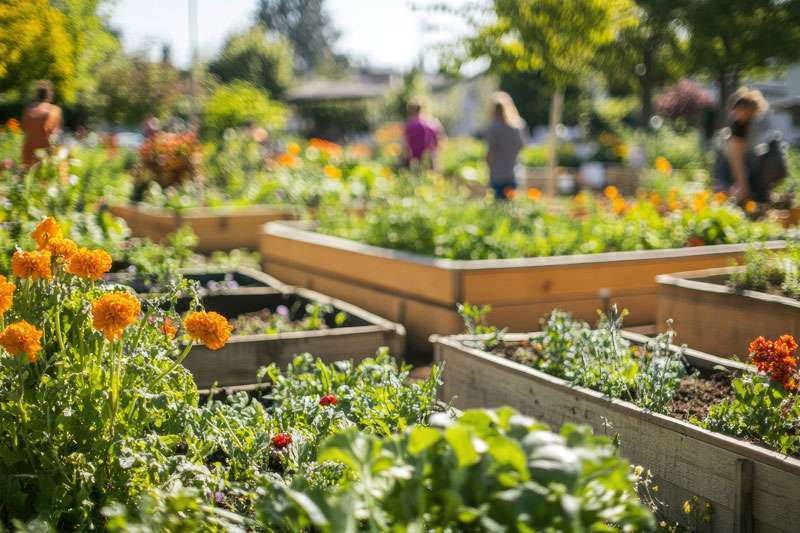

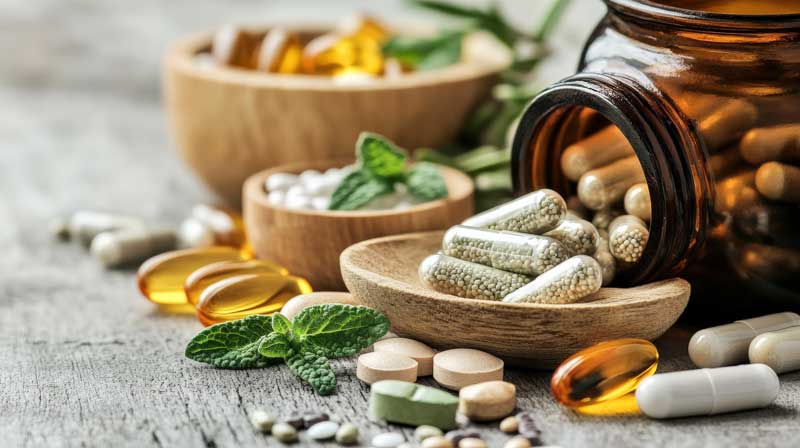
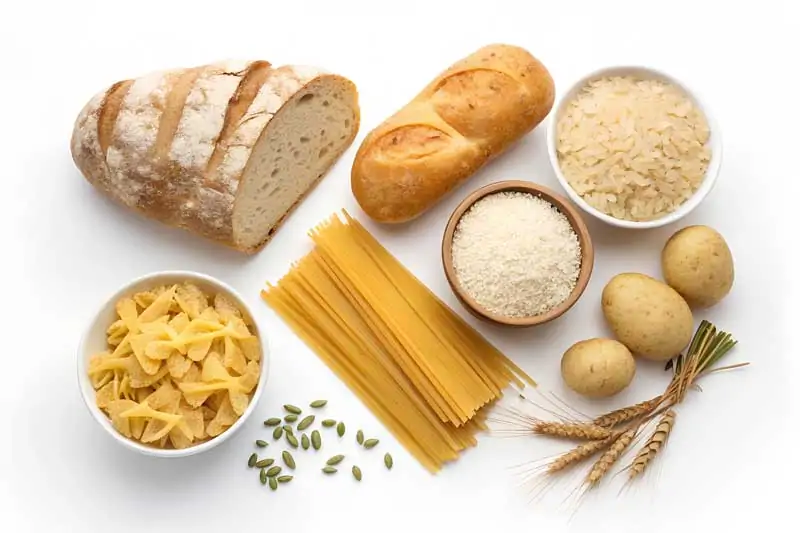
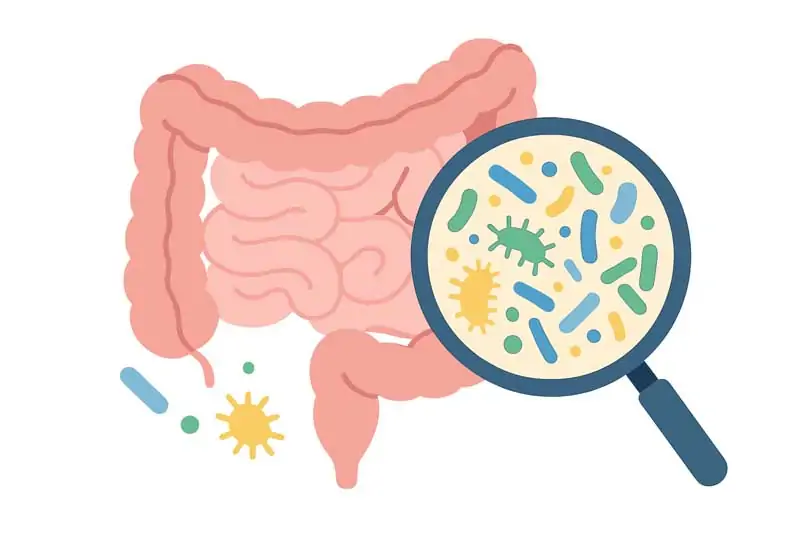
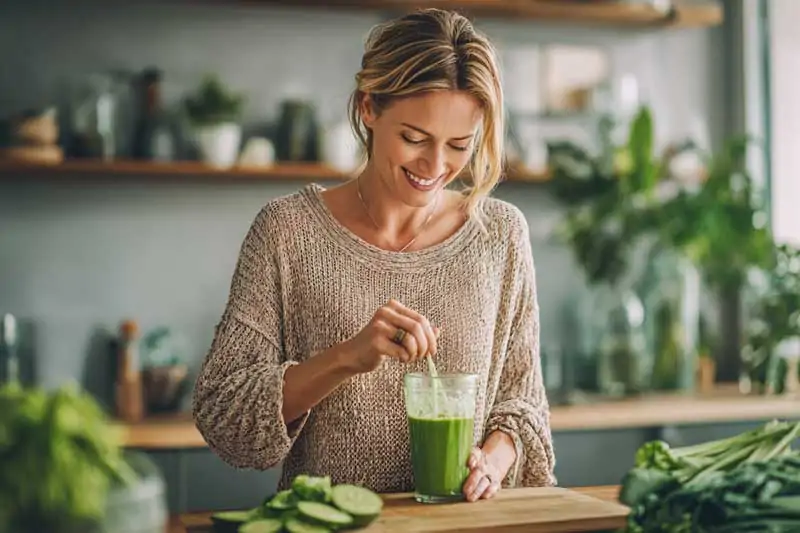

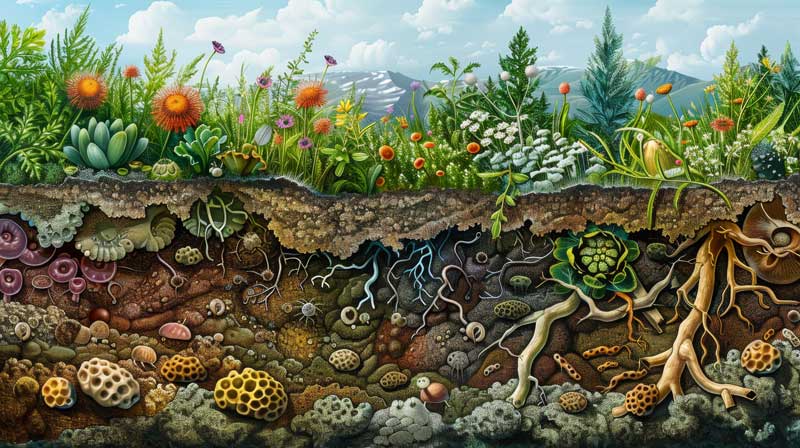


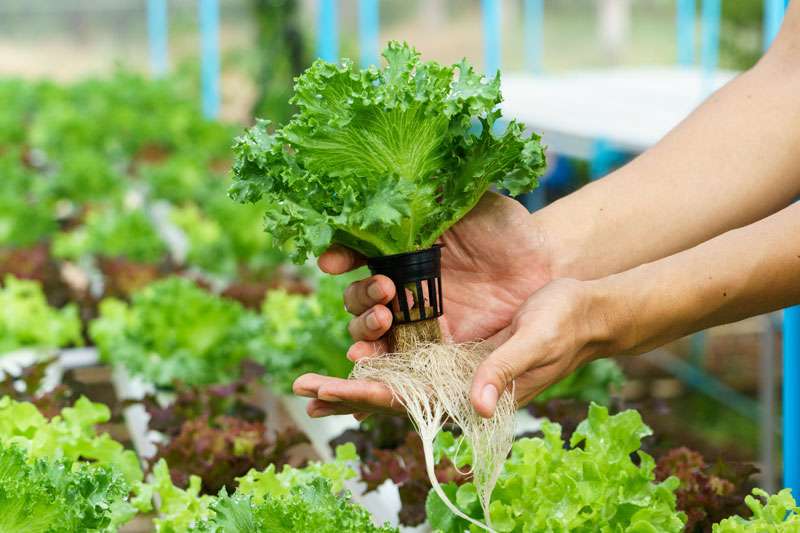
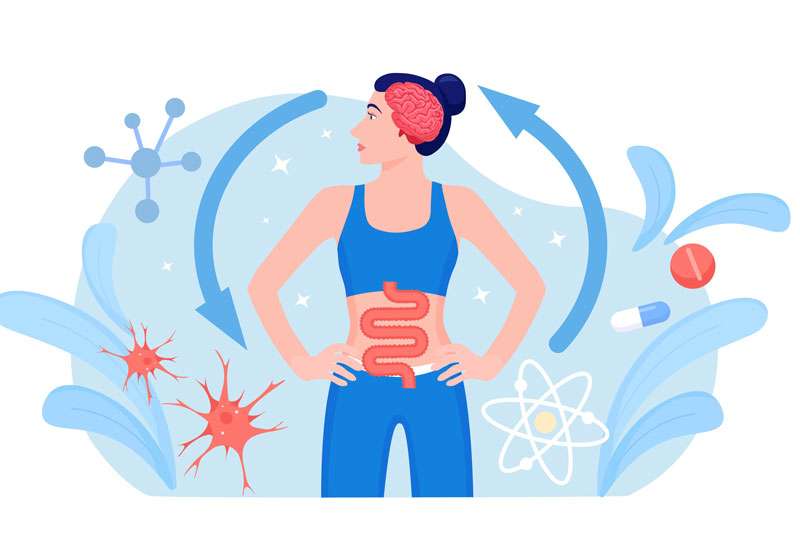

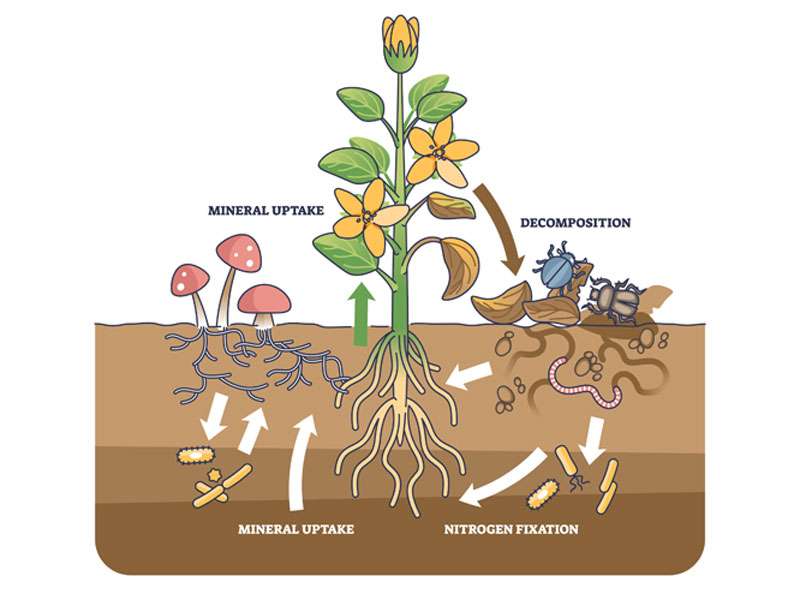

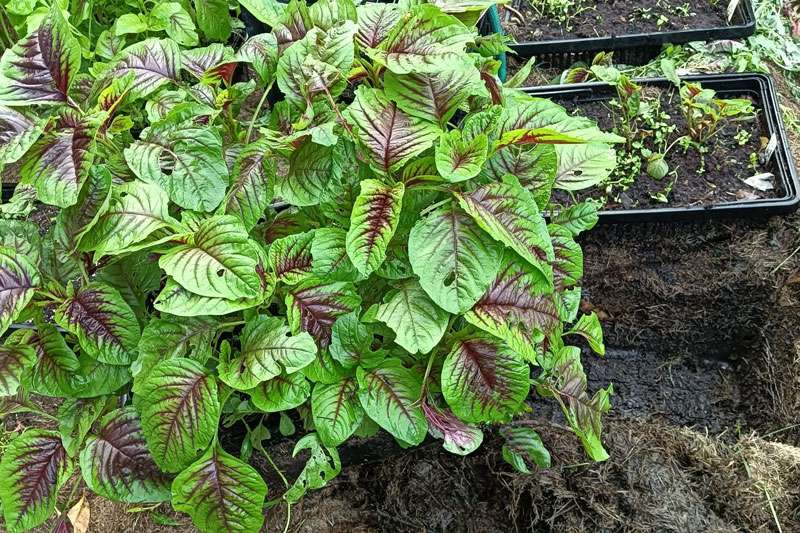
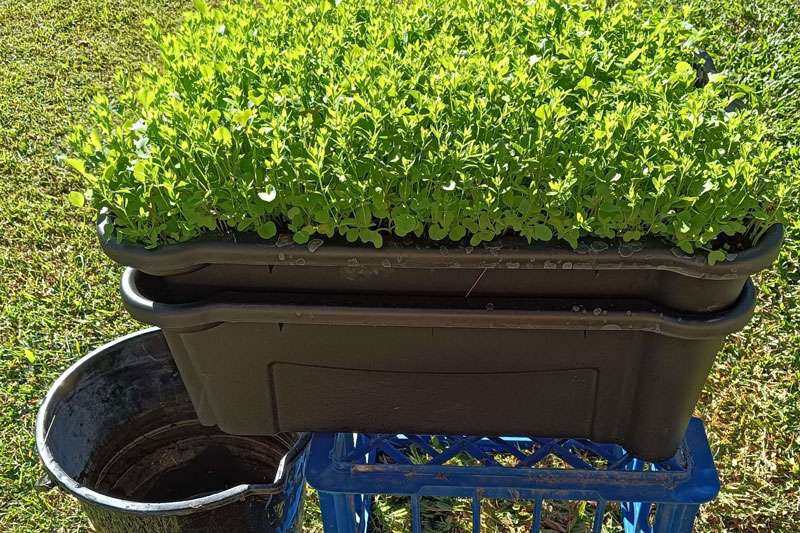

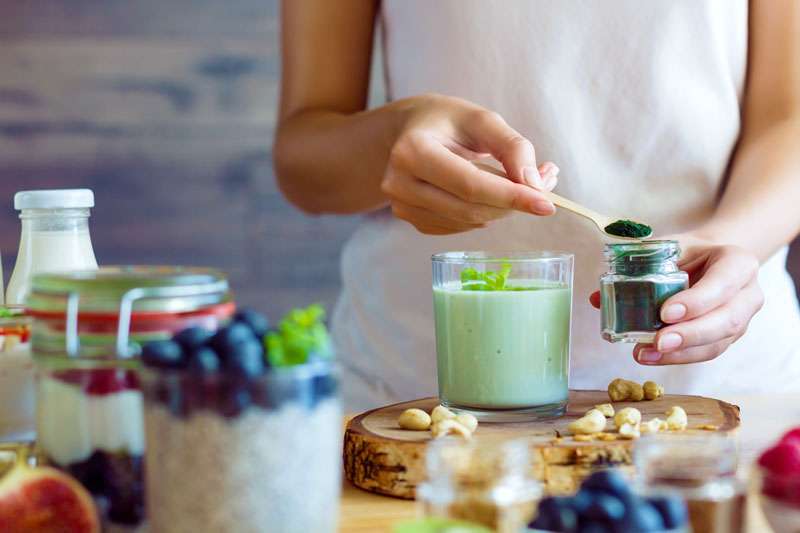

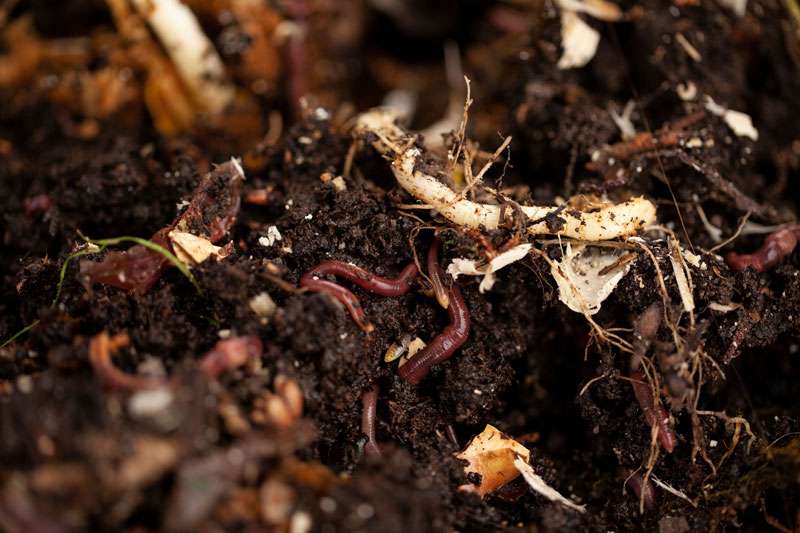
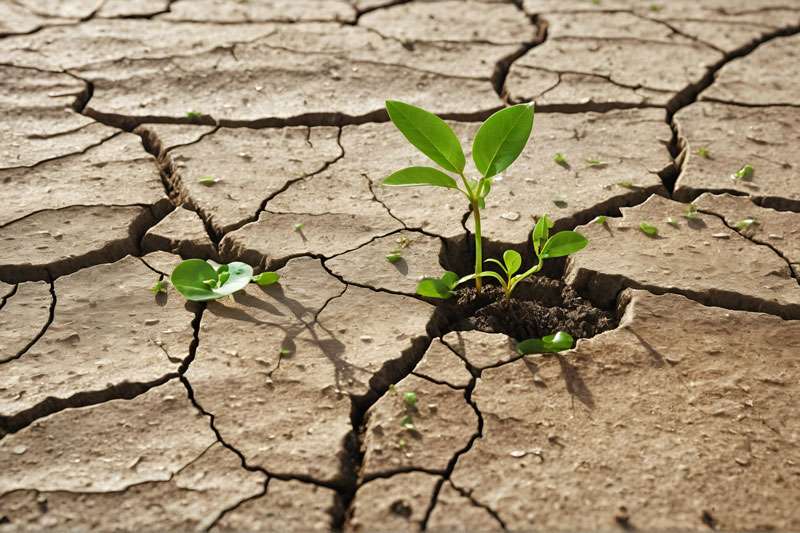


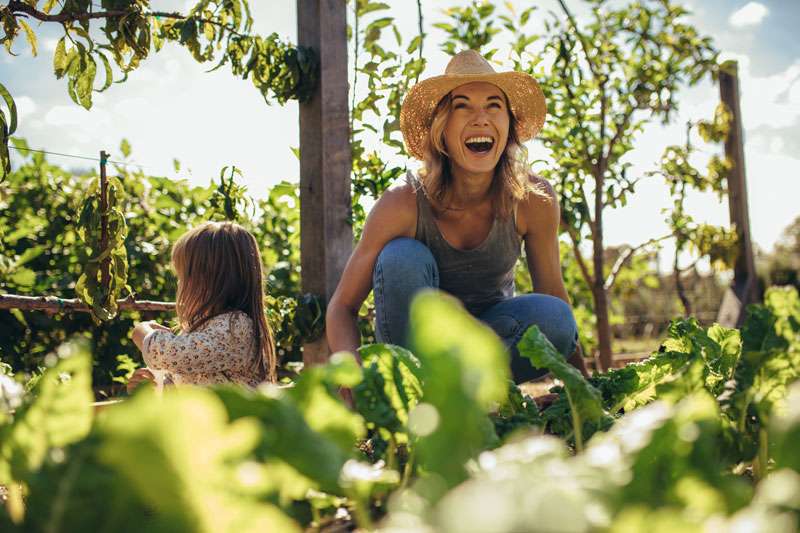





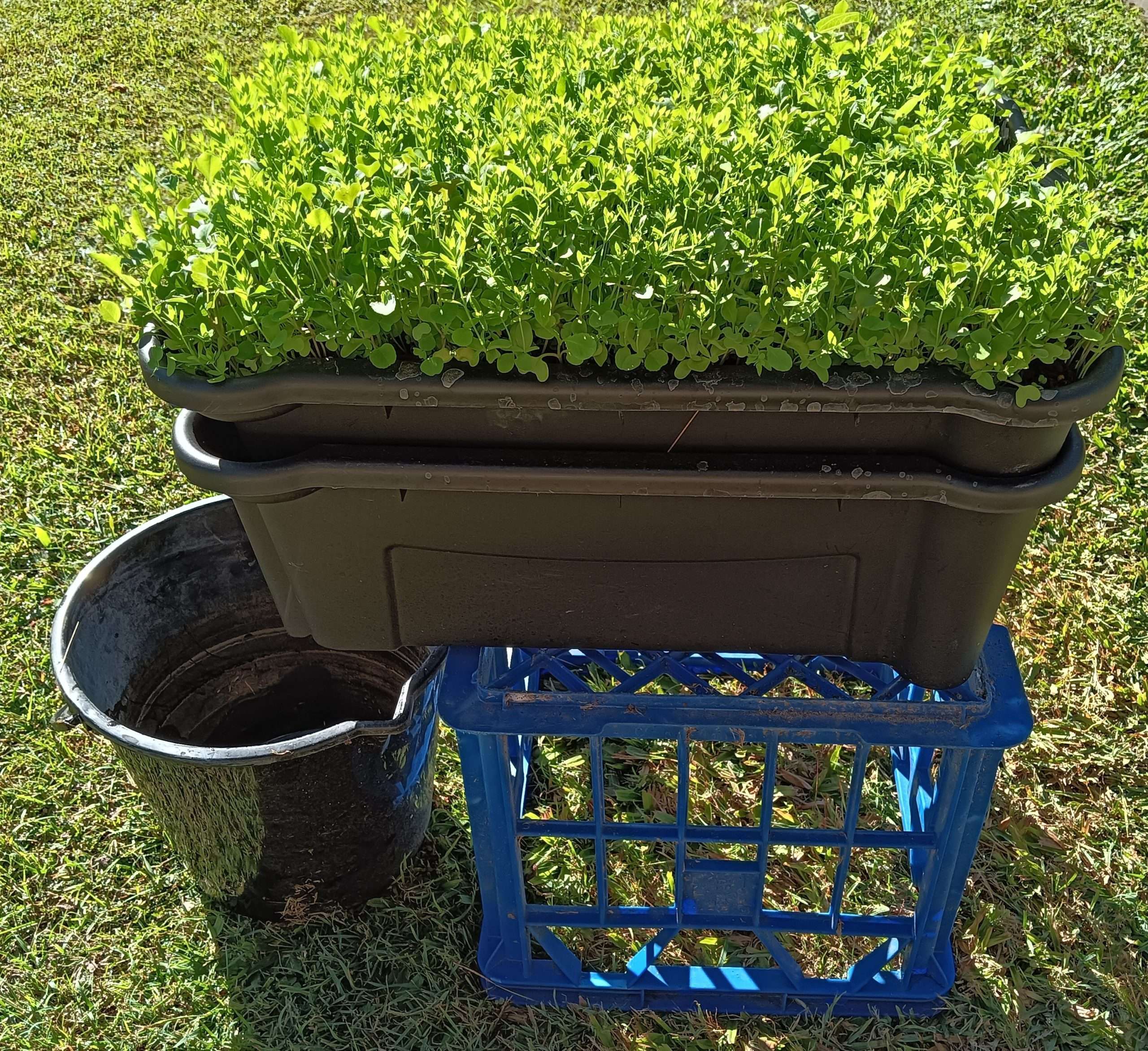
 Our energy comes from the sun captured by photosynthesis from the plants, plankton or algae. Our nutrients come from rocks, broken down by fungi, while the system of digestion and natural replacement is powered by the microbes.
 Microbes have a short life of around a day. They breed and die rapidly, typically in a day, in a state of dynamic equilibrium.
 This is not some wonder new technology; ancient hunter-gatherer tribes had a healthy gut biome, as do the few remaining hunter-gatherers. Their gut biome has been extensively researched, so we can be sure of that.
 The easiest way, particularly if you live in a flat with no garden or growing experience, is to grow the beneficial microbes in containers, or more correctly, container sets.
 Fill the top box with any good potting mix and seed in the normal way.
 Plants use sunlight and carbon from the air to create sugars. They exude some of these sugars to attract and feed the microbes into the root zone.
 The bottom box is where most of the breeding action occurs. This is fuelled by organic waste, which you might otherwise throw into the green waste bin, at least if your local council is environmentally sensitive.
 You need the aid of the recyclers, that myriad of creatures which recycle waste into something that is valuable.
 Beetles (not the musical Beatles, who have a good beat, but no beet) are also a critical member of the team.
 If you just watered the top box, you would have two boxes: the top box growing plant in the conventional way. They will grow quite happily, but they will not be the beneficial microbes you need.
 But now comes the critical part, which is creating the conditions so the beneficial microbes will out compete and out breed any less beneficial microbes.
 We need that magical Goldilocks moisture.
 That is how we get the Goldilocks moisture, and it is just so simple and is actually less work than dribbling water in every day.
 Unless you are wearing exceptionally dark sunglasses, you cannot help but notice that the so-called water is not clear water, but a dark brown.
 Right now, I can’t tell you that it will extend your health span or life. It should, but now I don’t know for sure, you will have to wait a few more decades until you are really old, when it will be a bit too late.
 But life is a question of risks and balances.
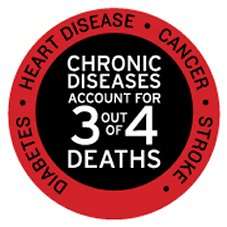

 The wrong fat in the wrong place is at the core of the modern epidemic of chronic diseases.
 There are some who say that modern technology will lead to the extinction of our species. Most people dismiss this as alarmist, green woke talk.
 I am in the hot seat. I was a pioneer of Computer Aided Engineering and have been recognised as one of Australia’s leading innovators. The company I formed became Australia’s leading exporter of technical software, a multi-million dollar company that changed an industry.
 Am I an evil creature leading to the extinction of my species, or can I become a leader to a better society where people not just survive but thrive?
 But what is the technology we need to develop so we thrive?
 Then microbes appeared, probably from an asteroid.
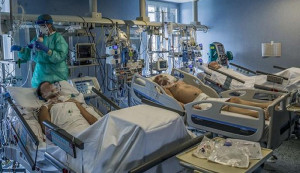 But not all microbes were beneficial: others were harmful microbes which made us sick or killed us, so only a few people lived to their natural life span.
 But humans, ever inventive, developed technologies to combat these harmful microbes.
 Our life span increased dramatically, and all looked good until we realised that we had also decimated the beneficial microbes on which life depends, and our health span, how long we remained fit and healthy, was dropping dramatically with an epidemic of chronic diseases - overweight, obesity, diabetes, heart attacks, cancer and dementia.
 We were slow to appreciate that the beneficial microbes did more than transform rock, recycled organic waste and digested our food. The microbes in our gut communicated with each other to create genuine intelligence, which formed part of the intelligent control system which regulated our bodies, particularly our appetite and where and how much fat we stored.
 The wrong fat in the wrong place is at the core of the modern epidemic of chronic diseases.
 I can’t answer all these questions, all I can do is give you the facts as I understand them.
 The calorie balance theory says that if we eat more calories than we burn that we will get fat. It sounds so simple and obvious - how can it possibly be wrong?
 If it decides that we need to store fat, for example, if we have been deprived of food for any length of time, as in a war or from an extreme diet, it sends signals to our gut to manufacture hormones to make us crave food.
 We have known for a long time that it is simple to change the microbes in mice - they eat each other's pooh. We can make fat mice skinny or skinny mice fat.
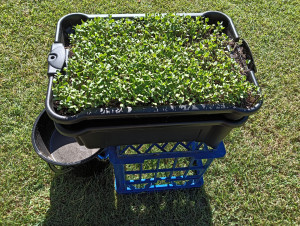 We solve both of these problems with the Gbiota bio-boxes which control the conditions to favour the beneficial microbes and make it easy for people to grow the plants themselves, even if they have no garden or growing experience.

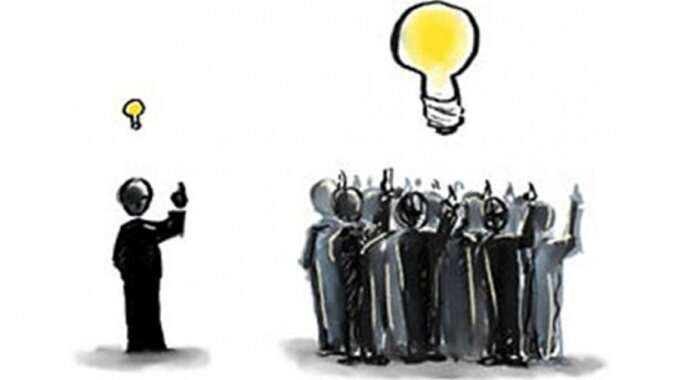
 One morning I was having my after breakfast read, this time “I’m So effing hungry” by Dr. Amy Shah when I was hit by a bomb shell if you are a pessimist or a light bulb moment if your are an optimist.
 Yet here I was reading a book that said pretty much what I had been trying to get out to the public. So I decided to ask my friend, Dr. Google, how successful Amy was in getting the message out.
 But there are plenty of open-minded scientist who studied and experimented until they had a clear, and now well accepted view, that we have an intelligent control system which regulates our bodies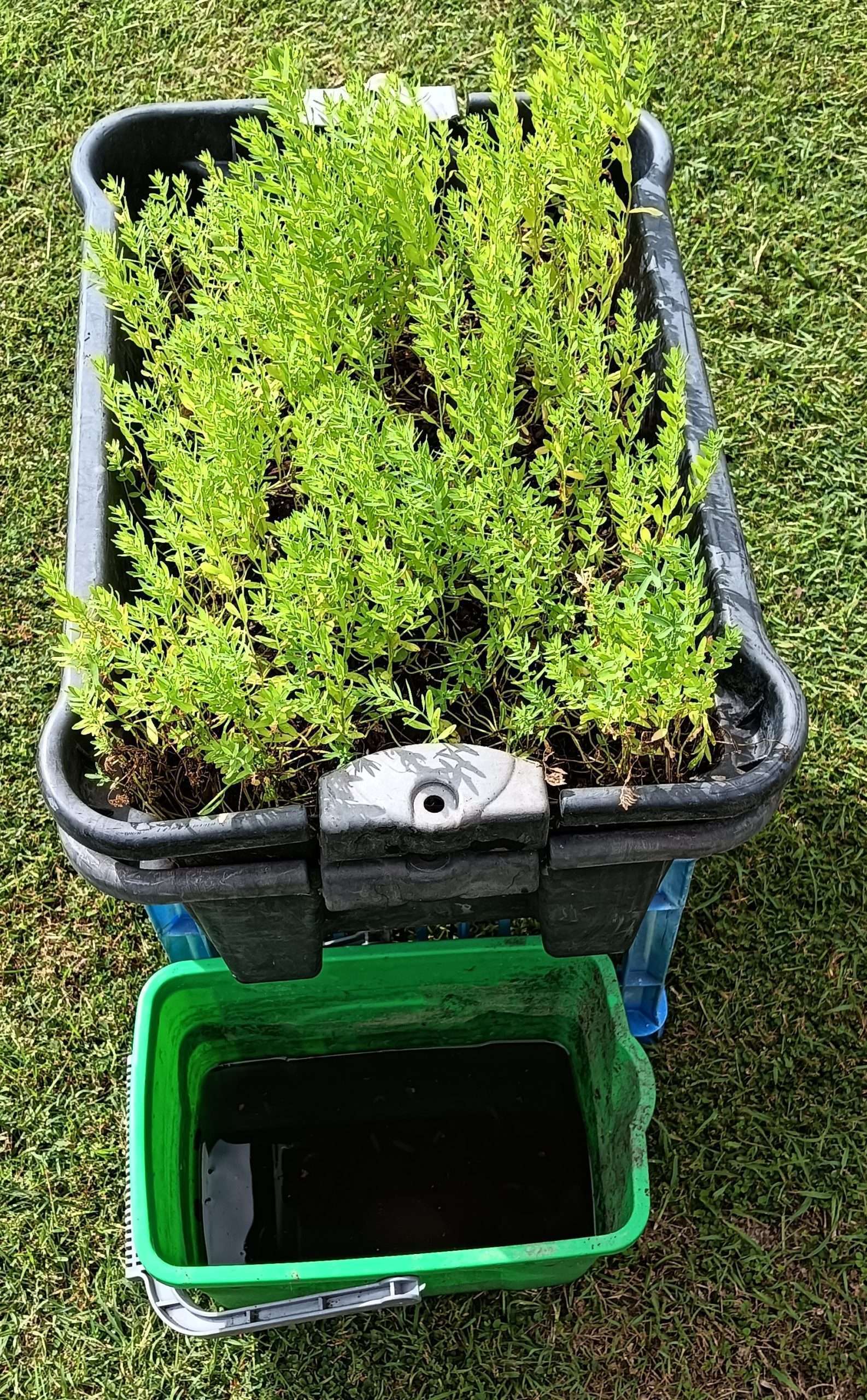

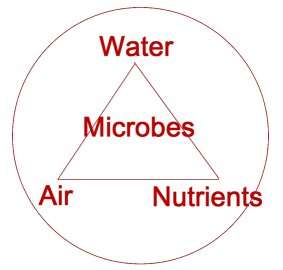 This is called Eco-balance - creating a stable Ecosystem which is in a state of stable balance.
The conditions are a balance of nutrients, water and air.
Nutrients come from was decaying organic matter and plants. Living plants exude nutrients from their roots with different species of plants exuding different nutrients which attract and feed different species of microbes.
Traditionally we ate food that was full of organic waste and ate plants so we naturally had a broad spectrum of microbes.
This is called Eco-balance - creating a stable Ecosystem which is in a state of stable balance.
The conditions are a balance of nutrients, water and air.
Nutrients come from was decaying organic matter and plants. Living plants exude nutrients from their roots with different species of plants exuding different nutrients which attract and feed different species of microbes.
Traditionally we ate food that was full of organic waste and ate plants so we naturally had a broad spectrum of microbes.
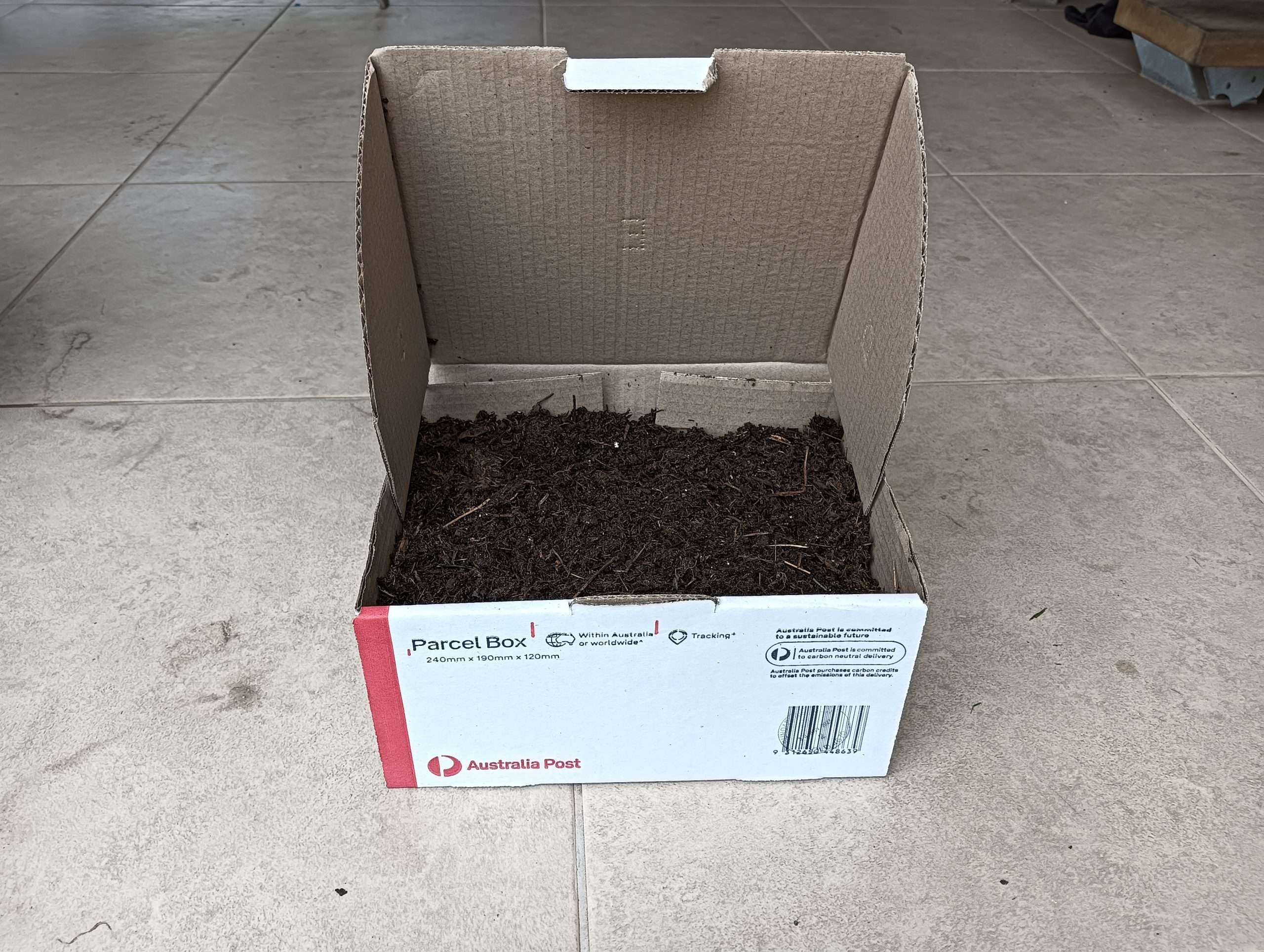 This process of breeding beneficial microbes is difficult to do on an industrial scale but is very easy for people to do at home, even if they have no garden or growing experience. Just grow plants in Gbiota boxes and use the flood and flush system.
This has many advantages other than enhancing our gut microbes particularly it is a lot cheaper than our modern remote growing system and it naturally recycles organic waste which would otherwise end up as greenhouse gases and food is always available in times of crisis.
Gbiota boxes can be readily made from boxes available at any hardware store together with regular potting mix and seeds.
It does however need a starter or inoculant kit containing a spectrum of beneficial microbes which is easily purchased online and will need replacing preferably twice a year - the microbial Ecosystem is delicate.
This process of breeding beneficial microbes is difficult to do on an industrial scale but is very easy for people to do at home, even if they have no garden or growing experience. Just grow plants in Gbiota boxes and use the flood and flush system.
This has many advantages other than enhancing our gut microbes particularly it is a lot cheaper than our modern remote growing system and it naturally recycles organic waste which would otherwise end up as greenhouse gases and food is always available in times of crisis.
Gbiota boxes can be readily made from boxes available at any hardware store together with regular potting mix and seeds.
It does however need a starter or inoculant kit containing a spectrum of beneficial microbes which is easily purchased online and will need replacing preferably twice a year - the microbial Ecosystem is delicate.
 My daughter, when she was about seven taught me a valuable lesson. She said she believed in Father Christmas because if she stopped believing she may not get any presents.
 These microbes monitor the types and amount of food in our bodies and if they sense a deficiency they will send out a complex family of hormones to make us crave the foods we need. Every time we eat it learns about that food and that information is stored in our head-brain ready for use when needed.
 This has been happening for millions of years but then we changed our food system so we stopped feeding and nurturing our gut microbes. The result was that it no longer sent out those essential hormones so we overeat and get fat and sick.
 It is no good running some monster advertising campaign to try to convince everyone. For a start the bulk of the people don’t want to admit there is a problem and even if they do they don’t want to feel out of place with their daily contacts.
 By contrast, the solution of people breeding beneficial microbes, that create hormones naturally, at home is just so simple and low cost.
 Bertha Benz ride through the German countryside may not have seemed particularly significant at the time - but look what happened.
 Breeding beneficial microbes in the soil is a natural process which which has been going on for millions of years. However breeding the microbes at home in organic waste depends on the flood and flush system so the soil breathes and the soil blood never becomes stagnant. This needs to be done correctly so we restrict access to members registered with a valid email address who will receive regular newsletters.
 In the past, and that means going back a million years to the first humanoids there was no epidemic of chronic diseases like obesity, diabetes, heart attack and dementia.
 As our population increased, we changed the way we grew our food so instead of eating fresh plants grown in living soil teeming with beneficial microbes, we changed it to growing plants with synthetic fertiliser, which is debatable, but far worse is we changed the food distribution system with extensive delays from harvest to eating.
 To understand why these catchy advertising jingles fail, we need to understand the differences between conscious and sub-conscious intelligence.
 I have spent my life in the innovation business, with my fair share of ideas that did not work, ideas that worked but no one wanted, two that worked and now the last one which is by far and away the most important. Broadly food that makes us healthy but more specifically breeding gut microbes that will create the hormones to tell us to stop eating when we have had sufficient.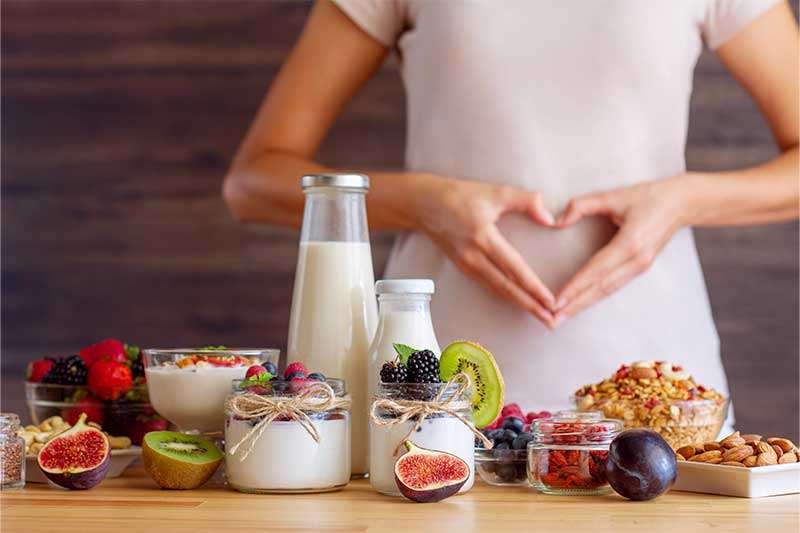


 We need the microbes to power the intelligent control system which regulates our bodies.
 We need to create a new industry where people can buy everything they need - the soil, boxes, seeds etc from a local supplier and if needed, get the critical support from a suitably qualified dietitian who understand how the gut microbes act as the control system for our appetite.
 Why is it that some people are fit and healthy, enjoy a long health span with hardly a visit to the doctor while despite the sophistication of modern medical research does the epidemic of chronic diseases continues to increase causing a great deal of personal grief and costing health systems trillions of dollars?
 We have a wealth of perfectly valid science helping us understand the biochemistry of our bodies which has led to the development of the so-called wonder drugs like Ozempic based on glucagon-like peptide 1 (GLP-1).
 We know that the gut contains trillions of cells with each cell being able to communicate with neighbouring cells to create swarm intelligence - which is well understood.
 But it is still remarkable, it can control our temperature over a range of conditions to a fraction of a degree, it controls our heart and breathing rate to ensure that there is adequate oxygen for our muscles.
 It seems there are three critical issues where we only have partial understanding, at least at the theoretical level but where we have indisputable, even if empirical evidence.
 Empirical evidence shows that the human body is far more sophisticated than the simple calorie theory. Our bodies can detect specific deficiencies, and when it does it will create hunger hormones so we eat more, not just more but more of the specific food it has learned will satisfy that specific deficiency.
 We know that from birth our intelligent control system is monitoring the specific food we eat and associating this with our feeling of following satisfaction.
 The solution, which can operate on an industrial scale is based on the principle of ecological balance, creating the conditions that favour the beneficial microbes so they out-compete and out-breed the harmful microbes.
 If you are female, the doctor will look at the blood test, see that your iron level is low, and probably won’t prescribe that you go down to the local scrap yard and munch away on a few cylinder heads but will give you a short lecture on haem iron and prescribe the appropriate pills.
 If you are male, the doctor will suspect that you have been having to much hanky panky which exhaust you supply of zinc, make some comment about lucky you and prescribe some zinc pills as one good hanky panky can exhaust your supply of zinc.
 It turns out that the cause of all chronic diseases, obesity, diabetes, heart attacks and dementia is the wrong fat in the wrong place.
 But is did make me highly motivated, eight million people a year have a limb amputated from diabetes, heart attacks, often related to fat in the arteries, are the most common cause of death while dementia, fat in the brain must be one of the most heart-wrenching diseases.
 We have been here before with infectious diseases. It is not that long ago that infectious disease were the big killer, three out of five babies would die before the age of five, another in their teens while most of the adults would never reach their natural life span.
 That is because their intelligent control system works in the their subconscious - it is high speed, very powerful and easily overrides our slow and clunky conscious of logical brain.
 Is humanity in danger of extinction? Probably not.
 What is the biggest problem? Food - there is plenty of food - that is not the problem - modern food is making us fat and sick. We need food that will lead to a long and healthy life.
 Modern science has given us a good understanding of what we should eat to lead a long and healthy life. We understand this at the conscious level.
 Our gut contains trillions of cells of thousands of species and we often talk about our gut as having swarm intelligence and compare it to flocks of birds, swarms of ants and bees and not to forget the wonder of slime moulds.
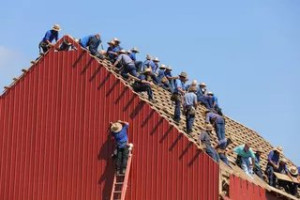 Our bodies are complex and difficult to understand so it may be useful to look at an everyday occurrence which we can understand - building a house.
 We like to think that we decide what and how much we want to eat in our conscious brain.
 Breeding microbes is more than easy, it is almost impossible to stop. Just leave anything organic, meat veggies food scraps, prunings, dead logs, grass cutting, whatever and some microbe will come along and use it as food and once fed it will breed like crazy.
 The answer comes from nature and has existed for billions of years - Ecological balance.
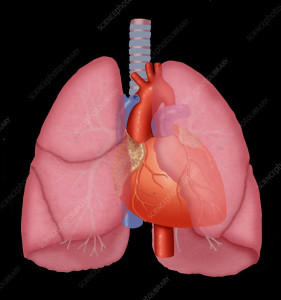 A second basic concept is soil blood, a term I made up thinking about how our bodies work.
 Gbiota beds are the most direct way of growing plants to enhance our gut biota.
 They are filled with a mixture of organic waste, soil with a fine particle size, minerals and initially inoculants and soil creatures.
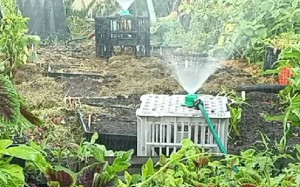 The same pump can be used to sprinkle irrigate. This has several advantages, the soil blood contains beneficial microbes which will enter the plant via the foliage, the soil blood will absorb oxygen by sprinkling and it also helps germinate seeds.
 Gbiota baskets are any suitable container with holes - supermarket baskets work fine and are light enough to carry.
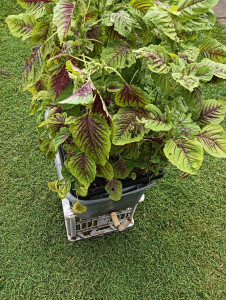 The baskets can be placed in a box with a swivel tube so it works similar to a wicking box and allows the use of the flood and flush system to maintain the Goldilocks moisture level.
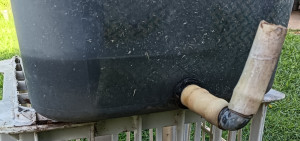 The box can be partially filled with water which will wick up to the plants, but it must not lie there stagnant or the wrong microbes will breed.
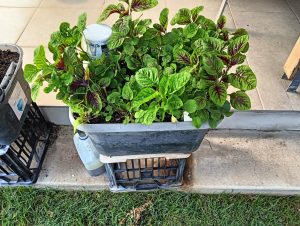 Gbiota boxes are intermediate between beds and baskets.
 We need food for energy, we are thermodynamic machines so we eat food to power our bodies. Typically that energy comes from sugar and fats and if there is one thing that our current food system is good at is providing us with sugary fatty foods, laced with flavourings which are often addictive and promoted by highly skilled manipulative marketing.
 I don’t think I am particularly weird in wanting to live a long and healthy life so have experimented on myself with many diets.
 I think we can assume that in this disinformation age that hardly anyone is going to believe what they see on the internet - unless it is from a real person they trust.
 The epidemic of chronic diseases is global involving billions of people. It will not be resolved by home growers. We need to create a global gut-brain industry. But how?
 Gut bugs are easy to breed, they breed like crazy making a randy teenage party look like a pack of nuns. So why isn’t everyone breeding their own gut bugs?
 Time for a reality check. The modern web is saturated with promotions for magic pills, often from some plants you have never heard of from some remote part of the world.
 sequence we have killed of the beneficial microbes that should give us health and has led to a global epidemic of chronic or non infectious diseases.
 Don’t believe the myth that you can hand over a significant amount of money and take some pills and you will be free from the threat of chronic diseases.
 This is not a technical problem, we know how to breed beneficial microbes in the soil, grow plants that contain these microbes and eat the plants while they are fresh before they die.
 Our human gut is smart.
 The first step is to get the right microbes.
 You have no doubt heard the conventional wisdom that we get fat and sick because we eat to much and the solutions is to eat less and exercise more - the calorie balance theory.
 Humans, being technologically sophisticated, developed the use of chemicals to control any potentially dangerous microbes but the net result was that we killed off the beneficial microbes which has led to the current epidemic of chronic or non-infectious diseases.
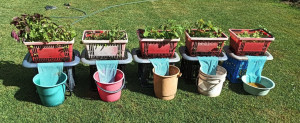 We can solve that problem by licensing the Gbiota technology to local growers who create the Eco-balance in the soil in permanent Gbiota beds.
 Ask around “What is the biggest health challenge?” no not dinosaurs, you are likely to get the very short answer “fat” for the simple reason that the wrong fat in the wrong place is the underlying cause of chronic diseases - obesity, diabetes, heart attacks and dementia.
 The first part of the double whammy was that we stopped feeding our gut-brain the food it needs to keep it working properly.
 We have faced similar problems before with tobacco, alcohol and addictive drugs like opium.
 Let’s say you go out in the garden on a hot day and sweat a lot. Somehow your body knows that you have lost a lot of salts like potassium in your sweat and that certain types of food like walnuts or peanuts contain these savoury salts.
 Later in the evening, you may go to a party and a pretty girl in a low-cut dress offers you a slice of cheese cake. Your body checks out your testosterone levels and if it sees you are an adolescent male it will send out signals saying enjoy the view and scoff a slice or three of cheesecake.
 We show Growers how - that is what we do. That way many more people can benefit from the Gbiota technology.
 In option one we can live in a society dominated by marketing hype, where we buy health bars full of sugars and fats because they are promoted as healthy, where we spend a thousand dollars a month to take drugs like Ozemic in an attempt to get slim but find that after a year our bodies have acclimatised so they no longer work.
 In option 2 we live in a circular economy where we respect the Earth. We take advantage of creatures like a little fly that lays its eggs in mulch. The larvae that hatch out are so ugly that even their mother cannot love them and flies away.
 Many years ago, about fifty to be precise before I decided to devote my attention to what I consider the greatest threat to mankind - how we can sustainably grow food that will keep us healthy. At that time plastics had not become antisocial so I wrote a computer simulation of how plastics flow into a mould.
 And almost everyone thought I was a nutter and I was booed and heckled.
 Just as with my battle over flow channels when I said make some flow channels smaller but people heard make all flow channels smaller I am now saying forget about the old thinking of eating less I am saying eat more.
 This taught me a lot about human nature, what we believe is what is convenient to believe and the facts are only a very secondary issue.
 If you learn anything from this website remember never to tangle with a rutting moose, (or rutting adolescent) they are focused on a bit of hanky-panky and any facts are irrelevant.
 Unfortunately, it seems to attract more adolescent males than females but the smart males have worked out that a Harley Davidson bike is far more effective, maybe they are more noisy or maybe it is the attraction for the ladies of having a giant throbbing V twin between their legs.
 We should make a birthday cake to celebrate but it will have to be big for the 4.3 billion candles, about the size of Tasmania.
 But even if we put all those future concerns away as some left of centre city trendy worry about the future there is still the problem of what is happening today. Three out of four people now die from a chronic disease which is caused by our food system.
 With chronic diseases, resulting from our food system, we likewise have to stop pretending and accept the world as it is and do something about it.
 Modern society is high speed, high pressure with a few people making a lot of money while the bulk of the people are suffering from a health epidemic of overweight, diabetes, heart attacks and dementia.
 It needs fuel for energy. This comes from sugars and fats - which are abundant - our supermarkets are full of them.
 It needs a range of complex chemicals to replace parts as they age and wear. We may refer to them by the names of the elements, iron, zinc, magnesium, phosphorous etc. but those elements are useless for us, they have to be combined into complex chemicals which are bio-available.
 For most of the time that humanoid creatures have been on earth, some million years we have died young from infectious diseases with very few of us dying a natural death from old age.
 Sounds fantastic, and indeed it is, apart from the fact that we have killed off those beneficial microbes which control our appetite so we now tend to overeat and the majority of people now get sick or die from non-infectious diseases like overweight, diabetes, heart attacks and dementia.
 It was obvious what was needed, a way of breeding the beneficial microbes without breeding the harmful ones that kill us.
 The modern world is full of fake news, fake people and fake food.
 This they did on a massive scale, they changed the climate and destroyed much of the soil but the costs lay in the future so, at first it was not an immediate worry. There was always time and the possibility of some new technology which would solve any problems.
 The first snag was that they needed to breed the beneficial microbes in the soil without breeding the harmful microbes which causes so many problems with infectious diseases.
 Most of us now live in towns and cities. We buy our food from the local supermarket wrapped hygienically in plastic which we throw into the bin and it dutifully disappears.
 The big question is why does our intelligent control system decide we need to store more fat?
 The first problem we have to overcome is the modern phenomenon of busy work.
 When I suggest that we store fat because our intelligent control system decides that we need to store fat I am not suggesting that we can think ourselves thin.
 We have even less idea what is happening in our gut brain which is not even us.
 d compare this with what I eat and other events.
 When I used to write software for intelligent control systems I looked at graphs which would tell me how well (or otherwise) my software was working.
 Sometimes I get tired and just want to relax so watch videos with music and youngsters dancing.
 Not so long ago, our gut health thrived naturally.