
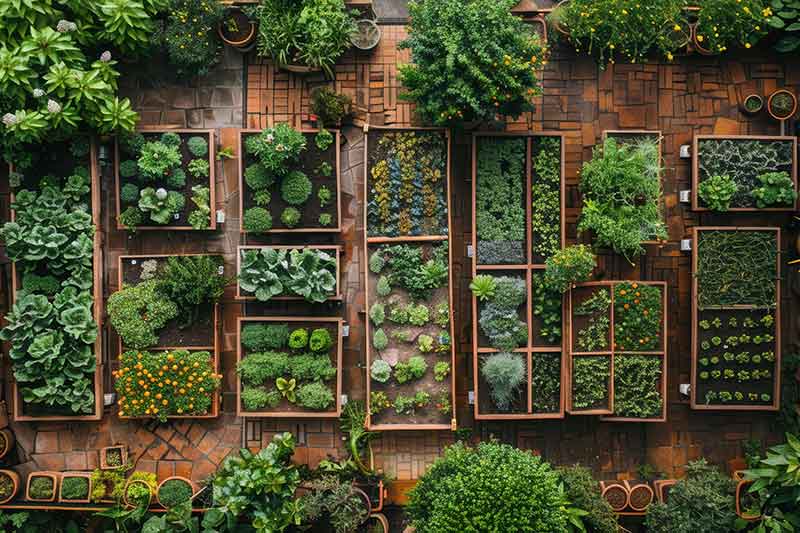
This article explores the principles of regenerating soil for vegetable growing using wicking bed baskets. It highlights how soil biology, water management, and mineral balance are crucial for producing nutrient-dense food. Drawing from global observations, from equatorial forests to desert and savannah soils, it explains how to work with natural processes to restore degraded land. The focus is on practical insights for community gardeners, emphasizing low-cost, biology-focused methods to create fertile, water-retaining soils that support sustainable food production.
Introduction
Soil regeneration is essential for producing nutritious food. This article explains how to use wicking bed and sponge-bed methods to create fertile, biologically active soils. The approach focuses on simple, low-cost strategies that help communities restore degraded land, retain water efficiently, and increase nutrient availability for crops.
Lessons from Experience
Over decades of observation and experimentation, I have learned that soil is much more than dirt. It is a living ecosystem where microbes, fungi, worms, and other organisms interact with minerals and plant roots to produce fertile soil. Observing dust storms in Australia, where topsoil was stripped from the land, highlighted how easily soil can degrade and the urgent need for restoration.
Early Technology Insights
Years of working in real-time computing and fluid simulation taught me the value of experimentation and observation. These lessons applied directly to soil regeneration, especially in understanding water movement and how plant roots interact with soil particles. Technology provided a framework for experimenting with water flow in wicking beds and assessing soil structure scientifically.
Global Soil Observations
Studying soils worldwide provides valuable lessons for gardeners:
- Equatorial forests: Soils are often poor because heavy rain leaches nutrients, but dense vegetation recycles nutrients quickly.
- Monsoon regions: Seasonal rainfall brings nutrients but can also erode topsoil if vegetation cover is lost.
- Desert zones: Minimal rainfall limits soil formation, but when it rains, plants respond quickly. Capturing water efficiently is critical.
- Savannahs: Rich volcanic soils often support productive agriculture if biological activity is maintained.
- Tundra: Cold, wet conditions produce peat rather than fertile topsoil, limiting plant growth.
Understanding these patterns helps gardeners design systems that work with natural processes rather than against them.
Soil Formation Principles
Soil forms through the interaction of water, minerals, and living organisms. Plant roots provide sugars and organic matter to microbes, which in turn solubilize minerals and create aggregates that improve water retention and aeration. Without living organisms, even nutrient-rich materials may not become fertile soil.
Soil Biology and Plant Health
Healthy soil contains a complex web of bacteria, fungi, and invertebrates. Mycorrhizal fungi form symbiotic relationships with plants, extending root systems and helping with mineral uptake. Worms and microfauna create channels that improve drainage and aeration. Supporting these communities ensures crops grow vigorously and contain more vitamins and minerals.
Wicking Beds and Water Efficiency
Wicking beds supply water from below, letting it rise through capillary action. This approach reduces evaporation, keeps roots consistently moist, and prevents nutrient loss through leaching. Key factors include soil porosity, organic content, and a balanced mixture of coarse and fine particles to allow water distribution throughout the bed.
Key Principles for Regeneration
- Feed the biology: Compost, vermicast, and organic residues maintain microbial activity and soil fertility.
- Balance minerals: Essential elements such as calcium, magnesium, and trace minerals are added because plants and microbes cannot synthesize them.
- Maintain structure: Soils must be loose and hydrophilic, allowing roots, microbes, and water to move freely.
- Recycle resources: Use local organic waste like kitchen scraps, pond plants, and weeds to reduce costs and close nutrient cycles.
- Manage hygiene: Two-stage composting and plant filters reduce pathogen risk when using labile materials.
Practical Steps to Build Beds
1. Choose a sunny site with access to water.
2. Prepare a shallow basin or raised bed; line it if needed to retain moisture.
3. Layer recycled organic matter with coarse material to maintain structure and drainage.
4. Compost in two stages: initial breakdown reduces pathogens, second stage stabilizes nutrients and inoculates soil with beneficial organisms.
5. Add mineral amendments and mix well to provide essential elements.
6. Finish with a biologically active topsoil layer and plant a mix of deep-rooted, fibrous, nitrogen-fixing, and pest-deterring species.
Plant Selection and Diversity
Select a variety of plants to maintain soil health: legumes fix nitrogen, deep-rooted species bring minerals from lower layers, accumulator plants extract residual nutrients, and herbs or flowers repel pests. Diversity prevents soil depletion and encourages a self-sustaining ecosystem.
Maintenance and Harvesting
Regular care is essential because harvesting removes nutrients. Add compost, green manure, and trace minerals periodically. Rotate planting zones and allow rest periods to restore biological activity. Properly maintained beds provide consistent, nutrient-rich produce over time.
Observations on Soil Behavior
Over time, wicking and sponge beds reveal patterns in soil and plant behavior. Well-prepared soils retain water more effectively than systems with stones or artificial layers. Roots explore soil thoroughly, microorganisms thrive, and plants access nutrients efficiently. Observing these interactions informs adjustments in bed design, composting, and plant selection.
Building Resilient Communities
By using low-cost, biology-focused soil systems, communities can improve food security and nutrition. Sharing knowledge and techniques through community gardens, workshops, and clubs ensures consistent practices and spreads benefits. Collaboration helps avoid common mistakes, like over-sanitizing soil or using ineffective layers.
Conclusion
Restoring degraded soil requires understanding water management, mineral balance, and soil biology. Wicking and sponge beds offer practical, low-cost methods to grow nutrient-rich food while regenerating land. With careful planning, diverse plantings, and ongoing maintenance, these systems provide long-term resilience and healthy crops for households and communities. By working with natural processes, we can create fertile, water-retaining soils that support plants, microbes, and humans alike.
If you would like more guidance or wish to discuss community projects, contact: colinaustin@bigpond.com.
