Solving the Food Crisis
Social Movement
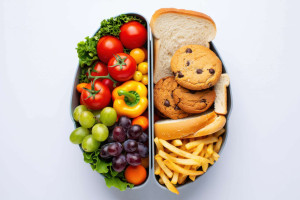
The world is suffering a food crisis, not in quantity — we are actually producing more food than the world needs — but in the quality of food needed for a long and healthy life, free from many modern diseases such as obesity, diabetes, heart disease and dementia.
This is not going to be solved by the mega-corporations that control our food system, or even by the governments we elect to safeguard our interests.
It is going to be solved by people saying, “I want to live a long and healthy life.”
One person makes very little difference. It needs many people joining together in a social movement. I do not mean a movement with crowds blocking streets, waving placards and getting arrested. I mean a quiet social movement using the power that works — the power of the wallet.
I hope you join the movement and do the one thing that will make it work: tell your friends and ask them to join. It is only by getting enough people involved that we will be successful.
Not a Flash
First, I need to explain the technology. The best way to do that is to tell the story of how this technology was developed.
There are ideas that change everything and seem to arrive as an instantaneous flash of inspiration.
But that is not usually how it happens. There is often a long and frustrating period of puzzling, which culminates in a moment when things suddenly fall into place.
Then there is an even longer period while this new way of thinking becomes accepted as the norm — the painful process of creating a paradigm shift.
Let me tell you my story.
My expertise is in computational fluid flow, and I was recognised as one of Australia’s leading innovators. Read My Story here.
I have a particular interest in how water moves through soil and plants — something that is not as simple as it may first seem. See Water.
Ethiopia
Some thirty years ago, I was invited to go to Ethiopia to see if I could find any way of providing sustenance food during periodic droughts.
It had to be really simple and cost next to nothing.
The idea I came up with was to dig a trench, line it with a plastic sheet, fill it with weeds, which contain a lot of nutrients, and then back-fill it.
When it rained, the trench would catch the water that would otherwise drain away, allowing plants to be grown.
This was the birth of wicking beds. Watch my video here.
The idea caught on, but some people thought the weeds would become putrid, so they replaced the weeds with stones, which are inert.
They covered the stones with a layer of weed cloth and added a pipe so the water reservoir could be filled with clean water. The putrid problem appeared to be resolved.
They had developed an effective self-watering bed without the problem of microbes.
This idea — that we should grow our food free of microbes — became the accepted norm across many food production systems.
The Wrong Fat in the Wrong Place
But then my wife, a medical doctor, became diabetic — along with millions of other people across the globe.
What was the root cause?
Basically, the wrong fat in the wrong place.
But why would our bodies suddenly start accumulating fat?
At first, there was no clear scientific explanation.
But science kept moving ahead, and we began to understand how important our gut biota is.
The tens of trillions of microbes in our gut communicate with each other and with our brain. Together, they form an intelligent control system that helps regulate our bodies, including how much fat we store and where we store it.
Microbes Matter
It became obvious that microbes really matter.
The idea that we should produce food under inert, microbe-free conditions was a bad idea. We needed to work out how to grow food with beneficial microbes, while avoiding harmful microbes.
Good and Bad Microbes
That may sound simple, but there is a practical problem: how do we create a system that encourages beneficial microbes without allowing harmful microbes to dominate?
Harmful microbes do much more than make a bad smell. They can make us sick and even kill us.
It is easy to kill microbes with powerful chemicals, but chemicals do not distinguish between good microbes and bad microbes. Killing the bad without killing the good is not possible using that approach.
Our Immune System
But in the bleakest hour, a knight on a white horse appears and saves the day.
That white horse is our immune system, which largely lives inside our gut, our intelligent control system.
It seems that we have grossly underestimated our gut brain. It is much more sophisticated than a simple on/off controller saying, “You are full, stop eating.”
From the minute we take our first feed, hopefully from mum, it is learning how the food we eat affects our bodies. It learns that certain foods provide specific critical nutrients and can create cravings for those foods.
Beer and Peanuts
With all our sophisticated technology, it is surprising how little attention is sometimes paid to simple everyday observations. For example, after spending the afternoon digging in the hot sun, you may fancy a beer and some peanuts.
What is happening is that your gut brain has worked out that you are low in critical salts from sweating, and has learned by experience that beer and peanuts replace those salts.
That is how intelligent systems work: they learn and remember. Our gut brain does this brilliantly.
Why Do We Get Fat?
Experts give many reasons why people gain weight and often recommend diets that reduce calorie intake.
But if your intelligent control system detects that you are low in a specific need — such as a mineral or vitamin — it may make you feel hungry. Not just hungry, but driven by irresistible food cravings.
If you respond by eating chicken wings and cheesecake rather than the specific mineral or vitamin your body needs, then you may gain weight.
Not satisfying an essential nutritional need may be one reason why people overeat.
We may consume extra calories, but the deeper issue may be the specific deficit that creates cravings in the first place.
“`
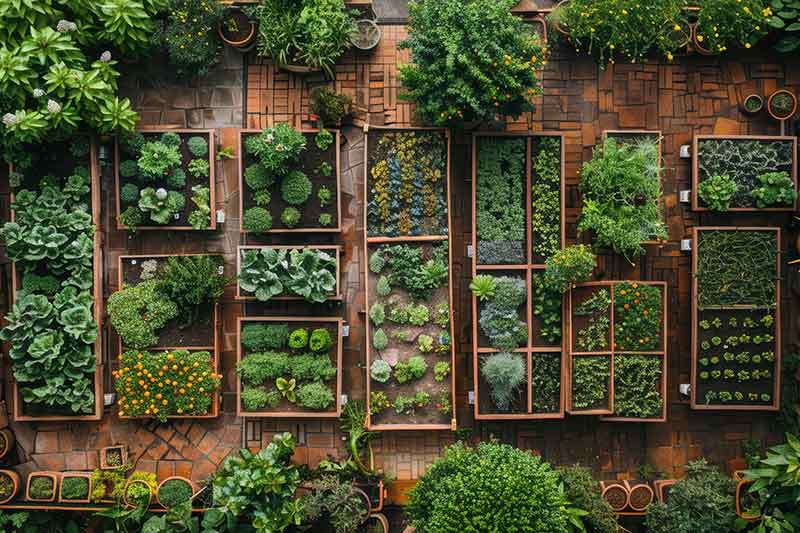
Technically, this issue can be addressed because it is relatively easy to have a Gbiota box with living plants growing in a home, courtyard or apartment.
It is entirely practical for people to create soil, establish growing systems and produce their own fresh food.
However, modern life is busy. Many people, particularly young families, simply do not have the time to create and maintain these systems themselves.
That is why we may need a system where individuals or businesses establish and maintain Gbiota boxes, supplying households with living plants that are ready to harvest and eat.
The concept is simple: rather than buying harvested produce from a supermarket, people receive living food systems that continue growing until needed.
In principle, this could provide fresher food while simplifying the growing process for busy households.
I expect one of the easiest ways for this idea to spread is through families. Older people often have more gardening experience and time available. They may be able to help younger family members establish growing systems.
In my article The Best Probiotic Ever, I discuss the importance of developing a healthy gut biota early in life.
Are We There Yet?
Not quite.
What we are really discussing is the decentralisation of the part of the food system that provides biologically active food.
The energy-producing side of the food system generally functions well. The challenge is maintaining the biological quality of food as it moves from farm to plate.
The Food Paradigm Shift
This requires a paradigm shift in how people think about food.
Paradigm shifts rarely occur through advertising or conventional marketing.
Instead, they occur when individuals try something for themselves, observe the results, and then share their experiences with people they know and trust.
People are increasingly sceptical of marketing claims and often place greater value on recommendations from friends, family and people they respect.
The Gbiota movement is based on this principle — people sharing their experiences directly with others.
The objective is to help people understand how growing fresh food and creating healthy soil may contribute to better long-term health and wellbeing.
If the idea resonates with you, consider becoming involved, learning more and sharing what you discover with others.
There is a large amount of information available throughout this website covering soil biology, food systems, water movement, ecological balance and practical growing methods.
If you need assistance finding specific information, please feel free to contact Colin via the website.