This article is a summary of Colin Austin’s 2014 Shanghai–Wuhan talk on wicking beds and why “more food” is not the same as “better food.” Modern agriculture can supply abundant calories, yet many diets remain short of minerals, vitamins, and plant compounds that support long-term health. The result is “hidden hunger” and the rise of obesity, diabetes, heart disease, and stroke. The practical response is simple: grow a small but steady stream of mineral- and biology-rich plants at home, even in high-density cities, using wicking-bed style systems adapted for balconies and rooftops.
What this talk is really about
This was presented as a talk about wicking beds, but the deeper point is diet and health. Many people think wicking beds are just a convenience: less watering, fewer failures, better growth. That is true, but it is not the main story here. The main story is that our food system now produces a surplus of energy (calories), yet is often short of essential micronutrients: minerals, trace elements, vitamins, and plant-produced chemicals (phytochemicals). This imbalance can drive the “diseases of affluence” such as obesity, type 2 diabetes, heart disease, strokes, and related chronic problems.
The talk also recognises a modern constraint: more people live in cities, often in apartments, with limited space to grow food. The practical question becomes: how can urban families create a reliable stream of nutrient-dense, biologically active plants without needing a farm, a large garden, or specialist tools?
The “three sorts of people” opening
The talk begins with a light warm-up, then a simple framework: there are people who think everything is heading to disaster (the “Armageddonists”), people who believe we have never had it so good (the naïve optimists), and a third group who says both are partly right. The threats are real, but humans can be clever enough to respond—if we focus on practical solutions rather than despair or denial.
This practical mindset runs through the whole talk: avoid magical thinking, avoid expensive “silver bullets”, and look for systems people can actually adopt.
Is water the key problem?
Colin explains he once believed water was the most critical resource, especially irrigation water for food production. That work led to wicking beds: a way to reduce water loss and prevent nutrients washing below the root zone. But he later concluded that water, while often mismanaged, is still a renewable resource. The technology to use water better exists. The deeper problem is not just whether we can grow plants—it is whether the plants we grow (and the foods we buy) contain what humans need for health.
Hidden hunger and the diseases of affluence
The key claim is blunt: we do not have a global shortage of food energy. Modern agriculture can produce enormous quantities of calories. The crisis is quality. Diets can be “ample in calories but insufficient in nutrients and micronutrients”. This is what is meant by “hidden hunger”. It is closely linked to the modern rise in chronic diseases.
The talk points out that China, like many countries undergoing rapid lifestyle change, has experienced a sharp rise in diabetes. Colin describes visiting China decades earlier and remembering widespread bicycle use and slim, fit people. Later visits showed more motor transport, more convenience foods, and more metabolic disease. The pattern is familiar: prosperity increases calories, but often reduces food diversity and micronutrient density.
How do we make sense of diet advice?
One of the most frustrating things about nutrition is the noise: experts disagree, diets conflict, and marketing fills the gaps with claims, pills, and “miracles”. The talk describes using ongoing reading (including daily updates) and trying to find mechanisms, not just statistics. People are not identical machines. A diet that helps one person may fail another. So broad averages can mislead individuals who want clear, personal outcomes.
The most important shift in this section is the rejection of the “dumb machine” model. The body is not a simple engine where you pour in fuel and get energy out. The body produces neurochemicals and signals that shape appetite and cravings. In other words, humans are controlled by an internal system that tries to protect us, and it reacts strongly when it senses deficiency.
Agriculture, the green revolution, and the calorie surplus
Agriculture transformed human life, and the green revolution transformed agriculture again. Our staple food supply now comes from a limited range of highly productive crops—especially grains—and modern systems can produce huge quantities of energy food. The talk notes that hunger still exists, but much of it is driven by politics, conflict, and distribution problems rather than a pure inability to produce calories.
Modern production is also tied to fertilisers and irrigation. We have become very good at supplying the nutrients plants need in bulk: primary nutrients (like nitrogen, phosphorus, potassium) and secondary elements (like calcium, magnesium, sulphur). This raises yields. But humans need more than “healthy plants”. We need a wider range of micronutrients—some of which plants do not require in large amounts.
We need more than plants: micronutrients and bioavailability
The talk presents a simple but powerful point: farmers have strong incentives to add what improves yield, not necessarily what improves human health. A plant can look healthy even when certain trace elements in the soil are low. But humans may still be short of those elements. Examples mentioned include selenium and iodine, and other trace minerals that matter for human biology.
There is also a warning about simplistic supplement thinking. Nutrition is interactive. “Bioavailability” matters: absorption depends on context, combinations, and overall diet diversity. You cannot always fix a complex deficiency by adding a single pill. Variety supports internal complexity. This is why the talk keeps coming back to “real food” grown in mineral- and biology-rich conditions.
The “hungry beast”: why diets often fail
The core behavioural mechanism described is this: the body senses deficiency and sends strong signals—eat more, eat more, eat more. But modern food often provides more of the same (more calories) without supplying the missing micronutrients. So appetite can remain high, cravings persist, and “willpower” loses over time. This is presented as a major reason why many diets work briefly, then collapse.
In this framing, the goal is not simply to reduce calories. The goal is to satisfy the body’s true requirements with mineral- and nutrient-dense foods so the internal signals calm down. When that happens, overeating becomes less compulsive because the body is no longer “chasing” what it cannot find.
“Holy Grail” cures vs practical food solutions
The talk is sceptical of miracle cures. It describes encountering plants and pills promoted as magic answers. Some claims work by “fooling” the body’s signalling system—creating a sense of fullness without actually fixing the deficiency problem. The critique is direct: treating symptoms without addressing mineral and nutrient balance is not a true solution.
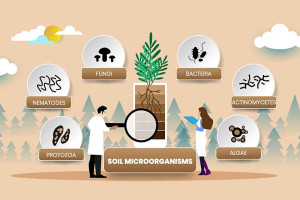
In contrast, there are many real plants that act as “converters”: they take up minerals and participate in producing beneficial plant compounds. But there is no shortcut. Minerals must exist in the soil. Soil biology (fungi, bacteria, worms) must help make those minerals available to plants. Then plants feed us. It is a chain: minerals feed biology, biology feeds plants, plants feed humans.
Evaluating options: supplements, organics, permaculture
Several common responses are assessed. Supplements are widely used but can be expensive, can be poorly balanced, and may not replicate the complex interactions of nutrients in food. Organic produce can reduce certain chemical exposures, but “organic” does not automatically mean mineral-rich. Unless the grower manages minerals and soil biology, the nutrient density may still be limited.
Permaculture and self-sufficiency are admirable, but the talk argues they are difficult to scale to the majority of people. Most people want variety and year-round access, and modern food supply chains dominate. Rather than trying to overthrow the entire system, the talk proposes a “work with the system” strategy: keep the convenience of modern calories, but supplement with a steady stream of high-quality, nutrient-dense plants grown locally.
Finding a practical solution: minerals, biology, plants, and a small space
The practical recipe is described in plain steps. First, ensure a supply of required minerals (in small quantities). Second, ensure soil biology capable of making those minerals available (mycorrhizal fungi, worms, and other soil life). Third, grow a range of vegetables and herbs that can contribute to dietary diversity and plant compounds. None of this requires fantasy. It requires a simple growing system that is reliable and low-effort in small spaces.
This is where wicking beds come in. In Australia, wicking beds helped many people grow food, partly because they reduce watering demands. In cities, communal gardens can also support this, but the talk recognises that China’s population density changes the design constraints. Many people live in apartments, but still have balconies (Yangtai), rooftops, or access to small shared areas.
Wicking bed technology: the basic idea
The wicking bed principle is simple: a waterproof base stores water, a distribution pipe helps spread moisture, and a soil layer supports plant roots. Water moves upward by capillary action (wicking), keeping the root zone consistently moist. The talk compares it to a flood-and-drain breathing effect: when water levels cycle down, air is drawn back into the soil. Drainage holes are critical to prevent saturation and keep the system healthy.
Wicking beds can be very simple (even made from basic containers). Larger beds can be built in-ground by trenching, lining, adding distribution, filling with organic material, and backfilling with soil—while ensuring final soil level supports drainage.
Soils: porosity, moisture-holding, nutrients, and worms
Soil is treated as a core technology, not an afterthought. The talk emphasises a soil that is porous, moisture-holding (hydroscopic), and contains a broad range of nutrients including trace elements. Worms are described as integral because they help release nutrients and create channels that improve structure and water storage. Soil biology, including fungi, is part of the mechanism that makes minerals available to plants.
A specific warning is included: some designs use stones or sand separated by porous film, but if you use the right soil you can store plenty of water and allow roots to occupy the full volume of the bed. In that view, soil choice can outperform “clever” structural tricks.
The YingYang He “fertility box” idea for China
To adapt the concept for apartment life, the talk proposes a very simple container-based system: essentially a large bucket paired with a simple household sieve or internal bucket concept (as an experiment to separate water and nutrient zones for added storage). The key operational warning is repeated: drainage holes are essential. The system starts simple, with the intention of later adding the minerals, worms, and biology as the design matures.
Social reality: appearance, sprays, compost, and trust
The talk does not pretend this is only technical. It raises a practical marketing problem: if you reduce spraying and focus on soil health, your vegetables may look less “perfect” than heavily protected produce. How do you convince people that less photogenic food can be healthier? A comparison is made with wine: appearance alone does not explain value, yet people will pay more when they believe quality is higher.
Compost is also raised as a social barrier. Soil biology needs feeding, and compost is a natural input, but some households may resist composting due to smell, mess, or space. The talk includes an anecdote: attempts to assemble a system on a family balcony were rejected and moved to the roof. This is treated as a real design constraint: successful adoption must fit the culture and the home.
Production in tiny spaces: “chop and chew” and “swap and go”
A key challenge in apartment growing is production volume. The talk proposes growing methods that maximise output in limited area. One idea is “chop and chew”: harvest outer leaves and allow plants to regrow, keeping plants productive for longer and maintaining a “young plant” character in the regrowth. Another idea is a distribution model: instead of every family raising plants from seed, professional growers can mature baskets or containers of ready-to-harvest plants, then deliver them to apartments or local stalls.
The customer swaps the used basket for a fresh one (a “swap and go” cycle). This increases productivity and reduces complexity for households. It may also reduce the compost barrier if growing media and inputs are managed upstream by the grower. The talk notes that many consumers strongly prefer vegetables that are extremely fresh, sometimes sold with roots attached, which fits well with a live-plant distribution model.
Conclusion: what an adoption system would need
The talk ends with a practical list of what would be required to support adoption at scale. The system is not just containers and soil. It would likely require an organisation (or network) that can: provide education on diet and micronutrients; teach people how to build and manage a simple wicking-style system; locate and distribute specialist minerals in small quantities; propagate and distribute key soil biology (including fungi and appropriate worms); and coordinate growers who can raise “ready baskets” for distribution through retail outlets or direct delivery.
The overall position is pragmatic: chronic disease is rising, and waiting for perfect understanding or perfect institutions is not a plan. Urban agriculture, done intelligently, can be a practical supplement to modern diets by restoring some of what has been lost: mineral density, plant diversity, and the living biology that supports both soil function and human health.
Download “How Urban Agriculture Can Combat Hidden Hunger” (full PDF)