
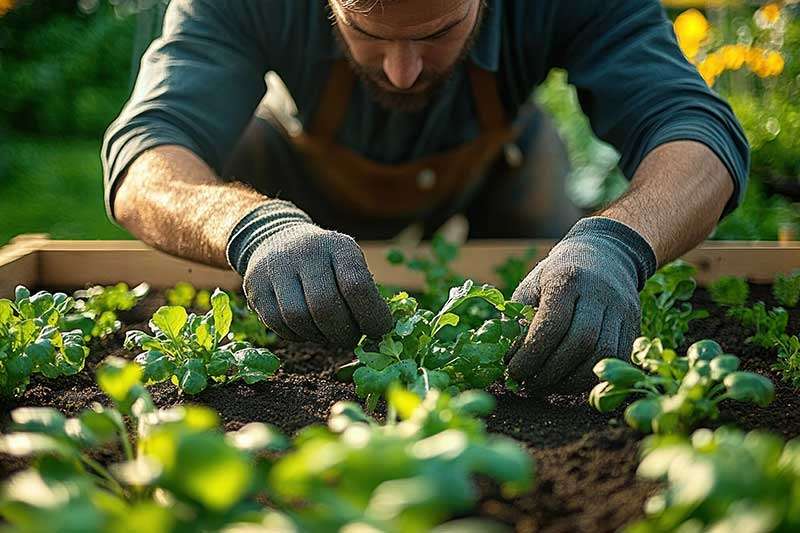
Jung Chang, the author of “Wild Swans,” highlighted health, belief, and belonging as keys to a good life. This article explains why home food production matters for personal wellbeing and community resilience, showing simple, low-cost wicking bed methods that conserve water, support soil biology, and grow nutrient-rich vegetables.
Wild Swans — health, belief and belonging
This essay begins with a simple observation: good food supports good health. When a close family member developed diabetes, the problem stopped being abstract. It became urgent. Modern, processed food systems push cheap, energy-dense but nutrient-poor products into our diets. That is not only a health problem for individuals but a social and ecological problem: soil biology and nutrient cycles are being eroded to make ultra-cheap food profitable for a few large companies.
Belief and belonging matter too. Many people quietly accept processed diets because convenience and price dominate food choices. Others want change. Those people form the community that can spread practical, low-cost solutions — like wicking beds — by sharing knowledge person-to-person rather than through expensive advertising campaigns.
Why community matters
I don’t have the budget or the desire to run slick advertising campaigns. What I can do is share practical know-how for free. If people who care about health tell friends, post on social media, and demonstrate wicking beds locally, ideas propagate far more effectively than any single commercial push. That is how small, grassroots improvements scale: trust, demonstration, and community distribution of accurate methods.
Creative Commons: share, but respect the source
When I first published wicking bed instructions online I hadn’t considered licensing. The design went viral — which is good — but some commercial operations later sold inferior or expensive products using bad design. Creative Commons licensing lets me keep sharing freely for private use while enabling a fair licensing route for commercial users. It helps protect end users from misleading versions and keeps the fundamental designs accessible to communities who need them most.
What is the message to spread?
The short version: wicking beds are a cheap and practical way to grow nutrient-dense food if you follow a few core principles. The exact shape, container or material is not the key — a lined pit, an old bath, a bucket, or a raised box will all work — but the management and the soil do matter.
Soil and nutrition — grow food that makes people healthy
Wicking beds are not merely aesthetic projects; they are a method for producing plants that improve human nutrition. Modern supermarket produce often looks healthy but can be poor in the trace minerals and phytonutrients our bodies need. Plants cannot make those compounds unless the soil supplies a broad range of minerals in bio-available forms and the soil hosts active biological communities able to solubilise those minerals.
Two practical mineral sources I regularly use are volcanic rock dust (broad spectrum trace elements) and seaweed. Equally important is ensuring the soil is alive: microbes, mycorrhizal fungi and worms mobilise minerals and build structure. Without that living engine, added minerals sit inert in the soil.
Compost tea and the living soil
One of the most revealing demonstrations I use is reservoir sampling. Fill a bed reservoir with clear water, run it through the compost and soil, and watch the colour change over time. The water becomes darker and richer — a compost tea full of dissolved minerals, microbes and organic compounds. That tea feeds roots during flood cycles and is a concentrated expression of the bed’s biological activity. It looks gruesome, but plants thrive on it.
Second: let the roots breathe
Root aeration is the single most neglected factor in wicking bed design. Plants drown not from water itself but from lack of air. Roots emit gases; if those gases cannot escape, root health declines and anaerobic (putrid) conditions develop. For the vast majority of vegetables, roots need intermittent wetting and drying so oxygen can re-enter the soil.
Two practical rules follow:
- Avoid constant top watering; keep surface layers reasonably dry so gases can diffuse.
- Prefer a flood-and-drain or cycle approach: flood the bed with compost tea, let it drain, then allow roots to breathe before the next cycle.
Flood-and-drain performs two vital jobs — it flushes stale gases out of the root zone and brings fresh oxygen as water drains away. If you can design plumbing to allow the bed to be intentionally flooded and drained, you gain much better control over root health.
Design notes: depth, roots and reservoirs
Beds should not be so deep that roots cannot access the soil volume. If roots cannot reach the moisture reservoir, water may stagnate — another cause of smells and poor plants. Plant a thirsty species early to encourage roots to explore downward; avoid building excessively deep reservoirs that isolate the root zone. If a tree has deep roots, locate the bed beside the tree rather than directly over its root system.
Why stones and geotextiles often fail
A common misstep in some DIY designs is inserting a coarse stone layer separated from soil by cloth. This creates a large-pore, low capillarity reservoir and an air gap at the cloth interface that prevents wicking. The reservoir may sit stagnant while roots strain to reach water, leading to smells and poor growth. Well-prepared, fine-textured, organic-rich soils often hold more usable water than stone reservoirs while supporting active biology.
Nutrition is more than nitrogen
Many gardeners focus on quick-growth nutrients (like nitrogen) that make leaves lush but do not improve human nutrition. Our goal is to grow plants rich in minerals humans need — iodine, selenium, zinc, chromium and others — which plants will only accumulate if soils supply them and soil biology makes them available.
Risk management and hygiene
Using labile feedstocks (pond weeds, kitchen waste, or humanure) accelerates nutrient cycling but raises hygiene questions. Two-stage composting, leaf filters and vermicast layers reduce pathogen risks while feeding biology. Take pragmatic precautions: avoid applying immature compost directly to crops destined for raw consumption; use secondary processing and plant filters to protect food safety.
Learning from failure
Many early adopters of wicking beds reported putrid reservoirs or disappointing crops. These failures often boiled down to one or more of the following: poor soil selection (sterile mixes or coarse layers), inadequate aeration, insufficient biology, or missing minerals. When the core principles are restored — living soil, flood-and-drain cycles, targeted mineral additions, and simple hygiene — beds perform reliably and produce plants that truly contribute to human health.
Final thought — practical hope
Wicking beds are not a panacea, but they are a powerful, low-cost tool that communities can use to reclaim some control over food quality. Shared through Creative Commons and spread by community demonstration, the technique offers a pragmatic, scalable way to grow better food. If your community cares about health and soil, a well-managed wicking bed is a practical start.
If you want more technical details or to discuss community projects, contact:
colinaustin@bigpond.com.
Download ‘Homegrown Nutrition: Wicking Beds for Healthy Soil’ (full PDF)
