Greta Foodberg

Greta Foodberg

The food industry is just as big a threat to humanity as climate change.

Greta Thunberg - love her or hate her (as many people do) her impact has been just startling. From a nondescript looking small child with a grotty piece of cardboard she became a world figure and leader of the climate change movement in little more than a year.

Food needs a Greta Foodberg. I start by discussing the Greta phenomena, trying to work out how it happened to see what can be learned for Greta Foodberg.

She did not have a battery of technical arguments but simply said ‘I am a child and you are destroying the world I will grow up in - and that is wrong.’

When asked why she putherself under so much stress she simply said ‘it is my moral obligation’. read the full story as a .pdf here

The next read Making soil 101 gets down to the nitty gritty of making soil and how Gbiota beds work in practise

Home

Loading

Making soil 101

Making soil 101

Gbiota beds make it simple to create healthy, living soil that grows “gut food” – vegetables rich in beneficial biology and minerals that support the gut–brain system.


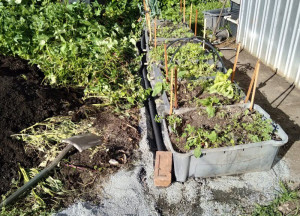
I wrote this article to show how easy it is to make a basic Gbiota bed and turn ordinary soil and waste into high-quality growing media. Anyone can do this using soil biology, organic waste, rock dust, and worms. Here I focus on a simple box system, but the same principles scale up to larger commercial beds. See more articles under the “Growing” section on the site. Gbiota beds are not just a watering system to grow cabbages. They are designed to breed beneficial soil biology so plants act as natural prebiotics and probiotics for our gut. To breed beneficial soil microbes (“good bugs”), you must feed them. They thrive on organic waste, manure, and a broad spectrum of minerals. Mycorrhizal fungi and worms are especially important for breaking down minerals and building long-term soil structure.

The Growing Box, Pipes and Soil Dam

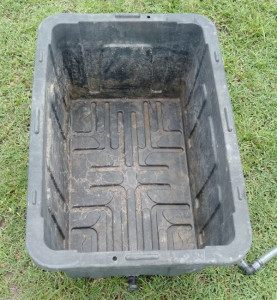
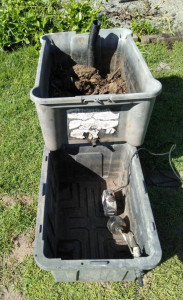
Start with a basic storage box you can buy at any hardware store. It needs to be strong enough to hold wet soil and have a way to connect a drain and filler pipe. empty-box-colin-austin-gbiota
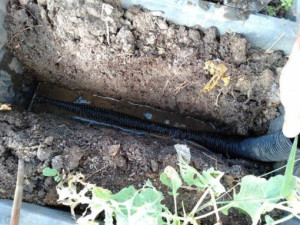
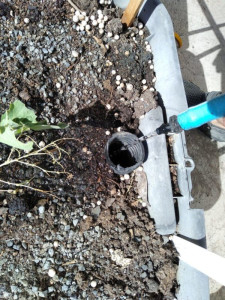
Drill a hole and install a fitting for the drain outlet. Cut a length of agricultural (Ag) pipe to run along the bottom of the box and up one side. This pipe serves two purposes:
  • Acts as the fill point for water
  • Distributes water evenly along the base of the box
filler-pipe-colin-austin-gbiota
 
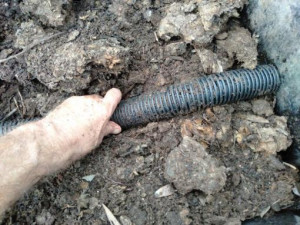
Raise the pipe slightly just before the drain to form a “soil dam”. For a small box, a dam height of about 25 mm is enough. This sets the maximum water level in the base of the bed. soil-dam-colin-austin-gbiota
Fill the bottom half of the box with organic waste and manure. This is the food and breeding ground for soil biology. Then fill almost to the top with a mix of local soil and well-rotted compost. This is the main root zone. Finally, add a thin layer of fine soil on top for germination, plus a light sprinkle of rock dust (which can also help deter slugs and snails). That completes the basic growing box.

The Water Reservoir

You could run this purely by hand – pouring water into the fill tube and letting the excess drain. But most people eventually forget or get busy, so automating the system is more reliable.
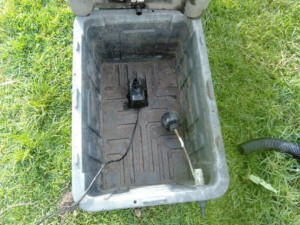
Use a second box as a water reservoir. Fit it with:
  • A float valve to maintain water level
  • A small pump (a pond pump is fine for a single box)
water-reservoir-colin-austin-gbiota
You can also connect several growing boxes in a row. For multiple boxes, use a larger pump such as a sump pump. In Colin’s garden, one sump pump feeds eight boxes plus several in-ground beds from a single in-ground sump. multibox-banner-colin-austin-gbiota

Height and Layout Decisions

 
The top of the water reservoir must sit below the base of the growing box so water can drain back under gravity. You have two options:
  • Raise the growing box on a stand and leave the reservoir on the ground.
  • Dig a hole for the reservoir and leave the growing box at ground level.
relative-height-of-sump-colin-austin-gbiota
Connect the pump outlet to the filler end of the Ag pipe. When the pump runs, water flows along the pipe until it hits the soil dam, then floods the base of the box. Water will not exit the drain until the water level reaches the top of the dam. At that point, water flows out of the drain and returns to the reservoir at roughly the same rate as the pump delivers it. You must ensure the drain can handle the pump flow. If the flow is too high, the bed will flood and suffocate the biology you are trying to grow. When commissioning the system, run the pump and check the drain flow. For larger setups with a sump pump, use a small irrigation nozzle or fitting (e.g. 2 mm) to restrict and balance the flows. flow-control-nozzle-colin-austin-gbiota

Partial Flood and Drain

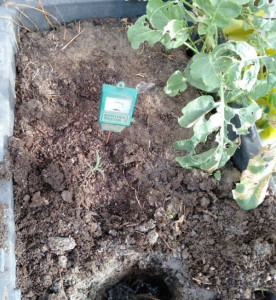
Gbiota beds are designed for partial flood and drain. The goal is “Goldilocks moisture” – not too wet, not too dry. You can use a cheap moisture sensor just to detect when water reaches the root zone, or you can dig a small observation hole to watch the water level rise and fall. water-sensor-colin-austin-gbiota
Check that the water level:
  • Rises quickly to the dam height when the pump runs
  • Flows out of the drain and returns to the reservoir
  • Then falls steadily when the pump stops
The bed should not fully saturate or stay waterlogged. Stagnant water encourages “bad bugs” and putrefaction. Moving, oxygenated water supports beneficial biology. You can also time how long it takes for water to appear at the drain. That timing is useful when setting up a pump timer.
viewing-hole-colin-austin-gbiota
 

Timer and Automation

While you can switch the pump manually, a timer makes things much easier.
  • Set the runtime slightly longer than the time it takes for water to reach the drain.
  • In hot, dry climates, run short pulses several times a day.
  • In cooler seasons, once a day may be enough.
If mains power is not available, you can use a solar pump and control it simply by shading the panel to create one or two watering events per day.

Feeding the Bugs (and You)

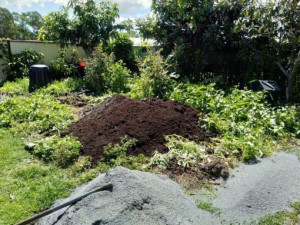
Beneficial microbes, insects, and worms need food. Fortunately, they thrive on what we call “waste” – food scraps, grass clippings, prunings, and other organic material. biomin-rock-dust-garden-colin-austin-gbiota
Good soil biology also requires a wide range of minerals. Rock dust provides these minerals and helps maintain soil structure. Read more about trace minerals here: Adapting to the food crisis. Quarry crusher dust can improve soil texture and help deter slugs and snails when sprinkled on the surface. However, it is not formulated for trace mineral balance.
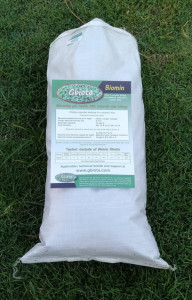
For trace minerals, I recommend Biomin – a prepared rock dust containing a broad spectrum of minerals and beneficial microbes. Sprinkle it on the surface when seeding. biomin-colin-austin-gbiota
I don’t sell products myself; my goal is to build a food system for future generations. I work with a company that produces Biomin to an agreed specification.
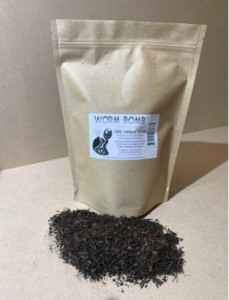
I have a similar arrangement for worm eggs, which are a critical part of Gbiota technology. Adult worms are delicate, but eggs transport well and explode into a healthy population under good conditions. worm-bomb-colin-austin-gbiota
 

Labile Compost, Mature Compost, and Vermicast

Plants and soil organisms have evolved complex chemical defences. Young (“labile”) compost can contain compounds that inhibit growth, which is why it’s not ideal for the seed zone. When you built your Gbiota bed, you placed labile compost in the lower layer. Over time, biology and worms break this down into stable, fertile soil, often enriched with vermicast (worm castings). As the labile compost decomposes, the surface level may drop slightly, but what remains is excellent material for the root zone and for future seeding.

Two Ways to Use Compost as the Bed Matures

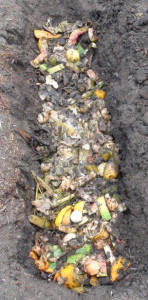
Option 1 – Minimal disturbance Make mature compost or vermicast separately and use it as mulch over the surface when seeding. Worms will gradually distribute it through the bed. Option 2 – Trench feeding Dig a small trench down to the lower layer and add kitchen waste or young compost there. This is one of the best ways to recycle organic waste – soil organisms process it and build fertility. Be mindful of:
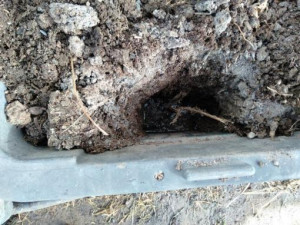
  • Soil structure – avoid digging the entire bed; disturb only small areas at a time.
  • Practicality – many people use a compost bin and empty semi-mature material into trenches when seeding or transplanting.
food-waste-in-trench-colin-austin-gbiota
   

Loading

Gbiota Videos

Gbiota Videos

This video library covers the core ideas behind Gbiota—how microbes shape soil, plants, appetite, energy, and long-term health. These short explanations help visitors understand why gut-brain food matters, how to grow it, and how communities can build a healthier future.

Understanding Health, Longevity & Appetite

We choose our lives

How to choose whether we live a long and healthy life or are fat and sick.

How your gut controls your appetite

Changing your gut microbes is much easier than you thought.

Fit or fat – gut microbes create the hormones

Store-bought plants often lack the beneficial microbes needed for a healthy gut.

Control appetite with gut microbes

How we need to change our food system to avoid overeating.

Why we get fat and sick

We get fat and sick because of deficits in modern food and missing beneficial microbes.

Ruminations – why at 85 am I still fit and healthy?

The long-term impact of breeding beneficial gut microbes.

Soil, Water & Living Ecosystems

Living soil

How eating plants grown in living soil improves health.

Living soil matters – it affects your health span

Soil biota improves gut biota, appetite control, and healthy longevity.

Living soil matters

The importance of mineral-rich, biological soils in human health.

No water – no food

How water movement in soil determines whether food heals or harms.

From soil to health

How improving soil biota enhances human gut biota and health.

How to Grow Gut-Brain Food

Your health your choice

How to grow plants in organic waste to feed your gut microbes.

Become a gut-brain food grower

Why we need local growers producing microbially rich plants.

Gbiota plants for gut health

How regenerative growers breed beneficial microbes in soil.

Growing plants to breed gut bugs

Practical guidance on microbe-rich plant growing.

Grow gut brain food — the starter

The simple first steps to begin growing gut-brain food.

The gut brain food cycle

Anyone with a patio or verandah can grow gut-brain food.

Grow gut microbes

How to improve health by breeding microbes at home.

Try it for yourself

Create living soil and eat fresh—judge the benefits firsthand.

Technology, Society & The Gut-Brain Food Movement

Taming the wild beast of technology

How technology can benefit communities instead of harming them.

A compassionate society

Why we need a gut-brain food industry.

Coordinators required for health project

Building community capacity for healthier living.

Creating a gut-brain food industry

How Gbiota technology ensures beneficial microbes out-compete harmful ones.

The Gbiota box story

The evolution of growing containers for microbe-rich food.

Growers for gut health

Calling for regenerative growers to supply the community.

Gbiota: Transforming Health Through Microbial Balance

A revolutionary approach to combating chronic disease.

Fake news, fake people and fake food

How fake food lacks the microbes that power our gut-brain.

Fire, flood and technology

Technology should be our servant—not our master.
 

Loading

Minister’s Reply on Water Reform and Water-Saving Innovation (2006)

Minister’s Reply on Water Reform and Water-Saving Innovation (2006)

In May 2006, Malcolm Turnbull MP replied to Colin Austin’s letter about Australia’s water policy and new technologies to harvest more rain. The reply outlines the Australian Government’s commitment to national water reform through the National Water Initiative, alongside funding support via the $2 billion Australian Government Water Fund and the Water Smart Australia program. It explains how project proposals were assessed through the National Water Commission and where guidelines could be found.


Context and Purpose

This page preserves a formal response from the Australian Government to a citizen’s submission on water policy and practical technologies that could help Australia harvest and manage water more effectively. The letter is addressed to Mr Colin Austin at Kookaburra Park Eco Village (Gin Gin, Queensland) and acknowledges his earlier correspondence about “water policy and new technologies to harvest more rain in Australia.” The purpose of this post is to present the content in a clear, readable format while keeping the original meaning intact.

Letter Details

From: The Hon. Malcolm Turnbull MP, Parliamentary Secretary to the Prime Minister
To: Mr Colin Austin, Lot 55, Elzards Way, Kookaburra Park Eco Village, Gin Gin QLD 4671
Date: 11 May 2006
Subject: Water policy and new technologies to harvest more rain in Australia

Acknowledgement of the Original Letter

The letter opens by thanking Mr Austin for his letter dated 27 March 2006. It notes that the topic raised concerned “water policy and new technologies to harvest more rain in Australia.” This acknowledgement matters because it places innovation and practical technology inside a broader national policy discussion, rather than treating it as a purely local or private issue.

National Water Initiative as the Core Reform Framework

The reply states that the Australian Government is committed to improved water management in Australia and “led the development of the National Water Initiative (NWI).” The NWI is described as having been considered by the Council of Australian Governments and signed by the Australian Government and the governments of all states and territories. In the letter’s wording, the NWI is presented as the “blueprint for water reform in Australia over the next decade.”

The letter further explains the intended direction of the reform: when implemented “fully and effectively,” the NWI would result in a “nationally-compatible market, regulatory and planning-based system” for managing both surface and groundwater resources across rural and urban use. In other words, it frames reform as a whole-of-system change—markets, regulation, and planning working together—rather than a single policy lever.

Funding Support Through the Water Fund

Beyond policy architecture, the response refers to direct financial support. It states that the government established the “$2 billion Australian Government Water Fund” to support the NWI and to help fund practical water solutions. The letter highlights that this funding support would be delivered “primarily through the Water Smart Australia programme.”

Water Smart Australia and Practical Projects

The Water Smart Australia programme is described as a large project programme that supports “on-the-ground water resource projects.” The intended outcomes are spelled out clearly: projects that make a significant contribution to sustainable and efficient management of Australia’s water resources, and that promote the uptake of new technologies and practices. The letter also includes an important boundary: the programme was “not intended as a substitute” for the existing water supply responsibilities of states, but it is positioned as a meaningful national commitment to innovation and best practice.

How Proposals Were Assessed

The letter explains that administration of the Water Smart Australia programme was undertaken by the National Water Commission (NWC). It states that all project proposals put forward for funding would be given careful consideration by the NWC against the programme guidelines, and that proposals would be considered on a competitive basis before advice was provided to the government for final decision. This section clarifies that funding was not automatic: it was structured, criteria-based, and competitive.

Where to Find the Guidelines

Finally, the reply notes that the guidelines for the programme could be found on the National Water Commission’s website, listed in the letter as www.nwc.gov.au. The letter closes by thanking Mr Austin again for writing about the issue and expressing trust that the information would be of interest. It is signed “Yours sincerely” by Malcolm Turnbull.


Colin Austin — © Creative Commons. Reproduction permitted for private use with source acknowledgment; commercial use requires a license.

Download ‘Minister’s Reply on Water Reform and Water-Saving Innovation (2006)’ (full PDF)

Loading

Aquaponics by Igor

Aquaponics by Igor

This is a post from one of our users Igor Grossman in Melbourne about his aquaponics systems. Although a different technology the basic aims of high nutrients and active biology are similar to Gbiota beds

[pdf-embedder url="https://www.gbiota.com/wp-content/uploads/2026/04/aquaponic.pdf"]

Loading