Why we get fat

Why we get fat


Food crisis

mineral deficiencyFood is one of the major threats to humanity, not an absolute lack of food - we produce more than enough energy food, carbs, fats and sugars, to feed the entire world now and well into the future.

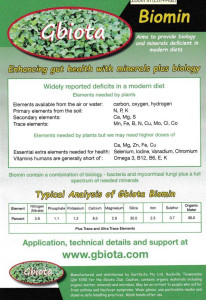
Right now our food is deficient in essential minerals but even more important is food to feed out gut-brain which regulates our appetite and hosts much of our immune system.

Across the globe people are getting fat and sick, and it is not simply because we overeat. The real reason is that our gut-brain senses these deficiencies, decides we need to store more fat and sends out signals so we overeat.

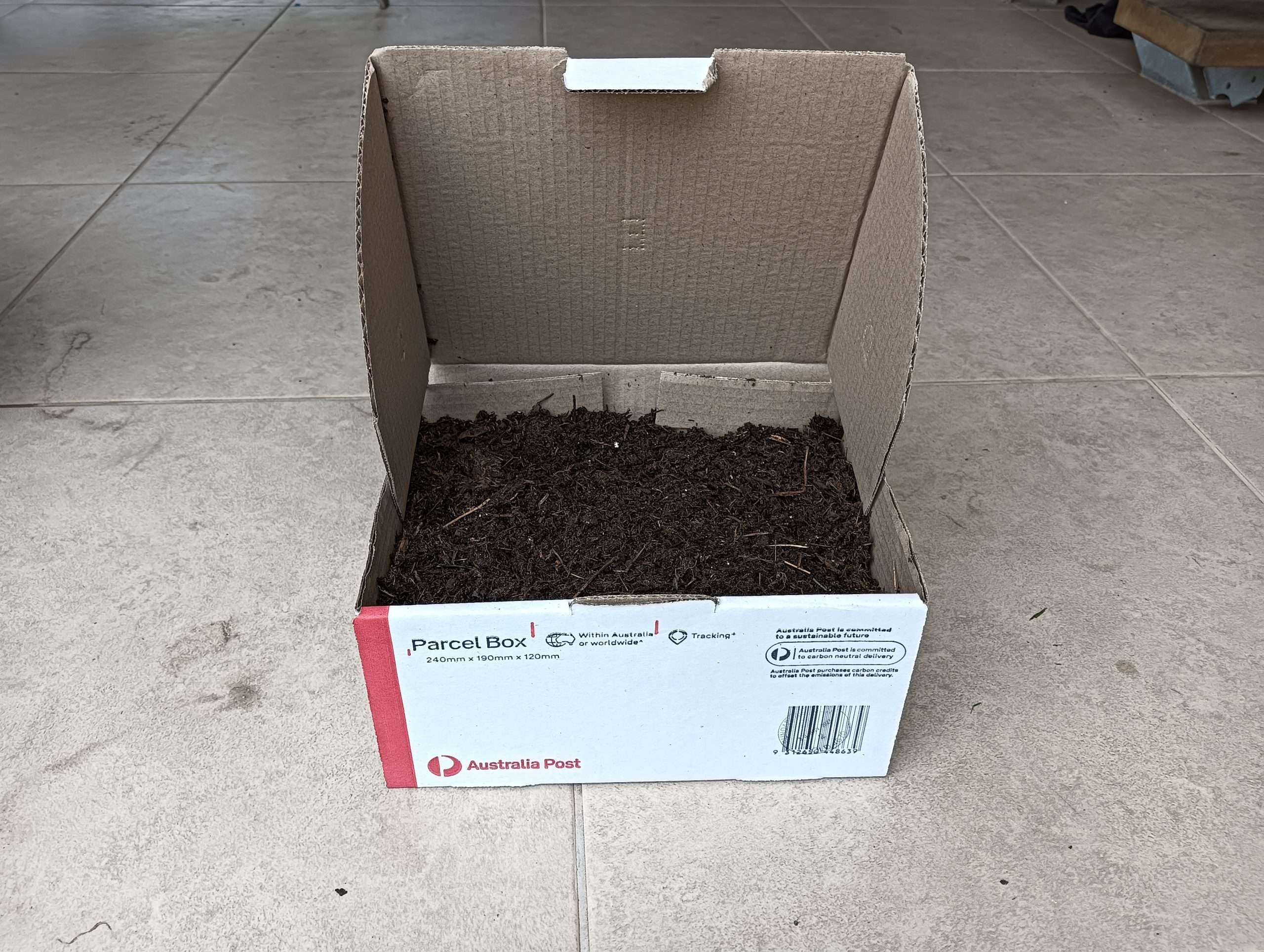
gbiota boxGbiota.com is our technical web site which shows how to feed our gut-brain by breeding beneficial microbes in the soil, which is used to grow plants which, if eaten fresh, before the microbes die, will feed out gut brain.

But it is no good having the technology if it is not widely adopted.

Gbiota.club is the social media site where people, concerned about the food crisis, can exchange information and practical experiences and create the needed social movement to create change.


What Food crisis

food crisisWhat food crisis? For most of us there is plenty of food in the Supermarkets, at least for now.

But it is energy food, which is essential, but we need more, we need to feed our gut-brain which controls our bodies, in particular, where and how much fat we store.

chronic diseasesThis is the underlying cause of chronic or non infectious diseases overweight, diabetes, heart attacks, and dementia.

modern food Modern food, relying on chemicals is inert, dead, lacking the essential microbes on which our bodies depend.

If we want to the increase the chance of a long and healthy life we need to feed out gut-brain and we know exactly how to do that.

ecosystemBut that means a change in thinking, creating a balanced Eco-system, breeding the beneficial microbes in the soil under favourable conditions so they out-compete and out-breed any harmful microbes the grow plants in this soil and eat fresh before the microbes die.

Gbiota.com is where people can go to learn how to do this.

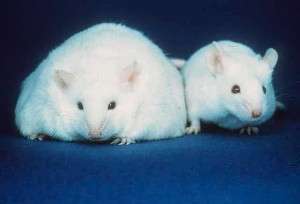
fat and skinnyWe get fat because our gut-brain decides we need to store more fat (probably because we are not feeding our gut-brain). It sends out signals for us to eat more which enables us to get fat. The cause is the gut-brain - eating more is the enabling factor.

There are plenty of people who eat huge amounts and never get fat  - and vice versa.

We need to feed our gut-brain

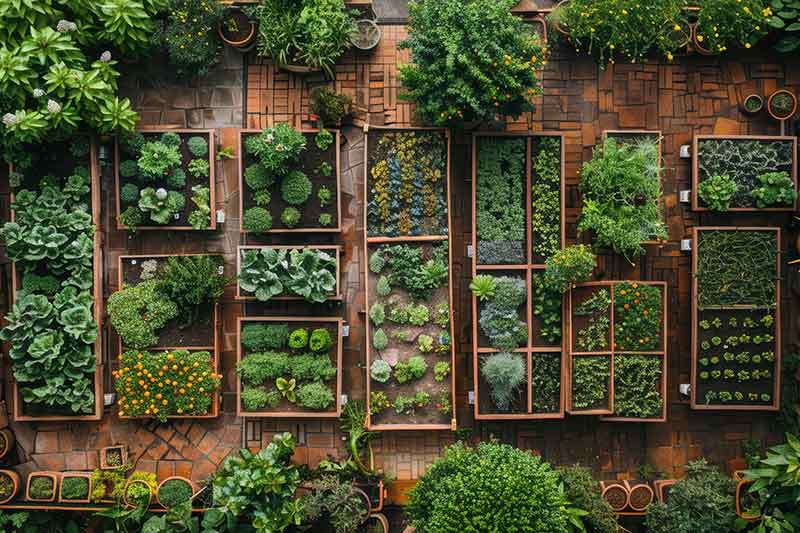
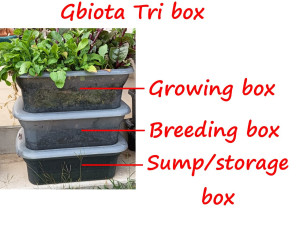
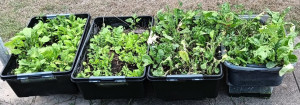
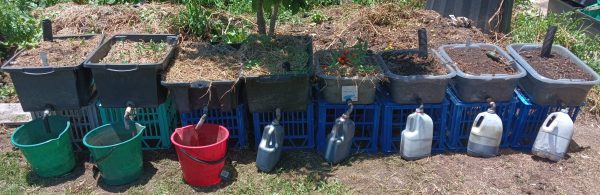
Gbiota boxesHowever, this is a very different way of growing food which many people find scary. Fortunately, there are many people with a permaculture background who are successfully using these methods.

Gbiota.club is a social media site where people can make contact with these successful growers, learn from them and share experiences. It is a free site but it is private site to protect against the scammers and abusers that permeate the modern web.

So join the gbiota club and join or form a local group.

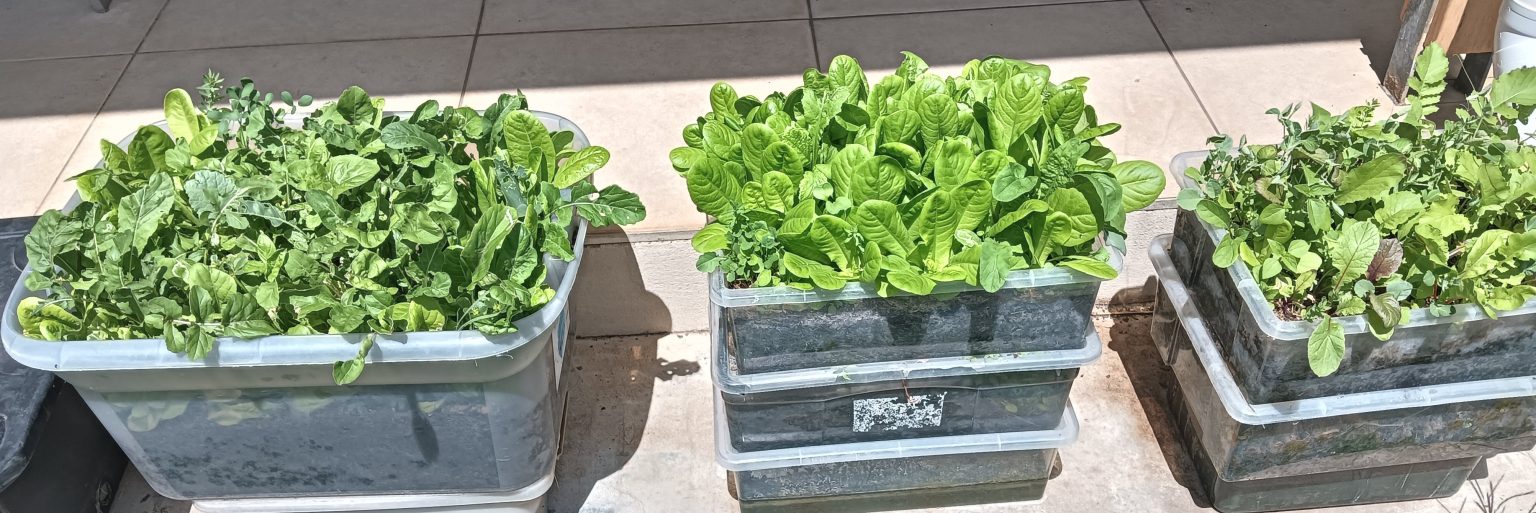
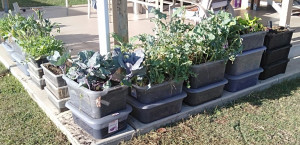
People with no growing experience of a garden can grow gut-brain food in containers even if they live in an apartment but they do have to learn how.

Our longer term aim is for local growers to supply these containers with growing plants that just need watering and feeding which makes it even easier.

"I

Loading

Why we get fat

Not little piggies


Not little piggies

Deficiencies not surplus

We don’t get fat and sick because we are little piggies and stuff ourselves with chicken wings, chips and ultra-processed foods.

We get fat because we have deficiencies in our diet, this is sensed by our intelligent control system, our gut-brain, which regulates our bodies.

Sensing problems it hits that big red alarm bell sending out messages - hormones and electrical signals - saying we have an emergency, eat more food and store it wherever possible.

This has led to an epidemic of chronic diseases, obesity, diabetes, heart attacks and dementia which all have the underlying cause of the wrong fat in the wrong places.

The conventional medical advice to reduce overweight is to go on a calorie- restricted diet which works in the short term. But it is training our gut-brain that it needs to store more fat so longer term, when the calorie-restricted diet begins to pale, ends up making us store even more fat.

Feed our gut-brain

The solution is to feed our gut-brain with gut-brain food, a combination of fibre which is simple, and the beneficial microbes which power the intelligent system in our gut.

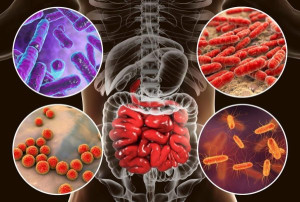
The trillions of cells in our gut communicate with each other acting like our internal supercomputer which help regulate our bodies.

Breeding these beneficial microbes is a challenge, it is easy enough to breed microbes - they are a randy lot - the challenge is to breed the beneficial microbes without breeding the harmful microbes. This is what the Gbiota technology is all about.

Eat fresh

But it is even more difficult as microbes have a short life, a microbe hour is equivalent to a human year so we only have seventy to eighty hours to eat this gut-brain food.

This can only be done by growing your own gut-brain food or getting a cooperative local grower to grow for you. It simply cannot be done with the extended transport time in our modern food distribution system.

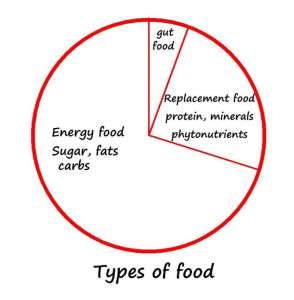
This means a change in the way our food system works, but this is perfectly manageable as gut-brain food is easy to grow, even for people living in a flat, and anyway only needs to make up about 5% of our total diet.

Paradigm shift

A far bigger challenge is creating this paradigm shift in the way we think about food from one of restricting calories to one of avoiding food deficits.

This is made even more difficult by the billions of dollars spent in manipulative, but effective advertising by the food, drug and supplement industries and the advice from our respected medical professionals of eat less and exercise more.

Motivation

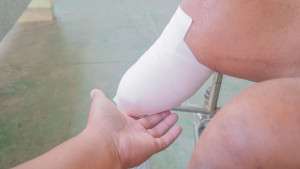
I feel highly motivated to change this for the simple reason that my wife, a qualified medical doctor and surgeon is diabetic, her foot started to turn black and the medical advice was that she needed to have her foot amputated.

Had we followed our medical advice she would almost certainly have had her foot amputated but we changed her diet to include gut brain-food and she still has both her feet.

Eight million amputations per year

Eight million people (which if you get overwhelmed by the big numbers that float around our modern world is an awful lot of real people). It has become my mission in life to reduce that number.

Think about this - every eight seconds someone has a limb amputated from diabetes, think how much better the world would be if we could just make that one every minute, or even one every hour - possible but how can we make it happen?

Making it happen

We know how to grow gut-brain food. The critical factor is moisture level, the soil must be just moist enough so the beneficial microbes will breed but not too wet when the harmful microbes breed.

My professional expertise was in computational fluid flow, which involved solving complex coupled non-linear equations which I assure you is not going to become the latest craze among modern teenagers so Taylor Swift does not have to lose any sleep. But it did mean that I was selected as one of Australia’s leading innovators.

But it does mean that I understand how water moves through the soil and plants and I also understand how Ecosystems work - that is the essence of the Gbiota technology.


We know how - but how to apply

So technically we know how to grow gut brain-food but technology is useless unless it is applied for the benefit of the community.

So how do I get this message out to the wide world and save people from having their legs chopped off from diabetes?

Even if there was a way I could tell those eight million people who are going to have a limb amputated they are unlikely to believe me, I am an engineer, not a medical doctor.

Show not talk

Let me tell you it is a waste of time writing long technical articles full of facts.

Sad to say facts are very much out of fashion but people will believe what they see with their own eyes.

Fortunately, it is very easy to see if eating gut-brain food works, if you are diabetic you can see this with your blood sugar reading and if you are not diabetic you can feel those food cravings disappear and you lose weight.

Start small and grow fast

So what I have to do is persuade a small group of people to grow their own gut-brain food, see for themselves the benefits and, this is the key bit, show their friends and contacts so they start eating gut-brain food and then they show their friends and contacts.

You don’t have to be brilliant at mathematics to know about exponential growth 2 4 16 256 65,536 4,294,967,296 that’s the adult population of the world in 5 clicks.

Form groups

But to get this to work we need a way that people can form groups and communicate with each other - that is why I have formed the Gbiota club where people can make contact with other people in a similar situation and share information and experiences.

If interested please drop me an email at colin@gbiota.com

"I

Loading

Why we get fat

Eco-balance

Eco-balance

Colin Austin © 10 April 2024 This document is published under the Creative Commons system which means that it can be copied and republished without further permissions but the author Colin Austin @ gbiota.com must be recognised.

Humans are not naturally fat

Humans have evolved to be naturally not fat - it is not good in the survival stakes. Our bodies naturally sense when we are full and our gut manufactures hormones which make us feel full and stop eating.

So-called obesity drugs, like Ozempic, are humans attempt to simulate the actions of our natural hormones.

But modern food is deficient in both certain trace minerals and more importantly the microbes that form our gut-brain.

Gbiota shows how to grow gut-brain food so we produce those hormones naturally.

The wrong fat in the wrong place is the underlying cause of the modern epidemic of chronic diseases, diabetes, heart attacks and dementia.

Breeding microbes is easy

Breeding microbes in the soil is easy - they don’t need any help - they do it all by themselves.

The snag is there are beneficial microbes, the goodies, that will keep us fit and healthy so we can expect a long and healthy life but there are also harmful microbes, the badies, which can make us sick and even kill us.

So the challenge is how to breed the goodies without breeding the badies.

You may have noticed that you don’t get many mangrove trees growing in the desert or many cacti growing in the hot tropics - and if you try you won’t have much luck.

Living things will automatically select conditions which suit them, that is what we call Eco-balance and is the basis of the Gbiota technology.

We just have to work out the conditions that favour both the goodies and the badies will thrive in, then create the conditions that favour the goodies.

Food, Water and air

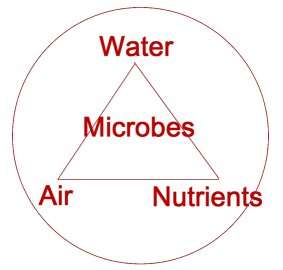
Food, water, and air are the dominant factors. In general, the beneficial microbes prefer moist, not wet, conditions with plenty of air while the harmful microbes breed in wet, or totally saturated conditions.

But making the soil moist is not that simple. Water tends to cling to soil particles and not move through the soil - one area can be nearly saturated while other areas close by are still dry.

How to achieve a more uniformly moist soil, without being too wet, is a key part of the Gbiota technology which I will talk about later, but let me first talk about a topic with a delightful name.

The cocktail effect

When thinking about Ecosystems we have to look at how the entire system works, and not just individual components of the system.

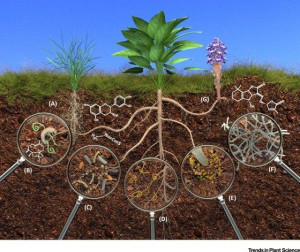
Plants, soil creatures, and microbes have a very close and complex relationship. Living plants create sugars as part of the photosynthesis process which they exude from their roots to attract and feed specific breeds of microbes and fungi.

Fungi

These microbes and fungi are far more efficient at collecting minerals from the soil. Fungi, in particular, will exude enzymes which they force into rocks so the minerals become bio-available and feed the plants.

Plants also die and there is a whole range of creatures which recycle this organic waste. Worms and ants are the most common but there are many recyclers, some visible, some microscopic which will feed on this organic matter.

Some have teeth and can bite into the organic waste, while others have gizzards to grind them up but they all have a gut, just like us, which is part of the digestion process. These are important for our gut health.

But we have to think about the system as a whole. We could waste a ton of money on mycorrhizal inoculants which simply die if there are no plants to form that symbiotic relationship.

Or we could simply plant some sunflowers which form a very strong relationship with mycorrhizal fungi it just takes a few fungi to be in the soil and they will rapidly breed up with the help of the Sunflowers - all for free.

[vdo id="9608458afdfc49a8b97b8b582e49813f"]


Companion plants

Plants also have symbiotic relationships with other species. Anyone who has tried to grow broccoli will know that the flies, and their maggots love broccoli. It is pretty much a losing battle.

I don’t use toxic chemicals as I do not want to kill off the microbes I am trying to breed so I have an ongoing battle with netting to keep the flies off my plants.

If I have a whole box devoted to broccoli this can be a losing battle, so I often use a seed mix with maybe twenty or so varieties of seeds.

Some will be resistant to flies so at the very worst I will end up with some crop, but even better some plants when attacked by flies produce chemicals to fend off the flies and in the process will provide some protection for my broccoli.

Water and soil blood

People who write about how water moves through the soil (and that includes me) will use the word water.

But that is not correct. If we are interested in how food is produced we must think about what happens on the surface of the soil particles - this is where the action starts.

Generally, water is attracted to the soil particle surface although there are some soils which are hydrophobic, meaning they repel water.

These are often soils under gum trees. In the weird logic of EcoSystems, gum trees survive fires by having leaves full of oil which deprive the air of oxygen so there may be a monster fire but the trees themselves survive.

How many humans would have thought of the idea that to protect trees from fires fill the leaves with oil - not many I think. One up to nature.

But in normal soils, the chemical, physical, and biological action is on the surface of the soil particles.

Certainly, water is attracted to the soil particle surface but it is not simply water, it is a complex combination of water, chemical and microbiology.

This is transferred through the soil to feed the plants, in the same way that blood circulates around our bodies distributing food and complex chemicals to all parts of our bodies.

I call this soil blood so when I am talking about water moving through the soil I am talking about how soil blood moves through the soil.

I have written an article on how water moves through the soil which you can read here

Water stays put

But the key point is that water (actually soil blood) does not readily move through the soil but will cling, by surface tension, to the soil particles and will only move when wet with water in the larger cavities, less bound to the soil, and so can readily move.

Even with drip tape, which is supposed to be the wonder solution to irrigation, the soil has to reach saturation (actually over field capacity) to move.

To breed our beneficial microbes we need the soil to be uniformly moist. We could work out the precise amount of water we need to make the soil moist and apply just the right amount but we will end up with some soil too wet while the rest is too dry.

It is not distributed uniformly throughout the soil

I use the word soil, but really it is soil loaded with a very high level of organic waste that we are using to breed the beneficial microbes. If we leave this soil-waste mix saturated for any length of time we will breed the harmful microbes.

This is the problem we have to solve. At least we know what not to do.

What not to do!!!!!

We must not keep on topping up the soil with water, that will just mean that some areas are continuously too wet while other areas are too dry. Nobody wins.

What to do!!!!

Seeding

If you are seeding the entire box then don’t flood the whole box. Different seeds have different requirements, some must be saturated before they germinate others germinate with just a bit of moisture so just apply to suit the variety.

Very little water is used when seeding so be careful not to flood as this will leave stagnant water in the base of the box, which is where you would normally put the organic waste (until the worms do their thing).

I prefer to have some plants growing so typically will have some water-hungry plants like spinach growing in the corner of the boxes.

Regular watering

When the plants have developed a root and leaf structure there will be a transpirational load on the system eg it will be using water so we can start using the proper Wicking or Gbiota irrigation protocols.

Most people have a habit of going out to their garden and if looks a bit dry then apply a bit of water. This is not the way to operate a Wicking or Gbiota box.

These need to operate in a different way. Instead of applying different amounts of water with a fixed irrigation schedule, we let the box semi-dry out and then apply a fixed amount of water.

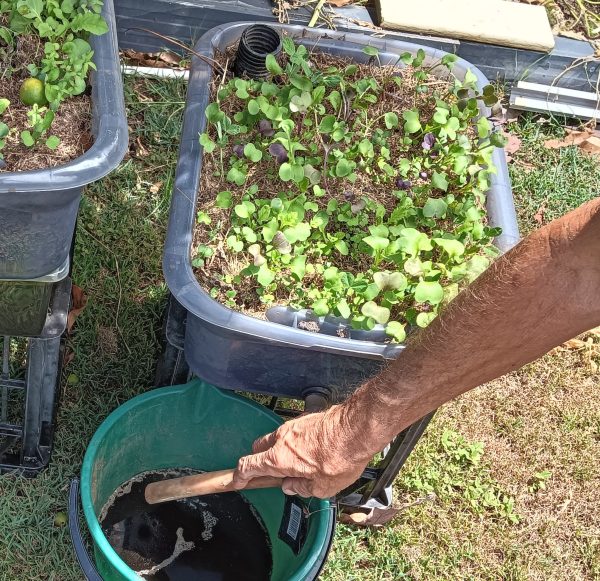
This is why I recommend having a vertical filler pipe so you can see the water level, when there is no liquid water it is time to irrigate.

Typically we will apply about 15% of the soil volume. 20litres is a good size for a Gbiota box as then they can be lifted and moved about so we need to apply 3 litres of water.

With great foresight, the dairy industry anticipated a demand for three litre bottles and introduced them to keep all the Gbiota growers happy. (Actually, that’s me just being silly but it would be a miserable world without a bit of fun.)

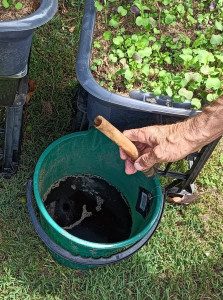
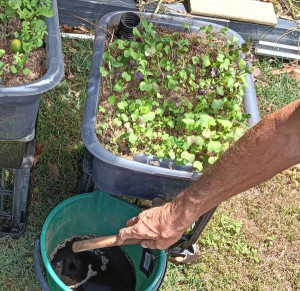
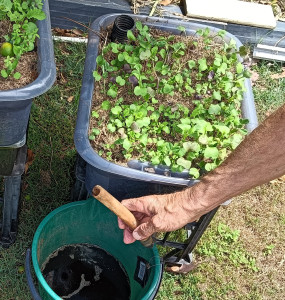
Step 1 If you have not already drained the box turn the swivel tube down and catch and soil blood in the bottle.

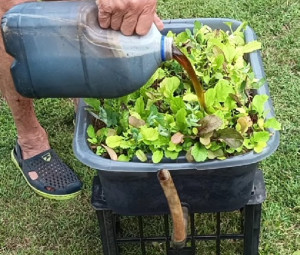
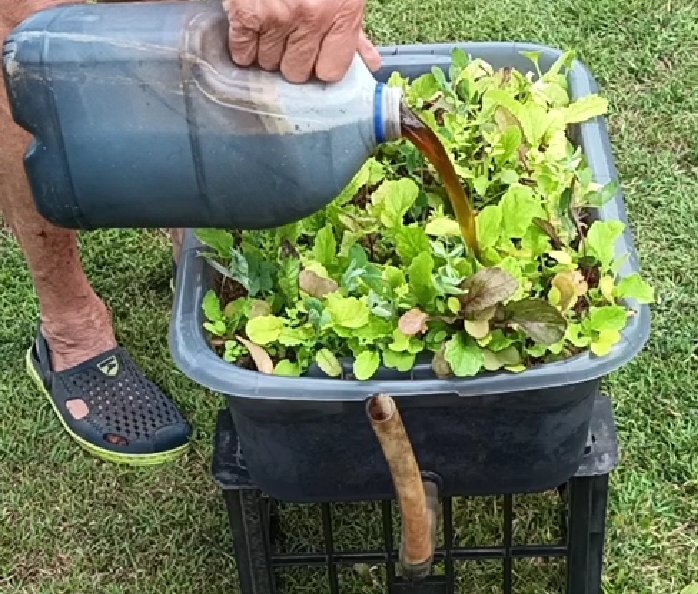
Step 2 Turn the swivel pipe upwards and pour the water into the box. If you have been operating for a while the water caught in the milk bottle will be genuine soil blood with a deep brown colour. This is full of nutrients and a wide selection of living creatures.

I like to start by pouring some of the water over the plants so the leaves absorb some of the nutrients and biota.

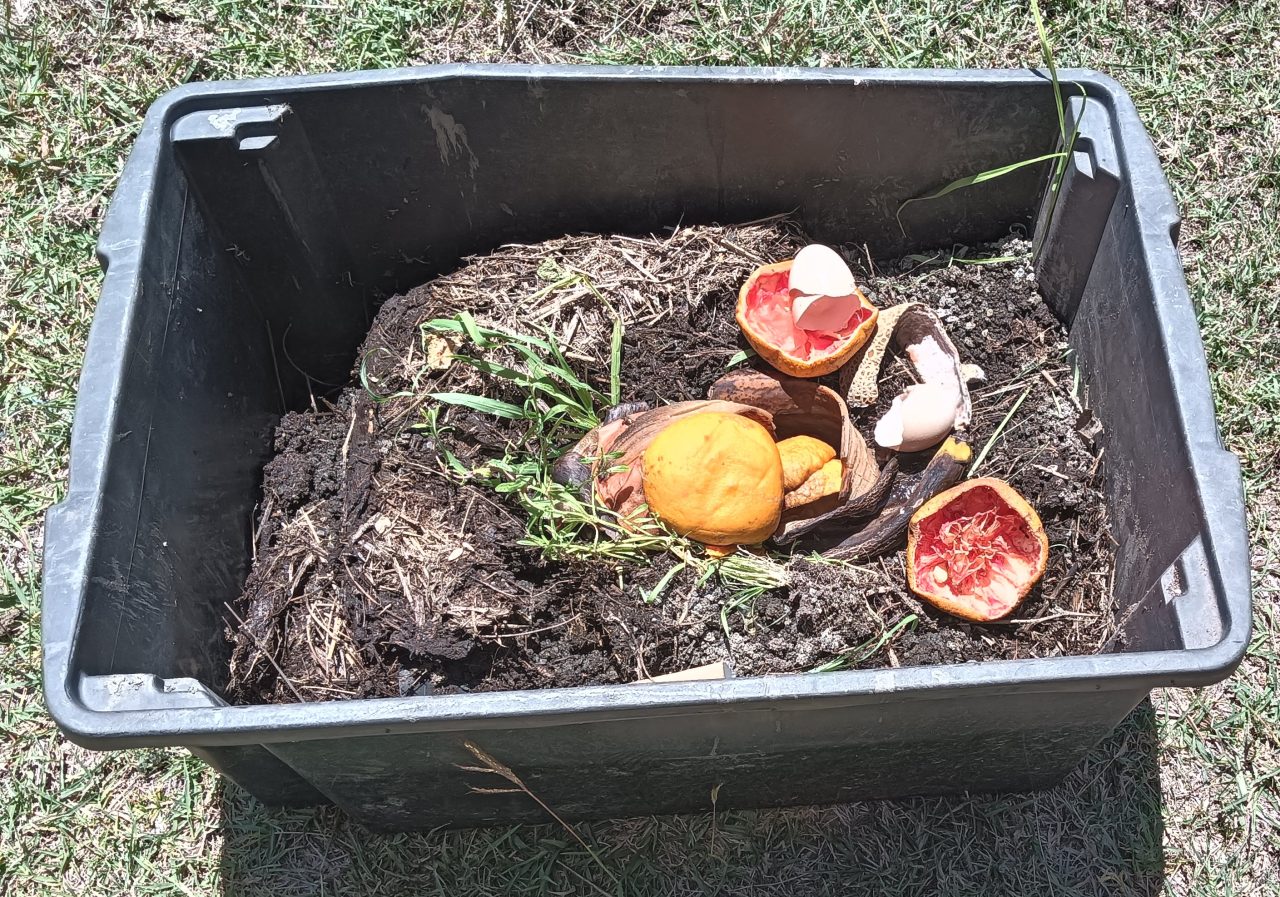
The rest I will pour into the compost tube.

Step 3 Check the water level, if it has not reached the top of the swivel tube (which should be about 1/3 of the height of the box) add more water.

Step 4 Wait until the water has all been used up. If it has not been used after a week then twist the swivel tube down and drain the box and start over again.

Labile compost

Organic matter that has not been properly composted is called labile (young) compost and may be full of growth inhibitors and is certainly not good for growing plants.

Hot composting is the standard solution, but requires careful control of the carbon-to-nitrogen ratio and ensuring that quality of the organic material. I will try and pre-compost my organic waste if I can but it does not breed the microbes that our guts need.

The Gbiota method is to cold compost by burying and allowing the creatures of the soil to process the organic waste in their guts which will breed the right type of microbes.

The organic waste is buried, covered with mature soil and planted so the plants exude nutrients to feed the microbes.

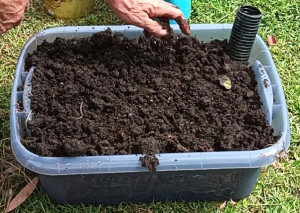
This is easy to do in Gbiota beds and can be done by putting a lid on the box, flipping over, filling the base with organic waste then flipping the soil on the lid back onto the box.

Just pretend you are making pancakes.


Compost tubes

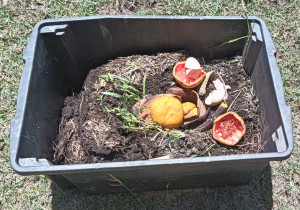
Perhaps a more practical way is to use compost tubes, this is great if you have boxes on the patio which are too heavy to flip.

Make up a box full of nutrients (eg chicken manure, rock dust and dolomite).

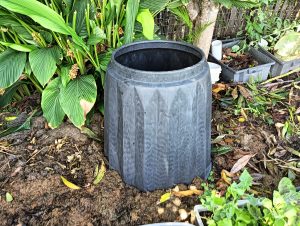
Make a compost tube (any tube about 100mm in diameter) by cutting at about 45% on one end and flat at the other.

Find a suitable lid like a yoghurt container.

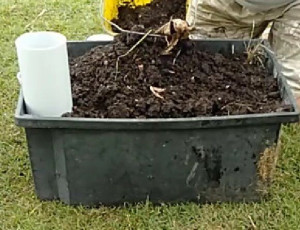
Just dig a hole and insert the compost tube into the hole.

As you generate kitchen waste just fill the tube and add some of the nutrient mix and worms if there is none in the box and unless you have a particular affection for flies seal with the yoghurt container (or whatever).

Keep on doing this until the level in the compost tube is at soil level, pull out the tube while pushing the compost mix into the soil.

Dig another hole somewhere else, and use the soil to cover the old hole and seed.

This is a simple way of getting the labile compost to the base of the box while having plants growing on top.

Irrigating

If the swivel tube is up twist down and allow to drain. (I normally have the swivel tube in the downward drain position after I have irrigated).

When you are irrigating first give the foliage a flush, pour any excess soil blood into the compost tube and if there is excess into the filler tube.

Add additional water (if needed) so liquid reaches the top of the swivel tube.

Allow a period (at least an hour but not more than a day) for the soil blood to wick throughout the bed.

Twist the swivel tube to allow the box to drain catching the soil blood (which should be dark brown) into your recycled milk bottle (or whatever).

In my subtropical climate of Bundaberg, I do this once a week.

There is more than enough liquid to last at least a week in my hot dry climate but I still make this a weekly routine when I am at home because I like to flush, but there is more than enough water to last longer so if I am on a trip I don’t worry.

Flood drain and recycle

Flooding expels the stale air and draining suck is fresh air into the soil.

The cycling ensures the soil blood is never stagnant.

These are the two basic rules of the Gbiota system.

"I

Loading

Why we get fat

Compost – Bin or Bury?


Compost - Bin or bury?

Preamble

Stuart (from the Gbiota club) asked an interesting question on traditional compost and Gbiota composting.

Simple enough question but raises a whole bunch of issues.

It gets to the very heart of what Gbiota is all about so I need to write an extensive reply.

Let me explain that Gbiota.club is a social site where people can share and discuss information. Normally members would just make a post or comment on an existing post.

However, this is such an important issue that I am writing a comprehensive reply which is too big to go into a social media site so I am just providing a link to the post which I will publish in gbiota.com – the technical site.

Clicking on that link will take you to gbiota.com where, if you like you can read the post then simply click on gbiota.club and go back to where you started.

Back to Basics

Stuart’s question gets to the foundation of what the Gbiota is all about - which is about how to grow gut-brain food so our gut-brain works the way it should.

It is just a sad fact of life that our modern food system is not working the way it should, which means reduced health span (the length of time we are fit and healthy – not the same as life span) and is the underlying cause of the modern epidemic of chronic of non-infectious diseases.

mineral deficiencyThe underlying cause is the wrong fat in the wrong place which raises the question of why our bodies should store fat in the wrong places – or simply, why do we get fat?

The common answer, from both the lay public and experts in the field, would be that we eat too much and that is simply not consistent with the facts.

That raises an even more important question, why is it that people, even experts believe things to be true, even when they are not consistent with glaringly obvious facts.

This is particularly important in this modern information age when we are just saturated with wave after wave of information leading to mental saturation – one of the great hazards of modern life.

Why we believe what we believe

What the factI would refer you to a most interesting book, What the Fact? Finding the truth in all the noise by Professor Seema Yasmin who has a whole string of accolades after her name.

It is a really good read which helps us understand this chaos we call the information age. The key point boils down we tend to believe what the group we associate with believes rather than the facts.

If we are in a group that believes that climate change is a hoax then we will tend to believe climate change is a hoax regardless of the facts and the daily bombardment of floods, drought, and extreme weather which saturate our news will not change that view.

If you live in Russia, where many people believe that Ukraine is likely to daily invade Russia, then that is what you will tend to believe, despite the obvious fact that the Ukrainian army is tin pot in comparison with the Russian army.

If the consensus from the lay public and experts is that we get fat because we consume too many calories then there is great pressure to accept that view, despite being in clear contradiction to hard facts.

So let’s explore why we get fat and perhaps more importantly why we believe that it is just excess calories.

Why we get fat?

Scientists have known for a long time that we have an intelligent control system that regulates our bodies – they even have a name for it ‘homeostasis’.

We can see our head brain working, right now you have two eyes that are recording a picture in each eye which, like in a camera, is upside down.

Your brain is flipping these the right way up and more remarkably converting these into a single three-dimensional image which tells you that the door is farther away from you than the screen. Pretty smart.

How does it do that? Well, I am sorry to disappoint – I have absolutely no idea.

Now this is important, you don’t have to know how something works to know that it happens. More on that later.

Let us look at the argument that we get fat because we eat too much. We eat food, too much food so there is more food in our stomach than what we need so we end up with a fat bum.

gut brain connectionI can tell you with confidence that the food in our stomachs does not just flow into our bum, they are the same height and fluids will naturally flow downwards.

If, when we overate we ended up with fat feet I would not have an argument but we end with fat in an area higher than our stomach so something is taking that fat from our stomach and putting it somewhere else.

According to Newton’s first law if you want to make something budge you have to apply a force, so there is some mechanism at work.

Things don’t just happen, there is always a reason, whether we understand that reason or not.

We know what that is, fat goes from our stomach and into the blood and is deposited somewhere else and that is controlled by our intelligent control system.

We know that this control system is made up from our head brain and our gut brain which work together as a single unit.

We know that our gut is a real brain with the trillions of cells communicating with each other to create real intelligence.


How does this work?

I am ancient, I was a pioneer in the computer revolution whey before Bill Gates.

I wrote code that solved coupled (actually tripled) non linear partial differential equations. When we wrote code back then we actually had to understand how computers work, which bit of memory was being used. Just to draw a line we had to write in machine code.

It was like working on a vintage car, you had to know how it worked at the very basic level.

So when you ask me how this gut-brain works you may reasonably expect an answer.

Sad to say I have no idea how this gut-brain works at the code level, sorry about that but I can say with total confidence that our gut-brain is deciding where and how much fat we store, it does not just happen.

It may be that our gut-brain sees we are short of food or lacking some critical nutrient and so decides that it needs to send out signals for us to eat more.

It may be that the species of microbes in our gut brain has changed.

But we can say for sure that our gut brain decides where and how much fat we store – even though we have no idea of the code that drives it.

Correlation not cause

gut brain connectionIf our gut-brain senses a deficiency it sends out signals for us to eat more and then sends out more signals to say where this fat should be stored.

The driving force is our gut-brain. There may be a correlation between how much food we eat and getting fat but eating too much is not the driving force it is an enabling factor.

We can go on a calorie restricted diet which dis-enables our body to put on fat and we can actually lose weight in the short term, but really all we are doing is training our gut brain so that it needs to send out instructions for us to store yet more fat, so we end up fatter than ever.

The punch line

The punch line is that we don’t get fat because we over-eat, we get fat because of a deficiency in our diet so our gut brain is sending out the wrong signals.

This leads to the apparently absurd argument that if we are putting on fat we should eat more not less. But we need to eat food that will feed out gut brain which will then stop sending out signals for us to eat more and so we may end up eating less overall.

Modern food

chronic diseasesOur modern food system is often blamed for the epidemic of chronic diseases, and I am certainly not going to leap to their defence of using artificial fats and sugars.

The real issue is the lack of gut-brain food.

The solution – feed your gut brain

OK, you may still be with me but I have not answered the question which is what is gut-brain food and where do we get it?

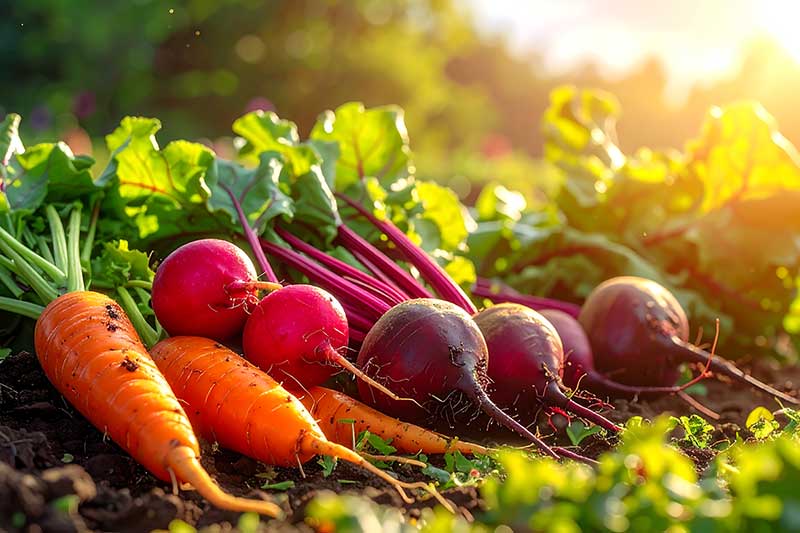
Oddly enough that is a straightforward question to answer, for some million years, since the very first hominoid appeared on earth we have been eating gut-brain food, plants grown in living soil (full of beneficial microbes) and eaten while fresh (before the microbes die).

It is only in the last fifty years, since we have adopted a diet of highly processed, but infertile food, that we have had a significant problem.

But we cannot simply go back to eating what our ancestors ate, they certainly had plenty of microbes in their food, but some of these were harmful so people died from infectious diseases.

So the challenge is how do we grow food, full of beneficial microbes but without the harmful microbes that make us sick or kill us?

Back to Stuart’s question?

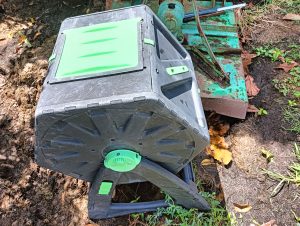
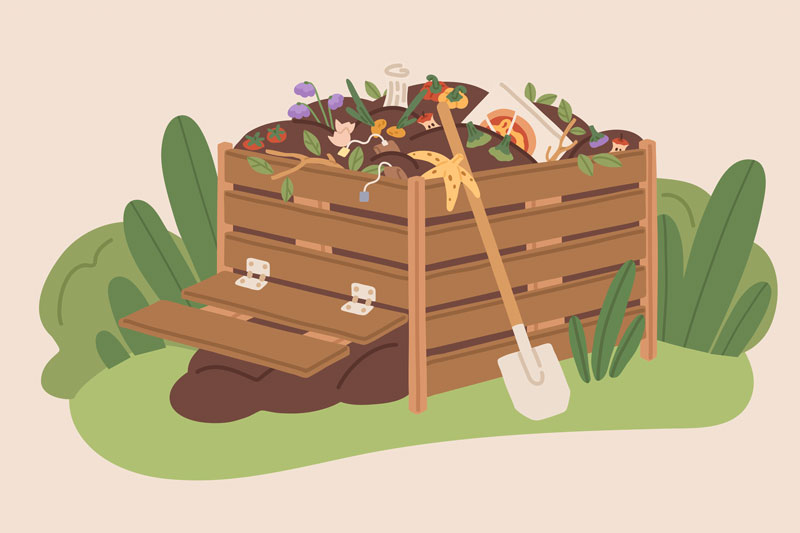
hot compostingBreeding microbes is easy, we have been doing it for years by composting.

That is important because if we are to survive as a species we have to recycle organic waste.

Hot composting is a sophisticated process that effectively recycles organic waste while killing off most of the pathogens, but it does require careful balancing of ingredients with the right carbon to nitrogen ratio, and turning to ensure adequate air.

The high temperatures, typically well over 60°C kill of the pathogens, but unfortunately our guts do not operate at 60°-plus temperatures so is not ideal for breeding gut biota.

Cold composting typically ends up with a horrible smelly mess, riddled with pathogens so we need a different approach and that is using the creatures that naturally live in the soil.

wormsWorms are highly efficient recyclers but there are numerous other creatures, some like the beetles, saw-bugs, and soldier fly larvae we can see but under a microscope, soil is just teaming with creatures.

This is a different approach than using microbes to process the waste, it is using creatures to consume the waste which they process using the microbes in their guts, similar to the microbes we need in our guts.

Virtually anything organic can be processed by burying in the soil as there will be some creature that will consume the waste. Even wastes like orange peel will be reprocessed by fungi.

This is a much better method for breeding gut biota, the only disadvantage is that it is slower than high-temperature composting but that is not a real issue as the soil above can be used for growing plants to eat.


Eco-balance

In the natural environment, there is always a balance, it is the same with our gut. We do not have to eliminate every single pathogen. Most people have the harmful E-Coli in their gut but the numbers are so small it does not matter.

If we can manage the conditions the beneficial microbes will simply out-compete and out-breed the harmful ones.

This is done in the Gbiota system by ensuring there is an adequate food supply and the right moisture conditions which we achieve by a combination of flood and drain and circulation of the soil blood (water plus microbes and nutrients).

Beds or boxes

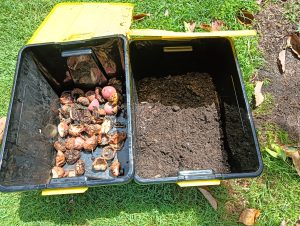
Decomposition is really best done in Gbiota beds to produce Wickimix which can be used in boxes, my longer term aim is to encourage local growers to set up to produce boxes filled with Wickimix and plants ready to eat on a swap over basis.

But first, we need to build up a user base of home growers who do not have the luxury of gardens and growing experience.

compost tubeCompost tubes are a ‘hear and now’ technology that anyone, even people living in a flat can use.

I have tried hard to find a way that people living in a flat can recycle their waste but unfortunately, the flies seemed to defeat me until I decided to regenerate an old idea of compost tubes

I now have boxes with compost tubes on my verandah.

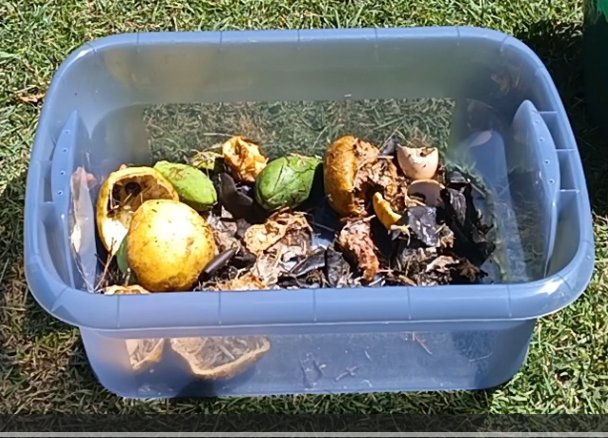
I find that my favourite Yoghurt tube makes a tight fit when pushed into the tube so I can just put my household waste directly into the tube and effectively seal with the Yoghurt container.

I have boxes on my veranda and can simply load my waste directly into the compost tube.

I do have a nutrient box containing manure, rock dust, blood-and-bone (excellent for trace minerals), and dolomite (to balance the PH) which I add to the tube to help decomposition.

Of course, I load the boxes with worms when I make the box and they are more than happy to breed away.

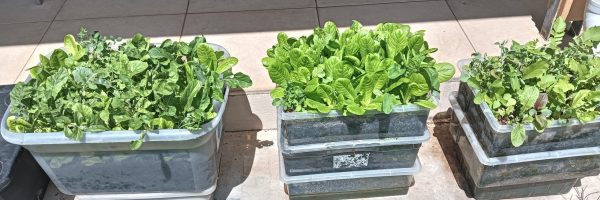
Baby greens

Baby greens are particularly effective for flat dwellers as they grow rapidly, are more nutritious, and tasty to eat raw when just picked.

It is actually better to start meals with a starter of freshly picked baby greens (or a baby green shake). This lines the stomach and acts as a damper to the sugar spikes causing the roller coaster sugar spikes in diabetics.

This is easy and cheaper than buying food from the Supermarket.

The big challenge

The big challenge is to get this message out to the wider population. No one can predict the improvement to community health until we actually do it, but this is not some approach that is going to cost thousands of dollars and runs a high risk.

There is always a risk in life, how can we be sure that people are going to put their waste into the compost tube where it is sealed and not just throw it onto the surface of the soil. Hoever the risk is small in comparison to the harm of a non-functional gut-brain and the resultant chronic diseases.

Science with its focus on proof is one of the great tools of our modern society but when there are eight million people a year having a limb amputated from diabetes, and an even bigger number dying from heart attacks it is time to be pragmatic and take action.

I hope you agree with me and will help in getting the message out to the public. You may never know or meet the people who you may save from having a limb amputated but it is not a bad feeling to think that you made that contribution to the community.

Better than wasting your life playing Bingo and waiting to die, that’s why I do this, so join the club.

"Go
"I


gbiotab

Navigate to

main menu -  videos -  blogs - references

Colin Austin  © Creative commons this document may be reproduced but the source should be acknowledged. Information may be used for private use but commercial use requires a license.

Loading

Why we get fat

Food, health and wealth for all


Food, Health and wealth for all

Colin Austin ©25 March 2024 This document is published under the Creative Commons system which means that it can be copied and republished without further permissions but the author Colin Austin @ gbiota.com must be recognised.

Summary

I present a plan that will lead to a better life so we and our grandkids can live a happier and healthier life - the plan is about future food which affects us both physically and physiologically.

Right now we are facing a health crisis, both physical and psychological, from deficiencies in our food system. In the future we face an even greater crisis from climate change, degradation of our soils, and exploitation of nutrients.

This article outlines my plan for a food system that is both healthy and sustainable.

Modern societies across the globe are suffering from an epidemic of chronic diseases and social tension from being hangry (angry from hunger). The underlying cause is we are not feeding our gut brain which regulates our appetite and how much and where we store fat.

We know how to grow gut-but plants must be grown at home so plants can be harvested and eaten before the beneficial microbes die.

To make this widely available we need to set up a system where local growers produce boxes with plants growing and ready for harvesting. These could be ordered online and delivered on a swap-over basis.

This will not just happen by itself, we need a social movement to inform people about the importance of gut-brain food which has sufficient momentum to create the new industry of sustainably growing gut-brain food.

Here is the plan.

The creative creature

Humans are incredibly inventive creatures. With our modern technology, we should all be happy, healthy, and wealthy - but we are not.

We are terrible at applying this great technology for the benefit of all.

Modern technology gives us the potential to produce food and goods at an incredible rate. If we were to apply that technology for the uniform benefit of all we would only need to work for two or three days a week and the rest of the time could be spent in any way we choose, taking the kids to the beach, bush walking, dancing and music of whatever takes our fancy.

We did try that once in the sixties with the hippie movement but that was really for the children of the rich and we did not have the productivity that we have now.

So where are we now?

Take a walk around any shopping centre. Look at the people, many are overweight, not just the older people even some young kids are fat.

Look at the shops, supermarkets full of energy food then the other shops selling pills and health foods. Both the food and pharmaceutical industries spend billions of dollars in advertising to get us to buy their products supposedly to keep us healthy but we keep on getting fatter and sicker - what is going on?

There is something missing in our food so we feel hungry and overeat so we end up fat and sick.

Hangry

But food does not just affect our physical state it affects our mental state. There is a well document effect called hangry - when we don’t feel satisfied we quickly get angry.

Look at the state of the world and how it has changed. There was a time when most people lived in relatively peaceful and stable democracies or at least beneficial autocracies.

Now more people live in aggressive autocracies than peaceful democracies. People flee these countries creating the great social challenge of our time - refugees escaping the aggressive autocracies or simply because they are hungry from not having enough food.

This puts great strain on traditionally stable democracies.

Does being hangry play a role? Will climate change and the destruction of our topsoil aggravate this social instability?

It is unlikely to lead to the extinction of the human species see survival but it will certainly create the greatest threat to our social cohesion, see time to act and rethinking food and diabetes and the many other articles at New Posts

Understanding how food affects us both physically and physiologically is critical for the future quality of life.


The thermodynamic machine

There is nothing wrong with energy food, it is what is missing in our food that matters.

Think of our bodies as a thermodynamic machine like a car. We fill it with fuel which it turns into energy just like our bodies do with energy food.

But however expensive and powerful the car it will just sit there not moving until a driver comes along and tells it to start up, go forward or backwards, faster or slower, and turn left or right.

The car needs a driver to tell it what to do.

We need a gut-brain to regulate our bodies as much as a car needs a driver.

Our intelligent control system

We need a driver, we are not a jellyfish just going with the flow, we have an intelligent control system sending out instructions to tell our bodies what to do.

Some instructions are fully conscious, we decide whether to go to the footy or the beach, we do not consciously decide our heart and breathing rate, our temperature, or whether to store a load of fat in our bums (which is what bums are for) or elsewhere.

This intelligent control system is a combination of our head brain and our gut brain.

It is what is missing that matters

Our gut brain, working with our head brain, forms forms our intelligent control system which regulates our bodies. It regulates all aspects of our bodies, from heart and breathing rates, temperature, our immune system, and most relevant our appetite and where and how much fat we store in our bodies.

The wrong fat in the wrong place is the underlying cause of the modern epidemic of chronic diseases obesity, diabetes, heart attacks, and dementia.

This is a huge problem, in some countries two-thirds of adults are overweight, eight million people a year have a limb amputated from diabetes, heart attacks are the most common cause of death.

Our gut brain decides

We need fat, it is essential for life so we need to store it somewhere in our bodies.

I guess many people who would like to be able to consciously decide where and how much fat is stored. Move a bit from this area and put it over there and we don’t need this bit of fat at all.

But that is not the way our bodies have evolved, instead, we have a totally automatic system with the gut-brain in control. This worked perfectly well when we were eating gut-brain food which we have done naturally since the very beginning of humanity.

We may think we can manage how much fat we store by going on a highly restrictive diet but all we are doing is teaching our gut-brain that it needs to store more fat for future bad times.

So as soon as we stop our diet our gut-brain piles on the fat.

Would it not be better to feed our gut-brain so it works properly?

Just feed our gut-brain

With all our modern technology we should expect a long and healthy life - but we are not getting it simply because we are not feeding our gut-brain.

The bulk of the food we eat is just used for energy. At this moment our current food system can supply all the energy food we need but is not supplying gut brain food.

We need to supplement our current diet with gut-brain food.

We know how

The tragedy is that we know exactly how to grow food to feed our gut-brain, grow plants in soil full of breeding microbes feeding on organic waste. (See gbiota.com).

It is cheaper than buying plants from the supermarket, the limitation is that the plants must be grown at home so they can be picked and eaten fresh before the beneficial microbes die.

Technology is not the problem, the challenge is how to get the message out to the wider population.

Future vision

It is easy to imagine a system with local growers producing Gbiota boxes, with living plants ready to be harvested, being ordered and delivered on line. Very practical and economic - but how do we make that happen?


We've stopped believing

Conventional internet marketing is not the solution, I know I have tried. It is simply swamped by the mass of promotions for magic pills which are claimed to resolve all problems - but don’t.

I talk to leaders in Internet Marketing, it is just full of fuzz, special offers, buy two get one free, quizzes - just a box full of manipulative tricks. May be great for selling Tee shirts but no use for changing the food system.

People understand this and have stopped believing what they see on the web - sad but true.

Taking pills does not fix a deficiency in the food. We have to fix our diet and eat gut-brain food.

Leading research scientists are well aware of the importance of gut health but it takes time for this knowledge to permeate to the front line doctors who are chronically stressed for time.

So how do we change the food industry? It won’t be done by manipulative advertising, it needs a social change.

Looking for a model

We can learn a lot from looking at the history of the climate change movement.

Scientist, Governments, and the fossil fuel industry have known that greenhouse gases cause climate change for well over a hundred and twenty years.

The fossil fuel industry, who have great influence on the Governments, tried to confuse the issue by putting climate change into the not-proven category - and it worked. Nothing happened.

It did not seem to matter how many scientific papers were published, the public was not convinced, and without public pressure, Governments continued to do nothing.

Then it all changed, Greta Thunberg - a young schoolkid, entered the scene. She did not write some seminal paper, or some super sophisticated computer program or hold an audience to the world’s leaders, but she was the catalyst for change.

So look for inspiration from the Greta Thunberg story.

If you have not heard the story she sat outside in Sweden’s freezing cold with a cardboard placard for three weeks with people just walking past.

Then a few people started to take notice, and they told their friends and before you could say ‘green house gases’ there was a social movement which pressurised Governments around the world to act.

Greta herself did not do the grunt work to create the climate movement but she did inspire her followers who made it all happen.

Neither the fossil fuel industries nor the Governments would have acted were it not for Greta’s followers creating a global movement.

Greta created a social movement - and it worked.

The food crisis

The climate crisis and the food crisis, are closely linked. The biggest threat to our food supply, long term, is from a combination of the climate crisis and the degradation of our soils.

However, the food crisis is more complex.

At this moment we are producing adequate energy food to feed the entire world but with the combination of climate change and the degradation of our soils that could rapidly change.

The ‘here and now crisis’ is we are not feeding our gut-brain. If we think of the driver-less car analogy it is like the bulk of the population having no control over where and how much fat we store in our bodies which is the cause of the current epidemic of chronic diseases.

That is scary stuff so how do we make the needed change to happen?

Learning from climate change

Neither the food industry or the Governments are going to change the food industry - even though they know it needs changing. It was public pressure from Greta’s followers that led to action - it will be public pressure that will lead to the creation of a local food supplying gut-brain food (using Gbiota boxes).

The message is clear, we have to create a social movement campaigning for a healthier food system.

The Internet advertising executives who tell me about the techniques they use, the special offers, etc say that people will not act for the public good.

They are wrong.

We are the dominant creature on this earth simply because we are naturally cooperative and will work for the public benefit.

True there are some people who operate purely for their own benefit, and although they can cause a great deal of harm, they are very much in the minority.

We just need to figure out how to create a social movement for a better food system.

Show not talk

Fortunately it is easy to tell if a diet incorporating gut-brain food is working.

You don’t have to be a microbiologist or run expensive tests.

If you don’t feed the gut-brain it sends out signals which make us crave food so we keep on eating hoping we will just happen to eat some gut-brain food.

As soon as we eat gut-brain food it is satisfied and stops sending out these food craving signals.

One of the essentials of science is to be able to measure what you are trying to study. There is no scientific measurement for food cravings although you know full well that you have a food craving.

But if you follow your gut feeling you will naturally not eat as much and this is something you can measure. You will just eat less without any fancy diet.

So what is the plan?

Let me work my way through the thought processes of developing the plan.

Scale

The first is to recognise the scale.

There are 8 billion people on this earth and they all have a gut and so need gut-brain food. We used to talk about developed, developing, and underdeveloped countries.

When I was a kid I was living in a modern society but there were still local farms supplying their community.

That has all changed. Now most people live a modern lifestyle with food produced in large and highly industrialised farms, highly processed in a factory system and distributed in global food chains run by mega-corporations.

There is a long delay from time from when food is harvested to when it is eaten. It may be labelled fresh but that is just marketing and really means it has not gone rotten. The beneficial microbes have long since died and that is why we have the modern epidemic of chronic diseases.

We cannot go back to the traditional small local farm.

The ultimate aim

I see the ultimate aim is to have small local growers, either inside or close to our urban centres.

They will not be like the old local farms but sophisticated operations producing gut-brain food, using advanced technology which will involve recycling organic waste as a primary input.

Have no doubt there is no way we can support the current level of population unless we recycle organic waste, which is a much more sophisticated technology than the old compost bin in the backyard.

They will produce gut-brain (Gbiota) boxes with both living soil and plants which they will distribute using on-lining ordering and distribution.

People will harvest the plants and swap boxes when finished.

This will supply genuinely fresh (eg with living microbes) food and will probably be more more economic than our current food system.

But that won’t happen overnight, so we have to start from where we are now.

Where we are now

We have a small, but enthusiastic, number of Gbiota growers. I chat with them on a regular one-to-one basis but they are not (as yet) talking amongst themselves as a group.

There is widespread understanding of the importance of gut health to overall health in the general community. But there is widespread promotion that you can fix your gut biome by simply taking a pill or eating some wonder plan. That is not consistent with real-world observations,.

Kale was promoted as such a wonder plant, which it is, but not if it is grown in sterile soil relying on synthetic fertilisers and spends days from harvest to eating.

Such wonder foods will not have much impact on the gut biome - but may be better than eating a packet of chips.

Most people have stopped believing all the marketing hype on the Internet so there needs to be a better and more believable information channel.

Gbiota.club

We already have people who are growing and eating Gbiota food.

The first step is to give the existing Gbiota users a way they can communicate with each other to form an integrated team.

I am asking them to sign up to join the gbiota.club website and start putting up posts (called activity) with a little chat and photos of what they are doing.

Gbiota.club is a private website. When I first set up gbiota.club it was a bit of a mess as it was inundated with scammers and dubious operations trying to sell pills on my site.

I was very discouraged and let the site stagnate but now I can see it could be the solution.

It will remain a free site but people will have to sign in to access. If I get scammers, abusers or operations trying to sell pills I can (and will) simply remove them.

How could be internet, one of the modern world’s greatest innovations deteriorate so rapidly?

But genuine users can send out invites to their friends and contacts to join.

It may be slow going at first but once it gets under way it should build up steam.

Gbiota boxes made easy

People need a way that they can experience firsthand the benefits of eating gut-brain food.

The post Gbiota boxes made easy shows how people, even if they are living in an apartment, can grow their own gut brain food.

This will not lead to mass adoption but all innovations start with a group of entrepreneurial pioneers who do the trailblazing.

Our biggest obstacle may be the disenchantment with the internet as a reliable source of information but our biggest advantage is that it is easy and inexpensive to people to experience eating gut-brain food first hand.


"

Loading

Why we get fat

Why we need to act


.

Why we need to act

The modern epidemic

People across the globe are suffering an epidemic of chronic diseases, obesity, diabetes, heart attacks, and dementia. It is the biggest health threat facing humanity (See Survival).

The underlying reason for this epidemic of chronic diseases is the wrong fat in the wrong place.

Why we get the wrong fat in the wrong place

Everybody has an intelligent control system that regulates our bodies.

It is a combination of our head and gut brains.

We cannot change our head brain, but we can train it and maybe change how it is expressed (Epigenetics) essentially we are stuck with it.

But we can change our gut brain, simply by what what we eat.

Our intelligent control system

Our gut is an integral part of the control system regulating our appetite, how much and where we store fat in our bodies, and also our immune system.

Our gut has intelligence from the trillions of microbes in our gut communicating with each other, just like in a computer.

These microbes, are living creatures which come from the soil.

In our modern diet, which is focused on highly processed foods, there are no living microbes.

The result is that our gut brain does not work as it should.

Feed our gut brain

The Gbiota technology was developed so almost all people, including those living in apartments, could be eating plants, grown in living soil, freshly picked and so full of beneficial microbes.

This technology would improve the lives of billions of people across the globe.

Every eight seconds someone has a limb amputated, we could prevent them losing their foot but we have to tell them how. That is what this web is all about.

Modern food

People say our modern diet of ultra-processed foods makes us overeat so we get fat and sick - but it is not that simple.

It is not what is in our food but what is not in our food.

Our intelligent control system - our gut-brain regulates our bodies.

If we feed it gut-brain food it works well and we have a good chance of a long and healthy life. If we don’t feed it gut-brain food it goes into panic mode and sends out instructions to store fat.

It creates food cravings to make us overeat. Overeating is not the cause of getting fat and sick, it is the enabling factor - the cause is because we are not feeding our gut-brain.

Feed our gut brain

The solution is to feed our gut-brain. We know how to do that, it is simple and inexpensive, the gbiota.com website shows how. Gbiota does not receive any external funding, it is a community benefit organisation so gbiota.com is a subscription site - but $40 a year is pretty good value to prevent having your foot amputated from diabetes.

Does it work?

That is difficult because it is not black and white. Our gut-brain is made up of the combinations of the brains in our head and gut.

The trillions of cells in our gut communicate with each other so our gut has real intelligence.

Some people, on one extreme, have a head brain which makes them totally resistant to becoming fat and sick, they can eat whatever they like and they will always be fit and healthy while at the other extreme, some people will become fat and sick and may have a limb amputated from diabetes however careful they are.

Life is not fair.

Most people have a choice

But the vast majority of people have a choice whether they become fat and sick or fit and healthy by eating gut-brain food.

Fortunately it is very easy to tell if eating gut-brain food will work for a particular person, just try it and see if the food cravings disappear.

Fake advertising

But the real problem is persuading people to eat gut brain food. This is difficult with the barrage of false information and manipulative advertising which has invaded our world.

People have simply stopped believing in the electronic barrage.

But they still believe people they trust. If people start eating gut food and the food cravings disappear they can tell their friends and contacts. It is much easier to make changes as part of a group, sharing information and experiences and even food.

That is what the gbiota.club website is all about - a place where people can exchange information and real-world experiences.

Members registered on gbiota.club also receive the Newsletter to keep them updated on the latest technological advances.

And gbiota.club is free, no one is monitoring your behaviour so they can sell you something. It is a private social media site with standards of behaviour - no advertising and no abuse.

Join the movement to avoid the food crisis

Our food system is moving into a crisis from a combination of climate change and destruction of our top soils.

If you want to help that by joining the Gbiota social movement then start by registering at gbiota.club. If you are already using the Gbiota system then register at gbiota.club and share your experiences with other people who may benefit from you experiences.

Just post in ‘activity’. If you have any problems then just email me at colin@gbiota.com


Loading

Why we get fat

Gbiota boxes – made easy

Colin Austin © 14 March2024 This document is published under the Creative Commons system which means that it can be copied and republished without further permissions but the author Colin Austin @ gbiota.com must be recognised.

Gbiota boxes - made easy

Why?

Developing a simple Gbiota box for people living in apartments has been the focus of my development work - Why?

The world is very different to when I was born. Back then infectious diseases were the biggest health issue. We were obsessed with germs, they had to be eliminated at all costs and adopting a chemical approach, swapping manure with chemical fertilisers, toxic sprays and antibiotics we have been successful in killing them.

What we failed to appreciate at that time that we were also killing of the beneficial microbes in our gut which form part of our in intelligent control system which has resulted in non-infectious or chronic diseased being the biggest health problem across the globe.

The first technical challenge was how to control the harmful germs without harming the beneficial microbes.

Nature has taught us the principle of Eco-balance, simply create the right conditions so the good microbes out compete and out breed the harmful ones. That is the essence of the Gbiota technology.

For people with a garden and some growing skills this is easy and is already widely adopted but the epidemic of chronic disease affects everyone, particularly the majority of people living in cities, probably in an apartment.

In the future I can see a system where people living in an apartment can just order on line a Gbiota box, with plants already growing and have them delivered to the door and requiring little effort other than watering.

But we are not there yet, these local growers need to see a demand so I need to develop a user base of city dwellers. Once there is a user base with these early adopters, there will be a clear demand for growers.

So here is the simplest way of making a Gbiota box which is perfectly practical for anyone with a bit of pioneering spirit, or not wanting to have a foot amputated from diabetes.

Selecting a box

There is nothing magical about the box, I know there are many Wicking boxes on the market, often at high prices, but what matters is the soil not the box - almost any box will work fine.

The main considerations are depth and size.

About the minimum depth for a box is 200mm and I doubt if many people will be growing a giant red gum in a flat so I see no point in making it deeper than 300mm. Most of my boxes are just 250mm and even then I don’t fill right to the top.

There is a lot of nutrient in the Wickimix (the soil in the Gbiota box) so there is no need for a massive root system.

Many people make large Wicking Beds (and Gbiota beds are just a version of Wicking boxes) but the reality of life is that the box is a closed system and the soil will deteriorate with time . This is much easier done with a small box than a large box (see gbiota 101).

My preference is for a 30 litre box and leave an air gap of about 50mm from the top which I can lift with a level 1 grunt, but it depends how strong you are.

There is nothing special about the box but it needs to be UV resistant and reasonably tough. You can buy a suitable box and fittings from from any hardware store.

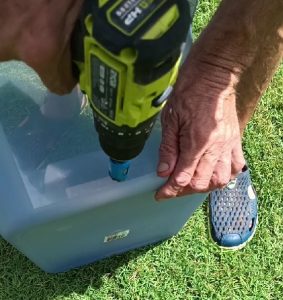
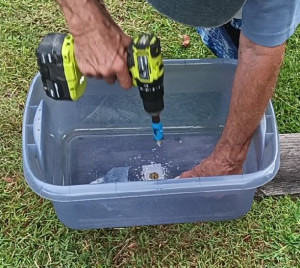
Drill a hole as low as possible in the centre of the box

Clean the hole to make a good seal.

Insert the grommet

Apply a little ‘oral lubricant’ to the fitting

Note there is a small and large ridge, the small ridge goes into the rubber grommet

A little wriggle and a big push and she is in.


Fit the swivel tube assembly, make sure the swivel is rotating from the plastic pipe and not the grommet.


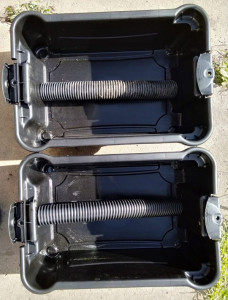
Cut a length of slotted ag pipe so it fits neatly into the base of the box.

Drill a large hole for the vertical filler pipe.

I used to just bend the pipe but this way you can see the water level in the box, this is important for irrigation scheduling.


[vdo id="a034f95340e1495b9af6435133c6eb16"]


We are going to have two filler pipes, one for water the other compost. I tried all ways of handling waste that could be used in a flat but the flies beat me so I went back to the old compost tube system.

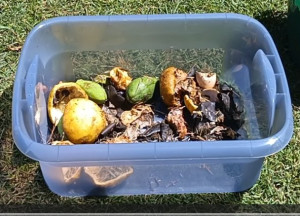
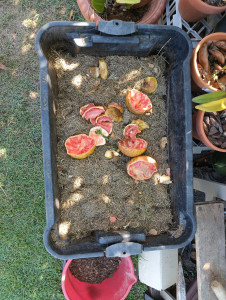
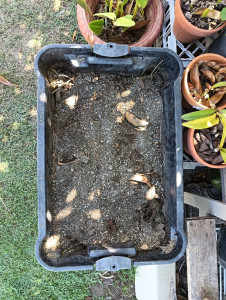
I put a layer of organic waste in the base, grass clippings are great, but use whatever you can lay your hands on.

Now I load the nutrient mix, this a combination of manure, rock dust and trace minerals.


[vdo id="47f3537f41f946838d61f66d0d3f63aa"]


Next job is to add Wickimix which is the growing medium where the plants will put down their roots. Wickimix is made by microbes converting dirt into living soil.

My aim is to encourage local growers to produce Wickimix for sale but in the mean time people can initially fill their boxes with commercial potting mix which will be converted into Wickimix by the microbes. More details in the articles on soils and inoculants.

The box is then seeded in the normal way but as the soil is full of nutrients seeding can be more dense than normal.

Initially I top water so the seeds germinate but later most of the water will be applied from below.


[vdo id="00c5705fd9314aa8bb81a2096b931bdc"]


The key to the Gbiota system is controlling the moisture level. If it is left full of water for any length of time harmful microbes will breed.

The swivel tube is used to drain the box. We call the liquid that drains out ‘soil blood’ as it does the same job as blood does for us, circulate nutrients and oxygen around our bodies.

If you look at soil blood under a microscope you see it is full of microscopic creatures.

As the soil blood drains out it suck fresh air into the soil but to ensure there is no stagnant water the box is left for a period after draining.

Organic waste is loaded into the compost tube and capped with Wickimix (or soil) and if needed worms then flooded with soil blood which pushes the nutrients into the base of the box.

Soil blood be applied to the plants as nutrients and microbes will be absorbed by the leaves.

We apply a fixed volume of soil blood at every irrigation typically 15% of the soil volume. We use a highly sophisticated device for this called on old milk bottle.

We are into recycling.

We control the amount of water input by varying the irrigation times. If I am at home I will drain shortly after irrigating but if I need to go away I can leave the draining until I return which increases the time between irritations.

Controlling the moisture and nutrients levels is the core of the Gbiota system, there are many articles on this website on this topic and I am always writing fresh articles.

You can always contact me at colin@gbiota.com

"I

Loading

Why we get fat

Survival


Survival

Colin Austin © 14 March2024 This document is published under the Creative Commons system which means that it can be copied and republished without further permissions but the author Colin Austin @ gbiota.com must be recognised.

Humans, the great survivors

Humans are the great survivors. We are the dominant species on Earth, spreading across the globe to every corner of the Earth that is vaguely habitable.

Now we are under threat, what could possibly be a threat to this great survivor species? To answer that we have to ask what makes us so good at surviving.

We are not naturally well equipped, we don’t have big teeth or claws like a tiger, we cannot run fast like an antelope and we don’t even have the reaction time of a fly.

Yet I can walk down Bundaberg main street, I am not attacked by a tiger but I could easily be killed by another human being. Not with a knife in some desperate attack but by the driver of a car, not intentionally but either me or the driver not paying attention.

The danger of the unintended error.

That is the big threat, humans just not bothering to pay attention, killing each other or even the entire species.

And what is this great threat that will kill us? Not the atomic bomb, not some local conflict spreading from Ukraine or Gaza to World War 3 but something as simple as friendly as food.

But first, why have we been so good at the survival game?

What makes humans so good at surviving?

Intelligence and cooperation.

All creatures have some form of control system so they search for food, and run away from danger.

But humans have an intelligent control system, far superior to any animal. It regulates every action in our bodies, it has sensors throughout the body that receive information, either by chemicals or electrical signals, processes this information, just like a computer processes information, then sends out action signals.

Air

We need air to breathe, if we are short of oxygen our bodies sense this and send out signals telling our lungs to breathe faster and our heart beats faster to distribute the oxygen.

Our immune system

Every time we breathe we suck in air which will certainly contain some microscopic life that could kill us, yet this is examined by our immune system, and the results reported to our intelligent control system which then decides whether this is a threat, and if the answer is yes, sends signals to our immune system saying ‘deal with this one’.

This happens so automatically we don’t even think about it, but it does not just happen, it is the result of our intelligent control system working so well that we are just not aware of it.

Temperature

This happens with every bodily function, think about temperature.

Our bodies only work over a very limited temperature range, if it gets to cold our intelligent control system sends our signals to shut down the blood flow to our extremities so we lose less heat, our fingers may turn white and we will burn more energy to create heat, shivering and flapping our arms about.

Food

Now think about food, in our affluent Western lifestyle we have breakfast, lunch, and dinner with maybe snacks in between. We don’t think about it much, we just do it, largely out of habit.

But we have two levels of thought, the conscious one saying choosing steak or fish or even vegetarian but then there is the subconscious thinking by our intelligent control system - which is much more intent.

Let us have a look at what is going on under the bonnet with an intelligent control system.

Self-learning

As soon as we are born our gut-brain starts going through a learning process.

We hear a lot these days about artificial intelligence which needs to go through a process of learning and when it is adequately trained can make quite remarkable predictions. When I have finished writing this I will run it through an AI program to check for all those typos and grammatical errors everyone makes.

But it won’t check for any illogical thinking, it takes a human brain to do that.

Human bodies have been using a much superior form of artificial intelligence for many thousands of years.

How our intelligent control system works

It is amazing that the most important system in our bodies, our intelligent control system does not have a proper name, the nearest is homeostasis but that does not describe what it does, so I call it simply our gut-brain.

Our gut-brain works just like AI Artificial Intelligence, except it has real intelligence from our head brain.

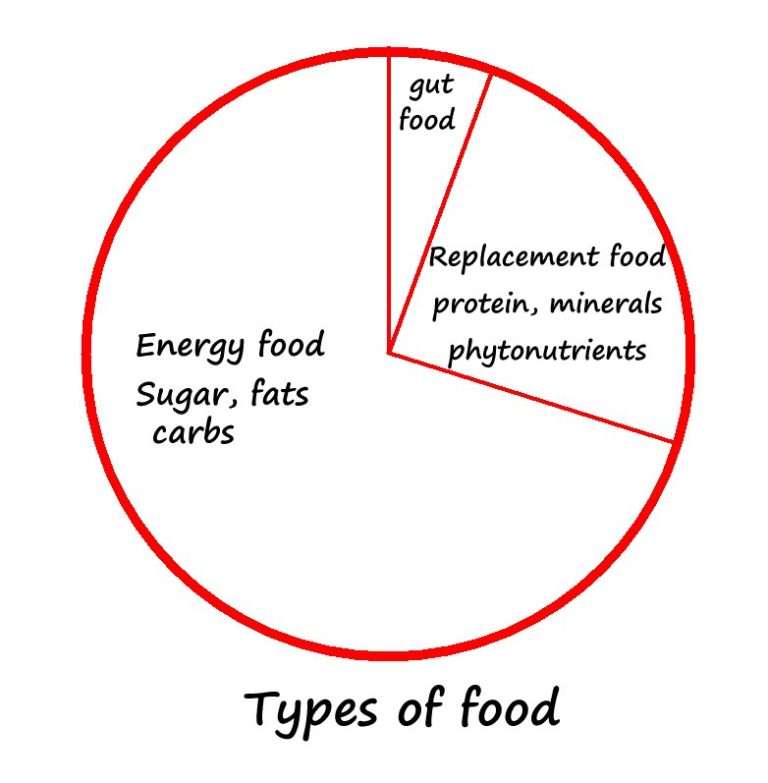
Whenever we eat our gut-brain learns. It understands that we need food to provide energy, food to grow or replace our body parts as they age, and food for our gut-brain itself.

If we are short of a particular essential nutrient, some phytonutrient or mineral like zinc, and we eat a food that provides that missing nutrient our gut- brain learns and remembers this, so when we are short of that specific nutrient again, it sends us signals making us crave that particular food.

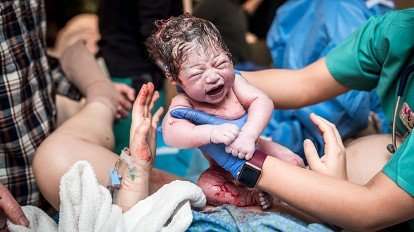
Baby

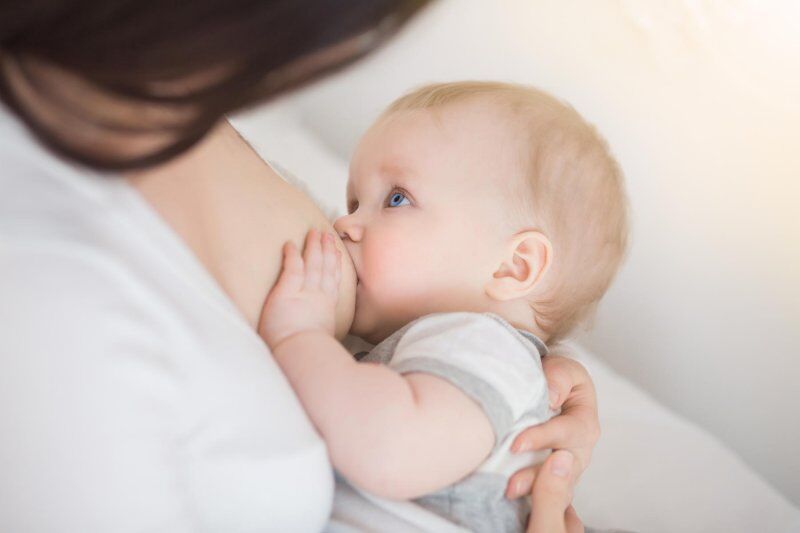
Baby will start to hunt around to find something to suck on, hopefully find mum’s breast and have a good feed.

You may say that is just instinct, but it is not. We come pre-prepared with genes from our Mum and Dad which forms part of our intelligent control system, and that part says suck.

If sucking feels good, then the baby will continue sucking.

But breast milk, in addition to containing babies food also contains another mystery substance. That mystery has now been solved as it is food for the baby’s gut biota.

The baby acquires microbes from mum during birth (hopefully) but microbes have a short life so it was essential to develop a system of feeding them.

Solution - put microbe food into breast milk.

Designing the gut

If someone were designing the human body from scratch they would quickly see the need for a gut, with microbes to process the food to make it bio-available to the body.

It is not obvious, at first, that the gut should become a second brain. But with a little thought, the benefits are obvious. The gut is where we receive our food, which until very recently was contaminated with many harmful microbes - germs.

So making the gut a centre for the immune system makes perfect sense. But the immune system needs an intelligent controller, at a minimum to decide which microbes are beneficial and which are harmful and need dealing with.

Intelligent control systems are common in nature, bees, ants, and slime moulds which have intelligent control systems, existed long before humans came on the scene. They are based on the ability of microbes to communicate with each other to form an intelligent system.

The microbes already existed in our food so it was natural that we should develop a second intelligence system in our gut.

We were lucky that the designer, in this case, nature, linked the two intelligence centres together so they worked as an integrated system.

How can nature be so clever?

Our intelligent control system is one of the wonders of the world so how did it develop?

It did take a long time, something like a billion years but time is not enough - it needed something else.

I am in the innovation business so I have to learn how innovation happens. It is not the nice logical process that is normally projected. See Innovation.

If I wanted to give it a posh name I would try something like beneficial variable randomised events but I am not into posh names so I better name would better names would be ‘stuff up’ or ‘mistakes’.

Why we need sex

This is how nature develops such amazing systems and why we need sex.

There are a few creatures that reproduce without sex, stick insects are a common example. The offspring are just like their parents and their offspring will be just like them. That is the way it is and will go on for maybe millions of years.

To develop and change we need variability. Look at all the couples you know, some will be very similar - same ethnicity, social background, and physical characteristics while others will be very different, particularly of different races and colour. Why? Because it is natural to pick a partner that will bring diversity to the offspring.

Darwin may have been a great scientist but his ideas show how totally cruel natural selection is. Create diversity and some offspring will not be successful and die out, which is cruel, while others will evolve into future generations which are substantially different.

The species will survive

I choose the words in my opening remarks carefully. I very much doubt that humans will become extinct due to some unintended error. A nuclear war could be touch and go, but the amount of energy released by the meteor crashing into the earth that led to the extinction of the dinosaurs was much greater than our atomic bombs.

But some creatures survived and evolved into a new spectrum of creatures - including us. When I find the keys to my time machine, which being old I have misplaced, I will zap forward a million years and expect to find some version of humanity existing.

Some will survive even the worst disaster and breed to create new versions of the human species.

What I worry about is humans committing some unintended error which results in my great-grandkids being exterminated.

Unfortunately, it is not a question of if we commit an unintended error - the combination of climate change and destruction of the microbiology in our top soils will lead to widespread deaths of a significant proportion of the population.

Why I am so sure?

Because it is happening right now. When I was a kid people died predominately from infectious diseases. The figures are startling, three out of five babies born would die from an infectious disease before the age of 5, and another would die in the teens but admittedly not primarily from infection. Young boys do daft things and kill themselves.

Now we have made major improvements in the technology of combating infectious diseases.

In some areas the Black Death wiped out half the population, we had absolutely no defence against it other than primitive isolation.

Covid, bad as it was (or is), did not wipe out people on anywhere near that scale.

We are now suffering from an epidemic of chronic diseases, the scale is vast. In some areas two-thirds of the population are overweight, 8 million people a year have a limb amputated from diabetes - the fastest growing disease of all, heart attacks are the most common cause of death, dementia is rampant.

What is the underlying cause?

The underlying cause is simply that we changed our food system so we now no longer feed our gut brain. This is not some devious plot, as thought by the conspiracy theorist, but a simple unintended error with disastrous consequences.

When I was a kid we had little protection against infectious diseases. There were little in the way of vaccines and no available antibiotics. If one kid came down with chicken pox, mumps or measles there would be a party and mum would take us to the party so we caught whatever was going around.

We all knew about germs and anything to avoid germs was automatically good.

Diabetes and other chronic diseases, existed but were rare, certainly not an issue in decision-making.

Swapping infectious diseases for chronic diseases.

Under these conditions producing food that was germ-free, and probably cheaper was considered an improvement. In any case, there was no technology available for killing the harmful microbes without killing the beneficial ones.

So we moved from a people getting sick and dying from infectious diseases to one where people got sick and died from chronic diseases.

It may be one of the worst decisions that mankind has made but it was certainly an unintended error.

But if it man made then we can fix it.

If we get fat and sick it is not simply because we eat too much, it is because we are not feeding our gut brain the right food so it tells us to eat too much, then we get fat and sick.

We just have to learn how to grow gut-brain food with the beneficial microbes but without the harmful microbes.

Now we have defined the problem it has been relatively easy to solve.

The two-stage fix - first information

Before we can make physical changes there must be wide-spread public education about the importance of the gut-brain, how it works, and that we need to feed it.

Modify our diet

We don’t need to make massive changes to our diet, the bulk of the food we eat is simply burned off as energy food and our current food system does an effective job of supplying energy food.

We do need to start eating gut-brain food. That is not difficult - it simply means breeding beneficial microbes in organic waste, adding essential minerals, and growing plants that are eaten fresh.

We just need to create the conditions where the beneficial microbes out compete and out breed the harmful microbes (see Rethinking food and Diabetes)

Fresh is an issue. The beneficial microbes have a short life and die within a short period after picking. You often hear how much tastier food that has just been picked is. That is not some fluke, the beneficial microbes are alive and well.

People with a garden can readily grow gut-brain food, with a little instruction.

But nowadays the majority of people live in apartments or large houses with small blocks so there is no real space for growing.

That is why I developed the Gbiota box system - so people living in an apartment with no growing experience could have fresh gut-brain food growing at home.

Colin colin@gbiota.com

Loading

Why we get fat

Map

I am busy working on this post which aims to direct readers to the most appropriate page

Last updated 15 March 2024 with list of all files and list of recent files about growing- at bottom of this post

The number of articles on this web has grown to over 260 and the number of videos to 135. This is so much information that it is overwhelming and difficult for readers to find the information they need.

I understand I need to start organising this information better by breaking it up into groups and subgroups.

I usually don’t touch a post after it has been written as people never know what has changed. This post Map is totally different, it is a dynamic post which I will probably be changing most days.

Creating sub-groups

The biggest issue seems to be that many members have decided they want to make Gbiota beds or boxes and are looking for instructions on how to make and manage them.

I already have a section of growing but this is still massive so I need to break this down into subgroups.

For example, there are three distinct categories of growers.

- home growers with a garden who want to make both Gbiota beds and boxes

- people living in an apartment who just want to make boxes and recycle all their waste to make Wickimix (Gbiota soil)

- people living in an apartment who just want to buy a box already planted and just need to know about watering

- growers who create Wickimix and boxes to supply to apartment dwellers

All of these groups need to know about how to water Gbiota beds and boxes and the principles are the same for all groups. They all need to know about avoiding the soil blood (water full of nutrients and microbes) becoming stagnant and going putrid and how flood and drain breathes the soil.

Some members would like to know about how water moves through the soil and want to learn more about wicking, osmosis, tensile strength of water, diurnal cycles etc. while others are just not interested and don’t want to be bamboozled by a lot of unnecessary information.

This meant that the Growing section can be broken down into at least six separate sections.

Reorganising all this information is my current project which will take some time.

Important

But you can help me work out these subgroups. All you have to do is email me at colin@gbiota.com describe your situation so I can see if you fit into one of the above categories and what you want to know. Then I can refer you to the appropriate posts (or write a new one if needed).

This helps both of us, it helps me to work out what categories I need and you get the links to the appropriate articles.

Oh if your name happens to be Elon Musk I have no ideas about setting up Gbiota boxes on Mars.

Looking forward to hearing from you.

In the mean time you may like to look at some of these posts.

Colin

List of all files - latest first

https://www.gbiota.com/2024/03/14/survival-2/

https://www.gbiota.com/2024/03/12/map/

https://www.gbiota.com/2024/03/11/newsletter-11-march-2024/

https://www.gbiota.com/2024/03/06/letter-to-obesity-centre/

https://www.gbiota.com/2024/03/03/innovation-and-managing-ignorance/

https://www.gbiota.com/2024/02/28/learning-plan/

https://www.gbiota.com/2024/02/26/rethinking-food-and-diabetes/

https://www.gbiota.com/2024/02/19/support-our-gut-health-movement/

https://www.gbiota.com/2024/02/19/diabetes-start-with-the-soil/

https://www.gbiota.com/2024/02/14/the-gbiota-project/

https://www.gbiota.com/2024/02/05/growers-and-gut-biota/

https://www.gbiota.com/2024/01/31/recycle-to-survive/

https://www.gbiota.com/2024/01/28/learning-experience/

https://www.gbiota.com/2024/01/26/become-a-gbiota-supplier/

https://www.gbiota.com/2024/01/21/help-wanted-with-digital-marketing/

https://www.gbiota.com/2024/01/19/creating-change/

https://www.gbiota.com/2024/01/18/prevention-better-than-cure/

https://www.gbiota.com/2024/01/18/health-starts-in-the-soil-5/

https://www.gbiota.com/2024/01/18/support-plastic-sheeting/

https://www.gbiota.com/2024/01/18/support/

https://www.gbiota.com/2024/01/18/prevention-better-than-cure/

https://www.gbiota.com/2024/01/18/health-starts-in-the-soil-5/

https://www.gbiota.com/2024/01/18/support-plastic-sheeting/

https://www.gbiota.com/2024/01/17/solving-the-food-crisis/

https://www.gbiota.com/2024/01/13/the-best-pro-biotic-ever/

https://www.gbiota.com/2024/01/09/11396/ (Food matters)

https://www.gbiota.com/2024/01/06/hello/

https://www.gbiota.com/2024/01/05/gbiota-101/

https://www.gbiota.com/2024/01/03/gbiota-overview-2024/

https://www.gbiota.com/2023/12/27/try-it-2/

https://www.gbiota.com/2023/12/27/true-brain/

https://www.gbiota.com/2023/12/27/fire-and-food/

https://www.gbiota.com/2023/12/27/conflict-and-aggression/

https://www.gbiota.com/2023/12/27/modern-epidemic/

https://www.gbiota.com/2023/12/27/help-me-help-you/

https://www.gbiota.com/2023/12/26/fire-water-and-technology/

https://www.gbiota.com/2023/12/25/fat-and-sick/

https://www.gbiota.com/2023/12/20/health-starts-in-the-soil-4/

https://www.gbiota.com/2023/12/11/try-it/

https://www.gbiota.com/2023/12/08/inoculants/

https://www.gbiota.com/2023/12/06/what-science-tells-us/

https://www.gbiota.com/2023/11/20/gbiota-soil/

https://www.gbiota.com/2023/11/17/about-gbiota-2/

https://www.gbiota.com/2023/11/16/tribox-story/

https://www.gbiota.com/2023/11/15/survival/

https://www.gbiota.com/2023/11/12/gbiota-meaning/

https://www.gbiota.com/2023/11/11/invisible-extinction/

https://www.gbiota.com/2023/11/08/gbiota-intro/

https://www.gbiota.com/2023/10/29/gbiota-biobox-practise/

https://www.gbiota.com/2023/10/29/gbiota-biobox-theory/

https://www.gbiota.com/2023/10/03/what-plants-to-grow/

https://www.gbiota.com/2023/09/26/why-we-need-to-change/

https://www.gbiota.com/2023/09/22/our-choice/

https://www.gbiota.com/2023/09/20/tribox-how-to/

https://www.gbiota.com/2023/09/18/gbiota-tri-box-intro/

https://www.gbiota.com/2023/09/08/future-of-food/

https://www.gbiota.com/2023/08/24/gbiota-easy-2/

https://www.gbiota.com/2023/08/21/good-men/

https://www.gbiota.com/2023/08/17/homeostasis/

https://www.gbiota.com/2023/08/17/gbiota-food-for-health/

https://www.gbiota.com/2023/08/10/how-to-gpots/

https://www.gbiota.com/2023/07/25/diabetes-project/

https://www.gbiota.com/2023/07/25/about-us/

https://www.gbiota.com/2023/07/13/missinformation/

https://www.gbiota.com/2023/07/13/diabetes-gut-food-project/

https://www.gbiota.com/2023/07/12/growing-gut-food-2/

https://www.gbiota.com/2023/06/30/gut-and-diabetes/

https://www.gbiota.com/2023/06/30/qldgov/

https://www.gbiota.com/2023/06/19/newsletter-19th-june-23/

https://www.gbiota.com/2024/01/16/bill-bryson/

https://www.gbiota.com/2023/06/14/gbiota-movement-3/

https://www.gbiota.com/2023/06/08/fat-wrong/

https://www.gbiota.com/2023/06/05/food-waste/

https://www.gbiota.com/2023/06/02/people-over-profits/

https://www.gbiota.com/2023/06/02/real-and-fantasy/

https://www.gbiota.com/2023/05/18/invite-to-medical-research/

https://www.gbiota.com/2023/05/15/lamborghini-and-our-gut/

https://www.gbiota.com/2023/05/04/the-wickimix-story/

https://www.gbiota.com/2023/04/24/feed-your-brains/

https://www.gbiota.com/2023/04/17/unks-and-ununks/

https://www.gbiota.com/2023/04/09/sues-story/

https://www.gbiota.com/2023/04/09/upgraded-beds-introduction/

https://www.gbiota.com/2023/04/04/upgraded-beds/

https://www.gbiota.com/2023/04/02/new-posts/

https://www.gbiota.com/2023/04/02/welcome/

https://www.gbiota.com/2023/04/02/food-for-gut-health/

https://www.gbiota.com/2023/03/28/the-food-crisis/

https://www.gbiota.com/2023/03/21/chat-with-george/

https://www.gbiota.com/2023/03/19/george/

https://www.gbiota.com/2023/03/13/marys-mini/

https://www.gbiota.com/2023/03/08/the-side-hustle/

https://www.gbiota.com/2023/03/08/it-worked/

https://www.gbiota.com/2023/03/08/frustration/

https://www.gbiota.com/2023/03/02/our-gut/

https://www.gbiota.com/2023/02/27/our-gut-brain-2/

https://www.gbiota.com/2023/02/13/what-is-the-gbiota-project/

https://www.gbiota.com/2023/02/13/what-is-it-all-about/

https://www.gbiota.com/2023/02/01/the-story-of-our-guts/

https://www.gbiota.com/2023/01/10/better-gut-health/

https://www.gbiota.com/2023/01/05/health-starts-in-the-soil-3/

https://www.gbiota.com/2022/12/15/gbiota-bed-update-4-dec-2022/

https://www.gbiota.com/2022/12/11/overview-2/

https://www.gbiota.com/2022/12/07/diabetes-trial/

https://www.gbiota.com/2022/11/14/health-span/

https://www.gbiota.com/2022/11/10/trench-beds/

https://www.gbiota.com/2022/11/02/gbiota-boxes-update/

https://www.gbiota.com/2022/11/01/wwwww/

https://www.gbiota.com/2022/10/31/the-plan/

https://www.gbiota.com/2022/10/24/food-and-floods/

https://www.gbiota.com/2022/10/24/crazy-world/

https://www.gbiota.com/2022/10/21/key-points/

https://www.gbiota.com/2022/10/17/no-dumb-donkeys/

https://www.gbiota.com/2022/10/14/soaker-beds/

https://www.gbiota.com/2022/10/12/in-grounds-beds/

https://www.gbiota.com/2022/10/10/food-for-health-3/

https://www.gbiota.com/2022/10/10/community-food-2/

https://www.gbiota.com/2022/10/05/welcome-to-worm-pooh/

https://www.gbiota.com/2022/10/05/how-gbiota-beds-work/

https://www.gbiota.com/2022/10/04/water/

https://www.gbiota.com/2022/10/03/food-and-the-gut-biome/

https://www.gbiota.com/2022/10/03/prologue/

https://www.gbiota.com/2022/08/22/health-starts-in-the-soil-2/

https://www.gbiota.com/2022/08/16/action-plan/

https://www.gbiota.com/2022/07/19/bit-of-a-mess/

https://www.gbiota.com/2022/07/16/community-growers/

https://www.gbiota.com/2022/07/13/meet-you/

https://www.gbiota.com/2022/07/06/bioboxes/

https://www.gbiota.com/2022/06/30/lettuce/

https://www.gbiota.com/2022/06/29/about-gbiota/

https://www.gbiota.com/2022/05/30/elowyn/

https://www.gbiota.com/2022/05/05/energy/

https://www.gbiota.com/2022/03/31/time-travel/

https://www.gbiota.com/2022/03/28/why-gbiota-boxes/

https://www.gbiota.com/2022/03/22/i-am-a-person-2/

https://www.gbiota.com/2022/03/21/bioboxes-basics/

https://www.gbiota.com/2022/03/16/the-paradigm-shift/

https://www.gbiota.com/2022/03/11/gut-health-4/

https://www.gbiota.com/2022/03/04/home4mar22/

https://www.gbiota.com/2022/01/17/local-gut-food/

https://www.gbiota.com/2021/12/06/get-real/

https://www.gbiota.com/2021/11/25/join-the-gbiota-club-2/

https://www.gbiota.com/2021/11/24/rethink-food/

https://www.gbiota.com/2021/11/19/community-food/

https://www.gbiota.com/2021/11/18/making-soil-in-gbiota-beds/

https://www.gbiota.com/2021/11/13/gut-health-3/

https://www.gbiota.com/2021/11/11/mother-bed/

https://www.gbiota.com/2021/11/08/action-plan-for-gut-health/

https://www.gbiota.com/2021/10/29/gbiota-movement-2/

https://www.gbiota.com/2021/10/27/header/

https://www.gbiota.com/2021/10/15/growing/

https://www.gbiota.com/2021/10/14/getting-started/

https://www.gbiota.com/2021/10/13/gbiota-club/

https://www.gbiota.com/2021/10/12/food/

https://www.gbiota.com/2021/10/08/alice/

https://www.gbiota.com/2021/10/03/ecobalance/

https://www.gbiota.com/2021/09/28/homesep21/

https://www.gbiota.com/2021/09/24/get-started/

https://www.gbiota.com/2021/09/22/gbiota-box-story/

https://www.gbiota.com/2021/09/13/opportunity/

https://www.gbiota.com/2021/09/07/introduction-to-gbiota/

https://www.gbiota.com/2021/09/06/gbiota-boxes/

https://www.gbiota.com/2021/08/27/immune/

https://www.gbiota.com/2021/08/24/delta/

https://www.gbiota.com/2021/08/10/updateaug21/

https://www.gbiota.com/2021/08/03/anthropocene/

https://www.gbiota.com/2021/07/10/overview/

https://www.gbiota.com/2021/07/05/gut-biology-sources/

https://www.gbiota.com/2021/07/05/index/

https://www.gbiota.com/2021/07/02/what-food-does/

https://www.gbiota.com/2021/07/02/food-and-innovation/

https://www.gbiota.com/2021/07/02/principles-of-gbiota-beds/

https://www.gbiota.com/2021/07/02/spreading-the-benefits-of-gbiota-beds/

https://www.gbiota.com/2021/06/21/changing-the-food-system/

https://www.gbiota.com/2021/06/14/community-supported-agriculture/

https://www.gbiota.com/2021/06/02/the-gbiota-story-continued/

https://www.gbiota.com/2021/06/02/making-soil/

https://www.gbiota.com/2021/05/26/the-wicking-gbiota-story/

https://www.gbiota.com/2021/05/11/food-and-becomng-adult/

https://www.gbiota.com/2021/05/05/greta-foodberg/

https://www.gbiota.com/2021/04/13/making-soil-101/

https://www.gbiota.com/2021/04/09/feed-your-gut-brain/

https://www.gbiota.com/2021/03/30/our-gut-brain/

https://www.gbiota.com/2021/03/24/adapting-to-the-food-crisis/

https://www.gbiota.com/2021/03/21/school-garden-project/

https://www.gbiota.com/2021/03/10/health-and-life-span/

https://www.gbiota.com/2021/01/23/videos-2/

https://www.gbiota.com/2020/12/15/aquaponics-by-igor/

https://www.gbiota.com/2020/11/03/making-a-gbiota-bed/

https://www.gbiota.com/2020/10/30/the-essence/

https://www.gbiota.com/2020/10/29/news-flash-30-oct-20/

https://www.gbiota.com/2020/09/26/growing-gut-food/

https://www.gbiota.com/2020/09/10/gbiota-club-how-it-works/

https://www.gbiota.com/2020/09/08/gbiota-easy/

https://www.gbiota.com/2020/09/04/dis-enabling/

https://www.gbiota.com/2020/08/10/eliminating-covid-19/

https://www.gbiota.com/2020/08/07/1848/

https://www.gbiota.com/2020/08/04/intelligent-control-2/

https://www.gbiota.com/2020/07/29/choosing-a-gbiota-smoothie/

https://www.gbiota.com/2020/07/28/sugar-blockers/

https://www.gbiota.com/2020/07/27/alernative-food/

https://www.gbiota.com/2020/07/23/creating-and-alternative-food-system/

https://www.gbiota.com/2020/07/12/history-of-food/

https://www.gbiota.com/2020/07/06/blogs/

https://www.gbiota.com/2020/07/05/nundah-cafe/

https://www.gbiota.com/2020/06/23/wake-up-call/

https://www.gbiota.com/2020/06/01/gbiota-club-introduction/

https://www.gbiota.com/2020/05/20/gbiota-club-home/

https://www.gbiota.com/2020/05/18/about-the-gbiota-club/

https://www.gbiota.com/2020/04/24/home24apr20/

https://www.gbiota.com/2020/04/24/join-the-gbiota-club/

https://www.gbiota.com/2020/04/21/making-soil-work/

https://www.gbiota.com/2020/04/15/qa15april20/

https://www.gbiota.com/2020/04/01/q-and-a/

https://www.gbiota.com/2020/03/30/germination/

https://www.gbiota.com/2020/03/29/quick-gbiota-beds/

https://www.gbiota.com/2020/03/28/fresh-food-revolution-2/

https://www.gbiota.com/2020/03/18/corona-virus-2/

https://www.gbiota.com/2020/03/17/pioneer/

https://www.gbiota.com/2020/03/17/mission-2/

https://www.gbiota.com/2020/03/17/gbiota-movement/

https://www.gbiota.com/2020/03/12/corona-virus/

https://www.gbiota.com/2020/02/28/i-am-a-person/

https://www.gbiota.com/2020/02/28/gbiota-for-gut-health/

https://www.gbiota.com/2020/02/27/power-of-the-cluster/

https://www.gbiota.com/2020/02/27/soil-destruction/

https://www.gbiota.com/2020/02/27/tipping/

https://www.gbiota.com/2020/02/27/aunti-maud/

https://www.gbiota.com/2020/02/27/micro-farms/
https://www.gbiota.com/2020/02/27/health-and-diabetes/

https://www.gbiota.com/2020/02/27/gut-health-2/

https://www.gbiota.com/2020/02/27/health-starts-in-the-soil/

https://www.gbiota.com/2020/02/27/our-intelligent-control/

https://www.gbiota.com/2020/02/27/xiulans-story/

https://www.gbiota.com/2020/02/27/mission/

https://www.gbiota.com/2020/02/27/truth/

https://www.gbiota.com/2020/02/27/guts/

https://www.gbiota.com/2020/02/27/paradigm/

https://www.gbiota.com/2020/02/27/gbiota-beds-manual/

https://www.gbiota.com/2020/02/27/food-for-health-2/

https://www.gbiota.com/2020/02/27/understanding-food/

https://www.gbiota.com/2020/02/27/food-basics/

https://www.gbiota.com/2020/02/27/intelligent-control/

https://www.gbiota.com/2020/02/27/food-for-health/

https://www.gbiota.com/2020/02/27/the-information-age-2/

https://www.gbiota.com/2020/02/27/technology/

https://www.gbiota.com/2020/02/27/blue-zones/

https://www.gbiota.com/2020/02/27/gbiota-green-smoothy/

https://www.gbiota.com/2020/02/27/making-the-change/

https://www.gbiota.com/2020/02/26/why-we-need-the-gbiota-club/

https://www.gbiota.com/2020/02/26/gbiota-food-for-gut-health/

https://www.gbiota.com/2020/02/26/continuous-monitoring/

https://www.gbiota.com/2020/02/26/alternative-food/

https://www.gbiota.com/2020/02/03/rock-dust/

https://www.gbiota.com/2020/02/02/gbiota-health-starts-in-the-soil/

https://www.gbiota.com/2020/01/31/gut-health/

https://www.gbiota.com/2020/01/28/gut-biology/

https://www.gbiota.com/2020/01/27/hello-world/

Loading

Why we get fat

Newsletter 11 March 2024


Gbiota Newsletter

11 March 2024

Why start a Newsletter

I have many friendly followers whom I chat with regularly. They know me well enough to be frank and they say

“Colin, we know you are trying to persuade people of the benefits of eating healthy food full of living beneficial microbes, but we already know that, and what we want is more detailed information on how to set up Gbiota beds and boxes.

You have a lot of good stuff on your web but there are so many articles that it is almost impossible to find what we are looking for and things keep on changing.”

I know they are dead right, but I spend much of my time experimenting trying to find better ways.

Anyone with experience in experimentation knows that most experiments fail but occasionally there is one that really works.

That happens to me all the time, but I cannot write up the full documentation until I have tested that it really does work so I have to go back and retest, maybe several times until I am sure I can tell people this really works.

So I thought I would write a Newsletter which is really a lab diary that tell people what I did today and see if this is popular with my readers.

Here is my first write up and I look forward to the feedback.

Types of users

My largest group of users are home gardeners, they have an area where they can set up Gbiota beds to create the Wickimix soil which is really the heart of the Gbiota system.

This group does not have any real problems, they are typically experienced gardeners, and if they have any issues they can email or ring me or set up a video chat where I can talk them through their problem.

That seems to work pretty well.

The second largest group are people who live in an apartment, don’t have much gardening experience, and seem a bit reluctant to ask for help.

The third group is community or commercial growers who have plenty of expertise and can easily make Gbiota beds to supply either Gbiota box or Wickimix.

I want to expand this group and they could help the apartment dwellers. But to do that I have to increase the number of apartment users.

Today’s experiments

Today I am working on how to make Gbiota better for people living in an apartment.

Boxes OK

There does not seem to be much of a problem with making the boxes, they are just a box you can buy from a hardware store, they do need a few holes to be drilled but that does not appear to be an issue.

Growing plants OK

Neither does the actual growing of the plants seem to be a problem, they are probably already growing house plants anyway.

The big issue is creating the Wickimix. The main input is organic waste - in an apartment it is typically waste food.

Nutrients OK

But Wickimix needs other ingredients. It needs some soil as most of the action is on the surface of the soil particles, clay is really good as the fine particles have a huge surface area.

But it also needs a source of nitrogen, gardeners may have access to fresh chicken manure which is the best as it is full of microbes but it is possible to buy processed chicken manure which is nice and clean but has lost a lot of the microbes.

Next it needs minerals, a home grower may buy in bulk and store but an apartment dweller can still buy packets, and supplements like blood and bone can also be readily purchased.

There does not seem much alternative to buying these from the store, mixing them all up, and putting them into a box that can be easily stored so no problem.

In addition, of course, we need worms which are an integral part of the Gbiota system.

Pongy food waste - not OK

The real problem for the apartment dweller is how to handle the pongy food waste.

With a garden this is no problem, a couple of compost bins or rotating bins work fine but having compost bins in an apartment is very not OK.

The smell problem can be solved by sealed containers but those pesky flies still seem able to smell out a delicious fly meal - at least in Sunny Queensland where I live.

Two experiments

So I have two experiments.

In the first, I have two boxes. One contains the nutrients mix the other is for the waste. When I have some waste I simply put it into the second box and cover it with the nutrient and worm mix from the first box.

In the second experiment, I go back to an old system, the compost tube.

This is a pipe (about 100mm) that goes right down to the base of the box. This gives two input pipes, one for the water (or more correctly soil blood) while the second is for the organic waste.

When I put any organic waste into the compost tube, I cover with the nutrient mix and also flush with water. This takes any decomposed material to the bottom of the box where the friendly worms kindly distribute it throughout the box.

Easy access

If I can get enough apartment dwellers to start eating food full of beneficial microbes this will encourage commercial growers to start producing Wickimix and Gbiota boxes which will make access available to many more of the population and cut down the number of people having a foot amputated from diabetes, which is what Gbiota is all about.

Wait and see

Now it is just a case of wait and see. From the viewpoint of the Gbiota system they will both work fine in breeding the beneficial microbes, the question is which is the most user-friendly for an apartment dweller.

Let me know

I now want to find out if this style of chatty newsletter works for my reader base so please drop me an email and let me know what you think.

Colin

Loading

Why we get fat

Innovation and managing ignorance

What they said

I recently circulated ‘Rethinking food and diabetes’ to those organisations around the world, with responsibility for managing diabetes in their various countries.

This is my reponse to what they said.

This describes a simple and inexpensive way that people can breed, in organic waste, the beneficial microbes which power our control system which regulates our bodies, then grow plants which they eat fresh to feed their gut-brain.

As eight million people a year have a limb amputated from diabetes this has major social benefit.

Those that bothered to reply said that this has not gone through the rigorous scientific evaluation and suggested I should set up a global trial to prove the technology actually works.

This would cost millions of dollars and there is simply not the money in showing people how to recycle their organic waste to breed these beneficial microbes and grow a few plants on their back patio.

So that will just not happen.

So I wrote a second article, ‘Innovations and managing ignorance’ giving case histories of how innovative technology achieves widespread adoption in the real world.

The punch line was that there was no need for them to endorse the technology, all they had to do was make diabetes sufferers aware that this option existed and let them decide.

We know that this technology is effective in some cases. But they are right, we have no idea whether 5% or 95% of amputations could be avoided - but even 5% of 8 million is 400,000 - that is a lot of legs not amputated.

But the issue of how we manage innovation could be critical to the survival of our species, if we continue to develop technologies on the basis of profits rather than public benefit we could wreck what keeps us alive.

I am not just a lead innovator, I am one of those woke, left of centre greenies who put the community benefit ahead of profits, and proud to argue the case.

Read on and join me.


.

Innovation and managing ignorance

Rethinking food and diabetes

amputationI recently wrote an article rethinking food and diabetes that described a simple and inexpensive technology which could dramatically reduce the eight million amputations that occur every year.

You may think that this would be met with great enthusiasm by both diabetics themselves, those professionals responsible for managing diabetes, and the Governments who spend trillions of dollars in their health care budgets on diabetes.

The lead balloon

labmeatThat is not what happened, it can only be described as a lead balloon - but why?

As our society depends on innovation to solve many of the problems modern civilised society faces, this is a question that needs answering.

There is a basic misconception about the process of innovation with the model of some scientist working away in the lab, coming up with some discovery which is then commercialised and adopted for the benefit of the community.

I am a successful innovator, I was recognised by the Institute of Engineers as one of the countries leading innovators and I can tell you that is just not the way innovations normally occur.

The nature of innovation

Suck is and see

kid on bikeTake something as simple as a bicycle. Was the bike invented because some enterprising applied mathematician studied the theory of gyroscopic couples and the self-centering action of the offset in the forks and so invented the bicycle.

It is not at all instinctive that a two wheel bicycle could be made a stable means of transport, but it was discovered by people tinkering around with no understanding whatever of gyroscopic couples - that came later when it was found that the bicycle was something that was really practical

Was steam power, still the dominant source of power, developed because Carnot developed the theory of thermodynamics, and the Carnot cycle which explains how steam power actually works, which led to the development of the steam engine?

No - a few Englishmen like James Watt were playing around with steam power which was proving incredibly effective. The French government, worried, as ever, that those pesky English were getting ahead, paid the University of Paris, where Sadi Carnot was a professor to study thermodynamic theory.

Look at most of the innovations that we take for granted and they started off by some cantankerous person defying conventional thinking, showing that something both worked and was useful.

Then, after it had been shown to work and be useful, the two key tests was the scientific method applied to develop the underlying science which typically led to major improvements.

From the lab

Of course, there are many innovations that do originate in the lab, WiFi, the semi-conductor, and penicillin all came from fundamental research but were accidental discoveries that were applied in totally different fields.

Swapping fields is a feature of innovations and does involve risk.

Innovation involves risk

There is no better example than Barry Marshal and his work on H Pylori where he put his life at risk to solve a serious illness.

Good on you Barry - nice to know we have not all been turned into dumb donkeys.

The dreaded Silos

The dreaded Silos are one of the great obstacles to innovation - may be essential for fundamental research but deadly for the process of applied science and innovation.

Take my participation in Diabetes. I was a pioneer in computation fluid flow and was regarded as an expert in that specialise field which has nothing to do with diabetes.

But when I made a career change to study Ecology, an area where I have had a lifelong interest but no formal qualifications.

By chance, my background in fluid flow turned out to be highly valuable in my development of the Wicking bed which enabled plants to be grown with minimal water.

Still, nothing to do with diabetes.

But it is well known that wet conditions benefit the development of infectious diseases. Just read the story of building the Panama Canal where a major problem was that the workers died at such a high rate from infections in the hot and wet conditions.

Still, nothing to do with diabetes.


The power of serendipity

But it turned out that the technology of growing plants in moist (rather than wet) conditions, favours the growth of beneficial microbes rather than harmful pathogens.

This is highly relevant in the battle against diabetes.

Our built-in intelligent control system

My innovation to reduce the number of people having their legs chopped off is based on a simple observation that the body has an inbuilt intelligence that regulates what and how much we eat and where and how much fat we store.

This is not a hypothesis - this is an observation of what happens in the real world.

This is a very simple observation. If I go out into my garden and work away and sweat, as happens in Queensland, I develop a craving for something salty. This is just a fact.

But what is going on here? I sweat and lose salts from my body. Somehow my body senses this. I don’t know the mechanism that tells my body that it is lacking in salts but there is no doubt that it does.

Our intelligent control system learns

But, and here comes the punch line, my body, or rather my intelligent control system has learned over time that if I eat certain foods or drinks I replace these salts.

Now just slow down and think about this, what we see playing out in the real world is a natural example of what we see in artificial intelligence. My intelligent control system has learned, by observation and deduction, that certain foods satisfy my body.

It then sends out signals so I have this craving to eat (or drink) specific foods.

We see this demonstrated over and over again, starve people, like the Dutch in the war, and when food becomes available they put on large amounts of fat.

We see this in people who try and lose weight by inappropriate diets.

There is no question that our bodies come equipped with a natural intelligent control system that regulates our bodies.

This is just beyond argument even though we have no idea how it works.

We have no idea how it works

But the problem is we have no idea how it works. In my younger days, I used to write sophisticated software, solving partial differential equations and writing self-learning software. I could be described in Australian slang as a gun coder.

But, and here is the crunch, I, and no one else, have any idea how this intelligent code works. It is just too sophisticated. Maybe in a few decades some bright researcher will uncover the mystery but, for now, we simply have no idea.

Act or wait?

So we have two options, we can just wait for a few decades until this mystery is solved.

But just do a bit of simple maths - at eight million amputations per year for a couple of decades that is 160,000,000 possibly unnecessary amputations.

Pure and applied science

Or we can recall one of my favourite quotations.

Science is the art of managing truth, engineering is the art of managing ignorance.

An engineer’s job is to apply science.

Every time an engineer designs and builds something there is a risk it will not work, airplanes fall out of the sky (remember the Comet), cars crash, and bridges and buildings fall down.

It is a question of managing risk. Engineers talk of safety factors, that is the one time engineers showed any expertise in public relations because they are not safety factors at all - they are ignorance factors because we do not have a complete understanding of what we do so we allow for that ignorance.


Reducing amputations

amputationSo let’s get back to my solution for reducing the number of amputation from diabetes.

The diabetes epidemic is man made. For all human existence, we have eaten gut-brain food. Then we changed our food system and the epidemic arrived.

A seven years old would say then let’s go back to eating gut-brain food.

Perhaps the simple logic of a seven year old is why it is so difficult to get this idea accepted.

Just grow gut-brain food

whyMy solution is simple, grow plants in living soil full of beneficial microbes and nutrients, and eat the plants while they are still fresh so they feed the gut-brain which forms our intelligent control system.

What are the benefits, risks, and negatives?

Well, the first we know for sure by observation - we will use a lot more toilet paper because eating fresh greens will open up our bowels. We can manage that by buying toilet rolls in large packs - not a big deal.

There is a risk that soil may be left stagnant for long periods of time which are the conditions which favour the growth of harmful microbes.

In the Gbiota system, we have a drainage system so the soil is drained regularly. About as easy to manage as putting on a seat belt.

Plants need to be picked and eaten fresh so it does mean growing at home which is marginally more work than throwing a bunch of aging veggies into a supermarket trolley. But they are cheaper so that is not a big deal.

So what are the benefits? A substantially reduced risk of having your foot chopped off and generally better management of your health.

Risk-adverse

The general view of the medical profession is that this is not a tried and proven method that has gone through the normal scientific verification process.

This is true but is looking at the problem from the point of view of proven science.

But the science will never become tested until a significant number of people try it and see if it works (which is easy - all diabetics measure their blood sugar levels and anyway the real test is does it stop food cravings which the person knows).

Just one

I, acting alone, will never make any impact on the number of amputations. I am just one person. What I have to do is convince one, yes just one, diabetic professional that the benefits far out way any risks.

They have the professional recognition to make things happen, but where is this single person? I cannot find him or her.

Have we all become so overwhelmed by the power of the digital revolution with its collection of data which it uses to manipulate our thoughts?

Have they won and turned the human species into dumb donkeys?

What I am asking for

So what am I asking from the medical profession?

Well, I am not asking for them to endorse this as an approach that has been subject to the normal rigorous testing - I am saying that they should be informing patients that there is this approach they can read about for free on my web gbiota.com and they should be the ones that decide whether the benefits out way the risks.

It is their foot that could be chopped off so they should decide - is it moral not to make this information to their patients?

This is also probably the only way of getting a large scale trial that will provide the scientific evidence to satisfy the requirements for scientific rigour.


Loading

Why we get fat

Learning plan


Solving the food crisis

gbiota boxLearn about the Gbiota technology of growing plants without toxic chemicals by creating the right conditions so the beneficial microbes out breed and out compete the harmful microbes - Eco balance.

.


.


Gbiota explained in my latest video

blaserSupport our gut health movement

Most people are just looking for some quick fix eg a pill when in reality changing the gut biota is quite a deal.


.


Solving the food crisis

gbiota boxLearn about the Gbiota technology of growing plants without toxic chemicals by creating the right conditions so the beneficial microbes out breed and out compete the harmful microbes - Eco balance. 


.

blaser‘Prevention better than cure’ looks at our gut brain.

.


man gardening ‘Health starts in the soil’ looks at the critical issue of soil biology

.

breast feeding

‘The worlds best pro-biotics’ looks at the important role the mums play

.


Wanted regenerative growers

There are three articles here about regenerative growers - just follow the links at the bottom of each post.


gbiotab

Navigate to

main menu -  videos -  blogs - references

Colin Austin  © Creative commons this document may be reproduced but the source should be acknowledged. Information may be used for private use but commercial use requires a license.

Loading

Why we get fat

Rethinking food and diabetes

.

Rethinking food and diabetes

Colin Austin © 26 February © 2024 This document is published under the Creative Commons system which means that it can be copied and republished without further permissions but the author Colin Austin @ gbiota.com must be recognised.

Preface

Gbiota.com is a site for concerned thinkers. Concerned about our food system which right now is making us fat and sick and with the combination of climate change and degradation of our soil, threatens the food supply for every person on this earth.

In these modern times most people die from some chronic disease, overweight, diabetes, heart attack, dementia etc.

If you want a sporting chance of living a long and healthy life then you need to understand how the way your food is grown affects your health.

If you think that you can spend thirty seconds looking at some web page then buy some pill and then live a long and healthy life then I suggest you check out those mushrooms you are eating because that is delusional.

You need to spend fifteen minutes reading how the way your food is grown affects you health then change what you eat - not that difficult but certainly not trivial either.

You can read Rethinking food and diabetes here, then either

- sign up as a grower which give you full access to this site, we don’t sell any product - we just show how to grow food

or

- sign up as a consumer and buy from a local Gbiota grower.

.

Part 1 Why we need gut-brain food

Grow your own gut-brain food if you want a long and healthy life

We have a gut-brain which regulates our bodies - we need to feed it gut-brain food.

If we don’t feed our gut-brain, which controls our appetite, we do not get the signals saying stop eating, instead we get food cravings.

Then we overeat and get fat and sick. We do not get fat and sick simply because we overeat - we get fat and sick because we are not feeding our gut brain so we get food cravings.

We need to eat plants, grown in living soil, full of beneficial microbes and nutrients - and eat fresh before the microbes die.

That is the way the real world works, no amount of virtual reality, computing power, artificial intelligence or manipulative promotion will change the way the real world works.

.

The Gbiota technology

The Gbiota technology creates living soil, with a broad spectrum of beneficial microbes and essential minerals to grow plants that we eat to give us a healthy gut-brain which regulates our bodies so we live a long and healthy life.

This is a major issue for humanity. The population has exploded and we have increased food production dramatically, but with energy food which is lacking gut- brain food and key nutrients. This is the underlying cause of the modern epidemic of chronic diseases.

We need to fix our food system, avoiding deficits and ensuring sustainability.

.

Diabetes strikes

Colin and XiulanMy wife, Xiulan is a medical doctor, a surgeon, but she became diabetic, her foot started to turn black and our medical advisers were saying they may need to amputate.

I am an engineer and innovator. I was selected as one of the countries leading innovators by the Australian Institute of Engineers.

I know that the key to being an innovator is to really understand the underlying reasons, keep on asking why, why, why until you get to the underlying reason.

Engineers Australia 1 Diabetes is caused by fat in the wrong place, at first in the muscles and then in the pancreas.

But why does our bodies create fat in the wrong place.

The answer is not because we eat too much but our gut-brain decides we need to store more fat.

colinaieeBut why does our gut-brain decide we need to store more fat.

Answer because it detects a deficiency in our diet, either some critical mineral or lack of microbes in our food.

The solution is simply to eat food, grown in living soil, teaming with beneficial microbes and nutrients.

But here comes the big snag. Growing plants in living soil is easy and inexpensive. Why is that a snag.

whyWe live in an age of hype and super sophistication. People just do not believe that a complex disease like Diabetes can be overcome in such a simple and inexpensive way.

This is really sad as every eight seconds some unfortunate person has a limb amputated and that could probably have been avoided.

I would very much like to change that, you can help by first reading my article Health - starts with the soil.

mrcreasoteThen actually create soil full of beneficial microbes and minerals, grow plants and eat them while they are really fresh before the microbes die.

You will know if it works and as you will feel satisfied and not craving food.

.


Our gut-brain

gut brain connectionOur gut-brain decides how much and where we store fat and then regulates our appetite - how much we want to eat.

We cannot be healthy without a working gut-brain.

We need to feed our gut-brain so it works properly.

Gut brain-food starts in the soil with the creatures of the soil, the worms, beetles, insects, larvae fungi and microbes eating organic matter breaking down rock particles to provide bio-available nutrients.

This is a natural process which has been going on for millions of years, until recently, when we adopted toxic chemical which kill of the beneficial soil life so we no longer feed out gut brain.

A poor gut brain is the underlying cause of the epidemic of modern diseases, overweight, diabetes, heart attacks and dementia.

There are far sighted growers who understand this well and adopt regenerative farming to create a healthy soil so the beneficial microbes enter the plants which we eat.

But that is not enough, the beneficial microbes breed incredibly fast but they also have a short life span. Within three days of harvesting they will be dead.

BioboxThe Gbiota system solves this by loading the regenerated soil into boxes so instead of buying already harvested plant people can buy boxes (which they swap over) with growing plants which they pick and eat at home while still genuinely fresh.


.


Avoid toxic chemicals

chemical farmingMany people are quite rightly worried about the toxic chemicals in their food.

A far bigger problem is that these toxic chemicals kill of the beneficial microbes in the soil which eventually form our gut brain which regulates our bodies.

A poor gut brain is the underlying cause of the epidemic of modern diseases, obesity, diabetes, heart attacks dementia etc.

The Gbiota system does not use toxic chemicals but creates the conditions where the beneficial microbes out breed and out compete the harmful microbes - Eco balance.

Many people grow plants in Gbiota boxes which is quite practical but some people simply do not have the time so they can buy a Gbiota box with plants already growing and ready to harvest.

This is important as the beneficial microbes have a short life of about three days. You can buy the very best organic produce but if you don’t eat shortly after harvest the benefits will be lost.

With a Gbiota box you have growing plants in your home ready to pick and eat.

We do not sell any food, we just teach people how to grow their own Gbiota food or help commercial growers set up viable businesses selling Gbiota food. 

To access this information you need to register.

Sign up to become a Gbiota member and we can show you how to grow Gbiota food or if you want to become a Gbiota grower we will help you set up a viable local business producing Gbiota boxes.

Either way you will need to sign up with a valid email address, we will not bug you but we do create a new post every week so you need to click on the notify me of new posts at the bottom of every post and sign in as a valid member.

Part 2 Creating a paradigm shift

Two hundred years ago the great Mathematicians like Newton and Leibniz knew how to solve coupled partial differential equations, but they could not do it - there was too much computation.

Fifty years I realised that, even with the primitive computer of that time that I could write software which would solve these equations. No great deal here, any competent mathematician could have done that.

colinaieeBut I realised that I could now calculate out how to direct flow away from easy to fill areas of a mould to the difficult areas to fill.

After a battle for acceptance this totally changed the way the  industry worked and I was recognised as one of the countries leading innovators

water,air,nutrientsToday I realised that our bodies have a highly sophisticated control system but it needs the right species of microbes to work effectively but that the wrong species make us sick or even kill us.

But I saw that I could use the principles of Ecosystems to control the conditions, particularly the moisture levels so the beneficial microbes would simply out breed the harmful ones.

I now believe that if this technology was widely adopted it could go a long way to resolving the epidemic of chronic diseases, particularly diabetes which results in a limb being amputated every eight seconds.

But I need help in getting this message out to the world.


He’s a nutter

We have known for at least twenty years that Diabetes gets serious when fat levels in the Pancreas increase preventing the Pancreas from making insulin.

All the experts say the solution is to go on a diet and reduce food input. This is so instinctively obvious, you are fat so eat less, and is the accepted view of the experts in the field so how could it possibly be wrong?

If some guy comes along, who is not a dietitian or even medically qualified and said ‘Look you have been trying that for twenty years, and it has not worked, Diabetes is the fastest growing of all diseases - it is time for a rethink and instead of eating less, eat more, maybe of a different type of food but still more’.

Your immediate reaction would be, quite justifiably, to say this guy is a nutter and move on.

Well, I am that nutter and I have been here before.

Looking at problems a different way

Some fifty years ago, when computers were driven by punched cards, I saw the potential that this would change the way engineers went about their business.

I was an early pioneer of computer- aided engineering.

I wrote up a software simulation of hot plastics flowing into a cold mould, actually quite sophisticated involving solving non-linear simultaneous equations of heat transfer and fluid flow. But no one needed to know anything about that to use my software.

This simulation showed that the way the industry was thinking about designing plastic moulds had serious defects. It was based on the perfectly obvious and common sense thinking that if the mould failed to fill the solution was to make the flow channels bigger - what could possibly be wrong with that?

My simulation enabled me to rethink the whole process and in many cases the solution was to make the flow channels smaller - not bigger.

The rethink was that some areas of the mould were very easy to fill, while other areas were more difficult. What was needed was to restrict the flow into the easy-filling areas so diverting the flow to the more difficult-to-fill areas.

The net result - to fill the mould make some flow channels smaller.

Sounds totally ridiculous.

How crazy is that? The mould wont fill so make the flow channels smaller, time to call the nurse with the straight jacket.

I labelled this flow balancing and my software, which predicted flows and pressure enabled engineers to calculate how to make the required restrictions.

I bought an around-the-world airline ticket on my credit card to run a lecture tour about my thinking.

In the sophisticated cities of the world, I was the butt of many jokes about some wild Australian, where Kangaroos hop along the main street, and was widely regarded as a nutter.

But a few, very few, entrepreneurial far-sighted engineers, the early adopters asked 'What if he is right?'

And they tried it and it worked. It literally changed the plastics industry and I was recognised by the Institute of Engineers as one of the countries top innovators.

Plastics to Eco-systems

But I was getting a bit concerned about the plastics industry so I sold the company I had formed to exploit the technology I had developed which gave me the money to work in the area I really wanted to work in - how Eco-system actually work.

My wife Xiulan, a medical doctor became diabetic and her foot started to turn black and needed amputation.

I thought I should apply what I had learned about Ecosystems to the human body and the soil in which we grow our food.

That showed me that the conventional way we were thinking about Diabetes was too restricted, the classic Silo effect, and that the solution to Diabetes may be to eat more, not less food.

Not more of the same food but food that had been grown based on Eco-logical principles.


Control systems

The thinking was analogous to my thinking fifty years ago. Our bodies have evolved an intelligent control system to regulate our bodies. If you are swinging from branch to branch to avoid being eaten by some ferocious monster below you don’t want to be heavy and fat.

We have evolved over some million years to be naturally lean and healthy.

My first job as an engineer was working for a company that made control system for power stations so I know how control systems work.

If our bodies sense a deficit in our diet it goes into overdrive, sending out hormones to make us feel hungry so we eat more. We have evolved this capacity as part of our survival mechanism.

What we are missing in our modern diet is the beneficial microbes that power our gut-brain.

Kill the germs

But just as it seems obvious, and accepted wisdom, that to make a mould fill we need to make the flow channels bigger it is equally obvious that harmful microbes, the pathogens or germs that can makes us sick or kill us should be avoided at all costs.

We are very good at killing germs.

This thinking is perfectly natural, ever since we invented agriculture and lived in cities we have died from infectious diseases.

The statistics are horrifying, out of five babies born three would die before they reached the age of five, and a further child would die in adolescence, largely from infectious diseases.

Lock up the nutter

Anyone who suggests that we should start breeding microbes to go into our food is clearly a nutter, a pubic danger, and should be confined in an institution.

But what happens if that nutter has also developed the technology where we can breed the beneficial microbes that keep us fit and healthy while avoiding the harmful microbes which make us sick or kill us?

Eco-balance

ecological balanceThis is what the Gbiota technology is all about, creating the conditions so the beneficial microbes out-compete and out-breed the harmful microbes.

That would mean completely rethinking our ideas on diet and restricting calories, instead of restricting our food intake, carefully controlling calorie intake it means eating additional food to feed the gut-brain.

In practice, when the gut-brain senses that there are no deficiencies it will stop sending our signals (hormones) saying eat more and will send out different hormones saying you are full and feel satisfied so actually may eat less than before.

This is what I call the deficit theory of nutrition, if the gut-brain senses there is a deficit it will make us eat more to fill that deficit and if it senses no deficit it will say stop eating you are full.

This is in direct contradiction to the current paradigm on how to combat diabetes (and other chronic diseases).

Where are the entrepreneurial thinkers?

To make this change we need entrepreneurial thinkers in the health field to become the early adopters.

Now I don’t have to fly around the world on a lecture tour, I can just write this article here and put it on the internet.

The article is in several parts.

The early parts describe the technology of thinking about the soil and human body as Eco-systems, just another technical presentation.

Do we need adoption?

The later parts are about the much more difficult process of getting widespread adoption. And boy oh boy do we need adoption.

Every eight seconds some unfortunate soul has a limb amputated from Diabetes, not very nice for the person and costs the global health system trillions of dollars, and in most cases this is avoidable.

We live in the information age, which would be good if it were not for the fact that it leads to humans being monitored and controlled and turned into dumb donkeys for the benefit of a few.

But if you have escaped being transformed into a dumb donkey please read on, if you are not convinced of the need for action then I have done a bad job of telling this story.


Part 3 - the technology

The population explosion

Advances in medical and hygiene technologies have allowed an incredible increase in the human population from one to eight billion people in two hundred years.

The increase in the need for food has been met by an equally dramatic increase in energy food production, actually faster than the increase in population.

But modern synthetic food lacks microbes and trace minerals to feed our gut-brain. Our gut brain is the intelligent control system that regulates our bodies resulting in a global epidemic of chronic or non-infectious diseases, particularly overweight, diabetes, heart attacks, and dementia.

Restore the gut brain

The Gbiota technology aims to restore the gut-brain that regulates our bodies.

This is a simple and effective technology, which is remarkably inexpensive, that solves the problem - at least technically.

It is here and now - ready to go.

Changing the food system

This does involve making some changes to our food system which is much more challenging.

As is so often the case, adoption is a much bigger challenge than developing the technology in the first place.

It is not just about growing vegetables

nannaYes, we do grow vegetables. But that is not the point. Let’s face it, if you just want a cabbage, and aren’t bothered about beneficial microbes, you can buy one from the supermarket at an amazingly low price.

It looks perfect, without a blemish, and is certainly attractive to buy - which is exactly what the supermarkets want.

But it is dead, inert lacking essential microbes, and probably low in minerals, particularly the trace minerals that the plants don’t need but we do.

The lack of beneficial microbes and trace minerals does not lead to a long and healthy life.

Soil blood

When we used traditional agriculture the soil was living, teaming with microbes, and generally had a good distribution of minerals.

The water in the soil was not pure but full of microbes and dissolved minerals. We call this soil blood as it fulfils the same function as human blood.

These would enter the plants and then our bodies when we ate the plants. This gave us a healthy gut-brain which regulates our bodies.

But we suffered greatly from infectious diseases.

Then we changed our agricultural system to rely heavily on chemicals which replaced the microbes and many of the trace, but essential nutrients.

We swapped from dying from infectious diseases to dying from non-infectious diseases.

Not an ideal swap!

Aims of the Gbiota technology

The Gbiota technology aim is to create living soil with a broad spectrum of beneficial microbes and minerals, to grow plants that we eat to give us a healthy gut-brain that regulates our bodies so we can expect to live a long and healthy life (that is is the easy bit) but without breeding harmful microbes which will make us sick or kill us (that is the hard bit).

This is a major issue for humanity. The population has exploded and we have increased food production dramatically, but with energy food which is lacking gut-brain food and key nutrients. This is the underlying cause of the modern epidemic of chronic diseases.

We need to fix our food system, avoiding deficits and ensuring sustainability.

Most of the food we eat is simply used for energy, our current food system is supplying energy food in large quantities.

What is lacking is food to feed our gut-brain.

How Eco-system work

The soil and our gut are both complex Ecosystems.

It is tempting to think that we could develop some magical pill that would solve the gut-brain issue - just take a pill and everything works fine.

But Ecosystem depends on conditions.

Let me take a very simple example to illustrate the point. In nature, there are two great recycling species - the ants and the worms.


Ants v worms

Ants have evolved to flourish in dry conditions while worms flourish in wetter conditions.

I may decide that I want to use worms to recycle and buy the very best worms available and add them to my soil.

If I fail to keep the soil moist then ants will just appear, as ants do, and the worms will die providing food for the ants.

Change the conditions - change the microbes

That is the way natural Ecosystems work. It is necessary to have the species to start with, but in most cases that species already exists but the conditions are just not right for it to flourish so it remains a fringe species, but change the conditions and they will become the dominant species.

This happens in everyone's gut. We all have E-coli in our gut but it does us no harm as the conditions favour other species which simply out-breed and out-compete the harmful E-coli.

But change the conditions and we get sick or may even die from E-coli.

This is the fundamental principle underlying the Gbiota technology.

It is not about carefully breeding the required beneficial microbes under laboratory conditions and encapsulating them in a pill, it is about managing the conditions so the beneficial microbes out-breed and out-compete the harmful microbes that inevitably exist.

Dynamic populations

We could have a DNA test to determine the species in our gut. If life just continues as normal with no change we could go back a month later and have a retest and expect to get a similar result.

But they may be the same species but they are different microbes, the great grandchildren of the original microbes.

This is a dynamic population if you went to Guangzhou or Mumbai fifty years ago you would find a predominately Chinese or Indian population and that is still true today, different individuals but similar people.

The conditions have not changed - the population remains stable.

Do the same with say London or Melbourne and the change would be obvious. Different individuals with different characteristics.

This is the underlying thinking behind the Gbiota technology, change the conditions, and everything changes.

Essential for life

water,air,nutrientsAll living creatures require three basics - air, water, and nutrition.

But each species requires very different proportions.

Plant Watercress or Mangroves in the desert and they will soon be replaced by Cacti or Spinifex without any human intervention in the same way that Nut grass and dandelions proliferate in my garden with no external help from me.

Simple, effective, and inexpensive

This approach leads to simple, effective, and inexpensive solutions which you may think would make adoption so easy.

But at times humans can only be described as weird, the immediate reaction is how can a solution so simple and inexpensive work?

So the immediate reaction is to reject the idea and look for some complex solution that does not work.

You don’t have to look far into our modern world of computing where the ideas seem to be to make everything so complex that it does not work.

Eco-systems in practice

Sharing Nutrients

We need to feed the beneficial microbes and that is just so easy.

Microbes are just everywhere, on every surface and just floating about in the air and they eat organic waste. This provides them with energy and many of the minerals that microbes need.

But microbes appreciate, (unlike many humans), that they are part of an Eco-system where individual parts of the Eco-system contribute to the system as a whole.

We have fungi, which have extremely fine hyphae that can create intense pressure ,coupled with enzymes which can dissolve rocks and create nutrients that are available to the Eco-system as a whole.

Plants also form part of that Eco system, capturing energy from the sun, which they use to make sugars which they exude from the roots to feed the microbes in the soil, while the microbes and fungi provide nutrients to the plants.

Powered by organic waste

food wasteWhat does it cost us to manage this system? We need to collect organic waste, any organic waste which would otherwise be converted into greenhouse gases in waste tips. We also need minerals, typically in the form of rock dust which is readily available as a waste product from quarries.

Again we do not have to worry about sustainability. There are mountains of rocks and more are created everyday from larvae flow.

If ever there was an example of turning an unwanted waste into something really useful - this is it.

Water and air

I need to talk about these together as they are linked.

Good soil is made up of about half solids - minerals and organic matter. The more organic the better but it is continuously being used as food for the soil creatures (which is good) but is easily oxidised (which is not so good if you care about greenhouse gases).

The remaining space is just that - voids typically with a spread of sizes.

The very fine pores will be filled with water (actually soil blood) which is so firmly attached to the soil particles that neither the plants or the microbes can break it free from its attraction to the soil.

That is why plants die when there is still water in the soil. Growers talk about the wilt point for this lower level.

Then there are the medium-sized pores where the plants, microbes, and fungi can readily extract the moisture from the soil for productive use.

Then there are the large pores where the soil can not hold the water so it readily drains away. Growers talk about field capacity.

Creatures of the soil

wormsIn addition to these large pores there are channels made by the creatures of the soil, particularly worms but also rotting root systems which provide channels through the soil.

These are very important for the Gbiota technology and is one of the many reasons we rely on worms to make it work.

These creatures have a gut, just like us, with similar microbes.


Good and bad bugs

The Gbiota technology is all about preferentially breeding the good bugs over the bad bugs by managing the conditions.

We know exactly the conditions that will preferentially breed the bad bugs.

In the soil we have soil blood, this magic fluid containing dissolved nutrients and a broad spectrum of microbes.

If we let this become stagnant it makes ideal conditions for breeding the bad bugs. These are the bugs that will make us sick or kill us.

There are also bugs that will make growing plants more difficult - in particular there are the root-eating nematodes. I think with a name like that I do not need to explain the damage they can cause.

Rule 1 - not stagnant

So we know that rule number 1 is that we must never allow this soil blood - full of a broad spectrum of both beneficial and harmful microbes and nutrients to become stagnant for any length of time.

Rule 2 - breathe the soil

But just keeping the soil blood moving is not enough, we also have to ensure it is full of oxygen.

How we do this is the essence of the Gbiota technology.

So let me stop talking theory and get down to the nitty gritty of how it works.

Gbiota beds and boxes

We use the same principles in both Gbiota beds and boxes but we have to apply these principles in different ways.

Beds

gbiota bed for breeding microbesGbiota beds are, as their name suggests are in-ground beds. We have recently suffered major flooding from climate change so I now use raised beds so they are really on-ground beds.

They have several advantages, technically they encourage a wide range of creatures to enter the system.

I talk a lot about microbes, which are incredibly small and have short lives, and fungi, which can be incredibly large (the largest living creature extending over several kilometres) but the mid-sized creatures are also incredibly important to a living Eco-system.

These creatures, the worms, soldier fly larvae, beetles, slaters, saw bugs, spiders, etc all have a gut, just like us, to digest their food. As we are trying to breed microbes for our gut they are an important part of the scene.

These naturally find their way into the Gbiota beds, we don’t have to do anything - they just come naturally.

Boxes

Gbiota boxes are a lot smaller so don’t have the production capabilities of beds but they do have the big advantage that they can be used at home to grow plants.

This is incredibly important. The microbes work on a different time scale to us. I use the ratio that one hour of a microbes life is equivalent to a year of human life.

If you buy a vegetable from the Supermarket it will have been grown in soil with the nutrients provided by chemical fertilisers so there will be minimal microbial life in the soil and hence the plants.

But what there is will have died by the time they end up on the table.

The overriding advantage of the Gbiota boxes is that they allow people, even with no growing skills, to have growing plants at home which they can pick and eat before the microbes die.

This is a crucial part of the Gbiota technology.

Combo

These are not competing systems, my preferred system is to use beds to create the living soil then to use this soil (Wickimix) in Gbiota boxes.

This is the system I use at home, if for no other reason, it is much easier to protect boxes from the invading insects which are an inevitable part of growing without toxic chemicals.

Gbiota boxes

I am going to describe the Gbiota boxes as it is easier to explain how they work. Gbiota beds are based on the same principles but the mechanics are a bit more complex.

There is nothing special about the Gbiota boxes, they are just regular storage boxes that you can buy from any hardware store.

They will be exposed to sunlight so they should be UV resistant. Black plastic boxes are loaded with carbon black which is a dirt cheap way of making them UV resistant.

There are some UV resistant clear boxes but most cheap clear boxes will become brittle within a few weeks in direct sunlight.

Size is important as they need to be transported and carried. A 20 litre box is about the maximum that can be easily handled but I often just partially fill a 30 litre box which I can use as a terrarium with a lid for germination then just drape a fly screen over the top.

I drill a hole in the side as low as I can then use a rubber grommet and connector to make a swivel tube.

I cut a piece of Ag pipe to fit neatly into the base.

I used to just bend the Ag pipe to make a filler, now I either cut the pipe at 45º and similarly with the vertical pipe or just drill a large hole in the base pipe.

Either way, allows me to view the water level in the base of the box which is an important part of managing the system.

fillingI then fill the base of the box to about a third of the height of the box (eg about 100mm) with organic waste. I then add a nutrient mix, containing minerals, manure, and trace minerals, (typically available in blood and bone) on top with of course the worms to process the organic waste.

In the ideal situation, I will then fill the box with soil created in a Gbiota bed (Wickimix) but if not available any good soil.

I wet out from above then seed as normal.

Nothing much new here, it is the operation that is important.


Operation

I have to wait until the seeds have germinated and put down a reasonable root system before I can start operating the box according to the Gbiota principles.

I set the swivel tube to the vertical position and fill the box to the top of the swivel tube through the filler pipe.

This has to fit around normal living so I typically do this over the week-end.

After the seeds have germinated and put down roots I water from underneath.

I leave the swivel tube in the up position and allow the water (soil blood) to wick up to the roots of the growing plants. I do not top water but if the boxes are outside and it rains the surface is wetted.

swivel downAt mid-week, which is the maximum length of time I want the soil blood to be stagnant I twist the swivel tube down and catch the soil blood in a suitable container (eg milk bottle - I am into recycling) for reuse on the next cycle.

Most of the soil blood will drain out but there will still be some soil blood left in the base so I wait until that has all been used up. This is why I like to be able to view the water level through the filler pipe.

Flood, drain, and circulation

Flood and drainJust think what is happening here. When I flood the base of the bed I am expelling the stale air that always accumulates in the soil from the biological action. Rotting organic waste can make growth inhibitors - who wants that?

When I drain the bed I am sucking fresh air back into the soil in the box. I am breathing the soil.

The soil blood is also being aerated every time I cycle creating the conditions which preference the beneficial microbes.

Reloading

When the crop has finished I refill the box by putting the lid back on, turning the box upside down, lifting the box off and reloading with fresh organic waste then flipping the old soil back into the box so the structure of the soil is not disturbed.

Gbiota beds

wicking - soaker bedGbiota bed work on the same principles as boxes, partial flood and drain and recirculate. But the mechanics are a bit different.

Now my strategy is to level the ground, hopefully, this give me a bit of top-soil I can use later.

Then a lay out lengths of Ag pipes in rows. At the filler end, I pack some soil so the pipe will be above the height of the raised bed when complete.

At the other end, I make a leaky dam, just a bit higher than the pipe thickness, sufficiently dense so that it takes some time (hours) for the water to drain out when it goes back to a sump below the bed level.

A sump pump in the sump has a float valve so when the sump is nearly full the pump automatically switches on and feeds the ag pipe from a manifold.

This will flood the area around the pipe and when the pump switches off water will wick to the rest of the bed and drain back to the sump through the leaky dam.

Operation is like the boxes, wet the soil and seed as normal then surface water, if needed, until the plants have put down roots.

Then irrigate from underneath using the subsurface pipes.

All pretty straightforward.

Part 4 Adoption

As is common in the world of technology and innovation developing the technology is the easy bit, getting widespread acceptance and adoption is the difficult bit.

It means discarding paradigms that appeared to have worked well for many years (even if they have been total failures as with diabetes which is the fastest- growing of all diseases) and changing the way we go about our lives.

Abort the calorie theory

The calorie theory of diet has dominated professional thinking for many decades. This says that it is possible to calculate (or look up in a chart) how many calories a particular individual needs.

Even superficially it does not sound that convincing, people are very different and engage in very different levels of physical activity, and even an individual will use vastly different amounts of energy from day to day.

But the real weakness of this approach is that it is in direct conflict with our intelligent control system which regulates our bodies.

If this control system decides, for whatever reason, that there is a shortage of food it will shut down activity in the body to conserve energy.

If we deprive the body of food we are training our intelligent control system to store more fat when food becomes available. Not what we want!

If there is a surplus of food our control system will direct us to burn up more energy.

Calorie restriction v intelligence control system

The calorie theory is in direct conflict with our control system which is continuously monitoring, in real-time by a sophisticated sensor system, how much energy we have available and how much we are using.

A healthy gut-brain system will outperform a set of pre-calculated tables every time, we just have to feed the gut-brain.

But the calorie theory is a paradigm that lingers on.

The food system

gut brain foodThe food system underlies re-solving Diabetes. I was a kid in the war, everyone ripped up their lawns and grew vegetables fertilised with organic waste, and if you were lucky enough to be able to access it, that valuable resource - manure.

40% of the fruit and vegetables were grown in home (or Victory) gardens and diabetes was so rare as to be unknown. (But infectious diseases were a major issue).

Much food came from local farms.

Since that time there has been a continuous trend to smaller blocks, bigger houses and people living in cities so we have been forced to buy food through the supermarket system.

Despite what the adverts say this food is not fresh, it started off low in microbes, and by the time it is eaten any microbes that happened to exist have long since died.

Consequently, we are not feeding our gut brain and now Diabetes and other non-infectious diseases are at epidemic levels.

It is just plain naive to think we can solve this with some magic pills without resolving the food system.

In developing the Gbiota technology I was very aware of the need to change our food system.

At this moment there is abundant energy food readily available so changing energy food is not a priority. This may change with the twin evils of climate change and the degradation of our soils.

Grow gut-brain food

The immediate issue is to ensure that gut-brain food is readily available at an affordable price.

It is perfectly practical to use Gbiota boxes to grow gut-brain food although this does mean the consumer must be willing to recycle organic waste at home and to have enough boxes to provide all the gut-brain food needed with a full growing cycle at home.

But if gut-brain food is to become universally available (eg feeding 8 billion people) we need a system of local growers who recycle organic waste to produce Wickimix which is loaded into Gbiota boxes, plants grown to the start of harvest stage and then delivered to the home grower who only has to water, pick and eat then swap the boxes over for fresh ones.


Regenerative growers are out there

In my understanding there are plenty of regenerative growers who are well capable of providing this service but are reluctant to set up businesses because there is no immediate demand for gut-brain food from their local community food.

This is hampered by the widespread promotion of magic pills which is promoted by very skilful manipulative advertising by the manufacturers and passive endorsement by health professionals.

Community awareness

This will only change when there is wide-spread awareness in the community that we need to be eating real gut-brain food grown in soil containing both beneficial microbes and critical minerals.

This will not happen overnight (or even in my life time as I am 84).

It may seem that in the internet age this would readily happen but the wonderful world of virtual reality is not a help.

An ocean of fake products

There is so much manipulative promotion of clearly fake products that the public confidence in the internet as a source of reliable information has declined.

The controllers of the virtual reality world have been very successful in making people believe that all they need do is follow the lead of some cute-catch phrase.

I have spent money on advertising on the Internet, the response has been dramatic with thousands of people visiting my web each day, but they don’t invest the time to understand the complexity of the human body as an Ecosystem which is the core of the Gbiota technology.

Learning from a previous paradigm shift

For that, we can learn from the adoption of the flow balancing technology all those years ago which came about because a few entrepreneurial (actually intrapreneurial) engineers, working for large and influential companies, seeing the benefits and showing that this works.

What we need right now are entrepreneurial people, preferably in the health area, to lead their communities to this new way of thinking.

It is the age old formulae of show and tell. Start eating fresh plants grown in living soil full of beneficial microbes and nutrients, see for yourself how this reduces food cravings, then just tell your friends and contacts.

This is the way we will get this technology accepted, it could save an awful lots of limbs being amputated which is my measure of success.

That is why I wrote this rather long document if you have read this far and the shoe fits then please email me at colin@gbiota.com.

Loading

Why we get fat

Support our gut health movement


Support our gut health movement

Most people are just looking for some quick fix eg a pill when in reality changing the gut biota is quite a deal.

Faecal transplants

The only sure way of changing your gut biota is by the delightful process of a faecel transplant - having someones else's pooh poked up your bum.

That won't catch on.

Magic pills

Just buying food or supplement is not viable, the beneficial microbes die quickly and if any are still alive they will be  killed by the acid in the stomach.

Eating plants that have been grown in biologically active soil works pretty good as the vegetables protect the microbes while passing through the gut which has evolved to be highly acidic and kill of pretty much everything.

Real food

Eating fresh plants is by far the most effective and economic way of changing the gut biota.

You can learn how to grow plants as gut-brain food using the Gbiota technology, that is what people are currently doing but it does requires dedication.

Much easier is just to buy from a local Gbiota grower and have a Gbiota box with plants already growing delivered to your door.  But to set up a network of Gbiota groweres means you have to register your interest.

Growers need confirmation

It is just a fact the growers are not going to invest their time in setting up the needed growing facilities to produce real gut brain food unless there are people out there willing to buy who have not been duped in thinking that they can buy some magic pill made from some mythical plant in the Amazon jungle or Himalayan mountains.

Social movement (driven by the people)

This is a social movement to enhance community health by setting up a network of local growers who are applying the Gbiota technology.

Our aim is to set up this network of independent local growers who can breed beneficial microbes in the soil to create Wickimix – a soil loaded with beneficial microbes and nutrients.

This is loaded into Gbiota boxes based on Wickingbed principles so people can enhance their gut biota by having vegetables growing at home, which they can pick and eat while still fresh before the beneficial microbes die.

This enhances their gut biota which regulates their bodies, particularly how much and where we store fat which is the under lying cause of the modern health epidemic.

This is described in our strategy document.

Please read and if you support our aims then please register your support here.

Showing your support encourages growers to invest their time and money in setting up Gbiota beds.

Loading

Why we get fat

The Gbiota project


The Gbiota project

Colin Austin© 14th February 2024

Collaborating partners

I am writing this to recruit collaborating partners, who share similar views, to join the Gbiota project.

What is the Gbiota project?

With all the developments in medical science, hygiene, automation and, production (including food) we should all be enjoying the golden years of humanity living long, healthy, and affluent lives.

But we are not, and if you don’t see that then my question is ‘What the heck are you smoking?’

In the last fifty years, we have seen dramatic changes to the global health scene with an epidemic of chronic, non-infectious diseases particularly overweight, diabetes, heart attacks, and dementia.

The personal cost to the community is massive with reduced health spans and diabetic complications particularly amputations which occur every eight seconds globally.

The financial cost to the health systems is equally massive, measured in trillions of dollars globally.

This is man-made, we need to understand what causes it and fix it. The Gbiota project is to gather like-minded spirits together and do just that - fix it.

What are the underlying causes?

First, we need to understand the underlying causes, you don’t fix a flat tire by charging the battery.

The underlying cause is our modern diet, which is not feeding our gut-brain, which is the control system for our bodies.

We can eat all the energy food we like, and do massive amounts of exercise but that is all a waste if we don’t fix the control system which regulates our bodies.

We may call it homeostasis but it is the driver of our bodies that controls and regulates everything.

We don’t have to pussy around with words, if we want to enjoy a long life, fit and healthy we have to fix our control system - our gut-brain.


Background viewing

These videos explain this in more detail

Further information is available on my web www.gbiota.com. This is a subscription site but you can access using the name guest@gbiota.com and password Goodbugs10!

The basic

for some million years humanoid-type creatures have had a healthy gut-brain by eating plants grown in living soil full of beneficial microbes and nutrients.

They certainly had a healthy gut-brain so diabetes was not an issue but they had no idea about all the harmful microbes so life was not all that great dying young from some infectious disease.

The basics are simple create healthy soil by breeding beneficial microbes in soil full of organic matter and minerals, grow plants in this, soil and eat them while fresh before the beneficial microbes die - easy they have been doing that for some million years, but here comes the catch, do that without also breeding harmful microbes which will make us sick or kill us.

Wait - one more thing - we have to do that in a way that is cheap and easy enough for everyone to benefit.

Core technology

There is no problems with the technology. We know how to do it, we have been doing it for years - it is a mature technology.

The core of the technology is simple - to breed beneficial microbes in a mix of soil, organic waste, minerals, and inoculants. Then load this soil into Gbiota boxes which are used to grow plants that can be harvested while fresh.

This is a simple and inexpensive process. The critical issue is that the conditions must be carefully controlled so the beneficial microbes out-breed and out-compete the harmful microbes, what we call Eco-balance.

This is based on the Wicking bed system I pioneered some twenty-five years ago but using pulsed circulation of what is commonly called soil solution but we refer to as soil blood as it is fulfilling the same function as blood in the human body eg transferring a mix of nutrients, air, and living organisms around the body.


.

Adoption- the good news

The problem, as in most innovative technologies, is not the technology but the adoption phase.

We have two things going for us and two obstacles we have to overcome.

In our favour is that this is a simple technology and inexpensive - actually it is cheaper than buying fruit and veg from the supermarket.

Further, the results are obvious, there is no need for great long scientific debates interpreting complex statistical analysis. If someone incorporates Gbiota gut-brain food into their diet within a month their gut biota will have changed and they just feel better.

If they are diabetic and want more scientific evidence they can monitor their blood sugar levels.

But the first obstacle is simply to get people to try it then they can make up their mind. If they already have a super effective gut-brain or there is something in their DNA so their gut-brain will never work properly there may be no change.

But the aim is just to get people to try eating gut-brain food for a month.

There are a few people, who are convinced of the potential benefits, and will go to the trouble of setting up their own Gbiota beds but that does require a bit of dedication. They exist but they are rare.

Adoption - the hurdles- expression of interest

For people to try it there needs to be growers who can supply Gbiota boxes.

We need to establish a grower network. But it takes time and money to set up the Gbiota beds so growers, quite reasonably want to know there is a market for their boxes.

To convince the growers we have to set up a system where we identify potential consumers and ask them to create an ‘expression of interest’ basically saying you create the boxes and I intent to buy.

Simultaneously we have to create a potential grower base who again has an intent to set up a gbiota box production system.

The mechanics of this are already set up, we just need to promote this expression of interest system.


The growers

The basic aim is to set up a global network of local growers, probably existing growers in the organic, permaculture, and hobby farm areas who already have good skills and understanding of regenerative soil management.

These would create the growing mix which we call Wickimix which they would place into Gbiota boxes, which are essentially refined Wicking boxes, seeded and plant grown to when they are ready for harvesting.

Consumers would harvest and eat the plants while fresh, before there is significant degradation of the beneficial microbes, so enhancing their gut biota which forms part of the intelligent control system.

This regulates our bodies, particularly where and how much fat is stored, which is the underlying cause of the modern chronic disease epidemic.

When the plants have been eaten the boxes are swapped for fresh boxes.

This enables the growers to run viable and profitable businesses offering living plants, full of beneficial microbes and trace minerals which the conventional food system cannot deliver.

For the consumer, there is the expectation of a longer health span free of the current hardship of chronic diseases.

Adoption - the hurdles - hyper marketing

The food, pharmaceutical, and supplement industry is huge and largely unregulated.

They spend billions of dollars on very skilfully produced manipulative marketing with an emphasis on the technical sophistication of their products.

By contrast, we have what looks like a very simple technology breeding bugs in organic waste, (actually making sure you breed the beneficial microbes without breeding the harmful ones is equally smart but not impressive) but is still inexpensive.

It is based on the system that has evolved over millions of years and we know is effective, it is only recently since we adopted synthetic approaches, that it has stopped working.

So we are promoting a technology that is inexpensive and effective, which may sound like a marketer’s dream but is actually a problem. People naturally ask the problem ‘How can something so cheap work?’


Organisational structure

This could end up as a massive global operation with significant changes to our food system. This would be too large to be handled by any one organisation.

Even if that were possible it would not be desirable, we are all aware of the defects in economic structure which arise from Neo-monopolistic structures.

The aim is that the production capabilities would be managed by local independent organisations - the classic local farmer.

However, there is a need for community education and promotion.

Currently, this is dominated by mega companies in the food, pharmaceutical, and supplement industries.

This is subject to varying levels of Government control but there is little doubt that there is significant manipulative advertising or dubious products.

The thinking is that there should be coordinated umbrella marketing on behalf of local growers.

This can readily be financed by a royalty on the existing multi-vendor web site www.pickandeat.shop which is run by Gbiota but is currently functional but dormant.

Similarly there would be a pooling of technology among the growers which is already highly active in with the gbiota.com web site.

A further web site gbiota.club offers social media and geolocation with privacy protection for gbiota members.

It is very much hoped that consumer education would aided by collaboration from the Universities, research institution and Government agencies.

Action plan

However laudable the aims we must recognise that the starting position is that the majority of people are eating a diet that leads to the current chronic disease epidemic and is powerfully propelled by a highly effective advertising campaign from companies wanting to sell their products.

However, Gbiota has been running a promotional campaign focused on those interested in gut health.

The overwhelming response clearly shows the widespread awareness of the importance of the gut biota.

However in terms of numbers, which run into thousands per day, this may be successful this is not resulting in concrete results.

Interest and awareness may be high but people are not improving their gut health which is what this project is all about.

For that, we need to have growers who can deliver physical products eg Gbiota boxes with plants growing in Wickimix.


Loading

Why we get fat

Growers and gut biota


Growers and the gut biota

Microbes breed in the soil, enter plants which act as natural pre and pro biotics which we eat to form our gut biota.

[vdo id="1b5524564b3547adb6b6a2c03a2ca933"]

This process is the result of millions of years of evolution so we know it works but there are also harmful microbes, pathogens which lead to infectious diseases and can make us sick or kill us.

Beneficial microbes form our gut brain which regulates our bodies, specifically ensuring we store the right amount of fat in the right places leading to a long and healthy life span.

Unfortunately modern food does not feed our gut brain which is the underlying cause of the modern epidemic of diabetes, heart disease and dementia.

In the Gbiota system we careful regulate the conditions so the beneficial microbes out compete and out breed the harmful microbes.

The beneficial microbes need a combination of nutrients, water and air.

We breed the beneficial microbes in raised beds with a subsurface ag pipe.

Soil blood, a combination of water, nutrients and microbes is stored in a sump.

We pump the soil blood into the ag pipe at relatively high flow rates so it creates a pressure which saturate the surrounding soil before if has time to drain away.

The end of the pipe rises over a leaky dam which allows the soil blood to build up pressure then allows excess soil blood to return to the sump.

The area just above the ag pipe is loaded with organic waste which feeds the microbes.

It is then covered with soil, minerals and inoculants then seeded with either food or green manure crops. These plants exude nutrients which attract the beneficial microbes.

After a period, typically a few months the organic waste will have decomposed to creating a living, highly nutritious soil.

Soil blood is pumped into the bed expelling any stales air.

Excess soil blood drains back into the sump

Soil blood then leaks back through the leaky dam back into the sump sucking fresh air back into the soil.

The soil is breathing and the soil blood never become stagnant.

With the right conditions the beneficial microbes out breed the harmful ones.

Eco balance is the basic principle behind the Gbiota technology.

[vdo id="a822b99dec374b68b89bb53aa123e9d3"]


This soil is placed into Gbiota boxes and seeded to grow food plants which will act as natural pre and pro biotics.

Growers sell these boxes to their customers so they have living plants growing at their home.

This is important as microbes have a short life so the plants must be eaten shortly after harvesting before the microbes die. Harvested plants will take some time before they go rotten but the beneficial microbes will have died well before the plants go rotten.

When the customer has finished eating their plants they will swap their empty box for a fresh box.

Customers and growers develop a long term relationship, the customers have healthy plants growing at home so can look forward to a long and healthy life while the growers have a viable business knowing they are providing a valuable service to their local community.


Loading

Why we get fat

Recycle to survive


Round and round it goes

For some million years humanoid creatures have survived on this planet by eating fresh plants grown in living soil.

The way it worked is simple. Plants capture energy from the sun, they die and an army of recyclers worms, ants, beetles, insects, maggots, and creepy crawlies break down this organic matter.

Like us they have guts full of microbes that pass into the soil, then the plants we eat, and finally into our gut.

This is our control system which regulates our bodies, in particular regulating the amount of fat we store.

In the short term, this keeps us alive and in the longer term, it provides a sustainable food system.

Why do we need growers who recycle?

After working successfully for over a million years, humans - (or more specifically a few mega chemical corporations) - decided that it would be far more profitable to base our food system on chemicals rather than recycling organic waste.

This certainly produced vast quantities of food in the short term but killed off all those creatures that have until then been happily recycling our organic waste and breeding the beneficial microbes that form our gut brain.

We need growers who are prepared to breed the beneficial creatures that keep the soil and us healthy.

What’s in it for the grower

The food industry is dominated by mega players who are very good at mass marketing and have a great deal of control over their growers. This may work fine for much of the population.

However, some people want to buy real food that is fresh and healthy and more specifically which reduces the risk of them having a limb amputated from diabetes (which globally happens every eight seconds).

But there is an even larger group of people who are just plain fed up with the high-pressure advertising, specials, buy two get one free, etc which is nothing more than psychological manipulation.

They fully understand that continuing along the path of just exploiting the earths resources without considering sustainability will lead to a major disaster for our species.

They fully understand that they, as a single individual, may have little chance to change the system but collectively the way many people spend their money can completely change the system.

This is the power of the wallet and there are many people fully prepared to support growers by spending their money with growers who adopt sustainable growing practices to grow food that leads to genuine health.

The world is not full of people who only think about their short-term financial gain - there are plenty of far-sighted decent people who want to do the right thing.

That is how humans became the dominant species on the planet.

I know this as a fact. Thousands of people who visit my website and ask me where they can buy sustainable food that will improve their health.

At this moment I have no answer which is why I am running this campaign to recruit Gbiota growers.


What does a grower have to do?

There are two aspects, setting up the production facility and developing a customer base.

Production

Setting up production to create Gbiota soil which they can put into Gbiota boxes to sell to their customers should not present any difficulties to an experienced grower.

This is documented on this web and we are here to talk you through any issues, direct you to the appropriate articles and discuss any specific issue on your site.

Every site is a bit different with different soils, climate ,and crops but that is all pretty much business as usual.

Once you have signed up as a Gbiota grower we can talk you through all the technical issues.

Establishing a customer base

But growers have to develop viable, paying businesses.

Now comes the more difficult process of establishing a customer base.

I have learned two things.

The first is that, at this moment, most people are perfectly happy to go to the supermarket and buy what is on offer.

If it looks good they simply buy without worrying about the living microbes and phyto-nutrients which are essential for health.

If they do have health problems their first stop is to buy some pill which is likely to be cleverly advertised on the internet but is probably of dubious value.

This is their current buying habit, the result of the current manipulation of the truth which is a feature of the modern internet.

In the short term, it is very difficult to break them out of that habit against the marketing power of mega-corporation.

The second thing I have learned is that when people understand the importance of diet and their gut biota they get engaged - this is very much a niche market.

It is surprising how motivated people become when they understand there is a high chance of avoiding having their leg amputated by simply eating the right sort of food.

Gbiota.com, gbiota.club and pickandeat.shop

I have three main websites.

gbiota.com

Gbiota.com is the technical website where I post my articles.

People can sign up and chat with me on technical issues.

We live in an age where privacy seems to be lost in history. Gbiota.com is a confidential web site so people can sign up and their information is treated as confidential.

gbiota.club

But many people want to make contact with similar people. That is what gbiota.club is all about. It is restricted to gbiota members, personal details are not passed on to external people who may want to sell you something but any information you paste on gbiota.club is available to other gbiota members.

It also has a geolocation facility so you can create your own icon saying I am here and other members can contact you directly. This is a free site but you must be signed up on gbiota.com.

pickandeat.shop

Pickandeat.shop is a multi-vendor website where growers have their own page to tell the world about themselves and offer their products for sale.

This is a bit different from selling T-shirts. Customers and growers will probably want to enter into an arrangement where the grower prepares boxes with specific plants on an agreed schedule.


What’s changed?

I became interested in gut biota when my wife, Xiulan, a medical doctor became diabetic and when her foot started to turn black her doctors were recommending amputation.

We learned that diabetes is caused by fat in the wrong places, at first in the muscles creating insulin resistance, and later when fat saturates the pancreas so it can no longer produce insulin.

We learned that the gut-brain is the control center that decides how much and where to store fat and that the gut-brain can be readily changed simply by eating gut- brain food.

I promoted this on my web and developed a core of dedicated followers but this was minuscule compared to the number of people who need a healthy gut brain (actually about 8 billion, the total world population).

I decided this was so important that this information should be widely available and started to promote using Google ads.

The results were dramatic with thousands of visits to my website, but I quickly learned that breeding beneficial microbes in organic waste is just not most people’s scene - they just wanted to go and buy a product ready to go without the hassle.

This is why I decided I needed a campaign to recruit regenerative growers.

I am now sitting back waiting to see if these growers sign up.

I look forward to hearing from you.

Colin

Contact me at colin@gbiota.com


Loading

Why we get fat

Learning experience

Your content goes here. Edit or remove this text inline or in the module Content settings. You can also style every aspect of this content in the module Design settings and even apply custom CSS to this text in the module Advanced settings.


Learning experience

Homeostasis

overeatingMany of my readers know that I am a bit OCDish about how our food system is compromising community health.

The medical facts are simple, everyone has an inbuilt control system which regulates our bodies (homeostasis).

This is our gut brain - a combination of our gut and head brains.

A healthy gut brain is the core to living a long and healthy life while a poor gut brain is the underlying cause of the modern epidemic of overweight, diabetes, heart attacks and dementia.

Our gut brain really matters.

Our modern food system is simply not feeding our gut brain. We need to incorporating into our diet plants grown in living soil, picked and eaten while still fresh.

Learning how to grow plants that feed our gut brain has been the focus of my obsession for many years and the technology is now solid - we know how to grow gut brain food.

But technology is not enough - it must be available to all people who want access.

Google adds campaign

I therefore decided to run a Google adds campaign focusing on gut brain food.

The results can only be described as spectacular with over 4,000 view per day on my web site.

But, and it is a big but, people were just not signing up to learn how to grow their own gut brain food.

Fortunately some people did email me so I was able to get a reasonable picture of what was going on.

Without doubt we can be certain there is a lot of people out there who really understand the importance of their gut brain.

However we live in an era of manipulation of the truth, never let the facts get in the way of a good story. The story is that all you have to do is to take some magic pill.

The web is saturated with manipulative advertising for magic pills, beautiful pieces of marketing relying on alternative facts.

Facts that get in the way

fat and skinny miceMice are cute little creatures who are happy to eat each others pooh. Many other animals such as elephants, eat their pooh as well to develop their gut.

One of the classic experiments was feeding the pooh of a fat mouse to a skinny mouse and vice versa. It is just one of the facts of life that you can make a fat mouse skinny and a skinny mouse fat by simply feeding it the appropriate pooh from another fat or skinny mouse.

Humans are more selective in what we eat and if we really need, for genuine medical reasons, to change our gut biota then we go through a carefully monitored process called faecal transplant or in plain language having someone else's pooh poked up your bum.

The real facts have not prevented a major, and highly profitable industry developing, based on the idea that you can change your gut biota simply by taking some magic pill.

Inconvenient facts

It is a highly inconvenient fact that the life cycle of the microbes that make up our gut biota is very different to our life cycle (an hour for a microbe is equivalent to a human year).

Within twenty minutes of a cell forming it is dividing (breeding) - beat that you randy teenagers.

It is certainly an inconvenient fact that the end of life for out microbes occurs within three days.

Soil should be teaming with beneficial microbes that will enter the plants and then our gut.

But, and this is the key, we must eat that plant withing three days (at the most) of picking that plants.

This is the absolute essence of the Gbiota box system where people can have a box of plants growing at home in soil teaming with microbes and pick and eat while genuinely fresh.

This is not an alternative fact - it is the way the world actually works.

What have I learned?

I have learned that there are a few people who are quite prepared to go to all the trouble of creating living soil, what is generally referred to as regenerative growing, and grow their own plants and eat while genuinely fresh.

I know these people, I chat to them on email almost everyday, there are people like this all over the world but they are only a fraction of the eight billion people on this earth who need a healthy gut brain.

I thought that if I worked really hard to make creating Gbiota beds and boxes as simple as possible that I could convert many people to becoming Gbiota users.

And sadly I was wrong. Everybody gets things wrong but there is the old saying that the difference between a wise man and a fool it that while they both make mistakes the wise man learns from his mistakes.

The new plan

It is obvious that there are many people who understand the importance of their gut biota however many of these are looking for an easy solution specifically a magic pill.

Many of these are already suspicious of magic pills and could readily be persuaded that growing gut brain food at home is a better solution.

However this must be made easy, easier than can be achieved by improvements in documentation and training for the current Gbiota system.

What is needed is a global network of regenerative growers who can act as local support centres.

Our number one priority must be to establish this network, which could vary from home growers who have expertise in regenerative growing to commercial regenerative growers.

It would certainly help in attracting these growers if we can demonstrate an effective promotion to attract customers to their businesses.

Structures already in place

Structures are already in place.

Gbiota club is a private social media site where consumers and growers can meet up and chat without having their personal data captured.

Pickandeat.shop is a multi vendor web site where growers can display their services and products and set up regular supply of fresh Gbiota boxes.

Contact me

Interested - chat directly with me at colin@gbiota.com


Loading

Why we get fat

Become a Gbiota supplier


Become a Gbiota supplier

Limitations in our current food system

modern farmingThe modern chemical industrial food system is highly productive producing large quantities of standardised energy food at economic prices.

But the food is inert lacking the essential microbes to feed our gut brain so our control system, which regulates our bodies, does not work as it should.

The Gbiota aim is not to replace the existing food system but to supplement by growing gut brain food to feed out gut brain - our control system.

It is just a fact of life that there are beneficial microbes that power our gut brain but there are also harmful microbes that make us sick or even kill us.

Chemicals can kill microbes but they kill both good and bad microbes.

Key features of the Gbiota technology - ecological balance

water,air,nutrientsA key feature of the Gbiota technology is to create the conditions - moisture, air, and nutrients - so the beneficial microbes simply out breed the harmful microbes, a process of Ecological balance.

It is again a fact of life that microbes breed incredibly fast but they also die at an equally fast rate.

Microbes, even in plants grown under the best possible conditions, but harvested and sold conventionally, will have died well before they are consumed - even though the plants still look perfectly healthy.

There is a fundamental difference between living and not gone rotten.

Provide living plants in Gbiota boxes rather than harvested plants

tribox with 2 boxesA further key feature of the Gbiota system is that plants can be grown at home in Gbiota boxes full of living soil so they can be harvested and eaten straight away - pick and eat.

There are home growers who can manage the whole process of making boxes, breeding the beneficial microbes in organic waste to create living soil, and finally growing and harvesting the plants but this only represents a small proportion of the population and everybody has a gut-brain that needs feeding.

To make the full benefits of the technology available to as many people as possible we need Gbiota suppliers to become an essential part of the food supply chain.


Gbiota services

A Gbiota supplier can provide a range of services from simply making the Gbiota boxes to a complete service of making the boxes, right through to delivering and swapping boxes with a selection of growing plants so their customer has an ongoing supply of fresh boxes.

Gbiota suppliers are independent businesses and it is up to them what services they decide to offer but we certainly encourage Gbiota suppliers to offer a full spectrum of services.

This is creating a new element of local specialist growers in the food supply chain.

Becoming a Gbiota supplier

Creating Gbiota soil is a critical part of the Gbiota process. Under natural conditions, it can take centuries to create soil. In the Gbiota process, the time is reduced to months rather than years.

Dirt into soil

dirt to soilIt is turning dirt into soil.

It may start with clay, which is a pretty horrible material unless you are into making pots.

When it is dry it is hard like concrete and when it becomes wet it turns into a yukky glue which defies management.

But the Gbiota process can turn clay, or other soil into a beautiful growing medium with a good porous structure full of beneficial microbes, and bio-available nutrients.

This is done using a variety of techniques.

Organic waste is added which provides food for the microbes.

Both microbes and humans need minerals so rock dust is added. Rock dust is insoluble and not readily available but the microbes, particularly the fungi will break the minerals down and make them bio-available.

But microbes don’t just live in the soil, they also live in the guts of larger creatures, like worms, beetles and soldier flies. These larger creatures play a significant role in turning dirt into soil.

Finally, and perhaps most importantly, is the role of plants in turning dirt into soil.

This needs energy and the plants provide this from photosynthesis capturing the energy of the sun which is contained in both the plant material itself but also in the sugars that plants exude from their roots to feed selected species of microbes.

Turning dirt into soil means the management of a complex ecosystem.

We know how to do this, that is what the Gbiota technology is all about, but it is far from trivial and is best done in raised beds with careful management of the nutrients, air, and water to create the beneficial Eco-system.


Humans and Jelly fish

Most people can tell the difference between a jellyfish and a fellow human being (I would worry about their sex life if they can’t). A jellyfish is like a bag full of squishy stuff while a human body is rigid with a structure.

But they are not really that different. We have a heart which is pumping blood all around our bodies.

It takes up oxygen from our lungs and distributes it over our entire body. It takes up nutrients from our gut and distributes this to muscles all over our body.

It picks up hormones from various organs and distributes these to our brains, making us feel tired or hungry or whatever.

It is distributing the components of our immune system around our bodies ready to deal with unwelcome guests.

It is learning from all these activities what seems to work like some giant artificial intelligence machine continuously self-learning and adapting.

Like the Jellyfish, it does this by transporting squishy stuff around our bodies.

Soil blood

box drainThis is analogous to what is happening in the soil. Soil is hard and solid and nutrients are simply not available directly to the plants.

But the soil is full of fluid, water containing a load of dissolved chemicals, microbes, and other living creatures.

This is doing a similar job to our blood so I call it soil blood and is central to how Gbiota beds work.

We flood and drain the boxes so the soil is breathing, we are allowing the organic material to decompose and form part of the soil blood (compost tea) which we circulate through the boxes from top to bottom.

Maybe not as sixty times a minute like our heart but certainly several times a week.

This concept of soil blood is fundamental to the Gbiota technology and the way Gbiota beds and boxes work.

It all may sound high tech but in reality, it means collecting soil blood in a milk bottle from a swivel tube and flooding the top of the box.

Technology transfer

All this is described in the many posts on the web and certainly, we can coach any Gbiota supplier through the many posts.

But a consumer, who probably just wants to avoid having their leg chopped off from diabetes probably will not want to go through this learning process but would be delighted to have a local Gbiota supplier demonstrate how to properly care for their Gbiota boxes.

Gbiota suppliers can play a critical role in this important function of technology transfer.


Two groups in a win win coupling

All this is the daily life for regenerative farmers. They have decided to step aside from conventional chemical industrial agriculture and focus on regenerating their soils so they have a viable and sustainable farm into the future.

They certainly don’t so this for short term financial gains, they do it because it is the right thing to do for the future of humanity.

But their skills and knowledge in understanding soil and the trillions of creatures which inhabit the soil are of immense value to the second group.

These are the people whose gut brain is not working as it should simply because they are not feeding their gut brain with the food which will provide them with an effective control system.

They certainly would want to live a long and health life but they may well have short term pressure like having their leg chopped off from diabetes (which globally happens every eight seconds).

They would be more than happy to reward the skills of the regenerative farmer in providing gut brain food.

This is a win for the thousands of regenerative farmers and the many millions of people (actually eight billion) who need a healthy gut brain.

How to make it happen?

If you are a regenerative farmer simply join the Gbiota social movement by registering as a local grower. If you just want to find out more tick the box expression of interest (just looking) and also click on the notify me of new posts at the bottom of any post.

We write a new post most weeks so you can sit back and watch if this if for you or not.

If this is for you then when you are ready edit you account to ‘ready to go’.

If you want to buy Gbiota boxes then register as a consumer and again tick the box notify me of new posts and again if you just want to look and see then tick the box expression of interest.

Again if this is for you then when you are ready edit you account to ‘ready to go’.

Then the process of linking growers and consumers starts using our social media site Gbiota.club and our shop site pickandeat.shop aided by geolocation so you can find a grower or consumer near you.

This is a direct relationship between growers and consumers so it is up to you both to decide how you can best work together.

We just aim to get you to say hello.


Loading

Help wanted with digital marketing

Help wanted with digital marketing

Help wanted with digital marketing

 Gbiota's interest is how to grow gut brain food. Few people are going to Google ‘how to grow gut brain food’ and if they do they will be exposed to a plethora of adverts for pills of dubious benefit.

Our gut brain is the control system for our bodies, every machine has some form of control system, even if it is just a simple on/off switch. Our bodies have a highly sophisticated control system that regulates everything we do, our breathing, heart rate, temperature, appetite, how much and where we store fat in our bodies.

We do not understand how it works but we have a nice name for it – homeostasis.

It is really important, we can't possibly be fit and healthy if our control system is not working and that is precisely what has happened over the last half century.

There are good microbes that lead to a healthy gut and harmful microbes that can make us sick or even kill us.

We are very good at killing all microbes, we do it on a grand scale with the chemicals we use in modern agriculture.

However it is not so easy to breed beneficial microbes without breeding the harmful ones. The cornerstone of the Gbiota technology is to create the right conditions for the good microbes to simply outbreed and out-compete the harmful ones – what we call eco-balance.

Our food system has failed to feed our gut brain resulting in an epidemic of overweight, diabetes, heart attacks, dementia, and a shortened health span.

We have the technology to solve this so we are really under a great deal of pressure to get this technology to the millions of people who have a compromised gut brain.

The internet is so saturated with adverts for dubious pills we cannot rely on natural growth, we have to grin and bear it and pay for advertising so everyone who needs to know about a healthy gut-brain is aware that they can do something about it.

Money is not such a big deal, when people understand they can avoid having their leg chopped off from diabetes they will be happy to contribute to the costs.

But equally, it is pointless running a scattergun approach to marketing, it has to be niche marketing to a select group who actually want a healthy gut–target marketing.

There are three groups we need to target.

Home growers at risk of diabetes.

These will generally be older people 50+ who are already gardeners and can easily adapt to growing gut-brain food.

Parents of childbearing daughters

Our gut brain is largely formed in the first three years of life and we get it from our mums, during birth, and from breastfeeding. I have a specific post on this the best pro biotic ever which I hope you will read.

Local growers

Many people want a healthy gut-brain but do not want to go to the bother of growing the plants themselves.

It is just a fact of life that the beneficial microbes have a limited life, they die after about three days from harvesting. Even if you buy the best plants from an organic grower they will not help that much if you just buy plants.

But if you buy a Gbiota box with plants already growing you can pick and eat so you have genuinely fresh plants and after a month or so you just swap for a new Gbiota box.

We need to set up a network of Gbiota growers across the planet.

Target marketing

I am an engineer, I am more than happy playing around with pumps to get the conditions right to breed the beneficial microbes and I have no problems mixing up organic waste and chicken manure to breed the microbes

BUT

I am not really into target marketing so I am creating this post to see if any of my current user base has skills in Targeting Marketing which will help the project along.

If so I look forward to hearing from you colin@gbiota.com

Loading

Creating change

Creating change


Creating Change

This is the last article in this series where I get down to the nitty gritties.

Control systems

Every machine has a control system, even if it is a simple on /off switch.

The human body is no different except our control system in incredibly sophisticated and to be honest we have no real understanding of how it works, but work it does.

Our gut is an important part of that control system, it is a real brain powered by trillions of cell communicating with each other, just like some super computer. We just have no idea of the code.

Go back a hundred years and there was an abundant supply of microbes, there were the good ones that powered our gut brain and the bad ones that made as sick or even killed us.

Swapping Infectious diseases for non-infectious disease

In fact the majority of people died from some infectious disease in early life, so the average age at death was low.

But with all our modern technology, our medical and food systems, sewage, clean water and an understanding of hygiene we largely solved the problem of infectious diseases - that is until Covid came along.

But our battle against these harmful bugs meant we also wiped out much of our beneficial microbes, so our control system was not working - leading to an epidemic of chronic non infectious diseases - over weight, diabetes, heart attacks, dementia etc.

Good bugs versus bad bugs - Eco balance

This is near the top of the list of challenges facing humanity, how do we control the bad bugs which make us sick without killing of the good bugs which power our intelligent control system.

This is what Gbiota is all about and it is not as difficult as it may seem, if you control the conditions the good bugs will out breed and out compete the bad bugs. What we call Eco balance.

We have the technology, we know how to do it but how do we make this technology available to the wide population?


The fringe group

It is true that we have a small group of followers who are quite happy recycling waste to breed the beneficial microbes that power our gut brain, but this a minute proportion of the total population - so how do we set up a system where the population has access to a healthy gut brain?

We have a number of problems to overcome.

The biggest is that these beneficial microbes have a short life.

You can buy some wonder plant, broccoli, kale or whatever from the supermarket but by the time it has passed from farm, to warehouse, to supermarket to your fridge the beneficial microbes will have died.

Changing our food system

This means a fundamental change in our food system from a highly centralised system, which is the most efficient and beloved by our mega food companies, to a local system.

This is not going back to the old system, that would mean going back to infectious diseases, we need local growers who understand Eco balance.

But for this to really work we have to change the way the system operates, instead of harvesting the plants and selling plants it means customer would buy a box with live plants still growing which they would pick and eat while really fresh, before the microbes die.

A journey of a thousand steps

We have already started, we have the technology and we have a group of dedicates supporters who are growing their own gut brain food, for themselves in their own home.

So what is the next step?

The most important group is to be and new mums. Read The best pro-biotic ever

Mums pass on their gut biota to their babies at birth and from their breast milk.

But mums, even though they love their babies, are typically to busy and stressed out to grow their own gut brain food.

But is is likely that these new mums would have parent, who are equally dedicate to the future of their grand kids and who have the time, resources and skills to produce Gbiota boxes.

All mum has to do is to water, pick and eat.

This benefits mum and her baby but is the next step I establishing a local gut brain food industry of local growers.

So why not join the Gbiota social movement and change the world for the better.

.

Loading

Prevention better than cure

Prevention better than cure


Prevention better than cure

The gut is a highly sophisticated organ that does much more than digest food.

It forms part of a real brain which controls our bodies, particularly our appetite, what and how much we eat, how much and where we store fat and helps to train our immune system.

Cravings Food | Gbiota | Colin Austin


The reality it that we really have little understanding of how the gut brain works but we live in the age of hype - saturated with promotions for pills which have little chance of being much benefit if we get sick.

snake-oil-con-man-colin-austin-gbiota


A far better approach is to avoid getting sick in the first place by feeding the sort of food that will keep our gut brain healthy.

That starts with the soil, we have evolved to eat plants grown in living soil full of beneficial microbes and nutrients.

eatsmart-colin-austin-gbiota


That is what this web site is all about -

How to make soil which will grow gut brain food.

That works and is easy - almost anyone can do it.

No claims of magic solutions - just healthy gut brain food grown in soil teaming with beneficial microbes and nutrients growing gut brain food.

Learn how - we are here to support you - real people who like messing about with soil and don’t freak out when they find a friendly worm.


Loading

Support

Support

I often say that the process of growing gut brain food is easy, and that is pretty much true – but not as easy as tossing things from the shelves into a supermarket trolley.The process of developing the Gbiota system has been far from easy, involving over fifty years of experimentation with many failures – that is the cost of innovation.I like to make the results of this experimentation available to Gbiota members, so I write many articles. I have just checked and there are 233 posts, which can be pretty daunting to a new member.But I can help – all you need to do is email me at colin@gbiota.com and I will:
  • Either answer your question directly (if it is simple), or
  • Point you in the direction of existing posts which may answer your question, or
  • Write a completely new post so all members have access to the information.
I may paraphrase your question using your first name – for example, “Mary asked how to use fish heads in their compost” – I assume that is OK, but let me know otherwise. Below is a list of all the available posts in date order.

All Gbiota posts (newest first)

Loading

Solving the food crisis

Solving the food crisis

Solving the Food Crisis

Social Movement

The world is suffering a food crisis, not in quantity — we are actually producing more food than the world needs — but in the quality of food needed for a long and healthy life, free from many modern diseases such as obesity, diabetes, heart disease and dementia. This is not going to be solved by the mega-corporations that control our food system, or even by the governments we elect to safeguard our interests. It is going to be solved by people saying, “I want to live a long and healthy life.” One person makes very little difference. It needs many people joining together in a social movement. I do not mean a movement with crowds blocking streets, waving placards and getting arrested. I mean a quiet social movement using the power that works — the power of the wallet. I hope you join the movement and do the one thing that will make it work: tell your friends and ask them to join. It is only by getting enough people involved that we will be successful.

Not a Flash

First, I need to explain the technology. The best way to do that is to tell the story of how this technology was developed. There are ideas that change everything and seem to arrive as an instantaneous flash of inspiration. But that is not usually how it happens. There is often a long and frustrating period of puzzling, which culminates in a moment when things suddenly fall into place. Then there is an even longer period while this new way of thinking becomes accepted as the norm — the painful process of creating a paradigm shift. Let me tell you my story. My expertise is in computational fluid flow, and I was recognised as one of Australia’s leading innovators. Read My Story here. I have a particular interest in how water moves through soil and plants — something that is not as simple as it may first seem. See Water.

Ethiopia

Some thirty years ago, I was invited to go to Ethiopia to see if I could find any way of providing sustenance food during periodic droughts. It had to be really simple and cost next to nothing. The idea I came up with was to dig a trench, line it with a plastic sheet, fill it with weeds, which contain a lot of nutrients, and then back-fill it. When it rained, the trench would catch the water that would otherwise drain away, allowing plants to be grown. This was the birth of wicking beds. Watch my video here. The idea caught on, but some people thought the weeds would become putrid, so they replaced the weeds with stones, which are inert. They covered the stones with a layer of weed cloth and added a pipe so the water reservoir could be filled with clean water. The putrid problem appeared to be resolved. They had developed an effective self-watering bed without the problem of microbes. This idea — that we should grow our food free of microbes — became the accepted norm across many food production systems.

The Wrong Fat in the Wrong Place

But then my wife, a medical doctor, became diabetic — along with millions of other people across the globe. What was the root cause? Basically, the wrong fat in the wrong place. But why would our bodies suddenly start accumulating fat? At first, there was no clear scientific explanation. But science kept moving ahead, and we began to understand how important our gut biota is. The tens of trillions of microbes in our gut communicate with each other and with our brain. Together, they form an intelligent control system that helps regulate our bodies, including how much fat we store and where we store it.

Microbes Matter

It became obvious that microbes really matter. The idea that we should produce food under inert, microbe-free conditions was a bad idea. We needed to work out how to grow food with beneficial microbes, while avoiding harmful microbes.

Good and Bad Microbes

That may sound simple, but there is a practical problem: how do we create a system that encourages beneficial microbes without allowing harmful microbes to dominate? Harmful microbes do much more than make a bad smell. They can make us sick and even kill us. It is easy to kill microbes with powerful chemicals, but chemicals do not distinguish between good microbes and bad microbes. Killing the bad without killing the good is not possible using that approach.

Our Immune System

But in the bleakest hour, a knight on a white horse appears and saves the day. That white horse is our immune system, which largely lives inside our gut, our intelligent control system. It seems that we have grossly underestimated our gut brain. It is much more sophisticated than a simple on/off controller saying, “You are full, stop eating.” From the minute we take our first feed, hopefully from mum, it is learning how the food we eat affects our bodies. It learns that certain foods provide specific critical nutrients and can create cravings for those foods.

Beer and Peanuts

With all our sophisticated technology, it is surprising how little attention is sometimes paid to simple everyday observations. For example, after spending the afternoon digging in the hot sun, you may fancy a beer and some peanuts. What is happening is that your gut brain has worked out that you are low in critical salts from sweating, and has learned by experience that beer and peanuts replace those salts. That is how intelligent systems work: they learn and remember. Our gut brain does this brilliantly.

Why Do We Get Fat?

Experts give many reasons why people gain weight and often recommend diets that reduce calorie intake. But if your intelligent control system detects that you are low in a specific need — such as a mineral or vitamin — it may make you feel hungry. Not just hungry, but driven by irresistible food cravings. If you respond by eating chicken wings and cheesecake rather than the specific mineral or vitamin your body needs, then you may gain weight. Not satisfying an essential nutritional need may be one reason why people overeat. We may consume extra calories, but the deeper issue may be the specific deficit that creates cravings in the first place. ``` Technically, this issue can be addressed because it is relatively easy to have a Gbiota box with living plants growing in a home, courtyard or apartment. It is entirely practical for people to create soil, establish growing systems and produce their own fresh food. However, modern life is busy. Many people, particularly young families, simply do not have the time to create and maintain these systems themselves. That is why we may need a system where individuals or businesses establish and maintain Gbiota boxes, supplying households with living plants that are ready to harvest and eat. The concept is simple: rather than buying harvested produce from a supermarket, people receive living food systems that continue growing until needed. In principle, this could provide fresher food while simplifying the growing process for busy households. I expect one of the easiest ways for this idea to spread is through families. Older people often have more gardening experience and time available. They may be able to help younger family members establish growing systems. In my article The Best Probiotic Ever, I discuss the importance of developing a healthy gut biota early in life.

Are We There Yet?

Not quite. What we are really discussing is the decentralisation of the part of the food system that provides biologically active food. The energy-producing side of the food system generally functions well. The challenge is maintaining the biological quality of food as it moves from farm to plate.

The Food Paradigm Shift

This requires a paradigm shift in how people think about food. Paradigm shifts rarely occur through advertising or conventional marketing. Instead, they occur when individuals try something for themselves, observe the results, and then share their experiences with people they know and trust. People are increasingly sceptical of marketing claims and often place greater value on recommendations from friends, family and people they respect. The Gbiota movement is based on this principle — people sharing their experiences directly with others. The objective is to help people understand how growing fresh food and creating healthy soil may contribute to better long-term health and wellbeing. If the idea resonates with you, consider becoming involved, learning more and sharing what you discover with others. There is a large amount of information available throughout this website covering soil biology, food systems, water movement, ecological balance and practical growing methods. If you need assistance finding specific information, please feel free to contact Colin via the website.

Loading

The best pro-biotic ever

The best pro-biotic ever


The best pro-biotic ever

What is the best pro-biotic ever, in fact the only one that really works for sure?

Answer - human breast milk.

Puzzled scientists

For many years scientist were puzzled about some weird stuff in breast milk that was indigestible by the baby - then it clicked that this was to feed the babies gut biota.


Three years to get a healthy gut

Babies gut biota is important as the first three years of a child's life pretty much sets their gut biota for the rest of their lives (OK we can change it a bit but it is not easy or pleasant unless you enjoy having a faecal transplant - someone else’s pooh poked up your bum).

newborn-baby-colin-austin-gbiota


Were different

Humans are a bit different to other creatures.

Human babies are pretty much helpless, admittedly they have a good pair of lungs for getting attention but they can’t run away from a tiger.

We take longer to mature than any other animal

We reach physical maturity in our late teens but our brain only reach full maturity in our mid twenties.

Breeding pairs stop effective breeding in their late fifties but live on for another twenty or more years still enjoying a bit of hanky panky.

Why should we hanky panky, or even live on, for so long after we stopped reproducing

Now nature does not do things for fun, so there must be some explanation for this odd behaviour.

old man having fun


Humans - the tribal animal

The answer is that we have evolved as a tribal animal (1 person 1 tiger - tiger wins, 100 people - 1 tiger people win).

We have evolved a society in which older people eg grandparents look after and care for the young, (normally their grand kids but we have evolved to look after kids - it is part of our nature).

granddad-having-fun-with-grandchildren-colin-austin-gbiota


Gbiota and our gut


So what is all this to do with Gbiota and our gut? So let us look at the facts.


* Babies need to form a healthy gut, as this will set their health for the rest of their lives.

* Babies are pretty useless and can’t even dig a hole, let alone grow plants.

* Babies get their gut biota during birth and later from breast milk.

* The most important people to have a healthy gut are ‘to be’ and ‘new’ mums.

* Plants grown in living nutrient rich soil full of beneficial microbes are natural pre and pro biotic but need to be picked and eaten before the microbes die.

* New parents are typically far to busy with the stresses of life trying to grow gut brain food.

* Grandparents are generally still fit and healthy and have evolved to care for their grand kids. (We hanky panky so we stay together as couples to fend for our grand kids - that is the way nature works).


This is where Gbiota boxes come in.

Young parent are often too busy to mess around making soil to grow the plants that will make them healthy.

Grand parents have the time and often the skills so can set up Gbiota boxes full of growing plants ready to harvest.

They just give these boxes to their pregnant, or nursing  daughter.

All she has to do it water the boxes and pick and eat the plants and when finished give the boxes back to mum or dad to replenish with a fresh box.

So simple, so effective and is cheaper than buying vegetables from the supermarket.

soil-blood-gbiota-bed-colin-austin-gbiota


We all win - let’s party.

Back to home page

people-smiling-colin-austin-gbiota

Loading

Food matters

Food matters


Gbiota technology controls the Eco system in the soil to breed beneficial microbes that enhance our gut biota to improve health  - We show you how.

  Join the Gbiota movement here for free (Expires 31st March 2024)

The Gbiota movement does not sell gut brain food,  it can't as the microbes die so the plants must be picked and eaten before the beneficial microbes die.  We teach members how to grow gut brain food by enhance their soil by controlling the conditions.


It is well known that our gut biota plays a major roles in our health. Many researchers, such as Tim Spector, Professor at Imperial College, London explains this in his book Food for Life.

Microbes breed and die incredibly fast. Within twenty minutes a new microbe will start to breed but will die after maybe seventy hours. The population continues but the individual microbes die.

You can have a faecal transplant and that works but is a sophisticated medical procedure with limitations.

But I cannot send you out a packed of beneficial microbes which you can buy on the internet and expect them to be still alive when they arrive - that’s life.

But I can teach you how you can create the conditions where beneficial microbes can breed so successfully that they out breed and out compete the harmful microbes which are always present. This is simple, practical and inexpensive.

Admittedly this requires more effort than swallowing a pill but is based on a system which has been proven to work - until we changed our food system.

food-for-life-book-colin-austin-gbiota


Our super computer

The trillions of cells in our gut biome communicate with each other to form a super computer which regulates our bodies.

This behaves in the way that Artificial Intelligence operates, monitoring every piece of food we eat and seeing its effect on our bodies then deciding what and how much we want to eat.

Our gut brain is highly sophisticated.

There are thousands of different species in our gut brain, which originate in the soil and are transferred to our gut when we eat plants grown in that soil.

The soil, the microbes in the soil, the plants and our gut form an interconnected Eco system which changes according to the conditions.

The Gbiota technology controls these conditions to give us the Eco system which we know from observations of the real world lead to us having the healthiest gut and life style.

Fortunately this is a very easy technology to apply, home gardeners can change the microbes in their soil, even people living in apartments can create soil for growing plants in pots.

The main inputs are recycled organic waste, rock dust and inoculants making it a very inexpensive process - cheaper than buying food from the supermarket.

How many technologies lead to a longer health span and lower costs?

My role, in the Gbiota movement is to teach members how to enhance their soil by controlling the conditions.

Gbiota Hello

We need to feed our gut brain which is the intelligent control system for our bodies.

Our modern chemical industrial agriculture and highly processed foods simply does not feed our intelligent control system so we need to modify our food system.

People react in different ways.

Some people see this as their mission to change the world for the better for their grand kids.

Other people are not bothered about going on a mission and just want to have good food for themselves and their families and are prepared to go to the trouble of growing some of their food.

Others think this is all too much work but still want to buy healthy food.

Fortunately there are other people who are willing to grow gut brain food for them. As the plants must be eaten fresh they supply Gbiota boxes filled with plants ready to eat, which can be picked and eaten before the beneficial microbes die.

Your all welcome

Let me tell you that you are all welcome to join the Gbiota movement. Even if you just start eating healthy food and feel better in yourself and your friends see this - then this is the best promotion we can have for the cause.

Being healthy should be fun - not an ordeal

But let me tell you that this does not have to be some ordeal.

There are diet enthusiast who will lead you to believe that just one meal of chicken and chips followed by a good hunk of cheese cake will mean you are sacrificing you life and will back this up with a list of long chemicals names to convince you that your life is somehow doomed.

Out bodies are not that wimpy.

Most of the food we just burn off for energy - its just fuel.

You can have a steam engine which can run on coal, gas, wood or even old furniture and it works fine. Our bodies are like that - give us food and most (about 80%) is just burned off as fuel.

But our bodies are also very clever and they use our food to replace our body parts as they age and wear. This does required a variety of minerals and nutrients, some with very long and impressive chemical names but are just part of a regular diet (may be 15%).

Only a small part (may be 5%) of our food intake needs to be specifically to feed our gut brain - but it is vital for our health.

types-of-food-colin-austin-gbiota


Our gut brain is super smart

But our gut brain is our intelligent control system which regulates our bodies, deciding how much and where we should store fat.

It is smart, sensing what we eat and its affect on out bodies and learning, like artificial intelligence how that affects our bodies. Once learned it gives us a strong preference for certain types of food.

This is totally critical for our bodies, not feeding our gut brain makes as much sense as having a drunk at the wheel of a Lamborghini.

This may only make up 5% of our food intake but is totally critical for our health.


Chicken wings, chips and cheese cake still on the menu - but

So you can still eat chicken wings and chips and a hunky slice of cheese cake and still live a long and healthy life.

It is just that your gut brain will tell you that you have had enough chicken wings, chips and cheese cake so you just call a halt naturally.

Welcome

So whatever your scene - join the Gbiota movement, change the world, grow your own healthy food or find someone who will grow it for you - and welcome.

Currently you can join for free and read all the articles on how to grow gut brain food, but you need to sign up with a valid email address and click the box on any post saying notify me of new posts.  We publish a new post about once a week, but we do not email members, you have to go to this web to see them.

We are not in the business of selling stuff, (although  we help other people supply gut brain food) our role is to teach people how to grow gut brain food and if you want to learn you need to join the Gbiota movement.

Colin

Grow gut brain food

A few hundred thousand year ago a puny creature that barely survived took a world changing decision - to use an existing technology, fire to cook food. This gave it the energy to grow a huge brain which led to intelligence and cooperation so this creature became the dominant creature on the planet - us.

What we ate changed us as a species.

cave-men-around-fire-colin-austin-gbiota

Two brains

Actually we developed two brains, one in our head the other in our gut. They may be separate but they work together so we can call it our gut brain.

The brain in our gut is made up of trillions of cells which communicate with each other, just like super computer providing an intelligent control system which naturally regulates our bodies.

Smarter than AI

Our gut brain is really smart making modern artificial intelligence look like a dumbo

Throughout our life it is monitoring what we eat and what our body needs.

Is continuously manages our appetite so we eat what is healthy for us totally naturally.

If we are short of say B12, very common in modern society, and we eat some brewers yeast flakes, which is full of B12 then over time we will learn to really like yeast flakes.

For our gut brain to work properly we have to feed it gut brain food. It needs fibre, which comes from plants so existing microbes can flourish and breed and a fresh supply of microbes, preferably with a broad spectrum of species.

For hundreds of thousands of years we ate plants grown in living soil full of nutrients so had a healthy gut brain.

The big goof - we stopped feeding our gut brain

Then we made one of the biggest mistakes mankind has ever made, we stopped feeding our gut brain - we became fat and sick and our health span reduced as we started to eat highly processed food which was inert, dead like Monty Pythons parrot, and lacked essential nutrients and minerals.

This is easily solved by feeding our gut brain, which is easy, costs less that buying highly processed food and recycles waste organics which would otherwise be contributing to green house gases.

The plan

But how do we do this? We need a plan.

Concerened thinkers

My plan is to start by creating a social movement of concerned thinkers, anywhere in the world, who understand the importance of a healthy gut brain and are prepared to grow their own gut brain food and show to their friends and contacts that this really works.

Seeing is believing

In the second stage many more people will see the benefit of growing their own gut brain food and even though they have no garden or garden experience start growing their own gut brain food.

Commerial growers

In the third stage there will be a demand for gut brain food which will encourage local commercial growers to supply gut brain food.

My job is to show people how to grow gut brain food - that is what this web is all about.

First you have to join which you do here. For the next three months this is totally free. Over this period I will be writing many posts to show how to grow gut brain food. You should click the button to notify me of new posts at the bottom of any post and you will have to login to access these posts.

If you have any questions of issues just contact me at colin@gbiota.com

Watch videos of Gbiota boxes being made and regenerating with fresh microbes and nutrients, watch time under 3 minutes

watch here

Gut biota and health span

People are becoming very aware of how enhanced gut biota can lead to a longer health span.

Real food over pills

We live in the age of the hype machine promoting some magic pill which will instantaneously give them a healthy gut.

This is a fictitious world - the gut brain is one of the most sophisticated devices on the planet.

Our gut brain is  the intelligent control system which regulates our bodies and keeps us fit and healthy throughout our life.

pills-in-mouth-colin-austin-gbiota

We don’t get fat and sick simply because we eat too much, we get fat because our gut brain senses our diet it not right and sends our hormones to make us hungry - then we get fat. The solution is to feed our gut brain the food it needs.

Natural sophistication

It is highly sophisticated - the product of millions of years of evolution and is one of the wonders of the world.

From when you take your first gulp of milk from your mum to your very last meal your gut brain is learning what food is good, makes you feel satisfied and provides all the nutrients that you need.

I study the natural process of how our gut brain works and try make this information available to as many people as possible so they can enhance their gut brain.

newborn-baby-colin-austin-gbiota

Living soil over dirt and chemicals

I show how the natural process works from the microbes in the soil making insoluble rock particles in the soil into bio-available nutrients, how different species of plants will exude different sugars to attract specific species of microbes which will enter the plants and we will eat to form our gut biota.

I explain how you can create soil teaming with beneficial microbes and nutrients, which can grow plants which enhance your gut biota and the chances of a longer health span.

We cannot guarantee it will work for everyone, genetics and epigenetics (gene expression) means everyone is different.

Yes it will take more effort than buying some magic pill - but it a natural process that has evolved and been tested over millions of years.

exude-plant-root-illustration-colin-austin-gbiota

Join the Gbiota movement for free Expires 31st March 2024

Fat and sick

Across the globe people are getting fat and sick from an epidemic of diseases like diabetes, heart attacks and dementia.

Why?

Find our here at Fat and Sick

Recycling food waste

Recycling food waste to grow plants which are natural pre and pro biotics - extends health span - saves money - is more sustainable - anyone can do it - everyone should.

Our gut brain, made up of trillions of cells or thousands of species is like a super computer, monitoring everything we eat and the affect on our bodies and learns, over time,  to regulate our appetite - how much and what we want to eat.

If we feed it the right food, the beneficial microbes will work to give us a long health span free from chronic disease.

On the other hand, if we feed it the wrong food it is likely to lead to us becoming fat and sick.

We learned this from experiments with mice. We could make them fat or skinny simply by what we fed them.

We learned that humans are the same from using faecal transplants with slim people becoming fat.

We decide what we want to feed our gut brain.

fat-and-skinny-mice-colin-austin-gbiota

It is our choice.

Virtually anyone can grow beneficial gut brain food at home starting with organic waste so it cost less than buying food from the supermarket.

There are literally hundreds of articles and videos on growing gut food which may be of interest to the technically curious but can be a bit overwhelming for those people who just want to grow gut brain food, but if you just follow Newposts you will soon get the latest information, as I publish new articles on my experiments regularly.

Read more at Fat and Sick

Loading

Why we get fat

Hello

Gbiota Hello

We need to feed our gut brain which is the intelligent control system for our bodies.

Our modern chemical industrial agriculture and highly processed foods simply does not feed our intelligent control system so we need to modify our food system.

People react in different ways.

Some people see this as their mission to change the world for the better for their grand kids.

Other people are not bothered about going on a mission and just want to have good food for themselves and their families and are prepared to go to the trouble of growing some of their food.

Others think this is all too much work but still want to buy healthy food.

Your all welcome

Let me tell you that you are all welcome to join the Gbiota movement. Even if you just start eating healthy food and feel better in yourself and your friends see this - then this is the best promotion we can have for the cause.

Being healthy should be fun - not an ordeal

But let me tell you that this does not have to be some ordeal.

There are diet enthusiast who will lead you to believe that just one meal of chicken and chips followed by a good hunk of cheese cake will mean you are sacrificing you life and will back this up with a list of long chemicals names to convince you that your life is somehow doomed.

Out bodies are not that wimpy.

gut brain foodMost of the food we just burn off for energy - its just fuel.

You can have a steam engine which can run on coal, gas, wood or even old furniture and it works fine. Our bodies are like that - give us food and most (about 80%) is just burned off as fuel.

But our bodies are also very clever and they use our food to replace our body parts as they age and wear. This does required a variety of minerals and nutrients, some with very long and impressive chemical names but are just part of a regular diet (may be 15%).

Our gut brain is super smart

gut brain connectionBut our gut brain is our intelligent control system which regulates our bodies, deciding how much and where we should store fat.

It is smart, sensing what we eat and its affect on out bodies and learning, like artificial intelligence how that affects our bodies. Once learned it gives us a strong preference for certain types of food.

This is totally critical for our bodies, not feeding our gut brain makes as much sense as having a drunk at the wheel of a Lamborghini.

This may only make up 5% of our food intake but is totally critical for our health.

Chicken wings, chips and cheese cake still on the menu - but

So you can still eat chicken wings and chips and a hunky slice of cheese cake and still live a long and healthy life.

It is just that your gut brain will tell you that you have had enough chicken wings, chips and cheese cake so you just call a halt naturally.

Welcome

So whatever your scene - join the Gbiota movement, change the world, grow your own healthy food or find someone who will grow it for you - and welcome.

Colin

back to home page

Loading

Gbiota 101

Gbiota 101

First stage – create labile compost for breeding microbes

[vdo id="6e0081b9f8774d3c95dbb8821708c8f6"]

Creating a new swivel tube box

[vdo id="8b89d76f9cc849989be13bd061076c44"]

Regenerating an old box

How an existing box with growing plants can have fresh microbes and nutrients added without disturbing existing plants. [vdo id="169e36c69e0e4dfb807075a34c5c65bf"]

Loading

Gbiota overview 2024

Gbiota overview 2024

Growing gut brain food

[vdo id="169e36c69e0e4dfb807075a34c5c65bf"] Gbiota is an evolving technology. Whenever some new bit of technology comes along I write a new article to describe what is new. This has led to hundreds of articles which, for a person new to the Gbiota movement, is a bit overwhelming. So I am writing this article – Gbiota Overview 2024 – as a review article to give an overview of the Gbiota technology.

Modern food

Modern food technology enables us to produce enough food to feed the entire world. We can choose to eat food which will make us fit and healthy or we can eat food which is addictive, makes us fat and sick and die young from some chronic disease like diabetes, heart attacks or dementia. Humans are the creator of technology which can be of immense benefit or could eliminate our species. What matters is how we manage technology. Fifty years ago I was a pioneer in computer-aided engineering and internationally recognised as a leading innovator in my field. Now I am eighty-four years old, still fit and healthy, and I understand the power of technology to be either for the benefit or the destruction of humanity. I write on the web so people have access to the technology they need to live a fit and healthy life. Information is the greatest of our technologies. I can sit in the corner of my living room, watching the birds in my mango tree, writing my articles about food which will make people healthy and anyone in the world can choose to read and use this information. We have been led to believe that the problems of modern life can be resolved by three-word slogans and that we should all become dumb donkeys following simple instructions. That is not the way to solve the problems of the world. We have to do what humans excel at – and that is to think. I am not part of the internet marketing machine – I write for the concerned thinkers of the world. I hope you follow me here.

What we need to know about us

Homo erectus

We can trace humans back to about a million years ago – Homo erectus. We were a puny little creature, light on in the teeth-and-claws department, which barely survived with a population under a million. Like most creatures today, life consisted of getting enough to eat and not getting eaten by a creature with bigger teeth and claws.

Homo sapiens

Then we made the greatest innovation of all time – fire and cooking. This made it much easier to digest our food and it completely changed us as a creature. Our guts shrunk – we didn’t need a massive gut – and our brain grew. Brains take a lot of energy and that is what fire and cooking gave us. We became a totally new creature, Homo sapiens – that was about two hundred thousand years ago. We developed two characteristics which dominate us to the present day – we were intelligent and cooperative. We developed our very greatest invention – speech. We could make plans on how to kill giant creatures like the woolly mammoth and pass on information and skills from generation to generation. We developed tools and weapons – flint axes, spears, bows and arrows. We hunted in teams and generally had adequate food and could protect ourselves from the more ferocious beasts. Although we were hunter gatherers and moved around a lot, we became very attached to a certain area of land which we came to think of as ours. If the next tribe over had something different to offer, the two tribes would trade in an amicable way. If the neighbouring tribe’s leader happened to have a particularly attractive daughter then a trade of marriage might be done to establish long-term harmonious relations between the tribes.

Big ears and the invention of war

If the daughter happened to be less attractive, say with big ears, then the tribes might exploit humanity’s worst invention and go to war. The warriors would fight to the death without questioning why because they were members of a tribe and that was the done thing. Had the warriors known they were risking their lives because the neighbouring tribe’s leader’s daughter had big ears they would unanimously have said, “but she has a cute bum so do what we do and make do with what you’ve got” – and war would never have been invented. Nothing much has changed – we still go to war for no viable reason.

Food security and agriculture

Apart from the odd tribal scuffle, and they did not have atomic bombs which could end humanity, things were not that bad apart from time to time lack of food. To prevent this humans invented agriculture aimed at ensuring a stable food supply. The problem with inventions is that you never know quite what they may lead to, but it is almost always some good and some bad. Agriculture led to classes, with some people claiming they owned the land. They became very rich and had time to develop music, art and writing, while the poor worked their guts out (figuratively) growing food on the land. Cities and civilisation came into being, offering a totally new way of life – good for some, less good for others (actually most). Cities, with overcrowding and lack of sanitation, led to diseases on a grand scale not experienced before. Many civilisations came into being then just disappeared. I have no idea if they knew why but we do now – they destroyed the soil that grew their crops. The solution then was to create a new civilisation on new soil that had not been destroyed. We do that in modern times. The difference is we have now developed much more effective ways of destroying soil and we have run out of new land to exploit and destroy.

Population explosion

Before the industrial revolution the total population on earth was under a billion and people ate food grown in natural soil (soil fertilised with manure and other organic waste) which meant that people were naturally eating gut brain food. Then the population tripled in size and then in just my lifetime tripled again. This put enormous pressure on the global food supply which we thought we had resolved by the technologies of synthetic fertilisers and plant genetics. This increased the supply of energy food dramatically and we are now producing enough energy food to feed the entire global population. True, there are people still starving but that is because of equity and distribution problems – not an overall lack of energy food. We are actually growing more food than we need – we waste a lot.

The two roles of microbes

But the nature of soil has changed. Previously the soil was full of microbes which broke down minerals in the soil to make them bio-available and also entered the plants to feed our gut brain. Our modern food system lacks both the beneficial microbes which power our intelligent control system and essential trace minerals. Our intelligent control system – our gut brain – regulates our appetite and how much fat we store. The wrong fat in the wrong place is the root cause of the modern diseases of obesity, diabetes, heart attacks and dementia. Technically we know how to resolve these problems but this does require eating plants shortly after picking and before the beneficial microbes die.

Climate change

For a long time the energy companies learned from the tobacco industry and tried to persuade us that climate change was a myth or at least unproven. But with fire and floods across the globe it is no longer possible to pretend that climate change is not real. Owning shares in an oil company makes pretending easier. The combination of the destruction of our top soil coupled with climate change is now the biggest threat to humanity – not so much from a lack of food but the lack of gut brain food which is at the root cause of the modern epidemic of chronic diseases, obesity, diabetes, heart attacks and dementia. The food industry learned from the fossil fuel and tobacco industry that they can convince the bulk of the population for many years that there is no problem – nothing to see here.

Concerned thinkers

In the short term the only practical way to do this is for people to grow some plants at home which provide these beneficial microbes and trace minerals. But how to create a general awareness that there is a simple, economic and practical solution when the food industry is spending multi-billions of dollars on manipulative advertising with the clear message that everything is fine – nothing to see here?

David and Goliath

What strategy can the Gbiota movement (which, let’s face it, is an amateur operation) use to make people aware that the lack of gut brain food is the biggest threat to humanity? The strategy is simple – form a social movement of concerned thinkers who set up their own Gbiota growing system which they can show to a much wider group so people can see that there is a solution that works and is practical. That is what the Gbiota movement is all about – showing people how to grow plants at home which provide the beneficial microbes and trace nutrients. And that is why I write this post about soil blood.

Soil blood

Soil blood is literally at the heart of the Gbiota system – so what is it and why do we call it soil blood? Think about our blood. I did not think much about blood before Gbiota. I would cut myself, bleed for a few minutes then about a week later the cut had just disappeared. When I bang my car on my gate post, why doesn’t it mend itself in a week or two like my cut? My body is better designed than my car. The answer is that human blood is flowing all the time transporting useful stuff from here to there – air from my lungs and sugars from my gut to my muscles so they work; stuff to stop the baddies getting into my cut and fixing it; immune cells to sort out any interlopers; messages (hormones) saying “time to eat”, “stop eating” or “hey there is a pretty girl, time for a quick look” (I am old but not that old). All in all blood is truly remarkable – “truly amazing” as my grandkids would say.

How water moves

There are some people, like me, who are a bit obsessed about how water moves through the soil and plants, and spend hours thinking about the peculiar properties of water that make life possible. Water is just plain weird – a liquid with tensile strength, wicking, osmosis, the nocturnal cycle as water is sucked up by the plants in the day then redistributed at night, the Brownian movement of random water molecules and another weird one – Pedesis. There is certainly plenty to keep us thinking about water and how it moves. We may talk about water, but just squeeze some out of the soil and no way is it just water. Look at it under a microscope and it is full of weird and wonderful creatures – large and small. Look at what is dissolved in the water – a whole range of complex chemicals which are used to feed plants. Sometimes, if there is a bossy plant about, chemicals to stop other plants growing, and some chemicals to encourage the beneficial bugs or to repel harmful bugs. It is not right that we should just call this “water”. It is moving about transporting all these useful things around to keep life working (but unfortunately not mend my fender bender). So I call this magnificent fluid “soil blood”.

Two rules for managing soil blood

1. Breathing

The first rule is that while we have lungs the soil does not. So we must make it breathe – which we do by flooding the soil which expels all the stale air, then letting it drain – which sucks in fresh air. We are literally making the soil breathe – as I see from all the bubbles when I flood.

2. Moving

The second rule is that this soil blood must not be allowed to become stagnant as then it will become anaerobic and breed up the malicious microbes which have a nasty habit of making us sick or even killing us. And that is about all there is to the Gbiota technology. Everything else is just finding practical ways of making this happen.

Making it happen

To make all this work we need nutrients and energy. By “all” I mean us, the plants, the soil, the microbes and the other creatures which make up a total ecosystem. Plants are singularly good at capturing energy. Most of the energy that we use has come from the sun one way or another. Photosynthesis uses the energy of the sun to break down the water molecule, releasing the oxygen molecules and linking the hydrogen molecules to form complex hydrocarbons. Photosynthesis does require some minerals which it cleverly extracts from the soil by exuding sugars from its roots. These sugars feed and attract microbes in the soil which break down rock particles and convert them into bio-available chemicals which the plants and we can use. This is a perfectly balanced ecosystem which has evolved over millions of years – we don’t have to reinvent it from scratch. But there are many ecosystems depending on the conditions. A desert ecosystem is pretty rugged for us humans to exist in, with not much in the way of food, but deserts are generally free of the infectious diseases which can make us sick or kill us. A jungle ecosystem is the opposite, with oodles of food but a whole variety of microbes which will make us sick or kill us. The Gbiota technology is not some new technology about inventing a new ecosystem – that has already been done for us by nature. It is about controlling the conditions, particularly water, which give us the best balance between the beneficial microbes which give us food – particularly gut brain food – and the harmful microbes which make us sick.

Raised beds and boxes

We have the option of using raised beds or boxes, or in my case both. I have never quite mastered the art of enjoying picking vegetables, cowering under an umbrella in the middle of a thunderstorm, so I like to grow some vegetables in boxes on my patio where I can just pick and eat. On the other hand, I have a bit of a thing about in-ground composting largely because it avoids blowflies (“blowies”) which, despite my love of nature, I have never managed to develop an affection for. So I use raised beds. I used to just use flat beds but since the “powers that be” decided that climate change was for the woke generation we now experience a one-in-a-hundred-year flood every three months so I now use decidedly raised beds. “Decidedly” means that the lake that used to be my garden has veggie patches sticking out above the water. This tendency to flood is another reason I like boxes which I can lift above the flood level.

Raised beds

Let me start with raised beds as they are actually the simplest and make ideal in-ground compost. The first step is to investigate the soil. In my case that is a yukky duplex soil with a layer of yukky silt sitting on a layer of even yukkier clay. Actually clay is a decided bonus. Gbiota beds are really about making soil and clay particles are incredibly small so have a huge surface area. Microbes and nutrients like to attach themselves to this surface which then performs one of the wonders of the world – turning yukky clay into easy-draining aggregates which probably make one of the best growing soils. If your garden is clay you probably don’t need anything to stop the water leaking down into the subsoil. If you build a raised bed in the dry season (and I live in Bundaberg, Queensland) the clay will have dried out and it may seem that the first time you try and use the bed it takes an excessive amount of water. But once the soil is wet it expands and self-seals and works fine with very little further water wastage. But it is important to appreciate certain basic principles of Gbiota beds, particularly if you are used to drip lines.

Dig a trench

Start by digging a trench. This should be about 300 mm below the intended top of the raised bed (which in turn depends on anticipated flood levels) and lay an ag pipe in the bottom of the trench. The trench should ideally be level. But I have made beds on a slight slope and just raised the ag pipe every few metres along the length so it is actually a series of short beds. Definitely not ideal – but we don’t live in an ideal world and if we wait for the ideal we would never get anything done. Both ends of the pipe must rise up to higher than the top of the soil so when water flows into the pipe the water builds up in the pipe to create pressure to force the water out of the holes in the ag pipe.

Fast is good

This section is for those used to drip tape. Drip tapes work by surface tension: water is very slowly dripped into the soil, the moisture content rises until it is saturated then slowly wicks away under surface tension forces, giving a moisture gradient which drops off the further away you go from the drip. Only a relatively small area of the soil is actually fully wetted. Drip tapes are normally used with fertigation where chemical fertilisers are added to the irrigation water. These chemicals suppress the level of biological activity. It is a bit like automated reverse parking – it works great but people forget how to reverse park manually. Add too many chemicals and the natural processes that supply nutrients stop working. When we feed plants all the chemicals they need, the natural ecosystem where the microbes break down rock particles to provide bio-available nutrients just atrophies, so we miss out on the beneficial microbes. This is the way industrial chemical agriculture works – producing large quantities of food which provides plenty of energy but is inert and does not provide the beneficial biota to enhance our gut biota. The whole aim of the Gbiota system is to breed beneficial microbes to power our intelligent control system which regulates our bodies. In the Gbiota system we use hydraulic pressure – maybe only a few millimetres of head but that is enough to drive the water over a large area to ensure the soil is totally saturated. We then stop the water flow, allowing it to drain under gravity, sucking in fresh air which creates the conditions for the beneficial microbes to breed.

Clay or sand

If your soil is clay (or clayish) and you can apply the water at a sufficient rate then you probably won’t need to take any precautions to stop the water leaking away from the root zone. If your soil is sandy you have two options. You can dig down and make a wide trench and line with plastic (which is how I started with Gbiota beds, even though I live on clay). The second option is to go back to the sponge beds which I promoted some thirty years ago. In a sponge bed you clear off the top soil then build a layer of organic waste, which acts as a sponge, then lay the ag pipe on top of the sponge and put the top soil back.

Sump or tomatoes?

From a technical viewpoint there is little doubt that the sump and leaky dam is the best system. The trench is extended so the water can flow back into a sump. The ag pipe is laid along the base of the trench then is raised up (to create the pressure) over a leaky dam. Sump pumps are low pressure, high flow, so deliver a lot of water very quickly to flood the trench. But they only need to run for a few minutes to flood the trench. When the pump turns off (normally by a float valve) the excess water in the trench can now drain through the leaky dam back into the sump. (Leaky dam is the posh name for a pile of grass clippings or sand.) This is really a great way of meeting the two objectives of flood-and-drain and keeping the soil blood moving and is naturally automatic from a timer which fills the sump with top-up water. The only manual input is cleaning out the sump and turning the top-up water off when expecting heavy rain. For me this is great fun – I like playing around with pumps and have no worries about getting down to my shorts to clean out the sump which inevitably gets filled with rubbish. But, fortunately for the world, not everyone is like me and there are people who just don’t appreciate the fun in messing around with sump pumps and dirty water. The alternative is simply to have both ends of the ag pipe coming up to the surface with no direct attempt at drainage. It is then simply a question of putting a hose in one end of the ag pipe and waiting until the water comes out of the other end. This is normally a manual operation but if you are totally addicted to timers you can spend happy hours experimenting with a timer, working out how long it takes to flood the trench. This is a great solution if you are a bit like me – get busy doing something else and forget to check to turn the tap off. However there is no natural drainage system so some irrigation scheduling is required to ensure that the plants have used up the water before starting the next irrigation. If we wanted to we could go high tech and use modern moisture sensing technology or we could do it the easy way – just grow some water-loving plants, like tomatoes, and wait until they show the early signs of wilting then re-irrigate.

Burying the rubbish

There is a whole school of people who are totally addicted to compost technology – they must have exactly the right ratio of carbon to nitrogen and ensure there are no baddies like citrus skins or onions. No doubt this is a very efficient way of composting and the microbes can generate really high temperatures, which sound great until you think that the aim is to breed gut biota and our guts do not operate at 80ºC. However my experience with in-ground composting is that there is always something, probably a fungi or weird beetle, that will eat up anything you bury. Also the soil operates at a more reasonable temperature of around 20ºC which is closer to our gut temperature. I have to concede that it is slower than high temperature composting but it costs absolutely nothing to have weird beetles and fungi munching away on your old orange peel, so why worry.

Things we have to add

You may have got the impression that I have a bit of a thing about recycling. I would argue that if we don’t learn to recycle humanity will not survive so it is more than a bit of a thing. But even I have to admit that recycling rubbish, however important, is just not enough and we have to add some extras. First on the list is rock dust – we need the minerals. Volcanic rock dust is clearly the best as it has a full spectrum of minerals including those trace minerals which are lacking in our modern diet. But if a broad-spectrum rock dust is not readily available it is fine to use what is available locally and supplement. Blood and bone fertiliser contains many of these trace minerals. We also need nitrogen – decomposition, particularly if it contains a lot of woody material like sawdust, needs a lot of nitrogen. So we will need to add nitrogen in some form or other. My favourite is chicken manure, particularly if they are free range running around scratching in the dirt. I live close to Baldwin Swamp in Bundaberg and many wild birds visit my block to eat the seeds I have just planted. I have no option but to cover the seeds with netting but birds not only deliver a significant amount of poop but they also supply a mixed bag of microbes which they bring in on their feet. So I encourage them because this is an extremely simple way of increasing biological diversity which is the key to gut health. This leads to the next and most important additive – the inoculant. This is so important I write about it separately.

Plants and exudates

There is one more way of increasing biological diversity – by growing a spectrum of plants. Each species of plant exudes sugars which attract specific species of soil microbes. Perhaps the best known is sunflower which attracts mycorrhizal fungi – a singularly important group. In-ground raised Gbiota beds are a highly effective way of growing gut brain food but not everyone has access to a garden and so are forced to use Gbiota boxes. Perhaps the best system is a combination of both, using the Gbiota beds to create the soil for the Gbiota boxes which are then used to grow gut brain food in a more controlled environment.

Gbiota boxes

Gbiota boxes are based on exactly the same principles as Gbiota beds – flood and drain to breathe the soil, keep the soil blood moving, breed beneficial microbes in the soil using organic waste and rock dust to supply nutrients, and supplement with additives such as manures and inoculants. Boxes have the advantages of being much easier to protect from climate (particularly floods and heat waves), insects and birds. The major problem is to find a way of decomposing food waste without attracting hoards of flies. Queensland is in many ways a beautiful place to live but we did not miss out when flies were allocated. In Bundaberg we don’t need to buy our kids bikes to have fun on – they can simply hop onto one of our mega grasshoppers and bounce around in a series of mega leaps. Well maybe a bit of exaggeration, but they certainly are big and can destroy a crop in a matter of minutes.

The imperfect research project

Researchers spend much time selecting their preferred area of research – very few would select how to develop a system where someone living in a flat can recycle all their food (and other) waste to breed beneficial gut brain food without attracting those swarms of insects which have decided to make Queensland their home. So that seems to have fallen into my bin. Let me tell you for sure that failure brings real consequences, with thousands of blowie larvae breeding en masse in Gbiota boxes ready to make the neighbourhood unliveable. This is certainly a great challenge but look at other great challenges – for example creating a password system which makes the entire internet inaccessible to anyone over eighteen. Yet with the combined effort of our youngest and brightest computer scientists we will achieve that within a couple of years at the current rate of progress. The key is why in-ground composting is so effective – there is always some creature or microbe which is more than happy to use the larvae as a food source and in the process protect us from the hoards of potential blowies. It is really simple – have a sealed box – or even a polythene bag – load it each day with the organic waste, each time adding a layer from the additives box which contains a mix of soil particles, rock dust, manure and inoculant. At the end of a couple of weeks the flipping technique (see elsewhere) is used to load this into the base of a regenerated Gbiota box to grow the next generation of plants.

Obeying the two golden rules

There are two simple ways of achieving the breathing and moving rules. The simplest is to have two boxes. The top box has holes in the base which sits on the smaller lower box. Soil blood can simply be poured onto the soil surface, or maybe better into a pipe or hole so flooding does not move the seeds or soil. It flows through the soil and holes into the lower box. When it is time to re-water, the top box is lifted off and the bottom box emptied into a watering can or equivalent and used to flood the top box – or other boxes. It is good to mix different soil bloods. This is the safest way as the soil blood can drain completely out of the growing box. The disadvantage is the boxes have to be lifted at every irrigation – well actually not every irrigation. It is not a bad idea to irrigate with fresh water until the bottom box is full, but it must not be left standing for any length of time (e.g. over a week). The other method is to use a swivel tube and just allow the growing box to drain. This is really easy – nothing has to be moved. I use a 3-litre milk bottle to catch the soil blood and simply pull it away from the swivel tube, put my finger over the pipe, pour the soil blood into the top box and put the milk bottle back under the swivel tube – total time under a minute, no lifting or any hard work. The only issue is that the soil blood does not drain from the growing box completely. The easiest solution is just to wait until the plants have used all the soil blood remaining in the bottom of the box. I have also tried flushing frequently so the soil blood in the bottom of the box is always moving. A bit more effort but it seems to work fine.

Growing

That is the end of the overview. You can find more details in the growing section here.

Loading

Why we get fat

Join help

Why join the Gbiota social movement

You have arrived at the join page so obviously your are considering whether to join the Gbiota social movement.

Let me give you my take on the situation.

Lucky me

Luck plays a big part in life and I have been incredibly lucky.

My parents gave me one of the greatest gifts any parent can give to a child.

No not great wealth, in reality they were village peasants earning a living by selling their labour.

They gave me the ability to think, intelligence, and I was again lucky that at that time the Government recognised the social benefit of education and paid for me to study Engineering at University.

Again luck was on my side as it turned out that I had the ability to look at problems from a different view point and find innovative solution. In fact I was recognised by the Institute of Engineers as one of Australia’s leading innovators.

My pioneering innovations on computer aided engineering created a lot of wealth, largely for other people, but some rubbed of on me which gave me the financial independence to explore other area I felt to be important.

Technology must benefit the people

I am a great believer in the importance of technology but also believe that technology should work for the benefit of the people, not just make profits for the already rich.

It was obvious to me that technology was destroying the natural resources that human life depends on which inevitably means looking at how we can grow food sustainably.

The future is not looking good with a combination of climate change and destruction of our soils but at this moment we are actually producing enough energy food for the entire global population, bit of an equity problem, but enough physical food to provide all the calorie we need.

There is more to food than calories

But life is more complex than calories - despite what some nutritionist would have you believe we are not some thermodynamic machine and all you need to do is stuff it with calories.

The greatest deficiency modern diet is that we are not feeding our gut brain which acts as an intelligent control system for our bodies.

This is the cause of the modern epidemic of chronic disease like diabetes, heart attacks and dementia but what may be more important is our appetite. We may be well fed, calorie wise, but if our gut brain decides we are lacking some food then we feel hungry and get angry, as they say hangry.

This could be the major issue that us humans face as aggression spreads across the globe.

We must feed our gut brain

elowenFeeding our gut brain is one of the great challenges facing humanity and is what the Gbiota movement is all about. The technology is resolved the challenge is to change the food paradigm so we eat gut brain food.

I may be a fit and healthy eighty four year old but I can do the maths, my time to when I go to the great compost bin in the sky is limited - so I have to form a social movement to continue the work of helping people to feed their gut brain.

I have to help make a life worth living for my four grand children and two great grand children.

Must be financially viable for when I go to the great compost bin

This social movement must be financially viable and so I do this by making my site a subscription site but one with a bit of a difference.

There are some people who are genuinely struggling financially and they need to be able to access the information on how to grow their own gut brain food.

I wanted to make this free but got bombarded with dubious characters using my site to sell pills. I had to protect the movement from the scammers.

Level 1 Annual subscription of $Au1

Annual subscription of just $1 if you are in genuine need you can access here.

Level 2 Mounthly subsciption of $Au5

For those home growers who are in a position to pay a fair price I have set up two options. (I beleive the vast majority of people are decent and willing to support their fellow humans).

You can pay $Au5 per month (with a trial period of 14 day free) which is an automatic subscription here.

Level 3 Annual subsciption of $Au40

$Au40 per year with manual renewal here.

Level 4 Community grower $Au10 per month

Non-commerical basis for their local friends.

$10 per month join here.

Level5 Commercial grower Monthly $Au50

$50 per month - join here

Any question email me colin@gbiota.com

Loading

Why we get fat

True Brain


Our gut is a true brain with intelligence.

All those trillions of cells are communicating with each other like some super computer. Unfortunately we have no idea of the code but we know for sure that it is regulating where and how much fat we store and to do that is has to regulate our appetite.

You can read about the importance of our gut brain from recognised experts like Professor Tim Spector of Imperial College and Professor Martin Blaser in the excellent SBS film The Invisible Extinction.

My contribution is to show how you can enhance your gut biota by breeding beneficial microbes in organic waste to grow plants which will enhance your gut biota.

We don’t get fat simply because we eat too much. We get fat because our gut brain decides we need to store more fat, then makes us hungry so we eat too much and then we get fat.

A pretty important difference.

The wrong fat in the wrong place is the common feature of modern diseases.

But for our gut brain to work and do its job of keeping us healthy it has to have the right species of biota and be fed proper gut food.

The biota actually starts in the soil, it moves into the plants by osmosis, then we eat the plants as natural pre and pro biotics.

This is a process that has been going on, successfully for millions of years, until we stopped eating food grown in soil teaming with microbes and nutrients.

This is why we are now in the middle of a health epidemic which is man made.

So learn how you can grow you own gut brain food, I am not into marketing hype so I am not going to claim it is trivial but anyone with a bit of effort can do it. It increases the chance of a long and healthy life, costs less than food and pills inflated by hype, and recycles waste that would otherwise be making green house gases.

Fore more information email me at colin@gbiota.com


Loading

Why we get fat

Fire and food

changeHomo eructus, our ancient ancestor was a puny little creature that barely survived.

But it discovered fire and learned to cook and the extra nutrients led to a bigger brain and the combination of intelligence and cooperation led to humans becoming the dominant creature on earth.

We have the technology to produce goods on such a scale that we should all be enjoying a wonderful life - yet we are not.

Why? Aggression.

We need to understand why this creatures which has such in built advantages of intelligence and cooperation should put this all at risk by aggression.

Simply changing our food changed our nature - our DNA.

Changing food has since occurred a number of time always with the same effect, a change in our nature and DNA.

We are now in the midst of a major change to our food, increased consumption of sugars and fats and a failure to feed our gut brain.

This is again changing our very nature, we are getting fatter, our health span is decreasing and above all we are becoming more aggressive - hangry.

Do we really want to breed a new species of humanity that is fat, sick and aggressive?

Would it not be better just to feed our gut brain which has been evolving over thousands of years to control our appetite naturally?

Food and our nature explains all and what we can do about it. It goes against the current trend of a quick publicity grab, it is a long article for serious concerned thinkers.

It analyses the link between food and our nature and what we can do about it - the action plan.

But will the click bait society win or will we put the effort into serious thinking then act?

Tell me at colin@gbiota.com

Loading

Why we get fat

Conflict and aggression

Conflict and aggression or peaceful coexistence

War in UkraineConflict and aggression or peaceful coexistence - these are the options facing humanity. Just look at what is happening in the world - people killing other people on every continent.

Aggression over peaceful coexistance - why?

Have we all gone crazy?

Why? People are hangry - food that does not satisfy plays a big part.

Throughout history we have had aggressive leaders, Julius Caesar, Attila the Hun, Genghis Khan who have led their tribes into head long wars.

Two minutes watching the news shows who are the modern aggressive leaders.

But they would be powerless without their followers so why do people follow these aggressive leaders?

Food that does not satisfy but makes us hangry - angry from hunger.

war in gazaWe have the technology to produce wealth on an unprecedented scale yet we squander this wealth in conflict.

Hangry the curse of modern society.

This is not just an issue for poor countries - it affects the rich even more. The world has plenty of food but it does not satisfy - it lacks the nutrients and beneficial biology that satisfies our gut brain so we feel hangry.

It is at the root of the epidemic on modern diseases, overweight, diabetes, heart attacks, dementia which stem for the wrong fat in the wrong place. All terrible but being hangry is the last straw that means we really must act.

war in  Myanmar I am asking you to join the gut brain movement - the Gbiota movement. I am not asking you to donate your life savings, in fact you will save money.

We live in the age of the hype machine where no one believes anything they see on the internet, so we need to show people for real.

I am asking you to recycle your waste to regenerate living soil full of beneficial microbes and nutrients and to grow plants that will feed your gut brain. See for yourself if you now feel satisfied and the food cravings that come from our deficient modern food system disappear.

war in myamarThen I am asking you to show your friends how to recycle their waste food into living soil and grow gut brain food.

At this moment the future of humanity looks very bleak with these terrible diseases and ongoing killing of our fellow humans.

But if we make these changes then humanity will live to enjoy the benefits of its amazing technology and its ability to create wealth and learn to coexist and live in peace based on recycling rather than exploiting the earths resources.

We know how to do this - my mission has been to develop this simple technology of recycling organic to create living, nutritious soil.

war in sudanThat is my contribution - now I ask you to take this technology out to the world. Just show your friends how they can feed their gut brain and feel better.

If you like to read serious articles you can start with Food and our nature if you prefer to watch videos you can watch my videos here.

Then I ask you to join the gut brain movement.

If you can afford it there there is a subscription of $Au5 per month - we have our expenses and have to live and promote this paradigm shift in our food.

If you genuinely cannot afford $Au5 simply you can join the Gbiota movement for just $1 per year.

We trust people to do the right thing. We are the dominant species on earth because we are intelligent and cooperative and do the right thing by our fellow humans.

Fore more information email me at colin@gbiota.com


Have we all gone crazy?

Why? People are hangry - food that does not satisfy plays a big part.

Loading

Why we get fat

Modern Epidemic

Modern epidemic

kid on bikeFood is the root cause of the modern epidemics of diabetes, heart attacks, dementia and feeling hangry.

Hangry - angry because we feel hungry and not satisfied.

Easily solved when we understand the root cause.

The human body has a highly sophisticated intelligent control system, our gut brain, which regulates our appetite, how much and where we store fat in the body.

Our modern diet is simply not feeding our gut brain.

Growing gut brain food from recycled food waste will not make the big corporations rich.

The Hype machine

We know how to feed our intelligent control system - our gut brain - it is simple and inexpensive.

But we live in the world of the hype machine, dominated by the desire for profits.

How can we battle this overriding desire for profits?

In the age of the hype machine simply telling people will not work.

We need to show it works and is practical and inexpensive for real people living a normal life.

We have to persuade thousands of people across the globe to feed their gut brain and show that this makes them feel satisfied and are no longer craving sugary fatty foods and feel healthy.

Gbiota social movement

That is what the Gbiota social movement is all about - showing the world that feeding our gut brain helps make the world a better and more humane place for our grand kids and their grand kids.  People power.

Read the information on this web the come back and join here.

Fore more information email me at colin@gbiota.com

Loading

Why we get fat

Help me help you

Help me to help you

colin and XiulanMy wife, Xiulan, is a medical doctor. She became diabetic and her foot started to turn black and our medical advisers told us they may have to amputate her foot.

I am not a medical doctor, but I am an engineer recognised as a leading innovator by the Institute of Engineers.

I wanted to understand what was the root cause of diabetes so I read everything I could find about diabetes.

I concluded that the root cause is that our modern diet is not feeding our gut brain which is the intelligence control system for our body regulating our appetite and where and how much fat we store in our bodies.

Engineers understand control systems and how they work.

We changed our diet to feed our gut brain and Xiulan still has both feet.

The solution is so simple and inexpensive, just breed the beneficial microbes in food waste to create a living nutrition soil and eat plants grown in this soil.

It is actually cheaper than buying food from the supermarket and recycles waste food which would otherwise be turned into green house gases.

This could be a world changing event saving millions of people across the globe from these modern chronic diseases.

But Xiulan is just one person, to convince people I need thousands of case histories of people improving their health by simply changing their diet.

My idea was to set up a social movement with sufficient numbers of people who are prepared to change their diet to eat gut brain food.

If you are willing to join this movement then please go to join here.

If you do not want to join the movement the I am probably doing something wrong.

So to help me and millions of other people, can you do us a favour and send me an email at colin@gbiota.com and tell me what I am a doing wrong and what I have to do to convince people to start eating gut brain food.

I thank you for that.

Colin


Loading

Fire, water and technology

Fire, water and technology

Fire, water and technology

bush fireThere is an old saying that fire and water are good servants but bad masters, we must now add technology.


floodsTechnology could destroy us in an atomic holocaust much more likely is the slow and insidious destruction of our food system from climate change and the destruction of our soils.

Tribox wasteThe Gbiota technology is simple - we take food and other organic waste like grass clipping and prunings, add an inoculant of living soil creatures from microbes to worms and minerals to create new soil, living soil full of beneficial microbes and nutrients.

gbiota boxWe grow plants in this soil, cheaper than buying from the supermarket but this is not just for the poor.

Rich people are getting fat and sick because we are not feeding our gut brain which controls our appetite and where and how much fat we store.

fat girlThe wrong sort of fat in the wrong place is the root cause of the modern epidemic of chronic or non infectious diseases like diabetes, heart attack and dementia.

Our whole society is at risk from technology which is our master and not our servant.

colin austinI am Colin Austin, engineer and innovator. I was recognised by the Institute of engineers as one of Australia’s leading innovators. I believe that technology should work for the benefit of the people - the community and not just a few ultra rich people.

But I am an old man, nearly eighty four but still fit and healthy but I know that it is not long before I enter the great compost bin in the sky. I cannot do this by myself.

elowenSo I ask you to help me in getting this technology widely adopted.

Study the many articles about growing food and health.

Learn how to set up Gbiota boxes to create healthy living soil to grow plant which will keep us healthy.

Show these to your friends and contacts to create a social movement.

Do it for yourself, your grand kids and their grand kids.

Do it for the survival of our species.

Read more at Gbiota movement

Fore more information email me at colin@gbiota.com


Loading

Fat and sick

Fat and sick


food cravingsAcross the globe people are getting fat a sick from an epidemic of diseases like diabetes, heart attacks and dementia.

Why?

Our gut brain has trillions of cells which communicate with each other to create our gut brain which evolved over millions of years to regulate our appetite, emitting hormones to tell us when we need to eat and when to stop eating because we are full.

If we do not have the right microbes in our gut brain it simply does not work as it should so we have no proper control over how much we eat - so get fat and sick.

Where do the beneficial microbes come from?

From plants eaten fresh.

large treeHow do plants give us beneficial microbes?

Plants work by evaporating water from their leaves.

Water may be a liquid but the molecules have a great attraction for each other to inside a plant they have a tensile strength like a steel rope.

This enables them to pull water up from the roots to great heights. If water did not have tensile strength there would be no tall trees.

As water it taken out of the root system it becomes a very strong solution so more water will enter the root system by osmosis, water going from a weak to a strong solution.

As the soil in the root zones dries our more water will wick in from wetter soil away from the root zone.

But plants need food, they can extract carbon dioxide from the air and water from the soil to make sugars by photosynthesis.

But they also need minerals which are generally in the soil as rock particles which are insoluble so the plant cannot access them.

So the plant exudes sugars from its roots which attracts and feed microbes in the soil. These, particularly the fungi, can break down the minerals so they are soluble and bio-available and feed the plants and later us.

exuding sugarsSome of these microscopic beneficial microbes are carried into the plants by this flow of water from wicking, osmosis and tensile forces into the plants and if we eat the plants while they are still fresh, before the microbes die, they will enter our gut to form our gut brain and keep us healthy.

swivel tubeThis process of growing plants to feed our gut brain is what the Gbiota technology is all about.

It is neither complicated nor expensive, virtually anyone can grow gut brain food by recycling organic waste into nutrient rich, living soil full of beneficial microbes.

It can be done in a garden or in pots.

Why not join the Gbiota movement and help change our food system to reduce the risks of getting fat and sick.

Loading

Health starts in the soil

Health starts in the soil

Health starts in the soil

Every day we here stories of doom and gloom about food, price hikes from floods and droughts, problems with the supply chain from Covid, lack of nutrients and beneficial biota leading to diabetes, heart attacks and dementia.

It all sounds pretty miserable so why not do something about it. Here we are focused on solutions.

You can read many articles analysing the food situation here.

price hikes

Before I start I just need to make the point that we are not facing a general shortage of food, we are producing more than enough energy food to feed the entire world now and into the future. While most of the food we eat is simply burned as fuel it is essential that we eat food that will feed our gut brain.

soil-depletion-apples-colin-austin-gbiota

Our gut brain is really important - there is simply no way to be healthy without a healthy gut. It is a real brain which talks to our head brain though the Vegas nerve to control our appetite so we don’t overeat on the wrong sort of food and start down the road to diabetes, it manages the complex chemicals needed to replace our body parts as they age and wear and host much of our immune system.

The Gbiota Biobox system allows people to have fresh vegetables which feed our gut brain growing in their home, even if they have no garden, time or gardening skills.

There are two groups of people in the scheme.gbiota-box-colin-austin-gbiota

Group 1 consumers or biofoodies

There are the people who just want to eat the food that will make them healthy. It is just a reality that the minute a plant is harvested that it starts to deteriorate. Within twenty four hours the level of some critical nutrients will have dropped by half so there is no real alternative but to grow gut food at home.

The Gbiota box system makes this very easy - really just watering, adding nutrients and harvesting.

It is a lot cheaper but above all the quality is just so much better - full of minerals, nutrients and beneficial biota which feeds our gut brain.

However the Gbiota Biobox needs soil, not just any old soil but soil which is full of nutrients and living biota such as microbes, fungi and worms.

This is where the second group comes in.

Group 2 community growers

Community growers are typically experienced growers with a garden who are prepared to grow the special soil - Wickimix - for their local community. Naturally they get paid for this service so it can be a nice paying hobby.

They agree to work to a protocol of adding the required minerals and inoculants to grow the Wickimix - supported of course by the Gbiota team.

How it works

This is the way it works. It starts with a box, any box of any size that suits - just a small 20 litre box if you want just want to grow baby greens on your windowsill or a bigger one if you want to grow large plants.

A simple irrigation fitting is installed at one end to form the swivel drain and a piece of drainage pipe connected to distribute the water - and that is all there is to it.

Now we start with food scraps from the kitchen.


Food scraps are one of the crimes of the century, we just throw them into the bin where they end up as land fill decomposing to form the worst sort of green house gases.

Yet they are full of nutrients which can be recycled into fresh healthy food - future generations will just laugh at us.

Now there can be a bit of a problem with smells and flies if they are not handled right but if you do it yourself there is none of these problem that occur when food scraps are left lying about for any time.

food-waste-colin-austin-gbiota

We just fill the base of the bed with fresh food scraps. It may seem that we are overwhelmed with food scraps but when we start to recycle them they become a valuable commodity which is in short supply so we may made need to add other organic waste like grass clippings.

waste-food-colin-austin-gbiota

But that is not enough - we need minerals like magnesium, iron for the ladies, zinc for the men, copper, selenium, iodine, vanadium and chromium.

These are readily available in volcanic rock dust but they are still rocks that are insoluble so we cannot absorb the minerals - for that we need micro-biota, the bacteria and particularly the fungi that can dissolve the rocks.


So we add Wickimix which looks like and acts like soil but is actually made by breeding beneficial micro-organism in an in-ground Gbiota bed. This is a bit more complicated but you can buy Wickimix on line from a licensed local grower.

The bed can then be seeded and covered with a thin layer of Wickimix.

soil-in-wickimix-box-colin-austin-gbiota

 It is that easy.

Now that is fine when first setting up a Gbiota box - there will be plenty of nutrients and beneficial biota at the start.

But you will be taking these nutrients out of the bed so after a period the soil will become old and tired.

This is where the compost tube comes into play. It is simply a tube which is pushed into the soil, the soil is soft so just a bit of wriggling and the tube will go to the bottom of the bed.

The excess soil is simply cleaned out and used as a mulch then the tube filled with fresh food waste.

Food waste may be good stuff but it attracts the tiny vinegar flies and those pesky blowies. This is why you add extra Wickimix on top of the food waste so the worms and the microbes can get busy breaking the food waste down.

Some people like to save up their food waste in a separate container for a few days and then put into the Gbiota box but an alternative is to set the box up at a convenient place and just add the food waste as needed, a plug is needed to stop flies getting at the waste until they are covered with Wickimix.

Recycling food waste make economic and environmental sense, and cost little money and is easy.

The plants we grow acts as natural pre and pro biotics feeding our gut brain which is critical for our health.

biomin-label-colin-austin-gbiota

First step

First step is get your copy of food for health, it is free you just have to download.  Below is the official automated download system which like most over engineered computer systems works when it feels like it, don't go away just email me directly at colin@gbiota.com

Loading

Why we get fat

Food and our nature

Food and our nature

Colin Austin © 15 December 2023 This document it published under the creative commons system which means it can be freely copied and distributed without further permissions.
The only restriction is that the source Colin Austin at gbiota.com should be acknowledged.

Abstract

changeHomo eructus, our ancient ancestor was a puny little creature that barely survived.

But it discovered fire and learned to cook and the extra nutrients led to a bigger brain and the combination of intelligence and cooperation led to humans becoming the dominant creature on earth.

We have the technology to produce goods on such a scale that we should all be enjoying a wonderful life - yet we are not.

Why? Aggression.

We need to understand why this creatures which has such in built advantages of intelligence and cooperation should put this all at risk by aggression.

Simply changing our food changed our nature - our DNA.

Changing food has since occurred a number of time always with the same effect, a change in our nature and DNA.

We are now in the midst of a major change to our food, increased consumption of sugars and fats and a failure to feed our gut brain.

This is again changing our very nature, we are getting fatter, our health span is decreasing and above all we are becoming more aggressive - hangry.

Do we really want to breed a new species of humanity that is fat, sick and aggressive?

Would it not be better just to feed our gut brain which has been evolving over thousands of years to control our appetite naturally?

Food and our nature explains all and what we can do about it. It goes against the current trend of a quick publicity grab, it is a long article for serious concerned thinkers.

It analyses the link between food and our nature and what we can do about it - the action plan.

But will the click bait society win or will we put the effort into serious thinking then act?

Tell me at colin@gbiota.com

Introduction

We know for sure that the food we eat can make us fat and sick, but what if it can affect our very nature, our DNA and make us a less aggressive and more cooperative creature. In this article I put forward the arguments for this idea.

Internet marketing experts tell me that my web has too much text and that people just want a few cute sayings and lots of graphics and videos.

Well I am not Taylor Swift in the mass entertainment business, I am trying to make a viable world for Elowen my great grand daughter and the others that follow.

I know that the world is not going to be changed by an eighty four year old man, even if he is still fit and healthy, I have to convince a smallish number of younger thinking people who have the energy to persuade the world to change the food they eat so people can live a healthy life with greater cooperation and less aggregation.

I have to create a social movement.

If this could be you, please keep on reading, despite it being very untrendy text.


Humans – one of the great apes

We can trace our ancestry back to homo erectus who first appeared some million years ago. A pretty unsuccessful creature that barely managed to survive until what is probably the most significant event in history.

Wait – its coming.

But we are just one of a very mixed family. Our cousins the chimpanzees are one of the most aggressive creatures on the planet indulging in totally pointless mass genocide of their own species which make humans look relatively restrained.

But our other cousins, the Bonobos, are the exact opposite friendly cooperative and indulging in unrestrained sex which make the Californian hippies of the sixties look totally restrained.

How can we start to stitch these facts together for the benefit of our great grand kids?


Fire – the technology that changed us

Fire just came, we don’t know how but suddenly we had fire.

We could now cook food to make if more digestible - the result - our gut shrunk and our brain increased in size which led to us becoming the dominant creature on the planet.

This is the theme I will keep on coming back to - we change our diet and there is the immediate and obvious effect but there can be a much more important and longer term effect.

We did not methodically set out to discover fire so we could cook and grow bigger brains, fire was simply a random occurrence that changed us and the world.

Back to Taylor Swift

Our bigger brains gave us more sophisticated language, music and dancing.

Music and dancing may not seem a big deal in the survival movement but they were.

Dancing is part of our mating ritual but it is much more, it is part of our hunting skill. Our bodies are not naturally well suited for hunting, we are a bit lite on in the claws, teeth and beak departments.

We need to hunt in packs with coordinated synchronised movement. You see that pre-planned, well rehearsed, coordinated movement every time you watch a footy match.

Synchronised movement, or mass dancing, is universal in hunter tribes and is a rehearsal for the synchronised and coordinated activities in hunting large and ferocious creatures.

Even the concept of rehearsal requires brain power which was enabled by fire.

You can’t beat that for dramatic events.

Brain power and aggression

The early hunter gatherers didn’t just wonder around aimlessly, they had a defined area which they thought of as their territory.

It may be two hundred thousand years ago but those early hunter gatherers had similar brain size, and presumably similar intellectual capabilities as modern man.

When they were hungry they suffered pain and understood that they were totally dependant for their food supply on the land that supported them.

They were also totally dependant on other members of their tribe so cooperation and intelligence became key to us not just surviving but becoming the dominant creature on the planet.

All because we learned to cook - and no I am not promoting chicken wings and chips.

If they felt our food supply was secure they would trade with other tribes without conflict. Pretty good - we all win.

However if they felt that the other tribe was a threat to their food supply by invading their land they would be extremely aggressive, the most aggressive creature on the planet that inflicts incredible harm on members of our own species.

Not as bad as our cousins the chimpanzees who go in for total pointless killing of their own species but don’t expect any gold medals from the UN.

Fortunately the chimpanzee don’t have atomic bombs which could annihilate their species (ps and us).

How we think

How did this mess happen. It is useful to contemplate how we think.

We do not think every new situation out from scratch - thinking is a slow and tedious process. So we have evolved to pre-think through a large number of situations and have answers almost ready when needed - we just pick the most relevant pre-solved solution.

Look at a baby – as soon as it gets hungry it senses pain and starts to scream and yell and get real angry until mum feeds it. Getting food is its one and only mission in life and if it does not get fed it gets real angry.

Getting angry is a pre-solved solution – and it certainly works on mum.

As baby grows up it soon works out that food comes from the land, it’s land. It expands its pre-solved solution to become angry when anyone threatens its source of food - it’s land.

Protecting our bit of land, our territory has become ingrained into our thinking.

We don’t go through a process of logically working out how important that piece of land is to our needs, it is ingrained into us that this is our land and we will commit any violence or atrocities to retain that land.

It is so powerful that it almost appears to be a natural instinct - but it is not - it was ingrained into us when mum did not feed us quickly enough.

Changing this ingrained thinking is what makes changing paradigms so hard.

For now I just make the point that we become a nasty aggressive creature when our food supply is threatened. I will come back to that theme later when I talk about the threat that climate change has on our future.

Cause, effect and enabling

Much of modern science involves establishing statistical correlations and then trying to work out which is the cause and which is the effect.

Enabling is an equally powerful effect. Fire did not directly give us the bigger brain to undertake rehearsals - it was an ‘enabling factor’.

In my younger days (I have never worked out why teenagers find it impossible to image that old people were young once and snogged behind the bike shed - or whatever teenagers do now).

I was a pioneer in computer aided engineering, writing software to solve complex engineering problems.

Often the basic physics had been understood for centuries, Newton with his understanding of the laws of mechanics and the development of the calculus could have easily solved the problems I solved - if he had had access to computer technology.

I was able to solve these problems because of the enabling capability of the modern computer.

There is no more important illustration of this than in climate change. We have known the basic physics of climate change for almost a couple of hundred years, it is only with the immense power of modern computers can we predict what this actually means on a global scale, or more important to me to Bundaberg where I live. Ps Bundaberg is prone to flooding so I have empathy for low lying countries.

The central theme

The central theme is that food does more than change us in the short term - yes eating too many chicken wings and chips and yet more chips followed by a double serve of cheese cake will make us fat, sick and probably diabetic - but it can also change our very nature.

Fire changed our DNA creating a smaller gut (not a big deal) but a much bigger brain ( a very, very big deal) which literally changed the world.

Agriculture and Seeds

The next big shift was agriculture. Our best explanation is that some hunter gatherers harvested wild grains and stored them to eat in the winter.

Probably they had plenty of grains that year so they just threw the old ones away, they grew and they accidentally discovered agriculture.

We shrunk

Agriculture changed us as a species. We know from fossilised records that hunter gatherers were quite large people, size matters when you trying to bring down a Mastodon.

But when we developed the technology of agriculture we physically changed as a species.

We became smaller, physical size is not so important in an agricultural society, so the laws of evolution allowed smaller people to survive.

But there was a much more important change - our immune system.

Our immune system

Even more dramatic was the development of our immune system.

Hunter gatherers lived in small communities and moved around so disease was not a major issue in the survival battle.

More directly we had a fresh place to poop every time.

Agriculture led to high concentration of people in static cities, conditions which naturally led to disease.

(In London the Thames became an open sewer and the smell got so bad they had to shut down parliament on bad days - it was not the politics that stunk it was the river.)

So natural selection led us to develop enhanced immune systems with survival of those with the most developed immune system which had been trained to defend against the local diseases of that time.

We see this in other creatures, bats living in caves full of fermenting bat shit have evolved an incredible immune system protecting them from diseases which kill us.

There has certainly been a lot of debate whether the Covid epidemic in humans originated from bats who were totally immune to Covid.

Colonisation

We certainly know from the era of colonisation that the diseases from the colonising humans decimated the native human populations who had not developed immunity to these new diseases.

It is startling to think that a little change in technology from finding that a few stored seeds would grow would lead to fundamental changes in us as a species.

How will modern food change us?

This should certainly make us wonder what the effects of the current changes in our modern food system will be on us as a species, not just in the short term but in the long term.

We don’t have to predict, the short term is happening right now. We have become fatter and sicker with reduced health spans. Diabetes, heart attacks and dementia have reached epidemic proportions.

I know a bit about diabetes, my wife is both a medical doctor and diabetic. She monitors her blood sugar very carefully but sometimes she over does it a bit and her blood sugar drops down to low.

I don’t need to see her blood sugar levels, she just get angry for no particular reason (other than living with me). There is a medical term for it hangry, angry because the blood sugar is low and she feels hungry.

I look at all the violence and wars on the News and ask myself if there is any connection between this anger and the real or imagined fear of hunger.

Medicine and modern food

The next major shift was more deliberate but again the cause was external.

Until recently three out of every five babies born died within the first five years, then another died as they the reached teenage and died doing dangerous things - as teenagers do.

Four out of five dying before reaching maturity kept the global population down, but then we improved our medical technology and most babies would reached adulthood.

In the hundred years before I was born the global population trebled and in my life time trebled again.

Fertilisers and the green revolution

By this time we had fine tuned the process of innovation, the development of technology and science and we responded with fertilisers - particularly the fixing of atmospheric nitrogen by the Haber Bosch process, the green revolution, chemical industrial farming and food processing.

We now produce food at a far higher rate than the increase in global population - a spectacular technical achievement.

On the surface it looked like a fairy tale, ample food and increasing life span. What could possibly go wrong?

Climate change

The first warning that this fairy tale may not have a happy ending was climate change. Floods and drought were making it more difficult to maintain food production - not a general decline but random events in time and geography causing local food shortages.

We only have to look at Pakistan where lack of food from climate change is causing a new generation to grow up stunted from lack of food.

To add to our worries, agriculture and our food system shipping food around the globe, is a significant source of green house gases.

May be we could console ourselves that our technological prowess has resolved worse problems so it is time for action but not panic.

Chronic diseases

But then something much more sinister appeared, the rise of chronic diseases like diabetes, heart attack and dementia which rose to epidemic levels.

These diseases have always existed but on a small scale, the epidemic scale is man made and is a direct result of a change of our food technology.

There was no doubt that this is happening - but why, we need a nice neat scientific explanation.

The first hypothesis to achieve popularity was fat or more specifically the wrong fat in the wrong place.

We quickly learned that diabetes is a two stage process, at first we store fat in our muscles and developed insulin resistance - which at first is not a major issue as the pancreas simply makes more insulin.

We don’t know, in fact we cannot know, but we suspect that there is a large number of people who are pre-diabetic but there are no symptoms and they go undiagnosed.

It is only when the pancreas gets cluttered with yet more fat and cannot make insulin that we have a real problem.

And it is a very real problem, every eight seconds someone unfortunate soul has a limb amputated from diabetes.

Too much fat – not so simple

So the initial fashion was to reduce fat intake and wherever possible our food become low fat.

But we still just got fatter and these chronic diseased kept on increasing so we needed a new villain – and that villain was sugar.

Sugar - the new baddie

So cakes smothered in icing and marzipan were reserved for Christmas but again this was no more effective than the low fat diets. We still got fatter and sicker.

Life span, which had been steadily increasing plateaued - but worse health span, how long we remain fit and active, reduced alarmingly creating a major problem of generation of older unwell people.

Nutritionist, bio-chemist, micro-biologist and engineers.

The field of food and nutrition is very clearly the province of nutritionist, bio-chemists and micro-biologist and there is no place for dumb old engineers.

But let me tell you a bit about my training as an engineer.

Strength of materials

The first lecture was about strength of materials. We were taught that people generally preferred it if things just didn’t break the first time you used it and we were told the poem of

The one horse Shey (cart)

that lasted a hundred years and a day

then disappeared into a pile of dust.

(Even Mr Google does not know the correct spelling of an Irish Cart).

It was only later, after I left University and entered the commercial world that how strong to make things was not decided by the engineering department based on what was needed but by the marketing and account department on what they could sell at a profit.

We were given the rule – if in doubt make it stout.

My Engineering faculty did not win any prizes for their poetry.

Thermodynamics and entropy

The next lecture was on thermodynamics and the wonders of Entropy.

Entropy is one of those magic words which has entered into common usage without anyone having any idea what it actually means.

Engineering is really all about power and its creation, transmission and use.

I have found myself spending a lot of time thinking about the human body as a thermodynamic machine which is very different to the way a nutritionist thinks about the way the human body works.

It is a very simple thermodynamic machine with a fuel inlet, combustion chamber and exhaust pipe. Any engineer knows that you input high quality energy, convert some of that to mechanical energy and get rid of the lower quality energy through the exhaust pipe.

That is what entropy is all about, measuring the quality of energy.

Nutritionist pay a great deal of attention to the high quality energy content of the fuel that goes in but very little to the low quality energy that comes out, understandably it is a shitty topic.

Control theory

The third lecture was about control theory.

It is fine to have machines which don’t break, and generate lots of power but you must have a control system so they don’t go bizzerk.

It can be as simple as an on/off switch but more likely to be a PID controller.

P for Proportional means you adjust you adjust the power in proportion to the error or offset. But that can lead to instability so we have a D for derivative function which really means damping.

But even with all that you still get a permanent offset or error so we have an I for integral function which gradually nudges the machine back to is set point.

All very simple and mechanical.

But years later I found myself writing computer aided engineering software for which I was recognised as one of Australia’s leading innovators.

One of the projects was writing control software (actually for an irrigation system) where you don’t really know how the system works.

So we play a little game and just nudge the system a bit in one direction and see what happens, and we can keep on doing this until we really understand how the system works, even if it is changing daily (and in an irrigation system plants have a habit of growing and needing more water).

This is generally described as self learning software for the simple reason it learns and keeps on learning and adjusting to the new circumstances.

Our gut brain as a self learning system

This is exactly how our gut brain (a combination of our gut and head brain) works.

From the first suck on mums boobs to when we die our gut brain is monitoring what we eat, recording what the effect is on our body and deciding whether this is good of bad.

Every time we eat anything we are training our gut brain control system and it will remember that throughout our life.

If good - eat a bit more next time, if bad eat a bit less next time. And the sole point of this is to keep us alive.

We can see that this leads to effects which are in direct conflict with the calorie theory of diet which argues for restricting calorie intake to reduce excess fat.

In many cases this could be exactly the wrong thing to do.

It is going to be very difficult for recognised experts in the field, who have built up reputation for their knowledge that they got it wrong so the concept of our gut brain as a self learning intelligent control system will be rubbished.

What makes if even more difficult is that we have virtually no idea how the gut brain control system works at the code level.

This is the challenge for the next generation of researchers and it wont be easy - our gut brain is a complex and sophisticated device perfected over millions of years of evolution.

This makes changing the paradigm a hazard occupation which any sensible person should avoid. Unfortunately my brain missed out on its allocation of sensible.

What does this means in practice?

The advice of the current calorie paradigm is to stop stuffing yourself with chicken wings, chips and cheese cakes.

This sounds pretty good unless your basic diet happens to be chicken wings, chips and cheese cake in which case you are training your intelligent control system that it needs to be stacking away any food that comes it way for emergencies as the food source is not reliable and has a habit of disappearing (as people try diet after diet after diet).

The advice from the intelligent control school is go out and stuff yourself with food that is full of nutrients. In practise that means fruits and vegetables grown in living, nutritious soil.

You don’t have to advice people to stop eating chicken wings, chips and cheese cake because their intelligent control system will say that it has plenty of reliable food and I don’t want you getting fat in case you get attacked by a tiger, need to run to catch the train or probably more important attract a suitable mate so my microbes will continue their happy lives.

Jumping silos

A bit of silo jumping is sometimes very useful and although I am not a micro-biologist I did learn that our gut contains trillions of cells and they can communicate with each other to provide real intelligence.

To a dumb old engineer like me this is really interesting as thinking about our gut brain as a control system like my self learning software explains so much.

It is not simply too much fat or too much sugar - it is our control system that has gone wonky (technical engineering term for failure to function correctly) and is sending out signals to store the wrong sort of fat in the wrong places.

We are all familiar with stories of people who have either gone on an extreme diet -or simply been starved as has so often happened in wars - and end up monstrously fat.

It is just our self learning control system gone wonky.

So what to do about it?

There are two possible reasons why our gut brain control system would go wonky.

The first is that we are simply not feeding our gut brain the sort of food that gut brains need so it goes wonky and sends out signals to say ‘just feed me’.

So we do and get fat.

The second is a bit more of a problem, the cells in our gut brain breed like crazy and die like crazy, they are like ants in an ant nest, same old nest but new generations of ants.

This happens if we are not replenishing our gut brain on a continuous basis with the right sort of food that leads to the right sort of species breeding in our gut.

Either way does not really matter, we just need to feed our gut brain the right sort of food so our control system does not go wonky.

Growing gut brain food

So how do we grow gut brain food?

It may seem that the obvious experts to talk to are the specialist in the gut biome.

The snag here is that how the gut brain works as an intelligent control system is incredibly complex and the raw truth is that we have no idea how it works, let along fixing it.

But there is an old saying that the art of science is managing truth, the art of engineering is managing ignorance.

Engineers have been bumbling around with no real idea on what they are doing until they find a system that actually works.

The ancient Romans built the most spectacular aqueducts without finite element analysis, (computer based stress analysis like I used to write).

They did have a rather effective incentive scheme, they had the engineer sit under the arches while they removed the scaffolding. No worries about strict employment regulations, if the aqueduct collapsed he’s already dead and buried so go get a new one.

The Romans were not the most subtle of people.

Ecological balance

We may not fully understand the science but we know exactly how to do it. It has been happening naturally for millions of years.

The answer lies in the soil. If you have the right soil with the correct microbes and nutrients and grow plants in that soil then you end with with a happy gut brain that does not go wobbly.

It is as simple as that. If you ask me how I know I will just reply because you are here. Humans evolved from homo erectus who lived some million years ago. Homo sapiens evolved much later some two hundred thousand years ago.

We simply would not have evolved into modern man without having a fully working gut brain control system.

All we have to do is to study the conditions that allowed the gut brain control system to evolve then using modern engineering technology to create similar conditions.

That is really both very simple and inexpensive, just a question of turning dirt, organic waste and minerals into living soil and that is what the gut brain (Gbiota) technology does.

Technology is not the problem, we know exactly how do it. It is not a problem for the micro-biologist, it is an engineering problem to create the right condition for the required species of microbes.

That is an engineering problem - I am an engineer and have been doing this sort of stuff for ages, probably long before you were born.

There is a much bigger problem ahead and that is the problems of creating a paradigm shift.

Food revolutions, the changing species and the changing planet

I have tried to show that every time there has been a revolution in our food system there has been unintended consequences - that it has changed us as a species.

The Haber Bosch process for fixing atmospheric nitrogen was certainly one of the great technical achievements of modern technology but we have to consider the unintended consequences of that technology.

It has allowed a ten fold increase in the size of the human population.

Without fixing nitrogen we would be totally dependant on the microbes and algae which naturally fix nitrogen. There is no way that these could support the current population so now we are totally dependant on this fertiliser revolution.

Don’t get me wrong, I am not saying that fixing nitrogen is bad, I am saying that we must understand the implications - the unintended consequences.

We must understand this in the light of the other technologies which may be beneficial in isolation but are leading to climate change and the localised threat to the food supply.

The pre-solved response to lack of food is anger and aggression - it is ingrained in us all. (Actually the anger comes from lack of sugar in the blood stream but lets not nit pick.)

It is not just a question of any old food, we need food that will feed our gut brain.

We are not home yet

But paradigms are funny things. People can go along for many years using an old paradigm which is working moderately well for years, just not bothering to adopt a new paradigm because it is in the too difficult basket.

The internal combustion engine has been the accepted paradigm for cars for over a century. Actually the very first cars were electric, Thomas Edison had an electric car but the internal combustion engine became the accepted paradigm.

It was only the threat of climate change that forced a change in the paradigm which initiated a major period of development of electric cars which is almost there but not quite.

A bit more in the way of longer range, flexible solar panels on the roof and bonnet so it can charge while parked, better charging and we will be there - but the paradigm has changed so we are investing in the development - we just have to do the grunt work and it will all happen.

The gut brain paradigm

This is the exact opposite of the case of our gut brain control system - the grunt work on the gut brain control system has largely been done, but we have yet to change the paradigm so that we are all eating gut brain food.

How do we change a paradigm? Well I have been in the paradigm busting business for years. My computer aided engineering software showed that many of the ways we had been designing things were just plain wrong.

Telling experienced, high ranking designers that they had been doing it wrong is a hazardous occupation. I don’t think anyone tried to assassinate me but I am sure many wished I would just go away and let them get on with their jobs as usual.

I may have a few bruise marks on my back, paradigm busters are not generally welcome or popular but I have learned a bit about the process of paradigm busting, it is hard and does not get any easier.

The internet and paradigm busting

You may think that in the internet age of unlimited access to information that paradigm busting would have become easier. But it is not for two rather sad reasons.

The first is that the internet has turned into a Hype Machine with masses of information which is clearly manipulative, designed to sell stuff, and does not accurately portray the real situation. (Posh way of saying fibbing).

People have stopped believing what they see on the internet.

The second it attention span. The internet is focused on grabbing attention (so someone can sell you something).

The concept of sitting down and reading a long article belongs to a bygone age, not the modern age of a thirty second scan.

Conventional wisdom

But the major problem is still one of adjusting the conventional thinking which says people get fat simply because their calorie intake is greater than what they burn.

We can start by correcting that to what they burn and shit out and how much they shit out is determined by their intelligent control system.

It is very clear that the calories in calories out theory is too simplistic. Some people eat vast amounts and are as skinny as a rake while others get fat from walking past the extractor fan of a restaurant in the street.

People get fat because their gut brain decides it needs to store more fat and sends out signals for us to eat more food (or shit out more food waste).

The fact that our gut brain instructs us to eat more food may mean we end up eating more food so there is a direct correlation between how much food we eat and how fat we get.

But the cause of getting fat is not eating more food, that is the ‘enabling’ factor, enabling us to store more fat, the cause is our gut brain deciding we need to store more fat and sending our signals so we eat more.

Sounds like semantics but there are people going on extreme diets all over the world. All they are doing is training there gut brain that there is a risk of a food shortage so it better store more fat. Exactly the opposite of what is needed.

Show me the code

All this would be easily resolved if I could put up a few slides showing the code that the gut brain uses to decide how much fat we need to store.

But I can’t. No one knows how the gut brain works at the code level - we just know that is what it does.

A very inconvenient truth but true.

Solutions

So how do we go about getting a paradigm shift.

The fact is that there is an entire professional body who has built its reputation on the calorie in calorie out theory. They are not going to suddenly turn around and say ‘whoops, I got that wrong - sorry’.

We have to accept that most people will not want to change but there is always those rebels, entrepreneurs or intropreneurs (enterprising people working inside large organisations) who are looking for something different and willing to change.

They are out there - it is just a question of finding them.

It much more effective if these rebels have recognised expertise in the area so they become the influencers who make change happen.

Someone who already has expertise in nutrition or at least a science background.

They become advocates for the new technology.

But that is not enough, in an age when no one believes anything on the internet.

There has to be some practical way of demonstrating that this works for real, not some finding hidden away in a statistical nightmare.

Fortunately this is reasonably easy.

People are all different so there is no absolute truth in this business, you can only say that a certain percentage of the people will benefit from this technology - but statistics are not convincing.

So instead of looking for a universal truth we focus on the individual - one at a time. Just let one individual eat a gut brain diet for say three weeks - which is long enough to change the gut biota.

If this is working for them they will feel a change in their appetite, they will feel satisfied and food cravings will disappear. Their gut brain will lead them to eat what their bodies need without a highly restrictive diet.

But being convinced at the logical level is not enough. We have to understand the convenience factor and the desire to conform.

Convenience

Modern food is incredibly convenient. Just toss a packet of processed food into the shopping trolley or pick a take away - so easy.

The food industry loves it, they are making big money from the current system and the customer loves it because it is so easy.

Conformity

But the biggest obstacle is conformity. We are a heard animal and like to fit in and not be thought the weirdo.

But get a group of thinking people, the health professionals, doctors, nurses, nutritionists, teachers etc doing it then it becomes the accepted thing.

It is just a physical reality that microbes have a short life so gut brain food must be either grown at home (which has many advantages, cost, reliability and food security) or at least locally - but it does mean a change.

At one time people washed themselves and their clothes in communal baths - we can thank the Romans for that trend. But with the modern technology of plumbing it is the norm to wash ourselves and our clothes at home - and it is easy.

We need a similar change with gut brain food - it just needs to become the norm to have a box or so of gut brain food growing on the windowsill, balcony or patio.

Why bother

I just want to go over the reason why we should bother.

There is the short term reason that we are suffering from an epidemic of diseases resulting from the gut brain deciding that we need to store the wrong fat in the wrong places or more simply people are getting fat and sick.

We are attempting to treat this by restrictive diets which don’t work - rather than feeding our gut brain which does work - and is simple and inexpensive.

The cost to both the individual and the community is massive.

That should be enough to convince most people but there is a bigger issue which really scares the gadgibers out of me. (Gadgibers is a word that Mr Google does not know but is used by people who have longed since passed their teenage years to mean scares the shit out of them.)

As I have tried to show every time there has been change in our food system, our bodies have made a short term adjustment to adapt in the short term and a longer term adjustment as we change our DNA and become a new variant of the human species. For example our bigger brain.

How are we going to adapt to a wobbly brain? As they say the problem with prediction is it has not happened yet but we do know for sure what happen with a wobbly gut brain when it is not being fed the right sort of food - we become aggressive.

Do we really want to run the risk of breeding a new variant of homo sapiens with the dominating feature of extreme aggression? Do we not have enough of that already and should we not be looking to breed a new variant with a higher level of cooperation.

What I have just said (eg conclusion)

What I have just said is so incredibly important let me hit the key points.

Our modern food system of ultra processed inert food is causing a major health hazard - an epidemic of chronic or non-infectious diseases.

This is caused by our gut brain failing to operate as an effective intelligent control system.

Our gut brain is the result of thousands of years of evolution, is a highly sophisticated system and we have no real idea of the mechanics of how it works.

But we do know that we have to feed it gut brain food and we know how to do that, it is simple and inexpensive but means some changes to our food system (grow at home or at least locally so food is eaten fresh).

Modern nutrition science is strongly influenced by the calorie in calorie out theory which need to be replaced by the feed our gut brain approach.

Proponents of the calorie theory are likely to be highly resistant to this change.

In any profession there are always rebels, we need to locate them to form a Gbiota or gut brain movement. We can classify these as concerned thinkers or Tier one.

These tier one group needs to recruit a wider group of people prepared to act as guinea pigs (Tier 2) and go on a diet which contains sufficient gut brain food. They need to monitor themselves to see if they feels satisfied, any food craving stop and they generally feel that their gut brain is acting as a functioning control system.

This Tier 2 group are then encouraged to participate as part wider program aimed at the feed your gut brain approach becoming accepting as the new paradigm replacing the old calorie paradigm. Tier 3

If you want to discuss with me any issues from this article of just chat email me at colin@gbiota.com


Loading

Why we get fat

Try it

Just try it - it is neither expensive of difficult

I am proposing that you make your own soil from food and organic waste, add mineral and microbes to create a soil teaming with beneficial microbes and nutrients and grow plants and eat them while fresh.

This will increase your chances of a long and healthy life.

But why should you believe me?

We live in the age of the hype machine.

The food industry contracts mega farms to grow the raw materials for our food under tightly controlled conditions with specified amounts of fertilisers. It then processes this food in highly automated factories which produces food which is almost irresistible, verging on the addictive.

It then spend billions of dollars on clever, but highly manipulative promotion to get us to buy its products.

It is a highly efficient industry, highly efficient in making profits less so in protecting our health and the soil on which future generations depend.

And it is all so easy. Just throw a packet of this or that into a supermarket trolley. And if you are not sure it is working for you you go next door and get a blood test which shows you are deficient in this or that mineral or vitamin.

You can then buy from another major industry the pharmaceutical and supplement industry some pill containing the missing iron, zinc, magnesium, vitamin B12 or D or whatever is missing.

It is all so easy but is a misuse of technology.

I am not part of the hype machine, I don’t make wild claims and guarantees and special offers. I have no proof that this will work for you, everyone is different. But I do say you can try this for yourself and you will know if this is working. It is simple - if you stop craving food and feel satisfied it is working for you.

Why do I do this? Elowen my great grand daughter.

Our ancestor Homo Erectus was on this earth some million years ago, then two hundred thousand years ago homo sapiens, with the advent of technology, appeared with a huge brain. What was that technology? Fire which enabled us to cook and make food more digestible.

Our gut shrunk and our brain grew and we went on to produce ever more sophisticated technology. Better weapons so we could kill each other more effectively, one of the dark sides of humanity but technologies which could make life so much better or destroy the earths ability to feed us.

I was recognised as one of Australia's leading innovators for my pioneering work on computer aided engineering. I believe technology must work for the benefit of our species, not destroy the earth.

I may be old, who want to listen to an eighty four year old man, even if he is still fit and healthy.

But if I don’t fight for what I believe in, that technology should work for the benefit our species who will?

And anyway bingo and bowls are boring.

Loading

Inoculants

Inoculants

Inoculants

It is easy when growing Gbiota plants to become focused on the plants, which you can see, and forget that the real aim is to enhance the gut biota, which you cannot see.

Engineering problem

The key to the Gbiota system is the engineering problem of creating the right conditions to favour the beneficial microbes and out-breed the harmful microbes. Beneficial microbes generally prefer aerobic conditions, while the harmful microbes breed in anaerobic conditions, except for fermentation which is anaerobic but can be beneficial. But you still need some microbes and fungi to start the process and this is what inoculants are for – they are the starter microbes. I am tempted to say they don’t appear out of thin air – but that is not true. I read that every time we breathe in we can suck in some fungal spores which are literally floating in thin air.

Microbes are everywhere

Microbes are just everywhere, but we don’t want to rely on random events – we need those starter microbes, the inoculant. People have known about inoculants for ages. It has been standard practice for donkey’s years to save some old compost to get a new pile of compost going. But we don’t want just any old bugs which will get a compost heap going – we need the sort of microbes which will enhance our gut biota and that is a bit more of a challenge.

Google inoculants

Just Google “inoculants” and see their long and glorious history. Centuries ago farmers understood the benefit of legumes to capture nitrogen and had worked out that they needed to collect untouched soil from the roadside to mix with their legume seeds. There are thousands of kilometres of country roads in Australia with a border between the road and the local farmland. I used to think this was provided by the local councils for the benefit of old men with a swollen prostate, but maybe it is in honour of those pioneering farmers. Now of course legume seeds come pre-inoculated but you can readily buy a suitable inoculant if you want. Inoculants are also widely used in preparing silage but this time the inoculant is some variant of the Lactobacillus family. Then we have the mycorrhizal fungi inoculants which are sold on almost every street corner (well nearly, but they are so common). So inoculants have a long history – but what sort of inoculant do we need to enhance our gut biota?

Starts simple and gets complicated

When I first started to understand that the gut brain is our control system and the gut brain was really important to health, I found only a limited number of species were of interest in the science community. For example: Prevotella, Ruminococcus, Bacteroides, Firmicutes, Peptostreptococcus, Bifidobacterium, Lactobacillus, and Clostridium for gut health. The good news was that inoculants were readily available – maybe not as nice pills but as something you could poke in closer to the gut (e.g. up your bum). So I deluded myself that this was going to be easy. But then the number of species of interest grew up to a thousand and, to make life even more complicated, they all worked in some form of close organisation we like to call swarm intelligence. This was beginning to look more than a little difficult. Then, just as I was beginning to think it was impossible, a few leading-edge researchers began to say that a thousand species may be conservative and it could be in the tens of thousands of species and sub-species. The idea that you could have a thousand little vats bubbling away producing a specific species is ridiculous – increase that to ten thousand and clearly this has gone way past being absurd.

Science and engineering

One of my favourite sayings is that science is the art of truth and engineering is the art of ignorance. Think back to the time of the Romans: they did some totally spectacular engineering, particularly the aqueducts carrying thousands of tons of water across deep valleys. And no – they did not have finite element stress analysis to calculate out all the loads and stresses. Instead they adopted a different, simpler and more brutal approach. They built the aqueduct with the wooden structure holding up the arches, then they would sit the engineer under the central arch and remove the supports. If he got it wrong that was the end of him – an old-fashioned incentive scheme. It sure made him use the best technology that was available to him at the time.

Do what you can then fill in the holes

So how does that help us resolve the problem of making a suitable inoculant? There are some excellent inoculants already on the market made by brewing up minerals and microbes. We understand this well, so it makes an obvious starting point. But how do we start filling in the hole caused by thousands or even tens of thousands of microbial species forming our gut biota? And just in case you are feeling brilliant, we have the issues of our DNA which is different for everyone and then there is epigenetics which switches our genes on and off. Logically, starting with a clean sheet of paper, I would have to say it is impossible – but for one overriding factor. Going back over a million years, the creatures we have evolved from have solved that problem and, certainly for the last two hundred thousand years, when modern humans emerged, we have been doing that highly successfully. You want proof? We are here. We have only had a real problem with our gut biota since we invented modern industrial chemical agriculture and started killing off that complex maze of beneficial microbes that live naturally in the soil – the bacteria, fungi, nematodes and that army of small and large creatures that inhabit the soil, each with their own gut biota contributing to the variety that exists in natural undisturbed soil. So my approach is exactly the same as the poor Roman engineer – make the best use of the technology that is available at the time. And that is simply to start with the inoculants that are available now, then use the principle of creating the right conditions that benefit the beneficial microbes. We already have the technologies of flood and drain and recycling soil blood; using organic waste supplemented by additional minerals; growing green manure crops that are known to encourage microbial and fungal activity in the soil (like sunflowers and other deep-rooted plants); avoiding any toxic chemicals – and letting the microbes, fungi and creatures of the soil breed away.

So what happens next?

You simply have to order the inoculant. I supply in nominally 4 kg packs, often together with a seed pack of green manure, baby greens, diabetic plants etc. I post on Mondays so you receive it before Friday and you then put the inoculant straight into a pre-prepared box with organic waste as per the video. To find out the current availability and price of inoculants please email me at colin@gbiota.com.

Loading

What science tells us

What science tells us

Let us look at what science can tell us about life as though our lives depend on it - as they do.

Back to the start

The earth is some four billion years old, which is a very long time. Just dead inert rock the only living life was microscopic organism we call microbes, we don’t know whether they came as the earth was formed of shortly after.

Very slowly they started to break down the rocks to form soil but that was a very slow process without energy to power the breakdown so it took several billion years to make the poorest of soil.

desert-colin-austin-gbiota

Plants capture energy and life explodes

But after a long period, just a few million years ago there was enough soil for plants to grow and plants could capture energy from the sun and the whole world just exploded with life.

These creatures are now pretty much extinct which is something we should think about when we consider the future of humanity.

Symbiotic relations -
you scratch my back and I will scratch yours

These creatures formed a symbiotic relationship with the microbes, meaning the microbes would look after the animals and the animals would look after the microbes, one dies then both die.

The microbes bred in the animals stomach digesting the food the animals ate, but they did much more. They produced a whole range of chemicals that the animals needed for their body parts but above all they formed an intelligent control system which regulated the animals bodies.

The intelligent control system

This evolved into a highly sophisticated system, like a modern super computer, monitoring the animals needs and sending out hormones which made the animal hungry so it searched for more food or made it feel full so it stopped eating.

Along come the humans

A mere two hundred thousand years ago humans appeared inheriting these intelligent control system and it worked fine and these early humans had no idea that they had microbial super computers in their bodies.

These microbes needed to be fed which happened automatically as these early humans simply ate plants growing in living soil or in some cases eating animals that fed on plants growing in living soil.

people-on-boat-colin-austin-gbiota

Early agriculture and manure

Then some ten thousand years ago humans started to grow food on a large scale by developing agriculture but this relied on animal manure to fertilise the soils and they still collected wild plants so they were still feeding their gut microbes so their intelligent control system was still working fine.

Chemical industrial agriculture

But then, in my life time - a flash in the geological time scale - humans developed chemical industrial agriculture.

At the start we had no idea about us having an intelligent control system regulating our bodies so we thought this chemical industrial farming was a great bonanza proving enough food to feed the entire worlds population - which it can if we distributed food equitably.


Food is more than calories

But then we started to learn a bit more about how the body worked. Dietitians became obsessed by calories and engineers, like me, began to think of the body as a thermodynamic machine - like a steam engine.

Steam engines are pretty forgiving machines, you have a boiler and just burn something to make steam. It does not matter much what you burn, coal, oil, gas, wood, hay, old plastics - it is just fuel.

This calorie of fuel thinking became deeply embedded in out thinking and it was thought that if you got fat it was because you were eating too many calories and the solution was simply to go on a diet and you would loose weight.


We got that wrong

And sadly it worked - for a bit. Then real world evidence began to show that people who went on a highly restricted calorie diet would loose weight initially then end up fatter than ever.

Then we developed so highly sophisticated measuring devices like mass spectrometers and DNA testing machines which gave us a totally new insight in how the body actually worked.

Bio-chemistry - the success story

We very rapidly developed an understanding of the complex subject of bio-chemistry and learned about the complex chemicals which we need to maintain our bodies. We found that many of these chemicals were manufactured in our gut and that the plants that we have been eating throughout our history produce a whole range of chemicals which we labelled phyto-chemicals or more flatteringly phyto-nutrients.

Phyto-nutrients turned out to be incredibly complex - a single tomato may have over a thousand different phyto-nutrients which we could now identify but we had really very little idea of how our body used them.

The power of evolution

This should have caused a bit of concern as evolution is an incredibly effective, if brutal, system which tends to eliminate things which are not effective.

Or more simply nature does things for a purpose.

But despite these little glitches we can be pretty confident that we have a solid understanding of the complex chemicals that our bodies need and that providing these chemicals is far more important than the trivial job of making sure we have enough fuel or calories.

We can pretty much give ourselves a tick when it comes to understanding our bio-chemistry.

Our gut brain - we are not there yet

But the story is very different when it comes to understanding how our gut brain works.

We have found correlations that certain species of gut microbes lead to us becoming fat or skinny and we have developed some rather off beat medical procedures of poking pooh from a skinny person into the bum of a fat person and seeing that the fat person becomes skinny or vice versa.

Observation is not understanding

But this is just an observation - we may be able to identify the particular species of microbes which have led to such a transformation but we simply have no understanding of the mechanism of how our gut brain works.

But we do know that it is far more sophisticated than we originally thought. It has a memory and is learning from the moment we are born.

That is why if we are subject to a period of food shortages, either by events or deliberately by self inflicted diets our gut brain will send out hormones so we store more food so we end up fat.

Deficiencies in modern diets

This happens automatically with our modern diets. People are getting fatter and it is not simply because we are eating more.

We are - but that is not the real reason. Our gut brain senses we are lacking critical nutrients and gut food and sends out signals for us to eat and store more food.

Cravings Food | Gbiota | Colin Austin

We can use without understanding

We may not fully understand how our gut brain works but that is not a big problem, we survived for two hundred thousand years without even knowing we had a gut brain.

But it raising the question of how we manage ignorance.

We don’t know what we don’t know

The majority of species that have ever existed have now gone extinct. While there is no reason to believe that humans will avoid becoming extinct the two hundred thousand years we have been in existence is very short, many species have been around for a hundred million years so - we are only getting started.

Unless of course we make ourselves extinct, which we could easily do with an atomic war, climate change or destruction of our soils. But that would be human induced extinctions - surely we can’t be that daft.

May be not extinction but widespread misery

Far more likely is the widespread misery we can cause, in fact that is happening right now. Just turn on the news and see the misery caused by refugees trying to escape the misery caused by climate change.

Avoiding the misery

So how do we avoid man made misery? We just study evolution and see what has worked after thousands of years. That is the basis of the Gbiota technology.

But who is going to implement this technology? Will it be the mega corporations which dominate our food industry? Will it be Governments acting to protect their populations?

Possible - but unlikely.

Want to be healthy - do it yourself

But what we know will work is individual people taking the initiative and growing their own gut food.

That is why I have put so much effort into developing a version of the Gbiota technology which is really simple and easy to use. May be not quite as easy as going to the supermarket and throwing a few items into the shopping trolley but still easy enough for my fictitious character Mary - single mum with three kids I living in a flat.

If she can do it so can you so join the Gbiota movement and grow your own gut food.

Loading

Gbiota soil

Gbiota soil

Gbiota Soil

Creating fresh soil

Creating soil is the number two challenge facing humanity, after climate change. We know exactly how to do it – it has been happening for billions of years, naturally covering much of the earth in a layer of fertile soil. Then mankind had this idea that the only purpose of soil was to hold the plants upright and that we could supply all the nutrients the plants needed. This idea is not just wrong, it is one of the biggest goofs mankind has ever made. We need the microbes in the soil and our use of inert chemicals is at the root cause of the modern epidemic of chronic diseases. The snag is that the way nature created soil takes centuries – we need to do it in twelve weeks. This is not just a challenge for the chemists and microbiologists, it is an engineering problem of how to create the right conditions for the microbes to create the soil. I am an engineer, so that is my job.

Soil – teaming with beneficial microbes and nutrients

The aim of Gbiota technology is to enhance gut health by growing plants in soil teaming with beneficial microbes and nutrients. Creating soil is right at the centre, so I have written this post focusing on how we make soil in the Gbiota system. Creating soil is about turning dirt into soil, and for that we need a combination of the fine particles in dirt and the creatures – from tiny to large – which live off organic matter.

Clay

Let us start with clay. I have lived most of my life on yukky clay soil. When it rains it turns into a super adhesive, grabbing hold of your boot, pulling it off so you are left standing on one foot, waving the other foot in the air while you try and extract your boot which is firmly stuck in the yukky clay. When it stops raining it just holds onto the water, refusing to drain even on a slope. But when it eventually dries out it turns into concrete, so hard you cannot get a fork into it.

The magic of carbon

Yet clay can be turned into one of the most productive soils. Get the organic matter working as it should and the microscopic clay particles are coated in a thin film so the individual clay particles no longer cling together but form a loose aggregate with a friable texture. Clay typically contains a good spectrum of nutrients but in their natural state they are firmly locked in so the plants cannot access them. But the soil creatures, particularly the fungi, can penetrate the particles, releasing the nutrients and making them bio-available so the plant can access them. The clay, only suitable for making pots, has been turned into one of the most productive soils by the power of organic matter and the soil microbiology.

Food waste and the myth of surplus

I read estimates that between 30–40% of food grown is wasted (e.g. not eaten). Certainly there are vast quantities doing little more than create greenhouse gases.

If organic matter, meaning carbon based, is so wonderful, why not grow plants in this waste food? Nice idea, but there is a little problem of osmotic pressure which means that water will always move from a weak to a strong solution.

That is one mechanism that makes plants work. As the concentration, or strength, of the solution is higher in the roots of the plants than in the surrounding soil, water will flow into the root system.

If it did not, then we (and everything else) would be dead.

So if, for some reason, you wanted to kill a plant then putting a bunch of waste food into a blender to make a super strong solution and putting this around the root zone would kill off the plants by simply sucking the water out of the plants.

I have done this many times in my experiments with Wicking Beds by just letting the solution get too strong. We live in the era of fake news so if you don’t believe me just put a plant into concentrated chicken shit and watch it die.

Goldilocks got it right – not too strong and not too weak, just right.

Growth inhibitors

But, as the adverts say, there is more. As waste food decomposes, as it always will, it creates both liquids and gases which act as growth inhibitors. One of these gases is methane, a powerful greenhouse gas and growth inhibitor.

And if you are still not convinced, there is yet more.

Nitrogen

For organic matter to decompose it needs nitrogen which it sucks out from anywhere it can. You can see this as plants turn yellow from lack of nitrogen.

In my early Wicking Beds I used sawdust as it was readily available and pretty much free. I admit I am a bit OCD-ish about recycling, so I wanted to use this waste product, which I did very effectively by making sure there was plenty of chicken shit available to power this decomposition.

Recycling that works

There is a lot more to recycling waste food than tossing in a few composting worms and microbes to a box of food waste. I am not at all sure that we have found the best possible way – as yet – but I do know ways that work.

The religion of composting

Composting has become a virtual religion. Waste must be laminated with layers of green (nitrogen-containing material) and layers of brown (carbon-containing material) with an exact ratio of carbon to nitrogen and no foreign wastes like citrus skins, onions etc.

And have no doubt this works. The pile will start off with low-temperature microbes and gradually (and sometimes not so gradually) the temperature will build up as heat-loving microbes replace the cold-loving microbes and, when the materials get used up (releasing a lot of gases to the atmosphere), the temperature will drop and we have compost.

And let us face it, this is pretty good stuff even if it has lost a lot of its original nutrients and probably has the wrong sort of microbes for our gut brain.

Fungi, beetles and more

But let us get lazy and instead of this almost precision process of high-tech composting we just bury the food waste in the soil – what would happen?

Well first we would miss the nice smell of the compost. Well, I think it is nice but my wife does not, and neither of us are keen on the flies that it attracts.

But then a whole spectrum of life would move into the decomposing waste.

Fungi would come along, the citrus skins would go mouldy (that’s the fungi at work) and other creatures with teeth would also appear and chew on the hard bits.

Much as I love worms they don’t have teeth, they have a gizzard like a chicken which grinds up the food which needs to be broken down into a more digestible form.

So why bury rather than compost?

It is a bit slow and does not fit into our ideas of production line manufacture we have learned from the car industry – put the engine in at this station and the wheels at that station.

Continuous improvement

So how can we do this in the Gbiota system? The Japanese manufacturers popularised the idea of continuous improvement and this is my approach.

This is the way I do it now, and it works, but maybe tomorrow I will find a better way – who knows.

But I do have some preconceived ideas of what I want to achieve in developing this system.

Do it at home

The whole point of the Gbiota system is to breed the beneficial microbes which will form our gut brain.

But these microbes have a very short life so it is really much more practical to develop a system which people can do at home rather than a major centralised facility.

We now have a major food problem because we have a centralised food system which produces lots of food, but the food is not healthy food, so we have a major health epidemic.

The reason is that it is more economic to mass produce poor food rather than grow food which is healthy. We are suffering from a man-made food crisis – not of quantity but of quality.

The destruction of our soils and its effect on food production is only second to climate change as a threat to our species.

Some people care

But individual people care about their own health, so the aim of the Gbiota project is to enable people to grow their own food which is healthy for them rather than a centralised system which makes money for the mega corporations.

My aim is to give those people who actually care about their health, specifically gut health, an alternative that they can use for themselves and under their control.

We eat every day

It may seem easy to grow food but we both eat and collect food every day, so we need a system of continuous collection of waste and production of food.

It takes time to both create soil and grow plants so we must synchronise those together.

I think in terms of a twelve-week cycle. It takes about twelve weeks to process food waste until it can be used to grow plants and it also takes about twelve weeks to grow baby greens from seeds.

On the growing side – the number of boxes needed depends on the size of the family and the space available, but for a typical family we may be talking about six boxes, so we need to seed a new box every two weeks.

This is pretty simple. Every couple of weeks we just take a box that has finished its growing period, put a lid on it and flip it over. Load the base, no more than half full, with freshly processed soil, flip the previous soil back into the box, clean up and reseed.

Creating fresh soil

We now come to the big challenge – how to turn organic waste, particularly food waste, into soil teaming with beneficial microbes and nutrients. Sounds simple, but it is not. This is the best way I have found to date – it works and is pretty simple – but I spend my time trying to find an even better way. That is what I do when I am not writing my posts. As an engineer I would describe this as a dynamic problem as opposed to a static problem. It would be a static problem if we just had a mountain of food waste and all we had to do was to turn it into a mountain of healthy soil. But it is a dynamic problem with a steady stream of waste food being produced every day and us needing a supply of fresh soil to put into a fresh Gbiota box every couple of weeks or so.

Collecting the waste

Food waste is produced on a continuous basis – the remains of the apple we have just eaten, the coffee dregs that got us going this morning. And that bit of chocolate that I could not finish in the evening – no, that is a lie – I am a pig and a chocoholic and would never leave a bit of chocolate. But you get the message. What I do is to have a number of containers, typically old yoghurt containers, around the house to collect any food waste. I empty these into a box which I keep on my patio. Actually I have two boxes because this is an ongoing process.

Initial decomposition – the first box

The first box is for the first initial stage in the decomposition process. The last thing you want is a box of smelly rotting food on the patio – that will result in an earful from my wife (believe me, I know). Food is a high-energy input – too high for growing plants – so I typically add a low-energy source like grass clippings or any vegetation that has been chopped up into little bits.

Nitrogen

Then I need to add a source of nitrogen – the decomposition process takes a lot of nitrogen. I use chicken manure partly because it is readily available and my boxes are outside on the patio so smell is not an issue for me. It is possible to buy processed chicken manure but any microbes will be long dead, though there are other sources. Blood and bone is really good and can be bought in small packages with other additives.

Minerals

Now I add minerals in the form of crushed rock. The best rock dust is from volcanic rock which contains a broad spectrum of trace minerals and, if available, can be bought cheaply from a local quarry. Bauxite, which contains magnesium – a critical mineral – is more widely available. The other two minerals commonly in deficit are iron and zinc. Trace minerals are available in retail packs but are expensive. These are readily available in retail packs and can be stored and used when needed.

Inoculant

But now we come to the difficult one – the inoculant which contains a broad spectrum of soil creatures including microbes, fungi and worms and, more particularly, worm eggs which are less robust and less likely to die in transport. I am looking to set up local breeders but at this moment I can supply directly in 4Kg packs which is enough for twelve weeks. At this moment these are only available in Australia and there are some quarantine restrictions in Western Australia and Tasmania. I am looking for growers. The best process is to set up the box and, when ready, order the inoculant (email me at colin@gbiota.com) which will be posted on the next Monday and will need to be emptied straight into the box. Please note, and this is important, inoculant contains living creatures so cannot be stored. I add trace minerals to my inoculant but I still recommend adding some bauxite-based rock dust which also adds texture to the mix, or failing that some regular garden soil or, yes, even clay which is actually nutrient rich. It is important to keep the box moist. Hopefully you will have read the introductory article on Gbiota Triboxes and read the discussion between having a box with holes in the base feeding into a storage container and the swivel tube system. For growing boxes I came out in favour of the swivel tube as it is so easy, but in this case I have a preference for the box with holes in the base as the last thing you want with labile (fresh) compost is it sitting in water and the holes in the base allow complete drainage.

Decomposition – the second box

The first box will get the decomposition process started but our aim is not to simply compost but to breed the beneficial microbes – a bit different. Plants exude sugars from their roots which attract and feed beneficial microbes. It is not really practical to grow plants in this first box, as we are regularly adding fresh food waste so it is not really suitable for growing plants. But when the decomposition process has progressed, some material (maybe 15–25% of the box) can be taken out and placed into a second box with some soil. It is now possible to grow a green manure crop with plants like buckwheat, snap peas, alfalfa, mung beans, amaranth etc. in this semi-matured compost. As the compost is taken out it is replaced by new food and organic waste. This is an ongoing regular process rather than a one-off. There are pretty tough plants which can grow quite happily in this rather young, labile, toxic compost. The breeding process will continue in this second box with the partially decomposed material feeding the worms. Just make sure when you are transferring the material that you have a good supply of worms and don’t hurt them when transferring. Worms may not appear to be aggressive but they have a long memory and will rip you to bits when you are buried – that’s bullshit of course – worms are very well mannered so wait until you die before they rip you to bits – very polite.

The growing box

Every couple of weeks or so some material is taken out from the second box and placed in the base of a growing box which is then re-filled with the existing soil.

The relay race

It is a bit like a backwards relay race. A hole is made in the second box and the material used for a growing box. The hole in the second box is then filled with material from the first box. Then the hole in the first box is refilled with new fresh waste. Difficult to explain but easy when you see it in action. Watch the video “The gut brain food cycle”: https://youtu.be/ddlN47Hy2OY.

Not just baby greens

I have been promoting baby greens for the good reasons that they are the most nutritious and easy to grow without having to worry too much about the pesky insects. But you are not limited to baby greens – any conventional plant can be grown even if it has a long life. I have a box of spinach which has been growing longer than I can remember. But I am using the soil blood from the upstream boxes which both wets the soil and delivers valuable nutrients and microbes. Great stuff this soil blood – one of the best things about the Gbiota system.

Loading

Tribox story

Tribox story

I am busy writing up the latest manual on how to make and manage the latest Gbiota boxes when I realised I needed to tell the Tribox story.

Tribox – the grandfather

The Tribox is the grandfather of the latest Gbiota boxes. The top box is essentially a normal growing box, just like the millions of pots that are used across the globe. It is filled with soil or, if no soil is available, commercial potting mix, and then seeded and watered on a regular basis. tribox-diagram-colin-austin-gbiota
Read more here – Gbiota intro The growing and breeding boxes have a hole or multiple holes so that all the water can drain away. Waterlogged soils not only kill the plants but allow harmful organisms like root-eating nematodes or E-Coli to breed. We control the species of organisms in the soil by controlling the conditions – specifically the balance between water, air and nutrients. This is called Eco-balance and has been tested over millions of years. Read a longer article about evolution here. drilling-tribox-hole-colin-austin-gbiota
The difference between a regular growing pot and the top Tribox is that a conventional pot is watered with fresh, clean water, while the top Tribox is watered with a brown liquid full of nutrients and living microbes which we call soil blood. It does the same job as our blood – circulating nutrients and living cells around the system. The middle box in the Tribox tower is where the microbes breed. It is initially filled with organic waste, typically kitchen waste, but it could be any organic waste – grass clippings are particularly useful as they are low in nutrients and balance out the often over-rich food waste. Plants don’t like too rich a soil – read here about how water moves, where I explain osmosis. The middle box has holes in the base to drain any excess liquid away. The bottom box is purely to catch the excess water that drains away. soil-blood-gbiota-bed-colin-austin-gbiota

Circulating soil blood

There are two absolutely essential features of the Gbiota system. Read more here. In a conventional growing pot the water is essentially stagnant; in a Gbiota box the soil blood is regularly flushed and drained away, adding nutrients and microscopic life to the soil.

Flood and drain

Beneficial microbes need to breathe. If there is no oxygen then harmful microbes like root-eating nematodes or E-Coli will breed. In the Gbiota system the boxes are partially flooded, which expels any stale air, and then drained, sucking fresh air back into the soil. water-air-nutrient-colin-austin-gbiota

People are busy

The Tribox works fine but has one disadvantage – to add extra organic waste to the middle breeding box or to collect the soil blood from the bottom box, the boxes in the tower have to be lifted off to allow access. Honestly, not really a big deal, but people nowadays seem to be excessively busy and just don’t have any spare time – even if the benefits are a longer, healthier life and avoiding all those horrible chronic diseases which occur because our modern food system is not feeding our gut brain. The gut brain goes into emergency mode and makes us store the wrong fat in the wrong places. Read more here. I want everyone to benefit from the Gbiota system and have a healthy gut, so I think: how can I make this system as simple and easy to use as possible? types-of-food-colin-austin-gbiota

Merging the middle and top boxes

The first step was to merge the middle and top boxes so, instead of having a box for growing the plants and a separate box for breeding the microbes, we just have one box with the bottom full of organic waste to breed the microbes. NB: you don’t just throw a bunch of rubbish into the bottom of the box. You need an inoculant with starter microbes and minerals to feed them (and you). This is all covered in our manuals. For direct help you can contact me at colin@gbiota.com. trixbox-waste-colin-austin-gbiota
The top is to grow the plants which act as carriers for the microbes to our gut brain. There are arguments for and against merging the boxes. The argument for is that plants exude sugars from their roots which feed the microbes, which is clearly good. The argument against is that labile or young compost produces both methane gas and other growth inhibitors. The only way to tell is to do experiments – which I have done – and, if done properly, this system of a single box with two layers works fine. This reduces the number of boxes from three to two, but to circulate the soil blood the top box has to be lifted off, the soil blood poured into another container, then the soil blood poured onto the top growing box. tribox-top-growing-layer-colin-austin-gbiota

Two down to one

But we can reduce the number of boxes to just one by fitting a swivel tube to the base of the box so we can drain the soil blood and flood the growing box. This makes operation extremely simple – just drain the soil blood out into a temporary container (I am using an old 3 litre milk bottle), twist the swivel tube into the upright position so it does not drain, then pour the soil blood onto the growing box. What could be simpler? But the question is: will it work as we expect? Again, there is only one way to find out – run some experiments. tri-box-swivel-colin-austin-gbiota

The experiments

I did this and what did I find? I had two sets of boxes in my experiments. The first set of boxes had the two boxes, with the top box having holes in the base allowing the soil blood to flow into the storage box below. The second was just a single box with a swivel tube and a milk bottle to collect the drainage. triboxes-vegetable- colin-austin-gbiota

tribox-milk-bottle-colin-austin-gbiota

Some things in life you cannot miss

No one is fully in control of their lives and it just so happened that, at the end of the experiments, I had to take an extended trip for a vital mission – actually to attend my granddaughter’s high school graduation. As the boxes with the swivel tube were really little more than modified Wicking boxes I thought I would be smart and flood the boxes and leave the swivel tube in the up position so there would be a reserve of water for the plants.

What did I learn?

At the start of the experiments I was at home so I could manage everything and it was just obvious that the swivel tube system was the easiest to use. I have been playing around with Wicking Beds for some three decades now and know the big danger is having the soil too wet, so I was very careful to ensure I was not over-watering. With the swivel tube system there is always some water left in the bottom of the box so I fitted a sight tube (just a bit of ag pipe pushed into the soil) so I could check that the water had been used up before I watered again. That put the swivel tube system in the lead over the two-box system and it was clearly the system I was going to promote. But when I was away for the best part of a week I had been too clever by half in trying to use the swivel box as a normal Wicking Bed with a built-in water supply. When I returned the plants had started to turn brown – a sure sign that they were suffering from waterlogging. However, the plants in the twin box system (which had a hole in the base so there was no possibility of them becoming waterlogged) were fine. The plants were showing signs of beginning to wilt after being left, but as soon as I watered them they sprang back into life. tribox-wilting-colin-austin-gbiota

triboxes-vegetable- colin-austin-gbiota

So what is the action plan?

I had started to write the manual promoting the swivel tube system, but I have just put that on hold while I repeat the experiments – making sure I twist the swivel tube into the drain position and allow time for the plants to use the remaining water in the base of the boxes before re-watering. I am pretty sure that as long as I don’t do silly clever-cloggy things and try and store excess water so the soil is left saturated, this will work fine and will be my recommended system. However, having been involved with supporting people using Wicking Beds for many years, I know that people so love their plants that they cannot resist over-watering. So I will give them the option of using the twin box system with holes in the base of the box which pretty much guarantees that the soil will never become saturated.

Today’s punch line

Use the swivel tube system – it is just so easy – but fit a sight tube so you can see the water level and don’t keep on topping up with water unnecessarily, however much you love your plants. Waterlogged soil is no good for plants. And if you want to ignore my advice – just grow watercress. It just loves water and it is full of iron anyway. Next read About Gbiota.

Loading

Gbiota meaning

Gbiota meaning

Gbiota meaning

Colin Austin©12 November 2023 This document is published under the creative commons system which means that it may be duplicated, copied and distributed without further permissions other than acknowledging the source Colin Austin at gbiota.com

Ask me what Gbiota is all about and I would reply the survival of our species. You may think that I would be talking about climate change, the degradation of our soils or even some new plague.

And certainly I will talk about those – but later. First I have to talk about what Gbiota is really about.

Charles Darwin and the survival of the fittest

And to start I will talk about Charles Darwin – one of the worlds great lateral thinkers. Humans love to simpify complex ideas into a simple phrase like survival of the fittest, which is a gross over simplification of what Darwin actually said.

Richard Dawkins and the selfish gene

To explain what he actually said I would have to refer to another great lateral thinker – Richard Dawkins with his theory of the selfish gene. This is complementary to Darwin’s thinking - saying that all creatures, including humans, are dominated by the survival of the genes.

Passing on our genes

It is simple – all creatures die and those species that do not pass on their genes have long since gone extinct.

Humans are no exception, our prime purpose is to pass on our genes and despite all the advances in technology the only way we can do that is to find a mate of the opposite sex, copulate, have children and care for those children until they are old enough to look after themselves and repeat the process.

Protecting our genes

Our natural instinct is to protect our genes and in the first instance that will be out direct children.

But similar genes will be in our family, so we have a natural instinct to protect their children, and hence similar genes, of our brothers and sisters and other close relatives.

But we are not an animal that is well equipped of solo survival so we have evolved into a tribal creature and withing that tribe their will be similar genes so again we have a strong desire to protect these similar genes within the children of our tribe and as we have our matured to form complex societies, the children and genes of people in the same country.

Why we go to war

It has been a long standing puzzle to me why we go to war, and to risk the total annihilation of our species in an atomic war, when we are all the same species. OK there may be local variations in trivial issues like skin colour and other trivial adaptation to local conditions, but we are all the same species.

So why do we go to war, and indulge in mass killings of the creatures of the same species? This is a distinctly human characteristic not found in other animals, they may kill for food but the do not risk total annihilation of their species.

Thanks to Charles Darwin and Richard Dawkins we can now understand that this is this innate desire to protect the genes closest to ours.

Finding a mate

Humans are a complex creature with a variety of sexual desires.

But look at all the couples you know, some couples will be very similar, as that helps preserve similar genes while others are very different as it is somehow instinctive that increasing the diversity of the gene pool is more sustainable.

There is a strong desire to have healthy children to pass on our genes and it is natural to look for a mate which will lead to the protection of our genes by having healthy children.

The role of fat in selecting a mate

As we have this in-built desire to protect our genes it is natural that we will look for a mate which will lead to the healthiest children. Now whether this offends modern protocols, fat plays an important part in this selection.

It may offend social norms but we use fat to help us select a suitable mate that will protect our genes.

Different cultures may have different interpretations of what distribution of fat indicates a partner that will lead to children with healthy genes, in some cultures fat is considered a good sign while in others being skinny is considered a good sign.

But despite the social enigma, we simply cannot deny that fat, and its distribution, is a factor in selecting a mate, even if it is subconscious.

Where we store fat

At last I am getting to talk about Gbiota, you may say with relief.

But first let me say that fat is not bad, we have evolved in a world where food supply was unreliable or at least seasonal so we have evolved to store fat to survive. Fat is essential.

We store fat in three different ways.

There is subcutaneous fat meaning fat just under the skin. This fat is decidedly beneficial. I have read nothing negative or harmful about this type of fat, it provides a layer of thermal protection and also physical protection and in all cultures is considered attractive.

However the prime storage area for fat is our bum – that is what it is there for – to store fat when food is in short supply.

Different cultures have adopted different views on storing fat in the bum but whatever is considered appropriate, and may be admitted openly in the various cultures, a nice rounded bum is universally considered a good indicator of a mate that will ultimately lead to healthy children and the protection of our genes.

The third storage are is visceral fat, fat around or in our vital organs.

Medically this fat is generally considered harmful and is the major cause of the modern epidemic of chronic or non-infectious diseases such as diabetes, heart attacks and dementia.

However there is some evidence that a certain level of this fat can actually be beneficial and lead to a longer life.

It is plausible that at some time there will be a scientific paper showing a bell shaped curve for the health benefit of fat with an optimal level of fat – Goldilocks fat, not too skinny and not to fat – just right.

So what makes us fat (or skinny)

At last I am getting close to talking about the Gbiota technology but there is a couple of points I need to make.

Medical science naturally looks at the body as consisting of separate organs requiring specialist expertise – after all if we have tooth ache we go to a dentist not a gynaecologist.

But the body is not like a car production line with separate organs and limbs being assembled at various stages along the production line. We are a totally integrated system.

No where is this more evident than with our gut and head brain. They are integrally connected via the vagus nerve and a whole range of hormones or signally chemicals circulating around in the blood stream.

Also the gut is not just a simple organism for digesting food – it consist of trillions of cell which communicate with each other to provide genuine intelligence.

But the simple fact is that we have really very little idea how the gut works as a brain but we can get some idea by looking at swarm intelligence.

Swarm intelligence

Swarm intelligence is actually common in the natural world and occurs when there are many individuals each with limited intelligence but combined they exhibit a greater level of intelligence that the sum of all the individuals.

We see this in flocks of birds, herd animals, many social insects like ants and bees and we can learn a lot from studying these but there is one swarm intelligence that is particularly valuable as a learning aid and that is slime mould.

This has no central brain like us, just what looks like a sloppy mess, but it does show signs of what we would call real intelligence.

Experiments have been done in which they put slime mould in a maze with food and as expected the slime mould has no knowledge of where the food is so just churns around in a random way until it finds the food.

That is neither interesting or surprising.

But, and this is the interesting point, put that same slime mould which has no real brain and it somehow now knows where the food is and so goes straight for it.

Why is this so interesting? It shows that swarm intelligence has learning capabilities and a memory and be trained. It is like modern artificial intelligence, it has no real intelligence or understanding, which is a distinctly human characteristic, but it can learn and be trained.

Back to the gut brain

Our gut brain works the same way that swarm intelligence works, it has no understanding – as our head brain has, it is just a collection of trillions of cells which communicate with each other to provide swarm intelligence which does have memory and can be trained.

We know this from studying cases where people have been deprived of food.

During the second world war people in Holland were starved and naturally lost a lot of weight, but when food became available they put on a lot of weight – they became obese.

That period of starvation had simply trained their intelligent control system to store fat whenever food was available.

Every living creature has some form of intelligent control system which regulates it bodies, whether that is temperature, breathing rate, heart rate, or appetite.

Our gut brain in action

Our gut brain regulates our appetite, deciding how much and what sort of food we want to eat. It learns this over time. It can sense if we are short of a particular mineral or vitamin, it learns that if we eat a particular food it may provide that missing mineral or vitamin.

Then in the future, if senses that we are short of that particular mineral or vitamin it will sends out signals saying eat that particular food that has previously provided that mineral or vitamin.

We see this happening in hot and dry Queensland. We can sweat a lot but we do not notice this because it is so dry the sweat just evaporates without trace, but that sweat contains many minerals.

At first we just feel thirst because of the loss of water, but just drinking water does no satisfy us, we hunt around the kitchen thinking I want something but I am not quite sure what, then we see a food that contains the missing minerals we develop an irresistible desire to consume that particular food or drink.

This is our gut brain at work.

Faecal transplants

One of the seminal experiments in changing our gut biome is by the yukky process off faecal transplants. Took the pooh of a fat person and poke it up the bum of a skinny person and they will get fat, and vice versa we can make a fat person skinny.

Using DNA sequencing we can readily identify the particular species of microbes makes us fat or skinny.

But that is purely an observation and does not provide the mechanism.

For that we have to understand that our gut brain is an intelligent control system. We all have a super computer in our gut. Unfortunately we have no idea of the code that drives that super computer.

If we change our gut biome we change how our super computer works, it may decide that we need to store extra fat and send out signals, which in reality we cannot resist long term so we end up fat (or skinny).

This is the basic reason why so many diets that restrict calories fail. By restricting calories we are training our gut brain to store more fat so when we finish the diet, which may have initially been successful in loosing weight, we end up fatter than ever.

Bit frustrating but life was never meant to be easy.

Association and mechanism

I would hate to be pedantic but it is so important to differentiate between association and mechanism

We do not get fat because we eat too much, there is certainly an association but simply eating too much is not the mechanism.

The mechanism is more complex.

We get fat because our gut brain has decided we need to store more fat. It send out signals for us to eat more, (which we can’t resist long term) so when there is a surplus of food the gut brain decides where that extra fat should be stored.

There is undoubtedly an association between eating to much and getting fat in the wrong place but eating too much is not the mechanism – it is the change in the gut brain.

What a couple

Let me illustrate this with the story of an odd couple – my wife Xiulan and me.

I am a natural pig – I was bought up in the second world war when food was in very short supply. I was trained (by a bang on the side of the head – very different era back then) not to waste food so even to this day I never leave food on the plate but eat everything in front of me.

I enjoy eating and that is my excuse.

I do have a bit of a belly but I am not diabetic – in fact for an eighty four year old I am pretty fit and healthy and go for a walk every day, ride my bike and dig my garden.

But I am an engineer and a bit of a messy person, I just eat the leaves from the plants in my garden, I don’t bother to wash them - just check that there are no caterpillars hiding away, hopefully successfully.

The net result is that while I overeat most passes through at high speed with just enough time for my gut to grab the nutrients as they wizz pass.

With the amount I eat I should be diabetic – but I am not.

My wife Xiulan is a medical doctor, a surgeon who is verging on being fanatical about cleanliness. She became diabetic and her foot was turning black and the doctors were saying she needed to have her foot amputated to avoid sepsis.

I managed to persuade her to change her diet and eat a lot of fresh vegetables grown in our garden and I am pleased to say it worked and she still has her foot.

She is naturally slim (unlike me) but she recently had an infection, went on antibiotics and developed a bit of a tum. She had not changed her diet but she had changed her gut biota which was the mechanism for her putting on extra weight.

The antibiotics did not cause her to develop a tum, the mechanism is that the antibiotic changed her gut biota to change which then caused her to store extra fat.

This mechanism is why we should not be feeding farm animals antibiotics. They certainly make the animals fatter which earns more money for the farmer but those antibiotics end up in us and are certainly a factor in the increase in obesity.

Our modern diet

Historically humans are not a fat creature, if you are a hunter gatherer with frequent contact with ferocious animals being fat means you are more likely to be eaten and the laws of natural selection say that it is difficult to breed from inside the stomach of a tiger so that genome becomes extinct.

Our hunter gather (and some modern tribes societies still eating healthy food) naturally have a healthy, divers gut biome.

But our modern food system is both short on essential trace minerals, which feed not only us but the microbes that make up our gut biome but much more important it is lacking the broad diversity of microbes that make up a healthy gut.

By our failure to understand the importance of a healthy intelligent control system, in the form our our gut, we have screwed up our gut brain.

This has led to the modern epidemic of chronic or non infectious diseases – not just obesity which is just the starting point but diseases that stem from the wrong fat in the wrong place like heart attacks, dementia and the fastest growing disease - diabetes.

It is important to understand that this increase to epidemic status is man made. These diseases are natural and have always existed but their rise to epidemic status is man made.

So what is the solution?

There are two parts to the solution.

The first is technical – how to regenerate a healthy intelligent control system or gut brain.

That is actually the easy bit – all we have to do is feed the gut brain which is what the Gbiota technology is all about. Fortunately it is easy, virtually any one can do it – it is based on recycling organic waste, particularly food waste so is inexpensive and gut brain food actually cost less then going to the supermarket.
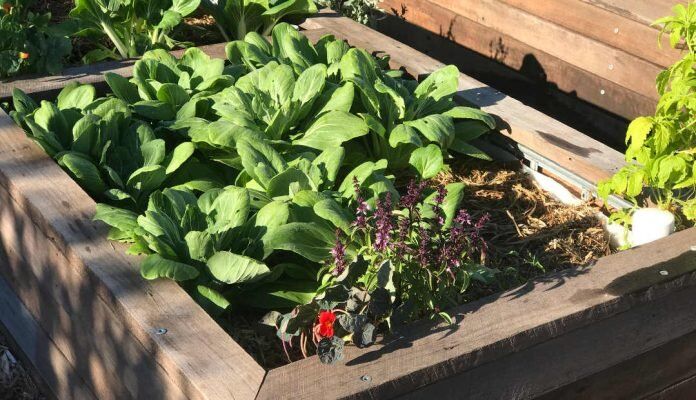
It is also environmentally friendly recycling organic waste that would otherwise end up as green house gases.

This is technology has been developed over many years, it exists and is available right now.

But and it a big but, it required a behavioural change. Gut brain food is easy to grow but microbes have a very short life, one hour in a microbes life is equivalent to a year of human life.

So there is not much option other than to grow gut brain food at home and eat while really fresh.

Sounds so simple, and it actually is, until we get to the second challenge of how to get a societal behaviour change.

This is even more difficult in an economic system with food companies are spending literally multi billions of dollars in very clever but manipulative marketing to convince us that their food is healthy (when it is decidedly not).

Behavioural change

Creating behavioural change is not easy, made all the more difficult against this barrage of clever promotions.

In reality it is impossible to achieve by a conventional advertising and promotional approached – in the internet age people are almost immune to the promotional approach.

But they will take notice of people they trust and respect.

These are the leaders of future change to a new way we manage the earths resources.

Fortunately, even in the internet age where we are treated like dumb donkeys to be led the way they want, there are still many thinking people still left who understand that the world is descending into a sustainability crisis by the mass destruction of our natural resources – particularly from climate change and our soil structure (see I told you I would get around to that).

So the next step is to find some way of identifying these leaders for change – the paradigm busters.

These may be a small minority of the population but they are crucial for the survival of our species.

We then have to persuade them to study the real issues – like I have tried to do here and in the numerous articles I have written on food and sustainability.

There are literally hundred of such articles on my web and aslo on my YouTube videos @colinaustin1000.

We then have to rely on these people taking the initiative and using their power of influence sometimes by person to person but also using the power of the internet to influence people for benefit of the community.

This is a contrast to the way promotion works in the internet, which tend to be for the benefit of a privileged (wealthy) minority at the expense of the majority of the community.

I am Colin Austin please join me in my crusade.


Click below to read the full article here as a .pdf  please note this is published under the creative commons systems so you can copy and distribute as you wish without further permission other that acknowledge authour  colin austin @ gbiota.com

gbiotameaning

Loading

Gbiota intro

Gbiota intro

Colin Austin © 15 November 2023 This document it published under the creative commons system which means it can be freely copied and distributed without further permissions. The only restriction is that the source Colin Austin at gbiota.com should be acknowledged.

Welcome to Gbiota

Welcome to gbiota.com the technical web for the Gbiota movement which is focused on improving gut health by growing plants in biologically active, nutrient rich soils.

We have tried to make the actual growing of the plants as simple and inexpensive as possible so virtually everyone has ready access which you can do by following the practical guide lines on this web.

Some people want to know more about the technology before they start using the process.

But our gut brain is complex and the development of the technology takes a lot of time, energy and money so we have had to make it a subscription site.

The technology is based on work done over thirty years ago and the good news is I have been making videos for all that time and when YouTube became available I started to load for free on YouTube.


You can access these by clicking on my icon left or going to You Tube, search for colin austin playlist then play all.

Thirty year ago the world was a very different place, the population was just half of the current population, many countries which are now highly industrialised and operating at the leading edge of technology were little more than agrarian peasant placing very little load on the environment.

The big issue of the day was water shortages so that is what I worked on. I made a series of videos Solving the Water Crisis Episodes 1 to 5 which are really the birth place of the Gbiota system.

One video in particular is a bench mark video Diet, Health and Wicking beds (nb the specific Wicking Bed technology is now obsolete - what matters are the principles)

The world has changed and we now face the threats of climate change, the destruction of our soils, the wide spread use of toxic chemicals, the lack of nutrients in our food and the explosion of chronic diseases like diabetes but the core technology of how we manage water is crucial to our food supply and indeed the survival or our species.

When these video were made we were in the midst of the Monty Python era and society was pretty relaxed about what they watched. Now what is considered respectable has narrowed so be prepared to be amused and possibly offended.

Happy watching and I hope to welcome you to becoming a member of the Gbiota club.

I am a real person and you can contact me at colin@gbiota.com

When you have done your research into the Gbiota movement and are ready to join  you can sign up here

Why feed our gut brain

Why do people in the Blue zones remain fit and healthy to a ripe old age?


Why does Covid have so little effect on some people?

unemployed-people-covid-colin-austin-gbiota

Why is diabetes the fastest growing disease when it was rare a few years ago?


Why, with all our medical science are we in the middle of an epidemic of chronic diseases?

The answer is just one world - our gut brain.

How do we know? Just look at Tim Spector’s latest book Food for Life. Tim’s Professor at Kings College, London is himself a world leading expert on food but his books contains hundreds of references from leading researchers across the globe.

This is the most comprehensive review of the science of food I know, it is really amazing telling us what sort of food we should be eating and why.

But it misses one thing, how to get that food - that is where Gbiota comes in - we rely on food scientist to tell us what sort of food we should be eating - we study how to grow that food, not just in sophisticated lab farms but in a way that virtually everyone can grow food that will keep them healthy.

food-for-life-book-colin-austin-gbiota

We need to feed our gut brain which controls our bodies (homeostasis)

Food is not simply about calories and energy food, we have that in abundance. We have an intelligent control system which regulates our bodies, it is called homeostasis and if our control system is not working it is like having a drunk at the wheel of a car.

Our control system is a combination of our head and gut brains and if we don’t feed them they just don’t work as they should.

So what can we do about it? A common response it to eat more plants, but that only works if the plants are grown in living soil full of beneficial nutrients which will end up forming our gut brain and eaten shortly after picking.

Food depends on the soil in which it is grown

And where do we get these plants grown in living soil?

The reality is that right now there is only one way - grow them yourself.

But you may say I can’t do that. I live in a flat, I know nothing about growing plants and anyway I just don’t have the time.

Well you can, that is what Gbiota is all about. Gbiota is not just about sophisticated technology, it is about making technology work for the benefit of the people, any one can use it.
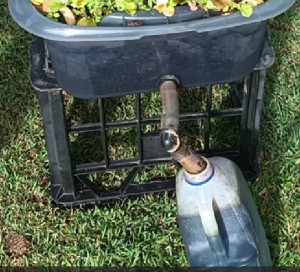
We all have to eat and we should all have access to healthy food and it is based on recycling waste food and other organics so growing yourself not only provides fresh and healthy food, full of the beneficial microbes and essential minerals it actually costs less than buying.

Our siste web gbiota.com shows how you can grow gut brain food - plants which act as pre and pro biotics - by recycling organic waste. It actually costs less than buying food from a supermarket, is sustainable and reduces green house gases.

This site shows how you can grow gut brain food - plants which act as pre and pro biotics - by recycling organic waste. They actually costs less than buying food from a supermarket, is sustainable and reduces green house gases.

When you have done your research into the Gbiota movement and are ready to join  you can sign up here

Want serious information read  What science tells us

This is how it works

Collect food and other organic waste and place in a Gbiota Biobox.


Add nutrient mix

Add inoculant

Leave for a period to allow decomposition to start (labile or fresh compost is not good for growing plants)

Add soil and seeds.


Use partial flood and drain – flood the base of the bed using inlet pipes with swivel pipe in the up position. As you flood the stale air will be expelled.


Place swivel pipe in drain position – as fluid drains out it suck fresh air into the soil so it breaths. This breathing is an important part of the Gbiota process

Catch the fluid as it drain out – this is full of microscopic creatures and nutrients

Use this fluid (we call soil blood as it does the same job as our blood) for the next flood cycle. This floods the root zone with the living nutrient rich soil blood.

Harvest by just cutting the tips off the plants – this is full of nutrients and beneficial microbes

When this baby green phase is finished restart the cycle with a new box.

Typically several boxes are used to ensure a continuous supply of pre and pro biotics.

When you have done your research into the Gbiota movement and are ready to join  you can sign up here.


Gbiota is about correcting deficiencies in our modern diet

Gbiota is not about self sufficiency it is about filling in holes left by our modern food system which is dominated by shelf life.  We get food from all over the world by a highly complex distribution system which may be effective but takes time from harvest to table by which time all the essenatial microbes which make up our gut brain - which controls our bodies - will have died.  We don't feel satisfied so we overeat and get fat and sick.

It is based on breeding the essential beneficial microbes in organic waste together with a mixture of inoculant, minerals and worms. It is simple, inexpensive and above all anybody can do it.

Recycling waste back into food that will keep you healthy may save money, but money is not the point.

Waste which would otherwise go into green house gases is used sustainably.

It is about having a having a healthy and sustainable planet based on recycling rather then exploitation for our grand kids and their grand kids.

Further information

See What to Grow and eat, Gut food project, Food for Gut Health, Food for Health, Food and the gut biome

nb this is a subsciption site but for now you can log in for free using user name guest@gbiota.com and password Goodbugs10!

You can then access the entire library food, growing, and Gbiota news.

We are screwing up our planet. It is not just climate change - its twin sister is the destruction of our soils by toxic chemicals which is leading to nutrient and gut biota deficiencies .

This is the root cause of the epidemic of modern food related diseases which stem from failure to feed our gut brain - our intelligent control system, which regulates our bodies, making us feel unsatisfied so we overeat and get fat and sick.

We need a social change from one based on profits and exploitation of our natural resources to one based on recycling and cooperation.

By recycling your waste back into food that will keep you healthy will save you money, but money is not the point - it is about having a having a healthy planet for our grand kids and their grand kids.

This needs a social change, it wont come from big business or Governments who are focused on profits and power.

Change will come from ordinary people who recycle their waste into food that will keep you healthy, proving that you can do it and showing this to your friends and contacts so you become leaders of your group for social change.

Big business and Governments will follow by the power of the wallet and the power of the vote.

Come on folks - it is time to change the world from one of greed, profit and exploitation to one of recycling, cooperation and mutual benefit.

Read Why we need to change and Our choice and keep on eye on New posts and join the Gbiota movement.

When you have done your research into the Gbiota movement and are ready to join  you can sign up here

gbiota-tribox-colin-austin-gbiota

The Gbiota Ecobox enables virtually everyone, even if living in a flat with no gardening experience, to grow plants as pre and pro biotics.

This is important because they feed our gut brain, a combination of our gut and head brains, which act as our intelligent control system which automatically regulates our bodies.

It regulates behaviour from heart and breathing rates, temperature, and particularly appetites, how much we want to eat and how much and where we store fat in our bodies.

Fifty years ago people would be eating some plants grown in natural soil which would feed their gut brain. Our modern food system is highly productive providing large quantities of energy food and competitive prices but relies heavily on chemicals which destroy the natural microbes that live in the soil and enter our bodies via plants.

The Gbiota Ecobox is very simple. The middle box is filled with organic waste, typically food waste but any organic waste can be used. Minerals and inoculants are added and the box sealed so there is no unpleasant smells.

After about eight weeks this will have decomposed to from a nutrient rich soil teaming with beneficial microbes. This soil is then used to grow the plants in the top box in the normal way.

Flushings are take from the bottom box and used to flush the root system in the top box. This flushing is a dark brown liquid full of nutrients and microbes.

Read about the Ecobox here

[vdo id="dbe19c8d4e1a4ede94666860f675f386"]

Flushing is done on a regular basis so it is kept aerated and is never allowed to become stagnant.

We supply support to help you set up and maintain the Ecoboxes, you simply sign up to become a home grower which costs just $5Au per month. In Australia we can also supply the inoculant and mineral mix and seed packs.

This web contains many articles on food and health, so many it can be a bit confusing but below is a list of the key articles. You can access these for free using the user name guest@gbiota.com and the password Goodbugs10! But we expect you to sign up when you become a grower.

Read about the Ecobox here

When you have done your research into the Gbiota movement and are ready to join  you can sign up here

[vdo id="9ac6e986c62e464cab50bcbffc9dccad"]

Loading

Gbiota Biobox – practise

Gbiota Biobox – practise

The Gbiota Biobox system is about breeding beneficial microbes in organic waste to grow plants as powerful pre and probiotics for your gut–brain.
People will have different organic waste streams and also different food needs. This means I cannot write this post as a hard-and-fast instructional manual, so I am going to describe what I do – which I know works. You may have to modify this to take into account your supply of organic waste and how many mouths you have to feed.

Rotating Boxes

Baby greens

My basic system is centred around baby greens and tipping. Basically, I am eating adolescent plants – between classic microgreens and mature plants. I do this because I live in Bundaberg, Queensland, where insects are a major problem and I can beat the insects to the leaves. If I let them mature to full-grown plants, the insects will win without toxic chemicals – which I just don’t use, as the aim is to breed beneficial microbes. I may use soapy water from the washing machine, which de-waxes the caterpillars so they dehydrate and die. Queensland is pretty extreme with its insects and this may not be such an issue for you. I grow a broad spectrum of plants in each box. Some, like rocket, can be harvested shortly after seeding, while others, like broccoli, take a lot longer. I just cut the tips off the leaves and use these to make green smoothies, salads or just regular vegetables for cooking. I am harvesting the first plant leaves within four weeks and, if I keep on ‘tipping’, I will still be getting food as the plants simply regrow. If I stop tipping (for example if I am away on a trip) the plants will just go to the mature stage. I do have some boxes, outside the rotation, that I use for plants with a longer life, like berries and tomatoes. baby-greens-colin-austin-gbiota

Getting started

We start with the boxes – basically any box will do, but a typical storage container is readily available from the shops. We will need to lift the box so it is a good idea to use a size that will not be too heavy; about 20 litres is good. To get a continuous supply of gut–brain food we will need several boxes – at least four, but six or more is better. These will be rotated and, as we collect kitchen waste to make our soil, we will actually be making soil – but we will need some soil to get started. We drill a hole near the base and, using a rubber grommet and fittings from most hardware or irrigation suppliers, fit a swivel tube which enables the box to be drained. Now we start collecting kitchen waste, which we will probably do on a daily basis, so it is good to have a box with a tight fitting lid so we don’t get flies or smells. compost-waste-box-colin-austin-gbiota

The rotation

Using tipping, the life of a box is about twelve weeks, so I will use six boxes and start a new box every couple of weeks. This is more than enough for my wife and me, but a large family may need more boxes. The major input is kitchen waste, which is produced daily, so I have a box with a fitting lid to collect the waste. This does not have to be a growing box – it could simply be a plastic bag which is emptied into a growing box – but it saves work to use a growing box to collect the waste and go straight to a growing box. It is not a big deal either way. One reason why I start a new box every two weeks is that this is about as long as kitchen scraps can be stored before they get smelly and attract those cussed vinegar flies which are a real pain where I live, but may not be an issue for you. Please note I am continuously improving the Gbiota system which makes documentation a bit of a challenge; there is an updated version in the more recent article at Gbiota soil. I usually put a layer of grass clippings on the base of the empty box as this helps water flow across the base, but it works fine without. Vermiculite is even better than grass clippings, but grass clippings work fine and are free for me and I have to pay for Vermiculite. many-bio-boxes-colin-austin-gbiota

Labile compost

As this food waste decomposes it will act as a growth inhibitor (labile or young compost is not good for growing) so I don’t want this affecting the growth of my seeds and plants in the top of the box. So I cover the food waste with a layer of grass clippings and then a nitrogen-rich fertiliser. I use a mix of chicken manure, bauxite rock dust (which is full of magnesium – one of the critical minerals we are short of), some dolomite (to balance the pH but which also contains minerals), some blood and bone (which contains zinc – one of the other minerals we are short of) and the inoculant which contains the microbes as a starter, worm eggs and in my case other creatures, particularly soldier fly larvae (which just come) and a collection of other soil creatures.

Earth composting

People will tell you that you should not put things like citrus skins and onions etc. into compost. That may be true for high temperature composting and dedicated worm farms. But we are earth composting (in the soil) so we have a broad spectrum of soil creatures and fungi that consume pretty much anything. I get this mix straight from the Gbiota beds in my garden but, if you live in a flat, you will need a storage box to hold this mix. I usually get a truck load of chicken manure and rock dust from my local garden supplier, but if you live in a flat you won’t be too popular having a ton of chicken manure delivered. You can, however, buy all the necessary ingredients in nice clean packages from your local hardware store, and a Gbiota grower (currently me) can supply the inoculant in small packages (4 kg). This contains worms and, more importantly, their eggs, plus a broad spectrum of microbes. These have a short life so need to be put into the storage box with the nutrients and organic waste so they keep alive and keep on breeding.

Storage boxes

Normally the packages for commercial fertilisers (and our inoculant) are far more than needed for one box, so you can have one (or several) boxes to store these and organic waste until you are ready to start your next growing box. This has a big advantage: the organic waste is decomposing while in storage mode. If you like, you can accelerate this early decomposition by growing tough crops. Alfalfa is good, as it is also adding extra nitrogen which helps decomposition and is a good food. One box works for storing for the typical twelve-week cycle, but this will still contain young compost. If you have the room it is really better to have two boxes – one to store the day-to-day collection of waste, and then a second box that can stand allowing the waste to decompose and also time for a quick crop. Plants exude sugars which feed the microbes and help soil formation.

Breeding the microbes

You don’t have to worry about the microbes – they are a randy lot and will breed without problems – but worms are actually quite delicate creatures which need the right conditions. The box with the growing media (in my case soil from my Gbiota beds, but you can use potting mix if starting from scratch) is where we are making soil. Later we will use soil from a box that has just finished being harvested. Every couple of weeks a new box is started and an old box emptied – that is the soil-making cycle.

About organic waste

Before I started I thought I would have a plentiful supply of kitchen waste but it turned out that when I started reusing it, it suddenly became a valuable property which got to the point where I was fighting with my wife over banana skins. But I did have a good supply of grass clippings – which are a grossly underestimated asset. My neighbours now dump their grass clippings onto the nature strip and I go and pick this up, and one neighbour uses a grass cutting service which he now brings to my house for the odd six pack. If you live in a house with a garden you could probably do the same thing, but if you live in a flat you may not be so lucky – but you can probably chat up a few of your neighbours to give you their kitchen waste. Also you can do what we do – collect coffee grounds from your local coffee shop and maybe food waste from your local restaurant, but that did not work for me as they just dumped it into a bin with all their other rubbish and I got fed up with sorting it out. Local councils also vary a lot. Ours is not so progressive, but many councils have green waste services and there are companies who supply compost in bulk.

Not too strong

Kitchen waste is very concentrated, so we will need to dilute this with something like grass clippings if they are available (grass clippings are really great and, even if you don’t have a lawn, are readily available from a gardening service). There are plenty of alternatives readily available as potting mixes, bagged compost, blood and bone, rock dust etc. You will also need to add some inoculant – this is soil full of trace minerals and living creatures, particularly worms. You are essentially setting up a temporary worm farm. Inoculant is available online from Gbiota – email me at colin@gbiota.com for current status, or soon from a designated local grower. After a couple of weeks or so (it all depends on the amount of food scraps and the number of people) your box will be about half full. This is what we would call labile compost and is not suitable for growing plants in directly. So we now move into stage two and take that box out of the kitchen and put it in the garden, on a balcony or at least on a windowsill with some sunlight, or at least artificial growing lights – but sunlight is free and we want to keep costs low. If we are just starting with no filled boxes we will need to fill the box with some growing medium – garden soil if you have a garden or potting mix if you don’t. This is also a good time to add some additional nutrients such as rock dust or blood and bone fertiliser which contains a spectrum of minerals.

Seeding

Now is the time to get the soil really wet ready for seeding. Everyone has their own pet version of seeding. I simply sprinkle the seeds on the wet surface and press the seeds into the wet soil, then cover with grass clippings. Vermiculite is really good for this top layer but costs money. I often use grass clippings or simply soil.

Good and bad bugs

Breeding microbes is easy – they are a randy lot and will start breeding within twenty minutes of being created, so it is very easy to get dramatic exponential growth. There are good bugs, which will keep us healthy, and bad bugs which will make us sick and even kill us. The only real way to solve this is by the conditions. If you get the right conditions – essentially a combination of food, air and water – the good bugs will not only out-breed the bad bugs, they will simply dominate the food supply so the bad bugs just don’t stand a chance of getting established. We all have bad bugs, like E-coli, in our gut but they do us no harm as there are so few of them because they have been out-competed by the good bugs.

Flood and drain

Water does not readily move through the soil as it attaches to the soil particles and does not move until the soil approaches saturation point – which is really too high for optimum growth. The solution is to flood the soil so the water moves through the soil until it is totally saturated, which will expel any stale air in the soil. Then allow the water to drain away, which will suck fresh air back into the soil. Now starts the critical process of flood and draining. I will make the swivel pipe vertical (or at least at an angle) so the box does not drain. I like to connect my swivel tube to an internal Ag pipe to the end of the box and use a simple Ag pipe as a filler pipe, but if I have young seedlings and it is very hot (I live in Bundaberg, Queensland, which is hot and dry) I will simply pour fluid directly onto the surface. I will partially flood the box – I can either use a short swivel tube or just adjust the angle with a longer swivel tube. The box must not be left in this flooded state for days on end. My preference is to partially flood all my boxes then go back to the first bed and let each bed drain. If I am home for a bit I will just drain the box into an old 3-litre milk container just after I have filled – this is real quick and easy. I use a down pipe to view the water level which tells me if I need to water. That is typically two or three times a week. If I am busy I may not be able to cycle (fill and drain) every day, but I will make sure I cycle at least once a week and then allow an hour or so after filling so the fluid has time to wick into the soil. The rule is that the fluid must be regularly cycled so it never becomes stagnant and pongy – but sometimes rules can be broken and the plants still survive. This partial flood and drain is a key part of the Gbiota system.

Soil blood

Another integral part is the circulation of what we call soil blood. Think about our bodies. We have specialist organs like our lungs and digestive and immune systems, and everything is distributed about the body by our circulating blood. It is similar with soil. The bottom of the boxes are full of decomposing organic waste with trillions of microbes and other soil creatures busily converting this organic waste into soluble nutrients – we call these bio-available, as the body can use them. When we flood the base of the bed, these soluble nutrients and a broad spectrum of microbes mix with the water to become the equivalent of our human blood. When we drain the bed we capture this nutrient- and biologically-active “soil blood”, which we then use to flood the root system of the plants. This works incredibly well, but we must regularly cycle this soil blood so it does not become stagnant. Again, this cycling is a key feature of the Gbiota system. Next go to Gbiota soil.

Loading

Gbiota Biobox Theory

Gbiota Biobox Theory

The Gbiota Biobox is designed to do one simple but powerful thing: turn cheap, everyday organic waste into living soil that feeds your gut brain, not just your stomach.
  In this post I want to show just how easy it is to grow gut–brain food. But before I start, let me explain why it is so important to have a healthy gut brain and how the food cycle works.

Energy, nutrients and gut food

We need food for energy, food to maintain and repair our bodies, and food to feed our gut brain. Go back in time and our food was naturally full of nutrients and microbes but low in energy, so we evolved to crave energy foods – sugars and fats. Then, some fifty years ago, our food system changed. It became full of energy food but low in nutrients and microbes. Our gut brain is intelligent. It sees that we are low in critical nutrients and microbes, so it sends out signals for us to eat more food – but we just eat more energy food, so we get fat and sick. This has led to the modern chronic diseases like heart attacks, strokes, dementia and, fastest growing of all, diabetes. So we need to change our diet. We can still keep eating energy food, which is cheap and readily available, but we need to add food that contains the essential nutrients and, above all, food that feeds our gut brain – our control system. Nutrients are easy to get; there are literally mountains of rocks full of minerals. But we cannot digest rocks. We need microbes in the soil to break them down and make them bio-available, and most importantly, we need to breed the microbes which will form our gut brain.

Breeding microbes

Breeding microbes is easy. They breed incredibly fast in soil with waste organic material – the stuff we generally consider waste and which is essentially free. But there are beneficial microbes which make us healthy, and bad microbes – germs – which can make us sick or even kill us. Generally, beneficial microbes need to breathe air and breed better in moist but aerated conditions, while the harmful microbes breed faster in anaerobic conditions without air. If we eat plants grown in soils that are full of nutrients and living microbes, then we can expect to be healthy. How water moves through the soil is actually a complex subject, but to grow plants that will keep you healthy, you don’t need to know that, or even the species of microbes in the soil. There are thousands of species, and even expert microbiologists don’t really understand how each specific species affects our health.

Breathing the soil – flood and drain

What we do need to understand is the principle of partial flood and drain, which is at the core of the Gbiota technology. It is really very simple: we flood the base of the soil and, as we flood, we wet the soil and expel all the stale air in the soil. Then we let the soil drain and, as the water drains away, it sucks fresh air into the soil so it actually breathes.

Dirt to soil – composting

The other thing we really need to know is a bit about how dirt is turned into soil. Take a lump of clay. When it is dry, it is like a lump of concrete and nothing can grow in it. When it is saturated with water it forms a sticky, gluey mess with no air, and only a few very specialist plants can grow in it – hardly any food plants. Dirt is turned into soil by the living soil creatures, and it is essentially a two-stage process. Stage 1 – in-soil composting (labile compost) In the first stage, the soil creatures feed on organic material and produce sticky chemicals which make the soil particles stick together and form aggregates – small granules – so the clay behaves more like sand, with plenty of spaces for water and air to flow through the soil. But this process of in-soil composting produces many toxic chemicals – growth inhibitors – which prevent plants from growing properly. We call this labile compost, meaning fresh and still “hot”, and it is not good for growing. Stage 2 – mature soil As the soil compost matures it becomes less toxic, so plants can readily grow. This is the second stage of composting. The plants then exude sugars from their roots which feed the beneficial microbes. This creates the essential life cycle on which we all depend. The plants capture energy from the sun, which they use to create sugars that feed the soil life, and the soil life then breaks down the rock particles to make the nutrients that the plants – and we – really need. The Gbiota process follows this two-stage process and is really very simple. The Biobox is just a convenient way to make that cycle happen on a balcony, in a backyard, or anywhere space is tight.

Loading