What to Grow (and Eat)

What to Grow (and Eat)

Gbiota is not about total self-sufficiency; it’s about filling the holes in our modern food system by growing the missing piece of our diet—fresh plants loaded with living microbes and bio-available minerals.


What should I grow?

“What should I grow?” sounds so simple, but it is not. Gbiota is about correcting deficiencies in our modern diet, not about being totally self-sufficient. I have tried full self-sufficiency and it is not easy – actually, it is just plain hard work and boring. Gbiota is about filling in the holes left by our modern food system. That system is dominated by shelf life. We get food from all over the world via a highly complex distribution system which may be effective, but it takes time from harvest to table.

Microbe deficiencies – they breed and die fast

Modern growing involves a lot of chemicals, so even when plants are growing, the soil is often deficient in microbes. By the time that food reaches the table, any microbes that may have existed have long since died. These are the very microbes that would naturally form our gut biome, the master regulator for our bodies. This is the number one deficiency in our food system.

Nutrient deficiencies

The second major problem is nutrients. Plants need a limited range of nutrients, but we, as animals, need a far bigger and more complex range. There is simply no incentive for growers to ensure that the complete spectrum of nutrients is in our foods. Until shoppers carry a mass spectrometer in their shopping bags, they have no way of knowing what is actually in the food they are buying. Inevitably, the profit motive results in growers ensuring that those nutrients essential to make the plants look healthy are added, but there is no financial incentive to add the nutrients essential for human health. The net result is that our food is lacking critical nutrients.

Common deficiencies

The key nutrients commonly lacking are:
  • Magnesium – affects everyone.
  • Iron – particularly affects women.
  • Zinc – particularly affects men (at least those still enjoying a bit of hanky panky).
But just adding minerals to the soil is not enough – microbes are needed to break them down so they become bio-available.

Microbes first, minerals second

So the number one objective is to grow food full of beneficial microbes, and number two is to include those missing nutrients which we have evolved to need. The two are not separate. Microbes in the soil are essential to breaking down the minerals that may exist in the soil so they become bio-available. Just burying a galvanised roofing sheet into the soil is not enough. It may be full of iron and zinc – two of the critical minerals we are short of – but until they are broken down into complex chemicals that make them bio-available, they are useless.

Microbes are critical

Whichever way we look at it, getting the right microbes – which are naturally present in healthy soil – is critical for our health. So maybe we should ask, “Where do these microbes come from?” That seems a perfectly good question to ask, but it is not the most critical. Microbes are simply everywhere. I have just read that every breath we take typically has four fungal spores floating around in the air. Should they decide to set up home and breed, our immune system would soon sort them out. Our bodies are a quite remarkable machine, as you would expect after a few million years of evolution. We do need to introduce microbes in the first place, which is not a major challenge, but the real question is how to encourage beneficial microbes to breed while discouraging harmful ones that may end up killing us.

Eco-balance

That is what Eco-balance (which is at the heart of the Gbiota technology) is all about. Partly this is about conditions – particularly the moisture level – which is why I spend so much time talking about avoiding soils which are saturated for any length of time. But to breed, microbes have to be fed. Partly that comes from decaying organic matter, but plants also exude sugars which are food for microbes. Different species of plants exude different sugars which attract particular species of microbes – for example, sunflowers are particularly good at attracting and feeding mycorrhizal fungi.

We need a broad spectrum of microbes

The key message is that we need to be growing a broad spectrum of plants so we end up with the broad spectrum of gut biota needed for a healthy intelligent control system.

Companion planting

There is yet another reason for having multiple plants. Cruciferous vegetables, members of the cabbage family, are among the most nutritious vegetables – something well understood by the hordes of insects which devour them at astonishing speed. We don’t want to use toxic chemicals; they will just kill off the microbes we are trying to breed. But by growing companion plants and harvesting at the baby green stage, it is possible to have a viable crop.

Harvest at the adolescent stage

Companion plants may provide some protection, but as soon as they are attacked by insects, their natural protection mechanism is to produce bitter chemicals so they don’t taste good. However, if the entire crop is harvested at the baby green stage as a mixture, it will still taste sweet and be highly nutritious.

Ease of use – Ecobox and Tribox

The aim of the Ecobox system is to create a system where people who do not have gardens or gardening skills (my nominally fictitious character Mary, the single mum with three kids and three jobs) can have ready access to fresh vegetables full of beneficial microbes and nutrients. Keen gardeners take a great deal of interest in the intricacies of gardening – the nutrients, the soil pH, the various species, etc. But the Marys of this world simply do not have the time, so we have to rethink how we can make this accessible. Within the Gbiota movement we have growers who really enjoy these intricacies, so the plan is simple:
  • They set up Gbiota beds to breed beneficial microbes and worms.
  • They add minerals to grow the needed living, nutrient-rich soil.
  • They produce the variety of seeds needed for successful Gbiota Triboxes and make these available online.
This inoculant is highly concentrated, so a 4 kg pack is sufficient for up to four Tribox towers for three months. While we are setting up local growers, I can supply these inoculant and seed packs – at least in Australia. (Contact me at colin@gbiota.com if you are interested in becoming a Gbiota grower breeding beneficial microbes.)

Steps in setting up an Ecobox

These are the main steps needed to set up a Gbiota Ecobox.

1. Select boxes

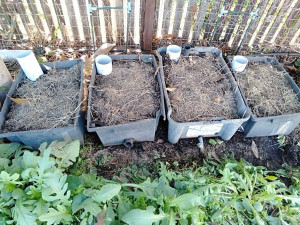
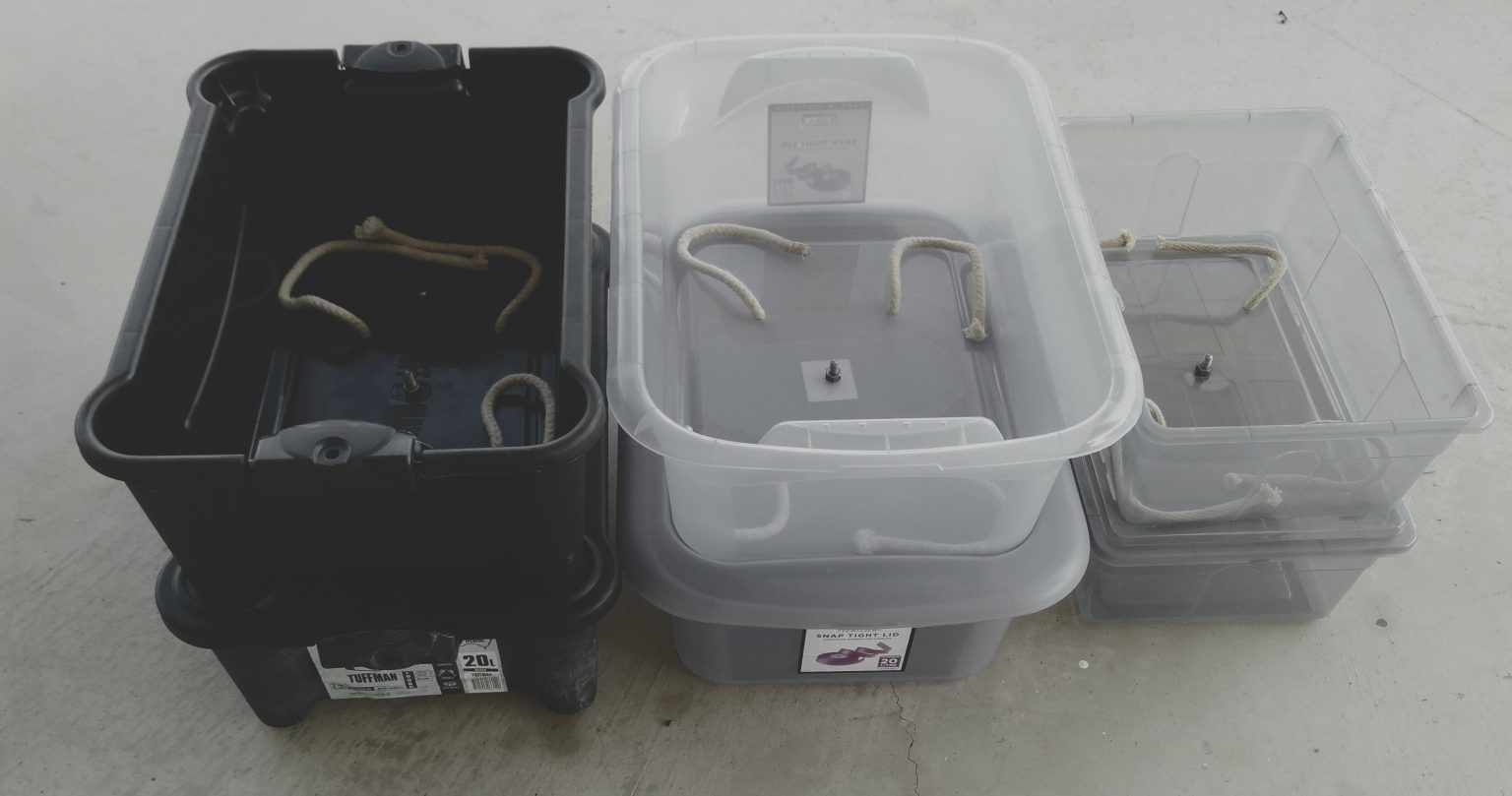
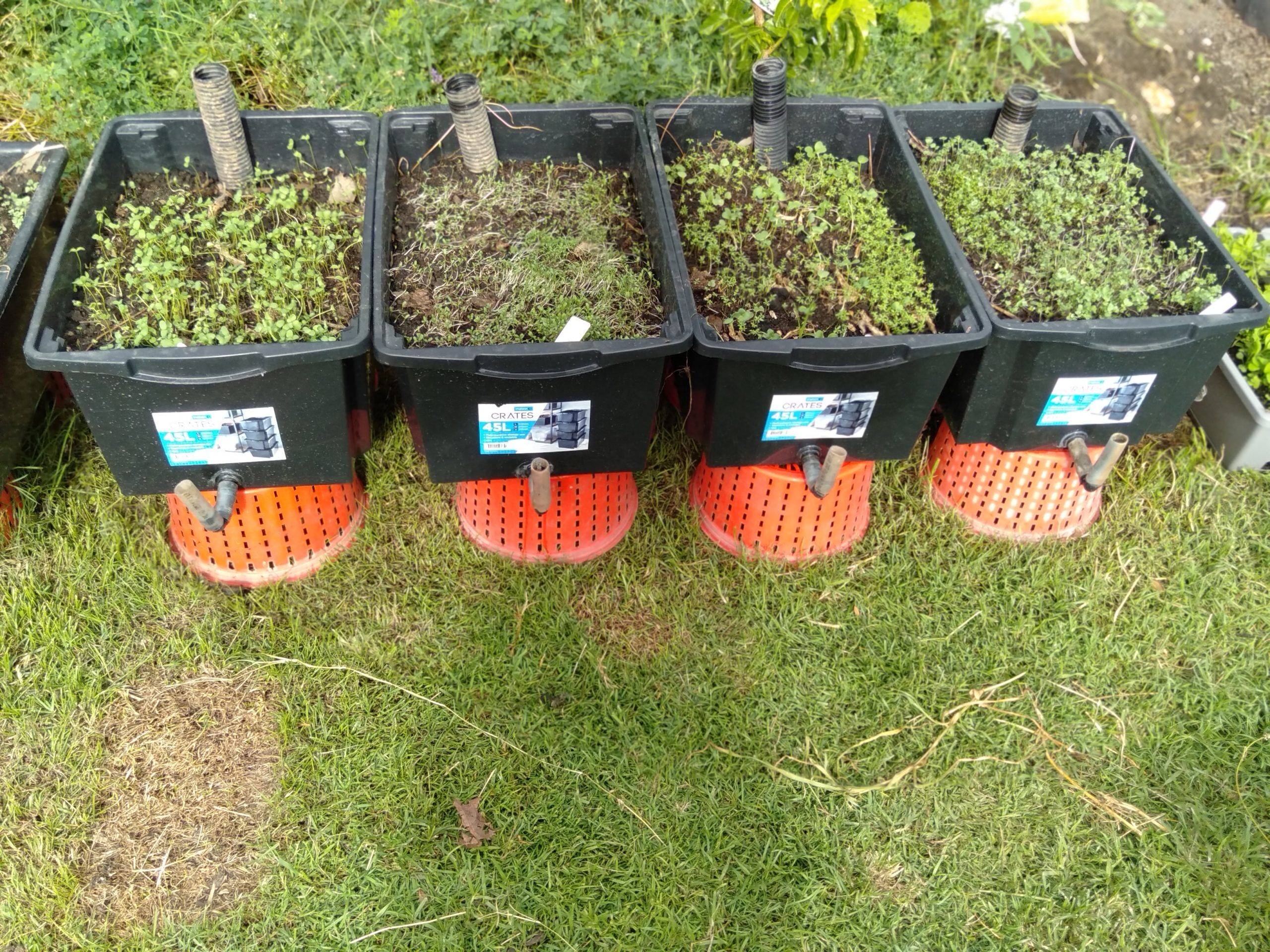
Select suitable nesting boxes from the local hardware store. Twenty litres is a good size, but a bigger box can be partially filled and used as a terrarium. The exact boxes are not critical as long as they nest. One box is not enough; four to six towers may be needed for a continuous supply.

2. Drill holes

Drill holes in the bases and lids. I have been using multiple holes, but I am now trialling just one large central hole; it is easier and saves the bother of ensuring the holes line up between levels.

3. Order inoculant and seeds

The inoculant and seeds are then ordered online (from a local supplier or www.pickandeat.shop).

4. Collect organic waste

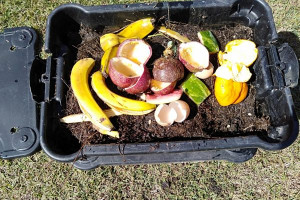
Collect organic waste. Typically this will be kitchen waste, which may take some time to accumulate, but to get started any waste such as grass clippings can be used. Failing that, commercial potting mix can be used.

5. Fill breeding (middle) box with organic waste

The middle breeding boxes are partially filled with whatever organic waste is available, while the growing boxes are filled with whatever growing mix is available.

6. Add inoculant to boxes

The inoculant is then divided up between the growing and breeding boxes. This inoculant contains both living microbes and worms (and worm eggs), so it needs to be placed in the boxes immediately on arrival. A layer is first placed on the surface and thoroughly watered.

7. Seed, cover and water

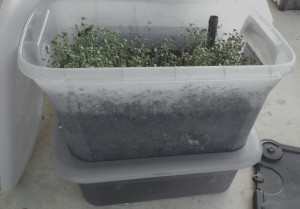
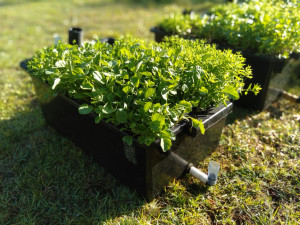
The selected seeds are then spread over the surface. Generally, baby greens will be grown, which require a higher density of seeds than when growing specimen plants. A light sprinkling of water is then applied and, possibly, a lid placed on the box to form a terrarium to keep the seeds moist and to stop birds eating the seeds, if that is a problem in your area.

8. Water regularly when needed

The boxes can be watered with clean water if needed, if the soil starts to dry between flushings.

9. Flush soil blood through both boxes

At least once a week the soil blood must be collected from the bottom water reservoir and poured onto the plants in the top growing box. This is important, as the brownish-looking liquid (I call it soil blood) is full of living creatures and nutrients and will become anaerobic if left standing. It must be kept in circulation.

10. Start harvesting using tipping

The plants may be ready to start harvesting between two to four weeks after seeding. Only the tips of the leaves are harvested, leaving the remaining leaves to power plant growth. If they are regularly harvested the plants will remain in this adolescent state for quite some time, simply trying to regrow. Plants remain sweet and tender in this adolescent stage. If they are not harvested regularly, they will move into the adult state, when they can become bitter – particularly if they are attacked by insects. Once they have moved from the adolescent to the adult stage there is no going back.

11. Reseed (partial or full)

To keep a continuous supply of vegetables, extra seeds can be planted in between existing plants.

12. Swap breeding and growing boxes

After a period of between eight to twelve weeks, the mix in the middle breeding box should be ready for growing. The level will have dropped, so additional soil from the top box can be added. Then the boxes are swapped so the breeding box now becomes the growing box and the now partially emptied growing box becomes the new breeding box.

Plant groups

Below is a list of the various plant groups. They offer a wide choice, but there are three that really stand out:
  • Baby broccoli – one of the most nutritious plants and easy to grow.
  • Linseed – good for Omega-3, which is critical for heart conditions.
  • Alfalfa – the workhorse of baby greens and also improves soil quality.
The advantage of multi-crop planting is that there is always some plant that will flourish. Some plants seem invincible whatever happens. I always have some spinach, long leaf lettuce (an indestructible Chinese plant) and purple amaranth growing in my garden so I always have some veggies available.

Baby greens

  • Baby Broccoli
  • Chinese Broccoli
  • Alfalfa
  • Linseed
  • Purple Amaranth
  • Ruby Chard
  • Sorrel
  • Tatsoi
  • Mizuna

Salad veggies

  • Lettuce
  • Celery
  • Chervil
  • Cress
  • Watercress
  • Mustard
  • Radish
  • Rocket
  • Spring onion

Legumes

  • Adzuki Bean
  • Mung Bean

Cruciferous vegetables

  • Broccoli sprouting
  • Cabbage red
  • Cabbage green
  • Kale
  • Kale Red Russian
  • Bok Choy

Herbs

  • Basil sweet
  • Chicory
  • Coriander
  • Dill
  • Kohlrabi
  • Mustard
  • Shiso
  • Oregano
  • Parsley
  • Sage
  • Thyme
  • Lemon Balm

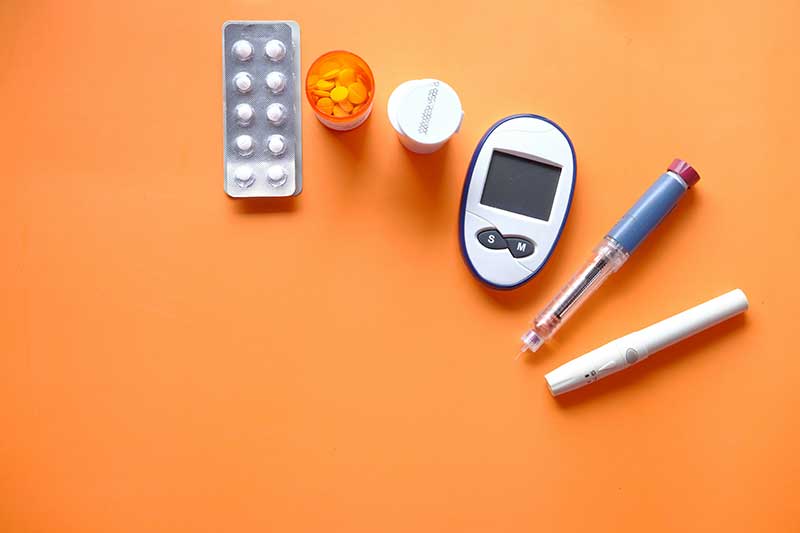
Diabetic-supporting plants

  • Fenugreek
  • Echinacea
  • Bitter Melon
  • Spinach
  • Silverbeet
  • Zucchini

Root crops

  • Carrot
  • Onion
  • Beetroot
  • Jicama

Ask for help if needed

This is a very simple system which is easy to learn, but if it all looks a bit complicated then do what I do with my mobile phone – get my granddaughters to sort it out for me. They really enjoy making us oldies look stupid. Well, your granddaughters may be whiz kids on their mobile phones but they may not know too much about growing, so come to me at colin@gbiota.com for help – that is why it is a subscription site.

Loading

Ecobox – how to

Ecobox – how to

A Gbiota Tribox is a simple three-box system that lets you grow real, microbe-rich soil and baby greens on a balcony or veranda, turning kitchen waste into gut-brain food even if you live in a flat.
In this post I show how to build and maintain a Gbiota Tribox.

Growing your own soil

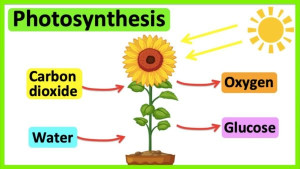
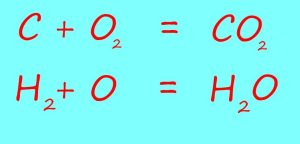
Growing soil is the key to the Gbiota technology, so may I explain how it works. Plants absorb energy from the sun. They use this energy to break down the bonds between carbon and oxygen from the carbon dioxide which the plants absorb from the atmosphere, and hydrogen and oxygen from the water which they absorb from the soil. This takes a lot of energy which is then stored in the plants as complex hydrocarbons that go on to form our energy food. photosynthesis-colin-austin-gbiota
Modern agriculture produces large amounts of energy food and we are not in any danger of running out of energy food in the near future. But this process of photosynthesis requires certain chemicals to make it work. We have known how photosynthesis works since it was first described by Jan Ingenhousz in 1779. It is certainly not a new discovery and we know the precise chemicals needed to make it work. The modern fertiliser industry produces these chemicals on a grand scale where they are widely used by modern agriculture, which can and does grow crops without using any soil at all. co2-ho2-colin-austin-gbiota

Dirt

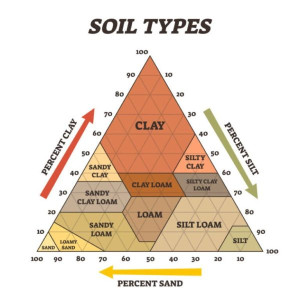
Dirt is just finely ground rock particles. If the particles are very fine we call it clay, a bit coarser is silt, then sand and finally gravel. The rock particles are inert; they are insoluble so by themselves they do not provide any nutrients to the plants. However, they can attract liquids which contain soluble nutrients that attach to their surface. This is how much of our current food is grown—in inert dirt—with chemical fertilisers attached to the surface of the fine particles and readily available to the plants. soil-types-colin-austin-gbiota

Soil

Soil is decidedly old fashioned—going back a few billion years—when microscopic organisms like bacteria and, particularly, fungi began to break down the insoluble rocks to form soil that contains nutrients readily available to the plants (bio-available). The plants died, creating organic waste. Other creatures, animals and eventually us evolved, creating yet more organic waste which was happily recycled by a complex array of microscopic organisms both in the soil and in creatures like worms, beetles, ants and other re-generators. soil-biology-colin-austin-gbiota

Phyto-chemicals

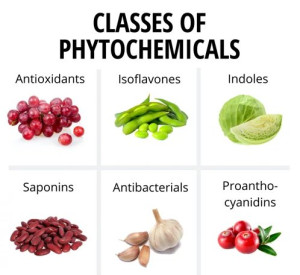
This was a much more complex process than the relatively simple process of photosynthesis. Plants became masters of chemistry, developing a whole range of chemicals to protect themselves from attack by insects and animals, and to attract other animals and birds to eat their seeds and spread germination. classes-of-phytochemicals-colin-austin-gbiota

Human evolution and our gut brain

All this time, animals were evolving with this complex array of phyto-chemicals and microbes—and eventually us humans, who became dependent on these phyto-chemicals and microbes. Nowhere is this more evident than in our gut brain—a combination of the intelligence created by trillions of cells communicating in our gut, just like in a supercomputer, and our head brain. This gut brain is our control system which regulates our bodies. If it does not work, we get fat and sick, and this is the root cause of the modern epidemic of non-infectious diseases. The basic cause is that our modern chemical, industrial agricultural system is simply not feeding our gut brain.

The solution

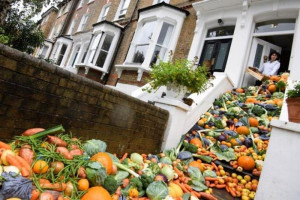
So what is the solution? Simple—we go back, study our evolution, and see that we need to grow real soil full of beneficial microbes and nutrients. And how do we grow soil? Again simple. We collect up all the organic waste we can find—certainly food waste, which is a major social problem both wasting resources and creating greenhouse gases—add minerals for the microbes to convert into complex soil chemicals, and add microbes and soil creatures such as worms, which will breed continuously in the soil. You then grow plants in this soil teaming with microbes and bio-available minerals and eat them shortly after picking before the microbes die. vegetables-on-door-step-colin-austin-gbiota

I live in a flat

Mary is not a farmer; she lives in a flat, works in the accounts department of a big company and has three kids, no time and no growing experience. That may be true—but she still has a gut brain which needs feeding and she still needs all those complex chemicals, like the phyto-chemicals needed to replace her body parts as they age and wear. That is why we developed the Gbiota Tribox. It may be a bit of a Do-It-Yourself project but it is very do-able. This is what you need to do. mum-taking-care-of-kids-colin-austin-gbiota

Social benefit

It is just a simple fact that humanity is going through a bad patch. We are putting far greater demands on the earth’s resources than it can supply. We see this very dramatically with climate change—with floods, droughts and heat waves— but technically these are problems we can resolve. We have the technology to prevent climate change and we have the technology to solve that other big problem—degradation of our soils. But a very present problem is those mega corporations who put short-term profits ahead of social benefit. It is my opinion that all companies should have to provide a social benefit; that is certainly my objective with Gbiota. The Gbiota Tribox is something that virtually everyone can benefit from, and the food actually costs less than buying from a supermarket. I understand that many people who read my posts are relatively affluent, have large gardens and take growing their own food—which will make them healthy—very seriously. There are plenty of articles on this web site for them. The Gbiota Tribox was developed to provide healthy food for virtually all people. It is a social movement and I welcome people to adopt the technology and spread the word so it becomes a genuine social movement. supermarket-colin-austin-gbiota

Logistics

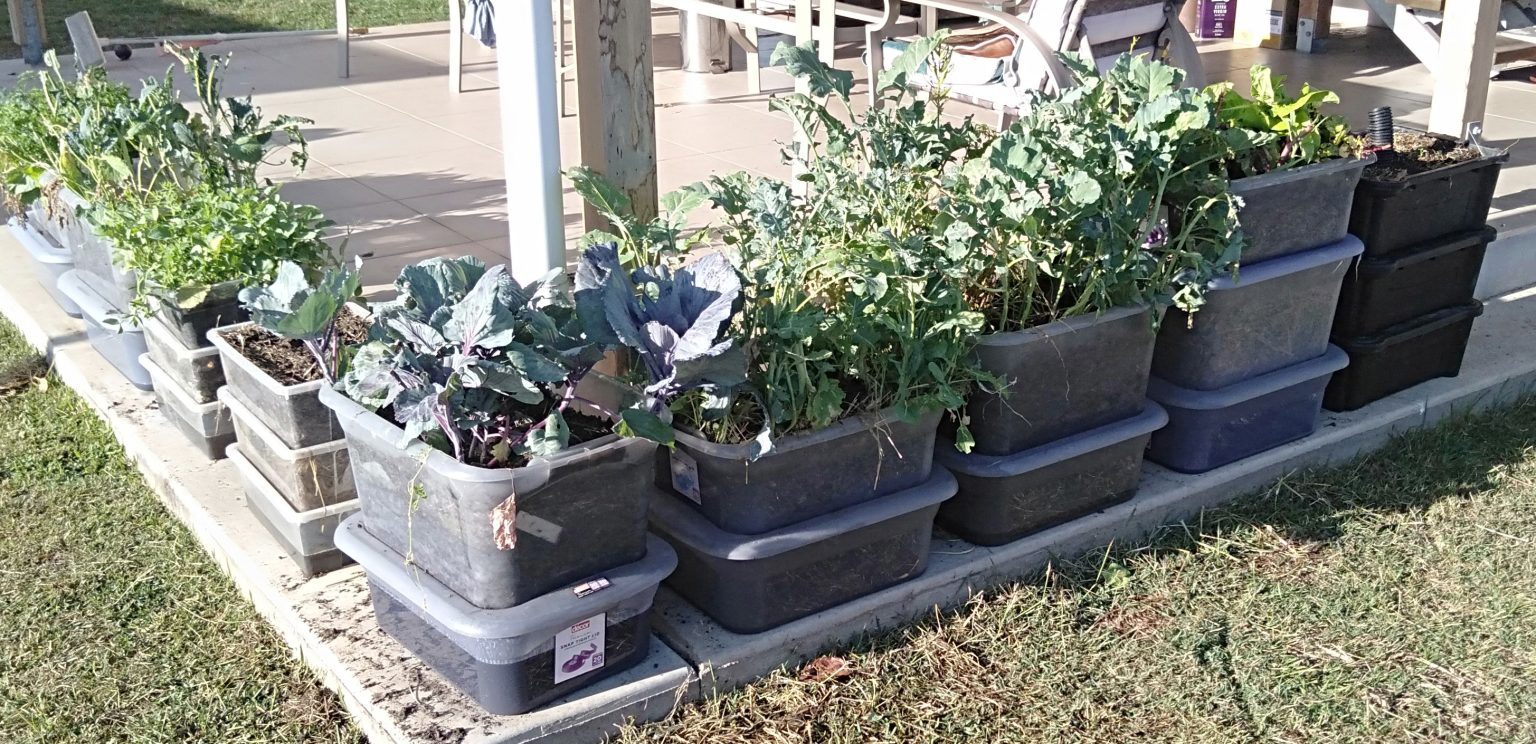
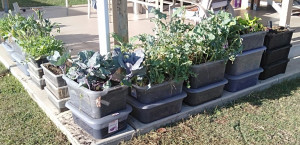
A Tribox goes through a natural cycle. Ideally, the middle box for growing soil is fully loaded with organic waste, minerals, inoculants and worm eggs, then simply left for the natural breeding and decomposition process which will take at least eight weeks. The top box for growing plants will go through a similar process of germination, growing and harvesting. I strongly advocate growing baby greens—that is, the stage beyond microgreens, when plants have immature leaves and roots that are already extracting nutrients and microbes from the soil, but have not yet reached the stage where they are under serious insect attack and start producing bitter chemicals to repel them. Again this means a cycle of at least eight weeks. Obviously a lot depends on the size of the family and the space available for growing, but I think in terms of having a base of some four Triboxes, with a new box being set up every two weeks. I expect most people will be using kitchen waste as their main supply of organic waste (grass clippings are great if you have access). It is possible to use the middle box to store the kitchen waste as it is produced; it just means lifting off the top box and loading the middle box. It just suits my life, but I prefer to collect the kitchen waste and store it in a sealed container for a couple of weeks, by which time I have enough waste to pretty much fill the middle box and load it with the minerals and inoculants and then never touch it again until the end of my eight-week cycle. By this time the level has dropped significantly, so I now make this my top box for growing plants and take the mature top soil out of the old top box to top it up. This means I am seeding into mature soil and giving the soil at the bottom of the box more time for further decomposition. I then use my old top box as my middle box so I am continuously swapping. I will start off a new box every couple of weeks. This is a system that works for me, but you can work out a system that works for you. gbiota-tribox-colin-austin-gbiota

Choosing the box

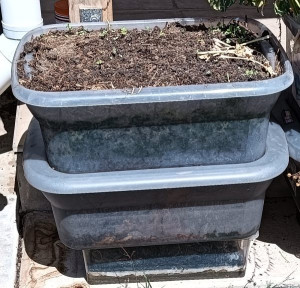
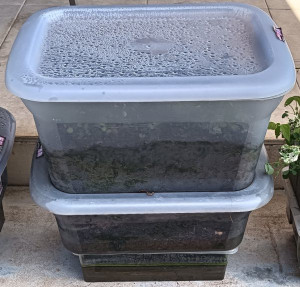
You can buy suitable boxes from your local hardware store or supermarket. I recommend the type that nest with a lid with a lip so the boxes can be nested. You will need to lift these boxes, so they should not be too large. Twenty litres is a manageable size, but you can use a bigger box and make it into a terrarium with just the base being filled. The bottom box, which just holds the flushings, can be the same as the other boxes with a lid, but it is also practical to use a smaller box with no lid. This does save a bit of time when watering, but it is not a big deal either way. Terrariums are great as they need hardly any watering and they keep the flies, insects and birds away. The soil is always moist so it makes germination very easy—often seeds just sprinkled on the soil surface will germinate in a terrarium. Thirty litres is a good size for a terrarium box. It is important that the flushing in the bottom box is not allowed to become stagnant. I aim to re-flush twice a week but sometimes I get a bit hectic midweek, so I just water the top box with clean water and re-flush at the weekend. Not perfect, but we don’t live in a perfect world. boxes-stacked-nesting-colin-austin-gbiota

terarium-boxes-colin-austin-gbiota


Supplies

At this moment I am working out how to set up a supply system. I am working with a seed company to produce seed mixes with a variety of varieties under different categories. The categories I am looking at are coniferous vegetables (members of the cabbage family), diabetic plants (like Fenugreek), herbs and spices, green smoothie mix (linseed, alfalfa), soil regeneration plants, etc. biomin-rock-dust-colin-austin-gbiota
I am also working with growers to produce a complete mix of minerals, inoculants and worm eggs. At this moment I can supply limited volumes in Australia only. I suggest you email me at colin@gbiota.com. You will need to tell me your location as some states have restrictions on entry. You may also like to look at a previous post on Gbiota TriBoxes called Gbiota easy.

Loading

Gbiota Tri Box – background

Gbiota Tri Box – background

For most of my life I worked on making plastic products faster, better and cheaper — but the real breakthrough came when I turned those same innovative skills toward growing food that feeds the gut brain and prevents diseases like diabetes.


In and Out of Plastics

Moldflow

I moved into plastics when I left university, back when new engineering plastics were just coming onto the market. They were an exciting challenge for a young engineer to learn, and in my defence, this was long before a five-cent battery had to be wrapped in fifteen layers of blister packs.

But the world kept changing. The population grew, the food system changed, and people became fatter and less healthy. I began to worry, not just about having enough energy food, but about food that would actually keep us healthy over the long term.

At the same time, I was getting older. I had written a book about plastics production called Faster, Better, Cheaper, and I started to question whether I really wanted to spend the rest of my life helping to make plastic bits faster, better and cheaper.

Into Food to Keep Us Healthy

I felt an urge to do something that genuinely benefited the community.

I decided to see whether my innovative skills could be used to find better ways of growing food that keeps people healthy and is truly sustainable. I sold the company, which gave me enough money to undertake speculative research – the kind of research governments rarely fund.

Speculative research is just a posh name for doing daft things and hoping you stumble upon a significant breakthrough.

Looking at the world, it was clear to me that one of the biggest threats from climate change is to food production. That is where I decided to focus.

I no longer wanted to make plastic parts cheaper; I wanted to make it easier for people to grow food that prevents them losing their health — and their legs — to diabetes.

Innovation – Paradigm Busting

Real breakthroughs in research usually come from doing off-the-chart experiments that are almost certain to fail but lead to new ways of thinking.

Now I had the financial freedom to do totally stupid experiments that might, just might, lead to a big breakthrough. I wasted a lot of money, but it was my money – no grant committee to impress.

I burned through millions of dollars hoping that something good would turn up, and eventually it did. Every year, over four thousand Australians have a leg amputated because of diabetes. I now know how much of that can be avoided. I reckon that is worth blowing a few million.

Steps in Innovation – Ask “Why?” Like a Four-Year-Old

The first step in innovation is to study everything that is known in an area without jumping to solutions. You immerse yourself in the problem and keep asking “why, why, why” like a four-year-old.

Freed from the need to earn a living, I set off on multiple world trips to study how people grow food, especially in remote areas of Asia, Africa, the Americas and the Middle East.

In some places, particularly mountainous regions of China, people remained fit and healthy into old age, with no sign of our modern chronic diseases like diabetes. They had been farming the same land for thousands of years and the soil was still healthy and fertile. In other areas, especially in parts of Africa, the soil was depleted and people were less healthy.

Again, the question was: why, why, why?

Diabetes Strikes Close to Home

Then diabetes hit close to home. My wife, Xiulan – a medical doctor and gynaecologist – became diabetic. Her foot started to turn black and doctors began talking about amputating her foot.

The medical experts explained that diabetes was a progressive chronic disease. She would need steadily stronger drugs, then insulin injections, and would likely die young from complications such as kidney failure.

That assessment might have been reasonable twenty years ago, but it no longer matches the latest science. The fact that we were being given advice based on outdated information was an ominous warning of trouble to come.

No Chop – We Will Do It Our Way

I was not happy with the idea of seeing her lose a foot. She has nice legs, and I felt I owed her more than passive acceptance. So I did what innovators do: I kept asking “why, why, why”.

Experts can provide a very detailed technical explanation of diabetes. First, fat starts to block the entry of sugar into muscles. This is called insulin resistance, and many people do not know they have a problem because the pancreas simply produces more insulin.

Then the pancreas itself becomes clogged with fat and can no longer produce enough insulin. The situation becomes critical and medications are required to control blood sugar levels. These drugs are very good at fixing the immediate problem, but they do not address the underlying cause.

Homeostasis – The Body’s Intelligent Control System

So again the question was: why? Why does the body start storing fat in the wrong places? Why does it happen so often in Western societies but not in those mountain communities in China where diabetes is almost unknown?

The obvious answer is that we eat too much sugary, fatty food. But that just raises another question: why do we eat too much sugary, fatty food?

Because we are hungry, you might say. But again: why are we hungry in that particular way?

To understand that, we must look back to World War II. In the Netherlands, the people endured extreme starvation and became thin and scrawny. After the war, when food became available again, obesity became a major problem.

The reason is homeostasis – the body’s intelligent control system that regulates temperature, breathing, heart rate, appetite and how much, and where, we store fat.

Our Bodies Are Smarter Than We Think

This control system is incredibly smart and has a memory. The period of starvation trained it to store fat aggressively. We still see this today in extreme dieting: people slash their caloric intake, lose weight, and then later become fatter than ever. They have trained their control system to store fat – the exact opposite of what they wanted.

Diabetes is not just a medical issue; it is a systems-control problem. If we do not feed the gut brain properly, it reprograms our bodies to store fat and crave the wrong foods.

Innovation Step 2 – Test, Test, Test

After the review and “why” phase, the next innovation step is testing whether the ideas actually work.

I set my wife up with continuous blood sugar monitoring so I could compare food intake with blood sugar levels in real time.

My first engineering job had been with a company that made control systems for power stations. What I saw on the blood sugar graphs looked identical to unstable control systems I had seen on industrial equipment.

She would eat, and her blood sugar would rocket up. Then it would crash to dangerously low levels as the insulin surge kicked in. Then it would climb again as the body hunted for sugar from wherever it could. It was a classic unstable control loop.

Diabetes: A Control Problem, Not Just a Medical One

This convinced me that diabetes is not just a simple medical condition; it is a control-system failure.

From my time in the remote mountains of China, I already knew what a stable system looked like: people eating food grown in living soil, full of diverse microbes, and staying lean and healthy into old age.

We get fat and diabetic because the control system is broken – because we are not feeding our gut brain. When the gut brain is starved of the right signals, it makes us feel hungry so we overeat.

If we want to be healthy, we must feed our gut brain the food that gut brains need.

“Sorry – No Yaks in This Apartment Block”

The catch is that we need a solution suited to modern life. It is not practical to have a yak wandering around an apartment block, dropping manure on the carpet.

So we substitute the yak with worms and create a two-pot growing system. In one pot, people grow their own living soil; in the other, they grow fresh vegetables in that living soil.

The pots cost only about 40 cents. The main inputs are organic waste, volcanic rock dust and an inoculant. It is incredibly cheap and almost anyone can use it, even in a flat.

It is actually cheaper and more reliable than buying from the supermarket.

I call this the Gbiota system because it is all about feeding the gut biome – the gut brain.

Saving Thousands of People from the Chop

I believe this is a major innovation that could save thousands of people from losing their legs to diabetes.

The next challenge is getting this innovation into public awareness. I have built a multi-million-dollar multinational company before; I know how to create paradigm shifts and change an industry.

I also know that pouring money into advertising is largely a waste. The internet is already saturated with companies trying to sell pills that will not fix your health but might inflate their bank balance.

Create a Social Movement

What we need is a social movement: people using the system themselves, seeing that it works, and becoming ambassadors for it.

This is not just about diabetes, though that is the most visible outcome. It is about building communities where people are genuinely fit and healthy.

Our health system is in crisis. Yes, we need more GPs and more funding, but the top priority should be prevention, not patching people up after they are already sick.

Prevention as the Priority

The most effective way to tackle the health crisis is to run programs that help people become naturally fit and healthy, so they rarely need to see a doctor.

Governments spend millions on drugs, especially for diabetes, where pharmaceutical companies enjoy a lifelong captive market.

They would save a fortune by focusing on prevention and building a population so healthy that doctor visits become the exception, not the rule.

Victory Gardens – A Proven Model

We need ambassadors for prevention. I think back to the Victory Gardens of my childhood. During wartime, a simple government scheme led to some 40% of fresh food being grown by amateur home gardeners. It cost the government almost nothing – just a few posters and speeches – because it had the support and energy of the people.

The government provided leadership, but it was the public’s participation that made it a success.

Social Action – Good People Doing Something

I cannot do this alone. I am just one person, with no power against the machinery of government.

People have different skills. I happen to be good at innovation and speculative research, but I have no idea how to organise a protest movement or national campaign.

What I do know is that we need one. There is a saying: bad things happen when good men stand by and do nothing.

To my mind, having your leg chopped off because of a do-nothing government department is a “bad thing,” and good people need to act.

While you have been reading this, two Australians will have had a limb amputated because of diabetes. At least one, and possibly both, might have been spared if they had heard about homeostasis and followed the simple idea: grow gut brain food.

We Live in a Community

Humans are the most successful species on the planet for two reasons: we are intelligent, and we cooperate to form communities.

The price of living in a vibrant community is that we each contribute to its wellbeing according to our skills and capacity.

I do not have diabetes, and now that my wife is on a grow-gut-brain-food diet, there is little danger she will lose her foot.

I have not blown all my money on daft ideas, and I could easily live a quiet life. There is no logical need for me to spend my time and energy helping people avoid diabetes.

But I want to feel that I am contributing to my society according to my abilities.

Right now, the community needs to know that they can, if they wish, stay fit and healthy and reduce their risk of amputation simply by growing gut brain food. Whether they choose to act is up to them – but they deserve to know it is an option.

So I ask you, whatever your skills or capacity, to help raise awareness. That might mean telling a friend, posting on social media, or joining a movement that presses governments to inform the public.

It feels good to contribute to your community. It is far more satisfying than sitting back and playing bingo.

Who Has the Skills to Run a Movement?

We need people with the skills to organise a health movement and breathe life into do-nothing bureaucracies.

If you want to live a long, healthy life in a society that values fitness and wellbeing — and if you would rather avoid losing a leg to diabetes — then do something useful for the community. Form or join a health movement, or contact your local MP.

We Need a Strong, Proactive Public Service

We need a strong, active public service that genuinely serves the public and protects us from mega-corporations driven solely by profit.

We need a public service that puts people first. That is the essence of a functioning democracy, and it is currently under threat.

I am 83 years old, still fit and healthy, but it is up to younger people to build this movement. I feel I have done my bit.

If you agree with this theme and have relevant skills — even if it is simply sharing on social media — please contact me at colin@gbiota.com.

Loading

Making a Gbiota tribox

Making a Gbiota tribox

The Gbiota tribox is a simple three-box stacking system that breeds beneficial soil microbes in organic waste, captures their “soil blood”, and uses it to grow baby greens that feed your gut-brain.

Gbiota easy

We have known about our intelligent control system for some seventy years—going back to when people who were deprived of food during the war later became fat, as their control system had been trained to store any fat it could. Years later we find ourselves in a health crisis that starts by people becoming overweight. The classic advice is to cut calories which, although well intentioned, still trains our intelligent control system to store yet more fat. I try to make people aware of the importance of feeding our gut-brain. This message seems well accepted by a dedicated number of home gardeners but has little impact on the bulk of the population. I tried persuading people to form groups where keen gardeners help less advantaged people living in flats who do not have the time and skills to grow their own gut food. Well, if you don’t try you will never succeed—and this was a bit of a damp squib. So I thought I must try a new approach and see how easy I could make it for people with no time, space or even interest in growing their own gut food.
The Gbiota stacked bin (tribox) is my solution: a lazy-friendly way to turn kitchen waste into gut-brain food.
The basic principle behind the Gbiota system is common to all methods, but there are many ways of applying this in practice. A living soil is created (yes, we make soil) by breeding microbes in organic waste and minerals with inoculants such as worms, soldier fly larvae, and a starter of living microbes. Initially, water is flushed through this soil to create what I call soil blood (because it does a similar job to our blood)—a somewhat yukky-looking liquid which, under a microscope, is full of an array of creatures large and small. This is then flushed again through soil in another zone where plants are grown. We eat the plants, which are natural pre- and probiotics, and feed our gut-brain. Pretty simple.

The flower pot method

The flower pot method, using 40-cent flower pots, I described in an earlier post: how-to-gpots. It is the cheapest way I know of applying this method. The stacked boxes I describe here are even easier to use, but they do need $10 boxes rather than 40-cent flower pots (though you only need about half as many).

Stacking boxes

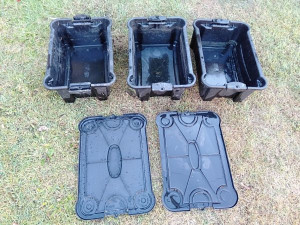
To make one unit (you will probably need about four units to provide a continuous supply of gut-brain food) you need three stacking storage boxes—boxes that can be stacked with the one above fitting into the lid of the box below. All the boxes I have seen in my local stores are stacking boxes and vary in size and price from a few dollars per box up to about $15 per box. bare-boxes-colin-austin-gbiota

Modifying the stacking boxes

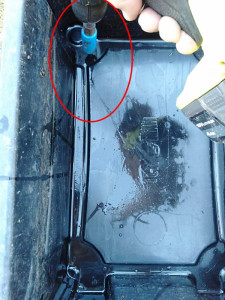
The bottom box you do nothing with—this is the reservoir to catch the soil blood. The box above is the breeding box. You drill holes in the base of this box and in the lid of the box below so the soil blood can drain into the bottom box. You load the breeding box with any organic waste you can lay your hands on. Kitchen waste is the obvious choice, but any organic waste will do, including:
  • your next-door neighbour’s cat which whinges on your windowsill at midnight,
  • his son who arrives back at 1 a.m. on his motorbike and revs it to full bore,
  • his daughter who insists on playing the latest Taylor Swift hit at 2 in the morning,
  • and maybe himself, who mows the lawn at 5:30 a.m.,
  • and let’s not forget his wife who screams continuously that she cannot think with all this noise.
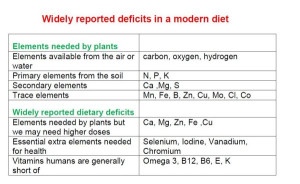
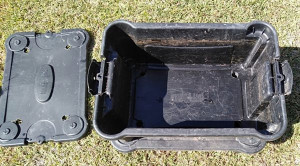
Anyway, hopefully you get the message—any organic waste. box-drill-colin-austin-gbiota Then come the minerals—just dial up rent-a-volcano or buy a bag of rock dust if the volcano won’t fit in the empty house next door. It pays to check that your rock dust has the right minerals. Most people are short on magnesium, women on iron and men on zinc (one night of hanky-panky can exhaust a man’s store of zinc). Blood and bone is a good source of zinc and other minerals. There are many articles on food and health on this web site. Food and the gut biome has a table showing minerals that are widely deficient. trace-minerals-colin-austin-gbiota Then add the decomposers. You can buy worm eggs; soldier fly larvae and other maggots just appear with household waste. If you leave out some old slices of bread the local pigeons may supply you with some free pigeon manure—no credit cards needed—or you can buy some professionally created inoculant for $2,000. But the pigeon manure has worked fine for the last two hundred thousand years, so it can be classified as “showing promise”. Again you drill holes in the base of the top box and in the lid of the box below. This top box is where you grow the actual plants. You will need some soil for a starter. Most people, including me, hate clay—but it does have very fine particles that nutrients cling to, and after a few cycles the organic matter will have created aggregates that give the soil a beautiful texture. If all else fails you can buy a bag of potting mix from the supermarket, just to get you going. Whatever else, this soil must be free draining. Trust me—if the soil does not drain freely you will end up with a squelchy, horrible, pongy mess that will breed the wrong sort of microbes, like E. coli, which will test your immune system. So: free draining it is. After a while, the organic matter from the breeding box below should give you adequate drainage. If not, some fine driveway gravel may do the trick (though it is really heavy), while Vermiculite or Perlite are very light and improve the soil texture. But the most important aerator of the soil is our friendly worms. empty-box-colin-austin-gbiota

Seeding

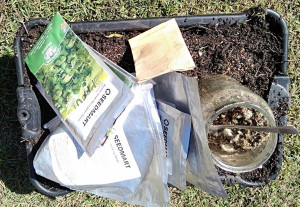
Now you need to seed. The whole point is to breed microbes, and different plant species emit different sugars to attract different species of microbes. As the name of the game is to create as diverse a range of beneficial microbes as possible, I make a mix of multiple species. Currently my magic seed mix has some 26 species of compatible plants which create an excellent mix of baby greens—really the end product. seedmart-seeds-soil-colin-austin-gbiota

Cycling

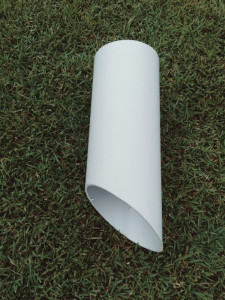
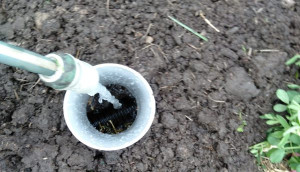
A typical cycle, from harvest to harvest for a box, is about eight weeks. With four boxes you will be restarting a box every couple of weeks. This is where the beauty of stacked boxes comes in. Whenever you have kitchen scraps you just lift off the top box and the breeding box lid and toss in the scraps. By the time it comes to rotate the box after eight weeks, you simply tip the old soil from the top box onto the decomposed waste, make that box the new top box, and use what was the top box as the breeding box. But don’t forget to move the worms back to the lower box—it is amazing how they will have bred up. You will need the kids to help you think of names for them all—they are now your pets. [vdo id="d26af4c8113c4466939f0105697754b7"] The best way I have found of watering is to collect up the soil blood from some or all of the box stacks and measure roughly how much fluid you will need for the liquid to saturate the growing and breeding boxes so a reasonable amount actually flows down to the bottom water reservoir box. This soil blood will be used on the next cycle and will flush the root zone with fresh microbes and minerals suspended in it. Gently pour this onto the soil in the top box so it floods. This will soak down through the growing and breeding boxes, mimicking the flood-and-drain cycle. This will expel the stale air, and when the soil blood flows down to the bottom water reservoir it will suck in fresh air. I prefer to push a short piece of Ag pipe into the soil and fill through that so the soil blood fills from the base upwards. It is basically breathing the soil. This is not quite as good as a proper flood-and-drain system where the soil is totally flooded from underneath, but it is a lot quicker and seems to work pretty well. As long as you apply enough soil blood so it goes right down to the bottom water container, they all seem to work pretty well. In the attached video I am reseeding and covering the surface with grass clippings in a vain attempt to fool the local pigeons who have now learned my boxes are a good source of seeds. But they do leave a calling card of fresh inoculants, commonly known as pigeon manure. box-compost-colin-austin-gbiota

Have fun flipping

[vdo id="6a1e057338574953805c6bbfaa42cde8"]

Alternatives

There are some alternatives to this three-box stack system that some people may prefer. The growing and breeding boxes can be combined into one large box. This has the advantage that the plants have a bigger root area. The disadvantage is that kitchen waste is normally generated daily, but this cannot be put straight into the breeding area and must be stored separately in some compost box or bag until the box is refurbished. boxes-and-drains-colin-austin-gbiota When the crop is finished and the box is being replenished, it is simply emptied and reloaded with compost on the bottom and the growing soil on top. This is best if the box is flooded from below like in a normal wicking bed. The best way is to have a long swivel tube so the box can be completely flooded from the filler tube, then the swivel tube twisted to let the box completely drain. [vdo id="a01a1f03819942779dbb71625fb972dc"] A compost tube can also be used. Organic waste can be placed in the tube and the box filled by watering through the compost tube. The tube can be moved to refurbish the soil and increase the time between full refurbishments of the box. I have many boxes using this system and it is a good way of growing, but more complicated than the simple three-box stack. If you want more details just email me at colin@gbiota.com.

Loading

Gbiota Tri Box – background

Good men

There are many problems with our modern food system — mineral deficiencies, poor nutrition, and degraded soil — but nothing is more important than feeding our control system: the gut brain that regulates the entire body.
pizza

Traditional Communities Hold the Clues

In isolated mountain regions of rural China, diabetes is virtually nonexistent. Families have been farming the same land sustainably for thousands of years. Their methods are simple but shockingly effective — and very different from modern industrial agriculture. One major difference is their attitude toward waste. What we politely call “shit,” they call fertiliser. Old women walk fields gathering animal and human manure, placing it carefully around each plant. Every cabbage in a field may have a small radial fan of manure around it — a nutrient-rich micro-ecosystem feeding living soil biology. Now compare that to modern Chinese cities like Shanghai or Shenzhen, where vegetables are grown hydroponically or in sterile soil, transported long distances, and purchased in supermarkets. The vegetables look perfect — but their living microbial content is nearly zero. Genetically, the city people and the mountain villagers are the same. They eat similar vegetables. The difference is the microbial content of the food they grow and eat.
It becomes impossible to ignore the obvious — how we grow our food shapes our health far more than we realise.

lettuce

Modern "Diabetic Plants" vs. Living Soil Plants

There is a long list of plants promoted for helping diabetes — Fenugreek, bitter melon, Emla, Ginseng, Goji berries, and many more. Many people buy these as extracts or pills. But were they grown in living soil? Were they harvested and eaten while the microbes were still alive? A plant grown hydroponically or in dead soil, shipped for days, then processed into a pill does not contain the living microbiome of a plant grown in nutrient-dense soil that is alive with beneficial microbes.
mountain area

Microbes Matter — More Than We Realise

Scientific research shows that gut microbes strongly influence weight and metabolic health. Transplant the microbes from a fat mouse into a skinny mouse and the skinny mouse becomes fat — and vice versa. Growing microbe-rich plants is easy. Even people in apartments can grow plants in living soil, and it costs far less than supermarket vegetables. The only downside? Our current food and pharmaceutical industries earn far more money keeping the system as it is.
 

We Can’t Use Yaks in City Apartments — So We Need New Methods

Rural communities fertilise their fields using Yak dung, but urban environments obviously cannot. That is why Gbiota technology exists — to recreate the ecological function of living soil in a clean, modern, simple system anyone can use. It really is not difficult to fix the problem. The biggest barrier is awareness. As the saying goes (often attributed to Lincoln):
"Bad things happen when good men stand by and do nothing."

  If you know someone with diabetes, please tell them about this work. Encourage them to grow a few microbe-rich plants at home and measure their blood sugar before and after. The results speak for themselves. We may live in the misinformation age, but people still trust people they know. That is how real change begins.

Loading

The How too

The How too

Gbiota is a practical way to grow “gut food” at home—plants rich in beneficial microbes and key minerals like zinc that support our immune system and help prevent chronic, non-infectious diseases.
I have written a lot about the theoretical aspect of growing gut food—now it is time to get down to the nitty-gritties of setting up a Gbiota system. But just bear with me for a couple of paragraphs while I set the scene.

Be pragmatic

In developing the Gbiota growing system I have had to consider ease of use and strike a balance between what is technically best and what people are actually willing to do in today’s high-pressure lifestyle. Let us be clear on what we are trying to do: prevent non-infectious diseases. To do that we must:
  • Breed the beneficial microbes that will end up in our gut, and
  • Ensure there is a good supply of minerals—like zinc, which powers our immune system.
The heart of Gbiota is simple: grow food that carries living microbes and minerals our body has evolved to depend on.

Randy lot

There is no problem about breeding microbes—they are a randy lot and breed within about 20 minutes of creation, growing exponentially. There are just two problems. If I can demonstrate my knowledge of microbiology—there are just three sorts of bugs:
  • Good bugs – keep us healthy
  • Dozy bugs – hang out and don’t do much
  • Bad bugs – make us sick and can even kill us
Now, being equally knowledgeable on microbiology, you will have worked out that what we want is the good bugs and not the bad bugs. There is no real way of killing off the bad bugs without killing off the good bugs, so we come to the real essence of the Gbiota system:
Create conditions where the good bugs outcompete the bad bugs so the bad bugs never become a serious hazard.
The second problem is that the good bugs, which we so carefully breed like a prize pet, not only breed very rapidly but also die very rapidly—so the plants must be eaten shortly after harvesting. Right now the only way you can do this is to grow gut food yourself. In the future I would like to see a local gut-brain food industry, but for now it is up to you.

The basics

I see three levels of Gbiota growing:
  • Gbiota pots – regular flower pots stacked to create separate zones, light enough to be easily handled.
  • Gbiota boxes – really wicking beds in box form, too heavy to manhandle.
  • Gbiota beds – raised beds which require a proper system for managing the water.
All Gbiota systems work on the same principle, but there are many ways this can be applied in practice. In this article I focus on the simplest system I can imagine—Gbiota pots—to illustrate the core principles. I plan to cover the alternative systems in later posts.

The three zones of a Gbiota pot

They all have three zones:

1. Growing zone

The top zone is where the plants grow. It contains soil loaded with mature organic compost, teaming with microbes, nutrients and minerals. In my example I use a regular flower pot, which I load with mature Gbiota mix. Apart from having some of the best soil in the business, this is just regular growing. I do put some organic waste at the very bottom of the pot, but this is well away from the early root zone and will have pretty much decomposed by the time the roots reach it. growing-pots-colin-austin-gbiota

2. Breeding zone

The breeding zone is exactly what it says—the zone where we breed the beneficial microbes that will end up powering our gut-brain. I use a second flower pot below the growing pot and load it with a combination of kitchen waste and any other organic waste I can lay my hands on—typically a mix of grass clippings and chicken manure. One practical problem is how to collect and store kitchen waste, which is produced daily and, if left lying about, attracts the blowies and other flies. I keep a bag of Gbiota soil mix to sprinkle on the surface so it gives a nice, clean cover. In my locality we have soldier flies which lay eggs that produce soldier fly larvae—excellent decomposers. We also need worms, which we can easily add as worm eggs; they soon breed up. I have compost bins in my garden, but people in flats may not have that luxury. Using two pots, it is simple: just lift up the top pot and load today’s kitchen waste into the breeding pot. It is important to get the nitrogen levels up, so I use fresh chicken manure. That may not be so attractive for flat dwellers, so another trick is to put today’s kitchen waste on a tray with some waste bread or bird seed. Local birds will happily visit and provide a free manure delivery service—no credit card needed. It is also important to add minerals. I use:
  • Crushed rock (cracker dust) used for driveways which, in my area, is largely Bauxite—cheap and rich in magnesium, one of our commonly deficient minerals.
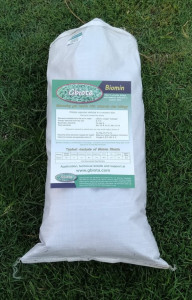
  • Biomin, which contains a spectrum of trace elements (including some zinc) but is more expensive.
Blood and bone is good for zinc, which is critical for a healthy immune system (I bet you have forgotten about Covid, but the flu is still here) and it satisfies my obsession with recycling. This breeding zone will need topping up with fresh organic waste. Using separate pots means all you have to do is lift off the growing pot, make a small hole, and add extra kitchen or organic waste as needed. soil-cover-colin-austin-gbiota

3. Catching the run-off

We need to catch the run-off, so we use a third container—a $2 bucket is fine. Fluid drains down from the top pot, through the second pot, and is caught in the bucket.

Soil blood

You may be tempted to dismiss the water you catch as just dirty water. But look at it under a microscope and you will see it is full of weird and wonderful creatures wriggling away. Healthy soil is full of life—from the larger creatures we can easily see, like worms and soldier fly maggots, to smaller creatures we need a microscope for, right down to the most minute—the viruses. These creatures have guts like us, doing the same job our guts do. This life is what turns dirt into soil, forming aggregates, giving soil its structure and, ultimately, keeping us healthy. Technically, I suppose I should call this “compost tea”, but that does not do this magic liquid justice, so I call it soil blood. In our bodies we have blood carrying sugars for energy, minerals and complex nutrients, as well as the cells that make up our immune system, keeping the baddies at bay. Plants also have an immune system and a system of making complex chemicals we call phyto-chemicals. This yukky-looking brown fluid is just as valuable to the plant world as blood is to us. So we want to catch it and reuse it. We can even boost it by adding blood and bone or Biomin minerals to make it even more potent.

Breathe the soil

[vdo id="518c7568bf354ad79537d8fc7b2be159"] The key to getting air into the soil (and avoiding a pongy mess) is to let the soil breathe. We achieve this with flood and drain. We flood the soil, which expels toxic gases like methane that accumulate during decomposition and act as growth inhibitors. Then we let the soil drain, and as the water drains away it automatically sucks fresh air back into the soil.

Dunk or flush

[vdo id="1833202504af4fc1a62f3c55c129be5b"] With a small flower pot, like I am using in this example, it is easy to lift the pot out, dunk it into a container, and let it saturate. It is best to do this slowly so the air has time to escape—if you do it quickly, you will see air bubbling to the surface. But when you are using bigger boxes, like the basket I will write about shortly, they can get really heavy to lift. I am a great believer in the phrase “perfection is the enemy of progress”, and I want people to use the Gbiota system, so I must make it as easy to use as possible. So I have tried simply catching this soil blood, putting it into a watering can (without the rose) and flooding the soil surface so a wave of water flows down through the soil and ends up in the catchment bucket. This may not be as good technically as the dunk-and-drain method, but it works. And it is easy. The key is to have a big enough slug of soil blood and apply it fast enough so it totally saturates the surface and reaches the catchment bucket below.

What to grow

Now let us get real here—one bucket is not going to feed an entire family. (The basket, being rectangular, is more productive—see the next post.) But we are not trying to grow all our food. Despite the howls of protest from dietitians, there is really not that much wrong with supplying our energy needs from Hungry Jacks. But Hungry Jack will not feed our gut-brain—that is what the Gbiota system is all about. We only need to supply about 5% of our total food intake as Gbiota food. Growing plants to full maturity can take several months, so you get much more food by growing baby greens, which are often more nutritious and tastier anyway. I make up a mix of seeds from fast-growing plants like rocket and radish to slower-growing plants like baby broccoli. It may take up to four weeks from germination to first harvest, but then I will have a continuous supply of food for four or more weeks. We still need more than one bucket. How many depends on the season (how fast plants are growing) and how much organic waste you generate. As the time from seeding to seeding will be about eight weeks, and most people will want to empty their kitchen waste every week, we are talking about having around eight sets of pots—which will set you back about $24, so a single finger up to the bank manager (do they still exist? Not for much longer with AI). Here is a cartoon series for the process.

Loading

Misinformation

Misinformation


We live in the misinformation age. Later I will take a general view of the damage caused by misinformation but let me start with a specific case - amputations from diabetes.

Diabetes is important, it is the fasted growing disease of modern times and every eight seconds some unfortunate soul has a limb amputated.

Let me work through on a step by step basis.

colin-austin-gbiota


Diabetes leads to high blood sugars which makes the blood more thick and viscous so it cannot get through the fine capillaries feeding our extremities so they simply go rotten and have to be amputated.

Next step - why do we get diabetes? The first stage, which often goes unnoticed is that we become resistant to insulin which is the hormone which controls blood sugar but then our pancreas, which makes the insulin, becomes clogged with fat and can no longer make insulin.

Next step - and this is where things go wrong - why does our body store excess fat? The misinformation is that this is simply due to us eating too much sugary fatty food so the solution is to go on a calorie restricted diet. It is true that eating too much sugary fatty food is not healthy but it misses the  step ‘why do we eat to much sugary fatty food’

Next step - why so we eat too much sugary fatty food? We have an intelligent control system, made up of our gut and head brains which control our bodies including our appetite. If our intelligent control system decides we need to store more fat it will send out hormones to make us hungry and is is almost impossible to defy these hormones over time.

Next step - how do we manage our intelligent control system so it stops us storing excess fat? Answer - training and gut composition.

Our intelligent control starts to learn the minute we are born. If we cut our food intake so there is not enough food we are teaching our gut brain that it needs to store food - excessively restrictive diets are teaching our gut brain to make as fat - exactly the opposite of what we want.

Our gut brain is made up of trillions of microbes which are foreign to us. If we have the wrong sort of microbes they will make us fat but we can simply change our microbes by changing the type of food we eat.

Next step - why are we eating the wrong sort of food?

OK it is time to go general. Diabetes is just one of the many illnesses that is the result of poor food and storing excess fat. The big killers of our era are heart attacks, strokes and dementia and they all have the common theme of food that makes us store the wrong sort of fat in the wrong places.

We live in the era where we have the greatest access to information the world has ever experienced - the internet. But we are also living in the era where power has migrated to global corporations who have more power and money than even a medium sized country and they are ultimately motivated by power and money.

They have more power and money than many Governments and by comparison an isolated consumer has negligible power.

They are extremely good at manipulative promotion so we buy what will make them the most money. In the case of food that is sugary fatty foods. It is virtually impossible for them to provide the fresh food with the beneficial living microbes we need in our gut - they just die before they are even on the shelves.

Next step - what can we do about it?

We are not totally helpless we just need two things. We need information and we need the technology of growing the food that will make us healthy.

That is where the Gbiota movement comes into play. Gbiota is a social benefit organisation, we rely on people volunteering their time and sometimes money to make sure the public has access to the proper information. We cannot supply the world with food that will make people healthy and avoid getting fat and sick but we can give them the information on what to eat and how to grow it.

We simply do not have the money to run massive advertising campaigns but we can be more effective by relying on real people to tell their friends about the Gbiota movement and persuade them to join the movement.

Loading

The Gut Brain Revolution: Growing to Prevent Modern Disease

Growing food to feed your gut brain is about using modern technology for what really matters – extending our healthy years, not just our lifespan.

From James Watt’s steam engine through to artificial intelligence and quantum computing, technology has reshaped how we live. Yet when it comes to food and health, these advances have often been misused. Instead of working for the benefit of communities, they too often enrich a handful of mega-corporations while our health span – the years we live in good health – declines.

At the start of the last century, most people died from infectious disease. Thanks to powerful combinations of technology, medical science and hygiene, we reduced deaths from infection to only a small fraction of total mortality. That is how technology should work – improving lives on a large scale.

But look more closely. Today, many people are not living active, healthy lives into their eighties and nineties. Instead, they face chronic conditions such as heart attacks, strokes, dementia and, fastest-growing of all, diabetes. Every eight seconds, somewhere in the world, a person loses a limb to diabetes – a modern phenomenon directly linked to how we use technology in our food system.

The core problem is simple: our high-tech food system does not properly feed our gut brain – the intelligent control system that keeps us lean, energised and resilient.

Our Intelligent Gut–Brain Control System

We have an intelligent control system formed by the interaction of our gut brain and head brain. Together they regulate our bodies. This system:

  • Controls appetite and where and how we store fat.
  • Coordinates the replacement of cells and tissues as they wear and age.
  • Trains and supports our immune system to defend against disease.

When this gut–brain system is well fed and supported, it keeps us healthy. When it is starved of the right signals from real food and living microbes, we gain fat in the wrong places, feel unwell and become vulnerable to chronic disease.

The reason so many people get fat and sick is that our industrial food system simply does not feed the gut brain. It delivers energy, additives and shelf life – but not the living biology that our internal control system depends on.

Growing Plants as Natural Prebiotics and Probiotics

Right now, we already have the technology to change this. We can grow plants that act as both prebiotics and probiotics by breeding beneficial microbes in the soil and managing conditions so the “good guys” outbreed and control the harmful microbes.

This is what Gbiota technology is about: practical methods anyone can use to grow plants that support gut biology. It can be done at scale and at minimal cost. So why is this not the norm?

The answer is straightforward. Very few people know about it, and it is not in the financial interests of the mega-corporations that dominate our highly centralised food system. They rely on long supply chains and extended shelf life. In contrast, plants grown as pre- and probiotics need to be eaten soon after picking, while their beneficial microbes are still alive – which calls for local, decentralised food systems.

So what can we do about that?

  • Option 1: Accept that limb amputations from diabetes every eight seconds are just a feature of modern life.
  • Option 2: Recognise that we live not in an information age, but in a misinformation age – and actively push back with real facts and real food.

The only serious choice is Option 2. We need to build a community movement that gives people clear, trustworthy information and shows them how to act on it.

We counter the misinformation age not with slogans, but with living plants grown to feed our gut microbes and real-world proof of the health benefits.

Independent Research and Community Action

I have spent years writing about these topics on my website www.gbiota.com. The next step is rigorous, independent research that measures the impact of gut-food plants on real people in real communities.

I am currently fundraising to support a PhD project at the University of Queensland to:

  • Conduct laboratory research on plants specifically grown as prebiotics and probiotics.
  • Run community-based trials where people shift to diets that include these plants.
  • Measure outcomes such as blood sugar levels to see the benefits quickly and objectively.

This work needs to be independent – free from the influence of large commercial interests – so that results are credible and focused on community health rather than profit.

I do not have billions of dollars for a global advertising campaign. What I do have – and what you have – is the ability to share reliable information person-to-person. You can help simply by telling your friends, both in your local community and online, about gut food, gut microbes and Gbiota-style growing.

We may live in the misinformation age, but people still listen to those they trust. When they see neighbours, friends or family members growing and eating microbe-rich plants and enjoying better health, that is more persuasive than any marketing campaign.

The path forward is clear: grow food that feeds your gut brain, prove the benefits in everyday life, and share those stories through trusted community networks.

Loading

Food waste

Food waste

Don’t waste good food

‘I will just give these to the chickens.’ How can such a simple phrase lead to a major rethink of how we stay fit and healthy.

You see I was standing at Community Lifestyle Support’s nursery on one of their market days when I heard that phrase and it really got me thinking about the supply system for fresh vegetables.

I know just how important our gut biome is, our modern epidemic of non infectious diseases like heart attacks, strokes, dementia and particularly diabetes all stem from a poor gut biome which forms part of our intelligent control system which manages how much and where we store fat.

Plants are natural pre and pro biotics, our gut evolved over a couple of million years by our predecessors eating green leaves so we know they work.

The snag is that the microbes in and on green leaves have a short life span, one hour for a microbe is equivalent to a human year so plants are the most healthy and taste much better if they are eaten within 24 hours of picking.

chicken-colin-austin-gbiota

Each day after that the beneficial microbes are progressively replaced by harmful microbes until the plant is obviously rotten.

That is why we developed the Gbiota box system so people can have plants full of beneficial microbes growing in soil teaming with microbes and nutrients.

But there was two things that struck me at that market day.

First even though growing plants at home is undoubtedly the best way of improving gut health there is still a lot of people who just don’t want the hassle and prefer to buy the plants directly.

Secondly although there are many successful home gardeners growing their own food for their health there are times when the crops grow so well that there is a total abundance of plants and they have no idea what to do with this surplus other than give it to the chickens.

food-waste-colin-austin-gbiota

There are probably millions of tons of perfectly good food, full of beneficial microbes going to waste because these home growers have no easy way of supplying this to people who really need it.

Then it struck me - I am sitting on the solution with my web aptly named www.pickandeat.shop

Home growers can simply advertise, for free on my web, that they have surplus food. If they wish they can make a charge for this food which people pay for on line then just go and pick up at some set time, say between 10 to 11 on Saturday morning.

Even commercial growers could use this system, receiving pre paid orders which customers just pick up at the local market.

This would save millions of tons of food going to waste (and I hate to see food wasted) and mean people would have access to fresh food before the beneficial microbes are replaced by the harmful microbes.

Interested? Just email me at colin@gbiota.com and I will send you details of how to set up your pickandeat.shop advert.

Loading

Real and fantasy

Real and fantasy

Real and fantasy

Colin Austin © 15th May 2023 This document is published under the Creative Commons system which means that it can be freely copied or republished without further permission – the only provision is the Standard Creative commons requirement that the source Colin Austin www.gbiota.com should be acknowledged.

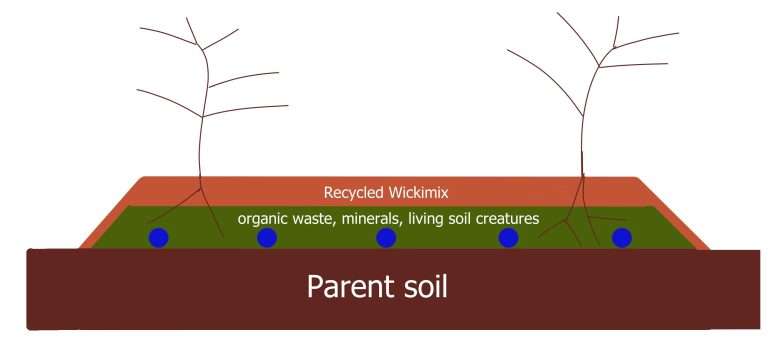
Gbiota is not simply about growing plants. We breed a wide spectrum of microbes in a growing medium called Wickimix and then grow plants so the microbes are packaged in the plant so when people eat the plants they act as pre and pro biotics to enhance gut health.

Take a pill, become slim fit and healthy and live to 100 without ever getting sick. Scientific breakthrough or adverting BS? Whatever else it is an intriguing story.

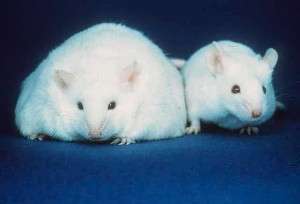
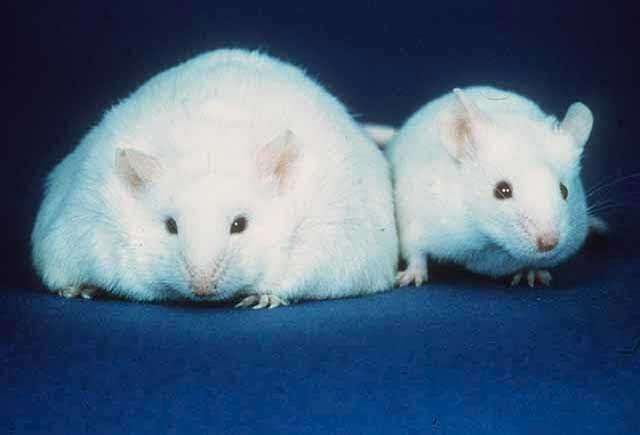
It starts with lab mice, feed a skinny mouse pill number one and it becomes fat, feed fat mouse pill number two and it becomes skinny. Now that would seem like a major breakthrough but there is a snag, these pills are from the pooh of fat and skinny mice.

snake-oil-con-man-colin-austin-gbiota

Many animals from mice to elephants eat each others pooh, it is essential for their gut biome but not us humans.

We do have an alternative, crudely put find a skinny person and poke their pooh up your bum. It actually works but apart from being a bit gross it can end up with dangerous infections.

But is does show one thing beyond all doubt - that our guts control whether we are fat or skinny.

fat-and-skinny-mice-colin-austin-gbiota

But how? We now understand that the trillions of cells in our gut communicate with each other to create a super computer which regulates our bodies. It receives signals from all over the body, works with our head brain to decide what to do, then send out yet more signals, electric or hormones to regulate our bodies.

It does this to regulate whether we are fat or skinny by controlling our appetite, but it also does this for how fast we age and repairing our bodies as they age or wear and also for our immune system.

But can we just take a pill to change our gut biome? It seems that our gut is much more complicated than we first thought.

We can certainly conduct DNA testing and can find associations between skinny people with certain types of microbes and fat people with others types of microbes but just breeding these microbes up in the lab and putting them into a pill does not seem to be very effective.

It seems that our gut brain is much more sophisticated than we first thought.  Thinking of our gut brain as an intelligent control system rather than just an organ is a major shift.

You may like to read my article on the Lamborghini and then contemplate that our gut brain makes ChatGPT look a bit primative.

rob-knight-colin-austin-gbiota

There is not just one species of microbes that makes as fat and another that makes us skinny, there are thousands of species of microbes in our gut and they all work together in a very complicated way as an Eco system which we really do not understand as yet.

Does that mean we have to give away the idea of some magic pill that will make us slim, fit and healthy for a very long life - well yes and no.

There may not be a magic pill but we can learn from people already living a long and healthy life, like people in the blue zones and natives tribes who also have a healthy gut biome and do not suffer from our modern diseases like diabetes.

So we have to ask why should their gut biota be so different to people eating a modern diet?

pills-in-mouth-colin-austin-gbiota

The answer is the same as for our gut. They eat food grown in soil with a complex, and sustainable Eco system of living creatures in the soil. The beneficial microbes enter the plants roots and they eat the plants while fresh before the microbes die, giving them a healthy gut biome.

This is the basic principle of the Gbiota system. Experienced growers breed beneficial microbes in organic waste to create Wickimix, this is placed into Gbiota boxes and seeded so people can have growing plants in their home which they can pick and eat to give them a healthy gut biome.

soil-food-web-colin-austin-gbiota

If you are a new viewer I suggest you go to our welcome page.

If you want a more detailed overview of the Gbiota technology go to Gbiota news

If you are a regular and just want to catch up on the latest news go to New posts

If you want to chat with me about the Gbiota project just email me at colin@gbiota.com I actually am a real person and welcome a friendly chat about the Gbiota project

Loading

Invite to medical research

Invite to medical research

Invitation to medical researchers

Every eight seconds someone has a limb amputated from diabetes.  We know how to save peoples feet but we need to make this technology go main stream.  This is an invite to medical researches to join in a project to save peoples feet from the knife.

Infectious and non infectious diseases

From when humanoids first appeared infectious diseases were the number one threat. As a kid (a long time ago) if some other kid developed a child hood disease there would be a chicken pox party for all the local kids so we caught it and developed immunity.

The young were particularly prone with many dying but if you made it to 30 then there was a good chance that you would live to a ripe old age.

Then there were amazing development in medical research, particularly vaccines and antibiotics so it looked as though we had won the battle but non infectious diseases increased dramatically.

Specifically people were getting fatter and diseases, like diabetes which is associated with excess storage of fat in the pancreas, became the fastest growing of these modern diseases.

The battle of the bulge

This excess storage of fat was largely blamed on our modern diet which could, it was optimistically thought, simply be resolved by diet, particularly the restriction of calories.

The harsh reality is that this simply has not worked and populations across the globe continue to get fatter and suffer from the related diseases. This is probably the biggest health issue facing modern humans.

Calorie restriction simply does not work and actually seems to make it worse as the body reacts by storing more fat and the resultant cravings eventually lead to even more fat being stored.

So what is going on?

Intelligent control systems

I am an engineer, I am not a medical doctor and have no formal qualifications in microbiology or biochemistry. Engineers make machines and every machine has some form of control system, even if it is a simple on off switch.

Learning how control systems work is an everyday job for engineers.

With the advent of computers we were able to device really sophisticated controllers that were given various names, adaptive control, fuzzy logic, self learning software, predictor corrector and more recently as a sub branch of artificial intelligence.

But they all work on the same principle, make a very small change to the system and monitor what happens. If it is good make a larger calculated change and again see what happens and keep on doing this until the computer has learned with a very good understanding of how to control the machine.

Intelligent control is my preferred name for this.

The human body - the master intelligent control system

There is no doubt that this is exactly the way the human body works. Don’t believe me - think of a three year old kid learning to ride a bike.

I can remember at university learning about rotational inertia and gyroscopic couples which explains exactly how a bicycle works. The gyroscopic forces twist the handlebars so we steer in the direction the bike is falling.

I come from a family of engineers and have engineering friends who like me are a bit OCDish about their profession but I have yet to see an engineer putting his three year old kid on his lap and explain the theory of gyroscopic couples to teach his kid how to ride a bike.

No - the kid sees other kids riding bicycles, gets on and falls off and keeps on doing that until he magically masters the art.

It takes less than an hour and a few cut knees.

Engineers and intelligent control systems

I understand this process of how intelligent control systems work, I used to write software to do precisely this. As a pioneer in the use of computers to solve engineering problems I was recognised by the Institute of Engineers as one of the top one hundred Australian innovators.

Our bodies have an intelligent control system to manage our bodies, it works in exactly the same way as adaptive control systems work but is far more sophisticated then anything I ,or any other engineer, could write and is way beyond our understanding - but it is the way we work.

We don’t control the speed of a car by how much fuel we put in the tank but we use an intelligent controller, we call the driver, read my article Lamborghini and our gut.

Let us face reality

Medical science has made major advances in fighting infectious diseases and until recently has been increasing our life span.

But in this modern era of non infectious diseases we are going backwards, our health span (how long we remain healthy rather then live) is decreasing and with the diseases that stem from storing excess fat like diabetes we are loosing the battle. Just go round any shopping centre and see for yourself.

Our attempts to combat this by restrictive diets, particularly those that just focus on restricting calories, are not working and are actually making things work as our intelligent control system fights back.

We are fighting our intelligent control system rather than working with it. Not good.

Every eight seconds some has a limb amputated from a side affect of diabetes, we are loosing the battle and need to change tack.

Changing tack

We need to change tack by working with our in built intelligent control system rather than fighting it.

But neither I nor anyone else really understands the detailed coding of how our intelligent control systems works. We may one day but every eight seconds we delay some unfortunate person has a limb amputated.

How many feet are we prepared to have chopped of before we act?

We do not need a complete understanding of how our intelligent control system works. Our three year old kid happily rides her bike with absolutely no understanding of gyroscopic forces and probably never will.

But she does know that she has to let the bike steer into the direction she is falling and everything will be fine.

In the same way we know what we have to do. We have to change our gut biome, which is key to our intelligent control system, so we want to eat the sort of food that will change our intelligent control system - our gut brain.

It is not a question of forcing us to eat some horrible restrictive diet which we hate and does not work, it is changing our gut biome - which naturally regulates what and how much we eat - so we actually want to eat food that will make us healthy.

We do that in exactly the same way that our three year old kids learns to ride a bike, by seeing what works.

What worked then and now

Visit the hunter gatherer tribes in Tanzania or the Amazon or any of the blue zones where people live a healthy life to a ripe old age. Do you see them sitting around their DNA testing machines looking at the latest results for their gut biome? No.

But you do see them picking and eating plants which are growing in soil which is teaming with all sorts of wriggly creatures.

When experts actually analyse the results of any DNA test they conduct they see they have the most diverse and healthy gut biome and that the non infectious diseases, like diabetes are virtually unknown.

Now don’t get me wrong. We cannot go back to that early life style, there is too many of us, rather we should study their foods and see what we can learn then apply this with the best technology that is available to us right now.

We should not be tempted to wait until we have the perfect solution, as they say perfection is the enemy of progress.

The Gbiota system

These are the principles I used to develop the Gbiota system, breed the beneficial organisms in organic waste to create a growing mix which can be placed into boxes so people can have plants ready to pick and eat in their own home.

See the Wickimix story.

This is a simple but effective way of changing our intelligent control system - our gut brain.

This technology is now used by a group of dedicated growers who are prepared to spend their time understanding the basic principles and grow some of their own food. Technical details are in the growing section

But this only reaches a very small proportion of the population and every eight seconds someone has a foot chopped off.

If we are going to prevent people having their foot chopped of we need to make this technology mainstream and for that we need the cooperation of medical researchers which is why I extend an invitation to work together to make this mainstream.

With the harm caused to the public and the cost to the medical system of non infectious disease it should not be too difficult to raise the funds to sponsor a few of our young and brightest researchers to work in this field.

Please contact me at colin@gbiota.com

Loading

Gbiota Tri Box – background

Lamborghini and our gut

Lamborghini and our gut

A dumb drunken driver in control of a Lamborghini is a dangerous combination.

Our gut brain is the controller for our appetite.

A gut biome which send out hormones to make us crave sugars and fats is equally dangerous and has led to the modern epidemic of heart disease, strokes, diabetes, dementia etc.

lamborghini-crash-colin-austin-gbiota

If the Lamborghini crashes or we have a leg amputated from diabetes it is not the fault of the Lamborghini or the sugars and fats it is the fault of the control system which makes us crave sugary fatty food.

We evolved to have an effective control system.

We need a healthy gut biome which will send out the right hormones so we want to eat the right amount of the right sort of food and not crave sugary fatty foods which will make us fat and sick.

We can change our gut biome in about four weeks simply by diet and the results are obvious by the food we want to eat, peoples genes do vary but we can shift the odds of living a long and healthy life.

A healthy gut biome starts in the soil and the creatures that live in the soil, they enter the plants we eat and are fed by the fibre in the plants which are natural pre and pro biotics.

Microbes breed rapidly but also die rapidly so the plants need to be eaten shortly after harvesting.

This is well understood by thousands of home gardeners who breed the beneficial microbes in their soil and eat the plants shortly after picking- but this is only viable for a limited number of people.

There are eight billion people and they all need a healthy gut brain - how do we make this happen for all those people?

The Gbiota system was developed so all people can have access to plants growing in nutrient rich living soil full of beneficial microbes even if they live in an apartment with no garden, time or growing skills.

Experienced growers breed the microbes in organic waste to create Wickimix which they put into Gbiota Wicking boxes so people can have plants, ready to harvest, growing in their own home.

amputation-woman-colin-austin-gbiota

Gbiota – what is it all about

The last few years have seen an amazing improvement in our understanding of Gut biology. Gbiota is just short for Gut Biota.

Just read the medical literature and you will see many papers from leading medical researchers like Drs Tim Spector, Andrew Jenkinson, Will Bulsiewicz and many more.

They all tell us the same story, our gut and head brains work together to control our bodies which is now understood as critical to living a long and healthy life.

I am not directly involved in the massive area of research into gut biology, I just read the literature and see what they are saying. My interest is in practical solutions.

They all say the solution is to eat a wide variety of plants but just going to the supermarket and buying a bunch of vegetables is simply not enough. The beneficial biota come from the soil and creatures in the soils and our modern industrial chemical system are low in the critical biota even when just harvested but the critical issue is that the biota breed and die very fast so by the time the plants are actually eaten they are deficient in both living biota and key minerals.

health-books-colin-austin-gbiota

This is where I come in, my interest is in how to grow plants which will enhance gut biology.

The most effective solution is to have people growing plants in biologically active nutrient rich soil in their own home so they can pick and eat.

If you are just looking for some magic pill to enhance your gut and are not interested in growing plants then this is not the web site for you. This web site is all about how to grow plants that will act as natural pre and pro biotics.

Gbiota wicking boxes enable people particularly those living in apartments to have plants growing at home which can be eaten while alive but this is only effective if the growing medium in the wicking boxes is teaming with the beneficial life and essential minerals.

The Gbiota system is a two stage process, experienced growers breed the beneficial microbes in organic waste in a balanced ecosystem so the beneficial microbes out compete and suppress the harmful biota which are always part of an ecosystem.

colin-austin-gbiota

This generates the growing medium we call Wickimix which is placed directly into the Wicking boxes for their local community, either as a side hassle or a business.

There are many people who want to enhance their gut by eating plants that act as pre and pro biotics but you simply cannot do that in regular soil, you need a soil which is teaming with all sorts of creatures from the most minute viruses to the larger creatures like worms and larvae which have guts just like us and where the critical microbes we need can breed up. You really need Wickimix where all the creatures are happily breeding.

sponge-bed-colin-austin-gbiota

We really need local growers who can produce this Wickimix, this has to be a local operation so the Wickimix can be loaded straight from the Gbiota beds where the creatures are breeding and into the Wicking boxes.

If you have an interest in becoming a Wickimix grower please read the technical articles starting with the welcome message and contact me  and we will see how we can help you set up as a Gbiota grower.

Any questions? Just email me at colin@gbiota.com

Loading

The Wickimix story

The Wickimix story

The Wickimix story

Chop my foot off - no way

My wife Xiulan is a medical doctor, a gynaecologist and surgeon, so I was a bit surprised when she was diagnosed as diabetic. At that time I knew nothing about diabetes but when her foot started to turn black and the doctors started talking about amputation I knew I had to do something.

I am an engineer, not a doctor but I have been in the innovation business for a long time and was selected as one of the top one hundred Australian innovators by the Institute of Engineers for my pioneering work on computer simulation.

I knew how the process of science and technology actually worked, so I felt I should at least try.

In my book Water, Wit and Wisdom I talk about the process of innovation. It is often not about being particularly clever but about challenging the conventional paradigm or wisdom.

I was not selected as among Australia top innovators because I was particularly clever, rather my flow simulation showed that the conventional paradigm was just not working and fought the battle of getting a new paradigm accepted - a bloody process.


Science and engineering


There is a big difference between science and engineering. A scientist will work at the limit of knowledge in a highly specialist area trying to push the boundaries of understanding that one step further.

An engineers job is to find practical solutions to real problems, he or she uses science as a tool, often having to understand a spectrum of sciences, fill in the holes in knowledge when needed and come up with a solution that works.

There is a saying that science is the art of managing knowledge, engineering is the art of managing ignorance.

Things rarely work first time, it is part of the job of an engineer to be a perfect pain, keep on digging away to find the real reason why something is not working - then fix it.

colin-austin-books-gbiota

Type 2

Professor Roy Taylor of Newcastle University in his book Reversing Diabetes gives a fundamental explanation of the mechanics of diabetes.

It was pretty easy to find the basic cause of diabetes (type 2). At first, probably before the person is aware that they are becoming diabetic, fat begins to build up in the muscles so sugar in the blood finds it more difficult to enter the muscles.

That is the job of Insulin so the pancreas just churns out more insulin and everything seems to be working fine.

That’s pre diabetes.

But then fat begins to build up in the pancreas so insulin production is blocked and that is when the trouble starts.

Blood sugars rise so the blood gets thicker and cannot get through the finer blood vessels which is why the extremities like the feet start turning black .

By then it can be too late to fix so there is no option other than amputation.

That was the road Xiulan was on.

roy-taylor-colin-austin-gbiota

Why daddy why?

That is when the engineers habit of being a total pain comes in, keep on asking questions like a four year old, until the real reason comes to light.

The first question is why do people get (or rather store) fat? A common simple answer is because they eat too much of the wrong sort of food, but that is not a real answer, we have to ask the question why do people eat too much of the wrong sort of food.

Now this is where the fun starts because people start talking about conspiracy theories and how the food industry is producing food full of sugars, fats and flavourings which are addictive.

Now there may be some truth in this but again it is back to the questions, why do people keep on eating all this bad food if they know full well that it may end up with them having a limb chopped off.

People are not that stupid and there is no law saying you must eat this food.

DNA testing blows conventional wisdom

Tim Spector in his many books such as The diet Myth has been a pioneer in rethinking diet and health.

He is a genuine paradigm buster challenging the conventional thinking which is focused on the amount of calories we eat.

And this is where things get really interesting.

The view in the scientific community was that the gut was just an organ for digesting food.

Then along come DNA testing machines so scientist could see all the different varieties of organisms that make up our gut biota.

And that is where a bit of an explosion has been occurring.

I read the literature and not that many years ago the scientists were talking about a handful of species, then it grew to a thousand and now I read of tens of thousands - it is mind boggling.

But what is exciting is that the scientist were discovering what they first called association(meaning a likely connections) that this particularly species was associated with people getting fat.

Then they did tests on a large number of people and were able to identify clear correlations (meaning that there is a definite connection but no indication of a mechanism).

diet-myth-colin-austin-gbiota

Will Bulsiewicz is another paradigm buster, like many medical doctors he appreciated the benefit of a plant base diet but also realised the link between the biota in the soil and in our gut.

This is important.  Bugs breed fast but die fast so to improve gut health we need plants growing in soil teaming with nutrients and we need to eat them shortly after harvesting.

fibrefueled-colin-austin-gbiota

The real reason we get fat

That leaves the $64,000 question ‘Why do some species of microbes make people store fat while other species do not?’

I am not a micro-biologist but I was a pioneer in computer technology, in those fun days when we had to write machine code and had things like peek and poke looking inside the computer so we could actually understand what the computer was doing.

This actually boils down to something very simple - the ‘if then else condition’.

If is is cold wear a jacket, but trillions of such statements give the impression of intelligence. (Humans are more analogue and deal in concepts which is real intelligence).

But, I thought, there are trillions of cells in our guts, maybe they can communicate with each other, maybe in a simplistic way, but building up to an intelligent system. We see this in nature with ants, bees and my favourite - slime moulds.


Intelligent control systems

My very first job as an engineer was working for a company that made control gear for big plants like power stations - information would come in from sensors, be analysed by the control system which would then send out signals to crack this or that valve a bit more open or shut.

Could our gut be like this intelligent control system controlling whether we are fat or skinny?

Then I read that the micro-biology experts in the field were talking the same language with set points.

control-panel-colin-austin-gbiota

Dr Andrew Jenkinson is a medical doctor who has appreciated that we don’t get fat simply because we are eating too many calories but that we have a control system which decides on a set point and ensures we maintain that set point.

We don’t get fat simply because we eat too much, our intelligent control system decides what the set point should be and pressurises us to eat the amount of food to reach that set point.

We may have no idea of the mechanics but our gut decides that we should store this amount of fat and would send out hormones to make us hungry so however much we may try in the long run we would end up at that set point.

Nice theory but my job as an engineer is not to develop theories but to work out how to apply them to solve a problem.

And the problem in this case is to stop people having their limbs chopped off from diabetes which happens every eight seconds.

why-we-eat-too-much-colin-austin-gbiota

Chop, chop every eight seconds

Just think about this, every eight second some unfortunate person has a limb chopped off and this may be preventable.

We can be a bit stronger than 'may be' as this scale is totally new, fifty years ago very few people suffered from diabetes but now it is the fastest growing of all modern diseases.

Back to being a four year old and asking what has changed? We certainly know how our food has changed but there was no DNA machines back then.

But there are still societies living an earlier life style, and of great interest people living in the blue zones where people live to a ripe old age, which is good, but what is even better are fit and healthy right to the end (health span rather than life span).

We got a double whammy in asking that question. Yes these people had a far healthier gut that modern people and they were doing this simply by food, basically eating a diet with a high plant content but the plants were grown in soil that was full of microbes and minerals and eaten fresh, shortly after harvesting.

Pretty simple really, and that is what the Gbiota project is all about.

amputation-leg-colin-austin-gbiota

How innovation really works

We live in an era where the theory of how innovation happens is very different to the way it actually does happen.

Many of the great innovations we take for granted now, originated by someone doing something and showing it is actually important and works first and then studying, in a detailed scientific way actually how it works.

How innovation actually works is the theme of my book Water, Wit and Wisdom which is really focused on the water crisis but talks about how innovation is often paradigm busting.

water-wit-and-wisdom-colin-austin-gbiota

Good bugs and bad bugs

The key issue is that there are certainly many if not most micro-organisms which are more than desirable - they are essential for life - what I, being a crude engineer, call the good bugs.

But there are also micro-organisms which can cause us a great deal of harm, the black death, cholera, and I believe there has recently been another baddy causing humanity a great deal of harm.

The classic approach has been to try and kill of the bad bugs. May be not as extreme as then President Trump suggesting we inject bleach into our blood stream but still the same philosophy of killing off the badies. That has been the mainstay of our approach over the last fifty years.

But look at the people in the blue zones, they are living, and staying healthy to a ripe old age. What is their magic secret?

Well this is the age of internet marketing to I abhor phrases like magic secrets which is just a way of conning people into buying things. So what were they doing?

If you asked them they probably could not tell you as even they do not know but we can use the knowledge we have from the study of Eco systems to understand why it worked.

Eco system v Trumps bleach

Every Eco system is made up of many different species competing to breed.

Darwin talked about the survival of the fittest (best adapted) but actually it was the survival of the randiest, the species that survived were the ones that could out breed the others - and that really depends on the conditions.

With all due to respect to Donald Trump it is very difficult to kill off the bad bugs without killing of the good bugs. But it is relatively easy to create the conditions where the good bug out breed the bad bugs. It happens all the time without us even thinking about it.

E-coli is a really nasty bad bug which virtually everyone has in their gut. But it is normally not an issue as the good bugs simply out breed and suppress it so it is never a real problem.


Gbiota beds

This is the basic principle of the Gbiota beds. It is very easy to breed bugs, they are a randy lot and you almost cannot stop them breeding. The key is to create the conditions so the good bugs out breed the bad bugs and the key to that is breathing the soil and controlling the moisture level.

These can be used to grow plants which can then be picked and eaten fresh before the good bugs die off and the bad bug take over.

Not space age technology and there are many home growers who are doing precisely this.

But there are some eight billion people in the world and they all have guts and are prone to becoming diabetic or suffering from the other diseases which come from our poor gut health and they can’t all have Gbiota beds in their apartments.

flood-and-drain-system-colin-austin-gbiota

Gbiota boxes

So we need another option and that is Gbiota boxes. This is a two stage system.

Local growers who have the land and skills set up Gbiota beds with the prime aim of making Wickimix.gbiota-fresh-box-colin-ausitn-gbiota

This is a growing medium full of the beneficial creatures and minerals which is loaded into Wicking boxes which are small enough to fit into apartments, balconies or any restricted space.

People can then have plants growing in Wickimix in their own home which are full of beneficial microbes which they can pick and eat while still fresh.

There are plenty of people who would prefer not to have a foot chopped off from diabetes, what we need now to make this work are local growers who can produce Wickimix - that growing medium full of living creatures and essential minerals.

If this could be your scene please contact me as colin@gbiota.com


Loading

Unks and Ununks

Unks and Ununks

Unks and ununks

Colin Austin © 17th April 2023
This document is published under the Creative Commons system which means that it can be freely copied or republished without further permission – the only provision is the Standard Creative commons requirement that the source Colin Austin www.gbiota.com should be acknowledged.

Tumultuous meting

Hopefully you would have read about John and Sue tumultuous meeting. (read here) Now they are in a passionate, but heated relationship.

John is still claiming that the modern supermarket food system is providing a reliable and abundant food supply with hygienic and energy packed food from all over the world regardless of season.

Sue is arguing that the food is just packed with sugars and fats and lacking key nutrients and minerals and is deliberately made addictive and is the cause of the modern epidemic of non-infectious diseases.

But they have reached common ground that the food is inert lacking the life which supports our gut brain, which among other functions controls our appetite.

Even if we were surrounded by tempting food our gut brain should simply generate the hormones that would make us feel full so we would just stop eating.

Unks and ununks (knowns and unknowns)

John says look at the incredible improvements in food production since the days of Norman Borlaug.

Sue agrees is it was an incredible piece of research but at that time we had no knowledge of the importance of gut biology - it was an unknown unknown.

We conducted a real time experiment on the worlds population and we ended up with a food system that has led to a major health epidemic of non -infectious diseases. The results were clear - an epidemic which dwarfs Covid (read here and here).

We now know that our gut is a real brain which controls many body functions but at this moment we have no real idea of the coding that makes it take decisions so we should be very careful in thinking we can change our gut biology by breeding microbes under laboratory conditions.

Sue is very strong on this - our intelligent control system is made up of trillions of cells of thousands of different species - we need to recognise what we know and what we don’t know and look for solutions that have been tested in a natural environment over thousands of years.

Grow your own

So they have agreed to grow enough of their own food to feed their gut brain. But they have adopted a very different approach to poor Mary (read here) who just buys boxes with plants ready to harvest from George (read here and here and here) who gets his mate to deliver the boxes to her door and take away the old box and the bag of organic waste she leaves out for him.

She only grows a few species, mainly micro-greens like broccoli, alfalfa, lettuce, and the ever faithful flax and is quite happy to leave all the soil regeneration to George.

Mary's thinking

Mary and Sue are opposite ends of the spectrum. Mary, to be honest does not care about the state of the world, her mum only just made it through her Covid and now has long Covid which is in a way worse. Mary learned that people with a strong immune system from eating food that feeds the gut are far less likely to suffer a sever attack so Mary is just interested in her and her kids Immune system.

Sue’s thinking

Sue, to be honest is a bit of an extremest, she sees that the way humans are destroying the natural functions of the earth is leading to an inevitable collapse of the ecological system. May be not the end of humanity but mass hardship and with a food crisis leading to mass migration of desperate starving people.

She says we see what is happening in autocratic countries but how much better are we? Large corporation have immense power, including power over our Governments - it is profits over people.

If we want peoples needs to take priority over profits for the mega corporations it is up to us ordinary people to take action.

You can be like me and become an activist or you can be like Mary and quietly work away growing food that will feed your gut brain. It may not lead to a dramatic change but it will influence people around you.

Gut health is all about diversity

Sue want to be much more adventurous, she knows there are literally thousands of edible plants she can grow from seed, which she cannot buy from the regular shops and she is well aware of the health benefits of the many herbs and spicies she could grow.

But she is well aware that although you can buy bags of potting mix which are full of nutrients this is not not the same as living soil, full of all those creatures from worms down to the microbes and fungi which George can supply in Wickimix.

She also understands the importance of the growing medium being both hydrophilic (easy wetting) and having a high water holding capacity.

Natural soil contains a huge range of micro organism in the main families of fungi, bacteria, protozoa, nematodes and viruses which can only be seen with a high powered microscope. But it also contains many small creatures which can be just seen with a magnifying glass and then there are the large creatures like worms and soldier flies which have guts not that different to ours where microscopic organism breed.

Sue says that soil is complex and so is our gut - we must recognised that we are just at the beginning of long learning experience and not be over confident of our understanding.

Types of Wicking boxes

She also knows that there are a number of different styles of Gbiota Wicking boxes she can choose from, each with their own benefits and limitations. This is very different to Mary who just uses a box with a single drainage hole in the side.

Mary's box is supplied by George and is just a standard box with a hole drilled in the side, he fills the box with Wickimix and just pokes a pointed stick through the side hole to make what he calls a mole hole, to ensure proper drainage.

Apart from watering, Mary does not need to touch her box until it is swapped for a new one after the crop is finished.

Sue may well decide to go for the common design with a swivel joint on the outside of the box so she can regulate the water depth and drain when needed and with an ag pipe running along the base then up to the surface.

This means she can surface water while the seeds are germinating then swap over to water at the base and relying on wicking action to take the water up to the root zone.

The amount of water stored is limited by the void space in the soil and how far the water will wick, which depends on the characteristics of the soil. Read water to see how Wicking beds actually work.

She has an alternative of using the twin box approach. Wicks hang down from the top box and into liquid water in the bottom box. This means that 100% of the space is available for water storage and the bottom box can be made large to hold as much water as needed so giving a long time between irrigations.

While this system works quite well it is limited by the capacity of the wick to suck water up to the top box. With thirsty plants in a hot dry climate this can mean they just cannot supply water fast enough.

While cotton makes an excellent material for wicking it is prone to rotting with the intense microbial activity.

But Gbiota Wicking boxes are about breeding beneficial microbes rather than just watering the plants.

For Mary this is no problem as she gets new Wicking mix every time her box is swapped but for Sue she want to extend the time between refreshing the Wickimix.

The creatures in the soil, from the worms, through the microbes and right down to the minute viruses, are all living creatures which need to be fed and watered. They have short lives so they must have the conditions where they can breed, which they will do profusely if the conditions are right.

That is the topic of my next article.

Loading

Unks and Ununks

Upgraded beds Introduction

Upgraded beds - Introduction

The information paradox

The world is changing at an incredible rate, climate change, the virus and the polarisation of the political system are immense problems, new technologies like artificial intelligence may seem beneficial but whatever the benefits increase inequality between the haves and have nots.

Innovators, like me, ask how can we develop technologies to help mitigate these problems and often that it is the easy bit, a bigger problems in how to make that technology widely available with the relevant documentation.

It is tempting to focus on the new developments but at times an overview is needed to keep things in perspective. This is such a time so I start with an overview.

The birth of Wicking beds

It is approaching thirty years since I was invited to go to Ethiopia to see if there was anything I could do to help feed people in one of those terrible droughts.

I could see the two issues were lack of water and nutrients. Nutrients were the easy bit, weeds may be a pain but they are incredibly effective at extracting the last bit of nutrients from the soil and they can then be used as fertiliser.

Water was a bigger problem but I had travelled extensively in the Australian deserts and seen the natural phenomenon of water being collected in clay basins, flowing down to the lowest point then wicking up to feed luxuriant vegetation in the middle of a dry desert.

That was the birth of what I named Wicking beds - dig a trench, line with a water proof layer, clay or plastic film, load the base with weeds then back fill with soil.

There was no question of the weeds going putrid by soaking in stagnant water - this was in the middle of a sever drought.

mum-and-baby-in-desert-colin-austin-gbiota

Publicity v technology

On my return to Australia I wrote about this and the idea caught on, but some bright spark they could improve on this by replacing the weeds with stones and having a cloth layer to prevent the soil and roots entering the water zone.

This actually works fine - as self watering beds - but does little to improve the nutrients or soil biology.

But we live in an era where skills in publicity are far more important than being technically correct so Wicking beds, with stones, caught the public imagination.

Sponge beds

I had yet another idea, the sponge bed. This was even simpler that a Wicking bed, take off the top soil and level the ground. Fill with any organic material that is available then replace the top soil.

This give three layers, the underlying earth, a layer of soft spongy material with very high water holding capacity and a layer of regular soil on top.

Plants could be germinated in the top layer then put down their roots into the moist nutrient rich layer below.

There was no attempt to contain the water, they just relied on surface tension in the sponge to hold the water in place.

Have no doubt - though this was a great system but it just did not catch peoples imagination and it went the way of many other good innovations, just a dot in the history books.

The bugs arrive

We seem to have suddenly discovered microbes - well that is not true at all, bugs (or more politely microbes) arrived well before any other living creature, they were the first and they made all other life forms possible by making soil and nutrients available so plants could grow.

It is just that humans thought that bugs were bad and had to be killed off. But then in a flash of inspiration we suddenly realised that there were good bugs and bad bugs and that our very lives depended on the good bugs.

We spent a lot of time and money trying to work out how to kill of the bad bugs without killing of the good bugs but without much success. Then in another flash of inspiration we worked out that if we managed the conditions in favour of the good bugs that they would simply out breed the bad bugs.

And that is what Gbiota beds are all about, creating the conditions where the good bugs out compete and out breed the bad bugs - a concept worked out by nature a few millions years ago. But we got there in the end.

Flood and drain

Plants need nutrients, water and air.  We can get this with flood and drain.  The basic principle has been known for years.

Lower a container into water which will expel all the stale air.


Let the water drain out and it will suck in fresh air into the soil.  This cycle of flood and drain means the soil is actually breathing, expelling stale air and sucking in fresh air.


Making it work in practise

But of course we cannot just raise and lower a complete paddock so we have to use a different way, using a pump to flood the base of the bed purging out the air then let the water drain away to suck in the fresh air.

This work well but a snag appeared.

KISS Keep It Simple Stupid

I have been writing articles about breeding beneficial microbes in Gbiota beds and people tell me it all sounds too complicated so I have been experimenting to find the simplest possible way.

So I now try and make it simple, with the help of a few made up characters, which as they say in the films are purely fictitious and any similarity to actual people is purely coincidental. So welcome George and Mary.

The crux is for George to grow Wickimix, the soil that goes into Gbiota Wicking boxes. But there is more to it than that. He is certainly willing to make and sell Wickimix which helps extend his retirement funds but he is also happy to help Mary by giving advice and encouragement on what to grow in the various seasons.

Read the full article here

Loading

Upgraded Beds

Upgraded Beds

We live in a world of rapid climate change, pandemics, political polarisation and widening inequality. As an innovator, I can design better ways to grow food, but the real challenge is making these ideas simple, practical and accessible so ordinary people can use them in their own backyards and balconies.

The information paradox

The world is changing at an incredible rate. Climate change, the virus and the polarisation of the political system are immense problems. New technologies like artificial intelligence may seem beneficial, but whatever the benefits, they increase inequality between the haves and have-nots. Innovators like me ask how we can develop technologies to help mitigate these problems. Often, that is the easy bit. A bigger problem is how to make that technology widely available with clear, relevant documentation.
It’s not enough to invent better systems—we have to make them simple enough for everyday people to use and maintain.
It is tempting to focus on the new developments, but at times an overview is needed to keep things in perspective. This is such a time, so I start with an overview.

The birth of Wicking beds

It is approaching thirty years since I was invited to go to Ethiopia to see if there was anything I could do to help feed people during one of those terrible droughts. I could see the two main issues were lack of water and lack of nutrients. Nutrients were the easy bit. Weeds may be a pain, but they are incredibly effective at extracting the last bit of nutrients from the soil and can then be used as fertiliser. Water was a bigger problem, but I had travelled extensively in the Australian deserts and seen a natural phenomenon: water being collected in clay basins, flowing to the lowest point then wicking up to feed luxuriant vegetation in the middle of a dry desert. That was the birth of what I named Wicking beds—dig a trench, line it with a waterproof layer (clay or plastic film), load the base with weeds, then backfill with soil. There was no question of the weeds going putrid by soaking in stagnant water—this was in the middle of a severe drought. mum-and-baby-in-desert-colin-austin-gbiota

Publicity vs technology

On my return to Australia I wrote about this and the idea caught on. But some bright spark decided they could “improve” on this by replacing the weeds with stones and adding a cloth layer to prevent the soil and roots entering the water zone. This actually works fine as a self-watering bed, but it does little to improve nutrients or soil biology.
We live in an era where publicity often beats good science. Stone-filled “wicking beds” became popular not because they were biologically superior, but because they were well-promoted.
We live in an era where skills in publicity are often more important than being technically correct, so wicking beds with stones caught the public imagination.

Sponge beds

I had yet another idea: the sponge bed. This was even simpler than a wicking bed. Take off the topsoil and level the ground. Fill with any organic material that is available, then replace the topsoil. This gives three layers: the underlying earth, a layer of soft, spongy material with very high water-holding capacity, and a layer of regular soil on top. Plants could be germinated in the top layer, then put down their roots into the moist, nutrient-rich layer below. There was no attempt to contain the water. These systems relied on surface tension in the sponge layer to hold water in place. Have no doubt—this was a great system, but it just did not catch people’s imagination and it went the way of many other good innovations: just a dot in the history books.

The bugs arrive

We seem to have suddenly “discovered” microbes. Bugs (or more politely, microbes) arrived well before any other living creature. They were the first, and they made all other life forms possible by making soil and nutrients available so plants could grow. For a long time humans thought bugs were bad and had to be killed off. Then, in a flash of inspiration, we realised there were good bugs and bad bugs—and that our very lives depended on the good bugs. We spent time and money trying to work out how to kill the bad bugs without killing the good ones, with limited success. Then we discovered another truth: if we manage the conditions in favour of the good bugs, they simply outbreed the bad bugs.
Gbiota beds are not about killing microbes, but about creating conditions where the good microbes win the breeding race.
That is what Gbiota beds are all about: creating the conditions where the good bugs outcompete and outbreed the bad bugs—a concept nature worked out a few million years ago. But we got there in the end.

Flood and drain

Plants need nutrients, water and air. We can achieve this with flood and drain. The basic principle has been known for years. Lower a container into water and it will expel the stale air. Let the water drain out and it sucks fresh air into the soil. This cycle of flood and drain means the soil is actually breathing, expelling stale air and taking in fresh air.

Making it work in practice

Of course, we cannot just raise and lower a complete paddock. Instead we use a pump to flood the base of the bed, purge the air, and then let the water drain away to suck in fresh air. This works well, but a snag appeared.

KISS – Keep It Simple, Stupid

I have been writing articles about breeding beneficial microbes in Gbiota beds and people tell me it all sounds too complicated. So I have been experimenting to find the simplest possible way. To explain this, I introduce a few made-up characters—George and Mary. The crux is for George to grow Wickimix, the soil that goes into Gbiota Wicking boxes. He is willing to make and sell Wickimix to extend his retirement funds, and he is also happy to help Mary by giving advice and encouragement on what to grow in the various seasons.

Randy bugs

Microbes breed incredibly fast—it is classic exponential growth. Breeding is not the problem; the real problem is that bad bugs grow equally fast. So the name of the game is to create conditions where the good bugs outbreed the bad bugs. That is the key to the Gbiota system, and moisture level is the critical factor. Most readers know the basic principle of Gbiota beds: flood from underneath for a short period to expel stale air, then drain to suck in fresh air.

And the rains came

I had a wake-up experience with all the heavy rains and flooding we have been experiencing in my neck of the woods. This is a global phenomenon we have to learn to live with. Yes, I am one of those “nutters” who thinks that climate change is real and that the biggest threat will be to our food supply. That’s why I write all this. It is not just climate change. We have been destroying our topsoil by using toxic chemicals which kill off the natural living microbes that create soil in the first place. I am now a great-grandad and I want the generations that follow to have a decent life. rainy-street-colin-austin-gbiota

Experiments with Gbiota beds

My latest experiments started when my garden was flooded. There are two main types of flood:
  • Fast water coming from upstream, washing over everything in its path
  • Back-flooding from downstream, when water cannot escape and rises more slowly
My original beds were in-ground beds at the same level as the parent soil. They suffered from fast-flowing water washing over the top. The first big change was to fully raised beds. At first I used conventional raised beds in rows, but I realised it could be made much simpler. Basically, take whatever ground you have and lay Ag pipes (the common corrugated pipes with holes you buy at any hardware store). These are used as both drainage and irrigation pipes. Previously I made my beds with a plastic liner to avoid wasting water as it soaked into the ground. But I live on a duplex soil with a layer of heavy clay under silt, so I experimented with no liner. It may use a bit more water, but not that much. On sandy soils this won’t work well, but we can copy the canal builders of old and import a layer of clay. In the past I was fanatical about making the entire bed totally level. Now I just make sure the pipes themselves are level so they can run along a contour line.

Making the raised bed

My first experiment was a conventional raised bed with a filler-cum-drain pipe. Then I realised there was a better way. Rather than multiple narrow beds with furrows, I now make one wide bed with multiple drainage pipes. In simple terms:
  • Take any piece of ground—if it’s sandy, add a layer of clay.
  • Lay a series of Ag pipes along the contour line.
  • On my block, I use about 1.5 m spacing between pipes.
old-soil-colin-austin-gbiota parent-soil-colin-austin-gbiota

Filling and drainage pipe

The ends of the pipes need to be raised: the inlet above the bed surface for filling, and the outlet at least one pipe diameter higher, to create pressure so water flows into the surrounding soil. The pipe is raised by pushing some soil underneath it. That soil must be porous so that after flooding, the water can slowly drain away. This “leaky dam” allows a short-term flood and then a drain—partial flood and drain. soil-drain-pipe-colin-austin-gbiota

Organic waste

Next, cover the whole bed with organic waste. We need lots of organic waste. It sounds simple and sustainable, but getting clean organic waste is more difficult than it seems. A huge percentage of food grown is wasted and dumped into landfill to make methane. Setting up large-scale systems to recycle organic waste is something humans need to learn to do. The Gbiota team can’t fix that alone—it needs government action—but we can at least demonstrate how to use it well in soil building. I have found grass clippings are one of the easiest waste sources to access. High-temperature composters rightly focus on precise carbon-to-nitrogen ratios. But our stomachs don’t run at 60°C, and we are trying to breed the microbes that will end up in our gut. With in-ground systems, lower temperatures and longer timeframes work fine. There are many soil creatures that help break down organic material—worms, soldier fly larvae and countless small organisms. Much of the composting happens inside the gut of these animals, not just in the soil itself. Books say you should avoid citrus, onions and so on in compost. In my in-ground systems, something always appears to eat everything. Come back after a few months, dig down, and you’ll find beautiful soil and no trace of orange peel or onion.

Nitrogen

If there is not enough nitrogen, woody material in organic waste never seems to decompose. Adding extra nitrogen in soil-based composting doesn’t seem to cause problems. I therefore make sure to add plenty of nitrogen. For me, that’s free-range chicken manure—again, it depends on availability and quality. Manures, especially chicken manure, can be quite acidic, so I add Dolomite. It helps buffer acidity and adds calcium and magnesium.

Human manure

I used to live on an eco village and used human manure to grow plants in special beds not used for food. I then used those plants as compost material, so I was not using human manure directly—and I am still alive.

Minerals

After organic waste and manure, we need minerals. Typically we are short of magnesium and zinc. Basalt (a volcanic rock) is rich in magnesium plus a broad spectrum of trace minerals, including iron. Volcanic rock dusts usually supply most trace elements, perhaps except zinc. My local supplier sells “cracker dust” for driveways. As far as I know, it is essentially basalt. I can buy it by the tonne for a fraction of the cost of small “garden” bags. I also buy 20 kg bags of calibrated rock dust (Biomin) to ensure the trace element balance, including some zinc. I notice that adding minerals markedly improves the structure of the final soil (Wickimix).

Zinc

At the home gardener level, blood and bone fertiliser contains plenty of zinc. On a global scale, zinc supply is a bigger issue—along with the elephant in the room: phosphorus. As most of our waste ends up in the sea, it may be time to buy shares in a seaweed company.

Ratios

It is difficult to give precise numbers when dealing with variable organic waste. What matters is the final result, but here is a typical mix, using organic waste as the reference:
  • 1,000 kg organic waste (largely green material)
  • 500 kg chicken manure
  • 100 kg basalt (cracker dust)
  • 10 kg premium rock dust (Biomin)
  • 10 kg organic fertiliser containing zinc

Soil creatures

Now we need the creatures of the soil—from viruses and bacteria to worms, soldier fly larvae, geckos, lizards and birds. They may seem like a nuisance, but they play critical roles in the ecosystem. You will notice I’ve left out cane toads. I’m not sure what role they play in a balanced eco system, but if you want some, you are welcome to visit my place and take as many as you like. In an open garden bed, most creatures will arrive naturally once conditions are right. There are two possible exceptions:
  • Heavily cultivated soil may lack essential microbes—this can be fixed by adding small amounts of soil from natural bush.
  • Compost worms may need to be introduced, even if you already have some earthworms.
Once worms are present and well-fed, they will multiply quickly.

It’s the plants that feed the microbes that make the soil

This is my Gbiota bed for making Wickimix. It looks a total mess, doesn’t it? If you read anything about gut biology, you’ll see the word diversity over and over. The wider the range of microbe species, the better. Each plant attracts different species of soil microbes, so I plant a whole range of species. I also use the bed for seed collection. So yes, it’s a bit of a jungle, but that’s what you need in your gut. Just say to yourself one hundred times: I need diversity. If you were a few million years old (which is nearly as old as me), you would have observed the first creation of soil. It may have started with microbes breaking down rocks, but that was incredibly slow because there was no external energy source. As soon as a bit of soil formed, plants began to grow. They captured energy from the sun and used it to create simple and complex chemicals, particularly sugars, which they exude from their roots to attract specific microbe species. For example, sunflowers are particularly good at attracting mycorrhizal fungi. You can’t see the fungi themselves, but you can see the soil turning white from the network of hyphae. I did buy mycorrhizal fungi powder once, but now I just plant sunflowers. I don’t know exactly which microbes each plant attracts, so I use a mix of about 26 different plant species to get a good balance of microbes in the soil. garden-bed-colin-austin-gbiota

Magical water and air

Plants and most living creatures need a specific combination of air and water. Some plants like rice and watercress can survive and flourish when submerged, while others like cacti rot easily if waterlogged. The great challenge is to get the optimum ratio of water and oxygen. Even liquid water contains dissolved oxygen—fish rely on it just as we rely on air. A good understanding of how water moves through soil is essential, so I recommend my short article on water. Water has a particular attraction to most soils and is at the heart of growing anything. Wicking beds are one way of exploiting this.

Types of wicking beds

There are three main types of wicking beds:
  1. Twin-container beds – One container holds the soil and plants, and another below holds water. Wicks transfer water upward. All space in the lower container can be used for water storage. These are efficient and have few issues with stagnant water if well-managed.
  2. Stone-based beds with a cloth barrier – The lower layer holds water among stones and is covered by cloth to keep soil out. These rely mostly on evaporation and condensation rather than true wicking. They work as self-watering systems but don’t do much for soil biology.
  3. Sponge beds – These have a lower layer of organic material with very high water-holding capacity. There is no cloth barrier; roots are encouraged to enter the sponge layer to take up water before it can go putrid.
In terms of water storage, sponge beds sit between twin-container systems and rock-based systems. But they have a major advantage: they create a zone with an ideal mix of air and water for breeding beneficial microbes. These microbes are drawn into plants and become part of what we eat—natural pre- and probiotics.
Sponge-style Gbiota beds are, in effect, microbial nurseries that grow the gut-friendly organisms we need for long-term health.

Where are we up to?

To summarise the process:
  • Remove and temporarily store the topsoil (or bring in new topsoil).
  • Lay irrigation/drainage pipes along the contour line.
  • Create a 300 mm layer of the best organic material you can access.
  • Replace the topsoil and plant a diverse range of species.
Then:
  • Make a sump, fit a pump with a manifold to each pipe.
  • Fill the sump with water and let the float switch run the pump until water returns to the sump.
This works well, but some people don’t want pumps or don’t have electricity.

Nature’s solar pump

I use solar pumps and they work well, but there is another solar pump—plants. A large tree has a pumping capacity comparable to a high-powered fire pump. So why not use plants as pumps? At the end of the leaky dam, plant water-hungry species. I like spinach—it is tough and keeps growing year-round—but tomatoes and many other plants also work (just not cacti). To irrigate, push a hose with running water into either end of the Ag pipe (past the leaky dam if at that end) and leave it until water flows out. Then move on to the next pipe. It is simple and effective, but not automated like an electric pump. As they say—horses for courses.

Maintenance

The prime purpose of the Gbiota bed is to make Wickimix (see the stories about George and Mary in the Gbiota news section). The key point about microbes is that they breed like crazy but die quickly. So think “keep it fresh”. Work the bed in sections: dig out Wickimix to put into Mary’s Gbiota box while it is fresh, and bury available organic waste (she may even bring you some). This way the Wickimix is always renewed. When you re-seed, surface watering is needed until roots reach the moist zone. The surface of a wicking bed should be dry to reduce evaporation losses, so early surface watering is essential for germination. With a flood-and-drain system, some irrigation control is still needed—such as switching off during heavy rain. With a manual system you must regularly check moisture. Flash moisture meters are available, but I use a cheap auger—I can see and feel the moisture distribution.

Gbiota boxes

This is a simple, effective system for making Wickimix, and it works really well. Wouldn’t it be nice to have a similarly simple system for wicking boxes? I’ve been experimenting with that too. It is a bit more challenging, as Mary has no time for fiddling around growing things, but I hope to share that story in my next post. I will also introduce you to Sue, who has only a small garden but is fanatical about recycling and wants to reuse all her waste herself in a wicking box. gbiota-box-colin-austin-gbiota

Loading

Welcome

Welcome

Welcome

Look at the news - fires, floods, draughts, refugees, political extremes, deliberate misinformation, the world is changing really fast - all sounds terrible so what to do?

The biggest problem we face, long term, is food - how are we going to feed the eight billion, and growing, people with food that will not just keep them alive but keep them healthy. That means food that will feed our intelligent control system that manages our bodies, our gut and head brain.

Our modern food system provides ample food to keep us alive but if we want to live a long and healthy life, reduce the current epidemic of non infectious disease, (like diabetes which results in a person have a limb amputated every eight second) and be fit and healthy into our old age we need to make changes to our food system so we feed our intelligent control system - our gut brain.

But making change is never easy.

Neither Elon Musk, Bill Gate or Donald Trump are going to save the day - no one person can solve all these problems so we fall back on what has made us the dominant creature on earth - we are intelligent and naturally cooperative working together to solve the problem of the day.

That is what the Gbiota project is about developing the technology of how to grow food that will feed our gut brain and so keep us healthy for a long time (which is the easy bit) and then make this technology widely available so people can benefit from it. (which is the difficult bit, changing paradigm against powerful vested interests.)

On this site there are many articles in the food section which describes how food works to keep us healthy and in the growing section more article on how to grow food which act as natural pre and pro biotics to feed and strengthen our gut brain.

We have the technology and we know what needs to be done the issue is how do we make that happen.

Since we have adopted intensive farming the supply side has switched and we now have an abundant supply of energy food but are low in nutrients for body replacements but the critical area is the lack of brain food for our intelligent control system.

This is bad but what puts food into the number one crisis position is the threat from climate change and degradation of our soils.

Let us not get depressed - we have the technology to solve these problems, technology is not the problem which is how to change the system to apply the technology we already have. We need to fall back on the twin strengths of human nature, intelligence and cooperation which has made us the dominant creature on earth.

We have the technology of growing plants so they act as pre and pro biotics but as microbes have a short life span this means creating local food systems where people, even if living in apartments in large cities, can have fresh food growing in their homes.

We need to understand what we mean by fresh, this is has come to mean not gone rotten, but when it come to feeding our gut brain it means that the plants are picked and eaten before the beneficial microbes die.

This is what the Gbiota movement it all about - developing a system to have food growing at home. This is not going to just happen. It requires a team with the sort of dedication efforts we have seen in the recent fires and floods where individual have got into their boats to rescue their neighbours from floods or risked their lives to fight fires to protect their communities.

The web www.gbiota.com explains how we can do this. The section Gbiota News tells the stories of how nominally fictitious people, like George, Mary and Sue can pool their skills and knowledge so everyone can be eating food that will make them healthy.

The section on food looks at how food actually works to make us healthy. These are all free to access under the Creative Commons system which means the can be copied and shared without permission.

The section of growing get down to the nitty gritty of how to grow plants to act as pre and pro biotics. This is a subscription area to help fund this project, even projects with the highest social objectives need money to fund the never ending research and experimentation.

The menu item community takes you to another separate web site www.gbiota.club which is a social media site where people can find similar minded people in their area using geolocation. The story of Mary mini shows how.

I hate bugging people with emails so I only send emails when essential but I have a section in gbiota club New posts showing the latest posts. It is probably best just to check this on a regular basis but you can register on gbiota.com and click on the notify me of new posts icon at the bottom of every post.

The social media site gbiota.club site has far more members but sad to say in this troubled world attracts many spammers. While it is easy to join the club members who are not actively participating in the project by logging in and contributing are automatically removed from the site.

Loading

The food crisis

The food crisis

Summary

In the real world we all have to eat - and getting enough of the right sort of food that will keep us healthy is an issue.

We know how to grow food that will keep us healthy, we have the technology, it is simply a question of spreading the information.

The internet has become our prime source of information. But the virtual world of the internet is dominated by someone trying to sell you something, for profit or manipulate the way you think to increase their power.

But humans are the most successful creature on the planet because of a combination of intelligence and cooperating together. We naturally form groups to overcome difficulties, like the predicted food crisis.

No single person can solve the forthcoming food crisis but using the power of cooperation we can solve the food crisis, and it mother the climate crisis.

The Gbiota club is such a group, but to be effective we need to show the world that we exist, are a genuine group concerned about our grand kids future.

The first step is showing the world we exist by every one of us creating our own icon. Read more at www.gbiota.com/gbiotanews look for Mary's mini for details

Is there really a food crisis?

Is there really a food crisis - the shops are full of food so obviously this is just a scare campaign by a bunch of woke trendies - right?

Well let’s look at the story of that related crisis - the climate crisis. Now there is a real story with goodies, badies, greed, lying and devious plots.

The basic science behind climate change is well over a hundred years old and in all that time has not changed one little bit. Now here is not the place for that story, you can read all about that in the many books, Merchants of Doubt by Naomi Oreskes or This Changes Everything by Naomi Klein.

But if it is true, then what do we do about it? Before the dreaded epidemic, which I can’t say or this article will be black listed, I went to China and was lent a little electric car. Now this was truly terrible - little more that a 4 wheel electric scooter with 2 reasonable seats up front and 2 kids seats in the back.

In China, where road laws are optional, this did not stop three people cramming into the front seats and four adults in the back - and I could still drive it.

It had a range of barely 100K, I have no idea what the maximum speed was as I never had a chance to drive it on the open road but it would be pretty miserable I am sure. So who in the right mind would buy such a terrible contraption and why?

Well for a start a $10,000 purchase price and it could be fitted with solar panels, which while no where near powerful enough to drive it, if you left it out in the sun it would charge the batteries up enough to take the kids to school, do the shopping or get to work - and all for free and with no carbon emissions.

Lets face it - this is no where near as comfortable as driving the kids to school in a V8 SUV so what determines whether people would choose a SUV or a rattly little electric car.

It is nothing to do with technology, they both do the job perfectly well - it is a question of the public image which is acceptable.

If the public image is that driving your kids to school in a SUV shows that you are a highly successful career person to be well respected then you will be under subtle pressure to use an SUV

but

if the public image is that driving your kids to school in what look like a circus dodgem car with a solar panel on the roof shows you are a community conscious individual rather than an unthinking swanky prick then you may well go for the electric car.

So what has this got to do with a food crisis and if there really is one what we do about it?

If you ever get around to reading the Naomi books you will realise this is nothing to do with the available technology. We actually know how to feed the world, all eight billion of us, with nutritious food that will keep most of us fit and healthy (I am not getting into genetic here and moving the bell shaped curve towards a healthier population here - this article is about the power of managing information).

Sorry it is not really new

In my technical articles you will see I talk about partial flood and drain as some sort of new technology - but that is not strictly true.

Let me take you back to WW2 when I was a toddler. I watched as ladies (there were hardly any men about when I was a toddler, my Dad was in North Africa fixing Beaufighters - one of the few planes which could take of with a full load in the High Atlas mountains).

In those days child exploitation was not just acceptable it was socially desirable - you could get away with anything with the magic phrase ‘don’t you know there is a war on’?

So my job, as a toddler, was to lower plant pots into a foul smelling brew (literally chicken shit tea) until the bubbles had stopped then pull them out and let them drain. I may know a lot more now about the science of how water moves (see Water) but flood and drain is not some new invention.

The only instruction was not to fall in as it would spoil my clothes and ‘don’t you know there is a war on?’

The power of information

I want to talk about the power of information but please - telling a toddler not to fall into a foul smelling vat of chicken shit tea would be classified as redundant information.

WW2 has been analysed and over analysed, with typically a focus on the mechanics but one under rated factor is the power of Hitler’s propaganda machine - really the first time that modern technology (OK the radio and the microphone) was used with such devastating effect.

Without Hitlers propaganda machine there would have been no WW2 and I would not be writing about war time child exploitation.

But in this modern age the tools for propaganda, (OK lets be trendy and wrap it up in fancy words and call it information manipulation) have increased in power and effectiveness beyond recognition.

Despite every night the news being dominated by stories of floods, droughts and fires from around the world there are still people saying that climate change is a natural phenomena and nothing to do with mans activities.

This gains traction, not because of the measurable facts, but because of the power of the manipulation of information which makes driving the kids to school in a V8 SUV rather than a solar charges electric vehicle, socially acceptable.

Don’t let perfection stand in the way of progress.

One of the arguments put forwards by the vested industries in the fossil fuel industries is that currently electric cars do not have the range for long distance travel - and there may be some truth in that. (I still drive a SUV for long journeys but have a rattly little town car. I will change as soon as long range batteries are developed, as they will be. Do what you can now!)

That does not alter the fact that most car journeys are short and with current technology can be provided by a solar charged electric vehicle and would make a substantial reduction in green house gases - right now with existing technology.

The reason why that is not happening right now is because of the power of information manipulation.

It is the same with food, I spend my time trying to improve the technology of growing plants to improve our health. This is not a perfect technology and is continuously being improved but to wait until we have the perfect technology, understanding the Eco system of microbes in the soil and our guts is putting perfection in the way of progress.

Every eight seconds some one has a limb amputated from a side affect of diabetes. It is just a fact that we do not have the technology of completely resolving diabetes but there is no issues that the current epidemic of these non infectious diseases, like diabetes could be substantially reduced by changes to our food system.

Just because we can’t prevent everyone from having their legs chopped off does not mean that we should not save the legs that we can save now. Do what you can now.

To do that we have to discuss the manipulation of information and to do that we have to discuss what Darwin actually said about evolution, (which was not simply the survival of the fittest but more like survival of the randiest) and how that has formed human nature.

What Darwin actually said

and why we are the most successful creature on the planet

Even back in Darwin’s day there was that lust to condense a carefully worded scientific document into a three word catch phrase - survival of the fittest.

Now that is not what Darwin said and is not true. What determines whether a species survives is - can it successfully breed.

There are many different strategies, frogs have millions of off spring in the form of frogspawn, the pigeons who have adopted my car as the perfect place to shit are a singularly stupid bird with no sense of danger, but they lay a vast number of eggs so are successful breeders (and on-car shitters).

Humans have a totally different strategy which has created human nature so if we are to avoid the looming disasters of climate change and its offspring food shortage we need to understand what Darwin actually told us.

How humans breed (successfully)

No this is not a guide for teenagers on how to have a bit of a randy up at a party, they can do that quite well by themselves. No it is about how humans have become the most successful creature on the planet and how we are going to survive climate change and food scarcity.

Look I get a bit fed up with all the doom and gloom and how much better things were in the olden days. That is all BS, ask anyone of my age who was a toddler in the war. Things were terrible, houses and people were obliterated overnight - but us humans pulled together and not just survived but made a much better world.

We just need to understand how we did it.

Human babies are borne totally helpless and take the longest of any animal to mature. The nearest rival for that is the elephant who take almost as long to mature but a baby elephant (and antelopes and all the other animals) have young that can survive shortly after birth.

Not so human babies and that has made humans the way we are.

There is an old African saying that it takes a village to raise a child - and that is just so true.

But there is more - a village has adults with a wide variety of skills and knowledge, there are the hunters, the spear and bow and arrow makers, the old folk with an intense knowledge of the local plants and where they grow, farmers and medicine men and a leader.

And they all work together cooperatively and relatively peacefully because they are all mutually dependant.

People may say that we are the dominant creature on earth because of our intelligence, but that is only a half truth the real reason is that combination of intelligence and cooperation which won us the gold medal.

The black side

This would make a wonderful fairy story but there is a black side which could ruin everything.

We are at war, I don’t mean a physical war between the right and the left but a war within every society. A war between those people who understand that we won our gold medal because we are cooperative and those selfish pricks who put their lust for profit and power ahead of the community - a war between cooperation and self interest.

There has always been this war, Genghis Khan, Attila the Hun, Julius Caesar were not the nicest of people but they did not have the internet to influence the mass of the people.

Hitlers propaganda machine was a warning but who could have anticipated the sophistication of the modern propaganda machine to mislead and misinform otherwise intelligent and thinking people.

It is just a reality that climate change is here and the biggest effect of climate change will be the disruption of our food supply.

So we need to counter attack by getting the facts out.

The key facts

We are a thermodynamic machine, we turn chemical energy in our food into mechanical energy by the very simple process of turning carbon into carbon dioxide and hydrogen into water.

The bulk of the food we eat, around 80%, is just used as fuel. At this moment we are making enough energy food to feed the entire world population - if it were distributed equitably. We do not know what will happen in the future but growing more energy food is not our immediate top priority.

We have evolved with a very clever system which is continuously monitoring the state of our body and uses the complex chemicals in some of our food to replace our body parts as they wear and age. Modern food is generally lower in these critical nutrients than previously so people eating a diet with much highly processed food may be low in these critical nutrients.

Feeding our brains

But that is not the real crunch line - that is feeding our brains (both of them).

At one time we thought of our gut as simply digesting our food. We now understand that our gut has intelligence from the trillions of cells communicating with each other which act like some super computer but we have no idea how the coding that controls the logic actually works.

But we do know that out gut is incredibly important, it controls our appetite so we don’t get fat and sick, it manufactures many of complex chemical needed to replace body parts as they age and wear and it hosts and trains much of our immune system.

While the amount of food required to feed and replenish our gut may be only 5% of our total food intake it is critical for health and that is what is seriously missing in our modern diet.

Our gut really matters

I have to get a bit pedantic and say our neglect of our gut biome may not be the direct cause of the modern epidemic of non infectious diseases but it is an enabling factor - but more directly if people were eating food that feeds their guts there would be a lot less people having their limbs chopped of from diabetes and dying from that disease I cannot mention.

And we have the technology that will enable people to eat a gut friendly diet, grow fresh vegetables at home in Wicking boxes full of Wickimix and it actually costs less than the current food system.

Winning the information war

So why it not everyone doing it? Information.

The food industry is massive, it is actually the worlds biggest industry and the large players spend billions of dollars on promotion trying to convince us that their food is healthy - and lets face reality - their propaganda (sorry I meant to say advertising) really works.

The facts are very simple, modern food is lacking the microbes and their food which keeps us healthy and also the critical nutrients that will enable our bodies to replace our parts as they age and wear. No one disputes this.

The solution is not difficult and is spelt out in my stories of the fictional characters George and Mary (well sort of fictional, like the films say based on real characters).

This allows people like Mary living in an apartment to have fresh vegetables grown in soil full of beneficial microbes and nutrients, this is the best way of enhancing gut health and is actually cheaper.

Technically there is no argument, the issue is that we have this massive industry with billions to spend on propaganda (sorry advertising) while the people who actually want to eat healthy food are isolated and without the power (meaning money) of mass promotion.

Profits v the people

It is simply a battle between profits and the people. How can the people possibly win against such odds?

Simply go back to what Darwin taught us, we are naturally a cooperative creature.

No single person can win this war, but once a cooperative group has formed people will naturally want to join and be part of the movement.

As the group grows the range of skills will increase. No one want to be a conceited prick but the reality is I do have some skills which enable me to work on the technology. But I am totally useless at social media, and I must admit it when my granddaughters are not around to help me, pretty useless at mobile phones.

But the bigger the group the more diverse the skill set will become and the more effective we will be.

The question is how to we get started. The answer to that is simple, everyone who believes in the cause, (food for the people over profits for the mega corporation) can make the first move.

And that is registering on the www.gbiota.club web and creating their own icon as shown in Mary’s mini and inviting their friends, real and virtual to join.

That is a statement to the world that you exist, believe that all people should have ready access to healthy food and are prepared to commit to being an active member of the group.

To finish I just say thanks for your efforts and showing the power of the people.

Loading

What is the Gbiota project

What is the Gbiota project

What is the Gbiota project?

The Gbiota project is about enhancing our gut microbiome by eating plants grown in a living medium (Wickimix) where beneficial microbes breed and support gut health. It connects dedicated growers and everyday consumers so more people can access genuine pre- and probiotic food at home.
At this moment the members of the Gbiota club are largely dedicated gardeners with land who are prepared to spend the time and energy learning how to manage the total process of growing both Wickimix and plants. But everyone has a gut which acts as an automated control system subconsciously managing critical functions such as appetite and the immune system. To make the benefit of the Gbiota technology more widely available we have split the technology into two separate parts. Growers can produce Wickimix for their local community members who can grow plants at home, in the upgraded Gbiota box system. This requires very little attention so they are convenient for flats, balconies, patios etc with minimal space. These plants are natural pre and probiotics – a system which has been tested over millions of years until the advent of chemical industrial agriculture. Many modern diseases like diabetes, obesity, heart attacks and dementia are the consequence of our modern highly processed food system which has led to a reduction in gut health. Consumers will need a regular supply of Wickimix with its living microbiome which they can buy from approved local Wickimix growers – Gbiota provide all the training and technical support for the growers but local consumers need to locate a willing grower to be trained. Local groups can also supply advice on what are the best plants to grow in that locality at the various seasons.fat-and-skinny-women-eating-colin-austin-gbiota
This web is really three webs in one. The mother web gbiota.com is for technical information, gbiota.club is a private social media site aimed at forming local groups of both consumers and growers to exchange both products and information, and pickandeat.shop is an optional multi-vendor trading site for Gbiota products. You can contact me directly for more information at colin@gbiota.com (yes I am a real person).

Growing plants as pre and probiotics for gut health

The focus of this web site is how to grow pre and probiotic plants to enhance gut health using Gbiota Wicking beds. Growing plants as natural pre and probiotics is the most effective and cheapest way of enhancing gut health and has been tested over millions of years. I started to promote Wicking beds almost thirty years ago. The initial aim was to be able to grow crops when water was in very short supply. There is no loss of water by either surface evaporation – as the top of the soil is dry – or by loss of water below the surface. This could reduce water use to as little as a third of conventional growing. I then learned that as there was no loss of water below the root zone there was also no loss of nutrients so they were much more productive than conventional above-ground watering. I then began to learn about the importance of our gut microbiome to health. colin-austin-gbiota
For many years our gut microbiome did not receive much attention from researchers as it was thought of as just a way of finishing the digestion process. Then we learned that the gut was actually intelligent, communicating with our head brain to form part of our intelligent control system. It was realised that our gut brain was critical in controlling our appetite and poor gut health was part of the chain that was leading to the widespread increase in people being overweight with all the attendant health issues such as diabetes, heart attacks and dementia. The recent epidemic taught us that our gut microbiome was critical for our immune system. We now know that the head and gut brain communicate to affect our moods and the wave of depression and inertia is again influenced by our gut microbiome. It is very clear that our gut microbiome is critical to health. It is also evident that our modern food system, which may be highly effective in producing large volumes of energy food, is deficient in both the pre and probiotics which lead to a healthy gut microbiome. Wickimix is the key – this is a type of soil which is full of both living beneficial microbes and essential minerals which will enter the plant roots to create plants which are both pre and probiotics. Wickimix can be produced by enthusiastic home gardeners but is probably best produced by community or commercial growers. Watch this video https://youtu.be/-tdfT_0xttM gbiota-box-colin-austin-gbiota
This is loaded into the latest version of Wicking boxes which have two separate compartments – the lower compartment is simply filled with fresh water which slowly wicks up to the upper compartment by rope wicks. This maintains the soil layer at the ideal Goldilocks moisture level – not too dry or wet but just nicely moist. The upper compartment can have high walls so it can be used with certain plants as a terrarium for germination and to protect the plants from insect attacks. A system is being set up where people with no time or space for gardening can buy a Gbiota Wicking box from a local grower and have fresh plants full of active beneficial biota for gut health growing even in a flat or apartment.

Food cluster

We help people form a food cluster – that is a group of people comprising consumers (people who want to access food that will make them healthy) and growers. Growers may be home growers for their own use, community growers who are happy to have a paying hobby and commercial growers who want to set up a business supplying food focused on providing health. Customers buy food directly from the growers while we provide the support and technology on how to grow food for health. This is done under a subscription service which works out at about $AU5 per month per customer. We are based in Australia but the scheme is open to anyone wherever they are in the world. Go to community to register.

Getting started

health-books-colin-austin-gbiota
Here are some links to get you started. Overview, as the name suggests, gives an overview of the technology and links to a range of articles for easy reading. The menu item Food is a blog area containing many articles on food and health arranged in chronological order. We are writing new articles on a regular basis but some of the older articles are really important which is why they are highlighted in Overview. The menu item Gbiota news contains the latest news on the Gbiota movement for health through food. The menu item Growing is where we provide the technical information on growing food for health. Unlike the rest of the site which is free this is a subscription area. Community is a social media area primarily aimed at linking customers and growers but where people can exchange information. Shop has been set up to provide an online way for people in a cluster to buy and sell online – should they so wish. Please note this is a dynamic site which is changed on a regular basis so it pays to check on what is new. Most of our visitors are returning visitors. Any questions? Just email me at colin@gbiota.com

Loading

What is it all about

What is it all about

What's it all about?

It varies a bit from person to person but about 80%, certainly the bulk, of the food we eat is just burned off as fuel for energy or warming. All food contains carbon and hydrogen and we just burn it off as fuel, and we produce energy food in vast quantities – enough to feed the expanding population for years to come.

Energy food

Unless you are a lizard, in which case you need to sit on a rock in the sun, your body will automatically control your temperature for you without you having to think about it. White, black, yellow, red, green or purple, living in an arctic igloo or tropical rain forest hut, our bodies are automatically controlled to within a fraction of a degree. Unless some nasty bug gets past your immune system, when it will turn up the thermostat to roast it. A lot of energy is used by our head brain which runs on glucose, but our heart keeps on beating away, we keep on breathing and occasionally we may reach out for the remote, or even more spectacular get up and walk to the fridge for another packet of chips and all this takes energy and all this takes fuel in the form of food. All food contains carbon and hydrogen and we just burn it off as fuel and we produce energy food in vast quantities – enough to feed the expanding population for years to come.

Replacement food

But our bodies are also wearing out, and we are much smarter than our cars as we can repair ourselves, but this does take a different sort of food, full of complex chemicals, minerals and vitamins. Our track record here is not so good, the content of these complex chemicals in our food has sadly declined but not to worry, modern technology gives us a very good understanding of what we need so if we have the money we can just buy a few bottles of pills – not very economic but it works (sort of). Not exactly a world shattering disaster but certainly not in the good list.

Brain food

If you can’t tell the difference between a jellyfish and a human then sadly you are a jellyfish. Let’s face it, jellyfish are pretty stupid – they just wobble around in the water eating what happens to come along. People are very different – we have brains – two sorts of brains. The conscious brain which enables you to read this and take decisions – this is interesting, I will keep on reading to get to the punch line which I anticipate will come (and you are right) or no, this is boring, I will put on the TV (and miss the punch line). Then there is the subconscious brain which I call our intelligent control system which manages our bodies for us without us even thinking. I talked about our temperature control system, we have no control over that. We can try by running around trying to get ourselves hot but our bodies just say – “that won’t work, look how I make you sweat”, or the other way around, if you get cold it will just turn up the furnace, burning up a load of fat (actually special brown fat for the purpose) and if that does not work set up your muscles in some giant and uncontrollable shiver. Some parts of our body we may have a bit of control over – our body has a very sophisticated system controlling the oxygen level in our blood stream. We can try and show our dominance by holding our breath – but for how long? A minute or two then it wins and we end up panting away. Every function in our body is managed by this intelligent control system, evolved over millions of years to keep us alive. Take our immune system – the air we breathe is full of microbes – most harmless but some really nasty (have you forgotten about the virus already). Every time we take a breath our immune system leaps into action and says you’re a goody, you can live – or you’re a baddy – bong, you’re dead! (hopefully). The same with our food, natural food is full of microbes, some bad – bong, you’re dead! But some not just good but absolutely essential. These are the microbes which form our gut brain which together with our head brain forms part of our automatic intelligent control system.

World shattering disaster? Yes or no.

World shattering disaster may be a bit extreme but it is certainly seriously bad. We have been so busy, using the state of the art technology to produce energy food, nice hygienic energy food, sterile and wrapped up in clean plastic bags that we have forgotten that we really need those good microbes that form part of our intelligent control system which has evolved to keep us healthy and alive. Just look at a couple of the side effects – our immune system and the virus. Sadly many people caught the virus and died but also many people caught the virus which had little or no effect on them. There is close association between people eating a diet which gives them a healthy gut and their ability to fight off the virus. The numbers are certainly big but are dwarfed by the main player – appetite and obesity. Getting a bit of a wobbly tum or bum may not seem a big deal but the side effects certainly are – they lead to a whole range of non-infectious diseases – particularly diabetes. Every eight seconds someone has a limb amputated from diabetes. Not good at all. Now if you think I am prattling on about a few bugs then you should read Tim Spector’s book Diet Myth. Tim, a professor from Imperial College, is a world-renowned expert on the gut micro-biome and spent many years experimenting with twins working out what is hereditary (determined by our genes or how they are activated – epigenetics) or from the environment. He talks, from a strictly medical viewpoint, about how our guts control so much of our bodily functions. But his book also reviews the work of experts across the field so if you want an unbiased appraisal of the current state of the art then Tim’s book is about as good as you’re going to get. So we can be pretty sure that our gut micro-biome is crucial for our health. But that may be interesting, the real question is: what can we do about it?

What can we do about it?

There is a saying: for every complex problem there is a simple solution – which does not work (Lincoln, I think). But in this case there is a solution which at least is not too complicated. You see, for thousands if not millions of years we have been evolving a healthy gut, the microbes in our gut have become totally dependent on us – if we die they die – that is real mutual dependence. Experts in the field have studied the gut micro-biome of the remaining hunter gatherers and people living in the blue zones where people are fit, healthy and active up to a ripe old age. So what is their secret? No magic plants that can be bottled and sold at exorbitant prices – nothing much in common at all except that they were eating lots of fresh plants grown in soil teaming with microbes and minerals.

The lucky ones

So why can’t we do that? Well some people can, the lucky ones with the time, land, skills and energy to learn how to breed microbes in the soil and the knowledge to grow beneficial plants. And that is what most of the current members of the Gbiota club are doing right now.

Harassed mums and the Gbiota wicking box

But in the real modern world not many people have that luxury, they live in cities, possibly in a flat with no garden and in any case may just not have the time. Unfortunately the single mum with two kids and three jobs trying to keep up with the excessive rental, forced to eat inert highly processed foods lacking essential nutrients, is no longer a rarity. I realised that a conventional wicking box was not really meeting these people’s needs so I developed the Gbiota Wicking box, not as some miraculous technical innovation but as something that was really simple and did not need a lot of looking after. We live in a world of complex things and are surprised when (and if) they actually work. I like simple things that actually work. It has two containers: one for water, the other for soil. Flat dwellers can have a few of these boxes near a window, even in winter, which is enough to grow gut brain food, while those with a bit more space can have more boxes and grow a bigger variety and quantity of plants.

Too good to be true

How many times have you bought something thinking it would make your life so much better only to find there is a snag. Well, sorry, Gbiota Wicking beds may be great and give almost everyone access to healthy food which will enhance their gut and hence their health. The snag is the growing media – what people used to call soil. Much of our modern food is grown in something that looks like soil but is really dead and inert. Plants will grow great in a synthetic growing media with the right chemicals. Given the right chemicals plants will grow great without all that complex chain of creatures that make up natural soil. They may well grow faster and better than plants grown in real soil and they are certainly great for providing that 80% of energy food that we all need. But they will be dead and inert and won’t have all that complex life form that makes soil and eventually give us a healthy gut.

Good news and bad news

The good news is we know exactly how to grow this soil (not make as in a factory but grow) full of the living biota and essential minerals – we have been doing it for years. We call it Wickimix. We just breed them in a mix of organic waste and minerals with a bit of inoculant in Gbiota beds. It is not that difficult – it just has to be done right if you want the healthy biota which will enhance your gut and not the E. coli biota which will have you sitting on the toilet emptying your gut. The bad news is that these microbes are in a monster hurry. They can be breeding within a few hours of being born, and will breed like crazy (and you thought modern teenagers were randy) creating trillions of offspring, but – and here is the snag – they also die quick. And that means we don’t want to be hanging around – we want local growers who can supply Wickimix to our mum with two kids and three jobs.

The big snag

But here is the big snag: setting up lots of local growers to supply single mums with two kids and three jobs living in a flat is just not the sort of thing that turns mega multi-national food companies on. So if she wants to have a healthy gut micro-biome it’s a do-it-yourself project. And that just won’t work – but here is what will.

What will work

Now here is the plan – I have set up a social media web site (actually gbiota.club but it can be accessed from the parent site gbiota.com from the community icon). She can register and set up her own icon on the Geolocation map. This says “I am here and I am a customer (or biofoodie)”. She can then search for other biofoodies nearby but as this is a project we are just getting under way she probably won’t be in luck. But not to worry, she can send out from the site invites to her friends and contacts who she may think would like a healthy gut biome. Now of course everyone has a gut and would benefit from a healthy gut biome but a lot of people just don’t care – but that is their problem not mine. But with a bit of effort she can build up a group of local people and actually form a local group on the site which will attract more people to join. Having got a group together it is now time to locate someone – maybe just someone with a bit of a garden, a gardening club, tree changers, or local farmers who may be interested in becoming community growers.

It takes a community

It is no good just one person trying to recruit a grower. One grower can produce enough Wickimix to supply many biofoodies so there has to be a group so it is worthwhile for the grower to set up a Gbiota bed. Having found a grower it is now my job to train this grower in the art of breeding microbes which is not an issue as microbes breed up themselves without any help from me. The trick is to breed the right sort of microbes which will lead to a healthy gut and not E. coli and give everyone a rumbly tum or worse. That is just a question of getting the conditions right – food and water – and the microbes are perfectly capable of breeding themselves without any external advice (just like teenagers).

Whose in control?

Why bother when you can just go to the supermarket and load up your trolley? There is plenty of choice – you can buy food full of sugars, fats and synthetic flavouring which may be addictive in a nice red plastic box or you can buy food full of sugars, fats and synthetic flavouring which may be addictive in a nice environmentally blue cardboard box – plenty of choice. And everything is controlled by some friendly global mega corporation who prioritises your health ahead of profits – how comforting. By setting up a local food community consumers are taking that control away from these mega corporations and working with local growers to produce the soil and hence food that will make them healthy. What a lot of trouble, so instead of having an ocean of fat wobbly bums and tums we have lean, fit and healthy people who can expect to have an increased health span. Is that really worth all that trouble of setting up local food groups? Is it really worth having local growers running businesses supplying their local community and growing real living soil when we know perfectly well we can produce all the food we need with dead inert soil so our grand kids and great grand kids can have a reliable source of healthy food. After all they may not be born yet so why worry about them. Well that is a decision for you the people to take. I am a great grand dad now and she is just a cute little baby and I will be dead long before she grows up. I would rather like to think she is going to grow up into a fit and healthy person rather than be fat and sick and inflicted by some epidemic. But that is just the babbling of a doddery old man and I would hate to influence you – BS. I should not joke about this; soil degradation (amplified by climate change) is one of the major threats to our species.

Who pays

There is no such thing as a free lunch so who pays? In conventional social media and other so-called free services the operators collect customers’ information which they can sell to advertisers. Perfectly legal but not the way I thought this project should be run. I got into this because my wife, a qualified medical doctor, became diabetic, her foot started to turn black and they wanted to chop her foot off. That is what got me started and led me to the wonderful world of the gut micro-biome which is really at the heart of so many of our current health problems. Every eight seconds someone has a limb amputated from diabetes and that is largely avoidable if people focused on improved gut health. To my mind this was pretty close to being world shattering. But I can’t change the world myself but what I can do is at least try and create an organisation which is self-financing and can carry on long after I have gone to that magic compost bin in the sky. So while using the web site is free there are charges for training the growers on how to breed beneficial microbes and grow Wickimix which obviously they sell. Any questions email me at colin@gbiota.com

Loading

The story of our guts

The story of our guts

The story of our gut brain

Our gut brain, made up from trillions of cells and thousands of species, which communicate with each other and has real intelligence, is one of the truly amazing systems on this earth. Yet we have, unknowingly, set out to destroy it – why? Now here is a story that needs to be told.

What is our intelligent control system?

We know we have an intelligent control system which automatically and often unconsciously manages how our bodies work. For example, it controls our body temperature to very precise levels by controlling how much fuel (food) we burn and we never think about it. This intelligent control system manages our appetite and how much and what sort of food we want to eat – hence our weight. It manages our immune system – in the recent epidemic there were people who just never got sick – and it also produces hormones which control our mood, so we are grumpy or happy. This intelligent control system is made by a combination of our head and gut brains with trillions of cells communicating with each other to form our internal super computer. Our head brain is determined by our genetics and the epigenetics which turn specific genes on or off. We can’t do much to change that. However, we can change our gut brain by what we eat. Changing our gut brain can be truly dramatic, making fat people skinny and skinny people fat. We have no idea of how the code works that drives the supercomputer in our gut but we can obtain empirical correlations with various species, although we still have no idea of the code or mechanisms.

Evolution

Our gut brain is the result of millions of years of evolution – there were microbes on this earth before any other living creature. They paved the way for larger creatures to evolve by digesting food and so led to the bewildering range of creatures from tiny shrimps to the giant dinosaurs. But they really began to evolve into brains with the first tiny shrew-like warm blooded creatures. We may like to support the underdog but there is really no match between a tiny shrew and a giant dinosaur, yet the shrew survived by hiding in the day and going out to forage at night. They survived as warm blooded creatures which could operate at night when the cold blooded creatures had no power to operate. Then a meteorite hit the earth making it too cold for the cold blooded creatures, so the warm blooded creatures became dominant. One of these creatures learned to control fire and cook, which gave them an enhanced supply of readily digestible food and they developed big brains and their stomachs shrunk. That’s us.

Hunter gatherers

There were very few people, around a million over the entire globe, all those thousands of years ago so people could move around to where the soil and climate were good. We do know that modern hunter gatherers and particularly people in the blue zones where they are fit and healthy to a ripe old age have much more diverse gut biota than people eating a modern inert diet. The key was eating fresh plants grown in soil teaming with microbes and nutrients and this went on for hundreds of thousands of years with little change.

Agriculture

Then we developed agriculture and cities and things really began to change. We may have had a more secure food supply but in the crowded unhygienic conditions we were ready victims for disease and epidemics which would dramatically reduce the population which was still in the millions rather than billions. I may be old (83) and was not alive then but have a pretty good feel what it was like from my grandparents. They had a well in the backyard and a bucket toilet which they emptied on the garden veggie patch. Death was common, but not the way the statistics portray. The average age at death was 32 but very few people died at 32. The death rate among kids was horrendous – some three in five babies would die before reaching the age of 5 and another would die in their teens. But if you lived to thirty you were likely to live a long life into the classic three score year and ten. Then there were the epidemics like the black death which would wipe out a significant proportion of the population. They were the good old days – baa humbug.

Control of infections

Then around 1850, when my grandparents were alive, we began to get on top of infections. We built sewage systems, improved the water supply and general hygiene and the global population began to increase and went through the billion mark. When I was born infection was still a major issue. As a kid I can remember the parties we were taken to so we caught whatever the infection of the day was – chicken pox, mumps, measles etc. I look on 1950 as a turning point, antibiotics became available together with widespread vaccinations and generally better health control. In my lifetime the global population has trebled – which is pretty staggering when you think about it.

The real and fake food crisis

For good reasons this population explosion was seen as a coming food crisis – how were we going to feed all these people? Throughout the history of agriculture we have faced various crises largely from the degradation of the soil. Some civilisations just moved to areas which still had good soil, other civilisations just disappeared (the history books are full of ex-civilisations that are no more) and some managed to develop a system of sustained agriculture by recycling anything and everything – which was fine as long as you did not mind a bit of shit. Western technology focused on technologies like fertilisers, irrigation and genetics which undoubtedly have been supremely successful in producing abundant calories – the food industry seem obsessed by calories. The success cannot be doubted, we are producing enough energy food or calories to feed the entire world for years to come (as long as we solve the distribution and equity issues). But what we forgot was our poor old gut bugs which form part of our intelligent control system, which has led to a new set of problems which really stem from our intelligent control system not working as it should and largely stemmed from the excess storage of fat. This is purely the result of millions of years of evolution with our intelligent control system, our head and gut brain trying to protect us by saying there is something missing in your food – go out and eat. Our gut microbes are just being protective by flooding our bloodstream with hormones which make us hungry and it is pretty difficult to resist these hormones for any length of time. Four years ago I could have confidently said that we have swapped infectious disease for non-infectious disease. The current epidemic has shown that some people are relatively unaffected and this is associated with gut health. We know that the bulk of our immune system lies in our gut which just increases the urgency of improving gut health. But how? This is a combination of technology and social change.

What my granddad knew about the gut micro-biome

Actually my granddad knew nothing about the gut micro-biome but what he was doing was working well. But can we apply the same technology to modern society? Nothing surprises me in this modern world – but the idea of someone on the fifteenth floor of an up-market block of flats in the centre of Sydney collecting all his shit in a bucket, then carrying it down in the lift to dig into the token garden bed at the front to grow some beetroot to boost his immune system seems a little bit over the top. Maybe in some permaculture village hidden away in some mountain slopes – but not in the city centre. So why not just take a few pro-biotic pills? That seems to be duplicating the mistake we made with our current food system. Fifty years ago we had little understanding of the gut micro-biome and went ahead developing a food system of chemical industrial agriculture which led to the deficit in our gut biome. With modern DNA sequencing we have learned a lot about the gut biome and found correlations between certain species of microbes and weight loss. But we really have no understanding of the code that drives our supercomputer, let alone how all the thousands of species work together to give a healthy functioning gut brain. Maybe we will one day, but at this moment it is just a hunch it may work and the tests to date are not that promising. Surely the better approach is to see what we can learn from the thousands of years of evolution and try and implement that in a system appropriate to a modern society.

Breeding and growing

We may initially get our gut micro-biome from our mum when we are born – but where did she get her micro biome from? The answer is from the soil. This is a two-step process (although it may appear to be one at first sight). The first step is breeding the beneficial microbes in the soil. The second step is growing plants in that soil when the microbes enter the plants which we eat and act as natural pre and pro biotics. This is a system which has been working successfully for hundred of thousands of years but how can we apply this to modern society? Breeding the microbes in the soil is not a difficult process – microbes are randy little creatures and will breed up at super high speed given any opportunity – they make modern teenagers look like ageing nuns by comparison. But it is not simply the microbes breeding in the soil; a healthy soil is full of macrobes – the larger creatures like worms – which have guts like us and where it seems that much of the microbes that will end up in our gut start their life. The issue is that there are also harmful microbes which are equally keen to breed. Which group (the goodies or the baddies) are the successful breeders depends on the conditions – obviously food and inoculants are important but moisture is the key critical issue. We need that magic Goldilocks moisture – not too dry and not too wet – just right. We know how to do that – this is the whole point of the Gbiota in-ground beds – to breed the beneficial microbes by controlling the moisture levels.

Back to the flat

Let us get back to the flat but not necessarily to some upmarket block in the centre of a major city but where the majority of people now live. Let us think about a single mum with three kids, working two jobs to pay the exorbitant rents that seem to be a feature of modern life. She is no more able to breed beneficial microbes in her flat than the trendy (but dedicated) young man in the city centre. We can break this deadlock by splitting the process into two stages with two groups of people. We have one group of people with a bit of land and the time and skills to breed the beneficial microbes in the ground in raised garden beds to produce the growing medium we call Wickimix which can be placed into Gbiota Wicking boxes. This is full of beneficial microbes and essential trace minerals which are often lacking in our modern diet. This can then be placed into Gbiota Wicking beds which provide genuinely fresh food full of microbes. People in the city can then be eating fresh plants growing in their flat which they can pick and eat directly. This is important as these microbes not only breed incredibly fast but they also die incredibly fast so people need to be able to pick and eat without the delay involved in our current food system. The aim of the Gbiota project is to breed these beneficial microbes in the soil, grow plants then eat while genuinely fresh.

Developing the technology

I have been developing this technology for many years and have a manageable number of dedicated home growers using this technology. However, for the majority of the population, this is simply not viable so I developed a system where dedicated growers can grow the soil (called Wickimix) which can be put into Gbiota wicking boxes so people living in apartments or without time or space can have plants growing at home which they can eat fresh. This does require consumers to link up with the dedicated growers. I have started to promote this idea and I now have responses from thousands of people who want the Gbiota wicking boxes at home. Last time I looked in the mirror there was just one of me, a fit and healthy 83 year old but still 83. I simply cannot manage to link up consumers and growers when we are looking at thousands of people but I can provide the technical support for the growers to set up the in-ground beds to breed the beneficial microbes. I do this because I see how, in our modern society, the negative health outcomes of a lack of good gut health – diabetes, overweight, heart attacks, dementia etc. – which are largely avoidable. I believe we need to change this – but the harsh fact is there is still just one of me and as yet I have not developed the technology of cloning or reversing ageing.

The community site

I have set up a community site for growers and consumers to link up and participate in local forums but this still needs a lot of work to make it refined to the level I would like – but I am busy working on it. I suspect that many people who have signed up for the project were expecting that everything would be handed to them on a plate – that is just not the case. They will need to put the time and energy in building up their local gut food community. Just to explain there are really separate sites. Gbiota.com is the parent site which is essentially for exchange of information. Gbiota.club is where growers and consumers can find each other and form groups and forums to exchange information, ideas and products. I have been growing for many years and either end up with surpluses or shortages and would often want to swap some of my surpluses with other growers’ surpluses. It just makes practical sense. The third area is pickandeat.shop which is a site where growers and consumers can buy and sell. I am suggesting that people who are already registered on gbiota.com (the technical site) also join the community site which is where the social action is. Thank you for your cooperation. Colin

Loading

Better gut health

Better gut health

Better gut health starts with living food grown in biologically active soil.

Better gut health from food

Microbes

All life is totally dependent on microbes. They break down the minerals in the soil, forming complex chemicals essential for life. They are part of our bodies, particularly in our gut where they form a real brain with intelligence which controls much of our bodily function, particularly appetite. We need the good bugs. But there are bad bugs which make us sick or kill us so we try and kill them first. But we also kill off the good bugs on which our lives depend. Our great challenge is to find a way of breeding the good bugs, on which our lives depend, while controlling the bad bugs.

Our intelligent control system

Our bodies are smart – deficiencies lead to food cravings and getting fat and sick. Modern diseases, like diabetes, dementia, cancer and heart attacks have increased with our modern food. These are related to the amount of fat in our bodies. The now obsolete view was that weight could be controlled simply by eating less and exercising more. Medical researchers at the forefront of medical science now understand that our bodies have a set point for weight and will adjust our appetite and energy expenditure to maintain that set point. Extreme diet may reduce fat in the short term but raise the set point so in the long term lead to an increase in body fat. The new thinking is that deficiencies (such as lack of beneficial microbes, gut and brain food, essential minerals, omega 3, etc.) in our modern food system lead to a rise in the set point so we end up fatter and sicker than ever. The modern approach, which is slowly being accepted, is not simply to cut down on food intake but to ensure that our food contains all the essential ingredients so the set point is naturally lowered. This is the new approach of “avoiding deficiencies”.

Fresh is more than not gone bad

The solution sounds easy – eat food, freshly picked, grown in soil teeming with beneficial microbes and nutrients – Gbiota food. This is what our ancestors did (without knowing it) and how we have survived to date. This is fine for people with a garden and the time and expertise to grow some of their own food. We know how to grow food in soil full of essential nutrients and beneficial microbes and many people have already set up their own Gbiota beds for their own use. Watch these four videos: https://youtu.be/Zk2JGGxqwk https://youtu.be/4jXdusOYLFY https://youtu.be/xccG5Zq3CNQ https://youtu.be/0BOnJUXSyTU These home gardeners have the benefit of being able to pick and eat their food without delay, before the beneficial microbes die.

Society has changed

But what about people living in flats or who simply do not have the time to grow their own Gbiota food? Go to any supermarket and you can’t help but be impressed by the vast array of foods from all over the world. You may also notice the number of wobbly bums and tums and think that all these people are simply overeating. They may well be – but the issue is far from simple.

We measure energy by calories and carbon by grams

It is now common to use calories as a measure of the amount of food we eat. Calories are a measure of the amount of energy that the food is potentially capable of generating when eaten. But calories give no idea of the chemical composition of the food. That requires us to look at the number of grams of specific chemicals in our food.

The 80%, 15% and 5% balance

The bulk of the food we eat is purely for energy. Food contains carbon and hydrogen which is simply burned off to provide energy – it is just fuel to deliver calories as heat or mechanical energy. Some eighty percent of the food we eat is simply burned as fuel for energy. Our modern food industry has done an incredible job of providing us with low cost, readily available and tasty fuel. But we also need food containing complex chemicals to replace our body parts as they wear and age. Farmers are very good at using fertilisers to provide just the right amount of nutrients to grow plants but we humans are much more complex than plants, so a plant may be very healthy and look great on the supermarket shelves but still be missing some key nutrients that we as complex humans need. This is not a technical problem but one of economics and selling. A customer has no idea of the nutrients in a plant at the supermarket so the supermarket focus is on having good-looking fruit and vegetables for sale. We don’t need a lot of these complex chemicals and only about 15% of our diet is used for replacing body parts. But we also need to feed our brains, both of them – the one in our head – and the other in our gut. Our gut brain is particularly important as it controls our appetite and hence largely how much food we eat.

Why our intelligent control system is so important

Of course we do have will power and can go on a diet but our intelligent control system is incredibly powerful and persistent and eventually most people fail to override their food cravings. This food for our gut brain may only be some 5% of our total diet but is incredibly important. In the past there was no problem in getting enough gut food. People were simply eating fresh fruit and vegetables, picked and eaten straight away before the critical microbes died. Then we changed our food production system with a long delay from when the plants are harvested to when they are eaten.

We changed a system that was working (for money)

Our diet naturally contained an adequate supply of pre and probiotics which kept us healthy but then we changed the system so it no longer worked. Of course there are some exceptions – frozen peas which are frozen straight after picking would still have beneficial microbes still alive but frozen, ready to be thawed and eaten. We don’t have to change the entire system back to pre-industrialised agriculture – there are simply too many people on earth – but we do have to make the change so just a small percentage of our diet acts as natural pre and probiotics.

Changing the system (to one that works)

And that is where our couple of plastic boxes come into play. In the system I have been developing there are two players, the customer and the grower.

The customer

The customer probably lives in a flat, with a couple of kids and a full time job and has no time for messing about growing plants even if they had a garden. She will probably order online a box of living plants, ready to be harvested. The grower will deliver the box and normally pick up an old box – plus hopefully a bag of waste food and organic waste. At home the customer actually has another box which is the water container. She fills this with water and places the soil box on top. The soil box has pieces of rope dangling down which go into the water, which will then wick up into the soil box. The bottom box is simply filled with water and may contain enough water to last for much of the plants’ life but it is sensible to check the water level just once a week. The simplest (and often the best) system is to use the tipping method. The tips of the plants are trimmed and can be used to make a green smoothie, or the tips are simply used as accoutrements by sprinkling onto the meal. When the plants are reaching the end of their lives she simply orders a replacement box from her grower. Now the customer can have access to fresh plants which they can pick and eat straight away. Dead simple and convenient. The key point is that the plants are full of nutrients and beneficial microbes and act as both pre and probiotics which are genuinely fresh as they are just picked and eaten. It probably works out cheaper than buying already harvested plants from the supermarket and all that is needed is a balcony, verandah or windowsill with sunlight. If the box has a transparent lid it can be used to make a micro greenhouse in winter or to give some protection from pesky flies in summer. The top box is filled with what looks like soil but we call Wickimix and it is full of beneficial microbes happily feeding away on the nutrients in the soil, which brings us to the role of the grower.

The grower

But now comes the tricky bit – where does all this Wickimix come from? Making Wickimix is the prime job of the grower. It is true that you can get all the nutrients we need from chemical fertilisers. The fact that much commercial food is lacking in key trace elements is simply that the customer has no way of knowing if the produce contains these critical trace elements – the plants look fine and healthy – but it costs extra money to include those trace elements. But what you don’t get from a bag of fertiliser is the beneficial microbes. We need these for two reasons – the first is that the microbes (particularly the fungi) are needed to break down the minerals into the complex and soluble chemicals we need and secondly those microbes in the soil find their way into our gut to form our intelligent gut brain. So where does Wickimix come from? The answer is simple – a local grower who has set up Gbiota beds to recycle waste organic material by breeding the beneficial microbes.

Making Wickimix

So what goes into Wickimix? A bit of clay makes a really good base as the fine particle size of clay gives a large surface area for nutrients to cling to. But then we need organic waste. People who are into composting, which can become a bit of a cult culture, know full well that to get a good high-temperature compost requires very careful balance of carbon, nitrogen and air for the compost to work so they are very selective about what goes into their compost. Then we need the critical minerals and an inoculant.

Low and high temperature composting

Gbiota beds are very different; they use in-ground composting which is a much slower process but virtually any organic waste can be used. It does not use high temperatures but relies on the mass of creatures which live in the soil. There are just an incredible number of different sorts of creatures and there will be some creature which will process any organic waste. Ultimately microbes will finish off the process but these may be the microbes inside their guts, with the creature, whatever sort it is, starting the first phase breaking down and feeding on the organic material. Just go and ask my friends the ants and termites who have got this down to a fine art. People often ask me where the microbes which end up in our guts come from. The answer which most people don’t like to think about is from the guts of creatures living in the soil. It is a long chain, from the soil creatures, to their guts, to the soil then into the plants we eat and finally into our guts. I am sure there are many advertising executives who would baulk at the idea of selling worm pooh or bug pooh as a health food, even if indirectly, but it is simply the way the world works and has worked for millions of years.

Breeding microbes

The purpose of a Gbiota bed is to breed beneficial microbes while controlling the harmful microbes. This is done by creating the conditions where the beneficial microbes simply out compete the harmful microbes. The key tool is to control the moisture level so the mix is moist but not too wet. This is achieved by a subsurface irrigation system and allowing the water to spread by wicking action. A certain amount of local soil, hopefully clay, is mixed with organic waste, minerals and inoculant to start the process. They look like a conventional raised bed but with the gap between the beds filled with the raw materials and just left to compost, when the Wickimix is dug up and put into the Gbiota boxes. Typically the local grower would load the Wickimix into the boxes and grow the plant to the stage where they are ready to eat and collect the old boxes when the plants get old, with possibly a bag of food waste for recycling back into Wickimix. The local grower system is really the way to go. The Wickimix can be loaded into the box and delivered fresh and relatively cheaply locally. This means a change in thinking about how a small proportion of our food is managed.

From centralised to local

The question is how to bring about that change? Well it is simply a fact of life that we have to implement major changes in the way the world works. The days of mass central production are numbered as this is the only way humans will survive when there are over eight billion people on this earth. The days of extracting raw materials from finite resources will disappear into the history books and we will live in a world based on local recycling. We can see this already happening in many areas of our lives, just look at electricity where mega coal mines and massive power stations are being replaced by local electricity produced by wind or solar power. The message that we need to get out is that this is the way to have a prosperous, wealthy and sustainable society. And that message will come from individual people seeing the need for change and getting our politicians and leaders of big business to be part of implementing this change.

Making change happen

It is never easy to change a system, particularly if it appears to be working. But it is not. Every eight seconds someone has a limb amputated from diabetes which is largely the result of our modern food system. But humans are the dominant species on earth for a number of very simple reasons. We are intelligent and cooperative, adaptable and willing to change if needed. But change does not just happen; it starts with a handful of people, the pioneers who see the need for change and make it happen. Maybe on a small scale and against serious obstacles – but they make it work. Then other people see it working and follow suit until it becomes mainstream with just a few people bucking the trend. And that is how I see the change to a local gut food system happening. These pioneers may be consumers who want change and persuade local growers to provide Gbiota boxes or it may be growers who see an opportunity for change to create a business while making the world better able to handle the inevitable food crisis. But it will be individual pioneers who will start the process of change. If you want to be part of this process of making the world both sustainable and prosperous please contact me at colinaustin@bigpond.com.

Loading

Health starts in the soil

Health starts in the soil

Avoiding deficiencies: gut biology, weight control and the Gbiota food solution.
 

Preface

For many years now I have been promoting the importance of gut biology and how we can simply and cheaply improve our gut biology by growing plants in soils teeming with beneficial microbes and nutrients. These are not just my views but are based on studying many leading researchers in the field. Unfortunately we live in an era full of promotion of magic solutions, mostly pills based on weird plants from odd corners of the world. These are the modern version of the snake oil salesmen. My contribution is the development of the Gbiota bed and box system to breed the beneficial microbes and to make this technology widely available at an affordable price. So I thought I would write this blog showing where I have gleaned much of my information.

The basics

Modern diseases like diabetes, dementia, cancer and heart attacks have increased with our modern food. These are related to the amount of fat in our bodies. The now obsolete view was that weight could be controlled simply by eating less and exercising more. Medical researchers at the forefront of medical science now understand that our bodies have a set point for weight and will adjust our appetite and energy expenditure to maintain that set point. Extreme diet may reduce fat in the short term but raise the set point so in the long term lead to an increase in body fat. The new thinking is that deficiencies (such as lack of essential minerals, omega 3, beneficial microbes, gut and brain food etc) in our modern food system lead to a rise in the set point so we end up fatter and sicker than ever. The modern approach, which is slowly being accepted, is not to cut down on the food intake but to ensure that our food contains all the essential ingredients so the set point is naturally lowered. This is the new approach of “avoiding deficiencies”. Our bodies are smart – deficiencies lead to food cravings and getting fat and sick – and we know how to grow food in soil full of essential nutrients and beneficial microbes.

Recent videos

This video shows how a young medical student, Nana (who by some fluke just happens to be my granddaughter), is aiming to set up local food clusters to create a marketplace for food grown in soil rich in nutrients and beneficial microbes and is creating a trial to provide confirmation of this “avoiding deficiencies” approach. Watch: https://youtu.be/0BOnJUXSyTU And if you are interested in participating in this important project please contact me. These three videos explain more: https://youtu.be/Zk2JGGxqwks https://youtu.be/4jXdusOYLFY https://youtu.be/xccG5Zq3CNQ

Save my foot

I will start my story with my wife, Xiulan, a medical doctor, who some ten years ago became diabetic. We were told by our medical adviser that “diabetes was a chronic disease, meaning long term, there was no cure, it would just get progressively worse needing stronger and stronger medicines, eventually insulin injection and that she could expect to die young from some side effect of diabetes”. Now this was not some guy in the pub but our professional health adviser relaying what was the current medical view. But the story gets worse, her foot started to turn black and the doctors started to talk about amputation and how good modern prosthetic limbs were. Where were the wonders of modern technology that would save her foot? See save my foot. I am pleased to say my wife changed her diet and still has both her feet. But there are some 400 million people formally diagnosed with diabetes, and a much larger number of people, in some areas half the population, are overweight and probably pre-diabetic. This is an epidemic that is new. There have always been some people that are overweight and diabetic but not on this scale. Something has gone seriously wrong. We need to find out what and fix it so we can be happy, healthy, wealthy and wise.

How to fix things

Thomas Edison, one of the world’s most prolific innovators, laid out the process of innovation: “study everything that has been written about a subject then put it to one side and start from scratch”. So I started reading. I just checked my library records – 3,728 books plus countless technical articles and papers on the web. Most were just a waste of time but below are some of the critical ones. Then we have to put them to one side and start from scratch to find out how to fix things. These are just some of the books I studied – and the answer slowly emerged.

Why we get fat

The basic laws of conservation of mass and energy are totally valid for a biological system. If we eat too much and do not burn it off we get fat. In addition to these laws of conservation there is a measure of the quality of energy (entropy). We take in food which has a high quality of energy and breathe out carbon dioxide with a low quality of energy. This is generally controlled by a totally subconscious type of control system. For example our temperature control system is totally subconscious – we cannot change our body set point temperature which is set at 37°C. Neither can we control our heart rate, but we have some limited control over our breathing rate, and even that only for a short period of time. With food we have a little more control. Our body may try and control our food intake by sending out hormones to tell us whether to eat more or stop eating to maintain the set point. We may try and override or change the set point by how much we eat but that is not easy – our intelligent control system has evolved over millions of years and is highly effective. That is the real reason why so many people are overweight. We may be eating more than enough to power our body but if we miss out eating food that will feed our gut brain, which forms part of our food control system, or our diet is deficient in key nutrients we will still feel hungry and eat far more than needed. This is the prime reason why so many people eating in a modern food system are overweight. It is called the food deficiency effect – we eat too much of certain foods and not enough of the critical foods. There are of course many reasons why we overeat: leptin intensity (leptin is the hormone that makes us feel full), a lack of food in our past history which makes our body crave food, features of our DNA which make us crave food, or bad habits we picked up when young which show up later in life.

Professor Roy Taylor – Reversing type 2 diabetes

I will start the review of critical thinkers in this field with work done by Professor Roy Taylor. In his book Roy explains that diabetes is really about fat. There are really two stages to diabetes. The first stage is when the body becomes resistant to the insulin which controls our blood sugar level but many times people are just unaware as the pancreas simply makes more insulin to cope. (That is why there are far more than the 400 million people with diagnosed diabetes – we could be talking billions of people.) Then in the second stage fat enters the pancreas which can now no longer produce insulin. His solution was simple – go onto a low calorie diet. So it was all about fat and no one really wants to be fat and waddle about like a duck so fat was a much broader problem than diabetes – just go to any shopping centre and about half the people are fat and overweight.

Ruben Meerman – Big Fat Myths: when you lose weight where does the fat go?

But this is where the story gets interesting. Ruben Meerman, a science physicist and writer, wrote a book challenging the conventional wisdom of focusing on calories. His point was simple – we don’t eat calories, we eat food which we measure with kilograms, not calories. True, food can be burned to produce energy but it is the carbon and hydrogen in the food that makes us fat. We can simply turn this carbon and hydrogen into carbon dioxide and water which we can breathe out. So his solution was the classic “eat less, exercise more”. He did make the point that it is much easier to prevent getting fat than to lose fat later, which is really saying that we should be teaching our kids about how we get fat. Our kids at school should be learning about this, even if most are still skinny. It is all to do with the number of fat cells. If you have a lot of fat cells that are not yet filled you will still be skinny but will explode in later life as the fat cells fill. We may get fat because we eat too much but the real question is why do we eat too much?

Dr Andrew Jenkinson – Why We Eat (Too Much): The new science of appetite

Basically he said “wait a minute – we have to ask why people eat too much and get fat”. He said our bodies have a natural control system which determines how much we want to eat, it decides on a natural set point, what it thinks is the ideal weight, and however much you try to lose weight by going on fancy diets you will certainly lose weight in the short term but will gain it back in the long term as your automatic control system wins the battle. In fact he said just restricting the amount of food so you are continuously hungry makes your control system raise the set point so you go through a period of yo-yo dieting, getting fatter and fatter on each cycle. He put forward the argument that we get fat because of deficiencies in our diet which are sensed by our control system, raising the set point which makes us hungry. His argument is that we should eat more, not less – well not quite – we should eat more of the food which supplies us with the range of nutrients that we need and then we will naturally want to eat less. He did point out there were many reasons why we get fat; we could be leptin resistant (leptin is one of the hormones that makes us feel full and stop eating) or lack the sensors to respond to leptin.

Mariette Boon and Liesbeth Van Rossum – Fat: The Secret Organ

These two doctors are from Holland which is interesting because this is where there is real world experience of what happens when people were starved as they were at the end of the war but when food became available they tended to put on a lot of weight. This is important because it shows our bodies are not some dumb donkey but have real intelligence and are doing a lot of work in our subconscious brain deciding how much and what sort of food we should eat.

Tim Spector

I could mention hundreds of scientists who talk about gut biology but Tim Spector’s book Spoon-Fed – Why almost everything you’ve been told about food is wrong, and The Diet Myth have such good titles and his work with identical twins as part of the nature vs nurture battle, so I have selected him as my gut biology guru. The key point is that our gut, with its trillions of cells working and communicating together, forms a real brain. We know a great deal about the species of microbes that inhabit our gut and how they change with what we eat but we really have no idea of the code that makes it work. The point is that we do have an intelligent control system and our gut, with the trillions of cells communicating with each other, forms a genuine brain which cooperates with our head brain to form our intelligent control system. We have no idea how our gut brain works but we do know that our head brain (which forms part of our intelligent control system) is continuously learning and changing – so what we want and how much we want to eat is influenced by our experiences from birth. We may not know much about how our gut brain works but for that we may have to look at books like Swarm Intelligence by Marco Dorigo and learn how it works from studying interesting things like slime moulds, ants and bees. But we do know for sure that our gut brain is a critical part of the equation.

Dr Elaine Ingham

But if we want to understand where our gut microbiome comes from, the answer is from the soil – and there the one person whose work is so prolific is Dr Elaine Ingham. We do know that the soil microbes move into the plant roots by osmosis so the plants become natural pre and probiotics. But she does make some remarkable claims that it is possible to continuously harvest crops without applying any additional minerals. This I debate. The effect of adding additional minerals to depleted soils is just an experimental fact. But her key point that minerals need the microbes to make them available is very valid and important. The species of microbes in our gut may be the critical issue but our intelligent control system can sense any deficiencies in the minerals in our food and make us hungry.

Defining the problems

We can understand the problems we have to solve. From a purely technical viewpoint we have to ensure that our gut brain is working properly by ensuring a healthy gut biome and we have to ensure that our head brain, which we know is continuously learning, is well trained to eat the right sort of food. In practice this means a diet which is rich in plant foods that act as pre and probiotics, and is rich in essential minerals and vitamins which are commonly lacking in our modern diet. This, of course, is what the Gbiota project is all about and is described – and the information continuously updated – on my web site www.gbiota.com. But solving the technical problem is actually the easy bit and just the start of the problems. There are two other much more difficult problems to overcome.

Problem 1 – Logistics

The first could be called logistics – which is a rather boring word for an emotional topic. It means ensuring that the solution is economically acceptable – people have to be able to afford the food that will make them healthy. There is an immediate logistical issue that the microbes that are needed for a healthy gut biome only have a short life so the plants which act as pre and probiotics must be eaten shortly after being harvested – preferably within twenty four hours – which is just not possible with the current food distribution system. The Gbiota bed and box system allows the beneficial microbes to be bred in the beds, then the soil transferred to a box to grow fresh food in people’s houses or flats. This is probably a cheaper system than the conventional warehouse-style distribution system, but it is different, which means people accepting change. We also have to consider the global logistics. In days gone past people would eat food that was grown locally in soil that was naturally fertilised by waste organic matter. People then had good gut health. The modern poor gut health arose from the switch to the modern industrial-chemical food system which arose from the economic benefits (to the mega food companies) which gave much higher production per unit of area. We have to achieve similar productivity per unit of area but without destroying the microbiome. We can do this locally but we also have to be able to feed the eight billion (and rising) population in a sustainable way in potentially an even smaller area. The problem of global food production has been considered by many writers – I list some of the key thinkers here.

David Montgomery – Dirt: The Erosion of Civilisations

If we want to talk about minerals who is better to study than a geologist with a burning desire to ensure we survive on our planet. His argument is that all sorts of creatures have been on this earth for millions of years without getting needlessly fat. Having fat level out of control is just not normal. Many animals, like bears, get fat before they hibernate but it is a controlled increase in body fat.

Gary White – The Worth of Water: Our Story of Chasing Solutions to the World’s Greatest Challenge

George Monbiot – Regenesis: Feeding the World Without Devouring the Planet

All these authors are well respected scientists in their own right and are just a small sample of the research that is being conducted. I have tried to show that if we look at the evidence from all these people we have the technology to counter one of the great threats to our health. Now we need to ask if this is both economically viable – i.e. will people buy or grow the food that will make them healthy – and if it is sustainable in the long run. So we need to look at whether the solution can be applied when virtually all available land is being used and the resources are stretched to the limit with the eight billion people on earth.

Problem 2 – Persuasion

Will the solution be accepted?

We live in the digital era where we are subject to a mass of information (or what is portrayed to be information). We simply do not have the time to work out what is true or false and what makes it even worse is the level of sophistication of modern manipulative marketing. This is the major issue in creating change to our food industry – here is a list of the many books on the topic. Brad McKay – Fake Medicine: Exposing the Wellness Crazes, Cons and Quacks Costing Us Our Health Naomi Oreskes – The Merchants of Doubt Brad Smith – Tools and Weapons: The Promise and the Peril of the Digital Age Peter Scott – Hot Air: The Inside Story of the Battle Against Climate Change David Grimes – The Irrational Ape: Why Flawed Logic Puts Us All at Risk and How Critical Thinking Can Save the World Patrick Alley – Very Bad People: The Inside Story of the Fight Against the World’s Network of Corruption Ron Gonen – The Waste-Free World: How the Circular Economy Will Take Less, Make More, and Save the Planet Niall Ferguson – Doom: The Politics of Catastrophe Peter Lewis – Webtopia: The World Wide Wreck of Tech and How to Make the Net Work Simon Hammond – Brutal Truths: Surviving in a World of Lies, Taboos & bullsh#t Philip Lymbery – Farmageddon: The True Cost of Cheap Meat Sinan Aral – The Hype Machine David Sumpter – Outnumbered: From Facebook and Google to Fake News and Filter Bubbles – The Algorithms That Control Our Lives John Yudkin – Pure, White and Deadly: How Sugar Is Killing Us and What We Can Do to Stop It Peter Wohlleben – The Secret Network of Nature: The Delicate Balance of All Living Things

Edison’s formula for innovation

OK we have worked our way through the first part of Edison’s formula: study everything that is known about the particular subject, then clear the bench and start afresh. We can be more than sure that the basic laws of physics – the laws of conservation of mass and energy – are still working. So if we put more carbon into our mouths than we eject from our bodies by breathing out as carbon dioxide, pooping, peeing or sweating, then we will put on weight. But we can be equally sure that it is not as simple as telling people to eat less and exercise more because our intelligent control system will override our willpower long term. I am not a medical doctor. I was initially trained as a mechanical engineer – the type of engineer that makes machines – and every machine has a control system, even if it is a simple on/off switch. But my very first job was working for a company that made industrial process controllers so I know how important the control system is and how the classic proportional–integral–derivative controller works. But much later in life I became immersed in computer software and at one time I wrote some software for irrigation control which I called self-learning software but we now may call artificial intelligence, where we use the software to learn the characteristics of the system – in this case how much water the plant was using under current conditions – then use that knowledge to predict how much water to apply based on weather forecasts. A sort of anticipatory control system. Like, if you see a hot head in a yellow ute doing wheelies then steer clear because he is going to do something stupid – not logic, just anticipation. If we just go out telling people to eat less and exercise more we can expect a high failure rate; there are very few people with the determination to override their intelligent control system. Don’t believe me? That approach has been tried for years – now just take a walk around the local shopping centre and count the number of wobbly bums and tums. It has not worked – and as they say you don’t make a new hole in the right place by continuing to dig an existing hole in the wrong place. While it may be true that the key to weight loss is to lower the intake of carbon and increase the expulsion of carbon (eat less, exercise more) we have to change the intelligent control system so we want to eat less and exercise more. The first step is to change our gut biome. There is no issue that changing the gut biome leads to weight change – but it is not clear whether this is just correlation or causation. If you bring up a kid on ice cream it will have a gut biome that feeds on ice cream and will send out signals to eat more ice cream and the kid will get fat. If you change the kid’s gut biome (by feeding him fresh green peas) the gut biome will change, which will change the way the intelligent control system works so (eventually) the kid will stop craving ice cream and start craving green peas. Whether that shows there is causation between gut biome and being fat or just a correlation is a debate for scientists with nothing better to do – the simple result is that the kid stops craving ice cream (well a bit anyway) and loses weight. So the solution to excess weight is to ensure the diet contains the required pre and probiotics and also the required essential minerals and nutrients missing in a modern diet. That will change the gut brain. It will also help if we train the head brain to prefer food that contains the microbes and nutrients – which means starting young and keeping at it. So we know what we need to do – we have the technology in the Gbiota system – now we have to make it happen which means a head-on battle with the billions of dollars the food industry spends on manipulative advertising. Tough job but it could mean millions of feet not being chopped off and billions of people enjoying happy, healthy, wealthy and wise lives. Even tougher with no money or support from a major institution. But we do have the model of a little kid in Sweden who sat out in the freezing cold (not exactly the ideal conditions for promoting climate change) with a cardboard plaque saying ACT ON CLIMATE CHANGE. How did that happen? She only influenced a handful of people directly – but those people influenced a second tier of people who in turn influenced a third tier. A few fires and floods helped and now I see the figures are that some 70% of the population now believe climate change is real and action is needed. This little kid did not influence billions of people directly – it was a wave effect. I have to adopt the same strategy. I just have to convince a handful of people that eating a diet rich in pre and probiotics and critical nutrients and eaten fresh is something they should both adopt and act on to convince other people. I don’t have fires and floods to help convince people but I do have the fact that every eight seconds someone has their foot amputated – and who wants to waddle around like a duck? So if you want to help in this social action contact me at colin@gbiota.com.

Loading

The Gbiota Bed Update

The Gbiota Bed Update

Gbiota beds were first developed in the early 2010s to deal with drought and dry conditions. After years of experimentation, the system has evolved to manage not only moisture efficiency but also extreme weather, soil biology, and food resilience. This update explains how the bed design has progressed and why it matters today.
You may like to begin by watching a short video I made in 2020: https://youtu.be/xccG5Zq3CNQ
The challenge has shifted: from drought-proofing beds to building systems that survive intense rain, flooding, and massive shifts in climate patterns.

Sump and Pump System — The Original Design

The early Gbiota beds were simple: dig a trench, add a plastic liner, and place Ag pipe in the base. A raised “leaky dam” at the end forced water upward through the perforations in the pipe, distributing moisture through the soil.
Water was pumped from a sump, over the leaky dam, and back into the sump in a continuous loop. When the pump switched off, water drained back naturally. In my early beds I used a plastic liner. Later I experimented with simple soil compaction instead, which worked surprisingly well—but results will vary depending on your soil type and water access. Scheduling irrigation was easy: a simple timer controlled the pump. Multiple beds could share a manifold, with water returning to a common sump. wide-trench-colin-austin-gbiota

Manual System — Simplifying the Design

Many people felt pumps and timers were too complex, so I developed a fully manual version of the bed. The leaky dam was replaced with a simple inspection tube. You insert a hose into the Ag pipe and watch the water rise inside the inspection tube until it reaches the correct height. I later discovered it was easier to lift the pipe end to the surface. This makes it simple to flush and clean with a hose. Raising the pipe is essential to create upward water flow into the soil.
The manual system is practical and effective—but it requires human attention. The gardener must check moisture levels and stop watering at the right moment.down-tube-colin-austin-gbiota

exit-tube-colin-austin-gbiota


Drought… Then Floods

These beds performed brilliantly for years during drought. But then came a series of extreme rain events—true “monster floods.” My block sits on a gentle slope. Water from neighbouring properties upstream accumulated and swept across my land as a mass of moving floodwater, saturating everything for days. This caused significant plant damage and encouraged anaerobic microbes to flourish—exactly what we do not want in a Gbiota bed. The solution was to modify the landscape itself: digging trenches around the beds to divert external floodwater.

Converting to Raised Beds — A New Approach

Once external water was redirected, the next challenge was rain falling directly onto the beds. The first step was to dig trenches alongside the beds, connected below parent soil level to allow excess water to drain away.
The excavated soil was used to raise the beds, improving drainage and resilience. In some beds I placed the Ag pipe directly on the surface and covered it with a dome of organic waste, manure, and minerals. In others, the pipe sat in a shallow trench surrounded by soil. I originally used the trenches as pathways, but this was awkward, so I filled them with grass clippings. This:
  • Improved walking comfort
  • Stopped weeds growing in the trenches
  • Still allowed effective drainage
At first, water leaked from pipes placed directly on the soil. Filling the trenches with organic waste helped absorb runoff, and over time worms converted the material into vermicast, reducing leakage naturally.
Experience suggests surrounding the Ag pipe with soil gives the most reliable result.

Testing the New System

Testing flood resistance takes patience—you have to wait for actual floods. We’ve had one substantial downpour (120mm) since upgrading the beds. There were no signs of waterlogging, so I’m confident the system will withstand far heavier rains. But real proof will arrive with the summer cyclones.

Beds, Boxes, and Soil

Freshly picked food is one of the keys to health and wellbeing. Gbiota beds make this possible, but not everyone has land or gardening experience. That’s where the bed–box system comes in. Gardeners create high-microbe Wickimix soil in beds, then fill Gbiota boxes so apartment dwellers can grow gut-health food on balconies or indoors. Wickimix is made by adding food waste, garden material, manure, and mineral-rich rock dust to a trench just above the Ag pipe. Rock dusts add essential minerals such as magnesium and zinc—both widely deficient in modern diets. Inoculants introduce the soil microbes needed to kickstart biological activity. Once established, the microbial community continues growing indefinitely. The key to good Wickimix is moisture: not too wet, not too dry. The Ag pipe provides controlled bottom-up watering so moisture stays in the ideal zone for microbial life.
Goldilocks moisture—not saturated, not dry—is what makes Gbiota beds uniquely suited for breeding beneficial microbes.

Latest Methods

I now use the side trenches to grow Wickimix. I fill them with organic waste, add manure and mineral rock dust, and cover with soil or recycled Wickimix. This layer becomes an active composting zone. Grass clippings, food waste, and garden prunings all break down with the help of worms. Worms are essential—their castings are packed with beneficial microbes that ultimately feed our gut ecosystem.

Interested in Becoming a Grower?

If you think you may be interested in becoming a grower, please contact me: colin@gbiota.com

Loading

Overview

Overview

Grow gut brain food in living soil and restore genuine food health.
Half the western population is suffering from some chronic or long term illness. The ultimate cause can be traced back to poor gut health, driven by our modern chemical industrial food system. This system produces vast quantities of cheap, convenient energy food but kills the microbes which should end up in our gut. Our gut microbiome originates in the soil, which should contain thousands of different species of beneficial microbes that move into plants and then into us. We can go to the supermarket and buy a cabbage wrapped in plastic, or we can grow beneficial microbes wrapped inside a cabbage by breeding those microbes in the soil first. This site shows how – but in this digital age many people hope to solve complex problems with a simple slogan. Let me save you a lot of time by saying that if that is what you are looking for, you are on the wrong site. There are many posts here, but just two describe how we can establish communities who enjoy better health by feeding their gut brains: Food for Health and Community food. Read these to see how we can modify our food system to make us healthier and more resilient in a changing climate.

Grow gut brain food

In the last eighty years the global population has trebled and we all have to eat. The modern food industry has increased the production of energy food 40% faster than the increase in population. There is ample energy food, which is really just fuel. The fact that there are millions of people starving is not because of a lack of energy food but due to inequality, politics and distribution failures. Some 80% of the food we eat is simply burned for fuel, but we also need food to feed our gut brain, which controls how our bodies work and supplies the complex chemicals to replace our body parts as they age and wear. Sadly that is lacking in our modern food system. Read Food and the Gut biome here. This has led to a massive supplement industry to supply all those chemicals and, more recently, microbes which are essential for health. Taking pills to make up for deficiencies in our diet is an expensive and not very effective way of correcting these problems. It is far cheaper and more effective to grow plants in nutrient rich, biologically active soil so they naturally contain those complex chemicals and microbes. That is what this web site is all about – we do not sell anything; we supply information on how to grow food which will make us healthy. I accept that there is a mass of information on this web site which can be confusing for new readers.

How this site is organised

This is how I have organised the web. There are three areas – food, Gbiota news and videos – which contain many articles. These are published under the Creative Commons system. They are totally free and can be copied and reproduced without further permission; the only requirement is that the original source (for example www.gbiota.com) is acknowledged. Posts are arranged by time with the latest up front so you can easily read the latest posts by clicking on the relevant links. Some posts may be older but are critical to understanding food, so I have set up links to these important posts here, here and here. Once I have published a post I generally do not like to change it; however, the post Key Points is dynamic and updated regularly, so it is worth checking. We do not sell anything but we spend a lot of time and money experimenting on how to grow food that enhances health. This is a public service site – everyone should have access to food that keeps them healthy. To help cover costs, the section on growing, which contains the nitty gritty of how to grow food that will make us healthy, is a subscription area. Please subscribe to see what it is all about – you can unsubscribe at any time. I am focused on how to grow food that will enhance our health, specifically plants that act as pre and probiotics to enhance our gut brain and increase our health span. The Internet is one of the great innovations of our time, giving people access to information in a way never possible before. It is also a treacherous place, with information that may be well intentioned but wrong, and sometimes just fake information designed to get your money. If you are thinking about joining the Gbiota healthy food movement, go to Key Points and decide if you agree with our analysis of food and health. If yes, please join the Gbiota food movement so we can all enjoy a food system that makes us healthy.

The calorie obsession

The conventional food paradigm is focused on calories – trying to manage the number of calories we eat – yet you only have to walk through the local shopping centre and see the number of wobbly bums and tums to realise that it has been a total failure. More scientifically you can look at the statistics on chronic or non-infectious disease which are at epidemic levels. Every twelve seconds someone has a limb amputated from diabetes. It is not just older people – our kids are getting fatter and sicker. Our gut brain has evolved over millions of years to be the intelligent control system for our bodies. We need to change the food paradigm to focus on feeding our gut brain – our intelligent control system. This is how the web site works.

Latest posts

Most of my readers are returning readers, so here are links to my latest posts: Wicking-soaker beds describes a much simpler version of the original flood and drain beds which I introduced in 2015 and so are more suited to the home grower. They were also designed to better cope with the current weather extremes of floods and droughts.

Coming posts

I am in the speculative research business – undertaking those apparently daft projects which challenge the conventional paradigms and are unlikely to be financed by conventional research organisations. Naturally such projects have a high failure rate – sometimes because the technology just does not work but more often because it is not acceptable to the community. I publish these posts so my readers can comment. While I can undertake trials to see if the technology is sound, it is very difficult for me to know if it is acceptable. It seems that my regular readers are willing to pass on their views on whether an idea will fly or sink. Food and floods looks at what we can do to grow food with the current wave of flooding which is so damaging to current food production and could cause major shortages of fresh fruit and vegetables. It is simply much more challenging to grow food in waterlogged soil than with a simple water shortage, where there are established techniques to grow at least some food.

Welcome to new readers

We welcome new readers but there are things that need to be said upfront. We live in the information age where we seem to expect a simple solution to any problem. Let me tell you there is no simple solution to working out how to feed some eight billion people food that will keep them healthy and increase their health span. While the population has trebled over the last eighty years, our production has increased 40% faster. We have been highly successful in increasing our production of caloric food but have created a disaster in producing food that will feed our intelligent control system. This has been a disaster for young and old alike. Now I am ancient – a genuine oldie – so I can tell you what it is like being old. You accept that you are going to die – it is just a reality – but what you want is to stay fit and active until it is time to crawl into your compost bin and die. What you really want is to stay fit and active until that time. But that is just not happening with our modern food system. Who wants to stay fixed in a wheelchair, dribbling into the blanket, peeing your pants and having no idea of the names of your grandchildren who come to visit you? We made some bad decisions on food. There are hundreds of articles on food and health on this site and if you are a new reader you would find this totally overwhelming. So this is what you can do: I have made a post called Key Points which gets to the essence. Then go to No Dumb Donkeys and read the handful of articles I have selected as giving a good overview of what we are banging on about. If you want to find out a bit about me then read My Story. Crazy world gives a bit more history and is worth a look. Health span and The plan are also good reads. We don’t sell anything, we just do a lot of experimentation and write lots of articles on growing food for health. All this costs money so we are a subscription site. To access all the information you will need to register, but you get fourteen days free. If this site is not for you then just cancel and you will pay nothing, but we will mail information to you on new posts for the next three months, after which you will not be bothered. Welcome aboard if you decide to stay – and have a good life if this is not for you.
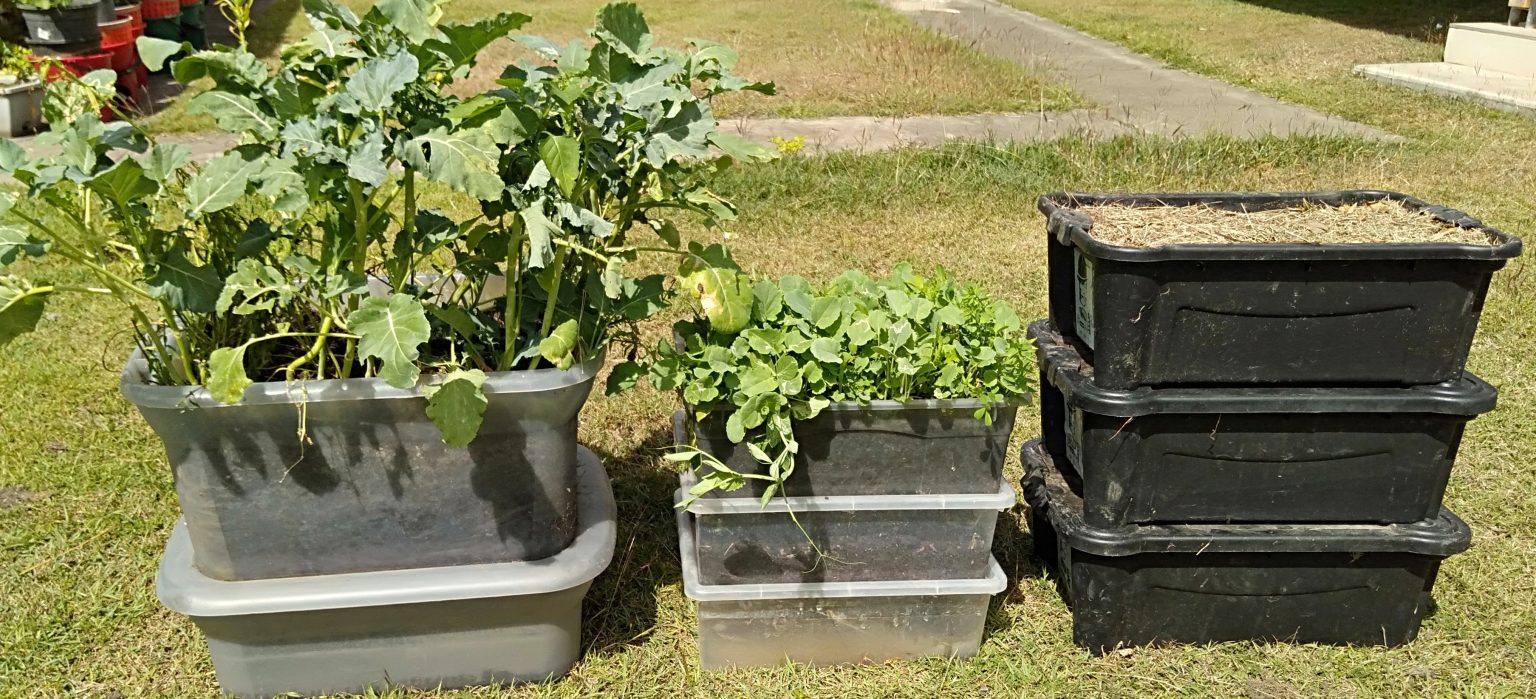
Loading

Diabetes trial

Diabetes trial

Save My Foot – community health trial

Why?

I have been on this earth for 83 years. I have had a great life that many would envy, I have always had access to healthy food, I am fit and healthy and I may not be an elite athlete but go for a walk of several kilometres in my local nature reserve which calms me from the stress of life and I see the lizards, birds and duck doing their thing. I see the ducks waddling along and it reminds me of the many overweight people in the shopping centre who walk in the same way and that is all to do with soil and modern food. I am now a great grand dad, I want my grand kids and their kids to have a good life like me but I look at the world and worry about the future. We can certainly produce food on a grand scale but it is making us fat and sick and destroying the planet and eight billion people can’t follow Elon Musk and zap off to Mars. But I have spent many years studying how to grow food that makes us fit and healthy without destroying our planet – but how do I persuade people, many people, to change the way they eat so they are fit and healthy living on a sustainable planet. It is pointless prattling on about it – it needs hard evidence and many people committed to making the change. That is what TheTrial is all about.

Scientific trials

Randomized double blind placebo control (RDBPC) studies are considered the “gold standard” of epidemiologic studies. They are clearly the way to go if the object is to test some particular feature – say a new drug. But this is not the way to trial for this project where an observation trial is simply more practical. Just make changes and sit back and watch anything and everything that happens. But we do have to control the changes that are made, make sure we have a representative number of people in the trial and have some idea of what we are looking for but still be prepared to notice things that are not on the items to be observed.

Controlled changes

Please watch my video https://youtu.be/0BOnJUXSyTU which explains the basic concepts. We want to incorporate into our diet food that has been grown in nutrient rich, biologically active soil. (For shorthand I call this Gbiota food). But the bulk of the food that we eat is simply burned off for energy so we only need to replace a proportion of our current diet with the Gbiota food – at a minimum just 5% but preferably some 20%. People in the trial will choose what and how much they change in their diet. We just ask that they tell us.

What we are looking for

Ideally we would like to know if people on this diet live a long and healthy life (life span) and are fit and healthy until a ripe old age (health span). It is just a reality that we don’t want to wait for half a century to get the answer so we look for indicators. The first and most important is appetite (actually food cravings). Our modern diet is deficient in both beneficial microbes and key minerals, our intelligent control system senses these deficiencies and makes us hungry, really food craving. So we want to know if these food cravings disappear. This is purely subjective – do you feel satisfied or are you continuously craving more food? In the scientific world it is nice to have things we can measure – put a number on – and the critical items we can measure are weight and waist measurement. Perhaps even more important – but still subjective – is how well do we feel? Do we feel full of energy and life is fun and worth living or do we just want to slouch on the couch.

Soil – Food – Health

The benefits are obvious – in the recent pandemic there were various studies which showed that people eating healthy food were less affected by the virus and recovered faster. But health is more than the lack of disease – it is about having energy and a zest for life and you can’t talk about energy without mentioning two words – fat and sugar (or rather glucose). Our muscles and brain run on glucose, which actually is a rather low grade energy but very mobile so can easily be turned into energy very quickly, but fat is the way our bodies store bulk energy which it can readily turn into glucose to provide immediate energy. Without fat we die – the simple but brutal truth – but too much fat can lead to a spectrum of diseases – diabetes, heart attacks, cancer, dementia and more. Fat comes from the food we eat so how can we grow food that will ensure we have just the right amount of fat? And that is when the fun starts.

The calorie myth

For years we have been accustomed to the calorie myth – we can simply control our weight, and hence fat levels, by simply controlling the number of calories we eat. It is totally ingrained in all the advice we are given – eat less and exercise more. Sounds sensible – easy to apply – but it just does not work. We can certainly lose weight by going on a diet but unfortunately the weight just does not stay off – it slowly creeps back on. So what is going on? Our bodies are much more intelligent than we give them credit for – we have two rather smart brains with a mind of their own.

Two brains

We have two brains, one we all know about in our head (and read the text books and they will tell you that there is the hypothalamus in our brain which controls our weight). But we also have another brain in our gut, which is made up of trillions of cells which talk to each other to form a super computer. Both brains talk to each other and decide how much fat we should store by regulating the amount of food we should eat. We may think that our head brain is just controlled by our DNA that we were born with but we now know that there is epigenetics which can turn off or on part of our genetic code. But when it gets to our gut brain we can expect (and get) some weird effects. We may not be able to change our DNA but we can certainly change the microbes in our gut, simply by what we eat. And if we change our gut micro-biome it will work in a different way and give us different answers.

We have no idea

And what makes it really bad is we have no idea how our gut brain actually works, let alone how our gut and head brain work together. But we do know they have been evolving together over millions of years with just one aim – to keep us alive and breeding – and they do it very well.

They are powerful

If our brains notice that it is getting cold then they will send out messages to store more fat. If you just happen to be a brown bear reading this and are smarter than the average bear (and with internet access) then you know when it gets cold your body will automatically store massive amounts of fat and you will settle down to a mega snooze until the warm weather comes. This is totally automatic and beyond your control so sleep well. It is the same with us humans – if our brains jointly decide to store more fat then that is what will happen. We may try and fight it but they will just go on making us more and more ravenous with food cravings we cannot resist and slow down our bodily mechanism so we really are a couch potato. We may fight it for a bit by going on and sticking to a tough diet but eventually our brains will win. Cutting calories just does not work long term and may even work against us. Our brains may decide we need more fat so we cut down on calories which may make our brain really panicky about not putting on weight so they will step up the action so we get even fatter. Experts talk about changing the set point meaning the amount of fat our brains decide we need to store.

Avoiding the deficits

In many cases our brains, what I call our intelligent control system, will sense some deficit in our diet. It is unlikely to be a simple lack of calories – our food is just full of calories. But it could be a deficit in the minerals we need – like magnesium, iron, zinc or selenium – so it sends out the “eat more” signals. It may be a lack of omega 3. We evolved to have a high ratio of omega 3 to omega 6 so it sends out messages to eat more greens. It is even more likely to send out “eat more” messages if we are not feeding our gut the sort of food we need so we end up with sugar-craving monsters inside our gut. Satisfying the deficits to keep our brains happy is the most effective way of reducing the amount of fat they decide to store.

Things can go wrong

But things can go wrong, there is this magic hormone called leptin which is produced by the fat cells and tells our brains that there is plenty of fat so stop sending out food craving signals. Sometimes our bodies just fail to produce leptin, and at other times we become resistant to leptin so we just don’t get the message and get fat. It can work the other way too. We cannot change our DNA but we can train our brains and if we give them bad food experiences they may just decide not to eat at all – or hardly at all. I read that there are some six hundred chemicals produced by our fat cells – we have no idea what they do or how they work. We just have to accept that our bodies have been evolving over millions of years to produce a highly sophisticated machine which is intent on survival of the species.

Keeping our brains happy

We may not fully understand how our brains work but we can make sure that we avoid any deficit by eating fresh food grown in nutrient rich biologically active soil and avoid scaring our brains so they go into emergency mode and tell us to store all the fat we can. Crazy diets, restricting essential food components, are a great way of scaring our brains.

The new paradigm of avoiding deficits

If our intelligent control system senses a lack of critical nutrients it will make us hungry and eat more and we will get fat. What I did not tell you is that the eating patterns we establish when young will affect us for the rest of our life. To get the essential nutrients, grown fresh in our diet, we need to establish food clusters with both growers and consumers.

Growing the food

The technology of growing food in nutrient rich, biologically active soil is the easy bit. I have been working on this for years – there is a mass of information on the web and I am set up to support growers via email or teleconference. While I have a good knowledge of the principles of growing healthy food there is an issue with local climate and soils and I cannot be expected to know how to grow every plant in every climatic condition. This requires local expertise which I will talk about in clusters or local groups.

Who should participate in the trial?

It is important to have a representative selection of people in the trial. I already have a good following of what I call home growers – people who have their own garden and have already set up Gbiota beds. Don’t get me wrong – I am very happy to have these people as part of the trial but they are already probably eating a healthy diet and are therefore not really representative of the population as a whole – but they can play a key role as ambassadors for the trial and also they may consider becoming community or commercial growers to supply other members. We really want people who are not eating a good diet and probably have some health problems – even if it is just a bit of a tum. These people are unlikely to be actively looking for a solution but the home growers can provide a critical service by inviting their friends and contacts (real and virtual) to join the trial.

Schools and the education system

The most important group we should focus on is our kids through the school system. Dietary preferences are formed early in life but the effect may not be evident until later in life when they are more difficult (but not impossible) to change. Health is not just about managing sickness, it is about being full of energy and active with a zest for life. Our kids are bombarded with advertising for highly processed food which will leave them like waddling ducks in later life. We accept that sport is a critical part of the school curriculum, we should place a similar emphasis on healthy eating. Many schools are well set up to grow the foods needed for a healthy gut with their own grounds or if the school does not have grounds then cooperative parent groups who can grow this food. But we should not forget the influence that kids have on their parents who are at the age when the effects of poor gut health become evident. Educating the kids may be the most effective way of educating the wider population.

Mechanics and organisation

The key challenge is to get people who are not – as my grand kids would say – into gut health, to join the trial. That is where existing home growers can play a critical role. And then – when they have decided to join – how do we give them access to Gbiota food? And as an important footnote fresh – the sooner the plants are eaten after picking the better. (This is the big weakness of our modern food system.) I see there are three groups:
  • those who just want to buy fresh Gbiota food (customers)
  • those that have a garden and would be happy to set up their own Gbiota beds (and become home growers)
  • those that would be happy to have a Gbiota box (probably flat dwellers) so they can have plants growing at home ready to be picked. They just need access to growers who can supply either the nutrient rich biologically active soil (I call Wickimix) to put into Gbiota boxes or Gbiota boxes ready to go.

Clusters or local groups

There are people who can grow and eat their own Gbiota food without any external help. But there are many more people who need access to either fresh Gbiota food or Wickimix (the nutrient rich biologically active soil) to use in their own Gbiota boxes. This is a much larger group (in fact the bulk of the population) and a group that would most benefit from eating Gbiota food. At this moment there is no established infrastructure to solve this problem so we have to solve it ourselves. We can do that using social media to connect people. However there is no such thing as a free lunch and the whole basis of social media is that although it appears to be free it is a simple but devious way of collecting information on individuals which can then be sold to advertisers which would include those organisations selling junk food or pills of dubious benefit. It must be recognised that devious promotion is a prime factor in our health crisis. This would certainly put many people off from participating in the project. I have therefore set up a private social media site where people can communicate with each other and trade among themselves in a secure and private environment.

First step

The first step for anyone interested in joining this project is to join this social media group (labelled Community in the menu). They can register as either:
  • just interested,
  • a potential customer (e.g. hoping to join a group in their area)
  • a home grower (which means they want to make contact with like-minded people in their area)
  • a community grower (which means they would be willing to supply either Gbiota food, Gbiota boxes or Wickimix to other members – they would expect to be paid but more as a social contribution, in essence a paying hobby)
  • a commercial grower (which means they are running a commercial business supplying either Gbiota food, Gbiota boxes or Wickimix to other members for profit)

Money

A project like this costs money to run and is a community run and financed project (meaning there is no external funding). However fortunately this is not an expensive project to run – actually only about $5 per month. Customers do not make a direct payment but they are expected to buy their own Gbiota food. Home growers are expected to pay $5 per month directly for technical support. Community and commercial growers pay a fee for technical support and to cover promotion costs. This would be recovered by sales to customers. It is important to maintain integrity so I have trade marked the name Gbiota and growers paying their membership fee (and correctly applying the technology) are automatically entitled to use that name. Let me get personal here – I have financed this project myself up to date, something I am very happy to do because I have had a fortunate life, particularly as a leading innovator which has generated money in the past. But I have made the great mistake of growing old – my attempts to find that magic switch to turn off the ageing process have failed. This is my legacy project for my own and other grand kids and I want this to be a viable operation long after I have climbed into my compost bin to make my final contribution to the soil. If you want to contact me just email me at colin@gbiota.com.
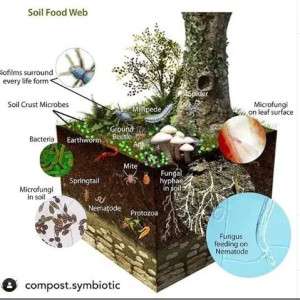
Loading

Gbiota Tri Box – background

Health span

 
We are living longer — our life span is increasing — but our health span, the years we remain fit and active, is decreasing. Why? The answer lies in our gut brain. Modern food has changed the species of microbes in our gut.

Gut microbes and health

We have long understood that our gut processes food so our bodies can use it. With DNA sequencing we learned that the species of microbes in our gut have a major effect on our health. Early research showed we could turn a fat mouse into a skinny mouse, or a skinny mouse into a fat mouse, simply by changing the species of microbes in their gut. With mice this was simple — they eat each other’s droppings. Humans required a faecal transplant, but the effect was the same.

The gut as an intelligent control system

We then learned that the trillions of cells in our gut work like a super-computer, partnering with our head brain as an intelligent control system. Without conscious effort, this system manages appetite, ensures we eat the right amount and type of food, manufactures the chemicals needed to repair our bodies, and trains much of our immune system.

Why we overeat

If our gut brain senses missing nutrients, it sends signals such as the hunger hormone ghrelin, urging us to eat more. If the food lacks those critical nutrients, the signals continue — we keep eating, gain weight, and become sick. The problem is not greed; it is a biological response to nutrient deficiency. Our gut brain also requires specific “gut food” to function properly. Without it, it malfunctions and creates cravings for the wrong foods.

Health begins in nutrient-rich soil

Our gut brain evolved over thousands of years while we ate fresh plants grown in nutrient-rich, biologically active soil. Microbes in the soil entered the plants, and eating these plants acted as natural pre- and probiotics.

Modern diets lack key nutrients

Today’s diet lacks these essential nutrients and microbes. Many people try to compensate with supplements, but pills are expensive and not very effective. The simple, proven solution is to eat plants grown in nutrient-rich soil filled with beneficial microbes. This approach is inexpensive, natural, and backed by thousands of years of practice — though it lacks modern advertising.

The purpose of Gbiota

Gbiota technology is not about growing cabbages or specific vegetables. It is about breeding beneficial biota in the soil, which is then packaged inside plants to support and restore gut biota. Any skilled gardener can grow gut food, but many people do not have gardens, time, or the skills to establish Gbiota beds. Even more important: beneficial microbes begin dying soon after a plant is harvested. The plant may look fresh, but the microbes diminish quickly. To gain the benefits, plants must be eaten shortly after picking — as our ancestors did.

Gbiota boxes

Skilled growers can set up Gbiota beds to breed nutrient-rich soil full of beneficial microbes. This soil is placed into Gbiota boxes and delivered to people who cannot grow their own gut food. Customers only need to water the boxes and harvest the plants. Boxes can be kept on patios or even indoors with adequate light. This system allows people to extend their health span by eating genuinely fresh food, while growers earn income and support community health and local food security.

A community-based food system

This is not a corporate project. It is my personal project. For people to access healthy food, we need a community-based system that puts health before profit. To make this work, I need to connect growers with customers. If you share this vision, please email me at colin@gbiota.com with your location so I can introduce you to others interested in establishing a community gut food project.

Loading

Trench beds

Trench beds

Health starts in the soil.

Wicking beds for more than self-watering

Many people are using Wicking beds as self watering pots - nothing wrong with this but they are missing the real benefit. Wicking beds can be modified to breed the beneficial biota in the soil, which enters the plants then our gut brain using the plants as natural pre and pro biotics (as we have done for thousand of years before modern chemical industrial agriculture).

Your gut brain and long-term health

Our gut brain is really important for our health but has sadly deteriorated over time leading to an epidemic of chronic (long term) diseases. Our gut brain acts as an intelligent control system which makes us want to eat the right amount of the right sort of food.

Enabling conditions versus real causes

Think about it this way;- A car travelling at 180kph is involved in a major crash killing many people and injuring many more - who's fault is it? Could it be the car manufacturer - they could easily have fitted a lawn mower engine giving a maximum speed of 20kph or could it be the fuel company supplying high octane fuel rather than water which would limit the speed to 0kph. Either of these would have avoided this terrible crash. These are what we call enabling conditions - you need a high performance engine running on high octane fuel to get those speeds and cause a crash but they are not the real cause of the problem - it is the driver who controls the car who is to blame. Food is similar, there are all sorts of bad foods - sugars, fats, addictive flavourings etc which have enabled a major health crisis - but they are not the real cause.

Empty calories and failure to feed the gut brain

We have evolved, over thousands of years, an intelligent control system which decides how much and what sort of food we want to eat, produces many of the complex chemical needed to replaced our body parts as they age and wear and host much of our immune system. Some eighty percent of the food we eat is just for energy - it is fuel and is very easy to produce in large quantities. Over the last eighty years the population has trebled but the food industry has increased the supply of energy food some forty per cent faster than the increase in population - an incredible technical achievement but not necessarily good for us people. 80% of the food we eat we just burn off for energy - often called empty calories. But modern chemical industrial scale food production is just not suited to growing the foods our gut brain needs to flourish. It fails to supply food to feed our gut brain - our intelligent control system and it is the failure of our control system that has led to widespread health problems - that is the real cause of the modern epidemic.

Goldilocks moisture and living soil biology

Plants must be grown in nutrient rich biologically active soil with the right moisture level - not too dry (or nothing breeds) or too wet (or the harmful biota out breeds the beneficial biota). Goldilocks moisture is needed — and Wicking Beds can achieve it. This is really important for the health of the community - every eight seconds someone has a foot amputated from diabetes and dementia and heart attacks are increasing. The real cause can be traced back to not feeding our gut brain. Fortunately breeding the beneficial biota and food for a healthy gut brain can be readily undertaken by home and local growers where plants can be eaten shortly after harvesting before the beneficial biota dies. Plants act as natural pre and pro-biotics.

A working home eco-system

My garden is just a regular block: the lawn captures carbon to make grass clippings for the in-ground beds, the trees take up nutrients and excess water from deep in the soil, the in-ground beds breed biota and grow plants that transfer the biota to our guts, and the boxes grow herbs and speciality plants. A functioning eco-system.

Learn how to grow natural pre and pro-biotics

To find out how to grow these natural pre and pro-biotics using a Wicking bed you can contact me directly from my web site www.gbiota.com. I am a real person - not some mega corporation trying to sell you something. Any competent gardener can do it but it does need to be done right.

Loading

Gbiota boxes – update

Gbiota boxes – update

Gbiota boxes

Gbiota boxes, as their name suggests, are enclosed and separate from any parent soil. They do not have the benefit of access to the life forms which live naturally in soil and they are also limited in size. They do have a theoretical advantage that there is no loss of water to the surrounding soil as is inevitable in an in-ground bed, but that is largely just a theoretical advantage as it is easy to plant around an in-ground bed to use up any water which does wick out from the main bed. If you have a garden and want to grow a reasonable quantity of food then in-ground beds are really the way to go – if you are not convinced by the technical arguments they are simply a lot cheaper and easier to build. But it is just a reality that in the conventional scene wicking boxes are far more popular than beds. But Gbiota boxes definitely have advantages – the outstanding advantages are that you can grow plants for gut food even if you live in a flat with no garden and, if you use a small box, you can bring it inside in the winter and either put it near a window or use growing lights.

Beds and boxes are complimentary

Everyone does their own thing but I use both together for different jobs. I use the in-ground beds to grow the nutrient-rich soil (Wickimix) teaming with microbes and other weird creatures. I can then use this soil in the boxes. I live in the subtropics and our best growing season is actually in the winter while the summer is too hot and dry with masses of insects. But the boxes are really useful to me for trialling different plant varieties I may want to experiment with and it is just much more practical to grow some herbs – like Fenugreek – which requires specialist treatment.

Baby greens

They are also an excellent way of growing baby greens – that is plants which have passed the microgreen stage (which are essentially using the nutrients from the seeds). They have put down a root system so they are taking up the microbes and nutrients from the soil. With some plants you can use tipping – just cutting off the tips of the plants and letting them regrow. This is an incredibly effective way of having a steady supply of fresh greens. See video ‘food for health’ in videos. They are often more nutritious than mature plants and many plants are soft, tender and digestible as baby greens but are just not edible when mature – the grasses (like oat grass) are classic examples and are the easiest plants in the world to grow – just sprinkle on the seed, wait a couple of weeks then nip out with the scissors and cut off the tips – again and again. tipping-eating-young-shoots-colin-austin-gbiota

Nip down the road

If you don’t have a garden then by far the easiest way of getting into baby greens in Gbiota boxes is to find someone down the road who has a garden and can set up the Biobox for you. You can grow a lot of baby greens in a small box which is light enough to carry so just buy a box from your local grower, water and pick and when the plants are getting a bit old just swap for another box. I expect at some point in time this will become a flourishing industry but we need more growers – but it will come and we are pushing for it. gbiota-box-colin-austin-gbiota

Setting up a Gbiota box

Gbiota boxes are set up in a similar way to Gbiota beds. A simple irrigation fitting is installed at the base of the bed with a swivel tube to act as a variable drain. I used to just bend the ag pipe up to the surface but now I use a separate large pipe; this allows me to check the moisture level at the base just by looking or poking my hand down. I have also used the pipe as a compost tube. The very bottom layer is filled with some porous material. Vermiculite is really good for this as it is so light and cuts down the overall weight of the box. I also use grass cuttings as the bottom layer, then a layer of manure with a top layer of Wickimix for the bulk of the root zone. [vdo id="f9af392c5f434d87a484552a08b8fc07"] If you are buying from a local Gbiota grower they will probably fill the box with soil from their in-ground bed (Wickimix) and plant the seeds. Wickimix is already loaded with the microbes, worms and general soil life plus the trace minerals essential for health. You add the layer of organic waste – followed by the layer of manure and rock dust and Wickimix from your local grower. Then just seed and pick and eat. But what happens at the end of that cycle?

Refurbishing a Gbiota box

You can’t keep on taking goodness out of the box without replacing it. I use boxes which are small enough to manhandle and just empty them and refill with fresh mix. It is so simple and only takes about 20 minutes to refill and the soil seems to benefit from the aeration as the plants grow really well. But if you don’t want to do that – possibly because you have a box which is too big to manhandle – then you will need a way of refurbishing the soil. The simplest (and a bit crude) way is when you come to replant just dig a hole down to the base of the bed, reload with the classic organic waste, manure and soil mix and spread the soil you have dug out over the bed. You can dig a hole in different areas at each reload. As I say, a bit crude but it works and is real easy. You can get a bit more sophisticated and install a compost bin – this is just a container with holes that you fill with food waste and let the worms do the work of distributing the nutrients around the box. Works fine – the only disadvantage is that the bin takes up quite a bit of room in a small box. The other method is to use the fill tube as a compost bin and pour the water through the mix. In a bed I use the fill tube to inspect the moisture level in the base but in a Gbiota box you can alternatively simply use the swivel tube to check the water level. I prefer to use the fill tube as there may be plenty of moisture in the soil but no liquid moisture. A day or two without liquid water will kill off all those pesky anaerobic microbes.

Quick and dirty

I know many people go to great lengths to use their boxes to recycle waste organics using waste bins etc. If you only have boxes then there is not much option but I like to use a combination of beds and boxes. Just grow Wickimix in the beds then simply tip the boxes upside down so they are completely empty, then refill the boxes with organics, manure, rock dust and Wickimix. It only takes a few minutes and the plants really grow well in the fresh soil.

Loading

The W’s

The W’s

wwwww

Welcome to the Weird and Wonderful World of Water

I started to write this as a welcome message for people joining the Gbiota social movement but it got a bit off track, but I had fun writing it and you may have fun reading it so I am sticking with it. Pretend you are some creature from way out there in space and had never seen water—if a three-year-old kid can pretend, then so can you. You are welcomed into some friendly human’s house and invited to a cup of coffee (despite you being bright purple with a single eye waving about on a long stalk). They take some black powder out of a jar labelled Nescafe and some white powder out of another jar labelled sugar and put it into a cup. They take some funny clear fluid from a pipe, pour it into a jug, heat it until it bubbles, then pour it into the cup. Suddenly you see one of the greatest magic tricks of all time—the black and white powders just disappear. You look under the table for false chambers or tiny holes, but no—those powders have just vanished from this decidedly odd planet. The friendly humans explain that they haven’t disappeared—they have simply gone into solution. Molecules break down into bits that react with other molecules, and that’s how food works: dissolving what we eat so our bodies can use it. That’s why water is essential for life on this planet. The humans explain that giant oceans cover the Earth. The sun heats the oceans, turning the water into invisible vapour that floats around with the wind. High up in the sky it cools, reforms into tiny droplets, and becomes clouds—massive floating storage tanks of water. Eventually these droplets join together, become heavy, and fall as rain. Over millions of years this rain soaked into the Earth until the ground became saturated with billions of tonnes of water. When it can hold no more, the excess runs off the surface in what humans call rivers. For hundreds of thousands of years humans lived beside rivers because they cannot survive without water. Then people invented pumps—great fun at first—sucking water out of the ground and splashing it everywhere, perfect for growing crops and feeding more and more people. But that fun didn’t last. The soil deteriorated, people became fat and sick, and diseases appeared that had never been major problems before. Then along came an oddball guy—slightly OCD about water—who said that if humans were going to keep having fun, they needed a better way of using water and growing food. And so the Gbiota social movement was formed. So welcome aboard—and let’s have some fun growing real food using this weird and wonderful thing called water. I started writing about water in 1995 when the web first opened up. My first website was www.waterright.com.au, followed by www.wickingbed.com. The web was very different in those days. Search engines barely existed. You simply found a website and followed links to another and another—each night a completely different adventure. It was a friendly era of the internet. There weren’t many websites, so www.waterright.com.au became very popular. I keep it alive because there are still many useful articles for anyone with the patience to explore. My focus back then was environmental: humans were pumping water from ancient aquifers that took millions of years to form, and it was clear they would eventually run out. Excess irrigation caused salinity. Chemical agriculture destroyed soil biota—the very creatures that create new soil. But environmental issues rarely inspire action. People assume the magical “them” will sort it out. By 2015, however, I realised something even bigger—gut biology. Our intelligent control system. The root cause of a global health epidemic. So I set up www.gbiota.com to focus on growing food in nutrient-rich, biologically active soil to feed our gut. But by then the web had become commercial and toxic—full of manipulation, misinformation, and hostility. So I created www.gbiota.club, a private social media site, and www.pickandeat.shop—a marketplace without pressure selling. I learned how to link these independent sites so users can move between them seamlessly through the menu—community for gbiota.club and shop for pickandeat.shop. The only confusion is logging in, because each site has its own login area. The bigger challenge, however, is the old enemy—paradigms and money. The belief that population growth created food shortages and therefore industrial chemical farming is essential. This is wrong. Food production is rising faster than population. Starvation is caused by inequality and distribution failures—not food shortages. But chemical farming is extremely profitable—so the paradigm remains. We must shift the paradigm so the focus is on feeding our gut brain—the intelligent control system that regulates appetite, immunity, and health. Paradigms are hard to shift. But if you want to see how, read the plan.

Loading

The Plan

The Plan

On my home page I said – “In the last eighty years the global population has trebled and we all have to eat. The modern food industry has increased the production of energy food 40% faster than the increase in population. There is ample energy food, which is really just fuel - the fact that there are millions of people starving is not because of a lack of energy food but due to inequality, political and distribution failures. Some 80% of the food we eat is just burned for fuel but we also need food to feed our gut brain which controls how our bodies work and supply the complex chemicals to replace our body parts as they age and wear. Sadly that is lacking in our modern food system.” Fortunately it is relatively easy to grow plants in soil that is teaming with beneficial biology and full of essential minerals - that is what the Gbiota technology is all about - any home gardener with a bit of land can set up beds for their own use. But technology is no use if people don’t have ready access and there are many people who simply do not have a garden, the time or the skills to set up their own Gbiota beds. It is in every ones interest that people have access to healthy food. Even at the most mechanical level the cost of ill health from a poor diet puts an enormous strain, both financially and in terms of resources which means that people eating a healthy diet are paying more for the health service and may find it more difficult to access should they need medical support. But I would hope that people would feel that even if they are fit, healthy and wealthy that they should contribute to the society from which they benefit even if there is no immediate benefit for them. There is that old saying ‘what goes around comes around’ meaning that you may help person, who in turn helps another so it goes around until someone will eventually help you. So how can we improve the diet and hence health of our community as a whole?

So here is the plan.

I am just one person, and like all people I am good at somethings and not so good (eg bad) at others. Now without wanting to appear a big head I am good at technology (just read My Story - I have the track record) but I am pretty useless at marketing and when it comes to social media I am just incompetent - nothing against cute cat videos but it is just not my scene. But what I can do is help all those people with gardens set up their Gbiota beds. Then I can hope that many of these growers will simply feel better in themselves - just fitter and healthier. This is not a black and white issue as our health is determined by a combination of our gut health and our DNA. Some people are just born with a DNA which means they will be skinny throughout there lives while others will always have a tendency to put on weight. What we do know is that if our gut brain is not fed the right sort of food it senses a deficiency in the diet so sends out signals to eat more. I explain this in detail in Food and the gut biome. So while eating a healthy diet does not guarantee a long and healthy life span it certainly shifts the odds in favour. Now all I can hope for is that many of the people I help set up Gbiota beds will read these articles and recognise that almost everyone benefits from a healthy diet and say yes I can help my community by simply telling their friends about the articles I write on our gut brain and health, over a cup of coffee or on line if they are into that. And perhaps some of these will say I can become a community grower and not just grow gut food myself but gut food for my friends and contacts. This is not a charity and they can expect to get paid for this gut food. That is stage 2 of the plan. And if that works we can move onto stage 3 which is a bit more difficult. Most people buy their food from the local supermarket. That food is grown on mega farms to produce food as cheaply as possible. It is certainly lacking in certain trace mineral essential for human health but not needed by plants. But the real issue is that even if the plants were to be grown in soil teaming with beneficial biology by the time they have been transported and sat on the shelf these microbes will have died. The only solution to this is to modify our food production system so some of our food is grown locally and available for rapid consumption after harvesting. I say some food because if you read my articles you will understand that the bulk of the food we eat is just fuel which we burn off to control our temperature and provide energy. These local growers will be commercial growers and will be totally dependant on the support they receive from their community. I can only hope that people see my pun about the old advert that oils aint oils being copied by my slogan Kales aint Kales. Another factor in this local food argument is reliability of supply which could probably have more impact than the health issue. In my article on Food and floods I explore what steps can be taken to ensure reliable food supply against the threat of floods. At this moment this is very much a hot topic here in Australia with shortages and escalating prices. At this moment we really don’t know if this is just a flash in the pan or an indication of major threats to our food supply from climate change. What we do know that is that it is much easier to protect a small local farm from floods than the modern mega farm. I see creating this local food system as the end goal but I can’t make this happen myself - it will only happen if enough people in the community decide that this is a worth while project and take action to spread the word. Colin

Loading

Food and floods

Food and floods

Note this is not a formal post as yet – I am still working on it, but my readers seem to like to hear what I am up to and often make good suggestions which I can incorporate before I finally publish. You can comment publicly below or just email me at colin@gbiota.com.

Food and floods

The greatest challenge of our era

Wherever you look the headlines are about the floods and how they are creating food shortages and escalating prices. My interest is in how to grow plants for a healthy gut brain which requires very careful management of the moisture level but I accept that this is a minority interest. But everyone has to eat so these floods and the food shortage are everyone's problem. How to feed 8 billion people the right sort of food in the midst of a climate crisis is among the greatest challenges of our era. I talk about this more in my article on the global food crisis.

What can I do?

So the question is what could I do about it? I can’t stop the floods, that is for the Climate Change movement – I have solar panels and batteries, and walk and bike rather than use the car wherever I can, but I am just one person, so what can I do to mitigate these floods? The first thing is to understand why we get these floods – and it is a bit more complicated than too much rain.

Two types of floods – upstream

There are two types of flood which is well illustrated in my home town of Bundaberg based on the Burnett River which starts at Mt Gaeta and flows 435k to the entrance at Burnett Heads. Floods occur with rainfalls above 100mm over a period of hours or even days. That amounts to 1,000 tonnes of water per hectare and the Burnett basin has an area of 32,220 square kilometres; let’s not get bogged down in calculations but you can see that is a huge volume of water that has to get out to the sea at the narrow Burnett Heads. burnett-heads-colin-austin-gbiota
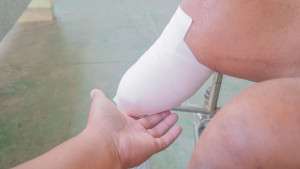
Unfortunately the river at Burnett Heads enters the ocean through a narrow channel and it simply cannot handle that volume of water so the flood builds up back from the head, flooding further and further inland. I know, I have done my stint in my rubber ducky ferrying people from their upper storey windows. OK, you are looking for a solution so what can I offer? For this type of flood sadly not much. I know that the Incas had floating gardens which are now becoming widely adopted in flood-prone countries like Bangladesh. bundaberg-flood-colin-austin-gbiota
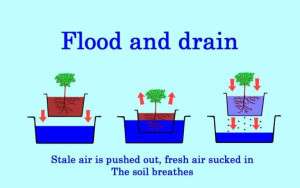
Two types of flooding – local inadequate drainage

But there is a much more common type of flood which is even closer to my home, actually right in my backyard. Looking at my backyard it seems almost flat but there is actually a slight slope with water falling on blocks just uphill and flowing through my block. Again no calculation, but at 1,000 tonnes of water per hectare you can see it would soon add up to a lot of water flowing through my block. flood-slope-colin-austin-gbiota
Gbiota beds in the drought

It was in 2015 that I set up my flood-and-drain Gbiota beds. At that time we were more worried about drought than floods and we are in that belt of land where the great deserts form. Just start walking west and you would end up in the Simpson Desert. These beds worked great until about three years ago when La Niña came and we started to have seriously heavy rains. My Gbiota beds became waterlogged for short periods of time. Not good, as the whole point of a Gbiota bed is to breed beneficial gut biota in the soil and that means the soil must be nicely moist but not too wet – Goldilocks moisture. flat-bed-colin-austin-gbiota

Flood proofing experiments

I needed to rework the entire beds to make them more flood-resistant and this was a great opportunity to experiment. In the first two beds I ran an experiment with one bed having a plastic liner and the second bed just relying on soil compaction. This is described in my article on Wicking Soaker beds so I won’t go into details here.

50 year floods every five weeks

But by the time I had got around to reworking the third bed we had already had three 50-year rains which now seem to occur every five weeks. Great for testing flood-resistant beds, lousy for growing plants. There is a bit of slope on my block and I had built the levels up so the Ag pipe, which acts as both a filler and drainage pipe, was pretty much at the parent soil level so to be honest I had not given much thought to the water flow from my neighbours’ properties – I am human.

Science and serendipity

Now for those of you who think science is a nicely planned and organised operation – let me disillusion you – serendipity plays an important role. And serendipity came in the form of 190mm rain in 30 hours. Water came from all the blocks uphill, straight through my shed onto my beds. Time for a cup of tea and a bit of a think.

Rethinking beds

It is clear that just trying to design a bed so it does not get flooded and waterlogged is not enough – we have to ensure that the inevitable floodwater is adequately diverted before it reaches the beds. And it is not sufficient to just think in simple terms of drainage and gradients. I did not talk about the 1,000 tonnes of water per hectare for fun – we must think about water like an express train; water is heavy stuff and has a lot of inertia even if only flowing at a few kilometres per hour. If there is some obstacle it will simply keep on going up and over, what engineers like to talk about as converting kinetic energy into potential energy. I learned all about this during that thirty hours of rain and had to go out in the pouring rain and dig channels and diversions to stop the water getting onto my beds in the first place. It worked then but now I have to wait for the next fifty-year flood which at the current state will be in about five weeks to see if it has really worked. If it really does work again in the next flood, as it did in this flood, I then only have to consider getting the water that falls on my beds away. car-in-flood-colin-austin-gbiota

Farmers of old

When I was a toddler (a very long time ago) I had uncles who worked on farms and they spent a lot of time on what they called hedging and ditching. Doing precisely what I am doing now, trying to protect the fields from water flowing onto them. Now of course we have ripped up all those hedges and ditches to make monster fields. Whatever would Dr Who say about the wisdom of that? ditch-colin-austin-gbiota

Avoiding water logging

It is inevitable that with that amount of rain, beds not designed for water flow will become waterlogged – there is just too much rain. But what we can aim for is to get that water away as quickly as possible. Plants will survive quite happily for a few days even if their roots are totally immersed but then most plants will just die, unless you are living off watercress or mangroves. The lower roots will die if they are immersed in water but if the upper roots are not flooded the plant will survive and quickly regrow the lower root system. Our minimum aim should be to ensure the top layer of soil can drain easily, but ideally we should ensure the whole root system drains. waterlogging-colin-austin-gbiota

Soil ain't software

I used to earn my daily bread writing software which is great. If you screw up just hit the delete button and start again. Growing plants is not that easy. You have to move on from where you are and not some theoretical ideal position. If I was building new beds from scratch and had a supply of soil I would certainly consider building the entire bed above ground level but in the real world I am halfway through modifying an existing bed – so that is my starting point whether I like it or not.

Making drainage trenches

So I dug up the existing ag pipe which was over 300mm below the current surface and filled the trench up so the base was only 50mm below the parent soil level. I then made a ridge with my classic mixture of grass clippings and organic waste followed by chicken manure and rock dust. I then dug a trench either side using the soil to cover this ridge and smoothed it all out. I made sure this trench extended beyond the beds themselves to an area where the parent soil was low enough to provide effective drainage.

Speculative research or just plain daft

The peak of the ridge is some 300mm above the base of the trench which I am sure would provide adequate drainage to get any water that falls on the bed away fast enough. On the previous two beds (which were above the parent soil) I had partially filled in the trench with whatever organic waste I could lay my hands on but largely grass clippings. I am not that keen on putting organic waste directly into my beds as labile (young) compost often contains pathogens and growth inhibitors. By partially filling in the trench with this waste I had made a really nice and convenient composting area so when I had to remake the bed (as is essential to keep that highly porous layer above the pipe) all I would have to do is to dig down to the pipe (which I like to remove and clean out) and rake the compost to cover the pipe. trench-colin-austin-gbiota

Getting the water away in practise

I had noticed that in beds one and two that even though I had partially filled in the trench with this organic material it was still adequately porous to let the water drain through. On the basis of ‘try before you die’ I am therefore filling this new trench with fresh organic waste. (It makes a nice mud-free path to walk on to work on the beds). I will let you know if it drains properly after the next fifty-year flood which I am expecting in about five weeks according to the current weather pattern. filled-trench-colin-austin-gbiota

The punch line

We live in the internet age – the virtual world – but treacherous. If the virtual world on the internet is different to the real world then the consensus is that the virtual world is right and the real world is wrong.

I believe in experiments but how do I test if my design will work? I can’t just go online and order a flood – I just have to wait for that fifty-year flood to come – maybe this week, next week, next year or most unlikely in fifty years.

But let us just look at some flow calculations. Consider a 10 metre long 1 metre wide bed. In a 100mm rain storm that gives 1,000 litres. Most of that will flow straight off the bed and into the side trenches. Without getting my slide rule out the trench would easily handle that flow. (PS if there is any reader out there who knows what a slide rule is please email me – there are only a few of us left).

Some water will soak into the bed but the Wicking Soaker bed has a natural drainage, so even if the soil does become temporarily waterlogged it will soon drain away.

If I am right and my bed does not become waterlogged, time for a celebration.

But I have been in the innovation business long enough to know that you may think you know something but you don’t actually know you know something until you have tested it and know for sure.

So the punch line is we can be pretty confident that if you can stop water entering the bed area from outside that the bed area itself is going to be able to cope with the rain that actually falls on the bed.

Although I feel confident that is a valid conclusion, if I have missed something my plan is I can easily fit a drainage pipe to take the water from the Ag pipe straight into the drainage trench. Yet another day digging away in the pouring rain – all so we can eat.

What a hassle food is

Why does not someone invent mobile phones we can eat when we have finished with them so we don’t have to bother with food. Apple pie anyone?

Loading

Welcome

Crazy world

Has the world gone crazy? Wars, food shortages, floods and droughts, prices through the roof, epidemics, the internet - one of the most important innovations of our era has sunk to become the home of mass manipulation to sell us things that don’t work or we don’t need, just to make some mega corporation or wealthy individual even richer. Have we turned into a race of dumb donkeys to be led unthinkingly to some catastrophic end? I can’t do anything about most of these problems, but there is one I can do something about - food that will make us healthy.

Man made

The facts are simple - we evolved to have a gut brain which controls our body - it makes us want to eat the right amount, of the right sort of food. It has been working fine for millions of years, then, just to make more money we changed our food system so that our gut brain stopped working as it should. Now we have an epidemic of chronic diseases - diabetes, dementia, heart attacks etc. What sort of society are we that puts profits ahead of the health of the population? In this web site I show how we can stop being dumb donkeys and grow food that will actually keep us healthy. Every twelve seconds someone has a limb amputated from diabetes - this is man made and just plain wrong. So why not join me in my campaign for food that makes us healthy.

No dumb donkeys

We live in the digital age where we seem to expect that any problem can be solve by a few minutes search on the internet. If you think this is the way to feed eight billion people food that will keep them healthy (so they don’t get fat and sick and have their legs chopped off from diabetes) and all in the middle of climate change with floods and droughts and a global political system which is decidedly wobbly, then you are wrong and this is not the site for you. Life wasn’t meant to be easy. But I have prepared a series of posts which analyze the key issues, to develop a plan and appropriate technology to solve this horrendous problem.

Key points

When I am creating a project I find it useful to make a list of the key points. I have done this with the Gbiota project but I asked myself why keep this hidden so I am publishing this here.

No Dumb donkeys

This is where the action is so read here Colin Austin tells it straight about Wicking Beds Read My Story To find diamonds you have to shovel a lot of dirt, but this is where the diamonds are. In 1995 I started to promote Wicking bed. I did not invent them, but I did puzzle out how they worked. You can see them all over in the dry desert regions of Australia. They starts with a spoon shaped clay pan. That fill up with what is technically know as stuff - sand, silts and debris blown or washed in. In the rare event of rain water will filter down to the clay layer and form an underground water source and voila you have a natural Wicking bed. There is one about a hundred metres from my home but they are everywhere. And they just took off and people are making them across the globe. But like many things in our modern world they got more complicated and just degenerated into self watering beds, good and saves time and work but missed the key point. That took me the best part of twenty years, to 2015 to puzzle out. Way back at the start of the Wicking bed story I was totally unaware of gut biology - I just got hungry and ate - pretty simple. But then I began to learn the importance of gut biology and our micro-biome and the amazing job it does. It is a real brain with the trillions of cells communicating with each other just like in a super computer. It controls our appetite, the manufacture of the complex chemicals to replace our body parts as the age and wear and host much of our immune system. I learned that you simply cannot be healthy without a healthy gut biome. But I learned more - our gut biome comes originally from the soil and creatures of the soil, they enter the plants which we eat which are effectively natural pre and pro biotics. And the conditions they like is with the soil moist but not wet - which is exactly what we get in these natural Wicking beds and the people with the healthiest gut biome are those eating plants from these natural Wicking beds. Unfortunately our modern food system kills of these beneficial microbes but anyone with a bit of a garden can grow their own pre and pro biotics. This is even easier with the Wicking-Soaker bed.

Grow your own gut food at home

We know, from research conducted by our top brains at many or the worlds respected research institutions that our gut is incredibly important to health. It contains trillions of cells which act as a brain, communicating with our head brain, to control our appetite, manage the production of the complex chemicals needed to replace our body parts as they age and wear and trains much of our immune system. We know from studies of the gut of people living a traditional life style, the few remaining hunter gatherers and from the blue zones Okinawa, Sardinia, Nicoya, Ikaria, and Loma Linda where people lead a healthy life right up to a ripe old age that they have a far healthier gut than people eating a modern diet - yet they do nothing other than eating plants, just after picking, and grown in biologically active nutrient rich soil. They may live longer but what is truly remarkable is their health span, fit and healthy till the end. All these people have very different diets, what they have in common is they are eating food grown in soil which has been developing by microbial action over millions of years. It is the difference between dirt and soil. We are a warm blooded creature that evolved from the tiny animals could burn food at night to keep them warm and active to hunt at night when the ferocious dinosaurs had no energy. Some 80% of the food we eat is simply burned to provide energy and to keep us warm, some 15% is used to replace our body parts as they age and wear and only a tiny amount, may be just 5%, is used to feed our gut brain. We know that our modern food system aims to provide energy food. It is based on chemical industrial agriculture and involving long distribution chains has killed of the beneficial microbes, is low in critical minerals and had led to chronic diseases like obesity, heart attacks and dementia. This has created a multi billion dollar supplement industry. Would it not be healthier, and certainly a lot cheaper just to eat healthy food full of the beneficial microbes and essential minerals. But how to grow this food in a modern society where we have been destroying the soil microbes and worse how do we do this with the extremes of weather, the floods and droughts, we are now experiencing. This is the great challenge of our era. It is simply a question of feeding the microbes and maintaining the required moisture level - not too dry and not too wet - Goldilocks moisture. This is the challenge taken up by Colin Austin a world leader in fluid flow. Colin pioneered the use of computer to solve complex fluid flow problems. He built up Australia leading exporter of technical software, a world leader in its field and was recognised by the Institute of Engineers as one of the top one hundred innovators and was globally recognised as a leader in fluid flow. He went on to pioneer Wicking beds to provide a more effective way of watering plants when water is in short supply. He has now extended the Wicking bed technology to breed the beneficial microbes which enhance our gut biology and our health. And where so we start? Not the corporate farm just interested in profits but the home gardener, happy to turn dirt into soil for the benefits of a longer health span. This is a simple technology which enables any home gardener to grow plants which act as as pre and pro biotics for gut health. You can learn how you can do this yourself in your own garden by subscribing to the Gbiota web site. It cost a fraction of what you would pay for pro-biotic pills and uses the technology perfected and tested over thousands of years by nature. This gives access to hundred of articles Colin has written over time but the key ones are the five article about growing gut food. The first article looks at how food affects our health. Our modern food system is deficient which we try and compensate for by supporting a massive supplement industry rather than just eating healthy food. The second article looks at the peculiar properties of water and how it moves through the soil and into the plants - taking the beneficial microbes with it. Life is totally dependant on water - you can’t drink oil or eat mobile phones. The third article looks at how to get that magic Goldilocks moisture level, moist enough for the beneficial biota to breed but not too wet for the harmful bugs to be a problem. The forth article gets down to the nitty gritty of how to build and operate a classic Gbiota in ground bed to grow pre and pro biotics. The fifth article looks at the latest technology the Wicking Soaker bed The next article will look at how to build a Gbiota box. While in ground beds are preferred people living in flats simply do not have access to a garden but a Gbiota box provides a practical alternative. This is a technology that’s on the move and further articles are planned to keep people up to date on important issues such as how to grow plants with the current weather extremes and what plants are best to grow for gut health. In addition to these technical articles you get a Newsletter telling you about the latest developments and can get support by email or video conference. With this support you can grow you own plants as pre and pro biotics, a method tested over thousand of years by nature and at a fraction of the cost. A gbiota bed or box box enables people to grow gut food at home to enhance their gut biota. We now know just how important our gut brain is - it controls our appetite, the manufacture of the complex chemicals to replace our body parts as the age and wear and host much of our immune system. It is a real brain with the trillions of cells communicating with each other just like in a super computer. Modern DNA testing gives us the ability to monitor the thousands of species in our gut - from that we learn how dramatically our gut health has declined with our modern food system. Hunter gathers tribes, natives in the blue zones where people live to a ripe old age and people from a traditional life style have a far healthier gut than us. These have very different diets but they have two things in common - they eat plants that are freshly picked and are grown in biologically active nutrient rich soils. We can try and offset the disadvantages of our modern diet by spending a lot of money on supplements which may or may not work but would not it be better just to eat the right sort of food. This has been the focus of Colin Austin, selected as as one of the top one hundred innovators by the Institute of Engineers. Twenty five years ago he started to promote Wicking bed - he then developed Wicking beds to grow gut food by breeding beneficial biota in nutrient rich organic waste. He called these Gbiota beds. The original version worked very well were somewhat complicated involving pumps and timers and, although automated, needed skills and time to operate properly. So he has now introduced a simplified manual version which virtually anyone can use to grow their own gut food at home. He does no sell any physical product - he just provides the technology and support for people to set up their own beds. Read more here or go to food in the menu - all this information is free. To access information on how to make Gbiota beds go to "growing" in the menu. We don't sell anything so we have made this a subsciption area to recover some of the cost of experimention, but there is a fourteen day free trial. Any problems just email me here. I am not some mega corporation - but a real person who thinks that people should have access to food that will make them healthy without being manipluated by deceptive advertising.

Loading

Key Points

Key Points

This is the Gbiota story in a nutshell

You can read my story here but essentially I had taken a life changing decision to move to focus on water, which I saw as a totally critical resource. In 1995 I started to promote Wicking beds, I did not invent them they are natural phenomena and totally amazing. There is a clay pan which gets filled with stuff that just blows in. Any rain that falls is captured over a wide area, seeps down to the clay where it flows to form an underground water reservoir. Water wicks up to feed a green and verdant oasis in the middle of a dry and barren landscape. They are very water efficient with little loss from evaporation or leakage past the root zone. They took off like wildfire - not as I intended to ensure our future food supply but to save work as a self watering pot. There are many articles in Wicking beds and a video on this site. Much later, in 2015 I learned about the importance of gut biology and how it was possible to breed the beneficial gut biota in the soil in a modified Wicking bed I called a Gbiota bed. This was based on the partial flood and drain system using what I called a leaky dam which would partially flood the bed then allow the water to drain away. At that time we were in the middle of a long dry period and there was not issue with water logging which breeds the wrong sort of biota so they worked very well. Then the weather changed with La Nina and flooding and water logging of my beds. It hit me like a ten tonne truck that we have technology to deal with droughts, increasing the efficiency of water use (Wicking beds may use a third of the conventional usage) and amplifying rainfall by concentrating the rain over a large area into a much smaller area but where was the technology to deal with floods? That’s when I developed the Wicking Soaker bed system. This can happily deal with rain that falls on the beds themselves but it is necessary to protect the beds from external flow. There are two type of floods those that flood backwards from some choke in the natural river systems (which we can’t do much about) and water flowing at speed from uphill catchments (which with a bit of site planning we can do something about). Unfortunately you can only test these methods when there is a major flood which make experimentation and verification a bit of a problem. Flooding is clearly a major threat to the worlds food supply leading to food shortages and price hikes.

Life span and health span

But we don't want just any food - we want food that will make us healthy. Life span has been increasing steadily over the years due to a combination of medical services, hygiene and sanitation. By contrast health span has been reducing, even kids are showing reduced health, particularly from chronic, non-infectious diseases.

Information and vested interests

These issues on health were not widely understood. We may live in the information age but we are saturated with information - some right some wrong. Vested interested have shown they are willing to manipulate the truth if it means making more money. It started at scale with the tobacco industry, and was adopted by the fossil fuel and food industries. They don’t lie directly jut select the facts that suit their argument. Climate has always changed (correct fact) fossil fuels are not causing climate change (invalid implication). Sugar is essential (correct fact) energy bars are healthy (invalid implication).

Selected information

We are flooded with information, so much that it is possible to find facts that support any particular view point. We live in an age of information silos it where it is difficult to stand back and take a holistic view of a particular problem. Yet this is the only way we can develop a valid view on complex issues. This is the great weakness of the information age - expecting simple answers to complex problems. “For every complex problem, there's a solution that is simple, neat, and wrong.” H.L. Mencken.

Valid and relevant Information

The key purpose of the Gbiota movement is to make valid and relevant information on how food affects health widely available. We do not make or sell anything - we just supply information for others to implement.

Paradigm busting

Colin Austin (that’s me) was a pioneer in the use of computers to solve complex engineering problems (Computer Aided Engineering). The company I formed (Moldflow) became Australia’s leading exporter of technical software and world leader in its field. I was selected as among the top one hundred innovators by the Institute of Engineers. Have no doubt this was not because I was spectacularly brilliant but because I looked and challenged the conventional wisdom, the current paradigm, and was prepared to say this is just wrong. But I decided that my real interest lay in soil and water which were critical to human survival so I sold my company to see if the paradigm busting attitude could give results in this critical area. But my wife became diabetic and we are told this was a chronic disease with no cure. When it looked as though she would need to have her food amputated when it turned black it was time to put all my paradigm busting abilities to work. It would be wrong to say she cured her diabetes but by changing here diet it became very manageable and she still has her foot. The conventional food paradigm was simply wrong.

Global population

In the last eighty years the global population has tripled (simply staggering). This has created an equivalent pressure to increase food production which has been well and truly met by the food industry. In fact food production has increase 40% faster than the global population but the food balance is wrong.

The Calorie Paradigm

The food industry is obsessed with calories. That is not wrong - it is just a restricted view about what food actually does. We are warm blooded creatures so we need food as fuel to keep us warm and provide energy - some 80% of the food we eat is just burned as fuel. Calories matter but they are only part of the story. An even more important part is our gut brain.

Jelly fish and our gut brain

Humans are not like Jelly fish flapping aimlessly around. We are a highly complex organism which needs an intelligent control system - that is a combination of our gut and head brains. This intelligent control system manages our appetite so we want to eat the right amount of the right sort of food, it manages the production of the complex chemical to replace our body part as they age and wear and it hosts and trains much of our immune system.

Our very complex gut brain

There are trillions of cells of thousands of different species in our gut. They communicate with each other, just like in a supercomputer, to take real world decisions. The simple fact is that we have no idea how the code in this supercomputer actually works. But we do know that we can change the species of microbes in our gut by simply changing our diet and that as we change the species the decisions it takes are very different. It can change us from being fat or skinny, timid or risk taking and in fact our whole personality. The species we have in our guts is key to our health.

The great food paradigm shift

We need to replace the current food paradigm which is obsessed with calories to a new food paradigm that focused on the food we should be eating to feed our gut.

From soil to gut

For millions of years creatures, including the early hominids, have been eating gut food with the beneficial microbes breeding in the soil - they never thought about it or took any decisions - it just happened. The beneficial microbes bred in the soil and in the guts of creatures that lived in the soils, they entered the plants which the creatures ate packed up in the plants which act as pre-biotics so they can survive the journey to our gut where they act as pro-biotics. A totally natural process tested over millions of years and we never paid any attention to it - it just worked.

What we forgot

But we just forgot about it or never even thought about it - with the tripling of the global population we were just obsessed with getting enough calories.

The result

It is a sad result - we simply do not have the healthy gut that protected previous generations had so we endure epidemics of both chronic diseases like diabetes, heart disease and dementia but also infectious diseases. Our poor gut does not cause these problems - it just enables them to turn into epidemics.

Two things to do

First we have to work out how to grow the beneficial microbes in the soil - that is the easy bit and something I have been working on for years. Secondly we have to solve the problem that faces every innovator, how to get adoption eg setting up a system of growing gut food at scale and getting people to eat gut food. Innovators are rarely able to promote their own innovations - for that they need early adopters who are prepared to pioneer a new technology.

Early adopters and the Wicking-Soaker bed

The most favoured early adopters are likely to be home growers - they are the group who will benefit most from having a healthy gut from home grown gut food. I developed the Wicking-Soaker bed to make it as easy as possible for these home growers to grow their own gut food in their garden.

Kales and Kales

The challenge we face now is to get the message out that there are Kales and Kales. Kale may be a considered a wonder food by some, but if it is grown in dead inert soil without life and the critical minerals it is pretty useless as gut food. The message is simple - get the soil right and everything follows on.

Why not join the Gbiota movement

The Gbiota movement is not some operation run by some mega global operation - it is a grass roots movement of those weird people who have failed to be convinced that as long as there is food in the supermarkets now everything is fine and dandy. We are not dumb donkeys but think ahead for the future of our grandkids.

Loading

No dumb donkeys

No dumb donkeys

We live in the digital age where we seem to expect that any problem can be solved by a few minutes’ search on the internet. If you think this is the way to feed eight billion people food that will keep them healthy (so they don’t get fat and sick and have their legs chopped off from diabetes) – and all in the middle of climate change with floods and droughts and a global political system which is decidedly wobbly – then you are wrong and this is not the site for you. Life wasn’t meant to be easy. But I have prepared a series of posts which analyse the key issues to develop a plan and appropriate technology to solve this horrendous problem.

Food and the Gut biome (read here)

This first article discusses food and the gut biome. The simple fact is that people eating fresh food grown in soil full of minerals and teeming with beneficial biota (such as the few remaining hunter gatherers and people living in the blue zones) have a far healthier gut biome than modern man does eating a conventional diet. But, and there is always a but, in the last eighty years population has trebled, and there is just no way we can feed the current population in these traditional ways. But let’s stick with the facts – while the population may have trebled over these eighty years, our production of food has increased some 40% faster than the population has increased. There is no “absolute” shortage of food; the problem is that there are big holes in our food production and distribution systems with a surplus of some foods – like fuel – and not enough of the critical foods – like gut brain food. Despite any opinions you may have of our global leaders, we are not cold-blooded lizards but warm-blooded creatures – and we need food as a fuel to keep us warm and power our bodies. Some 80% of the food we eat is just fuel, and as long as we can burn it off it does not matter what sort of food it is – it is just fuel. So don’t panic – we have been incredibly successful in producing vast quantities of food for fuel to feed the eight billion people on earth. What we have missed is that we have an intelligent control system which regulates our bodies, particularly how much and what we eat. It is a combination of our gut and head brains, and for this intelligent control system to work properly we have to feed it the right kind of food – gut food. It may only be a small percentage of the food we eat but if we are to avoid getting fat and sick and having our limbs chopped off from diabetes, we must eat the food that feeds our gut brain. How did we miss this? We may have amazing capabilities in technologies like DNA sequencing yet we have no idea how the coding in this super-computer gut brain system actually works.

Water (read here)

It may be a bit difficult to get excited about water – it is just everywhere and we are so used to it that we fail to appreciate just how weird it is. But we all understand it is essential for life so, before we go off on some wild campaign to change the world, I’d like to take a bit of time to explain how this weird stuff actually works, how it moves through the soil and why it is so important for our gut brain.

How Gbiota beds work (read here)

Whether we like it or not, we live in a state of ecological balance. It is true that I can go to my local supermarket and I really don’t have to worry that I am going to be eaten by a tiger. Tigers, sharks and rhinos kill very few people but bugs do. They live in their own very tiny world of ecological balance – basically trying to out-breed each other – and that depends very much on moisture. Too wet and the bad bugs win and then us humans have problems. Too dry and the good bugs that we need can’t breed, so again we have problems. So how can we grow our food in soil with this magic Goldilocks moisture? We need to understand water and how it moves around the soil. This may help give us the technology of growing gut food – that is the easy bit. We now have to actually get the change to happen and that means understanding how the real world – particularly the world of innovation and adoption – works.

The real world

The real world is driven by a lust for profits and power, and fortunately for humanity a desire by a few to do the right thing for society. But the reality is that the mega corporate giants are not going to suddenly set up giant facilities to grow gut food until they see a demand. And that demand needs to be generated by the few prepared to do the right thing. Choices – grow gut food in your back yard, which is pleasant, or have your leg chopped off from diabetes – which is not so pleasant. This choice falls to individual people, probably home growers, who want to grow gut food for their families. Here we hit yet two more technical problems to resolve: The early Gbiota technology was developed thinking it would be adopted by technically sophisticated organisations – yet we are now looking to home growers to be the early adopters, and they want things to be simple. We also have climate change and these extreme weather events – the floods and droughts – which are going to make any sort of food production that much more difficult.

Soaker beds (read here)

So I did more development work, ending up with the Wicking Soaker Bed – dead simple and providing a level of protection against floods. Making it very easy for home growers to become early adopters. In the world of new technology and innovations the actual innovators typically find it very difficult to get their ideas accepted. Then along come the early adopters – hopefully in this case the home growers – and they, not the innovators, drive the process of adoption. Then a second wave comes – in this case we are looking for community growers – not exactly commercial growers but people growing for their local communities. They can expect to get paid for their efforts thus leading to the third stage which is the commercial growers who now see there is a genuine market. nb We don’t sell cabbages or anything for that matter; we survive as a subscription site which you can access for free for fourteen days. If not your scene just please cancel.

Loading

Soaker beds

Soaker beds

Wicking Soaker beds

I developed the original Gbiota beds to grow plants which act as natural pre and pro biotics by having a moist, not wet soil. It is very easy to make soil wet, just hump on the water which will breed up the harmful microbes. It is much more difficult get the soil just moist which the beneficial microbes prefer. I developed the original system using a system of pumps, timers and drains in about 2015 when weather conditions were very dry and they worked fine. But I learned two things. Many people do not want the bother of installing and maintaining pumps, timers and sumps.

soil-pump-colin-austin-gbiota


Freak weather

Then in 2020 the weather changed dumping massive amounts of water - multiple rains of over 100mm in a few hours. It is not just the water falling on my block - it is all that water falling on blocks higher than mine which create a torrential flow over my block which the then Gbiota beds just could not handle. The Ag pipe act as a natural drain but they can only handle so much water - no where near what we have in these monster downpours. This is thousands of tonnes of water moving at speed across my block, working out how to grow food with these extreme weather events is one of the key challenges facing us all. flat-bed-colin-austin-gbiota

My experiments

Dimensions

My first action was to build the beds as high above the ground as possible with drainage channels down the side. I decided to space each bed at one metre with a channel of around 200mm on each side of the bed for a flood channels and foot path. Most plants roots (and hence the plant) will simply die if they are left submerged for any length of time (with a few exceptions like cress and mangroves. But is if I can keep the top part of the roots free from water logging those roots will survive and the plant will survive and will rapidly regrow the lower roots. The level on my beds was already about 100mm above the parent soil so I dug down a depth of 200mm. For this installation I made my trench 400mm wide leaving an undisturbed zone of about 200mm on each side. I am not saying these are ideal - just what I did as my estimate of what is best - and they worked pretty good.

Setting up the bed

The diagram shows how I made the bed. In essence I simply dug a bath tub shaped trench, some 300mm deep,and 400mm wide into the parent soil. soaked-bed-diagram-colin-austin-gbiota
Along the sides and ends I left the soil in place. I filled this trench in the normal way I make Gbiota beds. I checked the bed was level. Laid Ag pipe flat along the base then added two sight tube for filling and inspecting moisture level. Then filled with a layer of organic waste, in this case grass clipping with all the food waste I could muster. Then a layer of manure with minerals, Dolomite to reduce acidity and Bauxite (local rock dust) which adds Magnesium plus blended rock dust (Biomin) to add trace minerals. Finally I load some top soil, seed and surface water to germinate. sight-tube-colin-austin-gbiota

Filling

I then used a hose to partially fill the highly porous centre layer. There is a bit of trial and error here, I needed to fill with enough water so it would wick out to the surrounding soaker layers. But I did not want to overfill and be left with stagnant water sitting in the base for any length of time. filing-hose-colin-austin-gbiota
I used an auger to check the moisture levels in the soaker layer. It turned out to be pretty simple to find out just how much water to add so there was enough to wet the whole area without leaving stagnant water. I now had to wait until most of the water was used up which is obviously highly variable depending on weather and plant types. This is a bit more tricky as there is no magic rules to say when the moisture level has dropped enough to need refilling - it is just a question of checking the soil with the auger and watching the plants for any sign of drooping. To breed the beneficial microbes we need the soil moist but not wet. auger-colin-austin-gbiota

Plastic film or compaction

On all my previous beds I had used a plastic film to stop water leaking away. My soil is a duplex with a layer or real heavy clay underneath and a layer of silt on top. I decided to make two experimental rows. The first row would use a plastic film. [vdo id="204a0d49750346049d47741e3fc7f39b"] While on the second row I compacted the soil with a sledge hammer. liner-film-colin-austin-gbiota

Compacted trench

To be honest - now I am growing crops I cannot really tell the difference and if anything the compaction bed is growing better but there is always a degree of randomness in growing experiments. I have no idea if compaction would work on a sandy soil - somethings in life you just have to try and see. My trench stopped about a metre from the end of the bed - this is part of what I call the soaker zone. I test the trench was level with water and scraped and dug until it was level (important, I think I may treat myself to a laser levelling tool). I laid a length of Ag drainage pipe along the base of the bed and used a couple of inspections tubes at either end. These were large enough (100mm for me to put my hand down and feel the wetness of the soil - ac critical part of the experiment. On the inlet side I did put a piece of plastic file under the inspection cum filler tube to stop the water soaking into the ground at the start - no idea whether it is necessary or not after all my banging. I back filled with several layers, the first was organic waste - I really wanted food waste but I have found we jut do not produce enough at home and I have exhausted the friendly local restaurants - so I made do with grass clippings which are abundant. Previously I have used sticks I have chopped up with my slasher - a sort of micro HugelKultur - works great but takes a long time to decompose and this was an experimental bed I expected to rework. The next layer is manure - I used chicken manure because, like with most things I use what is readily available (and cheap). I mixed this rock dust (basically Bauxite - full of magnesium) and Dolomite to reduce the acidity of the manure and add calcium. I also use a rock dust mix which is significantly more expensive but has a range of trace minerals. My soil is already full of micro-biota but is needed I would add some local inoculant. Again I have been using this soil for some time and it already has a plenty of worms - both native garden and red wrigglers but again I would add worm eggs if needed. The top layer is just the soil I have already dug out and is in good condition with a nice texture from years of feeding. Then I just seed and give an initial surface watering in the normal way. compacted-trench-colin-austin-gbiota

Watering

Now comes the critical bit - making the soil moist but not wet, which is what Gbiota beds are all about. You simply do not get significant water movement until the soil is saturated (even in drip systems). So I put a hose into the inlet tube and keep on filling until I see water has partially filled the end sight tube. I now have liquid water along the trench. This will start to flow sideways under hydraulic flow to the zone alongside the trench where it will start to wick upwards. It will also flow into the soaker zones at either end of the trench. This is the difference between the sump and pump system where any excess water drains back to the sump for recycling while in the soaker beds we are aiming to fill the trench with enough water to flow and wick into the soaker zones but with no excess which would give us saturated soil. As i already have a pump system I have connected the beds to the old manifold but this is just because it is there, a hand held hose works perfectly well. I expected getting this right to be a bit of an issue but having filled the trench to a depth of 50mm the water had moved with no saturated soil remaining. Filling does not appear to pose any problems (unless you leave the hose running while you have a cup of tea). Knowing when to re-irrigate is a bit more of an issue. I was hoping that I could just feel the soil at the bottom of the sight tube but having tried this I am not convinced as yet that just because the soil is still moisture in the sight that this means there is moisture throughout the remainder of the bed. In this case I resort to my friend the auger and just take samples at various point in the bed until I feel the moisture level is getting low. This is the big danger with all Wicking beds - just keep on topping up with water when it is simply not needed - that's when the soil starts to go putrid which means we are breeding the bad bugs. For a quicker check I have planted some water sensitive plants like tomatoes and Chinese Cabbage which show serious signs of wilting when they lack water but spring back as soon as water is available. watering-manifold-colin-austin-gbiota

Maintenance

The whole point of Gbiota beds is to breed the beneficial bugs that will eventually form part of our gut biota. In addition to the soil micro-biota we need to feed the macro-biota - specifically the worms. There is a lack of critical research studying how the soil microbes move from the soil and become established on our gut. My hunch is that worms (and other macro creatures) play a critical role in this as they have a gut just like us so I am anxious to keep them well fed. I have three basic strategies which all have the common requirement for avoiding those trillions of flies which love to visit when anything pongy is on offer. In the first system I simple dig down to the base of the bed and reload - but I don’t like overworking the soil so I just dig a 200mm trench to one side of the ag pipe this time and the other side next time. This won’t harm the bacteria and will only cause minor damage to the fungi with long hyphae but they the hyphae will soon regrow as the body itself has not been damaged. The second approach is just to use those small compost bins which can be placed appropriately on the surface and just let the worms come by on their evening wriggle and take the compost down to the depths. The third approach is to use the pathways as composting zones. I am simply laying down any suitable organic waste (eg food waste) and covering with my abundant supply of grass clippings. This of course will block the paths as flow channels when we get these extreme weather events. The idea is that when one is forecast I will rake up all the semi rotted material onto the beds themselves as a mulch leaving a clear flow path to the flooding water. Only time will tell. side-trench-colin-austin-gbiota

Loading