
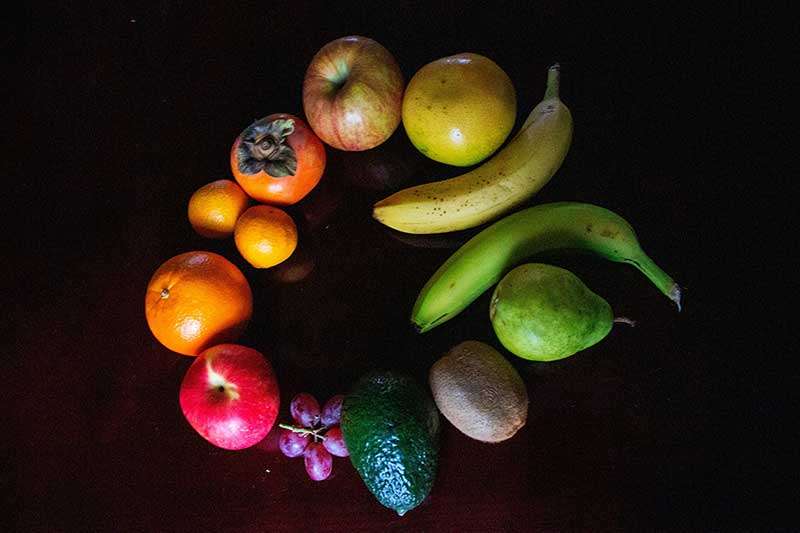
Plants give us energy from sugars and fats, but health depends on more than calories. We also need phytonutrients: complex plant chemicals linked to taste, appetite control, and long-term wellbeing. Phytonutrients rely on a living ecological chain that starts in the soil, where microbes and fungi unlock minerals so plants can build these compounds. When soil biology is damaged, food can become energy-rich but nutrient-poor, driving cravings and chronic disease. This article explains the cycle and the Gbiota growing approach.
The Ecological Cycle
Plants convert sunlight, atmospheric carbon, and water into sugars and fats. These simple chemicals provide energy. But health needs more than energy. Humans (and animals) also need a wide range of complex chemicals made by plants, known as phytonutrients.
Making phytonutrients depends on a complex ecological chain. It begins with minerals in the soil. Many essential minerals are insoluble, so they cannot be taken up easily by plant roots. They first need to be broken down and made available by soil biology, including bacteria and fungi.
Mycorrhizal fungi are especially important. Their fine hyphae extend through the soil and help break down rock and mineral particles. This releases minerals and brings them directly to plant roots. When this system is strong, plants receive the building blocks needed for deeper nutrition.
Plants are masters of chemistry. Using minerals from the soil, they manufacture phytonutrients that support human health. These compounds also play a major role in flavour. Strong taste and aroma are not accidental. Plants need animals to spread seeds and help recycle nutrients back into the soil, so taste becomes part of the plant’s survival system.
What Goes Wrong in Modern Farming
Modern chemical industrial farming produces energy in abundance, but it often damages the biological life in soils. When soil biology is destroyed or weakened, plants struggle to produce enough of the phytonutrients that depend on mineral uptake and microbial cooperation.
When the diet lacks phytonutrients, the body tends to respond with hunger cravings. Instead of feeling satisfied, people keep searching for “something missing”. In practice, that often means eating excess high-sugar and high-fat foods, which contributes to the modern chronic health epidemic.
The Gbiota Growing System
The Gbiota system is designed to rebuild the ecological chain that produces phytonutrients. The primary inputs are organic wastes and essential minerals. These are composted in bins, creating a biologically active base material.
Water is circulated through the compost bin and through the plant root zone in a flood-and-drain system. This cycle helps aerate the root zone, and it delivers both minerals and biology so plants can produce essential phytonutrients. Because roots are flushed with nutrient-rich solution every few hours, the system is highly productive.
Fresh Food, Less Waste, Fairer Economics
Growers operating this system need approval and then post available produce online for sale. Orders are typically taken before plants are harvested. This means produce can be genuinely fresh, harvested close to pickup or delivery, and there is little to no waste.
With a highly productive system, recycling waste organics, avoiding the high cost of chemical inputs, and selling direct to the customer online, it becomes possible to offer produce rich in phytonutrients at a cost that is competitive with chemical industrial agriculture. The customer receives the health benefit of more nutrient-rich food, and the environment benefits through regenerating soil quality, recycling organic waste, and capturing carbon in the soil.
