Help wanted with digital marketing

Help wanted with digital marketing

Help wanted with digital marketing

 Gbiota's interest is how to grow gut brain food. Few people are going to Google ‘how to grow gut brain food’ and if they do they will be exposed to a plethora of adverts for pills of dubious benefit.

Our gut brain is the control system for our bodies, every machine has some form of control system, even if it is just a simple on/off switch. Our bodies have a highly sophisticated control system that regulates everything we do, our breathing, heart rate, temperature, appetite, how much and where we store fat in our bodies.

We do not understand how it works but we have a nice name for it – homeostasis.

It is really important, we can't possibly be fit and healthy if our control system is not working and that is precisely what has happened over the last half century.

There are good microbes that lead to a healthy gut and harmful microbes that can make us sick or even kill us.

We are very good at killing all microbes, we do it on a grand scale with the chemicals we use in modern agriculture.

However it is not so easy to breed beneficial microbes without breeding the harmful ones. The cornerstone of the Gbiota technology is to create the right conditions for the good microbes to simply outbreed and out-compete the harmful ones – what we call eco-balance.

Our food system has failed to feed our gut brain resulting in an epidemic of overweight, diabetes, heart attacks, dementia, and a shortened health span.

We have the technology to solve this so we are really under a great deal of pressure to get this technology to the millions of people who have a compromised gut brain.

The internet is so saturated with adverts for dubious pills we cannot rely on natural growth, we have to grin and bear it and pay for advertising so everyone who needs to know about a healthy gut-brain is aware that they can do something about it.

Money is not such a big deal, when people understand they can avoid having their leg chopped off from diabetes they will be happy to contribute to the costs.

But equally, it is pointless running a scattergun approach to marketing, it has to be niche marketing to a select group who actually want a healthy gut–target marketing.

There are three groups we need to target.

Home growers at risk of diabetes.

These will generally be older people 50+ who are already gardeners and can easily adapt to growing gut-brain food.

Parents of childbearing daughters

Our gut brain is largely formed in the first three years of life and we get it from our mums, during birth, and from breastfeeding. I have a specific post on this the best pro biotic ever which I hope you will read.

Local growers

Many people want a healthy gut-brain but do not want to go to the bother of growing the plants themselves.

It is just a fact of life that the beneficial microbes have a limited life, they die after about three days from harvesting. Even if you buy the best plants from an organic grower they will not help that much if you just buy plants.

But if you buy a Gbiota box with plants already growing you can pick and eat so you have genuinely fresh plants and after a month or so you just swap for a new Gbiota box.

We need to set up a network of Gbiota growers across the planet.

Target marketing

I am an engineer, I am more than happy playing around with pumps to get the conditions right to breed the beneficial microbes and I have no problems mixing up organic waste and chicken manure to breed the microbes

BUT

I am not really into target marketing so I am creating this post to see if any of my current user base has skills in Targeting Marketing which will help the project along.

If so I look forward to hearing from you colin@gbiota.com

Loading

Creating change

Creating change


Creating Change

This is the last article in this series where I get down to the nitty gritties.

Control systems

Every machine has a control system, even if it is a simple on /off switch.

The human body is no different except our control system in incredibly sophisticated and to be honest we have no real understanding of how it works, but work it does.

Our gut is an important part of that control system, it is a real brain powered by trillions of cell communicating with each other, just like some super computer. We just have no idea of the code.

Go back a hundred years and there was an abundant supply of microbes, there were the good ones that powered our gut brain and the bad ones that made as sick or even killed us.

Swapping Infectious diseases for non-infectious disease

In fact the majority of people died from some infectious disease in early life, so the average age at death was low.

But with all our modern technology, our medical and food systems, sewage, clean water and an understanding of hygiene we largely solved the problem of infectious diseases - that is until Covid came along.

But our battle against these harmful bugs meant we also wiped out much of our beneficial microbes, so our control system was not working - leading to an epidemic of chronic non infectious diseases - over weight, diabetes, heart attacks, dementia etc.

Good bugs versus bad bugs - Eco balance

This is near the top of the list of challenges facing humanity, how do we control the bad bugs which make us sick without killing of the good bugs which power our intelligent control system.

This is what Gbiota is all about and it is not as difficult as it may seem, if you control the conditions the good bugs will out breed and out compete the bad bugs. What we call Eco balance.

We have the technology, we know how to do it but how do we make this technology available to the wide population?


The fringe group

It is true that we have a small group of followers who are quite happy recycling waste to breed the beneficial microbes that power our gut brain, but this a minute proportion of the total population - so how do we set up a system where the population has access to a healthy gut brain?

We have a number of problems to overcome.

The biggest is that these beneficial microbes have a short life.

You can buy some wonder plant, broccoli, kale or whatever from the supermarket but by the time it has passed from farm, to warehouse, to supermarket to your fridge the beneficial microbes will have died.

Changing our food system

This means a fundamental change in our food system from a highly centralised system, which is the most efficient and beloved by our mega food companies, to a local system.

This is not going back to the old system, that would mean going back to infectious diseases, we need local growers who understand Eco balance.

But for this to really work we have to change the way the system operates, instead of harvesting the plants and selling plants it means customer would buy a box with live plants still growing which they would pick and eat while really fresh, before the microbes die.

A journey of a thousand steps

We have already started, we have the technology and we have a group of dedicates supporters who are growing their own gut brain food, for themselves in their own home.

So what is the next step?

The most important group is to be and new mums. Read The best pro-biotic ever

Mums pass on their gut biota to their babies at birth and from their breast milk.

But mums, even though they love their babies, are typically to busy and stressed out to grow their own gut brain food.

But is is likely that these new mums would have parent, who are equally dedicate to the future of their grand kids and who have the time, resources and skills to produce Gbiota boxes.

All mum has to do is to water, pick and eat.

This benefits mum and her baby but is the next step I establishing a local gut brain food industry of local growers.

So why not join the Gbiota social movement and change the world for the better.

.

Loading

Prevention better than cure

Prevention better than cure


Prevention better than cure

The gut is a highly sophisticated organ that does much more than digest food.

It forms part of a real brain which controls our bodies, particularly our appetite, what and how much we eat, how much and where we store fat and helps to train our immune system.

Cravings Food | Gbiota | Colin Austin


The reality it that we really have little understanding of how the gut brain works but we live in the age of hype - saturated with promotions for pills which have little chance of being much benefit if we get sick.

snake-oil-con-man-colin-austin-gbiota


A far better approach is to avoid getting sick in the first place by feeding the sort of food that will keep our gut brain healthy.

That starts with the soil, we have evolved to eat plants grown in living soil full of beneficial microbes and nutrients.

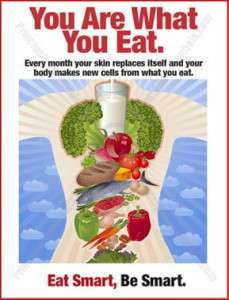
eatsmart-colin-austin-gbiota


That is what this web site is all about -

How to make soil which will grow gut brain food.

That works and is easy - almost anyone can do it.

No claims of magic solutions - just healthy gut brain food grown in soil teaming with beneficial microbes and nutrients growing gut brain food.

Learn how - we are here to support you - real people who like messing about with soil and don’t freak out when they find a friendly worm.


Loading

Support

Support

I often say that the process of growing gut brain food is easy, and that is pretty much true – but not as easy as tossing things from the shelves into a supermarket trolley.The process of developing the Gbiota system has been far from easy, involving over fifty years of experimentation with many failures – that is the cost of innovation.I like to make the results of this experimentation available to Gbiota members, so I write many articles. I have just checked and there are 233 posts, which can be pretty daunting to a new member.But I can help – all you need to do is email me at colin@gbiota.com and I will:
  • Either answer your question directly (if it is simple), or
  • Point you in the direction of existing posts which may answer your question, or
  • Write a completely new post so all members have access to the information.
I may paraphrase your question using your first name – for example, “Mary asked how to use fish heads in their compost” – I assume that is OK, but let me know otherwise. Below is a list of all the available posts in date order.

All Gbiota posts (newest first)

Loading

Solving the food crisis

Solving the food crisis

Solving the Food Crisis

Social Movement

The world is suffering a food crisis, not in quantity — we are actually producing more food than the world needs — but in the quality of food needed for a long and healthy life, free from many modern diseases such as obesity, diabetes, heart disease and dementia. This is not going to be solved by the mega-corporations that control our food system, or even by the governments we elect to safeguard our interests. It is going to be solved by people saying, “I want to live a long and healthy life.” One person makes very little difference. It needs many people joining together in a social movement. I do not mean a movement with crowds blocking streets, waving placards and getting arrested. I mean a quiet social movement using the power that works — the power of the wallet. I hope you join the movement and do the one thing that will make it work: tell your friends and ask them to join. It is only by getting enough people involved that we will be successful.

Not a Flash

First, I need to explain the technology. The best way to do that is to tell the story of how this technology was developed. There are ideas that change everything and seem to arrive as an instantaneous flash of inspiration. But that is not usually how it happens. There is often a long and frustrating period of puzzling, which culminates in a moment when things suddenly fall into place. Then there is an even longer period while this new way of thinking becomes accepted as the norm — the painful process of creating a paradigm shift. Let me tell you my story. My expertise is in computational fluid flow, and I was recognised as one of Australia’s leading innovators. Read My Story here. I have a particular interest in how water moves through soil and plants — something that is not as simple as it may first seem. See Water.

Ethiopia

Some thirty years ago, I was invited to go to Ethiopia to see if I could find any way of providing sustenance food during periodic droughts. It had to be really simple and cost next to nothing. The idea I came up with was to dig a trench, line it with a plastic sheet, fill it with weeds, which contain a lot of nutrients, and then back-fill it. When it rained, the trench would catch the water that would otherwise drain away, allowing plants to be grown. This was the birth of wicking beds. Watch my video here. The idea caught on, but some people thought the weeds would become putrid, so they replaced the weeds with stones, which are inert. They covered the stones with a layer of weed cloth and added a pipe so the water reservoir could be filled with clean water. The putrid problem appeared to be resolved. They had developed an effective self-watering bed without the problem of microbes. This idea — that we should grow our food free of microbes — became the accepted norm across many food production systems.

The Wrong Fat in the Wrong Place

But then my wife, a medical doctor, became diabetic — along with millions of other people across the globe. What was the root cause? Basically, the wrong fat in the wrong place. But why would our bodies suddenly start accumulating fat? At first, there was no clear scientific explanation. But science kept moving ahead, and we began to understand how important our gut biota is. The tens of trillions of microbes in our gut communicate with each other and with our brain. Together, they form an intelligent control system that helps regulate our bodies, including how much fat we store and where we store it.

Microbes Matter

It became obvious that microbes really matter. The idea that we should produce food under inert, microbe-free conditions was a bad idea. We needed to work out how to grow food with beneficial microbes, while avoiding harmful microbes.

Good and Bad Microbes

That may sound simple, but there is a practical problem: how do we create a system that encourages beneficial microbes without allowing harmful microbes to dominate? Harmful microbes do much more than make a bad smell. They can make us sick and even kill us. It is easy to kill microbes with powerful chemicals, but chemicals do not distinguish between good microbes and bad microbes. Killing the bad without killing the good is not possible using that approach.

Our Immune System

But in the bleakest hour, a knight on a white horse appears and saves the day. That white horse is our immune system, which largely lives inside our gut, our intelligent control system. It seems that we have grossly underestimated our gut brain. It is much more sophisticated than a simple on/off controller saying, “You are full, stop eating.” From the minute we take our first feed, hopefully from mum, it is learning how the food we eat affects our bodies. It learns that certain foods provide specific critical nutrients and can create cravings for those foods.

Beer and Peanuts

With all our sophisticated technology, it is surprising how little attention is sometimes paid to simple everyday observations. For example, after spending the afternoon digging in the hot sun, you may fancy a beer and some peanuts. What is happening is that your gut brain has worked out that you are low in critical salts from sweating, and has learned by experience that beer and peanuts replace those salts. That is how intelligent systems work: they learn and remember. Our gut brain does this brilliantly.

Why Do We Get Fat?

Experts give many reasons why people gain weight and often recommend diets that reduce calorie intake. But if your intelligent control system detects that you are low in a specific need — such as a mineral or vitamin — it may make you feel hungry. Not just hungry, but driven by irresistible food cravings. If you respond by eating chicken wings and cheesecake rather than the specific mineral or vitamin your body needs, then you may gain weight. Not satisfying an essential nutritional need may be one reason why people overeat. We may consume extra calories, but the deeper issue may be the specific deficit that creates cravings in the first place. ``` Technically, this issue can be addressed because it is relatively easy to have a Gbiota box with living plants growing in a home, courtyard or apartment. It is entirely practical for people to create soil, establish growing systems and produce their own fresh food. However, modern life is busy. Many people, particularly young families, simply do not have the time to create and maintain these systems themselves. That is why we may need a system where individuals or businesses establish and maintain Gbiota boxes, supplying households with living plants that are ready to harvest and eat. The concept is simple: rather than buying harvested produce from a supermarket, people receive living food systems that continue growing until needed. In principle, this could provide fresher food while simplifying the growing process for busy households. I expect one of the easiest ways for this idea to spread is through families. Older people often have more gardening experience and time available. They may be able to help younger family members establish growing systems. In my article The Best Probiotic Ever, I discuss the importance of developing a healthy gut biota early in life.

Are We There Yet?

Not quite. What we are really discussing is the decentralisation of the part of the food system that provides biologically active food. The energy-producing side of the food system generally functions well. The challenge is maintaining the biological quality of food as it moves from farm to plate.

The Food Paradigm Shift

This requires a paradigm shift in how people think about food. Paradigm shifts rarely occur through advertising or conventional marketing. Instead, they occur when individuals try something for themselves, observe the results, and then share their experiences with people they know and trust. People are increasingly sceptical of marketing claims and often place greater value on recommendations from friends, family and people they respect. The Gbiota movement is based on this principle — people sharing their experiences directly with others. The objective is to help people understand how growing fresh food and creating healthy soil may contribute to better long-term health and wellbeing. If the idea resonates with you, consider becoming involved, learning more and sharing what you discover with others. There is a large amount of information available throughout this website covering soil biology, food systems, water movement, ecological balance and practical growing methods. If you need assistance finding specific information, please feel free to contact Colin via the website.

Loading

The best pro-biotic ever

The best pro-biotic ever


The best pro-biotic ever

What is the best pro-biotic ever, in fact the only one that really works for sure?

Answer - human breast milk.

Puzzled scientists

For many years scientist were puzzled about some weird stuff in breast milk that was indigestible by the baby - then it clicked that this was to feed the babies gut biota.


Three years to get a healthy gut

Babies gut biota is important as the first three years of a child's life pretty much sets their gut biota for the rest of their lives (OK we can change it a bit but it is not easy or pleasant unless you enjoy having a faecal transplant - someone else’s pooh poked up your bum).

newborn-baby-colin-austin-gbiota


Were different

Humans are a bit different to other creatures.

Human babies are pretty much helpless, admittedly they have a good pair of lungs for getting attention but they can’t run away from a tiger.

We take longer to mature than any other animal

We reach physical maturity in our late teens but our brain only reach full maturity in our mid twenties.

Breeding pairs stop effective breeding in their late fifties but live on for another twenty or more years still enjoying a bit of hanky panky.

Why should we hanky panky, or even live on, for so long after we stopped reproducing

Now nature does not do things for fun, so there must be some explanation for this odd behaviour.

old man having fun


Humans - the tribal animal

The answer is that we have evolved as a tribal animal (1 person 1 tiger - tiger wins, 100 people - 1 tiger people win).

We have evolved a society in which older people eg grandparents look after and care for the young, (normally their grand kids but we have evolved to look after kids - it is part of our nature).

granddad-having-fun-with-grandchildren-colin-austin-gbiota


Gbiota and our gut


So what is all this to do with Gbiota and our gut? So let us look at the facts.


* Babies need to form a healthy gut, as this will set their health for the rest of their lives.

* Babies are pretty useless and can’t even dig a hole, let alone grow plants.

* Babies get their gut biota during birth and later from breast milk.

* The most important people to have a healthy gut are ‘to be’ and ‘new’ mums.

* Plants grown in living nutrient rich soil full of beneficial microbes are natural pre and pro biotic but need to be picked and eaten before the microbes die.

* New parents are typically far to busy with the stresses of life trying to grow gut brain food.

* Grandparents are generally still fit and healthy and have evolved to care for their grand kids. (We hanky panky so we stay together as couples to fend for our grand kids - that is the way nature works).


This is where Gbiota boxes come in.

Young parent are often too busy to mess around making soil to grow the plants that will make them healthy.

Grand parents have the time and often the skills so can set up Gbiota boxes full of growing plants ready to harvest.

They just give these boxes to their pregnant, or nursing  daughter.

All she has to do it water the boxes and pick and eat the plants and when finished give the boxes back to mum or dad to replenish with a fresh box.

So simple, so effective and is cheaper than buying vegetables from the supermarket.

soil-blood-gbiota-bed-colin-austin-gbiota


We all win - let’s party.

Back to home page

people-smiling-colin-austin-gbiota

Loading

Food matters

Food matters


Gbiota technology controls the Eco system in the soil to breed beneficial microbes that enhance our gut biota to improve health  - We show you how.

  Join the Gbiota movement here for free (Expires 31st March 2024)

The Gbiota movement does not sell gut brain food,  it can't as the microbes die so the plants must be picked and eaten before the beneficial microbes die.  We teach members how to grow gut brain food by enhance their soil by controlling the conditions.


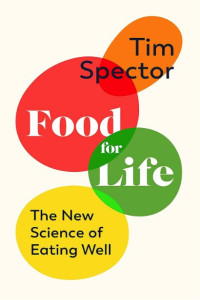
It is well known that our gut biota plays a major roles in our health. Many researchers, such as Tim Spector, Professor at Imperial College, London explains this in his book Food for Life.

Microbes breed and die incredibly fast. Within twenty minutes a new microbe will start to breed but will die after maybe seventy hours. The population continues but the individual microbes die.

You can have a faecal transplant and that works but is a sophisticated medical procedure with limitations.

But I cannot send you out a packed of beneficial microbes which you can buy on the internet and expect them to be still alive when they arrive - that’s life.

But I can teach you how you can create the conditions where beneficial microbes can breed so successfully that they out breed and out compete the harmful microbes which are always present. This is simple, practical and inexpensive.

Admittedly this requires more effort than swallowing a pill but is based on a system which has been proven to work - until we changed our food system.

food-for-life-book-colin-austin-gbiota


Our super computer

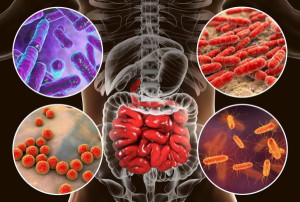
The trillions of cells in our gut biome communicate with each other to form a super computer which regulates our bodies.

This behaves in the way that Artificial Intelligence operates, monitoring every piece of food we eat and seeing its effect on our bodies then deciding what and how much we want to eat.

Our gut brain is highly sophisticated.

There are thousands of different species in our gut brain, which originate in the soil and are transferred to our gut when we eat plants grown in that soil.

The soil, the microbes in the soil, the plants and our gut form an interconnected Eco system which changes according to the conditions.

The Gbiota technology controls these conditions to give us the Eco system which we know from observations of the real world lead to us having the healthiest gut and life style.

Fortunately this is a very easy technology to apply, home gardeners can change the microbes in their soil, even people living in apartments can create soil for growing plants in pots.

The main inputs are recycled organic waste, rock dust and inoculants making it a very inexpensive process - cheaper than buying food from the supermarket.

How many technologies lead to a longer health span and lower costs?

My role, in the Gbiota movement is to teach members how to enhance their soil by controlling the conditions.

Gbiota Hello

We need to feed our gut brain which is the intelligent control system for our bodies.

Our modern chemical industrial agriculture and highly processed foods simply does not feed our intelligent control system so we need to modify our food system.

People react in different ways.

Some people see this as their mission to change the world for the better for their grand kids.

Other people are not bothered about going on a mission and just want to have good food for themselves and their families and are prepared to go to the trouble of growing some of their food.

Others think this is all too much work but still want to buy healthy food.

Fortunately there are other people who are willing to grow gut brain food for them. As the plants must be eaten fresh they supply Gbiota boxes filled with plants ready to eat, which can be picked and eaten before the beneficial microbes die.

Your all welcome

Let me tell you that you are all welcome to join the Gbiota movement. Even if you just start eating healthy food and feel better in yourself and your friends see this - then this is the best promotion we can have for the cause.

Being healthy should be fun - not an ordeal

But let me tell you that this does not have to be some ordeal.

There are diet enthusiast who will lead you to believe that just one meal of chicken and chips followed by a good hunk of cheese cake will mean you are sacrificing you life and will back this up with a list of long chemicals names to convince you that your life is somehow doomed.

Out bodies are not that wimpy.

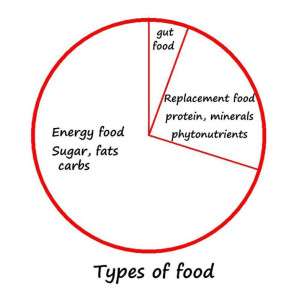
Most of the food we just burn off for energy - its just fuel.

You can have a steam engine which can run on coal, gas, wood or even old furniture and it works fine. Our bodies are like that - give us food and most (about 80%) is just burned off as fuel.

But our bodies are also very clever and they use our food to replace our body parts as they age and wear. This does required a variety of minerals and nutrients, some with very long and impressive chemical names but are just part of a regular diet (may be 15%).

Only a small part (may be 5%) of our food intake needs to be specifically to feed our gut brain - but it is vital for our health.

types-of-food-colin-austin-gbiota


Our gut brain is super smart

But our gut brain is our intelligent control system which regulates our bodies, deciding how much and where we should store fat.

It is smart, sensing what we eat and its affect on out bodies and learning, like artificial intelligence how that affects our bodies. Once learned it gives us a strong preference for certain types of food.

This is totally critical for our bodies, not feeding our gut brain makes as much sense as having a drunk at the wheel of a Lamborghini.

This may only make up 5% of our food intake but is totally critical for our health.


Chicken wings, chips and cheese cake still on the menu - but

So you can still eat chicken wings and chips and a hunky slice of cheese cake and still live a long and healthy life.

It is just that your gut brain will tell you that you have had enough chicken wings, chips and cheese cake so you just call a halt naturally.

Welcome

So whatever your scene - join the Gbiota movement, change the world, grow your own healthy food or find someone who will grow it for you - and welcome.

Currently you can join for free and read all the articles on how to grow gut brain food, but you need to sign up with a valid email address and click the box on any post saying notify me of new posts.  We publish a new post about once a week, but we do not email members, you have to go to this web to see them.

We are not in the business of selling stuff, (although  we help other people supply gut brain food) our role is to teach people how to grow gut brain food and if you want to learn you need to join the Gbiota movement.

Colin

Grow gut brain food

A few hundred thousand year ago a puny creature that barely survived took a world changing decision - to use an existing technology, fire to cook food. This gave it the energy to grow a huge brain which led to intelligence and cooperation so this creature became the dominant creature on the planet - us.

What we ate changed us as a species.

cave-men-around-fire-colin-austin-gbiota

Two brains

Actually we developed two brains, one in our head the other in our gut. They may be separate but they work together so we can call it our gut brain.

The brain in our gut is made up of trillions of cells which communicate with each other, just like super computer providing an intelligent control system which naturally regulates our bodies.

Smarter than AI

Our gut brain is really smart making modern artificial intelligence look like a dumbo

Throughout our life it is monitoring what we eat and what our body needs.

Is continuously manages our appetite so we eat what is healthy for us totally naturally.

If we are short of say B12, very common in modern society, and we eat some brewers yeast flakes, which is full of B12 then over time we will learn to really like yeast flakes.

For our gut brain to work properly we have to feed it gut brain food. It needs fibre, which comes from plants so existing microbes can flourish and breed and a fresh supply of microbes, preferably with a broad spectrum of species.

For hundreds of thousands of years we ate plants grown in living soil full of nutrients so had a healthy gut brain.

The big goof - we stopped feeding our gut brain

Then we made one of the biggest mistakes mankind has ever made, we stopped feeding our gut brain - we became fat and sick and our health span reduced as we started to eat highly processed food which was inert, dead like Monty Pythons parrot, and lacked essential nutrients and minerals.

This is easily solved by feeding our gut brain, which is easy, costs less that buying highly processed food and recycles waste organics which would otherwise be contributing to green house gases.

The plan

But how do we do this? We need a plan.

Concerened thinkers

My plan is to start by creating a social movement of concerned thinkers, anywhere in the world, who understand the importance of a healthy gut brain and are prepared to grow their own gut brain food and show to their friends and contacts that this really works.

Seeing is believing

In the second stage many more people will see the benefit of growing their own gut brain food and even though they have no garden or garden experience start growing their own gut brain food.

Commerial growers

In the third stage there will be a demand for gut brain food which will encourage local commercial growers to supply gut brain food.

My job is to show people how to grow gut brain food - that is what this web is all about.

First you have to join which you do here. For the next three months this is totally free. Over this period I will be writing many posts to show how to grow gut brain food. You should click the button to notify me of new posts at the bottom of any post and you will have to login to access these posts.

If you have any questions of issues just contact me at colin@gbiota.com

Watch videos of Gbiota boxes being made and regenerating with fresh microbes and nutrients, watch time under 3 minutes

watch here

Gut biota and health span

People are becoming very aware of how enhanced gut biota can lead to a longer health span.

Real food over pills

We live in the age of the hype machine promoting some magic pill which will instantaneously give them a healthy gut.

This is a fictitious world - the gut brain is one of the most sophisticated devices on the planet.

Our gut brain is  the intelligent control system which regulates our bodies and keeps us fit and healthy throughout our life.

pills-in-mouth-colin-austin-gbiota

We don’t get fat and sick simply because we eat too much, we get fat because our gut brain senses our diet it not right and sends our hormones to make us hungry - then we get fat. The solution is to feed our gut brain the food it needs.

Natural sophistication

It is highly sophisticated - the product of millions of years of evolution and is one of the wonders of the world.

From when you take your first gulp of milk from your mum to your very last meal your gut brain is learning what food is good, makes you feel satisfied and provides all the nutrients that you need.

I study the natural process of how our gut brain works and try make this information available to as many people as possible so they can enhance their gut brain.

newborn-baby-colin-austin-gbiota

Living soil over dirt and chemicals

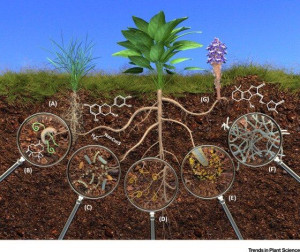
I show how the natural process works from the microbes in the soil making insoluble rock particles in the soil into bio-available nutrients, how different species of plants will exude different sugars to attract specific species of microbes which will enter the plants and we will eat to form our gut biota.

I explain how you can create soil teaming with beneficial microbes and nutrients, which can grow plants which enhance your gut biota and the chances of a longer health span.

We cannot guarantee it will work for everyone, genetics and epigenetics (gene expression) means everyone is different.

Yes it will take more effort than buying some magic pill - but it a natural process that has evolved and been tested over millions of years.

exude-plant-root-illustration-colin-austin-gbiota

Join the Gbiota movement for free Expires 31st March 2024

Fat and sick

Across the globe people are getting fat and sick from an epidemic of diseases like diabetes, heart attacks and dementia.

Why?

Find our here at Fat and Sick

Recycling food waste

Recycling food waste to grow plants which are natural pre and pro biotics - extends health span - saves money - is more sustainable - anyone can do it - everyone should.

Our gut brain, made up of trillions of cells or thousands of species is like a super computer, monitoring everything we eat and the affect on our bodies and learns, over time,  to regulate our appetite - how much and what we want to eat.

If we feed it the right food, the beneficial microbes will work to give us a long health span free from chronic disease.

On the other hand, if we feed it the wrong food it is likely to lead to us becoming fat and sick.

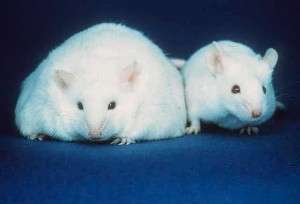
We learned this from experiments with mice. We could make them fat or skinny simply by what we fed them.

We learned that humans are the same from using faecal transplants with slim people becoming fat.

We decide what we want to feed our gut brain.

fat-and-skinny-mice-colin-austin-gbiota

It is our choice.

Virtually anyone can grow beneficial gut brain food at home starting with organic waste so it cost less than buying food from the supermarket.

There are literally hundreds of articles and videos on growing gut food which may be of interest to the technically curious but can be a bit overwhelming for those people who just want to grow gut brain food, but if you just follow Newposts you will soon get the latest information, as I publish new articles on my experiments regularly.

Read more at Fat and Sick

Loading

Hello

Hello

Gbiota Hello

We need to feed our gut brain which is the intelligent control system for our bodies.

Our modern chemical industrial agriculture and highly processed foods simply does not feed our intelligent control system so we need to modify our food system.

People react in different ways.

Some people see this as their mission to change the world for the better for their grand kids.

Other people are not bothered about going on a mission and just want to have good food for themselves and their families and are prepared to go to the trouble of growing some of their food.

Others think this is all too much work but still want to buy healthy food.

Your all welcome

Let me tell you that you are all welcome to join the Gbiota movement. Even if you just start eating healthy food and feel better in yourself and your friends see this - then this is the best promotion we can have for the cause.

Being healthy should be fun - not an ordeal

But let me tell you that this does not have to be some ordeal.

There are diet enthusiast who will lead you to believe that just one meal of chicken and chips followed by a good hunk of cheese cake will mean you are sacrificing you life and will back this up with a list of long chemicals names to convince you that your life is somehow doomed.

Out bodies are not that wimpy.

gut brain foodMost of the food we just burn off for energy - its just fuel.

You can have a steam engine which can run on coal, gas, wood or even old furniture and it works fine. Our bodies are like that - give us food and most (about 80%) is just burned off as fuel.

But our bodies are also very clever and they use our food to replace our body parts as they age and wear. This does required a variety of minerals and nutrients, some with very long and impressive chemical names but are just part of a regular diet (may be 15%).

Our gut brain is super smart

gut brain connectionBut our gut brain is our intelligent control system which regulates our bodies, deciding how much and where we should store fat.
It is smart, sensing what we eat and its affect on out bodies and learning, like artificial intelligence how that affects our bodies. Once learned it gives us a strong preference for certain types of food.

This is totally critical for our bodies, not feeding our gut brain makes as much sense as having a drunk at the wheel of a Lamborghini.

This may only make up 5% of our food intake but is totally critical for our health.

Chicken wings, chips and cheese cake still on the menu - but

So you can still eat chicken wings and chips and a hunky slice of cheese cake and still live a long and healthy life.

It is just that your gut brain will tell you that you have had enough chicken wings, chips and cheese cake so you just call a halt naturally.

Welcome

So whatever your scene - join the Gbiota movement, change the world, grow your own healthy food or find someone who will grow it for you - and welcome.

Colin

back to home page

Loading

Gbiota 101

Gbiota 101

First stage – create labile compost for breeding microbes

Creating a new swivel tube box

Regenerating an old box

How an existing box with growing plants can have fresh microbes and nutrients added without disturbing existing plants.

Loading

Gbiota overview 2024

Gbiota overview 2024

Growing gut brain food

Gbiota is an evolving technology. Whenever some new bit of technology comes along I write a new article to describe what is new. This has led to hundreds of articles which, for a person new to the Gbiota movement, is a bit overwhelming. So I am writing this article – Gbiota Overview 2024 – as a review article to give an overview of the Gbiota technology.

Modern food

Modern food technology enables us to produce enough food to feed the entire world. We can choose to eat food which will make us fit and healthy or we can eat food which is addictive, makes us fat and sick and die young from some chronic disease like diabetes, heart attacks or dementia. Humans are the creator of technology which can be of immense benefit or could eliminate our species. What matters is how we manage technology. Fifty years ago I was a pioneer in computer-aided engineering and internationally recognised as a leading innovator in my field. Now I am eighty-four years old, still fit and healthy, and I understand the power of technology to be either for the benefit or the destruction of humanity. I write on the web so people have access to the technology they need to live a fit and healthy life. Information is the greatest of our technologies. I can sit in the corner of my living room, watching the birds in my mango tree, writing my articles about food which will make people healthy and anyone in the world can choose to read and use this information. We have been led to believe that the problems of modern life can be resolved by three-word slogans and that we should all become dumb donkeys following simple instructions. That is not the way to solve the problems of the world. We have to do what humans excel at – and that is to think. I am not part of the internet marketing machine – I write for the concerned thinkers of the world. I hope you follow me here.

What we need to know about us

Homo erectus

We can trace humans back to about a million years ago – Homo erectus. We were a puny little creature, light on in the teeth-and-claws department, which barely survived with a population under a million. Like most creatures today, life consisted of getting enough to eat and not getting eaten by a creature with bigger teeth and claws.

Homo sapiens

Then we made the greatest innovation of all time – fire and cooking. This made it much easier to digest our food and it completely changed us as a creature. Our guts shrunk – we didn’t need a massive gut – and our brain grew. Brains take a lot of energy and that is what fire and cooking gave us. We became a totally new creature, Homo sapiens – that was about two hundred thousand years ago. We developed two characteristics which dominate us to the present day – we were intelligent and cooperative. We developed our very greatest invention – speech. We could make plans on how to kill giant creatures like the woolly mammoth and pass on information and skills from generation to generation. We developed tools and weapons – flint axes, spears, bows and arrows. We hunted in teams and generally had adequate food and could protect ourselves from the more ferocious beasts. Although we were hunter gatherers and moved around a lot, we became very attached to a certain area of land which we came to think of as ours. If the next tribe over had something different to offer, the two tribes would trade in an amicable way. If the neighbouring tribe’s leader happened to have a particularly attractive daughter then a trade of marriage might be done to establish long-term harmonious relations between the tribes.

Big ears and the invention of war

If the daughter happened to be less attractive, say with big ears, then the tribes might exploit humanity’s worst invention and go to war. The warriors would fight to the death without questioning why because they were members of a tribe and that was the done thing. Had the warriors known they were risking their lives because the neighbouring tribe’s leader’s daughter had big ears they would unanimously have said, “but she has a cute bum so do what we do and make do with what you’ve got” – and war would never have been invented. Nothing much has changed – we still go to war for no viable reason.

Food security and agriculture

Apart from the odd tribal scuffle, and they did not have atomic bombs which could end humanity, things were not that bad apart from time to time lack of food. To prevent this humans invented agriculture aimed at ensuring a stable food supply. The problem with inventions is that you never know quite what they may lead to, but it is almost always some good and some bad. Agriculture led to classes, with some people claiming they owned the land. They became very rich and had time to develop music, art and writing, while the poor worked their guts out (figuratively) growing food on the land. Cities and civilisation came into being, offering a totally new way of life – good for some, less good for others (actually most). Cities, with overcrowding and lack of sanitation, led to diseases on a grand scale not experienced before. Many civilisations came into being then just disappeared. I have no idea if they knew why but we do now – they destroyed the soil that grew their crops. The solution then was to create a new civilisation on new soil that had not been destroyed. We do that in modern times. The difference is we have now developed much more effective ways of destroying soil and we have run out of new land to exploit and destroy.

Population explosion

Before the industrial revolution the total population on earth was under a billion and people ate food grown in natural soil (soil fertilised with manure and other organic waste) which meant that people were naturally eating gut brain food. Then the population tripled in size and then in just my lifetime tripled again. This put enormous pressure on the global food supply which we thought we had resolved by the technologies of synthetic fertilisers and plant genetics. This increased the supply of energy food dramatically and we are now producing enough energy food to feed the entire global population. True, there are people still starving but that is because of equity and distribution problems – not an overall lack of energy food. We are actually growing more food than we need – we waste a lot.

The two roles of microbes

But the nature of soil has changed. Previously the soil was full of microbes which broke down minerals in the soil to make them bio-available and also entered the plants to feed our gut brain. Our modern food system lacks both the beneficial microbes which power our intelligent control system and essential trace minerals. Our intelligent control system – our gut brain – regulates our appetite and how much fat we store. The wrong fat in the wrong place is the root cause of the modern diseases of obesity, diabetes, heart attacks and dementia. Technically we know how to resolve these problems but this does require eating plants shortly after picking and before the beneficial microbes die.

Climate change

For a long time the energy companies learned from the tobacco industry and tried to persuade us that climate change was a myth or at least unproven. But with fire and floods across the globe it is no longer possible to pretend that climate change is not real. Owning shares in an oil company makes pretending easier. The combination of the destruction of our top soil coupled with climate change is now the biggest threat to humanity – not so much from a lack of food but the lack of gut brain food which is at the root cause of the modern epidemic of chronic diseases, obesity, diabetes, heart attacks and dementia. The food industry learned from the fossil fuel and tobacco industry that they can convince the bulk of the population for many years that there is no problem – nothing to see here.

Concerned thinkers

In the short term the only practical way to do this is for people to grow some plants at home which provide these beneficial microbes and trace minerals. But how to create a general awareness that there is a simple, economic and practical solution when the food industry is spending multi-billions of dollars on manipulative advertising with the clear message that everything is fine – nothing to see here?

David and Goliath

What strategy can the Gbiota movement (which, let’s face it, is an amateur operation) use to make people aware that the lack of gut brain food is the biggest threat to humanity? The strategy is simple – form a social movement of concerned thinkers who set up their own Gbiota growing system which they can show to a much wider group so people can see that there is a solution that works and is practical. That is what the Gbiota movement is all about – showing people how to grow plants at home which provide the beneficial microbes and trace nutrients. And that is why I write this post about soil blood.

Soil blood

Soil blood is literally at the heart of the Gbiota system – so what is it and why do we call it soil blood? Think about our blood. I did not think much about blood before Gbiota. I would cut myself, bleed for a few minutes then about a week later the cut had just disappeared. When I bang my car on my gate post, why doesn’t it mend itself in a week or two like my cut? My body is better designed than my car. The answer is that human blood is flowing all the time transporting useful stuff from here to there – air from my lungs and sugars from my gut to my muscles so they work; stuff to stop the baddies getting into my cut and fixing it; immune cells to sort out any interlopers; messages (hormones) saying “time to eat”, “stop eating” or “hey there is a pretty girl, time for a quick look” (I am old but not that old). All in all blood is truly remarkable – “truly amazing” as my grandkids would say.

How water moves

There are some people, like me, who are a bit obsessed about how water moves through the soil and plants, and spend hours thinking about the peculiar properties of water that make life possible. Water is just plain weird – a liquid with tensile strength, wicking, osmosis, the nocturnal cycle as water is sucked up by the plants in the day then redistributed at night, the Brownian movement of random water molecules and another weird one – Pedesis. There is certainly plenty to keep us thinking about water and how it moves. We may talk about water, but just squeeze some out of the soil and no way is it just water. Look at it under a microscope and it is full of weird and wonderful creatures – large and small. Look at what is dissolved in the water – a whole range of complex chemicals which are used to feed plants. Sometimes, if there is a bossy plant about, chemicals to stop other plants growing, and some chemicals to encourage the beneficial bugs or to repel harmful bugs. It is not right that we should just call this “water”. It is moving about transporting all these useful things around to keep life working (but unfortunately not mend my fender bender). So I call this magnificent fluid “soil blood”.

Two rules for managing soil blood

1. Breathing

The first rule is that while we have lungs the soil does not. So we must make it breathe – which we do by flooding the soil which expels all the stale air, then letting it drain – which sucks in fresh air. We are literally making the soil breathe – as I see from all the bubbles when I flood.

2. Moving

The second rule is that this soil blood must not be allowed to become stagnant as then it will become anaerobic and breed up the malicious microbes which have a nasty habit of making us sick or even killing us. And that is about all there is to the Gbiota technology. Everything else is just finding practical ways of making this happen.

Making it happen

To make all this work we need nutrients and energy. By “all” I mean us, the plants, the soil, the microbes and the other creatures which make up a total ecosystem. Plants are singularly good at capturing energy. Most of the energy that we use has come from the sun one way or another. Photosynthesis uses the energy of the sun to break down the water molecule, releasing the oxygen molecules and linking the hydrogen molecules to form complex hydrocarbons. Photosynthesis does require some minerals which it cleverly extracts from the soil by exuding sugars from its roots. These sugars feed and attract microbes in the soil which break down rock particles and convert them into bio-available chemicals which the plants and we can use. This is a perfectly balanced ecosystem which has evolved over millions of years – we don’t have to reinvent it from scratch. But there are many ecosystems depending on the conditions. A desert ecosystem is pretty rugged for us humans to exist in, with not much in the way of food, but deserts are generally free of the infectious diseases which can make us sick or kill us. A jungle ecosystem is the opposite, with oodles of food but a whole variety of microbes which will make us sick or kill us. The Gbiota technology is not some new technology about inventing a new ecosystem – that has already been done for us by nature. It is about controlling the conditions, particularly water, which give us the best balance between the beneficial microbes which give us food – particularly gut brain food – and the harmful microbes which make us sick.

Raised beds and boxes

We have the option of using raised beds or boxes, or in my case both. I have never quite mastered the art of enjoying picking vegetables, cowering under an umbrella in the middle of a thunderstorm, so I like to grow some vegetables in boxes on my patio where I can just pick and eat. On the other hand, I have a bit of a thing about in-ground composting largely because it avoids blowflies (“blowies”) which, despite my love of nature, I have never managed to develop an affection for. So I use raised beds. I used to just use flat beds but since the “powers that be” decided that climate change was for the woke generation we now experience a one-in-a-hundred-year flood every three months so I now use decidedly raised beds. “Decidedly” means that the lake that used to be my garden has veggie patches sticking out above the water. This tendency to flood is another reason I like boxes which I can lift above the flood level.

Raised beds

Let me start with raised beds as they are actually the simplest and make ideal in-ground compost. The first step is to investigate the soil. In my case that is a yukky duplex soil with a layer of yukky silt sitting on a layer of even yukkier clay. Actually clay is a decided bonus. Gbiota beds are really about making soil and clay particles are incredibly small so have a huge surface area. Microbes and nutrients like to attach themselves to this surface which then performs one of the wonders of the world – turning yukky clay into easy-draining aggregates which probably make one of the best growing soils. If your garden is clay you probably don’t need anything to stop the water leaking down into the subsoil. If you build a raised bed in the dry season (and I live in Bundaberg, Queensland) the clay will have dried out and it may seem that the first time you try and use the bed it takes an excessive amount of water. But once the soil is wet it expands and self-seals and works fine with very little further water wastage. But it is important to appreciate certain basic principles of Gbiota beds, particularly if you are used to drip lines.

Dig a trench

Start by digging a trench. This should be about 300 mm below the intended top of the raised bed (which in turn depends on anticipated flood levels) and lay an ag pipe in the bottom of the trench. The trench should ideally be level. But I have made beds on a slight slope and just raised the ag pipe every few metres along the length so it is actually a series of short beds. Definitely not ideal – but we don’t live in an ideal world and if we wait for the ideal we would never get anything done. Both ends of the pipe must rise up to higher than the top of the soil so when water flows into the pipe the water builds up in the pipe to create pressure to force the water out of the holes in the ag pipe.

Fast is good

This section is for those used to drip tape. Drip tapes work by surface tension: water is very slowly dripped into the soil, the moisture content rises until it is saturated then slowly wicks away under surface tension forces, giving a moisture gradient which drops off the further away you go from the drip. Only a relatively small area of the soil is actually fully wetted. Drip tapes are normally used with fertigation where chemical fertilisers are added to the irrigation water. These chemicals suppress the level of biological activity. It is a bit like automated reverse parking – it works great but people forget how to reverse park manually. Add too many chemicals and the natural processes that supply nutrients stop working. When we feed plants all the chemicals they need, the natural ecosystem where the microbes break down rock particles to provide bio-available nutrients just atrophies, so we miss out on the beneficial microbes. This is the way industrial chemical agriculture works – producing large quantities of food which provides plenty of energy but is inert and does not provide the beneficial biota to enhance our gut biota. The whole aim of the Gbiota system is to breed beneficial microbes to power our intelligent control system which regulates our bodies. In the Gbiota system we use hydraulic pressure – maybe only a few millimetres of head but that is enough to drive the water over a large area to ensure the soil is totally saturated. We then stop the water flow, allowing it to drain under gravity, sucking in fresh air which creates the conditions for the beneficial microbes to breed.

Clay or sand

If your soil is clay (or clayish) and you can apply the water at a sufficient rate then you probably won’t need to take any precautions to stop the water leaking away from the root zone. If your soil is sandy you have two options. You can dig down and make a wide trench and line with plastic (which is how I started with Gbiota beds, even though I live on clay). The second option is to go back to the sponge beds which I promoted some thirty years ago. In a sponge bed you clear off the top soil then build a layer of organic waste, which acts as a sponge, then lay the ag pipe on top of the sponge and put the top soil back.

Sump or tomatoes?

From a technical viewpoint there is little doubt that the sump and leaky dam is the best system. The trench is extended so the water can flow back into a sump. The ag pipe is laid along the base of the trench then is raised up (to create the pressure) over a leaky dam. Sump pumps are low pressure, high flow, so deliver a lot of water very quickly to flood the trench. But they only need to run for a few minutes to flood the trench. When the pump turns off (normally by a float valve) the excess water in the trench can now drain through the leaky dam back into the sump. (Leaky dam is the posh name for a pile of grass clippings or sand.) This is really a great way of meeting the two objectives of flood-and-drain and keeping the soil blood moving and is naturally automatic from a timer which fills the sump with top-up water. The only manual input is cleaning out the sump and turning the top-up water off when expecting heavy rain. For me this is great fun – I like playing around with pumps and have no worries about getting down to my shorts to clean out the sump which inevitably gets filled with rubbish. But, fortunately for the world, not everyone is like me and there are people who just don’t appreciate the fun in messing around with sump pumps and dirty water. The alternative is simply to have both ends of the ag pipe coming up to the surface with no direct attempt at drainage. It is then simply a question of putting a hose in one end of the ag pipe and waiting until the water comes out of the other end. This is normally a manual operation but if you are totally addicted to timers you can spend happy hours experimenting with a timer, working out how long it takes to flood the trench. This is a great solution if you are a bit like me – get busy doing something else and forget to check to turn the tap off. However there is no natural drainage system so some irrigation scheduling is required to ensure that the plants have used up the water before starting the next irrigation. If we wanted to we could go high tech and use modern moisture sensing technology or we could do it the easy way – just grow some water-loving plants, like tomatoes, and wait until they show the early signs of wilting then re-irrigate.

Burying the rubbish

There is a whole school of people who are totally addicted to compost technology – they must have exactly the right ratio of carbon to nitrogen and ensure there are no baddies like citrus skins or onions. No doubt this is a very efficient way of composting and the microbes can generate really high temperatures, which sound great until you think that the aim is to breed gut biota and our guts do not operate at 80ºC. However my experience with in-ground composting is that there is always something, probably a fungi or weird beetle, that will eat up anything you bury. Also the soil operates at a more reasonable temperature of around 20ºC which is closer to our gut temperature. I have to concede that it is slower than high temperature composting but it costs absolutely nothing to have weird beetles and fungi munching away on your old orange peel, so why worry.

Things we have to add

You may have got the impression that I have a bit of a thing about recycling. I would argue that if we don’t learn to recycle humanity will not survive so it is more than a bit of a thing. But even I have to admit that recycling rubbish, however important, is just not enough and we have to add some extras. First on the list is rock dust – we need the minerals. Volcanic rock dust is clearly the best as it has a full spectrum of minerals including those trace minerals which are lacking in our modern diet. But if a broad-spectrum rock dust is not readily available it is fine to use what is available locally and supplement. Blood and bone fertiliser contains many of these trace minerals. We also need nitrogen – decomposition, particularly if it contains a lot of woody material like sawdust, needs a lot of nitrogen. So we will need to add nitrogen in some form or other. My favourite is chicken manure, particularly if they are free range running around scratching in the dirt. I live close to Baldwin Swamp in Bundaberg and many wild birds visit my block to eat the seeds I have just planted. I have no option but to cover the seeds with netting but birds not only deliver a significant amount of poop but they also supply a mixed bag of microbes which they bring in on their feet. So I encourage them because this is an extremely simple way of increasing biological diversity which is the key to gut health. This leads to the next and most important additive – the inoculant. This is so important I write about it separately.

Plants and exudates

There is one more way of increasing biological diversity – by growing a spectrum of plants. Each species of plant exudes sugars which attract specific species of soil microbes. Perhaps the best known is sunflower which attracts mycorrhizal fungi – a singularly important group. In-ground raised Gbiota beds are a highly effective way of growing gut brain food but not everyone has access to a garden and so are forced to use Gbiota boxes. Perhaps the best system is a combination of both, using the Gbiota beds to create the soil for the Gbiota boxes which are then used to grow gut brain food in a more controlled environment.

Gbiota boxes

Gbiota boxes are based on exactly the same principles as Gbiota beds – flood and drain to breathe the soil, keep the soil blood moving, breed beneficial microbes in the soil using organic waste and rock dust to supply nutrients, and supplement with additives such as manures and inoculants. Boxes have the advantages of being much easier to protect from climate (particularly floods and heat waves), insects and birds. The major problem is to find a way of decomposing food waste without attracting hoards of flies. Queensland is in many ways a beautiful place to live but we did not miss out when flies were allocated. In Bundaberg we don’t need to buy our kids bikes to have fun on – they can simply hop onto one of our mega grasshoppers and bounce around in a series of mega leaps. Well maybe a bit of exaggeration, but they certainly are big and can destroy a crop in a matter of minutes.

The imperfect research project

Researchers spend much time selecting their preferred area of research – very few would select how to develop a system where someone living in a flat can recycle all their food (and other) waste to breed beneficial gut brain food without attracting those swarms of insects which have decided to make Queensland their home. So that seems to have fallen into my bin. Let me tell you for sure that failure brings real consequences, with thousands of blowie larvae breeding en masse in Gbiota boxes ready to make the neighbourhood unliveable. This is certainly a great challenge but look at other great challenges – for example creating a password system which makes the entire internet inaccessible to anyone over eighteen. Yet with the combined effort of our youngest and brightest computer scientists we will achieve that within a couple of years at the current rate of progress. The key is why in-ground composting is so effective – there is always some creature or microbe which is more than happy to use the larvae as a food source and in the process protect us from the hoards of potential blowies. It is really simple – have a sealed box – or even a polythene bag – load it each day with the organic waste, each time adding a layer from the additives box which contains a mix of soil particles, rock dust, manure and inoculant. At the end of a couple of weeks the flipping technique (see elsewhere) is used to load this into the base of a regenerated Gbiota box to grow the next generation of plants.

Obeying the two golden rules

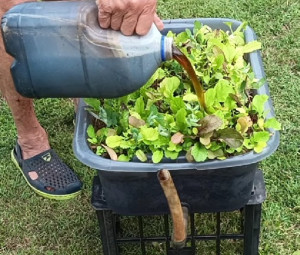
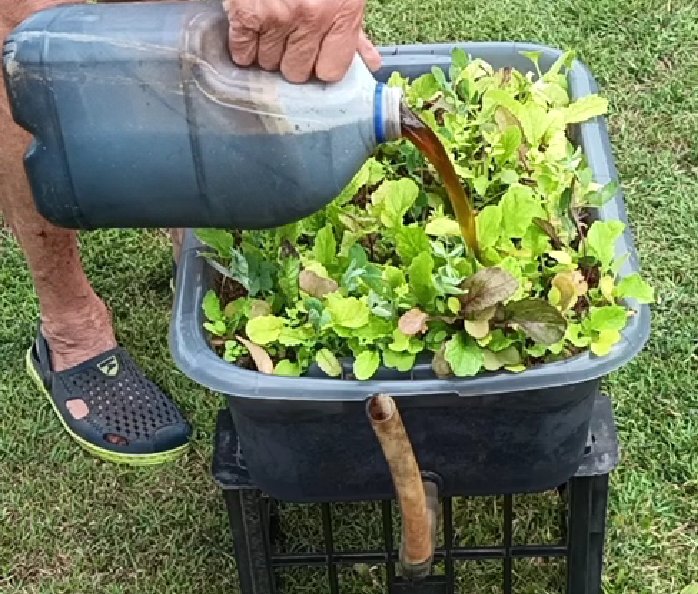
There are two simple ways of achieving the breathing and moving rules. The simplest is to have two boxes. The top box has holes in the base which sits on the smaller lower box. Soil blood can simply be poured onto the soil surface, or maybe better into a pipe or hole so flooding does not move the seeds or soil. It flows through the soil and holes into the lower box. When it is time to re-water, the top box is lifted off and the bottom box emptied into a watering can or equivalent and used to flood the top box – or other boxes. It is good to mix different soil bloods. This is the safest way as the soil blood can drain completely out of the growing box. The disadvantage is the boxes have to be lifted at every irrigation – well actually not every irrigation. It is not a bad idea to irrigate with fresh water until the bottom box is full, but it must not be left standing for any length of time (e.g. over a week). The other method is to use a swivel tube and just allow the growing box to drain. This is really easy – nothing has to be moved. I use a 3-litre milk bottle to catch the soil blood and simply pull it away from the swivel tube, put my finger over the pipe, pour the soil blood into the top box and put the milk bottle back under the swivel tube – total time under a minute, no lifting or any hard work. The only issue is that the soil blood does not drain from the growing box completely. The easiest solution is just to wait until the plants have used all the soil blood remaining in the bottom of the box. I have also tried flushing frequently so the soil blood in the bottom of the box is always moving. A bit more effort but it seems to work fine.

Growing

That is the end of the overview. You can find more details in the growing section here.

Loading