What food does

What food does

Three functions of food

energy foodWe are all familiar with the conventional way of classifying food -

carbohydrates, sugars, fats, proteins etc but let us look at what they do.

There is food we need for energy - this can be virtually any sort of food carbs, sugar, fats, protein.

As long as it contains carbon and hydrogen our bodies will simply burn it for energy - releasing carbon dioxide and water - just like in a steam engine.

Then there is food we need to replace our body parts as they wear or age.

This needs to contain a broad range of complex chemicals which our bodies can often make in our guts as long as the essential minerals are present. If our bodies cannot manufacture them we have to incorporate them into our diets (for example B12).

fibre foodFinely there is our intelligent control system (Homeostasis). Our bodies are not just a bunch of organs doing their own thing, there is an intelligent control system made up of trillions of cells which receive information from sensors throughout the body, process them by working just like a computer with code, taking decision then sending our signals, either electric or hormonal to adjust how the body is working.

Unfortunately we have no idea how this code actually works - but we know that it does.

fat personWe don’t get fat simply because we eat too much - rather our intelligent control system decides we need to store more fat, (again we can only guess why) so it send out signals for us to eat more - then we get fat.

It is a great shame we don’t know how this code actually works because it is totally critical to our health.

Much of this control system is made up from the trillions of cells in our guts and they need to be fed gut brain food.

The cells in our guts are short lived - continuously breeding, dyeing and being replaced. While we only need a small amount of gut food and the beneficial biology - this is a critical part of our diet.

Why we should feed our gut brain

gut brain connectionOur gut has trillions of cells made up from thousands of species.

But this is much more than trillions of dumb cells to form our gut brain - these cells communicate with each other and our head brain to form an intelligent control system.

This manages our bodies controlling appetite, replacing aging body part and hosting our immune sytem.

This is what the gut biota (Gbiota) project is all about.

This web site shows how growers can set up and manage their own Gbiota beds to grow gut brain food, (Gbiota food), and ecourages people to form local buying coops so if they don't want to grow their own Gbiota food they can buy,  at an affordable price, from regenerative farmers.

If you may be interested in setting up your own buying group please contact me here

Our gut brain does three very important jobs,

– it control our appetite so we have enough energy but don’t overeat

– it manufactures the complex chemicals we need to replace our body parts as they age

– they host much of our immune system and so help protect us from pandemics

Our guts are really important for our health. Our gut biology has evolved over millions of years and originates from the soil.

Soil biology

soil biologySoil is formed by microbiology breaking down rocks and is continuously circulated as plant grow, die and decompose back into soil. This totally depends on micro-biology and the soil creatures particularly the worms. The natural process of making soil is slow and in the last fifty years has been replaced by chemical industrial farming which has increased productivity but dramatically lacks this essential biology which leads to healthy soil and healthy guts and bodies..

Many of the chemicals used are claimed not to harm us but they certainly harm the soil biology.

Trace minerals

These early soils were rich in a wide range of minerals which both we and the plants need for health. But plants are much simpler than us so there are many minerals which we need but plants either do not need or only need in very small amount.

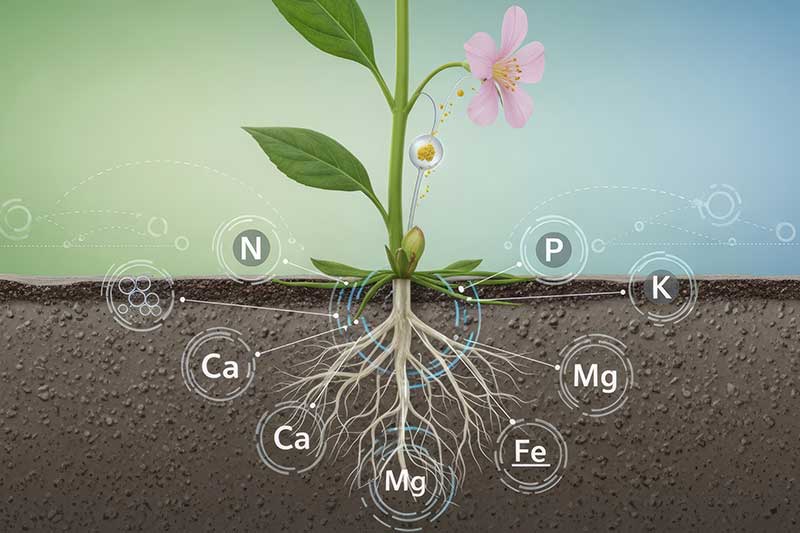
Chemical industrial agriculture replaces the minerals such as N, P, K which the plants need for growth but there is no economic pressure on farmers to replace the trace minerals like chromium, iron, zinc, selenium, iodine which are essential for our health.


Modern industrial farming

modern agModern industrial farming may be productive but has meant that our intelligent control system senses that we are lacking key biology and minerals so creates food cravings which has led to a major health epidemic of chronic diseases, obesity, diabetes dementia

See changing our food system here

 t

How we evolved with food

hunter gatherers During our evolution we were generally short of energy food - the fats and sugars - so we have an in built desire to search and eat energy food. On the other hand there was an abundance of beneficial biology and minerals in the soil so we had this bias to crave energy food rather than gut food.

help

appetite for profitThe modern food industry aim is to make profit and the way to do that is to supply energy food in large quantities produced at minimum cost.

It does this very well but the minerals and biology to replace our body parts and power our control system are not well supplied.

Our food system is out of balance so we need to change the balance towards providing food for our gut brain and to provide the essential minerals to replace our body parts.

We can’t necessarily blame the food industry - working in the current economic philosophy based on profit without social responsibility - for supplying the sort of food we crave.

But the results have been a disaster for our health with a global epidemic of chronic disease related to overeating.


We overeat because our intelligent control system senses we are short of critical minerals and biology, so it sends out hunger signals so we eat more energy food than we need just to try and get the essential minerals and biology we need.

We need to change our food system and we need to do this in a sustainable way by recycling waste organic material

Forward index

Backward food-and-innovation
Loading

Principles of Gbiota beds

Principles of Gbiota beds

The principle of Gbiota beds

Gbiota bedThe aim of the Gbiota system is to give us a healthy gut by growing plants which act as natural pre and pro-biotics.

If we eat a modern diet we will have sugar loving bugs in our guts which makes us crave sugary foods - but it is easy to change the type of biology we have in our guts simply by changing our diet.


Beneficial biology is bred in organic waste in beds in which the moisture level is carefully controlled.

The diagram illustrates the basic principle of the Gbiota system.

When the bed is first made the bottom half is filled with waste organic material, typically food waste while the top half (which forms the rhizosphere) is filled with soil. Water is pumped from a sump into the water inlet where it filters through a mix of labile (young) compost, manure and minerals essentially forming a nutrient rich compost tea.

A leaky soil dam temporarily prevents this nutrient rich compost tea from quickly draining from the bed so it spreads over the base to the height of the leaky dam. When the water supply switches off the tea drains out of the base of the bed and back into the sump while sucking fresh air into the soil.

Aims of the Gbiota project

gut braina I believe all people in this rich affluent world should have access to healthy food at an affordable price.

Specifically my innovation relates to gut health.

The food we eat feeds, or should feed, the trillions of cells in our guts which do much more than help us digest our food. Each cell communicates with its neighbours to form an intelligent system which controls much of our body - there really is a gut brain.

 It controls our appetite so we eat enough but don’t overeat. Poor gut health is a factor in the global obesity epidemic. It manufactures many of the complex chemicals needed to replace our body parts as they age. And particularly in this age of Covid, houses our immune system.

Now don’t get me wrong, I am not saying that our modern system caused Covid but it certainly enabled it to become an epidemic - there is a big difference between causing and enabling but the results may be very similar.

 desertificationMy innovation is a way of growing plants so they act as a pre and pro-biotic so we have a healthy gut. Now let me be clear - up till about eighty years ago this happened naturally without anyone thinking about it.

But then we stopped and adopted chemical industrial agriculture.

I am not against chemical industrial agriculture providing us with energy food - simple carbohydrates we burn off to provide us with energy.

In the last eighty years our production of food has increased by a factor of 4.5 while the population has increased by a factor of 3.47.

We are now producing more than enough energy food to feed the entire global population. (just with energy food.) It is true we waste a lot of food and more seriously we are degrading the available soils at an alarming rate - to the extent that we will run out of soil in some sixty years.

We may still be able to produce enough energy food but we will not survive as a species without soil to feed our gut brain, which controls our bodies.

wormsMy innovation is a simple way of recycling food and organic waste, adding manures and essential minerals and if needed inoculate the soil with biology and worms to grow food to feed our guts, natural pre and pro biotics.

The technology is simple, any competent grower, whether a commercial or home grower can implement it. In this age - obesity, diabetes, heart attacks, dementia and so many diseases are caused by our body not controlling our appetite correctly. Changing our gut biology could have major social benefits.

Gbiota beds

multi boxGbiota beds were developed by studying the way soil is formed in the natural world but dramatically accelerate the process, instead of taking decades to make healthy soil it can be created in months. It is based on taking organic waste, manures, trace minerals, worms and very careful control of the moisture level.

It is relatively simple and is already widely used by home gardeners. The technology is described in the growing section on this web and is the subject of continuous development and improvement.

Forward food-and-innovation

Backwards  spreading-the-benefits-of-gbiota-beds
Loading

What food does

How to Make Soil

Health Starts in the Soil

Healthy soil grows healthy plants, and healthy plants help build healthy bodies. Soil and water are fundamental to life. Even “soilless” growing systems still depend on nutrients that originally came from soil. We have slowly but steadily degraded the world’s soils. This is not only a problem for individual health – it is a global food crisis issue. Without living soil we cannot feed a growing population. So how do we make healthy soil? That part is actually straightforward – this is what Gbiota technology is designed to do. You can see how simple it is to make a basic Gbiota bed here: Making Soil 101. The difficult part is changing our mindset: from a throw-away society to a circular society based on recycling. Soil – more precisely, the biology in soil – is the world’s great recycler. Organic waste can be turned into living soil that grows nutrient-dense food. We add trace minerals for human health and control moisture so beneficial soil life can breed. Not too wet, not too dry – “Goldilocks moisture”. It is all about breeding beneficial soil biology.

Profit or Grandkids?

Humans are the dominant species on earth: intelligent and generally cooperative. I am an innovator. I was selected as one of the top one hundred innovators by the Institute of Engineers for my pioneering work in computer-aided engineering. Yet I believe that learning how to make and regenerate soil is one of the most important challenges facing humanity. We now know how to create soil that grows healthy plants and supports human health. That is what this site is about – practical ways to make and regenerate soil. The “Growing” section explains how to build healthy soil in simple steps. Anyone can do it, and it is often cheaper to grow food in living soil than to rely on artificial fertilisers and toxic chemicals – which are expensive but profitable for manufacturers. So why are we, the most intelligent creature on the planet, still destroying soils that took billions of years to form?

Our Attitude to Soil

The biggest challenge is our attitude. Politicians tend to focus on power and economic growth. Companies focus on profits. Meanwhile, soil – which is essential for the future of life on earth – is treated as expendable. Healthy soil can also absorb large amounts of atmospheric carbon. Soil health and climate stability are tightly linked. We know how to make and regenerate soil, yet we continue to degrade it. Changing our attitude to soil is one of the greatest tasks humanity faces.

Soil – the Ultimate Recycler

Soil is the ultimate recycler – or more accurately, soil that is alive with beneficial biology. Soil life:
  • Breaks down organic waste
  • Builds structure and stores water
  • Makes minerals available to plants
  • Supports the nutrient density we need for health
Soil is essential for the future of life on earth. Learning how to make and regenerate soil is one of the key challenges of our time. That is what this website is about. I have made the challenge of “how to make soil” my obsession for many years.    

Loading

Greta Foodberg

Greta Foodberg

The food industry is just as big a threat to humanity as climate change.

Greta Thunberg - love her or hate her (as many people do) her impact has been just startling. From a nondescript looking small child with a grotty piece of cardboard she became a world figure and leader of the climate change movement in little more than a year.

Food needs a Greta Foodberg. I start by discussing the Greta phenomena, trying to work out how it happened to see what can be learned for Greta Foodberg.

She did not have a battery of technical arguments but simply said ‘I am a child and you are destroying the world I will grow up in - and that is wrong.’

When asked why she putherself under so much stress she simply said ‘it is my moral obligation’. read the full story as a .pdf here

The next read Making soil 101 gets down to the nitty gritty of making soil and how Gbiota beds work in practise

Home

Loading

Principles of Gbiota beds

Making soil 101

Gbiota beds make it simple to create healthy, living soil that grows “gut food” – vegetables rich in beneficial biology and minerals that support the gut–brain system.
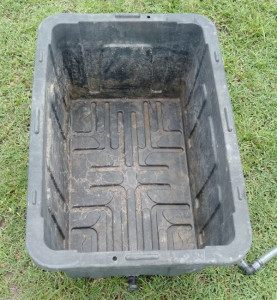
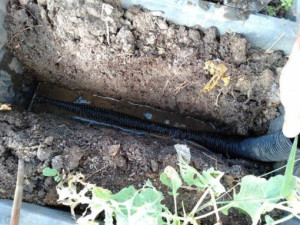
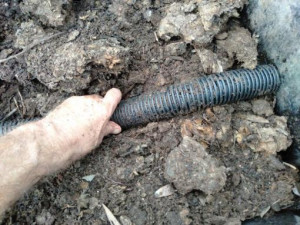
I wrote this article to show how easy it is to make a basic Gbiota bed and turn ordinary soil and waste into high-quality growing media. Anyone can do this using soil biology, organic waste, rock dust, and worms. Here I focus on a simple box system, but the same principles scale up to larger commercial beds. See more articles under the “Growing” section on the site. Gbiota beds are not just a watering system to grow cabbages. They are designed to breed beneficial soil biology so plants act as natural prebiotics and probiotics for our gut. To breed beneficial soil microbes (“good bugs”), you must feed them. They thrive on organic waste, manure, and a broad spectrum of minerals. Mycorrhizal fungi and worms are especially important for breaking down minerals and building long-term soil structure.

The Growing Box, Pipes and Soil Dam

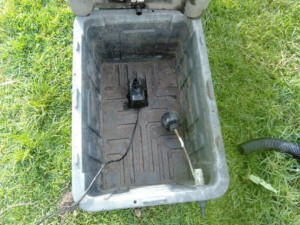
Start with a basic storage box you can buy at any hardware store. It needs to be strong enough to hold wet soil and have a way to connect a drain and filler pipe. empty-box-colin-austin-gbiota
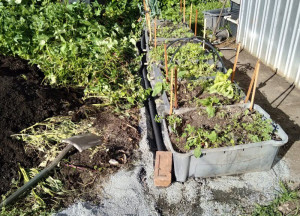
Drill a hole and install a fitting for the drain outlet. Cut a length of agricultural (Ag) pipe to run along the bottom of the box and up one side. This pipe serves two purposes:
  • Acts as the fill point for water
  • Distributes water evenly along the base of the box
filler-pipe-colin-austin-gbiota
 
Raise the pipe slightly just before the drain to form a “soil dam”. For a small box, a dam height of about 25 mm is enough. This sets the maximum water level in the base of the bed. soil-dam-colin-austin-gbiota
Fill the bottom half of the box with organic waste and manure. This is the food and breeding ground for soil biology. Then fill almost to the top with a mix of local soil and well-rotted compost. This is the main root zone. Finally, add a thin layer of fine soil on top for germination, plus a light sprinkle of rock dust (which can also help deter slugs and snails). That completes the basic growing box.

The Water Reservoir

You could run this purely by hand – pouring water into the fill tube and letting the excess drain. But most people eventually forget or get busy, so automating the system is more reliable.
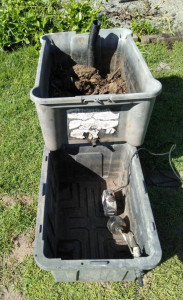
Use a second box as a water reservoir. Fit it with:
  • A float valve to maintain water level
  • A small pump (a pond pump is fine for a single box)
water-reservoir-colin-austin-gbiota
You can also connect several growing boxes in a row. For multiple boxes, use a larger pump such as a sump pump. In Colin’s garden, one sump pump feeds eight boxes plus several in-ground beds from a single in-ground sump. multibox-banner-colin-austin-gbiota

Height and Layout Decisions

 
The top of the water reservoir must sit below the base of the growing box so water can drain back under gravity. You have two options:
  • Raise the growing box on a stand and leave the reservoir on the ground.
  • Dig a hole for the reservoir and leave the growing box at ground level.
relative-height-of-sump-colin-austin-gbiota
Connect the pump outlet to the filler end of the Ag pipe. When the pump runs, water flows along the pipe until it hits the soil dam, then floods the base of the box. Water will not exit the drain until the water level reaches the top of the dam. At that point, water flows out of the drain and returns to the reservoir at roughly the same rate as the pump delivers it. You must ensure the drain can handle the pump flow. If the flow is too high, the bed will flood and suffocate the biology you are trying to grow. When commissioning the system, run the pump and check the drain flow. For larger setups with a sump pump, use a small irrigation nozzle or fitting (e.g. 2 mm) to restrict and balance the flows. flow-control-nozzle-colin-austin-gbiota

Partial Flood and Drain

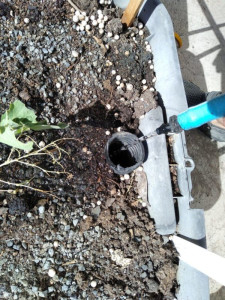
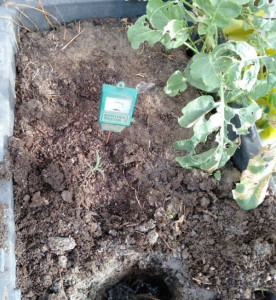
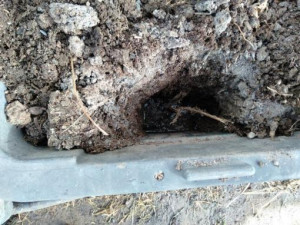
Gbiota beds are designed for partial flood and drain. The goal is “Goldilocks moisture” – not too wet, not too dry. You can use a cheap moisture sensor just to detect when water reaches the root zone, or you can dig a small observation hole to watch the water level rise and fall. water-sensor-colin-austin-gbiota
Check that the water level:
  • Rises quickly to the dam height when the pump runs
  • Flows out of the drain and returns to the reservoir
  • Then falls steadily when the pump stops
The bed should not fully saturate or stay waterlogged. Stagnant water encourages “bad bugs” and putrefaction. Moving, oxygenated water supports beneficial biology. You can also time how long it takes for water to appear at the drain. That timing is useful when setting up a pump timer.
viewing-hole-colin-austin-gbiota
 

Timer and Automation

While you can switch the pump manually, a timer makes things much easier.
  • Set the runtime slightly longer than the time it takes for water to reach the drain.
  • In hot, dry climates, run short pulses several times a day.
  • In cooler seasons, once a day may be enough.
If mains power is not available, you can use a solar pump and control it simply by shading the panel to create one or two watering events per day.

Feeding the Bugs (and You)

Beneficial microbes, insects, and worms need food. Fortunately, they thrive on what we call “waste” – food scraps, grass clippings, prunings, and other organic material. biomin-rock-dust-garden-colin-austin-gbiota
Good soil biology also requires a wide range of minerals. Rock dust provides these minerals and helps maintain soil structure. Read more about trace minerals here: Adapting to the food crisis. Quarry crusher dust can improve soil texture and help deter slugs and snails when sprinkled on the surface. However, it is not formulated for trace mineral balance.
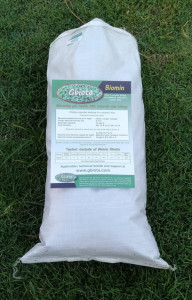
For trace minerals, I recommend Biomin – a prepared rock dust containing a broad spectrum of minerals and beneficial microbes. Sprinkle it on the surface when seeding. biomin-colin-austin-gbiota
I don’t sell products myself; my goal is to build a food system for future generations. I work with a company that produces Biomin to an agreed specification.
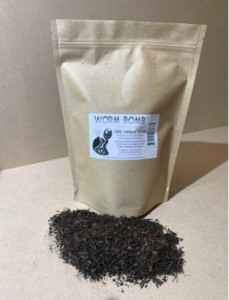
I have a similar arrangement for worm eggs, which are a critical part of Gbiota technology. Adult worms are delicate, but eggs transport well and explode into a healthy population under good conditions. worm-bomb-colin-austin-gbiota
 

Labile Compost, Mature Compost, and Vermicast

Plants and soil organisms have evolved complex chemical defences. Young (“labile”) compost can contain compounds that inhibit growth, which is why it’s not ideal for the seed zone. When you built your Gbiota bed, you placed labile compost in the lower layer. Over time, biology and worms break this down into stable, fertile soil, often enriched with vermicast (worm castings). As the labile compost decomposes, the surface level may drop slightly, but what remains is excellent material for the root zone and for future seeding.

Two Ways to Use Compost as the Bed Matures

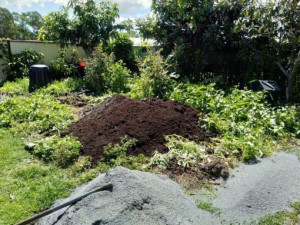
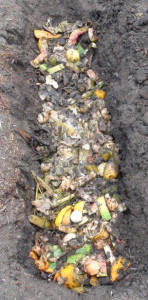
Option 1 – Minimal disturbance Make mature compost or vermicast separately and use it as mulch over the surface when seeding. Worms will gradually distribute it through the bed. Option 2 – Trench feeding Dig a small trench down to the lower layer and add kitchen waste or young compost there. This is one of the best ways to recycle organic waste – soil organisms process it and build fertility. Be mindful of:
  • Soil structure – avoid digging the entire bed; disturb only small areas at a time.
  • Practicality – many people use a compost bin and empty semi-mature material into trenches when seeding or transplanting.
food-waste-in-trench-colin-austin-gbiota
   

Loading