Gbiota Soil Blood, Flood-and-Flush Irrigation, and Foliar Spray

Gbiota Soil Blood, Flood-and-Flush Irrigation, and Foliar Spray

Just look at the way that plants are generally grown. Hydroponics are popular and they don’t use any soil, just chemicals. Even with common farm production of plants the soil is just a way of supporting the plant and the nutrients come from chemicals. Modern foods are deficient in key nutrients and living microbes. A common phrase is:
Overfed and undernourished.
Our bodies are intelligent and sense this deficiency so stores excess fat and the wrong fat in the wrong place is the underlying cause of the modern epidemic of chronic, non infectious diseases.

Gbiota Inputs – Organic Waste, Manure and Rock Dust

Now look at the Gbiota system. Our basic inputs are organic waste, manure and volcanic rock dust. All cheap, readily available and sustainable. The microbes, particularly the fungi, break down the rock dust making a whole spectrum of minerals bio-available while also enhancing our gut health. This is all embedded in the soil blood which is full of a broad spectrum of both minerals and living creatures. If allowed to become stagnant this would soon become a stinking mess full of harmful pathogens. But the system of flood and flush with pulsed irrigation ensure that this always remains fresh and applying from below and allowing the soil blood to wick up means that the soil where the plants roots are growing never becomes saturated, just moist - Goldilocks moisture.

What Is Soil Blood?

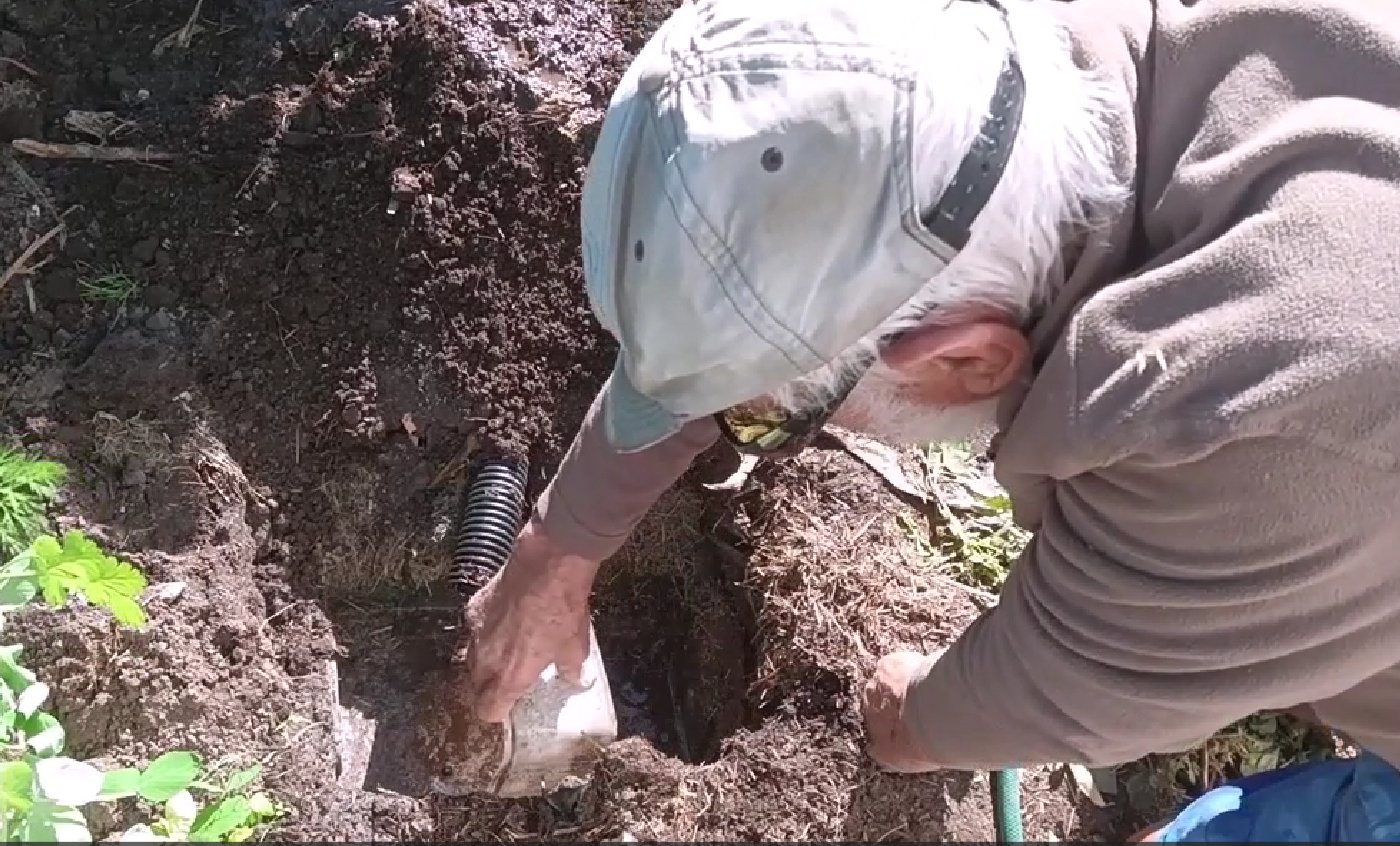
I start by collecting all the soil blood that has drained out from the boxes. I call it soil blood as it does the same job for plants that blood does for us, transport nutrients and cells to where they are needed. It is dark brown and if you look at it under a microscope it is full of the weirdest creatures. I collect this up in a box and add water.

Flood-and-Flush Irrigation Cycle

I then twist all the swivel tubes into the up position. I then calculate out how much liquid to apply by diving the size of the box by ten. Most of my boxes are 30 litres so I know I need to apply about 3 litres. Typically I water twice a week, my be less in winter but at least once a week. I pour my diluted soil blood into the compost tube which flushes the soil blood and any lose compost particles into the base of the bed so it floods. It can’t flood higher than the height of the swivel tube so any excess liquid just overflows out of the swivel tube. This sometimes happens when the plants are very small. Soil blood is valuable so I may put a container to catch any overflow. The liquid will now wick up to the plant roots so they are kept moist not wet. This is the key to the Gbiota system. We want to breed beneficial microbes but if the soil is too wet we will breed harmful microbes. When I flood the base of the bed all the stale air in the base is expelled. I wait for a period for the liquid to wick up to the plant roots, at least one hour but a day is not too long. I now rotate the swivel tube into the down position and catch the soil blood in a bottle. If the plants are growing fast and I have not watered for a while there may not be any water draining out. This process is called flood and flush. Flushing is important so I now know that I need to water more frequently. If I water twice a week this rarely happens but I like to check that I am getting the flushing action.
This is how I breed beneficial microbes without breeding the harmful microbes so when I eat the plants I am enhancing my gut health.
I can tell it is working as a healthy gut is intelligent so sends out hormones to make me feel satisfied so I don’t want to keep on eating.

Foliar Spray

I have a big problem with insects attacking my plants. I have used pyrethrum sprays which do work but I really don’t want to use any toxic chemicals. Just because a chemical is natural does not mean it is harmless, there are lot of things in nature that can kill us or our gut microbes. I am running trials by taking the soil blood I collect, just adding a drop of bio-degradable detergent and spraying onto the leaves of the plants. This does two things, the dilute detergent washes the wax of any creepy crawlies and so they die and the the soil blood is teaming with microbes which can now enter the plants through the foliage as well as the roots. I am still in trial mode but this seems t be working well, so I mention for people who want to try.

Loading

Breeding Wickimix

Breeding Wickimix

Wickimix is simply a growing medium – soil teaming with life and nutrients – and is central to the Gbiota system.
It has been produced in Wicking beds by a technology which is now well-matured and stable and is described in numerous articles which I can supply on request – just email me at colin@gbiota.com. But while straightforward it does involve pumps and various irrigation technologies which are well suited to an experienced grower who could supply Wickimix as a growing medium, in clean skin boxes ready for planting or even better as in boxes with plants grown to the stage where they are ready to be harvested. It is still our aim to establish a network of growers but right now there are many people who want to take advantage of the Gbiota technology but there is no local grower, so in this article I describe how people, even if they are living in an apartment, can produce their own Wickimix.
Gbiota is about breeding living, microbe-rich soil at home – whether you have a garden bed or just a balcony box.

Making Wickimix in a Garden Bed

I start with a section for people who have access to at least some garden, even if small. The big advantage is that natural soil already contains the soil creatures on which Gbiota depends. It is simple and anyone can do it even if it means getting back to nature.

Step 1 – Decide the Size of Your Bed

First decide how big you want to make your bed, it can be quite big but I would not recommend going above ten metre in one bed or very small, the bed I describe here is only a metre long and little more than half a metre wide.

Step 2 – Prepare the Base and Sump Box

Simply clear the topsoil into a pile. Just dig down to where the soil get firm, what is often called the B horizon. Then dig a bit deeper for the sump box, any old plastic box will do. If the soil is reasonably firm with a good content of fines (eg clay or silt) simply bang with a hammer to make it firm. If is is really sandy you may need to import some clay to form a base. It is best to check out the levels by pouring some water onto the base to make sure it all flows into the box.

Step 3 – Install the Ag Pipe and Inlet

Now cut a piece of ag pipe to fit along the base of the bed and over the sump box. You can bend the ag pipe to make an inlet but I prefer to use a larger pipe (eg 100mm PVC pipe) which makes a large inlet.

Step 4 – The Leaky Dam

Now comes the smart bit – the leaky dam. If the pipe was horizontal the water (or soil blood) would flow straight into the sump without wetting the soil. So raise the pipe just before the sump so it is at least one diameter higher than the base. This will force the water out into the soil. But we don’t want to have stagnant water in the base of the bed so we make a leaky dam which will allow the water to slowly drain out. I use grass clipping for the leaky dam, they do rot down after a bit but I lift the pipe and add a few more grass clippings. I usually line the whole bed with grass clippings so the water can flow across the base of the bed, but the real reason is that I have plenty of grass clippings but run short of organic waste. Before I started I seemed to have plenty of kitchen waste but now it has become a valuable item. (Move over gold, the value for the future is kitchen waste).

Step 5 – Building the Wickimix Layers

Next, I spread the kitchen waste over the base of the bed aiming for a depth of at least 100mm. It will soon drop down. I now make the second layer with the nutrient mix which is a mixture of manure (whatever is available but chicken manure is good and readily available), rock dust, dolomite (to balance pH) and blood and bone. Now I make the third layer by shovelling the topsoil from the pile. Initially, this may be poor quality soil with little nutrients or living creatures but this will soon change. But the action is on the surface of the soil particles so a soil with a bit of clay is best. Most soils have adequate fines but if sandy you will need to find some clay to give it body and a high surface area. Smooth this top layer out ready for seeding.

Step 6 – Wetting and Seeding the Bed

This is really a Wicking Bed so the surface will be relatively dry which is not good for germination. I have found the best way is to totally wet out the surface, I mean really wet. Just go to ‘rent a kid’ from your local Kinder they are experts in making mud pies or if that does not work try your local mud wrestling team of whatever, but make sure it is really wet and sloppy. Now sprinkle the seed mix on the surface.

Feeding and Breeding the Microbes

The real aim is to breed the beneficial microbes in the soil and they need to be fed. Just like us, they need energy and some of that will come from the organic waste but in a balanced Eco system, which is what Gbiota is all about, much of the energy will come from plants, that is what plants do – capture energy from the sun. They create sugars which they exude from their roots to attract the various fungi and micro-organisms. Each species of plant exudes different sugars so to attract the right species we need a broad spectrum of species. Gbiota is not about breeding some single magic species, it is about breeding a broad spectrum so you need to have a broad spectrum of plants. It will end up with the beds looking a bit of a mess but that is the way nature and Eco-systems work. You won’t find rows of neatly planted trees in nature, after a few billion years of evolution it has shown that a broad spectrum of living creatures works best. But I will also add some sunflower seeds. Of all the plants I have experimented with Sunflowers are best for attracting mycorrhizal fungi. Worms play a critical role, if there are no worms I suggest you go and buy some, red wrigglers are widely available. I will now irrigate as described in my article on Eco-systems.
Irrigate, wait around three months, and let the worms, fungi and soil creatures transform waste into living Wickimix.
round tuitIt is now just a question of irrigating and waiting for three months or so for the worms, creatures of the soil and the fungi and microbes to do their thing and bingo you will have some beautiful Wickimix full of beneficial creatures and nutrients to grow plants that will keep you healthy. I have to add more to the post to show how you can make Wickimix in a Gbiota box. I will do that as soon as get a round tuit. But in the mean time you can email me at colin@gbiota.com. But first my next job is to write and article on how to schedule the irrigation which is at the core of the Gbiota system.

No Wickimix – What Now? (Making Wickimix in a Gbiota Box)

Ok I have found my round tuit so heres how to make Wickimix in your Gbiota box. Well I have now got my round tuit so I can talk about how to set up a Gbiota box if you don’t have a garden and probably live in a flat with just a balcony. The big advantage of a gbiota bed with soil is that it is likely to have the myriad of creatures that live in the soil but if all you have is a balcony then you just have to look for a viable alternative. Basically everything is the same as I have described above and you just have to make your own version of Wickimix. But that is OK because as long as you keep on topping up the compost tube and you have worms the soil will gradually improve over time. There is a lot of chemistry happening in a Gbiota box and this occurs on the surface of soil particles, clay is actually great as the particles are so small they have a huge surface area but a silt or just regular soil you should be able to buy that from any good gardening supplier. You could also buy some Vermiculite which is great for growing but more expensive. As I am into serious recycling I may use old coffee from the local coffee shop. But what you do need is some Vermicast (worm casting) and some worms. I suggest you use a 50/50 mix of Vermicast and whatever soil you decide to use.

Regeneration

Now comes the process of upgrading your soil over time. As you will have guessed by now I am a bit of a compost enthusiast but it is important to recognise that labile or young compost is not good for growing plants in. It often contains growth inhibitors as plants are in a state of stationary warfare and generate compounds in their battle against competing plants and insects. You certainly do not want to be putting this labile compost onto the soil surface. In the Gbiota system we start with three zones, compost at the bottom which act a bit like a sponge to hold water, then the nutrient layer which contains manure to supply nitrogen which will help the compost to decompose and the Wickimix where the plants are seeded. By the time the roots have reached the bottom layer the compost will have largely decomposed.

Compost Tube

You can move the compost tube to a new position by just digging down to make a new hole, lifting the compost tube out while pushing down on the compost so it stays in place, filling with raw compost as it becomes available and using the soil you have dug out to top up the upper layer (which will have dropped as the original compost decomposes. You can easily get six new positions for the compost tube which gives plenty of time for the compost to break down. This would typically done when reseeding which occurs on average every three months depending on what you are growing.

Inter-sowing

In my seed mix I will have a wide spectrum of plants, some fast growing other slower. This means I can pull out the plants that have done their thing and replace with fresh seeds. I don’t use compost for this but will use whatever version of Wickimix I have available. I find the easiest way if to use the soil from the new hole I have just dug when moving the compost tube.

Flipping

At some point in time I may want to rebuild the box entirely but I will try and keep the layer of top soil intact. I just put a lid on the box and turn upside down. That’s the easy bit. Then I will clean out the base and pipes and flip the old contents back into the refurbished box. This is a bit like tossing pancakes , sometime I get it right and sometimes I miss but it does not really matter, just put the soil back into the box.

Further Reading on Gbiota Beds and Wickimix

Gbiota beds are a mature technology and I have written many articles – here is a list: https://www.gbiota.com/2024/07/01/gbiota-overview/ https://www.gbiota.com/2024/04/24/making-a-gbiota-box/ https://www.gbiota.com/2024/04/10/eco-balance/ https://www.gbiota.com/2024/04/02/compost-bin-or-bury/ https://www.gbiota.com/2024/02/28/learning-plan/ https://www.gbiota.com/2024/02/05/growers-and-gut-biota/ https://www.gbiota.com/2024/01/31/recycle-to-survive/ https://www.gbiota.com/2024/01/26/become-a-gbiota-supplier/ https://www.gbiota.com/2024/01/18/support-plastic-sheeting/ https://www.gbiota.com/2024/01/17/solving-the-food-crisis/ https://www.gbiota.com/2023/12/08/inoculants/ https://www.gbiota.com/2023/11/20/gbiota-soil/ https://www.gbiota.com/2023/10/03/what-plants-to-grow/ https://www.gbiota.com/2023/05/04/the-wickimix-story/ https://www.gbiota.com/2023/04/09/upgraded-beds-introduction/ https://www.gbiota.com/2023/04/04/upgraded-beds/ **** https://www.gbiota.com/2023/01/05/health-starts-in-the-soil-3/ https://www.gbiota.com/2022/12/15/gbiota-bed-update-4-dec-2022/ **** Read Making a Gbiota Box I am a real person, email me Back home

Loading

Tim Spector

Tim Spector


Gbiota technology controls the Eco system in the soil to breed beneficial microbes that enhance our gut biota to improve health  - We show you how.

  Join the Gbiota movement here for free (Expires 31st March 2024)

Tim SpectorIt is well known that our gut biota plays a major roles in our health. Many researchers, such as Tim Spector, Professor at Imperial College, London explains this in his book Food for Life.

Microbes breed and die incredibly fast. Within twenty minutes a new microbe will start to breed but will die after maybe seventy hours. The population continues but the individual microbes die.

You can have a faecal transplant and that works but is a sophisticated medical procedure with limitations.

But I cannot send you out a packed of beneficial microbes which you can buy on the internet and expect them to be still alive when they arrive - that’s life.

But I can teach you how you can create the conditions where beneficial microbes can breed so successfully that they out breed and out compete the harmful microbes which are always present. This is simple, practical and inexpensive.

Admittedly this requires more effort than swallowing a pill but is based on a system which has been proven to work - until we changed our food system.

Our super computer

The trillions of cells in our gut biome communicate with each other to form a super computer which regulates our bodies.

This behaves in the way that Artificial Intelligence operates, monitoring every piece of food we eat and seeing its effect on our bodies then deciding what and how much we want to eat.

Our gut brain is highly sophisticated.

There are thousands of different species in our gut brain, which originate in the soil and are transferred to our gut when we eat plants grown in that soil.

The soil, the microbes in the soil, the plants and our gut form an interconnected Eco system which changes according to the conditions.

The Gbiota technology controls these conditions to give us the Eco system which we know from observations of the real world lead to us having the healthiest gut and life style.

Fortunately this is a very easy technology to apply, home gardeners can change the microbes in their soil, even people living in apartments can create soil for growing plants in pots.

The main inputs are recycled organic waste, rock dust and inoculants making it a very inexpensive process - cheaper than buying food from the supermarket.

How many technologies lead to a longer health span and lower costs?

My role, in the Gbiota movement is to teach members how to enhance their soil by controlling the conditions.

Gbiota Hello

We need to feed our gut brain which is the intelligent control system for our bodies.

Our modern chemical industrial agriculture and highly processed foods simply does not feed our intelligent control system so we need to modify our food system.

People react in different ways.

Some people see this as their mission to change the world for the better for their grand kids.

Other people are not bothered about going on a mission and just want to have good food for themselves and their families and are prepared to go to the trouble of growing some of their food.

Others think this is all too much work but still want to buy healthy food.

Your all welcome

Let me tell you that you are all welcome to join the Gbiota movement. Even if you just start eating healthy food and feel better in yourself and your friends see this - then this is the best promotion we can have for the cause.

Being healthy should be fun - not an ordeal

But let me tell you that this does not have to be some ordeal.

There are diet enthusiast who will lead you to believe that just one meal of chicken and chips followed by a good hunk of cheese cake will mean you are sacrificing you life and will back this up with a list of long chemicals names to convince you that your life is somehow doomed.

Out bodies are not that wimpy.

gut brain foodMost of the food we just burn off for energy - its just fuel.

You can have a steam engine which can run on coal, gas, wood or even old furniture and it works fine. Our bodies are like that - give us food and most (about 80%) is just burned off as fuel.

But our bodies are also very clever and they use our food to replace our body parts as they age and wear. This does required a variety of minerals and nutrients, some with very long and impressive chemical names but are just part of a regular diet (may be 15%).

Only a small part (may be 5%) of our food intake needs to be specifically to feed our gut brain - but it is vital for our health.

Our gut brain is super smart

gut brain connectionBut our gut brain is our intelligent control system which regulates our bodies, deciding how much and where we should store fat.

It is smart, sensing what we eat and its affect on out bodies and learning, like artificial intelligence how that affects our bodies. Once learned it gives us a strong preference for certain types of food.

This is totally critical for our bodies, not feeding our gut brain makes as much sense as having a drunk at the wheel of a Lamborghini.

This may only make up 5% of our food intake but is totally critical for our health.

Chicken wings, chips and cheese cake still on the menu - but

So you can still eat chicken wings and chips and a hunky slice of cheese cake and still live a long and healthy life.

It is just that your gut brain will tell you that you have had enough chicken wings, chips and cheese cake so you just call a halt naturally.

Welcome

So whatever your scene - join the Gbiota movement, change the world, grow your own healthy food or find someone who will grow it for you - and welcome.

Currently you can join for free and read all the articles on how to grow gut brain food, but you need to sign up with a valid email address and click the box on any post saying notify me of new posts.  We publish a new post about once a week, but we do not email members, you have to go to this web to see them.

We are not in the business of selling stuff, (although  we help other people supply gut brain food) our role is to teach people how to grow gut brain food and if you want to learn you need to join the Gbiota movement.

Colin

Grow gut brain food

hunter gatherersA few hundred thousand year ago a puny creature that barely survived took a world changing decision - to use an existing technology, fire to cook food. This gave it the energy to grow a huge brain which led to intelligence and cooperation so this creature became the dominant creature on the planet - us.

What we ate changed us as a species.

Two brains

Actually we developed two brains, one in our head the other in our gut. They may be separate but they work together so we can call it our gut brain.

The brain in our gut is made up of trillions of cells which communicate with each other, just like super computer providing an intelligent control system which naturally regulates our bodies.

Smarter than AI

Our gut brain is really smart making modern artificial intelligence look like a dumbo

Throughout our life it is monitoring what we eat and what our body needs.

Is continuously manages our appetite so we eat what is healthy for us totally naturally.

If we are short of say B12, very common in modern society, and we eat some brewers yeast flakes, which is full of B12 then over time we will learn to really like yeast flakes.

For our gut brain to work properly we have to feed it gut brain food. It needs fibre, which comes from plants so existing microbes can flourish and breed and a fresh supply of microbes, preferably with a broad spectrum of species.

For hundreds of thousands of years we ate plants grown in living soil full of nutrients so had a healthy gut brain.

The big goof - we stopped feeding our gut brain

Then we made one of the biggest mistakes mankind has ever made, we stopped feeding our gut brain - we became fat and sick and our health span reduced as we started to eat highly processed food which was inert, dead like Monty Pythons parrot, and lacked essential nutrients and minerals.

This is easily solved by feeding our gut brain, which is easy, costs less that buying highly processed food and recycles waste organics which would otherwise be contributing to green house gases.

The plan

But how do we do this? We need a plan.

Concerened thinkers

My plan is to start by creating a social movement of concerned thinkers, anywhere in the world, who understand the importance of a healthy gut brain and are prepared to grow their own gut brain food and show to their friends and contacts that this really works.

Seeing is believing

In the second stage many more people will see the benefit of growing their own gut brain food and even though they have no garden or garden experience start growing their own gut brain food.

Commerial growers

In the third stage there will be a demand for gut brain food which will encourage local commercial growers to supply gut brain food.

My job is to show people how to grow gut brain food - that is what this web is all about.

First you have to join which you do here. For the next three months this is totally free. Over this period I will be writing many posts to show how to grow gut brain food. You should click the button to notify me of new posts at the bottom of any post and you will have to login to access these posts.

If you have any questions of issues just contact me at colin@gbiota.com

Watch videos of Gbiota boxes being made and regenerating with fresh microbes and nutrients, watch time under 3 minutes

watch here

Gut biota and health span

People are becoming very aware of how enhanced gut biota can lead to a longer health span.

Real food over pills

pills We live in the age of the hype machine promoting some magic pill which will instantaneously give them a healthy gut.

This is a fictitious world - the gut brain is one of the most sophisticated devices on the planet.

Our gut brain is  the intelligent control system which regulates our bodies and keeps us fit and healthy throughout our life.

We don’t get fat and sick simply because we eat too much, we get fat because our gut brain senses our diet it not right and sends our hormones to make us hungry - then we get fat. The solution is to feed our gut brain the food it needs.

Natural sophistication

It is highly sophisticated - the product of millions of years of evolution and is one of the wonders of the world.

From when you take your first gulp of milk from your mum to your very last meal your gut brain is learning what food is good, makes you feel satisfied and provides all the nutrients that you need.

I study the natural process of how our gut brain works and try make this information available to as many people as possible so they can enhance their gut brain.

Living soil over dirt and chemicals

exuding sugarsI show how the natural process works from the microbes in the soil making insoluble rock particles in the soil into bio-available nutrients, how different species of plants will exude different sugars to attract specific species of microbes which will enter the plants and we will eat to form our gut biota.

I explain how you can create soil teaming with beneficial microbes and nutrients, which can grow plants which enhance your gut biota and the chances of a longer health span.

We cannot guarantee it will work for everyone, genetics and epigenetics (gene expression) means everyone is different.

Yes it will take more effort than buying some magic pill - but it a natural process that has evolved and been tested over millions of years.

Join the Gbiota movement for free Expires 31st March 2024

Fat and sick

Across the globe people are getting fat and sick from an epidemic of diseases like diabetes, heart attacks and dementia.

Why?

Find our here at Fat and Sick

Recycling food waste

Recycling food waste to grow plants which are natural pre and pro biotics - extends health span - saves money - is more sustainable - anyone can do it - everyone should.

Our gut brain, made up of trillions of cells or thousands of species is like a super computer, monitoring everything we eat and the affect on our bodies and learns, over time,  to regulate our appetite - how much and what we want to eat.

If we feed it the right food, the beneficial microbes will work to give us a long health span free from chronic disease.

On the other hand, if we feed it the wrong food it is likely to lead to us becoming fat and sick.

fat and skinny miceWe learned this from experiments with mice. We could make them fat or skinny simply by what we fed them.

We learned that humans are the same from using faecal transplants with slim people becoming fat.

We decide what we want to feed our gut brain.

It is our choice.

Virtually anyone can grow beneficial gut brain food at home starting with organic waste so it cost less than buying food from the supermarket.

There are literally hundreds of articles and videos on growing gut food which may be of interest to the technically curious but can be a bit overwhelming for those people who just want to grow gut brain food, but if you just follow Newposts you will soon get the latest information, as I publish new articles on my experiments regularly.

Read more at Fat and Sick

supermarketThe shops are full of food. Currently we are growing enough energy food to feed the entire world with some to spare.

But energy food is not enough, there is a whole range of minerals and vitamins that are missing from modern food.

While we can buy pills containing all known Vitamins and minerals, but they are expensive.

However, there is one food that is totally missing - gut brain food.

That is important as our gut brain works as our intelligent control system which regulates our appetite and decides how much and where we store fat.

Lack of gut brain food is the root cause of the modern health epidemic of overweight, diabetes, heart attacks and dementia.

But you can’t buy gut brain food from a shop.

There is only really one way of getting gut brain food - and that is to grow it yourself and to pick and eat it while it is genuinely fresh.

Gut brain food is living and must be eaten while really fresh.

That is what this web site is all about - how you can  grow living gut brain food at home.

It is neither difficult or expensive, virtually anyone can do it but you have to do it the right way.

Join the Gbiota movement and grow your own gut brain food.

Join the Gbiota movement for free expires 31st March 2024

Fore more information email me at colin@gbiota.com

This web is in three sections

www.gbiota.com is a blog for technical information

www.gbiota.club is where club members can share information

www.pickandeat.shop is where members can trade

Need help?  Feel free to email me at colin@gbiota.com

When you have done your research into the Gbiota movement and are ready to join  you can sign up here

"I

gbiotab

Navigate to

main menu -  videos -  blogs - references

Colin Austin  © Creative commons this document may be reproduced but the source should be acknowledged. Information may be used for private use but commercial use requires a license.

Loading

Tim Spector

Enhancing gut health

"Enhancing


Keep up to date with changes in the Gut Food Movement.

Our gut brain controls our body - feed it gut health food


sunlight the power

Plants take energy from the sun and carbon from the air, they exude sugars and eventually die to feed the soil biota

biota breeding

Given the right moisture levels beneficial Biota breeds in the soil and the guts of creature that live in the soil

The biota enters the plants roots and we eat the plants to create trillions of cells which act as a second brain

gut brain

Which decides what and how much we eat, replaces cells as they age and hosts our immune system

The Gbiota social movement

groupI talk to a lot of people about gut biology and the importance of eating fresh food grown in biological active nutrient rich soil. Virtually everyone I talk to recognises that this is something they should - in principle - be doing.

Yet most still go to the Supermarket and buy a cabbage which is probably grown in inert soil using chemical industrial agriculture and at minimum is a week old - or more.

The nutrient values of plants deteriorate rapidly after being picked, I have read that the level of some critical nutrients will drop by half within twenty four hours.

Really fresh food simply tastes better so it would not be surprising if it also had more nutrients.

How do we get really fresh food for a healthy gut?

There are thousands of people who grow fresh food in their own gardens - it is nice to mess about in the garden.

But there are some eight billion people on earth and every one of them will have a gut that needs feeding gut food. Maybe there is some tycoon who has delusions of setting up some monster global corporation with captive local farms across the globe delivering really fresh food everyday.

Fresh gut food cannot be supplied by mega corporations with centralised production - chemical industrial farming is great for producing energy food but simply cannot produce gut food with the essential living Biota - that needs local production managed by skilled local growers.

But let me tell you I am fed up with global corporation telling me how I should live my life - better than living under a dictatorship - but not much. But what I can do is to help local growers set up their own viable local businesses to supply gut food.

We can create a global gut food industry based on independant and profitable local growers.

That’s practical - but there is an even better way - get the local growers to grow soil full of beneficial biology and essential minerals. This special soil can then be put into Gbiota Bioboxes so people can grow their own gut food regardless of whether they have growing skills, space or time - just a balcony or window ledge will do.

It is a simple but important change, instead of buying a cabbage from a super market that was probably grown in inert soil and was harvested over week or more ago people can buy a plant still growing in soil rich in biota and nutrients and harvest and eat whenever they want and it will still be genuinely fresh.

Even more potent is the growing of micro greens and tipping as descibed on this web - fresh every day.

This is a far better system than having some mega global corporation dictate what we eat - that is the cause of our current problems.

But there is good news and bad news.

The good news is that there are plenty of growers who are already convinced of the importance of soil and are applying regenerative farming techniques already.
Gbiota beds are just a form of regenerative growing but focused on gut biota.

The bad news is that it still costs some money and time to set up Gbiota beds to grow this soil and growers will only go to the trouble and expense if they see there is a market for supplying Gbiota Bioboxes.

You can solve this problem right here. Just click on this registration link here so we can contact you directly and in confidence.  We can then produce a geolocation map showing where there are clusters of keen consumers waiting for local growers to supply them with gut food.

This costs nothing and there is no commitment but when there is enough people signed up in a local area it is then straight forward to find local growers in the local area.

"I
[mailpoet_form id=""4""]

kid shovelling

I am a real person

I am a real person – not some computerised zombie  I am lucky, I have had a long and good life and seen many changes in the world.

When I was a kid a had a weekend job on a chicken farm – bluntly shovelling shit – but I earned enough to buy a bike. But I learned that our food system was based on manure.

Read the full article here

fat and skinny mice

Changing the food paradigm

Take a fat mouse and feed it the pooh of a skinny mouse and it too will become fat. Take the pooh of a skinny mouse and feed it to a fat mouse and it will become skinny too.

And it works with humans too.

It is not just about being fat or skinny - our whole body and temperament changes with gut biology.

Read more here

<
gut health

From chemistry to biological intelligence

In the wonderful world of food the established paradigm, based on chemistry, has been incredibly successful. In my life time,  we have increased food production by a factor of 4.3 – just totally stunning. At the centre of this success is nitrogen – we learned  how to capture nitrogen from the air to make fertilisers and whoom! food production just went through the roof.

Read more here.

gbiota bed principles

The Gbiota technology

Feeding our gut brain by eating plant grown in natural wild biologically active nutrient rich soil is not new - we have been doing it for millions of years so is well tried and tested.

The Gbiota technology is based on studying the natural process and learning how to apply the lessons in a modern setting - see overview of Gbiota Bioboxes here

Loading

Tim Spector

Food not pills


Health starts in the soil

A million years ago the first humanoids appeared, they had a food Eco-system based on eating plants from living soils. These microbes bred in the soil, protected them and they thrived and became us.

Then we changed our food Eco-system, started eating sterile food, we felt unsatisfied, overfed but undernourished, stressed and angry.

I developed a way of growing a soil, called Wickimix, teaming with beneficial microbes. I am now 84 fit and healthy from eating food from an Eco-system of this living soil. I show how to make Wickimix so everyone can benefit from food grown in living soil.

Food not pills.

.

 The choice is yours.

manipulative advertising- live in the world of fake food, with skyrocketing prices as we exhaust the natural resources of the earth coupled with manipulative dis-information - “buy two for the price of three, special offer, buy now before prices rise”

or

- join the group of people that support real food with nature’s recyclers the worms, beetles, soldier, flies, microbes and fungi that regenerate the soil.

But it is more than recycling to provide a sustainable food system, vital as that is.

man gardeningRegenerative growers get a fair price for their work selling to their local community without being screwed by the mega-corporations that dominate the current food industry.

Plants grown in regenerated soil are teaming with the beneficial microbes that lead to a healthy gut which leads to a longer health span and avoids the modern epidemic of chronic diseases, like obesity, diabetes, heart attacks, and dementia.

Gbiota technology provides the underlying technology but it is much more, it is a social movement to ensure an ongoing supply of food by recycling as the earth’s resources are depleted.

regenerative agricultureWe welcome regenerative growers to join the movement and get a fair deal but we also welcome the thinking consumers who are supporting the regenerative growers by buying from them.
Working together we can avoid the ever-increasing spiralling cost of living and have a sustainable food system which keeps us healthy.

You will decide right now - you can skip this website and look for that special offer or you can start to learn about the Gbiota movement from the following articles and finally, whether a regenerative grower or thinking consumer join forces in the Gbiota social movement and create a future for our grandkids.


Do you want to live in a world where we all get fat and sick so mega-corporations can make massive profits by getting us addicted to sugary fatty foods?

If that is the way you think please move on, you are not welcome in the Gbiota club.

But if you want to make the world a better place to live in and share our belief that all people should have ready access to food at an affordable price and you are prepared to devote a bit of your time to our cause then please consider joining the Gbiota club.

mum groupWe are a community benefit organisation based on the understanding that we all have a subconscious control system which regulates our bodies. Our gut is an integral part of this control system which decides how much fat we need to store.

old man having funIf we have a healthy gut we increase the chances of living a long and healthy life, but an unhealthy gut is the underlying cause of the modern epidemic of chronic diseases, obesity, diabetes, heart attacks, and dementia.

Our modern food system does not feed our gut-brain, we need to create a new industry growing healthy gut-brain food.

If you are interested in helping create this healthy gut-brain food, industry either as a customer or grower, we suggest you start by reading these articles about why gut health is so important and then sign up to join the Gbiota social movement.

"I

Loading

Tim Spector

Library

List of all files - latest first

https://www.gbiota.com/2025/04/03/gut-brain-food-industry/

https://www.gbiota.com/2025/03/30/17373/    A compassionate society

https://www.gbiota.com/2025/03/27/understanding-yuor-gut-brain/

ttps://gbiota.com/2025/03/27/innovation-is-a-funny-business/

https://www.gbiota.com/2025/03/21/good-microbes/

https://www.gbiota.com/2025/03/18/food-change/

https://www.gbiota.com/2025/03/18/managing-change/

https://www.gbiota.com/2025/03/14/hormones/

  https://www.gbiota.com/2025/03/12/superclinics/

  https://www.gbiota.com/2025/03/11/integration-trials/

 https://www.gbiota.com/2025/03/10/ignobels/

 https://www.gbiota.com/2025/03/10/health-professionals/

 https://www.gbiota.com/2025/03/05/health-span-or-epidemic/

 https://www.gbiota.com/2025/03/04/change-for-the-better/

  https://www.gbiota.com/2025/02/27/intelligence/

 https://www.gbiota.com/2025/02/20/taste-hunger-and-healthspan/

 https://www.gbiota.com/2025/02/16/gut-health-5/

 https://www.gbiota.com/2025/02/12/the-health-myth/

 https://www.gbiota.com/2025/02/10/fake-food/

 https://www.gbiota.com/2025/02/09/health-challenge/

 https://www.gbiota.com/2025/02/03/your-choice/

 https://www.gbiota.com/2025/01/25/gbiota-introduction/

 https://www.gbiota.com/2025/01/19/organics-save-us/

 https://www.gbiota.com/2024/12/30/introducing-the-gbiota-technology/

 https://www.gbiota.com/2024/12/18/welcome-2/

 https://www.gbiota.com/2024/12/13/changing-the-health-paradigm/

 https://www.gbiota.com/2024/12/09/mind-and-body/

 https://www.gbiota.com/2024/11/30/game-changer/

 https://www.gbiota.com/2024/11/27/intelligent-control-27-nov-24/

 https://www.gbiota.com/2024/11/24/summary/

 https://www.gbiota.com/2024/11/22/essence/

https://www.gbiota.com/2024/11/21/the-trial/

 https://www.gbiota.com/2024/11/21/healthy-food-intro/

 https://www.gbiota.com/2024/11/20/community-benefit-2/

 https://www.gbiota.com/2024/11/18/ecosystems/

 https://www.gbiota.com/2024/11/12/chronic-disease/

 https://www.gbiota.com/2024/11/11/health-paradox/

 https://www.gbiota.com/2024/11/04/prevention-better-than-cure-2/

 https://www.gbiota.com/2024/11/04/health-prevention-first/

 https://www.gbiota.com/2024/11/01/society/

 https://www.gbiota.com/2024/10/29/food-we-love-it/

 https://www.gbiota.com/2024/10/25/prevention/

 https://www.gbiota.com/2024/10/19/friendly-bugs/

 https://www.gbiota.com/2024/10/10/welcome-to-gbiota/

 https://www.gbiota.com/2024/10/07/community-health/

 https://www.gbiota.com/2024/09/29/jenny/

 the-plan

 riddle

invite

 adoption

 applying-technology

disease

gbiota.com/2024/08/31/technology-2/

gbiota.com/2024/08/31/recycle/

gbiota.com/2024/08/23/serious-think-about-food/

gbiota.com/2024/08/21/think-smarter/

gbiota.com/2024/08/20/food-paradigm-shift/

gbiota.com/2024/08/13/thrive-and-survive-2/

gbiota.com/2024/08/01/smart-young-girl/

https://www.gbiota.com/2024/07/25/soil-blood/

https://www.gbiota.com/2024/07/23/breeding-wickimix/

https://www.gbiota.com/2024/07/15/tim-spector/

https://www.gbiota.com/2024/07/15/enhancing-gut-health/

https://www.gbiota.com/2024/07/14/library/

https://www.gbiota.com/2024/07/13/real-food/

https://www.gbiota.com/2024/07/12/making-a-gbiota-box-july-24/

https://www.gbiota.com/2024/07/01/gbiota-overview/

https://www.gbiota.com/2024/06/29/our-intelligent-control-system/

https://www.gbiota.com/2024/06/14/the-great-food-war/

https://www.gbiota.com/2024/06/07/growers-wanted/

https://www.gbiota.com/2024/06/05/feed-your-gut-brain-2/

Community Benefit

https://www.gbiota.com/2024/04/30/does-it-work/

https://www.gbiota.com/2024/04/25/getting-started-2/

https://www.gbiota.com/2024/04/24/making-a-gbiota-box/

https://www.gbiota.com/2024/04/22/save-100000-legs-from-diabetic-amputation/

https://www.gbiota.com/2024/04/17/food-crisis/

https://www.gbiota.com/2024/04/15/newsletter-15-april-24/ (your turn)

https://www.gbiota.com/2024/04/14/user-posts/

https://www.gbiota.com/2024/04/13/why-we-get-fat/

https://www.gbiota.com/2024/04/12/not-little-piggies/

https://www.gbiota.com/2024/04/10/eco-balance/ growing

https://www.gbiota.com/2024/04/02/compost-bin-or-bury/

https://www.gbiota.com/2024/03/25/food-health-and-wealth-for-all/

https://www.gbiota.com/2024/03/21/why-we-need-to-act/

https://www.gbiota.com/2024/03/18/gbiota-boxes-made-easy/

https://www.gbiota.com/2024/03/14/survival-2/

https://www.gbiota.com/2024/01/18/support-plastic-sheeting/

https://www.gbiota.com/2024/01/13/the-best-pro-biotic-ever/

https://www.gbiota.com/2024/01/09/11396/ (Food matters)

https://www.gbiota.com/2024/01/06/hello/

https://www.gbiota.com/2024/01/05/gbiota-101/

https://www.gbiota.com/2024/01/03/gbiota-overview-2024/

https://www.gbiota.com/2023/12/27/try-it-2/

https://www.gbiota.com/2023/12/27/true-brain/

https://www.gbiota.com/2023/12/27/fire-and-food/

https://www.gbiota.com/2023/12/27/conflict-and-aggression/

https://www.gbiota.com/2023/12/27/modern-epidemic/

https://www.gbiota.com/2023/12/27/help-me-help-you/

https://www.gbiota.com/2023/12/26/fire-water-and-technology/

https://www.gbiota.com/2023/12/25/fat-and-sick/

https://www.gbiota.com/2023/12/20/health-starts-in-the-soil-4/

https://www.gbiota.com/2023/12/11/try-it/

https://www.gbiota.com/2023/12/08/inoculants/

https://www.gbiota.com/2023/12/06/what-science-tells-us/

https://www.gbiota.com/2023/11/27/gbiota-movement-4/

https://www.gbiota.com/2023/11/20/gbiota-soil/

https://www.gbiota.com/2023/11/17/about-gbiota-2/

https://www.gbiota.com/2023/11/16/tribox-story/

https://www.gbiota.com/2023/11/15/survival/

https://www.gbiota.com/2023/11/12/gbiota-meaning/

https://www.gbiota.com/2023/11/11/invisible-extinction/

https://www.gbiota.com/2023/11/08/gbiota-intro/

https://www.gbiota.com/2023/10/29/gbiota-biobox-practise/

https://www.gbiota.com/2023/10/29/gbiota-biobox-theory/

https://www.gbiota.com/2023/10/03/what-plants-to-grow/

https://www.gbiota.com/2023/09/26/why-we-need-to-change/

https://www.gbiota.com/2023/09/22/our-choice/

https://www.gbiota.com/2023/09/20/tribox-how-to/

https://www.gbiota.com/2023/09/18/gbiota-tri-box-intro/

https://www.gbiota.com/2023/09/08/future-of-food/

https://www.gbiota.com/2023/08/24/gbiota-easy-2/

https://www.gbiota.com/2023/08/21/good-men/

https://www.gbiota.com/2023/08/17/homeostasis/

https://www.gbiota.com/2023/08/17/gbiota-food-for-health/

https://www.gbiota.com/2023/08/10/how-to-gpots/

https://www.gbiota.com/2023/07/25/diabetes-project/

https://www.gbiota.com/2023/07/25/about-us/

https://www.gbiota.com/2023/07/13/missinformation/

https://www.gbiota.com/2023/07/13/diabetes-gut-food-project/

https://www.gbiota.com/2023/07/12/growing-gut-food-2/

https://www.gbiota.com/2023/06/30/gut-and-diabetes/

https://www.gbiota.com/2023/06/30/qldgov/

https://www.gbiota.com/2023/06/19/newsletter-19th-june-23/

https://www.gbiota.com/2024/01/16/bill-bryson/

https://www.gbiota.com/2023/06/14/gbiota-movement-3/

https://www.gbiota.com/2023/06/08/fat-wrong/

https://www.gbiota.com/2023/06/05/food-waste/

https://www.gbiota.com/2023/06/02/people-over-profits/

https://www.gbiota.com/2023/06/02/real-and-fantasy/

https://www.gbiota.com/2023/05/18/invite-to-medical-research/

https://www.gbiota.com/2023/05/15/lamborghini-and-our-gut/

https://www.gbiota.com/2023/05/04/the-wickimix-story/

https://www.gbiota.com/2023/04/24/feed-your-brains/

https://www.gbiota.com/2023/04/17/unks-and-ununks/

https://www.gbiota.com/2023/04/09/sues-story/

https://www.gbiota.com/2023/04/09/upgraded-beds-introduction/

https://www.gbiota.com/2023/04/04/upgraded-beds/

https://www.gbiota.com/2023/04/02/new-posts/

https://www.gbiota.com/2023/04/02/welcome/

https://www.gbiota.com/2023/04/02/food-for-gut-health/

https://www.gbiota.com/2023/03/28/the-food-crisis/

https://www.gbiota.com/2023/03/21/chat-with-george/

https://www.gbiota.com/2023/03/19/george/

https://www.gbiota.com/2023/03/13/marys-mini/

https://www.gbiota.com/2023/03/08/the-side-hustle/

https://www.gbiota.com/2023/03/08/it-worked/

https://www.gbiota.com/2023/03/08/frustration/

https://www.gbiota.com/2023/03/02/our-gut/

https://www.gbiota.com/2023/02/27/our-gut-brain-2/

https://www.gbiota.com/2023/02/13/what-is-the-gbiota-project/

https://www.gbiota.com/2023/02/13/what-is-it-all-about/

https://www.gbiota.com/2023/02/01/the-story-of-our-guts/

https://www.gbiota.com/2023/01/10/better-gut-health/

https://www.gbiota.com/2023/01/05/health-starts-in-the-soil-3/

https://www.gbiota.com/2022/12/15/gbiota-bed-update-4-dec-2022/

https://www.gbiota.com/2022/12/11/overview-2/

https://www.gbiota.com/2022/12/07/diabetes-trial/

https://www.gbiota.com/2022/11/14/health-span/

https://www.gbiota.com/2022/11/10/trench-beds/

https://www.gbiota.com/2022/11/02/gbiota-boxes-update/

https://www.gbiota.com/2022/11/01/wwwww/

https://www.gbiota.com/2022/10/31/the-plan/

https://www.gbiota.com/2022/10/24/food-and-floods/

https://www.gbiota.com/2022/10/24/crazy-world/

https://www.gbiota.com/2022/10/21/key-points/

https://www.gbiota.com/2022/10/17/no-dumb-donkeys/

https://www.gbiota.com/2022/10/14/soaker-beds/

https://www.gbiota.com/2022/10/12/in-grounds-beds/

https://www.gbiota.com/2022/10/10/food-for-health-3/

https://www.gbiota.com/2022/10/10/community-food-2/

https://www.gbiota.com/2022/10/05/welcome-to-worm-pooh/

https://www.gbiota.com/2022/10/05/how-gbiota-beds-work/

https://www.gbiota.com/2022/10/04/water/

https://www.gbiota.com/2022/10/03/food-and-the-gut-biome/

https://www.gbiota.com/2022/10/03/prologue/

https://www.gbiota.com/2022/08/22/health-starts-in-the-soil-2/

https://www.gbiota.com/2022/08/16/action-plan/

https://www.gbiota.com/2022/07/19/bit-of-a-mess/

https://www.gbiota.com/2022/07/16/community-growers/

https://www.gbiota.com/2022/07/13/meet-you/

https://www.gbiota.com/2022/07/06/bioboxes/

https://www.gbiota.com/2022/06/30/lettuce/

https://www.gbiota.com/2022/06/29/about-gbiota/

https://www.gbiota.com/2022/05/30/elowyn/

https://www.gbiota.com/2022/05/05/energy/

https://www.gbiota.com/2022/03/31/time-travel/

https://www.gbiota.com/2022/03/28/why-gbiota-boxes/

https://www.gbiota.com/2022/03/22/i-am-a-person-2/

https://www.gbiota.com/2022/03/21/bioboxes-basics/

https://www.gbiota.com/2022/03/16/the-paradigm-shift/

https://www.gbiota.com/2022/03/11/gut-health-4/

https://www.gbiota.com/2022/03/04/home4mar22/

https://www.gbiota.com/2022/01/17/local-gut-food/

https://www.gbiota.com/2021/12/06/get-real/

https://www.gbiota.com/2021/11/25/join-the-gbiota-club-2/

https://www.gbiota.com/2021/11/24/rethink-food/

https://www.gbiota.com/2021/11/19/community-food/

https://www.gbiota.com/2021/11/18/making-soil-in-gbiota-beds/

https://www.gbiota.com/2021/11/13/gut-health-3/

https://www.gbiota.com/2021/11/11/mother-bed/

https://www.gbiota.com/2021/11/08/action-plan-for-gut-health/

https://www.gbiota.com/2021/10/29/gbiota-movement-2/

https://www.gbiota.com/2021/10/27/header/

https://www.gbiota.com/2021/10/15/growing/

https://www.gbiota.com/2021/10/14/getting-started/

https://www.gbiota.com/2021/10/13/gbiota-club/

https://www.gbiota.com/2021/10/12/food/

https://www.gbiota.com/2021/10/08/alice/

https://www.gbiota.com/2021/10/03/ecobalance/

https://www.gbiota.com/2021/09/28/homesep21/

https://www.gbiota.com/2021/09/24/get-started/

https://www.gbiota.com/2021/09/22/gbiota-box-story/

https://www.gbiota.com/2021/09/13/opportunity/

https://www.gbiota.com/2021/09/07/introduction-to-gbiota/

https://www.gbiota.com/2021/09/06/gbiota-boxes/

https://www.gbiota.com/2021/08/27/immune/

https://www.gbiota.com/2021/08/24/delta/

https://www.gbiota.com/2021/08/10/updateaug21/

https://www.gbiota.com/2021/08/03/anthropocene/

https://www.gbiota.com/2021/07/10/overview/

https://www.gbiota.com/2021/07/05/gut-biology-sources/

https://www.gbiota.com/2021/07/05/index/

https://www.gbiota.com/2021/07/02/what-food-does/

https://www.gbiota.com/2021/07/02/food-and-innovation/

https://www.gbiota.com/2021/07/02/principles-of-gbiota-beds/

https://www.gbiota.com/2021/07/02/spreading-the-benefits-of-gbiota-beds/

https://www.gbiota.com/2021/06/21/changing-the-food-system/

https://www.gbiota.com/2021/06/14/community-supported-agriculture/

https://www.gbiota.com/2021/06/02/the-gbiota-story-continued/

https://www.gbiota.com/2021/06/02/making-soil/

https://www.gbiota.com/2021/05/26/the-wicking-gbiota-story/

https://www.gbiota.com/2021/05/11/food-and-becomng-adult/

https://www.gbiota.com/2021/05/05/greta-foodberg/

https://www.gbiota.com/2021/04/13/making-soil-101/

https://www.gbiota.com/2021/04/09/feed-your-gut-brain/

https://www.gbiota.com/2021/03/30/our-gut-brain/

https://www.gbiota.com/2021/03/24/adapting-to-the-food-crisis/

https://www.gbiota.com/2021/03/21/school-garden-project/

https://www.gbiota.com/2021/03/10/health-and-life-span/

https://www.gbiota.com/2021/01/23/videos-2/

https://www.gbiota.com/2020/12/15/aquaponics-by-igor/

https://www.gbiota.com/2020/11/03/making-a-gbiota-bed/

https://www.gbiota.com/2020/10/30/the-essence/

https://www.gbiota.com/2020/10/29/news-flash-30-oct-20/

https://www.gbiota.com/2020/09/26/growing-gut-food/

https://www.gbiota.com/2020/09/10/gbiota-club-how-it-works/

https://www.gbiota.com/2020/09/08/gbiota-easy/

https://www.gbiota.com/2020/09/04/dis-enabling/

https://www.gbiota.com/2020/08/10/eliminating-covid-19/

https://www.gbiota.com/2020/08/07/1848/

https://www.gbiota.com/2020/08/04/intelligent-control-2/

https://www.gbiota.com/2020/07/29/choosing-a-gbiota-smoothie/

https://www.gbiota.com/2020/07/28/sugar-blockers/

https://www.gbiota.com/2020/07/27/alernative-food/

https://www.gbiota.com/2020/07/23/creating-and-alternative-food-system/

https://www.gbiota.com/2020/07/12/history-of-food/

https://www.gbiota.com/2020/07/06/blogs/

https://www.gbiota.com/2020/07/05/nundah-cafe/

https://www.gbiota.com/2020/06/23/wake-up-call/

https://www.gbiota.com/2020/06/01/gbiota-club-introduction/

https://www.gbiota.com/2020/05/20/gbiota-club-home/

https://www.gbiota.com/2020/05/19/protection-from-the-corona-virus/

https://www.gbiota.com/2020/05/18/about-the-gbiota-club/

https://www.gbiota.com/2020/04/24/home24apr20/

https://www.gbiota.com/2020/04/24/join-the-gbiota-club/

https://www.gbiota.com/2020/04/21/making-soil-work/

https://www.gbiota.com/2020/04/15/qa15april20/

https://www.gbiota.com/2020/04/01/q-and-a/

https://www.gbiota.com/2020/03/30/germination/

https://www.gbiota.com/2020/03/29/quick-gbiota-beds/

https://www.gbiota.com/2020/03/28/fresh-food-revolution-2/

https://www.gbiota.com/2020/03/18/corona-virus-2/

https://www.gbiota.com/2020/03/17/pioneer/

https://www.gbiota.com/2020/03/17/mission-2/

https://www.gbiota.com/2020/03/17/gbiota-movement/

https://www.gbiota.com/2020/03/12/corona-virus/

https://www.gbiota.com/2020/02/28/i-am-a-person/

https://www.gbiota.com/2020/02/28/gbiota-for-gut-health/

https://www.gbiota.com/2020/02/27/power-of-the-cluster/

https://www.gbiota.com/2020/02/27/soil-destruction/

Loading

Tim Spector

Real food


Real food

fat girlEver think about what food is doing to your body?  There are foods for energy, replace parts as they age and wear and to feed our gut.

There is more than enough energy food in our modern diet, replacement food is marginal but gut food is seriously lacking yet is the most important.

Let me tell you a story.

Food, fossil fuels and tobacco

Tobacco

smokingOnce upon a time, there was an industry called the tobacco industry which was making a lot of money. However people were beginning to think that smoking was the cause of lung cancer which made the tobacco industry worry that their massive profits could be at risk.

So they found a 98-year-old man who had been smoking twenty cigarettes a day for decades and they said look smoking does not cause lung cancer.

However scientists said this is just a scam and Governments said we must educate the public that smoking is bad.

Fossil fuels

fossil fuelsThen the fossil fuel industry, which was making even bigger profits realised that burning fossil fuels was causing global warming. But they were smart and said we must try the tobacco scam and on the first cold spell they said look the earth is not warming - it is just the green woke activist making trouble.

Again the scientist said that this was just a scam and the engineers developed solar panels and windmills but the Governments did not take much interest.

Then a little school girl thought that this global warming was a big problem so she made a cardboard placard and stood outside the parliament and other young kids said they said ‘yes this is a big problem’ and they had protest meetings and brought their mums and dads (who could vote) along and the Governments realised they better act.

Food

supermarketThen people going to the supermarket saw that most of the older people were getting wobbly bums and tums and there were a lot of people who had a leg chopped off and they began to worry.

But the food industry ran campaigns saying how healthy their food was, full of energy that people needed. There advertising was very clever so they sold energy bars and other energy foods by the ton.

The scientists who studied food and health were worried but they had to agree that people needed energy food. However other scientists who studied the gut realised that this energy food was not feeding the microbes in the gut.


Intelligent gut

two brainsThey thought about how computers worked and realised that the trillions of cells that lived in the gut could talk to each other, just like in a computer so the gut had real intelligence. It knew they were not being fed properly so they sent our signals - hormones, to make people feel hungry.

That worked - people were not satisfied and ate and ate but the only food they had was energy food so people got fatter and sicker.

Then an engineer, who liked messing around in his garden (yours truly), said I must work out how to grow gut-brain food that will make people feel satisfied so they stop eating when they had eaten enough.

The natural pig

little piggyAnd it worked, before he was a natural pig, he just loved eating and stuffed himself at every opportunity. He grew gut-brain food from plants growing in living soil, full of beneficial microbes and nutrients to make a green smoothie every morning.

Success! he felt full and no longer wanted to stuff himself. He is now 84 and still fit and healthy despite being a natural pig.

Recycle for sustainability

food wasteAnd the great thing about this system was that it was based on recycling food and other organic waste so was not only inexpensive but was sustainable.

That was important as he understood that the world was depleting its natural resources so the future lay in recycling.

But how was he going tell people that if they wanted to be fit and healthy they should start growing and eating gut-brain food?

Greta

Greta ThunbergSo he thought back to the little school girl who convinced thousands of other young people that climate change was a real problem and decided he had to learn from her and show thousands of young people how to grow gut-brain food so they were fit and healthy.

He was a great-granddad and he knew that his granddaughter wanted her two kids to grow up fit and healthy so he thought there must be thousands of other young girls who want to be fit and healthy themselves and have kids that are fit and healthy.

So he said I must go to the internet and make a web to teach them how to grow gut-brain food.

And that is where you are right now. Click here to enter the web site, sign up, learn how to grow gut-brain food and when you find it works and you feel satisfied then tell you friends, real or virtual so we can live in a world where people thrive.

"I

Loading

Making a Gbiota box July 24

Making a Gbiota box July 24

I normally drill with a regular hole saw. I used to heat up a suitable size socket from my tool kit, which melted rather than cut the plastic and left a ring of plastic that was stronger. That may be better for mass production, but drilling is easy if done gently. The grommet and tube are pushed into the hole. If you have watched previous videos you will see I laid a length of ag pipe along the base and up to provide a filler pipe. I now use the compost tube, so I just lay a length of ag pipe along the base. I often cut a second piece of ag pipe which I use like a telescope so it fits neatly.

Gbiota boxes – making and filling

In the past I have promoted that consumers should link up with a grower who can provide either Wickimix (the growing medium in Gbiota boxes) or pre-prepared Gbiota boxes as clean skins (ready to plant out) or with mature plants ready for harvesting.

I am now finding that many people want to do everything themselves, so I have simplified the whole process, including the preparation of Wickimix (the most difficult part of the process), and am publishing a series of articles on each stage.

I want to emphasise that Gbiota is more than just growing vegetables; it is about breeding beneficial microbes in the soil which will enter the plants growing in the soil and then our guts.

The plants are just a way of packaging the microbes – a lot better than plastic.

First job is to select a suitable box. The type of box is not critical. Depth is the most important. About 200 mm is fine for growing small, rapid turnover plants such as baby greens, while 300 mm is more suitable for larger plants. There is not much point in going deeper, as water will only wick up to about 300 mm.

I typically use a box with a height of 250 mm as that is the height of most readily available storage boxes and they work fine.

I prefer to use a number of smaller boxes. It allows a wider selection of plants and they are not too heavy to lift. A typical size would be about 400 mm by 500 mm with a total volume of around 30 litres, which is about as heavy as can be easily managed.

Foamed polystyrene boxes can often be got from local greengrocers for free and give good insulation, but they are a bit fragile.

Clear plastics are fine if they are UV stabilised. If not, they will go brittle and crack in the sun.

Regular tote boxes are quite fine and cheap.

First job is to drill and install the swivel tube. I use a standard hole saw of the same diameter as the grommet (in Australia 19 mm).

Drill gently, as it is easy to crack some plastic boxes.

Push the grommet into the hole.

Apply some oral lubricant and wriggle the straight-through connector into the grommet.

The standard connector has a small and large rib; the small rib goes into the grommet.

Fit the swivel tube onto the connector. Make sure the 90° bend rotates easily. I usually put some grease or Vaseline as a lubricant. You do not want the grommet to rotate as eventually it will leak.

Cut a length of ag pipe to snugly fit into the base of the box. You can always use a telescopic extension so it fits nicely (or if you cut the ag pipe too short).

Fill the base of the box to about one-third full with organic waste. When I first started this project I seemed to have plenty of kitchen waste, but I now use it faster than we make it, so I collect from local restaurants. Coffee grounds are great, but I still don’t have enough, so I use grass clippings from mine and the neighbours’ lawns.

I place the compost tube, usually in a corner of the box. I find the compost tube method really works great, so I have stopped using separate filler tubes as described in previous posts and videos.

Now I add about 10 litres (a bucket full) of the nutrient mix. I make up a bulk mix of about 1.5 cubic metres of manure (chook preferred), 0.5 cubic metres of volcanic rock dust – volcanic rock dust is the best as it contains a broad spectrum of minerals, but use what is readily available – plus 20 kg of dolomite to balance the pH (chicken manure can be very acidic) and 20 kg of blood and bone which contains a broad spectrum of trace minerals.

I then add another bucket of Wickimix which contains both microbes and soil creatures, particularly worms. Microbes are already breeding in the soil, but the soil creatures are recyclers and have a gut like we do, which is where the bulk of the breeding occurs.

Wickimix is full of worms and if I see any on the surface I pop them into the compost tube so I don’t hurt them when I press down the soil.

Worms are essential for the Gbiota system to work.

Germination is always an issue with Wicking beds (and Gbiota beds are just a type of Wicking bed) as the surface is (or should be) dry.

I find the best way is to really saturate the soil (so it is really soggy) before seeding. If I see any worms I pop them into the compost tube.

I then just sprinkle the seed mix onto the surface. I have a separate post on seeds.

I cover the seeds with a layer of either Wickimix or Vermiculite. The big advantage of Vermiculite is that it is very light, so I can put a thick layer on and both the small and larger seeds will still germinate.

I don’t water from the surface again until the plants have put down roots and are stable (otherwise all the seeds end up in a corner of the box).

In my next post I will talk about irrigation scheduling.

Loading

Tim Spector

Gbiota overview

"Go

Colin Austin © 5th July 2024 This document is published under the Creative Commons system which means that it can be copied and republished without further permissions but the author Colin Austin @ gbiota.com must be recognised.  

Gbiota overview

Food not pills

Pick and eat plants grown in living soil - that is the way to feed your gut-brain which controls your appetite and how much fat your body stores.

The wrong fat in the wrong place is the underlying cause of the modern epidemic of chronic diseases, obesity, diabetes, heart attacks and dementia.

This article is an overview of how the Gbiota system works. This is not an instruction manual, just to give you a general overview.

Gbiota is a community benefit organisation, (not some mega-corporation). It is run by activists who want to see future generations have access to healthy food. This does require active participation from members either in producing Gbiota boxes or being a customer and buying Gbiota boxes - the power of your wallet is supporting the movement.

Eco-balance

The underlying principle of the Gbiota system is to create an Eco-balance by breeding beneficial microbes in the soil and creating the conditions where the beneficial microbes out-breed and out-compete potential harmful microbes.

Beneficial microbes need a combination of nutrients, water and air.

In the Gbiota system, this is achieved by a combination of flood and drain and recycling.

The base of the bed is flooded which expels all the stale air, the bed is then allowed to drain and as the water drains it sucks in fresh air so the soil is breathing.

The fluid that is drained is full of nutrients and living creatures so this is recycled back into the bed - we call this fluid soil blood as it does the same job as our blood.

Wickimix and Gbiota beds.

The first step is to produce Wickimix, a growing media (or soil) full of beneficial microbes, living creatures and nutrients.

This is done in a Gbiota bed.

If you don’t have a garden or want to mess about producing your own Wickimix then find a local grower who can supply you with either Wickimix or Gbiota boxes.

These are raised beds about 300mm high and are free-standing eg with no side wall.

ag pipeStart by laying ag pipes, these must be level so either the bed must be flat or the pipe(s) laid along a contour line.

The bed is then covered to a depth of 100mm with organic waste. Grass cuttings make a good base, then covered with food or other organic waste.

This is then covered with a nutrient layer, typically a mix of manure, volcanic rock dust, dolomite (to balance pH) and trace minerals (found in blood and bone).

If just starting this is then covered with a third layer of soil plus inoculants (microbes and soil creatures) but one started this layer will be old Wickimix from boxes that are being regenerated.

The inlet to the ag pipe is raised for filling.

The exit is raised, sitting on a leaky dam. When the pipe is filled the incoming flow is much higher than the outlet flow from the leaky dam so the base is flooded, but when the inlet flow is stopped the base of the dam drains.

The drainage from the leaky dam is normally caught in a sump, with a pump, so the soil blood is automatically recirculated but a simple alternative is to replace the sump with a lower bed which catches the soil blood and is used to grow water-loving plants. Not ideal but practical.

Feeding the life stock

Gbiota beds are full of living creatures from the larger creatures like the worms right to the microscopic bacteria, fungi and viruses.

These feed on the organic waste and nutrients in the bed, but also plants which are growing in the soil exude nutrients from the roots.

Each species of plant exudes different nutrients to attract different species so a broad spectrum of plants are grown.

These can simply be used as green manure or consumed or sold.

Experienced home gardeners can quite happily make their own Gbiota beds but commercial growers can run a viable business selling Gbiota boxes to customers with no growing experience and who live in apartments.

Gbiota Boxes

Growers are most likely to sell Gbiota boxes with plants ready to start harvesting, but they may also supply clean skins, boxes ready to plant or even just supply the Wickimix which is a vital part of the Gbiota process.

These boxes work on the same principle as Gbiota beds using the flood and drain and recycling system but in a different way.

The box is fitted with a swivel tube which allows the bed to be flooded and drained and the soil blood to be circulated.

As with a bed, there is a length of ag pipe running along the base, and the box is initially loaded with three layers, grass clippings and organic waste, a nutrient layer and the top layer of mature Wickimix.

A compost tube is also used for customers who want to recycle their organic waste.

Seeding and germination

Seeds are sprinkled on the surface and covered with either Vermiculite (which is very light and holds water) or another layer of Wickimix.

Some seed varieties germinate best if they are totally flooded while others germinate best with light watering.

The compost tube goes down to the base of the box and is used to water the plants from underneath with the water wicking up to the root zone.

Regular watering

The compost tube can be filled with household waste so when water is poured into the tube the compost leachate is flushed into the base of the box.

The swivel tube is put into the up position and water (or the soil blood) is simply poured into the compost tube until the soil blood reaches the top of the swivel tube.

A container will be placed under the swivel tube to catch an overflow. The swivel tube will be turned to the down position to drain the box and the soil blood captured for the next irrigation.

Tipping

Plants are often grown on the cut-and-come-again principle in which just the tips of the leaves are harvested and the plant regrows. This gives a much longer harvesting period but at some point, the box will need reseeding.

Some customers may like to reseed themselves while others will just order a replacement box with plants ready to harvest.

"Go
"I

Loading

Tim Spector

The essence


Join the gut-brain social movement

Out gut is part of the intelligent control system which regulates what and how much we want to eat.

mummyIn the past we had a very healthy gut-brain but died young from infectious diseases.

Modern food may be hygienic and full of energy food but does not feed our gut-brain so we get fat and sick from non-infectious diseases.

Now we know how to get a healthy gut without getting infectious diseases.

We just have to make it happen.  Only we the people can make it happen, we decide what we eat, not big business or the Government, it is up to us.

Microbes breed in the soil, enter the plants we eat and form part of our gut-brain which determines whether we are fit and healthy or get fat and sick - our choice.  It is not rocket sciencce.

We need to create a new industry of growing gut-brain food with local growers and consumers working together. Gbiota aim is to bring consumers and local growers  together by community action.

We train local growers (and skilled individuals) to breed the beneficial microbes that form our gut brain and supply their local community.

Whether you are a consumer who wants a healthy gut-brain or a potential grower sign up to our free membership and become part of the action. You will receive our Newsletter and learn about gut-brain health.

Join the movement for community health and take control of your health.

Feed your gut bugs

Feed your gut bugs, they are your friends, your mates. They look after you, digest your food, house much of your immune system, and make all sorts of complex chemicals your body needs.

You provide a nice warm home for them but you do have to feed them. You would not have a dog, cat or bird and not feed them and they are pets, your gut bugs are your mates and look after you, you just have to feed them in return.

partyThey just need plants, eaten fresh and grown in living soil full of beneficial microbes and nutrients.

They like to party (and breed) with other bugs, it’s called biome diversity.

grumpyBut if you don’t feed them they get grumpy, just like a human mate would and they send out hormones that make food cravings so you overeat and get fat and sick, you may get diabetes and have a leg chopped off, die from a heart attack, or worst of all get dementia.

So feed your gut bugs, they are your mates, living creatures just like your human mates.

grumpy

This website shows you how to grow gut food at home but if you are too busy or just can’t be bothered then go to your local farmer’s markets, preferably with a bunch of human mates, and find a local grower - just copy them on this web site and we will take it from there.

They will deliver Gbiota boxes to your door with plants already growing, all you have to do is water in the Gbiota way and pick and eat.

So simple, so inexpensive, less than buying ageing plants from a supermarket, just plants grown in living soil and eaten fresh before the good bugs die.

Why our gut-brain matters

Most people know that our gut is important for health - but do they know why?

Our gut-brain is the command centre for our bodies

gut brain connectionOur gut contains trillions of cells which communicate with each other - just like in a computer.

It is the intelligent control system which regulates our bodies, in particular how much and what we want to eat.

We don’t get fat and sick simply because we eat too much. We get fat and sick because our gut-brain senses deficiencies in our diet so decides it need to store more fat, send out hormones so we overeat, then we get fat and sick.

We can choose - do we want to live a long and healthy life, fit and active to the very end or do we want to get fat and sick and die young.

We must feed our gut-brain

gbiota boxesIf we want to be fit and healthy then we need to feed out gut brain so it works properly. This is not a total guarantee, our genetics play a part but if we don’t feed our gut-brain then the odds of living a long and healthy life are remote.

Gbiota™ is not a product you can buy at a chemist shop - it is a way of growing food - plants that contain the beneficial microbes and phytonutrients that your gut-brain needs to work properly and you intelligent control system. Gut-Brain Food.

If you have the space and gardening skill you can do it yourself but for most people, particularly those living in a flat you will need to buy Gbiota boxes with plants already growing from a local grower.

Put your name on the waiting list

First step is to register here with with your general location so you are on the waiting list. When there is a group we will look for a local grower in your area who can supply Gbiota boxes.

The wrong fat in the wrong place

Overweight, diabetes, heart attacks, and dementia all have a common underlying cause - the wrong fat in the wrong place.

This is not because we have turned into little piggies and overeat, it is because our modern chemical industrial food system is deficient in phyto-nutrients and beneficial microbes.

Our gut-brain, our intelligent control system that regulates our bodies, senses this deficiency and send out signals creating food cravings so we overeat and then we get fat and sick.

You can easily solve this by growing your own gut brain food, even if you live in a flat with no garden.

That is what this website is all about - we show you how.


Save 100,000 legs from diabetic amputation

This looks at the changes we must make to our food system to reduce the impact of chronic diseases like diabetes and ensure a sustainable supply of food that will keep us healthy.

Read more here

"If
"I

Loading