

Join the Gbiota Club

Join the Gbiota Club

I believe everyone in our affluent world should have access to healthy food at an affordable price, specifically nutrient-dense food that improves gut health. The Gbiota system aims to make this a reality.

Why gut health matters

Our gut is one of the most important organs in our body. Made up of trillions of cells that communicate with each other, it has real intelligence – our gut brain – which controls much of our body’s functions. You simply cannot be healthy without a healthy gut, and that means you have to feed it – that is what Gbiota food is all about. Modern food is not good for our gut health. Full of sugars, fats and salt, it has led to a global health pandemic of chronic (non-infectious) diseases. We love sugary, fatty foods – they were in short supply when we were evolving, so we crave them. The modern food industry makes a lot of money from satisfying these cravings. Many people are sick and die from these chronic diseases. There are far more people suffering from chronic diseases stemming from a poor diet than people suffering from Covid.

Gbiota beds

Gbiota beds were developed by studying the way soil is formed in the natural world, but the beds dramatically accelerate the process. Instead of taking decades to make healthy soil, it can be created in months in a relatively simple system. We combine food and organic waste scraps with worms, manures, essential minerals and inoculants for the soil to create the optimum conditions to grow healthy soil and beneficial microbiota. We then grow food in this soil to feed our gut biology, so it is a natural source of pre- and probiotics. Gbiota beds are already widely used by home gardeners. The technology is described in the growing section on this site and is the subject of continuous development and improvement.

What sort of people make up the Gbiota club?

People who just want to have a healthy gut by eating the right sort of food – Gbiota food. The most important group are mums. Our gut biology starts with what mum eats before we are born, then we pick up a lot of biology during birth and from mum’s milk that she feeds us. Mums are probably far too busy to have time to grow their own Gbiota food, but they can access healthy food from the Gbiota community. So we have growers – home and commercial growers. They grow soil full of the essential biology and minerals. Yes – we actually grow soil from waste food and organic waste, manures and minerals. Gut health starts in the soil. The growers put this Gbiota soil into boxes, seed to grow plants until they are ready to harvest – then deliver the boxes to local people who want to pick and eat fresh Gbiota food, even if they know nothing about gardening or live in an apartment. This site has the information needed to grow the soil and plants for a healthy gut.

Creative Commons

You don’t have to join the Gbiota club to access the many articles in the menu item “food”. This is all free and in the public domain under the Creative Commons system – you can copy and reproduce the articles as you wish. The only requirement is that you acknowledge the source: Colin Austin from www.gbiota.com.

Subscription site

We have taken the decision that we do not want to make money from the sale of Gbiota foods or services – but we do want to create an ethical and sustainable organisation which can at least cover its operational costs. We are not in the business of private jets or Lamborghinis, so we have set the site up so certain parts are subscription only. Hopefully we can be a viable entity now and into the future. This means that you have to register and log in to access those areas. Gbiota™ is a registered trade mark. If you are a grower and follow our recommendation for growing Gbiota food or providing Gbiota boxes you are entitled to use the name Gbiota™. However, the name Gbiota implies that certain quality procedures are followed and, as a grower, it is in your and everyone else’s interest that you safeguard the Gbiota name. We have several levels.

Consumers

You can become a consumer for free and this gives you access to the bulk of the site, which is all about gut food and health. If you register and subscribe as a consumer we will endeavour to link you with growers (and other consumers) in your locality, and you will gain access to the entire site for information and interest on how Gbiota soil and food is grown, even though you may not be growing yourself. You will need to register, which costs $5 Australian per year. You can also log in and click the notification button to receive automatic notification of new posts. You can unsubscribe any time you want.

Private home growers

The next level is for people who want to grow their own Gbiota food for their own and their family’s use. They have access to all the information on this site for $20 (Aussie $) per year and can use this information to grow their own Gbiota food. You can automatically pay from anywhere in the world with a regular credit card.

Community home growers

The next level up is community growers. They are likely to be home owners with a bit of land but could also be a community garden – but they are amateur growers rather than commercial growers. They have access to the entire site for $10 a month, which they can easily recover from supplying Gbiota boxes with money to spare. While this may not be a full business, we hope this enables growers to generate some extra income while providing a valuable service to their local community. I am very keen to encourage community home growers.

Commercial growers

Finally, there are the commercial growers, maybe small-scale growers adopting a tree change – they pay $50 per month and hopefully can run a viable business.

Trade mark and Creative Commons

Gbiota™ is a registered trade mark for use by the Gbiota mob for genuine Gbiota food. Our articles are generally published under the Creative Commons system which means they can be copied and reproduced without approval but the source must be acknowledged. Our articles on growing Gbiota food are restricted to Gbiota growers and are not for re-publication.

Honesty and the modern digital society

We live in the internet era which gives ordinary people access to the world’s information – surely one of the great achievements of humankind. It has, however, encouraged a certain subset of humanity to indulge in the manipulation of the truth. I see this as one of the great threats to modern society. But I believe that most people are honest and willing to contribute to society now and for their grand kids. I very much hope this becomes an established feature of the Gbiota club. Colin Austin PS: I am a real person and don’t have an avatar and am happy to chat and communicate with people with a similar view about what we need to do to correct our rather troubled modern world.

Loading

Community food

Community food

Local community based food system

Colin Austin © November 2021 Creative commons this document may be reproduced but the source should be acknowledged. Information may be used for private use but commercial use requires a license.

Let me tell you a story.

Some ten years ago my wife was diagnosed as diabetic, the medical advice was that diabetes was a progressive disease - it would just get worse and worse which they could handle by stronger and stronger medicines but eventually she would have to use insulin injections and she was likely to die younger from complications.

Not good news!

Then she fell down some stairs, breaking several bones in her food. She did not heal well and after a while here foot started to turn black and the doctors started to talk about amputation.

Not good new at all!

But the puzzling thing was my wife was a medical doctor - a respected surgeon. How was it that a trained and skilled doctor became diabetic?
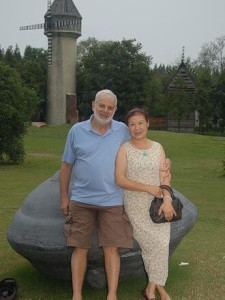
colin-and-xiulan-colin-austin-gbiota

Now I am not a doctor - I am an engineer, but I am also an innovator. I was selected by the Institute of Engineers as one of the top one hundred innovators in Australia for my pioneering work in computer aided engineering.

But let me tell you that being an innovators is nothing to do with being super intelligent - it is about having the mind of an eight year old. When we are born we have no ideas about the world, no prejudices, no paradigms just an empty shell which we try and fill by asking questions - all the time.

australia-engineering-colin-austin-gbiota

“Granddad why is the sky blue?” Yes we can explain that by saying there are particles of dirt in the sky and blue light is weak so hits these particles and they are reflected back to earth.

“Granddad why is grass green?” Yes we can explain that by explaining about photosynthesis.

And so the questions keep coming until why? Why? Why? Until the kids has formed their own set of paradigms about how the world works.
engineers-australia-colin-ausitn-gbiota

Now we actually know what causes diabetes. We know that the body uses insulin to regulate blood sugar and there are two stages of diabetes. At first fat in the muscles stops insulin working as well as it should so we start to become insulin resistant.

Most people do not even notice this.


Then the fat starts to fill the pancreas where the insulin is made and blocks the manufacture of insulin. That is when things get serious.

But we know that in most cased people can reverse their diabetes by changing their diet so their body starts to burn up the excess fat.

This is where we need the brain of an eight year old.


Why does the medical experts say that diabetes is progressive when it can often be reversed?

Good question but there are many more to come.

Why do people get fat?

Why do people get fat now when in times gone past most people were skinny.


Why do we make such a fuss about Covid (quite rightly) when far more people get sick and die from diseases related to getting fat but no one seems to make a fuss about that (quite wrongly).

Eight year olds have an infinite serious of questions that just keep on coming and there is only one way of answering all those questions - tell them a story which explains it all. And here is that story.


The Gbiota story

The wonders of the supermarket

Isn’t life wonderful - we all, rich and poor, have to eat, yet we can go into our local supermarket and find an abundance of food at incredibly low prices. How do they do it - bins of cauliflower heads or lettuces for $2 all the same as though they had come from out of a mould in a factory.

And food from all over the world, Chillies from Chile, Mandarins from China, Grapes from California - out of season but still at reasonable prices. Amazing!
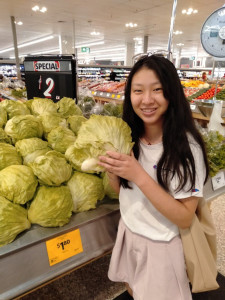
lettuce-supermarket-granddaughter-colin-austin-gbiota

The story of food - for adults that still have the curiosity of kids

But is it that simple? Let me tell you a story about food. In our modern society all we seem to want as adults is a catch phrase ‘Make plum pudding tasty again’ or better a photo on their smart phone with a catchy caption. But kids just love stories, they will lie comfortably in bed and become totally immersed in a story noting every single detail.

But we cannot really understand food and how it affects our health from a simple catch phrase - eat less exercise more, go Keto, go Paleo or whatever.

We really need to understand how food and our bodies actually work and that understanding can only come from the story of food - which takes a bit of time. Adults may just look for the catch phrase but kids have an innate curiosity and really want to know the real story.

kids-reading-books-colin-austin-gbiota

So I am writing this story as though I am writing for kids. I use simple language and make it fun and use words that kids love live pooh, shit and the dreaded F word beloved by kids - fart, even though this may offend the more sophisticated.


But it is not simply a question of physical age - I am nearly 82 and can still have the curiosity and immersion of a kid - all you need is to have the mental age of an eight year old with a hungry brain.

Any one can do it - if they really want to.


The story of Felicity - the bug fairy

So here is the story of food. Its about Felicity the bug fairy and starts at the very beginning - a long time ago.


Once upon a time

Once upon a time, precisely 4.30 in the afternoon on Wednesday the 24th October, year minus 4 billion.

Felicity was thinking it was a really cold and windy day, when there was a big bang. Not just big - but the biggest bang that Felicity had ever heard.


That was the day that the earth was formed. It was just a rock, dead, inert with nothing living, nothing at all. There were no shops, no pizza’s or ice cream and worst of all no chocolate.

pizza-colin-austin-gbiota

What - no chocolate!

I remember seeing a protesters sign ‘save the planet - it is the only one with chocolate’ and I said to myself now there is a person who has got her priorities right.


Making change fun - managing our technological might

Now you may think I am just playing games here and having a bit of fun. Just in my life time I have seen enormous changes in technology - a single robot can now do in minutes what would take a workshop team to make in hours. Our ability to make things is just staggering.

But this great leap in technology - if we don’t learn to manage it - is a threat to our existence. Of course mankind will survive but what damage will we do to our species?

We are aware of the battles over climate change but this is almost small fry with the other damages we could self inflict. For every person that dies from Covid there is 100 with diabetes, may be having a limb chopped of and almost certainly dyeing prematurely.

And this is largely self inflicted from our current food system.

But it gets worse - what will our grand kids and their kids eat as we slowly destroy our soils.

We simply have to learn to manage our enormous technological capabilities for the benefit of society as a whole - and not just a few rich people.

So I want people (that's you) to read about how food works so they really understand the issues. We are so used to policy in three world slogans - eat more veggies - but it is more complex than that so I have to make it fun to read about.

This is not just a fun story it is actually deadly serious so I want people to read then act. These articles are in the public domain under the Creative Commons system. You don’t need permission to distribute - just do it.

So back to the fun story of Felicity the bug fairy which you can read here.
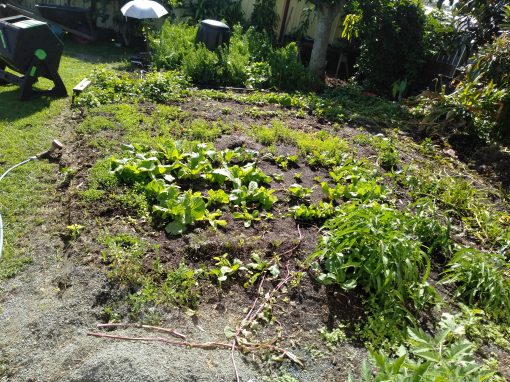
Loading

Making soil in Gbiota beds

Making soil in Gbiota beds

Making Soil in Gbiota Beds

The Gbiota Bed Toolkit – Principles, Not a Single Design

Gbiota beds are a way to make living soil that supports gut-healthy food. There is no single design that works everywhere – a bed in the mountains of Colorado needs a different approach to one in the Queensland tropics – but the fundamental principles are the same. Over the years I have worked with:
  • Contour beds fed by a creek and small dam in wet, windy Melbourne
  • Large wicking beds up to 50 m long in dry Gin Gin using all household grey and black water
  • Gbiota beds in Bundaberg using mains water and community dams, surrounded by wildlife
Different climates, soils and crops (deep-rooted alfalfa versus shallow baby greens) all require tweaks – but they share the same core: breed beneficial soil biology and manage moisture correctly. toolkit-colin-austin-gbiota

Basic Principles of Gbiota Soil Making

Breeding Beneficial Biology

The main purpose of a Gbiota bed is to breed beneficial biology – for both the soil and our gut. We deliberately create conditions where “good bugs” out-compete harmful biology. Key points:
  • Do not rely on inert potting mix alone – it doesn’t feed biology.
  • Soil life needs real food: organic matter, minerals, moisture and oxygen.
  • If you don’t feed the friendly bugs, they die and problem biology takes over.
microbes-colin-austin-gbiota

Raw Materials – What to Add

To breed soil biology you need a balanced “menu” for microbes and worms. Core ingredients:
  • Food waste & soft organics (kitchen scraps, green waste) – fast-decomposing, ideal microbe food
  • Hard organics (branches, prunings) – slow carbon, builds long-term soil structure
  • Nitrogen source (e.g. chicken manure) – fuels decomposition
  • Buffer (e.g. dolomite) – balances acidity from manures
  • Mineral mix / rock dust – broad spectrum minerals and trace elements for plants and people
  • Filler soil or clay – helps moderate nutrient strength and improve texture
raw-materials-colin-austin-gbiota

Avoid Killing Plants with Osmosis

If nutrient levels in the soil are too concentrated, osmosis works against you: instead of water moving into plant roots, it is sucked out of them and the plants die.
  • Build rich mixes – but always balance them with soil, clay or other fillers.
  • When in doubt, dilute – you can always add more nutrition later.

Inoculants – Starter Biology

Food and minerals are not enough – you also need starter biology (inoculants):
  • Virgin, undisturbed soils often already contain diverse beneficial microbes and fungi.
  • Degraded soils usually need help: compost, vermicast, worm eggs, quality microbial products.
  • Once established, biology will continue breeding as long as you keep feeding and watering correctly.

Moisture and Air – Controlling the Bug Environment

Most soil life is very sensitive to moisture and oxygen. Too wet and you get smelly anaerobic conditions; too dry and biology slows or dies. Gbiota beds aim for “Goldilocks moisture”: not too wet, not too dry, just right for aerobic life.

Moisture Level is Critical

Different creatures thrive at different moisture levels – ants and beetles in hot dry soils, frogs in damp locations. Microbes are similar: some prefer wet, some moderate, some dry. frog-colin-austin-gbiota
Conventional wicking beds often run too wet, growing slimy, smelly algae and encouraging the wrong biology. A well-managed Gbiota bed maintains a moderately moist, well-aerated zone where beneficial biology can dominate.

How Water Moves in Soil – Why It Matters

Understanding how water moves helps you design beds that stay in the healthy moisture zone.

Gravity & Hydraulic Flow

Water flows down under gravity and sideways when it meets resistance – this sideways movement is hydraulic flow.
  • Water applied at the top moves down until it hits a barrier (clay layer, liner, compacted zone).
  • It then spreads sideways, filling pores until it finds a path down or out.

Wicking

Wicking occurs when water climbs into hydrophilic (water-loving) soil particles. Moisture rises from a saturated zone up into drier soil above until it reaches a maximum height, then stops. Important points:
  • Fine, well-aggregated soils wick better than coarse gravels.
  • There is always a moisture gradient – saturated below, progressively drier above.
  • Wicking does not go on forever; it reaches a limit.
wicking-bed-colin-austin-gbiota

Evaporation and Condensation

In many “stone-filled wicking beds”, moisture above the stone layer is actually supplied by evaporation and condensation, not true wicking. Water evaporates from the surface, condenses on cooler surfaces above and re-enters the soil. This can work, but it is less efficient and harder to control than a true wicking system with fine soil or media.

Osmosis

Osmosis is the movement of water from a weaker solution to a stronger one across a semi-permeable membrane – the basic mechanism plants use to take up water.
  • If the soil solution is too strong (over-fertilised), water moves out of roots and the plants wilt and die.
  • Balanced mixes keep osmotic pressure in the right range for plant uptake.

Tensile Strength of Water

Water can transmit tension like a rope. In trees, evaporation from leaves literally pulls water up from the roots, thanks to water’s tensile strength. In soil, this means moisture is constantly in motion – pulled by plants, evaporation and pressure differences. The takeaway: none of these mechanisms on their own guarantee “Goldilocks moisture”. For that, we use partial flood and drain. osmosis-diagram-colin-austin-gbiota

Compost Tea, Flood and Drain – The Goldilocks Trick

As a child, my job was to dunk pots into a tank of “chicken-manure tea”. Each pot was:
  • Fully saturated in the brew
  • Then lifted out and allowed to drain, pulling in fresh air
The result was soil that was evenly moist and well aerated – exactly what biology loves. That experience underpins Gbiota bed design today.

Partial Flood and Drain with a Leaky Dam

Modern Gbiota beds use the same principle, but automated:
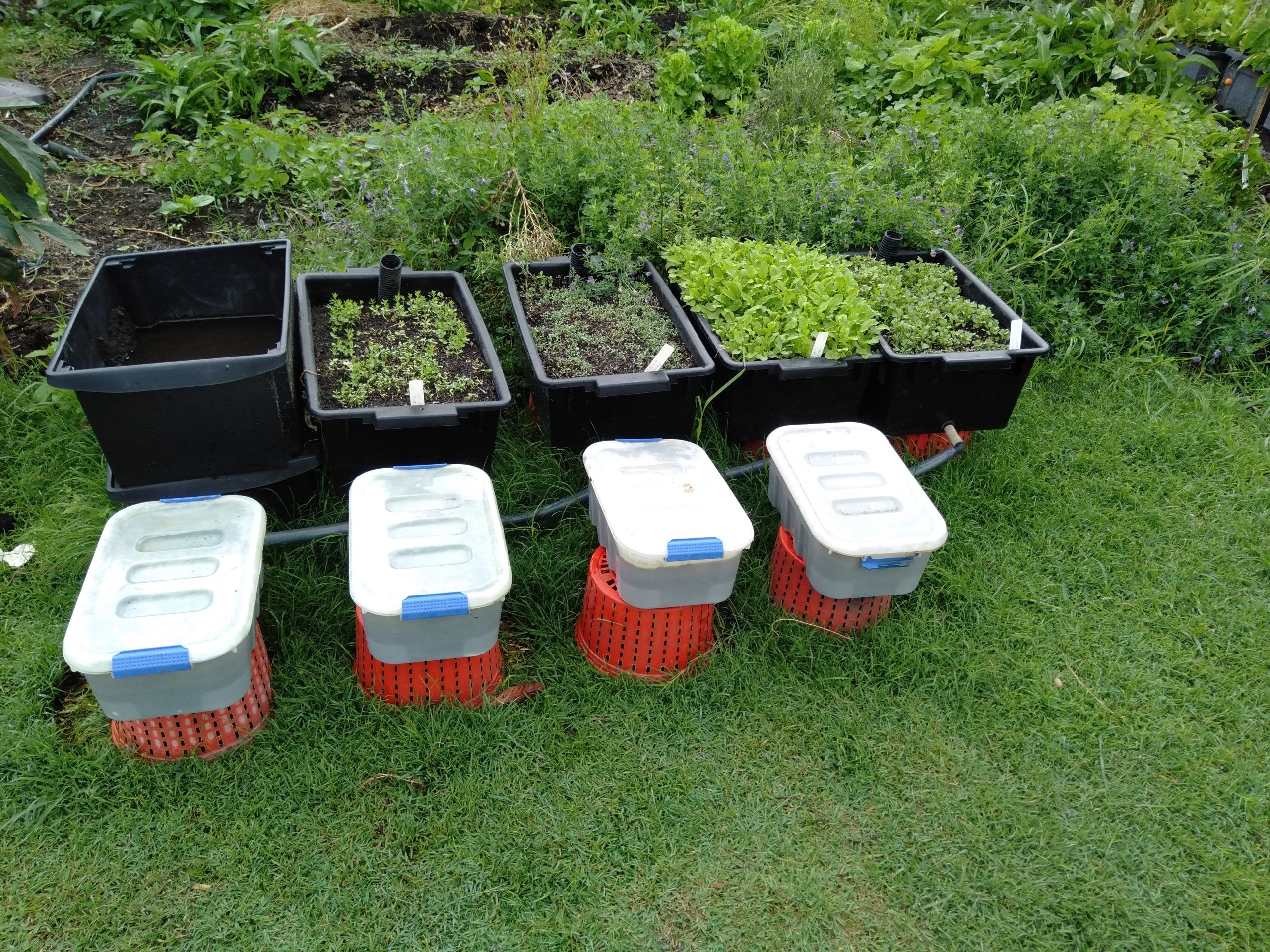
  1. A sump tank sits below bed level, filled with compost tea or nutrient-rich water.
  2. A pump on a timer pushes water into an Ag pipe along the base of the bed.
  3. A soil dam in the pipe prevents immediate drainage, so the base of the bed floods up to dam height.
  4. Once the level reaches the dam, water flows out through the drain and returns to the sump.
  5. When the pump stops, water drains back, leaving the soil moist but not waterlogged and drawing in air.
This pulsing flood-and-drain cycle creates:
  • Even moisture through the root zone
  • Regular oxygen renewal for soil biology
  • Minimal waterlogging and reduced risk of “pongy” anaerobic slime

Example: Bundaberg Gbiota Bed System

Climate and Water Strategy

I now live in Bundaberg, in the dry tropics. We can have months without rain, then heavy falls from cyclones. On a normal suburban block, there isn’t room for a tank large enough to cover the whole dry season, so I use a hybrid rain + mains water system.

Daily Supply Tank

My Gbiota beds cover about 50 m². In this climate, they need roughly 200 L per day. To manage this safely:
  • A 200 L tank is filled daily using a mains water timer (runs ~20 minutes).
  • A float valve stops filling if rainwater has already filled the tank.
  • Because the valve only runs briefly each day, a failure while I’m away can’t flood the whole yard.
rain-water-tank-colin-austin-gbiota

Dealing with “Mr Murphy” and Magpies

Murphy’s Law always applies. In my case, a local magpie learned to peck the timer button, randomly changing the settings. A simple bag over the controller fixed that. A fly-swatter cable-tied to the float valve acts as a damper to stop oscillation. magpie-tool-colin-austin-gbiota

Experimental Beds and Sump Size

I set up multiple bed types linked to a common sump and pump:
  • 1.7 m wide beds with a single pipe across the full width
  • Narrow beds under 1 m wide with individual pipes
  • One bed without a plastic liner (pipe buried directly in soil)
Growth was similar, but the unlined bed returned less water, suggesting lower water efficiency for shallow-rooted crops. My soil is duplex – silty clay over heavy clay – which naturally holds water deeper. Initial sump sizing used a simple rule of thumb: 1 L of water per m² of bed. For a 50 m bed, I chose a 60 L tote box. In practice:
  • The pump’s built-in float and stand meant not all 60 L were usable.
  • The sump was too small for a full pulse, so I added extra pumps on staggered schedules.
Later designs use about 6 L per m² of bed, allowing a single daily pulse with comfortable margin. float-valve-colin-austin-gbiota

Using Gbiota Beds to Grow Soil

Switching from “Growing Vegetables” to “Growing Soil”

Originally these beds grew vegetables (especially baby greens). With the development of Gbiota boxes, my main aim became growing soil – turning organic waste into rich, biologically active topsoil to fill the boxes.

Separating Hard and Soft Organics

I split compost inputs into:
  • Hard organics – branches, coarse prunings (slow to break down, 6+ months)
  • Soft organics – kitchen scraps, green waste, restaurant waste (decompose in weeks)
Both go into compost bins initially. Hard material hosts worms, soldier fly larvae, beetles and more – all unpaid workers creating structure and biology. split-trench-colin-austin-gbiota

Trench Method – Feeding the Bed

I prefer open beds connected to the surrounding soil so soil life can freely move in and out. To feed the bed:
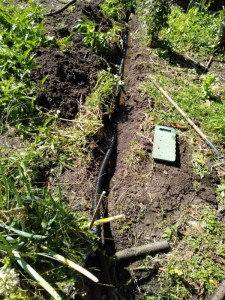
  1. Dig a trench down to the Ag pipe, leaving undisturbed soil on each side.
  2. Add manure and mineral mix to the trench base.
  3. Backfill to soil level.
  4. Spread soft organics (food waste) on top to form a ridge.
This ridge decomposes quickly, feeding microbes and worms while the harder material below breaks down over months.

Plants as Soil Makers

Plants are essential partners in soil building:
  • Roots exude sugars that feed microbes and mycorrhizal fungi.
  • Roots physically push through soil and, when they die, leave channels and pores.
On top of the organic ridge I spread a thin layer of good quality soil (from previous cycles) and seed a cover crop or food crop.

Germination Strategy

Germination in wicking or Gbiota beds can be tricky – too wet and seeds rot, too dry and seedlings die. What works best for me is:
  • Use a fine germination mix: sieved soil + well-rotted compost + minerals.
  • Cover seeds lightly and water frequently until roots reach the moist zone below.
Once roots reach the active zone, growth is rapid. Self-seeding plants like lettuce and amaranth often prove how well the system works.

Filling Gbiota Boxes

The goal is to harvest topsoil from the ridge once it has transformed into rich, crumbly, microbe-rich soil. I use this to fill Gbiota boxes. Soil from used Gbiota boxes eventually becomes denser. I return it to the bed ridges as a top layer, where biology and roots refresh its structure. The soil cycles through bed and box repeatedly.

High-Tech vs Natural Composting

There are sophisticated composting systems with tightly controlled biology and temperatures. These are useful, but my preference is to copy nature:
  • Use organic waste as raw material.
  • Rely on the full soil community – worms, insects, microbes, fungi – to process it in situ.
  • Let plants, roots and soil life build deep, stable structure over time.

Technical Support

There is no single “1–2–3” manual that fits all climates, soils and crops. This article explains the principles and patterns behind Gbiota beds so you can adapt them to your own conditions. If you are setting up Gbiota beds and want help tailoring them to your site, I offer technical support and am happy to comment on specific situations.

Loading

Gut health

Gut health


Welcome to the Gbiota movement

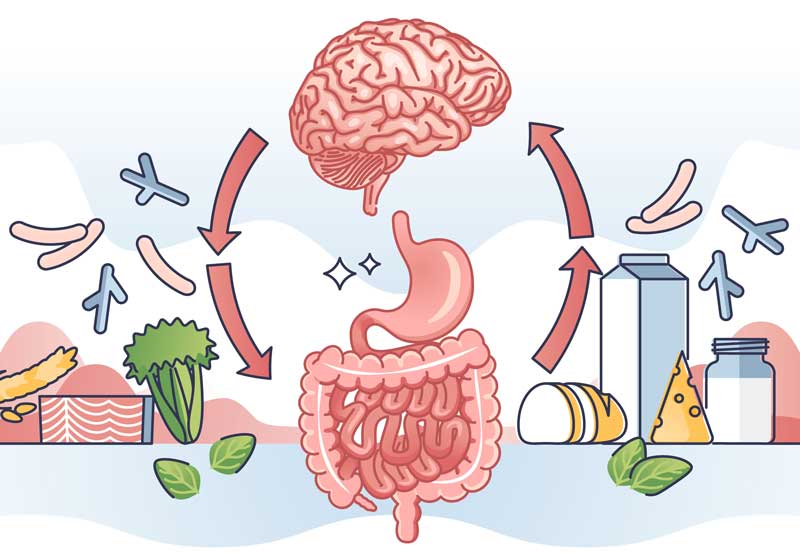
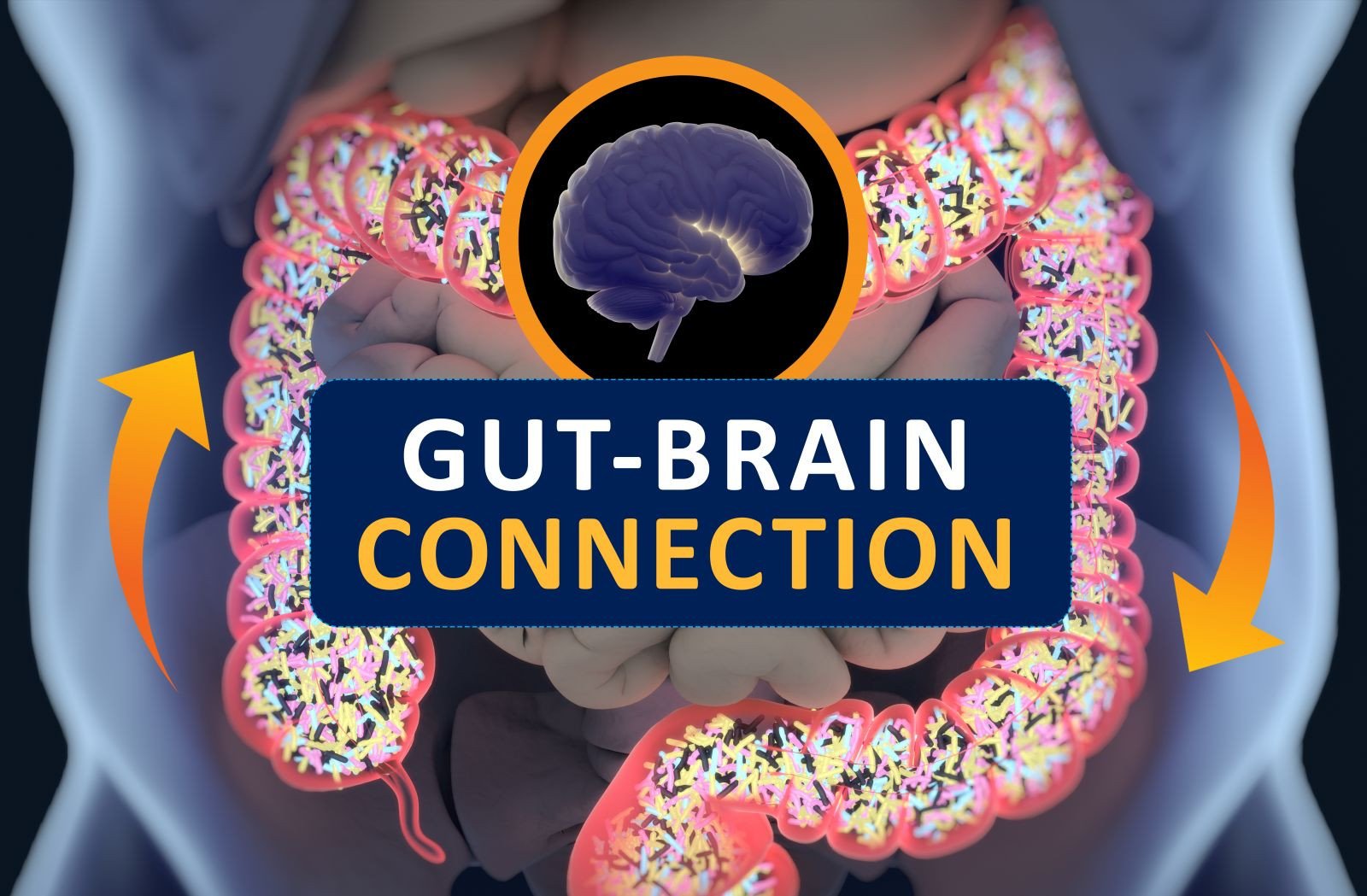
Our gut is one of the most important organs in our body - made up of trillions of cells that communicate with each other - it has real intelligence - our gut brain - which controls much of our body functions.
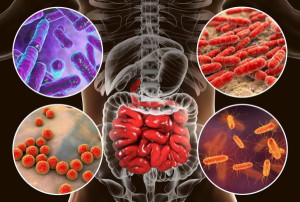
gut-brain-2-colin-austin-gbiota

You simply cannot be healthy without a healthy gut and that means you have to feed it and that is what Gbiota food is all about.

Modern food is not good for our gut health - full of sugars, fats and salt it has led to a global health pandemic of chronic (non-infectious diseases). We love sugary fatty foods - they were in short supply when we were evolving so we crave them. The modern food industry makes a lot of money from satisfying these craving.

Many people are sick and die from these chronic diseases. There are more people suffering from the chronic diseases stemming from a poor diet than people suffering from Covid - but who cares.

Well we - the Gbiota movement care - so we have a plan of creating a community food system.

You can read the full story here pooh4nov21 Let me tell you, just read this one article and it will tell you everything you really need to know about gut food - and it is fun with goodies and baddies and even a bug fairy. There are two other posts  action plan for gut health and Mother beds which are well worth the read.

If you take the time to read these three articles you will have a clear understanding of how important gut health is and how you can have healthy gut biota.  It is really well worth the time reading these three articles - and they are good fun reading.

Gbiota is a social movement for the benefit of the community - not just to make a few rich people even richer. The explosion of modern technology, whether synthetic fertilisers or the digital economy has changed the world, we now have to make sure the change benefits  the community.

Technology should be for the benefit of the people.
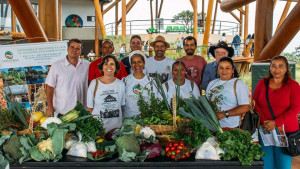
group-volunteers-smiling-colin-austin-gbiota

So what sort of people make up the Gbiota movement?

Well there are people who just want to have a healthy gut by eating the right sort of food - Gbiota food.

The most important group are mums - our gut biology starts with what mum eats before we are born, then we pick up a lot of biology during birth and from mums milk then what she feeds us.

They are probably far to busy to have time to grow their own Gbiota food but they can access healthy food from the Gbiota community.

So we have growers - home and commercial growers. They grow soil full of the essential biology and minerals. Yes - we actually grow soil from waste food and organic waste, manures and minerals. Gut health starts in the soil.

mum-and-baby-group-colin-austin-gbiota

The growers put this Gbiota soil into boxes, seed to grow plants until they are ready to harvest - then deliver the boxes to local people who want to pick and eat fresh Gbiota food - even if they know nothing about gardening or live in an apartment.
gbiota-box-colin-austin-gbiota

This site has the information needed to grow the soil and plants for a healthy gut.

You can read the full story here pooh4nov21

Next - the Gbiota movement

Subsciption site

It is a subscription site which means that you have to register and log in to access. The Gbiota mob may not be people who want to become billionaires taking pleasure trips to outer space but we still need a bit of money to live. Our kids still need money for school clothes.

You can unsubscribe any time you want.

We have several levels.

Consumers

The first level is absolutely free and give you access to the bulk of the site which is all about gut food and health. All you have to do is register or login and you will receive automatic notification of new posts. You also have the option of paying $5 per year to see the growing section which is all about how to grow gut food (Gbiota food)  interesting ot know how Gbiota food is grown even if you do not want to get invovled with growing yourself.

Private home growers

The next level is for people who want to grow their own Gbiota food for their own and families use. They have access to all the information on this site for $20 per year. (Aussie$) and can automatically pay from anywhere in the world with a regular credit card.

Community home growers

The next level up is community growers. They are likely to be home owners with a bit of land but could also be a community garden - but they are amateur growers rather than commercial growers. They have access to the entire site for $10 a month which they can easily recover from supplying Gbiota boxes with money to spare.

Commercial growers

Finally there are the commercial growers, may be small scale growers adopting a Tree Change - they pay $50 per month.

Trade mark and Creative Commons

Gbiota™ is a registered trade mark for use by Gbiota growers to show this is genuine Gbiota food. Subscibing as a grower and conforming to the Gbiota technology give you the right to use the trade mark

Our articles are generally published under the Creative Commons systems which means they can be copied and reproduced without approval but the source must be acknowledged.

Our articles on growing Gbiota food are restricted to Gbiota growers and are not for re-publication.

Next - the Gbiota movement
Please move onto either register or login.


Loading

Alice

Alice

We aim to help young mums create a healthy gut biota for their kids using plants grown in biological active nutrient rich soil.

What makes our gut different?

alice3We are born with all our organs in place following instructions from our DNA - with one exception - our gut.

Our gut is not strictly part of us and we, or rather our mum, has to make it for us from the food she eats and feeds us as a baby and by the close physical contact mums give their babies. It is the one organ we can readily change - particularly when young.

Mum decides, consciously or by default, what sort of gut we are to have and the species that will live within us. In later life we can change our gut but that is not so easy when our eating habit has been established.

This is done by a process known as ecological balance - probably the most single important natural law so I have created a special post on ecological balance.

The journey of the microbes

alice header

This is Alice. She is two, and determined to get a cuddle from her mum, Bernadette. She will do whatever it takes to get that cuddle, so why is she so determined?

When she was born, Alice had every organ she needs for life, carefully made in minute precision - with one exception - her gut biota (or  gut brain!). Read more here and here

gut brain connectionAlice knows, in her genes, that she has to develop her own gut biota.

It will control much of how her body works for the next ninety years.

It will decide what and how much she will eat, it will help manufacture the array of complex chemicals needed to replace her body parts as they wear and age, and it will host her immune system to protect her from all the germs and diseases which will attack her during her life.

foodBut where does Alice get all those trillions of microbes that will make up her gut brain? From  her mum - Bernadette.

She got some during birth, others from breastfeeding, and yet more from cuddles and then from the food that Bernadette feeds her while she is still in those formative years.

That is why she is so determined to get that cuddle! She knows she needs to grow her Gut Biota (Gbiota) but is is quite a journey - from the compost - to a worm - to the soil - to a plant - to her mum - then at last to Alice.  That is just the way the world is and has been for a few million years - until we started eating plastic food.

alice3Bernadette is the local coordinator of the Gbiota club based in Sydney, and she knows that these microbes come from the food she eats and the food she feeds Alice.

Over the next few years, while Alice is still a kid, her gut brain will stabilise and set the eating pattern for Alice for the rest of her life.

It may be technically possible to change her gut brain by changing her diet later in life, but that would be a major challenge that few people succeed in making.

Those first microbes Alice received may come from Bernadette, but where do those microbes come from in the first place?

ecological balanceThe soil where the food is grown.

Now, Bernadette has come to understand this, and grows as much of her food in her garden as she can; making sure that the microbes in the soil are well fed and nourished, so they thrive and breed and enter the plants which she and Alice and her other two kids, Millie and Gabe will eat.

mums groupThis is vital for everyone’s health, not just her own kids, so Bernadette wants to help other mums understand the importance of eating the right food and starting their kids on the right foot (or food, as it were) in life.

This is why she is working as the Sydney Gbiota coordinator, to spread this to other health-conscious people and mums in her area.

gbiota boxPart of this is just education, making other mums aware of the importance of the gut brain, but she also helps organise the local production of Gbiota boxes so people can grow the food, using kitchen waste to feed the microbes that will lead to a healthy gut brain - even if they live in a flat or have no growing experience.

Bernadette is happy to be called Bee and if you are a mum, interested in improving your  and your kids gut health, or even an ageing grandparent who want to see your grandkids flourish you can contact her at bee@gbiota.com 

She can put you in touch with a local suppliers who can provide you with Gbiota boxes already growing fresh plants ready for harvesting and full of beneficial microbes. You just have to collect your kitchen waste and add some trace minerals.  Eating healthy actually costs less than eating plastic food, and it comes without all the advertising hype - all you have to do is chat with a real mum thats actually doing it. Bernadette can show you how.  Just drop her a line bee@gbiota.com

To learn more follow our reading guide start here

About the Gbiota club

The GBiota club itself does not buy or sell anything. We conduct research into and promote the importance of gut biology. But we also try and link people who are willing to make Gbiota boxes (or grow GBiota food) with people who understand about gut health, particularly young mums as our gut is created in these formative and affects our health for the rest of our lives.

Let us summarise the message and how we work.

What our gut brain does

Our gut consists of trillions of cells which communicate with each other to form a genuine brain. Our gut does much more than help us digest food - it decides what and how much we will eat, it will help manufacture the array of complex chemicals needed to replace our body parts as they wear and age, and it will host our immune system to protect us from all the germs and diseases which will attack us during our life.

Where does our Gut Biota come from

We get some before birth, more during birth, others from breast feeding, and yet more from physical contact,, then more from food. Our gut biota begins to stabilise around age three but is still flexible in our teens but then we become set in our eating habits making it more difficult to change.

But it actually all starts much earlier, it is quite a journey - from compost - to a worm - to the soil - to a plant - to our mum - then at last to us. That is just the way the world is, and has been, for a few million years - until we started eating plastic food.

What we need to do

We need to educate future mums on the importance of eating plants grown in soil full of beneficial biology. They need to start eating these plants before birth and then feed their children these plants until their eating patterns are established, certainly up to the age of three, but preferably into their teen age years.

Where do they get this food?

The Gbiota club is a group of people who really understand the importance of soil biology and how it affects our health. Within the club are suppliers who will breed up the biology in their soil which they put into Gbiota boxes which they seed and grow until the plants are ready to harvest, using the principles of tipping and growing baby greens.

Mums can buy these boxes to supplement their diet for themselves and their children, feeding the soil biology with kitchen waste. When the harvesting cycle is finished they can either swap their old box for a replacement one or reload the boxes themselves.

Ecological balance

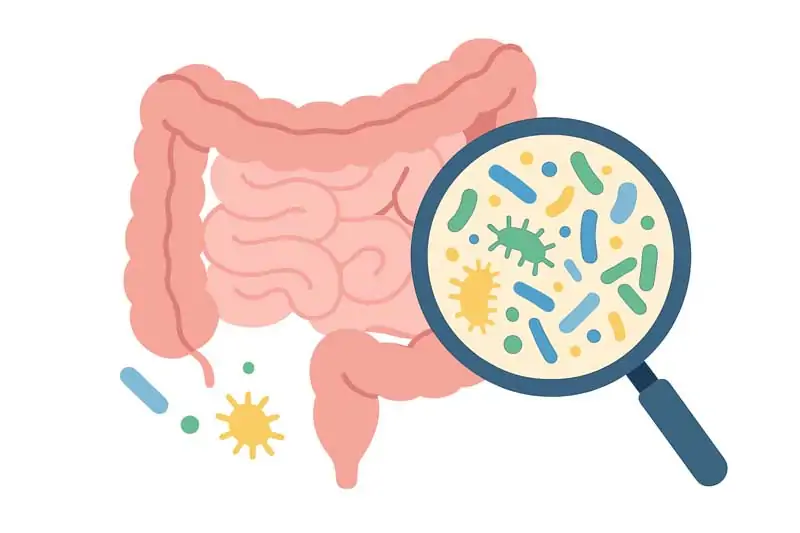
beneficial biologyWhen I was a kid bread would go mouldy within a few days, now it is virtually indestructible by the elimination of the micro-biology. But is the elimination of this micro-biology wise? It is the micro biology which turns dirt into soil making essential nutrients available to us.

True - there are harmful microbes, but the natural world has evolved over millions of years, into a system where the beneficial biology out breeds and controls any harmful biology.

This is a totally sustainable system, the indiscriminate killing of all microbes is not. It leaves a vacuum which will eventually be filled by something which could be far worse.

This picture shows beneficial biology in an experimental Gbiota box - it is releasing nutrients and keeping any harmful biology at bay.


How do they contact a Gbiota club member who can supply the boxes?

They should first contact Bernadette at bee@gbiota.com giving their location where she will locate a local member for you.

How much do they cost?

Typically a Gbiota box costs $68 and with a refund of $25 when the box is exchanged or they can be rented on a subsription basis.

How many boxes are needed?

As a guide one box per family member. If you are reseeding yourself you will need extra boxes to cover the time the plants are germinating.

What do I need to tell the local club member?

You need to select the plants you want. The club member can advice on what plants to choose based on locality and season. Common plants are spinach, broccoli, alfalfa, linseed, cress, celery, purple amaranth, kale and Asian cabbage but there are many more to choose from.

Milder plants are recommended in the early stages of weaning as the baby builds up it gut biota.

How do I know what I am buying

It is just a fact of life that people are different and will react differently to different foods, but Gbiota club members supplying the boxes agree to adhere to a strict procedure in producing the boxes.

How do I pay?

This is up to the local club member but typically they will deliver to your home where you can pay directly - but others will prefer for you to pay on line.

What is the legal structure

Gbiota club members supplying Gbiota™ boxes are independent business. They agree to produce the boxes based on the Gbiota principles and are licensed to use the trade mark name Gbiota™.


alice4


Loading