The Gbiota Bed Update

The Gbiota Bed Update

Gbiota beds were first developed in the early 2010s to deal with drought and dry conditions. After years of experimentation, the system has evolved to manage not only moisture efficiency but also extreme weather, soil biology, and food resilience. This update explains how the bed design has progressed and why it matters today.
You may like to begin by watching a short video I made in 2020: https://youtu.be/xccG5Zq3CNQ
The challenge has shifted: from drought-proofing beds to building systems that survive intense rain, flooding, and massive shifts in climate patterns.

Sump and Pump System — The Original Design

The early Gbiota beds were simple: dig a trench, add a plastic liner, and place Ag pipe in the base. A raised “leaky dam” at the end forced water upward through the perforations in the pipe, distributing moisture through the soil.
Water was pumped from a sump, over the leaky dam, and back into the sump in a continuous loop. When the pump switched off, water drained back naturally. In my early beds I used a plastic liner. Later I experimented with simple soil compaction instead, which worked surprisingly well—but results will vary depending on your soil type and water access. Scheduling irrigation was easy: a simple timer controlled the pump. Multiple beds could share a manifold, with water returning to a common sump. wide-trench-colin-austin-gbiota

Manual System — Simplifying the Design

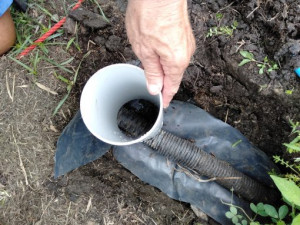
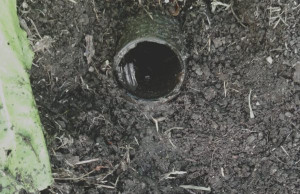
Many people felt pumps and timers were too complex, so I developed a fully manual version of the bed. The leaky dam was replaced with a simple inspection tube. You insert a hose into the Ag pipe and watch the water rise inside the inspection tube until it reaches the correct height. I later discovered it was easier to lift the pipe end to the surface. This makes it simple to flush and clean with a hose. Raising the pipe is essential to create upward water flow into the soil.
The manual system is practical and effective—but it requires human attention. The gardener must check moisture levels and stop watering at the right moment.down-tube-colin-austin-gbiota

exit-tube-colin-austin-gbiota


Drought… Then Floods

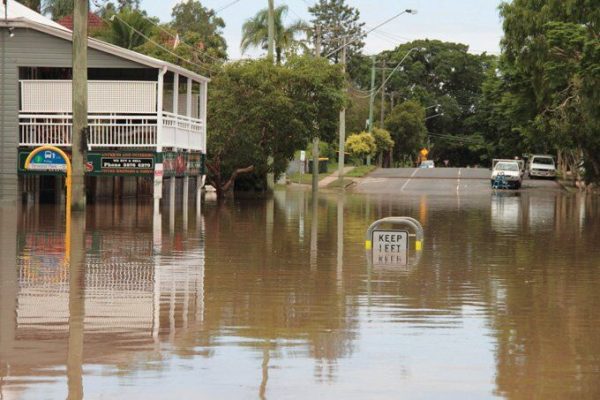
These beds performed brilliantly for years during drought. But then came a series of extreme rain events—true “monster floods.” My block sits on a gentle slope. Water from neighbouring properties upstream accumulated and swept across my land as a mass of moving floodwater, saturating everything for days. This caused significant plant damage and encouraged anaerobic microbes to flourish—exactly what we do not want in a Gbiota bed. The solution was to modify the landscape itself: digging trenches around the beds to divert external floodwater.

Converting to Raised Beds — A New Approach

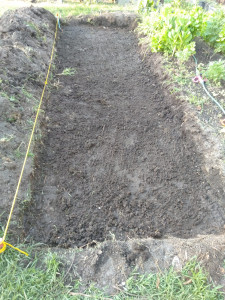
Once external water was redirected, the next challenge was rain falling directly onto the beds. The first step was to dig trenches alongside the beds, connected below parent soil level to allow excess water to drain away.
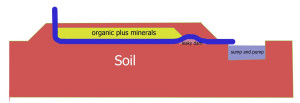
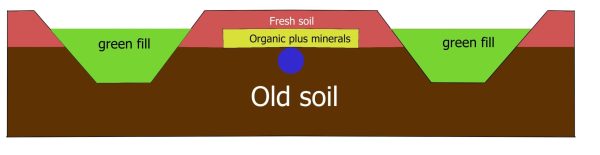
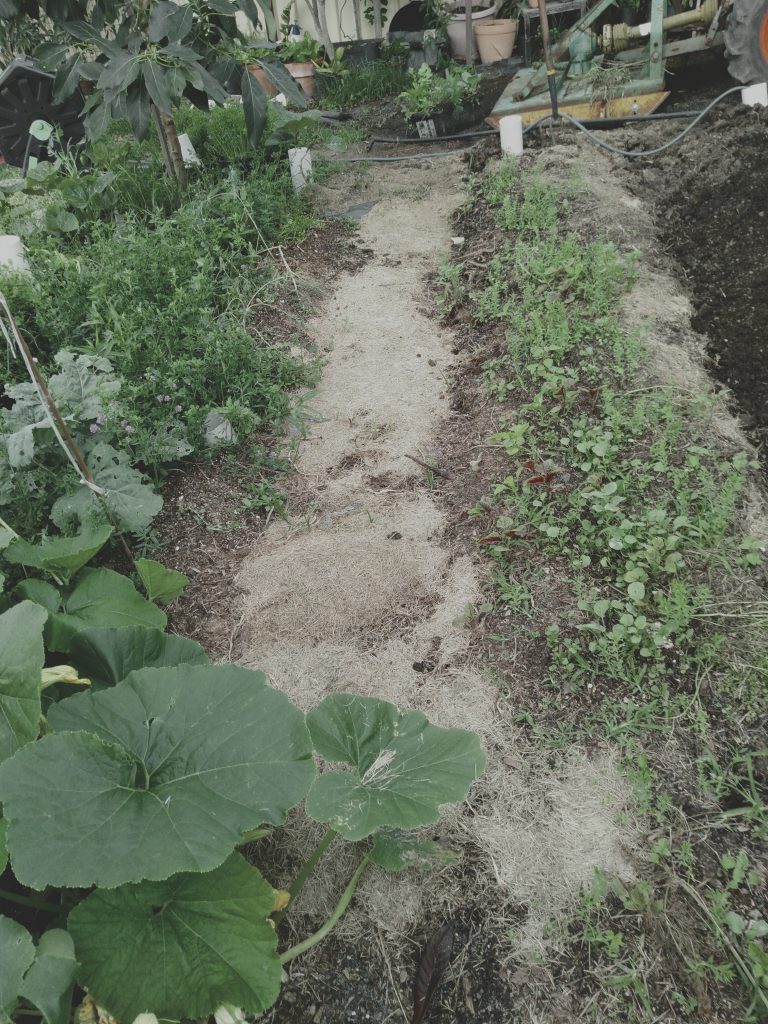
The excavated soil was used to raise the beds, improving drainage and resilience. In some beds I placed the Ag pipe directly on the surface and covered it with a dome of organic waste, manure, and minerals. In others, the pipe sat in a shallow trench surrounded by soil. I originally used the trenches as pathways, but this was awkward, so I filled them with grass clippings. This:
  • Improved walking comfort
  • Stopped weeds growing in the trenches
  • Still allowed effective drainage
At first, water leaked from pipes placed directly on the soil. Filling the trenches with organic waste helped absorb runoff, and over time worms converted the material into vermicast, reducing leakage naturally.
Experience suggests surrounding the Ag pipe with soil gives the most reliable result.

Testing the New System

Testing flood resistance takes patience—you have to wait for actual floods. We’ve had one substantial downpour (120mm) since upgrading the beds. There were no signs of waterlogging, so I’m confident the system will withstand far heavier rains. But real proof will arrive with the summer cyclones.

Beds, Boxes, and Soil

Freshly picked food is one of the keys to health and wellbeing. Gbiota beds make this possible, but not everyone has land or gardening experience. That’s where the bed–box system comes in. Gardeners create high-microbe Wickimix soil in beds, then fill Gbiota boxes so apartment dwellers can grow gut-health food on balconies or indoors. Wickimix is made by adding food waste, garden material, manure, and mineral-rich rock dust to a trench just above the Ag pipe. Rock dusts add essential minerals such as magnesium and zinc—both widely deficient in modern diets. Inoculants introduce the soil microbes needed to kickstart biological activity. Once established, the microbial community continues growing indefinitely. The key to good Wickimix is moisture: not too wet, not too dry. The Ag pipe provides controlled bottom-up watering so moisture stays in the ideal zone for microbial life.
Goldilocks moisture—not saturated, not dry—is what makes Gbiota beds uniquely suited for breeding beneficial microbes.

Latest Methods

I now use the side trenches to grow Wickimix. I fill them with organic waste, add manure and mineral rock dust, and cover with soil or recycled Wickimix. This layer becomes an active composting zone. Grass clippings, food waste, and garden prunings all break down with the help of worms. Worms are essential—their castings are packed with beneficial microbes that ultimately feed our gut ecosystem.

Interested in Becoming a Grower?

If you think you may be interested in becoming a grower, please contact me: colin@gbiota.com

Loading

Overview

Overview

Grow gut brain food in living soil and restore genuine food health.
Half the western population is suffering from some chronic or long term illness. The ultimate cause can be traced back to poor gut health, driven by our modern chemical industrial food system. This system produces vast quantities of cheap, convenient energy food but kills the microbes which should end up in our gut. Our gut microbiome originates in the soil, which should contain thousands of different species of beneficial microbes that move into plants and then into us. We can go to the supermarket and buy a cabbage wrapped in plastic, or we can grow beneficial microbes wrapped inside a cabbage by breeding those microbes in the soil first. This site shows how – but in this digital age many people hope to solve complex problems with a simple slogan. Let me save you a lot of time by saying that if that is what you are looking for, you are on the wrong site. There are many posts here, but just two describe how we can establish communities who enjoy better health by feeding their gut brains: Food for Health and Community food. Read these to see how we can modify our food system to make us healthier and more resilient in a changing climate.

Grow gut brain food

In the last eighty years the global population has trebled and we all have to eat. The modern food industry has increased the production of energy food 40% faster than the increase in population. There is ample energy food, which is really just fuel. The fact that there are millions of people starving is not because of a lack of energy food but due to inequality, politics and distribution failures. Some 80% of the food we eat is simply burned for fuel, but we also need food to feed our gut brain, which controls how our bodies work and supplies the complex chemicals to replace our body parts as they age and wear. Sadly that is lacking in our modern food system. Read Food and the Gut biome here. This has led to a massive supplement industry to supply all those chemicals and, more recently, microbes which are essential for health. Taking pills to make up for deficiencies in our diet is an expensive and not very effective way of correcting these problems. It is far cheaper and more effective to grow plants in nutrient rich, biologically active soil so they naturally contain those complex chemicals and microbes. That is what this web site is all about – we do not sell anything; we supply information on how to grow food which will make us healthy. I accept that there is a mass of information on this web site which can be confusing for new readers.

How this site is organised

This is how I have organised the web. There are three areas – food, Gbiota news and videos – which contain many articles. These are published under the Creative Commons system. They are totally free and can be copied and reproduced without further permission; the only requirement is that the original source (for example www.gbiota.com) is acknowledged. Posts are arranged by time with the latest up front so you can easily read the latest posts by clicking on the relevant links. Some posts may be older but are critical to understanding food, so I have set up links to these important posts here, here and here. Once I have published a post I generally do not like to change it; however, the post Key Points is dynamic and updated regularly, so it is worth checking. We do not sell anything but we spend a lot of time and money experimenting on how to grow food that enhances health. This is a public service site – everyone should have access to food that keeps them healthy. To help cover costs, the section on growing, which contains the nitty gritty of how to grow food that will make us healthy, is a subscription area. Please subscribe to see what it is all about – you can unsubscribe at any time. I am focused on how to grow food that will enhance our health, specifically plants that act as pre and probiotics to enhance our gut brain and increase our health span. The Internet is one of the great innovations of our time, giving people access to information in a way never possible before. It is also a treacherous place, with information that may be well intentioned but wrong, and sometimes just fake information designed to get your money. If you are thinking about joining the Gbiota healthy food movement, go to Key Points and decide if you agree with our analysis of food and health. If yes, please join the Gbiota food movement so we can all enjoy a food system that makes us healthy.

The calorie obsession

The conventional food paradigm is focused on calories – trying to manage the number of calories we eat – yet you only have to walk through the local shopping centre and see the number of wobbly bums and tums to realise that it has been a total failure. More scientifically you can look at the statistics on chronic or non-infectious disease which are at epidemic levels. Every twelve seconds someone has a limb amputated from diabetes. It is not just older people – our kids are getting fatter and sicker. Our gut brain has evolved over millions of years to be the intelligent control system for our bodies. We need to change the food paradigm to focus on feeding our gut brain – our intelligent control system. This is how the web site works.

Latest posts

Most of my readers are returning readers, so here are links to my latest posts: Wicking-soaker beds describes a much simpler version of the original flood and drain beds which I introduced in 2015 and so are more suited to the home grower. They were also designed to better cope with the current weather extremes of floods and droughts.

Coming posts

I am in the speculative research business – undertaking those apparently daft projects which challenge the conventional paradigms and are unlikely to be financed by conventional research organisations. Naturally such projects have a high failure rate – sometimes because the technology just does not work but more often because it is not acceptable to the community. I publish these posts so my readers can comment. While I can undertake trials to see if the technology is sound, it is very difficult for me to know if it is acceptable. It seems that my regular readers are willing to pass on their views on whether an idea will fly or sink. Food and floods looks at what we can do to grow food with the current wave of flooding which is so damaging to current food production and could cause major shortages of fresh fruit and vegetables. It is simply much more challenging to grow food in waterlogged soil than with a simple water shortage, where there are established techniques to grow at least some food.

Welcome to new readers

We welcome new readers but there are things that need to be said upfront. We live in the information age where we seem to expect a simple solution to any problem. Let me tell you there is no simple solution to working out how to feed some eight billion people food that will keep them healthy and increase their health span. While the population has trebled over the last eighty years, our production has increased 40% faster. We have been highly successful in increasing our production of caloric food but have created a disaster in producing food that will feed our intelligent control system. This has been a disaster for young and old alike. Now I am ancient – a genuine oldie – so I can tell you what it is like being old. You accept that you are going to die – it is just a reality – but what you want is to stay fit and active until it is time to crawl into your compost bin and die. What you really want is to stay fit and active until that time. But that is just not happening with our modern food system. Who wants to stay fixed in a wheelchair, dribbling into the blanket, peeing your pants and having no idea of the names of your grandchildren who come to visit you? We made some bad decisions on food. There are hundreds of articles on food and health on this site and if you are a new reader you would find this totally overwhelming. So this is what you can do: I have made a post called Key Points which gets to the essence. Then go to No Dumb Donkeys and read the handful of articles I have selected as giving a good overview of what we are banging on about. If you want to find out a bit about me then read My Story. Crazy world gives a bit more history and is worth a look. Health span and The plan are also good reads. We don’t sell anything, we just do a lot of experimentation and write lots of articles on growing food for health. All this costs money so we are a subscription site. To access all the information you will need to register, but you get fourteen days free. If this site is not for you then just cancel and you will pay nothing, but we will mail information to you on new posts for the next three months, after which you will not be bothered. Welcome aboard if you decide to stay – and have a good life if this is not for you.

Loading

Diabetes trial

Diabetes trial

Save My Foot – community health trial

Why?

I have been on this earth for 83 years. I have had a great life that many would envy, I have always had access to healthy food, I am fit and healthy and I may not be an elite athlete but go for a walk of several kilometres in my local nature reserve which calms me from the stress of life and I see the lizards, birds and duck doing their thing. I see the ducks waddling along and it reminds me of the many overweight people in the shopping centre who walk in the same way and that is all to do with soil and modern food. I am now a great grand dad, I want my grand kids and their kids to have a good life like me but I look at the world and worry about the future. We can certainly produce food on a grand scale but it is making us fat and sick and destroying the planet and eight billion people can’t follow Elon Musk and zap off to Mars. But I have spent many years studying how to grow food that makes us fit and healthy without destroying our planet – but how do I persuade people, many people, to change the way they eat so they are fit and healthy living on a sustainable planet. It is pointless prattling on about it – it needs hard evidence and many people committed to making the change. That is what TheTrial is all about.

Scientific trials

Randomized double blind placebo control (RDBPC) studies are considered the “gold standard” of epidemiologic studies. They are clearly the way to go if the object is to test some particular feature – say a new drug. But this is not the way to trial for this project where an observation trial is simply more practical. Just make changes and sit back and watch anything and everything that happens. But we do have to control the changes that are made, make sure we have a representative number of people in the trial and have some idea of what we are looking for but still be prepared to notice things that are not on the items to be observed.

Controlled changes

Please watch my video https://youtu.be/0BOnJUXSyTU which explains the basic concepts. We want to incorporate into our diet food that has been grown in nutrient rich, biologically active soil. (For shorthand I call this Gbiota food). But the bulk of the food that we eat is simply burned off for energy so we only need to replace a proportion of our current diet with the Gbiota food – at a minimum just 5% but preferably some 20%. People in the trial will choose what and how much they change in their diet. We just ask that they tell us.

What we are looking for

Ideally we would like to know if people on this diet live a long and healthy life (life span) and are fit and healthy until a ripe old age (health span). It is just a reality that we don’t want to wait for half a century to get the answer so we look for indicators. The first and most important is appetite (actually food cravings). Our modern diet is deficient in both beneficial microbes and key minerals, our intelligent control system senses these deficiencies and makes us hungry, really food craving. So we want to know if these food cravings disappear. This is purely subjective – do you feel satisfied or are you continuously craving more food? In the scientific world it is nice to have things we can measure – put a number on – and the critical items we can measure are weight and waist measurement. Perhaps even more important – but still subjective – is how well do we feel? Do we feel full of energy and life is fun and worth living or do we just want to slouch on the couch.

Soil – Food – Health

The benefits are obvious – in the recent pandemic there were various studies which showed that people eating healthy food were less affected by the virus and recovered faster. But health is more than the lack of disease – it is about having energy and a zest for life and you can’t talk about energy without mentioning two words – fat and sugar (or rather glucose). Our muscles and brain run on glucose, which actually is a rather low grade energy but very mobile so can easily be turned into energy very quickly, but fat is the way our bodies store bulk energy which it can readily turn into glucose to provide immediate energy. Without fat we die – the simple but brutal truth – but too much fat can lead to a spectrum of diseases – diabetes, heart attacks, cancer, dementia and more. Fat comes from the food we eat so how can we grow food that will ensure we have just the right amount of fat? And that is when the fun starts.

The calorie myth

For years we have been accustomed to the calorie myth – we can simply control our weight, and hence fat levels, by simply controlling the number of calories we eat. It is totally ingrained in all the advice we are given – eat less and exercise more. Sounds sensible – easy to apply – but it just does not work. We can certainly lose weight by going on a diet but unfortunately the weight just does not stay off – it slowly creeps back on. So what is going on? Our bodies are much more intelligent than we give them credit for – we have two rather smart brains with a mind of their own.

Two brains

We have two brains, one we all know about in our head (and read the text books and they will tell you that there is the hypothalamus in our brain which controls our weight). But we also have another brain in our gut, which is made up of trillions of cells which talk to each other to form a super computer. Both brains talk to each other and decide how much fat we should store by regulating the amount of food we should eat. We may think that our head brain is just controlled by our DNA that we were born with but we now know that there is epigenetics which can turn off or on part of our genetic code. But when it gets to our gut brain we can expect (and get) some weird effects. We may not be able to change our DNA but we can certainly change the microbes in our gut, simply by what we eat. And if we change our gut micro-biome it will work in a different way and give us different answers.

We have no idea

And what makes it really bad is we have no idea how our gut brain actually works, let alone how our gut and head brain work together. But we do know they have been evolving together over millions of years with just one aim – to keep us alive and breeding – and they do it very well.

They are powerful

If our brains notice that it is getting cold then they will send out messages to store more fat. If you just happen to be a brown bear reading this and are smarter than the average bear (and with internet access) then you know when it gets cold your body will automatically store massive amounts of fat and you will settle down to a mega snooze until the warm weather comes. This is totally automatic and beyond your control so sleep well. It is the same with us humans – if our brains jointly decide to store more fat then that is what will happen. We may try and fight it but they will just go on making us more and more ravenous with food cravings we cannot resist and slow down our bodily mechanism so we really are a couch potato. We may fight it for a bit by going on and sticking to a tough diet but eventually our brains will win. Cutting calories just does not work long term and may even work against us. Our brains may decide we need more fat so we cut down on calories which may make our brain really panicky about not putting on weight so they will step up the action so we get even fatter. Experts talk about changing the set point meaning the amount of fat our brains decide we need to store.

Avoiding the deficits

In many cases our brains, what I call our intelligent control system, will sense some deficit in our diet. It is unlikely to be a simple lack of calories – our food is just full of calories. But it could be a deficit in the minerals we need – like magnesium, iron, zinc or selenium – so it sends out the “eat more” signals. It may be a lack of omega 3. We evolved to have a high ratio of omega 3 to omega 6 so it sends out messages to eat more greens. It is even more likely to send out “eat more” messages if we are not feeding our gut the sort of food we need so we end up with sugar-craving monsters inside our gut. Satisfying the deficits to keep our brains happy is the most effective way of reducing the amount of fat they decide to store.

Things can go wrong

But things can go wrong, there is this magic hormone called leptin which is produced by the fat cells and tells our brains that there is plenty of fat so stop sending out food craving signals. Sometimes our bodies just fail to produce leptin, and at other times we become resistant to leptin so we just don’t get the message and get fat. It can work the other way too. We cannot change our DNA but we can train our brains and if we give them bad food experiences they may just decide not to eat at all – or hardly at all. I read that there are some six hundred chemicals produced by our fat cells – we have no idea what they do or how they work. We just have to accept that our bodies have been evolving over millions of years to produce a highly sophisticated machine which is intent on survival of the species.

Keeping our brains happy

We may not fully understand how our brains work but we can make sure that we avoid any deficit by eating fresh food grown in nutrient rich biologically active soil and avoid scaring our brains so they go into emergency mode and tell us to store all the fat we can. Crazy diets, restricting essential food components, are a great way of scaring our brains.

The new paradigm of avoiding deficits

If our intelligent control system senses a lack of critical nutrients it will make us hungry and eat more and we will get fat. What I did not tell you is that the eating patterns we establish when young will affect us for the rest of our life. To get the essential nutrients, grown fresh in our diet, we need to establish food clusters with both growers and consumers.

Growing the food

The technology of growing food in nutrient rich, biologically active soil is the easy bit. I have been working on this for years – there is a mass of information on the web and I am set up to support growers via email or teleconference. While I have a good knowledge of the principles of growing healthy food there is an issue with local climate and soils and I cannot be expected to know how to grow every plant in every climatic condition. This requires local expertise which I will talk about in clusters or local groups.

Who should participate in the trial?

It is important to have a representative selection of people in the trial. I already have a good following of what I call home growers – people who have their own garden and have already set up Gbiota beds. Don’t get me wrong – I am very happy to have these people as part of the trial but they are already probably eating a healthy diet and are therefore not really representative of the population as a whole – but they can play a key role as ambassadors for the trial and also they may consider becoming community or commercial growers to supply other members. We really want people who are not eating a good diet and probably have some health problems – even if it is just a bit of a tum. These people are unlikely to be actively looking for a solution but the home growers can provide a critical service by inviting their friends and contacts (real and virtual) to join the trial.

Schools and the education system

The most important group we should focus on is our kids through the school system. Dietary preferences are formed early in life but the effect may not be evident until later in life when they are more difficult (but not impossible) to change. Health is not just about managing sickness, it is about being full of energy and active with a zest for life. Our kids are bombarded with advertising for highly processed food which will leave them like waddling ducks in later life. We accept that sport is a critical part of the school curriculum, we should place a similar emphasis on healthy eating. Many schools are well set up to grow the foods needed for a healthy gut with their own grounds or if the school does not have grounds then cooperative parent groups who can grow this food. But we should not forget the influence that kids have on their parents who are at the age when the effects of poor gut health become evident. Educating the kids may be the most effective way of educating the wider population.

Mechanics and organisation

The key challenge is to get people who are not – as my grand kids would say – into gut health, to join the trial. That is where existing home growers can play a critical role. And then – when they have decided to join – how do we give them access to Gbiota food? And as an important footnote fresh – the sooner the plants are eaten after picking the better. (This is the big weakness of our modern food system.) I see there are three groups:
  • those who just want to buy fresh Gbiota food (customers)
  • those that have a garden and would be happy to set up their own Gbiota beds (and become home growers)
  • those that would be happy to have a Gbiota box (probably flat dwellers) so they can have plants growing at home ready to be picked. They just need access to growers who can supply either the nutrient rich biologically active soil (I call Wickimix) to put into Gbiota boxes or Gbiota boxes ready to go.

Clusters or local groups

There are people who can grow and eat their own Gbiota food without any external help. But there are many more people who need access to either fresh Gbiota food or Wickimix (the nutrient rich biologically active soil) to use in their own Gbiota boxes. This is a much larger group (in fact the bulk of the population) and a group that would most benefit from eating Gbiota food. At this moment there is no established infrastructure to solve this problem so we have to solve it ourselves. We can do that using social media to connect people. However there is no such thing as a free lunch and the whole basis of social media is that although it appears to be free it is a simple but devious way of collecting information on individuals which can then be sold to advertisers which would include those organisations selling junk food or pills of dubious benefit. It must be recognised that devious promotion is a prime factor in our health crisis. This would certainly put many people off from participating in the project. I have therefore set up a private social media site where people can communicate with each other and trade among themselves in a secure and private environment.

First step

The first step for anyone interested in joining this project is to join this social media group (labelled Community in the menu). They can register as either:
  • just interested,
  • a potential customer (e.g. hoping to join a group in their area)
  • a home grower (which means they want to make contact with like-minded people in their area)
  • a community grower (which means they would be willing to supply either Gbiota food, Gbiota boxes or Wickimix to other members – they would expect to be paid but more as a social contribution, in essence a paying hobby)
  • a commercial grower (which means they are running a commercial business supplying either Gbiota food, Gbiota boxes or Wickimix to other members for profit)

Money

A project like this costs money to run and is a community run and financed project (meaning there is no external funding). However fortunately this is not an expensive project to run – actually only about $5 per month. Customers do not make a direct payment but they are expected to buy their own Gbiota food. Home growers are expected to pay $5 per month directly for technical support. Community and commercial growers pay a fee for technical support and to cover promotion costs. This would be recovered by sales to customers. It is important to maintain integrity so I have trade marked the name Gbiota and growers paying their membership fee (and correctly applying the technology) are automatically entitled to use that name. Let me get personal here – I have financed this project myself up to date, something I am very happy to do because I have had a fortunate life, particularly as a leading innovator which has generated money in the past. But I have made the great mistake of growing old – my attempts to find that magic switch to turn off the ageing process have failed. This is my legacy project for my own and other grand kids and I want this to be a viable operation long after I have climbed into my compost bin to make my final contribution to the soil. If you want to contact me just email me at colin@gbiota.com.

Loading

Health span

Health span

 
We are living longer — our life span is increasing — but our health span, the years we remain fit and active, is decreasing. Why? The answer lies in our gut brain. Modern food has changed the species of microbes in our gut.

Gut microbes and health

We have long understood that our gut processes food so our bodies can use it. With DNA sequencing we learned that the species of microbes in our gut have a major effect on our health. Early research showed we could turn a fat mouse into a skinny mouse, or a skinny mouse into a fat mouse, simply by changing the species of microbes in their gut. With mice this was simple — they eat each other’s droppings. Humans required a faecal transplant, but the effect was the same.

The gut as an intelligent control system

We then learned that the trillions of cells in our gut work like a super-computer, partnering with our head brain as an intelligent control system. Without conscious effort, this system manages appetite, ensures we eat the right amount and type of food, manufactures the chemicals needed to repair our bodies, and trains much of our immune system.

Why we overeat

If our gut brain senses missing nutrients, it sends signals such as the hunger hormone ghrelin, urging us to eat more. If the food lacks those critical nutrients, the signals continue — we keep eating, gain weight, and become sick. The problem is not greed; it is a biological response to nutrient deficiency. Our gut brain also requires specific “gut food” to function properly. Without it, it malfunctions and creates cravings for the wrong foods.

Health begins in nutrient-rich soil

Our gut brain evolved over thousands of years while we ate fresh plants grown in nutrient-rich, biologically active soil. Microbes in the soil entered the plants, and eating these plants acted as natural pre- and probiotics.

Modern diets lack key nutrients

Today’s diet lacks these essential nutrients and microbes. Many people try to compensate with supplements, but pills are expensive and not very effective. The simple, proven solution is to eat plants grown in nutrient-rich soil filled with beneficial microbes. This approach is inexpensive, natural, and backed by thousands of years of practice — though it lacks modern advertising.

The purpose of Gbiota

Gbiota technology is not about growing cabbages or specific vegetables. It is about breeding beneficial biota in the soil, which is then packaged inside plants to support and restore gut biota. Any skilled gardener can grow gut food, but many people do not have gardens, time, or the skills to establish Gbiota beds. Even more important: beneficial microbes begin dying soon after a plant is harvested. The plant may look fresh, but the microbes diminish quickly. To gain the benefits, plants must be eaten shortly after picking — as our ancestors did.

Gbiota boxes

Skilled growers can set up Gbiota beds to breed nutrient-rich soil full of beneficial microbes. This soil is placed into Gbiota boxes and delivered to people who cannot grow their own gut food. Customers only need to water the boxes and harvest the plants. Boxes can be kept on patios or even indoors with adequate light. This system allows people to extend their health span by eating genuinely fresh food, while growers earn income and support community health and local food security.

A community-based food system

This is not a corporate project. It is my personal project. For people to access healthy food, we need a community-based system that puts health before profit. To make this work, I need to connect growers with customers. If you share this vision, please email me at colin@gbiota.com with your location so I can introduce you to others interested in establishing a community gut food project.

Loading

Trench beds

Trench beds

Health starts in the soil.

Wicking beds for more than self-watering

Many people are using Wicking beds as self watering pots - nothing wrong with this but they are missing the real benefit. Wicking beds can be modified to breed the beneficial biota in the soil, which enters the plants then our gut brain using the plants as natural pre and pro biotics (as we have done for thousand of years before modern chemical industrial agriculture).

Your gut brain and long-term health

Our gut brain is really important for our health but has sadly deteriorated over time leading to an epidemic of chronic (long term) diseases. Our gut brain acts as an intelligent control system which makes us want to eat the right amount of the right sort of food.

Enabling conditions versus real causes

Think about it this way;- A car travelling at 180kph is involved in a major crash killing many people and injuring many more - who's fault is it? Could it be the car manufacturer - they could easily have fitted a lawn mower engine giving a maximum speed of 20kph or could it be the fuel company supplying high octane fuel rather than water which would limit the speed to 0kph. Either of these would have avoided this terrible crash. These are what we call enabling conditions - you need a high performance engine running on high octane fuel to get those speeds and cause a crash but they are not the real cause of the problem - it is the driver who controls the car who is to blame. Food is similar, there are all sorts of bad foods - sugars, fats, addictive flavourings etc which have enabled a major health crisis - but they are not the real cause.

Empty calories and failure to feed the gut brain

We have evolved, over thousands of years, an intelligent control system which decides how much and what sort of food we want to eat, produces many of the complex chemical needed to replaced our body parts as they age and wear and host much of our immune system. Some eighty percent of the food we eat is just for energy - it is fuel and is very easy to produce in large quantities. Over the last eighty years the population has trebled but the food industry has increased the supply of energy food some forty per cent faster than the increase in population - an incredible technical achievement but not necessarily good for us people. 80% of the food we eat we just burn off for energy - often called empty calories. But modern chemical industrial scale food production is just not suited to growing the foods our gut brain needs to flourish. It fails to supply food to feed our gut brain - our intelligent control system and it is the failure of our control system that has led to widespread health problems - that is the real cause of the modern epidemic.

Goldilocks moisture and living soil biology

Plants must be grown in nutrient rich biologically active soil with the right moisture level - not too dry (or nothing breeds) or too wet (or the harmful biota out breeds the beneficial biota). Goldilocks moisture is needed — and Wicking Beds can achieve it. This is really important for the health of the community - every eight seconds someone has a foot amputated from diabetes and dementia and heart attacks are increasing. The real cause can be traced back to not feeding our gut brain. Fortunately breeding the beneficial biota and food for a healthy gut brain can be readily undertaken by home and local growers where plants can be eaten shortly after harvesting before the beneficial biota dies. Plants act as natural pre and pro-biotics.

A working home eco-system

My garden is just a regular block: the lawn captures carbon to make grass clippings for the in-ground beds, the trees take up nutrients and excess water from deep in the soil, the in-ground beds breed biota and grow plants that transfer the biota to our guts, and the boxes grow herbs and speciality plants. A functioning eco-system.

Learn how to grow natural pre and pro-biotics

To find out how to grow these natural pre and pro-biotics using a Wicking bed you can contact me directly from my web site www.gbiota.com. I am a real person - not some mega corporation trying to sell you something. Any competent gardener can do it but it does need to be done right.

Loading

Gbiota boxes – update

Gbiota boxes – update

Gbiota boxes

Gbiota boxes, as their name suggests, are enclosed and separate from any parent soil. They do not have the benefit of access to the life forms which live naturally in soil and they are also limited in size. They do have a theoretical advantage that there is no loss of water to the surrounding soil as is inevitable in an in-ground bed, but that is largely just a theoretical advantage as it is easy to plant around an in-ground bed to use up any water which does wick out from the main bed. If you have a garden and want to grow a reasonable quantity of food then in-ground beds are really the way to go – if you are not convinced by the technical arguments they are simply a lot cheaper and easier to build. But it is just a reality that in the conventional scene wicking boxes are far more popular than beds. But Gbiota boxes definitely have advantages – the outstanding advantages are that you can grow plants for gut food even if you live in a flat with no garden and, if you use a small box, you can bring it inside in the winter and either put it near a window or use growing lights.

Beds and boxes are complimentary

Everyone does their own thing but I use both together for different jobs. I use the in-ground beds to grow the nutrient-rich soil (Wickimix) teaming with microbes and other weird creatures. I can then use this soil in the boxes. I live in the subtropics and our best growing season is actually in the winter while the summer is too hot and dry with masses of insects. But the boxes are really useful to me for trialling different plant varieties I may want to experiment with and it is just much more practical to grow some herbs – like Fenugreek – which requires specialist treatment.

Baby greens

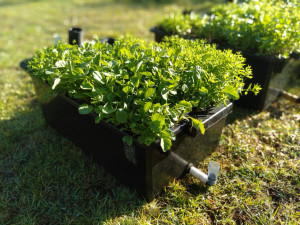
They are also an excellent way of growing baby greens – that is plants which have passed the microgreen stage (which are essentially using the nutrients from the seeds). They have put down a root system so they are taking up the microbes and nutrients from the soil. With some plants you can use tipping – just cutting off the tips of the plants and letting them regrow. This is an incredibly effective way of having a steady supply of fresh greens. See video ‘food for health’ in videos. They are often more nutritious than mature plants and many plants are soft, tender and digestible as baby greens but are just not edible when mature – the grasses (like oat grass) are classic examples and are the easiest plants in the world to grow – just sprinkle on the seed, wait a couple of weeks then nip out with the scissors and cut off the tips – again and again. tipping-eating-young-shoots-colin-austin-gbiota

Nip down the road

If you don’t have a garden then by far the easiest way of getting into baby greens in Gbiota boxes is to find someone down the road who has a garden and can set up the Biobox for you. You can grow a lot of baby greens in a small box which is light enough to carry so just buy a box from your local grower, water and pick and when the plants are getting a bit old just swap for another box. I expect at some point in time this will become a flourishing industry but we need more growers – but it will come and we are pushing for it. gbiota-box-colin-austin-gbiota

Setting up a Gbiota box

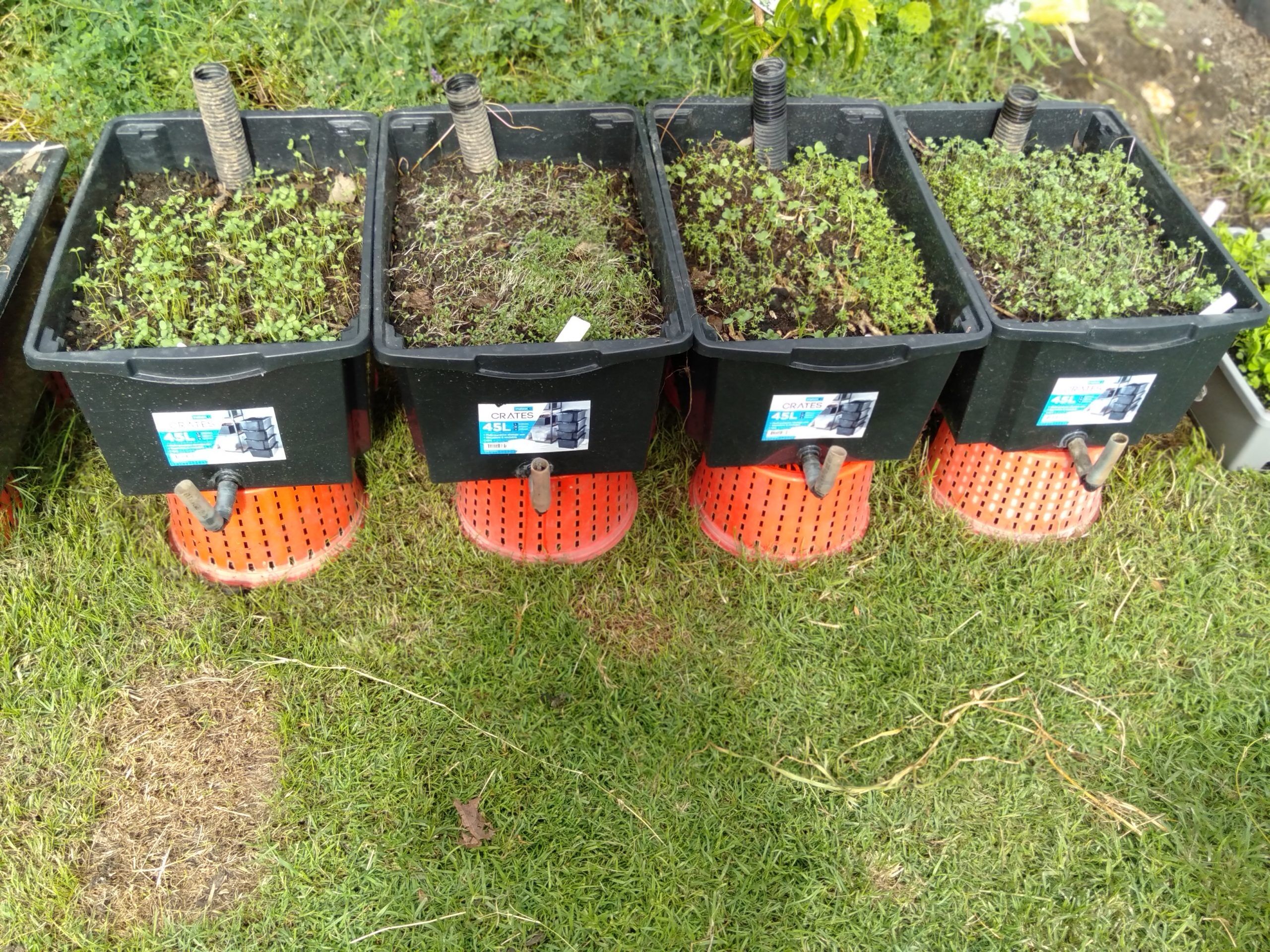
Gbiota boxes are set up in a similar way to Gbiota beds. A simple irrigation fitting is installed at the base of the bed with a swivel tube to act as a variable drain. I used to just bend the ag pipe up to the surface but now I use a separate large pipe; this allows me to check the moisture level at the base just by looking or poking my hand down. I have also used the pipe as a compost tube. The very bottom layer is filled with some porous material. Vermiculite is really good for this as it is so light and cuts down the overall weight of the box. I also use grass cuttings as the bottom layer, then a layer of manure with a top layer of Wickimix for the bulk of the root zone. If you are buying from a local Gbiota grower they will probably fill the box with soil from their in-ground bed (Wickimix) and plant the seeds. Wickimix is already loaded with the microbes, worms and general soil life plus the trace minerals essential for health. You add the layer of organic waste – followed by the layer of manure and rock dust and Wickimix from your local grower. Then just seed and pick and eat. But what happens at the end of that cycle?

Refurbishing a Gbiota box

You can’t keep on taking goodness out of the box without replacing it. I use boxes which are small enough to manhandle and just empty them and refill with fresh mix. It is so simple and only takes about 20 minutes to refill and the soil seems to benefit from the aeration as the plants grow really well. But if you don’t want to do that – possibly because you have a box which is too big to manhandle – then you will need a way of refurbishing the soil. The simplest (and a bit crude) way is when you come to replant just dig a hole down to the base of the bed, reload with the classic organic waste, manure and soil mix and spread the soil you have dug out over the bed. You can dig a hole in different areas at each reload. As I say, a bit crude but it works and is real easy. You can get a bit more sophisticated and install a compost bin – this is just a container with holes that you fill with food waste and let the worms do the work of distributing the nutrients around the box. Works fine – the only disadvantage is that the bin takes up quite a bit of room in a small box. The other method is to use the fill tube as a compost bin and pour the water through the mix. In a bed I use the fill tube to inspect the moisture level in the base but in a Gbiota box you can alternatively simply use the swivel tube to check the water level. I prefer to use the fill tube as there may be plenty of moisture in the soil but no liquid moisture. A day or two without liquid water will kill off all those pesky anaerobic microbes.

Quick and dirty

I know many people go to great lengths to use their boxes to recycle waste organics using waste bins etc. If you only have boxes then there is not much option but I like to use a combination of beds and boxes. Just grow Wickimix in the beds then simply tip the boxes upside down so they are completely empty, then refill the boxes with organics, manure, rock dust and Wickimix. It only takes a few minutes and the plants really grow well in the fresh soil.

Loading

The W’s

The W’s

wwwww

Welcome to the Weird and Wonderful World of Water

I started to write this as a welcome message for people joining the Gbiota social movement but it got a bit off track, but I had fun writing it and you may have fun reading it so I am sticking with it. Pretend you are some creature from way out there in space and had never seen water—if a three-year-old kid can pretend, then so can you. You are welcomed into some friendly human’s house and invited to a cup of coffee (despite you being bright purple with a single eye waving about on a long stalk). They take some black powder out of a jar labelled Nescafe and some white powder out of another jar labelled sugar and put it into a cup. They take some funny clear fluid from a pipe, pour it into a jug, heat it until it bubbles, then pour it into the cup. Suddenly you see one of the greatest magic tricks of all time—the black and white powders just disappear. You look under the table for false chambers or tiny holes, but no—those powders have just vanished from this decidedly odd planet. The friendly humans explain that they haven’t disappeared—they have simply gone into solution. Molecules break down into bits that react with other molecules, and that’s how food works: dissolving what we eat so our bodies can use it. That’s why water is essential for life on this planet. The humans explain that giant oceans cover the Earth. The sun heats the oceans, turning the water into invisible vapour that floats around with the wind. High up in the sky it cools, reforms into tiny droplets, and becomes clouds—massive floating storage tanks of water. Eventually these droplets join together, become heavy, and fall as rain. Over millions of years this rain soaked into the Earth until the ground became saturated with billions of tonnes of water. When it can hold no more, the excess runs off the surface in what humans call rivers. For hundreds of thousands of years humans lived beside rivers because they cannot survive without water. Then people invented pumps—great fun at first—sucking water out of the ground and splashing it everywhere, perfect for growing crops and feeding more and more people. But that fun didn’t last. The soil deteriorated, people became fat and sick, and diseases appeared that had never been major problems before. Then along came an oddball guy—slightly OCD about water—who said that if humans were going to keep having fun, they needed a better way of using water and growing food. And so the Gbiota social movement was formed. So welcome aboard—and let’s have some fun growing real food using this weird and wonderful thing called water. I started writing about water in 1995 when the web first opened up. My first website was www.waterright.com.au, followed by www.wickingbed.com. The web was very different in those days. Search engines barely existed. You simply found a website and followed links to another and another—each night a completely different adventure. It was a friendly era of the internet. There weren’t many websites, so www.waterright.com.au became very popular. I keep it alive because there are still many useful articles for anyone with the patience to explore. My focus back then was environmental: humans were pumping water from ancient aquifers that took millions of years to form, and it was clear they would eventually run out. Excess irrigation caused salinity. Chemical agriculture destroyed soil biota—the very creatures that create new soil. But environmental issues rarely inspire action. People assume the magical “them” will sort it out. By 2015, however, I realised something even bigger—gut biology. Our intelligent control system. The root cause of a global health epidemic. So I set up www.gbiota.com to focus on growing food in nutrient-rich, biologically active soil to feed our gut. But by then the web had become commercial and toxic—full of manipulation, misinformation, and hostility. So I created www.gbiota.club, a private social media site, and www.pickandeat.shop—a marketplace without pressure selling. I learned how to link these independent sites so users can move between them seamlessly through the menu—community for gbiota.club and shop for pickandeat.shop. The only confusion is logging in, because each site has its own login area. The bigger challenge, however, is the old enemy—paradigms and money. The belief that population growth created food shortages and therefore industrial chemical farming is essential. This is wrong. Food production is rising faster than population. Starvation is caused by inequality and distribution failures—not food shortages. But chemical farming is extremely profitable—so the paradigm remains. We must shift the paradigm so the focus is on feeding our gut brain—the intelligent control system that regulates appetite, immunity, and health. Paradigms are hard to shift. But if you want to see how, read the plan.

Loading

The Plan

The Plan

On my home page I said – “In the last eighty years the global population has trebled and we all have to eat. The modern food industry has increased the production of energy food 40% faster than the increase in population. There is ample energy food, which is really just fuel - the fact that there are millions of people starving is not because of a lack of energy food but due to inequality, political and distribution failures. Some 80% of the food we eat is just burned for fuel but we also need food to feed our gut brain which controls how our bodies work and supply the complex chemicals to replace our body parts as they age and wear. Sadly that is lacking in our modern food system.” Fortunately it is relatively easy to grow plants in soil that is teaming with beneficial biology and full of essential minerals - that is what the Gbiota technology is all about - any home gardener with a bit of land can set up beds for their own use. But technology is no use if people don’t have ready access and there are many people who simply do not have a garden, the time or the skills to set up their own Gbiota beds. It is in every ones interest that people have access to healthy food. Even at the most mechanical level the cost of ill health from a poor diet puts an enormous strain, both financially and in terms of resources which means that people eating a healthy diet are paying more for the health service and may find it more difficult to access should they need medical support. But I would hope that people would feel that even if they are fit, healthy and wealthy that they should contribute to the society from which they benefit even if there is no immediate benefit for them. There is that old saying ‘what goes around comes around’ meaning that you may help person, who in turn helps another so it goes around until someone will eventually help you. So how can we improve the diet and hence health of our community as a whole?

So here is the plan.

I am just one person, and like all people I am good at somethings and not so good (eg bad) at others. Now without wanting to appear a big head I am good at technology (just read My Story - I have the track record) but I am pretty useless at marketing and when it comes to social media I am just incompetent - nothing against cute cat videos but it is just not my scene. But what I can do is help all those people with gardens set up their Gbiota beds. Then I can hope that many of these growers will simply feel better in themselves - just fitter and healthier. This is not a black and white issue as our health is determined by a combination of our gut health and our DNA. Some people are just born with a DNA which means they will be skinny throughout there lives while others will always have a tendency to put on weight. What we do know is that if our gut brain is not fed the right sort of food it senses a deficiency in the diet so sends out signals to eat more. I explain this in detail in Food and the gut biome. So while eating a healthy diet does not guarantee a long and healthy life span it certainly shifts the odds in favour. Now all I can hope for is that many of the people I help set up Gbiota beds will read these articles and recognise that almost everyone benefits from a healthy diet and say yes I can help my community by simply telling their friends about the articles I write on our gut brain and health, over a cup of coffee or on line if they are into that. And perhaps some of these will say I can become a community grower and not just grow gut food myself but gut food for my friends and contacts. This is not a charity and they can expect to get paid for this gut food. That is stage 2 of the plan. And if that works we can move onto stage 3 which is a bit more difficult. Most people buy their food from the local supermarket. That food is grown on mega farms to produce food as cheaply as possible. It is certainly lacking in certain trace mineral essential for human health but not needed by plants. But the real issue is that even if the plants were to be grown in soil teaming with beneficial biology by the time they have been transported and sat on the shelf these microbes will have died. The only solution to this is to modify our food production system so some of our food is grown locally and available for rapid consumption after harvesting. I say some food because if you read my articles you will understand that the bulk of the food we eat is just fuel which we burn off to control our temperature and provide energy. These local growers will be commercial growers and will be totally dependant on the support they receive from their community. I can only hope that people see my pun about the old advert that oils aint oils being copied by my slogan Kales aint Kales. Another factor in this local food argument is reliability of supply which could probably have more impact than the health issue. In my article on Food and floods I explore what steps can be taken to ensure reliable food supply against the threat of floods. At this moment this is very much a hot topic here in Australia with shortages and escalating prices. At this moment we really don’t know if this is just a flash in the pan or an indication of major threats to our food supply from climate change. What we do know that is that it is much easier to protect a small local farm from floods than the modern mega farm. I see creating this local food system as the end goal but I can’t make this happen myself - it will only happen if enough people in the community decide that this is a worth while project and take action to spread the word. Colin

Loading

Food and floods

Food and floods

Note this is not a formal post as yet – I am still working on it, but my readers seem to like to hear what I am up to and often make good suggestions which I can incorporate before I finally publish. You can comment publicly below or just email me at colin@gbiota.com.

Food and floods

The greatest challenge of our era

Wherever you look the headlines are about the floods and how they are creating food shortages and escalating prices. My interest is in how to grow plants for a healthy gut brain which requires very careful management of the moisture level but I accept that this is a minority interest. But everyone has to eat so these floods and the food shortage are everyone's problem. How to feed 8 billion people the right sort of food in the midst of a climate crisis is among the greatest challenges of our era. I talk about this more in my article on the global food crisis.

What can I do?

So the question is what could I do about it? I can’t stop the floods, that is for the Climate Change movement – I have solar panels and batteries, and walk and bike rather than use the car wherever I can, but I am just one person, so what can I do to mitigate these floods? The first thing is to understand why we get these floods – and it is a bit more complicated than too much rain.

Two types of floods – upstream

There are two types of flood which is well illustrated in my home town of Bundaberg based on the Burnett River which starts at Mt Gaeta and flows 435k to the entrance at Burnett Heads. Floods occur with rainfalls above 100mm over a period of hours or even days. That amounts to 1,000 tonnes of water per hectare and the Burnett basin has an area of 32,220 square kilometres; let’s not get bogged down in calculations but you can see that is a huge volume of water that has to get out to the sea at the narrow Burnett Heads. burnett-heads-colin-austin-gbiota
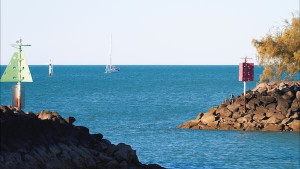
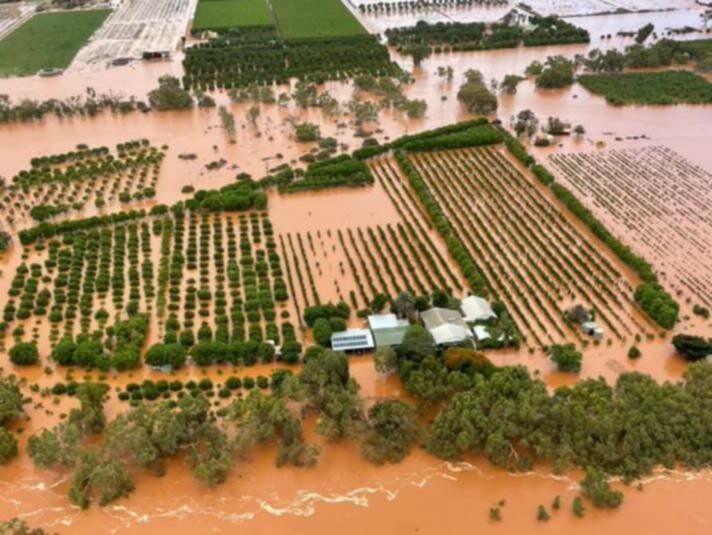
Unfortunately the river at Burnett Heads enters the ocean through a narrow channel and it simply cannot handle that volume of water so the flood builds up back from the head, flooding further and further inland. I know, I have done my stint in my rubber ducky ferrying people from their upper storey windows. OK, you are looking for a solution so what can I offer? For this type of flood sadly not much. I know that the Incas had floating gardens which are now becoming widely adopted in flood-prone countries like Bangladesh. bundaberg-flood-colin-austin-gbiota
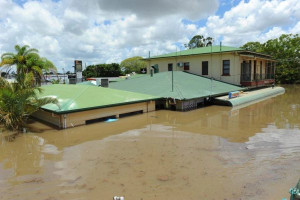
Two types of flooding – local inadequate drainage

But there is a much more common type of flood which is even closer to my home, actually right in my backyard. Looking at my backyard it seems almost flat but there is actually a slight slope with water falling on blocks just uphill and flowing through my block. Again no calculation, but at 1,000 tonnes of water per hectare you can see it would soon add up to a lot of water flowing through my block. flood-slope-colin-austin-gbiota
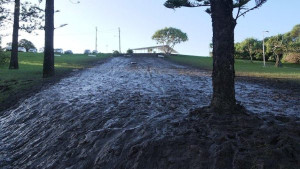
Gbiota beds in the drought

It was in 2015 that I set up my flood-and-drain Gbiota beds. At that time we were more worried about drought than floods and we are in that belt of land where the great deserts form. Just start walking west and you would end up in the Simpson Desert. These beds worked great until about three years ago when La Niña came and we started to have seriously heavy rains. My Gbiota beds became waterlogged for short periods of time. Not good, as the whole point of a Gbiota bed is to breed beneficial gut biota in the soil and that means the soil must be nicely moist but not too wet – Goldilocks moisture. flat-bed-colin-austin-gbiota
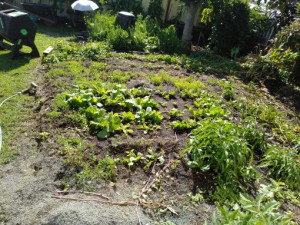
Flood proofing experiments

I needed to rework the entire beds to make them more flood-resistant and this was a great opportunity to experiment. In the first two beds I ran an experiment with one bed having a plastic liner and the second bed just relying on soil compaction. This is described in my article on Wicking Soaker beds so I won’t go into details here.

50 year floods every five weeks

But by the time I had got around to reworking the third bed we had already had three 50-year rains which now seem to occur every five weeks. Great for testing flood-resistant beds, lousy for growing plants. There is a bit of slope on my block and I had built the levels up so the Ag pipe, which acts as both a filler and drainage pipe, was pretty much at the parent soil level so to be honest I had not given much thought to the water flow from my neighbours’ properties – I am human.
Science and serendipity

Now for those of you who think science is a nicely planned and organised operation – let me disillusion you – serendipity plays an important role. And serendipity came in the form of 190mm rain in 30 hours. Water came from all the blocks uphill, straight through my shed onto my beds. Time for a cup of tea and a bit of a think.

Rethinking beds

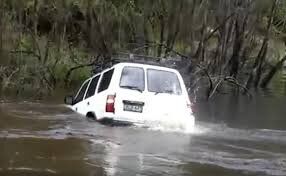
It is clear that just trying to design a bed so it does not get flooded and waterlogged is not enough – we have to ensure that the inevitable floodwater is adequately diverted before it reaches the beds. And it is not sufficient to just think in simple terms of drainage and gradients. I did not talk about the 1,000 tonnes of water per hectare for fun – we must think about water like an express train; water is heavy stuff and has a lot of inertia even if only flowing at a few kilometres per hour. If there is some obstacle it will simply keep on going up and over, what engineers like to talk about as converting kinetic energy into potential energy. I learned all about this during that thirty hours of rain and had to go out in the pouring rain and dig channels and diversions to stop the water getting onto my beds in the first place. It worked then but now I have to wait for the next fifty-year flood which at the current state will be in about five weeks to see if it has really worked. If it really does work again in the next flood, as it did in this flood, I then only have to consider getting the water that falls on my beds away. car-in-flood-colin-austin-gbiota
Farmers of old

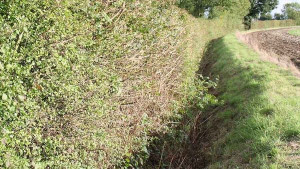
When I was a toddler (a very long time ago) I had uncles who worked on farms and they spent a lot of time on what they called hedging and ditching. Doing precisely what I am doing now, trying to protect the fields from water flowing onto them. Now of course we have ripped up all those hedges and ditches to make monster fields. Whatever would Dr Who say about the wisdom of that? ditch-colin-austin-gbiota
Avoiding water logging

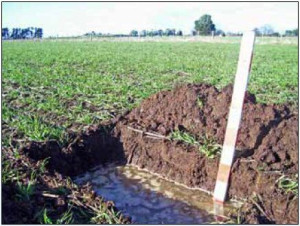
It is inevitable that with that amount of rain, beds not designed for water flow will become waterlogged – there is just too much rain. But what we can aim for is to get that water away as quickly as possible. Plants will survive quite happily for a few days even if their roots are totally immersed but then most plants will just die, unless you are living off watercress or mangroves. The lower roots will die if they are immersed in water but if the upper roots are not flooded the plant will survive and quickly regrow the lower root system. Our minimum aim should be to ensure the top layer of soil can drain easily, but ideally we should ensure the whole root system drains. waterlogging-colin-austin-gbiota
Soil ain't software

I used to earn my daily bread writing software which is great. If you screw up just hit the delete button and start again. Growing plants is not that easy. You have to move on from where you are and not some theoretical ideal position. If I was building new beds from scratch and had a supply of soil I would certainly consider building the entire bed above ground level but in the real world I am halfway through modifying an existing bed – so that is my starting point whether I like it or not.

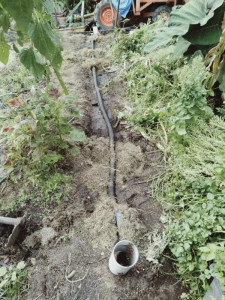
Making drainage trenches

So I dug up the existing ag pipe which was over 300mm below the current surface and filled the trench up so the base was only 50mm below the parent soil level. I then made a ridge with my classic mixture of grass clippings and organic waste followed by chicken manure and rock dust. I then dug a trench either side using the soil to cover this ridge and smoothed it all out. I made sure this trench extended beyond the beds themselves to an area where the parent soil was low enough to provide effective drainage.

Speculative research or just plain daft

The peak of the ridge is some 300mm above the base of the trench which I am sure would provide adequate drainage to get any water that falls on the bed away fast enough. On the previous two beds (which were above the parent soil) I had partially filled in the trench with whatever organic waste I could lay my hands on but largely grass clippings. I am not that keen on putting organic waste directly into my beds as labile (young) compost often contains pathogens and growth inhibitors. By partially filling in the trench with this waste I had made a really nice and convenient composting area so when I had to remake the bed (as is essential to keep that highly porous layer above the pipe) all I would have to do is to dig down to the pipe (which I like to remove and clean out) and rake the compost to cover the pipe. trench-colin-austin-gbiota
Getting the water away in practise

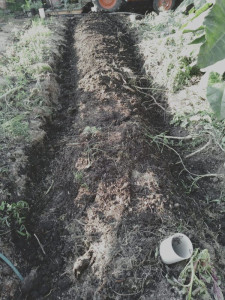
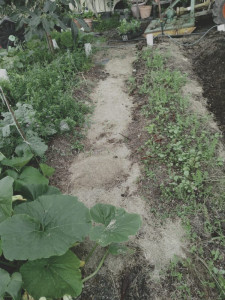
I had noticed that in beds one and two that even though I had partially filled in the trench with this organic material it was still adequately porous to let the water drain through. On the basis of ‘try before you die’ I am therefore filling this new trench with fresh organic waste. (It makes a nice mud-free path to walk on to work on the beds). I will let you know if it drains properly after the next fifty-year flood which I am expecting in about five weeks according to the current weather pattern. filled-trench-colin-austin-gbiota
The punch line

We live in the internet age – the virtual world – but treacherous. If the virtual world on the internet is different to the real world then the consensus is that the virtual world is right and the real world is wrong.

I believe in experiments but how do I test if my design will work? I can’t just go online and order a flood – I just have to wait for that fifty-year flood to come – maybe this week, next week, next year or most unlikely in fifty years.

But let us just look at some flow calculations. Consider a 10 metre long 1 metre wide bed. In a 100mm rain storm that gives 1,000 litres. Most of that will flow straight off the bed and into the side trenches. Without getting my slide rule out the trench would easily handle that flow. (PS if there is any reader out there who knows what a slide rule is please email me – there are only a few of us left).

Some water will soak into the bed but the Wicking Soaker bed has a natural drainage, so even if the soil does become temporarily waterlogged it will soon drain away.

If I am right and my bed does not become waterlogged, time for a celebration.

But I have been in the innovation business long enough to know that you may think you know something but you don’t actually know you know something until you have tested it and know for sure.

So the punch line is we can be pretty confident that if you can stop water entering the bed area from outside that the bed area itself is going to be able to cope with the rain that actually falls on the bed.

Although I feel confident that is a valid conclusion, if I have missed something my plan is I can easily fit a drainage pipe to take the water from the Ag pipe straight into the drainage trench. Yet another day digging away in the pouring rain – all so we can eat.

What a hassle food is

Why does not someone invent mobile phones we can eat when we have finished with them so we don’t have to bother with food. Apple pie anyone?

Loading

Crazy world

Crazy world

Has the world gone crazy? Wars, food shortages, floods and droughts, prices through the roof, epidemics, the internet - one of the most important innovations of our era has sunk to become the home of mass manipulation to sell us things that don’t work or we don’t need, just to make some mega corporation or wealthy individual even richer. Have we turned into a race of dumb donkeys to be led unthinkingly to some catastrophic end? I can’t do anything about most of these problems, but there is one I can do something about - food that will make us healthy.

Man made

The facts are simple - we evolved to have a gut brain which controls our body - it makes us want to eat the right amount, of the right sort of food. It has been working fine for millions of years, then, just to make more money we changed our food system so that our gut brain stopped working as it should. Now we have an epidemic of chronic diseases - diabetes, dementia, heart attacks etc. What sort of society are we that puts profits ahead of the health of the population? In this web site I show how we can stop being dumb donkeys and grow food that will actually keep us healthy. Every twelve seconds someone has a limb amputated from diabetes - this is man made and just plain wrong. So why not join me in my campaign for food that makes us healthy.

No dumb donkeys

We live in the digital age where we seem to expect that any problem can be solve by a few minutes search on the internet. If you think this is the way to feed eight billion people food that will keep them healthy (so they don’t get fat and sick and have their legs chopped off from diabetes) and all in the middle of climate change with floods and droughts and a global political system which is decidedly wobbly, then you are wrong and this is not the site for you. Life wasn’t meant to be easy. But I have prepared a series of posts which analyze the key issues, to develop a plan and appropriate technology to solve this horrendous problem.

Key points

When I am creating a project I find it useful to make a list of the key points. I have done this with the Gbiota project but I asked myself why keep this hidden so I am publishing this here.

No Dumb donkeys

This is where the action is so read here Colin Austin tells it straight about Wicking Beds Read My Story To find diamonds you have to shovel a lot of dirt, but this is where the diamonds are. In 1995 I started to promote Wicking bed. I did not invent them, but I did puzzle out how they worked. You can see them all over in the dry desert regions of Australia. They starts with a spoon shaped clay pan. That fill up with what is technically know as stuff - sand, silts and debris blown or washed in. In the rare event of rain water will filter down to the clay layer and form an underground water source and voila you have a natural Wicking bed. There is one about a hundred metres from my home but they are everywhere. And they just took off and people are making them across the globe. But like many things in our modern world they got more complicated and just degenerated into self watering beds, good and saves time and work but missed the key point. That took me the best part of twenty years, to 2015 to puzzle out. Way back at the start of the Wicking bed story I was totally unaware of gut biology - I just got hungry and ate - pretty simple. But then I began to learn the importance of gut biology and our micro-biome and the amazing job it does. It is a real brain with the trillions of cells communicating with each other just like in a super computer. It controls our appetite, the manufacture of the complex chemicals to replace our body parts as the age and wear and host much of our immune system. I learned that you simply cannot be healthy without a healthy gut biome. But I learned more - our gut biome comes originally from the soil and creatures of the soil, they enter the plants which we eat which are effectively natural pre and pro biotics. And the conditions they like is with the soil moist but not wet - which is exactly what we get in these natural Wicking beds and the people with the healthiest gut biome are those eating plants from these natural Wicking beds. Unfortunately our modern food system kills of these beneficial microbes but anyone with a bit of a garden can grow their own pre and pro biotics. This is even easier with the Wicking-Soaker bed.

Grow your own gut food at home

We know, from research conducted by our top brains at many or the worlds respected research institutions that our gut is incredibly important to health. It contains trillions of cells which act as a brain, communicating with our head brain, to control our appetite, manage the production of the complex chemicals needed to replace our body parts as they age and wear and trains much of our immune system. We know from studies of the gut of people living a traditional life style, the few remaining hunter gatherers and from the blue zones Okinawa, Sardinia, Nicoya, Ikaria, and Loma Linda where people lead a healthy life right up to a ripe old age that they have a far healthier gut than people eating a modern diet - yet they do nothing other than eating plants, just after picking, and grown in biologically active nutrient rich soil. They may live longer but what is truly remarkable is their health span, fit and healthy till the end. All these people have very different diets, what they have in common is they are eating food grown in soil which has been developing by microbial action over millions of years. It is the difference between dirt and soil. We are a warm blooded creature that evolved from the tiny animals could burn food at night to keep them warm and active to hunt at night when the ferocious dinosaurs had no energy. Some 80% of the food we eat is simply burned to provide energy and to keep us warm, some 15% is used to replace our body parts as they age and wear and only a tiny amount, may be just 5%, is used to feed our gut brain. We know that our modern food system aims to provide energy food. It is based on chemical industrial agriculture and involving long distribution chains has killed of the beneficial microbes, is low in critical minerals and had led to chronic diseases like obesity, heart attacks and dementia. This has created a multi billion dollar supplement industry. Would it not be healthier, and certainly a lot cheaper just to eat healthy food full of the beneficial microbes and essential minerals. But how to grow this food in a modern society where we have been destroying the soil microbes and worse how do we do this with the extremes of weather, the floods and droughts, we are now experiencing. This is the great challenge of our era. It is simply a question of feeding the microbes and maintaining the required moisture level - not too dry and not too wet - Goldilocks moisture. This is the challenge taken up by Colin Austin a world leader in fluid flow. Colin pioneered the use of computer to solve complex fluid flow problems. He built up Australia leading exporter of technical software, a world leader in its field and was recognised by the Institute of Engineers as one of the top one hundred innovators and was globally recognised as a leader in fluid flow. He went on to pioneer Wicking beds to provide a more effective way of watering plants when water is in short supply. He has now extended the Wicking bed technology to breed the beneficial microbes which enhance our gut biology and our health. And where so we start? Not the corporate farm just interested in profits but the home gardener, happy to turn dirt into soil for the benefits of a longer health span. This is a simple technology which enables any home gardener to grow plants which act as as pre and pro biotics for gut health. You can learn how you can do this yourself in your own garden by subscribing to the Gbiota web site. It cost a fraction of what you would pay for pro-biotic pills and uses the technology perfected and tested over thousands of years by nature. This gives access to hundred of articles Colin has written over time but the key ones are the five article about growing gut food. The first article looks at how food affects our health. Our modern food system is deficient which we try and compensate for by supporting a massive supplement industry rather than just eating healthy food. The second article looks at the peculiar properties of water and how it moves through the soil and into the plants - taking the beneficial microbes with it. Life is totally dependant on water - you can’t drink oil or eat mobile phones. The third article looks at how to get that magic Goldilocks moisture level, moist enough for the beneficial biota to breed but not too wet for the harmful bugs to be a problem. The forth article gets down to the nitty gritty of how to build and operate a classic Gbiota in ground bed to grow pre and pro biotics. The fifth article looks at the latest technology the Wicking Soaker bed The next article will look at how to build a Gbiota box. While in ground beds are preferred people living in flats simply do not have access to a garden but a Gbiota box provides a practical alternative. This is a technology that’s on the move and further articles are planned to keep people up to date on important issues such as how to grow plants with the current weather extremes and what plants are best to grow for gut health. In addition to these technical articles you get a Newsletter telling you about the latest developments and can get support by email or video conference. With this support you can grow you own plants as pre and pro biotics, a method tested over thousand of years by nature and at a fraction of the cost. A gbiota bed or box box enables people to grow gut food at home to enhance their gut biota. We now know just how important our gut brain is - it controls our appetite, the manufacture of the complex chemicals to replace our body parts as the age and wear and host much of our immune system. It is a real brain with the trillions of cells communicating with each other just like in a super computer. Modern DNA testing gives us the ability to monitor the thousands of species in our gut - from that we learn how dramatically our gut health has declined with our modern food system. Hunter gathers tribes, natives in the blue zones where people live to a ripe old age and people from a traditional life style have a far healthier gut than us. These have very different diets but they have two things in common - they eat plants that are freshly picked and are grown in biologically active nutrient rich soils. We can try and offset the disadvantages of our modern diet by spending a lot of money on supplements which may or may not work but would not it be better just to eat the right sort of food. This has been the focus of Colin Austin, selected as as one of the top one hundred innovators by the Institute of Engineers. Twenty five years ago he started to promote Wicking bed - he then developed Wicking beds to grow gut food by breeding beneficial biota in nutrient rich organic waste. He called these Gbiota beds. The original version worked very well were somewhat complicated involving pumps and timers and, although automated, needed skills and time to operate properly. So he has now introduced a simplified manual version which virtually anyone can use to grow their own gut food at home. He does no sell any physical product - he just provides the technology and support for people to set up their own beds. Read more here or go to food in the menu - all this information is free. To access information on how to make Gbiota beds go to "growing" in the menu. We don't sell anything so we have made this a subsciption area to recover some of the cost of experimention, but there is a fourteen day free trial. Any problems just email me here. I am not some mega corporation - but a real person who thinks that people should have access to food that will make them healthy without being manipluated by deceptive advertising.

Loading