The food crisis

The food crisis

Summary

In the real world we all have to eat - and getting enough of the right sort of food that will keep us healthy is an issue.

We know how to grow food that will keep us healthy, we have the technology, it is simply a question of spreading the information.

The internet has become our prime source of information. But the virtual world of the internet is dominated by someone trying to sell you something, for profit or manipulate the way you think to increase their power.

But humans are the most successful creature on the planet because of a combination of intelligence and cooperating together. We naturally form groups to overcome difficulties, like the predicted food crisis.

No single person can solve the forthcoming food crisis but using the power of cooperation we can solve the food crisis, and it mother the climate crisis.

The Gbiota club is such a group, but to be effective we need to show the world that we exist, are a genuine group concerned about our grand kids future.

The first step is showing the world we exist by every one of us creating our own icon. Read more at www.gbiota.com/gbiotanews look for Mary's mini for details

Is there really a food crisis?

Is there really a food crisis - the shops are full of food so obviously this is just a scare campaign by a bunch of woke trendies - right?

Well let’s look at the story of that related crisis - the climate crisis. Now there is a real story with goodies, badies, greed, lying and devious plots.

The basic science behind climate change is well over a hundred years old and in all that time has not changed one little bit. Now here is not the place for that story, you can read all about that in the many books, Merchants of Doubt by Naomi Oreskes or This Changes Everything by Naomi Klein.

But if it is true, then what do we do about it? Before the dreaded epidemic, which I can’t say or this article will be black listed, I went to China and was lent a little electric car. Now this was truly terrible - little more that a 4 wheel electric scooter with 2 reasonable seats up front and 2 kids seats in the back.

In China, where road laws are optional, this did not stop three people cramming into the front seats and four adults in the back - and I could still drive it.

It had a range of barely 100K, I have no idea what the maximum speed was as I never had a chance to drive it on the open road but it would be pretty miserable I am sure. So who in the right mind would buy such a terrible contraption and why?

Well for a start a $10,000 purchase price and it could be fitted with solar panels, which while no where near powerful enough to drive it, if you left it out in the sun it would charge the batteries up enough to take the kids to school, do the shopping or get to work - and all for free and with no carbon emissions.

Lets face it - this is no where near as comfortable as driving the kids to school in a V8 SUV so what determines whether people would choose a SUV or a rattly little electric car.

It is nothing to do with technology, they both do the job perfectly well - it is a question of the public image which is acceptable.

If the public image is that driving your kids to school in a SUV shows that you are a highly successful career person to be well respected then you will be under subtle pressure to use an SUV

but

if the public image is that driving your kids to school in what look like a circus dodgem car with a solar panel on the roof shows you are a community conscious individual rather than an unthinking swanky prick then you may well go for the electric car.

So what has this got to do with a food crisis and if there really is one what we do about it?

If you ever get around to reading the Naomi books you will realise this is nothing to do with the available technology. We actually know how to feed the world, all eight billion of us, with nutritious food that will keep most of us fit and healthy (I am not getting into genetic here and moving the bell shaped curve towards a healthier population here - this article is about the power of managing information).

Sorry it is not really new

In my technical articles you will see I talk about partial flood and drain as some sort of new technology - but that is not strictly true.

Let me take you back to WW2 when I was a toddler. I watched as ladies (there were hardly any men about when I was a toddler, my Dad was in North Africa fixing Beaufighters - one of the few planes which could take of with a full load in the High Atlas mountains).

In those days child exploitation was not just acceptable it was socially desirable - you could get away with anything with the magic phrase ‘don’t you know there is a war on’?

So my job, as a toddler, was to lower plant pots into a foul smelling brew (literally chicken shit tea) until the bubbles had stopped then pull them out and let them drain. I may know a lot more now about the science of how water moves (see Water) but flood and drain is not some new invention.

The only instruction was not to fall in as it would spoil my clothes and ‘don’t you know there is a war on?’

The power of information

I want to talk about the power of information but please - telling a toddler not to fall into a foul smelling vat of chicken shit tea would be classified as redundant information.

WW2 has been analysed and over analysed, with typically a focus on the mechanics but one under rated factor is the power of Hitler’s propaganda machine - really the first time that modern technology (OK the radio and the microphone) was used with such devastating effect.

Without Hitlers propaganda machine there would have been no WW2 and I would not be writing about war time child exploitation.

But in this modern age the tools for propaganda, (OK lets be trendy and wrap it up in fancy words and call it information manipulation) have increased in power and effectiveness beyond recognition.

Despite every night the news being dominated by stories of floods, droughts and fires from around the world there are still people saying that climate change is a natural phenomena and nothing to do with mans activities.

This gains traction, not because of the measurable facts, but because of the power of the manipulation of information which makes driving the kids to school in a V8 SUV rather than a solar charges electric vehicle, socially acceptable.

Don’t let perfection stand in the way of progress.

One of the arguments put forwards by the vested industries in the fossil fuel industries is that currently electric cars do not have the range for long distance travel - and there may be some truth in that. (I still drive a SUV for long journeys but have a rattly little town car. I will change as soon as long range batteries are developed, as they will be. Do what you can now!)

That does not alter the fact that most car journeys are short and with current technology can be provided by a solar charged electric vehicle and would make a substantial reduction in green house gases - right now with existing technology.

The reason why that is not happening right now is because of the power of information manipulation.

It is the same with food, I spend my time trying to improve the technology of growing plants to improve our health. This is not a perfect technology and is continuously being improved but to wait until we have the perfect technology, understanding the Eco system of microbes in the soil and our guts is putting perfection in the way of progress.

Every eight seconds some one has a limb amputated from a side affect of diabetes. It is just a fact that we do not have the technology of completely resolving diabetes but there is no issues that the current epidemic of these non infectious diseases, like diabetes could be substantially reduced by changes to our food system.

Just because we can’t prevent everyone from having their legs chopped off does not mean that we should not save the legs that we can save now. Do what you can now.

To do that we have to discuss the manipulation of information and to do that we have to discuss what Darwin actually said about evolution, (which was not simply the survival of the fittest but more like survival of the randiest) and how that has formed human nature.

What Darwin actually said

and why we are the most successful creature on the planet

Even back in Darwin’s day there was that lust to condense a carefully worded scientific document into a three word catch phrase - survival of the fittest.

Now that is not what Darwin said and is not true. What determines whether a species survives is - can it successfully breed.

There are many different strategies, frogs have millions of off spring in the form of frogspawn, the pigeons who have adopted my car as the perfect place to shit are a singularly stupid bird with no sense of danger, but they lay a vast number of eggs so are successful breeders (and on-car shitters).

Humans have a totally different strategy which has created human nature so if we are to avoid the looming disasters of climate change and its offspring food shortage we need to understand what Darwin actually told us.

How humans breed (successfully)

No this is not a guide for teenagers on how to have a bit of a randy up at a party, they can do that quite well by themselves. No it is about how humans have become the most successful creature on the planet and how we are going to survive climate change and food scarcity.

Look I get a bit fed up with all the doom and gloom and how much better things were in the olden days. That is all BS, ask anyone of my age who was a toddler in the war. Things were terrible, houses and people were obliterated overnight - but us humans pulled together and not just survived but made a much better world.

We just need to understand how we did it.

Human babies are borne totally helpless and take the longest of any animal to mature. The nearest rival for that is the elephant who take almost as long to mature but a baby elephant (and antelopes and all the other animals) have young that can survive shortly after birth.

Not so human babies and that has made humans the way we are.

There is an old African saying that it takes a village to raise a child - and that is just so true.

But there is more - a village has adults with a wide variety of skills and knowledge, there are the hunters, the spear and bow and arrow makers, the old folk with an intense knowledge of the local plants and where they grow, farmers and medicine men and a leader.

And they all work together cooperatively and relatively peacefully because they are all mutually dependant.

People may say that we are the dominant creature on earth because of our intelligence, but that is only a half truth the real reason is that combination of intelligence and cooperation which won us the gold medal.

The black side

This would make a wonderful fairy story but there is a black side which could ruin everything.

We are at war, I don’t mean a physical war between the right and the left but a war within every society. A war between those people who understand that we won our gold medal because we are cooperative and those selfish pricks who put their lust for profit and power ahead of the community - a war between cooperation and self interest.

There has always been this war, Genghis Khan, Attila the Hun, Julius Caesar were not the nicest of people but they did not have the internet to influence the mass of the people.

Hitlers propaganda machine was a warning but who could have anticipated the sophistication of the modern propaganda machine to mislead and misinform otherwise intelligent and thinking people.

It is just a reality that climate change is here and the biggest effect of climate change will be the disruption of our food supply.

So we need to counter attack by getting the facts out.

The key facts

We are a thermodynamic machine, we turn chemical energy in our food into mechanical energy by the very simple process of turning carbon into carbon dioxide and hydrogen into water.

The bulk of the food we eat, around 80%, is just used as fuel. At this moment we are making enough energy food to feed the entire world population - if it were distributed equitably. We do not know what will happen in the future but growing more energy food is not our immediate top priority.

We have evolved with a very clever system which is continuously monitoring the state of our body and uses the complex chemicals in some of our food to replace our body parts as they wear and age. Modern food is generally lower in these critical nutrients than previously so people eating a diet with much highly processed food may be low in these critical nutrients.

Feeding our brains

But that is not the real crunch line - that is feeding our brains (both of them).

At one time we thought of our gut as simply digesting our food. We now understand that our gut has intelligence from the trillions of cells communicating with each other which act like some super computer but we have no idea how the coding that controls the logic actually works.

But we do know that out gut is incredibly important, it controls our appetite so we don’t get fat and sick, it manufactures many of complex chemical needed to replace body parts as they age and wear and it hosts and trains much of our immune system.

While the amount of food required to feed and replenish our gut may be only 5% of our total food intake it is critical for health and that is what is seriously missing in our modern diet.

Our gut really matters

I have to get a bit pedantic and say our neglect of our gut biome may not be the direct cause of the modern epidemic of non infectious diseases but it is an enabling factor - but more directly if people were eating food that feeds their guts there would be a lot less people having their limbs chopped of from diabetes and dying from that disease I cannot mention.

And we have the technology that will enable people to eat a gut friendly diet, grow fresh vegetables at home in Wicking boxes full of Wickimix and it actually costs less than the current food system.

Winning the information war

So why it not everyone doing it? Information.

The food industry is massive, it is actually the worlds biggest industry and the large players spend billions of dollars on promotion trying to convince us that their food is healthy - and lets face reality - their propaganda (sorry I meant to say advertising) really works.

The facts are very simple, modern food is lacking the microbes and their food which keeps us healthy and also the critical nutrients that will enable our bodies to replace our parts as they age and wear. No one disputes this.

The solution is not difficult and is spelt out in my stories of the fictional characters George and Mary (well sort of fictional, like the films say based on real characters).

This allows people like Mary living in an apartment to have fresh vegetables grown in soil full of beneficial microbes and nutrients, this is the best way of enhancing gut health and is actually cheaper.

Technically there is no argument, the issue is that we have this massive industry with billions to spend on propaganda (sorry advertising) while the people who actually want to eat healthy food are isolated and without the power (meaning money) of mass promotion.

Profits v the people

It is simply a battle between profits and the people. How can the people possibly win against such odds?

Simply go back to what Darwin taught us, we are naturally a cooperative creature.

No single person can win this war, but once a cooperative group has formed people will naturally want to join and be part of the movement.

As the group grows the range of skills will increase. No one want to be a conceited prick but the reality is I do have some skills which enable me to work on the technology. But I am totally useless at social media, and I must admit it when my granddaughters are not around to help me, pretty useless at mobile phones.

But the bigger the group the more diverse the skill set will become and the more effective we will be.

The question is how to we get started. The answer to that is simple, everyone who believes in the cause, (food for the people over profits for the mega corporation) can make the first move.

And that is registering on the www.gbiota.club web and creating their own icon as shown in Mary’s mini and inviting their friends, real and virtual to join.

That is a statement to the world that you exist, believe that all people should have ready access to healthy food and are prepared to commit to being an active member of the group.

To finish I just say thanks for your efforts and showing the power of the people.
Loading

What is the Gbiota project

What is the Gbiota project

What is the Gbiota project?

The Gbiota project is about enhancing our gut microbiome by eating plants grown in a living medium (Wickimix) where beneficial microbes breed and support gut health. It connects dedicated growers and everyday consumers so more people can access genuine pre- and probiotic food at home.
At this moment the members of the Gbiota club are largely dedicated gardeners with land who are prepared to spend the time and energy learning how to manage the total process of growing both Wickimix and plants. But everyone has a gut which acts as an automated control system subconsciously managing critical functions such as appetite and the immune system. To make the benefit of the Gbiota technology more widely available we have split the technology into two separate parts. Growers can produce Wickimix for their local community members who can grow plants at home, in the upgraded Gbiota box system. This requires very little attention so they are convenient for flats, balconies, patios etc with minimal space. These plants are natural pre and probiotics – a system which has been tested over millions of years until the advent of chemical industrial agriculture. Many modern diseases like diabetes, obesity, heart attacks and dementia are the consequence of our modern highly processed food system which has led to a reduction in gut health. Consumers will need a regular supply of Wickimix with its living microbiome which they can buy from approved local Wickimix growers – Gbiota provide all the training and technical support for the growers but local consumers need to locate a willing grower to be trained. Local groups can also supply advice on what are the best plants to grow in that locality at the various seasons.fat-and-skinny-women-eating-colin-austin-gbiota
This web is really three webs in one. The mother web gbiota.com is for technical information, gbiota.club is a private social media site aimed at forming local groups of both consumers and growers to exchange both products and information, and pickandeat.shop is an optional multi-vendor trading site for Gbiota products. You can contact me directly for more information at colin@gbiota.com (yes I am a real person).

Growing plants as pre and probiotics for gut health

The focus of this web site is how to grow pre and probiotic plants to enhance gut health using Gbiota Wicking beds. Growing plants as natural pre and probiotics is the most effective and cheapest way of enhancing gut health and has been tested over millions of years. I started to promote Wicking beds almost thirty years ago. The initial aim was to be able to grow crops when water was in very short supply. There is no loss of water by either surface evaporation – as the top of the soil is dry – or by loss of water below the surface. This could reduce water use to as little as a third of conventional growing. I then learned that as there was no loss of water below the root zone there was also no loss of nutrients so they were much more productive than conventional above-ground watering. I then began to learn about the importance of our gut microbiome to health. colin-austin-gbiota
For many years our gut microbiome did not receive much attention from researchers as it was thought of as just a way of finishing the digestion process. Then we learned that the gut was actually intelligent, communicating with our head brain to form part of our intelligent control system. It was realised that our gut brain was critical in controlling our appetite and poor gut health was part of the chain that was leading to the widespread increase in people being overweight with all the attendant health issues such as diabetes, heart attacks and dementia. The recent epidemic taught us that our gut microbiome was critical for our immune system. We now know that the head and gut brain communicate to affect our moods and the wave of depression and inertia is again influenced by our gut microbiome. It is very clear that our gut microbiome is critical to health. It is also evident that our modern food system, which may be highly effective in producing large volumes of energy food, is deficient in both the pre and probiotics which lead to a healthy gut microbiome. Wickimix is the key – this is a type of soil which is full of both living beneficial microbes and essential minerals which will enter the plant roots to create plants which are both pre and probiotics. Wickimix can be produced by enthusiastic home gardeners but is probably best produced by community or commercial growers. Watch this video https://youtu.be/-tdfT_0xttM gbiota-box-colin-austin-gbiota
This is loaded into the latest version of Wicking boxes which have two separate compartments – the lower compartment is simply filled with fresh water which slowly wicks up to the upper compartment by rope wicks. This maintains the soil layer at the ideal Goldilocks moisture level – not too dry or wet but just nicely moist. The upper compartment can have high walls so it can be used with certain plants as a terrarium for germination and to protect the plants from insect attacks. A system is being set up where people with no time or space for gardening can buy a Gbiota Wicking box from a local grower and have fresh plants full of active beneficial biota for gut health growing even in a flat or apartment.

Food cluster

We help people form a food cluster – that is a group of people comprising consumers (people who want to access food that will make them healthy) and growers. Growers may be home growers for their own use, community growers who are happy to have a paying hobby and commercial growers who want to set up a business supplying food focused on providing health. Customers buy food directly from the growers while we provide the support and technology on how to grow food for health. This is done under a subscription service which works out at about $AU5 per month per customer. We are based in Australia but the scheme is open to anyone wherever they are in the world. Go to community to register.

Getting started

health-books-colin-austin-gbiota
Here are some links to get you started. Overview, as the name suggests, gives an overview of the technology and links to a range of articles for easy reading. The menu item Food is a blog area containing many articles on food and health arranged in chronological order. We are writing new articles on a regular basis but some of the older articles are really important which is why they are highlighted in Overview. The menu item Gbiota news contains the latest news on the Gbiota movement for health through food. The menu item Growing is where we provide the technical information on growing food for health. Unlike the rest of the site which is free this is a subscription area. Community is a social media area primarily aimed at linking customers and growers but where people can exchange information. Shop has been set up to provide an online way for people in a cluster to buy and sell online – should they so wish. Please note this is a dynamic site which is changed on a regular basis so it pays to check on what is new. Most of our visitors are returning visitors. Any questions? Just email me at colin@gbiota.com

Loading

What is it all about

What is it all about

What's it all about?

It varies a bit from person to person but about 80%, certainly the bulk, of the food we eat is just burned off as fuel for energy or warming. All food contains carbon and hydrogen and we just burn it off as fuel, and we produce energy food in vast quantities – enough to feed the expanding population for years to come.

Energy food

Unless you are a lizard, in which case you need to sit on a rock in the sun, your body will automatically control your temperature for you without you having to think about it. White, black, yellow, red, green or purple, living in an arctic igloo or tropical rain forest hut, our bodies are automatically controlled to within a fraction of a degree. Unless some nasty bug gets past your immune system, when it will turn up the thermostat to roast it. A lot of energy is used by our head brain which runs on glucose, but our heart keeps on beating away, we keep on breathing and occasionally we may reach out for the remote, or even more spectacular get up and walk to the fridge for another packet of chips and all this takes energy and all this takes fuel in the form of food. All food contains carbon and hydrogen and we just burn it off as fuel and we produce energy food in vast quantities – enough to feed the expanding population for years to come.

Replacement food

But our bodies are also wearing out, and we are much smarter than our cars as we can repair ourselves, but this does take a different sort of food, full of complex chemicals, minerals and vitamins. Our track record here is not so good, the content of these complex chemicals in our food has sadly declined but not to worry, modern technology gives us a very good understanding of what we need so if we have the money we can just buy a few bottles of pills – not very economic but it works (sort of). Not exactly a world shattering disaster but certainly not in the good list.

Brain food

If you can’t tell the difference between a jellyfish and a human then sadly you are a jellyfish. Let’s face it, jellyfish are pretty stupid – they just wobble around in the water eating what happens to come along. People are very different – we have brains – two sorts of brains. The conscious brain which enables you to read this and take decisions – this is interesting, I will keep on reading to get to the punch line which I anticipate will come (and you are right) or no, this is boring, I will put on the TV (and miss the punch line). Then there is the subconscious brain which I call our intelligent control system which manages our bodies for us without us even thinking. I talked about our temperature control system, we have no control over that. We can try by running around trying to get ourselves hot but our bodies just say – “that won’t work, look how I make you sweat”, or the other way around, if you get cold it will just turn up the furnace, burning up a load of fat (actually special brown fat for the purpose) and if that does not work set up your muscles in some giant and uncontrollable shiver. Some parts of our body we may have a bit of control over – our body has a very sophisticated system controlling the oxygen level in our blood stream. We can try and show our dominance by holding our breath – but for how long? A minute or two then it wins and we end up panting away. Every function in our body is managed by this intelligent control system, evolved over millions of years to keep us alive. Take our immune system – the air we breathe is full of microbes – most harmless but some really nasty (have you forgotten about the virus already). Every time we take a breath our immune system leaps into action and says you’re a goody, you can live – or you’re a baddy – bong, you’re dead! (hopefully). The same with our food, natural food is full of microbes, some bad – bong, you’re dead! But some not just good but absolutely essential. These are the microbes which form our gut brain which together with our head brain forms part of our automatic intelligent control system.

World shattering disaster? Yes or no.

World shattering disaster may be a bit extreme but it is certainly seriously bad. We have been so busy, using the state of the art technology to produce energy food, nice hygienic energy food, sterile and wrapped up in clean plastic bags that we have forgotten that we really need those good microbes that form part of our intelligent control system which has evolved to keep us healthy and alive. Just look at a couple of the side effects – our immune system and the virus. Sadly many people caught the virus and died but also many people caught the virus which had little or no effect on them. There is close association between people eating a diet which gives them a healthy gut and their ability to fight off the virus. The numbers are certainly big but are dwarfed by the main player – appetite and obesity. Getting a bit of a wobbly tum or bum may not seem a big deal but the side effects certainly are – they lead to a whole range of non-infectious diseases – particularly diabetes. Every eight seconds someone has a limb amputated from diabetes. Not good at all. Now if you think I am prattling on about a few bugs then you should read Tim Spector’s book Diet Myth. Tim, a professor from Imperial College, is a world-renowned expert on the gut micro-biome and spent many years experimenting with twins working out what is hereditary (determined by our genes or how they are activated – epigenetics) or from the environment. He talks, from a strictly medical viewpoint, about how our guts control so much of our bodily functions. But his book also reviews the work of experts across the field so if you want an unbiased appraisal of the current state of the art then Tim’s book is about as good as you’re going to get. So we can be pretty sure that our gut micro-biome is crucial for our health. But that may be interesting, the real question is: what can we do about it?

What can we do about it?

There is a saying: for every complex problem there is a simple solution – which does not work (Lincoln, I think). But in this case there is a solution which at least is not too complicated. You see, for thousands if not millions of years we have been evolving a healthy gut, the microbes in our gut have become totally dependent on us – if we die they die – that is real mutual dependence. Experts in the field have studied the gut micro-biome of the remaining hunter gatherers and people living in the blue zones where people are fit, healthy and active up to a ripe old age. So what is their secret? No magic plants that can be bottled and sold at exorbitant prices – nothing much in common at all except that they were eating lots of fresh plants grown in soil teaming with microbes and minerals.

The lucky ones

So why can’t we do that? Well some people can, the lucky ones with the time, land, skills and energy to learn how to breed microbes in the soil and the knowledge to grow beneficial plants. And that is what most of the current members of the Gbiota club are doing right now.

Harassed mums and the Gbiota wicking box

But in the real modern world not many people have that luxury, they live in cities, possibly in a flat with no garden and in any case may just not have the time. Unfortunately the single mum with two kids and three jobs trying to keep up with the excessive rental, forced to eat inert highly processed foods lacking essential nutrients, is no longer a rarity. I realised that a conventional wicking box was not really meeting these people’s needs so I developed the Gbiota Wicking box, not as some miraculous technical innovation but as something that was really simple and did not need a lot of looking after. We live in a world of complex things and are surprised when (and if) they actually work. I like simple things that actually work. It has two containers: one for water, the other for soil. Flat dwellers can have a few of these boxes near a window, even in winter, which is enough to grow gut brain food, while those with a bit more space can have more boxes and grow a bigger variety and quantity of plants.

Too good to be true

How many times have you bought something thinking it would make your life so much better only to find there is a snag. Well, sorry, Gbiota Wicking beds may be great and give almost everyone access to healthy food which will enhance their gut and hence their health. The snag is the growing media – what people used to call soil. Much of our modern food is grown in something that looks like soil but is really dead and inert. Plants will grow great in a synthetic growing media with the right chemicals. Given the right chemicals plants will grow great without all that complex chain of creatures that make up natural soil. They may well grow faster and better than plants grown in real soil and they are certainly great for providing that 80% of energy food that we all need. But they will be dead and inert and won’t have all that complex life form that makes soil and eventually give us a healthy gut.

Good news and bad news

The good news is we know exactly how to grow this soil (not make as in a factory but grow) full of the living biota and essential minerals – we have been doing it for years. We call it Wickimix. We just breed them in a mix of organic waste and minerals with a bit of inoculant in Gbiota beds. It is not that difficult – it just has to be done right if you want the healthy biota which will enhance your gut and not the E. coli biota which will have you sitting on the toilet emptying your gut. The bad news is that these microbes are in a monster hurry. They can be breeding within a few hours of being born, and will breed like crazy (and you thought modern teenagers were randy) creating trillions of offspring, but – and here is the snag – they also die quick. And that means we don’t want to be hanging around – we want local growers who can supply Wickimix to our mum with two kids and three jobs.

The big snag

But here is the big snag: setting up lots of local growers to supply single mums with two kids and three jobs living in a flat is just not the sort of thing that turns mega multi-national food companies on. So if she wants to have a healthy gut micro-biome it’s a do-it-yourself project. And that just won’t work – but here is what will.

What will work

Now here is the plan – I have set up a social media web site (actually gbiota.club but it can be accessed from the parent site gbiota.com from the community icon). She can register and set up her own icon on the Geolocation map. This says “I am here and I am a customer (or biofoodie)”. She can then search for other biofoodies nearby but as this is a project we are just getting under way she probably won’t be in luck. But not to worry, she can send out from the site invites to her friends and contacts who she may think would like a healthy gut biome. Now of course everyone has a gut and would benefit from a healthy gut biome but a lot of people just don’t care – but that is their problem not mine. But with a bit of effort she can build up a group of local people and actually form a local group on the site which will attract more people to join. Having got a group together it is now time to locate someone – maybe just someone with a bit of a garden, a gardening club, tree changers, or local farmers who may be interested in becoming community growers.

It takes a community

It is no good just one person trying to recruit a grower. One grower can produce enough Wickimix to supply many biofoodies so there has to be a group so it is worthwhile for the grower to set up a Gbiota bed. Having found a grower it is now my job to train this grower in the art of breeding microbes which is not an issue as microbes breed up themselves without any help from me. The trick is to breed the right sort of microbes which will lead to a healthy gut and not E. coli and give everyone a rumbly tum or worse. That is just a question of getting the conditions right – food and water – and the microbes are perfectly capable of breeding themselves without any external advice (just like teenagers).

Whose in control?

Why bother when you can just go to the supermarket and load up your trolley? There is plenty of choice – you can buy food full of sugars, fats and synthetic flavouring which may be addictive in a nice red plastic box or you can buy food full of sugars, fats and synthetic flavouring which may be addictive in a nice environmentally blue cardboard box – plenty of choice. And everything is controlled by some friendly global mega corporation who prioritises your health ahead of profits – how comforting. By setting up a local food community consumers are taking that control away from these mega corporations and working with local growers to produce the soil and hence food that will make them healthy. What a lot of trouble, so instead of having an ocean of fat wobbly bums and tums we have lean, fit and healthy people who can expect to have an increased health span. Is that really worth all that trouble of setting up local food groups? Is it really worth having local growers running businesses supplying their local community and growing real living soil when we know perfectly well we can produce all the food we need with dead inert soil so our grand kids and great grand kids can have a reliable source of healthy food. After all they may not be born yet so why worry about them. Well that is a decision for you the people to take. I am a great grand dad now and she is just a cute little baby and I will be dead long before she grows up. I would rather like to think she is going to grow up into a fit and healthy person rather than be fat and sick and inflicted by some epidemic. But that is just the babbling of a doddery old man and I would hate to influence you – BS. I should not joke about this; soil degradation (amplified by climate change) is one of the major threats to our species.

Who pays

There is no such thing as a free lunch so who pays? In conventional social media and other so-called free services the operators collect customers’ information which they can sell to advertisers. Perfectly legal but not the way I thought this project should be run. I got into this because my wife, a qualified medical doctor, became diabetic, her foot started to turn black and they wanted to chop her foot off. That is what got me started and led me to the wonderful world of the gut micro-biome which is really at the heart of so many of our current health problems. Every eight seconds someone has a limb amputated from diabetes and that is largely avoidable if people focused on improved gut health. To my mind this was pretty close to being world shattering. But I can’t change the world myself but what I can do is at least try and create an organisation which is self-financing and can carry on long after I have gone to that magic compost bin in the sky. So while using the web site is free there are charges for training the growers on how to breed beneficial microbes and grow Wickimix which obviously they sell. Any questions email me at colin@gbiota.com

Loading

The story of our guts

The story of our guts

The story of our gut brain

Our gut brain, made up from trillions of cells and thousands of species, which communicate with each other and has real intelligence, is one of the truly amazing systems on this earth. Yet we have, unknowingly, set out to destroy it – why? Now here is a story that needs to be told.

What is our intelligent control system?

We know we have an intelligent control system which automatically and often unconsciously manages how our bodies work. For example, it controls our body temperature to very precise levels by controlling how much fuel (food) we burn and we never think about it. This intelligent control system manages our appetite and how much and what sort of food we want to eat – hence our weight. It manages our immune system – in the recent epidemic there were people who just never got sick – and it also produces hormones which control our mood, so we are grumpy or happy. This intelligent control system is made by a combination of our head and gut brains with trillions of cells communicating with each other to form our internal super computer. Our head brain is determined by our genetics and the epigenetics which turn specific genes on or off. We can’t do much to change that. However, we can change our gut brain by what we eat. Changing our gut brain can be truly dramatic, making fat people skinny and skinny people fat. We have no idea of how the code works that drives the supercomputer in our gut but we can obtain empirical correlations with various species, although we still have no idea of the code or mechanisms.

Evolution

Our gut brain is the result of millions of years of evolution – there were microbes on this earth before any other living creature. They paved the way for larger creatures to evolve by digesting food and so led to the bewildering range of creatures from tiny shrimps to the giant dinosaurs. But they really began to evolve into brains with the first tiny shrew-like warm blooded creatures. We may like to support the underdog but there is really no match between a tiny shrew and a giant dinosaur, yet the shrew survived by hiding in the day and going out to forage at night. They survived as warm blooded creatures which could operate at night when the cold blooded creatures had no power to operate. Then a meteorite hit the earth making it too cold for the cold blooded creatures, so the warm blooded creatures became dominant. One of these creatures learned to control fire and cook, which gave them an enhanced supply of readily digestible food and they developed big brains and their stomachs shrunk. That’s us.

Hunter gatherers

There were very few people, around a million over the entire globe, all those thousands of years ago so people could move around to where the soil and climate were good. We do know that modern hunter gatherers and particularly people in the blue zones where they are fit and healthy to a ripe old age have much more diverse gut biota than people eating a modern inert diet. The key was eating fresh plants grown in soil teaming with microbes and nutrients and this went on for hundreds of thousands of years with little change.

Agriculture

Then we developed agriculture and cities and things really began to change. We may have had a more secure food supply but in the crowded unhygienic conditions we were ready victims for disease and epidemics which would dramatically reduce the population which was still in the millions rather than billions. I may be old (83) and was not alive then but have a pretty good feel what it was like from my grandparents. They had a well in the backyard and a bucket toilet which they emptied on the garden veggie patch. Death was common, but not the way the statistics portray. The average age at death was 32 but very few people died at 32. The death rate among kids was horrendous – some three in five babies would die before reaching the age of 5 and another would die in their teens. But if you lived to thirty you were likely to live a long life into the classic three score year and ten. Then there were the epidemics like the black death which would wipe out a significant proportion of the population. They were the good old days – baa humbug.

Control of infections

Then around 1850, when my grandparents were alive, we began to get on top of infections. We built sewage systems, improved the water supply and general hygiene and the global population began to increase and went through the billion mark. When I was born infection was still a major issue. As a kid I can remember the parties we were taken to so we caught whatever the infection of the day was – chicken pox, mumps, measles etc. I look on 1950 as a turning point, antibiotics became available together with widespread vaccinations and generally better health control. In my lifetime the global population has trebled – which is pretty staggering when you think about it.

The real and fake food crisis

For good reasons this population explosion was seen as a coming food crisis – how were we going to feed all these people? Throughout the history of agriculture we have faced various crises largely from the degradation of the soil. Some civilisations just moved to areas which still had good soil, other civilisations just disappeared (the history books are full of ex-civilisations that are no more) and some managed to develop a system of sustained agriculture by recycling anything and everything – which was fine as long as you did not mind a bit of shit. Western technology focused on technologies like fertilisers, irrigation and genetics which undoubtedly have been supremely successful in producing abundant calories – the food industry seem obsessed by calories. The success cannot be doubted, we are producing enough energy food or calories to feed the entire world for years to come (as long as we solve the distribution and equity issues). But what we forgot was our poor old gut bugs which form part of our intelligent control system, which has led to a new set of problems which really stem from our intelligent control system not working as it should and largely stemmed from the excess storage of fat. This is purely the result of millions of years of evolution with our intelligent control system, our head and gut brain trying to protect us by saying there is something missing in your food – go out and eat. Our gut microbes are just being protective by flooding our bloodstream with hormones which make us hungry and it is pretty difficult to resist these hormones for any length of time. Four years ago I could have confidently said that we have swapped infectious disease for non-infectious disease. The current epidemic has shown that some people are relatively unaffected and this is associated with gut health. We know that the bulk of our immune system lies in our gut which just increases the urgency of improving gut health. But how? This is a combination of technology and social change.

What my granddad knew about the gut micro-biome

Actually my granddad knew nothing about the gut micro-biome but what he was doing was working well. But can we apply the same technology to modern society? Nothing surprises me in this modern world – but the idea of someone on the fifteenth floor of an up-market block of flats in the centre of Sydney collecting all his shit in a bucket, then carrying it down in the lift to dig into the token garden bed at the front to grow some beetroot to boost his immune system seems a little bit over the top. Maybe in some permaculture village hidden away in some mountain slopes – but not in the city centre. So why not just take a few pro-biotic pills? That seems to be duplicating the mistake we made with our current food system. Fifty years ago we had little understanding of the gut micro-biome and went ahead developing a food system of chemical industrial agriculture which led to the deficit in our gut biome. With modern DNA sequencing we have learned a lot about the gut biome and found correlations between certain species of microbes and weight loss. But we really have no understanding of the code that drives our supercomputer, let alone how all the thousands of species work together to give a healthy functioning gut brain. Maybe we will one day, but at this moment it is just a hunch it may work and the tests to date are not that promising. Surely the better approach is to see what we can learn from the thousands of years of evolution and try and implement that in a system appropriate to a modern society.

Breeding and growing

We may initially get our gut micro-biome from our mum when we are born – but where did she get her micro biome from? The answer is from the soil. This is a two-step process (although it may appear to be one at first sight). The first step is breeding the beneficial microbes in the soil. The second step is growing plants in that soil when the microbes enter the plants which we eat and act as natural pre and pro biotics. This is a system which has been working successfully for hundred of thousands of years but how can we apply this to modern society? Breeding the microbes in the soil is not a difficult process – microbes are randy little creatures and will breed up at super high speed given any opportunity – they make modern teenagers look like ageing nuns by comparison. But it is not simply the microbes breeding in the soil; a healthy soil is full of macrobes – the larger creatures like worms – which have guts like us and where it seems that much of the microbes that will end up in our gut start their life. The issue is that there are also harmful microbes which are equally keen to breed. Which group (the goodies or the baddies) are the successful breeders depends on the conditions – obviously food and inoculants are important but moisture is the key critical issue. We need that magic Goldilocks moisture – not too dry and not too wet – just right. We know how to do that – this is the whole point of the Gbiota in-ground beds – to breed the beneficial microbes by controlling the moisture levels.

Back to the flat

Let us get back to the flat but not necessarily to some upmarket block in the centre of a major city but where the majority of people now live. Let us think about a single mum with three kids, working two jobs to pay the exorbitant rents that seem to be a feature of modern life. She is no more able to breed beneficial microbes in her flat than the trendy (but dedicated) young man in the city centre. We can break this deadlock by splitting the process into two stages with two groups of people. We have one group of people with a bit of land and the time and skills to breed the beneficial microbes in the ground in raised garden beds to produce the growing medium we call Wickimix which can be placed into Gbiota Wicking boxes. This is full of beneficial microbes and essential trace minerals which are often lacking in our modern diet. This can then be placed into Gbiota Wicking beds which provide genuinely fresh food full of microbes. People in the city can then be eating fresh plants growing in their flat which they can pick and eat directly. This is important as these microbes not only breed incredibly fast but they also die incredibly fast so people need to be able to pick and eat without the delay involved in our current food system. The aim of the Gbiota project is to breed these beneficial microbes in the soil, grow plants then eat while genuinely fresh.

Developing the technology

I have been developing this technology for many years and have a manageable number of dedicated home growers using this technology. However, for the majority of the population, this is simply not viable so I developed a system where dedicated growers can grow the soil (called Wickimix) which can be put into Gbiota wicking boxes so people living in apartments or without time or space can have plants growing at home which they can eat fresh. This does require consumers to link up with the dedicated growers. I have started to promote this idea and I now have responses from thousands of people who want the Gbiota wicking boxes at home. Last time I looked in the mirror there was just one of me, a fit and healthy 83 year old but still 83. I simply cannot manage to link up consumers and growers when we are looking at thousands of people but I can provide the technical support for the growers to set up the in-ground beds to breed the beneficial microbes. I do this because I see how, in our modern society, the negative health outcomes of a lack of good gut health – diabetes, overweight, heart attacks, dementia etc. – which are largely avoidable. I believe we need to change this – but the harsh fact is there is still just one of me and as yet I have not developed the technology of cloning or reversing ageing.

The community site

I have set up a community site for growers and consumers to link up and participate in local forums but this still needs a lot of work to make it refined to the level I would like – but I am busy working on it. I suspect that many people who have signed up for the project were expecting that everything would be handed to them on a plate – that is just not the case. They will need to put the time and energy in building up their local gut food community. Just to explain there are really separate sites. Gbiota.com is the parent site which is essentially for exchange of information. Gbiota.club is where growers and consumers can find each other and form groups and forums to exchange information, ideas and products. I have been growing for many years and either end up with surpluses or shortages and would often want to swap some of my surpluses with other growers’ surpluses. It just makes practical sense. The third area is pickandeat.shop which is a site where growers and consumers can buy and sell. I am suggesting that people who are already registered on gbiota.com (the technical site) also join the community site which is where the social action is. Thank you for your cooperation. Colin

Loading

Better gut health

Better gut health

Better gut health starts with living food grown in biologically active soil.

Better gut health from food

Microbes

All life is totally dependent on microbes. They break down the minerals in the soil, forming complex chemicals essential for life. They are part of our bodies, particularly in our gut where they form a real brain with intelligence which controls much of our bodily function, particularly appetite. We need the good bugs. But there are bad bugs which make us sick or kill us so we try and kill them first. But we also kill off the good bugs on which our lives depend. Our great challenge is to find a way of breeding the good bugs, on which our lives depend, while controlling the bad bugs.

Our intelligent control system

Our bodies are smart – deficiencies lead to food cravings and getting fat and sick. Modern diseases, like diabetes, dementia, cancer and heart attacks have increased with our modern food. These are related to the amount of fat in our bodies. The now obsolete view was that weight could be controlled simply by eating less and exercising more. Medical researchers at the forefront of medical science now understand that our bodies have a set point for weight and will adjust our appetite and energy expenditure to maintain that set point. Extreme diet may reduce fat in the short term but raise the set point so in the long term lead to an increase in body fat. The new thinking is that deficiencies (such as lack of beneficial microbes, gut and brain food, essential minerals, omega 3, etc.) in our modern food system lead to a rise in the set point so we end up fatter and sicker than ever. The modern approach, which is slowly being accepted, is not simply to cut down on food intake but to ensure that our food contains all the essential ingredients so the set point is naturally lowered. This is the new approach of “avoiding deficiencies”.

Fresh is more than not gone bad

The solution sounds easy – eat food, freshly picked, grown in soil teeming with beneficial microbes and nutrients – Gbiota food. This is what our ancestors did (without knowing it) and how we have survived to date. This is fine for people with a garden and the time and expertise to grow some of their own food. We know how to grow food in soil full of essential nutrients and beneficial microbes and many people have already set up their own Gbiota beds for their own use. Watch these four videos: https://youtu.be/Zk2JGGxqwk https://youtu.be/4jXdusOYLFY https://youtu.be/xccG5Zq3CNQ https://youtu.be/0BOnJUXSyTU These home gardeners have the benefit of being able to pick and eat their food without delay, before the beneficial microbes die.

Society has changed

But what about people living in flats or who simply do not have the time to grow their own Gbiota food? Go to any supermarket and you can’t help but be impressed by the vast array of foods from all over the world. You may also notice the number of wobbly bums and tums and think that all these people are simply overeating. They may well be – but the issue is far from simple.

We measure energy by calories and carbon by grams

It is now common to use calories as a measure of the amount of food we eat. Calories are a measure of the amount of energy that the food is potentially capable of generating when eaten. But calories give no idea of the chemical composition of the food. That requires us to look at the number of grams of specific chemicals in our food.

The 80%, 15% and 5% balance

The bulk of the food we eat is purely for energy. Food contains carbon and hydrogen which is simply burned off to provide energy – it is just fuel to deliver calories as heat or mechanical energy. Some eighty percent of the food we eat is simply burned as fuel for energy. Our modern food industry has done an incredible job of providing us with low cost, readily available and tasty fuel. But we also need food containing complex chemicals to replace our body parts as they wear and age. Farmers are very good at using fertilisers to provide just the right amount of nutrients to grow plants but we humans are much more complex than plants, so a plant may be very healthy and look great on the supermarket shelves but still be missing some key nutrients that we as complex humans need. This is not a technical problem but one of economics and selling. A customer has no idea of the nutrients in a plant at the supermarket so the supermarket focus is on having good-looking fruit and vegetables for sale. We don’t need a lot of these complex chemicals and only about 15% of our diet is used for replacing body parts. But we also need to feed our brains, both of them – the one in our head – and the other in our gut. Our gut brain is particularly important as it controls our appetite and hence largely how much food we eat.

Why our intelligent control system is so important

Of course we do have will power and can go on a diet but our intelligent control system is incredibly powerful and persistent and eventually most people fail to override their food cravings. This food for our gut brain may only be some 5% of our total diet but is incredibly important. In the past there was no problem in getting enough gut food. People were simply eating fresh fruit and vegetables, picked and eaten straight away before the critical microbes died. Then we changed our food production system with a long delay from when the plants are harvested to when they are eaten.

We changed a system that was working (for money)

Our diet naturally contained an adequate supply of pre and probiotics which kept us healthy but then we changed the system so it no longer worked. Of course there are some exceptions – frozen peas which are frozen straight after picking would still have beneficial microbes still alive but frozen, ready to be thawed and eaten. We don’t have to change the entire system back to pre-industrialised agriculture – there are simply too many people on earth – but we do have to make the change so just a small percentage of our diet acts as natural pre and probiotics.

Changing the system (to one that works)

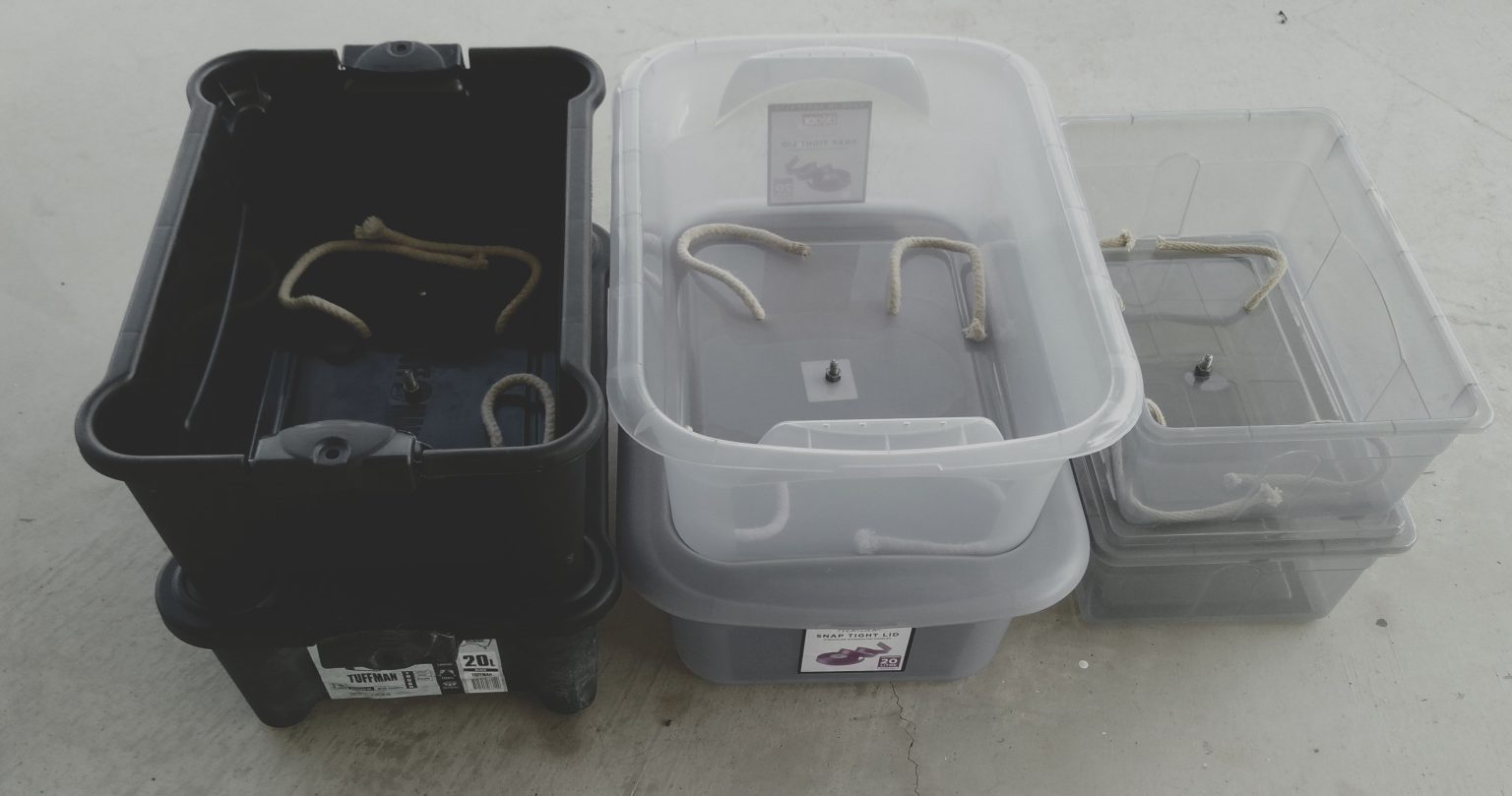
And that is where our couple of plastic boxes come into play. In the system I have been developing there are two players, the customer and the grower.

The customer

The customer probably lives in a flat, with a couple of kids and a full time job and has no time for messing about growing plants even if they had a garden. She will probably order online a box of living plants, ready to be harvested. The grower will deliver the box and normally pick up an old box – plus hopefully a bag of waste food and organic waste. At home the customer actually has another box which is the water container. She fills this with water and places the soil box on top. The soil box has pieces of rope dangling down which go into the water, which will then wick up into the soil box. The bottom box is simply filled with water and may contain enough water to last for much of the plants’ life but it is sensible to check the water level just once a week. The simplest (and often the best) system is to use the tipping method. The tips of the plants are trimmed and can be used to make a green smoothie, or the tips are simply used as accoutrements by sprinkling onto the meal. When the plants are reaching the end of their lives she simply orders a replacement box from her grower. Now the customer can have access to fresh plants which they can pick and eat straight away. Dead simple and convenient. The key point is that the plants are full of nutrients and beneficial microbes and act as both pre and probiotics which are genuinely fresh as they are just picked and eaten. It probably works out cheaper than buying already harvested plants from the supermarket and all that is needed is a balcony, verandah or windowsill with sunlight. If the box has a transparent lid it can be used to make a micro greenhouse in winter or to give some protection from pesky flies in summer. The top box is filled with what looks like soil but we call Wickimix and it is full of beneficial microbes happily feeding away on the nutrients in the soil, which brings us to the role of the grower.

The grower

But now comes the tricky bit – where does all this Wickimix come from? Making Wickimix is the prime job of the grower. It is true that you can get all the nutrients we need from chemical fertilisers. The fact that much commercial food is lacking in key trace elements is simply that the customer has no way of knowing if the produce contains these critical trace elements – the plants look fine and healthy – but it costs extra money to include those trace elements. But what you don’t get from a bag of fertiliser is the beneficial microbes. We need these for two reasons – the first is that the microbes (particularly the fungi) are needed to break down the minerals into the complex and soluble chemicals we need and secondly those microbes in the soil find their way into our gut to form our intelligent gut brain. So where does Wickimix come from? The answer is simple – a local grower who has set up Gbiota beds to recycle waste organic material by breeding the beneficial microbes.

Making Wickimix

So what goes into Wickimix? A bit of clay makes a really good base as the fine particle size of clay gives a large surface area for nutrients to cling to. But then we need organic waste. People who are into composting, which can become a bit of a cult culture, know full well that to get a good high-temperature compost requires very careful balance of carbon, nitrogen and air for the compost to work so they are very selective about what goes into their compost. Then we need the critical minerals and an inoculant.

Low and high temperature composting

Gbiota beds are very different; they use in-ground composting which is a much slower process but virtually any organic waste can be used. It does not use high temperatures but relies on the mass of creatures which live in the soil. There are just an incredible number of different sorts of creatures and there will be some creature which will process any organic waste. Ultimately microbes will finish off the process but these may be the microbes inside their guts, with the creature, whatever sort it is, starting the first phase breaking down and feeding on the organic material. Just go and ask my friends the ants and termites who have got this down to a fine art. People often ask me where the microbes which end up in our guts come from. The answer which most people don’t like to think about is from the guts of creatures living in the soil. It is a long chain, from the soil creatures, to their guts, to the soil then into the plants we eat and finally into our guts. I am sure there are many advertising executives who would baulk at the idea of selling worm pooh or bug pooh as a health food, even if indirectly, but it is simply the way the world works and has worked for millions of years.

Breeding microbes

The purpose of a Gbiota bed is to breed beneficial microbes while controlling the harmful microbes. This is done by creating the conditions where the beneficial microbes simply out compete the harmful microbes. The key tool is to control the moisture level so the mix is moist but not too wet. This is achieved by a subsurface irrigation system and allowing the water to spread by wicking action. A certain amount of local soil, hopefully clay, is mixed with organic waste, minerals and inoculant to start the process. They look like a conventional raised bed but with the gap between the beds filled with the raw materials and just left to compost, when the Wickimix is dug up and put into the Gbiota boxes. Typically the local grower would load the Wickimix into the boxes and grow the plant to the stage where they are ready to eat and collect the old boxes when the plants get old, with possibly a bag of food waste for recycling back into Wickimix. The local grower system is really the way to go. The Wickimix can be loaded into the box and delivered fresh and relatively cheaply locally. This means a change in thinking about how a small proportion of our food is managed.

From centralised to local

The question is how to bring about that change? Well it is simply a fact of life that we have to implement major changes in the way the world works. The days of mass central production are numbered as this is the only way humans will survive when there are over eight billion people on this earth. The days of extracting raw materials from finite resources will disappear into the history books and we will live in a world based on local recycling. We can see this already happening in many areas of our lives, just look at electricity where mega coal mines and massive power stations are being replaced by local electricity produced by wind or solar power. The message that we need to get out is that this is the way to have a prosperous, wealthy and sustainable society. And that message will come from individual people seeing the need for change and getting our politicians and leaders of big business to be part of implementing this change.

Making change happen

It is never easy to change a system, particularly if it appears to be working. But it is not. Every eight seconds someone has a limb amputated from diabetes which is largely the result of our modern food system. But humans are the dominant species on earth for a number of very simple reasons. We are intelligent and cooperative, adaptable and willing to change if needed. But change does not just happen; it starts with a handful of people, the pioneers who see the need for change and make it happen. Maybe on a small scale and against serious obstacles – but they make it work. Then other people see it working and follow suit until it becomes mainstream with just a few people bucking the trend. And that is how I see the change to a local gut food system happening. These pioneers may be consumers who want change and persuade local growers to provide Gbiota boxes or it may be growers who see an opportunity for change to create a business while making the world better able to handle the inevitable food crisis. But it will be individual pioneers who will start the process of change. If you want to be part of this process of making the world both sustainable and prosperous please contact me at colinaustin@bigpond.com.

Loading

Health starts in the soil

Health starts in the soil

Avoiding deficiencies: gut biology, weight control and the Gbiota food solution.
 

Preface

For many years now I have been promoting the importance of gut biology and how we can simply and cheaply improve our gut biology by growing plants in soils teeming with beneficial microbes and nutrients. These are not just my views but are based on studying many leading researchers in the field. Unfortunately we live in an era full of promotion of magic solutions, mostly pills based on weird plants from odd corners of the world. These are the modern version of the snake oil salesmen. My contribution is the development of the Gbiota bed and box system to breed the beneficial microbes and to make this technology widely available at an affordable price. So I thought I would write this blog showing where I have gleaned much of my information.

The basics

Modern diseases like diabetes, dementia, cancer and heart attacks have increased with our modern food. These are related to the amount of fat in our bodies. The now obsolete view was that weight could be controlled simply by eating less and exercising more. Medical researchers at the forefront of medical science now understand that our bodies have a set point for weight and will adjust our appetite and energy expenditure to maintain that set point. Extreme diet may reduce fat in the short term but raise the set point so in the long term lead to an increase in body fat. The new thinking is that deficiencies (such as lack of essential minerals, omega 3, beneficial microbes, gut and brain food etc) in our modern food system lead to a rise in the set point so we end up fatter and sicker than ever. The modern approach, which is slowly being accepted, is not to cut down on the food intake but to ensure that our food contains all the essential ingredients so the set point is naturally lowered. This is the new approach of “avoiding deficiencies”. Our bodies are smart – deficiencies lead to food cravings and getting fat and sick – and we know how to grow food in soil full of essential nutrients and beneficial microbes.

Recent videos

This video shows how a young medical student, Nana (who by some fluke just happens to be my granddaughter), is aiming to set up local food clusters to create a marketplace for food grown in soil rich in nutrients and beneficial microbes and is creating a trial to provide confirmation of this “avoiding deficiencies” approach. Watch: https://youtu.be/0BOnJUXSyTU And if you are interested in participating in this important project please contact me. These three videos explain more: https://youtu.be/Zk2JGGxqwks https://youtu.be/4jXdusOYLFY https://youtu.be/xccG5Zq3CNQ

Save my foot

I will start my story with my wife, Xiulan, a medical doctor, who some ten years ago became diabetic. We were told by our medical adviser that “diabetes was a chronic disease, meaning long term, there was no cure, it would just get progressively worse needing stronger and stronger medicines, eventually insulin injection and that she could expect to die young from some side effect of diabetes”. Now this was not some guy in the pub but our professional health adviser relaying what was the current medical view. But the story gets worse, her foot started to turn black and the doctors started to talk about amputation and how good modern prosthetic limbs were. Where were the wonders of modern technology that would save her foot? See save my foot. I am pleased to say my wife changed her diet and still has both her feet. But there are some 400 million people formally diagnosed with diabetes, and a much larger number of people, in some areas half the population, are overweight and probably pre-diabetic. This is an epidemic that is new. There have always been some people that are overweight and diabetic but not on this scale. Something has gone seriously wrong. We need to find out what and fix it so we can be happy, healthy, wealthy and wise.

How to fix things

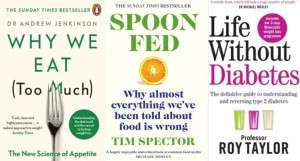
Thomas Edison, one of the world’s most prolific innovators, laid out the process of innovation: “study everything that has been written about a subject then put it to one side and start from scratch”. So I started reading. I just checked my library records – 3,728 books plus countless technical articles and papers on the web. Most were just a waste of time but below are some of the critical ones. Then we have to put them to one side and start from scratch to find out how to fix things. These are just some of the books I studied – and the answer slowly emerged.

Why we get fat

The basic laws of conservation of mass and energy are totally valid for a biological system. If we eat too much and do not burn it off we get fat. In addition to these laws of conservation there is a measure of the quality of energy (entropy). We take in food which has a high quality of energy and breathe out carbon dioxide with a low quality of energy. This is generally controlled by a totally subconscious type of control system. For example our temperature control system is totally subconscious – we cannot change our body set point temperature which is set at 37°C. Neither can we control our heart rate, but we have some limited control over our breathing rate, and even that only for a short period of time. With food we have a little more control. Our body may try and control our food intake by sending out hormones to tell us whether to eat more or stop eating to maintain the set point. We may try and override or change the set point by how much we eat but that is not easy – our intelligent control system has evolved over millions of years and is highly effective. That is the real reason why so many people are overweight. We may be eating more than enough to power our body but if we miss out eating food that will feed our gut brain, which forms part of our food control system, or our diet is deficient in key nutrients we will still feel hungry and eat far more than needed. This is the prime reason why so many people eating in a modern food system are overweight. It is called the food deficiency effect – we eat too much of certain foods and not enough of the critical foods. There are of course many reasons why we overeat: leptin intensity (leptin is the hormone that makes us feel full), a lack of food in our past history which makes our body crave food, features of our DNA which make us crave food, or bad habits we picked up when young which show up later in life.

Professor Roy Taylor – Reversing type 2 diabetes

I will start the review of critical thinkers in this field with work done by Professor Roy Taylor. In his book Roy explains that diabetes is really about fat. There are really two stages to diabetes. The first stage is when the body becomes resistant to the insulin which controls our blood sugar level but many times people are just unaware as the pancreas simply makes more insulin to cope. (That is why there are far more than the 400 million people with diagnosed diabetes – we could be talking billions of people.) Then in the second stage fat enters the pancreas which can now no longer produce insulin. His solution was simple – go onto a low calorie diet. So it was all about fat and no one really wants to be fat and waddle about like a duck so fat was a much broader problem than diabetes – just go to any shopping centre and about half the people are fat and overweight.

Ruben Meerman – Big Fat Myths: when you lose weight where does the fat go?

But this is where the story gets interesting. Ruben Meerman, a science physicist and writer, wrote a book challenging the conventional wisdom of focusing on calories. His point was simple – we don’t eat calories, we eat food which we measure with kilograms, not calories. True, food can be burned to produce energy but it is the carbon and hydrogen in the food that makes us fat. We can simply turn this carbon and hydrogen into carbon dioxide and water which we can breathe out. So his solution was the classic “eat less, exercise more”. He did make the point that it is much easier to prevent getting fat than to lose fat later, which is really saying that we should be teaching our kids about how we get fat. Our kids at school should be learning about this, even if most are still skinny. It is all to do with the number of fat cells. If you have a lot of fat cells that are not yet filled you will still be skinny but will explode in later life as the fat cells fill. We may get fat because we eat too much but the real question is why do we eat too much?

Dr Andrew Jenkinson – Why We Eat (Too Much): The new science of appetite

Basically he said “wait a minute – we have to ask why people eat too much and get fat”. He said our bodies have a natural control system which determines how much we want to eat, it decides on a natural set point, what it thinks is the ideal weight, and however much you try to lose weight by going on fancy diets you will certainly lose weight in the short term but will gain it back in the long term as your automatic control system wins the battle. In fact he said just restricting the amount of food so you are continuously hungry makes your control system raise the set point so you go through a period of yo-yo dieting, getting fatter and fatter on each cycle. He put forward the argument that we get fat because of deficiencies in our diet which are sensed by our control system, raising the set point which makes us hungry. His argument is that we should eat more, not less – well not quite – we should eat more of the food which supplies us with the range of nutrients that we need and then we will naturally want to eat less. He did point out there were many reasons why we get fat; we could be leptin resistant (leptin is one of the hormones that makes us feel full and stop eating) or lack the sensors to respond to leptin.

Mariette Boon and Liesbeth Van Rossum – Fat: The Secret Organ

These two doctors are from Holland which is interesting because this is where there is real world experience of what happens when people were starved as they were at the end of the war but when food became available they tended to put on a lot of weight. This is important because it shows our bodies are not some dumb donkey but have real intelligence and are doing a lot of work in our subconscious brain deciding how much and what sort of food we should eat.

Tim Spector

I could mention hundreds of scientists who talk about gut biology but Tim Spector’s book Spoon-Fed – Why almost everything you’ve been told about food is wrong, and The Diet Myth have such good titles and his work with identical twins as part of the nature vs nurture battle, so I have selected him as my gut biology guru. The key point is that our gut, with its trillions of cells working and communicating together, forms a real brain. We know a great deal about the species of microbes that inhabit our gut and how they change with what we eat but we really have no idea of the code that makes it work. The point is that we do have an intelligent control system and our gut, with the trillions of cells communicating with each other, forms a genuine brain which cooperates with our head brain to form our intelligent control system. We have no idea how our gut brain works but we do know that our head brain (which forms part of our intelligent control system) is continuously learning and changing – so what we want and how much we want to eat is influenced by our experiences from birth. We may not know much about how our gut brain works but for that we may have to look at books like Swarm Intelligence by Marco Dorigo and learn how it works from studying interesting things like slime moulds, ants and bees. But we do know for sure that our gut brain is a critical part of the equation.

Dr Elaine Ingham

But if we want to understand where our gut microbiome comes from, the answer is from the soil – and there the one person whose work is so prolific is Dr Elaine Ingham. We do know that the soil microbes move into the plant roots by osmosis so the plants become natural pre and probiotics. But she does make some remarkable claims that it is possible to continuously harvest crops without applying any additional minerals. This I debate. The effect of adding additional minerals to depleted soils is just an experimental fact. But her key point that minerals need the microbes to make them available is very valid and important. The species of microbes in our gut may be the critical issue but our intelligent control system can sense any deficiencies in the minerals in our food and make us hungry.

Defining the problems

We can understand the problems we have to solve. From a purely technical viewpoint we have to ensure that our gut brain is working properly by ensuring a healthy gut biome and we have to ensure that our head brain, which we know is continuously learning, is well trained to eat the right sort of food. In practice this means a diet which is rich in plant foods that act as pre and probiotics, and is rich in essential minerals and vitamins which are commonly lacking in our modern diet. This, of course, is what the Gbiota project is all about and is described – and the information continuously updated – on my web site www.gbiota.com. But solving the technical problem is actually the easy bit and just the start of the problems. There are two other much more difficult problems to overcome.

Problem 1 – Logistics

The first could be called logistics – which is a rather boring word for an emotional topic. It means ensuring that the solution is economically acceptable – people have to be able to afford the food that will make them healthy. There is an immediate logistical issue that the microbes that are needed for a healthy gut biome only have a short life so the plants which act as pre and probiotics must be eaten shortly after being harvested – preferably within twenty four hours – which is just not possible with the current food distribution system. The Gbiota bed and box system allows the beneficial microbes to be bred in the beds, then the soil transferred to a box to grow fresh food in people’s houses or flats. This is probably a cheaper system than the conventional warehouse-style distribution system, but it is different, which means people accepting change. We also have to consider the global logistics. In days gone past people would eat food that was grown locally in soil that was naturally fertilised by waste organic matter. People then had good gut health. The modern poor gut health arose from the switch to the modern industrial-chemical food system which arose from the economic benefits (to the mega food companies) which gave much higher production per unit of area. We have to achieve similar productivity per unit of area but without destroying the microbiome. We can do this locally but we also have to be able to feed the eight billion (and rising) population in a sustainable way in potentially an even smaller area. The problem of global food production has been considered by many writers – I list some of the key thinkers here.

David Montgomery – Dirt: The Erosion of Civilisations

If we want to talk about minerals who is better to study than a geologist with a burning desire to ensure we survive on our planet. His argument is that all sorts of creatures have been on this earth for millions of years without getting needlessly fat. Having fat level out of control is just not normal. Many animals, like bears, get fat before they hibernate but it is a controlled increase in body fat.

Gary White – The Worth of Water: Our Story of Chasing Solutions to the World’s Greatest Challenge

George Monbiot – Regenesis: Feeding the World Without Devouring the Planet

All these authors are well respected scientists in their own right and are just a small sample of the research that is being conducted. I have tried to show that if we look at the evidence from all these people we have the technology to counter one of the great threats to our health. Now we need to ask if this is both economically viable – i.e. will people buy or grow the food that will make them healthy – and if it is sustainable in the long run. So we need to look at whether the solution can be applied when virtually all available land is being used and the resources are stretched to the limit with the eight billion people on earth.

Problem 2 – Persuasion

Will the solution be accepted?

We live in the digital era where we are subject to a mass of information (or what is portrayed to be information). We simply do not have the time to work out what is true or false and what makes it even worse is the level of sophistication of modern manipulative marketing. This is the major issue in creating change to our food industry – here is a list of the many books on the topic. Brad McKay – Fake Medicine: Exposing the Wellness Crazes, Cons and Quacks Costing Us Our Health Naomi Oreskes – The Merchants of Doubt Brad Smith – Tools and Weapons: The Promise and the Peril of the Digital Age Peter Scott – Hot Air: The Inside Story of the Battle Against Climate Change David Grimes – The Irrational Ape: Why Flawed Logic Puts Us All at Risk and How Critical Thinking Can Save the World Patrick Alley – Very Bad People: The Inside Story of the Fight Against the World’s Network of Corruption Ron Gonen – The Waste-Free World: How the Circular Economy Will Take Less, Make More, and Save the Planet Niall Ferguson – Doom: The Politics of Catastrophe Peter Lewis – Webtopia: The World Wide Wreck of Tech and How to Make the Net Work Simon Hammond – Brutal Truths: Surviving in a World of Lies, Taboos & bullsh#t Philip Lymbery – Farmageddon: The True Cost of Cheap Meat Sinan Aral – The Hype Machine David Sumpter – Outnumbered: From Facebook and Google to Fake News and Filter Bubbles – The Algorithms That Control Our Lives John Yudkin – Pure, White and Deadly: How Sugar Is Killing Us and What We Can Do to Stop It Peter Wohlleben – The Secret Network of Nature: The Delicate Balance of All Living Things

Edison’s formula for innovation

OK we have worked our way through the first part of Edison’s formula: study everything that is known about the particular subject, then clear the bench and start afresh. We can be more than sure that the basic laws of physics – the laws of conservation of mass and energy – are still working. So if we put more carbon into our mouths than we eject from our bodies by breathing out as carbon dioxide, pooping, peeing or sweating, then we will put on weight. But we can be equally sure that it is not as simple as telling people to eat less and exercise more because our intelligent control system will override our willpower long term. I am not a medical doctor. I was initially trained as a mechanical engineer – the type of engineer that makes machines – and every machine has a control system, even if it is a simple on/off switch. But my very first job was working for a company that made industrial process controllers so I know how important the control system is and how the classic proportional–integral–derivative controller works. But much later in life I became immersed in computer software and at one time I wrote some software for irrigation control which I called self-learning software but we now may call artificial intelligence, where we use the software to learn the characteristics of the system – in this case how much water the plant was using under current conditions – then use that knowledge to predict how much water to apply based on weather forecasts. A sort of anticipatory control system. Like, if you see a hot head in a yellow ute doing wheelies then steer clear because he is going to do something stupid – not logic, just anticipation. If we just go out telling people to eat less and exercise more we can expect a high failure rate; there are very few people with the determination to override their intelligent control system. Don’t believe me? That approach has been tried for years – now just take a walk around the local shopping centre and count the number of wobbly bums and tums. It has not worked – and as they say you don’t make a new hole in the right place by continuing to dig an existing hole in the wrong place. While it may be true that the key to weight loss is to lower the intake of carbon and increase the expulsion of carbon (eat less, exercise more) we have to change the intelligent control system so we want to eat less and exercise more. The first step is to change our gut biome. There is no issue that changing the gut biome leads to weight change – but it is not clear whether this is just correlation or causation. If you bring up a kid on ice cream it will have a gut biome that feeds on ice cream and will send out signals to eat more ice cream and the kid will get fat. If you change the kid’s gut biome (by feeding him fresh green peas) the gut biome will change, which will change the way the intelligent control system works so (eventually) the kid will stop craving ice cream and start craving green peas. Whether that shows there is causation between gut biome and being fat or just a correlation is a debate for scientists with nothing better to do – the simple result is that the kid stops craving ice cream (well a bit anyway) and loses weight. So the solution to excess weight is to ensure the diet contains the required pre and probiotics and also the required essential minerals and nutrients missing in a modern diet. That will change the gut brain. It will also help if we train the head brain to prefer food that contains the microbes and nutrients – which means starting young and keeping at it. So we know what we need to do – we have the technology in the Gbiota system – now we have to make it happen which means a head-on battle with the billions of dollars the food industry spends on manipulative advertising. Tough job but it could mean millions of feet not being chopped off and billions of people enjoying happy, healthy, wealthy and wise lives. Even tougher with no money or support from a major institution. But we do have the model of a little kid in Sweden who sat out in the freezing cold (not exactly the ideal conditions for promoting climate change) with a cardboard plaque saying ACT ON CLIMATE CHANGE. How did that happen? She only influenced a handful of people directly – but those people influenced a second tier of people who in turn influenced a third tier. A few fires and floods helped and now I see the figures are that some 70% of the population now believe climate change is real and action is needed. This little kid did not influence billions of people directly – it was a wave effect. I have to adopt the same strategy. I just have to convince a handful of people that eating a diet rich in pre and probiotics and critical nutrients and eaten fresh is something they should both adopt and act on to convince other people. I don’t have fires and floods to help convince people but I do have the fact that every eight seconds someone has their foot amputated – and who wants to waddle around like a duck? So if you want to help in this social action contact me at colin@gbiota.com.

Loading