Why we need to change







For most of my life I worked on making plastic products faster, better and cheaper — but the real breakthrough came when I turned those same innovative skills toward growing food that feeds the gut brain and prevents diseases like diabetes.

I moved into plastics when I left university, back when new engineering plastics were just coming onto the market. They were an exciting challenge for a young engineer to learn, and in my defence, this was long before a five-cent battery had to be wrapped in fifteen layers of blister packs.
But the world kept changing. The population grew, the food system changed, and people became fatter and less healthy. I began to worry, not just about having enough energy food, but about food that would actually keep us healthy over the long term.
At the same time, I was getting older. I had written a book about plastics production called Faster, Better, Cheaper, and I started to question whether I really wanted to spend the rest of my life helping to make plastic bits faster, better and cheaper.
I felt an urge to do something that genuinely benefited the community.
I decided to see whether my innovative skills could be used to find better ways of growing food that keeps people healthy and is truly sustainable. I sold the company, which gave me enough money to undertake speculative research – the kind of research governments rarely fund.
Speculative research is just a posh name for doing daft things and hoping you stumble upon a significant breakthrough.
Looking at the world, it was clear to me that one of the biggest threats from climate change is to food production. That is where I decided to focus.
I no longer wanted to make plastic parts cheaper; I wanted to make it easier for people to grow food that prevents them losing their health — and their legs — to diabetes.
Real breakthroughs in research usually come from doing off-the-chart experiments that are almost certain to fail but lead to new ways of thinking.
Now I had the financial freedom to do totally stupid experiments that might, just might, lead to a big breakthrough. I wasted a lot of money, but it was my money – no grant committee to impress.
I burned through millions of dollars hoping that something good would turn up, and eventually it did. Every year, over four thousand Australians have a leg amputated because of diabetes. I now know how much of that can be avoided. I reckon that is worth blowing a few million.
The first step in innovation is to study everything that is known in an area without jumping to solutions. You immerse yourself in the problem and keep asking “why, why, why” like a four-year-old.
Freed from the need to earn a living, I set off on multiple world trips to study how people grow food, especially in remote areas of Asia, Africa, the Americas and the Middle East.
In some places, particularly mountainous regions of China, people remained fit and healthy into old age, with no sign of our modern chronic diseases like diabetes. They had been farming the same land for thousands of years and the soil was still healthy and fertile. In other areas, especially in parts of Africa, the soil was depleted and people were less healthy.
Again, the question was: why, why, why?
Then diabetes hit close to home. My wife, Xiulan – a medical doctor and gynaecologist – became diabetic. Her foot started to turn black and doctors began talking about amputating her foot.
The medical experts explained that diabetes was a progressive chronic disease. She would need steadily stronger drugs, then insulin injections, and would likely die young from complications such as kidney failure.
That assessment might have been reasonable twenty years ago, but it no longer matches the latest science. The fact that we were being given advice based on outdated information was an ominous warning of trouble to come.
I was not happy with the idea of seeing her lose a foot. She has nice legs, and I felt I owed her more than passive acceptance. So I did what innovators do: I kept asking “why, why, why”.
Experts can provide a very detailed technical explanation of diabetes. First, fat starts to block the entry of sugar into muscles. This is called insulin resistance, and many people do not know they have a problem because the pancreas simply produces more insulin.
Then the pancreas itself becomes clogged with fat and can no longer produce enough insulin. The situation becomes critical and medications are required to control blood sugar levels. These drugs are very good at fixing the immediate problem, but they do not address the underlying cause.
So again the question was: why? Why does the body start storing fat in the wrong places? Why does it happen so often in Western societies but not in those mountain communities in China where diabetes is almost unknown?
The obvious answer is that we eat too much sugary, fatty food. But that just raises another question: why do we eat too much sugary, fatty food?
Because we are hungry, you might say. But again: why are we hungry in that particular way?
To understand that, we must look back to World War II. In the Netherlands, the people endured extreme starvation and became thin and scrawny. After the war, when food became available again, obesity became a major problem.
The reason is homeostasis – the body’s intelligent control system that regulates temperature, breathing, heart rate, appetite and how much, and where, we store fat.
This control system is incredibly smart and has a memory. The period of starvation trained it to store fat aggressively. We still see this today in extreme dieting: people slash their caloric intake, lose weight, and then later become fatter than ever. They have trained their control system to store fat – the exact opposite of what they wanted.
Diabetes is not just a medical issue; it is a systems-control problem. If we do not feed the gut brain properly, it reprograms our bodies to store fat and crave the wrong foods.
After the review and “why” phase, the next innovation step is testing whether the ideas actually work.
I set my wife up with continuous blood sugar monitoring so I could compare food intake with blood sugar levels in real time.
My first engineering job had been with a company that made control systems for power stations. What I saw on the blood sugar graphs looked identical to unstable control systems I had seen on industrial equipment.
She would eat, and her blood sugar would rocket up. Then it would crash to dangerously low levels as the insulin surge kicked in. Then it would climb again as the body hunted for sugar from wherever it could. It was a classic unstable control loop.
This convinced me that diabetes is not just a simple medical condition; it is a control-system failure.
From my time in the remote mountains of China, I already knew what a stable system looked like: people eating food grown in living soil, full of diverse microbes, and staying lean and healthy into old age.
We get fat and diabetic because the control system is broken – because we are not feeding our gut brain. When the gut brain is starved of the right signals, it makes us feel hungry so we overeat.
If we want to be healthy, we must feed our gut brain the food that gut brains need.
The catch is that we need a solution suited to modern life. It is not practical to have a yak wandering around an apartment block, dropping manure on the carpet.
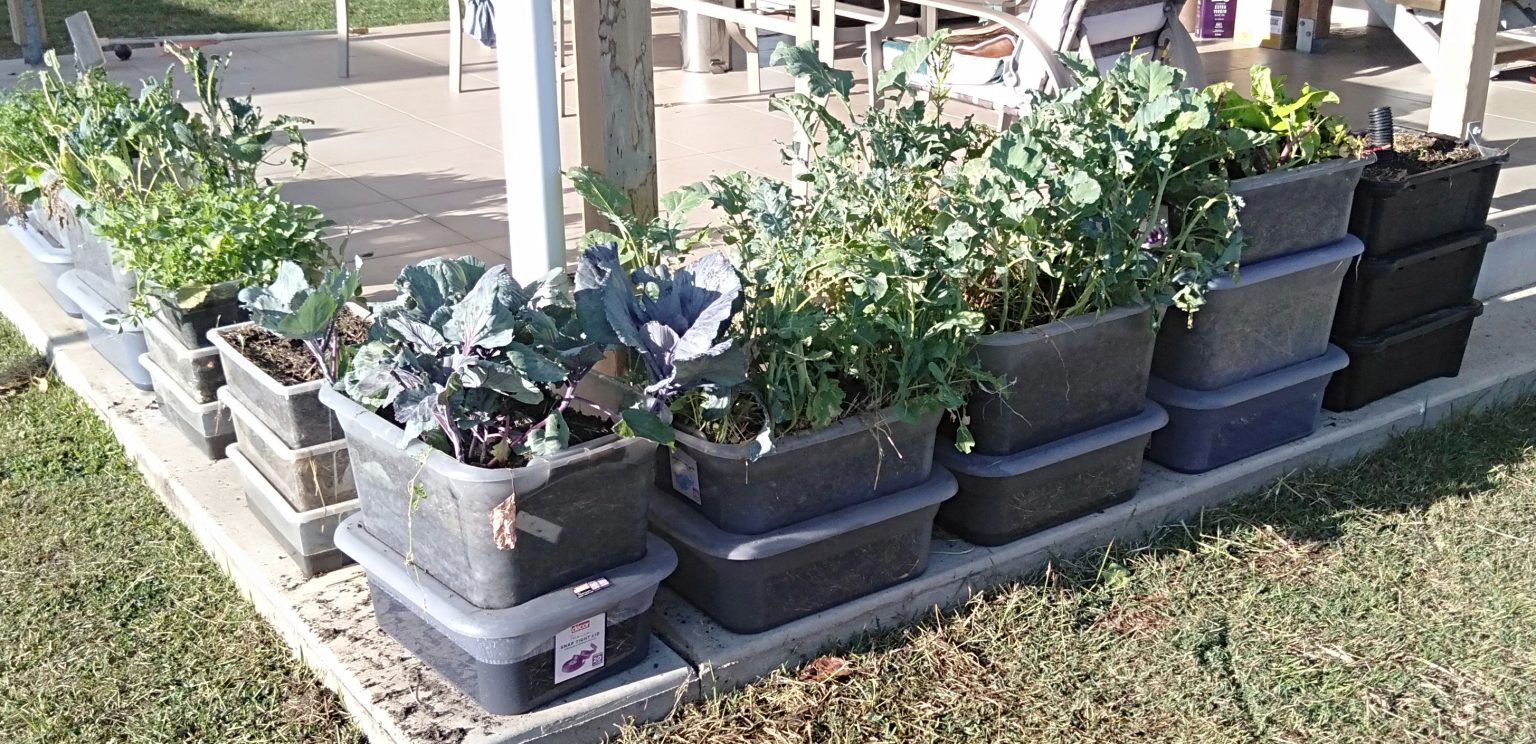
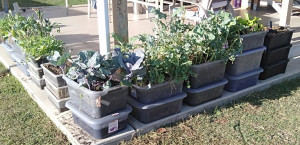
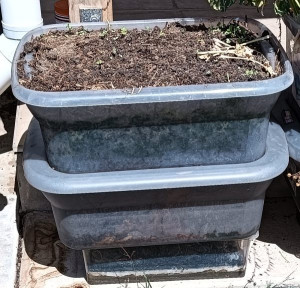
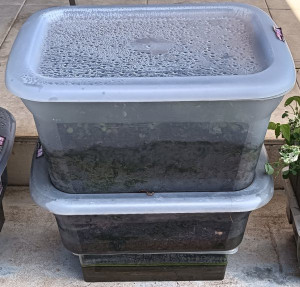
So we substitute the yak with worms and create a two-pot growing system. In one pot, people grow their own living soil; in the other, they grow fresh vegetables in that living soil.
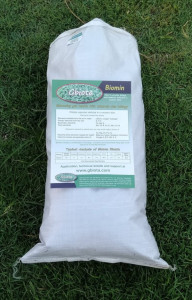
The pots cost only about 40 cents. The main inputs are organic waste, volcanic rock dust and an inoculant. It is incredibly cheap and almost anyone can use it, even in a flat.
It is actually cheaper and more reliable than buying from the supermarket.
I call this the Gbiota system because it is all about feeding the gut biome – the gut brain.
I believe this is a major innovation that could save thousands of people from losing their legs to diabetes.
The next challenge is getting this innovation into public awareness. I have built a multi-million-dollar multinational company before; I know how to create paradigm shifts and change an industry.
I also know that pouring money into advertising is largely a waste. The internet is already saturated with companies trying to sell pills that will not fix your health but might inflate their bank balance.
What we need is a social movement: people using the system themselves, seeing that it works, and becoming ambassadors for it.
This is not just about diabetes, though that is the most visible outcome. It is about building communities where people are genuinely fit and healthy.
Our health system is in crisis. Yes, we need more GPs and more funding, but the top priority should be prevention, not patching people up after they are already sick.
The most effective way to tackle the health crisis is to run programs that help people become naturally fit and healthy, so they rarely need to see a doctor.
Governments spend millions on drugs, especially for diabetes, where pharmaceutical companies enjoy a lifelong captive market.
They would save a fortune by focusing on prevention and building a population so healthy that doctor visits become the exception, not the rule.
We need ambassadors for prevention. I think back to the Victory Gardens of my childhood. During wartime, a simple government scheme led to some 40% of fresh food being grown by amateur home gardeners. It cost the government almost nothing – just a few posters and speeches – because it had the support and energy of the people.
The government provided leadership, but it was the public’s participation that made it a success.
I cannot do this alone. I am just one person, with no power against the machinery of government.
People have different skills. I happen to be good at innovation and speculative research, but I have no idea how to organise a protest movement or national campaign.
What I do know is that we need one. There is a saying: bad things happen when good men stand by and do nothing.
To my mind, having your leg chopped off because of a do-nothing government department is a “bad thing,” and good people need to act.
While you have been reading this, two Australians will have had a limb amputated because of diabetes. At least one, and possibly both, might have been spared if they had heard about homeostasis and followed the simple idea: grow gut brain food.
Humans are the most successful species on the planet for two reasons: we are intelligent, and we cooperate to form communities.
The price of living in a vibrant community is that we each contribute to its wellbeing according to our skills and capacity.
I do not have diabetes, and now that my wife is on a grow-gut-brain-food diet, there is little danger she will lose her foot.
I have not blown all my money on daft ideas, and I could easily live a quiet life. There is no logical need for me to spend my time and energy helping people avoid diabetes.
But I want to feel that I am contributing to my society according to my abilities.
Right now, the community needs to know that they can, if they wish, stay fit and healthy and reduce their risk of amputation simply by growing gut brain food. Whether they choose to act is up to them – but they deserve to know it is an option.
So I ask you, whatever your skills or capacity, to help raise awareness. That might mean telling a friend, posting on social media, or joining a movement that presses governments to inform the public.
It feels good to contribute to your community. It is far more satisfying than sitting back and playing bingo.
We need people with the skills to organise a health movement and breathe life into do-nothing bureaucracies.
If you want to live a long, healthy life in a society that values fitness and wellbeing — and if you would rather avoid losing a leg to diabetes — then do something useful for the community. Form or join a health movement, or contact your local MP.
We need a strong, active public service that genuinely serves the public and protects us from mega-corporations driven solely by profit.
We need a public service that puts people first. That is the essence of a functioning democracy, and it is currently under threat.
I am 83 years old, still fit and healthy, but it is up to younger people to build this movement. I feel I have done my bit.
If you agree with this theme and have relevant skills — even if it is simply sharing on social media — please contact me at colin@gbiota.com.