Chronic diseases like diabetes and heart attacks are not just medical problems – they are the end result of how we grow, process, and eat our food.
Why Gbiota Is About More Than Gardening
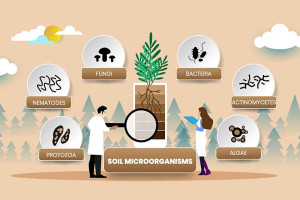
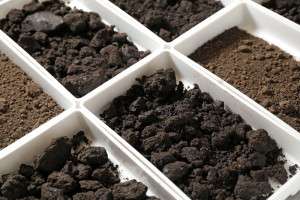
At first glance, Gbiota beds look like something for keen home gardeners – an extension of Wicking Beds, designed to grow vegetables with more minerals, phytonutrients, and biology. That’s true, but it’s only a small part of the picture. My real aim is to help prevent chronic diseases by changing both our food and our relationship with appetite.
For millions of years, humans lived as hunter gatherers, eating wild plants and animals grown in living, mineral-rich soils. Energy food and refurbishing food were in balance. With the invention of agriculture, then industrial agriculture, we changed that balance. We now produce vast quantities of high-energy food but stripped of minerals, phytonutrients, and gut-supporting biology.
There is a fundamental difference between what we should eat and what our bodies want to eat – and what our bodies want always wins.
Modern food is perfect for meeting energy needs, but poor at refurbishing our bodies and especially our gut biology. That mismatch is feeding an epidemic of chronic disease.
From Infection to Chronic Disease
In the past, most people died from infections, accidents, or violence. Infant mortality was horrific. If you survived childhood, you might live to a ripe old age. Modern hygiene, antibiotics, and engineering gave us sewers, clean water, and safe housing – and life expectancy shot up by around thirty years.
Now we are losing ground again. Chronic diseases – heart attacks, strokes, diabetes, dementia – are killing people earlier and causing years of disability. The averages hide a harsh reality: many people are dying younger from chronic disease, while the lucky ones live longer than ever.
Diabetes as a Warning Light
I use diabetes as a proxy for all chronic diseases, because it is easy to measure and tightly linked to food. We can track blood sugar, waist size, and weight. Globally, around half a billion people are diagnosed with diabetes, and many more are undiagnosed, pre-diabetic, or on their way there. The true number at risk is over a billion – more than the population of China or India.
No health system can cope with that scale. You cannot line all those people up for full medical assessment and treatment. Prevention has to be something people can do themselves, using food and daily habits, while medical systems focus on those already in serious trouble.
Prevention Means Changing Food, Not Just Pills
I have great respect for medical research and the search for new drugs, including treatments for insulin resistance. But prevention is better than cure. And prevention, in this case, is about food – not just nutrients on a label, but how that food is grown and how it trains our gut and brain to regulate appetite.
If one very wealthy person came to me asking how to keep his family healthy, the answer would be simple: buy land with good volcanic soil and clean water, grow a wide variety of fruits and vegetables using organic methods, avoid toxic chemicals, eat wild or free-ranging animals and fresh fish, and stay active. That’s a modern version of the hunter-gatherer diet – reliable, diverse, and nutrient-rich.
The problem is scale. For every one hunter gatherer, we now have roughly 10,000 modern humans who want food, transport, phones, and Sunday barbecues. We can’t all live like hunter gatherers. But we can learn from how they ate and what their food did to their guts.
Fuel Food vs Refurbishing Food
We like to classify food as fats, carbohydrates, and proteins. That’s useful for chemists, but not terribly helpful for understanding health. I find it more helpful to think of food in two groups:
- Fuel food – simple, fast energy, mainly from carbohydrates and sugars.
- Refurbishing food – everything the body needs to repair and rebuild: minerals, phytonutrients, vitamins, proteins, fats, and the biology that supports our gut.
Modern agriculture is very good at producing fuel food – cheap, abundant, and tasty. It is much worse at supplying refurbishing food. Our bodies are not stupid; they can sense when something is missing, but the “instrumentation” is faulty. When one key ingredient is low – say a mineral or specific nutrient – the body doesn’t tell us “eat more onions” or “go and get something fermented.” It simply says “eat.”
Our bodies are intelligent – they know something is missing, but instead of sending a precise message, they just send hunger.
So we keep eating more fuel food when what we really need is refurbishing food. That floods the body with energy, drives insulin up, and eventually pushes us towards insulin resistance and diabetes.
The Faulty Fuel Gauge
Our appetite is controlled by hormones like leptin, ghrelin, and insulin. In theory, this is our internal fuel gauge. In practice, it’s faulty. We get hunger signals when fuel is low, but also when just one refurbishing component is missing. The system worked reasonably well when traditional diets were low in simple carbohydrates and high in refurbishing foods. It fails badly in a modern food environment where fuel is everywhere and refurbishing food is scarce.
This is the root of the diabetic epidemic. Our biological control system hasn’t caught up with industrial food. Our brains and gut still behave as if we live in a world of scarcity, not one of supermarket aisles and 24-hour snacks.
Intermittent Fasting and Listening to the Body
I’ve experimented with intermittent fasting. At first, it was awful. Hunger felt like a crisis. But after a while, the body adapted. A wave of hunger would come, then fade, and I began to recognise the difference between simple “fuel hunger” and specific cravings.
I don’t treat fasting as a rigid mechanical schedule. I try to use my internal fuel gauge – to eat when I’m truly hungry and stop when I’m genuinely full. I’ve learned, through trial and error, that I can lose weight and trim my waist far more reliably this way than by simply “eating less.”
But there’s a catch: for the fuel gauge to work, refurbishing food must be available. If the body is constantly missing essential elements, it keeps sending hunger signals even when the fuel tank is full. That’s where Gbiota beds come in.
Training the Gut – My “Pet Doggy”
I think of my gut biology as a pet dog that needs training. If I feed it cheese cake and fast carbs, it will demand more of the same. If I learn which foods make me feel satisfied and help curb appetite – bitter fermented cabbage, dark chocolate – I can use them to “train the dog.”
This isn’t mysticism; it’s self-experimentation. Eat certain foods and observe: do you feel hungry and want to eat more, or do you feel satisfied and ready to stop? Over time, you can train your subconscious system to favour foods that keep you healthy instead of foods that drive overeating.
Changing the Food System – Not Just the Individual
None of this works on a large scale unless we change how food is produced. Conventional agriculture can keep producing fuel food – it’s very good at that. What we need alongside it is a new type of agriculture focused on refurbishing foods: diverse plants grown in biologically active soil, rich in minerals and microbes.
That’s the aim of the Gbiota system: a practical, scaleable way to grow regenerative, gut-supporting food at an economic price. Home gardeners can use Gbiota beds in their backyards, balconies, or small plots. Commercial growers can adopt larger systems, provided they can differentiate their produce and earn a fair return.
Why Gbiota Needs a Movement, Not Just a Method
I’ve seen what happens when a useful idea spreads without structure. When Wicking Beds went viral, the concept was copied, altered, and in some cases made unnecessarily complex. The core idea was diluted. Commercial growers were turned off by misinformation and overengineering.
Gbiota needs a different path. We need a community – the Gbiota Club – where people test the system, share results, improve the technology, and become advocates if it works for them. My role is to explain the principles and document the methods, but real change happens when many people adopt the system and tell others.
Top-Down Innovation: Making It Useful First
There are two broad ways technology develops. The bottom-up path starts with deep science and gradually builds applications – transistors, thermodynamics, fundamental research. The top-down path starts with a pressing problem and cobbles together a practical solution – the steam engine pumping out mines, early Wicking Beds in dry landscapes, and now, potentially, Gbiota beds for chronic disease prevention.
Top-down systems are messy and imperfect at first. They get refined over time as people use them, test them, challenge them, and improve them. My goal with the Gbiota system is not to present a perfect, final answer, but to offer a practical starting point that people can try for themselves.
Why I Care
My interest is not academic. My wife came from China, started eating Western-style food, and developed diabetes. Her eyesight deteriorated, she fell, broke bones in her foot, and we were looking at the possibility of amputation. Together we worked hard – on food, biology, and lifestyle – and she kept both her sight and her feet.
That experience sent me down the rabbit hole of diabetes, diet, and gut biology. The conventional view says diabetes is a non-reversible chronic disease that must simply be managed. A minority of doctors and researchers disagree, arguing that we are overloading on fast carbs and underfeeding the rest of the system. My own conclusion is simple: we need more refurbishing food grown in biologically active soil.
If I can help prevent even a fraction of the billion people heading towards diabetes by sharing what I’ve learned, that’s reward enough.
The Role of the Gbiota Club
I cannot change the global food system alone, and I’m honest enough to admit I’m a DOF – a Doddery Old Fool – in internet terms. But I’ve watched paradigm shifts happen twice before: once with plastic flow simulation, once with Wicking Beds. In both cases, change came when other people tried the ideas, found they worked, and spread them.
The Gbiota Club exists for the same reason. It’s for gardeners, growers, and citizens who want to:
- Grow regenerative, biologically active food.
- Improve their own gut health and track changes in weight, energy, and metabolic markers.
- Share results and refinements with others.
- Become advocates if the system works for them.
We need people with skills in soil, plants, microbiology, health, logistics, and communication. But above all, we need people who are prepared to try, observe, and be honest about what happens.
If that sounds like you, I invite you to join the Gbiota Club. Email me at co*********@*****nd.com and say you’re interested.
To read the full document, you can download the complete PDF below.