Food for health
Download as .pdf
Health starts in the soil
Colin Austin © 31st Aug 2022
This document is published under the Creative Commons system which means that it can be freely copied or republished without further permission - the only provision is the Standard Creative commons requirement that the source Colin Austin www.gbiota.com should be acknowledged.
Abstract
Part 1 reviews why we need to be breeding beneficial biota in our soils.
Historically four out of every five people died before their natural age from an infectious disease. Both medical science and our food system has responded by finding better ways of killing these pathogens. While largely successful we have also inadvertently reduced the number of beneficial biota which has led to an upsurge in non-infectious diseases such as diabetes, heart attack and dementia.
We have learned the hard way that we are totally dependant on these beneficial biota.
Part 2 is where we get practical and look at ways of breeding these beneficial biota in the soil. The focus is using organic wastes as the prime resource as it is clear that climate change is a threat to our food system and we need to move to a circular system based on recycling whatever is available.
Breeding the beneficial biota in food waste in a Gbiota bed does require space, time and skills which means its use is limited to experienced growers but we are promoting a system where skilled community growers prepare Wickimix - a growing media for wicking beds full of minerals and beneficial biota - is used to fill Gbiota boxes which gives access to healthy food to virtually everyone, even those living in apartments and with no time.
Fundamental shift
This is a fundamental shift in how Wicking Beds and our food system operates. Wicking Beds have been widely used for years and are seen as a self watering system to make life easier for gardener.
Gbiota boxes are still Wicking Boxes but there role is to change our food system so instead of all our food coming through the conventional system of mega farms and supermarkets some of our food will be grown at home in peoples houses or apartments providing plants deliberately grown to act as pre and pro biotics to feed our gut biota.
This is a very different ball game (or paradigm shift).
Part 1 The story of good and bad bugs
Four year old kids
Medical research is at an unprecedented level of sophistication so we should all be enjoying an unimaginable level of good health - yet we are not. We need to understand why, not at the level of the fashionable three word slogan, eat less exercise more or eat more greens we really need a deep understanding of what it going on.
Anyone who has experienced a four year old kid will know they just keep on asking question as they try and understand the world around them. We have to be equally frustrating as we keep on asking why, why why.
Simple solutions to complex problems
We live in an era of simple solutions to complex problems, inflation - just raise interest rate, health problem just take some magic pill - good for the advertising wiz kids but may be not so good for our health.
Let us take for example one of the most rapidly increasing diseases in this modern age - diabetes.
Diabetes
Every eight seconds some has a limb amputated from diabetes. Is diabetes serious? - big yes. Can it be solved by taking a pill - no way. Pills may help but they are no solution - so we have to keep on asking why.
Just asking why once does not give the answer, we just have to keep on asking why, why until we understand what is the real issue.
The first why tell us that with diabetes the blood flow is restricted so the limb starts to get gangrene. True but that does not help us much so we need to ask why do we get diabetes.
We know the feature of diabetes is high blood sugars which would normally be resolved by the Pancreas injecting extra insulin into the blood stream. But after a period of high insulin level the body becomes less sensitive to insulin which, at least initially, is not an issue as the pancreas simply make more insulin. On the road to diabetes but not there yet.
But after a period of time the pancreas begins to accumulate fat which reduces the capacity to create the insulin level to control the sugar level - then we have real diabetes.
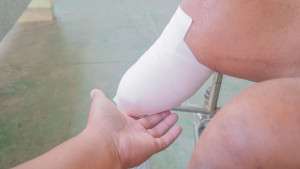
Why does the pancreas stop making insulin?
So the next why is why does the pancreas become saturated with fats?
Because we are eating the wrong amount of the wrong sort of food.
But why? The answer to that lies in the gut biota - which controls appetite. The gut will send out hunger signals if either the gut biota is not correct or the body is short of critical nutrients - even if we are more than full of other foods.
We simply don’t feel satisfied if we are missing just one single essential nutrient or we have the wrong sort of gut biota.
Now we are getting closer to a solution - we need to ensure we are feeding our gut the right sort of food to get the needed gut biota and ensure that there are adequate amounts of the critical nutrients in our diet.
How we die?
But thinking like a four year old we have yet more questions. How we die? How long will I live? Kids just never give up.
Now you may have seen the statistics that a few generations ago the average age at death was in the low thirties and now is around eighty. Fantastic you may say - but it is more complicated than that.
Back then kids died from some infectious disease. Three out of five kids would die before they reached the age of 5 and another one would die in their teens so four out of five kids would die before the reached the age of thirty.
But if they lived until they reached thirty they were likely to live to an old age in fact typical of the age we are dying at now.
Although the average age at death may mathematically have been in the early thirties in reality very few people died in their thirties, they either died well before or long after the average age of death which mathematically was the early thirties.
Premature deaths
There is a certain age when we just die of old age - there may be some name on the death certificate but essentially it is just old age. But most deaths are premature - we die before we reach that age limit of some disease - it used to be some infectious disease which we have largely overcome but more commonly we will die prematurely from some chronic or non infectious disease.
But what makes us die Daddy?
Now that is a really penetrating question, stunningly so for a four year old. Infections used to be the most common cause of death, followed at a distance by accidents which were not properly treated so they died again from infection.
Before Covid I could have rabbited on about the enormous success we had had in beating infections and even so we have done a pretty good job.
But now deaths from Chronic or non infectious diseases have spiralled through the roof. Deaths from the side effects would be the classic example and no doubt our four year old will grill us on this.
The Covid paradox
Our smart four year old may point out how many people are dying from Covid so doesn’t that support the theory that we must kill of all those pathogens - whatever the damage to the good bugs.
But our smart four year old will ask why is it that some people get Covid and they don’t even know or the symptoms are so small it does not matter while millions of other people die despite the best medical technology.
I have yet to find a technical paper which has studied the relationship between Covid and gut biota but why some people die of Covid and others are hardly affected, has received medical research.
The two leading factors appear to be diet and stress. It is likely that people eating a healthy diet have a healthier gut biota which supports the argument that we should be paying attention to the good bugs.
Good bugs and Bad bugs
Let us not fool ourselves - there are really bad bugs which will make us really sick or even kill us. Modern antibiotics may have prevented us from dying from these bad bugs but they are largely still out there waiting to kill us.
So, throughout society we now take great precautions to prevent these bad bugs spreading and becoming a serious problem.
This is particularly true in our food industry and you can go into any Supermarket and be pretty confident there are no harmful bugs in the food you buy just waiting to kill you. OK there may be a very occasional outburst of E-Coli but they are pretty rare.
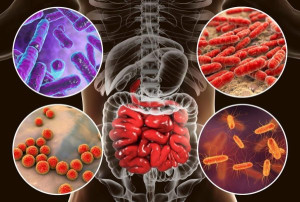
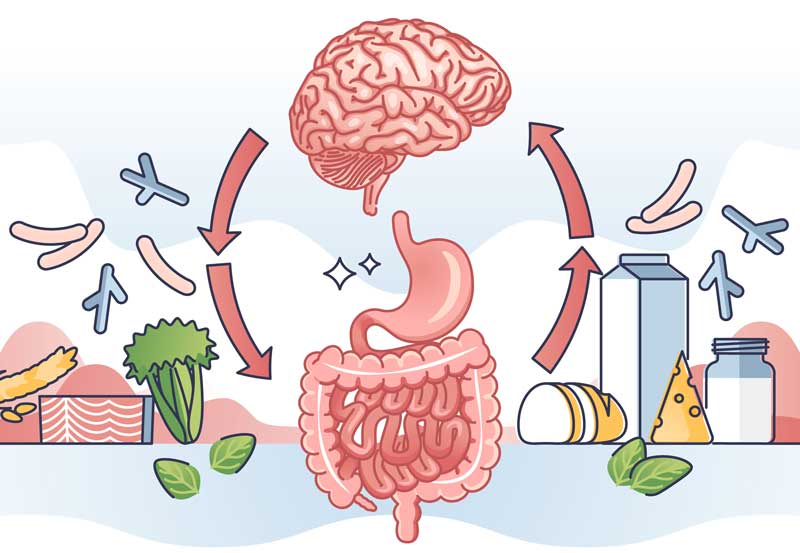
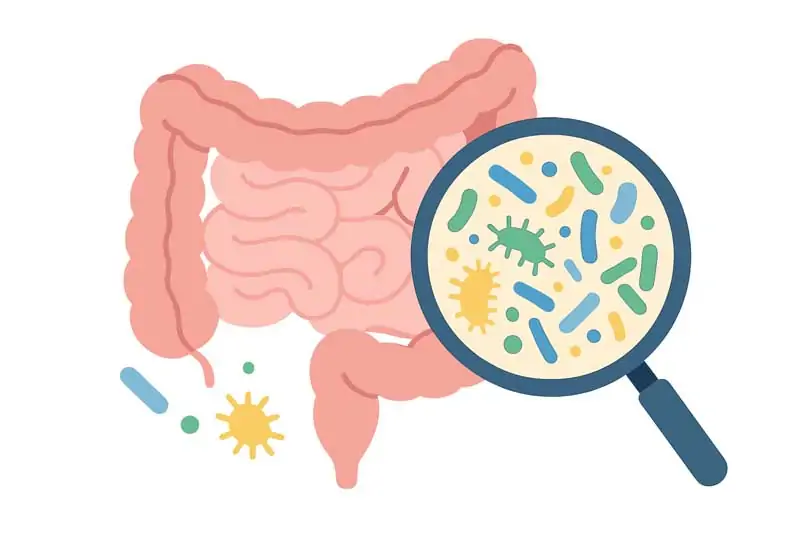
But there also good bugs which are totally essential for life, they are all over and in our bodies, particularly our gut. If you read any of my articles you will see it is almost impossible for me to write without saying how important our gut biota is, a real brain controlling our appetite, replacing our body parts and hosting our immune system.
Our gut brain is just essential for health and it is just a feature of modern life that in our efforts to avoid pathogens, the bad bugs, we have killed of many of the beneficial biota - the good bugs.
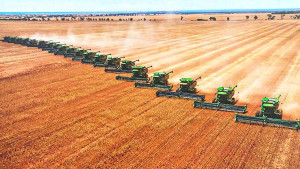
Much of our modern food system is really just large scale hydroponics with the nutrients being supplied by fertilisers and the soil doing little more than hold the plants upright.
Some growers will even go to the length of injecting methyl bromide into the soil to completely sterilise the soil and kill of all living creatures.
We are very good at killing everything but it is not so easy to kill the bad bugs and not the good bugs.
This is not healthy.
The punch line
So let me reiterate the punch line - we used to die largely from infectious diseases but we have managed to control the harmful bugs which kill us but we have also killed off the good bugs we need so we now largely die from chronic or non infectious diseases.
With the armaments of modern chemistry we are very good at killing things - but we don’t really have the technology of killing of the bad bugs without killing the good bugs on which our lives depend.
So what is the alternative? Ecological balance
Ecological balance
There has been some form of life on earth for the best part of four billion years yet the world is full of life - for a start there are some eight billion humans. How is it that so many humans have survived when there are all these bad bugs about?
These pesky four year old kids keep on coming up with the most penetrating questions.
But this time the answer is simple - ecological balance. If the conditions are right the good bugs can simply out breed the bad bugs. May be not eliminating them but reducing their numbers so they become manageable.
Most people have E-Coli in their guts and they do no harm and no one even knows about it.
That is what the Gbiota system is all about, creating the right conditions so the good bugs can out breed the bad bugs so we can live a healthy life by growing plants which we eat to feed our gut biology.
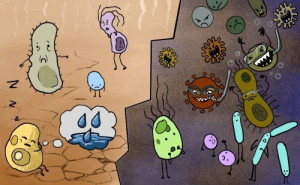
One critical factor entails managing the moisture level so the good bugs can breed away and it is not too wet which are the conditions the bad bugs will breed in.
First line of defence
Now let me be very clear on a key point. Eating a diet full of beneficial biota is the first line of defence in living a healthy life and may well protect us from becoming sick. But it is only the first line of defence and not an alternative to the benefits of our modern medical system.
Who has the best guts?
The Gut Biota is the hot topic in medical research so there is a sea of studies to ponder over. We understand that the trillions of cells in our gut communicate with each other acting like a super computer. But what is clear is that the variety of different species has a significant impact on how well our gut brain works - just a few cells of a specific species can have a major impact.
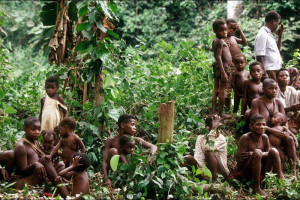
From these studies we learn that the groups living a more natural life have a much healthier and more varied gut. So what do they have in common? It is not some specific plant - that magic plant which will solve all our problems from some remote part of the world is just a marketing myth - may be a very profitable myth - but still a myth.
Some groups are living on Tubers, other wheat, other rice, some sweet potatoes - there is no magic plant. But all the food is grown in soil which is near natural - full of decomposing organic matter with no toxic chemicals and almost always eaten fresh. This is an important point to note.
But before you go and adopt a hunter gather life style by sharpening up the broom stick handle to convert it to a spear to capture an antelope for dinner there is one point to notice - there are just a few thousand people living an old life style - there are some eight billion people in the world and we would run out of fresh antelope within a few days.
We have to learn the lesson from the past but we have to use modern technology to apply the lessons.
To breed the beneficial microbes we need a broad spectrum of inputs some carbon, some nitrogen, a range of minerals, inoculants to start the process and air and water. We also have to consider the need to move to a circular society where we recycle our waste food and organic wastes.
In fact air and water are the most critical - if the soil is too dry the biota will not breed - or at the other extreme too wet - the soil becomes anaerobic so we will end up with harmful biota.
We need that Goldilocks moisture - not too dry and not too wet - just right.
That is what the partial flood, drain and wicking system is all about.
Testing
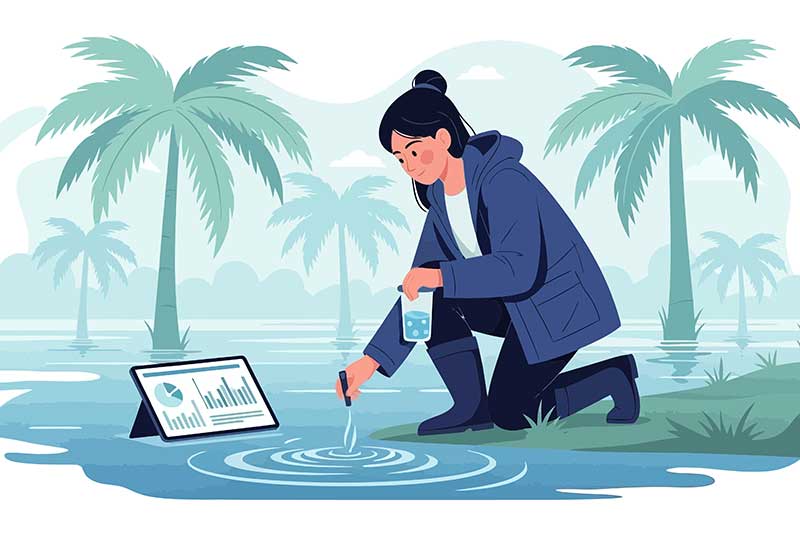
How do we know if the Gbiota system is working. DNA testing can identify the various component in in your gut. We all have different gut biota so it is really best to be tested before starting eating Gbiota food and after to identify the changes.
The Gbiota team can organise independent testing. The results can show a change in gut biota and identify a change in variety and a shift to species which are generally considered more beneficial which indicates a probability of better health.
A lot simpler is to see if there is a change in food carvings which indicate either a lack of critical nutrients of a poor gut biota. If cravings are reduces accompanies by a weight loss then it is working but this does not mean you will be resistant to some unknown pandemic yet to emerge.
Part 2 - The practical side - breeding beneficial biota
All this may seems very theoretical but in Part 2 we get down to the nitty gritty practical side of making it all happen.
Breeding the beneficial biota in food waste in a Gbiota bed does require space, time and skills. It may be an excellent way of growing gut food but it does require land, time and skills to operate correctly which means use is limited to those with a garden and the skills.
We are promoting a system where skilled community growers set up in ground Gbiota beds to breed the beneficial biota to grow Wickimix a growing media for Wicking beds. This is used to fill Gbiota boxes which gives access to healthy foods to virtually everyone, even those living in apartments with no time.
Fundamental shift
This is a fundamental shift in how Wicking Beds and our food system operates. Wicking Beds have been widely used for years and are seen as a self watering system to make life easier for gardener.
Gbiota boxes are still Wicking Boxes but there role is to change our food system so instead of all our food coming through the conventional system of mega farms and supermarkets some of our food will be grown at home in peoples houses or apartments providing plants deliberately grown to act as pre and pro biotics to feed our gut biota.
This is a very different ball game (or paradigm shift).
Gbiota beds
I am including this section on Gbiota beds as they are important because they are used to make Wickimix, the growing media with the beneficial micro and macro biota and minerals which are used in the Gbiota boxes. There are some people who want to know how they work even though they will not be using the technology directly and is just background information.
We have separate detailed documentation and provide technical support on how to set up and run Gbiota beds as it is such a critical part of the process.
If you just want to have gut food growing in your own home skip this section and go to the section on Gbiota boxes.
Creating the conditions to breed beneficial micro-biota
The main purpose of a Gbiota bed is to grow the growing media (soil) but even to do that we need to grow plants - they capture the energy from the sun and carbon dioxide to make sugars which they exude from their roots to attract and help breed the beneficial biota that in turn provide the plants with water and minerals that the plant finds difficult to extract by themselves.
This link between the plants providing energy and the soil biota providing water and nutrients is the greatest deal in the history of the world.
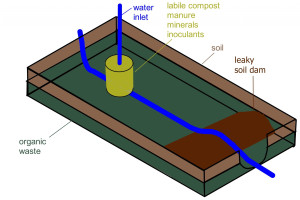
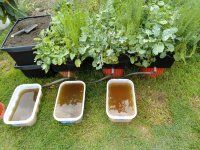
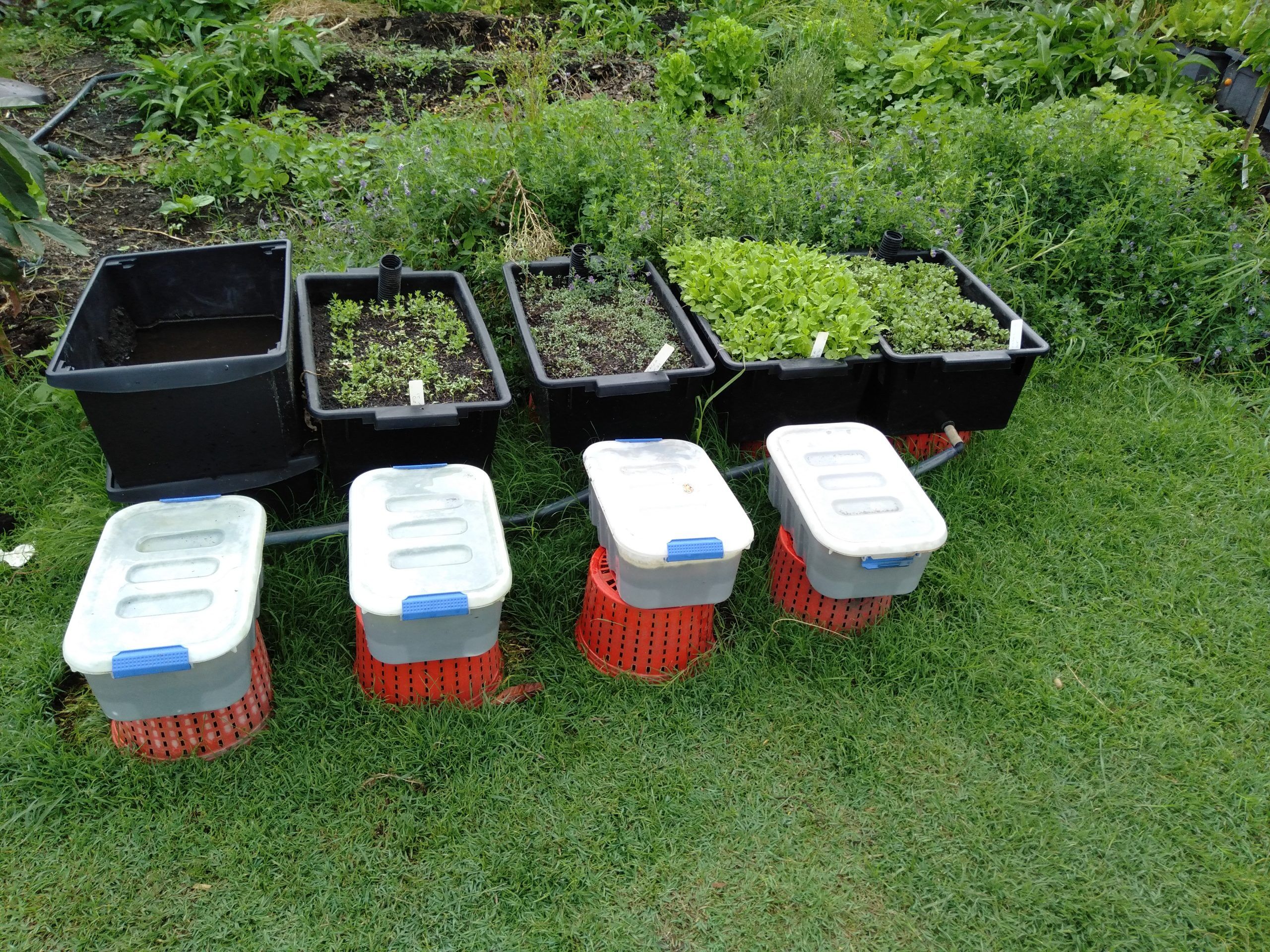
This is how a Gbiota bed works. We have a sump which holds water or rather compost tea. A pump controlled by a timer, periodically picks up the water which flows through sub-surface pipes to saturate the soil in the base of the bed with any extra water returning to the sump. At the end of the cycle the compost tea drains back into the sump.
A key feature is when the pump is running and the trench filling it is expelling the gases - like ethylene - which act as growth inhibitors and when the water drains away it sucks fresh air back into the soil. Water will wick up into the root zone providing a steady supply of nutrient rich tea to the plants.
Not exactly rocket science but it must be done right for it to work, as it should, to breed the right species of beneficial biota which will enter the plants which we will eat to enhance our gut biota.
paper it is a fully automated system but there is a big difference between automated and maintenance free - after all we are dealing with what some may think is pretty yukky water which has a great capacity for blocking up the pumps and pipes. So maintaining the system and ensuring that the inputs are controlled to breed the right species of biota is not exactly the activity for a working mum with a bevy of kids.
Water - that weird stuff
We are so used to water that we probably never bother to think what weird stuff it is. We may just get a bit angry when it expands when it freezes and burst our water pipes and certainly one of the weird features of water is the way it expands when it freezes - that is highly unusual.
But that is only the start. Water has a fetish - it just loves other things and itself.
Water has a tensile strength just like a steel rope - that is how trees work. Here in Australia we have the Mountain Ash which grows to over a 100 metres tall. How does water get to the top? Simply by waters tensile strength. Water evaporates from the leaves and water is literally pulled up from the root zone (which is filled with water by a combination of osmotic and wicking actions).
Water is also attracted to other substances, when you come out of a shower you are covered in water droplets that don’t run off. Water has a fetish about your skin and just holds on tightly to your skin.
But is also has a fetish about soil, at least most soils, so you can wet a bit of soil and the water will just stay there, it won’t just keep on going downwards under gravity nor far sideways.
This is great - if the water did not stay in one spot hugging the soil there would be no life on earth. The plant roots, certainly aided by the fungi and soil biota will suck the water and dissolved nutrients out of the soil and into the plants so we have food to eat. Great!
Clay sludge
This fetish of water in liking things leads to the peculiarity of the sludge which is formed when clay (or soil containing clay) get seriously wet. Technically sludge is thixotropic which means that when at rest it has shear strength - in other words is behaves like a solid. This is caused by the water molecules bonding to the clay particles.
This is an effect that many frustrated gardeners have experienced when the put in a drain to get rid of excess water in clay and despite the care in making the drain slop downward the water appears to defy gravity by refusing to flow.
But once the head (water pressure) reaches a certain level the water bonds are broken, the water flows freely in a big gush.
This is how we get the ever increasing landslides, the water builds up to an over saturated level but at some point the system collapses with disastrous results.
While there is no danger of a Gbiota bed causing a land slide it is important that the bed drains properly so it is properly aerated. It is particularly important in the base of the bed where water must flow freely to distribute the water uniformly to the biota and plants.
This is important in managing the bed and why we need to ensure a high organic content.
The flood, drain and wick cycle
But how do we get water to move through the soil so it waters a larger area. We simply have to add more water so it becomes saturated with the larger pores in the soil full of water when it will wick across the soil. Water will then move to fill the smaller pores.
But we do not want soil that is so saturated that the harmful pathogens will breed up so we have to do what nature has been doing for years, go through a cycle of wetting and drying.
To get the beneficial biota to out breed the pathogens we have to use a deep cycle, in other words we wet the soil so the water will flow and wick to other areas then allow it to drain. This is what the flood, drain and wick cycle is all about and is at the heart of the Gbiota system.
A community grower, eg a grower who is growing the soil for other people in their neighbourhood will use pumps and timers (or a solar panels with pump) which will automatically generate this deep cycle.
A consumer will typically have to create this deep cycle manually - that is why I have spent so much time to explaining about the weird properties of water.
So I will use block capital to emphasise this key point DO NOT KEEP ON TOPPING UP YOUR BOX WITH WATER USE A DEEP CYCLE.
Top and bottom watering
An interesting experiment is to take an old fish box and fill with soil. Pour a little water on the surface and it will not go down to the bottom (defying gravity is one of water weird properties) it just sits there.
Add more water and the soil will become saturated and then the water will start to flow downwards. But soil is never uniform so it will find a crack in the soil and move downwards leaving an area which is not properly whetted.
But the worse thing is that the surface layer will be saturated and seal off the lower layers from the air - we have the worst condition which will breed harmful micro-biota.
Now compare this with the bottom feeding system of the Gbiota bed. We saturate the base of the bed - there is no avoiding this - water won’t move through the soil until there is a zone of saturated soil.
The water, using the wonders of surface tension and wicking action, will slowly wick towards the surface.
But soil is never uniform with small and big pores. Surface tension will work in the small pores pulling the water upwards, but there will not be enough surface tension in the larger pores so they remain full of air - which is what we want to breed the beneficial micro-biota.
There is always a gradient in wicking action so as we get nearer the surface only the finest pores will be whetted leaving a pathway for air to enter the lower soil levels.
But we have a layer of saturated soil in the base which we drain out - and as it drains it will suck fresh air into the soil above.
The water - or rather compost tea returns to the sump ready for the next cycle.
The water is always moving - it is a continuous cyclic process - with the water never being stagnant for any length of time which will breed the harmful micro-biota which at worst will send us scurrying for the toilet and at worse will make us seriously ill or - the ultimate - dead.
Like any good film there are goodies and badies and we are just fiddling the system so the goodies win. You can call it cheating or creating an ecological balance - as you wish.
Gut biota has a short life cycle
Another very important factor is that the plants need to be eaten shortly after harvesting. Some component of the complex biota inside the plants will have a half life of only twenty four hours.
This is essential for the health benefits but also they taste so much better when fresh. We don’t have taste buds for nothing - they evolved to tell us when food was healthy.
So while Gbiota beds may be a great piece of technology they are really limited to people with a garden, growing skills and time and are happy spending their time recycling waste food, playing with manures and piles of rock dust and cleaning out pumps when they get blocked up from the organic waste. (That’s me if you hadn’t got the message).
But the aim of the Gbiota system is that everyone should have access to healthy gut food. Not everyone has my obsession with recycling and doesn’t mind a bit of yuk.
So we have made a two stage process.
Experienced local growers with a garden, time and the necessary skills (and think it would be rather nice if their grand kids had real food to eat) will set up Gbiota beds with the prime aim of growing Gbiota soil - which we call Wickimix.
This has to be a local operation so the Gbiota team provides the training and support to local community growers so they can set up these Gbiota beds to grow Wickimix which is put into boxes to grow plants which can be picked and eaten without the excessive delays that inevitably occur with remote growing.
Biota boxes
Everyone has a gut and it essential for health that we feed it gut food. The Gbiota box system make gut food available to virtually everyone, even people living in apartments with not garden, time of gardening skills.
Nothing special about the box
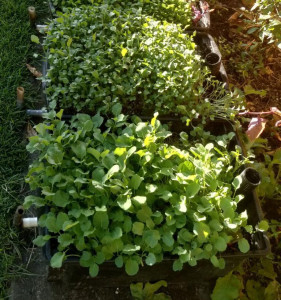
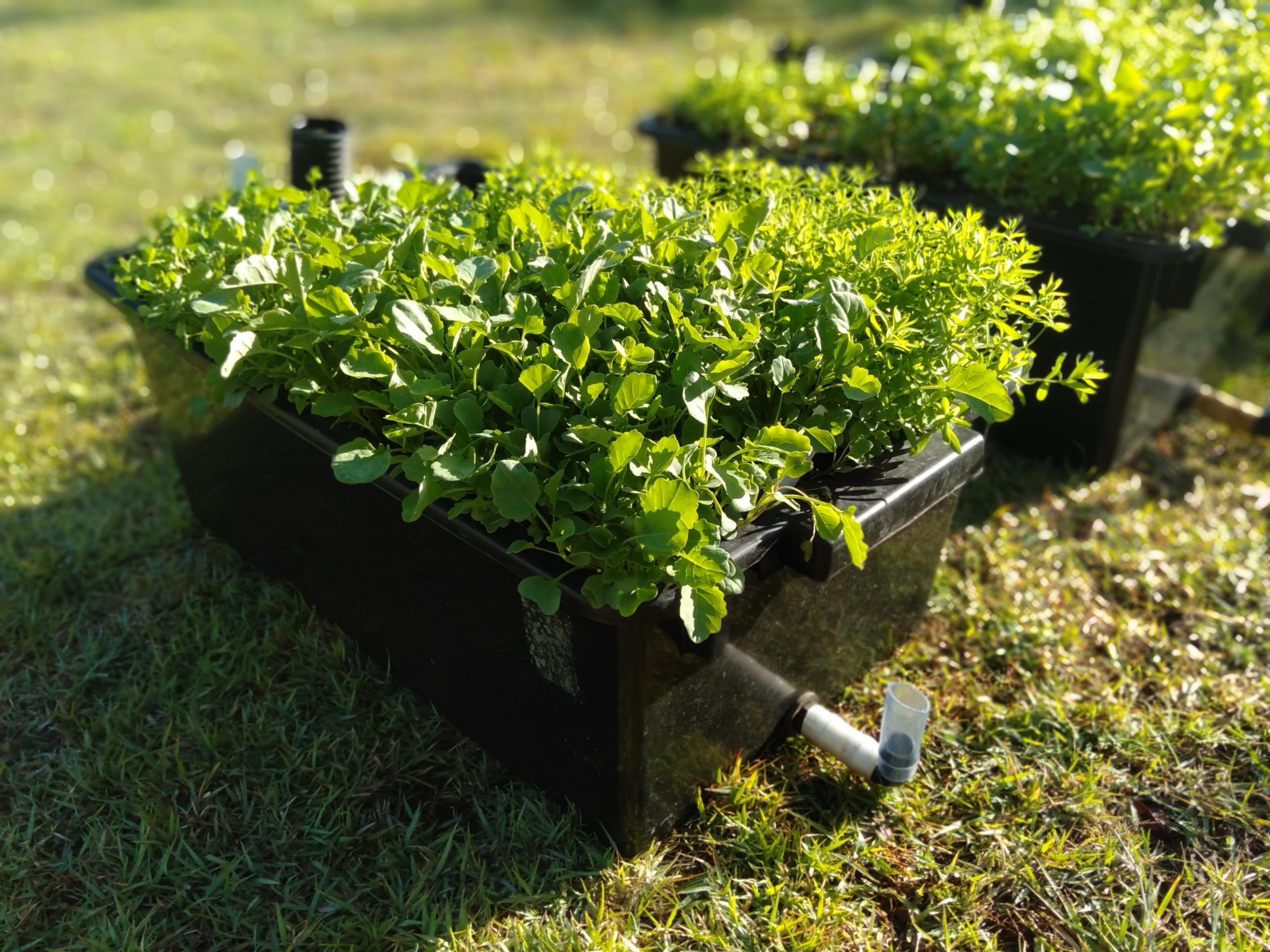
The box can be any shape or size to suit. It could be just a simple 20 litre tote box from the local hardware store or a full sized container bed a couple of metres long, there is no magic about the box itself - it is what that goes into the box that matters.
It does need a drainage hole drilled in the base and a standard irrigation fitting with a bit of drainage pipe in the bottom - people can make these themselves or the local grower can provide these as a finished unit.
Choosing a system that suits you
Small boxes
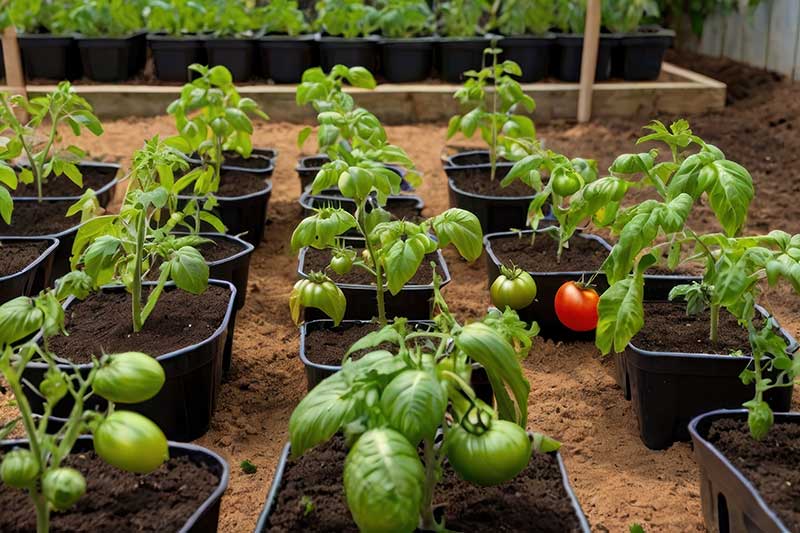
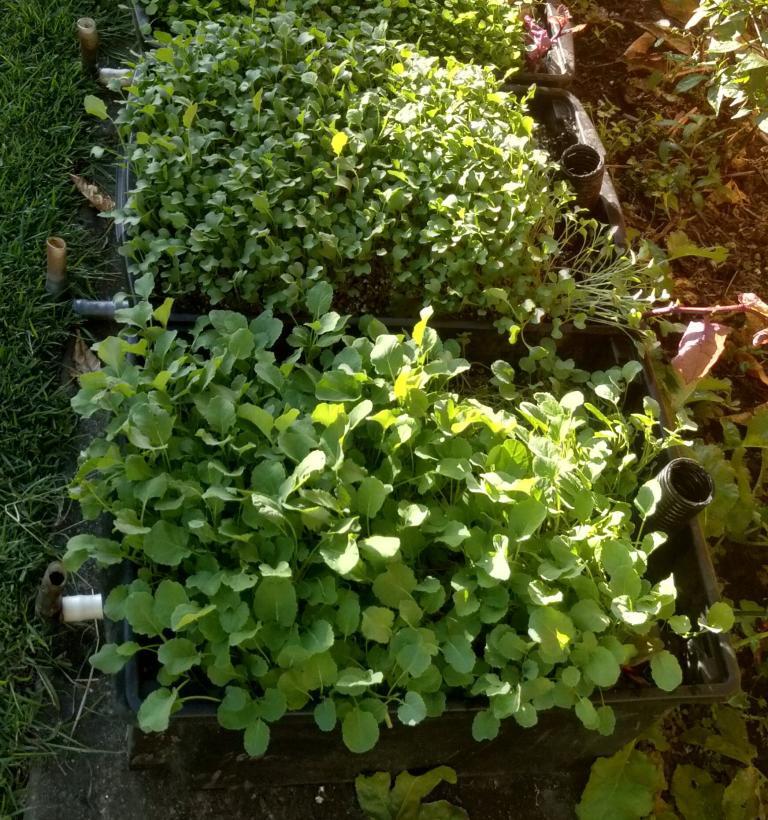
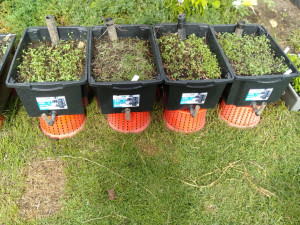
Peoples circumstances vary. If you are living in an apartment with little space the easiest way is simply find a local grower and buy a small Gbiota box of baby greens already growing, just water when needed and then swap the complete box (with new Wickimix) for another one when finished.
Your grower will make, fill the box with Wickimix which is full of biota and nutrients and seed the box for you.
Dead simple, just give the box a bit of water and harvest the plants when ready and leave all the problems to the local grower. You don’t need much space, a balcony or a widow sill is fine (plants do need a bit of sunshine).
Gbiota boxes have a swivel pipe on the bottom which shows the water level. You can simply swivel the tube and see if any water comes out. If there is still water in the bed do not water, just wait until there is no water running out. You can actually wait a day before you water as there will still be plenty of water in the soil.
If there is still water in the box after a week you should let it drain out (catch it in a container - it is full of nutrients) so the water is never stagnant for any length of time.
You may like to help the grower - and the world - by donating your food waste to your grower so it can be recycled.
These small boxes, which are light enough to be swapped, are such an easy way to have fresh gut food growing in your home or apartment.
If you are not used to growing they are a great way of getting started.
But if you are ambitious you can move up to larger boxes which are too big to move about.
Larger boxes
If you have a larger space you may want to set up a larger box which can grow much more food and start recycling your waste food yourself.
These large boxes are just too big to move so you will need to know how to operate them properly to create the right conditions where the beneficial biota will out breed the harmful biota.
How to make a larger home Gbiota box
Start by choosing the size of box you want, the same principles apply to all large boxes (eg boxes too large to be just swapped).
You can make them yourself or ask your local grower to do it for you.
Don’t get confused - Wicking Beds are often used as a self watering system Gbiota beds and boxes still use the Wicking principles but were developed to breed beneficial micro-biota and are actually a lot simpler than the self watering wicking beds.
Simply drill a hole of the right size to fit your irrigation fitting as shown as low as possible int the box. Connect this so a 90 degree bend with a swivel or sight tube on the outside and fit a piece of drainage pipe to the inside.
This can either just fit along the base or you can curl up to the surface. (The only reason for the curl is to help clean out the pipe should it get blocked - but you can also clean it out by connecting a hose pipe to the swivel tube. This can really amuse the kids as you can use the hydraulic pressure to lift the entire soil mass - great fun and teaches them about hydraulics.
Then make the compost tube. There are two ways to make a compost tube.
In soil compost tube
Take a length of regular pipe, about 100mm diameter and cut the bottom end at an angle of bout 45 degree (so the worms can get in) and the other end so it will sit about 200mm above the box.
Some people like to drill some holes just below the surface level of the soil, this makes another passage for the worms to enter and also lets the decomposed food waste flood out into the box.
I prefer to keep lifting the tube up as it fills which give more space for the food waste.
Normally you would put this in the box before filling so it will be empty.
You just put your food waste into the compost tube and cover with Wickimix - just enough to keep those pesky flies out.
Use the tube to water which will flow out of the bottom end taking some of the composted food waste with it.
You may find that you are making waste food faster than it composts so you pull the tube out, clean out the tube and wriggle into the soil in another area and use the contents of the tube as a mulch.
Depending on your Yuk tolerance you may prefer to use a surface or on soil tube.
On soil tube
The on soil tube is even simpler - just a length of pipe, about 300mm long which you just press into the top of the soil (to hold it in place) and fill with compost and Wickimix as with the in soil tube. 100mm diameter is fine but in a bigger bed 150mm diameter by 300mm high gives a good volume.
This is simply wriggled into the soil so it is not easily knocked over and filled with food and organic waste and periodically covered with Wickimix before the flies become a problem.
When full it is simply emptied and the contents used as a mulch.
But we want the water to go right down to the base, so simply make a hole by pushing a stick down to the bottom of the box or better still use an auger to make the hole.
I have a collection of augers and hole makers I have brought from the local market for a few dollars. But that is just me - a stick or trowel works fine.
Filling the box
I usually fill my boxes in a series of layers which may look good at the start but the box will end up full of worms which will happily move the soil around.
If I am feeling wealthy I may go and buy some Vermiculite (a fine water holding rock) and fill the base to a depth of about 50mm. Or if I want to play with my slasher I will chop any prunings and small sticks laying around to make a woody base layer.
It is important to have a porous, freely flowing layer in the base.
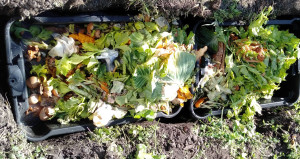
Next I will add all the food waste I can find and make a second layer then add a layer of manure which helps the food waste to rot down.
Finally I will fill the bed with Wickimix from my Gbiota bed or in your case your local community grower. That layer need to be at least 100mm thick so the plants have a zone to put down their roots.
Then just seed and cover with Wickimix in the normal way.
How to manage a larger box
Feeding
To keep the bed working at maximum performance we need to both feed and water the bed.
Food waste is simply pushed into the tube. If you have a climate anything like mine in about two days there will be a mass of vinegar flies and within a week an even bigger mass of blow flies - which is not nice.
You may be lucky and get some Black Soldier flies which is good, except if you are not used to the larvae they can be a bit of a shock first time you see them but they are really good at breaking down food waste.
But you can solve this problem and add extra nutrient to the system by collecting the food waste over a few days in a sealed container, or just out put them in he freezer, then put the waste into the tube and covering with a good layer of Wickimix. Wickimix contains worms and the biota to break down the food waste.
You may collect food waste at a faster rate then it is broken down in which case you can simply move the tube to another location, just pull out the tube, push out any remaining contents and then wriggle down into a new spot. It is a good idea to clean out the tube so the new food waste goes straight to the bottom of the bed.
Before refilling with food waste it is a good idea to add some porous material to the base, either Vermiculite or slashed up woody waste. This will keep the base porous.
Some people find this a bit of a messy operation (because it is) so an alternative is just to have a piece of pipe sitting on the soil.
You can water the bed from the tube. If the tube get full you can lift the tube up (either in or on ground tube) and simply flush the contents out flooding the top of the bed.
Watering schedule
I only start the proper Gbiota watering cycle when the seeds have germinated and the root system has developed.
As I explained, and is important, you do not want to have the soil saturated for any length of time as this will create the conditions where the pathogens can grow. The soil needs to be whetted enough to make the water spread throughout the bed, then allowed to drain - or at least the water used up so there is a period when the soil is fully aerobic.
It needs to cycle with the flooding expelling any foul gases then drained to suck in fresh air so the bed is aerobic for most of the time.
In a Gbiota bed this automatically done by the pump and timer system which works really well without any thinking but in a box it needs to be done manually. (There is no reason whey you cannot fit a pump and timer system to a box but for most people this is just too much of a bother but some people just like playing with pumps - I happen to be one of that weird breed).
The flooding process is done by putting the swivel tube so it is vertical then watering, normally from the Compost Tube.
Stop when you see watering entering the swivel tube as it will continue to fill as the water peculates down through the soil. Catch any water as you really don’t want to be wasting the overflow which is full of nutrients and beneficial biota.
Cycle lengths
The beds with pumps and timers are automatic and will operate on a daily cycle or even several times a day. But the Gbiota boxes are manual and most people do not want to be watering daily so the question is how long a cycle can be used without the beds turning putrid.
The answer seems to be that you don’t want to go for more than a week without the base of the bed drying out.
This seems to work fine but I prefer to use a cycle twice a week.
But here comes the good news;-
I also use a system where I plant some thirsty plant like tomatoes, lettuce or my favourite - spinach. They can suck the water out so fast that the free water (water in the base of the box) has been used up within two or three days but there is still enough water left in the soil pours to keep the plants moist.
This is really easy, never bother with the swivel tube, just fill the box until the water reached the top of the swivel tube then leave for a week. It is a very easy and convenient system but there is a bit of a learning phase to get the system working right by checking the water in the base of the bed is not going putrid by taking a sample using the swivel tube.
Mr Murphy visits
Mr Murphy, of the famous and very true law,’ if things can go wrong they will’ has a habit of visiting. When Wicking and Gbiota beds (and a Gbiota bed is really just a Wicking bed used to breed beneficial biology) are first made they generally work famously with a really active biota and excellent growth rates.
If you keep the worms and biota fed they can keep the bed working nicely for a very long time with a nice open porous soil, but if - for example - there is a series of heavy rains then any fine clay particles can wash down to the base - the biota stop breeding and the plants struggle.
Just empty the box, save the soil and reload the base of the box with fresh open organic material and put some of the soil back to fill the box and start again.
If you are into the philosophy of minimal soil disturbance (like me) just break the reworking up into stages, replace one half or third of the box, let the biota recover then do the next zone.
Getting started
The first question is do I want to be a grower or a customer.
If you want to be a customer - which means you just buy boxes from a local grower which probably sit on a patio or by a window - all you have to do is find a local grower.
It needs to be local because the whole point of the Gbiota system is to enhance you gut biome which mean you must eat fresh.
But how do I find a local grower? What you really need to be doing is to set up a local group - nothing formal just a bunch of people talking to each other.
This is something you really have to do yourself but we have set up a social media site so you can make contact with similar minded people in your area. Just go to the Community on the menu and this will take you straight to the social media site (www.gbiota.club) where you can register.
This is a confidential site but you will need to fill in the areas which describe your location.
Hopefully this is self explanatory but if you have any problems then just contact me at colin@gbiota.com
I you just want ot be a home grower then all you need to is to sign up as a grower - you can go to account or you will be asked to register if you try and access any grower posts.
But the whole idea is to create a local community food system so we hope you will become a community or even a commercial grower.
You will need to tell other people that you are a a community grower so you should join the social media site by registering at the community on the menu.
As this is a social operation you may be happy just having people pop round to collect their vegetables of boxes but you can also use the shop facility which is the multi vendor site pickandeat.shop to become an internet trader.
Again I may suggest you get in contact with me first at colin@gbiota.com so I can guide you through the set up process.
Please note that Gbiota is a registered trade mark which you are automatically entitled to use by registering as a grower.
If you would prefer to chat (yes I am a real person) and I will try and sort out any problems by email but if I can’t solve your problem straight away we can end up on a Zoom or Skype call.
Next read Community food

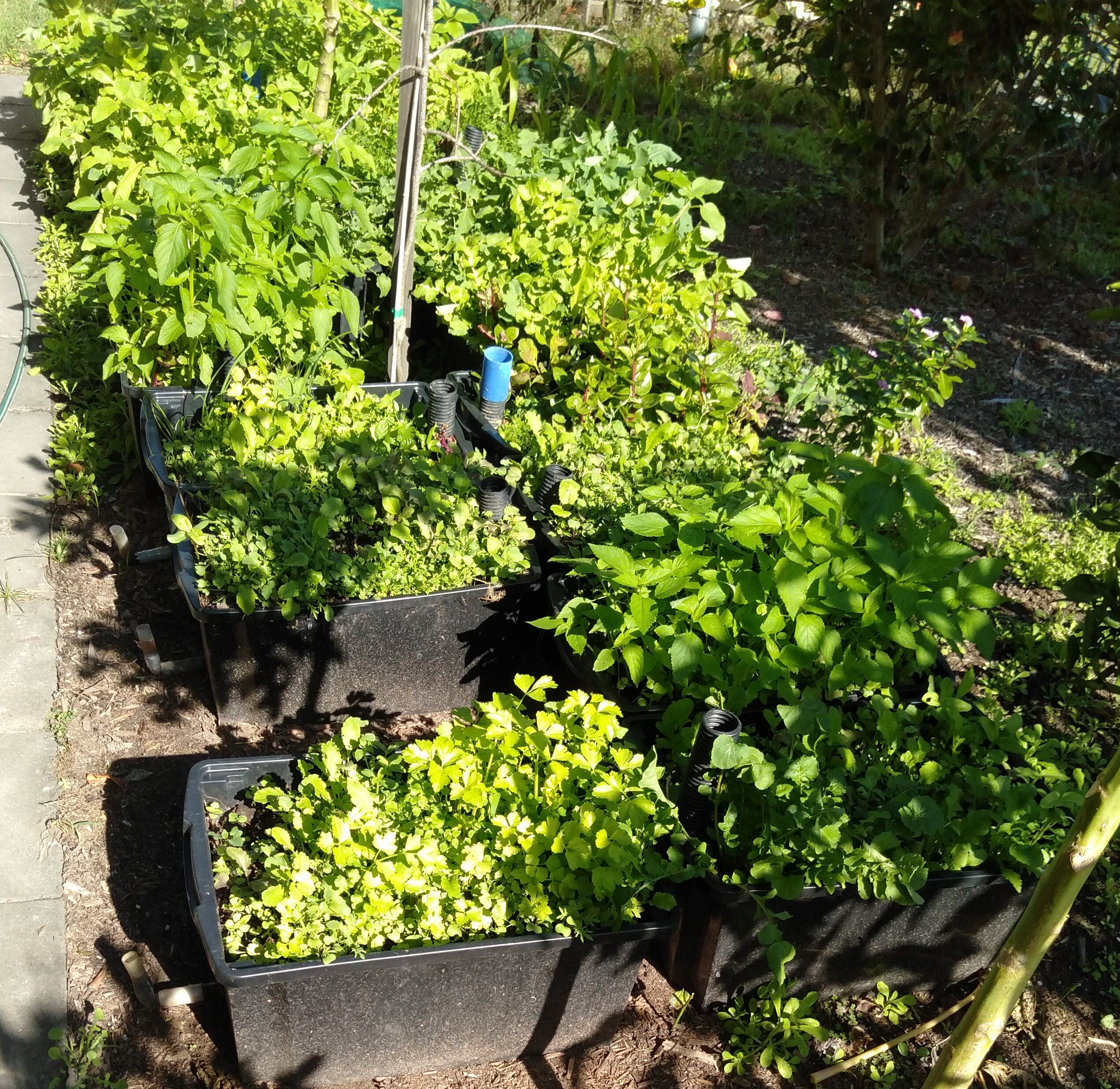













 If you looking at this web I assume you are interested in your health and understand that you just cannot be really healthy unless you are eating healthy food.
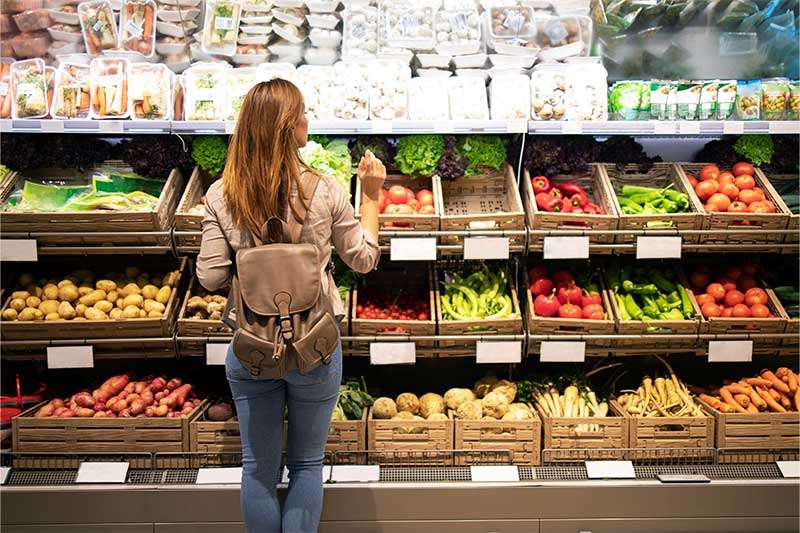
 The supermarkets are full of food - how can there be a food crisis? OK there are people who do not have enough food but that is because of equity and food distribution, but we are growing enough food. The problem is we are growing too much of he wrong sort of food and not enough of the right sort.
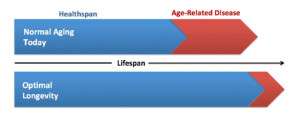
 Is the food we eat making us healthy? There is a big difference between health span and life span. We may be living longer life span has increased significantly but health span is dropping.
 We need food for energy, basically for fuel. The majority of the food we eat we burn off just for energy - it is simply fuel. There is no shortage of energy food - the energy comes form the sun, the plants extract carbon dioxide from the air to make carbs. These are processed to make our modern foods full of sugars, fats and carbs - available in abundance.
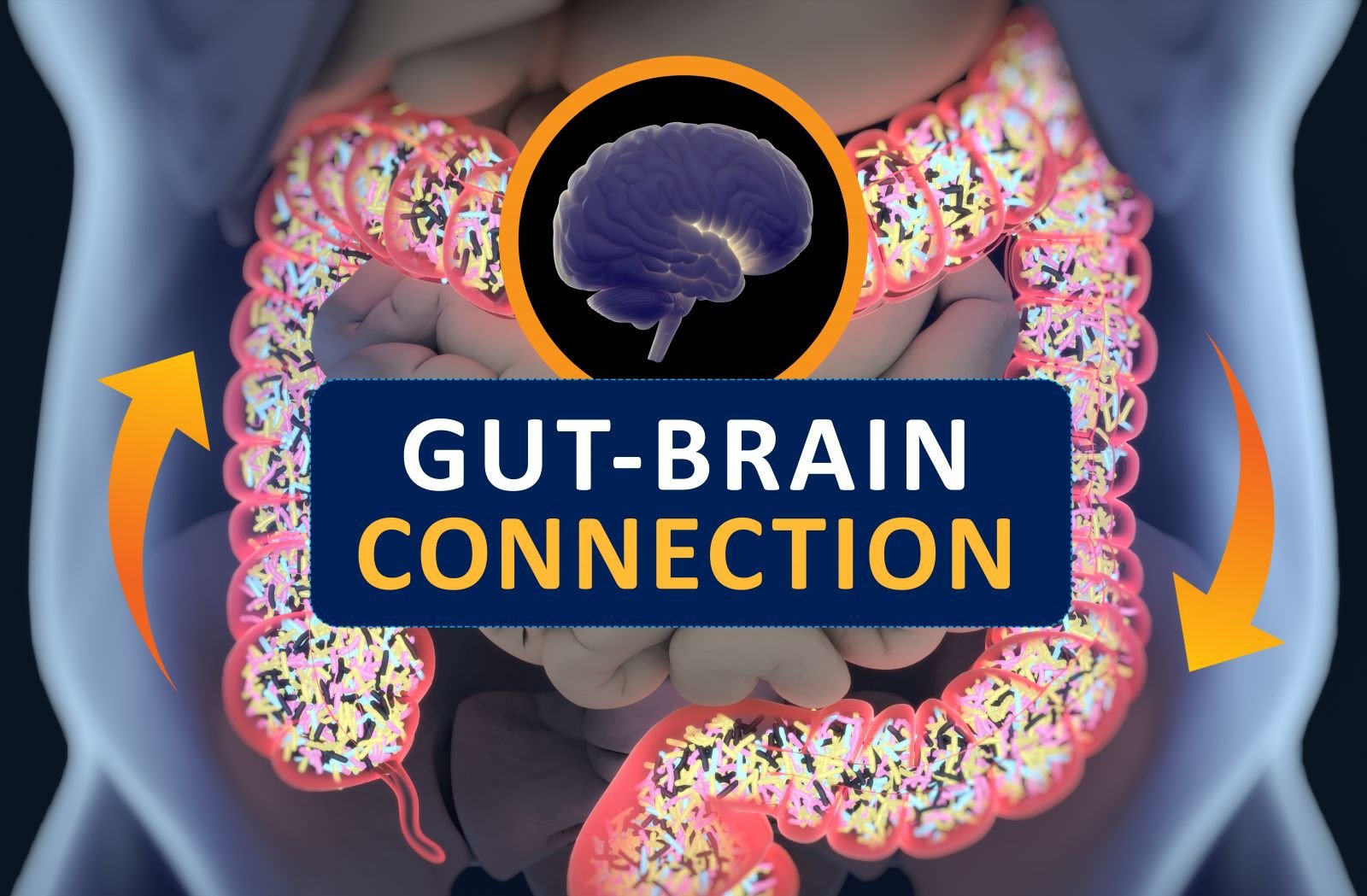
 But the real crisis in food to feed our brains. Yes brains - we have two brains - one in our head and the other in our gut. Our gut is a genuine brain with trillion of cells talking to each other, like in a super computer.
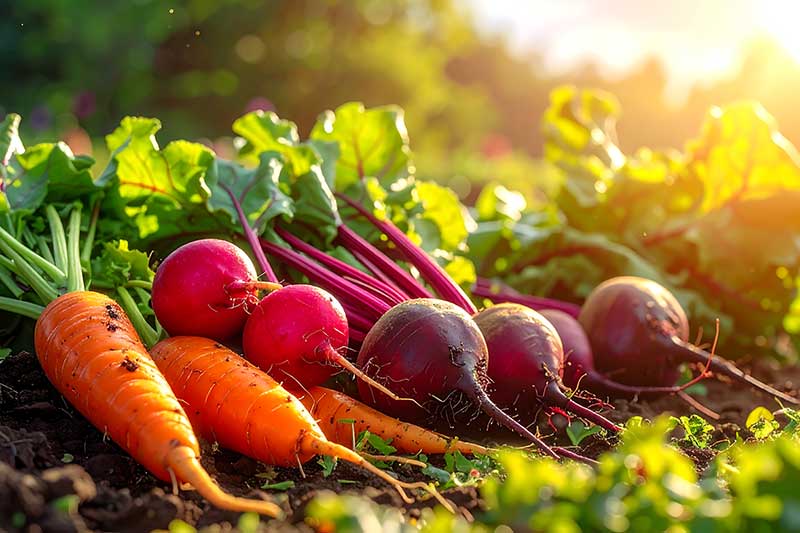
 That is easy - we just have to eat fresh plants grown in nutrient rich, biologically active soil.
 That is why we developed the Gbiota Biobox system.
 If you live in cloud cuckoo land you may believe that there will be a continuous supply of healthy food way into the future. Dream on.
 If you are like most people you will think that the magic 'they' will fix it. They being the Governments, some mega corporation or some techno brain breeding meat in a test tube.
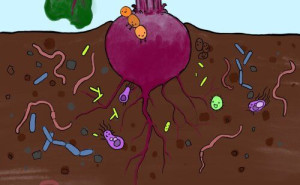
 The soil is full of beneficial microbes living and breeding in the organic matter in the soil.
 Modern food makes us overfull but under nourished. Healthy food is grown in soil full of beneficial biota and minerals.
 It is simply the power of the wallet. One person going into a supermarket has no buying power.
 First step simply register that you want to buy real food grown in living soil in our community area - it costs nothing and you can make contact with other people who want to eat healthy food grown in real soil - we call them biofoodies and growers committed to regenerating their soils.
 If you, and your grand kids and their grand kids want to eat healthy food then join the Gbiota social movement. One person can do nothing - a community of like minded people can make thing happen.
 We can stay with our current food system where we chop down the last bits of remaining forest for land which we destroy with chemicals so we can grow crops to feed to animals locked in cages and covered in their own shit which end up polluting our rivers.
 The food is full of fats, sugars and carbs so we get fat and sick and may have a leg chopped off from diabetes and will end up decrepit before we die young.







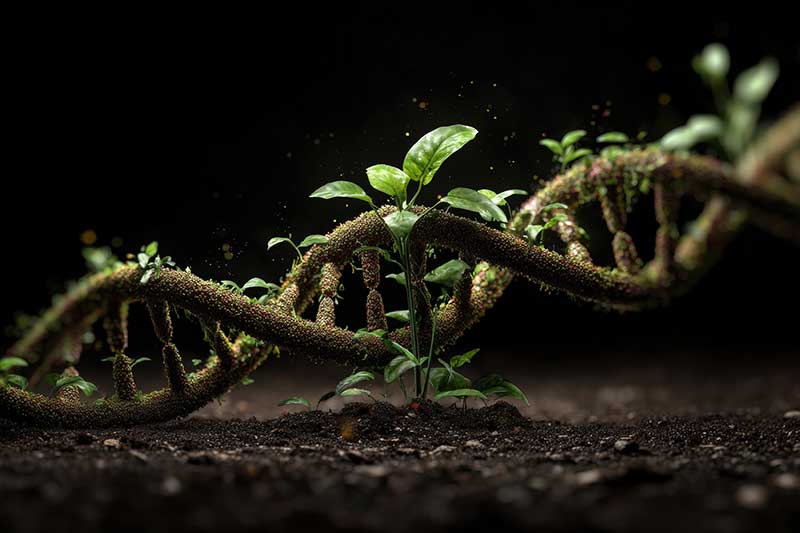
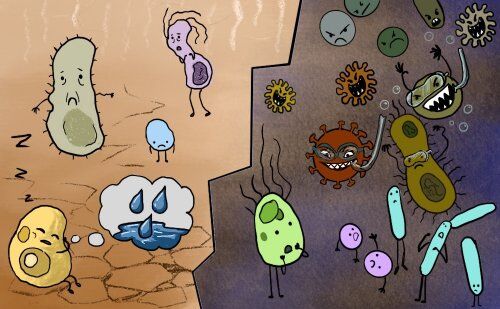

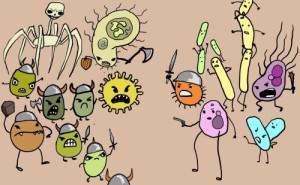











 We are born with all our organs in place following instructions from our DNA - with one exception - our gut.
 But where does Alice get all those trillions of microbes that will make up her gut brain? From her mum - Bernadette.
 This is vital for everyone’s
 Part of this is just education, making other mums aware of the importance of the gut brain, but she also helps organise the local production of
  When I was a kid bread would go mouldy within a few days, now it is virtually indestructible by the elimination of the micro-biology. But is the elimination of th
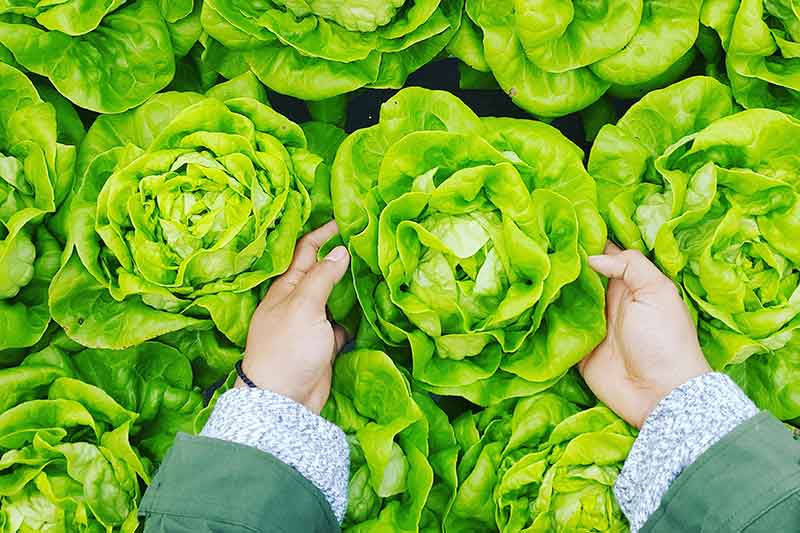
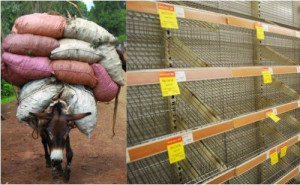
 Go to any supermarket and you can buy a lettuce or cabbage for a couple of bucks. It is truly incredible that they can produce, transport and put these on the shelves so cheaply - this is possible because of a whole range of innovative technologies from chemicals, automation and genetics.
 That is why I developed Gbiota beds - to feed our gut brain. These large in ground beds work well and are well suited to commercial use by competent growers - but they do require some skill and understanding to make them work.
 Manufacturing these Gbiota boxes would be a very nice home business for the handyman who would be providing a service to their local community.
 When the pipe is pointing upwards the box act just like a conventional wicking bed. Water (or compost tea) is stored internally in the box. But it is stagnant and will encourage the growth of harmful micro- biota if left.
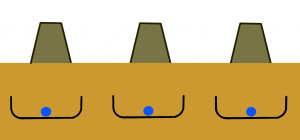
 The boxes are made with a soil dam so the box can be used with the drain pipe permanently pointed downwards so it is acting as a full blown Gbiota bed. This does mean that the bed may need to be watered every day (depending on weather).
 Before watering simply twist the drain pipe upwards when the box will become a conventional Wicking box. Trickle the water in until there is water in the sight tube (note it may take a bit of time for the water to trickle through - it is a good idea to measure out about half a litre of water and add this shot at a time with a bit of a wait in between, to see if the water has reached the sight tube.
 The microbes must be fed. Fortunately there favourite food is kitchen waste which can be recycled back into healthy food. They, and particularly us, will need some additional minerals but the micro-grams needed can be added at minimal cost.
 The material in the compost tube should be soft so you can refresh the tube pushing a bottle with a tapered top to rework the tube.
 Then when the tube is opened flip the bottle and push the square base to make a nice hole.
 If you have made a compost smoothie you can fill the tube with this compost smoothie then push the bottle back into the tube where it will act like a piston and help distribute the compost below the surface over the rest of the bed.
 Compost tube ready to go using the bottle method.
 We also recommend covering the compost tube with some Biomin which contains a broad spectrum of minerals and some fresh biology.

 Growers are licensed to use this technology and sell through the normal channels, on line, farmers markets or conventional retail. Growers are expected to follow protocols so the customer can buy with confidence in the way the plants have been grown. This is indicated by the Gbiota symbol.

 What should I eat so I am fit and healthy - what can eight billion people eat so they are fit and healthy - what will my great grand kids be able to eat so they are fit and healthy?
 Today I want to talk about the who, how and why of answering these questions. We may think that the digital revolution is the epicentre of technical innovations but the food industry has seen a similar level of innovation.
 Let me just give one simple but dramatic example. There are numerous studies by qualified researchers that show that the people who die from Covid are either on a poor diet or subject to stress (which releases Cortisol which shuts down the immune system).
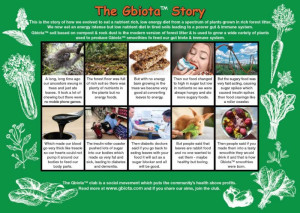
 Let me tell you a story, sorry no magic fairies just goodies and baddies and Pre humans.
 The forest flood was covered with dead and dying things that were once growing, plants and animals and their poop and dead bodies - probably the most biologically active area on earth. And the forest floor was just nicely moist not too wet and not to dry so living in abundance on this forest floor litter were minute creatures we now call micro biology - millions of species.
 It is a bit difficult to breed inside a ferocious monster and evolution is all about breeding so the pre-humans without a smart gut brain simply became extinct.
 But the gut brain did yet more - as their body parts wore out the gut brain would send signals and often produce the chemicals needed to replace these parts.
 This was all good but as we all know in life good things often have a bad side and the bad side was the harmful micro biology - often this was in the food that the pre-humans were eating, there were no bottles of hand disinfectant swinging in the branches of the trees, but the beneficial micro biology worked together to defeat the harmful micro biology.
 Good mircro-organisms would end up in the gut of these pre-humans where in the nice warm surrounding they would breed forming a colony. Some of these micro-organisms would be good and others bad.
 Who won depended on the conditions inside the gut - if these pre-humans ate the sort of food that favoured the good organisms the goodies would win if they ate the sort of food that favoured the bad organism then the baddies would win and those pre-human would die and not breed so they would become extinct.
 But then something truly bad happened. The climate changed, this time due to natural causes, but the results were disastrous for the pre-humans as the trees which had provided protection simply died out and they were left in open land - easy prey for the ferocious beasts.
 And that technology is that we learned to throw stones at the ferocious beasts - and the barrage of stones hurt so the ferocious beasts decided it was better to chase a few antelopes which could run much faster but had not developed the technology of throwing stones.
 Then we developed agriculture which enabled the population to significantly increase. But there were side effects. We created the city which made us much more prone to infectious epidemics which killed large numbers of people.
 One of particular relevance to today epidemic is the black death. This teaches us a very valuable lessen for today, the difference between cause and enabling and the power of dis-enabling.
 The next great plague was cholera some five hundred years later in the 1800’s. Like the black death there was no immediate medical solution and is was initially solved by the process of dis-enabling. This time initially by a very smart guy called John Swan who at first simple removed the handle from a contaminated pump.
 Then we entered the age with modern agriculture particularly the development of synthetic fertilisers and improve genetics.
 The happy relationship between micro-biology and modern humans lasted up until about fifty years ago. Then modern humans entered what I call the plastics age - not because we started to eat plastics but because plastics are clean and inert and we started to eat food that was clean and inert, devoid of life and often wrapped in plastic.
 Genkis Kahn must be the one of the great examples of technology giving power. His technologies of the stirrup and the reversed bow gave him a technological superiority in battle which made him virtually invincible. He could easily have conquered the entire region from the shores of the Atlantic to the shores of the Pacific.
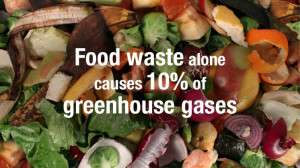
 But we can mimic the conditions of the forest floor. We produce an incredible amount of organic waste which often ends up in land fill creating green house gasses.
 You can contact Rob Knight, Professor
  Plants exude sugars from their roots to attract and feed microbiology, this collects water, minerals and complex chemicals from the soil and feed to the plants. This is one of the two great synergies in the world.
 In our evolutionary era we had plenty of gut food which came from nutrient rich biologically active soil, we had all we needed so we did not evolve to crave gut food. However energy food was in short supply there is not much energy food in the wild - so we evolved to crave energy food.
 Our earth has been spinning around the sun for some 4 billion years and we can expect it to be still spinning around the sun in another 4 billion years or more.
 We may think of some cataclysmic failure from fire or flood from global warming, but it may be totally unspectacular.
 But I don’t want this to be a story of doom and gloom. Humans are the dominant creature on earth because we are smart, innovative and cooperative.
 But I want my great grand children to have the right sort of food to eat and I want them to live in a society where they can be free of the wars, conflict and socials tensions I have had to put up with in my life.
 The first is the role of our guts. We understand that our guts
 The second is that our gut biology or Gbiota is determined by the soil biology in which the food we eat is grown. At birth we received a major burst of biology from our mums and then from breast feeding but after that our gut biology is determined by what we eat.
 Thirdly in our evolutionary period as hunter gatherers there was a natural abundance of both biology and minerals in the soil which led to a healthy gut micro-biome. In this period there were less than a million people on earth so there was no issue - if an area became depleted we just move on to a fresh area. We continued this until recently with the great expansion in the US.
 However the lack of the soil biology which created healthy gut biology has led to an epidemic of chronic diseases stemming from overeating because our bodies are not satisfied - such as diabetes, heart attacks, dementia etc.
 All this is well understood by conventional science and provides the basis for the Gbiota technology. There are numerous papers on these subject some of which are linked here in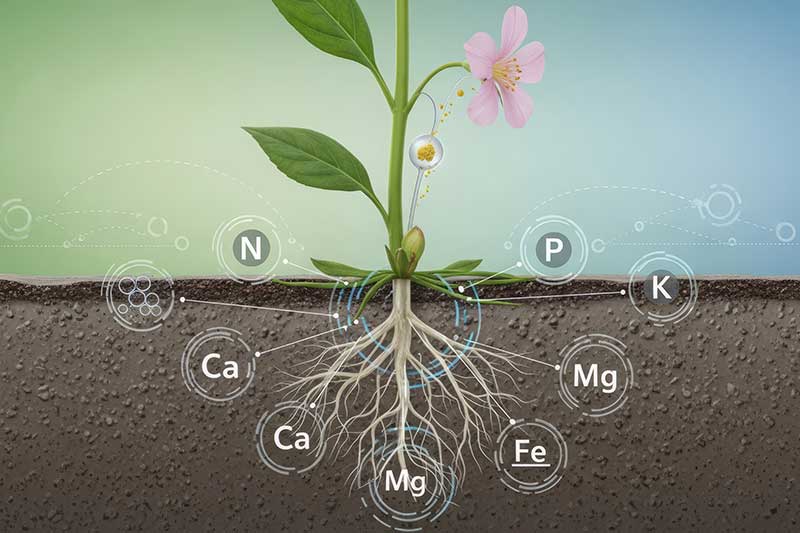
 We are all familiar with the conventional way of classifying food -
 Finely there is our intelligent control system (Homeostasis). Our bodies are not just a bunch of organs doing their own thing, there is an intelligent control system made up of trillions of cells which receive information from sensors throughout the body, process them by working just like a computer with code, taking decision then sending our signals, either electric or hormonal to adjust how the body is working.
 We don’t get fat simply because we eat too much - rather our intelligent control system decides we need to store more fat, (again we can only guess why) so it send out signals for us to eat more - then we get fat.
 Our gut has trillions of cells made up from thousands of species.
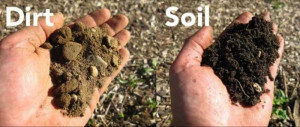
  Soil is formed by microbiology breaking down rocks and is continuously circulated as plant grow, die and decompose back into soil. This totally depends on micro-biology and the soil creatures particularly the worms. The natural process of making soil is slow and in the last fifty years has been replaced by chemical industrial farming which has increased productivity but dramatically lacks this essential biology which leads to healthy soil and healthy guts and bodies..
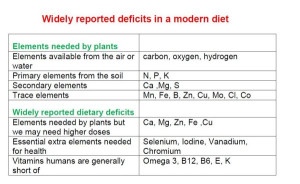
  These early soils were rich in a wide range of minerals which both we and the plants need for health. But plants are much simpler than us so there are many minerals which we need but plants either do not need or only need in very small amount.
 During our evolution we were generally short of energy food - the fats and sugars - so we have an in built desire to search and eat energy food. On the other hand there was an abundance of beneficial biology and minerals in the soil so we had this bias to crave energy food rather than gut food.
 The modern food industry aim is to make profit and the way to do that is to supply energy food in large quantities produced at minimum cost.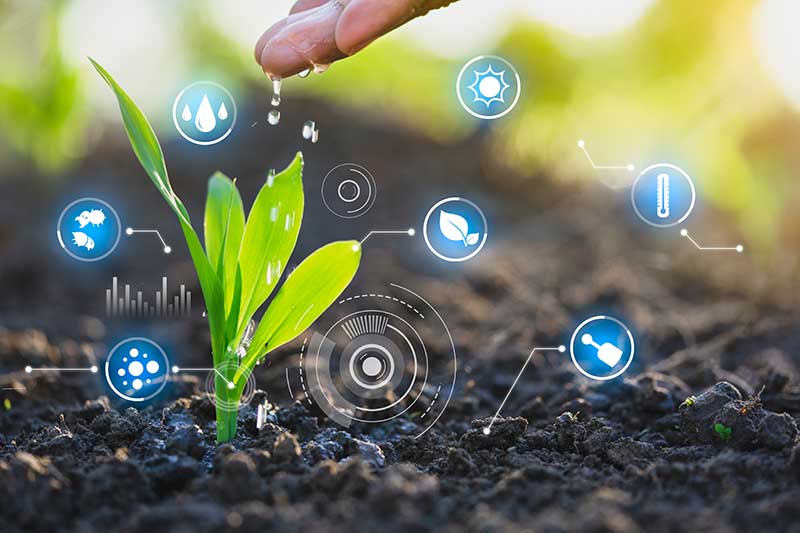

 The aim of the Gbiota system is to give us a healthy gut by growing plants which act as natural pre and pro-biotics.
 It controls our appetite so we eat enough but don’t overeat. Poor gut health is a factor in the global obesity epidemic. It manufactures many of the complex chemicals needed to replace our body parts as they age. And particularly in this age of Covid, houses our immune system.
 My innovation is a way of growing plants so they act as a pre and pro-biotic so we have a healthy gut. Now let me be clear - up till about eighty years ago this happened naturally without anyone thinking about it.
 My innovation is a simple way of recycling food and organic waste, adding manures and essential minerals and if needed inoculate the soil with biology and worms to grow food to feed our guts, natural pre and pro biotics.